Books
Review

Needing Help Is Normal

Leah Libresco Sargeant’s doggedly pro-life feminist manifesto argues that dependence is inevitable.

The book cover on a pink background.
September 30, 2025
Illustration by Christianity Today / Source Images: Getty, Notre Dame Press

Last year’s theme for chapel talks at the Lutheran university where I teach was “That Time I Asked for Help.” Most of these talks narrated a similar cycle: feeling a need, requesting help, and finding it ready. A few speakers confessed DIY dispositions or called out sins of self-reliance. Overall, the talks aimed to encourage students—who apparently don’t ask for help because they think they shouldn’t need it—to seek assistance from others.

That is a good lesson. But it seemed a surprising one to address to a population that looks to me fairly comfortable accepting aid, fresh as most are from 18-odd years of dependence on parents and quick as they are to avail themselves of college counseling and dining services, accepting due-date extensions or the occasional box of classroom donuts. Maybe their obstacle was not undue self-reliance but a misunderstanding of help itself as something narrow one accepts only in certain life stages (childhood), from certain authority figures (teachers or bosses), or after financial transactions (paying an Uber to take you to the airport rather than asking a friend for a ride).

A story Leah Libresco Sargeant recounts in her excellent book The Dignity of Dependence: A Feminist Manifesto echoes this misunderstanding. An elderly veteran was unable to visit his wife at a nearby nursing home because he could not clear his driveway after a sudden California snowstorm. When at last he conceded his inability to remove the snow by himself, the abashed post he circulated on Facebook—“I never thought I would have to do this. … This is very embarrassing for me to even ask for help”—drew eager neighbors with shovels and a tractor. To Sargeant, the man’s reluctance to ask for help reveals the “sustained, bitterly cold cultural climate” we inhabit. 

Our cultural climate is bitter. But can it really be true that a 79-year-old man never before asked for help or received it? It seems at least plausible that his wife gave him some help, asked or unasked for, through years of marriage. It seems plausible too that the daily life of a septuagenarian might have been laced with helps throughout: a server who remembered his special coffee preference, the nurse gentle at a blood draw, the driver who yielded right of way at a four-way stop. It’s just that he didn’t recognize these acts as the help they had always been. “Help” instead had become exceptional, something uncommon and extraordinary rather than constitutive of existence.

The normal condition for humans is dependence—we start and finish there, and by gradations we depend on others throughout our lives. A system presupposing independence has a “false anthropology,” Sargeant writes. She argues that society should do better to recognize human need. She argues that women, sometimes treated as inferior because of bodily realities, should not have to “prune themselves” to win equality.

The hinge connecting those arguments most directly is women’s proximity to dependence. All humans start life by depending on a female body for gestation, protection, and nourishment. Assuming independence as a norm degrades all but especially women, because biology and culture regularly situate women in service of others. As women care for the young, old, or sick, they depend, in turn, on others to assist them.

Though humans are fundamentally dependent creatures, another fundamental trait—fallenness, sin, plain selfishness—motivates us to pretend otherwise. The fallout isn’t limited to women. But the reality of sex differences over centuries has produced distortions.

On the first page, Sargeant observes that as a woman, “I move through a world in which my body is an unexpected, unanticipated, somewhat unwelcome guest. It is as though women were a late, unanticipated arrival to a civilization that developed without them and their needs in mind.” Her observations carry undertones of surprise, implying that builders of this world neglected to remember women would need to use it too. She identifies dangers from poorly designed structures, like medical research tested only for male patients or car safety devices that protect male bodies and incidentally injure female ones. 

In fact, some builders of this world not only did not expect women’s arrival but also precluded it, letting their female counterparts in as guests if at all. Earlier voices in American feminism faulted that bitterly cold hospitality, and we now live in its aftermath.

It is a testimony to their achievements that some women readers may feel surprised to stumble on this warp in the world’s shape. The design flaws Sargeant impugns arose partly through overconfident haste in efforts to reverse sexist exclusion, slotting women into educational and corporate and public spaces made by and for men.

Some institutions still demand that women neutralize their femaleness as a price of entry, Sargeant finds, and she critiques manners that discipline women’s menstrual cycles or lock lactation behind closed doors. Invisible breast pumps and pills to suppress periods may be marketed as considerate gestures but effectively become tools for “helping women be better men.”

Builders of the world Sargeant moves through today knew about the female physical capacity to nurture dependence. They realized that women have periods and feed babies. But they treated that capacity as debility. Priority given to autonomy codes dependence as negative, subordinating and submerging a great source of flourishing. 

It seems to me that these world builders thought nonsensically about dependence; assuming independence as our default condition is an irrational judgment about ourselves. That miscalculation ushered in a cascade of others. Seeing help as unusual takes a trick of the mind that recasts it as entitlement or commercial transaction. A faulty definition of help minimizes and monetizes; it devalues care work and excuses some from caring on the grounds that “I don’t need help and therefore you shouldn’t either.” But humans need and take help all the time.

The problem with the world Sargeant navigates is not just that dependent bodies do not fit into molds made for independent ones—because in fact the molds were not made for independent individuals. They were made for individuals trailing support systems behind them, systems providing domestic, relational, and organizational assistance, often from women. These helps could be hidden in plain sight or taken for granted—an underrated figure of speech that stings in this case since whatever is taken is not received as a gift.

The key terms in this book’s title—dependence, dignity, feminist, manifesto—find relation to each other in ways that can repair faulty definitions of help. Dependence is a fact of human life. It is a feminist concern because denying it disadvantages women distinctively. Sargeant’s feminism seeks redress not mostly through balancing scales or leveling playing fields or valuing diversity. Instead, it goes beyond those, recognizing that women’s salient contributions to common thriving come through the biological fact of help.

That is the other hinge linking dependence and feminism: What humans can know by observing motherhood is a detail not to derogate but to claim as an ideal. What Sargeant makes manifest is the reality of human dependence and the good of serving it. Dependence is a basis of dignity as we embrace what we are and grow into service.


Sargeant also shows that dependence stimulates growth. Those who serve expand their capacities. Those who are served fill out the truth of our creatureliness. The body of all together, as community or church, grows through mutual aid. In Sargeant’s reimagination, even unglamorous tasks often classified as women’s work blaze into occasions of agency and virtuosity. Some of the most dazzling sections of the book feature Sergeant reframing tasks of repair or housekeeping as “refactoring,” finding radiant creativity in the mix of skill and care.

The book’s focus on women affords a conclusion important for men too. Appreciating dependence does not mean nodding its approval in a category of humane concepts nice for people who like that kind of thing. Sergeant beckons men to join in this nurture so they don’t miss out on “opportunities for connection and kenosis.”  

The truth Sargeant makes manifest inspires her manifesto. For sure, there is a lot of work to do refitting spaces to be friendly for disabilities, encouraging young adults to befriend seniors, and handing babies to dads to hold. But a revolution is not requisite to get people to do these things. People already are doing them, as her pages illustrate.

What Sargeant invites is fundamentally a change of mind first before a practical set of actions. Her book appears in a series, Catholic Ideas for a Secular World, translating insights from Christian traditions to make them accessible to readers beyond. Her insight deserves an especially wide hearing, especially if Christians can proclaim it with right emphasis: less servant leadership as claimed by people more interested in the “leadership” part, and more outright service. Less self-sufficiency and more self-gift. We all bear dignity. We all need help.

Agnes R. Howard teaches humanities at Christ College, the honors college at Valparaiso University. She is the author of Showing: What Pregnancy Tells Us about Being Human; her forthcoming book is Disoriented: Embodied Life in Strange Times.


News

Died: John Huffman, Pastor Who Told Richard Nixon to Confess

The Presbyterian minister and CT board member committed to serve the Lord and “let the chips fall where they may.”

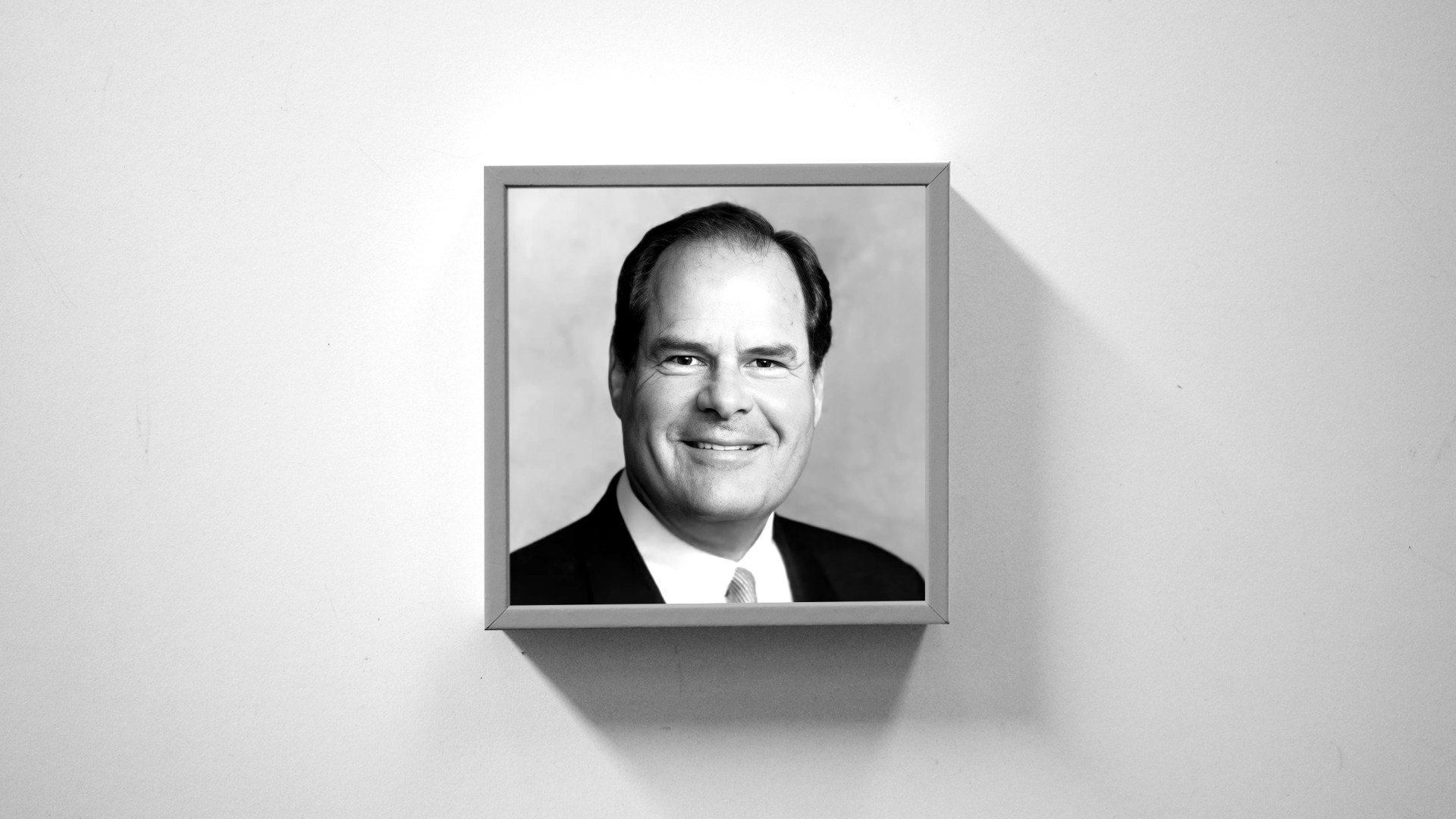
John Huffman obit image black white
Christianity Today September 29, 2025
Courtesy of John Huffman / edits by Christianity Today

John Huffman, the one minister who told US president Richard Nixon he should confess during the crisis of the Watergate scandal, has died in California at the age of 85. 

Huffman was the minister of an evangelical Presbyterian church in Key Biscayne, Florida, where the president frequently went to relax in the 1970s with his close friend businessman Bebe Rebozo. 

Nixon rarely attended church outside of the White House services that he closely controlled. He was always afraid a minister would use the pulpit to say something critical and embarrass him. But the president went to Key Biscayne Presbyterian Church when he was in town, partly because he was more relaxed in Florida and partly because he trusted Huffman, who had trained with evangelist Billy Graham and popular New York preacher Norman Vincent Peale. 

Huffman had a reputation for being young, good-looking, fun, and “with it,” preaching sermons that were upbeat. But he also addressed sin from the pulpit and frequently spoke of the temptations faced by his affluent congregation on the sun-drenched Florida coast.

“Many of us today don’t want Christ around,” he said in one sermon, which was reported in Miami News in 1968. “We may pretend to worship him and call ourselves Christians but we don’t want to disturb the comfort of our lives.”

In 1973, the young minister grew concerned by reports that Nixon was preventing the investigation of underlings who had broken into the Democratic Party headquarters during the presidential campaign and bugged the office phones. Nixon appeared to be covering up a crime—a suspicion that was later confirmed by the secret recordings the president had made of all his conversations in the Oval Office and the Executive Office Building.

Huffman decided he would have to disturb the comfort of his own life and Nixon’s, saying something pointed about the need to confess. He knew it would be awkward and felt the temptation to flatter the president. Many ministers at the time attempted to use their access to Nixon to say something important and then quailed, choosing instead messages that were benign or fawning.

Huffman decided he had to speak up. He believed this was his responsibility as a minister and as someone with deep affection for Nixon. 

“I really loved the man,” he told Christianity Today in 2024. “If I have a real, good friend—forget public life—if I’m his friend and he’s my friend, I hope he’s a friend enough to me to point out things, gentle, and help me be better. So that’s what I tried to do.”

Huffman told Rebozo that Nixon should “step before the nation and say exactly what he knew or didn’t know about the Watergate break-in and coverup, asking the forgiveness of God and the American people.” The businessman blocked him from speaking to the president directly. Then, when Nixon sat in a pew that Easter, Huffman preached on Acts 26 and how the Judean king Agrippa was judged for feigning ignorance.

Nixon fled the church without stopping to shake hands and retreated to Camp David. A year and a half later, he resigned in disgrace.

“Rebozo never forgave me, but Nixon knew I told the truth,” Huffman told CT. “Every human being is a human being. And every human being is afraid of being discovered.”

Huffman later served at First Presbyterian Church in Pittsburgh and then accepted a call to St. Andrew’s Presbyterian Church in 1977, an ECO congregation in Newport Beach, California, where he pastored until his retirement in 2019. Huffman served on the board of Christianity Today from 1980 until 2015. 

Former CT president Harold Smith recalled Huffman as an example of faithful leadership and a dear friend. 

“John walked alongside me and the board during some of the hardest days to hit our ministry and publishing generally. His wisdom and well-timed words of encouragement got me through more than a few dark nights of soul, and kept the board ever focused on our vision and mission,” Smith said. “John consistently sought to walk and talk the twin watchwords of Christianity Today’s founder Billy Graham: conviction and love.”

Huffman was born to Dorothy Bricker Huffman and John Huffman Sr. on May 24, 1940. His father was an assistant minister at Park Street Church in Boston, where he worked under Harold J. Ockenga, one of the key institution-builders in American evangelicalism after World War II. 

The elder Huffman, along with ministers Torrey Johnson and Billy Graham, helped found the evangelistic outreach ministry Youth for Christ the same year the junior Huffman was born. 

Some of Huffman’s first memories included traveling with his father and his father’s friends on ministry trips and listening to evangelical leaders, including future CT editors Carl F. H. Henry, Harold Lindsell, and Kenneth Kantzer, talk at his parent’s table. In his self-published memoir, A Most Amazing Call, Huffman recalled being a child and walking on a beach in Massachusetts with Graham and hearing someone call Graham, then in his 20s, a “young whippersnapper” still “wet behind the ears.” 

Huffman accepted Jesus Christ as his Savior at age five. At school, he told his teacher they should move his birthday celebration from May to September because that’s when Huffman had been born again.

The family moved to Wheaton, Illinois, when Huffman was a teenager and his father accepted the presidency of Winona Lake School of Theology in Winona Lake, Indiana. Much of the job involved traveling to raise funds from rich businessmen, including J. Howard Pew, “Colonel” Harland Sanders, Pierre du Pont, J. C. Penney, and Eli Lilly. The younger Huffman traveled with his father frequently and learned a lot, he told CT, about interacting with powerful people. 

“You treat people with respect, but you don’t bow and scrape,” he said. “Never think a person is that much higher than yourself. We’re all equal.”

Huffman felt a strong draw to politics and dreamed of being an elected leader himself one day. He idolized the young, smart, scrappy, and aggressive vice president: Richard Nixon. When Huffman attended Wheaton College, he became president of the campus chapter of Young Republicans. His big project, as he later recalled, was bringing Nixon to campus to speak during the presidential campaign of 1960. 

Nixon addressed a crowd of about 30,000, according to the Associated Press, and spoke about the importance of putting truth above private ambition.

Huffman had questions about how easy that was to do in politics. He felt the drive he saw in the vice president—an instinct to shoulder his way to victory—but was cautioned by a prominent evangelical to take care lest he waste his life or lose his soul. 

Samuel Shoemaker, considered one of the best preachers of the era, warned him politics was a dangerous game with great temptations and it did not guarantee he’d accomplish anything of significance. Shoemaker, who was in his 60s at the time, urged young Huffman to consider following his father into ministry.

Huffman hesitated, even considering going into journalism and becoming a TV news anchor, but ultimately decided he was, in fact, called to ministry. 

He attended Princeton Theological Seminary and took a position on the staff at Marble Collegiate Church, working under Norman Vincent Peale. Huffman met his future wife, Anne Mortenson, while traveling with Peale in Hong Kong. They were married in 1964, Huffman got ordained, and they accepted a call to the church in Florida. 

It wasn’t his first choice, Huffman told CT. Or his second. Or third. But the congregation in Key Biscayne gave him a chance even though some members were concerned he was too young and others were worried he might be too liberal. He was, for his part, a bit disappointed.

“I thought I was heading into oblivion,” he said. “It was scary—and exciting.” 

Huffman thrived in Florida, though, getting an opportunity to minister not only to the president but also to an island of young professionals who wanted to grow in their faith and a rotating cast of powerful people spending time on Florida’s beaches and golf courses.

He was careful to “just preach the gospel,” he said, regardless of who was in church, and to remember he was preaching to everyone, not just the most powerful person in the room. 

“There may have been someone else in the congregation who needed to hear what I said more than the president,” he said. “You’re there to serve the Lord. That’s the important part. Let the chips fall where they may.”

The year after Huffman told Nixon to confess, he accepted a call to be pastor at First Presbyterian Church in downtown Pittsburgh, a prestigious pulpit at a respected and historic congregation. Decision magazine did a photo essay on the church while Huffman was there, naming it “one of the great churches in America.” 

Huffman struggled a bit at the church, though, feeling caught in conflicts between denominational loyalists, transdenominational evangelicals, Presbyterian charismatics, and Reformed traditionalists. He fought with church trustees and had sometimes-weekly meetings with lay leaders who told him he was a disappointment.

After a few years, Huffman decided to accept a call to an unknown church in Newport Beach, California, known at the time as a sparsely populated sand spit with some rundown vacation houses.

People in Pittsburgh were shocked he would leave, Huffman later recalled. No minister in the church’s two-century history had ever left. Prominent evangelical leaders including Graham, Peale, and Ockenga warned him he would lose influence. 

But Huffman prayed that he would be in the center of God’s will and accepted that the move was right. He ended up serving at that church from 1978 to 2009, when he retired. Then he joined St. Andrew’s as a member and continued to worship with the congregation until his death.

“I will never fully understand quite how it all happened,” he told CT. “But I can now say with full assurance that God knew precisely what he was doing.”

Huffman joined the board of Christianity Today shortly after moving to California. He helped steer the ministry into the digital age, backing president Harold Myra’s “print plus” plan to get CT online. He became chair of the board in 2006 and helped president Harold Smith manage CT’s response to the financial crisis of 2008, which “directly threatened” the existence of the magazine, Huffman recalled, and required the layoffs of 60 percent of the 165-person staff.

The ministry survived, and Huffman welcomed a new era of CT when Timothy Dalrymple became president in 2019. Huffman said he hoped CT would “remain strong” for years to come, “fulfilling for future generations the essence of the Billy Graham vision.”

His wife, Anne, and their daughters Carla and Janet survive him. The couple’s eldest, Suzanne, died in 1991 at age 23.

Correction: A previous version of this article said Huffman joined CT’s board in the late 1970s. According to his autobiography, he joined early in 1980.

Culture

Is This Heaven? No, It’s Banana Ball

What baseball’s most amusing team gets right about joy in sports.

Savannah Banana baseball players on a cloud background
Christianity Today September 29, 2025
Illustration by Mallory Rentsch Tlapek / Source Images: Getty, Unsplash, Pexels

“Is this heaven?”
“No, it’s Iowa.”

That iconic exchange from the classic baseball film Field of Dreams captures something deeper than nostalgia—it hints at the possibility that sport, when rightly ordered, can brush up against the divine.

It taps into a deep longing we have for all the wrong in this world to be made right, including every field or court, pool or pitch. And maybe, just maybe, the Savannah Bananas are giving us a glimpse of part of the picture.

Exhibitions by the popular team—in sold-out professional stadiums or viral social media clips—are joyful. Fans dance in the stands, batters perform choreographed walk-ups, pitchers throw trick pitches, and kids run on the field like they belong there.

The Bananas are still highly skilled athletes, and their approach has clearly captured fans. Under owner Jesse Cole, the Bananas grew to a regional favorite with a massive waiting list, then to a national phenomenon, selling out major league ballparks on their national tour. The team played before their biggest crowd ever—81,000—at Clemson University this year.

With the lip-synching players and rump-shaking umpires, you could write Banana Ball off as a gimmick. I did at first. But then I realized that the Savannah Bananas weren’t out to replace the MLB. They’re reframing the game to engage more fans.

“Our goal is to spread joy and have fun. We want people to go home saying that they saw something that they have never seen before on a baseball field,” said Bill LeRoy, catcher, emcee, and captain for the Bananas. “We care so much about our fan’s experience and we think less about ourselves.”

Caring that fans feel joy, feel seen, and believe they belong: that’s not just good entertainment—that’s kingdom work.

Any good theology of sport begins in creation. When athletes run, jump, swing, or throw, they express something inherently human: bodies made for movement, minds made for strategy, hearts made for relationship and joy. Their activity reflects the delight of a Creator who watched his world unfold and called it “very good.”

But with the Fall, what God designed as a gift became an idol, and our games began to reveal our brokenness as much as our brilliance.

We commodify athletes, elevate winning above character, and measure value in stats and salaries. Youth sports became pipelines of pressure. Athletes became performers first and people second. What was meant to be joyful and relational became tied to ego, identity, and worth.

The good news is that God did not leave his world—or sport—broken. Through Jesus, he began his work of redemption, not just saving souls but renewing all of creation. The joy of play, the beauty of competition, and the relationships forged in sport are not meaningless distractions; they’re echoes of Eden and previews of restoration.

Seen through this lens, sport becomes a classroom of formation. Plenty of us have seen hints of God’s redemptive work in traditional sports: a coach calling out potential in a young player, a team rallying around a discouraged teammate, or an athlete competing with integrity.

I see it all over the Savannah Bananas, and Adam Wainwright, St. Louis Cardinals legend and an outspoken Christian, did too when he showed up as a guest pitcher for Savannah in July, when they turned Busch Stadium from red to banana yellow for two sold-out games. 

Wainwright walked the field with Cole, the owner, beforehand. “He was looking up into the upper deck trying to figure out how to get players up there during the game so that every fan who attended felt important,” Wainwright said. “What I took away from the experience … was their overall love of baseball and their genuine desire to be great entertainers for the fans.”

At Banana games, joy is tangible and contagious. It points to the kind of unburdened life Jesus promises (John 10:10), where people live free from the relentless scorekeeping of a broken world. One fan told me after attending a game, “I haven’t laughed that much in years, and it was just a baseball game. Or maybe not ‘just’ a baseball game.”

Another fan described a young boy—maybe eight years old—walking out of the stadium holding his dad’s hand, still buzzing from running the bases with the team. He looked up and said, “Dad, I want to play baseball like that, where everyone’s smiling.” That’s not just a great fan experience; that’s formation. That’s a picture of sport shaping the heart for joy rather than fear.

The Bananas blur the lines between players and fans, creating a shared experience of belonging—kids running on the field, fans dancing with players, strangers celebrating together. This is a picture of biblical fellowship (Acts 2:42–47), where joy and belonging are shared, not earned, and where every person feels they have a place. 

The players remind us that competition, at its best, is about partnership, not punishment. It’s about calling out excellence in one another, celebrating effort, and recognizing that even an opponent is a fellow image-bearer who can make you better.

When competition means domination or proving worth at someone else’s expense, it distorts the human heart. But if we understand competition as mutual striving together to become what we’ve been created to be, then opponents are not enemies but partners in growth. Iron sharpening iron (Prov. 27:17) isn’t about hostility—it’s about mutual development, about calling one another to higher excellence and deeper character.

It shouldn’t surprise us that this team includes plenty of outspoken Christians, players who see their platform as more than performance. They invest relationally, share their faith, and embody the good news that worth isn’t defined by stats or contracts but by grace (Eph. 2:8-9).

“For so long in my career, all I cared about was my stats and winning/losing. Baseball was my idol, where I found my identity, and where my worth came from,” said LeRoy, whose approach changed when he joined the team eight years ago after playing college baseball in Georgia. 

Learning to put other people first helped him move on quicker from his failures and focus more on Jesus. LeRoy got out of his comfort zone to take the mic, sing, and dance. “I had no plan of ever having these specific skills or this job,” he said. “I owe everything to God.”

Backflipping outfielder RobertAnthony Cruz posts pre-game prayers, holds team Bible studies, and organizes worship nights outside the Savannah stadium. The team’s high-energy singalong, dance-along soundtrack includes Forrest Frank’s trendy “Your Way Is Better” and Elevation Worship’s “Praise.” 

They point beyond the fun of the game to the deeper hope found in Christ. Another player summed it up: “We want people to know they’re loved—not because they bought a ticket, but because they matter.”

The Savannah Bananas, for all their intentional focus on the joy of the fans, remind us that sport is about a bigger story. The Bible tells the story of a God redeeming every corner of creation, and sport is not outside of his concern. It is one of the arenas where his renewal takes shape.

We can expect more from sports. Every whistle blown, every base touched, every cheer from the stands can echo something eternal when rooted in love and joy.

What if success was measured by joy and growth, not just wins? What if parents and coaches helped kids love the game—and each other—well? What if athletes stepped on the field not to prove their worth but to live from it, free to create, compete, and connect as image bearers of God?   

Josh Lindblom played professional baseball for 15 years. A father of four with a master’s in biblical studies, he currently serves through Pro Athletes Outreach and Congruency, helping players and leaders align with their purpose.  

Church Life

The Pastor Who Rescues People from Japan’s ‘Suicide Cliff’

Yoichi Fujiyabu has spent three decades sharing God’s love to people who want to end their lives.

The Sandanbeki cliff in Shirahama, Japan.

The Sandanbeki cliff in Shirahama, Japan.

Christianity Today September 29, 2025
WikiMedia Commons

Most people visit Shirahama, a resort town along Japan’s southern coast, for its sandy beaches and restorative onsens (hot springs). But some travel there because they want to die.

At a church close to Shirahama Beach, the piercing ring of a phone slices through the stillness of the night. “Moshi moshi?” Yoichi Fujiyabu answers. On the other end, a trembling voice whispers in Japanese: “Please … help.” Fujiyabu grabs his keys, jumps into his car, and speeds into the night. His destination: Sandanbeki, a majestic cliff overlooking Shirahama’s shores. It’s also one of Japan’s most infamous suicide spots.


The headlights cut through the suffocating darkness. There, a lone figure emerges in the beam. Fujiyabu steps out of the car. The ground crunches beneath his feet as he walks toward a shadow before him.

This scene is from the 2019 documentary The Pastor and the Cliff of Life and is one that Fujiyabu, the pastor of Shirahama Baptist Christ Church, reenacts over and over again, often in the wee hours of the night.

For nearly three decades, Fujiyabu has stood on the frontlines of suicide prevention in Shirahama. To date, he has stopped more than 1,100 people—he records the details of every person he has rescued—from taking their lives at Sandanbeki.

Sandanbeki is a five-minute drive from the center of town. Because the cliff is nearly 200 feet high and the ocean below it has a strong current, it is a popular destination for people wanting to die by suicide, as bodies are often swept away without a trace.

“It’s such a beautiful place, which makes the contrast even more striking,” Fujiyabu said as he guided me toward the windswept cliff on a hot day in late August. A breeze whipped in from the sea as sunlight danced upon the waves. Everything looked like a picture-perfect postcard until my eyes landed on a solitary stone monument, erected in memory of those who died by suicide at Sandanbeki.

As I walked toward the cliff with Fujiyabu, we came across a public phone booth. Most of these booths have vanished across Japan, but the town has kept this one operational so desperate people can call the Shirahama Rescue Network (SRN), a nonprofit run by Fujiyabu and his church.

Outside the booth, a large sign bears the words Telephone of Life along with a paraphrase of Isaiah 43:4: “You are precious and honored in my sight. I love you.” Under it, bold letters plead, “Please call us before you make [this] important decision.” The SRN hotline is the only number listed on the sign. Fujiyabu and his team have placed five of these signs in the vicinity, in hopes that people will reach out before deciding to end their lives. Inside the booth, a cross adorned with flowers hangs above a worn paperback Japanese Bible and a bright green telephone.

As we drew closer to the cliff’s edge, Fujiyabu pointed to several sites where people had jumped and others where he had pulled them back from the brink. Whenever he gets a call—about three to five times every month—and arrives at the cliff, his first task is to locate the caller. Once he does that, he tries to guide the person into the backseat of his car, away from the cliff’s edge, and listens to his or her story.

The public phone booth at the Sandanbeki cliff. Image courtesy of Kazusa Okaya.

These encounters are rarely straightforward. Some reject his presence outright or are hostile toward him once they are inside his car, often because they waver in deciding whether to take their own lives.

In such moments, Fujiyabu often drives slowly through the town, circling its streets until the person calms down and feels safe. Only then does he bring people to his house or to a dormitory run by SRN, as they have nowhere else to go after cutting ties with family members, leaving their jobs, and selling all their possessions.

Dressed in a Hawaiian shirt and jeans, 53-year-old Fujiyabu cuts an athletic figure. His easy smile gives him an almost-boyish look. Yet behind his childlike grin lies a quiet determination and an unmistakable strength of will.

Fujiyabu first stepped into the Shirahama Baptist Christ Church as a young boy because a girl had invited him to attend a service. “It was an impure motive, just like most kids,” he recalled. As he continued attending church, he slowly began to understand the love of God. By the time he was 10 or 11, he became conscious of his faith in Christ.

He also developed a deep interest in relief work after reading the children’s novel Harp of Burma, which chronicles the story of a Japanese soldier who decides to stay and devote his life to tending the dead in Burma (Myanmar).

In elementary school, he tried to raise money for refugees living in Ethiopia and Cambodia. After months of effort, he managed to collect only 1,000 yen (around $7 USD), leaving him feeling powerless. Then, at a church summer camp when Fujiyabu was in sixth grade, his pastor preached on Acts 3. In the passage, Peter tells a beggar, “Silver or gold I do not have, but what I do have I give you” (v. 6).

“That struck me,” Fujiyabu said. “I realized that even if I didn’t have much to give, I could share the gospel.”

This moment planted the seed of Fujiyabu’s calling: to bring Christ’s message of hope to those in dire need. In many ways, this calling was also a natural outcome of his time in the Shirahama church community. He had grown up witnessing his predecessor, Taro Emi, build a suicide-prevention ministry at church. Emi started rescue operations at Sandanbeki in 1979, decades before Fujiyabu took on the role of pastor.

Fujiyabu recalled encountering people whom Emi had taken under his care. Once, he saw an unfamiliar woman weeping in church. Another time, Emi suddenly appeared with a small child who stayed with him for several months.

“I became a Christian because I saw the consistency between the gospel message preached at church and the way pastor Emi lived out his faith,” Fujiyabu said. “I thought, God’s love is real, and it is here.”

Shirahama Baptist Christ Church. Image courtesy of Kazusa Okaya.

As he studied pastoral ministry at Tokyo Christian University—Japan’s only evangelical higher education institution—Fujiyabu never intended to return to his hometown congregation. That changed when Emi asked him to return to pastor the Shirahama church. He offered a salary of 50,000 yen ($330 USD) each month, an amount way below the poverty line in Japan.

Fujiyabu thought Emi was testing him to see if he was up for the task. “But when I started working, I realized [Emi] was serious,” Fujiyabu said. “That really was our monthly salary. That really taught us to trust in the Lord’s provision.”

Fujiyabu began as Shirahama Baptist Christ Church’s associate pastor in 1996 and took on the senior pastor role three years later. At the time, the church was barely hanging on, as it only had roughly ten weekly worshipers.

Today, the church has more than 50 regular members, including people who have moved to Shirahama from around the world for work. Around 20 of them are people whom SRN has rescued from Sandanbeki.

At first, the church faced numerous conflicts between its old-timers and people rescued from the cliff, who tended to struggle with gambling or porn addictions, alcoholism, or mental health challenges. Items in the church would break or go missing. Some believers began saying they did not want to worship with these newcomers. Yet Fujiyabu repeatedly told them the church is a place for imperfect sinners and they needed to help each other in their weaknesses.

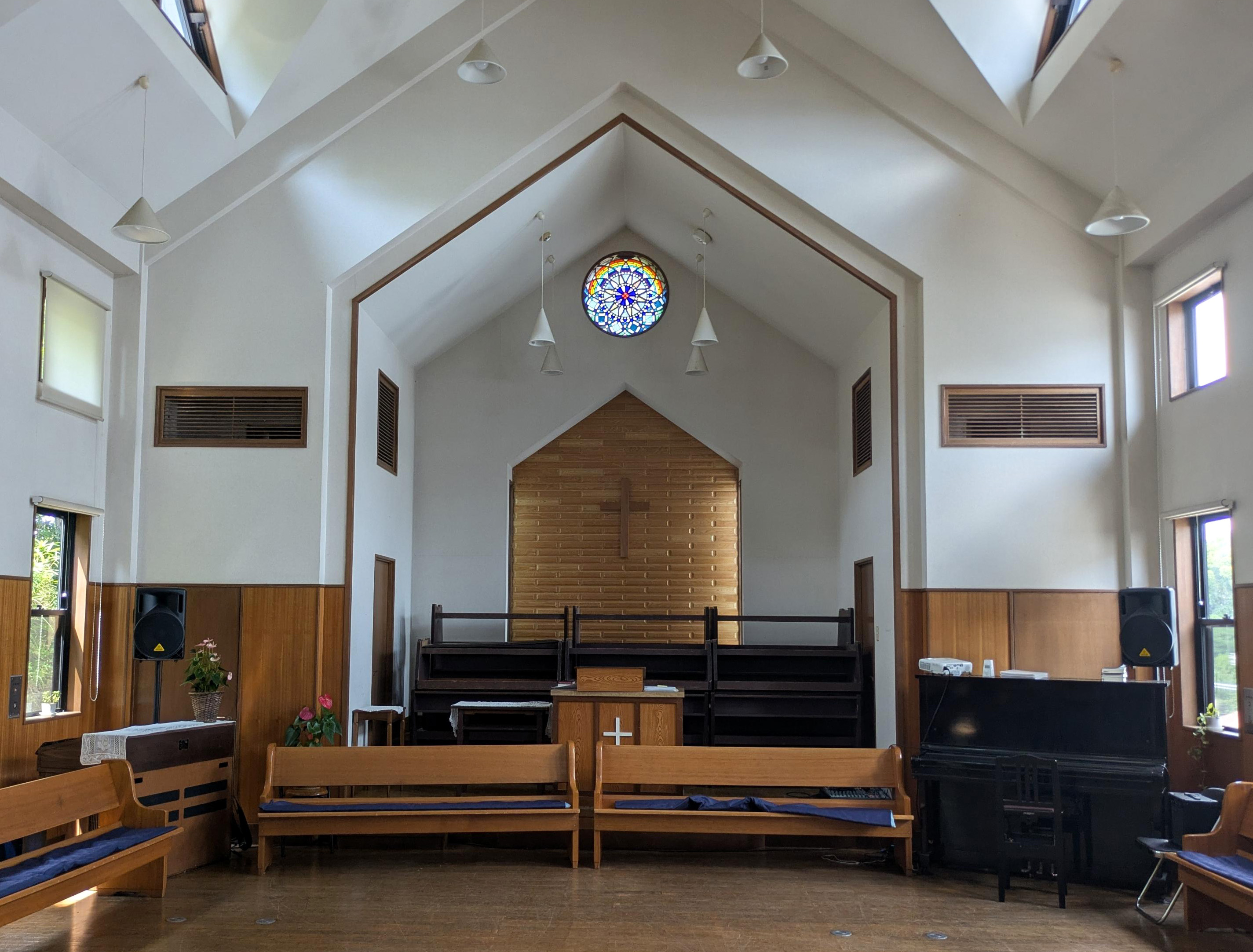
“I want my church to be like a zoo,” he said, adding that the kingdom of God isn’t tidy or polished.

Fujiyabu’s pastoral work extends far beyond Sunday services and dramatic late-night rescues at Sandanbeki. Early in his ministry, he realized that rescuing people from the cliff and providing temporary shelter was not enough, and he wanted to offer more concrete ways to cultivate individual and communal healing.

Besides running the dormitory, SRN also operates an array of businesses in town. There’s a takeout restaurant called Machinaka Kitchen, a company retreat center, a cleaning service, a farm, and more. These workplaces provide training and equipping for people rescued from Sandanbeki and generate financial income for the ministry.

The interior of Machinaka Kitchen. Image courtesy of Kazusa Okaya.

Fujiyabu also wants to help young people avoid seeing suicide as an option to take when they face challenges in life. The church offers an afterschool educational program and a distance-learning high school for those who drop out. Two years ago, they launched Noko Noko, a government-backed parenting center on the second floor of Machinaka Kitchen, to offer counseling for families in crisis.

Most of the infrastructure SRN and the church utilize comes at little cost. Fellow Christians and the local government rallied to support Fujiyabu’s ministry by donating building space or offering heavily subsidized rents.

Among SRN’s mostly Christian staff is Ching Khan Nem, a believer from Manipur, India. Nem first came to Japan to study English at Tokyo Christian University. In 2019, she visited the Shirahama church as part of a mission trip and had lunch with various people living at SRN’s dormitory. The atmosphere there felt very tense, and many of the people she dined with seemed “lifeless,” Nem said. “I felt deeply convicted that I wanted to serve here [and] bring joy and warmth into the lives of people in despair,” she added.

A year later, Fujiyabu invited Nem to work at SRN. Today, Nem is involved in multiple projects, including the distance-learning high school, an English-language program she helped start, the church’s summer camp, and Machinaka Kitchen.

“Fujiyabu pours his life into ministry and is willing to tirelessly work every single day for it,” Nem said of her experience working with the pastor. “People also criticize him for overwork, but that is just who he is.”

Fujiyabu isn’t fazed by others’ remarks about his ministry and work ethic. “People think I’m reckless because I just do what I believe is right, whether it seems plausible or not,” he said. “I’ve simply continued to do what God called me to do—listening to the needs of the town and its people.”

Japan’s suicide rate is the highest among seven developed countries, according to a 2018 World Health Organization report. While overall suicides in the country have declined for several years, numbers remain high, with more than 20,000 deaths annually. Youth suicide rates are especially notable: Last year, suicides by children and teenagers reached an all-time high with 527 recorded deaths.

Long working hours, social isolation, pressures in school, and stigmas surrounding mental health challenges are some of the oft-cited reasons for the East Asian country’s high suicide rate. Shame is another contributing factor, as Japanese culture implies that people should avoid becoming a meiwaku, or a burden to others. Family members often treat a person’s struggles, like job loss or crippling debt, as deeply shameful. Such stigma can drive some people to want to vanish from society altogether.

Evangelical churches in Japan have taken little substantive action in addressing the issue of suicide. Many hold the view that engagement in social work is characteristic of liberal Christianity, a criticism that Fujiyabu himself has faced from fellow believers and missionaries. In his view, though, the most pressing need for the gospel in Shirahama is how it can address the problem of suicide.  

Most people in Japan rarely turn to the church when they need help, Fujiyabu lamented as we wound through Shirahama’s streets. “The church is irrelevant,” he said. “I wanted to change that. I wanted the church to be a place that mattered to the town.”

At Shirahama town hall, Fujiyabu introduced me to Itsuka Kiyomiya, the only social worker who oversees psychiatric health in its 21,000-strong population. “We consider SRN a vital social asset,” she said. “Even when the police find someone near the cliff, all they can do is provide money or temporary shelter. That’s why SRN’s work is invaluable.”

The partnership between town hall and SRN runs both ways. The authorities call the nonprofit when someone needs a place to stay long-term. In turn, SRN relies on Kiyomiya to connect people with the help or services they need, like unemployment benefits.

Yet the church and the town have differing perspectives on what restoration and healing look like. Many people eventually leave the church after they feel better, which Kiyomiya calls “true independence,” as people “no longer need to depend on the church.”

Fujiyabu smiled but disagreed: “I’m not too happy about that. I want them to remain, to be part of the church even after they’ve recovered.”

Fujiyabu recalled a recent example of what growth and healing in a Christian context look like. About three years ago, a man in his 40s was at a bar drinking and pouring out his troubles to the bartender when the latter responded, “You should try the church. There will be people there who will help you.”

The man, who had no prior Christian connections, went to Fujiyabu’s church, where the community welcomed him and persistently walked with him through his struggles. He started reading the Bible every day and became immersed in church fellowship. Today, he is one of the church’s newest baptized members.

Not every Sandanbeki rescue has had a positive outcome, however.

In 2000, Fujiyabu took in a frail young man who seemed determined to rebuild his life. Despite Fujiyabu’s caution against moving too quickly, the man insisted on finding work and soon secured a job. At first, Fujiyabu was hopeful, as the young man seemed to be managing well. But within weeks, the man started experiencing conflicts in his workplace and told Fujiyabu he wanted to quit his job. Fujiyabu urged him to persevere.

“That was when our relationship broke,” Fujiyabu said. “He felt I wasn’t understanding him.” The young man eventually resigned from his job and told the pastor he was returning to live with his parents.

Two months later, the police called Fujiyabu. They had discovered a man’s body with the church’s business card in his pant pocket. The young man had not gone back to his family but instead had ended his life.

The news devastated Fujiyabu. “It was my mistake,” he said quietly. He felt he had broken the young man’s trust by being too harsh toward him. For months, Fujiyabu questioned whether he could continue in ministry. “I realized that no matter how much time and effort you give, a person can still choose to end their life,” he said. “You cannot make that ultimate decision for them.”

It was Fujiyabu’s wife, Ayumi, who helped him carry on. The couple met at university, and Ayumi currently helps to run SRN’s afterschool education program and Machinaka Kitchen.

Yoichi Fujiyabu and his wife Ayumi. Image courtesy of Kang Tu-kyŏng.

In their early years of ministry, late-night calls from Sandanbeki would often interrupt family dinners. The Fujiyabus’ two children had to stay silent until the calls ended, and Ayumi eventually had to ask Fujiyabu to bring the phone into another room.

The family also had to learn how to live with strangers. Before SRN established the dormitory, everyone lived together at the church. The Fujiyabus would share meals with the people rescued from Sandanbeki, who would later sleep in the church hall or other rooms in the building.

Integrating family and ministry life is important to Ayumi. “I believe God created each individual, and within his plan he has sent them to our church,” she said. “That perspective makes all the difference.” As Fujiyabu wrestled with what next steps to take after learning of the young man’s suicide, Ayumi told him, “I have made up my mind. I will dedicate myself to this ministry.” Her determination became his turning point.

The people whom SRN rescues from the cliff currently live together in a church-owned dormitory a five-minute walk from the church. Although the number of guests fluctuates, around ten people live there for several months or years in some cases. They follow a fixed schedule that Fujiyabu hopes will train them to lead a disciplined lifestyle in preparation to reenter society.

Every day, residents start their day at 6 a.m. by praying in chapel, then spend the rest of the day cleaning, preparing food, and working in various SRN-owned services such as Machinaka Kitchen.

In the evening, each person writes a self-reflection in a notebook, which Fujiyabu reads and comments on. In his conversations with the people he has rescued, he focuses on talking about God’s forgiveness, grace, and mercy. “The key to change is to understand that God loves them,” he said.

As my day with Fujiyabu drew to a close, I dined with seven people—one woman and six men—currently living at the dormitory. Shimohira, a soft-spoken man in his mid-30s, shared about his past candidly with me. CT agreed to use only his last name, as cultural stigma around suicide persists in Japan.

Shimohira had spent years running from his failures and weaknesses and felt caught up in a relentless cycle of negative thoughts that pointed to only one escape: death. After Fujiyabu and his team pulled him from the cliff’s edge at Sandanbeki, he struggled to adapt to the strict routine of dormitory life. He frequently clashed with his roommates and bristled at Fujiyabu’s criticism of his shortcomings.

Over time, something changed within him. “I began to face my weakness[es],” Shimohira told me. “I started bringing my pain not to myself, not to others, but to God.”

Church was foreign to him, so at first he sat disengaged through morning prayers and Sunday services. Gradually, the sermons and worship songs began to speak to him. Fujiyabu baptized him early this year, and he now sings in the church choir.

“I began to see that God loved me even though I am weak,” Shimohira said. “I don’t know whether it will be this church or another, but I want to spread the work that I am doing here right now.”

The future of Shirahama Baptist Christ Church and SRN, however, now feels uncertain. Five years ago, Fujiyabu was diagnosed with a rare form of abdominal cancer. The chemotherapy he received caused debilitating side effects like chronic kidney failure. Some days, the pain is so great that Fujiyabu is unable to rise from his bed. His illness has forced him to make difficult choices, such as canceling the kids’ summer program.

Fujiyabu refuses to give in to despair. He wants to continue responding to Jesus’ love and encouraging people to know and believe in Christ. “I am hopeful because ultimately it’s not about me or the organization,” he said. “It’s about God.”

Culture

An Ode to the Long Season

Why fans love a game designed to break their hearts.

Brayan Rocchio #4 and manager Stephen Vogt #12 of the Cleveland Guardians celebrates Rocchio's walk off three-run home run to defeat the Texas Rangers 9-8 in ten innings.

Brayan Rocchio and manager Stephen Vogt of the Cleveland Guardians celebrates Rocchio's walk off three-run home run to defeat the Texas Rangers 9-8 in ten innings and win the National League central division on the final day of the regular season.

Christianity Today September 29, 2025
Nick Cammett / Getty Images

Major League Baseball, what’s not to love?

A lot of people don’t love it, and for good reason. Some batters swing for home runs, even with two strikes, instead of trying to make contact and advance a runner. Some pitchers are just throwers, not artists painting the strike zone. Some $30 million players are whiners. Besides, football has more smashups, basketball a constant flow.

And yet, Major League Baseball’s regular season, with its relentless, day-after-day 162-game pace, is a test of character. That’s particularly true at season’s end, where after 161 games some playoff spots depended on the last day’s results: In the American League, for example, Sunday’s games made the Toronto Blue Jays champions of the east and the Cleveland Guardians winners of the central division.

To get another sense of closeness at the edge in baseball as compared to other sports, in the American League the best team won only 8 percent more games than the sixth and last team to make the playoffs, and 40 percent more than the worst team in the league. In the National Football League, by comparison, the best team won 40 percent more games than the lowest team to make the playoffs, and 367 percent more than the worst team in the league.

The song that still chokes me up at the end of each NCAA basketball tournament, “One Shining Moment,” is about one kind of tension:

The ball is tipped,
And there you are.
You’re running for your life. …
Time is short,
And the road is long.
In the blinking of an eye,
Ah, that moment’s gone.

But the MLB season, which started at the end of March, is not short: six months with “games” every day.

Little League events should be games. MLB contests are not. Savannah Bananas exhibitions are fun like an annual trip to the circus, but the season that just concluded required long diligence in the same direction. Paul thought lengthy competition was worth remembering. He wrote to Timothy about his hard season: “I am already being poured out like a drink offering, and the time for my departure is near.I have fought the good fight, I have finished the race, I have kept the faith” (2 Tim. 4:6–7).

Two millennia later, two writers captured this sense of perseverance and persevered themselves. Roger Angell wrote at The New Yorker for over 70 years and died at age 101 in 2022. Bart Giamatti left the presidency of Yale University and became MLB’s commissioner in 1989 but served only five months. He died of a heart attack at age 51, eight days after banishing Pete Rose from baseball for gambling.

Sin affects sport as it does everything else, yet Angell wrote this in The Summer Game: Baseball “requires a full season, hundreds and hundreds of separate games, before quality can emerge. … Baseball’s clock ticks inwardly and silently, and a man absorbed in a ball game is caught in a slow, green place of removal and concentration and in a tension that is screwed up slowly and ever more tightly with each pitcher’s windup and with the almost imperceptible forward lean and little half-step with which the fielders accompany each pitch.”

Is that tension bad, and should we shun the result: someone wins, someone loses? Paul drew from earthly experience when he wrote to the Corinthians, “Do you not know that in a race all the runners run, but only one gets the prize? Run in such a way as to get the prize” (1 Cor. 9:24). A baseball season is not spiritual life or death, but it’s more than entertainment, for as Giamatti wrote to the Americans, “Winning is not everything but it is something powerful, indeed beautiful, in itself, something as necessary to the strong spirit as striving is necessary to the healthy character.”

For those with a strong spirit, baseball is full of frustration. By “character” I don’t mean the ability to come up big in the clutch, exciting though that is. It’s more a batter not going small when he hits a line drive—but directly at a fielder.

Character is dealing with disappointment. Baseball is the sport that best reflects a fallen world in which a person can do what’s right—and life goes wrong. As Giamatti wrote, “It breaks your heart. It is designed to break your heart.”

And when a fielder makes an error? Angell wrote, “What really makes baseball so hard is [its] retributive capacity for disaster if the smallest thing is done wrong, and the invisible presence of defeat that attends every game.” Character is also bravely standing up when a small thing done wrong becomes crushing.

Angell described a postgame television close-up of a future Hall of Famer after the Boston Red Sox were one strike away from winning the 1986 World Series, then failed:  “Wade Boggs, sitting alone in the dugout with tears streaming down his face …. I suppose we should all try to find something better or worse to shed tears for than a game, no matter how hard it has been played, but perhaps it is not such a bad thing to see that men can cry.”

The American League and National League playoffs begin Tuesday.

News

Black Clergy and Christians Grapple with Charlie Kirk’s Legacy

Many say the activist’s inflammatory statements on race should inform how we remember his life.

Charlie Kirk speaking on stage at America Fest 2024.

Charlie Kirk speaking on stage at America Fest 2024.

Christianity Today September 26, 2025
Josh Edelson / Contributor / Getty

Many Black pastors and Christians are contesting the fond memorialization of conservative activist Charlie Kirk within the political right and pockets of evangelicalism, saying they denounce Kirk’s assassination but can’t honor the legacy of a man who used harmful racial rhetoric.

The divide mirrors a national rift over how to remember the influential 31-year-old, who was fatally shot this month while speaking at a college in Utah. Kirk’s death sparked renewed fears about the rise of political violence in America and ushered in heated debates about the activist, a close ally of President Donald Trump who organized young conservatives across the country.

Supporters of Kirk, including some who spoke at his memorial service earlier this week, have lionized the activist as a martyr who died defending Christian values. But in pulpits, media interviews, and social media posts, many Black leaders and Christians are highlighting a litany of Kirk’s past statements they consider insulting, racist, and out of line with Scripture. That, they say, should also color how the country recounts and remembers his legacy.

“I agree (we need to) lament over his unfortunate, senseless and I’ll go so far as saying demonic murder,” said Dwight McKissic, senior pastor of Cornerstone Baptist Church in Arlington, Texas. “We can all identify with a wife losing her husband and children losing their father.”

But, McKissic added, “we cannot overlook the fact that his remarks about race are unfortunate and reprehensible.”

Kirk’s critics point to several statements the activist made over the years including a comment he made while discussing crime on his radio show in 2023: In urban America, he said, “prowling Blacks go around for fun to go target white people.”

That same year, Kirk said four prominent Black women who supported affirmative action—including former first lady Michelle Obama and Supreme Court Justice Ketanji Brown Jackson—“do not have the brain processing power” to be taken seriously and “had to go steal a white person’s spot.”

Separately, a news story published last year quotes Kirk as saying Martin Luther King Jr. was “awful” and the landmark Civil Rights Act of 1964 was a “huge mistake” because it ushered in a “permanent DEI” (diversity, equity, and inclusion) “bureaucracy.” While discussing DEI programs another time, he said he wanted a “cookie-cutter” pilot and not someone named “LaQueesha James.”

After the assassination, the Southern Baptist Convention released a statement of lament and a call for justice: Christians are “rightly grateful for Charlie Kirk’s public witness to Christ,” pro-life causes, and “a host of other moral issues.” Kirk, who founded the youth organization Turning Point USA, went onto college campuses, set up a table, and debated with students on a range of hot-button issues, including gender and sexuality.

“We rightly appreciate the profound impact Charlie Kirk has had on our young people, inspiring them to live with bold conviction and take righteous action,” said the statement, which listed leaders of various SBC entities as signatories.

But the SBC did not mention any areas of disagreement. McKissic, whose church loosened ties with the denomination in recent years, said that in 2009, the SBC passed a resolution applauding the electoral victory of former president Barack Obama while also criticizing some of his policies. He criticized the “double standard” on X, saying, “Along with the unanimously agreed upon lament, … why can’t you mention the areas of disagreement?” One SBC-affiliated pastor who has done that from the pulpit, though, has suffered backlash.

The most widely circulated criticisms of Kirk have come from progressive voices within the traditional Black church, which has historically spoken out on social and racial issues. Howard-John Wesley, senior pastor of Alfred Street Baptist Church in Alexandria, Virginia, said in a sermon at his church that the activist “did not deserve to be assassinated.” But at the same time, Wesley said he was “overwhelmed” seeing the US flag at half-staff and honoring a man who had “spent all of his life sowing seeds of division and hate into this land.”

“How you die does not redeem how you lived,” the Baptist pastor said in a passionate sermon which received applause from the congregation. His statements have since made the rounds on social media, as have similar pulpit statements by other prominent Black pastors, including Atlanta’s Jamal Bryant and Frederick D. Haynes III, the senior pastor of Friendship-West Baptist Church in Dallas.

Others have taken a more subdued tone. The Church of God in Christ (COGIC), the largest Pentecostal denomination in the US, said in a public statement that comments on Kirk’s death “from individual leaders that do not reflect love, healing, and compassion” do not represent its official position.

“Even in moments of disagreement or division, the Church must stand as an agent of healing, a beacon of light and reconciliation. Our denomination’s voice is one of compassion, not condemnation,” said J. Drew Sheard, COGIC’s presiding bishop. Meanwhile, Patrick L. Wooden Sr., a COGIC bishop who oversees churches in three East Coast states, is encouraging people to do their own research into Kirk instead of listening to sound bites.

“Many times, some of those voices that you trust—they’re just simply not telling you the truth,” Wooden said in a video posted on his church’s YouTube page while recounting how Kirk had penned a supportive foreword for a book written by his son-in-law, John Amanchukwu. “He said this … about a Black man,” Wooden noted after reading the foreword. “That doesn’t sound like a racist to me.”

A subset of Black Christians say that they acknowledge Kirk has made racially harmful statements but that emphasizing it so quickly in the aftermath of his assassination also sends the wrong message.

“I’m disappointed in both sides and how they’ve responded,” Justin Giboney, a Black minister who leads a Christian civic organization called the And Campaign, told the rapper Lecrae on a podcast episode released this week. “Even if you look at it from the center-left of the church, I think we missed an opportunity, because one of the biggest parts of moral clarity is rightly ordering and prioritizing things.”

An honest discussion about Kirk and his statements needs to be had, Giboney said, but “the number one lesson the church should have wanted people to get out of this was that this was tragic, wicked, and it never should have happened. A lot of people on the left said that, but then they said ‘but’ real quick” so they can frame the narrative around his life.

Giboney concluded, “The problem is that it got very tribal.”

News

A Sudden Death: Voddie Baucham, Who Warned the Church of Fault Lines

Known for confronting critical theory, moral relativism, and secular ideologies, Baucham died a month into leading a new seminary in Florida.

Christianity Today September 26, 2025
Photo courtesy of Voddie Baucham / Edits by CT

Popular Reformed speaker and author Voddie Baucham Jr. died suddenly after suffering a medical emergency on Thursday. He was 56.

Throughout his ministry career, Baucham appealed to the authority of Scripture while speaking of clashes between Christianity and secular worldviews around social justice, critical race theory, moral relativism, and religious tolerance. The father of nine advocated home education and family discipleship.

After serving nearly a decade in Zambia, Baucham was just a month into his first semester as president of Founders Seminary in Cape Coral, Florida, when he died. In a video with Founders Ministries president Tom Ascol, Baucham said he was excited to be “training men with sharp minds, warm hearts, and steel spines” in the new program.

Founders Ministries announced his death Thursday evening. The ministry asked for prayer for his family and quoted Psalm 116:15, which says, “Precious in the sight of the Lord is the death of his saints” (ESV).

Baucham had undergone quadruple bypass heart surgery in 2021, flying from Africa back to the US for urgent treatment for heart failure. At the time, he said he was “in the final stages of a catastrophic event, and within an hour or so of death.”

After his death, leaders across Reformed and Southern Baptist ministries grieved online. Ligonier Ministries, G3 Ministries, Westminster Theological Seminary, the Center for Baptist Leadership, Doug Wilson’s Canon Press, Answers in Genesis CEO Ken Ham, and The Gospel Coalition all posted tributes.

“Voddie was a Reformed preacher who loved the truth. But note what you see in his sermon videos: tears. He had a soft heart. He loved his hearers. He knew the gospel’s power,” wrote author and professor Owen Strachan.

In his speaking and in books like Fault Lines, By What Standard?,and It’s Not Like Being Black, Baucham challenged Christians to resist cultural assimilation and defend biblical convictions in the public square. “The culture doesn’t dictate truth,” he frequently emphasized. “The gospel dictates truth.” In Family Driven Faith and Family Shepherds, he described Christian parents’ responsibility to disciple their kids. He stressed the importance of husbands and fathers.

Baucham’s message grew even more determined in the past decade as progressive Christianity, racial justice, and LGBTQ movements continued to swell. He argued that social justice was not interchangeable with biblical justice and that modern ideology around racism positioned it as a systemic issue rather than sin within the human heart.

Baucham wasn’t raised in Christianity and often spoke of God finding him when he wasn’t even searching. His mother, Frances, was a teenager when he was born in California in 1969. His young parents married quickly and briefly, but his father left by the time he was a toddler.

Baucham spent almost all of his childhood as an only child, living in south-central Los Angeles. His mother was hardworking and no-nonsense but also a Zen Buddhist who prayed regularly at home. When Baucham was 12, he and his mom moved to South Carolina to live with his uncle, a Marine who had served in Vietnam. It was the first time he could remember having a man in the house.

After attending high school in Texas, Baucham aspired to attend the Air Force Academy but ended up going to New Mexico State University to play football. On the campus in Las Cruces, Baucham heard the gospel for the first time as a college freshman.

A leader with Campus Crusade for Christ, Steve Morgan, walked him through reading the Bible and answered his questions about God and sin. Within a few weeks, Baucham came to faith while crying on the floor of the locker room.

The next year, he transferred to Rice University in Houston and played football there with a towel saying “PHIL. 4:13” tucked into his pants. He preached on Sundays at a local church that several players attended. “I go for God in everything I do,” Baucham said, already a licensed Baptist minister as a college sophomore. “That includes football.”

The young preacher met and married Bridget Wilson the summer before his junior year, and they soon welcomed their first child. He ended up transferring to Houston Baptist University and joining a Southern Baptist church to get a scholarship. He wrote in his book Fault Lines that he asked the registrar two questions: “1) What is a Southern Baptist church? and 2) Where do I find a black one?”

Baucham went on to study at Southwestern Baptist Theological Seminary and Southeastern Baptist Theological Seminary and speak at several Southern Baptist schools and state conventions. Inspired in part by Promise Keepers’ calls for racial reconciliation and New Testament verses on Christian unity, Baucham put away the “Afrocentric T-shirts” he wore in colleges, stopped seeking out only Black churches, and started serving in spaces where he was in the minority.

Baucham taught and pastored at several Baptist churches in Texas and beyond. In his first book in 2004, The Ever-Loving Truth, he wrote that “diversity is not a biblical mandate. Nor is it realistic.” A CT review of it that year said such an assertion was surprising to see from an African American author.

Committed to homeschooling his growing family, Baucham also spoke out against Christians sending their kids to government-run schools. He called on Southern Baptists to leave public schools and to investigate whether local school districts promoted homosexuality.

Baucham planted Grace Family Baptist Church in the Houston suburbs in 2006. That year, he also visited Africa for the first time, staying with fellow Reformed Baptist pastor Conrad Mbewe during a conference.

Baucham visited another half-dozen times before moving to Lusaka, Zambia, with his wife and seven youngest kids in 2015 to help launch Africa Christian University. He served as the founding dean and a divinity school lecturer at the university for nine years before returning to the US last December.

In addition to taking on his role at Founders Seminary, Baucham led Wrath and Grace, a media ministry “confronting and creating culture for Christ,” and continued to speak at church events. He had scheduled a tour in Canada in October.

Baucham leaves behind his wife, nine children, and several grandchildren. His oldest daughter, Jasmine Holmes, is also a Christian writer and educator.

Ideas

Why Many Black Christians Reject the Evangelical and Mainline Labels

The history of a prominent church pastored by MLK in Alabama shows the reason African Americans often don’t embrace either term.

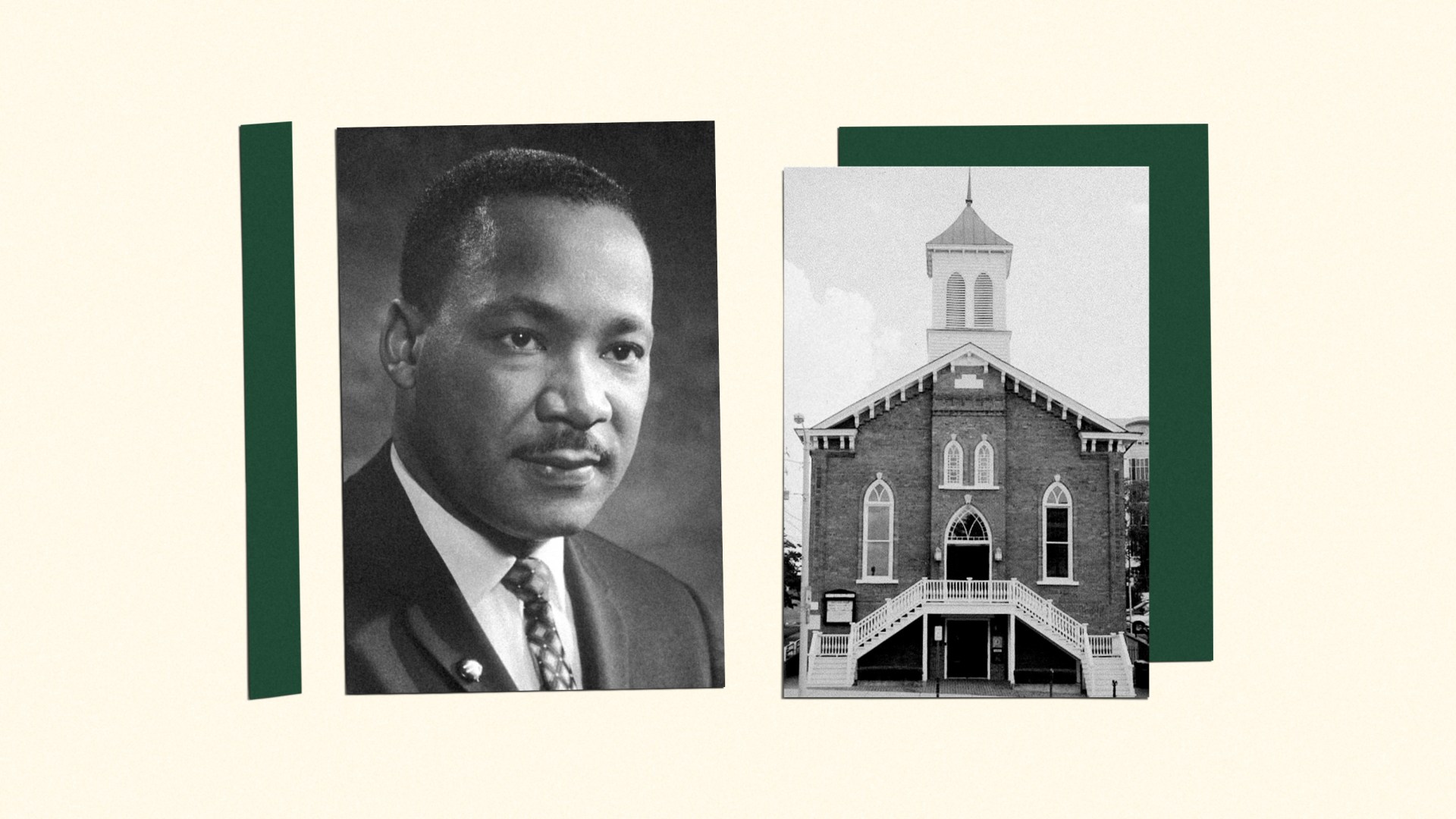
An image of MLK and an image of the church he pastored.
Christianity Today September 26, 2025
Illustration by Elizabeth Kaye / Source Images: WikiMedia Commons

(This is the third in a series. Here are the first and second articles).

Americans know a lot about Martin Luther King Jr., but the evangelical legacy of the church he pastored in Montgomery, Alabama, is a lesser-told story.

Like many African American churches, Dexter Avenue Baptist Church (now Dexter Avenue King Memorial Baptist Church) grew from the evangelical tradition of the antebellum era. Yet the congregation’s history and development reflect the Black church’s complicated relationship with the movement.

For the third installment of this series, I wanted to write about why many Black churches with evangelical roots and beliefs don’t identify with the label today. I’ll be exploring that question through the story of Dexter, which has played a seminal role in American history.

The roots of the influential congregation date back to an enslaved preacher named Caesar Blackwell, who, during the Second Great Awakening, drew large crowds by preaching the gospel. At that time, spiritual life in Montgomery reflected the religious landscape of the country before the Civil War. The city had fervent revivals, a passion for evangelism, and Christian communities focused on spreading the message of the Cross.

Often, these practices crossed the color line. The number of Baptists in the city, for example, grew in part because of revival meetings that brought together white and Black people. Some interracial mission work emanated from the conviction that everyone was a sinner in need of God’s grace and saving redemption. But at the same time, Black people (and a growing number of Christians among them) were living under the bondage of slavery and racial oppression.

Dexter, for its part, began in Montgomery’s First Baptist Church, a white congregation that opened its doors to Black converts swayed by evangelical preaching before the start of the war. When Black congregants grew numerous enough to form their own congregation, they met with supervision in the basement of the church and, for the first time, elected their own leaders.

After the Civil War, newly emancipated slaves were encouraged by the 13th and 14th amendments and anticipated that old marks of inferiority, such as segregated church seating and white paternalism, would dissolve.

However, when leading postbellum theologians and white church leaders doubled down on racial hierarchy, a growing number of Black Christians left racially mixed congregations and formed their own churches. Among them were the Black congregants of First Baptist Church. In 1867, they established the first independent Black Baptist church in Montgomery. Then about ten years later, some members split off and formed Dexter Avenue Baptist Church. The congregation soon selected Charles Octavius Boothe, a prominent and influential preacher, as its first pastor.

Boothe, born as a slave, was representative of the devout Black Baptist community around him as well as the leaders who shepherded Dexter in the decades to follow. He first encountered the gospel through his family, including his grandmother, whom white and Black people alike sought out for prayer due to her fervent spiritual life. Boothe’s family life, however, was interrupted when he was abruptly sold to a white man at the age of six.

Evangelical passion for sharing the gospel came in tandem with the harsh realities of slavery. Still, the true “gospel story,” Boothe said, “bound me to it with cords which nothing has been able to break.”

When the Civil War ended, Boothe dived into ministry as a part of his newfound freedom and became an ordained minister. This period presented an opportunity for the Black church to lead the African American community in establishing its own institutions, embracing racial uplift and planting churches that had all the marks of evangelical faith. Boothe joined with other newly independent Black Baptists and formed a convention that planted churches and sent missionaries throughout the war-torn South and abroad, both to share the gospel and to do works of charity.

After a short tenure as the head of Dexter, Boothe left to pastor another church and began serving as the president of Selma University. Dexter continued its “evangelical ministry” into the 20th century, church historian Zelia Evans said. But over time, the church’s theological scope widened with the advent of the Social Gospel. 

The 20th century brought on fierce debates between theological modernists (who were often aligned with the Social Gospel) and fundamentalists. Those disagreements culminated in the fundamentalist-modernist controversy, which ushered in a wave of denominational splits between the two camps. But for the Black church, things were more complicated. Black Christians saw both groups had something valuable to offer.

Fundamentalists like Dwight L. Moody sustained their passion for evangelism and their concerns for doctrinal faithfulness. But they were not as concerned with the bleak reality Black people faced in the post-Reconstruction South. Their disengaged response to the rise of Jim Crow laws and the uptick in racialized violence, supported by a segment of white theologians, was distasteful and hypocritical. As a result, a significant number of Black churches rejected the racial politics played by many fundamentalists while supporting the movement’s doctrinal opposition to theological liberalism.

Many of Dexter Avenue Baptist’s early 20th-century ministers attended Virginia Union University, a popular training spot for Black preachers that exposed students to the Social Gospel. When they entered ministry, some pastors—such as Robert Judkins and those who immediately came after him—advocated for racial equality while maintaining their evangelical orientation. They upheld the authority of Scripture and were bold about preaching the gospel, sending out evangelists and missionaries at home and abroad.

When the Civil Rights movement began to pick up around the middle of the century, the church was drawn further into the Social Gospel. Leaders like Vernon Johns and Martin Luther King Jr. emphasized America needed to overcome its centuries-long racial caste system. In their sermons, they never contested Dexter’s doctrinal commitments. However, they made it clear that orthodox beliefs alone would not improve their predicament as oppressed people. Black Christians, as a result, directly confronted racial injustices (including through a prominent boycott organized at the church).

As white evangelicals separated themselves from the fundamentalists in the mid-century, leading evangelicals like Carl Henry did disavow fundamentalists’ inability to call out the ills of society. But not everyone got on that train. The National Association of Evangelicals (NAE) rejected invitations from Black clergy to participate in civil rights marches or direct action campaigns. Meanwhile, the National Council of Churches, a predominantly mainline ecumenical body that currently includes some Black denominations, took them up on the offer. The result was that white evangelicals missed out on participating in Black Christian history during one of its most defining moments. 

For many African American believers, the NAE’s approach to evangelical Christianity did not fully capture the ideals of faithfulness. Evangelicalism, as portrayed by those who proudly carried its name, strove for intellectual orthodoxy and a passion for evangelizing the world, but it only timidly applied that same faith toward social issues. Over time, organizations like the National Black Evangelical Association emerged to fill the void. But for the most part, African American Christians never came to embrace evangelical as a self-descriptive title.

In the decades following the Civil Rights Movement, evangelicalism’s association with political conservatism has not done much to convince the Black church to reassert its evangelical roots. Nor have the developments of new theological movements, such as Black liberation theology and womanism, that have created often unspoken factions within some major Black denominations. Nonetheless, studies, such as Marla Frederick’s Between Sundays, show that though many (if not most) Black laypeople do not identify as evangelicals, they embrace the authority of the Bible and the tenets of the wider evangelical tradition.

Today in Montgomery, the antebellum roots of the evangelical tradition still show at Dexter Avenue Baptist, which holds services every week. The church is affiliated with the Progressive National Baptist Convention, a denomination that emphasizes social justice and estimates its membership at 2.5 million.

The congregation did not make a representative available for an interview on its current-day activities. Its public-facing materials show an embrace of the “Romans Road” form of evangelism, faithfulness to the Scriptures, and Christ-centered charity work. Still, the modern-day descriptor of evangelical isn’t always a useful label for congregations that see racial equity as an aspect of gospel fidelity. The term may describe the church’s roots. But the contemporary understanding of the label in the US doesn’t describe its present.

Jessica Janvier is an academic whose focus crosses the intersections of African American religious history and church history. She teaches at Meachum School of Haymanot and works in the Intercultural Studies Department at Columbia International University.

News

Pastor Abducted in Nigeria Amid Escalating Kidnapping Crisis

UPDATE: Armed gangs said Audu Issa James died while in captivity.

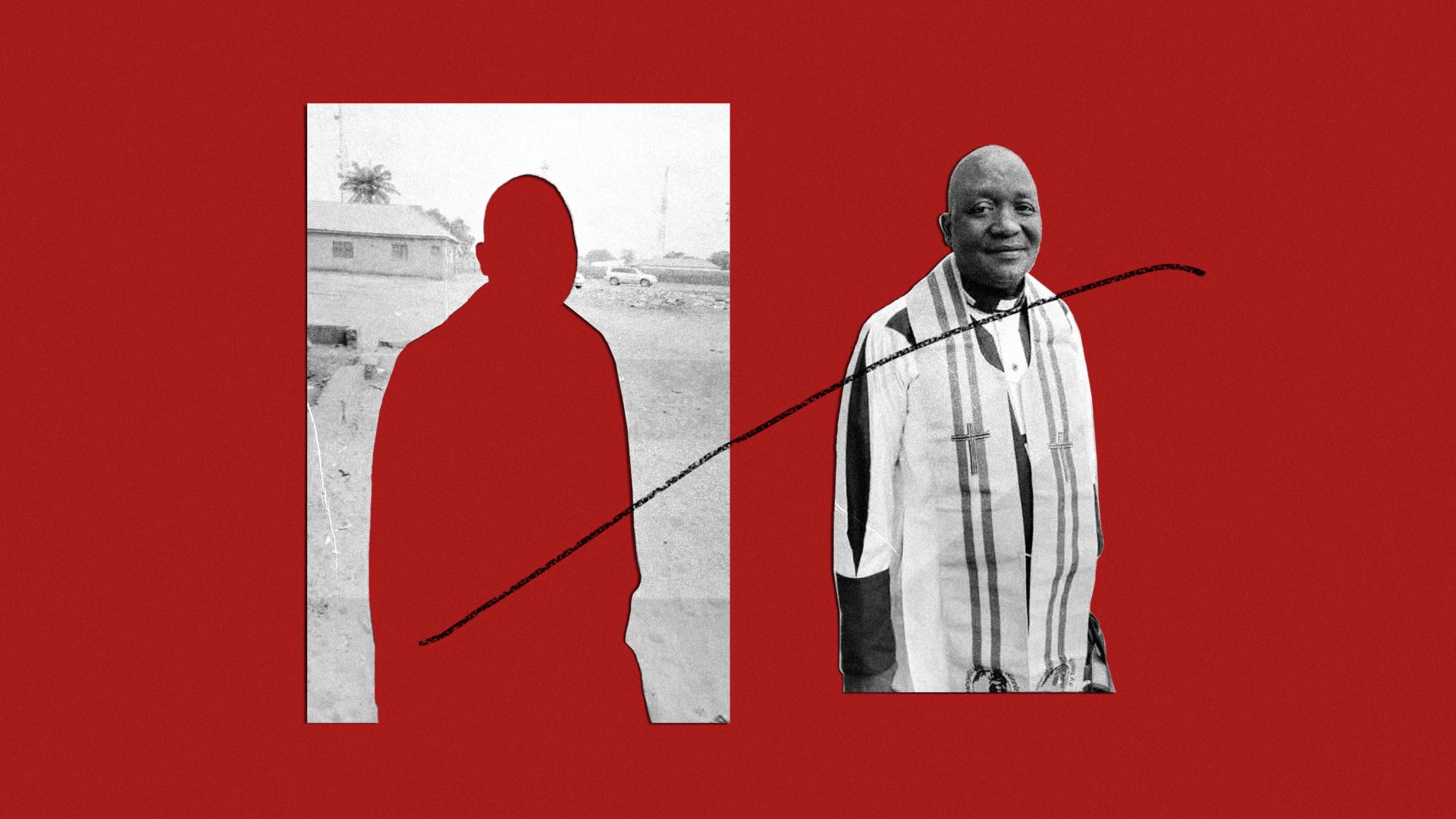
An image of the kidnapped pastor.
Christianity Today Updated October 14, 2025
Illustration by Elizabeth Kaye / Source Images: Emmanuel Nwachukwu

Key Updates

October 14, 2025

James’s family learned that Audu Issa James died during the night on September 9. Theophilus said the bandits informed the family through a negotiator nearly a month later after the pastor’s death. The kidnappers claimed he went to sleep and didn’t wake up.

“He was diabetic and probably died from the pain of captivity and his underlying health issues,” Theophilus said. The bandits buried James at an unknown location. James’s family has sought police help, but Theophilus told CT they are unwilling to help.

“There is no closure for us,” he said. “Our only consolation is that his death was somehow peaceful.”

September 26, 2025

After dinner on August 27, pastor Audu Issa James bid his wife, Beshi, and two of his children good night. He then went to bed. By 11 p.m., barking dogs woke him.

Four gunmen stormed Ekati village in Kwara State in north-central Nigeria and made their way to the parsonage. James resisted, but they proved too strong. The bandits demanded the money of Evangelical Church Winning All Ekati, but James didn’t have it. They tied his hands, covered his eyes, and took him away.

James, 65, is only one among at least 145 Christian clergy in Nigeria kidnapped from 2015 to 2025. The Open Doors World Watch List recorded at least 2,830 Christians kidnapped in Nigeria in 2024, “far more than other countries in the same year.”

Kidnappers were also active in neighboring states: They snatched pastor Ayodeji Akesinro from his home in Upenme in the southern state of Ondo a day after James. Another group kidnapped pastor Friday Adehi of the Christian Evangelical Fellowship of Nigeria in Itobe, a city in the north-central state of Kogi, after a church service on August 24.

“We don’t even know for sure what [the kidnappers] want,” said Gabriel Dunia, Roman Catholic bishop of Auchi. Dunia’s comments came after gunmen attacked Immaculate Conception Minor Seminary in Ivhianokpodi, Nigeria, on July 10, killing a security officer and abducting three seminarians. “We see a growing pattern of attacks directed against Christian communities and institutions,” he said.

In June, armed bandits disrupted the peace in Patigi. Local hunters tried to fend them off. Their homemade guns were no match for the bandits’ sophisticated rifles. The bandits killed at least 15 hunters, then abducted farmers and traders.

“It had been going on for a little long before it happened to my dad,” James’s 34-year-old son Theophilus said.

Trouble also festered within. Young men in their late teens and 20s bragged about earning money by telling kidnappers about rich villagers.

Ten days before the kidnapping, James warned the youth in his church to avoid this dangerous path. The church also took an offering for some of its projects, drawing kidnappers’ attention and making him the next target. 

James’s abductors contacted his family on the morning of August 28, demanding a ransom of 100 million naira ($67,000 USD)—an impossible sum for villagers.

The kidnappers halved their demand after hours of negotiation. James’s family bargained for a payment of 5 million naira ($3,000 USD) to get him back, which the bandits settled for on September 7. The family sold all they could and borrowed from friends. On September 9, family friends took the money to a bush path in Ekati. Then the abductors changed their mind and insisted on receiving the balance of 45 million naira ($30,000 USD).

“They refused to release him. Baba is still with them,” Theophilus told CT. “Our mother has been heartbroken.”

Kidnappers have also killed hostages after payment of ransoms. In July, kidnappers killed at least 35 people they abducted from a village in northern Zamfara state despite receiving a ransom of 1 million naira ($665 USD) for their release.

The government said the killers would be brought to justice, but it has made no arrests.

Theophilus remains wary of another phone call: “We will have to tell them [the kidnappers] we don’t have any money again. We have sold all we own.”

Kidnappings escalated in Nigeria’s oil-producing Niger Delta region in the early 2000s when militants began abducting oil workers for ransom and political gain. The crime has since spread nationwide, with bandits kidnapping and ransoming people as a means of making money.

According to research by SBM Intelligence, a Nigerian-based geopolitical research firm, at least 4,700 people were abducted and 2.56 billion naira ($1.7 million USD) ransoms paid between July 2024 and June 2025. SBM Intelligence blamed the Nigerian government for failing to dismantle bandit networks and address the root causes of kidnappings.

Extremist groups such as Boko Haram and Fulani militants also kidnap Christians in remote areas. Their chilling intent, according to missionary Isaac Agada, is to sow fear and stop missionary efforts.

“Once they discover that you are a Christian or this is a Christian community, you become the major target,” Agada said. “And if you’re a missionary or a pastor, then you are a more special focus.”

The United States Commission on International Religious Freedom urged Nigeria to address the “impunity” enjoyed by perpetrators and address Nigeria’s problem of Muslim-Christian violence.

More than two years into Nigerian president Bola Tinubu’s tenure, critics say the government is not doing enough to deliver on promises of enhanced security.

“The [government’s] inability to effectively gather and utilise intelligence has contributed to the current security challenges facing the country,” said Opialu Fabian, a security consultant.

A 2022 law banned ransom payments for kidnapped persons and imposed a minimum 15-year jail term for violators. Abduction is punishable by death if victims die or life imprisonment if they don’t.

However, the country’s centralized police system weakens implementation. The Nigeria Police Force (NPF) remains under federal control. Governors lack authority over the NPF due to concerns about potential abuse for political purposes.

In early September, Governor Dauda Lawal of Zamfara State decried the national government’s inability to fight the bandits. The governor responded to an incident in Shinkafi local government area, where bandits had attacked and security forces had refused to act without federal approval.

“We cannot do anything beyond our powers,” he said. “If today I have the power to give orders to the security agencies, I can assure you, we will end banditry in Zamfara within two months.”

Gideon Para-Mallam, a Christian missionary based in Plateau state, told CT state governors should be empowered to tackle banditry in their states. Para-Mallam argued the failure of the Nigerian government to admit Christian persecution has contributed to why the government hasn’t implemented structural changes to the security apparatus.

“The worst is the denial of the reality of pastors being persecuted,” Para-Mallam said. “There is very little sympathy towards these pastors.”

Books
Review

The Liturgy of American Charisma

Historian Molly Worthen studies dynamic leaders, eager followers, and their shared efforts to “consecrate a new reality.”

The book cover on a blue background.
Christianity Today September 26, 2025
Illustration by Christianity Today / Source Images: Getty, Penguin Random House

At a 2016 rally in South Carolina, future president Donald Trump ended his stump speech with an unusual appeal: “It’s all morphed into one big beautiful package. And the package is called you, but maybe it’s in the form of me. The beautiful package that we’re going to do. And you’re going to be so proud. And you’re going to be so happy. And you’re going to win again.”

Trump’s strange crescendo supplies one of the closing anecdotes in historian Molly Worthen’s absorbing new book, Spellbound: How Charisma Shaped American History from the Puritans to Donald Trump. This could appear odd at first glance given that Trump, despite abounding with charisma, might not seem like an obvious example of Worthen’s core subject, charisma’s spiritual power. But Trump and his adherents illustrate something essential about her definition of charisma as something fundamentally relational.

A charismatic leader offers followers an opportunity to feel connected to a grander narrative, which imparts a sense of greater importance to their lives. As Worthen observes, they believe they have surrendered to something larger than themselves, gaining entry into “an alternative world in which followers find that they have secret knowledge, supernatural promise, and special status as heroes.” While this relationship grants the charismatic leader great power or prestige, it remains fundamentally an exchange, “a liturgical act” in which the two parties “consecrate a new reality.”

Yet this charismatic relationship is simultaneously powerful and brittle. Drawing on the thought of sociologist Max Weber, who analyzed the relationship between charisma and authority, Worthen notes that charismatic leaders must ultimately prove the authenticity of their divine mission through the flourishing of their followers. “If they do not fare well,” she writes, then the leader “is obviously not the master sent by the gods.” Thus, charisma is “an alloy of authoritarian and democratic impulses, strong enough to overturn social orders, yet somehow so weak that it melts away if followers cease to honor it.”

To return to the charisma of Donald Trump, his personal story often follows this kind of framing. His gilded wealth and political success supposedly confirm that he lives a #blessed life, from his victories over bankruptcy to what he said was the divine redirection of an assassin’s bullet in Butler, Pennsylvania. He then invites his followers to participate in his blessing, joining his grand struggle to make America great again while pouring out his anointing on their own finances, communities, and aspirations.

Yet the spell can break if the promise goes unfulfilled. If, say, Trump’s tariff and immigration policies were to hamper American prosperity or tear apart families and communities, followers might come to reject him as a false prophet.

Charisma, then, depends on a leader’s ability to craft a message in tune with the anxieties and insecurities of a particular place and time. In the case of America over the last half century, many of those core anxieties have arisen in response to secularization, which Worthen defines as the process by which traditional institutions—in both religion and politics—lose influence over our lives.

We see these patterns in declining rates of church attendance, waning trust in political parties, and networks of civic and communal participation giving way to habits of “bowling alone” (to use Robert Putnam’s memorable phrase). But none of this saps people of their fundamental need for spiritual succor. Secularization merely opens a void for charismatic entrepreneurs, who offer to fill it with a force of personality and a grand narrative.

This is hardly new. For example, in the 1830s, the “burned-over district” of Western New York witnessed waves of religious revivalism, democratic revolution, and economic transformation. With established authorities and institutions swept aside, a range of treasure hunters, millenarian prophets, and metaphysical entrepreneurs rushed in to take their place.

The resulting upheaval birthed groups as diverse as Joseph Smith’s Mormons, the Millerites (named after lay Baptist preacher William Miller, who predicted that Jesus would return to earth around 1843), and the spiritualists poking at the veil between the living and the dead. Despite substantial differences in theology and practice, these groups united around their rejection of Puritan theological conventions and their embrace of common-sense realism—a belief, in Worthen’s words, that “humans perceive the world directly and reliably with their senses.”

This kind of confidence naturally fuels a measure of skepticism toward the claims of expertise and the weight of educational credentials. As David Reese, a New York City medical doctor in the 1830s, put it, charlatans

have only to decry all existing systems, denounce all the learning of the schools, condemn and revile all prevalent opinions on any and every subject, and they will find here a great multitude of disciples, who will eagerly listen to their oracular teachings, and drink in wisdom and knowledge with the most marvelous credulity.

This sensibility should not strike modern readers as particularly alien. One might as well be discussing contemporary suspicions of university-produced expertise or calls to “Make America Healthy Again” fueled by widespread distrust of the medical establishment.

The similarity between anti-elite sentiments in the 1830s and the 2020s illustrates another of Worthen’s core contentions:, that charisma is cyclical. Charismatics seesaw from generation to generation between those inclined to tear down existing social institutions and those seeking “metaphysical conquest” or mastery over social anxiety through a kind of spiritual scientism. While tracing this crooked path, Worthen constructs a taxonomy (at times overly rigid) of the five types of charismatic leaders: prophets, conquerors, agitators, experts, and gurus. Each type may respond differently to the challenges of a particular era, but they do so in ways that echo across the generations.

Consider for instance, what fundamentally unites the 19th-century occultist “investigator” who explored the afterlife at a seance and the 21st-century podcast host who proclaims the liberating power of “do[ing] your own research.” Both figures embody a rejection of expertise, differing only in the specific authorities they spurn, whether Puritan divines or pointy-headed academics with worthless pieces of paper on their walls.

Worthen makes these kinds of surprising connections throughout the book. She does not draw neat lines between sacred and secular modes of charisma. After all, they flow from similar ideas or impulses.

For instance, Worthen observes common tendencies within the various countercultural movements of the 1960s–1970s, lumping together charismatics as ostensibly dissimilar as left-wing activist Angela Davis, end-times writer Hal Lindsey, Marxist theorist Herbert Marcuse, and faith-healing preacher Kathryn Kuhlman. Each movement, Worthen writes, “acted upon a deeper … emotional substrate” rooted in disenchantment with established authority and a desire for “personal experiences that felt real and important when so much around them seemed phony and pointless.” Worthen, in other words, invites readers to consider the fundamental spirit of a given age, not merely how it manifests in particular figures or movements.

Along the way, she conveys both the breadth and the depth of the American religious tradition, from Shakers and spiritualists to Mormons and mesmerists. Familiar figures like Puritan dissenter Anne Hutchinson appear alongside more unfamiliar names, like Dona Beatriz Kimpa Vita, whom Worthen calls the “Kongolese Joan of Arc.” Or Benjamin Lay, the abolitionist Quaker radical and “holy fool” who shocked his Philadelphia congregation by plunging a sword into a Bible filled with fake blood to dramatize God’s judgment against slaveholders. At times, readers might lose Worthen’s through line amid a welter of anecdotes, but her vignettes are vividly told.

Worthen takes the figures often relegated to the periphery (if they are mentioned at all), like Lay and Kimpa Vita, and places them back in the main line of the American religious tradition. In this way, she avoids the survivorship bias that crops up in certain historical accounts that assume a movement’s numerical growth and chronological persistence are reliable measures of its significance.

If Worthen’s book contains one major omission, it pertains to the role of technology in cultivating and amplifying charisma. Spellbound includes ample references to charismatic use of mass media technology, especially radio, from the likes of Franklin Delano Roosevelt, Charles Coughlin, and Rush Limbaugh. Yet the book provides little substantive analysis of this phenomenon. For Worthen, “new media technology has always shaped the expression of American charisma, but it has never been the marrow.”

This may represent a needed corrective to ritual invocations of Marshall McLuhan, for whom “the medium is the message.” And yet it is not mere happenstance that many of the charismatic entrepreneurs Worthen so ably describes were also pioneers of new mass media, from Robert “Fighting Bob” Shuler and Aimee Semple McPherson in Roaring ’20s Los Angeles to televangelists like Pat Robertson and Jerry Falwell in 1980s Virginia.

New technologies and communications have allowed a dizzyingly diverse array of charismatic insurgents to leapfrog incumbent denominations and stale institutions. Whether it is tales of fortune-finding magical seer stones, the social media lamentations of Donald Trump, or visions of the imminent return of Christ, all stories—even the prophetic ones—rely on a means of distribution to break through the noise. 

This does not diminish Worthen’s accomplishment with this book. She offers a compelling corrective to the blander species of religious history produced for a churchly audience, which has a habit of sanitizing the past, stripping it down to a dutiful trudge from forefather through forefather that eventually arrives at the front steps of the First Baptist (or Methodist or Presbyterian) Church down the street. Worthen restores a sense of wildness to the history of Christianity in America, inviting the reader to glimpse the charismatic bonds that entice and enchant us all.

Paul Matzko is a historian specializing in the intersection of politics, religion, and technology in modern America. He is the author of The Radio Right: How a Band of Broadcasters Took On the Federal Government and Built the Modern Conservative Movement.

Apple PodcastsDown ArrowDown ArrowDown Arrowarrow_left_altLeft ArrowLeft ArrowRight ArrowRight ArrowRight Arrowarrow_up_altUp ArrowUp ArrowAvailable at Amazoncaret-downCloseCloseEmailEmailExpandExpandExternalExternalFacebookfacebook-squareGiftGiftGooglegoogleGoogle KeephamburgerInstagraminstagram-squareLinkLinklinkedin-squareListenListenListenChristianity TodayCT Creative Studio Logologo_orgMegaphoneMenuMenupausePinterestPlayPlayPocketPodcastRSSRSSSaveSaveSaveSearchSearchsearchSpotifyStitcherTelegramTable of ContentsTable of Contentstwitter-squareWhatsAppXYouTubeYouTube