Church Life

Why an Early American Missionary Family Was Beloved in Lebanon

Over five decades of multigenerational ministry, the Eddys pioneered health and educational outreach.

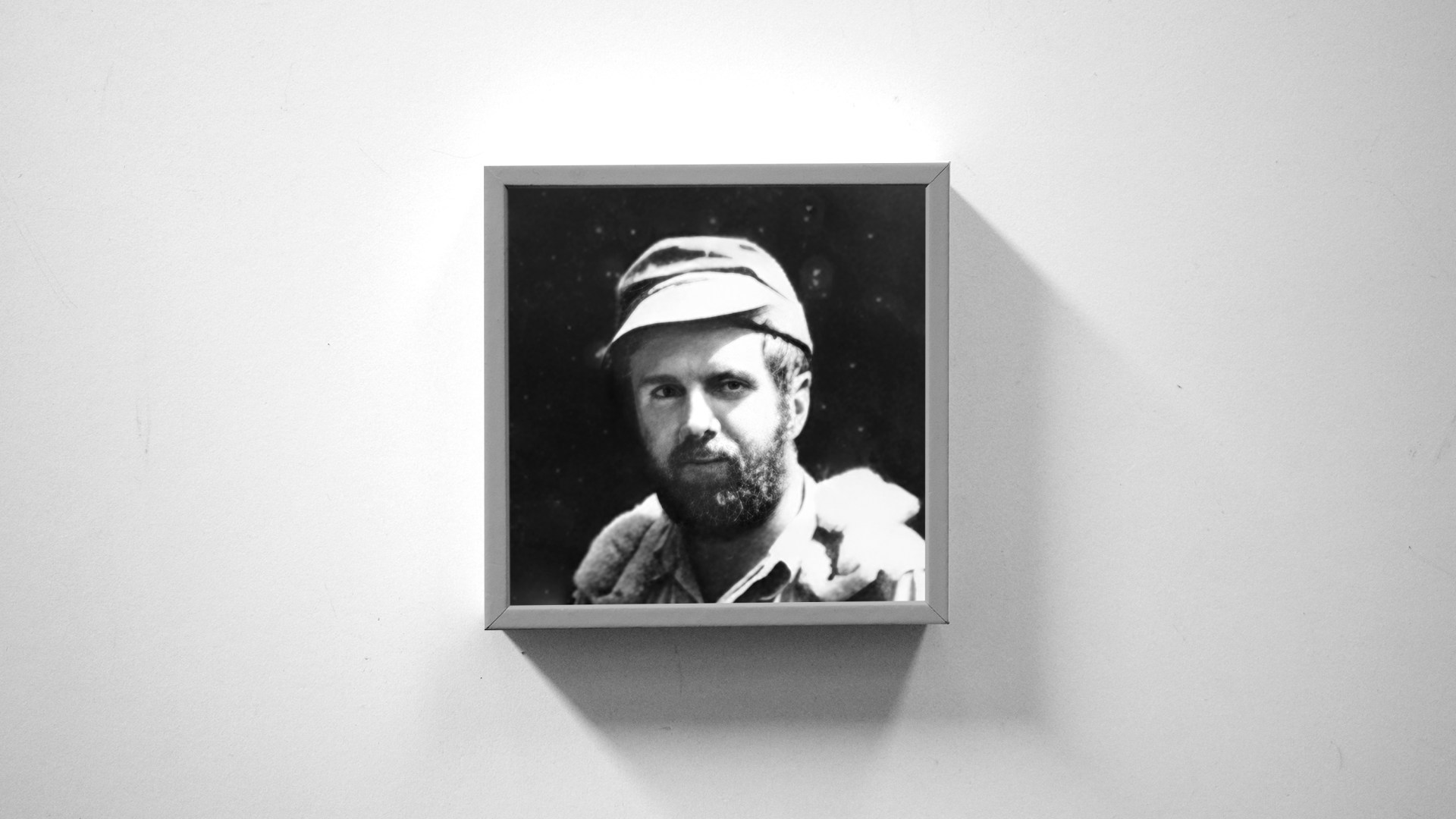
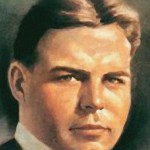
William King Eddy

William King Eddy

Christianity Today September 4, 2025
Illustration by Christianity Today / Source Images: Courtesy of Nick Eddy

Pastor Michael Sbeit stood pensively in front of the marble gravestone in the evangelical cemetery of Sidon, a Lebanese city 25 miles south of Beirut. Mediterranean Cypress trees offered shade from the sweltering summer heat, while their fallen brown needles covered the ground and obscured the inscription engraved in both English and Arabic:

William King Eddy
Born March 13, 1854
Died Nov. 4, 1906
Served the Lord in Syria 28 years

Next to the grave of William King Eddy (hereafter “King”), is the grave of his wife, Elizabeth Nelson Eddy. Her tombstone honors her 49 years of service. Several feet away lies the body of their son, William “Bill” Alfred Eddy, who died in 1962.

The Eddys were an American family who originally came as Protestant missionaries to late 19th-century Lebanon, then part of the Syrian region of the Ottoman Empire. Several family members, including King’s sister Mary Pierson Eddy, and their father William Woodbridge Eddy (hereafter “Woodbridge”) are buried in Beirut.

“They were pioneers of our church,” said Sbeit, who leads the Presbyterian congregation the Eddys’ missionary colleagues founded in Sidon. “We don’t have many like them anymore.”

Two generations of Eddys shared the gospel, built schools, and offered healthcare. The last of their line in Lebanon left a more colorful legacy. William Alfred Eddy’s gravestone notes nothing about service to the Lord and instead displays his rank of colonel in the US Marine Corps.

“Bill loved this city,” said Sbeit. “But he was different.”

This two-part story chronicles the Eddy family’s multigenerational commitment to Lebanon. The family’s modern biographer is Muslim: Sheikh Muhammad Abu Zaid, president of the Sunni Sharia Law Court in Sidon. In Forgotten Pages from the Ancient History of Sidon, he expresses his deep appreciation for their foreign service.

“It is not how we look at the Eddys,” he said. “But how they looked at us.”

Abu Zaid’s sympathetic portrayal of Protestant missionaries contrasts with the more conflicted views that many Lebanese Muslims and Christians have held. Some view them as “sheep stealers” trying to convert the original Catholic, Orthodox, Sunni, Shiite, or Druze populations. Others see them as Western agents advancing America’s political agenda. Still others defend them, citing their years of devoted social service. The Eddys offer evidence each narrative could note.

The family’s story began when Chauncey Eddy, a Presbyterian pastor from New York joined the American Board of Commissioners for Foreign Missions in 1823. But when poor health impeded a potential missionary career, he prayed that God would call his children in his stead. His son Woodbridge and his daughter-in-law Hannah moved to the Levant in 1851, a year after the Ottoman sultan issued a decree to include the Protestant faith among the empire’s legally recognized sects.

The couple’s ministry started in Aleppo by learning Arabic before moving to the Lebanese mountain village of Kfarshima. In 1857, Woodbridge and Hannah moved south to Sidon, where they served in an evangelical church planted two years earlier. They replaced missionary Cornelius van Dyke, who left to complete a translation of Arabic Bible still cherished by many Middle Eastern Christians today.
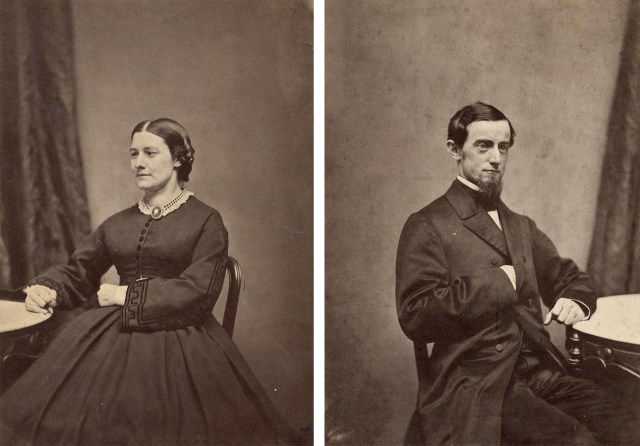
Hannah and William Woodbridge EddyCourtesy of Nick Eddy
Hannah and William Woodbridge Eddy

Chauncey visited his son a year later, delighted at the fulfillment of his prayers. He even preached to the fledgling church, and Woodbridge translated his father’s sermon into Arabic. Over the next two decades, the young couple made their base in the city while continuing van Dyke’s preaching tours in nearby villages. Meanwhile, many of their missionary counterparts set up mission stations in the mountains, populated by Maronite Catholics and heterodox Druze Muslims.

Ottoman authorities neglected education in both urban and rural areas alike. Protestant missionaries prioritized learning not only so people could read the Bible but also to help “civilize” the people. Woodbridge contributed, working alongside local masons to build a school for girls in Sidon that Hannah later administered. 

In 1878, Woodbridge returned north to teach theology at the Syrian Protestant College (later, the secular American University in Beirut). By the end of his life, he had written a five-volume commentary in Arabic on the New Testament, which Lebanese Protestants continued to use well into the 20th century. He died in Beirut in 1900, mourned by missionary colleagues and the Arabic pastors he helped train. Hannah died four years later, proud to see three of her five children continue in mission work.

When the Eddy family first came to the region, the feudal society suffered from complex religious rivalries and chaotic colonial interests. As the Ottoman Empire declined, England and France vied for influence among the different sects, which increased the tensions between them.

While many Muslims were unhappy with the colonial powers, they felt neutrally or even positively towards America, which did not play an active political role in the region at that time. Nevertheless, local conflict could still affect mission work. In 1860, for instance, a war between Druze and Christians killed several Catholic missionaries and displaced many American Protestants from their preaching stations.

The schools and medical care that the Eddys and their colleagues offered helped build local relationships. Many missionaries focused their outreach on Muslims and Jews, but as Catholic and Orthodox Christians often profited from their services, church leaders bristled when their members joined Protestant congregations.

Woodbridge’s daughter Mary Pierson Eddy confronted these tensions as a missionary doctor. Born in Sidon and raised in Beirut, at age 22 she suffered a severe fever and nearly died. After she recovered, the experience inspired her to pursue medicine, and she moved to the US to study for several years.
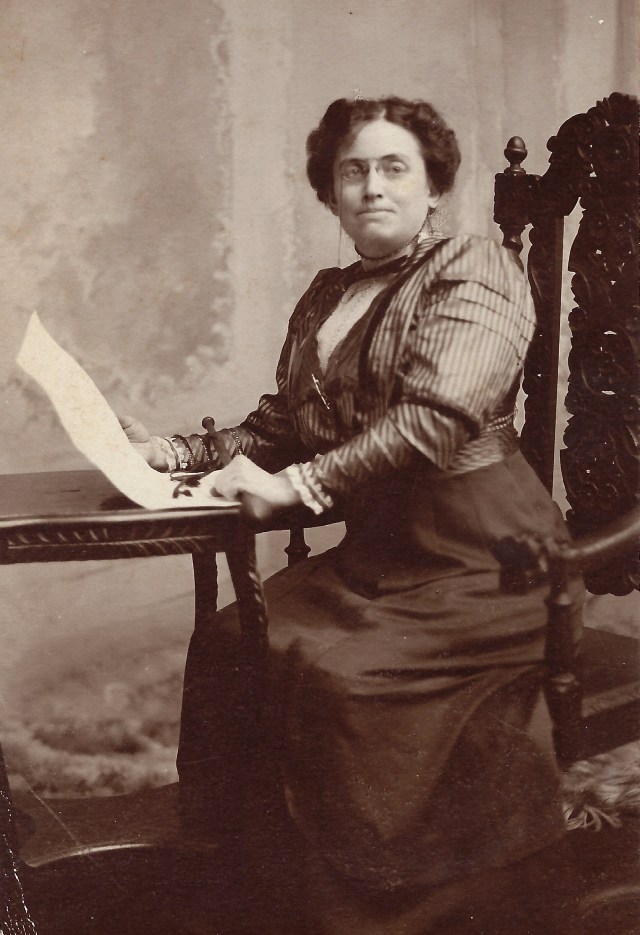
Courtesy of Nick Eddy
Mary Pierson Eddy

In 1892, Mary traveled to Istanbul, the capital of the Ottoman Empire, and began learning Turkish. The medical committee was confused to see an American woman with perfect Arabic. For the next six hours, she answered their questions and eventually obtained her medical license. 

“I am one of you,” Mary told the committee. “I grew up among you.”

After passing the examination, Mary became the first female doctor in Ottoman realms. She spent the next 20 years traveling from Beirut to various villages to treat patients, and in 1904, she opened a center for tuberculosis. Local Maronite clergy grew frustrated at the Protestant presence and eventually compelled her to leave their mountain areas, counseling Christians to avoid her clinics. Mary could not help but notice that sick priests suffering from lung disease still came to her for treatment.

Over time, the physical toll of Mary’s travel threatened her eyesight and ability to walk. In 1916, she went to America seeking care and rest. But as her situation worsened, Mary moved back to Lebanon. She died one year later in Beirut and is buried in the city’s evangelical cemetery.

Mary’s brother William King shared a similar attachment to this part of the world. After graduating from Princeton University in 1875, he took over his father’s ministry in Sidon at age 24 and preached widely in the villages outside of the city. But he also responded to local injustice—brokering land sales in local villages for tenant farmers to free themselves from feudal control.

While his mother Hannah and later his sister Harriet administered the girls’ school, King added a boys’ wing in 1881. Today, the co-ed National Evangelical Institute for Girls and Boys is one of the top schools in Sidon. Missionaries later remarked that their educational efforts brought two schools to every village—their own and the one that Catholics, Orthodox, or Muslims built soon after.

“The Eddys had a vision,” said Sbeit. “Missionaries helped us change.”

In 1906, King was preparing to preach in Alma, a village in northern Palestine, when he felt chest pains. At age 52, missionary colleagues considered him one of the strongest on the team. But now sensing his death, he instructed his Bedouin assistant, who had become a Christian, to secure transportation that could return his body back to Sidon.

After King died, a boat carried his corpse by boat to Tyre. When a storm struck, his friends took the body the rest of the 20-mile journey to Sidon by land. The following day, Muslim, Christian, and Jewish leaders across Lebanon attended a service at the evangelical church. Local shops closed in his honor, lining Sidon’s alleyways for the funeral procession.

Abu Zaid used King’s final words as the opening quote of his book: “Put my body in a coffin and then take me to Sidon. I wish to be buried over there, among the people of which I belong.”

King’s wife Elizabeth returned to America with their two younger children. Both were with their father on that fateful trip and read Psalm 23 to him before he died. After they reached adulthood, Elizabeth returned to Lebanon, passing away in 1931. She was buried beside her husband in Sidon, and her tombstone notes 49 years of service to the Lord.

The younger child, William “Bill” Alfred Eddy, was 10 years old when he watched his father die. He eventually took a path of his own, and his story will be told next in part two.

Culture

Are Christians Hotter?

The social media “Jesus glow” trend is just another kind of prosperity gospel.

Glowing makeup brushes and lipstick.
Christianity Today September 4, 2025
Illustration by Elizabeth Kaye / Source Images: Pexels

Some Christian women on the internet seem convinced that Jesus wants them to be holy—and hot.

If you search “Jesus glow-up” on Instagram or TikTok, the first video to show up will likely follow a template. First, there’s a variation on the words “The Jesus glow isn’t real” (a statement the content creator aims to debunk) overlaid on a series of photos or videos showing the users in their “pre-glow-up days”—that is, before they committed their lives to Christ. Then there are the “after” images, meant to provide evidence that their newfound devotion has noticeable physical effects. Often the videos are set to a mash-up of an Olivia Rodrigo song, either “deja vu” or “traitor.”

One influencer posted a “before” video of herself wearing club clothes, a spiked collar, and dramatic makeup. After, she poses and twirls for the camera in long, flowy dresses and skirts. (Her TikTok has over 1 million likes.) Another user shared pictures of her heavily made-up face and collection of crystals. After, she’s wearing a cross necklace and reading the King James Bible.

Christian influencer Hailey Serrano (who goes by Hailey Julia on social media) posted four “before” pictures of herself smirking at the camera. A transition slide with a cross emoji precedes five “after” images of Serrano smiling in noticeably better lighting and softer makeup.

“I can confirm that the Jesus glow is, in fact, real,” Serrano wrote in the caption.

Some internet personalities are even sharing advice to guide others on their glow-up journeys. Christian influencer and cookbook author Ashley Hetherington posted a list of “Christian glow up tips,” including run-of-the-mill spiritual advice like “Bible before phone,” “join a church,” and “memorize scripture” alongside wellness tips like “whole foods,” “move body,” and “dress in fine linens.”

It’s easy to dismiss this trend as unserious. Perhaps in a vacuum it’s harmless. But the “Jesus glow-up” is also a symptom of something endemic and pernicious. Eagerness to claim the blessing of heightened physical beauty, bestowed from on high, is just another indication of our appearance-obsessed worldview.

These days, women can’t scroll social media without running into Ozempic mentions, #SkinnyTok, and an endless cascade of advertisements for beauty products. In this context, claiming Jesus wants to make his followers prettier is just putting a spiritual spin on the message the secular world is already sending.

I don’t necessarily doubt the sincerity of the content creators sharing these images. Some of them refer to their glow-ups as an inside-out process of internal sanctification appearing physically as some undefinable, magnetic quality. “It’s in the eyes,” commenters say, insisting they can detect a change in countenance that’s about more than aesthetics.

But on social media, a share-worthy glow-up has to be visual, and the photographic lexicon of platforms like Instagram doesn’t showcase the spiritual. It can’t differentiate between normative physical attractiveness and some deeper, virtuous, more transcendent type of beauty.

Many Jesus-glow posts use “before” pictures in which the user is wearing a lot of heavy makeup; the “after” images show a more on-trend, “clean girl” look. The unspoken subtext: “Followers of Jesus don’t look like that; they look like this.” (Some Christian influencers in alternative fashion and art scenes have pointed out that faithful believers can also look as if they are on their way to a metal show.)

At the same time, creators participating in this trend seem to be earnestly celebrating something every Christian hopes for: that the work of the Holy Spirit will transform them and bear fruit, including joy, peace, and goodness. These are certainly qualities that can change one’s life in meaningful, even embodied ways. In some cases, the advertised glow-up seems to be most directly attributed to lifestyle changes; users post “before” pictures of themselves partying, drinking, or smoking and say they’ve left behind the makeup and clothing they wore to participate in their former social worlds. Perhaps a perceived improvement in physical appearance has to do with a decrease in substance use. 

But it’s risky to offer up evidence of those physical changes to be judged by the rules of social media—especially Instagram, a platform that consistently pairs with decreased self-esteem and body image in young women.

More than anything, the Jesus-glow-up trend is a failure of imagination. Just as evangelists for the prosperity gospel can’t imagine a clearer sign of blessing than financial wealth, those who claim Jesus wants us to have a glow-up can’t imagine a clearer sign of blessing than physical attractiveness. It’s the result of our contented acceptance of the constantly shifting, often-oppressive beauty standards determined by entertainment media, male desire, capitalism, entrenched racism, and ableism.

For centuries, people have categorized and described the bodies of female followers of Christ in ways that tie the physical form to spiritual goodness. During the medieval period, hagiographies of female figures like Saint Agatha foreground the female body in grotesque, disturbing ways, describing horrifying torture scenes. According to historian Kirsten Wolf, narrators generally imbued these exemplary female followers of Christ with “irresistible beauty,” as well as virginity, an aristocratic background, and unshakeable faith.

Describing female saints in this way was what Wolf refers to as a “simplification” process: a means of making a character easily legible to a mostly illiterate audience that would be hearing the story orally. A beautiful, socially respectable virgin was sympathetic, valuable, and desirable. She was a type that persisted. Kristin Kobes Du Mez has written about the early 20th-century child evangelist Uldine Utley, whose “angelic” appearance gave her the power of perceived innocence.

Writers and artists have long endowed virtuous female characters with normative physical beauty, symbolizing that appearances aren’t skin-deep. Examples abound—from Lucie in Charles Dickens’s A Tale of Two Cities to the heroine of Disney’s Cinderella, whose beauty contrasts with the cartoonish flaws of her cruel “ugly stepsisters.”

Too often, Christians have tacitly adopted this value system. Rather than working to create a radically liberatory alternative, they’ve shackled women to beauty standards with spiritual language.

Take John Eldredge’s best-selling book, Wild at Heart: Discovering the Secret of a Man’s Soul, and its counterpart for women, Captivating: Unveiling the Mystery of a Woman’s Soul (coauthored with Eldredge’s wife, Stasi). In this vision of a fulfilling Christian life, men want to “win the beauty,” and women long “to unveil beauty.”

The Eldredges would certainly say the beauty they refer to is an inner radiance, not tied to the ever-shifting standards of the media. But when so many examples of the masculine quest for fulfillment in Wild at Heart are epic Hollywood films (in which the attractiveness of the people onscreen is part of an entertaining fantasy), one wonders what kind of grace these books are lauding. A few nods to inner beauty don’t cancel out the emphasis on desirability.

American Christian women have received a baffling collection of messages about our bodies and their value. Those who encountered Gwen Shamblin Lara’s Weigh Down program heard God wants you to be thin. Millennials who grew up on contemporary Christian music owned CDs with covers featuring slender, mostly white, pretty women; they may have read Brio magazine, which in its November 1998 issue ran an article addressing girls in the throes of puberty:

Some of your least favorite qualities are often only temporary. Perhaps your most picked-on will become your most prized possessions. It happened for me as my formerly skinny legs and knobby knees won me the preliminary swimsuit competition and a college scholarship in the Miss Oklahoma Pageant.

Today, provocateurs and Christian manosphere influencers claim Christian women are just prettier. A glut of social media content emphasizes the value of physical upkeep and fitness for believers, almost always accepting current standards as the ones faithful women should be trying to meet. Influencers connect spiritual health to weight loss and performance ability and post about 21-day water fasts to “get closer to God” while reaching fitness goals.

Not all American Christian women are political conservatives, and vice versa. But Christian women who consume right-leaning media also encounter products like Evie magazine and the “Real Women of America” calendar, both examples of attempts to prove that women on the conservative “team” are hotter.

In a way, participants in the Jesus-glow-up trend are competing in the same arms race. Whichever side has the most beautiful people must be doing something right, right? 

Christians eager to claim that women who follow their faith are more desirable are attempting a form of evangelism that turns people into showpieces, luring curious seekers with the promise of better looks. And because good looks are social currency, this has a lot in common with the prosperity gospel.

If the Christian faith is built on the life and death of one who “had no beauty or majesty to attract us to him” (Isa. 53:2) and it envisions a kingdom that upends our world’s power structures, followers of Christ should have a radically different way of looking at female bodies.

We should be able to name the harm we cause when we equate normative beauty with goodness, and we should seek to divest ourselves of a system that uses the bodies and faces of human beings to create social and political hierarchies. The glow-up prosperity gospel just keeps us competing in a perpetual beauty pageant that ultimately hurts both its winners and its losers.

Kelsey Kramer McGinnis is the worship correspondent for Christianity Today. Her book The Myth of Good Christian Parenting: How False Promises Betrayed a Generation of Evangelical Families, cowritten with Melissa Burt, will be released this October.

Ideas

Can the Tech Bros Save the World?

Silicon Valley’s leaders are trying to heal society’s ills. Christians can show a better way.

Elon Musk, Peter Thiel, and Mark Zuckerberg in a globe
Christianity Today September 4, 2025
Illustration by Mallory Rentsch Tlapek / Source Images: Wikimedia Commons, Getty

Much has been made of the daunting challenges of our times—from the global economy to artificial intelligence—with leaders from the left, right, and center all discussing how to overcome them. The people who aim to fix these supposed crises: tech-bro engineers in Silicon Valley.

Tech leaders such as Peter Thiel, Elon Musk, former Google executive Larry Page, and OpenAI’s Sam Altman have decided how they are going to handle global challenges. But are they offering the best solutions?

One recent example: The left-leaning techno-optimistic worldview from Ezra Klein and Derek Thompson in their book Abundance envisions a future where technology can fix problems of plummeting biodiversity and food scarcity, on the condition that we deregulate as much as possible and let the engineers fix the planet.

Klein and Thompson claim progressive governments are harming our progress by overregulation. They lament losing Silicon Valley engineers, such as Peter Thiel and Elon Musk, to right-wing politicians.

Many engineers see the world through that same lens: There are structural problems in our society, such as bad traffic and food shortages, and we can fix them with mere technological solutions. Musk, for example, founded his electric-car company Tesla to accelerate humanity into a sustainable economy, but is now focused on exploring Mars and addressing the population decline.

But what these technical solutions don’t address is humanity’s empty hedonism and our global economy’s dependence on Western culture’s extravagant consumerism.

Other leaders from Silicon Valley recognize that people are the problem and humanity is broken. We need food for our bodies, and our bodies are frail and need care and attention. Their solution: What if we could have superhuman bodies that transcend our limitations as humans?

Google cofounder Larry Page and Elon Musk have clashed on this issue in the past, as Page is a proponent of transhumanism and believes there are too many humans, whereas Musk is not a transhumanist. Page has labeled Musk a “speciest” in the past, where Musk allegedly replied that, yes, he was “pro-human.”

Peter Thiel, cofounder of PayPal and Palantir Technologies, lamented the limits of our bodies on a podcast with The New York Times’s Ross Douthat. Christians especially should strive to overcome these limits in transhumanistic ways, Thiel said. Are our souls not more important? Should we not strive to make a better embodiment, as we will eventually get new bodies? 

Musk has repeatedly spoken on the matter of eternal life through an uploaded personal consciousness. It would not be for him, he says. He wants peace of mind when he dies, he has said, no consciousness—just the “sweet release of death.” But with his invention of Neuralink, the brain-machine-interface chips in human volunteers, Musk draws a fine line with a techno-optimistic view.

Musk also sees space exploration as a way to save humanity. Tesla and Neuralink are meant to prolong life on earth, but SpaceX is meant for expanding life to other planets. Mars colonization, as Musk sees it, would not be to escape earth but to reduce the risk of our civilization being wiped out by a mass event such as an asteroid or virus. It would not mean a utopia for the rich but a difficult place to live for adventurous people who could form the first step in becoming multiplanetary as a species.

Finally, in addition to fixing climate and human frailty, some engineers and economists would prioritize a technological fix to our governing bodies, which they see as slow moving, overregulated, and too “woke.” We should move beyond democracy, some like blogger-turned-philosopher Curtis Yarvin argue, and forcibly toward an autocratic technocracy, where engineers and economists in liaison with artificial intelligence would make decisions for the good of the people.

But some of the biggest tech bros—Musk, Altman, and Meta’s Mark Zuckerberg—want to keep democracy alive in its current form and increasingly want to keep freedom of speech less restricted and censored. Musk favors a direct democracy on Mars, where inhabitants would vote for policies, instead of a two-tier system.

Others, like Alexander Karp and Nicholas Zamiska, two leaders from Palantir, would like to dismantle the old order that was too focused on simply building an individual-consumer state with no ideals. They see the future of the West as a technological republic, where there would be less bureaucracy and more “freedom to build, ownership of … success, and a commitment above all to results.” Instead of creating the next social app, engineers would build technologies to stop other governments from overrunning Western countries.

While a tech future in AI, democracy, and environmental solutions might sound exciting to some and uncompelling to others, Christians have always had a nuanced and hopeful response to the world’s greatest difficulties. First, Christians can encourage a holistic perspective, and that applies to AI and the preservation of democracy. Tech leaders or engineers often see the world through the lens of their hammers and software programs, and it is easy to condemn them for their reductionist view of the world and its problems.

But an overspiritual view of the challenges of this world has the same problem; seeing our world only through the lens of morality (“Poor families are broken because of divorce” or “We should just consume less, and the food shortage problem would be solved”) is reductionistic as well.

A Christian worldview could help us understand the problems of our times by seeing any challenge more holistically. Dutch philosopher Herman Dooyeweerd argues there are 15 or more different aspects of being in any phenomenon. We should look at a thing not only technically and physically (how many there are, how it moves, where it is located, how it reacts in its environment) but also psychologically, legally, morally, religiously, and so on through other perspectives.

We need this holistic worldview, where the solutions of the engineer, the legal and communal ideas of a politician, and the moral virtues of all bring change for good. We should also be wary to fight our transhumanistic tendencies, not just the obvious ones from Page or Thiel (an overspiritual view of our bodies, discarding their need for safety). We have a faith that upholds the human body and has the bodily resurrection as core belief, and we have a hope that says our bodies do count for us.

Second, Christians should not be afraid to advocate for democratic values and democracy, which are founded on Christian principles of fairness, justice, and a belief that no human being (including lawmakers) is above the law. The Great Commission to go and tell the Good News as Christians and churches is compatible with the great good of advocating the freedom of religion for all, as the Good News cannot and should not be forced upon anyone since the Spirit of the Lord works without force (Zech. 4:6). Good regulations from our Christian tradition are worth arguing for in a democracy—and worth implementing—but limited to the rules of democracy and the freedom of conscience and speech.

Third, we can counter the perspectives of Silicon Valley with a sound view on ethics. The recent techno-optimistic view—that if we were to prolong AI, we would find right and wrong through computation and reasoning alone—sounds promising. Is an impartial, reasoning, computer-engineered morality what we need in our time? “Up until modern times, if you were stronger, you were right. Now, we’ve flipped it to if you’re weaker, you’re right,” Musk has said. “But neither is true. … You have to look at morals in the absolute.”

A Christian view on ethics also has impartiality at its core: “Do not pervert justice; do not show partiality to the poor or favoritism to the great, but judge your neighbor fairly” (Lev. 19:15). Our Scriptures have many verses on how we should view our poor neighbors, how we should take care of them and do them justice, but that does not mean we should favor them in court or see them as more moral than others.

We should take into account all voices, but we often forget the poor—that is why Scripture often stresses that God sees the poor when others do not. To walk humbly in the way of the Lord and to do justice (Mic. 6:8), we need to learn God’s wisdom. We can’t download spiritual discernment into our brains; we need practice to gain it. We need to lift weights ourselves in the gym to gain muscle; we cannot delegate the weightlifting to a forklift. The same applies to AI and ethics: We need to lift our spiritual weights ourselves to gain wisdom, insight, and virtues.

As we unlearn our addictions to our screens, whether we’re bingeing, streaming, or doomscrolling the news on traditional or social media, we must turn our attention to how we want to shape our world, recovering it and restoring it to the glory creation is showing to its Creator.

We are not simply shaped by our time of artificial intelligence and techno-optimism. We are also active agents in the world, called to create good technology, beautiful art, restorative education, and just policies. It is important to acknowledge our own and others’ moral failings in designing and executing culture and technology in our economy and democracies.

Christians, especially those in tech and engineering, can help shape a better world that points to the kingdom to come, where justice reigns and where technology is meant to restore rather than destroy.

Maaike E. Harmsen is a Reformed theologian, ethicist, writer, and PhD candidate in the Netherlands.

News

Died: Appalachian Trail Legend Gene Espy

He wanted to see God’s work in nature, so he walked from Georgia to Maine, becoming the second person to complete the trek.

Gene Espy obit image
Christianity Today September 4, 2025
Gene Espy / edits by Christianity Today

Gene Espy wasn’t trying to set a record. He went into the woods in May 1951 to connect with God. 

Then he walked for 123 days. One foot in front of the other, the 24-year-old Baptist from Georgia kept going for more than 2,000 miles, north through 14 states, wearing out three pairs of boots and growing a beard so long it scared people. He emerged on a mountaintop in Maine at the end of September, the second person ever to hike the complete length of the Appalachian Trail (AT).

“It was a beautiful day … and the scenery was spectacular in all directions,” he recalled decades later. “I knelt down and said a prayer of thanks to God for watching over me and allowing me to make the hike.”

Espy, who was among the first people inducted into the Appalachian Trail Hall of Fame in 2011, died on August 22 at the age of 98. 

Although he was never famous to the general public, Espy became an inspiration to many of the more than 3,000 people who attempt to “thru-hike” the AT every year. Serious hikers and trail devotees see him as a legend. They often sought him out for advice over the years and jumped at opportunities to take a photo with him or just shake his hand. 

“Only the second person to do the whole thing at once … ever. No big deal,” one wrote on Instagram. Another called Espy one of the AT’s “founding fathers” and said, “He helped to make the unthinkable thinkable” when he blazed his way through the mountains in 1951. “Thank you, Gene.”

Espy’s hiking gear—including a boot, his socks, and a walking stick he carved as a 12-year-old Boy Scout—are on display at Amicalola Falls State Park, near where the AT begins.

He said he hoped the relics from his trek would “represent the journeys of many—pilgrimages not only into the physical wilderness but into the depths of our souls.”

Eugene Marion Espy was born on April 14, 1927, in Cordele, Georgia, the second of Iona Peterson Espy and Alto Lee Espy’s two sons. His mother was a music teacher. His father was a businessman who ran a cotton-processing plant and warehouse. The family were faithful members of First Baptist Church Cordele. 

Espy was also an avid Boy Scout and earned the highest rank, Eagle Scout, in 1943. When he wasn’t pursuing merit badges, he went on his own epic adventures. Espy explored caves throughout the Southeast, rode a motorcycle up Stone Mountain, and sailed 300 miles by himself down the Ocmulgee River, according to his family.

Once he taught himself to water-ski. In a 2010 interview, Espy recalled it wasn’t too hard to figure out, with a little help from Popular Science magazine. The challenge was all the tree stumps just below the surface of the freshly dammed lake. Before he could try to ski, he had to dive to the base of each stump, attach a stick of dynamite, get out of the water, and light a long fuse to blow them up, to create a clear stretch of water.

He first heard of the AT in 1939, when his seventh-grade teacher told his class about the trail that had been completed just two years before. At the time, Espy had never seen mountains, but the idea of trekking through the wilderness captured his imagination. 

“I thought, ‘If I ever get the chance, I’d like to hike the whole trail,’” he said.

Espy interrupted his college education to serve in World War II. When he returned from the US Navy, he enrolled in the Georgia Institute of Technology, where he studied industrial management. He graduated in 1950 and got a job in sales. He didn’t like it, though, and decided to go for a walk. 

“I had one goal—to see God in nature,” Espy said

He started from Mount Oglethorpe, Georgia, on May 31. He carried 45 to 50 pounds of stuff on his back: a tent, sleeping bag, inflatable pillow, collapsible cup, rope, hatchet, .25-caliber pistol, poncho, extra shirt, extra pair of socks, notebook, pencil, camera, and New Testament. He kept a map in his hat, where it would stay dry.

Espy shipped replacement boots ahead of himself to post offices along the trail and replenished his food supply—mostly cornmeal mush, raisins, pudding, peanut-butter-and-jelly sandwiches, and chocolate bars—as he went.

He averaged a bit more than 16 miles per day, though sometimes he had to hack his way through overgrown brush, and he frequently wandered off to look at interesting things. The photos he took on the trip show a vast, vibrant wilderness with only few distant signs of human life. 

“There would be weeks at a time when I didn’t see anyone on the trail,” Espy said. “I saw a lot of wildlife, though.”

He stopped counting rattlesnakes after he killed 15. One night he slept 50 feet up in a fire tower to stay out of reach of wildcats he could hear in the dark. He also saw birds, bears, deer, and raccoons.

“I never really got lonely,” Espy said. “I read my Bible.”

When he did see people on the trail, the encounters were sometimes strange. 

In Damascus, Virginia, a police officer welcomed him to down and insisted he spent the night at “headquarters,” which turned out to mean the jail. Sixty miles later, in Galax, people reported being frightened by his long beard. Another time, a man accused him being a Communist and told to keep moving, or he’d regret it.

Espy learned from a dairy farmer on the way that if he made it to Maine, he would be the second person ever to hike the whole trail. A Pennsylvania man named Earl Shaffer had done it three years before. 

“I was surprised that nobody else had hiked the entire trail,” Espy said. “After that, I found a couple of index cards that Earl left in shelters along the way. He wrote notes on them and stuffed them in cracks between logs.”

Espy said he didn’t consider quitting until the very end, when a strong wind blew him over several times in Maine. But he kept going and reached the 100-Mile Wilderness at the end of the AT in September. He spent the final night in the home of a state park ranger before climbing Mount Katahdin, the northern terminus of the trail.

Then he caught a bus home to Georgia. He got married to Eugenia Bass; moved to Macon, Georgia; had two daughters; and went to work as an aeronautic engineer at Robins Air Force Base. 

The family joined Highland Hills Baptist Church, a Southern Baptist and then Cooperative Baptist congregation. His family recalls him as a devoted Christian and someone who loved his wife so much he’d wake her up in the middle of the night to tell her. 

He happily gave advice to hikers over the years, telling them what they should pack, how to prepare, and what to expect. He continued to hike sections of the trail in later years and talked about “getting out into the woods” while he was in the hospital a few days before he died.

“I got what I intended out of the Appalachian Trail,” he once said. “I got to see God’s work in nature.”

Espy is survived by his wife, Eugenia, and daughters Ellen Holliday and Jane Gilsinger. A memorial service will be held at Highland Hills Baptist Church in Macon, Georgia, on September 6.

Church Life

How Can I Help? Ask the Church.

After a disaster like Hurricane Helene, volunteers and donations need systems—and that’s where local congregations come in.

The aftermath of Helene

Illustration by Mark Harris

The church doesn’t always feel like my home, but on Saturday, September 28, 2024, it did.

My first hint that a storm was coming was the morning before. I had planned a trip to Waffle House with friends—hash browns, over-medium eggs, and coffee. But I was worried about the forecast, which predicted high winds, so we canceled. I still went to work. But after the power in the office went out—my second hint—my coworkers and I decided it was a good time to leave.

By Saturday, I was worried. I was safe in my Johnson City, Tennessee, apartment but was starting to understand the extent of the damage Hurricane Helene was causing across the region. I heard about the destroyed Unicoi County Hospital, where a helicopter saved patients and nurses from the roof. I heard of people gone missing whose bodies wouldn’t be found for more than a month.

I texted a former professor who pastors a church in Unicoi County, a 15-minute drive from me. Its members were safe, but the community was torn up—a factory crushed by the river, uprooted trees strewn like driftwood across the interstate, another church with pews buried in mud. My professor was wondering how his congregation could help.

All over the country, in the aftermath of fires and mudslides and tornadoes and horrible floods like those that slammed the Texas Hill Country this summer, more and more pastors are coming to grips with the reality of long-haul recovery. According to the National Centers for Environmental Information, the United States faced five separate billion-dollar disaster events in 2000. In 2024, it faced 27. Hurricane Helene was one of them, a Category 4 hurricane with heavy rains and 140-mph winds that killed 250 people.

Throughout the storm, my wife and I were safe. We had what we needed. But I knew there were countless other people who did not. I sat on my couch, worried and powerless.

September 28 opened up an ache that turned into a question: How does help get to the people who need it?


That Saturday, Sue Ford clocked out from her job in Elizabethton, Tennessee, for the last time. The Doe River was overflowing its banks, both in Elizabethton and in nearby Hampton, where she lived. Her boss at the nursing home said Ford couldn’t leave to check on her chihuahuas. So she quit.

The dogs were safe, but a nearby neighborhood was flooded. So Ford picked up a heavy-duty rope from Brown’s Hardware & Grocery and fired up the skid-steer loader she and her husband used for their side hustle pavement business. Edging alongside houses, she tied the rope to porches and guided stranded people through the floodwaters to the skid-steer’s bucket. Ford saved ten people, two dogs, and a cat.

Next on the list was a drive up the nearby Roan Mountain to check on friends and family who didn’t have cell service, Wi-Fi, clean water, or heat. The bridges had washed out; they were stuck in their houses. Ford wasn’t surprised: “Honey, when it comes down that Doe, there ain’t nothing gonna stand in its way.”

Fortunately, Sue Ford knows how to get places—specifically, she knows the creases in Roan Mountain after living in the area for 49 years. For weeks after the storm, she piled food, water, and kerosene onto a utility vehicle and weaved through fallen trees to Tiger Creek. If someone needed a hospital visit, Ford and the dogs gave them a ride.

But eventually, she started running out of resources. She hoped that the Bristol Motor Speedway—the racetrack turned into a donation hub—might supply some food. When she drove 40 minutes there to check, she discovered the venue was distributing items to registered nonprofits only.

That made sense, but it was still frustrating. Ford knew who had needs. But she couldn’t get the supplies. Another thing about Sue Ford: She’s not one to quit easily. She headed back to Elizabethton, to the faith-based nonprofit Assistance and Resource Ministries (ARM). There she met director Michelle Kitchens, the woman in charge of coordinating volunteers and organizing donations who also checks in on about 200 homeless clients, keeps records, and folds clothes in a pile on her desk. Ford needed Kitchens’s help with securing a nonprofit designation; Kitchens knew which documents needed to be submitted.

Before long, Ford and a crew of volunteers on side-by-sides and four-wheelers were storing Speedway-provided supplies in Hampton and then driving them to Tiger Creek. On Thanksgiving Day, they delivered turkeys.

By March, when Ford and Kitchens drove me around Carter County, things were quieter. Ford pointed out trickling creeks that had erupted into rivers, assuring me we wouldn’t get lost. “And if you get lost, find a possum,” she said, “because it always finds a road.”

In the afternoon, we visited Ford’s aunt, who’d received a generator from ARM. It had been six months since the flood, but Kitchens still asked if she needed anything. Three hours later, the women were headed back up to Roan Mountain with dog pads, Coke, and two propane tanks.

It takes years of membership in a community to learn how to take care of people like Ford did. But it also takes local organizations, churches, and nonprofits to connect resources with knowledge. It takes a speedway warehousing boxes of cereal and someone who can jump through bureaucratic hoops.

Personal knowledge, organizational resources, trust: The convergence of these is what gets food up to an aunt in the woods.


On September 30—the Monday just after the storm—I accompanied a friend to an emergency response center. When we arrived, lots of volunteers were already there. The people at the check-in table told me I could add my name to the sign-in sheet, and they’d call if they needed more help.

The sheet asked about skills or resources; I had studied English and humanities in college and then worked for an arts center. I don’t remember what I wrote, but I knew they weren’t going to call me. I waited in the emergency center in case anybody needed the two hands of a 23-year-old. They didn’t. There was that feeling again: wanting to help but not knowing how.

Ford had known. Kitchens had known. Marsha Van Rijssen and Jill Rhinehart knew too.

Across the mountain range in Asheville, North Carolina, Van Rijssen helps with the weekly meals at Groce United Methodist Church. When Hurricane Helene knocked the power out, her mind went to the food in the freezer. She knew it would spoil soon. So she drove to the church and knocked on the parsonage door.

“I knew the kitchen there,” Van Rijssen said. “I know where everything’s at…. And it just began.”

Van Rijssen and her children, along with Rhinehart, the pastor, got to work. They put up a sign on the street corner. They set up a buffet table under the breezeway and more tables in the parking lot. The first day they served around 200 meals. By the second day it was 500. Van Rijssen invited a bunch of local teenagers to help.

And the food was abundant. Every year, Groce UMC partners with a local farm for a pumpkin sale; that farm supplied fresh produce. Downtown businesses donated food from powerless freezers—Brazilian cuisine, steaks, pies. A chef showed up and started cooking for free.

In her weeks serving meals, Rhinehart noticed guests walking around, dazed. One man in his early 30s didn’t know she was the reverend but wanted to tell her what the lunches had meant to him. “If I can just get to two o’clock, I can go over there and eat and I can be okay,” she remembers the man saying.

My favorite part of the Groce UMC story is the teenagers. I’m guessing they weren’t particularly skilled at baking casseroles, but they could scoop food with a spatula. I felt a lot closer to them than the adults. Each day, those teenagers served food to hundreds of people, because they had the church.


That first week after Helene hit, I kept my ears perked for ways to help. There were email lists to join, social media accounts to follow, and news stories to read. But it was genuinely difficult to discern which places would benefit from the help of a random 23-year-old with no relevant skills.

The leads I followed came from my church. The chair of our benevolence committee sent an email detailing places that needed help—the church camp where the youth group goes each summer, a flooded church in Erwin, First Baptist Church Roan Mountain.

When I arrived at First Baptist, the building was full of donations—water bottles in the driveway, cleaning supplies in the side hallway. First Baptist members piled chainsaws onto ATVs so they could clear the roads.

I’ve used a chainsaw before, but not enough for them to hand me one after a hurricane. No one wants me cooking. Once again, I approached the check-in table. In this case, the pastor’s mother-in-law was kind. She gave me a job carrying boxes to cars.

While loading supplies into trunks, I finally understood one of the most important things a church provides after disaster: a system. I offered no expertise, but I could slot into a role, step into the flow of donations and volunteers, and become one of many who were serving as the hands and feet of Jesus.

In Reorganized Religion, religion reporter Bob Smietana detailed how churches and denominations have been crucial to disaster response in the US. “The whole system was a well-oiled machine,” he reported of Hillcrest Baptist Church near Savannah, Georgia, which operated as a relief headquarters after Hurricane Sally.

A few days after my trip to First Baptist, I joined my church’s youth group at ARM—where Kitchens is the director—to organize clothes. Every Wednesday and Thursday for years, people in need have come to ARM to pick up mac and cheese for kids and camping meals they can cook outside or to look through clean clothes. After the hurricane, being nice and hardworking wasn’t enough to effectively distribute supplies. Kitchens and her team had been getting good at service for 27 years, as well as getting a network of area churches like mine accustomed to donating and volunteering.

The aftermath of HeleneIllustration by Mark Harris

“Most people in our community will trust one of our churches far more than they will trust any kind of organization or any kind of government agency,” said Quana Roberts, who coordinated post-Helene home repair projects out of Harmony Free Will Baptist Church in Hampton, Tennessee. Volunteer crews came from across the country and slept in Harmony’s fellowship hall; Roberts sent them to muck out mud and put up drywall. Harmony had a plumber and electrician in its pews who were willing to work on weekends. Months later, the church was tackling its third full community rebuild project. All the logistics went through Roberts’s phone.

For 17 years before the storm, Harmony had served its neighbors through an annual Back to School Bash, giving away 1,500 fully stocked backpacks in an event more like a carnival than a trip to Walmart. “You get the bounce house. You get to go pet the goats, and everything’s free,” Roberts said. Families came to the church for the bounce house. When it came time to ask for help after a hurricane, they knew who to call.

“There is no organization more responsible in Northeast Tennessee for the [post-Helene] recovery that has happened than churches,” said Brad Parker, then director of disaster recovery for Eastern Eight, a nonprofit that focuses on housing in East Tennessee.

Denominational ministries like Tennessee Baptist Disaster Relief, Mennonite Disaster Service, and Lutheran World Relief have sent out volunteers for years; on a congregational level, members have learned to work together. They know what’s expected of them—this is what their churches do.

Amy Phillips, the Western North Carolina response coordinator for Lutheran Disaster Response Carolinas, confirmed that many Lutheran congregations do regular service projects with Habitat for Humanity. Some congregations will go on two to three disaster trips a year. “So it’s pretty common,” she said, “for that construction piece to be kind of second nature to how they serve in the community.”

In those first days after Helene, I witnessed the encouraging reality that lots of people want to help after a disaster. It takes a local organization, though, to turn that desire into action, into hot food and repaired roofs. The studs of these systems—the weekly volunteer commitments, the storage facilities, and the phone number lists—are put in place long before disaster strikes. “For decades,” Smietana wrote, “the federal government’s disaster relief strategy has been built around the assumption that trained volunteers from faith-based groups will be among the first on the ground when disaster strikes.”

But that assumption may not hold. The number of people leaving organized religion has been rising for decades; my generation, Gen Z, is the most religiously unaffiliated of any previous cohort. Fewer people are church members, and church membership is aging. “My volunteer base is in the upper 70s to 80s [in age],” Kitchens said about ARM. “So there’s a lot of things they can’t do. That’s why I’m here seven days a week.”

After what I saw in the aftermath of Helene, it’s no surprise a study from the Pew Research Center found that “nones” are less likely to volunteer. It might be because they don’t know where to go. They don’t have the email list to check, the board member to call, the system to lean on, or the trust that a local ministry is reputable.

I worry my generation might lose access to the systems required to care for our neighbors. And that means, as natural disasters increase in frequency and severity, fewer neighbors will be helped.


Michala Watson told me her flood story at the hotel in Asheville, North Carolina, where she works. Six months later, the parking lot was still covered in silt.

At 6 a.m. on September 27, she awoke to a crashing sound. She jumped out of bed, checked on her daughter, and looked outside. A tree had missed her basement window by less than a foot; the Swannanoa River near her house was overflowing.

Watson was scheduled to work—she was at a different hotel then—but a fallen tree was blocking her driveway. She told her manager she couldn’t make it through the storm, but the manager insisted she come in anyway. Watson couldn’t afford a gap in her paychecks, so she bundled up and started walking, arriving at work soaked and scared.

Her manager wasn’t there and didn’t answer calls. The power, water, and cellphone service had all gone out. Watson and a coworker dealt with upset customers. Some threatened to come around the desk.

Watson slept in the lobby for eight days, job security pressuring her from one side and violence from the other. “There was guys showing up with knives, guns, and massive mag lights trying to beat on the windows,” Watson said. “There were people’s cars getting broken into in the parking lot.”

Eventually, Watson quit her job and went home to feet of water damage in her basement. Her family had lost winter clothes, their washer and dryer, and her daughter’s stuffed animals.

In the weeks that followed, Watson—like Ford and Kitchens and Van Rijssen and Rhinehart—tried to help. She cleared a tree for an older neighbor. She bought a generator and gasoline cans, set them up in the street, and ran extension cords to her neighbors. She was also working evening shifts at her new hotel, caring for her family, and clearing out her basement. “Everybody’s trying to wade through it,” she remembered, “and it’s just really, really, really hard.”

Watson is capable. She’s proven that many times over. But it would have been nice to have some support, both physical and spiritual.
She went to a couple of places for supplies: a Veterans Affairs building, a Big Lots parking lot. But not the church.

Across town, Groce UMC was serving two o’clock meals to other mothers in their 30s. But when Watson thinks of church, she doesn’t think of generosity. She believes in Jesus, but as a kid, it felt like church was forced upon her, so she doesn’t attend any longer.

Watson’s situation is not uncommon. Around 40 million Americans used to go to church but don’t anymore—even though, according to a Barna study, belief in Jesus jumped 12 percentage points between 2021 and 2025.

Van Rijssen, the meal organizer, also doesn’t go to church. Neither do the teenagers who served the food. In addition to planning the weekly meal, Van Rijssen runs a nonprofit out of a Sunday school classroom. She’s of a generation that still sees the church as a resource, a part of community life. Sunday service isn’t part of her routine, though—she had a bad experience with church growing up.

Sue Ford stopped going to church after her dad passed away. She said she feels like she should start going again.

I understand all of this. I’ve felt disconnected and anxious in congregations. I’ve had doubts; I still have doubts. Christian hypocrisy makes me angry. And it’s easy to fall out of the habit of attendance, especially after a crisis. All this to say, I’m grateful now to be part of a congregation. But I wasn’t always sure that would happen.


When I first showed up at my church’s door, if people there had straight-up asked me what I believed about the Resurrection, my honest answer would have been “I don’t know.” But they didn’t ask. They offered me coffee and lasagna. They welcomed conversations about strange Bible stories and new movies.

And they served. They cleaned up the creek that weaves around the property and made the building a place for unhoused people to sleep in the winter. They organized meal trains for widows and visited the sick. A man let me drive his car for a month after my car’s frame rusted through. Then a couple lent me their pickup truck for the month after that. People at the church let me help too; they ask me to put up chairs. I’m great at catsitting.

As a kid, I was taught that we could live our lives as if the kingdom of God reigns now. Watching church members serve reminded me of that promise. This order was different than “I believe in Jesus, therefore I belong in the church, therefore I act like a Christian.” Instead, my behavior led to belonging, which helped my unbelief.

People have to enter the church somehow. There’s a legitimate concern that if they don’t use the belief doorway, they won’t stay. But many doorways can lead inside.

Of course, something has to keep a community together for the long haul. Christians gather to proclaim the good news that God loves the world, eat the Lord’s Supper, listen to Scripture read and preached, and worship.

Our men’s choir has a favorite song: “Precious Lord, Take My Hand.” Graying elders and deacons and trustees sing,

Precious Lord, take my hand,
Lead me on, let me stand.
I’m tired, I’m weak, I’m worn.
Through the storm, through the night,
Lead me on to the light.
Take my hand, precious Lord,
Lead me home.

At the end of the day, my (and every other) generation has to choose whether we will commit ourselves to a God who cares for our worn bodies and calls us to forgive not only our enemies but also the person sitting next to us. We have to confess that we can’t weather the storm alone.

But at the start, we might be looking for lasagna. Or for an opportunity to do something about the crises that prick our consciences—homelessness, poverty, climate change, agricultural practices that hurt the land. We can read on our phones, or we can clean up our creek.

I feel at home in the church these days, and I don’t think Jesus thinks I used the wrong door—at least he hasn’t told me yet.

On Saturday, September 28, I was confused about how to respond to a historic disaster. But I belonged to a system, I listened to leaders, and I went where I was sent.

Being part of a congregation allowed me to serve, even as a young person. And through that service, the Holy Spirit actively strengthened my trust in a church that professes to follow a loving, incarnated God. Why couldn’t the same be true for the teenagers ladling stew or for other young people looking for a way to give back?

My hope is that, in 20 and 30 years, the Watsons and Van Rijssens of the world, along with so many of my skeptical, church-hurt peers, will have in the church a caring community they trust. Through wind and flood, I hope there will continue to be buildings stocked with food for the hungry, chainsaws for the broken trees, and stuffed animals for the ones that were lost.

Isaac Wood produces local history podcasts in East Tennessee. He was a member of the inaugural class of the CT Young Storytellers Fellowship.

News

The Secret Prayers of Gamblers

Locating the spiritual longing hiding in America’s obsession with betting.

Illustration with gambling elements

Illustration by Mark Pernice

When I walk into an Appalachian casino on a Friday evening, every sense in my body dilates with the onslaught of stimulation. Outside the casino, it was cool, with dusk descending over a quiet parking lot of pickups and sedans and one limousine. Venus was just visible in the sky.

Inside, up an escalator into a vast hall, everything is consumed by a sound like a screaming eagle or a missile streaking to earth, and Olivia Rodrigo’s voice sings from above me, “Well, good for you, you look happy and healthy, / Not me, if you ever cared to ask.”

The room is so big it feels like it could be measured in acres: aisles and aisles of games with hundreds of people playing patterns of whirs and numbers, clicks and colors—seemingly infinite colors, all of them neon—and each person at each machine has a personal rhythm, at that moment joined with the game in a completely contained world.

The machines advertise their worlds with words that run together like the witches’ incantations in Macbeth: double-double, phoenix, dragon, buffalo trouble, phoenix (again), platinum, champagne, train robbery, cash-cash-cash. Slightly drunk people cheer for each other at a blackjack table, $25 minimum bet. One table over, a man in a dotted shirt plays alone with a dealer. Two over, a waitress in black brings drinks.

The casino never closes. One month this spring, it raked in $21 million after paying out winnings. Another month, it earned $19 million. People in this town make a median income of $44,700 a year. The gambling goes on and on.

Long gone are the days when gambling was something that happened in Vegas and stayed there. “America is one big casino now,” Business Insider reported in 2024. Most Americans live within an hour of slot machines, blackjack tables, and craps. There are more than 1,000 casinos across the country, and more are planned this year and next year for several major metro areas, including Dallas–Fort Worth, New York City, and Chicago.

Gambling in America isn’t restricted to casinos, either. Forty-five states have government-run lotteries, which makes every gas station and grocery store a place to gamble. On the internet, you can bet on real-life events, like whether the US will have a recession, the outcome of the papal conclave, and the fate of Jay-Z and Beyoncé’s marriage.

Then there’s sports betting. It was prohibited by federal law until 2018, when the Supreme Court ruled that states could allow it if they wanted. Now it exists in 38 states. It’s America’s new favorite pastime. Forget baseball. Forget football, basketball, hockey, soccer, golf, tennis, mixed martial arts, NASCAR. People are now watching sports not for the spectacle but to bet on the outcomes. The amount wagered has grown more than tenfold in five years, from $13 billion in 2019 to $148 billion in 2024.

To be sure, there are moral and public-policy questions to ask about all this gambling. But, walking into the casino less than an hour from where I live, I’m seized by the more basic question of human desire. What do Americans want, exactly, when they gamble?

I suspect the answer is spiritual. To me, at least, all this gambling sounds like wild, misdirected prayer.

Philip is a recovering gambling addict who works at a hotline for gamblers who are in trouble. He reached out to CT after we reported how little evangelicals are doing to grapple with the growth of sports betting, hoping to share his story. Philip used to bet on sports on his phone. He won for a while, but then he lost and lost, kept losing, and couldn’t stop.

He might lose still more. He’s facing years of possible prison time because he embezzled money from his employer—more than $1.2 million over four months—to keep gambling. As he reflects on what went wrong, he thinks there was a spiritual reason. His gambling was misdirected longing.

“I went to it to give me something—something that would fill a void for me,” Philip told me. “I think that all addiction is a spiritual crisis. It’s trying to get something from the world that only God can give you.”

Augustine would agree. The great African bishop said this is our basic human problem: We seek the eternal in the transient. We want God but don’t know where to look for him. We look around and see stuff, but stuff is always changing, mutable, restless—and we’re that way too. We look inside and see our longing, lust, and desire. But even our wants aren’t stable. We think we know what we want, but then in the shift of a shadow, a flip of a card, it slips away.

“Stretch wide the net of your insatiable desires, greedy,” Augustine once preached. “Let everything you can see be yours; let everything under the water which you can’t see be yours. When you’ve got all this, what will you have in fact if you haven’t got God?”

It’s easy for us to get lost in longing. Americans have been doing that a lot recently, stretching wide their spiritual nets and catching all kinds of things that aren’t Jesus. Identification with organized religion is declining in the US, as it has been as long as I’ve been alive. But America has not become a nation of secularists and empiricists, believing only what they can see, touch, and test. Instead, there is an effusion of esoterica and re-enchantment.

A lone figure stands before a slot machineIllustration by Mark Pernice

The country is awash in experiments with cosmic connection: grounding, crystals, yoga, chakras, channeling, astrology, and more. People are playing with and trying on different ideas of ultimate meaning and attempting to tap into the order of the universe to experience personal fullness. They’re chasing rumors of angels, scrolling through TikTok exorcists, having revelations of divinity with artificial intelligence, and thinking maybe vampires are real.

Sociologist Christian Smith calls this surging spiritual experimentation “occulture.” Today, he says, “a raft of paranormal, magical, occultic, and New Age ideas” has entered mainstream life. In the research for his most recent book, he found that nearly half of Americans think reincarnation could be real. About 20 percent say the same for magic spells and curses. A quarter of the people in his study confidently believe in nature spirits or spiritual energies, and nearly 40 percent are convinced that there is a universal force like karma, repaying good and bad and maintaining balance. Nearly half say they are open to the reality of good-luck charms, lucky numbers, and lucky symbols.

I want to put gambling in this same cultural category. For many gamblers, playing slots or buying a lottery number or betting on athletic competitions is an attempt to find the immutable in the mutable, to latch on to something somehow permanent in the endlessly changing patterns.

Brian Koppelman has talked about gambling in spiritual terms. He wrote the poker movie Rounders, the casino-robbery movie Ocean’s Thirteen, and the poker tournament TV show Tilt. He’s culturally Jewish and an atheist but also practices transcendental meditation. And he thinks gambling is, in some deep sense, spiritual. “For nonreligious people,” he said, “it’s like a way to grapple with God.”

It’s not just about winning money. Statistician Nate Silver says that serious, successful gamblers like to win, of course. But what they love is risk. Put money on a game, raise the stakes, and suddenly everything else is blocked out; the game is the only thing in the world that matters.

This is the experience of unsuccessful gamblers too. Anthropologist Natasha Dow Schüll said that when she started studying problem gamblers who are addicted to slot machines, she assumed they were deluded and had somehow been tricked into thinking they could beat the odds. They told her that wasn’t it at all.

What the gamblers wanted, more than anything, was to be in sync with the game. Gambling allowed them to zero in, blocking out the world, its problems, and their own problems (including the problems created by gambling). They merged with the rhythm of the slot machine and did whatever it took to stay locked in.

“I don’t care if it takes coins, or pays coins,” one told Schüll. “The contract is that when I put a new coin in … I am allowed to continue.”
Another said, “I feel connected to the machine when I play, like it’s an extension of me, as if physically you couldn’t separate me from the machine.”

At the casino, I get my phone out to take notes and realize I’m the only one. No one else has a phone out. Everyone’s focused.

I look over at a blackjack table where all the players seem to be losing. They put down their bets: $25, $25, $25, $50, $25. The dealer has a jack and an ace, 21, and takes all their money. They go again: $25, $25, $25, $50, $25. The dealer takes the chips from four of the five of them this time, and they all go again, laying down their chips: $25, $25, $50, $50, $25.

None of them has a phone face-down on the table to glance at between turns. No one reaches for a pocket, that I can see. They are in it. There are no distractions.

It looks like they’re meditating. Everything around them is changing, shifting, spinning, restless. Just the noise of the place is overwhelming. But they’re sitting there as if they’ve latched on to something timeless and as if they never, ever want to look away.

I ran out of money my junior year at Hillsdale College and had to drop out of school. I moved to Pennsylvania, where a friend of mine was going to seminary, and got a job working at a gas station.

Mostly what I did was sell lottery tickets: scratch-offs, Powerball, and twice-daily drawings where people would bet they could guess a three- or four-digit number. People would read me their lists of numbers, and I would type them into a machine and print them out. People liked to play 222. A lot of them played 215 and 610, which were the local area codes. They played important dates—birthdays, anniversaries—and numbers they just liked.

Sometimes, at the end of their standard list, customers would add a number just for that day. I remember one Sunday afternoon when a middle-aged Black woman came in and gave me her list, adding, “And let me have 828 and 829.”

“All right.” I paused, then asked, “Why those numbers?”

“That’s what the pastor preached on today,” she said. “From Romans: ‘All things work together.’ ”

Then she said, “One more—let me have 3399.”

“What’s that one?”

“Woman at church had a new dress she told everybody she got on sale for $33.99.”

There was another customer, a white man with an Italian name who ran an air conditioning business. He’d buy gas and play the number of the amount of gallons he got. One time he asked me where I lived, and when I told him my address, he played that number. It came up in a drawing the next day, but the digits were in a different order, and he said he kicked himself for not playing all the possible combinations.

The people who played the lotto at the gas station moved through the world looking for numbers. Perhaps they thought the universe was speaking in numbers, and if they focused and listened, really listened, they could learn to align themselves with its thrum.

Sometimes the information came to them in sermon texts—though not any meaning of the texts I would have heard—and sometimes through conversations with neighbors or random license plates in front of them when they were stuck in traffic. When they won, it was like they felt the cosmos said yes. Like the secret pattern affirmed them and blessed them. I don’t know how to make sense of this except as a kind of mysticism, spiritual experimentation, and “occulture.”

There are times in history when Christianity stops seeming plausible to groups of people. Broad swaths of the population start to doubt whether theology is true and, even more acutely, whether the religious practices and disciplines of Christian life are effective. Going to church seems like a waste. Prayer feels empty and rote. Listening to ministers seems pointless.

Many give it all up. Others keep going, propelled by tradition and obligation if not personal experience of transformation. The deep desire to connect to the eternal in the transient remains for all, however, so people start grabbing onto alternative spiritual technologies.

Historically, gambling seems to surge in times of growing distrust of traditional Christianity, organized religion, and religious authorities. When lots of Americans are spiritual but not religious, increasing numbers of people take their chances with chance.

Historian Jackson Lears says white Protestants in 1800s America first flocked to gambling when ideas of God’s providence started to lose their grip on the popular imagination. When Puritan ministers lost political power in Connecticut, for example, the sales of lottery tickets exploded. A young P. T. Barnum, in his pre-circus days, remembered selling tickets as fast as he could print them. When the ministers reclaimed some political power a few years later, one of the first things they did was shut down the lotteries, ruining Barnum’s booming business.

To those Puritans, the lottery seemed a kind of heresy. It was not just frivolous fun or a waste of money but a covert theological claim to divine a pattern behind the numbers, somehow gaining secret access to the mind of God. Perhaps, the ministers said, there had been a time when discerning the will of God meant casting lots, the way the apostles did in Acts 1:26, but that was past. Now, if you wanted to know Providence, you should search Scripture and ask a minister.

But when people didn’t trust those ministers or their ability to explicate the order of divine design, they became very interested in games of chance. After the Civil War, the Unitarian minister Octavius Brooks Frothingham was appalled to find that churches were empty but casinos full.

He stumbled into one gambling establishment and watched a man play roulette while clutching a small box, the bottom painted half red, half black. The man had a spider in the box and watched to see whether the spider went to the red side or the black side. That’s how he bet his money.

The man wouldn’t have listened to Frothingham or any other minister tell him how to spend his money or what to do with his life. But he’d trust a spider. Or a shuffle of cards. Or a pair of dice. He was playing games, but they weren’t just games, according to Frothingham. The dice box was, to that man, “the dice box of destiny.” It seemed to Frothingham like a new spirituality.

Historian Jonathan Ebel found that a similar spirituality emerged among American soldiers who saw combat in World War I. Respected religious authorities—the nation’s prominent Protestant ministers—explained the horrors of war in terms of redemptive violence and heroic sacrifice. This was a crusade for democracy and a war to end all wars. So they said each death was holy, efficacious, and meaningful.

But many who saw death up close could not resolve what happened in battle with such a theology. None of it seemed to make any sense. One person died, another lived, and it was random. So they turned to an alternative spirituality of luck.

Some soldiers reported supernatural experiences. A boy from Massachusetts named Elmer Harden, for example, saw an otherworldly being he described to his mother as a man-angel. “I knew it for Chance,” he wrote, swearing this was not his imagination or a fanciful thought but the truth as he experienced it. He said he survived the fighting only because of this being. “My faith in him … was complete,” Harden said. “He was my God.”

According to Ebel, that kind of supernatural experience was unusual, but many people had the sense they could detect a divine force in the randomness of the battlefield. As they stopped believing that the order of the universe could be discovered through listening to sermons, they turned to experiences of chance, convinced they could somehow discover their own election amid the chaos and confusion.

That’s the same spirituality I saw in the gamblers at the gas station. They wanted to touch God, even if they wouldn’t have put it that way. They wanted to be in sync with the truth that is unchanging behind all the transient things they could see. And they thought they could do it if they just picked the right numbers.

At the casino, I watch a group of three friends in their 20s play blackjack. One of them, a short, muscular guy in a black T-shirt, wins a hand. His buddies slap his back and shoulders and exclaim “Kyle!” in congratulations. Then they play another hand. Kyle bets a stack of five or six chips. He wins, doubling his $200 or $225 with a hand of 20 to the dealer’s 17.

Kyle’s friends explode in hollers, and one almost shoves him off his stool. He just smiles. It’s the smile, I think, of someone who feels he’s been chosen. He’s found his resonance with the universe and grins like someone confident that his election is secure.

Dan hates this idea. He is a professional gambler who quit a doctoral program studying theology to play blackjack. Before that, he was in another graduate program studying moral philosophy, which is where he learned to play poker. I know someone who went to school with him. I asked him my question. Does it make sense to think of gambling as a kind of spirituality?

Dan groaned. “I don’t enjoy casinos. There’s a lot of depressing, terrible vibes. If that’s spiritual, I’d say no thanks,” he said.

Dan spends a lot of time in casinos. He travels around the country playing blackjack and winning. But the feeling he gets most from gambling is sadness. He pushes it down to keep playing. To be a professional gambler, he said, you have to control what you feel.

One big difference between winning and losing, according to Dan, is how good a gambler is at preventing “leaks.” A leak is what he calls any habit that makes you lose money: drinking too much, betting more impulsively after losing a hand, giving money to a friend to gamble with you so you’re not so lonely.

“You need to be robotic. You have to emotionally train yourself to be like, ‘Another day at the salt mines,’ ” Dan said. Anything that’s too human is a vulnerability.

As Dan talks about blackjack, in fact, it sounds like it’s half a game of counting cards, half a game of containing the human parts of yourself. Each game is another encounter with inchoate longing. The challenge of the game is that with the next card, or the next, or the potential of the next, the human heart might attach itself deceptively to another impermanent thing. To win, Dan has to resist that spiritual (and human) pull, hand after hand.

An ace of spades dangles from a fishing hookIllustration by Mark Pernice

Philip, the recovering gambling addict, could not resist the way the game on his phone responded to his spiritual desire. He told me he started out just betting on his college football team, Florida State, and thought at the time that gambling enhanced the experience of watching sports, increasing his focus on it.

Then gambling gave him a sense of affirmation, the reward of the feeling when he won. It felt like a nod from the universe. Each bet made him want to bet again. But then a $1,000 wager would turn into $2,500, and $2,500 would turn into $45,000, and he’d keep betting and betting—going “on tilt”—until three or four days had gone by and he was down more than $220,000.

He was attending an evangelical church the whole time he had a gambling problem, he said, but he was mostly just going through the motions. He liked podcasts about stoicism. The idea of self-control was really appealing. He couldn’t seem to have it, though. He’d gamble on 100 games in one day, and 80 percent of his waking thoughts seemed to be about sports betting. The shame of his lack of stoic restraint made him feel like he was drowning.

When he got caught and was arrested, police put him on suicide watch for a week. He’s deeply grateful they did. When he couldn’t gamble, Philip said, he was afraid to be alone with his thoughts. In his cell, he started to pray.

“It was raw. It was just me asking God for help over and over again,” he said. “Eventually I got strong enough to say the Lord’s Prayer.”

Philip’s church came around him and got him into an addiction treatment program while he waited for the court to decide his fate. He spent six months in a gambling recovery group and then joined a general recovery group at his church. People there struggle with drugs, alcohol, or porn.

He shares about his gambling addiction and how, when he’s tempted, the thing that works for him is prayer.

“Where I would have that compulsion to gamble, I turn all that to prayer,” he said. “I probably prayed for 75 to 90 days before it started working. Then I noticed, Wow, this is working.”

He starts with the Lord’s Prayer now, then goes into something longer, using his own words. These days, he knows what he wants. It’s not a mystical something, an elusive stability in the tumult of transience. He’s not trying to sync up with a cosmic order that comes into focus for a moment before it slips away. He wants Jesus.

“The person who knows the truth knows it, and he who knows it knows eternity,” Augustine wrote in Confessions. “Eternal truth and true love and beloved eternity: you are my God.”

The casino is a whorl of sounds and lights and luck and longing. “The longing for grace remains at the heart of the culture of chance,” Lears, the historian, writes. Hope persists that maybe we’ll get lucky.

I know that God can answer even wild prayers. The Israelites in the wilderness looked to a bronze sculpture of a snake and were healed (Num. 21:4–9). Gideon asked God to wet a fleece with dew one night and to leave it dry another (Judges 6:36–40). An Ethiopian eunuch wished someone would explain the prophet Isaiah to him (Acts 8:31). Augustine wanted to be chaste (but not yet), and a friend of mine converted after a clogged toilet coughed up a child’s toothbrush.

“The Spirit helps us in our weakness,” the apostle Paul wrote. “We do not know what we ought to pray for, but the Spirit himself intercedes for us through wordless groans. And he who searches our hearts knows the mind of the Spirit” (Rom. 8:26–27).

At the casino, I see a dealer standing at an empty table, shuffling cards, setting up for a shift. He wears sadness like a cologne. For a moment, an image of his face as a boy flashes across my mind. Lord, have mercy upon us, I think, which is something I pray when I don’t have words. Christ, have mercy upon us.

A man with a backward cap at an automatic craps game flexes the fingers of his right hand ever so slightly to trigger the next roll of dice, and the next, and the next. He blinks every third roll on the beat. I take out my phone to type more notes. Lord, hear our prayer.

A woman plays the phoenix game, the bird rising again on the machine in pixelated flames with a digital screaming sound. She is wearing a flowered dress that looks like it’s made for Easter. Down the same aisle at two other machines, I see two more women wearing Easter dresses. Lord, hear our prayer.

Outside, the stars are out. It’s dark now. A second limo is parked by the first, and a man in a Chevy pickup is scratching off a lotto ticket on his steering wheel.

There is so much gambling. So much restless desire. Lord, hear our prayer.

Daniel Silliman is CT’s senior news editor.

Culture

Sacred Reverb

From Gregorian chants to CCM megahits, we need music that confronts us with the gospel’s strangeness.

Illustration of two doves surrounded by hearts, waves and musical notes illustrated in a retro 70s style.

Illustration by Kate Dehler

When I was an agnostic, I prided myself on my open mind. I listened to the full range of spiritual theories, from the sutras of Buddhists to the anathemas of Calvinists. Research trips took me to Russian Orthodox feasts and Mormon historical pageants. I found something to appreciate in all the approaches to the God I didn’t believe in. But I was dogmatic about one thing: If God existed, he did not endorse contemporary Christian music (CCM).

I can’t entirely explain the origin of this prejudice. I did not make a habit of having strong opinions about music. Until recently, I could not have told you the title of a single contemporary worship song. On principle, I usually defended evangelicals against others’ caricatures of them. But over my years as a historian and journalist, I had heard so many evangelicals themselves make snide comments about CCM that disdain for this music seemed like an acceptable prejudice—even a way to bond with insiders. 

One weekend in 2008, during my doctoral research, I attended a conference at Willow Creek Community Church, the seeker-sensitive juggernaut northwest of Chicago. After the morning’s discussion on the future of megachurch discipleship, the lights dropped, lyrics flashed on the screen above the stage, and the bassist strummed his first chords. I remember sitting in the back of the sanctuary, squinting at my notebook in the ear-thumping darkness, thinking, A rock concert inside a church has to be wrong. Deep in the recesses of my mind, some part of me did find the melody kind of catchy, but that only sharpened my contempt.

Like most secular people, I had no personal investment in the boundary between sacred and profane. Yet I was certain that it was sacrilegious to sing about Jesus with multiple guitars, an electronic keyboard, and a drum set—not to mention the congregation’s vulgar clapping at the end. At that point in my plodding spiritual journey, I had never read the Psalms, so I had no idea that they command worshipers to “clap your hands, all ye people; shout unto God with the voice of triumph” (47:1, KJV).

God did eventually make a Christian out of me about 14 years after my first encounter with sacred reverb in the Chicago suburbs. To my surprise, he did it in a megachurch—not in spite of contemporary worship music but with a strong assist from those simple lyrics and earworm melodies. I repent of my condescending attitude, and now I see this music and my own reactions in a broader perspective. 

Today’s debates over contemporary worship music are the latest chapter of ancient arguments over how to reach the culture while preserving the gospel’s integrity and how to design a worship service that nurtures Christians while also captivating nonbelievers. I learned something too: A knee-jerk aversion to something may be a clue that God wants to use that very thing to humble you.

2G85JM8 black and white series of Christian rock musician, Larry Norman, performing at a concert in Brisbane, Australia, December 1982Alamy
Larry Norman, 1981.

The Christian message is strange, even offensive. Its moral claims have chafed against every society in different ways, but fundamentally, Christians insist that we need grace and can never earn it for ourselves. That’s a timeless insult to human pride. What’s more, Christians claim that God’s love is somehow compatible with an abundance of evil and suffering in this world—suffering that came to a cosmic resolution 2,000 years ago in the death of a man nailed to a Roman torture device. 

Paul called all this a scandal. He spent his missionary career trying to make it comprehensible and palatable. That meant constant experiments in cultural translation—what he called becoming “all things to all people” (1 Cor. 9:22)—without whitewashing Christianity’s weirdest claims. Today’s contemporary worship music descends, in a broad sense, from two millennia of evangelists and artists trying to use music to do as Paul did: to entice seekers, disciple those already in the church, and worship God. 

The songwriters of the Second Great Awakening borrowed fiddle tunes, jigs, reels, and other profane melodies. Christians who have adapted secular music for the church have not always gotten it right, and they have always irritated and offended other believers. Fifty years ago, Larry Norman and other Jesus People combined rock, gospel, folk, and traditional hymnody with lyrics on such indelicate subjects as “gonorrhea on Valentine’s Day.” Christian bookstore owners balked at stocking his albums—or they hid them in a backroom and under the counter for “fear that someone would come in and accuse them of selling that stuff,” Billy Ray Hearn, the founder of Capitol Christian Music Group, told historian Larry Eskridge.

Some Christians still worry that sex and drugs contaminate all rock music. But by the 1990s, the most popular praise bands and Christian pop singers were catering less to rebellious teenagers and more to suburban moms looking to keep their kids away from MTV. 

As a result, critics now lament blandness more than bawdiness. “All the songs sound the same, same repetitive chords and voices,” wrote one commenter on a Reddit thread titled “Why is CCM so boring?” A pastor named Joshua Sharp complained in the Baptist Standard that most “modern worship lyrics are just prosperity gospel and cut-rate therapy.”

Songwriters in the “Big Four”  megachurch worship ministries—Bethel Music, Elevation Worship, Hillsong Worship, and Passion Music—have come to dominate the contemporary worship music industry with an ambient pop-rock sound that one agnostic friend of mine summarizes as “a bad imitation of U2.” Unlike reggae or gospel, this genre displays no distinctive musical characteristics. It is “aesthetically and biblically vacuous,” wrote pastor and Westminster Theological Seminary professor R. Scott Clark. “The principal function of most contemporary worship music is to produce a mild euphoria.” 

Well, that mild euphoria helped save me.

The lyrics are simple, it’s true. But they are vacuous only if you sing those short lines of sans serif type on the overhead screen without thinking seriously about the ideas the words express. If that’s the case, then by all means, flee to the nearest plainchant compline service. 

What defines the contemporary worship genre is dissonance—the incongruity between smooth harmonies, uncomplicated lyrics, and the shock that comes if you pause to grapple with the words’ meaning. 

Consider the opening of Bethel Music’s 2019 hit “Goodness of God”:

I love you, Lord
Oh your mercy never fails me
All my days, I’ve been held in your hands.

Everything in these 19 words is outrageous: an all-powerful God who knows and cares for each person as an individual, who attends to every detail of our lives, and who not only loves us but also opens the way for puny mortals to love him back. Sure, this is preschool-level Christian theology. But Jesus told us to come to him like little children. If we hang on to worldly, grown-up notions of fairness and power, or “common-sense” ideas of what God ought to be like, we will always misunderstand him. 

Mild euphoria during the worship set—a feeling that the sociologist Émile Durkheim labeled “collective effervescence”—can sometimes be a pagan, rock-concert buzz. But for many people, the sensory experience and easy tune are like a parent’s hand on a toddler’s back, guiding us toward what the Bible calls fear of the Lord. This is not (most of the time) a theological breakthrough or a mystical experience. It’s more like a shy and sideways glance at a Savior whose face is “like the sun shining in full strength” (Rev. 1:16, ESV). A peek is all most of us can manage most of the time.

A melody that sticks in the ear with a bass line that fills the chest have a way of breaking down our defenses. They can open the eyes of the heart to the wildly counterintuitive picture of the universe contained in Christianity’s basic creeds. They get stuck in our heads and keep working on us all day long. Bryan O’Keefe, a recent convert who attends McLean Bible Church in Virginia, told me, “When I’m hearing these songs, I start to mentally connect them to my own experience, and it starts to feel like something so much larger.”

Worship music ought to be both comfort food and bitter medicine at the same time. But what consoles the heart or shocks the palate depends on personal taste and cultural context. This may be the reason that God has ordained—or at least permitted—such staggering diversity (scholars estimate that, worldwide, Christians worship in nearly 50,000 different denominations, confessions, and associations of churches). Different people need different goads. 

I know Christians who grew up in Baptist-inclined, nondenominational contexts and made their way to Anglicanism, Catholicism, or Eastern Orthodoxy—because the words and rhythms of ancient liturgy wrenched them out of their 21st-century American bubble and helped them recapture the mystery of the global gospel. But in my case, it was necessary to walk the Canterbury Trail in reverse. 

Medieval choral arrangements and clouds of incense drew me into my earliest investigations of the faith. I grew up with no religion. During college, I followed my interest in Russian culture, language, and mysticism into an exploration of Eastern Orthodoxy. In graduate school, classes in church history led me to the Anglo-Catholic parish near campus. 

I fell in love with these traditions—and still love them—because of their unapologetic strangeness. I wanted a space that felt alien to technologically enhanced, hyperindividualistic American modernity. Orthodox and Anglo-Catholic churches, so committed to preserving ancient forms, so oblivious to any song written in the past century, offered that.

The trouble was that for an agnostic church-history nerd like me, elaborate liturgy in a space stuffed with carvings, crucifixes, and stained glass offered endless excuses to think about many things that were not Jesus. Once, I gushed to the priest—who was too polite to chide me—that going to church made me feel more deeply connected to Western civilization. I don’t mean to sound like a 16th-century icon-smasher here (although I see where Zwingli was coming from). I’m making a less profound point about my own snobbery, temperament, and the human tendency to run away from hard things.

I listened to CDs of Russian monastic chants for hours, so busy trying to decipher the Old Church Slavic (I studied it for a semester) that I didn’t get around to facing the God those monks were praising and begging for mercy. I sat in the back pew during Sunday worship and thought about how much I loved to acknowledge and bewail my manifold sins and wickedness in the General Confession; the doctrine of original sin made sense to me long before I was even a theist. But my mind would wander more often to the literary genius of Thomas Cranmer than to the God-Man whose death gave depraved humans the nerve to ask for forgiveness—and the temerity to believe they can receive it. 

Eventually I stopped attending the Anglo-Catholic church. Belief in God was still a shaky proposition for me, let alone the Incarnation. I felt grateful to these Christians who welcomed me without asking nosy questions or dragging me to coffee hour. But maybe it was time to accept that I was “religiously unmusical” —the self-description preferred by the sociologist Max Weber, who spent his career studying world religions but never professed belief in any of them.

I finished my PhD and spent the next dozen years reading books and archival documents, interviewing believers, teaching classes, and doing all the stuff that qualified me as an expert on American Christianity. I wasn’t happy being an agnostic. But I accepted my condition, since I’d been to all the doctors—at least the reputable ones—and none had the cure.

My story is my own, but the point is universal. There are many ways to fool yourself into thinking you have Christianity figured out, when really you have remade the Christian God into a deity that suits you.

God ambushed me about three years ago. I was writing a magazine profile of a local Southern Baptist megachurch, The Summit Church, based in Raleigh. The pastor there, J. D. Greear, turned our first interview into an ongoing conversation. He pushed me to realize that I needed to investigate the claims Christians make about history—that there were piles of books that do so meticulously. I should have read these books years ago, and I needed every one of their footnotes. Without them, I never could have gotten to the point of accepting that the New Testament documents are reliable sources and that the Resurrection is the best explanation for a very puzzling set of historical circumstances. 

But while I was slogging through books like N. T. Wright’s The Resurrection of the Son of God, I continued to attend Sunday worship at Summit. Each weekend, from my comfy upholstered seat in the nosebleed section in the back of the auditorium, I stared at the lyrics on the giant screen. I even sang them, because it was dark and loud and no one could see or hear me. Yes, it felt like a rock concert—one that, for me, removed the parts of church that I had turned into idols and excuses. 

Slowly I realized that there was nothing cheesy about singing “We are ransomed by our Father through the blood.” And maybe the melody wasn’t the only reason Charity Gayle’s “Thank You Jesus for the Blood” was stuck in my head the whole drive home. 

Some caricatures of contemporary worship music do hit the mark. Many songs take God’s victory and care for his people as their main subjects, paying less attention to topics like sin and suffering. “Make way through the waters / Walk me through the fire / Do what you are famous for,” Tauren Wells wrote in his 2020 song. Or, from Passion Music: “There’s nothing that our God can’t do / There’s not a mountain that He can’t move.” 

Three of the four big worship ministries lean charismatic, while Passion City Church is broadly Reformed—but both traditions share an emphasis on the transformative power of the Resurrection, a major theme in the New Testament, especially Paul’s letters.

If the point of communal worship is to tug us into a posture of praise when the rest of life pulls in the other direction, then it makes sense to sing songs that remind us of the cosmic victory that will, eventually, erase this world’s suffering, even when we are in the middle of it. “Yes I will, lift you high in the lowest valley,” runs the chorus of Vertical Worship’s “Yes I Will.” 

Contemporary worship music aims to cultivate a certain kind of experience, a sense of intimacy with God that critics mock as “Jesus is my boyfriend” music. Without grounding in comprehensive biblical teaching, these lyrics could encourage a shallow emotional state that resembles junior high hormones more than submission to Christ. But there’s something deeper happening. Musician Melanie Penn told me that she sees herself “as a kind of heart doctor. I open the artery between head and heart.” 

When Maverick City sings in “Communion” that “You are closer, closer than my skin / And you are in the air I’m breathing in … This is where I’m meant to be (right here) / Me in you and you in me,” they are in good company with the biblical authors, who frequently returned to metaphors of erotic love and marriage as they tried to help mortals grasp the magnitude of God’s covenant. During the Middle Ages, the Song of Songs was one of monks’ favorite biblical texts to write about—not because they were repressed celibates but because they grasped the divine intimacy made possible by Christ’s sacrifice.   

No worship music, whether electronic or Gregorian, is meant to serve as a person’s sole source of spiritual formation. A Christian’s theological diet ought to be like the caloric kind—balanced, drawn from a variety of sources, and approved by experts who know something about nutrition. Preaching, prayer, Bible study, and other reading should bring forward the themes that get less attention during the worship set. And we laypeople trust that church staff are scrutinizing the theology of the lyrics.

In the anti-CCM corners of the internet, critics complain about the controversial theology and conduct of some of the ministries associated with popular songs—Bethel Church’s radical charismatic teachings; Elevation Church’s whiff of prosperity gospel; allegations of sexual misconduct and financial mismanagement at Hillsong.

But the songs their worship teams compose for broad consumption usually leave aside any theological irregularities in favor of mere Christianity, and the personal failings of artists or clergy do not detract from the orthodoxy of their lyrics. Cynics may say they stick to the fundamentals of free grace and God’s sovereignty to sell more albums among the widest possible range of churches around the world. The non-cynic in me (and converting to Christianity requires a leap away from the cynicism that’s so fashionable in modern culture) thanks God for weekly reminders of the gospel’s most basic claims. Cultural and political currents continually pull Christians away from one another, prodding us into fights over secondary issues. Contemporary worship songs bring us back to Jesus. 

I sing them gratefully every Sunday. I drive my family nuts blasting them on the car stereo. And if they stop prompting wonder, I will not hesitate to dig out my Russian Orthodox chant CDs and my Book of Common Prayer. It takes the whole church to disciple a sinner like me.

Molly Worthen is a historian, journalist, and professor. Her most recent book is Spellbound: How Charisma Shaped American History from the Puritans to Donald Trump.

Books
Review

Wendell Berry’s Grief and Gratitude

They go together in his latest novel, as they will for readers who realize it might be his last.

A man walking in a field near a barn
Illustration by Katherine Lam

An elderly woman once told me she was making a long trip back to her hometown for the little community’s autumn apple festival. She had returned many times for the festival—an annual ritual of her girlhood and young adulthood—but this time was different. Now in her 80s, she said, “I’m going back home for what I’m sure will be the last time.” It felt awkward to press the point, but I wondered what it must be like to see a familiar event lose the expected promise of next year.

I felt something of that ache when I realized I might well be visiting for the last time a beloved, familiar community that I’ve traveled to over and over again since adolescence. The difference is that this community does not exist. Or rather, this place, Port William, exists in the imagination of Kentucky farmer Wendell Berry.

Those of us who have savored his novels and short stories—with the familiar generations of Catletts and Coulters—can see that when Berry is gone, Port William will be gone too. No one else can or should write it.

Berry knows this too. The mind that can cite King Lear and Paradise Lost from memory line upon line knows the poetry of the King James Bible even better, certainly well enough to quote the psalmist’s assertion that our lives are 70 years or, “by reason of strength,” maybe 80. He also knows that this same psalm tells us those allotted years are soon gone, “and we fly away” (90:10, ESV).

Now over 90 years old, Berry seems to have embedded in his latest novel, Marce Catlett, a kind of last word for his readers—a goodbye from Port William to us.

Port William is, as I noted, fictional, but not in the manner of Xanadu, Oz, or Middle-earth. It is grounded self-consciously in the folklore of Berry’s real-life homeplace, Port Royal, in Henry County, Kentucky. That puts an even more melancholy frame around this novel, because it seems like a goodbye to Port Royal in our world just as much as to Port William in his.

The novel is a combination of origin story and apocalypse. Andy Catlett, the character most similar to and often read as a stand-in for Berry, narrates the story from the perspective of a man grown old. Andy reflects on what he now sees as the pivotal moment of his family’s life: his grandfather Marcellus Catlett riding by train to Louisville for an auction sale, his entire year’s tobacco crop packed into hogsheads—only to learn that he will be coming home with little more than it cost to get there due to the price-rigging of the monopolistic Duke Trust.

“If Marce was going home with nothing from that day’s sale, he was not going home to nothing,” Andy remembers. And indeed, he was not. From the humiliation of that defeat, the novel shows us how Marce and his family returned to the work of farming: “He had been defeated, but he was not destroyed.” The scene of the elder Catlett telling his worried wife about what he had lost transforms their son, Wheeler, who becomes a lawyer and policymaker advocating for agrarian communities like his own.

For a time, of course, these complementary responses work. As in all of Berry’s stories, the little things—raising a family, tending a field, burying a neighbor—are what really matter in the end. And Wheeler’s work matters too. He is instrumental in getting a New Deal–era tobacco cooperative formed that is run not by distant Washington bureaucrats but by the farmers themselves.

Then, of course, tobacco is discovered to cause cancer. And more ominously, the mechanization and regimentation of agriculture—and of virtually everything else—destroys what held Port William together.

Several persistent Berry themes are here. One is the importance of community as drawn from Paul’s epistles (1 Cor. 12:12–31), not as an abstract concept but as membership and belonging to one another. This book defines the “only rule of membership: When any of them needed help, the others came to help.”

“By extension of their one rule, there was no ‘settling up,’” Berry writes, in implicit contrast with the tobacco monopoly. “All help was paid for in advance by the knowledge that there would be no end to anybody’s need for help, which would be given to the limit of life and strength.”

This membership is a covenant between not just those who live among each other but also between the living and the dead. The story unveils in quiet power what Berry has told us in his previous works: That covenant has been broken.

The novel also clearly identifies the villains: First, the tobacco monopoly; then, the government that pulled away the tobacco program; and then, behind all of that, the mechanization of farming paired with the “upward mobility” of generations into cities and exurbs.

If you ever wanted to see Elon Musk show up in a Port William story, here he is (unnamed but unmistakable):

The good, frugal farmers who drove their first tractors into the fields around Port William were entering, without knowing it, the technological romance of the corporate giants, the millionaires and the billionaires, who would conquer the earth, conquer “space,” invade Mars, a place better known to them than the country that grows their food.

Berry has always argued that big problems require one to, in the words of his 1970 essay, “think little.” He once told a group of environmental activists that they mistakenly believed the solution to a problem should match the scope of the problem itself. In reality, as he argued in one book of essays, The Way of Ignorance, “the great problems call for many small solutions.”

But Marce Catlett feels, more than most of Berry’s other novels, resigned to defeat. Reflecting on his father, his grandfather, and himself, Andy Catlett says, “What we wanted was to make a life and a way of life, here in this place, that our children and their children could take from us and carry on. And each of us, in his own way in his own time, has failed.”

This felt fatalism is a necessary—but not final—through line. One of the most startling scenes is one in which old man Andy, reflecting on that defeated trip of his grandfather’s, starts to pray for him. “Oh, stand by him,” he prays. “Let him come home.” As Berry writes,

Andy never before has prayed or heard of so displacing a prayer, which sets him outside such sense as he has so far been able to make, outside even of time and into the great outside, the eternity maybe it is, that contains time. He seems to have spoken not from his own heart only, but from the hearts also of his grandma and grandpa, his mother, his wife, his children, his grandchildren, and others, many others, or he is praying their prayers as they stand with him in that boundless outside.

Without articulating it this way, Andy seems to experience the epiphany that T. S. Eliot conveyed from the rose garden at Burnt Norton: “Time present and time past / Are both perhaps present in time future, / And time future contained in time past.” Andy comes to see that, in this opening between time and eternity, he, his father, and his grandfather are contemporaries possessed of a common vision; they are in fact brothers.

It is not just that the story continues from one generation to the next—although that’s certainly part of it. Rather, the story is held together, somehow, in eternity itself.

Berry has always understood and communicated the sense that Israel was part of a story that began far before, with Abraham, Isaac, and Jacob. In Marce Catlett, Berry also seems to emphasize what Jesus said to the Sadducees who denied the resurrection from the dead—that God remains the God of Abraham, Isaac, and Jacob: “He is not the God of the dead, but of the living” (Mark 12:27).

Because of this, the redemption in this story is not found in some dramatic plot twist at the end but in the telling of the story itself. Of Andy Catlett’s adolescence away at school, Berry wrote, “In those days nobody knew that he was a boy who belonged to a story. In those days he did not know it himself.” But he comes to realize the force of the story of his grandfather’s loss and thus comes to understand his father: “Because of the story, there were some kinds of a man that Wheeler could not be, a certain kind that he had to become, and certain things that he had to do.”

Andy moves from remembering the Catlett family story to inhabiting it. But not all at once. The story does the slow, small work of planting sequoias, as Berry’s “mad farmer” advises in a poem. The fact that Andy could awaken to its meaning enough to enter it himself leaves the possibility that others will do the same.

That memory doesn’t resolve into a tidy moral or a plan of action—all of Berry’s preaching aside. But it forms a certain kind of being that comes from a certain kind of knowing that “all turns on affection,” as Berry noted elsewhere. Andy comes to realize that Marce could only have shouldered this defeat with the bearings of a man who

had lived long and ably in a place and in ways intimately loved and known—or, as Andy has come to realize, intimately loved and therefore known, intimately known and therefore loved.

Andy comes to see, only with the clarity of old age, that “his remembering and his thoughts have carried him by now far outside the matter of fact of this world’s present age. He stands now with his father and his father’s father, and with others dear to them, in the presence of a longed-for beautiful land that they have known and that they know, a love-made land, dark to them until by their own love they came to see it.”

At the end of Marce Catlett, I realized this is not the end of Port William. All its stories still exist. There’s a reason Mr. Berry took us backward and forward in the timeline. He was teaching us how to love a people and a place, if only in our imagination, and those stories are still there.

Near the end of the book, Berry writes, “As he has come to know, Andy’s grief for the things that are lost affirms his love for them, as even the loss of them affirms the bounty by which they once existed, for in this world grief goes hand in hand with gratitude.” I thought about this as I realized what I was feeling was indeed grief; the odds are low that I will ever get to read a new Port William story for the first time. The grief and the gratitude go together.

And so, maybe the right response is to pray for Wendell Berry—not the old Wendell Berry in Henry County right now, but somehow the young Wendell Berry making the decision Andy Catlett once made: to root himself in a place where he could tell us these stories that require of us to be certain kinds of people, with certain kinds of things we must love and certain kinds of things we must do.

That young Berry probably knows that he will end up heartbroken. “Oh, stand by him,” we might pray. “Let him come home.”

Russell Moore is editor in chief at Christianity Today.

Ideas

An Exhortation to the Exhausted Black Christian

Many Black Christians left evangelicalism after 2020. I almost joined them—until God showed me justice in his Word.

A stylized portrait of Lecrae on a black background.
Illustration by Richard A. Chance

PART I

Between 2015 and 2020, something broke inside of me.

I was a devoted Christian, a student of Scripture, and a public voice for the gospel.

But I found myself angry, grieved, and deeply disillusioned as I repeatedly watched—and read—about unarmed Black men and women being killed.

Their names, and lives, are now etched into history books: Trayvon Martin, Michael Brown, George Floyd, Breonna Taylor, and others who were gone too soon.

I was grieved, and assuming most Christians cared about their deaths, I raised my voice. I thought this was a chance for the church to be salt and light.

But what I saw from some of my white brothers and sisters was something else:

Silence. Dismissal. Deflection.

And in some of the places I trusted most, outright resistance to acknowledging the injustice in front of us. I was haunted by a question—not “What’s happening in America?” but “Where are God’s people in all this?”

Soon, that turned into a crisis of faith, not in Jesus but in his body.

PART II

My mother was shaped by the Civil Rights Movement. She raised me on Black pride and culture and gave me the writings of prominent activists, like Malcolm X and W. E. B. Du Bois.

When I found Jesus in college, my world changed.

I became a student of theology and followed my Savior with a thirst for spiritual growth.

I wanted truth. I took in—and read—whatever I could and did not care about the color of the author who wrote it.

I became a student of African and Black theologians, like Augustine and Tony Evans, but also white ones, such as John Piper and Tim Keller.

I was discipled in predominantly white spaces, not because I rejected my culture but because that’s where I was spiritually fed.

I believed the gospel was the solution to everything. To racism, poverty, brokenness, and addiction.

And it is. But what I did not realize back then was how shallow our application of the gospel often is.

PART III

In the past five years, we’ve seen a quiet exodus.

Black Christians who believed in multicultural ministry, racial reconciliation, and the dream of “kingdom diversity” began slipping out of the back doors of the churches they helped build.

Some went back to historically Black churches, where the gospel was preached holistically and lament was welcome.

Some started new churches with leaders who looked like them and understood their experience.

Some are still wandering, without a church home.

And some of my friends, sadly, walked away altogether.

They weren’t looking for attention or trying to be edgy. Nor were they trying to escape church accountability or sound doctrine.

They were simply trying to make sense of a faith (and a people) that told them to love their neighbor but could not love them back.

And if I’m honest, I almost joined them.

PART IV

I know people who left the church because they were deeply hurt by the silence of white leaders.

And sometimes, even more painfully, by the silence of Black ones who should have known better.

I have heard white pastors say they “did not know what to say,” so they said nothing. But silence isn’t neutral; it speaks.

And for many Black believers, it told them, “Your pain is too complicated for us.”

Worse than silence, though, was the misuse of language. The word unity was used like duct tape over a broken pipe.

Some accused those of us who spoke out of being “divisive,” which often meant “Don’t make us uncomfortable.”

But I’ve come to know that unity built on avoidance isn’t biblical unity. Real unity is forged through truth, repentance, and love.

And true love doesn’t shun conflict; it stays at the table during it.

PART V

Somewhere along the way, we started acting like justice and Jesus were enemies, signaling that many of us had become disciples of our culture instead of the Bible.

Christians acted as if caring about police reform, equity, or the dignity of Black life somehow meant we had strayed from the truth of the gospel.

As if caring about the poor and the needy while acting justly and showing mercy were optional electives.

As if the God who delivered Israel from slavery has no interest in systemic oppression today.

But God is not allergic to justice. The gospel is justice.

God secured our salvation in a just manner. But Jesus did not just come to save our souls.

He also rose to redeem a broken world personally, relationally, and yes, even structurally.

Our God didn’t ignore the marginalized. He centered them.

Nor did he avoid hard conversations for the sake of comfort.

PART VI

Some people who have left the church never looked back. And I get it. I have been there.

I have felt the sting of betrayal. I have wrestled with the hypocrisy. I have stood on stages, smiled in interviews, and quietly wondered if I still belonged.

But I’m still here.

Not because the church has always been good to me. But because Jesus never stopped being good.

Not because I found the perfect community. But because I believe in what the church could be if we lived out the gospel we preach.

This is reconstruction.

It is not about rebranding a broken system, but searching the Scriptures to see what God says about himself.

It comes in abandoning the shifting views of American Christians and replanting our faith in the deeper knowledge of the triune God.

When the walls fall, reconstruction allows you to discard fragile materials and rebuild with truth, integrity, justice, grace, love, and hope.

We can grieve the loss of what was but refuse to settle for shallow answers, and plant seeds for what could be.

When everything else feels unstable, we can grab hold of the God who never changes.

PART VII

If you’re still here, still believing, still showing up even when it’s hard—I see you. You are not alone.

And if you’re on the edge and your faith is held together by threads, I get that too.

But don’t stop at doubt or despair. And don’t let pain be the period at the end of your sentence.

Here’s my prayer for the church:

I pray the body of Christ doesn’t flinch at hard conversations. That it doesn’t choose comfort over conviction.

I pray that we learn how to lament and repent.

I pray that we make room for the voices of people of color.

I pray for a church that doesn’t dilute justice but disciples people in how to act justly.

I pray for a church that sees past political binaries and picks up a cross instead.

I pray for a church that looks like Jesus.

And I believe, deep down, we can get there.

But only if we’re willing to reconstruct.

Lecrae Moore has won multiple Grammy Awards and is a bestselling author, activist, and founder of Reach Records. He has led conversations on justice and faith through public engagements, chart-topping albums, and his hit podcast, The Deep End.

Readers Agree: ‘The Creed Is Cool!’

Responses to our May/June article about the Nicene Creed and other stories.

Flatlay of Christainity Today's september october issue on a white background with a strong shadow from a window
Photography by Abigail Erickson for Christianity Today

This year marks the 1,700th anniversary of the Nicene Creed, an early statement of Christian beliefs—including articulation of the doctrine of the Trinity—that many followers of Jesus continue to incorporate into worship today. Despite Protestants’ historically complicated relationship with the text, some evangelicals, as Daniel Silliman noted in our May/June article “How the Nicene Creed Became Cool Again,” have been reciting it more frequently as part of their worship.

“I frequently use both the Apostles’ Creed and the Nicene Creed to explain the heart and core definition of Christianity,” wrote Christine Taylor on Facebook. “Goes right to the heart of what I mean when I say I’m orthodox,” @grantbarber6 wrote on Instagram. “The belief in the Trinity, Incarnation and Resurrection, the Holy Spirit, and present day Christians bearing Jesus individually, but more important, corporately. Orthodox does not mean a coded way of judging others’ views on moral topics. It is not bigoted virtue signaling.”

Another Instagram commenter shared a story of the creed’s power in her own life. “A few years ago, my husband and I were led into a spiritual situation with a young man we both cared deeply for who had delved deeply into the occult,” she wrote. “The Holy Spirit actually led us to proclaim the creed out loud night after night. It strengthened our faith, reminding us of who we rely on and who has the authority. I saw the demon leave and God receive the glory. Argue if you will. The creed is cool! The creed is biblical. For everything it says, we can say, ‘It is written.’”

Kate Lucky, senior editor, culture and engagement

The Nicene Creed is the result of intense debates among competing theologies throughout the fourth century. Consensus was achieved on two principles: The most credible theological inferences from the Bible are ones that (1) have the broadest and clearest Scriptural support and (2) are logically consistent with other clear doctrines of the Bible. But to understand the creed, one really needs to know what the framers meant by consubstantial, true God, begotten, and world to come. And these are best understood when contrasted with the heretical claims they were intended to refute—claims that have resurfaced in our time.

Richard Brown, Durham, NC

Should I Talk to My Kids’ School About the Pledge of Allegiance?

Your advice column recently answered a question to a parent about their child choosing not to participate in the Pledge of Allegiance. I disagree with the advice that the parent should talk to the school proactively. Why would they do that? It sounds as if the child is able to respectfully opt out and no one is taking issue with it. That’s the best result. Why force an issue when there isn’t one? We don’t have to pick fights all the time. To tell someone they should bring it up when there isn’t a problem suggests it is about something other than the kid.

Rick Miltimore, Brentwood, TN

A Splintered Generation

While I agree with the three tentative explanations [for the dechurching gender gap], one was not mentioned: Most evangelical churches offer different things to men and women. Growing up in the church, most boys and girls experience similar opportunities to learn from God’s Word, serve him at home and in missions, and grow in their faith. As they enter adulthood and consider where God is calling them in terms of their professional and family life, young women find that many of the vocational paths open to men in evangelical spaces are closed to them. Young women are asked to believe that Jesus has redeemed them completely, fully accepted them into his family, called them to kingdom work, and does not consider them appropriate candidates for many professional ministry positions. Is it any surprise some of them find this
difficult to believe?

Rhiannon Evangelista, Atlanta, GA

What Do We Want from Dietrich Bonhoeffer?

As a Lutheran theology student, I traveled to Germany in 1979. My intent was to learn the language and study the writings of Martin Luther. I eventually married a German woman and was brought into a German family. Often, people would speak about what happened to them during the rise of Hitler and the Nazis. I heard some remarkable stories of survival. I did not always agree with these individuals, but they had lived through this dark period in German history; I had not. I have learned that I should not so quickly and easily condemn or praise as we are prone to do in our culture.

Richard Krause, Pewaukee, WI

The Christian Schools That Cried Wolf

“Fearmongering is not a godly way to keep those tuition checks rolling in. I have seen the results of this style of advertisement, and some of you deserve a refund.”

Tonya Carroll Syers Matheson (Facebook)

Inside the Crowded Hospital Full of Congo’s Rape Victims

Thank you for printing this. It was very disturbing to read about the horrible crimes being committed against women and children. We need to be aware of the degrading atrocities happening in our world and of people like Dr. Mukwege, who are pouring out their energy to make a tremendous difference. May we pray that this situation, which seems to stem from greed, somehow be rectified. It is not too difficult for our loving and mighty God to bring this about.

Esther Aikens, Calgary, Alberta

Measuring the Good Life

The opening paragraph nailed it: Short-term missions folks usually come back in awe of the joyful community they experienced in the developing country they served. Developing countries might have many issues, but loneliness and [lack of] meaning are not among them. Meanwhile, our youth are riddled with anxiety and dependent on little black boxes in their pockets for connection. How can the church be the voice in the wilderness to lead the way?

Christian Anderson, Stuart, FL

Apple PodcastsDown ArrowDown ArrowDown Arrowarrow_left_altLeft ArrowLeft ArrowRight ArrowRight ArrowRight Arrowarrow_up_altUp ArrowUp ArrowAvailable at Amazoncaret-downCloseCloseEmailEmailExpandExpandExternalExternalFacebookfacebook-squareGiftGiftGooglegoogleGoogle KeephamburgerInstagraminstagram-squareLinkLinklinkedin-squareListenListenListenChristianity TodayCT Creative Studio Logologo_orgMegaphoneMenuMenupausePinterestPlayPlayPocketPodcastRSSRSSSaveSaveSaveSearchSearchsearchSpotifyStitcherTelegramTable of ContentsTable of Contentstwitter-squareWhatsAppXYouTubeYouTube