Inkwell

Wisdom on Loving Your Craft

New Yorker executive editor Michael Luo gives advice for young Christian journalists.

Illustration by Inkwell

Inkwell August 16, 2025

In college, many people decorate their dorm rooms with posters of their favorite musicians or sports stars. I put up a grid of 12 New Yorker magazine covers, sliced from the weekly print editions I received in the mail. 

I was a budding writer, a student of the craft, and The New Yorker had quickly become one of my favorite publications. I was drawn in by the breadth of its subject matter and the ability of its writers to impart any topic with intrigue and narrative. Perhaps staring at the arrangement of magazine covers on my wall would grant me some ability to do the same.

As I devoured these magazines over the years, there was one writer who often stood out. Like me, he was Chinese American and a Christian who seemed to enjoy writing about religion and the state of the American evangelical church.

That writer was Michael Luo, the executive editor of The New Yorker and a former reporter and editor for The New York Times. I remember coming across Luo’s work when I read his 2021 story titled “The Wasting of the Evangelical Mind,” about the anti-intellectualism and conspiratorial thinking that had begun to creep into some corners of evangelical Christianity. Since then, Luo has written numerous stories about Christianity, including a history of Christian fundamentalism and a reflection on the legacy of Tim Keller (Luo attended Keller’s church in Manhattan).

In a 2013 interview with Christianity Today, Luo described the animating spirit behind his journalism: “For me, an influential verse has been, ‘What does the Lord require of you? To act justly and to love mercy and to walk humbly with your God.’ Journalism was a career in which I could pursue justice and mercy. Some people are drawn to journalism because of the words. I was more attracted to what the words could do.”

Buoyed by my surprising success in landing an interview with Elizabeth Bruenig, I decided I’d try something similar with Luo. A while ago, someone told me that New Yorker email addresses typically follow a set pattern. So I typed Luo’s first and last name into the template and fired off an email. To my delight, he responded.

In a Zoom call with Inkwell, Luo explained what it takes to reach The New Yorker, his advice for young journalists, and his typical media diet. The interview has been edited for length and clarity.

What does your craft look like in your day-to-day?

The big thing for writing for The New Yorker is that it’s a completely different thing than writing for newspapers. The way you write is just very different. And maybe the worst thing you could say to an editor or writer at The New Yorker is “too newspapery.” 

The thing that’s interesting about The New Yorker is that if you study the way our stories are put together and constructed, it’s basically just fact after fact. It’s the accretion of facts and how you titrate those facts and arrange them and build momentum through them that leads to a New Yorker story. That’s actually one of the things that’s hardest for people to grasp.

I think my ability to move from The Times to The New Yorker relates to a love for the craft, a love for a kind of literary sensibility. The New Yorker exists at the intersection of journalism and art, so a lot of times when I’m interviewing people, I ask what they read. You have to have a literary sensibility to be successful at The New Yorker. You’re looking for people who demonstrate that confluence.

So if I want to work for The New Yorker one day, do you think the best route is to go through newspapers? Or is it better to freelance for magazines?

The best way to become a better writer is to write a lot. I think it’s a mistake for young writers to graduate from college and set out to write 10,000-word feature stories. You’re just not going to know what you’re doing. 

Actually, the best way is to write whatever form it takes, to write a lot and write frequently and to learn the fundamentals of the craft. That includes reporting. 

I think a lot about my own evolution as a writer and how all these different steps I’ve taken along the way have been really important to the position I’m in now. Maybe that’s not just about writing, that’s also about editing. 

Right now, I oversee our news and politics coverage. A big advantage is the fact that I’ve done all kinds of reporting. I’ve done presidential campaigns, I’ve covered beats on a metro desk, I’ve been overseas, and I’ve covered Congress. When you’re deploying writers and editors for coverage, it’s helpful that you’ve had those experiences. It makes you a better editor.

What’s your sense of the culture of mainstream newsrooms when it comes to faith and Christianity?

It can be a big asset. Newsrooms are serious about covering the breadth of the country and the world through a diverse newsroom. When I first got to The Times, it was soon after the scandal involving a reporter named Jayson Blair, who had been making up stories. There was a credibility committee that was formed afterward to look at ways to improve The New York Times

One of the things they talked about in this report was the need to have people in the newsroom from all different walks of life, and not just focused on race and ethnicity—people from the military, people from different religious backgrounds. You bring every part of yourself to the job, and that could be your own ethnic background, it could be your geographic background, it could be your faith background.

I’ve covered religion at The Times, but even when I wasn’t covering religion explicitly, I brought it to bear. I wrote a piece when I was in Iraq in 2006 about Iraqi Christians after visiting these churches under threat and talking to people of the Christian faith there. I was drawn to that story because of my background, and that was one of the reasons I was able to report well—because of my ability to speak that same language.

Now at The New Yorker, I’m an editor but I write occasionally. I’ve wound up writing a fair bit about the American church and what’s happened to it. I can say that David Remnick, my boss, loves that, appreciates that, and values that. When I was at The Times, my faith was also something that was valued by the newsroom leadership.

What do you read, both in your news diet and more generally?

It’s really important for young writers and journalists to read a lot. I subscribe to too much. I still get the print New York Times. I find that when reading the print newspaper, sometimes there’s a level of discovery that’s missing from online—you read more and understand more. Every day, I’m reading The New York TimesThe Wall Street JournalThe Washington PostPolitico.

I subscribe to too many magazines: The New YorkerThe AtlanticThe New York Review of BooksThe Paris ReviewThe London Review of BooksHarper’sNew York MagazineWiredVanity FairForeign Policy. Recently, I felt like there was a dearth of coverage of China, so I started reading The Wire China. I read a lot of Substacks. I listen to Ezra Klein a lot, but I also listen to history podcasts like The Rest Is History. The most recent book I read is Demon Copperhead, and I also finished reading the new Ocean Vuong novel, The Emperor of Gladness.

You recently published Strangers in the Land: Exclusion, Belonging, and the Epic Story of the Chinese in America. What was the process like for writing your book?

I didn’t take any leave. So I worked on it for four years—from 5:30 to 7:30 in the morning, and then got my kids ready to go to school. And then I worked on it on weekends. 

Sometimes they talk about writing a thousand words a day when you’re writing a book. I couldn’t write a thousand words a day, but I could write 200 words a day. That’s like a paragraph. Or you could be preparing for the thousand words that you would write that weekend. So that’s like 4,000–5,000 words a month, or 60,000 words a year. That’s how you write a book. 

When you read the book, each of the chapters is its own kind of self-contained magazine story. So basically, each chapter is a 5,000- to 10,000-word magazine story, and there are 25 chapters.

There are a lot of people in your audience who are thinking about writing books when they’re young. I think there are some arguments for writing a book when you’re younger, since you don’t have the obligations, you can go off on some book-writing project, and you don’t have a mortgage or kids. 

On the other hand, I don’t think I could have written this book if I had written it earlier in my career. I have thought about the next book I will write maybe being about the American church and what has become of it.

Christopher Kuo is a writer based in New York City. His work has been published in The New York TimesThe Los Angeles TimesDuke Magazine, and elsewhere. 

Pastors

The Weight of Trust

In a cynical age, pastors must carry their calling with tenderness and grit.

CT Pastors August 15, 2025
Chris McLoughlin / Getty Images

In the film Gladiator, there’s a scene where the Roman senator Gracchus visits the protagonist Maximus, a once-revered general who has been betrayed and enslaved. Rome is crumbling, and corruption rots the empire from within. The old senator, desperate for hope and someone to trust amid the chaos, looks this broken gladiator in the eye and says, “Marcus Aurelius trusted you. His daughter trusts you. I will trust you.” It’s a moment of clarity. He doesn’t pledge allegiance to an institution but to a person whose character has endured.

I think about that moment when I consider what you’re facing right now. Trust has become as rare as gold in the marketplace of American faith. And you—whether you asked for it or not—have inherited the wreckage.

The numbers don’t lie. For the fourth straight year, trust in the clergy has dropped to 32 percent. For the first time in Gallup’s history, fewer than a third of Americans believe pastors operate with high ethical standards. What a pastor from previous generations could assume (that his word carried moral weight simply because of his clerical collar), you must now earn in every conversation.

This isn’t a glitch in communications that can be fixed with better branding. It is a spiritual crisis that strikes at the heart of shepherding souls. In recent years, the percentage of pastors who feel excellent respect from their communities has plummeted from 22% to 7%. Something is breaking: the trust that allows broken people to place their deepest wounds in your hands.

When trust becomes sacred currency

Henry Cloud once observed, “Leadership is not taken, it is given. People give leadership to those that they trust.” Your ordination certificate doesn’t grant you spiritual authority. Your seminary degree doesn’t automatically open hearts. Trust is the real currency that decides whether people will open their hearts to you.

But here’s where it gets complicated. Your congregants have watched too many pastors turn their pain into sermon illustrations or confessions into social capital. They’ve learned to be suspicious of pastoral motives—and honestly, can you blame them?

The very authority you need to shepherd effectively can become the barrier to authentic relationships. Influence must be wielded in ways that liberate rather than bind, that create safety rather than fear. It’s like a scalpel—meant for healing, but in the wrong hands, it can cut deep and leave lasting damage.

The Jesus blueprint for trust

When you study Jesus through the lens of building trust, patterns emerge that may well reframe how you think about ministry. Consider the woman caught in adultery (Jn 8:3–11), dragged before Jesus by religious leaders who weaponized her shame for their political theater.

Jesus did something that shocked everyone present: He protected her dignity while addressing her sin. He demonstrated, in ways visible to the crowd, “I mean you no harm” and “I seek your greatest good.” No exploitation. No manipulation. No using her brokenness to enhance his reputation.

Again and again, Jesus created safety for the vulnerable. When children approached and his disciples tried to turn them away, Jesus welcomed them (Mark 10:13–16). When sinners and outcasts sought him out, he never exploited their desperation or commodified their stories. Seeking Jesus never resulted in shame, manipulation, or betrayal.

This stands in sharp contrast to what’s driving our current crisis. When people experience spiritual authority as a cover for abuse, financial exploitation, or political manipulation, trusting any pastor becomes psychologically dangerous. This is a damaged landscape every pastor today inherits—wariness that previous generations never faced. You’re paying for sins you didn’t commit, but if we are to have hope in discipling the next generation, rebuilding and maintaining trust must become a priority.

Learning from Joseph

Joseph’s story offers a master class in earning trust under impossible circumstances. Elevated to second-in-command of Egypt (a foreign land with unfamiliar customs, representing a God the people don’t worship), he faced the ultimate leadership challenge.

Joseph proved himself competent. But competence alone would not have sustained him. He consistently proved that his power served the welfare of others, not his own advancement. When famine struck, he used the crisis to preserve life, not consolidate control.

The ultimate test came when his brothers (the very ones who had betrayed him) stood before him in need. Joseph had every justification for revenge. Instead, he chose restoration: “You intended to harm me, but God intended it for good to accomplish what is now being done, the saving of many lives” (Genesis 50:20).

Joseph understood something crucial: Trust isn’t built when everything runs smoothly. It is forged in those moments when you have the power to harm and deliberately choose to heal instead.

Build safety that restores trust

The mechanics of building trust are surprisingly mundane. You establish office hours and honor them. You end counseling sessions when you promised, not when the conversation becomes compelling. You return calls within the time frame you committed to, not when it’s convenient.

These aren’t restrictions on ministry. They’re the infrastructure that makes sustainable ministry possible. They signal to people that you’re trustworthy with small things, which gives them confidence to trust you with larger ones.

When problems arise—and they will—you address them quickly and directly. Financial irregularities. Staff tensions. Behavioral issues that harm the community. The cover-up invariably causes more damage than the original problem. Your congregation is watching how you handle difficult conversations, and these moments become small deposits in the trust account.

There’s a particular kind of vulnerability that strengthens authority rather than erodes it. This isn’t turning the pulpit into your therapy session. It’s letting people see that the gospel you preach is actively transforming you too. You share how a particular text challenged your pride. You acknowledge when a sermon felt inadequate. You openly own it when you’ve had to seek forgiveness from your spouse.

The goal isn’t perfection. Perfection actually works against trust. The goal is authenticity within appropriate boundaries. In a cultural climate where examples of broken trust abound, people need evidence that you’re human enough to fail and mature enough to take responsibility.

Remember that you’re starting from a deficit. Skepticism is the default. Every action will be scrutinized. Every failure, magnified. In this context, how you respond to mistakes becomes crucial. When you get it wrong—and you will—your response becomes an illustrative sermon. It’s your chance to demonstrate the very grace you preach. Can you receive correction without defensiveness? Can you apologize without qualifying? Can you change course without losing face?

What Hangs in the Balance

This is far more than a question of reputation or your church’s institutional health. When trust in spiritual leadership erodes, people lose access to the kind of wisdom, comfort, and moral guidance that has sustained communities through crisis for generations.

More than half of churches saw fewer than 10 people become Christians last year. Multiple factors contribute to this decline, but the trust crisis plays a significant role. When people can’t trust the messenger, they struggle to receive the message, regardless of its truth. 

When authenticity conquers cynicism

In Gladiator’s final moments, Maximus lies dying in the arena, having defeated the tyrant who destroyed his family and corrupted the empire. Then something remarkable happens. The crowd, the senators, even the Praetorian Guard stand in recognition: They’ve witnessed something rare—a person who used power not for personal gain but for others’ welfare, even at the cost of his own life

That’s the picture to hold onto now: a leader whose character is so evident, whose care for others is so consistent, whose use of spiritual authority serves flourishing rather than control. And that even skeptics may recognize authenticity when they see it.

You have the opportunity now to create something beautiful: communities where people can bring their full selves—their doubts, fears, failures, hopes—and find grace rather than judgment, genuine care rather than manipulation, protection rather than exploitation.

Trust in pastoral leadership won’t rebuild through better marketing or well-polished sermons. It happens through the slow and patient work of proving, one relationship at a time, that there are still shepherds who care more about the welfare of the sheep than their own reputation.

The question isn’t whether the crisis is real. It is. The question is whether you’ll be the kind of leader future generations point to as an example of what shepherding should look like. Your answer will be written, not in words, but in the countless small decisions that show whether power serves love—or love serves power. 

In that choice lies the future of pastoral ministry and the hope of a watching world. The weight of trust may feel unbearable some days. But you’re not carrying it alone.

Every time you choose integrity over ease, transparency over spin, and service over self you’re walking in the footsteps of shepherds who refused to let cynicism write the ending. You’re walking in the way of Jesus.

The world is watching. They’re aching for something true.

By the grace of God—give it to them.

Thomas Anderson is the pastor of disciple making at Grace Community Church in Fulton, Maryland.

News

A Christian Chess Detective Faces a Mathematical Stalemate

Complexity theory remains one of the great unsolved mathematical puzzles. Kenneth Regan is trying to figure it out.

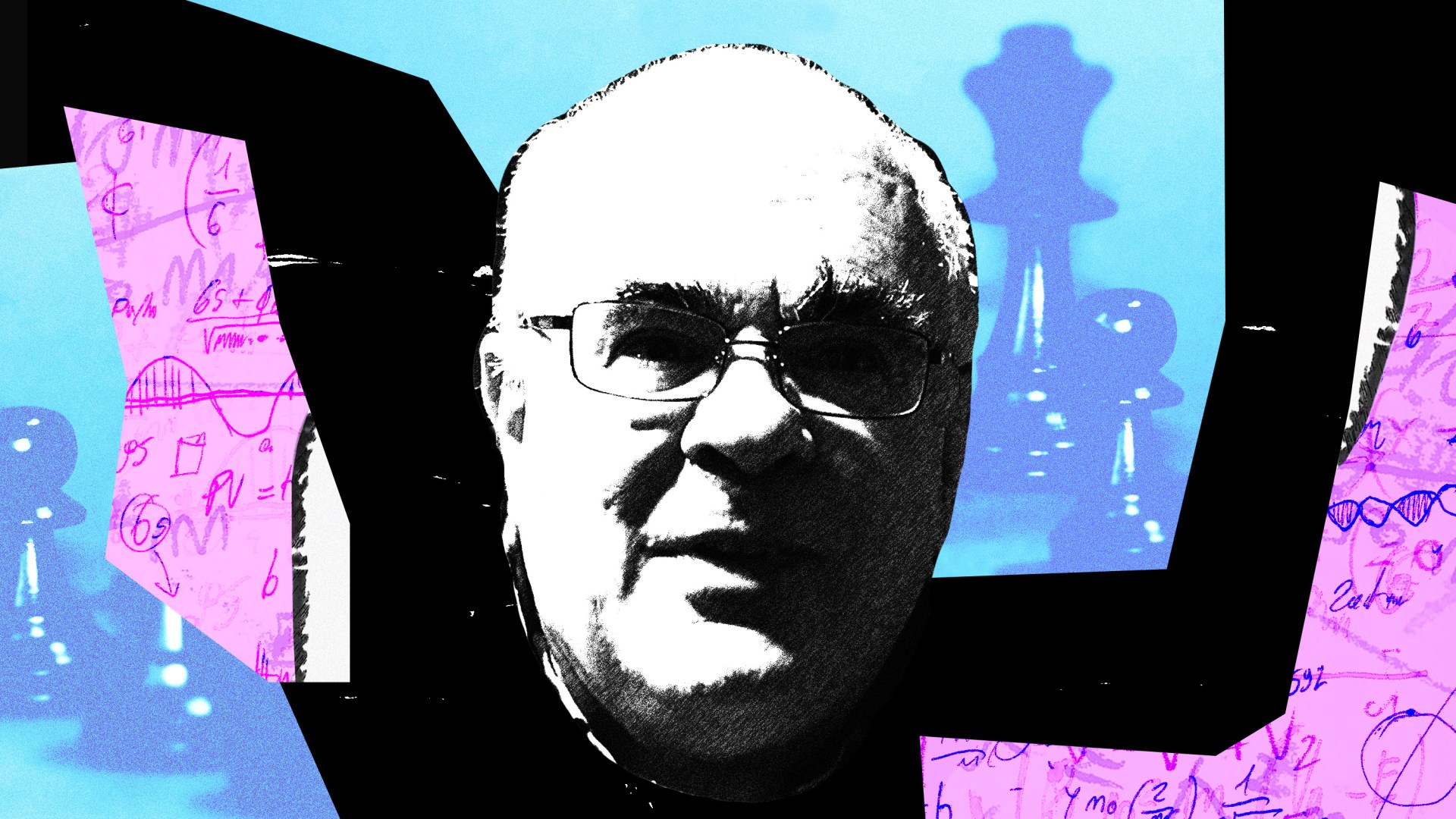
Kenneth Regan's face with math equations and chess pieces.
Christianity Today August 15, 2025
Illustration by Elizabeth Kaye / Source Images: Kenneth Regan, Pexels

Kenneth Regan paused at lunch in New York to glance at incoming texts from top international chess officials. A world-renowned “chess detective,” he’s on call to review games with his specialized algorithm that detects cheating.

Chess players cheat by using computers to find the best moves; an algorithm can detect the probability that a move came from a computer rather than a person.

But Regan, who loves chess but also theoretical mathematics and singing in his church choir, put the phone away. He would analyze the chess games later.

Instead, he resumed explaining one of the greatest unsolved conundrums in mathematics: the P versus NP problem, which could explain how complex the universe is. Regan, 65, has made this question his life’s work, in a field of computer science known as complexity theory.

The P versus NP problem asks, Are all problems feasibly solvable by a computer algorithm, or are there some problems so complex they can never be solved? Are solvable P problems the same as seemingly unsolvable NP problems?

The theory has major implications for artificial intelligence, quantum computing, evolution, and questions about the beginnings of the universe. As artificial intelligence models stand to offer the most powerful computing in human history, P versus NP is one way to consider how far computing can go.

In 2000, the Clay Mathematics Institute designated the P versus NP problem as one of seven “Millennium Prize Problems,” with a $1 million reward for the scientist who solved it. To date, no one has, and no one seems close to an answer either.

If P does not equal NP, then some problems are too complex to solve. If a problem is unsolvable by an algorithm, then that means it is not solvable in all the time in the universe. (Quanta Magazine has a helpful explainer video.) If P equals NP, then the solution to any computational problem is solvable within finite time.

Regan thinks that P does not equal NP and some problems are unsolvable by an algorithm. But he can’t prove it yet.

If P does not equal NP, as Regan believes, then scientists might not be able to ensure the large language models behind generative AI tools are giving consistently correct solutions to problems. If P does not equal NP, that could hamper “efforts to avoid hallucinations” from AI, he said. But mathematicians just don’t know.

The P versus NP question can also apply to other scientific questions, like evolution: “If we see a way to do something, we can postulate it and prove it,” he said. That’s a P problem. He continued: “But it’s very difficult for us to be able to make negative conclusions, for instance, that something could not have evolved naturally. The P versus NP impasse is standing over that.”

A chess prodigy as a child in New Jersey, Regan has the kind of preternatural memory that top chess players must have.

Math and chess are a friendly combination, requiring calculating but also theoretical thinking. Notable mathematician Emanuel Lasker, for example, was the dominant world chess champion at the turn of the 20th century. One modern-day list has Regan, an international chess master, as one of the highest-rated chess players among professional mathematicians.

Over his career, Regan developed the algorithm that FIDE, the International Chess Federation, uses for cheating detection, analyzing hundreds of thousands of historic chess games. In 2022, he found himself at the center of evaluating a major chess scandal where the world champion Magnus Carlsen accused an opponent of cheating.  

Regan’s algorithm was the subject of discussion on Reddit threads and podcasts. At the time, one of his fellow church choir members peppered him with questions about the case.

He sees his chess work as more than a hobby for a game. The algorithm he worked on there might apply in other fields; the chess work is also math work.

Regan earned his mathematics PhD as a Marshall Scholar at Oxford University, where he was involved with Christian Union.

Regan remembered sharing a train as a grad student in the 1980s with another complexity theory mathematician, Michael Sipser, who was confident that scientists would solve the P versus NP problem. But now, Regan said, “it seems more remote than ever.”

“It’s considered too formidable to take direct aim at,” he said.

For much of his career, Regan has researched and taught computer science at the University of Buffalo. He has a professor’s warmth to talking through any question—and no self-consciousness about going deep into theoretical mathematics in a diner in Manhattan. But he’ll talk about baseball or skiing too, finding crossovers between math and anything else in life.

Regan argues that his love for God, his love for the humanities, and even his love for chess help make him a good mathematician by allowing him to see the world differently. And a theoretical mathematician must find new ways of thinking to take swipes at a problem like P versus NP.

Almost 30 years ago, a dean of the complexity theory field, Donald Knuth, estimated that only 5–10 percent of his computer science colleagues believed in God. Knuth is a Lutheran like Regan.

Regan believes the number of people of faith in the world of science has grown. He knows other Christians in his department. No one has complained about the sermon links on his professor page or his personal notes on N. T. Wright’s Surprised by Hope.

Regan said he sees his faith as holistically connected to his scientific work but not as a tool to prove the existence of God. His Christianity helps him to see his neighbors through the lens of “people first, not scientific advancement first.”

“Making room for God in science, that I very much want to see,” he said. “We need a scientific community with people accustomed to all ways of thinking.”

Regan grew up Catholic but became Lutheran to join his wife’s denomination. He loves Reformer Martin Luther’s theology of the Cross as a way to look at the world, saying that the “theology of glory needs to be continuous with the theology of the Cross.”

This means that Christianity, he thinks, can see some level of continuity between good, beautiful things in the world and ugly, despised things—“not flip sides on a sheet of paper, but like a Möbius strip,” he said, using another math reference.

On his academic page, Regan links to a sermon from Lutheran pastor Mark Bartels about the theology of the Cross, which states,

Through what appeared to be foolishness, in His great wisdom, He saved the world! And, yes, may He work through the weakness in my life, to make me strong! And, ultimately one day He will take us to glory. He will take us to glory! And let us always remember that, in this world, we live under the cross, the cross of Christ!

Regan approaches complexity theory as a mathematician with an affection for the humanities. He peppers his conversation with references to Jacques Derrida and Willy Wonka. He reads widely: Earlier this year, he was going through the notes in Willis Barnstone’s Restored New Testament and Tim Palmer’s Primacy of Doubt, about how uncertainty in mathematics is scientifically valuable.

“A lot of what we call the big questions—‘Is there life after death?’—they have scientific parallels, and I’m interested in the scientific parallels because you can inquire after them,” Regan said.

He loves church music, insects, languages, flowers, and biking with his wife.

“My best work has been cross-pollinating two areas, such as error-correcting codes to improve the running time of a construction in complexity theory or linking between resource bounds of measure theory,” he said.

Conversation with Regan includes terms like polynomial ideal theory and algebraic geometric invariant theory.

At his father’s funeral, Regan began his eulogy talking about parallel universes and string theory—tossing out the question of whether there are resurrected versions of our bodies in parallel universes.

He enjoys asking any question that interests him, like what God’s chess rating would be. The point of that question is that no one knows what a perfect chess rating is, because machines haven’t solved chess.

Being at the center of big chess and science questions, he sees the importance of “scientific communication,” he said.

“Coming out of the COVID pandemic … we have one side that says, ‘Follow the science,’ but is unclear about explaining what that means—and the other side that excoriates that, or says, ‘Do your own research. Don’t trust,’” Regan said.

“People feel that scientists should be able to give crisp, definite answers,” he said. “And that’s just not the case. Science itself is good. The best science is aware of and infused with doubt.”

As a result, the stalemate on the P versus NP problem doesn’t discourage Regan.

“The impasses in the field ought to be the source of a lot of intellectual humility,” he said. “Humility is a requisite of what I call doing science faithfully.”

Further resources on understanding the P versus NP problem

The Golden Ticket: P, NP and the Search for the Impossible by Lance Fortnow

Church Life

China’s Quiet Revival, One Handwritten Bible Verse at a Time

A church sought 1,200 participants when it launched a Scripture-copying initiative. Millions of believers across the country responded.

Handwritten Chinese Scriptures.

Handwritten Bible verses from John 1 and John 10:11 in Chinese.

Christianity Today August 15, 2025
Illustration by Elizabeth Kaye / Source Images: Wang Wenfeng, Andrea Lee, WikiMedia Commons

Chinese calligrapher Lü Xiaokui spent decades transcribing Confucian, Daoist, and Buddhist texts into elegant xiaokai script. When he came across a friend’s message about an initiative to copy the Bible by hand on the Chinese messaging app WeChat in 2019, he reached out to the organizer, Wang Wenfeng, to express his interest in participating.

“At first, we were pretty surprised, because he wasn’t a believer,” Wang said. “We weren’t sure if—or why—he’d actually go through with it.”

Several months later, Lü sent Wang, who now pastors SanQi church in Beijing, a beautifully penned copy of the Gospel of John. When they saw Lü’s submission, Wang and his fellow church members were stunned by Lü’s careful, detailed brushwork.

As Lü handwrote the Book of John, he encountered stories about Jesus. The more he read the Bible, the more he longed to become a child of God.

That December, Wang baptized Lü in Shenzhen in front of Lü’s family and friends, publicly declaring a transformation that had begun with ink and paper.

In a time when religious expression is often curtailed and many Chinese churches operate in isolation, copying the Bible on paper has become a shared language, a spiritual discipline, and a form of quiet resilience among believers in the country.

Since the initiative launched six years ago to mark the centennial of the Chinese Union Version (CUV) translation, Wang estimates that tens of thousands of churches and millions of individuals in China have taken part in the Bible hand-copying initiative.

Initially, Wang and his church members set a modest goal of getting 1,189 participants—corresponding with the total number of chapters in Scripture—who would each write out a chapter for a commemorative manuscript of the CUV.

Within days of sharing this idea online, however, thousands of responses from believers at underground house churches and officially recognized Three-Self Patriotic Movement (TSPM) churches flooded Wang’s WeChat. “They wanted to draw closer to God, find stillness in a noisy world, and reconnect with family and church,” Wang said.

To meet the overwhelming demand, Wang and his team designed printable Bible-copying templates and circulated them through WeChat. Soon, people were uploading photos charting their daily progress in writing Scripture to WeChat, exchanging testimonies, and forming Bible-copying circles.

Wang heard stories from Christians around the country of lives changed. One Christian family who was dispersed in various parts of China had not sat together for years, as some members attended registered TSPM churches while others worshiped at unregistered house churches.

But when each family member signed up to copy a portion of Scripture, they began exchanging Bible verses, asking about each other’s chapters, and praying together. “For the first time, we remembered that we are not just family members by blood—we are all God’s children,” one family member wrote in a WeChat message to Wang. “The ink reminded us.”

Chen Huai, a Sunday school teacher in Zhejiang, a province in eastern China, felt concerned that her Christian colleagues were spending too much time playing online games. She invited them to hand-copy the Bible with her. In three years, Chen and her colleagues copied the entire CUV translation, draining 170 pens along the way.

A 70-year-old grandmother from the same province also decided to participate. Despite being illiterate, she enlisted her grandchildren to help her recognize characters and correct mistakes in her writing. Slowly, stroke by stroke, she drew her way through the New Testament.

A former drug addict, whose right hand became paralyzed due to past substance abuse, began copying Scripture with his untrained left hand. A teenager with autism spent years illustrating entire chapters. A toddler, still in diapers, insisted on clutching a sheet of paper and filling it with scribbles as her mother wrote Bible verses out.

Still, the project faced some challenges. When several churches first launched the project, everyone picked short or compelling chapters to copy. No one volunteered for Numbers or Chronicles. Eventually, people had to draw lots, picking strips of paper from a cup with chapter numbers on them.

As scores of handwritten Bible copies poured into his mailbox from individuals, families, and entire churches, Wang was moved by the reverence and zeal he witnessed in these believers. He felt awed by the sheer volume of copies and wrestled with how to preserve them all. Many documents were elaborately bound, painstakingly illustrated, or accompanied by personal testimonies.

To honor and safeguard these works, Wang transformed a five-story house in Wenzhou, which was entrusted to him by his parents, into a Bible museum in 2023. For several years, visitors could enter and admire the various hand-copied works displayed there.

But this March, after activities at the museum drew local authorities’ attention—not because of its religious content but because the influx of visitors had reportedly disrupted the city’s transportation—Wang decided to close the museum to the public. Today, the space functions as a private repository of handwritten Bibles.

As Wang shepherded the Bible hand-copying movement, he experienced long seasons of physical and mental exhaustion. To convert the house into a museum, he had to sell his property in Beijing to fund its renovation, which created financial strain. All this also took place during the height of the COVID-19 pandemic, when rumors and fears of Christian gatherings getting reported to the authorities began swirling.

“There were moments when I wondered if I would be taken away [by the authorities],” he said. “I had already prepared my heart for it.”

Yet, no officials came to question Wang about the initiative and no official orders arrived to stop it, even as the Chinese government was shuttering churches, closing Christian bookstores, and increasing its scrutiny of religious activities across the country.

“It was like God covered it with his hand,” Wang said. “That’s the only explanation.”

Instead of a government crackdown, Wang believes he witnessed a revival—one not loud and obvious but rather quiet and embodied. “When you write the Bible by hand, it enters not only your mind, but your muscles,” Wang said. “Your heart begins to slow down to match the rhythm of the Word.”

One believer in Beijing told Wang that he used to speed-read devotions and forget what they said immediately after. “But now, the verses stay with me,” he said. “They’re not just in my Bible—they’re in me.”

Wang never intended to create a campaign to convince people to read physical Bibles over screens. Instead, the Bible-copying initiative was an organic, spontaneous, and deeply spiritual movement that demonstrated the power of God’s Word to draw people toward him, he said.

The biggest takeaways from this initiative should not be numbers, strategy, or who the organizers are, Wang added. “The real protagonists are the Bible copiers—millions of believers who didn’t need a stage or a microphone, just a pen and a Bible,” he said.

Six years on, the Bible hand-copying initiative has not slowed down. Participation keeps growing across China. Lü, the calligrapher, is now copying the entire CUV translation.

“It’s not just about writing,” Lü said. “It’s how I draw near to God, one character at a time.”

A previous version of this piece was published on ChinaSource.

Culture

Learning to Forgive the Country That Oppressed Mine

On Korea’s 80th Liberation Day, I exhort fellow evangelicals to view Korea and Japan’s relationship through one of Jesus’ parables.

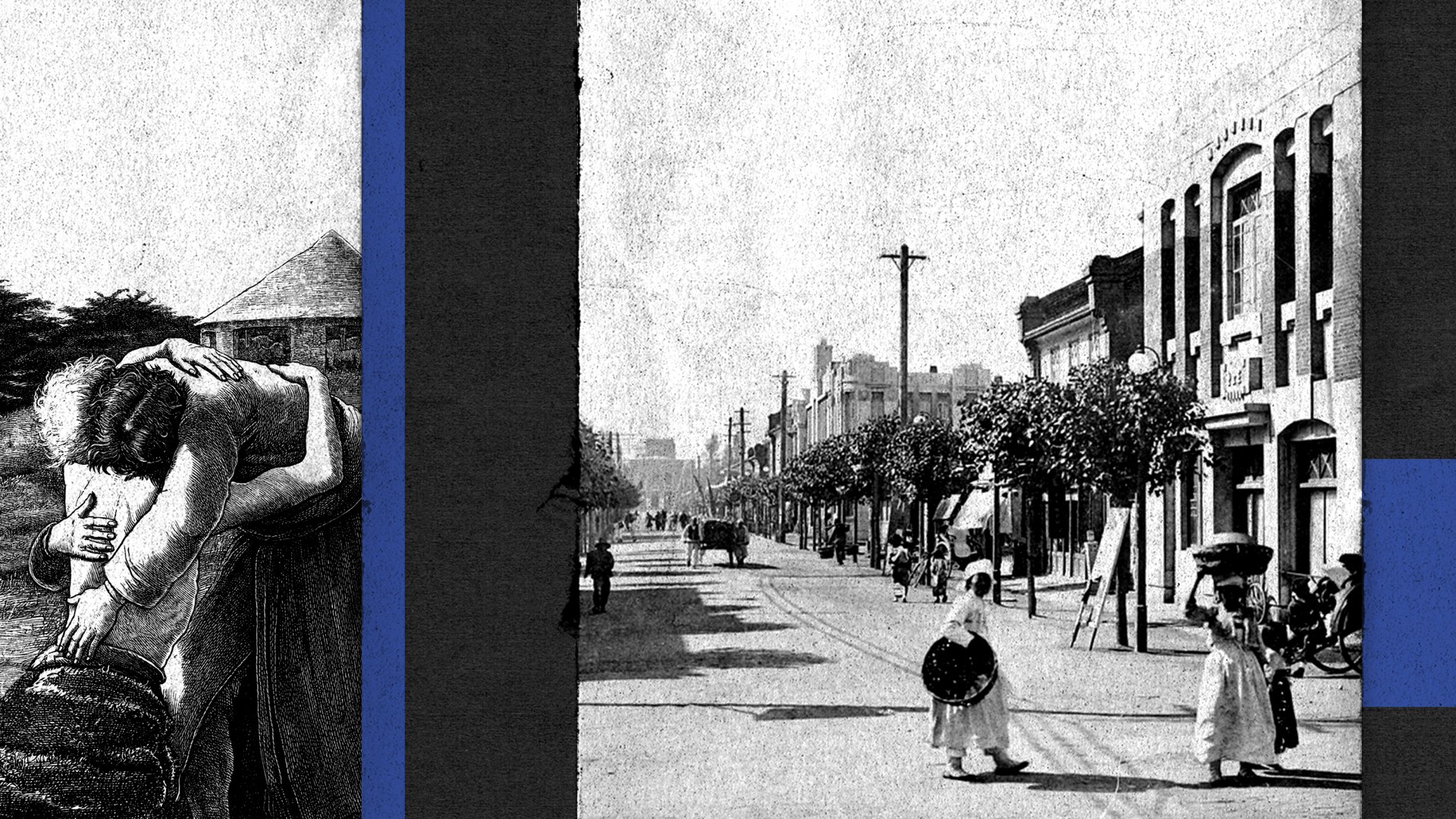
The prodigal son returing home and Toch'ŏng Street in Japanese occupied Korea in the 1930s.

On the right: a street in Sinujiu in Japanese-occupied Korea in the 1930s.

Christianity Today August 15, 2025
Illustration by Christianity Today / Source Images: WikiMedia Commons

As a child growing up in Seoul, I read the story of Yu Gwan-sun, a teenage girl who was imprisoned, tortured, and killed by the Japanese colonial police for participating in Korea’s March 1st Movement to overthrow Japanese rule in 1919.

In elementary school, I watched a TV drama about Korean “comfort women” forced into sexual slavery during Japan’s military expansion. In history class, I learned that the Japanese colonial government did many things to erase our Korean identity, like banning our language, replacing our names with Japanese names, and making us bow down to the Japanese emperor.

At church, pastors and teachers often drew parallels between the Japanese occupation of Korea and the Exodus narrative in the Bible. “Japan was like Egypt,” they would say. “We were like the Israelites, oppressed but freed later.”

These widespread portrayals of Japan as Korea’s brutal oppressor created in me a deep discomfort and fear toward the Japanese people, even though I had never met any at the time. Because I was a descendant of people who had suffered such evil treatment, it seemed only appropriate that I should also take up my ancestors’ hostility toward our nation’s enemy.

Unfavorable sentiments toward Japan and its people often surge in the lead-up to August 15, when South Korea commemorates its Liberation Day from 35 years of Japanese rule between 1910 and 1945. Such attitudes are especially heightened this year, which marks South Korea’s 80th year of freedom. Many commemorative events have taken place around the country, including exhibits and writing contests evoking memories of historic oppression.

But as I’ve developed friendships with Japanese people and visited Japan multiple times, my understanding of Japan and South Korea’s complex history has changed. I no longer consider Japan as Egypt and South Korea as Israel. Rather, I view the two countries’ relationship through the lens of another biblical account: the parable of the lost son in Luke 15.

In this passage, the younger son who has squandered his inheritance returns home in desperation. Although he expects rejection, “his father saw him and was filled with compassion for him; he ran to his son, threw his arms around him and kissed him” (v. 20).

This parable highlights a father’s boundless grace toward his wayward son. Instead of rejecting him or treating him as a mere servant, the father welcomes his child with open arms. I yearn to see more Korean evangelicals view Japan in the same way: with kindness, compassion, and forgiveness, as Paul urges us to do in Ephesians 4:32.  

The seeds of my journey toward a transformed perception of Japan and its people were sown through a story my grandmother told. She was born in Korea in 1924 but spent most of her early years in Manchuria (present-day northeast China), where the Japanese government had relocated many Koreans alongside the Japanese to populate and cultivate the region as a strategic territory.

At ten years old, I asked my grandmother about her time in Manchuria and her interactions with Japanese people. I expected to hear stories about hostility and mistreatment. Instead, she told me about a kind Japanese neighbor in her town. 

“I did not speak Japanese very well like my brother,” my grandmother said. “My parents did not send me to the primary school, because I was a girl. But whenever this lady saw me, she always bowed politely and spoke very slowly and gently so I could understand her Japanese.”

My grandmother’s story—the only story she shared with me about her encounters with the Japanese people—shocked me. Japanese people were kind and gentle? All I had read and heard about them focused on their violent, cruel deeds. This story seemed implausible to my young ears.

Five years later, my family relocated to Indonesia. On the day of an English qualification exam for entry into an international school, I met a Japanese girl who was my age. “Hi, nice to meet you. My name is Kayo,” she said in slow, careful English. “Can we become friends?”

At first, I felt a bit uncomfortable. How could we be friends when I was Korean and she was Japanese? But we became firm friends from that day on. We swapped our favorite Japanese and Korean tunes and visited each other’s homes in Indonesia and, later, in South Korea and Japan. And whenever I was in Japan, Kayo’s family embraced me as their own.

Through my grandma’s story and my friendship with Kayo, I overcame the discomfort and fear I had inherited from my people’s collective memory. I learned that a genuine friendship based on kindness and compassion could break down prejudices and unforgiveness.

Sometimes, though, we as Korean evangelicals may think and act like the resentful older brother in the parable. When the older brother sees his father welcoming the younger son with a lavish feast, he becomes angry and refuses to celebrate with the family (Luke 15:28).

Like the older brother, who felt bitterness and animosity toward his sibling, we may also feel similarly toward Japan, criticizing the country for not seeking forgiveness from Korea for past atrocities.

Prominent Japanese leaders like Emperor Hirohito and several prime ministers have publicly expressed regret and remorse for the war. But their words often lack direct acknowledgment of wrongdoing in the past, which many Koreans consider the most important element to include in Japan’s apology. Other Japanese government leaders’ actions also overshadow these gestures as they continue to visit Yasukuni Shrine, where Japanese people venerate “Class-A war criminals”—individuals charged with planning and waging war—as gods.

While visiting Japan in my 20s as a language student, I discovered that some history textbooks there had downplayed or entirely omitted Japan’s colonial past. Because of this, many Japanese people are unaware of the suffering that Korea and other Asian nations experienced during the Japanese occupation.

My Japanese evangelical friend at seminary, Sho Ishizaka, felt deeply troubled when he learned as a teenager about the horrible things that Japan had done. When I asked Sho if he would be willing to apologize to the Koreans for his ancestors’ sins, he responded without hesitation: “I will apologize. We Christians will apologize—over and over again.”

Other Japanese evangelicals have also made sincere efforts to express their repentance.

In 1997, the Nippon Revival Association, representing 500 Japanese churches, issued a formal apology: “We … make clear our responsibility in World War II … and wholeheartedly apologize for it, declaring August 15 and December 8 [to commemorate the day Japan attacked Pearl Harbor] as ‘Days of Fasting and Repentance.’”

Japanese pastor Reiji Oyama visited South Korea multiple times from the 1960s until he died in 2023 to apologize to Korean Christians and surviving comfort women. In 2019, he visited the memorial site of a church massacre in Jeamni, South Korea, with 16 other Japanese church leaders to offer an apology. Japanese colonial police had burned the church down in the aftermath of the March 1st Movement in 1919, killing 29 Koreans as a result.

Like my friend Sho, Oyama said he would apologize until the Koreans told the Japanese people, “Now that’s enough.” It appears that Korean evangelicals have not said this yet.

Forgiveness appears inconceivable if we continue to view the two countries through the Exodus narrative. But Japan is not biblical Egypt, and it is no longer Korea’s oppressor. Instead, perhaps we can conceive of Japan as a lost brother whom our Father longs to welcome home.

I am not saying history is unimportant. We as Korean evangelicals must remember our history of oppression and suffering, but we can also liberate ourselves from our long-standing grudges. Even though we may never receive the perfect apology we desire from Japan, we can walk in the spirit of forgiveness today. Forgiveness—graciously given and received—can transform our relationship with Japan and its people.

For Japan, August 15 was not liberation day. It was a day of devastation, when the two American bombs which fell on Hiroshima and Nagasaki revealed that their emperor, whom they believed to be an invincible god, was merely human.

Emperor worship was a central tenet of state-sponsored Shinto in Japan. It featured prominently in the country’s wartime propaganda, fueling the military’s efforts and calling citizens to sacrifice their time, resources, and even lives. Japan’s military leaders promised their soldiers that dying in battle, especially through kamikaze or suicide missions for the emperor’s sake, would grant them a place of honor in the Yasukuni Shrine.

When Japan lost the war, its people felt disappointed in their military and government, as they had deceived the people about the emperor’s divinity. “The defeat proved that the Japanese were not god’s people after all,” Sho told me.

This sense of spiritual disillusionment may have led to all traditional religions, including Shinto, dwindling after the country lost World War II in 1945. Although the Japanese church grew briefly through Western missionary efforts, this growth has plateaued since the 1970s. Today, Japan remains the second-largest unreached people group in the world. Less than 1 percent of the Japanese population identifies as evangelical.

In contrast, South Korea experienced remarkable spiritual growth and eventually became the second-largest missionary-sending nation in the world. One in 5 Koreans are Protestant. But Korean evangelicals must humbly remember that our country was once a lost people too, saved only by the grace of God who sent missionaries to our nation.

Japanese believers contributed to the growth of Christianity in Korea from the late 19th century to the end of World War II by training Korean pastors in Japanese seminaries and sending missionaries to Korea. The recently released documentary film Mumyeong (Nameless) follows two such missionaries: Masayasu Norimatsu, founder of Dongshin Church in Suwon, and Naraji Oda, who opposed Japan’s enforcement of emperor worship in Korea. Both devoted their lives to serving the Korean people, even as fellow Japanese citizens perceived their sympathy for the Korean people as treacherous at times.

As cultural appreciation and exchanges rise between the two countries, whether through the influence of Korean pop, Korean dramas, or Japanese anime, Korean believers can capitalize on this growing openness to reach the lost in Japan.

About 1,200 Koreans are currently in Japan as long-term missionaries, a Korean mission survey conducted in 2023 revealed. This reflects a shift in missionary deployment, because Japan has long been shunned for being a “graveyard for missions.”

Even as Korean missionaries are more willing to reach Japan, evangelicals in South Korea can  create opportunities to talk about Christ with Japanese residents and visitors in their midst. Korean churches might extend hospitality through homestay programs, similar to the temple stays that Buddhist temples offer to tourists. Or believers can invite people to gospel and K-pop concerts, as Korea-based Onnuri Church has done through its Love Sonata programs in Japan.

As Korean evangelicals who have forgiven and have been forgiven, we must not pass resentment and unforgiveness to the next generation. This year, I am teaching my kids Japanese in anticipation of our reunion with Kayo and her family in South Korea and Japan next summer.

Kayo is teaching herself Korean. “I am learning Korean because you have been so kind to me by learning Japanese for me,” she said.

It is Christ alone who can dismantle the “dividing wall of hostility” between the two peoples once and for all (Eph. 2:14). As Korean believers, we can also chip away at this wall through breaking down stereotypes, reframing the narratives we tell ourselves, and fully giving and receiving forgiveness from a country that once oppressed us. As we do so, we can come to see each other as we truly are: brothers and sisters who were once lost but are now made one in Christ.

Ahrum Yoo is a PhD student in Old Testament at Dallas Theological Seminary.

Theology

Swastikas, Castes, and Nationalism

India’s leaders meld religion and politics.

Bharatiya Janata Party and Indian Prime Minister Narendra Modi
Christianity Today August 14, 2025
Illustration by Christianity Today / Source Images: Getty

In this series

(This is the last of a series. Earlier episodes are here, here, and here.)

Increasingly in Indian Hinduism, as in American evangelicalism, a religious path has merged with a political path. This year is the 100th anniversary of two events: the July 1925 publication in Germany of Hitler’s Mein Kampf and the August formation in India of Rashtriya Swayamsevak Sangh (RSS, the National Volunteer Society), which became the largest Hindu nationalist movement.

Pairing the two may be unfair, even though the RSS bible, Vinayak Damodar Savarkar’s Hindutva: Who Is a Hindu?, came out in the 1920s with a swastika on the cover. Unfair, perhaps, because the Sanskrit word svastika means “good fortune,” and Hitler stole the symbol from ancient India. But Jason Stanley, author of How Fascism Works: The Politics of Us and Them, shows how “RSS was explicitly influenced by European fascist movements” and “its leading politicians regularly praised Hitler and Mussolini in the late 1930s and 1940s.”

That was then, and the Bharatiya Janata Party (BJP), the ideological child of RSS born in 1980, is now. But Hindutva, the RSS belief that divides all people into Hindus and non-Hindus—“us” and “them,” with “us” superior—has only grown in potency decade by decade. Indian prime minister Narendra Modi is a BJP and RSS member.

Christianity, Islam, and Buddhism all oppose doctrines of racial supremacy. Judaism is the religion of a “chosen people,” yet the Old Testament makes clear the Jews weren’t chosen for merit. But as historian and political scientist Anthony Parel writes, the Hindutva idea is that a racially superior people, the Aryans, created Hinduism: “All Hindus claim to have in their veins the blood of the mighty race incorporated with and descended from the Vedic fathers. … India is to them both a fatherland and a holy land.”

Mixed up in the religious and the political is the sociological, with its most-remarked-upon facet: caste. The caste concept is as complicated as Hinduism itself. Originating in ancient India, the combination of religion, politics, and economics melded throughout the centuries, supplying a certain security but also limited mobility. Brahmins were priests, Kshatriyas warriors and rulers, Vaishyas merchants and farmers, and Shudras laborers.

Those at the bottom were sometimes called untouchables because their “betters” historically had no contact with them—but did allow them to touch dead bodies and remove human or animal waste. In the 1950s some among the low began calling themselves Dalits—“the oppressed.” Overall, caste discrimination has weakened under some political assault yet is still strong, especially in rural areas.

India also has about 25,000 subcastes roughly conforming to different occupational groups, as children followed in their parents’ footsteps. In farm communities, upper and lower castes have almost always lived in distinct neighborhoods, used separate wells, and could only marry within castes.

Village life simplified what could be maddening religious complexity: Each village and sometimes each house had its own idols, and Hindus could merely do what their castes or subcastes mandated. But with urbanization comes some choice: With many deities (or aspects of deity) to propitiate, what if a person chooses poorly? As in other cultures, astute politicians can play on anxiety. Those in power can use concerns about identity to protect their own positions. 

Economist Jean Drèze, a Belgian who became an Indian citizen and a close student of India’s interplay of religion and politics, calls the Hindutva ideology “a lifeboat for the upper castes, in so far as it stands for the restoration of the Brahminical social order.” Dalit theorists and activists like Kancha Ilaiah warn about the danger of “Brahminical fascism disguised as Hindutva” and say those in power are stirring up fear.

Modi’s government is trying to establish Hindutva supremacy in two ways. One is by force, exemplified by building a massive Rama temple over the ruins of a very old mosque, which Hindu extremists destroyed violently in 1992. The other is by making Hindutva fashionable—and some coverage of India in the US contributes to that. Bloomberg Businessweek typified bubbly coverage of religion in India with its “Faith Becomes Fashionable: Sacred sites are increasingly popular as the government promotes pilgrimages and Instagram influencers help make religion cool.”

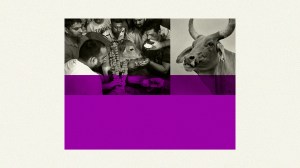
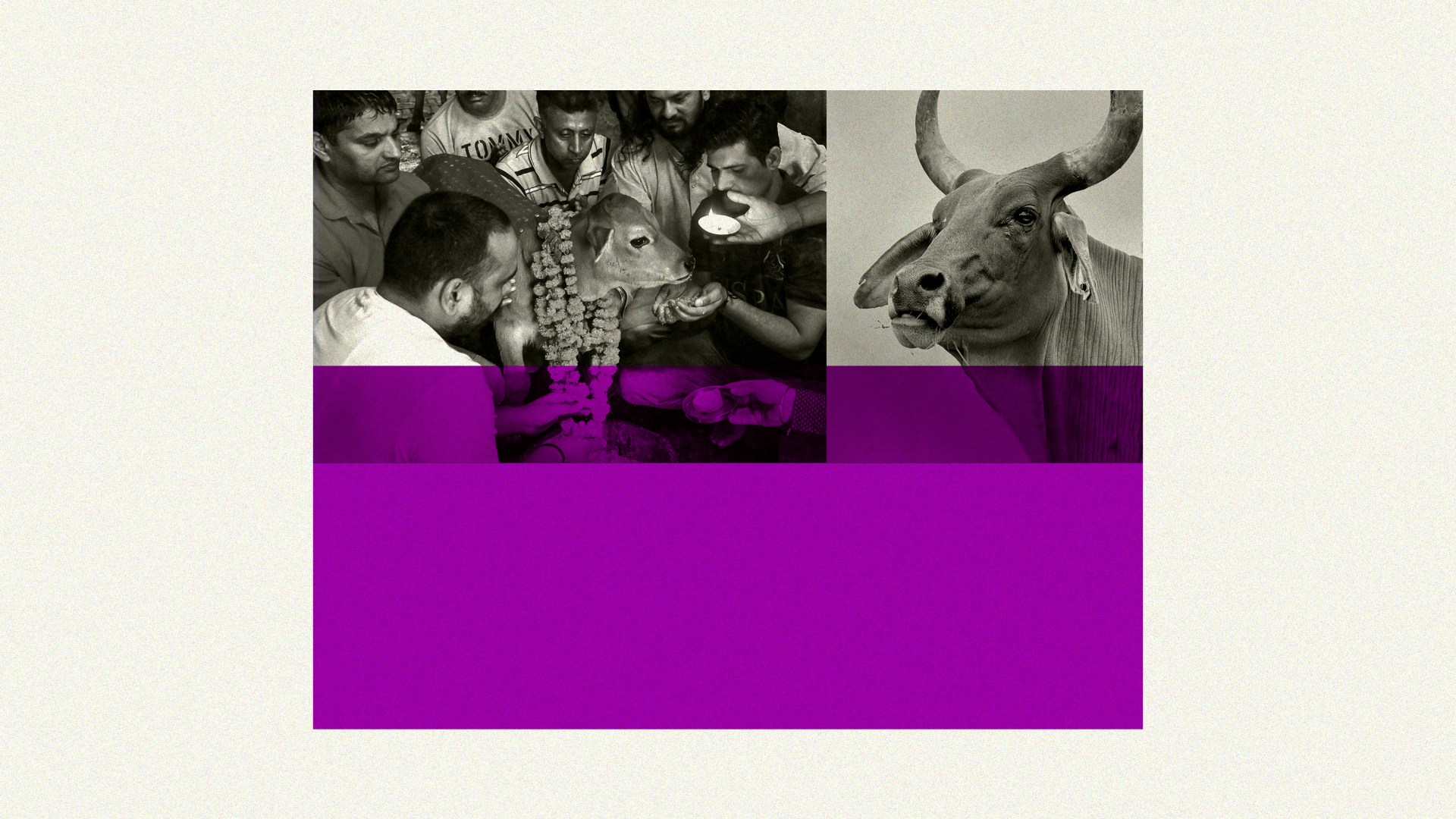
The news of “combining adventure tourism with religiosity” through a “$60 Billion Spiritual Travel Boom” was cute and colorful:“Priests in saffron-colored robes stand on the famous riverside steps … ringing hand bells, lighting incense and waving oil lamps in the 45-minute ceremony of lights.” The Modi government has pumped money into the Indian city of Varanasi, sacred because some Hindus think dying there is a shortcut to salvation. It now has a cricket stadium with floodlights shaped like tridents, Shiva’s favorite weapon.

In Varanasi, the Kashi Vishwanath Temple streams Shiva-centered rituals on YouTube and has new halls for hosting birthday parties; a two-mile overhead cable car; and an artificial intelligence chatbot, Nandi, named after Shiva’s sacred bull. A Starbucks is close to a spot where hundreds of bodies are cremated daily, with ashes scattered into the Ganges to aid the souls’ journey onward. Sunset tours in wooden boats cost only $2 per person, but some prefer travel by jet skis.  

The selling of Hindutva has some carnival aspects, but the oppression of some Hindus and many Christians is serious. As P. I. Jose, author of Hindutva Palm-Branches and the Christian Resolvetold Christianity Today last year, “India has become infamous for lynching incidents and for the demolition of churches and other minority religious symbols. Fellow citizens and law enforcement personnel have attacked pastors, disrupted worship services, and engaged in rampant hate speech against religious minorities.”

The melding of political power and Hindutva, perhaps the most autocratic of the multitude of Hinduisms, seems to be intensifying. Jose’s bottom line: “In 1998, the RSS and its affiliated groups attacked tribal Christians. … Four decades later, Hindu extremists are 40 times stronger and more entrenched in the government and society. The whole state machinery and power is under their control. Democracy is on a ventilator.”

News

‘Without God’s Permission, I Cannot Go to Prison’

Missionary David Lin spent his 17 years behind bars translating the Bible and ministering to his cellmates.

David Lin standing behind bars

Christianity Today August 14, 2025
Illustration by Mallory Rentsch Tlapek / Source Images: Photography by Angela Fulton

On a recent overcast Sunday, a 70-year-old Taiwanese American man in a suit rose to his feet to worship in a high school auditorium in Torrance, California. Standing next to his wife, Cathy, and daughter, Alice, David Lin raised his arms and sang along with the young, casually dressed congregants of King’s Cross Church: “I’m gonna lift my hands / Till I can reach heaven.”

Though they appeared like any other close Christian family, the image belied the hardships each of them had recently endured. From 2006 to 2024, the Chinese government detained David as he served a life sentence on charges related to his missionary work in the country. Last September, the US government brokered a prisoner exchange that freed David and allowed him to reunite with his family.

After the service, Alice’s friends came over to shake David’s and Cathy’s hands, as they had asked God to grant David’s release for years. Pastor Russ Hightower expressed the privilege it had been to join the larger church body in praying for them and to see their prayers answered. “When you’re in the front-row seat to watch God do something so dynamic, it’s humbling. [It’s] joyful.”

David’s prison sentence left him emaciated, and it devastated his wife, daughter, and son. Yet while speaking over a meal of soup dumplings, David often laughed and joked, jumping into stories of miraculous healings and confessions of faith.

Had he ever questioned God during his nearly 20 years in prison? “I don’t have time for thinking about that,” said David. “I just follow God’s leading every day.” At times, he hinted at the horrors he faced inside the Beijing prison, but even then he pointed to God’s goodness. Alice noted that the family doesn’t know the full extent of the atrocities he experienced.


The one aspect David described as terrible was the toll on his family as they worried for his safety, dealt with the trauma of his imprisonment, faced the foreclosure of their home, and feared they would never see him again. Since his return, the family has been able to talk and laugh together again.

“I believe [that] without God’s permission I cannot go to prison, but God always protect[s] me,” David said. “I am very happy, even though I am suffering physically, that I see a lot of people go from nonbeliever to believer and a lot of people decide after [they leave prison] to become a pastor, become a teacher, and to preach the gospel.”

A call to China

Born in Taiwan, David and Cathy moved to California in the early ’80s, becoming US citizens and eventually settling in Huntington Beach, where David worked as a chemical engineer. Friends invited Cathy to church, and she and their two children began regularly attending. David, however, stubbornly resisted. He didn’t drink or gamble, he maintained, so he didn’t need God.

Then on Easter one year in the early ’90s, he watched the Christian film King of Kings with his family. He grew so upset that a perfect person would be crucified and die for people’s sins that he “cried out in my inside.” Unable to keep watching the movie, he went to bed early.

In the middle of the night, David dreamed that Jesus, Peter, John, and James came to him and taught him the Bible. A week later, Cathy’s pastor came to share the gospel with David. He told David that if he loved his family, he needed to worship the same God as them. David nodded in response, then suddenly felt the Holy Spirit descend on him, he later said.

As he began reading the Bible, he said the Holy Spirit granted him understanding of the text, and he began teaching and preaching the gospel to local Chinese immigrants. Within a year, he became less and less interested in his import-export business and started doing ministry full-time. When Cathy stressed about their lack of income, David responded that God would provide for all their needs. Alice said they lived frugally, eating cereal donated from church members and vegetables from their backyard garden. Eventually, Cathy took on a part-time job caring for the elderly.

“He has this faith, which is incredible, but a little scary if you’re his family,” Alice said.

In the mid-1990s, ministry donations funded David’s travel to China for about ten days every month to share the gospel. “Most people don’t know [what I am doing], including my family,” David said. “I know it’s a lot of risk, so when I go, I act like a businessman, but people don’t know I do missions.”

At the time, China was opening up to foreign countries, allowing Christians more room to evangelize. Through friends and contacts, he made connections in China, allowing him to share the gospel with military officers, high-level government officials, scientists, and school principals.

Chinese Christians started inviting David to preach in house churches, Three-Self churches, and missionary-led congregations. He baptized people, prayed for them, and saw God heal the sick. One time, he prayed for a scientist with a terminal cancer diagnosis. The next morning, she felt her symptoms relieved. Soon after, she and her husband became Christians. Another time, he baptized a government official in the bathtub of his hotel room, and the two became close friends.

David recorded sermons—first on cassette tapes, then on CDs—and over the years brought hundreds of them into China to hand out. Chinese Christians made their own copies and shared them with others.

Yet with greater influence came scrutiny. In 2002, two police officers followed David into his hotel. “You are a good person,” they told him. “We already listen to your tapes, but don’t preach the gospel here.” David made no promises—and gave them more tapes.

But the increased surveillance worried Cathy, who asked him to end his trip and come home. Yet David responded, “Don’t worry. God knows what he’s doing. God needs me to be there. There’s so many people who need to know his Word.”

Capture in China

In early 2006, David applied for an official ministry license from the Chinese government. Local authorities responded by asking him to come to the police station during a trip to Beijing in June.

During the meeting, David learned that the police knew of all the places he had visited and people he had met with during his trips to China. Afterward, they held him under house arrest for months at a hotel, where they continued to question him.

The government accused him of contract fraud for renting a building in Beijing in the ’90s to start a training center for local Christians. (Human rights activist John Kamm of Dui Hua Foundation, who worked closely with the Lin family, noted that this charge is often used to target people of faith.) At the time, the Chinese government approved of his plan and allowed him to apply for a license. “Later on, I realized that was their trap,” David said.

He believes the real reason for his arrest was that too many people listened to his sermons and came to Christ. Later, police told him that they had received a directive from the Public Security Bureau to arrest him. Even the judge assigned to his case asked him to appeal his conviction at a higher level court, because there was nothing she could do.

While under house arrest, David called his wife and family to tell them the government was holding on to his passport due to a misunderstanding, that he was fine and just needed some prayer. He’d come home soon.

Yet days turned into weeks turned into months. In 2007, the US Embassy called Cathy to say that David had been arrested and was going to court.

“We were completely blindsided,” Alice said. Up until then, they hadn’t realized the seriousness of the situation.

For the next two years as David’s case went through China’s judicial system, authorities held him in Beijing No. 1 Detention Center and did not allow him to communicate with his family. When David first arrived, he was so disturbed that prisoners were treated “like pigs” that he couldn’t eat for a week. Prison guards would whack the cell door with their batons and slide meager steamed buns or watery rice porridge through a slot in the door.

According to a foreign man who was held at the same detention center in 2009, each 25-by-15-foot cell housed 12 to 14 men. Half the room was “the board,” a raised platform that stretched from wall to wall, where the prisoners sat during the day and slept at night. Besides meals, short periods of free time, and viewings of the Communist Party–run news, most of the day was spent sitting on “the board.”

“But when I go there, I see the opportunity,” David said. “I forget what my pain is. I see the other people don’t know the Lord. So I just keep preaching for all the men.”

He claimed that every cell he stayed in, he’d pray and preach with the men, mostly other foreigners or white-collar Chinese criminals. Ninety percent of the inmates in his cell would become Christians, he said. Guards would then transfer him to another cell where inmates were fighting, and he’d continue to minister until that became an “outstanding room.”

A family torn

Meanwhile, back in California, Cathy feared what had become of her husband.

“When he was here, she could lean on him. He was her foundation,” Alice said. “Without him, she was lost.” (Cathy did not want to be interviewed for this article.) In her anxiety, Cathy became fearful, which caused conflicts with those around her. Her mental health deteriorated. “Of all the people in my family, the person who suffered the most is my mom,” Alice said.

Cathy took on more hours at her job, but she struggled to make ends meet. Not wanting to bother her children, she took out short-term loans to cover the mortgage, and as she fell behind on payments, debt collectors banged on the family’s door. Alice, who by then was working in another city, moved home to help care for her mom. Eventually, the bank foreclosed on their home, and Cathy ended up living with a church friend for several years.

In December 2009, a Beijing court ruled that David was guilty of contract fraud and sentenced him to life in prison.

The US Embassy told Alice that she could raise awareness about her father but it was risky, as it could anger the Chinese government and escalate the situation. Soon after David’s sentencing, China executed a British citizen on drug-smuggling charges, despite relatives’ claims that he struggled with mental health issues. Alice ultimately decided to stay quiet.

David didn’t seek an appeal, as he doubted it would make a difference—China has a nearly 100 percent conviction rate, and overturned decisions are extremely rare. Alice tried anyway, flying to China to find a lawyer to take on her father’s case. Despite Alice gathering, translating, and notarizing evidence to prove her father’s innocence, the court denied the appeal in 2010.

“I just had to accept there’s nothing else I could do,” Alice said. “We had to let go of that control and trust that God was going to take care of him [and] take care of us.”

In 2010, authorities moved David to Beijing No. 2 Prison, a facility for foreign detainees. Initially, the prison guards told David he couldn’t evangelize. Yet because he was fluent in both Chinese and English, they needed his help translating, giving him opportunities to speak with his cellmates about gospel.

He also spent his time in prison translating the King James Bible into Chinese. (His family sent him several Bibles, as well as a biblical Greek dictionary and an archeological encyclopedia.) It took seven years for him to finish the New Testament. He also wrote evangelism tracts for non-Christians. The prison guards took his Bible away from him three times, but each time they ultimately gave it back.

Matthew Radalj, an Australian inmate who spent five years in the same prison, told the BBC this year that inmates tried to reduce their sentences by reading Communist Party books or working in the factory. Yet they received infractions for “hoarding or sharing food with other prisoners, walking ‘incorrectly’ in the hallway by straying from a line painted on the ground, hanging socks on a bed incorrectly, or even standing too close to the window.” Punishments included food deprivation, restriction of calls to families, and solitary confinement.

David also suffered from malnutrition. Every month, the US Embassy officers would visit him, and he said they would cry when they saw how thin he had become. Nine of his teeth fell out.

In 2017, things took a turn for the worse. Inside the prison, David sensed China restricting the religious freedoms the prisoners had once enjoyed. Prison guards stopped allowing Muslims to fast for Ramadan. David could no longer pray or hold small worship gatherings on Sundays. Typically, around Christmas, the staffers David had befriended would allow him to lead a celebration with his fellow prisoners for two hours and would buy the prisoners hot cocoa and candy. But that year, they not only banned the celebration but also barred any mention of Christmas.

In December 2018, Alice received three urgent calls from her father. David worried authorities would confiscate his Bible translation, so he asked the US Embassy to mail his Bible, along with hundreds of handwritten pages of the translation and letters from his family, back to the US.

When Alice saw the Bible arrive at their doorstep, she realized it was her father’s way of crying for help.

“When he sent home his Bible—which was like a man in the desert sending home his one water bottle—we realized we needed to do something,” Alice said.

Fighting for her father’s release

A scientist by training, Alice didn’t know how to advocate for her father’s release. Yet through a well-connected friend, she met people who could help her: experts in Chinese law, human rights advocates, and government officials. Through church connections, Alice was able to get a letter about her father into the hands of then–vice president Mike Pence. In April, the US Commission on International Religious Freedom adopted David as a prisoner of conscience, raising public awareness of his case.

A month later, Alice met with Kamm of Dui Hua Foundation, an organization that advocates for clemency and better treatment for detainees in China. He looked up David’s case on a Chinese database and found that unbeknownst to the State Department, David’s sentence had been commuted to 19 and a half years in 2012. There had been two subsequent sentence reductions. He would be released in April 2030.

Alice was shocked.

For the first time in years, Alice had hope. “I didn’t know the [Chinese] system was … not an impossible wall to scale. There’s holes in the wall. There are footholds, when before I thought it was a sheet of marble,” she said.

The Dui Hua Foundation raised David’s case to the Chinese government 28 times and received several responses. US officials, including then–secretary of state Antony Blinken, California governor Gavin Newsom, and former national security adviser Jake Sullivan, also brought up David during meetings with their Chinese counterparts.

Every week, Alice sent out a prayer list for David’s supporters, which she looks back on as “a long list of how God kept providing and opening doors [as] miracle after miracle happened.” At times, she wondered if she should have tried advocating for her father ten years earlier when he was first arrested. Yet advocates and State Department officials told her that it wouldn’t have had the same effect, as the Levinson Act, which created the procedure to bring home unjustly held hostages, had only recently passed, and the political climate was different. “You can see that this was orchestrated by God, not man,” Alice noted. “There was no way I could have done it on my own.”

In the midst of her advocacy, Alice was diagnosed with cancer. She leaned on the support of her friends at King’s Cross. “There’d be times where I would be talking [to Alice] on the phone and she would say, ‘I just don’t know,’” said her friend Cherise Kaiser. “It felt like God really called us together in our friendship, and I said, ‘You don’t have to have the faith today. We’re going to have the faith for you.’”

The tumultuous US–China relationship caused additional stresses, as many times it seemed as if China was close to releasing her father only for the dynamic between the two superpowers to go cold.

Then on the night of September 14, Alice and her own family were visiting her mom in Orange County when she received a phone call from her contact at the State Department. “I have someone here who wants to talk to you,” the official said.

Tears streamed down her face as she recognized her father’s voice on the other end of the line. “I’m okay now,” he said, speaking to her from an airplane on the tarmac at the Beijing airport, a free man for the first time in 18 years. Alice handed the phone to her mom, who was sitting on the couch next to her.

Through private negotiations, the US had been able to secure David’s release in exchange for an unnamed Chinese national imprisoned in the US.

“It was a miracle that we never thought was going to happen, and it happened for us,” she recalled.

David’s immediate family booked the next flight to San Antonio to meet him as he arrived at a US military base. US officials kept quiet about his release, a stipulation from the Chinese government to help guarantee prisoner exchanges for three other wrongly detained American prisoners, according to Alice. (They were later released in November.)

Standing on the tarmac, Alice and her family watched as the plane carrying her dad landed. His gaunt frame appeared as he stepped off the plane and walked down the stairs.

Alice couldn’t believe it was her father. After nearly two decades, she worried about how he may have changed and was concerned that their interactions would be awkward. But once he reached them, he gave them a big hug, and they started talking and joking. “He’s still the same!” Alice remembers her mother saying, breaking the tension.

David then met his son-in-law and elementary school–aged grandson for the first time.

The following Sunday, David knew what he wanted to do: preach. So he went onstage at the First Assembly of God San Antonio, a church that had been praying for him, and preached his first sermon from the pulpit in nearly two decades.

David Lin preaching at San Antonio the first Sunday after he was released.Courtesy of Alice Lin
David Lin preaching at San Antonio the first Sunday after he was released.

Family restoration

Since returning home, David has been to the dentist to get fitted for dentures for his missing teeth and has started a fundraiser on GoFundMe for his personal expenses, as his long detention left him ineligible for full social security benefits.

Yet in many ways, he has picked up where he left off. He’s guest-preached at churches around the country that have been praying for him. He’s created a website for his ministry, Great King Ministry, and uploaded his sermons as podcasts to share with Chinese-language speakers around the world.

In June, David met with Kamm in San Francisco. Kamm described it as an “exceptional occasion.”

“After all he had been through, he wasn’t bitter. He wasn’t angry. ‘It was all God’s plan’ kind of thing—just amazing,” Kamm said.

Alice, whose cancer is now in remission, said that since her father returned, a cloud has been lifted. She’s able to hear her dad’s laugh again and receive his gifts of dragon fruit every time they meet up. Her greatest joy has been seeing her mom restored. Cathy and David are enjoying the little things together: eating dinner, taking walks, and teasing each other. Her mom recently jokingly complained that “now I have a full-time job taking care of your dad.”

“My life is complete,” Alice said. “To see things become whole again is such a privilege and a miracle to witness.”

Church Life

Shape up, Sheeple

Contributor

The church needs faithful sheep as much as faithful shepherds.

Sheep making the shape of a church
Christianity Today August 13, 2025
Illustration by Mark Conlan

One recent Sunday, our church service concluded with the song, “Savior, Like a Shepherd Lead Us.” First published by British hymnwriter Dorothy Ann Thrupp in 1836, the hymn is simple and lovely, addressing Jesus directly and asking him to protect his flock: “Keep Thy flock, from sin defend us / Seek us when we go astray.” 

The flock here is the people of God, the church both local and universal. And that makes us, its members, the sheep.

The Bible speaks of Jesus as our good and great shepherd (John 10:1116; Heb. 13:20), but it also speaks of pastors and other church leaders as shepherds serving under him (Acts 20:28; 1 Pet. 5:24). And in recent years, American evangelicalism has paid close attention to these leaders of the flock. Our books and other media are full of advice for those who would like to be good ones and churches dealing with bad ones, intense debates over who is qualified to be a shepherd and how one may become disqualified from this role, and exposés of wolves in shepherds’ clothing.

These conversations are all necessary, to be clear. But what about the sheep? Most of us are not shepherds, and just as it is difficult to be a good shepherd, so it can be difficult to be a good sheep. 

This is a reality that Augustine noted toward the end of his ministry: Just as there are good shepherds and bad ones, so it is with sheep. And the struggles we experience in these two roles are often connected: Some of the worst shepherds are people who never wanted or learned to be good sheep. They always sought the staff.

The image of Jesus as a shepherd lovingly guarding his flock has roots in the Old Testament as well as justifiably widespread use in the church. David’s Psalm 23 is a well-known reflection on this idea—from someone with actual shepherding experience. Jesus repeatedly used sheep and shepherding imagery in his parables (Luke 15:47) and other teachings (John 10:118). 

This language gave rise to a favored scene in early Christian art: Jesus as a tender shepherd carrying a found sheep on his shoulders. In her passion account in the early third century AD, newly converted Perpetua recounts a vision of seeing Jesus in a garden, looking like a simple shepherd. He welcomes her and extends to her a curd of fresh sheep’s milk cheese: 

And I went up, and I saw a very great space of garden, and in the midst a man sitting, white-headed, in shepherd’s clothing, tall milking his sheep; and standing around in white were many thousands. And he raised his head and beheld me and said to me: Welcome, child. And he cried to me, and from the curd he had from the milk he gave me as it were a morsel; and I took it with joined hands and ate it up; and all that stood around said, Amen.

Perpetua was imprisoned and awaiting execution when she recorded this vision, her own retelling of Psalm 23 in a moment of intense fear and persecution. Yet with the Lord as her shepherd, she knows she is safe and thus unafraid, even of martyrdom—a “valley of the shadow of death.”

Her words and more recent uses of the shepherding metaphor, as in “Savior, Like a Shepherd Lead Us,” reiterate that Christ is the one good shepherd of us all, and we are mostly called to be sheep. This is a theological truth but also a mathematical one: Even a large church may only have one senior pastor and maybe a few more elders and shepherding members of the staff. The average Christian is a sheep. 

So what should faithful sheep do? 

Before I answer, I must note that I’m not speaking to churches dealing with significant sin, abuse, or dysfunction. I’m writing for members of churches with faithful, well-intended shepherds who are themselves following the lead of Christ. For them, I’d like to offer three simple exhortations.

First and foremost, commit to your flock. We live in a flighty, inconstant, and noncommittal society, and that attitude has seeped into the church. Membership vows can help, but in practice, even Christians who consider themselves faithful members of a local body may not attend on most Sundays—let alone participate beyond the main service.

Only one in three Americans attend services in person at least once a month, according to Pew Research Center, and just 25 percent attend services at least weekly. Even these numbers may be too high, if respondents are overestimating their own constancy, as some other research has suggested

Whatever the exact figures, and with all due allowances for unusual circumstances and constraints, monthly church attendance is not enough. This is not what it means to be a faithful sheep. Being in a flock means being together, relying on one another, and it is difficult to do this without forging a close connection by worshiping together weekly. 

Indeed, the second characteristic of faithful sheep is that they look out for one another, both spiritually and in more practical terms. They act and even think together. 

Groupthink gets a bad name in our society, and often with good cause. We even have a sheep-themed insult—“sheeple”—for people who don’t think for themselves but simply follow the herd. 

But the kind of thick community life that produces the best version of groupthink is also key to the survival and flourishing of groups. It was a natural mentality for the ancient world, where the ability to work together could mean the difference between life and death. We see this in the description of the early church in Jerusalem: “All the believers were one in heart and mind” (Acts 4:32). 

The premodern view of the self as part of a group no longer comes naturally to us in our hyper-individualistic culture. But the church is one place where we must still remember, as Jesus taught, that we are part of something greater, part of a community bound by supernatural bonds (John 13:34). To be faithful sheep requires us to work with one heart and mind for the good of our local churches and communities.

Last, faithful sheep keep faithful shepherds not only accountable but also well-supported. As members of a flock, it is our responsibility to joyfully serve our church community, care for the building, teach Sunday school, volunteer in the nursery, and organize care teams that minister to the sick and home-bound. The shepherd has a job, but so do the sheep—and I suspect that at least some of our epidemic of pastoral burnout could be resolved by greater involvement of lay Christians in the regular work of the church).

Comparing ourselves to sheep may not be very appealing, even without our culture’s use of the word as an insult. But God chose this metaphor for good reason, and Christ’s followers are still called to be faithful sheep. This is a calling that may be easy to overlook; indeed, we rarely think of it as a calling at all, certainly not the way we think of pastoral calling. Yet it is an essential calling, one necessary to the goodness and flourishing of the flock of Christ.

Nadya Williams is the author of Cultural Christians in the Early Church and Mothers, Children, and the Body Politic: Ancient Christianity and the Recovery of Human Dignity (IVP Academic, 2024).

Theology

A Never-Ending Story with Sacred Cows

The basics of Hindu cosmology and mythology.

Indian cows
Christianity Today August 13, 2025
Illustration by Christianity Today / Source Images: Getty, Pexels

In this series

(This is the third of a series. See earlier ones here and here.)

Christians and Jews tend to ask lots of questions about how life began. Hindus tend not to be similarly concerned. Hinduism proclaims no creation as such because the universe goes through endless cycles of creation and destruction. The base unit to compute the length of a cycle is the mahāyuga, which is 4.3 million earthly years. One cosmic day consists of 1,000 mahāyugas, as does a cosmic night, so each is 4.3 billion earthly years long. Some scientists who like long time spans in which evolution could work have harkened to Hindu chronology.

One Hindu notion is that, at the beginning of each cosmic day, all embodied beings come into existence from an undifferentiated something: A soul is reborn many times during a cosmic day. At cosmic nightfall, souls merge back into the cosmos. A cosmic year includes 12 cosmic months of 30 cosmic days, and the cosmos lasts for 100 of them. At the end of the cosmos, a new one emerges and lasts for another 100 cosmic years. This process goes on without end.

Deities and subdeities also cycle in and out without end, but some customs are common among traditional Hindus—for example, reverence for cow’s milk. They say cows are the “greatest givers on this earth today” and are a “complete ecology, a gentle creature and a symbol of abundance” revered as some revere mothers. That’s one reason Hindus do not kill cows, since they would see that as a kind of matricide.

The myths go further. Kamdhenu, a sacred cow and the mother of all cows, emerged from the ocean’s churning and grants wishes and desires. Some Hindus say cows are sanctifying creatures who represent the highest energy in the universe, so a person who kills a cow or eats beef purportedly rots in some form of hell for as many years as there are hairs on a cow.

People can err in many other ways as well, so many Hindu rituals are ways for humans to protect themselves against superhuman wrath. Many Hindus believe that bathing in the Ganges or one of the other six sacred rivers in India can win them karmic merit. Traditional Hindu rituals also include walking clockwise around shrines so a shrine is always on the walker’s right side, said to be spiritually purer than the left. Some Hindus always use the right hand for eating, making religious offerings, and passing money to others.

Some Hindus believe impure thoughts lead to the formation of evil vapors in the mouth, leaving the mouth and its saliva unclean, so some utter Vishnu’s name three times and then sip water. Leftover food is ritually impure, as is food that another human being has touched or smelled. Some see offerings, pilgrimages, or wearing of a sacred thread as ways to direct spiritual entities and forces of nature.

Faced with wrathful big gods, many Hindus look to minor ones for protection. Rural areas in India commonly have a variety of gramadevatas, village goddesses in charge of fertility, as were Aphrodite and Demeter in ancient Greece. Women wanting to be pregnant may pray to the local superhuman power and promise a gift—perhaps a sari or a chicken—when a child is born. Parents take newborns to the local shrine to receive a blessing.

Villages commonly have small shrines near their boundaries dedicated to spirits of disease and illness. These spirits need to be appeased by prayers and offerings,

such as food or pieces of red cloth. Other spirits that demand propitiation include poison deities, tiger deities, and snake deities. Some spirits are seen as living in old trees or at crossroads. Some deities guard crops.

The lack of a clear human-animal divide also leads to animal deities. Airavat is the six-tusked king of elephants, emerged out of the ocean’s churning. The bird Garuda has the head and wings of an eagle, often on a man’s body, and can carry Vishnu on its back. Garuda receives worship as a remover of obstacles. Serpent-god Sheshnag is the king over Patal, an underworld. During intervals of creation, some Hindus say, Vishnu sleeps on Sheshnag’s coils.

Within its big tent, Hinduism has room for thousands of religious sects and scriptures that have grown and developed in a continuous flow for millennia. The Vedas include more than 10,000 verses. Some Hindus say their Brahmanas (books explaining how rituals should be performed), Aranyakas (mystical texts), and Samhitas (deity-praising mantras) are Shruti texts, messages divinely revealed to early sages and passed by word of mouth from generation to generation. The vast corpus of Hindu lore places great authority in the hands of the gurus: Gu means darkness and ru light, so a guru purportedly gives light that drives away spiritual darkness.

Gurus often suggest a path for spiritual advantage, with the bhakti path the most popular: A devotee chooses a personal deity and prays to it with intense love and devotion, and that deity will offer benefits in return. The karma path emphasizes action, with good things happening to a person who keeps caste regulations, performs religious rites, and offers sacrifices. The gyana path emphasizes knowledge, with those walking it purportedly gaining the understanding that will allow them to move closer to deity.

Books
Review

Dwelling on Heaven Isn’t Escapist

As a new book suggests, keeping eternity in view is a practical way to live faithfully on earth.

A man standing in front of a golden sunset
Christianity Today August 13, 2025
Nir Himi / Unsplash

I’d seen many sunsets before, but never like this.

Sitting high up on a desert dune at White Sands National Park in New Mexico, my wife and I gazed westward into the setting sun and saw the brilliance of color explode before us. The sun’s sinking light turned the white sand into a glistening, sparkling shade of pink. Distant mountains transformed from brown plinths to purple silhouettes. The skies gave up their sheer blue and traded white clouds for yellow, orange, red, and magenta hues. A world I had never seen came to life before me.

I still think about that sunset. I want to return to that day, when almost everything was perfect and my wife and I couldn’t erase the smiles off our faces. It was heaven.

Except—it wasn’t. However perfect that day and that sunset, however brilliant those moments of tranquility and beauty, the joys they brought were fleeting and temporary. We aren’t in heaven; we haven’t arrived at our eternal home. Pastor and author Matthew McCullough offers this welcome reminder in his latest book, Remember Heaven: Meditations on the World to Come for Life in the Meantime. The world we inhabit and the lives we trudge through contain far more difficulties and burdens than occasional blips of beauty and transcendence. When we consider life on earth, our despair can run deep.

However, McCullough helps us see beyond our dreary and toilsome lives. (I’m only echoing what the biblical writer of Ecclesiastes generally affirms about our days “under the sun.”) Through his book, we glimpse the “world to come,” gaining insight on the challenge of living now in light of that glorious future.

Remember Heaven follows a simple pattern. McCullough identifies seven significant human longings and struggles, demonstrates how heaven will perfectly resolve them all, and then derives practical strategies for life today in light of our eternal hope.

Each of the longings McCullough identifies speaks to every human’s core desires and needs. His book devotes one chapter apiece to our dissatisfactions, our inadequacies, our struggles with sin, our anxieties, our suffering, our grief, and our quests for purpose and meaning.

As McCullough points believers to our heavenly future, he shows how it offers answers to each gap and weight. God promises joy for the dissatisfied, righteousness for the inadequate, holiness for the sinner, security for the anxious, relief for the suffering, comfort for the grieving, and purpose for the people of God together. It’s a beautiful life ahead for those who walk the road of faith here and now. 

In the meantime, McCullough argues, we can build a kind of holy practicality into our living. Much of what he recommends in this regard would be compatible with C. S. Lewis’s portrait, in The Great Divorce, of insubstantial souls being “thickened up a bit,” resulting in solid, stable, heaven-ready saints.

McCullough calls us to set our eyes on Christ, fix our hearts on the love of God, endure suffering for a short while, and battle sin with a habit of “looking, loving, likeness,” through which seeing God increases our love for him, which in turn helps us obey him. The Christian life here and now is a matter of sharing our future hope, living in light of our future home, and being renewed in the holiness Christ gives. To borrow the title of Eugene Peterson’s well-known book, it involves “a long obedience in the same direction.”

The book generates a thirst for heaven. McCullough opens the Bible and reveals the God-centered reality of a believer’s eternal destiny, which makes us crave that future. As I noted earlier, who doesn’t struggle with this life in one way or another? Who doesn’t feel deep longings for a better life and greater satisfaction? The rise and fall of the human race all traces back to idolatrous and misplaced desires that replace the rightful longing for the God who created us and is worthy of our worship.

McCullough helps us see the true and better offering that Jesus presents in himself. He invites us to recognize the disappointing outcomes of this world’s promises and to embrace our Savior’s alternatives. Time and again, he helps us see a superior life in eternal glory with Christ, which encourages us to long for that life.

Like salt, Remember Heaven not only generates a thirst for heaven but also preserves us from putting down permanent roots in this world. Not only does the book expose idols, temptations, and other weak substitutes for the gifts of God (and for the gift of God himself). It also continually reminds us that this life will pass away. Whatever shallow, ephemeral pleasures it can offer, we shouldn’t hesitate to trade them for the solid, eternal promises of God in Christ. 

Of course, no book on any subject can comprehensively deal with its subject matter. Especially when it deals with a topic as richly inexhaustible as heaven and eternal life.

As an author, I aspire to address certain topics in totality. But hitting a few key points inevitably means leaving certain things on the cutting-room floor. Such limitations are inherent in the craft of writing, and McCullough’s work is not immune to them. At times, he overlooks (or gives cursory treatment to) some realities of this life and the life to come.

Apart from the book’s last chapter, McCullough’s presentation of heaven takes a highly individualistic shape. The hopes that heaven fulfills, as he outlines them, address individual problems and needs. The joy of heaven is the joy of knowing Jesus perfectly. The righteousness of heaven overcomes personal inadequacies. The holiness of heaven erases the stain of individual sin. The security of heaven relieves the burden of individual anxiety. The comfort of heaven eases the pain of individual suffering. And the eternal love of God in heaven washes away individual grief over the loss of friends and loved ones.

When McCullough gets around to writing about the communal or corporate life of God’s people, he emphasizes the imperative of evangelistic mission. But this downplays several important matters, like the societal effects of sin, the problem of evil, and even the groaning of the natural world, which “waits in eager expectation for the children of God to be revealed” (Rom. 8:19).

Remembering Heaven could have addressed these gaps by leaning more deliberately on the biblical language and vision of an eternal kingdom, a heavenly city, and a just and righteous king who deals with all the nations. The turmoil of our times isn’t merely a matter of personal worries and laments. We ache and groan as we see despots topple institutions, civic injustice and cruelty oppress the helpless, and lies and disinformation plague every facet of our lives.

The ultimate hope of heaven is a kingdom that will not be shaken. It promises an eternity where a truly just and merciful king sets all things right. The healing of the nations is present in God Almighty, who washes away the tears and suffering of his people. What so many ache for today is something more than having their own tears wiped away. We long, as well, to see God establish a comprehensive reign of justice and peace.

In fairness, McCullough writes Remember Heaven with a specific purpose. He wants to show how living in light of God’s eternal promises strengthens us to follow Christ here on earth. Given this emphasis, the book’s personalized focus makes sense. Perhaps, down the road, McCullough might supplement it with a follow-up volume demonstrating how God’s promised kingdom shapes our hopes and expectations for the new heaven and earth.

Spectacular sunsets, like all our best memories, are mere teasers. They offer tantalizing glimpses of an eternal best day, of radiant beauty that lasts forever. They are tastes and shadows of the solid life we’ll one day enjoy in the good and satisfying presence of the Lord. Remember Heaven helps “thicken us up” for that future by reminding us of the eternal glory to come and equipping us now for the life that is.

Jeremy Writebol is the lead campus pastor at Woodside Bible Church in Plymouth, Michigan. His latest book is Make It Your Ambition: Seven Godly Pursuits for the Next Generation.

Apple PodcastsDown ArrowDown ArrowDown Arrowarrow_left_altLeft ArrowLeft ArrowRight ArrowRight ArrowRight Arrowarrow_up_altUp ArrowUp ArrowAvailable at Amazoncaret-downCloseCloseEmailEmailExpandExpandExternalExternalFacebookfacebook-squareGiftGiftGooglegoogleGoogle KeephamburgerInstagraminstagram-squareLinkLinklinkedin-squareListenListenListenChristianity TodayCT Creative Studio Logologo_orgMegaphoneMenuMenupausePinterestPlayPlayPocketPodcastRSSRSSSaveSaveSaveSearchSearchsearchSpotifyStitcherTelegramTable of ContentsTable of Contentstwitter-squareWhatsAppXYouTubeYouTube