Culture

Why We Visit Graves on Memorial Day

Rituals of death can remind us of America’s “new birth of freedom”—and our rebirth and renewal through Christ’s sacrifice.

A military grave with flowers located at Arlington National Cemetery.
Christianity Today May 23, 2025
Katelyn Rindlisbaker / Getty

On Memorial Day we are meant to visit the dead. 

This duty was clearer when the Grand Army of the Republic (GAR) first inaugurated the holiday, then known as Decoration Day, in 1868. In General Orders No. 11, the GAR proclaimed that the 30th of May would be given to the “purpose of strewing with flowers or otherwise decorating the graves of comrades who died in defense of their country.” 

These days, the legal proclamation for Memorial Day no longer encourages Americans to decorate cemeteries. Yet the tradition endures. Across the country, local officials, veteran and military family organizations, and ordinary citizens still put flowers, flags, and other markers on service members’ graves. 

That’s not to say we find it the easiest tradition to keep. For many Americans, visiting a cemetery is an uncomfortable thought. Our spiritual but irreligious age shies away from the physicality of death. 

We prefer memorials that emphasize life, as if the final act is an inconvenience we can ignore. We rationalize our preference by saying it’s what the dead would want, when in truth, it reflects our waning capacity to confront death. We’ve lost “rituals of closure,” the forms and customs that once enabled us to embrace both ends and beginnings, as philosopher Byung-Chul Han argues in The Disappearance of Rituals. Absent such rituals, we “slip through” time, incapable of carving out the space to experience both the full magnitude of loss and the much greater promise of resurrection found in death.

The military is a rare domain that preserves a ritualistic approach to death. By necessity and custom, death is treated not as an aberration or inconvenience but as an inevitability. It shows up in daily events—with mission briefs, for example, detailing who will assume command should leaders fall in battle. 

Similarly, death has a prominent presence in institutional ceremonies. At the battalion ball my unit held before we deployed to Afghanistan, we kept a table empty, a place for our “missing man,” to honor our fallen, missing, or imprisoned brethren. These rituals, lacking in most civilian contexts, help the military community treat death with reverence, holding space for both intense grief and a profound sense of awe. 

Such reverence is visible to anyone who goes to a military cemetery on Memorial Day. This holiday brings hard men and women to their knees. Warriors who can stay calm as bullets and explosive devices rip through steel, bone, and flesh will kneel before graves, tears pouring from their eyes as they place their hands on the headstones of fallen brothers or sisters in arms. 

Yet however painful such moments are—and they are painful—the day ends in gratitude, not grief. We honor the men and women beneath the ground for their willingness to die for our country. Before we depart the cemetery, we stand and salute, knowing that what Abraham Lincoln once called America’s “new birth of freedom” comes through the willingness of Americans to lay down their lives. 

For even longer years and deeper reasons, the church, too, approaches death with reverence. We know that death is neither a discomfort to avoid nor an ethereal abstraction; it is a viscerally physical reality and, in some senses, a necessity. As Paul writes, “We were buried therefore with him by baptism into death, in order that, just as Christ was raised from the dead by the glory of the Father, we too might walk in newness of life” (Rom. 6:4, ESV throughout). As Christians, we believe in the resurrection not only of the soul but of the body as well. Our rituals for death embrace the physical, reminding us of our complete rebirth and renewal through Christ’s sacrifice.

Early Christians manifested this embrace with a commitment to burying the deceased, even though that went against many of the prevailing customs. In funeral liturgies, we continue, as theologian Timothy George put it, to “solemnize the departure of our loved ones.” In so doing, we recall the words of Isaiah, who rejoiced that God “will swallow up death forever” (25:8). 

For the church and military alike, our rituals make the gravesite sacred terrain. Joyce Kilmer, a Catholic soldier who fought in World War I, gave voice to this truth in a poem he wrote about a new grave formed in the woods of France:

In a wood they call the Rouge Bouquet
There is a new-made grave to-day,
Build by never a spade nor pick
Yet covered with earth ten metres thick.
There lie many fighting men,
Dead in their youthful prime.

There is on earth no worthier grave
To hold the bodies of the brave
Than this place of pain and pride
Where they nobly fought and nobly died.

Kilmer wrote in honor of the men of his unit, the 165th Infantry Regiment, American Expeditionary Force, who were killed in March 1918 near the Rouge Bouquet part of the Parroy Forest in France. Their graves, formed by falling shells and explosions, became a “place of pain and pride” that fused death and life, he said. Kilmer himself would die in battle shortly after composing this verse.

Over 1 million Americans have died in service to our country, and over 5 million people are buried across more than 150 national cemeteries maintained by the Department of Veterans Affairs. Arlington National Cemetery alone is the resting place for more than 400,000 service members and their families, and hundreds of thousands of others lie in family burial grounds or small local cemeteries. 

Yet regardless of whether a grave is marked by a solitary headstone buried by overgrowth or found among the thousands of immaculate tombstones in Normandy or Tunisia, each is a place for remembrance and contemplation. For me, words come to mind from the hymn first composed for Lincoln’s burial in 1865: “Grant that the cause, for which he died, / May live forevermore.”

As Americans, we visit graves on Memorial Day to hear those words. Even more, we can own those words. We sit with the dead to recognize that the future for which they died is only what we, the living, make of it. Rituals of death foster our determination to make that future worthy of the sacrifices so many have made. 

And for us as Christians, visiting gravesites is a way to physically bear witness to the words Jesus said to Lazarus’s sisters: “I am the resurrection and the life. Whoever believes in me, though he die, yet shall he live, and everyone who lives and believes in me shall never die” (John 11:25–26). With every grave we pray over and headstone we touch, we can give thanks to Christ, who forever vanquished death, our final enemy. 

Dan Vallone is an Army veteran and founder of Polarization Risk Advisory. He writes on the Army and its place in American society at Army 250.

History

Remembering Cherokee Tears and Dying Groans

How some Christians warned about and mourned the Trail of Tears.

Indigenous people walking the Trail of Tears
Christianity Today May 23, 2025
Illustration by Christianity Today / Source Images: Wikimedia Commons

May 26, 1838, was the start of what we know today as the Trail of Tears, the forced deportation of 16,000 members of the Cherokee tribe. This year, the anniversary falls on Memorial Day, America’s national commemoration for brave soldiers.

But not every solider wears a uniform. Some wield pens occasionally—but not usually—mightier than swords, as one Christian journalist who stood up for the Cherokee learned.

Jeremiah Evarts was born in 1781, eight months before the Battle of Yorktown brought American independence. He graduated from Yale in 1802 and edited the Panoplist, a monthly Christian magazine that later changed its name to Missionary Herald. (Panoplist means someone dressed as a soldier—or equipped with the shield of faith, the belt of truth, and other tools of a reporter as well as a warrior.)

During the 1820s, Evarts served as a missionary to the Cherokee and a columnist for the National Intelligencer, a Washington, DC, newspaper. In 1829, he wrote 24 articles opposing a forced move of the Cherokee from their farms in Eastern states to wilderness across the Mississippi River.

Evarts expressed sympathy for a tribesman scheduled to become “a vagabond, even while standing upon the very acres, which his own hands have laboriously subdued and tilled.” He tried to awaken readers’ sympathy for the Cherokee, “bound to us by the ties of Christianity which they profess … fellow Christians, regular members of Moravian, Presbyterian, Baptist, and Methodist churches, fellow-citizens with the saints and of the household of God.”

Theodore Frelinghuysen, a first-time senator from New Jersey, read the articles and decided to risk his political future. In 1830, in a Senate packed with orators such as Henry Clay, Daniel Webster, and John C. Calhoun debating “Indian removal,” Frelinghuysen spoke up, asking whether the obligations of justice change with the color of skin.

“Is it one of the prerogatives of the white man [to] disregard the dictates of moral principle, when an Indian shall be concerned?” he asked, telling fellow legislators that their plan would “blot the page of our history with indelible dishonor [and] inflict lasting injury upon our good name.”

Frelinghuysen said the cries of the exiled “will go up to God—and call down the thunders of his wrath.” He complained about “oppressive encroachments upon the sacred privileges of our Indian neighbors” and a lack of due process: Has America become “Asiatic despotism, sinking under the crimes and corruptions of by-gone centuries, feeling no responsibility and regarding no law of morality or religion?”

The United States in 1830 had an operating Congress. The debate was lively, but both the House and the Senate approved the deportation plan as Southern Democrats fell in line.

Evarts in the National Intelligencer quoted one congressional leader explaining, “We have succeeded in making the Indian subject a party measure. There may be some chicken-hearted fellows at the North, who will not stand by the party; but we shall carry the measure in both Houses.”

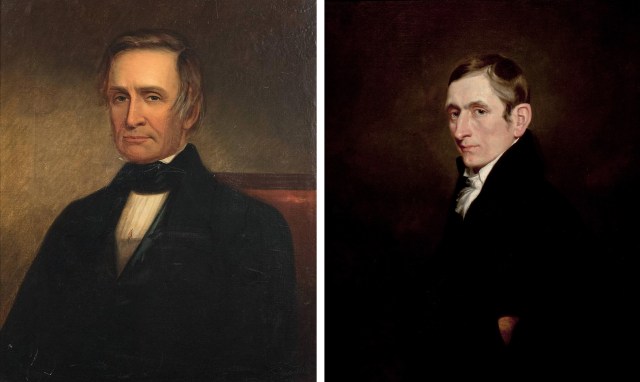
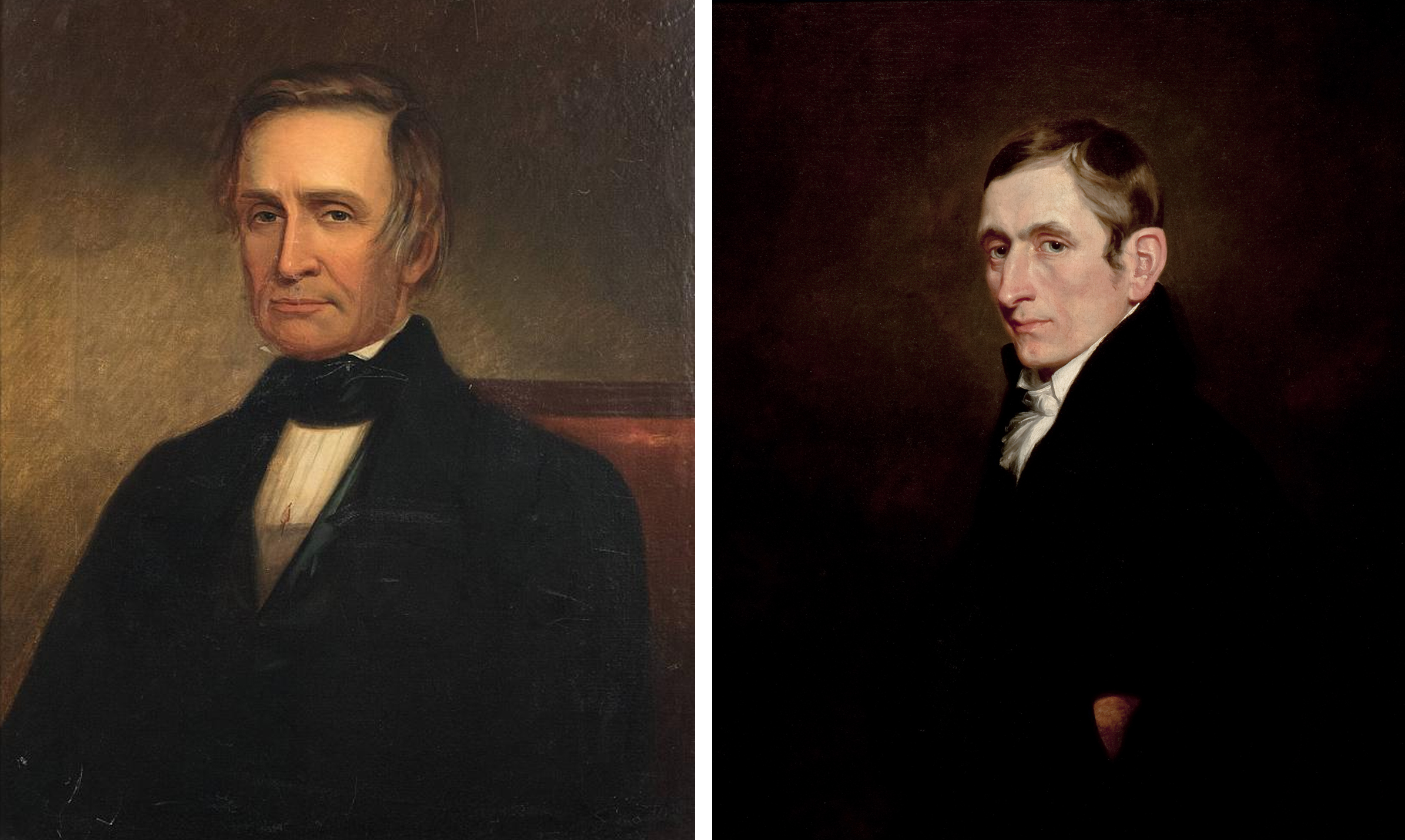
Theodore Frelinghuysen c. 1840 (left) and Jeremiah Evarts c. 1817 (right).WikiMedia Commons
Theodore Frelinghuysen c. 1840 (left) and Jeremiah Evarts c. 1817 (right).

That’s what happened, although a few Southern Democrats resisted. Rep. Davy Crockett of Tennessee said the treatment of the Cherokee was “unjust, dishonest, cruel, and short sighted in the extreme.” He said he had been “threatened that if I do not support the policy of removal, my career will be summarily cut off.” That’s what happened: Crockett, with his political career ended, eventually had a brief military career in Texas at the Alamo.

Other leaders did not want any delays. When a Georgia court condemned to death for murder George “Corn” Tassel, a Cherokee, and others questioned the verdict, Georgia responded by immediately executing him. When Cherokee chief John Ross was preparing to head to Washington with hopes of delaying removal by force, his opponents imprisoned him in a cabin with the decaying corpse of a hanged Cherokee dangling from the rafters.

By then, Evarts was dead: tuberculosis. We have records today of the pleas of Cherokee Christians. One protest stated, “Our cause is your own. It is the cause of liberty and justice. We have learned your religion also. We have read your sacred books. Hundreds of our people have embraced their doctrines. … We are indeed an afflicted people! … Spare our people!”

To no avail: The Cherokee removal deadline became May 1838. The first general in charge of preparation, John Wool, had some compassion. He ordered the purchase of 7,000 blankets, 4,000 pairs of shoes, and 4,000 “yards of assorted cloth goods from New York to distribute among poor Indians.” The War Department said no because the secretary of war, told to make the move as inexpensively as possible, had not authorized the purchase. Wool complained and gained reassignment to the Canadian border.

Some among the Cherokee did not believe America would be brutal. In May 1838, fake news spread through the tribe: The deadline would be extended for two years! They were surprised when soldiers arrived on May 26 and at gunpoint drove them toward wooden stockades, not even giving them time to pack.

A correspondent of The New York Observer, a conservative Presbyterian newspaper, publicized eyewitness reports of families “startled by the sudden gleam of bayonets in the doorway. … Men were seized in their fields or going along the road.”

Private John Burnett, who worked as an interpreter, said, “In the chill of a drizzling rain on an October morning, I saw them loaded like cattle or sheep into six hundred and forty-five wagons and started toward the west. … Many of these helpless people did not have blankets and many of them had been driven from home barefooted.”

Probably about 4,000 Cherokee died on the trail of tears. In 1841, John Quincy Adams said the use of force would be “among the heinous sins of this Nation for which I believe God will one day bring them to justice.”

In 1890, Burnett, 80 years old and still mourning, said, “Let the Historian of a future day tell the sad story with its sighs, its tears and dying groans. Let the great Judge of all the earth weigh our actions.” 

News

A Christian Orphanage Raised an Acclaimed West African Author

As a kid, Emmanuel Atossou started to tell stories to fellow orphans after he was separated from his family.

A collage of images relating to Togo and the author Emmanuel Atossou
Christianity Today May 23, 2025
Illustration by Elizabeth Kaye / Source Images: Pexels, Wikimedia Commons

The air in Tsévié, Togo, still carried the scent of goats and red earth when ten-year-old Emmanuel Atossou first stepped into the orphanage compound. He had just arrived from Côte d’Ivoire (Ivory Coast) where the 2010–2011 post-election crisis had forced his family to scatter.

With his older brother, Justin, by his side, Emmanuel’s world shrunk to a few bags, a trembling heart, and the hospitality of strangers. But what he found at Jésus le Bon Berger (Jesus the Good Shepherd) was not merely shelter—it was, unexpectedly, home.

“The smell of goats, the chickens, the red soil—it was all so new,” he remembered. “But the kids made it easy. They welcomed us instantly. We argued and made up like a real family. Within a day, I felt like I belonged.”

More than 35 million children in Africa live without parental care, according to African Union. For many children in West Africa, orphanhood can result in living in poverty, homelessness, or exploitation. Without strong systems of support, the odds are stacked against these children. Yet Emmanuel’s story—now dotted with literary awards and published books—testifies to what’s possible when Christian communities step in with compassion, discipleship, and long-term investment in children’s lives.

UNICEF estimates that nearly 2.7 million children live in institutional care worldwide. The World Bank notes that Togo’s score on the Human Capital Index stands at 0.43. According to World Bank, this means children born in Togo today will achieve only 43 percent of their potential productivity because of limited access to quality health care, food, and education.

In 2014, Faith to Action Initiative released a report suggesting ways churches across Africa could improve orphan care. Some measures include providing trauma and attachment counseling, creating “family style” environments with smaller child-to-caregiver ratios, encouraging pastors and caregivers to provide long-term care and discipleship, and training children in life skills they will need for adulthood beyond the orphanage walls.

For Emmanuel, orphanhood started not with death but with displacement. Emmanuel’s family fractured due to divorce in 2006. Then Côte d’Ivoire faced political upheaval triggered by a disputed presidential election in late 2010. The incumbent Laurent Gbagbo refused to concede to opponent Alassane Ouattara, and their standoff escalated into armed conflict—more than 3,000 people were killed in a few short months, and up to 1 million were displaced. Emmanuel’s father, Atossou Komi Fiagno, had grown increasingly ill and so sent his sons to Togo for safety and stability. Emmanuel’s mother remained in Côte d’Ivoire. Nine years later, his father died.


At Jésus le Bon Berger, life was simple but steady. Mornings started with devotions. Evenings ended with shared chores and whispered prayers. Emmanuel said the children found comfort not in luxuries but in rhythm—and in the assurance they were no longer alone. That’s where he found support to heal from trauma, find long-term Christian mentors, and change the trajectory of his life.

The local Christian relief organization Association Espoir Nouveau Togo (New Hope Association, AEN Togo) has supported the orphanage since 2005, providing school fees, meals, discipleship programs, and volunteers.

“They didn’t just send funds,” Emmanuel said. “They sent people. They sent presence. They sent love.”

AEN Togo funded the arrival of Noël Atikpo, a trainer who taught the children about psychological resilience, self-worth, and spiritual strength. Emmanuel said he looked forward to visitors, calling many of them “aunt” or “uncle.”

“Even if they brought nothing, their presence filled us with joy,” he said. “It was love in its purest form.”

Under the orphanage’s care, Emmanuel began to dream of becoming a journalist and a writer. “Most of the books we had were for children,” he said, recalling his middle school years. “I used to read them aloud to the younger kids. That’s how I fell in love with storytelling.”

Though no teacher formally mentored him as a storyteller, one donor—“Aunt Marie,” a French visitor—noticed his passion.

“She used to say I reminded her of her son,” he recalled. “That encouraged me. At the orphanage, people loved my oral stories even more than my written ones.”

In 2019, Emmanuel Atossou earned his high school diploma and left for Lomé, Togo’s capital, to study at the University of Lomé. Loneliness, financial strain, and uncertainty marked his first year outside the orphanage. His father died that year, and his brother had left the orphanage two years earlier.

“Before he died, my father left me a list of verses to read each morning and night,” Atossou said. “When I stopped praying after leaving the orphanage, those verses brought me back.”

Atossou walked miles to school, attended long classes, and often went without food. At his lowest, he worked construction jobs, missing exams to earn money for meals.

“Once I missed two full days of exams—four subjects—just to avoid starving,” he remembered.

Unable to afford textbooks, Atossou turned to YouTube and free e-books, studying late into the night despite his exhaustion from doing manual labor. He tutored classmates to make ends meet. Still, his resilience and hard work led to his selection as head of the university’s literary club presentation committee. Atossou pushed through his disappointment and loneliness, writing even when no one was reading.

In 2024, those early seeds planted at Jésus le Bon Berger—along with Atossou’s continued perseverance—blossomed into broad literary recognition. He won second place in a national writing contest with a paper about digital fraud and placed first in the Codjo Rodrigue Abel Assavedo International Literary Prize contest in neighboring Benin.

Atosou now has two books published—Dédicace aux Âmes (Dedication to the Souls) and Les Derniers Souvenirs (The Last Memories)—and two forthcoming. Short Édition, a French publishing house focused on short forms of literature, also published Atosou’s short story “Le cortège présidentiel et l’homme haillonné” (The Presidential Motorcade and the Ragged Man), in which he critiques the pitfalls of power and explores human dignity.

But Atosou hasn’t stopped dreaming. He plans to return to graduate school in September to study law and diplomacy. “For literary awards, it’s not enough to just write,” he said. “Academic credentials also matter.”

In a quiet corner of his home, manuscripts now sit beside law textbooks.

Atosou said his message to orphans and to the world is this: “Be resilient. Be courageous. Have faith. Life gets harder, yes—but giving up isn’t in the vocabulary of God’s children. Rain or shine, you will fulfill your purpose.”

News

In Gaza, Empty Markets and Unaffordable Canned Lentils

A Muslim-background believer describes the worsening hunger crisis, blaming both Israel and Hamas.

Displaced Palestinians gather to collect portions of cooked food at a charity distribution point in Gaza.

Displaced Palestinians gather to collect portions of cooked food at a charity distribution point in Gaza.

Christianity Today May 23, 2025
Bashar Taleb / Getty

For dinner last Monday, Osama Sawarih and his family sat down to eat flatbread and a handful of rocket lettuce grown next to his tent in southern Gaza. Sawarih looked at his family with concern. They’ve all struggled with stomach pains and diarrhea—signs of malnutrition.

Israeli forces destroyed the family’s house when they razed Sawarih’s neighborhood 16 months ago, displacing the residents. His family packed up some clothes and lived in Rafah near the Egyptian border for more than three months.

When it was safe to return home, Sawarih, a former Muslim who came to faith in Christ a decade ago, did his best to clean up the rubble and set up a tent for his wife and kids, who range from ages 2 to 17. His neighbors are also living in tents. Christianity Today agreed not to use Sawarih’s real name, as converts to Christianity face danger in Gaza.

Sawarih’s family has lived in constant fear since the attacks. Some of their relatives died in air strikes, and one died when thieves attacked him in his home. When Sawarih’s family is sick, they avoid getting medical help at a hospital. A Hamas member could be hiding there, putting an Israeli target on the building, he said.

Now, he’s struggling to find food for his family.

In the past two weeks, Sawarih has watched with increasing alarm as food supplies in Gaza dwindle due to Israel’s 11-week blockade of food, medicine, and other essentials into the Palestinian territory. The markets have no vegetables left, only expensive canned lentils. At home, Sawarih has only enough flour to feed his family for one more week.

He can’t afford the escalating prices. Sometimes his kids work in the fields to bring in extra income, and a church will occasionally send financial support. The Gaza Baptist Church used to hand out food and hot meals once or twice a month, but most food distribution centers have shut down as the food supplies have diminished.

“Our only thought is how to find food for my children,” Sawarih said.

Food security experts warned last week that half a million Palestinians in Gaza face “catastrophic” levels of hunger. Another million people can barely get enough food to eat, and if aid deliveries aren’t resumed quickly, the risk of famine is high, according to the UN-linked organization that monitors starvation risk across the globe.

The organization issued predictions of imminent famine last year that did not come true. But this time could be different.

Israel said that the blockade, which began March 2, is aimed at rooting out Hamas and forcing the release of remaining hostages Hamas kidnapped on October 7, 2023. The government insists Gaza is stocked with essential food and supplies, noting that nearly 450,000 tons of aid entered the region during the two-month cease-fire earlier this year.

Israeli prime minister Benjamin Netanyahu has accused Hamas of siphoning off aid as it enters the territory. Yet UN aid organizations say there is no evidence of any significant theft on the part of Hamas.

On the ground, Sawarih said it’s common knowledge in Gaza that Hamas is controlling the aid “to use it as a weapon and protect its members.”

For instance, he said leaders funnel the aid to specific camps to attract people to those locations so Hamas can hide its members among the population. Hamas continues to use Palestinians as human shields to gain the world’s sympathy and garner donations from Islamic communities, he noted.

He stays away from these camps, but now his family is running dangerously low on food.

Sawarih said the terrorist organization also “stores stolen aid, monopolizes it, and sells it at exorbitant prices.” He knows people who have ties to Hamas and have seen the tents of Hamas members filled with food. Those people told him Hamas distributes the food at night, and much of it goes to its own members. He said Hamas also controls many of the merchants and charitable organizations.

Some have tried to raise awareness about Hamas’s thievery, Sawarih said. Protests swept through Gaza in March, fueling the growing anger with calls for Hamas to leave the coastal strip.

“It does not care about the general public,” Sawarih said. “Rather, it exploits them to gain the world’s sympathy.”

Yousef Elkhouri, a Christian Palestinian who lives in Bethlehem, said his family in Gaza is also at risk.

They are surviving on what little canned and dry food they have left, and their health has deteriorated. Elkhouri’s parents, sisters, nieces, and nephews haven’t eaten fresh food or meat for two months, and their water supplies are contaminated. The Christian family, whose heritage in Gaza is centuries old, burns wood or cardboard so they can boil water to make it drinkable.

Elkhouri said churches send financial support to ministries such as the Shepherd Society of Bethlehem Bible College, which provides food, water, and medicine for the Christian community and their neighbors in Gaza. According to some estimates, Gaza’s Christians numbered between 1,000 and 1,200 before the war but have since dwindled to between 600 and 700.

Israel’s renewed bombing campaign adds another layer of suffering. Airstrikes last week killed more than 300 people, according to the Hamas-run Gaza Health Ministry, which does not distinguish between civilians and combatants. Israel claims it killed dozens of militants in the strikes and was targeting Hamas leader Mohammed Sinwar.

“They barely sleep due to Israeli constant bombardment, and now with waves of heat and no electricity, the situation is getting even worse,” Elkhouri said.

Sawarih added that Israel doesn’t care if everyone in Gaza is killed. “It only cares about its own interests, and it uses Hamas’s stupidity as an excuse to achieve its goals,” he said.

US president Donald Trump addressed the Gaza crisis during his Middle East tour of Saudi Arabia, Qatar, and the United Arab Emirates last week. “We’re looking at Gaza, and we got to get that taken care of,” he said. “A lot of people are starving. A lot of people. There’s a lot of bad things going on.”

The president also addressed the status of the remaining 58 hostages Hamas has held captive for nearly 600 days. Israel believes 20 are still alive. “They’re not in good shape,” Trump said. “Some of them are in better shape than others. … We’ll be working with [Israel] to get them.”

Michael Levy, whose brother Or Levy returned home in February after nearly 500 days of Hamas captivity, said his brother looked like a Holocaust survivor. “I want to be very clear: Hamas used food as a weapon,” Levy told CT. “They starved Or.”

Levy said that many days his brother split one can of beans between four men and that he lost 45 pounds during his time in captivity. “He was all skin and bones, and that’s it,” he said.

The Trump administration secured the release last week of Edan Alexander, the last living US hostage. Trump did not say how he would help Israel negotiate for the remaining hostages, but his administration is working on a plan to monitor renewed aid deliveries into Gaza.

The US will back a newly created nonprofit, Gaza Humanitarian Foundation (GHF), to set up food and aid distribution centers in Gaza protected by private security contractors to prevent Hamas from stealing aid, according to US ambassador to Israel Mike Huckabee. He added that Israel, which has agreed to the plan, would not be involved in the distribution of food or in transporting it into Gaza.

The UN has criticized the plan and refused to participate, noting concerns about population displacement, as the initial four distribution sites will be located in southern and central Gaza, which it claims would force residents out of the north.

Jake Wood, head of the GHF, told CNN that Israel has agreed to let the organization establish two distribution centers in northern Gaza as well.

GHF said it will begin distributing aid by the end of May. On Sunday, Netanyahu approved an immediate plan to allow a “basic quantity of food” into Gaza until the GHF plan is operational, and deliveries began on Monday.

Gaza may need more than basic aid to stave off the growing hunger in Sawarih’s family and the rest of Gaza’s 2 million residents. Panic has set in, and people are rushing to the few remaining places with food. Meanwhile, Israel launched an extensive ground campaign on Sunday, leading to more displacement.

On Wednesday, Sawarih could see smoke on the horizon from airstrikes in both the afternoon and evening. As he prepares for a long night of Israeli war planes on the horizon, he prays God spares innocent lives and protects his family from incoming rockets. He also prays for Hamas to meet its end.

“The more people suffer, the more [Hamas] uses it as a card to gain the world’s sympathy,” Sawarih said.

Still, he has felt God’s divine hand of protection over the years as he has lived and served in Gaza. “It’s unbelievable because it does not make sense,” he said. “But you are sure that God is the one who protects.”

Pastors

The Shepherd’s Way Is Slower

Wendell Berry’s “Jayber Crow” reveals what pastors risk losing when they trade presence for productivity.

Man teaching a boy how to farm and till the land.
CT Pastors May 22, 2025
AleksandarNakic / Getty / Edits by CT

I grew up under the tutelage of two different men: a farmer and a pastor. My father pastors a church in southeast Texas, serving the same place and people for nearly 30 years. He knows where to find the best gumbo in town and which neighborhoods flood first when hurricanes barrel through. He has performed around 500 funerals in that community and at that church. His roots run ‘deep’.

My grandfather, who is now with the Lord, was a small homestead farmer in east Texas, behind what we call “the Pine Curtain.” Summers with him meant cutting wood, moving feed, and fixing fences. At a long day’s end, he’d laugh and say to my brother and me, “Good work today, boys. Go to the well and drink as much water as you can handle.” Before we headed home, he’d slip us $100. At that age, we felt like millionaires. I miss him now more than ever.

I hear echoes of both men in the pages of Wendell Berry’s Jayber Crow. I discovered Berry’s poetry and essays in college but only read his novel last year—a moving story about belonging to a place and a people. While the whole work cut me to the quick, it was the dissonance between generational approaches to work and place, reflected in the characters Athey Keith and Troy Chatham, that shook me.

Why was I shaken? Well, I followed my father’s path as a local church pastor. I am a young shepherd with a young flock. Reading Jayber Crow, I realized I was falling into the same traps as the enterprising and ambitious Troy Chatham—traps my father’s generation avoided because the “tools” were less alluring. 

The story comes to us through Jayber Crow, an orphan turned local barber in Port William County, Kentucky. His life and work are rooted in this little place where he sees its people from within, as a coparticipant alongside them. This county seems obscure to everyone but those who live there. But this is how places work. You only get to know a place and its people through patient participation within it. 

Through Jayber’s eyes we meet Athey Keith, a Port William farmer with a fertile plot of land that he cultivates slowly and deliberately. Jayber describes him this way: 

“Athey was not exactly, or not only, what is called a ‘landowner.’ He was the farm’s farmer, but also its creature and belonging. He lived its life, and it lived his; he knew that, of the two lives, his was meant to be the smaller and the shorter. Of all this Troy had no idea, not a suspicion. He thought the farm existed to serve and enlarge him.” 

Athey sees himself as rooted in the land, embedded in the environment. For this reason, he isn’t eager to exploit it. Stripping the soil would be like stripping his own soul. He could rush, but he doesn’t. He knows that the way he works the land will shape the land long after he is gone.

Athey’s connection to the place itself determines the kinds of tools he is willing to use to complete the task. His tools are slow, patient, and manual. The pace of the plow ‘on’ the land is shaped by Athey’s beliefs about the plow’s place ‘in’ the land. It’s a tool. It is foreign to the soil, a necessary intrusion. The very least it can do is to cut its lanes slowly and deliberately. Athey won’t adopt tools that move over the land quickly. He is looking to cultivate, not crush.

But Athey has a son-in-law who wants to move fast. Troy, married to Athey’s daughter, Mattie, wants quick, powerful results and won’t wait for them. He eagerly embraces tools that promise this kind of rapid return and is indifferent to what these tools might do to the place itself. He gives no thought to the way of his work and how it might affect this place, interested only in what he can gain from the place, seeing nothing to give to it. Truthfully, Troy doesn’t see the farm—he sees through it. 

Initially, Troy begins by mimicking Athey’s methods, not because he wants to, but because it seems fitting given Athey’s authority. The real shift comes with the adoption of a new tool: the tractor. Jayber captures the dynamic of this moment:

“You couldn’t see, back then, that this process would build up and go ever faster, until finally it would ravel out the entire old fabric of family work and exchanges of work among neighbors. The new way of farming was a way of dependence … on machines and fuel and chemicals … and on the sellers of bought things—which made it finally a dependence on credit …Troy went into debt and bought his new equipment because he didn’t want to be held back … The tractor greatly increased the power and speed of work. With it he could work more land … [and] he could work at night.”

The tractor is more than a tool. It is a symbol of land-crushing speed. Along with a quicker pace, it brings a different posture toward land and time and neighbors. Athey gives into it—not because he agrees with it, but because he is growing old and can’t work the land as he once did. The tractor doesn’t just reshape Athey’s land; it changes everything, including the people and place of which the land is but a part.

Athey is a farmer, not a philosopher. Yet like most small farmers, he has cultivated an imagination of place by living with a profound commitment to the “territory underfoot” (Berry, “The Writer and Region”). The old farmer sees that the adoption of the tractor won’t remain restricted to the farm. Jayber notes: 

“And so the farm came under the influence of a new pattern, and this was the pattern of a fundamental disagreement such as it had never seen before. It was a disagreement about time and money and the use of the world. The tractor seemed to have emanated directly from Troy’s own mind, his need to go headlong, day or night, and perform heroic feats.” 

Our tools reflect what we believe about time, money, and how we work in the world. As tools reshape places, they reshape the people in them. Jayber’s laments:

“I confess that I heard this with a sense of guilt, for by the time Troy began to say such things I had bought the Zephyr and had succumbed to something of the same impatience. …  Even at my sedate top speed of forty miles an hour, I hated anything that required me to slow down. … Having begun by resenting the insult to Athey, I ended by yielding Troy a little laugh and a nod of understanding, which shamed me and did not make me like him any better.”

Jayber is shaped by a tractor he never uses. Its very presence in the place he inhabits begins to redefine the way he participates in this place. Troy won’t walk the farm like Athey did, and Jayber won’t walk the Port William County roads. His life accelerates as he drives through Port William like Troy drives over old Athey’s land—fast.

Our work is shaped by the tools we adopt. All work would benefit from more patient attention and unrushed presence, but it is essential when you work with people.. And pastoring ‘is’ working with people. Like good farmers, faithful pastors belong to the places they labor. When the apostle Peter exhorts the shepherds in 1 Peter 5, he tells them, “Shepherd the flock of God that is among you.” Pastors are placed people, serving real people in a real place. 

I grew up seeing stacks of pink “While You Were Out” notes on my pastor dad’s desk. When he went out to lunch with a deacon to discuss the upcoming community outreach, he couldn’t be contacted at the restaurant. If a church member stopped by the office while he was gone, the secretary would jot down her their name, the time she they dropped by, and her their home phone number on a pink note. If he was in his study, working on and praying for Sunday’s sermon, missed call notes would pile onto his desk awaiting his return.

His tools were slow and personal. Names were written in ink from the living hand of a secretary who had probably asked the person, “Hey, how’s your mother doing?” Recently, I had him pull up his 15fifteen-year-old church email account to see how many emails he has sent. It was just south of 5,000five thousand. My email account, active less than seven years since planting our church, has: over t20,000wenty thousand sent emails. 

Pastoring is slow work, but for young pastors like me, it has accelerated. And everyone loses when the pace of pastoral ministry quickens. Part of this is cultural, but we’ve also eagerly adopted tools of speed, telling ourselves, “We will redeem them.” In truth, they’re better at discipling us than we are at deploying them in faithful ways. 

Fast pastoring is shallow shepherding. Always. Athey feared Troy’s tractors would lead him to move too quickly over too much land. He was right. My father worried pastors from my generation would prefer digital communication with their people. When I complained about a dozen emails with a parishioner to schedule a lunch to talk about histheir marriage, my father kindly said, “Wouldn’t it be better to just call him to set that up? Then you could also pray for him and he would hear you.”  

Francis Schaeffer, in No Little People, wrote, “We must do the Lord’s work in the Lord’s way.” Troy is unwilling to do the farmer’s work in the farmer’s way. He is a land owner, not a farmer—showing no honor for the place itself, naive to how tools used reshape those who wield them. As dehumanization becomes the “cost of doing business,” pastors must weigh the cost of our tools and ask: Do these hinder us from doing the Lord’s work in the Lord’s way?

Like David rejecting King Saul’s armor in 1 Samuel 17, when we stand against the tools and spirit of the age, we will appear foolish. Are we willing to be forgotten shepherds who believe rocks from the brook might be more effective when slung with faith than the advanced armor of a king?

Pastors are shepherds. To do our work in the way of our Lord, we’d do well to remember he is a truer shepherd—a Chief Shepherd—who knows us all by name, who withdrew to quiet places, welcomed interruption, embraced obscurity, and spent the bulk of his ministry walking everywhere with people by his side. 

Athey asked what the land could carry. Troy asked what it could give him. The question for us is just as simple: Are we here to be with our people, or to get something from them?

One is ministry. The other is ambition in disguise. If pastors aren’t careful, they will see places and people through the prisms of their tools and see nothing but a means to an end—a place for their ministry, not a place in which to minister.

Kyle Worley is a pastor in Texas, the author of Home with God: Our Union with Christ (B&H), and the host of the Knowing Faith podcast. You can follow him on social media @kyleworley.

News

Supreme Court Rejects Nation’s First Religious Charter School

The deadlocked court affirmed the Oklahoma Supreme Court’s ruling that the Catholic school would be functioning as a government entity.

The US Supreme Court in December 2024.

The US Supreme Court.

Christianity Today May 22, 2025
Celal Gunes / Anadolu via Getty Images

In one of the most anticipated rulings of its term, a divided Supreme Court blocked Oklahoma from launching the nation’s first religious charter school.

The justices deadlocked 4-4, resulting in them affirming the lower court ruling in the case. The 2024 Oklahoma Supreme Court ruling found the proposed Catholic charter school to be a violation of both the Oklahoma Constitution and the US Constitution’s establishment clause, the part of the First Amendment which bans state-sponsored religion.

In 2023, Oklahoma’s charter board approved the founding of St. Isidore of Seville as a Catholic charter school. St. Isidore would be a virtual, K–12 school run by the Roman Catholic Archdiocese of Oklahoma City and the Diocese of Tulsa and funded by the state.

The high court’s ruling on Thursday was unsigned, leaving no clues of the breakdown of votes. At the hearing on the case just a few weeks ago, five of the eight participating justices appeared in favor of the arguments for the religious charter school. Justice Amy Coney Barrett had recused herself from the case.

Charter schools are taxpayer-funded and operate like public schools but without the same curriculum requirements. The Catholic charter school planned to include teaching about the Catholic faith.

Though the Supreme Court has previously upheld vouchers for individual students to attend religious schools, it has not ruled on a state entirely funding a religious school.

Under Chief Justice John Roberts, the court has expanded the legality of government aid to religious organizations, one example being the 2017 Trinity Lutheran case that allowed a church to receive a government grant for recycled tires for its playground.

But Roberts made a comment during the April arguments about the Catholic charter school indicating that he saw this case differently than those other cases.

“You rely heavily in your brief on a number of cases, Trinity Lutheran, Espinoza, Carson. Those involved fairly discrete state involvement,” Roberts said to one of the lawyers representing the Catholic charter school and the state charter board. “This does strike me as a much more comprehensive involvement.”

Justice Elena Kagan, who voted with Roberts in favor of the government grants for Trinity Lutheran Church back in 2017, also felt this case was different than the other government aid cases the court had heard.

“These [charter] schools look like regular public schools,” she said.

A number of Christian churches and organizations had filed briefs on the side of the Catholic charter school, including the Assemblies of God, Christian Legal Society, National Religious Broadcasters, and the US Conference of Catholic Bishops.

The case had interesting dividing lines, with the Republican attorney general of Oklahoma arguing the case against the Oklahoma charter board and the Catholic charter school. Meanwhile the Trump administration joined on the side of the Catholic charter school.

The Oklahoma Supreme Court, whose ruling was affirmed by the Supreme Court, found the case to be very clear-cut.

“St. Isidore, a public charter school, is a governmental entity and state actor,” the state supreme court wrote last year. “The funding will go directly to St. Isidore, dissimilar from giving scholarship funds to parents. … The state will be directly funding a religious school and encouraging students to attend it.”

The state court continued, “St. Isidore cannot justify its creation by invoking Free Exercise rights as a religious entity. St. Isidore came into existence through its charter with the state and will function as a component of the state’s public school system.”

Therefore, the court ruled, it “violates state and federal law and is unconstitutional.”

News
Wire Story

Trump Signs Federal Law Criminalizing Revenge Porn, Deepfakes

Backed by Christian groups, the bipartisan Take It Down Act aims to protect against online exploitation.

President Trump at podium and Melania Trump seated before a crowd with rose bushes and the White House behind

President Donald Trump and First Lady Melania Trump

Christianity Today May 22, 2025
Jim Watson / AFP via Getty Images

Publishing or distributing sexually explicit material of a person without their consent is now a federal crime, and social media platforms and other websites must remove such images within 48 hours of notification.

That’s the gist of the bipartisan Take It Down Act President Donald Trump signed into law Monday, which First Lady and former international model Melania Trump lauded as a major point of her Be Best Initiative and which sex abuse watchdog groups applauded.

The law criminalizes nonconsensual images including AI-generated content commonly called “deepfake pornography,” as well as video images and photography either created without the subject’s consent or distributed without such consent.

The Danbury Institute, a conservative Christian public policy group, began endorsing the Take It Down Act last year, when the legislation was introduced by Senator Ted Cruz. The institute called its bipartisan support “a welcome display of unity in the protection of innocent citizens and the promotion of public decency,” and its chairman Scott Colter celebrated the new law as an example of the Trump administration working alongside Christians.

Leaders from the Danbury Institute, the Heritage Foundation, and the Ethics and Public Policy Center attended Monday’s signing at the White House Rose Garden.

In a statement released on social media, the Southern Baptist Ethics & Religious Liberty Commission said Southern Baptists applaud Trump’s signing the bill.

“Because pornography is a distortion of God’s gift of sexuality, a violent assault on the imago Dei, and a corrosive plague upon individuals, families, churches, and society, we will continue to advocate for policies that keep this material from our public spaces,” the statement said.

Image-based sexual abuse affects a growing number of people, watchdog groups say, with the pornography industry fueling the abuse. A study released in March found that 1 in 8 young people personally knew someone under the age of 18 targeted by deepfake porn or knew someone who had used deepfake technology against another minor.

The National Center on Sexual Exploitation (NCOSE) and the Parents Television and Media Council, two groups invited to the White House lawn to witness the signing, applauded the new law inspired by Elliston Berry, a survivor of deepfake image-based sexual abuse committed when she was 14.

“It would be hard to overestimate the incredible impact this new law will have,” NCOSE said in a press release, emphasizing that with the explosion of AI tools, “anyone can be victimized through IBSA within seconds.”

“The notice and takedown provision established by the Take it Down Act is similar to copyright law,” NCOSE said, “which means we already know it works. Image-based sexual abuse will now be removed as quickly as copyrighted material, like Disney movies, are removed from YouTube.”

Parents Television and Media Council Vice President Melissa Henson said the new law provides relief for survivors, including children.

“Of all the online threats to children, deepfake pornography might be the most insidious, because anyone—even children and teens who aren’t online or don’t use social media—can fall victim to it,” Henson said in a press statement. “To witness the signing of the bill into law, along with families whose children have been victimized by deepfake pornography or sextortion, was bittersweet, but will serve as a powerful reminder of the difference people can make when they advocate for solutions that will protect future generations.”

In an uncommon show of bipartisan support, only two members of Congress voted against the Take it Down Act when it passed in April, Republican representatives Thomas Massie of Kentucky, who has called the legislation “a slippery slope, ripe for abuse, with unintended consequences;” and Eric Burlison of Missouri, who has said it is redundant and federalizes crimes addressed in state law. The act passed the US Senate unanimously.

Penalties for violating the Take it Down Act include prison sentences of up to three years for crimes committed against individuals under the age of 18, and up to two years for crimes committed against adults, with concurrent financial fines, the act stipulates.

Trump signed the act on the heels of NCOSE’s May 13 release of the report “Not a Fantasy: How the Pornography Industry Exploits Image-Based Sexual Abuse in Real Life,” a detailed look at pornography’s global impact on image-based sexual abuse.

NCOSE defined image-based sexual abuse as “a violation of persons that includes the theft, creation, and distribution of sexually explicit material without the meaningful consent of the persons depicted, or the manipulation of nonexplicit material for the purpose of making it pornographic.”

NCOSE includes in the definition nonconsensual distribution of sexually explicit images or videos, recorded sexual violence, video voyeurism, and nonconsensual creation or distribution of AI-generated forged pornography.

First Lady Melania Trump said the new law reflected her efforts to create safer spaces for youth online. Now that the law has been signed, she said, “we look to the Federal Trade Commission and the private sector to do their part” to enforce it.

Church Life

I Have a Baby Face. It Shouldn’t Discount My Leadership.

Ageism persists in majority-Asian churches. But Scripture exhorts us to transform how we speak and act toward young pastors and leaders.

Woman and microphone on a pink background
Christianity Today May 22, 2025
Illustration by Christianity Today / Source Images: Unsplash, Pexels

Last year, after I read a portion of Scripture aloud from the pulpit at church, one congregant asked a parent, “Whose daughter is she?” And after I led a night of lament and worship two years ago, a guest remarked to our youth pastor that his young people were so talented. 

These people quickly learned that my husband is the pastor and that I am in my late 30s, although I am often mistaken for a college student. It’s a peculiar predicament to be in: On the one hand, it can feel gratifying to appear younger than I am. On the other hand, it can feel unnerving when others make assumptions about my capabilities, my competencies, and my place in the social hierarchy. 

In many Asian, Asian American, and Asian Canadian contexts, respecting and honoring elders is important. It can be difficult to break out of these cultural norms and invite younger Christians into leadership spaces. 

About 35 percent of the more than 200 Asian American (or majority Asian American) congregations surveyed by the Innovative Space for Asian American Christianity last year reported “no leaders under the age of 30 on the ruling church board.” 

The dearth of younger leaders in the Asian American church indicates “significant theological and cultural differences between the generations that affect communal identity, missional priorities, leadership diversity, and pastoral succession,” wrote Dorcas Cheng-Tozun. 

Pastors and ministry leaders of Asian descent are all too familiar with such challenges. My friend Christine Yeung, who is from Hong Kong and pastored a Canadian Anglican church at the age of 29, often received comments on her youthful visage from congregants or visitors. 

While she sometimes felt as if they were implying she did not have enough life experience to provide them with the pastoral care they needed, she often responded by thanking them and telling them that she received a calling to be in ministry when she was a teenager. 

Ageism is a significant hindrance when engaging in ministry in Asian settings, Yeung said. Once, a parishioner she was meeting for the first time looked shocked upon seeing her, frowned, eyed her from head to toe, and said, “You are the new pastor? So young.” 

People often made similar remarks to Esther Tan, a 35-year-old Chinese Malaysian who pastors an Indonesian congregation in Los Angeles. Many in her flock are elderly, making her feel as if she is their granddaughter. Although they respect her as their pastor, her role can feel challenging “because we are at a different stage of life and they have so much [more] experience than me,” Tan said. An elderly congregant told her that she could not share her marital problems with Tan because she was “too young,” and asked if Tan could recommend older female pastors to speak to. 

Evangeline Chow, a Chinese American who teaches at a school in the Philippines, said her retired-pastor dad often quips, “Chinese American churches are looking for someone with the credentials of a 60-year-old but the energy of a 30-year-old.”  

Not all ministers find youthfulness a hurdle. Looking young has been an asset because it helps him “blend in” with teenagers, said Canaan Ee, a Chinese Singaporean who serves as the youth pastor in my Chinese Canadian church. His appearance has helped to break stereotypical notions of what a pastor should act and be like, he added, and allows young people to relate to him as an older brother.  

But certain challenges persist. In prior ministry contexts, when Ee was a single 27-year-old pastor, he experienced some resistance from parents who felt he was ill-equipped to advise them on how to disciple their children, even when he offered wise advice like reading the Bible as a family or praying with children every night. 

While Ee typically brushes off comments about his boyish appearance, the ramifications of ministering in a context where age-based discrimination occurs implicitly and repeatedly can be deeply damaging because it diminishes the gifts and insights that a younger—or younger-looking—person can bring to the church. 

Such approaches or perspectives on Asian church leadership need to be undone and remade in the light of gospel truth. As innocuous as throwaway remarks about a pastor’s or leader’s age seem and as humorous or positive as recipients view them, comments like these may perpetuate the narrative that people who are older are necessarily wiser and are more qualified to lead a ministry or a church.   

Scripture invites us in no uncertain terms to lay down these double-edged words. “Don’t let anyone look down on you because you are young, but set an example for the believers in speech, in conduct, in love, in faith and in purity,” Paul exhorts Timothy regarding his ministry in Ephesus (1 Tim. 4:12). 

Honoring our elders is not wrong. Wisdom and spiritual maturity are often developed through life experience. But these qualities do not exactly correlate with age. Paul charges Timothy to set an example as a leader to everyone around him, just as any qualified elder or church leader should at any age. 

Paul also recognizes that Timothy’s youth is not an obstacle but an opportunity for him to model Christlike servanthood. He charges Timothy to be proactive rather than passive in not allowing anyone to judge him for his youth and apparent inexperience. 

For those of us brought up in cultures where preserving collective harmony and “saving face” is more valuable than clarifying or correcting one another, doing this feels downright impossible. A younger person critiquing or pushing back against an older person’s opinion, however gently it is conveyed, may seem rude or disrespectful. 

But when correction is done out of love instead of a desire to impose shame or cast blame, both parties can foster mutual respect, no matter how awkward or uncomfortable such interactions will be. 

Another apostle’s letter points to how shared humility can overcome ageist sentiments in the church. Peter addresses both elders and younger Christians, commanding the former to be wise and caring shepherds (1 Pet. 5:1–4) and the latter to submit to their elders (v. 5). 

But the final sentence is addressed to all of them. Quoting Proverbs 3:34, Peter emphasizes, “All of you, clothe yourselves with humility toward one another, because, ‘God opposes the proud but shows favor to the humble’” (v. 5). 

I appreciate the imagery and directionality that Peter harnesses here. To clothe ourselves with humility is akin to a posture we choose to adopt and put on, allowing it to contour and color our speech and actions. To do this toward one another means that it is a wholly relational practice that dispenses with hasty assumptions and insinuations, opens up space for honest curiosity, and seeks the flourishing of another. 

Tan, the pastor in Los Angeles, has experienced the tangible fruit of such humility in leadership. Since last year, congregants in their 30s and 40s have taken up leadership positions in her church; in the past, one person would traditionally hold a position for many years. 

Chow, the missionary in the Philippines, has been coaching and training new staff members—ranging from fresh graduates to retirees—at her school for the past three years. While some initially thought she was too young, Chow believes her 12 years of experience working at the school have helped her to gain respect and build relationships with them. 

Yet if Chow had remained and served in North America at her home church, where many of the elders and deacons saw her as a baby and watched her grow up, it would be like ministering “in the shadow of youth,” she said. “In their minds, you still might be 15 [although] that was 20-plus years ago.” 

As a youth in the Singapore megachurch where I grew up, age was never a deterrent to taking on leadership roles in small groups, congregational worship, or church camps. Rather than issuing negative judgments on my lack of qualifications or experience in the workplace, the Christian leaders and peers around me welcomed and appreciated the time, energy, and effort I sowed into serving God as a teenager. 

In my current North American context, my perceived youth has not been an impediment to serving in church through leading worship and fellowshipping with youth and young adults. Still, I suspect I’ll continue to receive comments from people on how young I look until I lose my baby face, get more visible wrinkles, or accumulate more gray hairs. 

In the meantime, I remain hopeful that we will have more Pauls who welcome more Timothys in their churches, giving them room and support to grow, develop, and thrive. I remain confident that I will see young leaders who are bold enough to correct others’ assumptions and judgments firmly and lovingly. And I remain certain of my desire to listen to, learn from, and cultivate rich friendships with Christians who are both younger and older than me.

As Tan now responds whenever she receives such comments, “Yeah, God [has] raised the young generation to serve him. I think that’s important as well, right?”

Isabel Ong is the East Asia editor for Christianity Today.

Culture

Another No-Vacation Summer

Our family can’t travel to Hawaii or Disneyland. But God’s refreshment is still within our reach.

A post card of a beach with a beach chair shape missing from it.
Christianity Today May 22, 2025
Illustration by Elizabeth Kaye / Source Images: Wikimedia Commons

It was a family emergency, of all things, that solved my vacation problem.

My 17-year-old daughter was in a mental health crisis and needed residential care immediately. My husband and I had spent a week sleeping outside her room on a makeshift mat by night and making dozens of calls by day. The only treatment center we could find was 1,000 miles away in Los Angeles.

We received the approval on Good Friday. “Admission is Monday at 9 a.m.,” the director said.

I put down the phone shakily. I was grateful to have gotten this far yet felt that the journey was too much. Jesus Christ had already demonstrated his great love for me on the cross. I threw myself into his arms, so to speak, and waited to be carried.

Many people prayed for us. A friend made us the most delectable roasted-garlic-and-feta potatoes for our Easter dinner, which we possibly ought to have canceled. Another friend booked the tickets for us to fly out on Easter evening. And another friend arranged for her Mennonite friends in LA to host us.

These friends—strangers to me—welcomed us, leading us to a quiet bedroom with towels folded on the table and palm trees glowing yellow through the dark windows. They offered us fruit and different breads for toast in the morning. They were a refuge in a strange land and under strange circumstances.

The author of Hebrews says that in showing hospitality one may entertain angels unaware (Heb. 13:2), and the converse is also marvelously true: By giving yourself over to the hospitality of others, you may be entertained by angels.

Nourished by these gifts, I set out from the strangers’ home on Easter Monday, not a new person exactly but able to get us to the treatment center. After I saw my daughter welcomed and safe, I said goodbye and wandered the bright streets, weepy with relief and wondering where to get tacos.

I like to refer to this trip as my Elijahic vacation. “Vacation” because of the travel. “Elijahic” because it reminds me of how the prophet received extraordinary help in a time of great need—hot bread, cool water, and deep sleep at a wilderness bed and breakfast run by an angel (1 Kings 19).


Our family’s problem is simply this: We can’t take vacation. We look like normal people who can relax, but reserving things in advance or scheduling time off work rarely happens. We don’t travel well, and we tire easily. 

There were a few times in the early years when we thought we might have the magic. The winter after our three children arrived, we took them to the mountains for a long weekend. We looked forward to suiting them up in their adorable snow gear. We would go sledding and bond over hot cocoa and storybooks. Later, after we tucked the kids into bed, my husband and I would sit snug by the fire. A sweet first vacation.

It turned out that one child was very sensitive to cold. If her hands got the least bit chilled, they swelled painfully and made her scream. Being outside was miserable; we got disapproving looks from others. We spent the weekend stuck inside with too little to do and not enough toys. We nearly left early.

Okay, so that was a rookie mistake. Our family was new. We hadn’t even adopted our children yet; they were still our foster kids. We had plenty of time to figure it out.

But vacation only got harder. For one thing, we had so many appointments. Our kids had serious health problems and needed doctor’s visits and medication refills. They needed therapy and special education. Sometimes they were in the hospital.

Then there was the cognitive load of managing each child’s “case.” All the calls and reminders and forms and bills and referrals added up. We made mistakes and forgot things and couldn’t keep the fridge stocked. We were not in a headspace to come up with interesting itineraries.

And truly, our family wasn’t normal and couldn’t relax. The kids needed near-constant supervision. That sounds obsessive, but in our case, it’s not. Before they could even talk, our children were swapped around from place to place, never the apple of anyone’s eye. It’s no wonder (and no fault of theirs) that they had no stable sense of self. That only comes from a caring family and community, an inheritance of love and belonging that undergirds the rest of life.

Without that foundation, some children are sensory seeking and impulsive, unable to learn cause and effect and lacking common sense. They may never grow out of this heartbreaking and dangerous reality. Without our intervention, our children rile each other up and get into sticky situations.

Probably our last real attempt at vacation was with family at a country house. We imagined our 10- and 11-year-olds could play in the front yard on a sunny spring day. We would keep an eye on them from the kitchen while we saw to dinner. When a few minutes had gone by and we hadn’t heard them, we went out to check. Far down the hill, a tractor was spraying manure slurry over a newly tilled field. And romping in the furrowed rows were our children, damp with toxic porcine sludge.

And I suppose that is when I knew. Vacation is not for us.


Seven more years have passed, and our family of five has still mostly failed at vacation. “Failed” sounds harsh and even entitled. Lots of people don’t travel overseas or go camping or sailing. They can’t afford it. They are in poor health or have trouble getting around. Some, like us, are caregivers to loved ones with complex needs.

Indeed, vacation has never been possible for everyone. In early 19th-century America, journeys for health and pleasure were the purview of elite Southern planters and wealthy Northerners. Trips have always required money and time. The “weekend” only developed in the 1920s, and before then, many laborers worked Monday through half of Saturday. Working-class families in New York City might take an occasional day trip to Coney Island, while affluent families might spend the summer at resorts or second homes up the Hudson.

As the middle class formed and travel got easier, though, vacation became an expected part of “the good life.” These days, at some level, taking vacation signals that things are going well for you, that you are competent and interesting, that you value “quality time” and “making memories” with your family. I have had to admit that the good life might not be for us.

This realization was a desolation—an indication that we were separate from God’s favor and from other people. It gave me much grief. I felt a pang when people told me they were going on a Disneyland adventure or mentioned a summer place on the beach. The cabins! Everywhere I turned, someone was going to one or coming back from one.

One time, some friends and I were discussing their upcoming plans, and cabins came up. Everyone agreed they were wonderful. Was I alone in my desolation? I couldn’t tell.

“Maybe cabins are overrated,” I suggested.

One of my friends leveled her gaze at me and paused two beats.

“False,” she said. She was almost stern.


In ancient Rome, wealthy patricians took vacation by heading to their country estates for healing baths to escape oppressive heat in the city. The poet Horace encouraged his peers to leave the din of Rome and spent time unwinding in the country. Some Roman towns near the sea developed unwholesome “spring break” reputations that poets Seneca and Martial deplored.

Today, vacation is still about taking a break from normal life and pursuing novelty, pleasure, and a “respite from unpleasantness,” to use a phrase from David Foster Wallace’s beloved cruise ship essay. Vacation involves a change in location. We “get away,” “escape,” and “go on holiday” to nicer places than where we spend our workaday lives.

It seems self-evident that vacation is necessary to flourishing. But is that biblical?

Leisure certainly is. Josef Pieper, a German Catholic philosopher writing after the Second World War, taught that this supremely human and spiritually enlightened “condition of the soul” was neither idleness nor mere fun but an active attunement to God’s presence and a cooperation with him in creation. Leisure emanates from the co-delighting persons of the Trinity. When we rest, when we delight, when we play, we affirm God’s image in us.

But vacation? I see nothing like that in the Bible. I see rest and delight, yes, and celebration and retreat and merrymaking—even pilgrimage. But I do not see vacation. That absence makes me wonder if God’s heart for us might not be vacation after all.

God has rest for us, of course, blessing us with sleep (Ps. 127:2) and establishing the rhythms of Sabbath. An important way that we understand entering into God’s kingdom is as “entering his rest” (Heb. 4).

And God has delight for us. He has embedded pleasure and beauty into our creaturely lives and promised joy in his presence and eternal pleasures at his right hand (Ps. 16:11). The Lord is an extravagant host (Luke 14:15; Rev. 19:9). Big chunks of Old Testament law provide for a godly society in which parties—of celebration and of lament—are thrown properly, regularly, and heartily (Lev. 23; Deut. 14:22–26).

Take the Feast of Booths as one interesting example: a major national, weeklong festival in the seventh month that starts and finishes with a sacred rest day, filled in between with everyone living in temporary huts, feasting and “rejoic[ing] before the Lord” (Lev. 23:40). While the temple still stood, as in Jesus’ time, the Feast of Booths often involved pilgrimage (John 7). Crowds in Jerusalem made music, recited psalms, prayed, sacrificed, ate, and drank in commemoration of liberation from Egyptian slavery and God’s guidance to the Promised Land. First-century observers like Josephus commented that the Jews’ celebration of the Feast of Booths in Jerusalem was a raucous, expensive, and extravagant affair—a party to end all parties.

Isn’t this a kind of vacation? My gut says no, though there was sometimes travel and no regular work and lots of planning—rearing or purchasing the animals, making the sacrifices, packing provisions, arranging for hut materials. But novelty was not expected beyond what the Spirit of the Lord might reveal in the prescribed liturgy. There was revelry, but in worship of the Lord God. Ritual sacrifices meant that death and life commingled in a sober, joyous occasion. 

The biblical picture of refreshment differs from vacation in essential ways. Whereas vacation is taken, God’s refreshment is received. Vacation is usually a private arrangement; refreshment is for an entire community. Vacation is special and almost always occurs elsewhere; refreshment is meant as a routine provision for our regular lives. Vacation elevates personal pleasure; refreshment comes through rightly perceiving God and his activity in the world.

As far as we know, Jesus did not take vacation or teach about it, yet he mastered the practices of rest and delight laid out in the law and perfected them in his gospel. Jesus existed in a fluid state of working and resting in the Father (John 5:17; Matt. 11:27–30). Guided by the Holy Spirit, he took the refreshment that came his way. It was quite hand-to-mouth. He dined comfortably and sometimes without invitation at people’s houses (Luke 19:5–9; Mark 2:15–17; John 12:1–3). He accepted their resources, once or twice without asking (Luke 8:3; Mark 11:1–8). He enjoyed sleep even in stressful circumstances (Matt. 8:24). He often observed Sabbath by healing and forgiving sins (Mark 1:21–32). He went on retreat occasionally but let people freely interrupt him for “work”—healing, teaching, feeding (Mark 6:30–44; Matt. 12:15). In paying affectionate attention to those around him, he let the Spirit’s tenderness and compassion minister to him.

He was the Shepherd and the Lamb. He was the host and the guest. He was always at work and always at leisure. As he heralded the coming of his just and joyful kingdom, established the church, and sent the Holy Spirit, vacation was superfluous.


The vacationlessness of Jesus comforts me, for I have a Savior who sympathizes. My family may not spend this summer at a cabin, but we will have other accommodations prepared for us. We cannot manufacture our own magic, but we find his supernatural gifts poured into our ordinary life. He has already shown himself capable of providing rest and delight in the least likely situations and without our help, as in Los Angeles.

A summer with nothing planned seems boring, but it too is a gift because it means that we are around—for the routine blessings of Sabbath and worship as well as many marvelously unplanned divine connections. We are available to our neighbors and local church. Through impromptu gatherings, haphazard dinners, acts of service; at the Lord’s Table, in prayer, in the laying on of hands, and through the occasional prophetic word; we are present to the Holy Spirit. We minister and are ministered to and see his wonders in our lives. Occasionally we do need to travel, and we have found ourselves in cities and in farm towns, by friends, family, and strangers, feted with extraordinary hospitality and friendship. 

These gifts are a down payment of the rest and delight that the Lord is bringing about in his coming kingdom for me and my children. Only Providence can provide the inheritance of belonging and love that we lack and long for.

“One must completely abandon any attempt to make something of oneself,” Dietrich Bonhoeffer wrote, but live “unreservedly in life’s duties.” In this way, he says, we “throw ourselves completely into the arms of God.”

I am not saying that a sightseeing trip is bad or that it’s wrong to want a week at the beach. I am saying that by abandoning any attempt to take a specific kind of vacation, we throw ourselves into the arms of God and find gifts far superior to anything we might ask or imagine.

Vacation may yet come to me. But it may not. For the present, I have a delightful inheritance, and the boundary lines have fallen for me in pleasant places. I cannot wish for anything better.

Wendy Kiyomi is an adoptive parent, scientist, and writer in Tacoma, Washington, whose work on faith, adoption, and friendship has also appeared in Plough Quarterly, Image, Mockingbird, and The Englewood Review of Books. She is a 2023 winner of the Zenger Prize.

Books
Review

Meet the Evangelical Abolitionists Who Can Guide Today’s Church

A new book studies three leaders who fought slavery with a comprehensive theological vision.

Three evangelical abolitionists
Christianity Today May 22, 2025
Illustration by Mallory Rentsch Tlapek / Source Images: WikiMedia Commons

Today, it has become almost cliché to frame the antislavery figures from 19th-century America as prophets. David W. Blight’s 2018 biography of Frederick Douglass bore the title Frederick Douglass: Prophet of Freedom. According to Blight, a “guiding theme” of Douglass’s life was his “deep grounding in the Bible, especially the Old Testament.” Harriet Tubman has been called the “Fugitive Prophet” and Sojourner Truth the “Prophet of Social Justice.”

This habit, despite being a bit overused, is understandable. After all, some of the more extreme freedom fighters of the era saw themselves as actual prophets. John Brown, who led the raid at Harpers Ferry in 1859, believed God had called him to eradicate slavery from America. Nat Turner, who led the largest slave revolt in American history, claimed he had received divine visions. When it comes to abolitionist history, prophetic imagery abounds.

However, in Bearing Witness: What the Church Can Learn from Early Abolitionists, Daniel Lee Hill strikes a different chord. Rather than drawing on the language and themes of Old Testament prophets, Hill, a theology professor at Baylor University’s Truett Seminary, gives the movement against slavery a distinctively New Testament framing. Abolitionists, he argues, went beyond simply exposing the sins of a nation or church. They developed models of reform and renewal that can guide evangelicals today.


Hill’s goal in Bearing Witness is to “highlight and retrieve the key insights of abolitionary figures for the sake of articulating how evangelicals might bear witness to the gospel of freedom in their shared, common life.” Much of the book takes the form of a theological dialogue with three African American abolitionists: David Ruggles, Maria W. Stewart, and William Still.

Hill stresses that each of these figures understood themselves as evangelical. They attacked the institution and ideology of slavery by using what Ruggles called “evangelical weapons.” Among these weapons were Scripture, a biblical understanding of humanity, the moral law of God, close personal communities, personal piety, a willingness to bear one another’s burdens, and a commitment to preserving historical memory.

As a result, these three abolitionists offer more than examples of heroism from the past. Because their witness was so theological in nature, we can recover it not simply for inspiration but for its value in aiding contemporary movements of church reform. “What is required,” Hill insists, “is recognition, reflection, gratitude, and, ultimately, retrieval.” Alluding to G. K. Chesterton’s famous quip about tradition and intergenerational democracy, he adds, “The dead have something to say indeed. It is time we let them vote.”

We live at a moment when the precise meaning of evangelicalism is fiercely contested, with some questioning its very existence as a coherent tradition. We live, too, at a moment when critics indict the American founding itself for the founders’ complicity in slavery. In such a context, I appreciated Hill’s book for what it affirms about both evangelical and American identity.

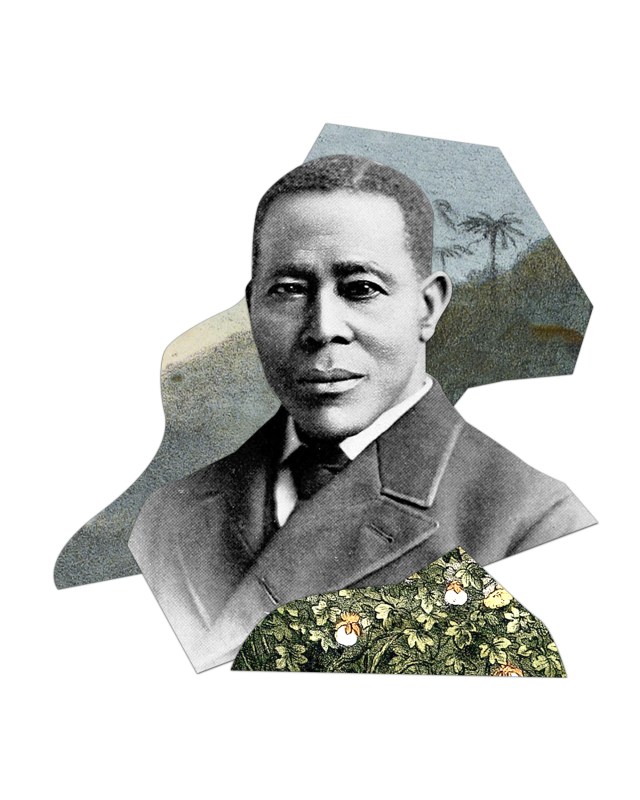
David RugglesIllustration by Mallory Rentsch Tlapek / Source Images: WikiMedia Commons
David Ruggles

Ruggles, Stewart, and Still were not just critics of white evangelicals, according to Hill; they were animated by a common evangelical theology. Hill states unequivocally that by drawing on these abolitionists, he is “making an argument about the very bones of the evangelical Christian tradition.”

Furthermore, their example can’t be confined within well-worn critiques of founding-era hypocrisy. By highlighting their opposition to the American Colonization Society, Hill shows that African American abolitionists understood themselves not just as evangelicals but as Americans who appealed to the Declaration of Independence and the Bible alike. To have a meaningful conversation about the nature of American evangelicalism, he insists, we must account for these oft-overlooked voices.

Hill’s book excels in presenting the “theo-political vision” of these three abolitionists. Rather than merely reporting on their views of, say, the Fugitive Slave Law, he shows how their theological convictions shaped their approach to public engagement.

Take Ruggles, for example, a freeborn abolitionist who spent most of his time advocating for and protecting fugitive slaves. In his role as founder of the New York Committee of Vigilance, he helped combat the state’s “kidnapping clubs,” which sent Black Northerners to the South in chains.

As Hill emphasizes, Ruggles applied “the long-standing prophetic principle of moral suasion” in different ways than better-known contemporaries like Frederick Douglass did. He demonstrated how enslavers violated the Ten Commandments. He appealed to God’s design for the institutions of marriage and family. He showed parallels between the social ills that prevailed in slaveholding societies and the sins condemned in Amos 2:6–7, which speaks of political, economic, and sexual injustice. And he defended the church’s purity, even invoking 1 Corinthians 5:9–11 to bar slaveholders from receiving the Lord’s Supper.

I appreciated how Hill pushes back against Ruggles’s willingness to condone collective violence for the sake of emancipation, citing Zephaniah 3:14–17 to remind us that God will fulfill his own promises. Nevertheless, Ruggles favored moral exhortation above taking up arms. As Hill notes, “Ruggles’s pamphlets and addresses” were largely aimed at “those on the margins, particularly women and freed slaves.” To me, Ruggles seemed just as revivalistic as he was prophetic. He spoke truth to power—but also to the powerless.

Maria StewartIllustration by Mallory Rentsch Tlapek / Source Images: WikiMedia Commons
Maria Stewart

Stewart, the second abolitionist in Hill’s triumvirate, was “one of the first women, black or white, to lecture in front of an audience of both men and women in a public space on political topics.” This remarkable woman taught Sunday school, started a school for the children of enslaved families, served as a hospital matron in Washington, DC, and became a community activist.

For Hill, Stewart offers a model for retrieving the Bible’s doctrine of humanity, particularly as it proclaims the dignity of the divine image in all people. She grounded her biblical anthropology in Genesis 1, insisting that enslaved people had been endowed with the same capacities for reason and self-government as anyone else, even if slaveholders made every effort to stifle them.

Like many white evangelicals in her day, Stewart advocated for “the creation of new institutions and communities” for spiritual and moral formation. However, for Black Americans, these communities served a countercultural purpose. Although they bore some resemblance to benevolent societies and missions organizations, these “subterranean communities,” as she called them, represented a form of nonviolent “political resistance.”

Hill’s third abolitionist case study considers William Still, credited as the “Father of the Underground Railroad” in his New York Times obituary. As a clerk for the Pennsylvania Abolition Society and as chair of the Acting Committee of the Philadelphia Vigilance Committee, Still was a paid official in the enterprise of abolitionism. Yet he too understood the importance of moral suasion, as expressed in efforts to start an orphanage, run a Sunday school, and help organize one of the first YMCA branches for Black children.

William StillIllustration by Mallory Rentsch Tlapek / Source Images: WikiMedia Commons
William Still

Though he served as an Underground Railroad stationmaster, Still arguably left his most lasting legacy as a historian. In 1872, he published his crowning work, The Underground Railroad Records, which compiled personal interviews with hundreds of individuals who passed through Philadelphia on their way to freedom.

As Hill shows, Still intended his book as more than a historical monument; it was written “in the hope that family members who had been separated would one day be able to do what he and his brother eventually did: find one another and become whole.” His historical research and preservation represented a significant ministry in itself, seeking to hold together the most basic unit of American society: the family.


If the book’s first section is an exercise in historical theology, the second section pivots toward constructive theology, asking how today’s church can live out the commitments of the abolitionists it highlights. With a host of contemporary theologians as conversation partners, Hill reflects on promoting “the public good” instead of settling for mere “ecclesial triumphalism.” Just as early African American abolitionists worked diligently to foster Christian community and “bear witness” to the life of the saving gospel, so must today’s church follow their example. Indeed, Hill observes, these spiritual forebears have bequeathed us an entire “evangelical account” for just this purpose.

The continuity between these earlier and latter sections is not always as smooth as one might expect. Hill is obviously well-versed in contemporary theology and incorporates an impressive range of modern scholars. But the book’s second section doesn’t always put these contemporary voices into clear conversation with voices from the past.

Nevertheless, in an age when we often view American evangelicalism through simplistic, nontheological lenses—whether racial, political, social, or financial—Bearing Witness achieves something commendable. From a bitterly divided period in American history, it retrieves a distinctly evangelical vision of shared gospel living that can guide the church’s witness today. Hill’s book reminds us that even the darkest chapters of the American story can yield constructive building materials for the chapters to come.

Obbie Tyler Todd is pastor of Third Baptist Church in Marion, Illinois, and adjunct professor of church history at New Orleans Baptist Theological Seminary. He is the author of The Beechers: America’s Most Influential Family.

Apple PodcastsDown ArrowDown ArrowDown Arrowarrow_left_altLeft ArrowLeft ArrowRight ArrowRight ArrowRight Arrowarrow_up_altUp ArrowUp ArrowAvailable at Amazoncaret-downCloseCloseEmailEmailExpandExpandExternalExternalFacebookfacebook-squareGiftGiftGooglegoogleGoogle KeephamburgerInstagraminstagram-squareLinkLinklinkedin-squareListenListenListenChristianity TodayCT Creative Studio Logologo_orgMegaphoneMenuMenupausePinterestPlayPlayPocketPodcastRSSRSSSaveSaveSaveSearchSearchsearchSpotifyStitcherTelegramTable of ContentsTable of Contentstwitter-squareWhatsAppXYouTubeYouTube