In this series


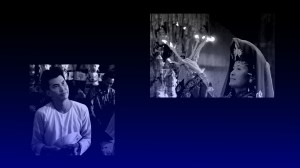
Asia has a crowded spirit world. And shamans are in the thick of the action.
Shamans serve as mediators between the human world and the spirit world. They communicate with spirits to achieve certain aims for individuals or communities, such as physical healing or alleviation of a disaster.
Unlike Buddhist monks or Hindu priests, shamans embrace spirit possession, said Chansamone Saiyasak, founder of Mekong Evangelical Mission in Thailand. “Shamanistic practices address basic needs, from health and security to social belonging and self-esteem, similar to Maslow’s hierarchy,” Saiyasak said.
In other parts of the world, an encounter with mystical forces beyond human comprehension may occur through consuming psychedelics like ayahuasca, a South American Indigenous concoction with hallucinogenic properties, or when seeing a sangoma, a South African witch doctor, to connect with an ancestor.
In Asia, engaging with spirits or divine entities is an activity that is often centered on the role of the shaman. Seeking counsel from a shaman is often seen as a legitimate and effective way to deal with everyday matters in life, from deciding who to marry to removing bad luck and healing diseases or illnesses.
Belief in the supernatural is widespread in the region: A majority of adults in Hong Kong, Japan, South Korea, Taiwan, and Vietnam say they believe in a god or unseen beings, according to Pew Research Center. Having an otherworldly experience is commonplace as well. “We often experience evil spirits before we experience the Holy Spirit,” said author Justin Tan in a CT piece on the Hungry Ghost Festival.
Christianity Today interviewed seven scholars on how shamanism shows up in certain Asian contexts, what its key sources are, how it has influenced their churches, and what Bible verses challenge it.
In South Korea, shamanism is growing in popularity as younger shamans work through YouTube and other social media platforms to assuage citizens’ anxiety for the future. In Japan and Thailand, animistic beliefs form the bedrock of shamanistic rituals. In Indonesia, people may regard pastors as “spiritual shamans” who wield special powers. And in the Philippines, Taiwan, and Vietnam, folk religion, folk Catholicism, and Daoism (Taoism) have helped shamanism to thrive because many of their rituals encourage people to appease a spirit or venerate a deity.
While shamanism has helped to develop a greater awareness of the spirit world across many parts of Asia, engaging in shamanistic rituals or practices invites syncretism, opens up room for evil spirits to influence a person’s life, and goes against God’s injunctions on spiritism and sorcery, say these Christian leaders. Their responses can be found in the drop-down list above or linked below:
Indonesia Kristian Kusumawardana, head of the bachelor’s degree program in theology at Bandung Theological Seminary
Japan Martin Heisswolf, author of Japanese Understanding of Salvation: Soteriology in the Context of Japanese Animism
Philippines Dave Johnson, editor of the Asian Journal of Pentecostal Studies at the Asia Pacific Theological Seminary
South Korea Yohong Roh, instructor of religious studies at Louisiana State University
Taiwan Tony Chuang, author of Religiosity and Gospel Transmission: Insights from Folk Religion in Taipei
Thailand Chansamone Saiyasak, president of Mekong Evangelical Mission
Vietnam Saralen Tran, Christian education lecturer at Hanoi Bible College