News

Nixed USAID Scholarship Helped Christian Students Escape War

The $45 million diversity-focused program has so far provided 400 Burmese students—including Christian ethnic minorities—a chance to study away from conflict.

Christianity Today March 12, 2025
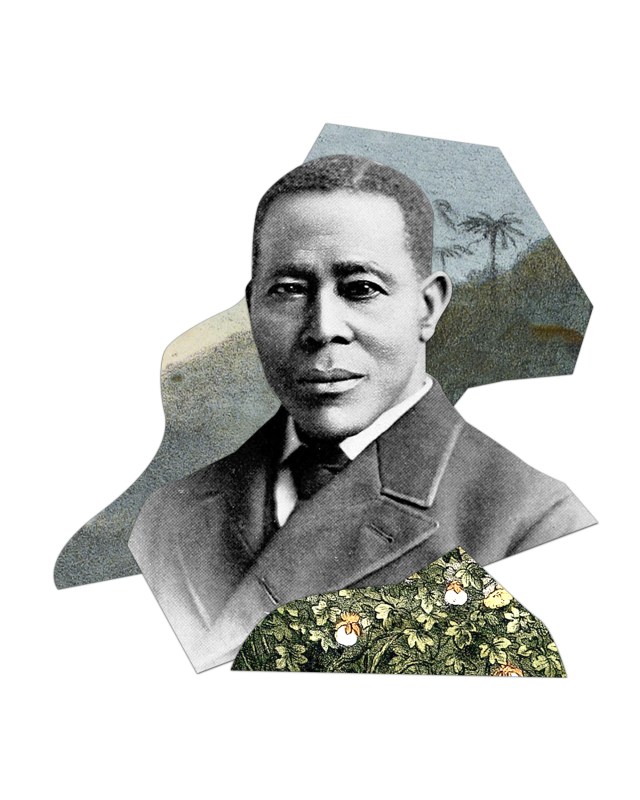
Illustration by Mallory Rentsch Tlapek / Source Images: Getty

Thae Thae had just left war-stricken Myanmar and was still getting used to life in Thailand last December when tensions arose between her and her family members back home. Emotional distress, along with academic stress and difficulties adapting to a new country, prompted her to seek counseling.

Weeks later, she received an email alerting her that United States authorities had terminated the scholarship program that had allowed her to further her studies at Chiang Mai University.

“The news devastated me,” the 27-year-old said. “My problems came one after another. I couldn’t study and yet felt burned-out and just laid on my bed for a week.”

Thae Thae, a Christian from Chin State, said she had been pursuing master’s degrees in social science and development at Chiang Mai University so that she could help develop her rural hometown in Hakha, the capital of the beleaguered Chin State. Before moving to Chiang Mai last July, she started a library and hosted an English class at her home for children in her community. At the time, access to education had been hobbled by the civil war. [Editor’s note: Since publication, CT has agreed to use her nickname due to concerns for her security upon returning to Myanmar.]

Thae Thae was among 400 recipients of education grants from the Diversity and Inclusion Scholarship Program (DISP) funded by USAID, the US agency overseeing humanitarian aid to foreign countries since the 1960s. The program set aside $45 million in scholarships to students from Myanmar, providing young people refuge and educational opportunities as their country spiraled into civil war after the 2021 military coup. Many students and instructors participating in the Civil Disobedience Movement (CDM) against the military junta refuse to take part in the military-controlled public schools, leaving education options severely limited.

Yet in late January, the Trump administration cut DISP, describing it as wasteful and not aligned with national interests. In a post in X, the Department of Government Efficiency noted it had canceled “$45 million in DEI scholarships in Burma.”

Scholarship holders received vaguely worded emails in the end of January that said USAID “exercised its right to terminate” the program. DISP’s website and Facebook page have since gone offline, and program officials did not respond to CT’s request for comment.

Launched in August 2023, DISP offered Burmese students, particularly those from vulnerable communities, opportunities to study at universities in Thailand, Cambodia, the Philippines, and Indonesia, as well as take online courses from the University of Arizona.

The marginalized populations include ethnic and religious minorities—many of whom are Christian or Muslim in the Buddhist-majority country—as well as women, people with disabilities, people who identify as LGBTQ, and people who are displaced. Currently, the fighting has killed more than 6,000 civilians and internally displaced 3.5 million people.

Thae Thae is among five DISP scholarship holders in her program and is in the second of four semesters. Without the scholarship, she said she would not be able to continue her studies. She noted that the funding freeze has challenged her Christian faith.

“I don’t know what to do,” she said. “God gave me this chance [to study]. And then the chance is gone, just like that. Sometimes I ask him, ‘Why did you let me face such a situation?’”

Hung Ling, another Chin student who received the DISP scholarship, took part in CDM in the early days of the coup but later fled across Myanmar’s border with India in 2022 when he witnessed peers getting rounded up by the junta.

“I stood up against the military because they disrespected our democracy,” the 30-year-old Christian said, referring to the junta’s deposition of the country’s democratically elected government in 2021. “But the persecution got so intense I fled.”

He graduated with a bachelor’s in theology from Mizoram Bible College before applying for the DISP scholarship. With USAID funding, he enrolled in a business administration program in India last year. He said he had hoped to return to his hometown in Chin State after he graduated to work in community development promoting education and business.

“It will be impossible for me to continue pursuing the MBA without the funding,” said Hung Ling, the youngest of eight siblings. “But I know that God is good all the time. The Lord wants me to draw close and trust him throughout this cutting of scholarship funds.”

The US-based nonprofit Institute of Chin Affairs (ICA) is seeking funding on his behalf for the final two years of his MBA program. If they can’t raise the money, Hung Ling plans to remain in India and find work to fund his studies.

Eventually, he hopes to return to Myanmar “when peace is restored,” he said.

Thae Thae said her family has also asked her to stay put in Thailand for now. Her family fears that, like many men and women her age, she would be forced to fight for the military regime if she were to return home. Last year, the junta announced mandatory conscription for men under 35 and women under 27.

Meanwhile, Thae Thae’s classmate, who asked not to be named due to fears for her safety if she returns to Myanmar, said the scholarship was her “lifeline.”

“In Myanmar, we cannot learn safely,” said the 28-year-old from Sagaing, a region in central Myanmar. “Many young people who joined the Civil Disobedience Movement to fight for the future of our country fled when the junta hit back. Many have gotten injured or killed.”

The student noted that the termination of the scholarship program had caught her off guard. She and other affected students have been looking for other funding opportunities, but they are not optimistic.

“We really want to complete our studies. There is just one more year,” she said.

Growing up in a rural, agrarian community, the student, who is Buddhist, attended a monastic college in Mandalay, Myanmar, for her undergraduate degree. She longed to experience the vibrant campus life she had read about in books.

“I was determined to study overseas and have worked so hard for the opportunity,” she said. “My admission to Chiang Mai University has been big for my village in Sagaing.”

Yale academic David Moe, who was born in Chin State, said DISP “filled a vacuum in Myanmar’s education space.”

He noted that studying overseas helps Burmese students “gain a critical perspective,” as students in Myanmar usually aren’t allowed to ask questions or challenge their teachers in the classroom. The loss of the scholarships is a blow to the future generation of Burmese leaders given the country’s current state.

“$45 million is a lot of money for Myanmar,” Moe said. “[The Burmese community] see it as an investment in the country’s democracy.”

Correction: An earlier version of the story misstated the month Thae Thae arrived in Thailand.

Culture

‘Mickey 17’ Laughs at Hope

The new film from Bong Joon-ho smirks at scientific hubris, political corruption, and any attempt to make things better.

Robert Pattinson as Mickey 18 and Mickey 17 in the film, Mickey 17.

Robert Pattinson as Mickey 18 and Mickey 17 in the film, Mickey 17.

Christianity Today March 12, 2025
Courtesy of Warner Bros. Pictures

The famous list of life events in Ecclesiastes 3 assumes an audience ready to supply appropriate situations for each pair. Of course, applying the maxim For everything there is a season proves much easier in some circumstances than in others. Most would place the “time to mourn” (v. 4) squarely amid loss. Surely the “time to mend” (v. 7) follows that playground mishap which tears a favorite jacket.

The “time to uproot” (v. 2), however, shifts according to genus, species, and climate. Marriage counselors know never to prescribe hard and fast rules for the “time to embrace” (v. 5) or “time to be silent” (v. 7). When conflict migrates from the bedroom to the battlefield, the consequences of claiming a “time for war” (v. 8) grow even more dire. One might hope that those who take seriously the call to love their enemies (Matt. 5:44) would seek opportunities to declare a “time for peace” (Ecc. 3:8)—but world events suggest consensus on such matters will remain elusive this side of eternity.

And what of “a time to laugh” (v. 4)?  This may be the slipperiest fish of all. It’s not hard to find someone ready to justify laughter in every one of the situations mentioned by the poet. Joyful laughter that follows the pangs of birth (v. 2)? Check. Laughter in the face of death (v. 2)? Look no further than the Irish wake. And, if my ballroom lessons with my wife are at all typical, laughter most definitely belongs on the dance floor (v. 4).

Harder to stomach are those who chuckle at others’ pain—who gleefully hate (v. 8), kill with a smile (v. 3), and guffaw as others weep (v. 4). Not surprisingly, our increasing willingness to publicly laugh in the face of suffering has infiltrated our storytelling. I suggested that the time for mourning is self-evident, but the stories we tell and sell suggest this isn’t quite right.

I blame it on the bard.

Shakespeare wrote a few “problem” plays, including Measure for Measure and All’s Well That Ends Well—stage dramas that mix silliness with catastrophe, resisting the neat classification of a straight-up tragedy like King Lear or the uproarious comedy of a Much Ado About Nothing. Though such a mishmash confused the playwright’s contemporaries more than it entertained them, these plays have since become critical darlings. Today, many a modern pundit delights in genre mash-ups that require effort to interpret, thematically incongruous puzzles.

Enter the work of South Korean director Bong Joon-ho, whose filmography has won wide acclaim for decades. Five years ago, Parasite became the first film not in the English language to win best picture.

Like others uncomfortable with economic or political systems that place the livelihoods of thousands in the hands of the few, I appreciate Joon-ho’s determination to target abuses of power. He typically opens a tale by positioning working-class citizens against corrupt institutions whose greed and cruelty are painted in large, parodic strokes.

In Snowpiercer (2013), an emotionally detached, flamboyantly dressed elite governs the survivors of an apocalypse with cold malice punctuated by violent cruelty. Maintaining order involves doling out bare subsistence, regularly appropriating children, and maiming any resisters. The Mirando Corporation of Okja (2017) genetically engineers sentient “super pigs” as smart as they are tasty, then ignores the fraternal ties they’ve developed with human caregivers in the name of profit.

The line between villain and hero blurs in other films where Joon-ho’s narrative sleight of hand gambles with his viewer’s sympathies. Instead of setting up virtuous innocents victimized by the system, the writer-director sometimes inserts us into the lives of incompetent criminal layabouts, then demands that we reconsider our initial distaste.

The more realistic the film, the harder this is to do. The inept detectives attempting to track down a serial rapist and killer in Memories of Murder (2003) torture wrongly arrested detainees. A single parent in Mother (2010) burns evidence and kills to protect her guilty child. Parasite (2019) asks us to cheer for a hard-up family that lies, steals, and fatally attacks both working-class and wealthy individuals who get in its way.

Many viewers praise Joon-ho’s tonal complexity as an accurate representation of our absurd existence. Life does not have easy answers. Injustice has no neat solutions.

Though I accept that sin does compromise our ability to see clearly and act rightly, I also believe that our halting efforts matter (James 2:26). I understand the temptation to release responsibility for the world’s problems, but Jesus keeps calling me back to the struggle (Matt. 5:6–16). If my definition of truth extends beyond mere apprehension of what is to encompass a particular vision of what should be, my reaction to suffering should be inflected by concepts like justice and honor (Phil. 4:8).

Inserting comic relief into stories about class struggle, stories that involve assault and murder, can beg a viewer to dismiss real-world injustice as the inevitable product of an absurd existence. It can discourage us from fighting oppression, the product of a broken but ultimately redeemable world. These films ask us to laugh hysterically rather than mourn. Ultimately, they are an attack on hope.

This pessimistic outlook is nowhere clearer than in Mickey 17, which, at a glance, initially resembles another, much earlier Joon-ho film, The Host (2006). In both films, self-absorbed scientists refuse to weigh the likely harm of their actions—in The Host by dumping chemicals into the Han River (a ravenous monster results) and in Mickey 17 by creating a machine that can “reprint” a person from a digitally stored template of mind and body each time they die. The doctors and politicians of The Host treat those who survive contact with the monster as their own personal guinea pigs. So do the doctors and politicians who experiment on each new clone of Mickey Barnes.

The key difference between these intentionally preposterous films lies in where the laughter they provoke takes us. In The Host, the family members who seek to recover a kidnapped young girl from the monster ultimately overcome their status as losers—a label Joon-ho has applied in interviews—by risking their lives in heroic fashion. The sharp laughter which riddled The Host’s first half dissolves into sorrow for the heroes who don’t make it and gratefulness that love holds together the survivors.

There is no time to either mourn or love in Mickey 17. The comedy underpinning Mickey’s many deaths, the romantic partner whose inner life we never discover, and the comical threats over which this new “loser” (as he’s described in the film) continually trips defy any effort to care what happens to him.

To this unrelentingly goofy ride, Joon-ho adds a heavy-handed critique of religion absent from his prior films, a critique that burdens Christians with a host of negative stereotypes. The politician determined to create his own “planet of purity” far from Earth scatters biblical language casually throughout his public orations, confuses the corporation he leads with a church, institutes a moratorium on intimacy during space travel to limit caloric intake, and calls cloning being “born again.”

Laugh, the film tells us, at scientific hubris and political corruption, but also at every attempt to make things better—at efforts to “plant” (Ecc. 3:2), “search” (v. 6), “build” (v. 3), or “heal” (v. 3). Human inquiry and effort cannot forestall a death which apparently retains its horror even after 16 trial runs, so the only thing left is to laugh.

When confronted with suffering, I prefer to weep—and then do my best to love.

Paul Marchbanks is a professor of English at California Polytechnic State University. His YouTube channel is “Digging in the Dirt.”

Ideas

South Africa: Black, White, and ‘Coloured’

A personal reflection on a country deciding between reconciliation and racism.

The South African national flag
Christianity Today March 12, 2025
Cameron Spencer, Getty / Edits by CT

This is part two of a three-part series. Read part one.

South Africa needs men and women who live and embody reconciliation and not racial division. I have seen what reconciliation can do. While researching my book Brothers in War and Peace, my Afrikaner wife, Lianda, and I traveled to Lichtenburg, a rural town in the Afrikaner hinterland of South Africa, to interview political leader Ferdi Hartzenberg. Busts of apartheid prime ministers in his lounge stared down hostilely at us, declaring unequivocally where his political heart was: He was an apartheid (segregation) hard-liner.

At lunchtime, he took us to a restaurant in what was once the home of an Afrikaner hero in their war against the British, General Koos de la Rey. Before we ate, I asked if I could pray. When he gave his assent, I prayed, and this staunch champion of Afrikaner hegemony started to cry when I prayed not only over the food but also for him. It was probably the first time in his life that a person who was not white had prayed for him. It was deeply moving and felt like genuine reconciliation. God was present.

God is present in South Africa, but the country is buckling under criminal activity fueled by poverty and lawlessness. Black Economic Empowerment is a government policy aimed at redressing the injustices brought about by apartheid. Laudable though its intentions are, it has not worked in its implementation. It has largely enriched the new black elite and the politically well-connected while many among the poor have become even poorer.

Youth unemployment stands at more than 45 percent. Last year, 13.2 million South Africans lived in extreme poverty, with a poverty threshold of $2.15 USD daily. People starve to death here. Meanwhile, corruption is widespread, and government emphasis on racial division does not help. A new South African law that protects farms but allows the expropriation of unused property has brought to the fore among Afrikaners the underlying fear of land grabs and the ever-looming threat of Zimbabwe repeated.

I am not white, but I know that white farmers generally love our country passionately and should not be demonized. They should also not demonize others. They are not being driven from their motherland. I have seen beautiful initiatives in various farming communities where white farmers who know farming inside out are assisting black and “coloured” farmers.

One initiative came out of the brain and heart of white farmer Kosie van Zyl, who uses a term familiar to American readers: servant leadership. Van Zyl, in the town of Napier, 105 miles southeast of Cape Town, said, “My wife and I decided a long time ago that we want to build God’s kingdom and not our little kingdom. The only way to do that is to take people with you and build with them, change their circumstances, and together build wealth for all.”

The organization van Zyl founded, Agri Dwala, is a diversified farming operation owned by nonwhite people. Van Zyl started with five farm hands he had known since childhood, and he offered them and others a life-changing break on open land. Today, 14 of the original group are owners, and other land-reform efforts are also helping some among the poor become successful commercial farmers.  

Nevertheless, racial divisions in the country remain immense. Scholarly research indicates that integrated churches are rare. As part one noted, the apartheid system not only divided black and white people but also separated nonwhite people into different groups. Coloured is an invented term to describe the people mainly descended from the Indigenous Khoi while also carrying through racial sexual subjugation and intermarriage with various other races. As one of these people, I reject this term: I am an African.

One of the nuances many Americans do not understand is that black and “coloured” people are often at odds, even among Christians, as a sad history shows. Early in 1994, as South Africa was preparing for its first-ever democratic election and the country was readying itself for a future without the political policy of apartheid, two groups of church leaders, black and “coloured,” met to discuss uniting.

They were from two separate denominations, both created by the white Dutch Reformed Church, which had ignominiously provided the theological justification of apartheid. That denomination created the Dutch Reformed Church in Africa for black Africans in 1859 and the Dutch Reformed Mission Church in South Africa for descendants of the Indigenous Khoi in 1881. 

Then, in April 1994, amid the bonhomie inspired by Nelson Mandela, these church leaders came together to merge their two respective denominations into one Uniting Reformed Church in Southern Africa. This historic event took place 13 days before the election that led to Mandela’s ascendance to the presidency.

One of the “coloured” ministers, Llewellyn MacMaster, said, “We were filled with the spirit of unity in the country.” MacMaster, an erstwhile student activist at the University of the Western Cape, had led a revolt of young people in 1985 and was detained without trial, but he did not deviate from his goal of one day seeing an undivided, nonracial country replacing the apartheid state.

Yet in 2023, almost 20 years after the Uniting Reformed Church in Southern Africa was formed, racism reared up again as black African Christians insisted that one of them should become the church’s leader. They accused MacMaster of being a racist when he objected to a church takeover based on the division between Africans and so-called coloureds. That accusation brought him to tears: “My biggest disillusionment occurred at that general synod of the Uniting Church, when I came to the conclusion—and it’s not nice to have to say it—that in South Africa ethnicity and race even trump the gospel.”

Now, according to the government’s Black Economic Empowerment policy and the Employment Equity Act, black Africans get preferential treatment in all spheres of life. That’s true even in a town like rural Williston, where “coloureds” form more than 80 percent of the population and job opportunities are few. There, black Africans have been brought in and employed at the expense of the local population. Racial tensions are rising, as is deep disenchantment with democracy. 

Some could accuse me of special-interest complaining or lack of sympathy for the poor majority of my fellow African brothers and sisters. Not so. I have dirt-poor relatives. My father was an illiterate dock worker, and my mother packed shelves in a big grocery store. It was not uncommon in a family like ours for children to leave school for low-paying jobs to support the family. I escaped the cycle. The majority of my childhood friends and family did not. Crime, self-destruction, gangsterism, drugs, and a sense of hopelessness are major roadblocks for South Africa’s poor.

President Donald Trump seemingly knows much about what white South Africans have to endure. His ill-informed comments about the terrible things purportedly happening to them led to many jokes and memes on social media, especially in Afrikaner circles. South Africa is a complex country. Rather than the emigration of our valued Afrikaner farmers, what will heal our nation is genuine reconciliation and a recommitment to ending discrimination.

This is what our four Nobel Peace Prize winners—Chief Albert Luthuli, Archbishop Desmond Tutu, Nelson Mandela, and even F. W. de Klerk, South Africa’s last white president, at the end of his life—had dreamed of.

This series concludes on Thursday.

Dennis Cruywagen, author of The Spiritual Mandela, was deputy editor of The Pretoria News.

Books

‘Come as You Are’ Is Not a Slogan for the Church

Stanley Hauerwas meditates on the necessity of the gospel, the politics of the kingdom, and the high demands of sanctification.

A man being baptized with his reflection in the water as a skeleton
Christianity Today March 11, 2025
Illustration by Stephen Procopio

Stanley Hauerwas is perhaps the best-known Christian ethicist in America today and most recently the author of Jesus Changes Everything: A New World Made Possible, newly published by Plough with an introduction from writer Tish Harrison Warren. In advance of the book’s release, he spoke with Plough’s Charles E. Moore about the necessity of the gospel, the politics of the kingdom, and the high demands of sanctification.

This interview has been edited and condensed. Watch part of the conversation here.

In her introduction to your latest book, Jesus Changes Everything, Tish Harrison Warren mentions something many Christians are concerned about: that we live in a post-Christian world. She’s wondering if we actually are living in a pre-Christian world and whether that might not be such a bad place to be. What’s your take on the time in which we live and the opportunities in front of the church?

Well, the mainstream Protestant church is dying. And I don’t think that’s a bad thing. It makes us free. I mean, for some time people argued that the world would go to hell if it were not Christian. That may be the case. But being Christian doesn’t mean you need a Christian America. 

What I think we’re experiencing is the ultimate working out of nihilism, which so often goes with liberalism. Liberalism is the presumption that you should have no story except the story you chose when you had no story.

The gospel is an alternative to that. I mean, let us tell you the story that makes you who you are that you didn’t choose. You learn to make it your own through discipline, but you didn’t choose it. God created the world. You didn’t choose that. We’re now in a position that we may be able to help people rediscover that the gospel is a story they cannot live without. 

The gospel doesn’t need the state either. Many of the critiques of Christian nationalism presuppose a Christian nationalism that is on the progressive side of American politics, because the presumption that you should have no story except the story you chose when you had no story is a presumption that was embedded in many of the progressive views that were backed by Christians of the development in America.

How do you get cooperation between people who share nothing in common other than the story that they have no story? People are dying to have something worth dying for.

You don’t seem too worried about the public square becoming inaccessible to established Christianity, or the loss of religious freedom, or the secularization of our culture, where Christianity is getting increasingly squeezed or pushed aside.

Well, I don’t want to be stupid about it. I mean, as Christians we should be modeling a politics that is otherwise unattainable. So it’s not like I think it would be a bad thing for us to get concerned about appropriate housing for those who have to live in the streets.

There’s no reason that Christians cannot be concerned about secular politics and what the alternatives are. It’s just that it’s not our first priority in terms of what it means to be engaged in the politics of the kingdom.

Something in your book that seems to be quite contrary to one of the central themes stressed in today’s church is your claim that the church is not about being welcoming and affirming and accepting people as they are. That seems to have become a truism today: Come as you are; all are welcome

I don’t want you to accept me as I am; I’ve got too many problems. I want to be challenged to be better than otherwise I would be able to be. And so this idea of Come as you are—there are a lot of people who I don’t think should come as they are. 

I mean, what is baptism? It’s not coming as you are. It’s being drowned in the water of the faith that makes you a different human being than you were before baptism. So Come as you are is a slogan that might be good for self-help groups, but it’s not a slogan that’s good for the church.

In public you explain quite unabashedly that you’re a pacifist, but the reason for this is that, in private, you’re not. 

I don’t like the language of pacifism at all, because it’s so passive. Somehow peace is a much more constructive, positive project. 

But I say that I’m a pacifist in public, using the word that I don’t like, because I hope this creates expectations in the people who hear me. I’ve declared that I’m a pacifist so that they hopefully will keep me honest to what I think I should be. I have no hope of being a pacifist without people helping me be what a pacifist should be. 

So to claim pacifism in public is to create the kind of community I think the church should be: a community that helps us to live as a Christian when it’s not all that easy. And I need that help.

If Jesus changes everything but doesn’t change us, there seems to be quite a contradiction there. You say that to be rich and a disciple of Jesus is to have a problem. 

Well, the Sermon on the Mount clearly sees mammon as a problem. There are many different kinds of problems that mammon produces, but it seems to me the most singular is the presumption that I’m safe. A lot of money and safety so often results in lives of purposelessness. And other than being safe, money is another name for desire. And desires often corrupt. So to have money in a way that assumes it’s mine is always a problem. 

Where did Christians get the idea that I can do what I want with my money? It’s not yours. Think about what God did to Ananias and Sapphira. They got knocked off for being unwilling to share.

You state that Jesus is the Sermon on the Mount. 

To say that Jesus is the Sermon on the Mount is a way of saying that his life is embodied in every command. 

In particular, I think people think that with “Blessed are the poor in spirit,” for example, you’re supposed to try to speculate about what it means to be poor in spirit. Well, each of the Beatitudes are to be determined in terms of how Jesus is portrayed in the Gospels. It is not like you’re supposed to try to be poor in spirit. But by following Christ, you’ll discover that some people are poor in spirit or are the meek and so on. 

What I’m trying to resist is independent speculation about those kinds of descriptions or those kinds of commands in a way that makes them separate from the life of Christ.

It’s so easy to separate the teaching from the teacher and live as though we don’t really need Christ, we just need the teachings. Everything is actually embedded in the person and the story of Christ. His story needs to become our story.

I wish I’d have said that as clearly as you did.

Stanley Hauerwas, a theologian and Christian ethicist, is professor emeritus of theological ethics and of law at Duke University. He is the author or editor of more than 50 books, most recently including Jesus Changes Everything.

Charles E. Moore is a contributing editor and author for Plough, as well as coeditor of the Blumhardt Source Series. His published works include Called to Community and Following the Call.

News

Confusion About American Policy Regarding South Africa

A three-part case study of how the Trump administration does business, with hundreds of thousands of lives—and hundreds of millions of dollars—blowing in the wind.

A group of South Africans in Pretoria demonstrate in front of a sign saying Make South Africa Great Again
Christianity Today March 11, 2025
Marco Longari / AFP via Getty Images

An executive order from US president Donald Trump last month created one of the most discriminatory policies regarding refugees since the US privileged Western Europeans through the Immigration Act of 1924. That act privileged Western Europeans and made entry from the rest of the world difficult.

Last month’s directive said the US will “prioritize humanitarian relief, including admission and resettlement through the United States Refugee Admissions Program, for Afrikaners in South Africa who are victims of unjust racial discrimination.” Afrikaner equals white only—at a time when the US is turning away nonwhite refugees from all over the world.

Either because the executive order provoked criticism or maybe just out of confusion, Trump last Friday posted on Truth Social, “South Africa is being terrible, plus, to long time Farmers in the country. … Any Farmer (with family!) from South Africa, seeking to flee that country for reasons of safety, will be invited into the United States of America with a rapid pathway to Citizenship. This process will begin immediately!”

So which is it? White people only, or any farmer with family? Do white farmers have it worse than others? Do black South African farmers have it worse than Latin American immigrants who are now turned away at the border or who have, at best, a very slow path to citizenship? What about “coloured” farmers within South Africa’s complicated racial classification?

To begin answering these questions, we need to know more about South Africa and its northern neighbor Zimbabwe, a country previously known as Rhodesia that in 1965 declared independence from Britian and became a white-minority-governed territory. That declaration made Rhodesia and South Africa brothers in apartheid (racial segregation) and white dominance.

In April 1980, white rule ended when Robert Mugabe gained election as Zimbabwe’s prime minister. He ruled Zimbabwe for 37 years, first as prime minister and then as president from 1987 to 2017. He started off impressively but turned into a cruel dictator who ruined his country by going on a vendetta against white citizens. Mugabe allowed members of his elite to drive white employers and their black employees from farms, which cronies could then seize.

Mugabe died in September 2019. By then, not only white people but also many black people opposed him because he relentlessly persecuted critics, more so if they were black. As a despot, Mugabe was the opposite of Nelson Mandela and jealous of South Africa’s global icon.

The ghost of Mugabe’s legacy hangs over South Africa. For years, the white population has feared murderous, Mugabe-type land grabs in South Africa. Many Afrikaners—the descendants of Dutch settlers—grew up on warnings of the swart gevaar (the “black danger”). Presidents such as Mandela and Thabo Mbeki reassured them that black South Africans would not take retribution for apartheid past. Afrikaners never fully believed them.

In 2004, at a Christian conference in Pretoria, South Africa’s capital, Bennie Mostert stood up. An Afrikaner respected for his sincerity, he haltingly admitted that he didn’t trust black people and was scared of them. Mostert’s vulnerability was an act of reconciliation. Black people immediately reached out to him, embracing him. He spoke for many Afrikaners that day. South Africa’s history is full of profound mistrust, fear, and even hatred between racial groups.

Mandela—who attended a Methodist missionary school and read the Bible regularly during his 27 years of imprisonment—became president in 1994 and led the way to a democratic South Africa, yet the whirlwind of apartheid still has influence.

Race still largely configures communities. Black Africans constitute 81 percent of the population but own 4 percent of farmland, according to a 2017 land audit. White people constitute 7 percent of the population but own 72 percent of cultivatable land. The descendants of the Khoi—South Africa’s Indigenous population, referred to as “coloured”—are 8 percent of the population and own 15 percent of arable land.

A vocal black politician, Julius Malema of the Economic Freedom Fighters, is threatening white farmers, saying he and his followers will grab their land and kill them. Political parties that look to the white part of the electorate for votes based on their fears. Many perceive as weak the current president, Cyril Ramaphosa, and say he does not have the stomach to stand up to Malema.

Ramaphosa’s reluctance to act, along with the ever-present white fear of South Africa sliding into a Zimbabwe, has emboldened Afrikaner civic organizations such as AfriForum and Solidarity. They speak of brazen, violent attacks on farms that end in murder, sometimes preceded by torture.

In 2023, attacks on farms killed 49, AfriForum reports. Murders elsewhere in South Africa number around 27,000, resembling the statistics of a war zone, about seven times greater as a percentage of the population than in the United States.

The statistics suggest that statements about the particular targeting of white farmers—relayed by Trump and South African native Elon Musk—are overblown. In South Africa last month, Western Cape High Court judge Rosheni Allie ruled that “white genocide” in South Africa is “clearly imagined” and “not real.”

What are the deeper problems of South Africa, and can the United States do anything to help and not hurt?

Coming Wednesday: the personal perspective of Dennis Cruywagen, a South African journalist and the author of The Spiritual Mandela. On Thursday: consequences of President Trump’s executive order regarding South Africa.

News

Attack, Assault, Arrest, Repeat

In 2024, persecution increased for Indian Christians due to growing Hindu nationalism and stricter anticonversion laws.

Christian activists display placards in a peaceful protest rally in New Delhi.

Christian activists display placards in a peaceful protest rally in New Delhi.

Christianity Today March 11, 2025
Arun Sankar / Contributor / Getty

When the police arrived at the door of a pastor in Uttar Pradesh in February 2024, the first question they asked was “What religion do you belong to?”

The police had received calls from Hindu right-wing groups claiming the pastor had lured locals to convert to Christianity, the pastor said. CT agreed not to use his name due to security concerns.

The pastor told the police that he was a Christian, and they arrested him.

When he arrived at the court, the district magistrate’s first question was the same: “What religion do you belong to?”

“I am a Christian,” the pastor responded.

“Do you have any idea that for this response, you will go to jail?” she said.

The pastor stayed in prison for six months until he was released on bail. Charged under Uttar Pradesh’s anticonversion law, he is currently going through trial.

The pastor’s arrest was one of the 640 verified incidents of targeted attacks against Christians in India in 2024, according to a new report by the Evangelical Fellowship of India Religious Liberty Commission (EFIRLC). The number is a 6.5 percent increase from a year earlier. The total number of incidents reported to the group, including those that haven’t been verified, was 840. In addition, “there might be several unreported incidents that never came to our knowledge,” said Vijayesh Lal, national director of EFIRLC.  

These attacks against Christians take many forms: physical assaults, disruption of prayer gatherings, vandalized churches, social boycotts in villages, and arrests. The anti-Christian climate has increased as Hindu extremism spreads in the country, backed by the ruling Bharatiya Janata Party (BJP) and influential Hindu nationalist groups. These groups are increasingly using anticonversion laws to crack down on Christians.

Other reports by local and international groups verify EFIRLC’s findings, reporting that hate speech and the persecution of Christians have increased in the past year.

Through it all, the pastor in Uttar Pradesh remains steadfast in his faith. “Even now, I must be careful where I pray, who I speak with, and how openly I practice my faith,” he said. “But I cannot abandon what I believe. Many of us worship in secret now, but we still worship.”

The EFIRLC report categorizes the violence against Christians—who make up 2 percent of the population—into distinct types, with threats and harassment making up the largest category (255 cases). Arrests follow with 129 incidents, while cases of physical violence make up 76 incidents. Other significant categories include gender-based violence and disruption of church services. In 2024, Christians also faced vandalism, social boycotts, forced conversion to Hinduism, and murder.

Three main groups are driving this persecution, International Christian Concern’s 2025 Global Persecution Index found. They include the Bharatiya Janata Party (BJP), a political party that currently rules India federally and in numerous states; the Rashtriya Swayamsevak Sangh (RSS), a paramilitary organization promoting Hindu supremacy; and radicalized Hindu mobs that have developed significant social media traction by livestreaming their attacks.

Meanwhile, Prime Minister Narendra Modi has remained notably silent on violence against Christians. “Some of his supporters … are fomenting this type of violence,” said Arielle Del Turco, director of Family Research Council’s Center for Religious Liberty. “So it’s not politically advantageous for him [as] a part of a Hindu nationalist movement to really be speaking out against this.”

In many cases, the pattern begins with Hindu nationalists disrupting worship services, assaulting believers, then filing false police reports alleging forced conversions. For more than 50 years, forced-conversion laws functioned primarily as tools of intimidation without resulting in convictions.

This changed in April 2024, when a district court in the state of Madhya Pradesh sentenced pastor Ramesh Ahirwar and his wife, Sakshi, to two years in prison. They were also fined 25,000 rupees ($300 USD) each under the state’s anticonversion law. In Uttar Pradesh at the beginning of 2025, Jose and Sheeja Pappachan became the first Christians convicted under the state’s anticonversion law. They face five years of jail time and fines of 25,000 rupees each.

Police arrested the Pappachans at their home while they were line-drying their clothes on the terrace. The formal complaint claimed they were engaged in conversion activities at the time of their arrest, though no evidence was presented.

The government in Uttar Pradesh, India’s most populous state, tightened its anticonversion law in July by allowing anyone to report a forced conversion to the police. Previously, only the individual allegedly being converted (or that person’s relatives) could file the complaint. The law also increased the maximum punishment from ten years to life imprisonment. The EFIRLC report found Uttar Pradesh had 188 incidents in 2024, the most in the country.

Ten of India’s twenty-eight states have enacted anticonversion laws, which include provisions so broadly phrased that they effectively criminalize basic religious practices. These laws, typically framed to prevent conversions by force, fraud, or allurement, serve as legal cover for organized harassment campaigns.

The states with anticonversion laws include Odisha, Madhya Pradesh, Chhattisgarh, Gujarat, Jharkhand, Himachal Pradesh, Uttar Pradesh, Uttarakhand, Karnataka, and Haryana. All are Hindu-majority states, and eight are governed by the BJP.

Two additional states are working to enact their own laws: Rajasthan and Arunachal Pradesh, which is developing implementation rules for its dormant 1978 anticonversion law following a court mandate.

Christians arrested under these laws are often denied bail. The burden of proof typically falls on the accused, making it nearly impossible for them to defend against fabricated charges.

The spread of anticonversion laws has emboldened extremist groups to justify attacks on Christians. A disturbing trend has emerged in Chhattisgarh, a state with a significant tribal Christian population, where Christian families are told to renounce their faith or face expulsion from their village. Chhattisgarh saw the second-highest number of attacks in 2024 with 150, according to the EFIRLC. 

The denial of burial rights is also an increasingly common tactic to humiliate and pressure Christian families. In many instances, villagers have prevented Christians from burying their deceased loved ones, instead threatening to cremate their bodies as a final act of Ghar Wapsi (forced reconversion to Hinduism).

Extremists often unlawfully revoke Scheduled Tribe status of tribal Christians by denying their tribal certificates, which affects access to government quotas in jobs, education, and political representation, according to Christian leaders. They also confiscate property and deny access to essential services like water, food rations, and medical care.

“The psychological toll is immense,” said a pastor in Raipur, Chhattisgarh, who asked to remain anonymous for security reasons. “Christians live in constant fear, knowing that at any moment they could face violence or arrest simply for attending a prayer meeting.”

In addition, he noted, children from Christian families are bullied and discriminated against at school while their parents struggle to find employment.  

Organized calls for violence also add to the heightening fear. In February, a video by Chhattisgarh Christian Forum (CCF) accused Hindu leader Aadesh Soni of instructing his followers to march to three Christian-majority Chhattisgarh villages and sexually assault the women and “kill all the Christians.” He claimed Christians had killed cows, a sacred animal in Hinduism. As CCF’s video went viral, people condemned Soni’s genocidal call. Soni quickly denied the accusations and alleged that the social media account that had posted the message wasn’t his account.

In response to Soni’s call, human rights activist A. C. Michael brought the situation to the attention of the National Commission for Minorities, and many Christian groups wrote to the chief minister of Chhattisgarh to request his intervention. Even though Soni persisted in his call for the march until February 28 and clarified that his group would not indulge in violence, the rally was ultimately canceled after interventions by local and national Christian leaders. Officials from the Church of North India and representatives of the Hindu nationalist group Bajrang Dal called for harmony between the two religions.

“Such inflammatory rhetoric creates an atmosphere of fear and insecurity for religious minorities,” said Lal of EFIRLC. “When hate speech goes unchecked, it emboldens those who wish to target Christians simply for practicing their faith.”

Despite the severity and frequency of these attacks, justice remains elusive for most victims. Law enforcement agencies often side with perpetrators, either by failing to register complaints or by detaining victims instead of attackers.

In February, a mob of 200 people interrupted a Christian worship service in Rajasthan state and beat congregants with iron rods, leaving three severely injured. The police accused the Christians of forceful conversion and brought the pastor and a few other members to the police station, Christian Solidarity Worldwide reported. They were later released as the attackers could not provide any evidence.  

Despite these challenges, church and activist networks continue to provide support to persecuted believers. Legal-aid organizations work tirelessly to defend those falsely accused, and advocacy groups document abuses to raise international awareness.

“Our prayer is … that one day we can practice our faith without fear,” said the Uttar Pradesh pastor. “The Constitution promises us this right, but the reality is very different. Still, we hold on to hope that things will change, that India will remember its commitment to religious freedom for all its citizens.”

News

The Korean Evangelicals Who Want Their President Back in Power

At a recent rally, pro-Yoon Christians decried Communist infiltration and adopted MAGA rhetoric.

People taking part in a rally in Seoul, South Korea in support of impeached president Yoon Suk Yeol.

People taking part in a rally in Seoul, South Korea in support of impeached president Yoon Suk Yeol.

Christianity Today March 10, 2025
Anadolu / Contributor / Getty

When Lim Nara first heard that the South Korean parliament had voted to impeach President Yoon Suk Yeol last December, she sighed in disbelief. She started praying more earnestly for God to intervene in a miraculous way, believing that this was still part of God’s good plan.

During Yoon’s impeachment trial in February, Lim knelt in the prayer room of her church, Joy Church in Yongin, petitioning for the president to “fight to the end” and to meet God while reading Scripture in prison.

On March 1, she brought her prayers closer to the heart of South Korean politics as she joined a “National Emergency Prayer Meeting” organized by the evangelical group Save Korea in front of the National Assembly in Yeouido, Seoul. The event, which attracted 55,000 people, was held on a national holiday that commemorates the push for Korean independence from Japanese colonial rule in 1919.

“Just like the day our forefathers risked their lives to defend our country, we must come together again to stand for freedom and justice in our country,” the organizers proclaimed on Instagram.

Lim, a 30-year-old housewife, got up at 7 a.m. that day. After gathering umbrellas, gloves, and heat packs to guard against the chilly 4 degree Celsius (40 degree Fahrenheit) weather, Lim set off for Seoul with her mother-in-law, husband, and one-year-old son.

When the family arrived in Yeouido after a one-and-a-half-hour car ride, Lim pushed her son’s stroller—packed full of toys, a blanket, and a bag of croissants—through the burgeoning crowd, eventually finding a row of gray plastic chairs at the back of the rally site. Young and old attendees waved Korean and American flags and held signs that read “Please Save Korea” as they sang worship songs, listened to sermons and speeches, and prayed for Yoon.

Lim said she felt surprised and moved by the sheer size of the crowd. “Since it’s March 1, we came with the same spirit as those who fought for our country during the March 1 Movement,” Lim said. “My mother, child, husband, and I are all here out of love for our country.”

The Yeouido rally was one of the larger evangelical gatherings organized by Save Korea since Yoon declared martial law in December, kicking off the national crisis that led to his impeachment. Evangelicals who support Yoon say that the impeached president is the last line of defense against Communist influences in the country. Those who support his impeachment did not agree with his move to institute martial law on December 3, viewing it as insurrection. 

After the Korean government lifted martial law on December 4, the parliament suspended Yoon on December 14 after successfully passing a motion for impeachment. Yoon fled to his private compound, where he avoided prosecutors’ calls and the court’s detention warrants until he was formally arrested on January 19. After a South Korean court canceled his arrest warrant last week, Yoon walked out of detention last Saturday.  

The political turmoil in South Korea has sharply divided Protestants in the country, who make up 20 percent of the population. More than two-thirds of senior pastors in the country favored impeaching Yoon, according to a survey last December that polled around 1,200 leaders.

The pro-Yoon camp has drawn parallels with the pro-Trump movement among evangelicals in the US, with some protesters at the March 1 protest donning red MAGA hats and toting signs that read “Stop the Steal.” They believe that North Korean and Chinese agents and sympathizers have infiltrated South Korea’s government and need to be eradicated.

Protesters against Yoon’s impeachment worshiping together at the Save Korea prayer gathering on Saturday, March 1 in Seoul, South Korea.

Save Korea is led by Busan Segyero Church’s pastor Son Hyun-bo, who has held regular prayer events in cities across the country since January. The group planned the event at the National Assembly to pray for the outcome of the court ruling of Yoon’s impeachment trial. Yoon, who will either be reinstated or removed from office, also faces the death penalty or life imprisonment if convicted of rebellion. On March 7, a South Korean court canceled Yoon’s arrest warrant and released him from detention.

Yoon’s supporters are typically older, like Kang Gwi Ran, a Presbyterian pastor in her early 50s who attended the Yeouido rally. In her view, if Yoon does not return, pro-China and pro–North Korea lawmakers will seize control of the National Assembly and turn South Korea into a socialist country as well as a “vassal state of China.” For significant periods in its history, the Korean peninsula was a tributary to China until the Sino-Japanese war erupted in 1894.

Yoon’s People Power Party and its supporters have heavily criticized Lee Jae-myung, chairman of the opposition Democratic Party of Korea and possibly the country’s next president, for adopting a favorable stance toward North Korea, China, and the ruling Chinese Communist Party (CCP).

In February, Lee said that the country “can’t afford to alienate” China and that he would support Trump’s efforts to reengage North Korea’s Kim Jong-un. He also faces trial for allegedly coercing a businessman to send illegal payments to North Korea. Last January, a man stabbed Lee in the neck, claiming he wanted to “cut the head” off the country’s “pro-North Korean” left wing.

Most evangelicals do not support Yoon’s decision to declare martial law, said Sebastian Kim of Fuller Seminary’s Korean Studies Center. But they also do not want Lee to become president because “they strongly believe the opposition party’s policies and behavior have been harming the country’s economic progress, the welfare of people, and Christian moral values,” he said.

Since December, anti-Communist rhetoric has been gaining momentum among younger Koreans. Men in their 20s and 30s are increasingly supportive of Yoon: They made up more than half of the people arrested for the January 17 riot at the Seoul Western District Court. Protesters smashed windows and forced their way into the court building, assaulting police officers and destroying some judges’ private offices to oppose Yoon’s arrest.

Another Christian, Lee Ye Hwan, echoed Kang’s concerns about the rise of communism at the Yeouido rally. If a civil war between Korean nationalists and their opponents breaks out because of ongoing political and social instability, “China might take advantage of it and actually invade South Korea,” said Lee (no relation to Jae-myung), a 47-year-old graphic designer who worships at SaRang Church in Gangnam, Seoul.

Some of this fear is rooted in Cold War­–era events that shaped Korean—and Korean Christian—history. During the 1950 Korean War, South Korea and the United States became “intertwined” in the fight against communism by seeking to “win a holy war through fulfilling the Great Commission” in the transpacific, Helen Jin Kim wrote in her book Race for Revival: How Cold War South Korea Shaped the American Evangelical Empire

Korean pastor Han Kyung Chik provided a firsthand account of Communist persecution of believers in a 1961 CT interview. “In spite of Communist persecution the churches in North Korea were going strong,” Han said. “They did fine until the Communist war. Then the Communists began to invade South Korea, and they arrested practically all of the pastors.”

Yoon tapped this cultural and historical nerve in the Korean social psyche when he declared martial law, claiming that North Korean Communist forces had snuck into the opposition party and were trying to overthrow South Korea.

Conspiracy theories from far-right YouTubers have amplified these claims. Jun Kwang-hoon, pastor of Sarang Jeil Presbyterian Church, has also become a prominent voice in this space.

The evangelical Christian Council of Korea expelled Jun, who had previously been the group’s president, in 2022 for making controversial statements that he had received a revelation from God that he was a prophet and king. He is also under investigation for allegedly instigating the January 19 court riot.

The National Council of Churches in Korea (NCCK), which is affiliated with the World Council of Churches, has spoken out strongly against the riot and called for believers to pursue peace and reconciliation.

“The violent and unconstitutional actions of some far-right Protestant forces have nothing to do with the gospel of Christ,” NCCK said in a statement last month. “Rather, they are false prophets who promote hate politics and violence, and they are only dividing the community and leaving wounds on countless people.”

Still, these critiques have not deterred believers like Lim and Lee from showing up to support Yoon on March 1. On that day, close to 65,000 people participated in another pro-Yoon rally—led by Jun—in Gwanghwamun, while pro-impeachment rallies in the area drew a smaller crowd of around 18,000 protesters.

The Yeouido rally kicked off with worship, with people raising their hands, closing their eyes, and singing with gusto. Political figures, like the conservative People Power Party representative Kim Gi-hyeon, and supporters from the US gave impassioned speeches.

Like at other anti-impeachment rallies, Korean Christian affinity with the US was strong. Kang noted that China is “constantly trying” to take over Korea. “But the US has protected us with Christian ideals and has never been greedy for our land,” Kang said. “We trust the US for that.”

Lee, the graphic designer, has participated in public protests affiliated with Jun’s group since 2020. He would often wave the Korean flag, the American flag, and the Israeli flag at the events. This time, he brought his Bible, a Korean flag, and a “Save Korea” poster.

“As a Christian, the most important thing isn’t who holds power,” Lee said. “What matters is whether the system itself is biblically sound. Supporting or opposing a political party is secondary.”

Lim, however, is clinging to Romans 8:28 as she continues to intercede for Yoon and the result of his impeachment trial. “No matter where I am, I will keep praying,” she said.

She also wonders what the future looks like for her son and the rest of his generation in South Korea. If Yoon is removed from office, his supporters say an influx of Communist principles isn’t the only potential devastating consequence. An antidiscrimination bill may also be passed if the liberal Democratic Party takes control, which Lim fears will challenge the traditional family unit and serve as a corrupting influence on children.

Last October, an estimated 1.1 million Christians participated in a rally in central Seoul to oppose the bill, which seeks to ban discrimination against a person based on gender, sexual orientation, religion, age, race, and academic background. Many also showed up to oppose the legalization of same-sex marriage in South Korea, in response to a landmark court ruling that partners in such relationships were eligible for spousal health benefits.

“I want the next generation to be separated from these evil forces and cultures that go against the Word of God and become a holy generation that responds only to the Word of God,” Lim said.

As for who can accomplish this for her young son, her answer is clear: “I want a president like Yoon Suk Yeol for him … a worker who can be used for the next holy generation.”

Ideas

The Anti-Gospel of American Politics

In the Sermon on the Mount, Jesus gave specific instructions for embodying his story with our lives. None of it “works” in this political climate.

A blue donkey and a red elephant fighting.
Christianity Today March 10, 2025
Illustration by Christianity Today / Source Images: Getty

The gospel is many things, but at its heart, it is a story of reconciliation and belonging. We are reconciled first to God (2 Cor. 5:16–21) and then to one another (Eph. 2:11­–22), and all this happens through the torn and broken body of Jesus (v. 16).

All Christians have been given the task of telling this Good News to the world (Mark 16:15), and there are many ways to tell it. We can proclaim the gospel with our lips, but the truth of our faith is revealed not only by what we say but also by how we live. Our way of life is what gives weight to the gospel we preach. As Jesus says toward the beginning of the Sermon on the Mount, “Let your light shine before others, that they may see your good deeds and glorify your Father in heaven” (Matt. 5:16). 

Living in a way that imitates Jesus and glorifies the Father is never simple or easy for Christians in a world marred by sin and evil. Jesus himself promised that his path would be difficult and narrow (7:14), and in many ways, the challenges we face are nothing new. But it also seems fair to say that the present political climate in the United States comes with particular temptations to “hatred, discord, jealousy, fits of rage, selfish ambition, dissensions, factions” (Gal. 5:20)—especially factions, which was the American founders’ term for what we now call political parties.

This is a time of political turmoil within the US church. Some of that turmoil may be unavoidable: As we grapple with the social and political implications of the gospel, faithful Christians may sometimes come to radically different conclusions. But some of this turmoil is avoidable—in fact, Jesus commands us to avoid it. It is caused by our prioritization of our factions, our partisanship, above the way of Christ.

In The Peaceable Kingdom, theologian Stanley Hauerwas writes that telling the story of the gospel “requires that we be a particular kind of people if we and the world are to hear the story truthfully”:

That means that the church must never cease from being a community of peace and truth in a world of mendacity and fear. The church does not let the world set its agenda about what constitutes a ‘social ethic,’ but a church of peace and justice must set its own agenda. It does this first by having the patience amid the injustice and violence of this world to care for the widow, the poor, and the orphan.

This is the story Jesus told his followers to embody. It is the story of Jesus’ life, death, and resurrection, and, practically speaking, we embody it by obeying the Sermon on the Mount and Jesus’ other teachings. “If you love me,” Jesus said, “keep my commands” (John 14:15), commands of meekness, mercy, purity, peace, courage, and self-sacrificial love, even for our enemies (Matt. 5).

None of that “works” in our political climate. This climate is, in Hauerwas’s words, one of “mendacity and fear.” Our politics lie to us about people who are not like us, making us angry and afraid. Are all Republicans racists and fascists trying to pull this country into tyranny? Are all Democrats Marxists trying to brainwash children and overthrow the family? The answer is obviously no—but lies like this are everywhere in our country. They teach us to “bite and devour each other” (Gal. 5:15), even our siblings in Christ.

It is in exactly this kind of turmoil that the church of Jesus is called to stand as a witness to an alternative story, a story where God makes his enemies his friends and offers them a place at his table (Rom. 5:10). If that is not the story we’re telling—if the loudest thing we’re saying is a Republican story, a Democratic story, or any story from American politics—then the world will not hear the truth of Jesus, nor will we ourselves be able to hear God’s story rightly. We will tickle our own ears and ultimately clog them to the truth.

Jesus left us with quite specific instructions for how to embody his story with our lives: Make active reconciliation with people you know you’ve upset (Matt. 5:23). Give no place to lust or sexual immorality (vv. 27–30). Be truthful in everything (v. 37). Be materially generous (6:2–4), even with those who would belittle you (5:40–42). Love and pray for those who harass you (v. 44). 

These commands are not saccharine. They require diligence, forbearance, and courage. They invite us to the difficult—maybe even painful—way of Christ, “who, being in very nature God, did not consider equality with God something to be used to his own advantage; rather, he made himself nothing by taking the very nature of a servant, being made in human likeness” (Phil. 2:6–7).

Is this the story US politics are telling? Is this the story we’re living? The answer matters greatly, because the gospel we live is the gospel we believe.

Too often the story US politics tells is a tale of enemy making disguised by the language of policymaking. We want to protect your rights, claims one party, but they want to take your rights away. We want to protect A, but they want to destroy it. We want to give you B, but they want to give it to bad people.

This may be more or less true in any specific instance, depending on the party and policy in question. But I want to suggest that questions of policies and rights, though important, for Christians must be secondary to reconciliation in Christ—to the community constituted by, in, and around Jesus: “Seek first the kingdom of God and his righteousness, and all these things will be added to you” (Matt. 6:33).

Truthfully, there is much to be angry about in our nation and in the wider world. Sins of every scale are in the headlines. Injustices are perpetrated all around us. But it’s precisely in this context that Jesus calls us to obey his commands. And those commands teach us to give rather than hoard, to bless rather than hate, to forgive rather than avenge, to seek peace instead of war. In a world of mendacity and fear, Jesus commands us to love. 

Joshua Bocanegra lives in Kansas City, Missouri. He serves with Estuaries, a ministry dedicated to discipling community leaders in a way that is rigorous, Spirit-filled, and holistically healthy. 

Ideas
Wire Story

Christian Refugees See America’s Beacon Fading

Tulsa pastor who helps “Okla-Zomi” families worries that the sudden withdraw of humanitarian support will trigger a global crisis.

A string of welcome signs hand-drawn by kids
Christianity Today March 10, 2025
Jovelle Tamayo / For The Washington Post via Getty Images

“You have come to us at a very low point,” said Pastor Piang, a refugee from Myanmar I met on a recent trip to Malaysia. “We always look to God for our hope, but we also look to the US, and maybe they don’t want us anymore.”

Piang and his family are among the thousands of Zomi, an ethnic minority displaced by persecution and violence due to their Christian faith. Piang and his family have been living in Kuala Lumpur for 10 years, waiting with patience and hope to be accepted into the United States as refugees cleared by the US State Department. Now they are afraid the US government is going to abandon them.

They have genuine reasons to worry. The current White House has moved from what was initially announced as a suspension period to a full termination of both US refugee resettlement and more than 10,000 humanitarian aid awards, lifesaving programs that have served vulnerable men, women and children from all over the world for more than four decades and through multiple Republican and Democratic administrations.

Another family, the Khups—a father, mother and their three children—had completed the final steps to receive approval to come to the US, only to have their flights canceled after Inauguration Day. This precious Zomi Christian family had already given up their apartment and sold most of their possessions in preparation for their impending departure.

For more than a decade, our church, along with one of our nonprofit partners, has been blessed to work with Zomi Christian refugee families in Tulsa. They’ve come to us over the years through the US Refugee Admissions Program, one of our country’s most effective means of providing resettlement and full legal status to some of the most imperiled people in the world. Since the early 2000s, the Zomi have become by far the largest refugee community in Oklahoma, numbering about 20,000 people.

Those who make a habit of stigmatizing refugees have never met a Zomi Christian. Time and again, we’ve seen Oklahomans’ negative narratives about refugees evaporate when they get to know our Zomi neighbors. Hardworking, consistent contributors to our community, many have opened restaurants or other businesses. Their children are thriving in our schools, they’ve started several churches and most now own their home. Many younger Zomis have degrees from our universities and work in education, health care or other important service industries.

Many Zomi have earned their US citizenship and are so proud to be Oklahomans that we often hear the terms “ZO-klahoma” and “Okla-Zomis.”

Baptists have a particular connection to Zomi Christians because our own missionaries brought the gospel to their people many generations ago. Judson Bible College, founded to educate Zomi students, is named after Adoniram Judson, one of the most famous 19th-century Baptist missionaries to the Burmese.

A group of kids in uniform at a school.Courtesy of Eric Costanzo / RNS
Eric Costanzo, center, poses with Zomi children on a recent trip to Malaysia.

The Zomi Christians in Kuala Lumpur, like other refugees around the world, are adept at maximizing scarce resources to care for one another. Their highly organized, volunteer-run network of community, health and learning centers stretches UNHCR resources to meet the needs of as many families as possible. Zomi churches are the backbone of this system, and their openhandedness toward one another is unmatched.

But it’s nearly impossible to be resourceful when all the resources suddenly disappear. The abrupt halt to both resettlement and humanitarian aid is what most troubles those we met at the UNHCR office. They believe that by withdrawing all its support immediately, rather than gradually so alternate plans may be explored, the US is certain to trigger a global crisis.

After all, it was our haste in withdrawing troops from Afghanistan in 2021 that resulted in Kabul falling nearly immediately to the Taliban. In our work with Afghan families who escaped to the US at that time, most leaving loved ones behind, we see the effects of that mistake to this day. The fallout that will follow from ending resettlement and the sudden removal of humanitarian aid to refugees across the globe will impact many more people than we saw in Afghanistan, truly beyond estimation.

It is my faith, not partisan politics, that drives my convictions on all these matters. I take seriously the Bible’s commands to show compassion and offer tangible help to the most vulnerable. I’ve seen firsthand the devastation that displacement brings among families in many parts of the world. In Kuala Lumpur, I saw those hardships amplified by the added emotional burden weighing on the already heavy hearts of many families who still believe the US can be a beacon of hope for them.

I’m a pastor, not a policymaker, but I believe our government should honor the promises made to the families in Malaysia and in many other parts of the world. I’m praying the White House will reverse these terminations immediately.

As a proud and thankful American, I believe we should continue to live out our historic values of caring for the oppressed, afflicted, and abandoned, even when sacrifice is required.

I’m praying we do not forsake these families now in their greatest time of need. I pray we don’t close our hearts and doors to them or withdraw the aid keeping millions from dropping into utter destitution. I pray too that the US will continue to be the compassionate and generous country these families believe we are.

Eric Costanzo, lead pastor of South Tulsa Baptist Church in Tulsa, is executive director of Rising Village Foundation and coauthor of Inalienable: How Marginalized Kingdom Voices Can Help Save the American Church.

News

The Legal Hurdles Killing the American Dream

Most evangelicals want undocumented immigrants to have a path to citizenship. But ICE detentions, years-long court backlogs, and a growing lawyer shortage can make it feel impossible.

Graphic collage of lawyers and immigrants
Christianity Today March 7, 2025
Illustration by Abigail Erickson / Source Images: Getty

In the summer of 2019, Saulo Kintu got off a plane in Ciudad Juárez, Mexico, and asked around about how to request asylum in the United States. Locals gave him a choice: He could climb the border fence, they said. Or Mexican authorities could give him a number, and he would wait for them to announce it, like waiting for an order at a sandwich shop.

Kintu chose the latter; he wanted to do things the right way. He took his spot in line behind roughly 15,000 other aspirants.

The Ugandan migrant stayed at a shelter called El Buen Pastor, a sweltering and dusty place where men, women, and children slept in bunks and between church pews and on the hard ground of an open-air courtyard. All of the roughly 130 individuals housed there engaged in the same agonizing vocation of biding time.

While he waited, Kintu began putting words to what would eventually become his argument for asylum in the US. A team of American pastors had visited the shelter and advised him to write about himself. On a sheet of paper, he flattened his life into a few lines: Where was he from? Why did he leave? What did he hope to do in America? He stapled to the page a photo of himself.

The allure of asylum drew masses of migrants to America’s southern border for years before the Trump administration, in January, began turning away anyone seeking refuge. Asylum has also inspired false hope: Every year for the last ten years, judges denied anywhere from half to two-thirds of asylum cases.  Presidents Biden and Trump have both sought to curb access to asylum, in disregard of US law and treaties that guarantee the right to request it.

But asylum is also one of the primary avenues by which undocumented immigrants already in the country can get right with the law. Given that three in four evangelicals support pathways toward citizenship for people here illegally—and that 70 percent believe the US has a moral responsibility to accept those fleeing persecution—we might look to Kintu’s case as a kind of scorecard for how America’s immigration system measures up on these priorities.

Or, as the Trump administration each week arrests thousands of immigrants without criminal records, upending life for any of them seeking legal status, we might simply ask: What happens next?


Kintu had what lawyers call “good facts.”

For starters, he had worked in Uganda as a radio host for Christian and secular stations. The country’s government had a history of violence against journalists like him. It tried to intimidate them, inviting broadcasters to regular meetings, for example, where officials laid out which stories were acceptable for reporters to pursue and which were not. “Those that do not go to the meetings have always faced the music,” Kintu told me during one of several conversations about his experience. “You understand?”

Kintu’s profession earned him membership in a “particular social group” targeted for persecution, an essential qualification to win asylum under US law.

A second qualification: Kintu could testify to his own torture.

On a Friday night shortly before Christmas in 2018, Kintu was walking out of the radio station in Kampala, Uganda’s capital, where he hosted a weekly politics talk show. A pair of police officers approached him in the dark and asked if he was the man who interviewed politicians.

“We have recordings,” they told him. Recordings of listeners phoning into his show and criticizing Uganda’s strongman president, Yoweri Museveni. Recordings of Kintu sometimes interviewing opposition politicians. “We are giving you a warning.”

A month later, in January, someone who sounded like an elderly man begging for help knocked on the door of Kintu’s home just after midnight.

But when Kintu’s brother opened the door, the old man’s voice vanished, and soldiers rushed inside with batons and guns. They knocked Kintu down and began kicking him. They pulled him outside, put him in a truck, and drove him to a military barracks, where for two and a half months they beat him and doused him with pepper spray.

In captivity, Kintu contracted malaria. He grew so ill that his captors took him to a hospital under police guard. When the officer assigned to him stepped out of the room for a cigarette, a nurse slipped Kintu out a back door and helped him onto a motorcycle taxi that carried him out of the city.

A few weeks later, in March 2019, Kintu boarded a series of flights that took him to Mexico City. From there he stumbled along a circuitous route north to the US-Mexico border.

Crucially, Kintu held one more high card in his play for asylum: He could prove he was afraid to go back to Uganda, what the law calls a “well-founded fear” of future persecution.

Kintu’s father and brother called him in Mexico and whispered: Strange people still came around the house, talking about radio recordings and asking where Kintu was. The police summoned his brother to the station every month to interrogate him.

Three key ingredients: government persecution, membership in a targeted group, and fear of return. Kintu’s case had them all.

One final tragedy helped put the wind at Kintu’s back. In September 2019, another Ugandan at El Buen Pastor died from a cocktail of sepsis, pneumonia, and tuberculosis. Her fellow migrants alleged that local doctors failed to provide appropriate care. A group of Ugandans, including Kintu, hiked to the Paso del Norte Port of Entry in El Paso and complained to US Border Patrol that Mexican authorities were mistreating them. (Local police had robbed Kintu of the last of his cash.) The Ugandans argued they could not shelter in Juárez any longer or they might die, too. They pleaded to be allowed to request asylum.

To their surprise, border agents waved them through.

The practice of “metering”—in which Customs and Border Protection (CBP) assigned Kintu a place in a queue before turning him away—was common along the southern border. CBP has since abandoned the policy, which courts ruled illegal.

In Kintu’s case, however, the choice to wait in line gifted him with an “inspected entry,” an event in the official record demonstrating that he was following the rules.

So when Kintu entered CBP custody, he possessed about as strong a case for asylum as a migrant can. That was lost on him, of course. What did he know of American laws? “I was just ready to get in and tell my story,” said Kintu, who asked to use his tribal name instead of his English name for fear of the Ugandan government.

All he needed was some help putting his story in writing and steering it into the bewildering machinery of US immigration.

Even so, it would take Kintu more than three years, thousands of dollars, and at least six legal representatives to make it through the system.


Veterans of immigration law know that three years is nothing. In fiscal year 2024, successful asylum cases took an average of 1,451 days—nearly four years—to filter through America’s immigration courts. In some months, judges granted asylum to migrants whose cases had languished for a decade.

Asylum is not the only option—or even the most significant option—for immigrants to be in the United States “the right way.” Most immigrants nowadays come because resident family members petition for visas on their behalf. In 2024, US Citizenship and Immigration Services (USCIS) approved more than three-quarters of a million immigrant visas for relatives and fiancées.

But for the undocumented, any route toward becoming legal is an overwhelmingly uphill climb through immigration courts. Last year, judges informed more than 300,000 immigrants that they were ineligible for status of any kind. They didn’t qualify as part of a persecuted group. They weren’t related to the right people. They didn’t have employers sponsoring them. For every immigrant granted asylum in 2024, nine were ordered deported.

“We expect immigrants to have legal status,” said Erin Hall, executive director of Neighborhood Christian Legal Clinic in Indianapolis. “It’s like, Well, do you know how hard that actually is?”

In cases where the undocumented do have legitimate claims to stay, what determines whether they get papers is largely whether they find legal representation. Court data show that, in cases closed during 2024, 77 percent of immigrants who faced deportation for entering the country illegally but who had a lawyer were permitted to remain. Other studies have found that immigrants in detention who have legal counsel double their odds of getting relief.

It’s possible, in theory, for migrants to manage their own cases. Nonprofit groups in recent years have rolled out more educational offerings for legal DIYers, including federally funded programs the Trump administration axed earlier this year then, days later, abruptly reinstated. But “immigration law is notoriously technical, and there are all sorts of ways to screw things up,” said Maureen Sweeney, an immigration law professor at the University of Maryland who previously worked at Catholic Charities.

When do you file a form with USCIS, which is part of the Department of Homeland Security, and when do you file with the Executive Office for Immigration Review, which belongs to the Department of Justice? When will applying for one exemption disqualify you from a potentially better one? If Immigration and Customs Enforcement (ICE) rolls out a policy to arrest people at interviews for marriage green cards, will you learn about it before it’s too late?

Just north of Indianapolis, Neighborhood Christian Legal Clinic employs nine full-time immigration staff members at a beige church outreach center wrapped in trees. Hall has one team member spend part of each day simply tracking unending revisions to immigration law, such as updates to the 600-page manual that governs immigration court proceedings. “We have an administrative agency that literally changes the practice daily. We’re going to add this rule, change this form, no longer accept this, change this process,” Hall told me. “It just makes it so difficult.”

The quantity of information barraging immigration lawyers has always been daunting. With the new Trump administration, the deluge has turned suffocating. “It’s not just federal executive orders but our state executive orders and policy memos,” said Angelin Fisher, an attorney at the Indianapolis clinic. “There’s internal agency things that are happening as well—some that get leaked, some that don’t.”

Without help, undocumented immigrants are left to navigate a labyrinthine system on their own, usually in a foreign language, and always at their own risk. “Being represented is always better than being unrepresented,” Fisher said.


During five months of ICE detention, Kintu read 25 books. He read Corrie ten Boom’s The Hiding Place. (“It helped in restoring my faith.”) But Kintu’s favorite books to check out from the detention center library were crime novels. At the end of every murder mystery, the characters went to court. Kintu had never been in a courtroom; he wanted to know how to address a judge and how to respond.

“These books, they helped me with my vocabulary. I used words like ostensibly,” Kintu said. “I think the judge didn’t think I would use words like that.”

In late 2019, after several weeks in various ICE facilities—including two nights shivering in a cold room migrants called “the freezer”—Kintu was moved to the Otero County Processing Center in Chaparral, New Mexico. Human rights groups have reported that detention at Otero “amounts to torture,” citing complaints of unsanitary conditions and lack of food and water. But for his part, Kintu saw it as an upgrade from sheltering in Mexico. He thought the meals were decent, and he watched TV news.

A few weeks in, Kintu had a three-hour phone call with an asylum officer, what’s known as a credible fear interview. He also phoned an American missionary whose number he had memorized when she visited him in Juárez. She arranged for a pro bono lawyer in El Paso, about half an hour away, to take his case.

Most detained migrants don’t stumble upon legal counsel so readily. Detention complicates a case, such that representing clients in ICE facilities is its own specialty within immigration law. Lawyers often must move swiftly to prevent clients from being deported. Detainees can call out, but lawyers and relatives cannot easily call in. Judges at detention facilities have their own protocols.

The vast majority of lawyers avoid detained cases. “They are just really hard and cumbersome, and you have to be really willing to work,” said Angela Adams, an immigration attorney in Indianapolis who has mostly stopped representing clients in detention. Lawyers need to be available day and night, she said. They need relationships with agents. “It’s better off to get an immigration attorney who knows the ICE officers, who can pick up the phone and be like, ‘Hey, man.’ I can’t do that.”

There are no public defenders in immigration court—the Sixth Amendment guarantees counsel for accused criminals but not for immigrants. Private-practice immigration attorneys charge as much as $20,000 to represent detained clients, a sum few in detention can afford. So nonprofit groups handle the bulk of detained casework.

At some detention centers, such as those along the southwest border, immigrant-rights groups and pro bono lawyers pay regular visits, apprising detainees of their options and connecting them with representation. At other ICE facilities, especially in the US interior, immigrants may find only a list of phone numbers posted in a cell. Dialing them often resembles pulling the handle on a legal-counsel slot machine.

“The reality is, there is not capacity to represent everybody,” said Sweeney, whose law students at the University of Maryland sometimes represent detained immigrants. “Especially in detained cases.”

ICE locates many of its largest facilities in legal deserts. The agency transfers detainees between centers based on its own logistical needs, often without warning and sometimes across the country, creating nightmares for the detainees’ lawyers. If you are taken to the Adams County Correctional Center in Natchez, Mississippi—ICE’s largest detention facility, currently housing more than 2,000 immigrants—the nearest nonprofit legal group that might take your case is a five-hour drive away in Memphis.

“Detention equals a deprivation of due process,” Sweeney said. “It’s harder to gather documents. It’s harder to talk to witnesses. You show up in court probably on a video screen as opposed to in person, which makes it much harder for you to convince the judge that you’re a trustworthy person.”

In truth, for some immigrants, detention is a worse outcome than deportation. That’s what concerns many lawyers about the Trump administration’s promised mass deportations. Immigrants can’t just be whisked away overnight; red tape and logistical snags and the right to legal appeals exert a gravitational pull that tends to keep detainees in custody longer than necessary. Mass deportation could, in practice, simply amount to mass detention.

“I have no doubt they’re going to keep as many people locked up as they can,” Sweeney said. Across the country, the number of detentions has grown to its highest level since Trump’s first term. ICE was holding nearly 44,000 detainees at the end of February, according to government data. Despite the administration’s pledge to focus on violent criminals, more than half of immigrants arrested this year had no criminal record.

While detained in New Mexico, Kintu appeared three times in court. At his first hearing, the judge told Kintu he had to remain in detention while his case was processed because he was a flight risk—a common designation for migrants with no community ties. ICE assumes that loners are more likely to miss their immigration hearings.

At Kintu’s second court hearing, his lawyer failed to appear because of a snow storm in El Paso. “After some time, I learned that it does not usually snow in Texas,” Kintu said. In detention, such glitches rattle nerves. The longer Kintu was there, one of his lawyers told me, the greater his risk was of being sent back to a place where he might be killed. At night, Kintu would wake when agents came into cells to take fellow detainees and put them on deportation flights.

By the time of Kintu’s third court hearing in March 2020, a network of churches had gone to work on his behalf. A ministry passed his information to Heather Ghormley, an Anglican pastor in South Bend, Indiana, who located a family willing to house and sponsor him while his asylum case progressed.

“As a pastor, as a Christian, I really don’t want people to have to go through detention,” Ghormley said. “It’s not like prison. It’s worse.”

The judge agreed to release Kintu into the family’s care on a $7,500 bond. It was an unnecessary condition: ICE’s detention guidelines did not require bond for an asylum seeker with a clean record and a sponsor. Kintu said his host family, a Mennonite couple then in their late 70s, posted the bond.

A full year after escaping Uganda, Kintu boarded a plane in El Paso and flew north to Indiana, at the mercy of a pair of strangers and carrying a $10,000 debt his family had accrued sending him to the US.


In South Bend, Kintu wanted a job. He needed to cover his children’s schooling in Uganda and pay back what his family had borrowed. But to get a job, Kintu needed a work permit. The Mennonite congregation, which became Kintu’s church family, helped him find representation at the National Immigrant Justice Center (NIJC), a pro bono law firm based in Chicago. Lawyers there began working on his asylum case and drafting the paperwork for his work permit.

An applicant for asylum can request a work permit after 150 days; USCIS must process the application within a month. For reasons Kintu still does not understand—maybe paperwork delays, maybe someone filed at the wrong time—two years passed before his permit was approved. From 2020 to 2022, Kintu depended on his host family and his church for everything. “Life was so hard without a job,” he said. Unable to earn income, he went back to school for his GED.

Meanwhile, Kintu’s first lawyer left NIJC. Another lawyer there took up his case. Soon that lawyer also left, and NIJC assigned him a third. Support staff members rolled on and off his team, Kintu said, and at one point another lawyer from an outside firm in Chicago joined his case.

Burnout and turnover are high at nonprofit immigration practices. More than 13 million undocumented immigrants in the US compete for the attention of roughly 9,500 lawyers and other government-approved legal representatives. Because there are not enough lawyers to go around, offices field more inquiries than they can possibly get to.

“There are hundreds of calls to us every month that we have to say, ‘No, I’m sorry, we don’t have capacity to help you,’” said Hall, at the Indianapolis legal clinic. The shortage is growing more acute: Nationally, the share of individuals facing potential deportation without representation rose from 57 percent in 2021 to 67 percent in 2024.

Churches are slowly stepping in to help fill the representation gap. Immigrant Connection, a Wesleyan network of church-based legal providers, has coached dozens of congregations over the past decade through launching and running an immigration legal-services ministry.

Director Zach Szmara said churches make ideal providers, thanks to a unique Department of Justice provision that allows nonlawyers to represent immigration clients after completing a certification process. They need only office space and a couple of folks willing to work part-time. Congregations can help immigrants gain status and keep status. “Churches get using tax professionals,” Szmara said. “It’s the same thing with immigrants. They need guides. They need an expert walking beside them.”

As Kintu’s case moved forward, his legal team assembled a standard asylum toolset. Lawyers interviewed his relatives and compiled testimonies. They collected photographs of tortured journalists in Uganda. They drafted reports about Ugandan history and politics. These things they would use to argue before a judge and against attorneys representing ICE that Kintu merited relief.

In the fall of 2021, Kintu’s sponsors twice drove him to hearings at a Chicago courthouse, each one requiring a three-hour round trip. At the first hearing, the government’s attorney failed to show. When the judge got her on a video call, she apologized. She said the government was not ready and needed more time. The judge scheduled another hearing for a month later. At that one, the attorney said she had family issues and was still not ready. The judge, according to Kintu, was irate. She requested a new attorney and gave ICE one more month to prepare its defense against Kintu’s petition.

Lawyers often encounter chaos in immigration court. ICE, like the people it aims to deport, also suffers from a chronic representation shortage. In 2024, the government’s immigration legal arm, the Office of the Principal Legal Advisor, employed around 1,700 attorneys to manage a growing backlog of more than 3.5 million immigration cases. That’s upward of 2,000 cases apiece.

On February 9, 2023, Kintu appeared at the Chicago immigration court for the last time. Two members of his legal team sat beside him and helped him answer questions from the judge and from the government’s new attorney. At one point Kintu used the word bamboozled, a choice piece of vocabulary he had picked up from his detention reading, and the judge laughed.

During cross-examination, the attorney for ICE caught Kintu off guard by asking if, on the radio, he had ever interviewed members of the Lord’s Resistance Army, the terrorist group founded by Joseph Kony that fled Uganda nearly 20 years ago. “I told him that during that time I was a young boy. I was in elementary school,” Kintu said. “How could I do that?” The attorney asked the judge for another extension to further review Kintu’s file.

This time, the judge refused. She signed Kintu’s asylum papers and ordered him to go tell his sponsors the news.


Once Kintu’s work permit arrived, he tried to find a job in American radio. But he was told his strong accent wasn’t marketable. He got certified as a nursing assistant instead and now works nights at a hospital in South Bend. He moved out from his sponsors’ home and rents his own apartment.

Kintu has not seen his wife or kids in six years, except on video calls. He’s trying to bring them to America—with help from a whole new set of lawyers at NIJC. Asylees, like refugees, can petition to have their spouses and unmarried children join them. Kintu was told approval might take around 6 months; so far, he’s waited 15. He’s called his congressional office. He’s done all he can. “Patience pays, but it pays by pains,” he said.

America’s immigration legal framework is, if nothing else, a national test of patience. Immigration practice has long been viewed as the grunt work of the legal profession—grueling hours at a social worker’s salary. President Trump’s immigration crackdown, however, is persuading some young lawyers and students to see it differently. Legal clinics across the country say they’ve gotten more calls in recent months from attorneys in other fields offering to volunteer. “There’s an upswing of interest,” Sweeney said. “It now feels like the frontlines of civil rights work.”

Ghormley is one who stepped to the frontlines. She pastors Tree of Life Anglican Church in South Bend. Years ago, when she first heard Kintu’s story and helped place him with a sponsor family, she had been helping Anglican churches across the country grow their immigrant ministries.

Tree of Life is small, and Ghormley has long worked other jobs on the side—as a teacher, as a college professor. She had done some immigration law part-time, but after the 2024 election she dove in. Now she works immigration cases around 30 hours a week when she’s not pastoring her small church. “The shortage is just so bad, and we need to do as much as we can.”

When Kintu was cleared to apply for permanent residency, he could have used his other lawyers. But he came to Ghormley for help instead. “I could get to his case a lot faster,” she said.

Earlier this month, Ghormley held the fruits of her labor in her own hand, when she delivered Kintu his freshly minted green card. It’s actually green.

“We have a mandate from our Lord Jesus Christ to welcome the stranger as we would welcome him,” Ghormley said. “Part of welcome and hospitality in the United States is helping people navigate our really complex legal system.”

Sometimes help comes as hard truth. Several legal representatives I spoke with said they tell clients when deportation is their only likely outcome. To clients struggling with substance abuse or those who are alone and have few viable options to remain in the US, Ghormley has said, “If it’s at all possible for you to go home, I want you to think about that, because you need to be around a community that cares about you.”

None has taken her advice yet. But the job fosters thick skin. Ghormley has clients whose families have been martyred. She has clients who have wasted all their money on uncertified legal providers, known as notarios, who can’t actually represent cases to federal authorities. She has clients who tell her, as a pastor, things they say they have never told another soul before.

“There are a lot of predators out there,” Ghormley said. “People trust churches. We are here for them, not for money.”

Andy Olsen is senior features writer at Christianity Today.

Apple PodcastsDown ArrowDown ArrowDown Arrowarrow_left_altLeft ArrowLeft ArrowRight ArrowRight ArrowRight Arrowarrow_up_altUp ArrowUp ArrowAvailable at Amazoncaret-downCloseCloseEmailEmailExpandExpandExternalExternalFacebookfacebook-squareGiftGiftGooglegoogleGoogle KeephamburgerInstagraminstagram-squareLinkLinklinkedin-squareListenListenListenChristianity TodayCT Creative Studio Logologo_orgMegaphoneMenuMenupausePinterestPlayPlayPocketPodcastRSSRSSSaveSaveSaveSearchSearchsearchSpotifyStitcherTelegramTable of ContentsTable of Contentstwitter-squareWhatsAppXYouTubeYouTube