Books
Review

Christian Discipleship Is Rooted in Truth, but Pulled by Beauty

Two recent books illuminate the importance of a robust theological imagination.

A brain full of beautiful images and a picture of Jesus.
Christianity Today June 18, 2025
Illustration by Elizabeth Kaye / Source Images: Pexels, Wikimedia Commons

Every few weeks, it seems, we hear statistics about an American epidemic of loneliness, the purposelessness of young men, an increase in anxiety and depression in younger generations, and growing political tribalism. But we haven’t identified reliable pathways through the morass.

Meanwhile, our church cultures are not immune to these larger challenges. Although the number of those leaving the church may be stabilizing, Pew reports the “stickiness” of religion is declining. What can account for a disconnect between the gospel the church proclaims and the lives we often lead? What has captured our imaginations?

It’s possible for Christians to hold broadly similar doctrines while differing dramatically in how those doctrines shape their lives and outlooks. Accordingly, Christian leaders who care about discipleship in 21st-century American evangelical churches should be asking not only what we believe but how.

I’ve come to believe that much of our discipleship gap results not from an informational deficit but from an imaginative one. Although we need deep familiarity with theological truths, we first need to form a more robust Christian imagination so we can incorporate these truths into a coherent way of life. This has less to do with knowing facts, important as they are, than with learning to think, dream, and love more Christianly.


Two recent books on beauty and the imagination are helpful starting points. In Judith Wolfe’s The Theological Imagination, based on her lectures at Cambridge University, she describes the imagination as a faculty with which we make sense of the world.

This isn’t a matter of fanciful storytelling but something we use to give narrative shape to the sensory data all around us. When we read someone’s facial expression, experience a work of art, or even tell our life stories, we take differing data points and make them into a coherent whole. That person is unhappy. That artwork is meant to evoke feelings of anger. This spiritual experience is where it all changed for me.

In other words, our imaginations run like operating systems in the background, working below the level of conscious thought. This helps explain why Christians who read the same books, hear the same sermons, and profess the same beliefs might end up following divergent paths, both personally and socially. Given substantially similar rational inputs, our imaginations will make meaning in unpredictable ways that escape our notice.

What does it look like to understand this process theologically? Wolfe reminds us that cultivating a theological imagination isn’t like putting on a new set of glasses. It doesn’t mean superimposing a new worldview atop the existing one, like “a pattern to which to adjust our perceptions.” Instead, a theological imagination incorporates sense data in light of the Christian story and necessitates a particular posture of faith. Christianity, she writes, “makes sense of the world by enabling us to hold open horizons that we always rush to foreclose, and to sustain uncertainty in the light of a divine promise.” To behave and believe Christianly, we need a certain imaginative flexibility, one that can embrace the already-and-not-yet grammar of the gospel.

Yet as Wolfe notes, “Realiz[ing] this capacity requires a deep faith in a God whom we cannot grasp and take full hold of.” A theological imagination looks very much like Hebrews 11, which credited saints like Abraham with faithfulness even as their future was obscure: “For [Abraham] was looking forward to the city that has foundations, whose designer and builder is God” (Heb. 11:10, ESV). A theological imagination, then, is both humble and confident, as its chief mover is not the individual but God.

A second recent book, Matthew Z. Capps’s Drawn by Beauty: Awe and Wonder in the Christian Life, focuses less on imaginative formation. Instead, it reads more like an eager churchman reminding us of a rich heritage of beauty we’ve neglected. Although I gathered a full reading list from Capps’s footnotes, I often wished he would do less compiling and more synthesizing. He quotes a wide range of sources, including the church fathers, Reformed writers like Jonathan Edwards and James K. A. Smith, and Baptist leaders like Albert Mohler and Wayne Grudem. But he doesn’t always go deep in analyzing their thoughts or extending the conversations their works have launched.
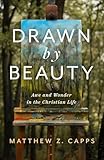
Drawn by Beauty: Awe and Wonder in the Christian Life (Christ in Everything)

Drawn by Beauty: Awe and Wonder in the Christian Life (Christ in Everything)

B&H Academic

192 pages

Given the diverse perspectives held by the figures Capps cites, it’s unclear whether his argument comes from a particular theological angle. If recovering beauty is indeed a worthy pursuit of many evangelical traditions, perhaps this conglomeration of thinkers through the ages works. But for me as a reader, putting them all together without referencing their very different starting points seems shortsighted. After all, theological and church traditions represent more than scattered positions along a spectrum of Christian thought. On a deeper level, they give us ways of thinking about (or constructing and imagining) the world and what is possible.

If a theological imagination can help us construct reality along the lines of the Christian story and in the manner of Jesus, then each book has a fundamental question to answer: To what end does beauty or a theological imagination point? What is its ultimate goal?

In his 2013 book Imagining the Kingdom, James K. A. Smith gives his own answer, rooted in the weekly Christian liturgy. Each Sunday—as we participate in a call to worship, praise God in song, confess our faith and our sin together, hear the Word preached, and take the Lord’s Supper—we are not simply going through motions but enacting the drama of the gospel; we are inhabiting a Christian imagination. We are enfolded into the Christian story. It becomes ours. We are being built together like “living stones” into the house of God, the body of Christ (1 Pet. 2:5). Wolfe, too, looks to Christian worship as the experience that most profoundly forms a theological imagination.

Capps does gesture to requisite moral action as the outcome of beauty, but he ultimately ends his book by calling readers to experience and appreciate art. These are worthy pursuits, as they point to what Makoto Fujimura, in Art + Faith, calls “the ‘heavenly breaking in’ to the broken earth.” But is artistic appreciation the end goal of beauty? Capps encourages readers to consent to beauty’s pull, and he notes that it participates in the perfect beauty of the triune God. Ultimately, however, the book seems to suggest an individualized response—both to God’s beautiful life and to beautiful experiences and works of art here on earth.

This misses the telos of beauty, which (like any good earthly gift) must always find its resting place with God—in part now and in full on the canvas of eternity. Beauty must also create something. Martin Luther King Jr. had one name for that something—the “beloved community”—while David Brooks, in a recent address, spoke of the “creative minority.” According to Brooks, these communal manifestations of beauty can change culture when they “find a beautiful way to live” and “the rest of us copy.” Beauty needn’t be housed simply in a lovely face; it can live in a community that instantiates goodness and truth.

Although Capps discusses that beauty isn’t meant to be enjoyed in isolation, affirming that the triune God is both community and the source of all beauty, functionally his book ends with an individualized benediction: Go and appreciate art.


While neither book aims to help us practically construct a more Christlike imagination, they both leave us with markers. Capps is at his best when he applies insights on beauty to questions of spiritual formation. Wolfe—through her examples from theater, fiction, and visual art—concludes with an extended quote from C. S. Lewis’s character Reepicheep, the stalwart mouse who appears in The Voyage of the Dawn Treader: “When I can swim no longer, if I have not reached Aslan’s country, or shot over the edge of the world in some vast cataract, I shall sink with my nose to the sunrise.” These are words we feel.

Reading Reepicheep’s words made me tear up and pass the book to my husband, for we have many memories of reading Lewis to our children when they were small. Reepicheep’s trust in Aslan’s country, his insistence upon remaining faithful even if he doesn’t reach the Promised Land, is deeply moving. And like words that are not only beautiful but also good and true, Reepicheep’s demand to be shared.

In this moment of cultural upheaval, we would do well to heed scholars like Wolfe and thoughtful pastors like Capps as they recover beauty’s necessity for lives and communities of deep, transformative faith. Beauty, as lived out, is evangelistic. It adorns truth and goodness as their attractive pull. As beauty leads the way, as it becomes the texture of a community, a person may begin to desire the Christian story before he or she acknowledges its truth claims. Beauty pulls.

As Wolfe acknowledges, a theological imagination does construct “theories and images to guide us.” Even so, she observes, “they are light, tentative, humble, because when we construct theologically, we are not building towers; we are building boats. And we trust the sea.”

Ashley Hales is editorial director for print at Christianity Today.

News

Pro-Life Advocates Want FDA to Re-Review Abortion Drug

Study of insurance data raises questions about safety.

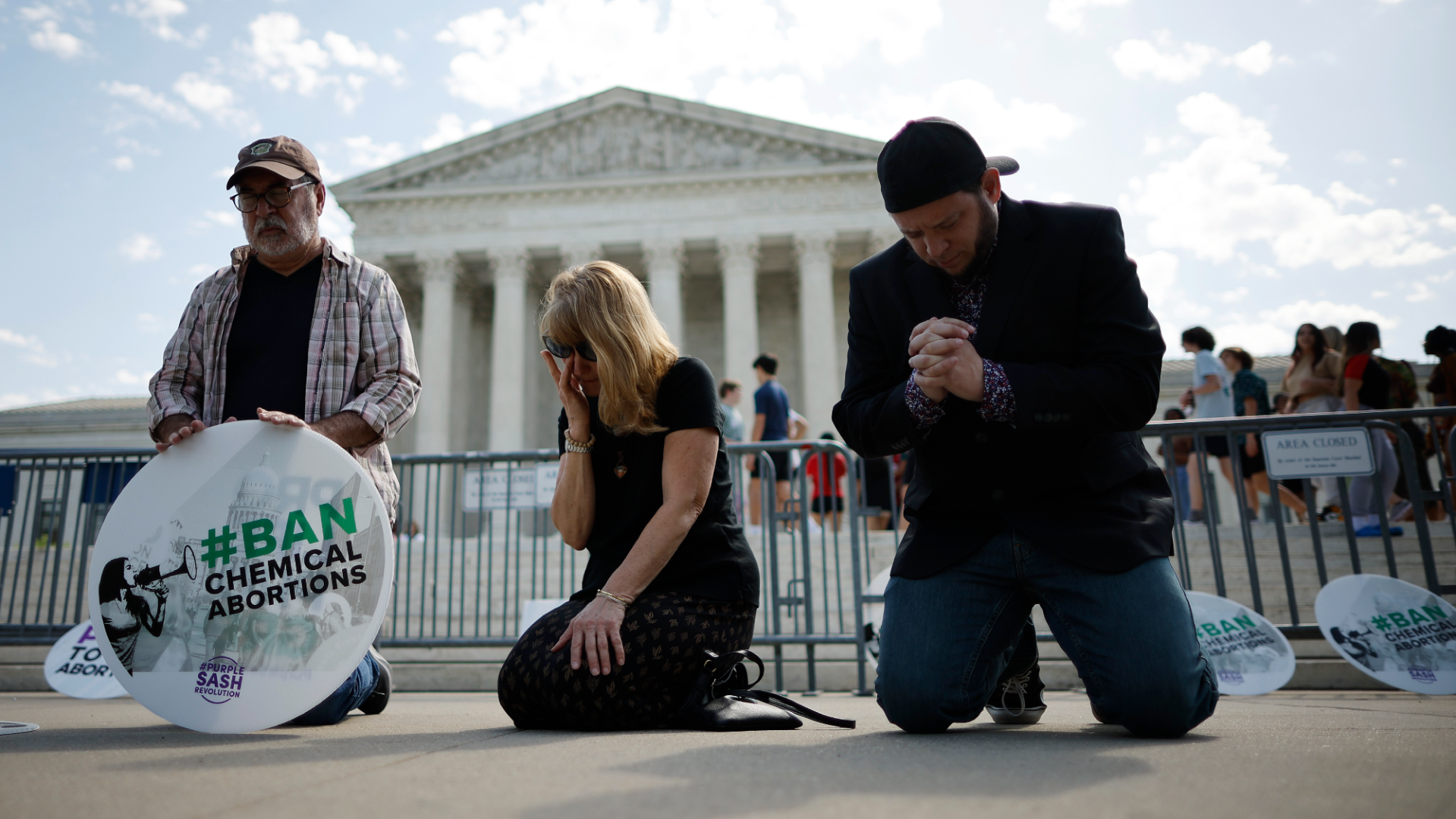
Protestors pray in front of the Supreme Court.
Christianity Today June 18, 2025
Chip Somodevilla/Getty Images

The father of the abortion pill has died, but questions over the safety of his creation live on.

Étienne-Émile Baulieu, the scientist who developed RU-486, which also known as mifepristone, died at home in Paris at 98 on May 30, 2025. The same month, a conservative, faith-based think tank in Washington, DC, released a study claiming the drug is more than 22 times more dangerous than previously reported.  

Mifepristone, which is taken along with misoprostol, was used to terminate more than 600,000 pregnancies in the 12 months after the Supreme Court ruled that states could regulate or ban clinics that perform surgical abortions. Today, more than 60 percent of abortions in America are medication abortions. 

The US Food and Drug Administration (FDA) approved the abortion pill in 2000 and says it is safe for women to use up to 10 weeks into pregnancy. As with any medicine, some people suffer side effects. But according to the FDA, fewer than 0.5 percent of women suffer serious adverse effects from mifepristone.

The Ethics and Public Policy Center, led by conservative Catholic commentator Ryan T. Anderson, announced it did a much larger study and came to a very different conclusion. The policy center’s study looked at insurance data from more than 865,000 women over a period of six years. Nearly 11 percent—around 94,000—experienced a harmful side effect, including infection, sepsis, and hemorrhaging. 

Anderson said the study is the “equivalent of a category 5 hurricane hitting the prevailing narrative of the abortion industry” and “reveals, based on real-world data, the shocking number of women who suffer serious medical consequences because of the abortion pill.”

Experts in the field of women’s health disagree. Stella Dantas, former president of the American College of Obstetricians and Gynecologists, said the study “manipulates data to drive a myth” and it was not peer-reviewed and published in a scientific journal. 

Jennifer Lincoln, an ob-gyn in Oregon, said there is lots of evidence the drug is safe.

“Thousands of people have used mifepristone in conjunction with misoprostol to have abortions that are without complication 99.7 percent of the time,” she said. “It is safer to take than Tylenol and far safer than a full-term pregnancy and birth.”

The Ethics and Public Policy Center stands behinds its study and is asking the FDA to review the data. The regulatory agency last looked at the safety of mifepristone in 2019, during Donald Trump’s first term as president.

Pro-life advocates say that based on the policy center’s findings, the FDA should look again.

“If they’re serious about the practice of medicine and serious about the care of American people as patients, action is required based on this data,” said Brick Lantz, vice president of advocacy and bioethics at the Christian Medical and Dental Associations. 

Lantz said the high rate of complications is truly alarming, and if those findings were happening in any other field of medicine with any other elective procedure, he’s confident physicians would lose their licenses for continuing to prescribe the drug.

Katie Glenn Daniel, director of legal affairs and policy counsel at the Susan B. Anthony Pro-Life America, said there have been other studies that raise questions about the safety of mifepristone too and it’s time for authorities to take these concerns seriously. 

She pointed to a peer-reviewed paper based on a study done by the pro-life Charlotte Lozier Institute. The paper examines the claim mifepristone is safer than Tylenol. 

Charlotte Lozier Institute director of life sciences Cameron Louttit found the claim is baseless. He said “those spreading it lack the evidence they routinely claim.” He argues it has been repeated so often, though, that it has “profoundly influenced public opinion” and made people think the drug is safe. 

Daniel shares that concern and said deregulation that allows the drug to be mailed to people only increases the risk.

“When there’s no doctor involved, there’s no adequate screening, it should come as no surprise that there would be more women going to the emergency room,” Daniel said.

She hopes the FDA reviews the effects of loosening the rules on the availability of the drug at the same time the agency looks at the Ethics and Public Policy Center data on its safety. 

“What they’re gonna find is that putting these drugs in the mail—including sending them to kids—is extremely dangerous,” she said. 

Christina Francis, a doctor in Indiana and the CEO of the American Association of Pro-Life Obstetricians and Gynecologists, said allowing people to purchase any drug without requiring them to consult with a doctor increases the likelihood of misuse and thus serious complication.

Women may take the drug when they’re further along in their pregnancies than the FDA says is safe, for example. Or, Francis said, they may not get screened first for the possibility of an ectopic pregnancy.

As a doctor in Indiana, she has personally seen an increase in complications from mifepristone as the drug has become more common. 

She recalls one woman she treated who took mifepristone while 11 weeks pregnant. The woman showed up at the hospital where Francis works bleeding so severely that she needed a transfusion. She retained tissue that ultimately needed to be removed surgically, and additional complications impacted her kidney.

“Honestly, I wasn’t surprised to see the number of complications that they reported,” she said. “Women are not seeing a physician in person, many times not even interacting with a physician at all. They can go on these websites and just fill out a form and get these drugs shipped to them.”

Francis is pro-life and would like to see an end to all medication abortions. But the issue with the safety of mifepristone should matter to anyone who cares about women’s health, she said. Another review by the FDA would be good, she said, and she would like to see regulations around dispensation tightened again, at the very least.

“This is not how we provide medical care to women in this country—or shouldn’t be how we provide medical care to women in this country,” she said.

Theology

Was Seinfeld ‘Too Jewish’?

How attitudes toward Torah define American Judaism.

Jerry Seinfeld and the Torah
Christianity Today June 17, 2025
Illustration by Christianity Today / Source Images: Pexels, WikiMedia Commons

In this series

(For the first article in this series, click here.)

As America is becoming more politically polarized, American Jews are becoming more theologically polarized. According to Pew surveys, four in ten Jewish adults under 30 describe their religion as atheist, agnostic, or “nothing in particular” rather than Jewish. But 17 percent from 18 to 29 self-identify as Orthodox, compared with just 3 percent of Jews 65 and older.

The two opposed divisions in American Judaism are Orthodox and Reform, which has a similar place in Judaism as theological liberalism does in Christianity. In Judaism, a middle-of-the-road group is called Conservative, and 4 percent of Jews belong to branches like Reconstructionists (as my father was), who believe religious tradition is important but don’t believe in God. Five percent of Americans raised in Jewish households (including me) have faith in Jesus.

Orthodox and Reform Jews share genes but sometimes not much more. Pew research shows half of Orthodox Jews in the US saying they have “not much” or “nothing at all” in common with Jews in the Reform movement. Just 9 percent feel they have “a lot” in common with Reform Jews. The alienation goes the other way as well: Six in ten Reform Jews say they have “not much” or “nothing” in common with the Orthodox. Recent events and social media attacks, though, have reminded all Jews, regardless of belief, that they are one people. Nazis did not make distinctions.

Two leading products of American culture exemplify two kinds of Jewish households. Seinfeld ruled American television during the 1990s, ending its final season in 1998 on top of the Nielsen ratings. NBC entertainment head Brandon Tartikoff, a Jewish graduate of Yale, thought Seinfeld would flunk out because it was “too Jewish,” but the humor struck a chord.

Why? Like Woody Allen’s films, Seinfeld offered wildly stereotypical but entertaining portrayals. Many Reform Jews are thoughtful and committed, but there’s something in the Reform Jewish blogger Robert Schurz’s self-description as a “Seinfeld Jew” with “a worldly set of values” but also “pride in the artistic, literary, scientific, and political contributions of Jews all over the world.”

A cultural milestone that offered a different impression of Judaism was The Chosen, the 1967 novel by Chaim Potok that spent 39 weeks on bestseller lists, selling 3.4 million copies. It portrayed Orthodox families and teenagers who studied the Talmud, as Jews had done for centuries. In those days Talmud study seemed to be dying out, but it’s now making a comeback, particularly among the one-sixth of American Jews from 18 to 29 who are Orthodox.

Few evangelicals know about the role of the Talmud in Jewish life throughout the centuries. As Jewish sage Jacob Neusner wrote, “Nearly all Christians view Judaism not as a religion in its own terms, but merely as Christianity without Christ, pretty much the same religion but deeply flawed by the rejection of you know who. … Few grasp that Judaism is not merely ‘not-Christianity.’”

That’s true. To put it another way, traditional Judaism has, in a loose sense, its own new testament, the Talmud, encyclopedia-length and compiled from rabbinical debate during the five centuries after Christ. The Talmud records many mutually conflicting rabbinical views: It should not be thought of as a work of dogma, a catechism, or Scripture. The Talmud backstory is that Moses wrote down many of God’s instructions but that God also gave him an oral Torah that elucidated the text in countless ways. From a Jewish perspective, those teachings form the basis of Jewish tradition.

That backstory stayed back for a millennium, as temple sacrifices were a physical way of demonstrating devotion. Until AD 70, Jews could show their faith in God by following his rules for conduct, but they also had ritual sacrifice. Temple slaughterers must sometimes have been wading in blood, as those aware that they had broken the rules sacrificed cattle, sheep, doves, and other animals.

When Roman armies destroyed the temple in 70, they eliminated that safety net. Thereafter, rabbis argued that since their eternal lives depended on observing the rules, Jews had better not even come close to breaking them. The way to do that was to set up a second set of rules far beyond the biblical set. Saying they were merely going by the oral Torah, Talmudic rabbis created a new safety net by regulating almost every aspect of behavior throughout the week.

For example, where Exodus 23:19 states, “Do not cook a young goat in its mother’s milk,” the Talmud says goats should not be cooked in any milk. Lips touching goat were not to touch milk at the same meal. Meat and dairy products of any kind could never be eaten together or within a period of several hours. Dishes or utensils used in one class of food were not to be used with another.

The Bible stipulates that God rested from his work on the Sabbath and his followers should do so also. Talmudic rabbis saw melakhah—the Hebrew word often translated as “work”—as any creative activity. They laid out 39 categories of forbidden activity, including sowing, plowing, reaping, grinding, kneading, baking, shearing wool, and spinning.

To preclude any transgression, they defined those activities expansively. Forbidden activities included weaving or separating two threads or more. Tying, untying, or sewing two stitches or more. Tearing, writing, or erasing two or more letters. Kindling a fire. Carrying any object outside the home.

To this day, Orthodox Jews do not light a fire of any kind on the Sabbath. Since driving a car requires putting a key into the ignition, which produces a spark, driving is prohibited. Animals also should not work on the Sabbath. Any use of electricity—turning on a light or a stove, opening a refrigerator that turns on a light—is also forbidden. (The refrigerator light is normally taped so as not to go on.)

Rabbis in essence tell followers, Behave the way you know you should. You can do it. Discipline your behavior, and your heart will eventually change. Observe rituals before you know why, and understanding will come. The idea is that the rules, if followed, will so restrain our evil impulses that we will act in a decent way most of the time. Talmudic wisdom passed from one generation of sages to the next, with vigorous debate about practical applications, spiritual meaning, and much else.

Books
Review

Geniuses Have Divine Gifts. Even When They’re Insufferable.

We don’t have to excuse their bad behavior to recognize God’s hand in what they create.

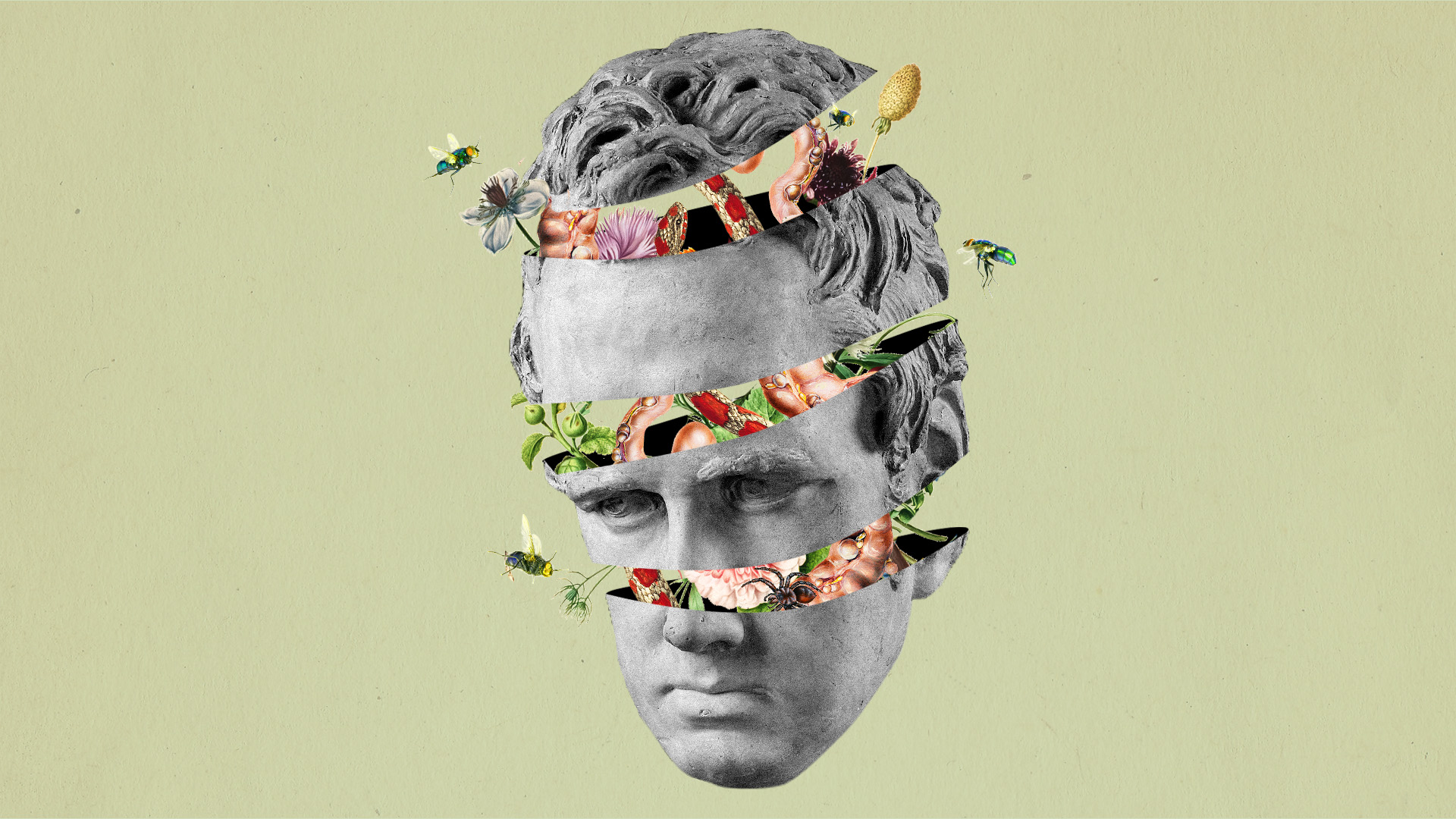
A scowling statue head with cut open sections to reveal bugs, flowers, snakes, spiders, and guts underneath.
Christianity Today June 17, 2025
Illustration by Abigail Erickson / Source Images: Getty, Unsplash

I have never had much patience for geniuses. Very smart! Very productive! Also: very annoying. Think of the rude eccentric who talks out of turn, sharing his unsolicited opinions on subjects about which he knows very little. Or the bigwig scholar running late and not responding to emails, too absorbed in his own work to be considerate of others.

No wonder I nodded along to The Genius Myth: A Curious History of a Dangerous Idea, Helen Lewis’s insightful (and very funny) new book about the excuses we’ve made for preeminent artists and inventors, from the creative minds of Renaissance Florence to the tech titans of Silicon Valley. “A suite of behaviours that would otherwise be inexcusable,” she writes of entrepreneur-turned-government-adviser Elon Musk, “are forgiven when they are the price of greatness.” Steve Jobs, “like Pablo Picasso before him, [would] successfully convince everyone around him that the a—holeness was indivisible from the genius.” Albert Einstein wrote out a contract for his wife that included the clause “You will stop talking to me if I request it.” 

But Lewis’s indictment runs beyond what she calls the “deficit model of genius”—where “oddness is transformed into specialness,” alcoholism and drug addiction might be creative necessities, and psychological breakdown is perhaps to be expected. In a series of well-chosen case studies, she cleverly lays out other aspects of the myth. Geniuses, we suppose, are iconoclasts and rebels, venerated by history for going against the grain. They are offensive (because mere mortals can’t comprehend their brilliance). And they are singular.

Of course, reality is more complicated. Sometimes the “Semmelweis reflex”—named for the skeptical contemporaries of the doctor who discovered germ theory—is warranted. That is, sometimes weird ideas are just … wrong.

And geniuses are hardly solo enterprises. They are always supported by other people, whether colleagues in their labs (see Thomas Edison tinkering with the light bulb) or women typing manuscripts (see Leo Tolstoy and his long-suffering wife, Sofia). Moreover, they often benefit from being in the right place at the right time. The Beatles’ talent alone wasn’t enough. As Lewis notes, “You need the right collaborators, the right environment in which to flourish and a dollop of plain old good luck.”

In death, geniuses benefit from having their legacies carefully curated, an advantage enjoyed by figures like William Shakespeare and the painter Jackson Pollock. And speaking of death, you need a “memorable” one—maybe even a little bit early, before your shine has faded. “Go too soon and you haven’t had time to do your great work,” writes Lewis. “Stick around too long, and the memory of your later, lesser output might overwhelm your early success.”

I left the book more convinced than I already was that genius isn’t a helpful category. It’s detrimental for whoever is labeled as one, conferring status that just isn’t conducive to well-ordered relationships and a correct sense of a person’s place in the world. And it’s not helpful for us “normies,” either. Deeming someone a genius inclines us to overlook their bad (even criminally bad) behavior and overrate their off-the-cuff pronouncements on topics outside their domains.

Just as Hollywood and Silicon Valley shelter their respective stars, Christians are liable to idolize our greats, like brilliant Bible scholars and well-spoken pastors. Sometimes we risk excusing what we shouldn’t, turning a blind eye to wrongdoing. Society has incorrectly assumed, writes Lewis, that “superior knowledge and expertise in one domain confers authority in others.” But maybe the very gifted apologist doesn’t also know everything about dietary supplements or running for elected office.

Most dangerous of all, attempts to define genius have often turned racist and eugenicist. The first section of The Genius Myth traces that troubled history, from the taxonomies of eugenics researcher Francis Galton to the troubling applications of IQ tests and an ill-conceived sperm bank for Nobel laureates. Lewis mentions one such laureate, physicist William Shockley, who “proposed that those with IQs under 100 be offered cash payments in return for being sterilised.” He wasn’t the only thinker to float the idea—a horrific one, of course, if you believe that all people are made in the image of God (Gen. 1:27). 

That image bearing is foundational. But it doesn’t quite answer one of the book’s underlying questions: What do we make of extraordinary innovations? What of the phonograph, “Strawberry Fields Forever,” the Sistine Chapel, the MacBook?

God’s image bearers are equally human, equally dignified. That doesn’t mean we are all equally skilled at solving logic puzzles or sculpting clay. Some very gifted people really do produce exemplary things. Annoying as I have found the geniuses I’ve come across, I’m also a little jealous—of their monomaniacal focus, their sheer force of will, the research they produce, and the art they make. I wish Tolstoy had been kinder to his wife and Mozart had been better adjusted. But I’m still glad we have Anna Karenina and those piano concertos.

Lewis addresses this distinction at the beginning and end of The Genius Myth. Her argument is interesting (and, I think, convincing) for Christians. “We all hunger to experience the transcendent, the extraordinary, the inexplicable,” she acknowledges. Brushing up against genuine genus elicits a “vertiginous falling-away as you contemplate an artwork, or an equation, or a new concept … and have no idea how it was created by a human brain.” Looking out an airplane window, perhaps you’ve wondered along with Lewis, “How did the Wright brothers do it—how did they know to do it?”

“I wish that we would move back to the ancient idea of genius, something that is found in particular actions, or specific works,” she advises. Genius is divine and inexplicable and outside our control—inspiration strikes; the pieces fall into place. It’s one person’s possession only for a time, a temporary gift rather than a lifelong identity, an expression of God’s power and beauty and creativity.

As onlookers, we can only be grateful. We’re shaken. We’re awestruck. Now it’s just a matter of where we direct our worship.

Kate Lucky is the senior editor of culture and engagement at Christianity Today.

Church Life

Ten Years After Charleston

Staff Editor

Chris Singleton’s mother was killed at the Mother Emanuel church shooting a decade ago. He’s still preaching unity and love.

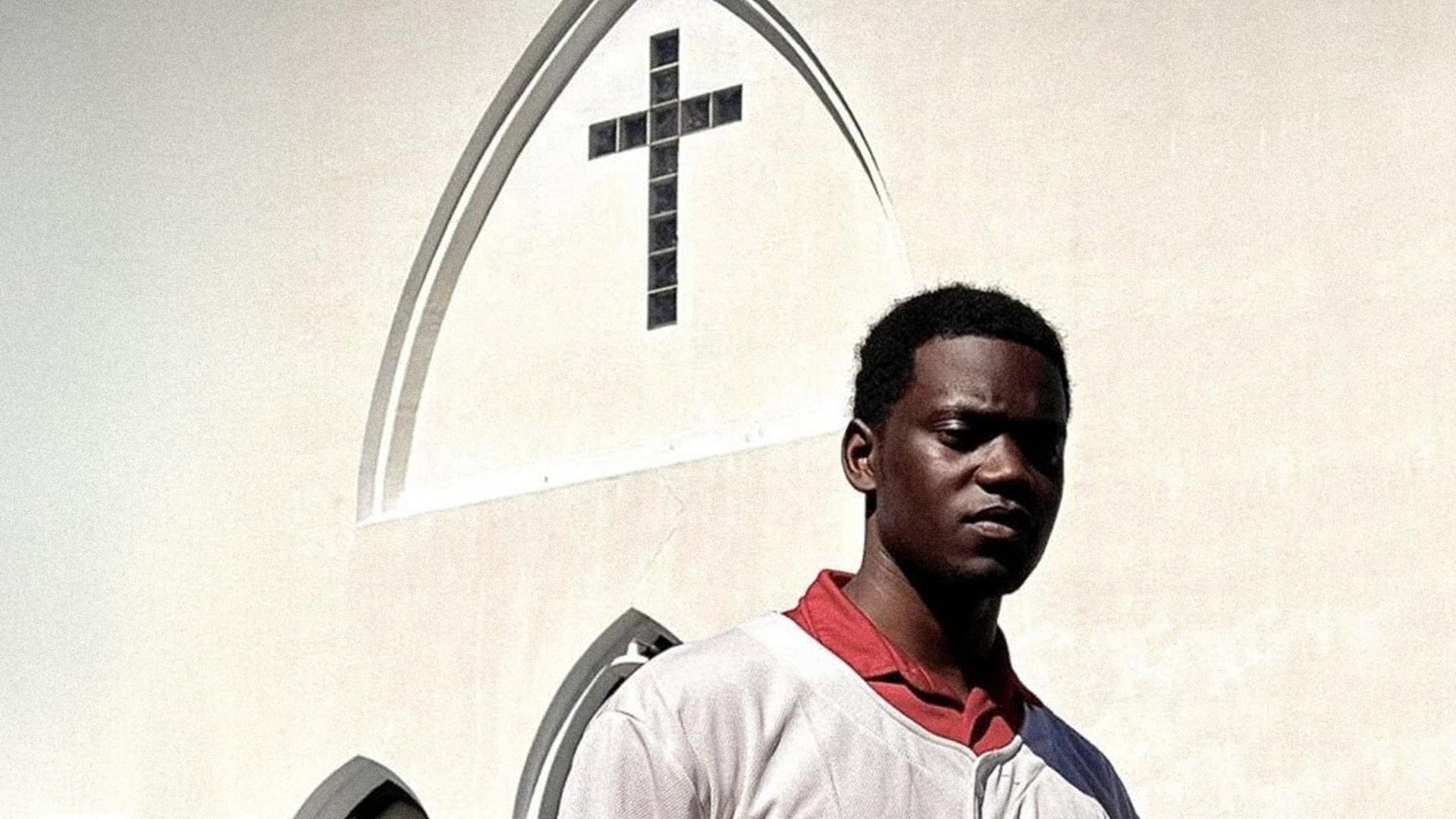
Chris Singleton standing in front of a church.
Christianity Today June 17, 2025
Courtesy of Christ Singleton

Chris Singleton had just wrapped up a summer-league baseball game when the phone call came. It was ten years ago to the day, June 17, 2015, and on the phone was Felicia Sanders, a member of Emanuel African Methodist Episcopal Church in Charleston, South Carolina. Come down as soon as possible, Sanders said, because something terrible had happened. 

Singleton rushed over. And there he was told that his mother and eight other people had been murdered by a white supremacist in what was then the deadliest mass shooting at a church in American history.

In the days to come, Singleton would learn the details of the heinous attack as its horrors were reported in the national news. The murderer was a man named Dylann Roof. He’d entered the church—the oldest African Methodist Episcopal congregation in the South, known as Mother Emanuel—after casing it on numerous trips from his home near Columbia, South Carolina. On the day of his assault, Roof was welcomed into a Wednesday-night Bible study in the church’s fellowship hall, where a member, Myra Thompson, was leading a discussion on the parable of the sower. 

With his head hung low, Roof sat silently next to the pastor of the church, Rev. Clementa C. Pinckney, for roughly 45 minutes as attendees considered the passage. Then, as the group began closing prayer at around 9 p.m., Roof took out his gun and opened fire.

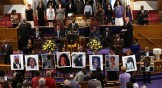
He killed nine: Pinckney; Thompson; Cynthia Hurd; Susie Jackson; Ethel Lee Lance; DePayne Middleton-Doctor; Tywanza Sanders; Rev. Daniel L. Simmons; and Chris’s mother, Rev. Sharonda Coleman-Singleton. A handful of others survived the shooting, including Felicia Sanders, who hid under a table with her granddaughter while Roof killed her son.


The massacre catapulted Mother Emanuel into the national spotlight. It set off conversations about racism, gun violence, and what the Confederate flag means in contemporary America. It also sparked debate about forgiveness—and its limits—as some family members of the victims extended forgiveness to an unrepentant Roof.

One of those family members was Chris Singleton. The night after the shooting, Singleton, then 18, told a reporter his family had forgiven Roof. It wasn’t a statement he had planned or prepared to make. “It was the Holy Spirit that placed that on my heart—and my lips,” Singleton told me during a recent interview.

In the decade that followed, several family members of the shooting victims shared their stories, Singleton among them. Following that off-the-cuff comment, he began traveling the country, speaking to students, nonprofits, churches, sports teams, and teachers about the dark day that has become central to his life’s purpose. 

The goal, Singleton likes to say, is to be the opposite of his mother’s killer. He speaks often of eradicating racism and respecting people’s differences—of love and unity, though he understands unity must be appealed to, not demanded. Reaching one person who might otherwise be the next Roof, he told me, would make the whole project a success. 

Singleton’s message is not a comprehensive solution to racial injustice in America, as he freely acknowledges. It’s a way to grab on to hope in the face of harsh winds, a real and raw demonstration of the Holy Spirit working in the lives of people despite unimaginable pain. 


Born in Atlanta, Singleton moved to Charleston with his parents and two siblings around the age of 11. He remembers his father struggling with alcohol, which caused tensions between his parents and eventually led them to separate. That also left his mother with the challenging task of being the family’s sole provider as a high school track-and-field coach. 

“One thing that was a blessing was that she never talked bad about him even though he probably deserved it in some cases,” Singleton said. “That’s the grace she showed toward our father.” She was a formative example for her son, who adored his father.

By the time Singleton entered middle school, the family had started attending church at Mother Emanuel. He served as an acolyte, and his sister participated in the praise-dance ministry. His mother, Sharonda, was working on a doctorate in speech-language pathology, but she soon became drawn to ministry and was ordained a few years later. Filled with joy, she dug deeper into her faith and spent more time praying and reading her Bible than ever before, Singleton told me.

In the months leading up to the shooting, things were looking up for Singleton despite his father’s absence. Then a freshman at Charleston Southern University, he’d started playing Division I college baseball, achieving a longtime goal. He’d recommitted his life to Christ and begun dating his now-wife. 

The shooting scrambled everything. With one parent already largely out of the picture, Singleton stepped into a fatherly role for his younger brother and sister, who were 12 and 15 at the time. He pretended to be okay, trying to model strength and resilience for his siblings, who would move to Atlanta to live with an aunt. Later, however, Singleton realized he was only delaying the whole family’s grieving process. 

The following fall he continued his college career, frequently traveling from Charleston to Atlanta for visits. In his junior year, Singleton was drafted by the Chicago Cubs, a job that allowed him to move his siblings back to Charleston. There they lived with his wife, Mariana, as he traveled the country for work with different baseball teams. 

Around the same time, his father passed away, and Singleton finally broke down and fully grieved his losses. He saw a therapist for the first time and, in the off-season, began to take speaking engagements developing his themes of unity and love. When his baseball career ended in 2019, the talks became a full-time job. He prayed, Singleton told me, and realized that sharing his story was something he was “supposed to do.”


But in America’s polarized politics, Singleton’s hope-filled message is facing headwinds. In recent months, his speaking requests have dwindled, in part because of widespread cuts to diversity programs, which often funded his talks. In 2025, he said, he expects about half the 140 or so engagements he had last year.

And beyond that practical difference, a decade after Charleston, working toward unity—and its traveling companion, justice—can seem like a fool’s errand. 

National conversations around race are shrouded in suspicion or outright hostility. Online, the loudest megaphones are often held by those who discount the reality of racism and present-day legacies of America’s horrid racial history—and by those who stand ready to cancel anyone for the slightest misspeaking or past sins they’ve acknowledged with remorse. Even inside the church, as And Campaign president Justin Giboney succinctly described in a CT article, the conversation about racial unity feels increasingly like “a battle between those who were blind to the sin of racism and those who believed racism and sexism were the only sins.” 

Charleston’s churches are no exception to that national trend. Around the port city, reconciliation efforts have met roadblocks. 

After the shooting, a theologically and racially diverse set of ministry leaders—Reformed and charismatic, Black and white—came together to found a reconciliation organization called 1Charleston. Named after a one-off conference that had taken place a year prior, it organized volunteers into further action, hosting workshops, conferences, and nights of prayer and worship.

The immediate motivation was the massacre, of course, but the organizers were working in a city that carries a particularly painful racial history. In 1822, South Carolina authorities squashed a slave revolt planned by Denmark Vesey, a leader in the church that would later become Mother Emanuel. Vesey and 34 others were executed, and the church was burned to the ground. And four decades later, Confederate troops fired the first shots of the American Civil War at Fort Sumter, located in the Charleston Harbor. 

“A lot of people ask themselves, ‘How could this happen?’—and that’s actually the sentiment that galvanized us,” said Philip Pinckney (no relation to the pastor killed in the attack), a former pastor of a multiethnic church, who led 1Charleston for several years. “What do you mean, ‘How could this happen?’” 

As it set about responding to that question with answers grounded in local history, 1Charleston was not without its difficulties. The organization encouraged multiethnic ministry, which concerned a few Black pastors, Pinckney told me in an interview. They worried that it would cause brain drain in the Black church, siphoning off promising leaders to other congregations and projects. 

Pinckney, who was born and raised in Charleston, said he likely had hundreds of coffee meetups with pastors, most of whom were white. But after a few years, he tired of having the same conversations over and over. He felt as if he were endlessly trying to convince white clergy that directly addressing racism should be a priority in the church. 

“The most charitable retelling would be that there was a constant need for more information,” Pinckney said. White pastors often answered his pleas to speak out against police killings by saying they didn’t want to “get political.”

Their sentiment, he mused, “really boils down to ‘It’s not my problem.’”


A few years after 1Charleston launched, Pinckney left, and the organization ultimately stopped its work. Pinckney also left pastoral ministry, though he said he’s still devoted to helping pastors become courageous about pursuing racial justice, which he sees as the prerequisite to unity. He still wants to encourage clergy to nurture conversations about race in America, including those that could inspire backlash from their congregations or come with some other personal cost. 

In Charleston and beyond, that remains more easily said than done. The decade since the Mother Emanuel tragedy has been marked by contention around race both inside and outside the American church. Those few years include three bitterly divisive presidential elections, the racial justice protests of 2020, debates over critical race theory and where it’s taught, and rapidly changing policies around diversity programs in academic, corporate, and government settings. White evangelical support for Donald Trump has caused many Black Christians to question their future in predominantly white churches.

South Carolina, for its part, has made positive changes by removing some Confederate symbols from public spaces. But lawmakers in the state continue to sit on a hate-crime bill named after the late Rev. Pinckney, which rightfully has frustrated and angered some of the family members of the shooting victims.

Even amid setbacks, the perseverance of Singleton and many others who have labored around the call for unity is a reminder that the church is called to reconciliation with God and one another (2 Cor. 5:16–21)—both for ourselves and as a model to our unchurched neighbors. But for many believers, resignation and exhaustion have instead crept in. I feel it myself.

But though we may be weary, “let us not become weary in doing good, for at the proper time we will reap a harvest if we do not give up” (Gal. 6:9). Unity is more than a nice aspiration. It is a biblical command—but one to which we should appeal on the basis of love (Phm. 1:8–9). While pursuing justice, we must also “make every effort to keep the unity of the Spirit through the bond of peace” (Eph. 4:3), get rid of divisions in our midst (1 Cor. 1:10), and be reconciled to other saints before God (Matt. 5:23–24).

We must preach the whole counsel of God, the parts that easily fit our political persuasions and the parts that don’t. Unity often comes at a cost—often, as pastor Thabiti Anyabwile wrote in 2018, at the cost of humility. Until what we see around us reflects what we will find in heaven (Rev. 7:9), perseverance, forbearance, and endurance must be our call.

Haleluya Hadero is the Black church editor at Christianity Today.
Theology

Walter Brueggemann’s Big Imagination and Even Bigger God

A grateful friend and colleague reflects on the towering Old Testament scholar.

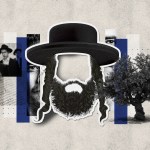
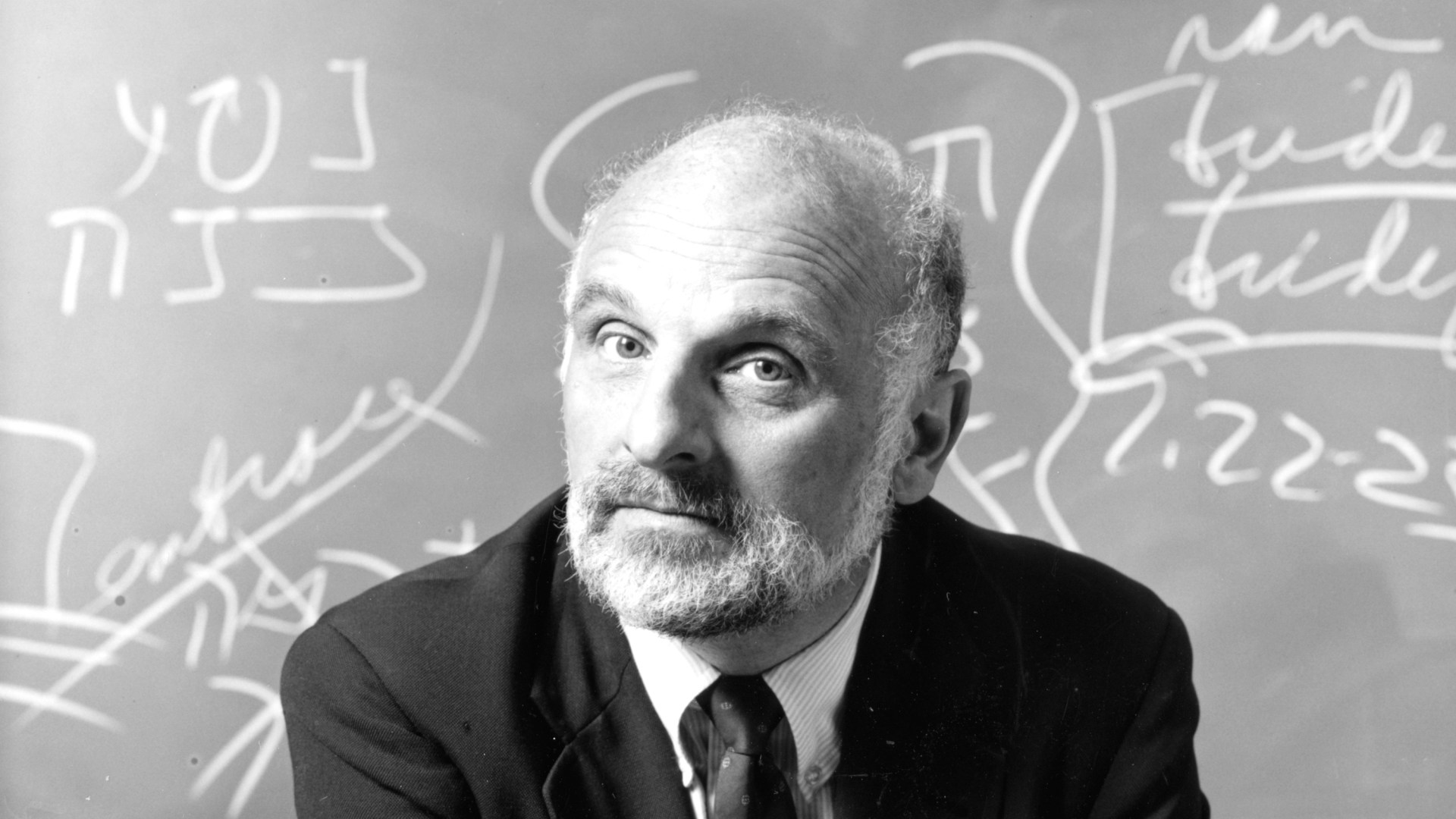
An image of Walter Brueggemann in front of a chalkboard.
Christianity Today June 17, 2025
Image courtesy of the C. Benton Kline, Jr. Special Collections and Archives, Columbia Theological Seminary.

Even now I remember the simple cover of Walter Brueggemann’s most famous book: dark gray with the title The Prophetic Imagination in red lettering. It was 1989, and I was an 18-year-old freshman at a small, denominational Christian liberal arts college in San Diego. In Spring of that year, I took a class on the Old Testament prophets, and one of my assignments was to read Brueggemann’s book and write an essay on it. Since I am something of a pack rat, I laid my hands on that essay and reread it the other day, shortly after Brueggemann’s passing on June 5, 2025, at 92 years of age.

What captivated me about The Prophetic Imagination, even in my young age, was Brueggemann’s definition of a prophet as one who nourishes “a consciousness and perception alternative to” that of “the dominant culture.” Prophets create that imagination first by critiquing the regnant world opposed to God’s will and second by energizing God’s people to a new way of life and being. All of that made great sense to me as someone raised in a holiness denomination, even as it made sense coming from Brueggemann, who was raised in German Pietism as the son of a pastor in the Evangelical and Reformed Church.

But something else struck me with equal force back in 1989, and it has stuck with me ever since: It is Brueggemann’s emphasis on the dangerous freedom of an unimaginably large God: “A free God is an awfully dangerous thing, and that is what the Lord is,” I wrote in my freshman essay. To put it more simply, in the words of Conrad Kanagy, Brueggemann’s recent biographer, who even wrote a children’s book about him, Brueggemann believed in a very big God.

The Prophetic Imagination, first published in 1978,went on to sell a million copies, go through two more editions, and be translated into six other languages. It is the one publication those unfamiliar with Brueggemann’s work have likely heard of, just as Brueggemann himself may be among the only biblical scholars nonspecialists would know by name. It was a watershed publication—still widely cited—affording its readers a new understanding of the prophetic task and new vocabulary to describe it.

Simply put, Brueggemann was one of the most prolific and influential Old Testament scholars of the past century, with a bibliography of over 120 separate titles. Even the most productive academic authors aspire to maybe three or four books in a career, whereas Brueggemann published fourteen in the last two years alone. Yet it is not just the quantity of published works but also their quality that amazes. Several of these books changed or redefined the field of Old Testament study.

The year before The Prophetic Imagination was published, for instance, Brueggemann authored the now-classic The Land: Place as Gift, Promise, and Challenge in Biblical Faith, the first study to treat the land as a serious subject in biblical theology. There can be no doubt that Brueggemann’s massive 777-page Theology of the Old Testament: Testimony, Dispute, Advocacy will stand as one of his greatest works. There he offers the most compelling and comprehensive attempt to categorize and understand the various texts, traditions, and witnesses of the Old Testament. He treats these biblical voices as testimony—not only the core testimony of the good and trustworthy God familiar from the Law and the Prophets but also the counter-testimony concerning God’s absence and silence found in the lament psalms and Job, among other places.

Almost 20 years after publication of Theology of the Old Testament, Brueggemann published another extensive and remarkable book, Money and Possessions (2016). He once told me he had been tempted to title it Follow the Money. This volume, no less than any of the others, shows Brueggemann’s fluency in the language of Scripture as he moves easily back and forth between the Old Testament and the New. In my judgment, no other biblical scholar can match his canonical dexterity and profundity.

Brueggemann’s influence extended well beyond the world of academia, however. Like the New Testament scholar N. T. Wright, Brueggemann was one of the few stratospheric Bible scholars who could write as easily for clergy and lay people as he could for the professional guild. He once remarked to me that to be a theologian for the church, one must write on the texts that matter most to the average Christian. It is thus unsurprising that he was popular with preachers, who are likely most familiar with Brueggemann’s numerous commentaries, which include major treatments of Genesis, Exodus, Deuteronomy, 1 and 2 Samuel, 1 and 2 Kings, Psalms, Isaiah, and Jeremiah.

In addition, Brueggemann published important monographs, such as The Creative Word: Canon as a Model for Biblical Education, David’s Truth: In Israel’s Imagination and Memory, Israel’s Praise: Doxology Against Idolatry and Ideology, and Finally Comes the Poet: Daring Speech for Proclamation. Brueggemann was always innovative and creative, applying keen insights from Scripture to contemporary issues facing Christian faith and practice.

After college, I became even more familiar with Brueggemann’s many works, first as a seminarian, then as a doctoral student in Old Testament. But my knowledge of him became firsthand when I landed my first tenure-track job at Emory University. A week after arriving in Atlanta, Professor Brueggemann welcomed me to the area by inviting me to lunch. I was, needless to say, extremely nervous for that appointment at Athens Pizza in Decatur, Georgia.

As I came to learn—since that lunch became the first of many—Brueggemann always ordered the same thing (a Greek salad) after first confirming the size with the waiter (he preferred small) and asking for some crackers to go with it. Lunch was always kept to one hour, pretty much exactly on the dot. My initial fears over dining with the legendary theologian proved ill-founded. We spent most of the time laughing during that first lunch and those that followed.

Emboldened by his kindness—if not my youthful naivety—I asked Brueggemann to guest lecture in my introductory course the next semester, and he graciously agreed. The invitation was, of course, primarily for me to have a chance to hear him up close and in the flesh, though I was happy to let my students listen in over my shoulder. I still remember his delivery; his humor; his engaging, even thunderous voice; his passion; and his exegetical genius. The lecture was on Jeremiah, and to this day, my own introductory lecture on Jeremiah depends directly on his.

Those vignettes are only the tip of the iceberg when it comes to Brueggemann’s kindness—and not just to me. His colleagues, especially younger ones, widely know and love him for his generous gifts. My own list is far too long to recount, but I am especially grateful for the following:

I’m grateful for the chance to hear him preach and lecture. He once wryly described the difference between a lecture and a sermon as “about 40 minutes.” No less than four volumes of his sermons have been collected (The Threat of Life and The Collected Sermons of Walter Brueggemann: 3 Volume Set).

I’m grateful for the chance to hear him pray. I first had the chance through his reading a publication of prayers before his classes and then during my visits to his home in Michigan. Brueggemann never bothered with standard introductions like “Dear Lord” or “Merciful God.” Instead, he just dove into the heart of his prayer with direct address; he knew God was already, always there. One of his most popular collections of prayers is entitled Awed to Heaven, Rooted in Earth; there are now at least four other volumes of his collected prayers in print.

I’m grateful for his poetic power. This manifested itself in his artistry as a speaker, preacher, and pray-er; in his argumentation as a writer; and in his observation as the most astute of exegetes. His clear, even brutal honesty in the face of the biblical text is unmatched, save by the clear, even brutal honesty of Scripture itself. Brueggemann’s unflinching fidelity to the text won him and his works, especially his commentaries, a wide following of fans across the ideological spectrum, from mainline progressives to conservative evangelicals and Pentecostals.

I’m grateful for his love for the church coupled with his sober-minded awareness of its many failings. He once told me over lunch (yes, at Athens Pizza) that the origin of his deep concern with justice was his firsthand observation of how unjustly his father had been treated as a pastor.

I’m grateful for his interdisciplinary insight. Brueggemann was a voracious reader who seemed to be interested in every topic and seemed to remember everything he read. Before his lead, biblical scholars rarely ventured outside the often-narrow confines of their discipline. Brueggemann, by contrast, ranged widely—incorporating remarkable gifts from the fields of economics, sociology, politics, and psychology, to name just a few. His stunning essay “The Costly Loss of Lament,” which changed my life and many others, even entire church cultures, would have been impossible to write without the work of British pediatrician and object-relations psychoanalyst D. W. Winnicott.

I’m grateful for his graciousness and good humor. I once wrote a review essay of Brueggemann’s work where I registered my many appreciations but also a few critiques. One criticism concerned what I deemed an overuse of the adverb endlessly in Brueggemann’s writing. We humans are finite creatures, after all, so our interpretative endeavors are, no matter how capacious, also limited, most certainly not endless. Only God properly deserves such a predication, I argued. Brueggemann, in his inimitable way, sent me a handwritten note after reading it, thanking me for and congratulating me on the essay, by which he said he was “endlessly instructed.” Touché! That wasn’t the first nor the last time we laughed about that and all sorts of other things.

Along with others like Carolyn Sharp, Clover Beal, Timothy Beal, Conrad Kanagy, Patrick Miller, and especially Davis Hankins, I was blessed to edit a number of works for Brueggemann. The first book I edited for him was a volume on the theology of the Book of Jeremiah, then later one on the Psalms, followed by two others on Exodus and, again, one on Jeremiah. Most recently, he made me his coauthor, asking me to help him finish a short book on Isaiah, which is now in press. I had just finished the copyedits when I spoke to him for the last time, just two days before he died.

I first edited Brueggemann when I was 25 years old as editorial assistant for the journal Theology Today. He seemed to submit a new paper to the journal every few weeks, but during my 12 months in my post, I had the chance to edit only one. The essay was, notably, on preaching as much as it was on the Old Testament. I will never forget one specific line: “It’s hard to get God said right.” That single line has stuck with me for 30 years. It is both true and memorable—and it also changed my entire view of Scripture and theology.

It is easy now to see how Brueggemann’s many books, sermons, and prayers were—and still are—ways he tried to “get God said right.” All of us who have read, listened to, and watched him have benefited from those many attempts, even when we disagreed with some of his conclusions. It is, after all, hard to get the Lord said right. That’s why we will need to keep reading, keep studying, keep preaching, keep praying … perhaps even endlessly.

It is my belief that on June 5, 2025, one of God’s most gifted, beloved, and best “sayers,” Walter Albert Brueggemann by name, joined the goodly company of the prophets. His restless, endless search to get God said right is at an end; he now knows even as he is fully known. But his witness and his words still linger with us, beckoning us to live differently, alternatively, prophetically—above all, faithfully.

Brent A. Strawn is D. Moody Smith Distinguished Professor of Old Testament and professor of law at Duke University. He is the coauthor, with Walter Brueggemann, of the forthcoming book Unwavering Holiness: Pivotal Moments in the Book of Isaiah.

News

Trump Made $1.3 Million on Bible Endorsement

Financial records show royalty payments rolled in during presidential campaign.

Donald Trump thumbs up walking
Christianity Today June 16, 2025
Tom Williams/CQ-Roll Call, Inc via Getty Images

President Donald Trump earned $1.3 million off the sale of Bibles in 2024. 

The White House released financial disclosure forms on Friday as the nation prepared for protests and a military parade celebrating the anniversary of the US Army. The 234-page report, covering the 12 months before Trump was sworn into office, shows his wealth vastly increased while he was running for president. 

Trump earned $57.4 million as the “chief crypto advocate” and “inspiration” for a cryptocurrency company founded in 2024, in addition to other more traditional sources of revenue, such as the $50 million he earned from his Palm Beach, Florida, golf resort Mar-a-Lago, and $20.8 million from Trump National Golf Club Washington, DC, in Potomac Falls, Virginia. The president reported total assets of about $1.6 billion and annual income of $600 million.

One piece of that income came from the endorsement of the God Bless the USA Bible.

Trump endorsed the Bible around Easter, shortly after a New York State court threaten to start seizing assets if he couldn’t pay a $175 million bond while he appealed his conviction in a civil fraud case.

“This Bible is a reminder that the biggest thing we have to bring back America and to make America great again is our religion,” Trump said in a promotional video. “We must protect content that is pro-God. We love God. And we have to protect anything that is pro-God. We must defend God in the public square and not allow the media or the left-wing groups to silence, censor, or discriminate against us.”

The God Bless the USA Bible uses the King James Version and is published with a copy of the chorus of “God Bless the USA,” handwritten by country singer Lee Greenwood: “I’m proud to be an American, where at least I know I’m free. / And I won’t forget the men who died, who gave that right to me.” It also includes the US Constitution, the Bill of Rights, the Declaration of Independence, and the Pledge of Allegiance. 

The Bible sells for $59.99. Editions endorsed by Trump, including the Inauguration Day Edition, the Presidential Edition, and the Golden Age Edition, sell for $99.99.

The Bibles are printed for about $3 each in Hangzhou, China, according to the Associated Press. Religious books are exempt from tariffs on Chinese imports, the US Customs and Border Protection told Christianity Today.
Several editions of the Bible, including one celebrating Trump’s survival of an assassination attempt in Butler, Pennsylvania, have sold out.

Trump has not disclosed how much he makes per copy. Royalties are paid to a licensing company called CIC Ventures. Trump was listed in the financial disclosure as CIC Ventures’ manager, president, secretary, and treasurer. The company also licenses Trump’s name to sell watches, sneakers, and guitars. 

Tim Wildsmith, a Baptist minister in Nashville who reviews Bibles on his YouTube channel, said the God Bless the USA Bible appears to be cheaply made.

“I would expect this Bible to be maybe $15 to $20 tops,” Wildsmith said. “It disappoints me that it’s even out there, and it disappoints me that people are making money off of this. … This feels more like a money grab than anything else.”

Trump is not the first president to endorse an edition of Scripture. Woodrow Wilson and Franklin Delano Roosevelt both endorsed Bibles. They were not sold for profit, however, but given to American soldiers going to fight in World War I and II. 

Trump said he licensed his name to the God Bless America Bible because the Bible is his favorite book and “a lot of people’s favorite book.” Even some of his strong evangelical supporters have questioned how much he’s read it, though.

Author Eric Metaxas, for example, once wrote that Trump “has evinced a startling lack of familiarity with the Bible.”

When Trump was running for president in 2015, he refused to say what his favorite Bible verses were, protesting the question was too personal. When he was asked about the Bible again on the Christian Broadcasting Network, he said it was a great book that you could read 20 times and appreciate more every time and that he’d learned a lot from Scripture. Trump cited as an example the command “Never bend to envy.” 

The phrase does not appear in the King James Version, the Revised Standard Version that Trump was given as a child, or any major English translation. Evangelical journalist David Brody said he thought Trump was probably conflating two passages. He asked for clarification and staffers told him Trump was referring to Proverbs 24, which says “Do not envy the wicked” (v. 1).

Brody argued that from one perspective, Trump’s inability to quote Scripture could be admired.

“Trump … had no desire to take the easy road and simply memorize a couple of Bible verses,” Brody wrote in The Faith of Donald J. Trump. “I had given him some of my favorite verses. A staffer could have come up with a few more, and even scripted some evangelicalish lines to sweeten the ears or stop the critics.”

Brody wouldn’t call Trump a Christian, though. Instead, in his book, he wrote that “Donald Trump seems to be on a spiritual voyage that has accelerated greatly in the past few years.”

God Bless the USA Bible has recently added several new editions to the lineup. One is endorsed by First Lady Melania Trump, another by Vice President JD Vance.

News
Wire Story

Suspected Assassin Preached on Spiritual Warfare

Man charged with murdering Minnesota legislator said God would raise up apostles and prophets to correct the church.

Scene of Minnesota legislator's assassination
Christianity Today June 16, 2025
Stephen Maturen/Getty Images

Vance Boelter, the man arrested in connection with the killing of a Minnesota state legislator and her husband and the shooting of a state senator and his wife on June 14, is an evangelical missionary who has preached in the Democratic Republic of the Congo in recent years.

The FBI identified Boelter, 57, as a suspect in the killing of Rep. Melissa Hortman, a Democrat, and Mark Hortman at their home in Champlin, a suburb of Minneapolis. The suspect, who impersonated an officer to gain entry to the Hortmans’ home, was still at the crime scene when police officers arrived, but he escaped after an exchange of fire. 

Earlier, the suspect had shot and wounded Democratic state Sen. John Hoffman and his wife, Yvette Hoffman, at their home.

Boelter identified himself on LinkedIn and other websites as the CEO and president of two security services companies, Praetorian Guard Security Services and Red Lion Group, the latter based in DRC, in Central Africa. On his LinkedIn page, which shows that he worked as a general manager at 7-11 in Minneapolis until 2021, he lists himself as open to work.

But in a video dated February 2023, Boelter is seen preaching at La Borne Matadi, a church in Matadi, on the western coast of the DRC. In one sermon he tells the audience that “people don’t know what sex they are” because the devil “has gotten so far into their mind and their soul.”

In another sermon at the church, one of three he gave from 2021 to 2023, according to Wired, Boelter said, “They don’t know abortion is wrong, many churches,” he told the audience. “They don’t have the gifts flowing. God gives the body gifts. To keep balance. Because when the body starts moving in the wrong direction, when they’re one, and accepting the gifts, God will raise an apostle or prophet to correct their course.

“God is going to raise up apostles and prophets in America,” he added, “to correct his church.”

On the now-defunct website for Revoformation, a nonprofit apparently founded by Boelter, a biography said that he was ordained in 1993 and had attended Christ for the Nations Institute in Dallas, a charismatic “Spirit-filled Bible School,” according to its website, that helps develop ministry skills.

The biography said that Boelter had spent time in Jerusalem, the Gaza Strip and the West Bank, where, it says, “He sought out militant Islamists in order to share the gospel and tell them that violence wasn’t the answer.”

Boelter also earned a degree in international relations at St. Cloud State University in Minnesota, as well as a master’s degree in management and a doctorate in leadership from Cardinal Stritch University in Milwaukee.

Law enforcement in Minnesota said a list containing more than 70 names, presumed to be potential targets, was found in the vehicle parked outside the Hortmans’ house. It included Minnesota Governor Tim Walz, the Democratic vice presidential nominee in 2024, and US Representative Ilhan Omar.

Walz appointed Boelter to Minnesota’s Governor’s Workforce Development Board in 2019, according to reports. Walz ordered flags in his state to half-staff in honor of Hortman. “Today Minnesota lost a great leader,” said Walz.

Boelter was arrested after an extensive manhunt and has been charged with murder and attempted murder.

Correction: A previous version of this article incorrectly stated the location of the Democratic Republic of Congo and the city of Matadi. DRC is in Central Africa and Matadi is in the western part of the country.

Theology

What You Should Know About the Tragedies of Jewish History

Loving your neighbor includes understanding your neighbor.

Jews being burned at the stake and crusades against Jerusalem
Christianity Today June 16, 2025
Illustration by Christianity Today / Source Images: WikiMedia Commons

In this series

The attack on Jews in Boulder, Colorado, two weeks ago; combined with the attack two weeks before in Washington, DC; combined with the arson at the home of Pennsylvania governor Josh Shapiro a month before that; combined with attacks on Jewish students on college campuses; plus antisemitic conspiracy theories aired on popular podcasts (Joe Rogan, Tucker Carlson, Candace Owens)—may all be ending a long honeymoon.

A survey of 1,732 Jews last fall found more than 90 percent saying antisemitism is a problem and has increased during the previous five years. Facts support fears: The most recently published FBI data shows a 63 percent increase in anti-Jewish hate crimes between 2022 and 2023. Although Jews comprise only 2 percent of the US population, 15 percent of all hate crimes in 2023 were anti-Jewish. 

That sad fact goes along with triumph. Jews make up one-third of all US Supreme Court justices and one-third of all American Nobel Prize winners. Jews have education and  income well above the American average. But when we look at religion-based hate crimes in 2023, the victims two-thirds of the time were Jewish. So the question remains: Is this golden age of Judaism just a blip?

I’ve enjoyed this golden age. I was born into a Jewish family in 1950 as American Judaism began its long summer of success, but each year summer ended soon after Tisha B’Av in August. That’s the 24-hour-fast day on which Babylonians destroyed the first temple in 586 BC and Romans destroyed the second in AD 70. On that day in AD 132, Israelites lost their last war against Rome and saw Jerusalem leveled, with Jews prohibited from living there. 

Critical to understanding Judaism is its marriage of faith with nationality. A born Jew like me, according to Judaism, is a Jew, period. Becoming a Christian in 1976, though, made the Good News real for me and mostly buried the parent-imbued sense that bad news is just around the corner—but I understand the feeling. Seven in ten American Jews say remembering the Holocaust, the World War II murder of 6 million Jewish civilians, is “essential” to Jewish identity. The sad historical fact is that for two millennia trouble has been frequent, as remembered each Tisha B’Av.

During those centuries, restrictive laws across Europe pushed Jewish families from place to place. They rarely became landowners. Jews worked at whatever urban trades they could. A few became moneylenders since the Catholic church did not allow Christians to compete with them. Those moneylenders sometimes became rich. Jewish economic success led to jealousy and covetousness among those Christians who sought opportunities to steal or who saw Jews as eternally bearing responsibility for deicide.

An opportunity arose after Pope Urban II in 1095 called for a crusade to retake Jerusalem. As participants in the First Crusade headed toward Palestine, some killed along the way 5,000 Jews in northern France and along the Rhine. Other crusades brought similar destruction. Popes sometimes offered, as an incentive for crusade participation, the cancellation of crusaders’ debts to Jews.

Roman Catholic doctrinal changes also contributed to increased tensions. In 1215, the Fourth Lateran Council, a major church conference in Rome, established the doctrine of transubstantiation: the bread and wine of the Lord’s Supper seen literally as Christ’s flesh and blood. During the next several centuries, angry priests and mob leaders repeatedly claimed that Jews desecrated wafers. The Lateran Council also decreed that Jews should wear a special badge to differentiate them from the general population.

Other new charges spread. The “blood libel” accusation—that Jews killed Christian children to use their blood in Passover rituals—first appeared in 1144 in England and resurfaced throughout the 1200s. Holy Roman Emperor Frederick II investigated the charge and found it without merit, but it remained popular among those seeking a cause for mob action, as in Germany in 1298.

Around 1220, someone—an Italian, an Englishman?—invented a story of meeting a Jew who had insulted Jesus on the way to the Crucifixion and thus had to wander the world for all time. That legend of the “wandering Jew” spread throughout Europe, retold in hundreds of publications with settings frequently altered. Some leaders spread zany stories for political effect. In 1321, French Jews supposedly encouraged lepers to poison wells used by Christians. Jews were innocent, but 5,000 Jews and lepers died. The following year, King Charles IV expelled those who had survived.

That was only a prelude to the Black Death riots of 1348–1349, when Germans and others accused Jews of causing the bubonic plague by poisoning wells. Pope Clement VI acknowledged Jewish innocence, but assault wiped out many Jewish communities already hurt by disease. Basel, Switzerland, residents burned 600 Jews at the stake and expelled the city’s other Jews, converting the synagogue into a church and destroying the Jewish cemetery.

The end for Spanish Judaism came in 1492, when the Spanish government gave all Jews the old choice of exile or baptism under pressure. Some hurriedly baptized, known as conversos, manned Christopher Columbus’s ships. At least 100,000 Jews left. Many headed to Portugal only to be kicked out five years later. Most wound up in Muslim lands. Spanish officials confiscated all Jewish property, ploughed under Jewish cemeteries, and either destroyed synagogues or turned them into churches or pigsties.

One city that did not expel Jews pioneered a new technique to restrict Jewish social interaction with the rest of the populace: Venice officials in 1516 began requiring Jews to live in a special area of the city that included a factory for metal (ghetto in Italian). Ghettoization also made it easier to slap on extra taxes and expropriate Jewish property. In 1555, Pope Paul IV advised cities everywhere within Christendom to set up ghettos.

Jews also served as a source of entertainment. As I’ve written elsewhere, “For two centuries, from 1466 to 1667, Rome’s annual carnival entertainment prior to Lent starred eight Jews wearing only loincloths who had to run a distance of a quarter mile between jeering spectators. The spectators threw rocks and garbage at the runners and then forced rabbis and other community leaders to kiss a statue of a pig.” On the Protestant side, Martin Luther turned into a fierce antisemite, leaving a mark on German culture that endured murderously into the 20th century.

Church Life

Christianity Is Declining in Australia. Or Is It?

New study finds hundreds of thousands of people, especially those over 55, are quietly turning to Christianity.

Christianity Today June 16, 2025
Illustration by Christianity Today

Christine Hill grew up in a non-Christian home in Geelong, Australia. As a child, she attended the local Methodist church on her own—until one day when the church sent her home with a packet of tithing envelopes the pastor expected her family to fill.

“The money was very tight, so I stopped going,” Hill said.

It took more than half a century—when Hill was 75 years old—before she finally came to know and accept Jesus. She recalled miraculous dreams and the influence of her son’s conversion nudging her toward faith.

Late-in-life conversions like Hill’s are becoming more common in Australia, according to a new study on the country’s religious trends. While news headlines point to the decline of Christianity in Australia and the fact that Christians no longer constitute a majority, people over the age of 55 are increasingly converting to Christianity, and people ages 15 to 24 are more open to the faith.

Andrew Grills, pastor of City on a Hill Geelong, is seeing this swell of newcomers firsthand. He noted that in early May he attended a meeting with some other pastors in the City on a Hill network throughout Australia, and all of them mentioned seeing new faces in the pews each Sunday.

“I’ve been here for 13 years, and we’ve never seen anything like it,” Grills said. “It’s an uptick across demographics but especially young folks, and I would say a preponderance of young men.” Even though City on a Hill targets people under 30, a group in his congregation of older people, who call themselves the Experienced People in Christ’s Service, put together their own conference last month. “It was booming!” Grills said.

Nearly every week, people are coming into Grills’s church and telling him their stories about how they met Jesus. For instance, one family in crisis said they discovered a box in the attic with a letter from their grandfather to his children. In it, he shared how he became a Christian in Ireland in the 1920s. As a result of that letter, the whole family is now following Jesus, Grills said.

On a Sunday in May, Grills met a man who had recently converted from witchcraft. “He’d heard an audible voice calling his name, and it started a process where he said, ‘I think God is real.’” The same Sunday, a 19-year-old with no faith background showed up with a King James Bible. The man told Grills that he had also heard a voice calling him, but no one was there. “He thought he was going mad,” Grills recounted.

“The humbling thing is that it’s not that we’re getting better at communicating the gospel,” Grills said. “It’s that God is doing the kind of stuff you hear about in the Muslim world.”

For Hill, the encounter with Jesus began decades before her conversion. At night, she’d often dream she was driving a new car and couldn’t put on the brakes. After she and a friend got baptized at a New Age spiritualist church, she suddenly stopped having that dream.

“But then I started dreaming that I was lost,” said Hill, a registered nurse at the time. “I was trying to go to work, and I could never find how to get there. Or I might finally get there but couldn’t find the ward.”

Hill often visited fortunetellers and New Age practitioners then, looking for answers about the future of her youngest son as he struggled with mental health issues. Her son would drive an hour to Melbourne to visit a Daoist temple. When he didn’t come home after one of those trips in 2022, Hill remembers praying to God in desperation: “Lord, bring him home safe.”Hours later, she found him down the beach not far from home. He told her that he’d found the Lord but didn’t explain how.

That started her on a quest of her own. She began reading books written by Puritans and articles about Christianity. She bought a King James Bible. She stopped going to yoga and tai chi classes. She threw out her Christmas decorations and knickknacks and got rid of all her novels because she wanted to remove every non-Christian influence from her home. “There’s enough of my own sin around every day that I struggle with,” she said.

Since she didn’t attend church, she tried to baptize herself in the ocean. Twice. She says she nearly drowned both times. A nearby church agreed to baptize her after she prayed with them to accept Jesus as her Savior. After those baptizing her brought her out of the water, they asked if she wanted to speak in tongues. “No, I didn’t feel like speaking, but I just felt wonderful,” she recounts.

Months later, the thought occurred that she needed to attend church “to fellowship and go somewhere where others are praising the Lord.” She searched online for “reformed churches” and became a member at a local Christian Reformed Church.

Australia’s most recent census data reveals that for the first time since Australia became a country, Christians did not make up a majority of the population. Christians registered just 44 percent of residents, down 17 percentage points from a decade earlier. In addition, nearly 40 percent had marked “no religion,” an increase of 16 percentage points over the past decade.

While mainstream media reports aren’t wrong to say that thousands of people no longer identify as Christians, demographer and social analyst Mark McCrindle believes that those numbers don’t tell the whole story.

“It’s not just that Australians are less religious or less active in their faith,” McCrindle said. “It’s more that they’re reinterpreting the census question.”

His research-based advisory firm published a report this year examining the country’s religious trends using the Australian Census Longitudinal Dataset (ACLD) from the Census of Population and Housing and surveying nearly 3,000 Australians. The report found that respondents are moving away from cultural identification with Christianity and toward a measure of active practice.

“You go back 40 years, and we had almost 9 in 10 Australians saying their religion was Christianity,” McCrindle said. “But that’s all changed. People, unless they’re active in the practice, don’t tick the box.”

Yet the report found that in the past five years, more than 784,000 new people did tick the box. The trend toward Christianity has been consistent in the past two decades, McCrindle found. He believes the shift is meaningful because people are now giving more honest answers about what they practice and believe.

Hill’s conversion fits the trends McCrindle sees on paper, as nearly 195,000 Australians over the age of 55 moved from no religion to Christianity in the last five years, making up 25 percent of the country’s Christians converts. In the last decade, the proportion of Christian converts over 55 increased by 11 percentage points.

The other significant trend is among 15-to-24-year-olds. Even though they are the age group most likely to leave Christianity, more than half of them are open to conversations about views different from their own. And the ones who are Christians? They are more likely than any other age group to regularly attend church.

Australia’s post-Christian society is also post-secular, McCrindle said. “The ‘Aussie dream’ pathway has not delivered, and they want to know, ‘Where can I find meaning, substance, and truth?’” McCrindle noted. “For many, Christianity answers those questions.”

Stephen McAlpine, author of Being the Bad Guys, said young Australian men in particular feel left out of the culture.

“[A young man] has got to demonstrate that he’s not the toxic Andrew Tate guy,” McAlpine said. “The alternative is more a faux champion, the feminized man. If they don’t want that, what are they going to do?”

McAlpine said that what they need is transcendence, a meaningful interaction with God. So they end up visiting churches even though they grew up without faith backgrounds.

“Jordan Peterson was a gateway drug for many young men into the church because he was someone who stood up to some of the things that he saw [as] wrong in the culture and was brave,” McAlpine said.

That means the people showing up at church come from untidy backgrounds and live in complex situations. “They’re much more like the people on Crete that Paul writes about,” McAlpine said. “But they’re looking for community. And they’re going to make mistakes.”

McCrindle notes that churches shouldn’t be discouraged by news reports of the decline in Christianity in the country but rather be more aware of the opportunities: Young people are more open to exploring the faith, older people are searching for meaning and reengagement with Christianity, and immigrants are moving to Australia, bringing the world to its shores.

“There are undercurrents of opportunity, undercurrents of fruitfulness, and, I think, undercurrents of great hope for the church and the future of Christianity in Australia,” McCrindle said.

Grills is taking advantage of the new opportunities. Even as God uses supernatural means to draw people to Christ, the congregation is also engaging more in evangelism, such as running continuous Alpha courses.

“Seeing God do the supernatural stuff is actually helping us get better at the normal stuff,” Grills said. “The harvest is plentiful. It feels like a lot of time we’re sowing, sowing, sowing, and there’s very little fruit. And now suddenly there’s fruit, and that makes you more excited about more fruit.”

While Grills is hesitant to call it a revival, noting that the increase isn’t as pronounced as the growth of Christianity in the UK, “it’s definitely a change,” he said. The church has also seen an uptick in the number of people willing to leave their jobs and enter full-time ministry: “Often we’ve had one or two or three or four. But this year it’s twelve.”

Hill said Jesus has changed her. She said she’s a gentler, softer person. “I keep asking the Holy Spirit to make me more like Jesus,” she said. “I want to be changed—heart, mind, and soul.”

She recognizes that finding Jesus can take a lifetime. Now “I can look back and see he was with me the whole time, protecting me, directing me,” Hill said. “There was no way that he was letting the lost sheep off, because I was a little lost sheep.”

Her next-door neighbor is in his 80s and selling his house. Soon after she became a Christian, Hill gave him a Bible. A few weeks before he moved, he came to her house for a meal.

He asked, “Can you tell me how you go about it?” When she asked what he was referring to, he responded, “Speak to the Lord and give him your heart.”

Hill found the sinner’s prayer on the internet, and they prayed it together.

“I wasn’t evangelizing him,” she said. “I just asked him about the Bible and talked with him about the things of life.”

addApple PodcastsDown ArrowDown ArrowDown Arrowarrow_left_altLeft ArrowLeft ArrowRight ArrowRight ArrowRight Arrowarrow_up_altUp ArrowUp ArrowAvailable at Amazoncaret-downCloseCloseellipseEmailEmailExpandExpandExternalExternalFacebookfacebook-squarefolderGiftGiftGooglegoogleGoogle KeephamburgerInstagraminstagram-squareLinkLinklinkedin-squareListenListenListenChristianity TodayCT Creative Studio Logologo_orgMegaphoneMenuMenupausePinterestPlayPlayPocketPodcastprintremoveRSSRSSSaveSavesaveSearchSearchsearchSpotifyStitcherTelegramTable of ContentsTable of Contentstwitter-squareWhatsAppXYouTubeYouTube