News

Kenyan Clergy Oppose Bill Aimed at Regulating Churches

Pastors say the proposed law could harm religious freedoms.
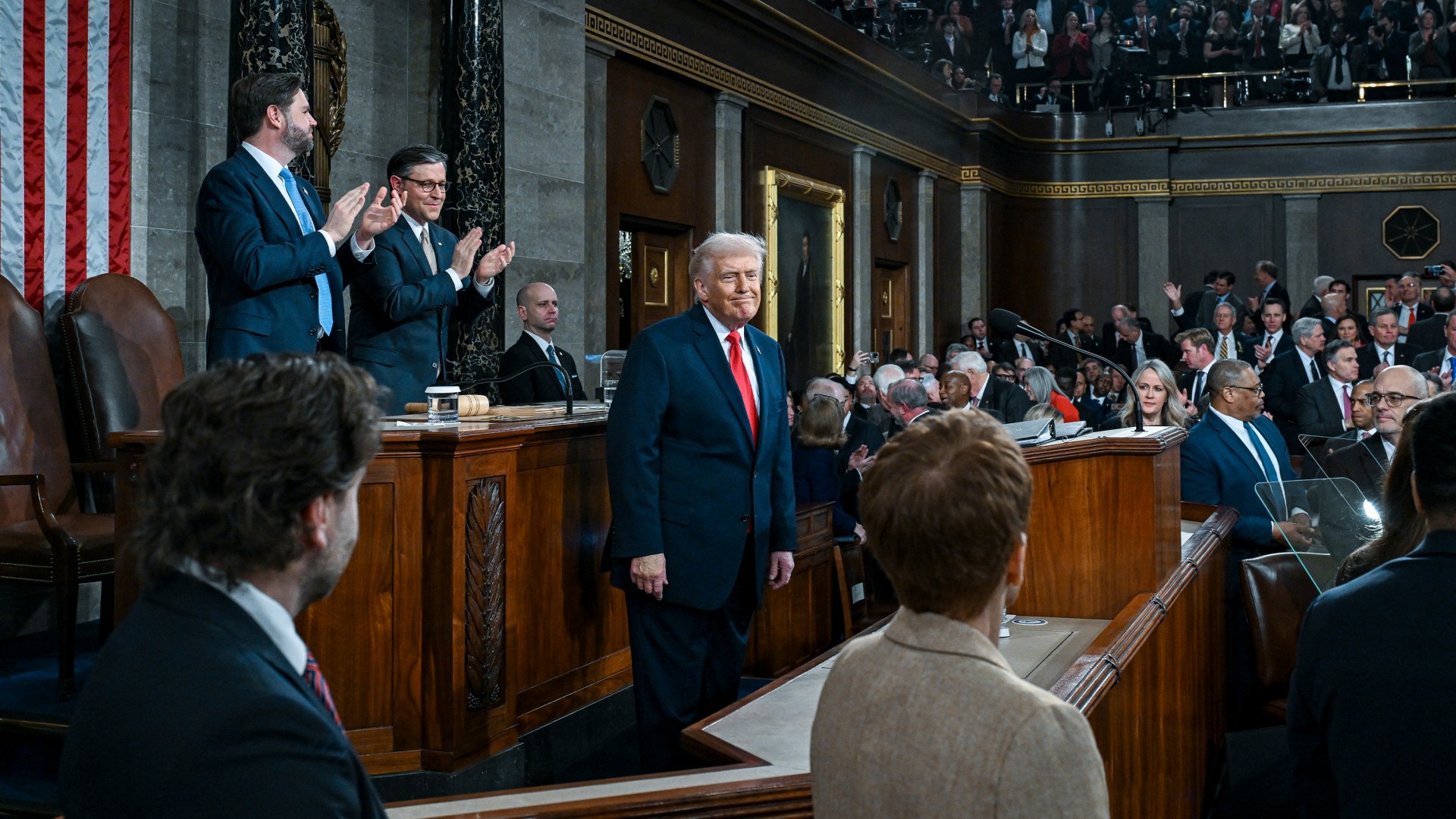
People praying in church.
Christianity Today November 14, 2025
Simon Maina / Getty

When Matthew Okeyo heard in 2023 that a religious sect leader had led hundreds of followers to starve to death in Kenya’s Shakahola Forest, he felt “shocked but not surprised.” Okeyo, who pastors African Inland Church Milimani in Nairobi, Kenya, said unchecked heretical groups have tricked and enslaved many Kenyans. Introducing regulations seemed like a good idea.


But now he and other church leaders oppose a bill the Kenyan government introduced last year to curb religious extremism, and they say it unnecessarily tightens regulations on legitimate religious institutions, including churches.

“I don’t have a problem with regulation,” Okeyo said. “My problem is how it is being done.”

If passed, the Religious Organizations Bill would establish a government commission to oversee churches and to develop a code of conduct. It would also require churches to register with the government, mandate fines and jail time for acts such as promoting politics from the pulpit, and limit proselytizing.

Christian and Muslim leaders have demanded the legislation’s “total withdrawal,” according to the Kenya Broadcasting Corporation, calling it “unconstitutional,” “oppressive,” and “open to abuse.” National Catholic and Protestant groups have also announced their opposition to the bill.

At an October 29 press briefing, Hudson Ndeda—national chairman for the Church and Clergy Association of Kenya—urged President William Ruto to suspend the legislative process for the bill.

“The Constitution is clear that state and religion shall be separate,” Ndeda stated. “We wonder why the government is keen on regulating religious institutions.”

Lawmakers proposed the bill in response to the Shakahola Forest Massacre, where at least 400 people, many of them children, died.

Police eventually arrested the sect’s leader, Paul Mackenzie, and ten others in connection with the deaths and charged Mackenzie with manslaughter, murder, and terrorism.

In May 2023, Ruto appointed a presidential task force to explore regulations preventing religious abuse. The taskforce then informed the drafting of the Religious Organizations Bill.

The Kenyan Senate presented the bill in September 2024, and Ruto’s cabinet approved the draft this July, opening a public participation period through October 22 so concerned citizens could comment. The bill is now headed to its first reading in Parliament. To become law, the draft must undergo three readings in Parliament with opportunity for revision. If it passes, the legislation will then go to Ruto for signing.

In 2025, police have exhumed at least 32 more bodies near Shakahola, raising fears the cult might still be operating, and raided a different sect’s compound, where they found two bodies and rescued 57 people from the cult leader’s control.

Proponents of the bill say its provisions are “critical” to prevent further deaths. In a speech to the UN Human Rights Council, Harrison Mumia—a representative of Humanists International and Atheists in Kenya Society—cited the Shakahola tragedy and urged the Kenyan government to “revisit the Religious Organizations Bill” to regulate religious organizations.

Pentecostal leaders are concerned the bill’s unclear wording could criminalize healing, deliverance practices, and tithe collection. Deliverance Church International, a Pentecostal church with locations across Kenya, argued in a recent letter to Parliament that the new bill will not stop Kenyans from joining dangerous cults.

“Wasn’t Shakahola a consequence of failure to implement existing laws rather than a vacuum in the law?” the letter asked.

David Njiiri, pastor of Kenya Assemblies of God in Nairobi, fears proposed fines in the bill could be abused and says they “need to be reasonable lest it be used by the enemy of the church to press charges against the clergy.”

Penalties for violations—including actions that “promote religious intolerance” or “indoctrinate any person with a religious doctrine”—can include fines up to 10 million shillings ($77,500 USD), imprisonment up to five years, or both.

Njiiri said the draft law “requires thorough scrutiny so as not to end up persecuting preachers rather than solving the intended problems.”

When Parliament presented the bill last year, the Evangelical Alliance of Kenya (EAK), an umbrella organization with a membership of over 700 denominations and churches, acknowledged abuses by heretical groups but argued the bill didn’t address the failures of public officials to properly handle the Shakahola tragedy. The EAK warned the current bill “unjustly limits” freedoms guaranteed under Kenya’s Bill of Rights.

Some also fear the proposed law’s restrictions on youth evangelism will hinder outreach and discipleship, especially among students in schools and universities. The draft bill requires a person to get parental consent before attempting to convert children or offering them religious teachings.

The East Africa Centre for Law and Justice (EACLJ) stated that vague wording in the statute could be subject to interpretation. Section 34 of the bill forbids the use of “misrepresentation, force, undue influence or coercion” in attempts to convert someone to a religion. The section also prohibits “indoctrinat[ing] any person with a religious doctrine.”

These restrictions could leave Christian evangelism vulnerable to lawsuits and limit outreach to children and youth, the EACLJ said.

In a memorandum obtained by CT, the Fellowship of Christian Unions in Nairobi, a parachurch organization that oversees Christian clubs and fellowships for students, asked lawmakers to clarify ambiguous portions of the legislation and revise it to “introduce safeguards that balance parental guidance with a child’s evolving capacity to choose their faith.”

The bill would also require churches and parachurch organizations to register with the government, submit financial reports, pay taxes on any income not spent on charity, and ensure leaders hold certificates or degrees from recognized theological institutions.

Okeyo said the government should withdraw the bill while it holds talks with religious bodies about how they can regulate their own members. He believes the government should work alongside Christian umbrella organizations, rather than impose all regulations itself, to regulate churches.

Okeyo worries the current legislation will create an environment where Christians can’t share the gospel and make disciples, because “if you want to share the gospel with someone, they may ask you to produce your license.”

“Many genuine local churches will lose their mandate to evangelize and disciple others,” Okeyo said.

History

Evangelicals Confront a Revolutionary Age

A Catholic on the campaign trail and the “possibly catastrophic character of what is happening under our eyes” caused deep concern in 1960.

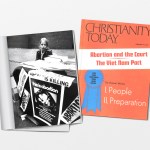
An image of JFK and a 1960 cover of CT Magazine.
Christianity Today November 14, 2025
Illustration by Christianity Today / Source Images: Getty

The 1960s brought tumultuous cultural change in America. For evangelicals, the decade began with concerns about what would happen if the American people elected a Roman Catholic president.

In a close-fought campaign for the White House, Democratic candidate John F. Kennedy sought to dismiss fears that he would take orders from the pope and end the separation of church and state. CT reported on the “religion issue“ when it first emerged in the West Virginia primary.

Kennedy began to speak freely of the religious issue even while discrediting its importance.  … He scolded the press so severely that not a single editor of the 400 present took up his offer to answer questions.

“The great bulk of West Virginians paid very little attention to my religion—until they read repeatedly in the nation’s press that this was the decisive issue in West Virginia,” Kennedy said. “I do not think that religion is the decisive issue in any state.”

“I do not speak for the Catholic church on issues of public policy,” he added, “and no one in that church speaks for me.” …

Questioned privately of how he would define his primary allegiance, Kennedy initially described it to a Christianity Today reporter in terms of the “public interest,” then indicated that it would be better expressed as a “composite” which includes “conscience.”

Did he feel that only a bigot would cite religious grounds for opposing a presidential candidate? No, but he said he found it hard to understand what intellectual anxiety there would be when one has answered in the negative (as Kennedy has) the all-important question: Would you be responsive to ecclesiastical pressures or obligations that might influence you in conducting the affairs of office in the national interest?

CT editors argued that concerns about Catholicism could not be so easily dismissed.

The past history and present practice of the Roman church illustrates its acceptance of the policy of persecution and oppression. The Protestants do not base their opposition merely on the massacre of St. Bartholomew’s Eve nor on the Pope’s efforts to raise a rebellion against Queen Elizabeth. There are current events in Colombia, Spain, Italy, and Quebec. Where the Romanists are strong enough, they persecute; where less strong, they oppress and harass; where they are in the minority, they seek special privileges, government favor, and more power. …

Opposition to political Romanism is not unreasoning, because a Catholic in the presidency would be torn between two loyalties as no Protestant has ever been. A candidate may announce, and even sincerely believe, that he is immune to Vatican pressure; but can we be sure that he will not succumb in the confessional booth to threats of purgatory and promises of merit from the organization which he believes to hold the keys of heaven?

The Vatican does all in its power to control the governments of nations, and in the past and present it has often succeeded. The Pope favored Mussolini’s conquest of Ethiopia. He made a concordat with Hitler, a concordat that still is in force in Germany as a last remnant of an evil rule. The United States a century ago had unpleasant experiences with the Vatican and had to break off diplomatic relations—relations that should never have been established in the first place and should never be resumed. We know that Romanists do not accept the separation of the Church and State; we know that they oppose a government’s treating all churches alike; we know that they constantly seek tax money for their own uses.

Evangelicals were not, of course, opposed to religion in public life. In fact, editors argued that the way religion was being downplayed was the most troubling part of the political developments of 1960.

The real significance … is found not in a growing emergence of a Catholic bloc or party, nor even in a shift of the American political mood into the post-Protestant era, or into an era of pluralistic religious balances. The deeper fact is the widening public judgment that all religion is irrelevant to political attitudes and acts. The American mentality rapidly is losing any distinction of true versus false religion.

CT noted with approval how Eisenhower attended a presidential prayer breakfast in March—and mourned the end of an era.

When President Eisenhower strode from the gold-trimmed grand ballroom of Washington’s Mayflower Hotel … it marked a significant exit.

Eisenhower had just witnessed his third and last “Presidential Prayer Breakfast” as chief executive. As he left, more than 500 government officials and other dignitaries stood, their eyes fixed upon the man under whom the prayer breakfast had come to represent a red-letter day on the evangelical calendar.

The election was not the only political issue that year. The Civil Rights Movement drew increased attention with nonviolent protests of race-based segregation. CT editors surveyed white Christian leaders in the South for their response to the new, disruptive tactics. 

Sharply critical of the “sit-ins” was Dr. William R. Cannon, president of Candler School of Theology, part of Methodist-operated Emory University in Atlanta, who called the methods “the worst possible.” … Dr. Robert W. Burns, pastor of the Peachtree Christian Church in Atlanta, who calls himself a “moderate” in the racial issue, also challenged the propriety of protest methods.

“These are not good means,” Burns said. “I’m very sorry to see them used.”

Dr. W. A. Criswell, pastor of the 12,000-member First Baptist Church of Dallas, largest in the Southern Baptist Convention, said he thought the question of property rights was involved.

“If a building is privately owned and run,” he observed, “I have assumed that one can do with it as he pleases.” … 

Applause for the demonstrators’ manners came from the Rev. A. T. Mollegen, professor of New Testament language and literature at the Protestant Episcopal Seminary, Alexandria, Virginia. 

“The dignity, restraint, discipline, and lack of vindictiveness of the Negro students’ demonstrations have been impressive,” said Mollegen. … “There is still great hope for America in our cold war with communism when our consciences respond to such efforts.”

Global Communism continued to be a major concern. CT invited J. Edgar Hoover, director of the FBI, to write a series on the threat and explain how “churchgoers may effectively confront the Red menace.”

If communism is to be defeated, the task must rest largely upon the theologians and the ministers of the Gospel. Communism is a false secular religion with pseudo-theological explanations of the great verities of life, such as the creation, life on earth, and the world to come. Communism is an all-encompassing system with explanations—though wrong ones—for this great universe of God. The Party offers answers—though perverted ones—for the hopes, joys, and fears of mankind.

In the final analysis, the Communist world view must be met and defeated by the Christian world view. The Christian view of God as the Creator, Sustainer, and Lord of the universe is majestically superior to the ersatz approach of dialectical materialism concocted by Marx and Lenin. The task of our clergy today is to translate this Holy Truth into the daily lives of our men and women. 

This truly is their responsibility as Christian clergymen.

Strong, responsible, and faithful Christians, wearing the full armor of God, are the best weapons of attack against communism and the other problems of our day. “Seek ye first the kingdom of God, and his righteousness.” In this way you will be playing a vital role also in helping defend our cherished way of life.

A Dutch theologian also wrote about the dangers of resurgent antisemitism in Europe. Could the horrors of the Holocaust happen again?

One remembers what was done in the name of culture to fellow human beings. One remembers the easy shamelessness with which people could converse about the anti-Jewish program at the time it was being carried out. Hitler had said in his Mein Kampf that he could spot the Jews behind all the darkness in the world, and then he declared that he would rid Germany once and for all of its Jewish problem. … 

I recall seeing Jews driven out of my parish in Amsterdam and out of all parts of the country, packed together as animal herds, and carted off toward Germany to vanish forever from our sight. We saw suffering that we had not imagined before. …

To those who have thought deeply about anti-Semitism, the recent outbreaks are no minor matter. We insist that the present anti-Semitic demonstrations are worse than what happened in Hitler’s day, not in effect, but in tendency and implication.

One CT writer was anxious about the “Strange New Faiths” and subcultures growing in America, including the advent of young people called “beatniks.” But another article argued that the lost, bearded young men of the 1960s were not so different from some of Jesus’ first disciples

Across the bar of an American tavern leaned a young man still in his late teens. His hair flopped loosely over his ears in a disorderly tangled mop, and his rumpled sport shirt and soiled slacks hung carelessly on his frame as he toyed with a glass of beer and gazed vacantly into the mirror before him. One foot kept time with the monotonous rhythm of the juke box that was blaring out the latest popular hit. He was one of those whom Time magazine defined as “oddballs who celebrate booze, dope, sex, and despair, and who go by the name of ‘beatniks.’”

These self-conscious victims of fear and futility may be found anywhere among the younger set today. … Although the consciousness that the world is too much for us may be more acute today than ever before, it is by no means new. Jesus encountered this same attitude. 

Innovative efforts to reach disillusioned youth could spark controversy. CT examined one fight over contemporary music: “Jazz in the Churches: Witness or Weakness?

Liturgical jazz got its biggest boost yet when NBC’s “World Wide 60” series relayed to a Saturday night television audience a performance by the nine-piece “Contemporary Jazz Ensemble” of North Texas State College.

The Texas “combo” is currently blazing the liturgical jazz trail in a tour of U.ؘ S. churches and colleges. … Edgar E. Summerlin, 31-year-old music teacher who formerly played with nationally-known dance bands, says he wrote the jazz setting in memory of a nine-month-old daughter whose death a year ago drew him and his wife into the First Methodist Church of Denton, Texas. He was advised by Dr. Roger Ortmayer, professor of Christianity and the arts at Perkins School of Theology.

Would Wesley’s heart be warmed anew to hear the syncopated accompaniment to his service, or would it leave him cold?

“I think he would have liked it,” says the Rev. Charles Boyles, young Methodist minister who has been travelling with the ensemble. “Wesley moved out among the people, something that perhaps Methodists aren’t doing enough of today.”

Theological education seemed to be growing distant from real people and real concerns in 1960. A Southern Baptist seminary professor sounded the alarm in an address that CT published.

What is to be done for men who can discourse with facility on “encounter,” “myth,” “confrontation,” “kerygma,” “koinonia,” and “agape,” but who fail to bring the joy and strength of the Gospel of redemption into the lives of their parishioners? Or, for that matter, how adequate is the theological training of the man who can pronounce irrefutable absolutes on verbal inspiration, the pretribulation rapture of the elect, or God’s revelation in twentieth century Zionism, but who is totally devoid of the compassion of the Saviour, and totally blind to the personal and social sufferings and struggles of multitudes of creatures bearing the image of God?

Kennedy won the popular vote in the election in November by just 0.17 percent. Narrow victories in Illinois and Texas gave him a majority of the Electoral College, but many suspected the count had not been entirely honest in key precincts within those two states. Looking ahead, CT warned that evangelicals needed to prepare for dark times.

What matters most is whether, in the light of the world-shaking and possibly catastrophic character of what is happening under our eyes, evangelicals are ready to confront this revolutionary age with deeper commitment to our Christian calling and a sense of urgency that is geared to the crises of the hour.

News

Hindu Nationalists Attack Missionaries in Northern India

One victim describes the mob descending on their bus, a rare occurrence in Muslim-majority Jammu and Kashmir.

A screenshot from video footage of the bus attack.

A screenshot from video footage of the bus attack.

Christianity Today November 14, 2025
YouTube Screenshot

A 34-year-old missionary, along with 13 prayer partners and short-term missionaries, was praying with a Christian family in a village in the disputed northern state of Jammu and Kashmir on October 23 when eight police officers interrupted the fellowship.

The cops informed the group, who were from Tamil Nadu in South India, that local Palal villagers had complained about the gathering and were preparing to attack them. The cops instructed them to leave immediately and offered protection to get them out of the village safely. While initially scared, the missionary was relieved that the police had offered to help them. The missionary asked CT not to name him and his organization as he could be arrested for his work.

The group followed behind the police vehicle in their white minibus. But only 500 meters into the ride, about 40 young men armed with iron rods and sticks blocked the one-lane dirt road. They pulled the minibus doors open to beat and kick the passengers, smashed its windshield and windows, and shouted slurs.

The mob of Hindu nationalists accused the group of forcibly converting local Hindu residents to Christianity.

Of the eight police officers who had driven ahead of them, only one tried to help the victims, the missionary recalled, while the rest stood and watched. At the time, he wondered if police had conspired with the mob to enable the attack.

The beating left at least four members of the mission team, including one woman, injured. After the attack, the head of local police department, Mohita Sharma, arrived and helped the victims reach their lodgings safely. She advised the local family that hosted the missionaries to register a formal complaint against the attackers.

The next day, the police department suspended the eight officers for negligence of duty. Authorities also arrested the two lead attackers, Ravindra Singh Thela and Rohit Sharma, but soon released them on bail.

Thela is a leader of the right-wing Bharatiya Janata Party (BJP) and is known for engaging in extremist cow vigilantism, a form of mob violence to protect cows, which are considered sacred in Hinduism. He currently has several criminal cases open against him, including attacking a journalist covering protests in Jammu and Kashmir earlier this year.

Ivan Albert Pereira, Catholic bishop of the Jammu–Srinagar diocese, appreciated the support the head police officer had extended. “Such incidents have not happened in Jammu and Kashmir, and the action of [Ms.] Sharma will serve as a warning to both officials and perpetrators of communal incidents in [the] future,” he told Crux.

After their release, the attackers filed a complaint against the missionary group and the local families that had invited them, accusing them of luring residents into embracing Christianity with food and money. The missionary CT spoke to said that police detained three families and kept them in custody for a day, but the judge concluded they lacked proof of religious conversion and acquitted them the next day.

This missionary has been working in Jammu and Kashmir for the past ten years. He and the other short-term workers visited Palal because a local family had invited them over for prayer and lunch. He has been visiting the village almost monthly for the past five years at the invitation of the two Christian families in the village. But contrary to accusations, he said he’s never preached the gospel in that village.

Besides meeting with isolated Christian families, the missionary also pastors a small church of 40 congregants about 80 kilometers away from Palal. After completing his theology training in Tamil Nadu, he felt led to be part of an indigenous mission to spread the gospel in the northern belt of India.

Christians compose a mere 0.28 percent of Jammu and Kashmir’s population, while Muslims make up 68 percent of the population and Hindus 28 percent, according to India’s latest census taken in 2011. Christians have faced increased persecution in recent years.

In September, a group of Hindu nationalists protested a Christian worship meeting in the state’s Samba district, alleging that the Christians were using the event as a tool to convert Hindus. In 2018, a mob of 1,000 Hindu extremists burned down a church building, holding the church responsible for the death of a congregant whom they presumed had been forcefully converted to Christianity.

Evangelism has become more difficult in the state, especially after the BJP-led central government took greater control of Jammu and Kashmir in 2019, the missionary noted. “The village leaders in the area have become very hostile,” he said, noting the increase in Hindu nationalism. “They threaten to ban local families who engage in Christian activities.”

Mehbooba Mufti, the former chief minister of Jammu and Kashmir, met with a delegation from the Christian community on November 1 and condemned the attack. “I urge the authorities, especially [the Jammu and Kashmir Police], to take immediate action as Christmas is approaching, before fear becomes the new normal,” she said on X.

The attack has not deterred the missionary, who believes persecution is inevitable.

“We are here because we came for God,” he said. “We believe that he is leading us. Persecution is normal; it was normal in the Bible as well. God was strengthening us and continues to do so.”

News

Christians from 45 Countries Call for Zion Church Pastor’s Release

UPDATE:Chinese authorities officially arrested 18 leaders, who could face 3 years in jail.

Senior Pastor Mingri “Ezra” Jin preaching at Beijing Zion Church on September 3, 2018

Senior Pastor Mingri “Ezra” Jin preaching at Beijing Zion Church on September 3, 2018

Christianity Today Updated November 19, 2025
Image courtesy of Zion Church

Key Updates

November 19, 2025

On Tuesday, Chinese authorities formally arrested 18 leaders of Zion Church, including pastor Jin “Ezra” Mingri, and charged them with the crime of “illegally using information networks,” China Aid founder Bob Fu told Reuters. The leaders, detained last month, could face up to 3 years in prison.

“By turning pastors into political prisoners, the CCP is not only persecuting these individuals and their families—it is sending a warning to every independent church in China: submit to Party control or face destruction,” Fu said in a statement. “We call on the Chinese government to immediately release all 18 Zion Church leaders, drop the false charges, and stop treating peaceful believers as enemies of the state.”

November 14, 2025

More than 500 church leaders and members in 45 countries with close ties to China signed an online prayer petition in solidarity with the arrested leaders of China’s Zion Church, including senior pastor Jin “Ezra” Mingri.

The countries represented—including Argentina, Brazil, South Africa, and India—are part of the Belt and Road Initiative (BRI), China’s strategy to invest in infrastructure around the world, or BRICS, a bloc of emerging economies that includes China. This the first time Christians around the world have jointly spoken out for the persecuted church in China based on their countries’ relationships, said Bill Drexel, a Hudson Institute fellow and son-in-law of Jin.

The prayer, written and circulated by Jin’s family, urges China’s leaders to “recognize that religious freedom strengthens rather than threatens nations,” to immediately release Jin and the other church leaders, and to create “a future where Christians in China can worship freely, serve their communities openly, and live out their faith without fear.”

“We pray for all believers in China who face mounting pressure, restrictions, and persecutions for following You,” a portion of the prayer reads. “May they know they are not forgotten, and that Christians around the world stand with them in spirit and in prayer, and that the world is bearing witness to their treatment.”

On Wednesday, the US Senate passed a bipartisan resolution condemning the Chinese Communist Party for the detentions and calling for the church leaders’ release. Earlier in the week, Chinese authorities released 4 Zion Church leaders on bail. At least 18 remain in detention centers in Beihai, China. They are likely to face formal sentencing next week.

Most of the arrested leaders have access to lawyers, and Jin is “doing okay physically, spiritually, and mentally,” according to Zion’s interim lead pastor, Sean Long. On October 19, Jin released a letter from prison calling on the church to have courage. “Don’t worry about me,” he wrote. “I find great comfort in being able to endure this little suffering for the gospel.”

Drexel noted that the public solidarity prayer aims to show the Chinese government that the global church—not only the American church—is concerned about the treatment of fellow believers. Many of the countries China hopes to lead through BRI and BRICS initiatives “have much larger (and faster-growing) proportions of their populations that identify as evangelical, especially in the Global South,” Drexel said. He added that church leaders in these countries plan to continue to push this issue in different ways.

One signatory of the prayer petition, Daniel Bianchi of Argentina, first met Jin at a Lausanne meeting in 2017 and invited him to speak at a summit held by his organization, which advocates for the persecuted church, in Argentina the following year. But police shut down Zion Church in September 2018 and barred Jin from leaving the country.

When Bianchi heard that police had arrested Jin and other church leaders last month, he immediately put out a call to prayer on a WhatsApp group of Latin American church leaders.

Bianchi, who is also the Lausanne Movement’s regional director for Latin America, noted that although some Christians in his region are aware of ongoing persecution in China, it remains a peripheral issue as they focus on things closer to home. At the grassroots level, he sees Latin American believers sharing news about the Zion Church arrests and praying for the Chinese church. But he has yet to see any top leaders or evangelical bodies speak out about it.

Argentinian church members should use their freedoms to raise awareness of the challenges their Chinese brothers and sisters are facing and advocate for them, Bianchi said. In his view, the solidarity prayer he signed in support of Zion Church is important because the concept of koinonia (the body of believers) mentioned in Philippians means Christians everywhere should fellowship in suffering.

“It’s not just that there’s one church that is happy and prosperous and another church going through adversity and suffering,” Bianchi said. “We have a common voice, heart, and concern.”

Zion Church continues to meet each Sunday, with sermons broadcast over Zoom and in-person gatherings of between 5 and 50 believers in homes or restaurants. Unity has been challenging to maintain, Long noted, because the church is spread out over 40 cities in China and some pastors, like him, live overseas.

Under the intense pressure of the recent arrests, he has seen conflicts among church members arise due to miscommunication, differing opinions on how to respond to the persecution, and a complicated eruption of emotions, including anger, anxiety, and fear.

“We have to digest [the crackdown] together as a team, as a faith community, and not leave any space for the Devil’s temptation,” Long said. “How we maintain unity is key to winning this spiritual battle.”

The church also runs a counseling center that has been helping the wives and children of imprisoned pastors deal with mental health challenges like depression and trauma.

While some members have left the congregation out of fear of associating with a church in the government’s cross hairs, Long said new people are joining services and getting baptized.

“They are willing to join Zion Church amid the persecution,” Long said. “They are disciples who are ready to pay the price, the cost of discipleship. It’s encouraging for us ministers.”

Long is grateful to see the global church come alongside Zion in prayer and support. On Tuesday, religious freedom groups held a 24-hour International Day of Prayer for Zion Church. Meanwhile, Long believes the public solidarity prayer by Jin’s family encourages more people to pray for his church and strategically marshals support from countries that have a tangible impact on China’s international standing. “If we can mobilize more pastors from BRI and BRICS region, I think their voices will be heard not just by God but the leaders of China,” he said.

David Ro, executive director of Arise Asia, said some pastors were hesitant to sign the online prayer petition out of fear that it could impact their ability to travel or do ministry in China.

But Ro, who lives in Bangkok, finds their views shortsighted. “If you were arrested, wouldn’t you want people to stand up for you?”

Ro worked closely with Jin on Mission China 2030, an effort Jin cofounded in 2013 to encourage Chinese Christians to engage in cross-cultural missions. He noted that Jin had prepared for an inevitable crackdown on his church by building a wide network within the global evangelical community. Doing so helped news of his arrest travel far and wide.

In China, house churches are wrestling over how to respond to the government crackdown, Ro said. They want to speak out against Jin and other Zion Church leaders’ arrests—as Jin did for some of them when they faced persecution—but at the same time, they know the Chinese government will target them if they do.

As persecution increases in China, more house church members and leaders are looking to move overseas to worship freely and provide their children with a Christian education, Ro observed. Such international moves may also be an opportunity to spread the gospel where they settle. Ro pointed to Acts 8, where persecution against the church in Jerusalem led to Christians being scattered throughout Judea and Samaria.

“God is using persecution to expand the Mission China 2030 movement that Ezra helped start,” Ro said.

Culture
Review

A New Jesus Horror Movie Wallows In Affliction

“The Carpenter’s Son,” starring Nicolas Cage, is disconnected from biblical hope.

Nicholas Cage in The Carpenter's Son.

Nicholas Cage in The Carpenter's Son.

Christianity Today November 14, 2025
Photo courtesy of Magnolia Pictures.

Amid a proliferation of “family-friendly” Bible movies and TV shows, it’s striking to come across a film like R-rated The Carpenter’s Son. Its premise: What if Jesus had been tempted as a teenager, and his parents—especially his father—couldn’t deal with it?

Though described as a biblical horror movie, The Carpenter’s Son takes its cue from an ancient source that isn’t in any of our Bibles. An opening title card announces that the film is based on the Infancy Gospel of Thomas, an apocryphal text from the mid to late second century.

The gospel in question portrays Jesus as a young, undisciplined child who flexes his powers a little too freely and is reprimanded by Joseph. Films have borrowed from this gospel before. The Young Messiah, The Book of Clarence, and the 1999 miniseries Jesus all adapted one of its more winsome passages, in which Jesus brings some birds to life.

But The Carpenter’s Son might be the first film to offer a straightforward depiction of some of the text’s darker moments, such as when Jesus strikes another child dead supernaturally.

The movie could have gone full-blown heretical, portraying Jesus as a monster of sorts. But The Carpenter’s Son, while certainly not biblically orthodox, doesn’t go that far. Its treatment of Jesus is far more ambiguous, and through Joseph, it focuses on what it means to keep faith in dire circumstances.

The film follows Joseph (Nicolas Cage), Mary (FKA Twigs), and Jesus (A Quiet Place’s Noah Jupe) as they move to a new town in Roman Egypt, still on the run at least 15 years after Jesus was born. It’s not clear who they’re hiding from exactly, but Joseph says in a voice-over that “calamity” follows them and they have been “driven from every home.”

Joseph boards up the windows and scatters sand outside the door to protect their new home from neighbors and evil spirits. Jesus is haunted by nightmares of his death and resurrection that leave him screaming in the middle of the night. When he joins a class taught by a local rabbi, a mysterious girl with scratches on her face (Isla Johnston) draws him away and tempts him to commit forbidden acts, such as almost touching a sleeping leper.

The girl’s identity is revealed somewhat gradually, but it’s not hard to figure out who she is, and the trailer gives it away, so there’s no point in hiding the ball. She’s Satan, or a manifestation of him. The film’s inclusion of her is one of its more significant departures from the Infancy Gospel—and one of the key ways it pulls the story in a more biblical direction.

In the Infancy Gospel, it is Jesus himself who terrifies everyone, and Satan is never even mentioned. But in the film, it is Satan who attacks the neighbors and draws unwanted attention to Jesus, and it is Satan who tries to drive a wedge between Jesus and Joseph, partly by baiting Jesus with the fact that Joseph isn’t his real father. Whatever you make of the way this all plays out, it at least makes more sense biblically to pin all this disruption on the satanic figure, who calls herself “the Adversary.”

And if you are willing to engage with parts of the movie’s premise, it’s interesting to consider how some of the real adult Jesus’ bolder actions might have begun as small acts of rebellion against the culture he grew up in. In the film, child Jesus refuses to touch the aforementioned leper at first because the leper is “unclean.” That’s what his earthly father and his rabbi have drilled into him. But of course, Jesus has come not to abolish the law but to fulfill it, as Matthew records him saying chapters before he cleanses a leper who kneels before him (5:17; 8:3). That healing is God’s will, not the will of the Adversary.  

The Carpenter’s Son focuses on Joseph’s doubts and the ways they play out in his efforts to be a father to Jesus. Mary was visited by an angel, and she carried the Son of God in her womb for nine months. But Joseph got all his divine messages through dreams, and he had to trust that those dreams were real, clinging to memories of them years after the fact.

The key concept the film takes from the Infancy Gospel isn’t the miracles but the tense relationship between Joseph and Jesus. Joseph is a father, and an adoptive one at that, committed to raising this child in the Jewish faith (memorizing Scripture, saying prayers) while also correcting him when he seems out of line.

In the Infancy Gospel, Joseph grabs Jesus by the ear. In the film, he gets similarly punitive—and like many parents, he gets so exasperated that he says and does things he’ll probably regret.

Writer-director Lotfy Nathan got his start making documentaries, and he brings an unflinching realism to aspects of the story that most Jesus movies avoid, from the umbilical cord that Joseph cuts after Jesus is born to the stained loincloth of a man who has been chained to the ground next to a hill where people are crucified.

Nathan also comes up with genuinely horrific images, like a snake that emerges from people’s mouths or a dark portal to hell ringed by squirming, ill-defined masses of flesh. Some moments play like nods to 1973’s The Exorcist, from ominous close-ups on an idol that Joseph is working on to a possessed person’s bulging throat.

The biblical and horror genres aren’t as far apart as one might think. The most famous (and successful) fusion of the two is arguably The Passion of the Christ, which is haunted by Satan from beginning to end. But the point of films like that (and The Exorcist)is to highlight the reality of evil so we appreciate the necessity and reality of goodness.

There are hints of that in The Carpenter’s Son, but the film is bleak overall. It begins on the night of Jesus’ birth, with labor pains and the terror of fleeing Herod’s soldiers. It wallows in anger and affliction before ending with death and violence and a sense that things still aren’t resolved.

In the film, Joseph does see a light in the sky when Jesus is born, and it becomes one of the memories he clings to when all turns dark. But in the Bible, the point of the star creating that light was to summon worshipers to see the Son of God. The Joseph of this film never gets that extra confirmation, and he never gets to see Jesus sitting with the teachers in the temple at the age of 12.

The biblical Joseph had more to sustain his faith; the Joseph of this film gets no hint of Jesus’ wisdom or holiness. Instead, all he has is an increasingly powerful and rebellious teenager he doesn’t understand.

And that, more or less, is what the audience is left with too. I’m all in favor of projects that compel us to see the Bible with fresh eyes (think of The Chosen), as well as films that explore how Jesus grew into his own self-awareness. (This film would make an interesting triple bill with The Young Messiah and Last Days in the Desert.)

But in the end we need to feel that the story connects to the biblical Jesus somehow, that it portrays him as the Messiah we know and love. And The Carpenter’s Son doesn’t do that. It begins by telling us that the apocryphal gospels “describe events missing in the timeline of the New Testament.” But at times it feels as if the film is taking place in a different dimension entirely.

Peter T. Chattaway is a film critic with a special interest in Bible movies.

News

Armenia Holds Inaugural Prayer Breakfast Amid Church Arrests

Some see the crackdown as persecution, others challenge the national church’s ties to Russia.

The Cathedral Of Echmiadzin, headquarters of the Armenian Orthodox Church in Yerevan, Armenia.

The Cathedral Of Echmiadzin, headquarters of the Armenian Orthodox Church in Yerevan, Armenia.

Christianity Today November 14, 2025
Wolfgang Kaehler / Contributor / Getty

Armenia’s first national prayer breakfast Friday and Saturday comes amid one of the most potent confrontations between church and state in the country’s modern history.

In recent months, tensions between the government and the Armenian Apostolic Church (AAC), its independent national church, have escalated sharply. Authorities arrested top clergy accused of taking part in a plot to overthrow Prime Minister Nikol Pashinyan’s government earlier this year.

Pashinyan, who will deliver the keynote address at the prayer breakfast, has cast the event as part of his broader effort to “renew Armenia’s spiritual foundations after years of political turbulence and conflict. The organizers invited American Christian leaders like Franklin Graham and former pastor Jim Garlow to the gathering, and rumors surfaced that they also invited Donald Trump Jr. Charlie Kirk had agreed to speak at the event before his assassination, according to Dede Laugensen, president and CEO of Save the Persecuted Christians.

(Graham’s spokesperson told CT that though he was invited, his schedule did not permit him to attend. Trump Jr. allegedly canceled his planned trip to Armenia after hearing about the arrest of AAC leaders, according to Armenian media.)

But critics see the breakfast—said to be organized by a group called the Individual Believers Club—as an attempt to give religious legitimacy to a government that is persecuting the church as part of a broader effort to weaken challenges to its authority. Meanwhile, others say AAC is doing the bidding of Moscow due to its close ties with the Russian Orthodox Church, support for the Kremlin’s “traditional values,” and opposition to Armenia’s pursuit of a more democratic, European-oriented path.

“There’s always debate between church and state,” said John Eibner, international president of Christian Solidarity International. “But when you start imprisoning people to gain political control of the church, that’s persecution.”

To those who argue the government is within its rights to investigate clergy for corruption or involvement in a potential coup, Eibner said that is not what is happening here: “Church leaders are being imprisoned and thrown into jail without evidence or anything resembling due process.”

Led by Catholicos Karekin II, the AAC has become a vocal critic of Pashinyan’s government, accusing it of jeopardizing national interests and encroaching on the church’s historic authority. Though Armenia’s Constitution mandates a separation of church and state, it also recognizes the church’s “exclusive historical mission” in Armenian culture and grants the AAC official status as the national church. About 90 percent of the Armenian population claims nominal membership in the church.

In the last few months, authorities arrested archbishop Mikael Ajapahyan, archbishop Bagrat Galstanyan, and bishop Mkrtich Proshyan, as well as Gevorg Nersisyan, the Catholicos’s brother, and his nephew Hambardzum Nersisyan. Pashinyan also called for Karekin II to step down, alleging in a Facebook post that the leader broke his vow of celibacy and has a child.

Authorities allege that church leaders abused their influence to incite antigovernment protests, interfere in politics, and attempt a foiled coup. The church rejects these accusations, portraying the government’s actions as an assault on religious freedom and Armenia’s Christian heritage.

The standoff between church and state comes as Pashinyan pursues ongoing peace with Azerbaijan and warmer relations with Türkiye, which continues to deny the 1915 Armenian genocide. Many in the church regard such policies as betrayals of Armenia’s traditional alliances, its national identity, and the still-fresh wounds of losing the war with Azerbaijan over control of the Nagorno-Karabakh region.

Organizations such as the influential Armenian National Committee of America (ANCA) have denounced the prayer breakfast as an exercise in political image making. ANCA representatives warned American faith leaders and policymakers against joining what a human rights lawyer Robert Amsterdam called “a reputation-laundering breakfast” in an interview clip with Tucker Carlson reposted by the ANCA.

Eibner warned that Christians attending the prayer breakfast in Yerevan, Armenia’s capital, should do so “with eyes and ears open,” wary of the possibility that the event could serve as “a religious smokescreen for something unsavory.”

Pashinyan supporters, however, view the arrests of the church leaders differently. Giorgi Tumasyan, a representative of the Armenian community of Georgia and advocate for Georgia’s and Armenia’s integration into the European Union, sees the confrontation as a long-overdue reckoning with the church’s entanglement in post-Soviet networks of power and overt Russian influence. “When it comes to political influence, the Armenian church should not be under any other state’s influence than Armenia’s,” Tumasyan said.

Tumasyan believes the arrests do not amount to persecution but “liberation” of AAC from outside influence and corruption.

Tumasyan, who describes himself as part of a movement within the Armenian church to restore its sovereignty, argued that people should see the government’s actions—even the prayer breakfast—through the lens of Armenia’s geopolitical struggle to assert independence from Moscow while pursuing peace with Azerbaijan and normalization with Turkey. “The Armenian state is trying to usher in peace,” he said. “Karekin II is trying to keep the confrontation with Azerbaijan under direction from Moscow. But peace is of existential importance to Armenia.”

Tumasyan said the arrests and pressure on the current AAC leadership are only “a temporary process” to liberate it from another state’s interference and maintain peace. After that, Tumasyan said, “the sovereignty of the church—which is in the constitution—will be restored.”

Several sources identified Stepan Sargsyan, former governor of Armenia’s Lachin district, as organizer of the prayer breakfast. While the event is presented as a faith-based initiative, Sargsyan’s work with the My Step Foundation—the nonprofit chaired by Pashinyan’s wife, journalist Anna Hakobyan—has raised questions about the event’s political dimensions. Critics note that the overlap between the prayer breakfast’s leadership and Pashinyan’s inner circle suggests the government may have staged the event to bolster the government’s image and influence public perception at home and abroad.

Sargsyan previously lobbied in Washington, DC, on behalf of Christian Armenians in Azerbaijan, and Pashinyan attended the US National Prayer Breakfast in February 2025, a trip linked to the prime minister’s efforts to engage the Trump administration on the Armenia–Azerbaijan peace process and further cultivate Western allies amid Yerevan’s shift away from Moscow.

While Graham said he would not attend the breakfast, he struck a note of solidarity with Armenian Christians, praising the country’s faith heritage and acknowledging its suffering.

“Christianity came to Armenia more than 1,700 years ago,” he wrote in an email to CT. “Throughout history, the people of Armenia have endured immense suffering, even in recent times. Let us continue to pray for Armenia.”

For Armenian evangelicals, who are a small minority in the Christian-majority nation, the debate has exposed both opportunity and tension.

Levon Bardakjian, founding pastor of the Evangelical Church of Armenia in Yerevan, plans to attend the breakfast. But he hopes the focus will remain on faith rather than factional politics.

“My wish is that this is not a political event but a sincere devotional one,” he said.  Bardakjian, who was baptized in the AAC, is sympathetic to the church but also frustrated with its hierarchy.

“The church as an institution is often worshiped rather than Christ,” he said. “The church fails to make Christ personal to maintain influence and power.”

Still, he resists reading every development through the lens of geopolitics or persecution. “Even in America, politicians will politicize prayer,” he said. “But the truth is that whatever it is we are doing, as Paul says, the name of Jesus must be made known.”

News

German Chancellor to Syrian Refugees: ‘Go Home’

But will some Germans lose their local doctors?

Christianity Today November 13, 2025
Illustration by Rick Szuecs

Last week, German chancellor Friedrich Merz announced that it is time for Syrian refugees in his country to return home. An estimated 1.3 million refugees have arrived in Germany since Syria’s civil war began 14 years ago. Now that Bashar al-Assad’s regime has fallen and a new government is in place, Merz says Syrians must rebuild their country just as Germans did after World War II.

The Bulletin sat down with Russell Moore, Mike Cosper, and CT contributing writer Ken Chitwood, who is based in Germany, to learn more about the country’s demographics and deportation plans. Listen to the whole conversation in episode 223. Here are edited excerpts.


Who is Friedrich Merz, and how is he similar or different from his predecessor, Angela Merkel?

Ken Chitwood: Merz and his center-left, center-right coalition came together in the wake of a coalition that Angela Merkel led. Part of their platform addressed rising public concerns about the immigrant population in Germany—perceived fears about public attacks, housing strains, public finances, and other issues connected to immigration. 

At the same time, the far-right alternative for Germany capitalized on those fears and concerns. Friedrich Merz felt he needed to head them off. To do this, he adopted more and more of their language and now is putting that into policy with his coalition government.

A lot of people remember when Merkel addressed the nation and said, We can take in a million Syrian refugees. We can give them a home here in Germany. That has come to haunt Germany in some ways. Many feel we still can offer that invitation, and that’s driven both left and right politics, including the far-right Alternative for Germany party.

Russell Moore: Christianity tells us how to respond to refugees, but it doesn’t necessarily craft exactly what the refugee policy ought to be. This is why sometimes communities struggle to figure out how to balance care of refugees without overburdening the system. Sometimes that’s a legitimate need-and-prudence sort of conversation. In this instance, you must also ask the additional question of whether Syria has changed enough that refugees going back would be safe. 

Mike Cosper: I think part of the reason we’ve arrived at this place is a fundamental failure of assimilation. At the beginning of this process, I think there was this assumption that if Germany welcomed the stranger, they could integrate them into society and show them the benefits of the West. Germany has a massive welfare state, and they’ve been extremely generous to these refugees. Germany has had a labor shortage, so refugees who could fill some of the labor needs were seen as a potential benefit. Even conceptually, it wasn’t just purely an act of mercy. 

I think they didn’t understand how powerful culture is, particularly when a large population comes into the country and lives in isolated enclaves. Assimilation becomes that much more difficult. Though it has been overstated by some in the right-wing, many folks who fled Islamic radicalism found themselves in communities with a reactionary spirit to the libertine West, and that anti-Western spirit turned them into Islamic radicals.

Germany has seen these terror attacks, often one-off things where a person pulls a knife in public and starts randomly stabbing people. You can imagine that being extremely unsettling. The far-right has really preyed upon that as well.

Chitwood: It’s important to know that attacks of this sort predated Merkel’s original statement. Many Syrian refugees are now German citizens; there is a longer dialogue around these issues. A lot of these individuals are not just critiquing the West as a whole but the German asylum system itself, the limitations placed on their ability to work and contribute to the workforce. Germany places limitations on where they can live and how they can connect with German neighbors.

I live in Eisenach, a town of 40,000 in the geographic center of Germany, in an apartment building with Nigerian and Albanian neighbors. I was talking today with Syrians and Iraqis, and we don’t feel here locally that we have an integration problem on either side. There are differences in how we approach religion, language, or food, but there’s been a rich exchange there as well. That’s where the church comes in. 

The church has been transformed over the last several years because of this surge in refugees. Reports suggest that now half of European churches have at least 20 percent of their membership made up of people with a migrant background. It’s changed the way we do church here in Germany as well, whether that be Protestants, Catholics, or evangelicals. Churches also have critiqued the asylum system and deportations, offering church asylum and helping those navigating the system and the realities that they face back home. 

The realities of home are becoming a particular pain point for Syrians who do not feel that their country is ready for them to move back, as much as they may or may not want to. Merz’s recent language has been met with fear among Syrian Christians and other Syrians here in Germany. His own party has also critiqued him, saying Syria is not ready for this. It’s not the same situation as Germany after World War II.

Germany has a significant aging population. Ten thousand Syrians are working in German hospitals. Germany has the only G7 economy that’s shrinking. It would seem that Germany needs immigrants to flourish.

Chitwood: This morning I drove outside my city, which I don’t do very often. I walk everywhere: My bakery, grocery store, and hairdresser are all around the corner. But to go to a doctor this morning, I had to drive about 40 minutes from home. It doesn’t sound like a big burden, but we have a doctor shortage in our part of the country. It’s difficult for me to get appointments at a doctor’s office in my city, and that’s true across former East Germany. Some of our doctors are from Palestine, from Syria. We appreciate them; they mean we get better health care. We’d feel the pinch across all sectors if our Syrian neighbors left. 

I’m not a big advocate of the economic argument to be hospitable to migrants, but it’s part of the equation and certainly speaks to those who may not be moved by humanitarian reasons to see people avoid speedy deportation. Many people still await decisions on their asylum applications and cannot work. They would love to go into the workforce. I know several Nigerian Christians who have been waiting for years to be able to work. They’re still not able because their asylum cases haven’t been decided.

There’s also the neighborly angle. These are people who are part of our cities, churches, and communities now. Since Merz’s announcement, my neighbors have expressed fears for all of us. We’d lose connections and neighborhoods we’ve built over the last decade if they left.

Merz desires to incentivize people to leave on their own, but Syria is a complicated place right now with a fledgling government. Is it a good place to return to? What is the real possibility of rebuilding at this time?

Cosper: It depends on who you are. Many refugees that fled the Syrian civil war were Christians, and the situation for them right now is still precarious. Some of that is less about religion and more about ethnic identity, which inside Syria is a very complicated thing. Syria is a diverse place. Those who would like to or would be capable of contributing to building a new area, by all means, incentivize them to go. But if this is pursued too broadly, you may send some people right into the jaws of serious ethnic conflict that has erupted since the regime fell.

Moore: We actually don’t know what Syria is going to be. Everyone is inhaling right now and hoping against hope for the best. Unfortunately, we also know there’s a dark history with which to contend, and who knows if hope is going to hold?

Cosper: Yes, the president put on a suit, but he was a member of al-Qaeda. We’re in a place where we don’t have great faith and confidence that it’s a new day for the country.

Chitwood: The day that Syria was liberated, Syrians of all stripes here in Eisenach celebrated: cars going up and down the road, Syrian flags, music. 

I went to get a haircut the next day because that’s where I talked to people from Syria and Iraq, Yazidis and Kurds, and people of all types coming from those conflict zones. As much as they celebrated the day before, the next day the sentiment was “We don’t know what comes next.” That feeling has persisted: simultaneous celebration at what could be but simultaneous apprehension about what they don’t know. The vast majority don’t want to head home right now, regardless of whether they are Christian or Yazidi or something else. They’re uncertain about their country’s future. They hope for the best, but they know they have it good here in Germany and want to remain.

Cosper: I’m glad you mentioned the Kurds and the Yazidis, especially. The Yazidi community in Syria and Iraq was brutally devastated by ISIS and ISIS-associated affiliates and other terror groups. They have been a profoundly persecuted minority across the Middle East. One would hope that whatever policy emerges here will take that into account.

Moore: These are complicated policy decisions, but we must remember that these are either our brothers and sisters in Christ or our neighbors in our mission field. These are real human beings. While most people are powerless to do anything about what’s happening in Germany, you can reach out locally and care for refugee communities in your own neighborhood. You can pray for a peaceful and stable Syria.

News

Churches Vandalized Amid Colombia’s Pro-Palestinian Protests

“This difficult episode awakened a deeper love for the house of God, the place where we gather.”

Vandalism on the walls of Iglesia Dios Está Formando Un Pueblo (God Is Forming His People).

Vandalism on the walls of Iglesia Dios Está Formando Un Pueblo (God Is Forming His People).

Christianity Today November 13, 2025
Photo courtesy of IDEFUP pastor Marco Acosta Rico.

As thousands of people took to the streets of the Colombian capital of Bogotá to express solidarity with Palestine on October 7, nine church staff at Iglesia Dios Está Formando Un Pueblo (IDEFUP, translated as “God Is Forming His People”) stayed locked inside its building as hooded individuals broke windows, dumped garbage in front of its door, and spray-painted slogans against Israel and the US on the church’s façade.

One likely reason they targeted IDEFUP, a church with 1,500 parishioners and 38 years of history, is the church’s logo—a blue Star of David with a globe at its center.

“It was deeply painful and disappointing to witness an act of disrespect committed by people influenced by antisemitic rhetoric,” said Bogotá city council member and IDEFUP pastor Marco Acosta Rico. “This event not only affected my family and me but also had a profound impact on our entire congregation.”

IDEFUP wasn’t the only church targeted during the pro-Palestinian protests called for by the national government last month. In Medellín and Bucaramanga, media reported that protesters vandalized religious buildings along the route of demonstrations, including an evangelical church. On October 24, a group of students damaged the cloister and plaza of Santo Domingo, which is next to a Catholic church, in the historic center of Popayán in southwest Colombia.

While religious freedom groups warn that attacks on Christians in some regions of Colombia have increased in recent years as intertwined with drug trafficking and armed conflict in agricultural areas, the recent vandalisms have more to do with growing secular intolerance and antisemitism in the country under leftist president Gustavo Petro.

Petro has called on the UN to create an army to “liberate Palestine,” banned the sale of coal to Israel, broke off diplomatic relations with the country, and appointed anti-Zionist “rabbi” Richard Gamboa as the new director of the Interior Ministry’s Office of Religious Affairs, which is responsible for coordinating interfaith dialogue and promoting religious freedom in the country. (Colombia’s Jewish community does not recognize him as a rabbi, as he reportedly purchased his rabbinical degree for $160 from a Florida institution.)

Petro also called citizens to join pro-Palestinian demonstrations on the second anniversary of the October 7 Hamas attacks, which brought students, artists, and social groups onto the streets, as well as masked groups that destroyed ATMs, smashed shop windows, and painted or destroyed monuments.

A former M-19 guerrilla leader in the ’80s, Petro is the first left-wing president in Colombia’s history. Colombians voted him into office in 2022, a year after a series of protests against increased taxes, corruption, and health care reform proposed by the previous president. Since US president Donald Trump entered his second term, Petro has clashed with his American counterpart over US military aircraft deporting thousands of migrants to Colombia, strikes on a boat Trump claimed was carrying illegal drugs, and Petro’s call for American soldiers to disobey Trump at a pro-Palestinian rally in New York.

Marcos Peckel, executive director of the Confederation of Jewish Communities of Colombia (CCJC), said that the pro-Palestinian protests in Colombia did not surprise him. “The demonstrations, not only here but in various parts of the world, have become exhibitions of hatred against Israel, against Jews, against the West, against the United States, against Europe, and against all those they consider allies or friends of Israel; and churches are part of that group.”

In a country of 53 million people, Jews are a tiny community, making up around 6,000 people. However, Jewish families like the Gilinskis own large companies in the food, hotel, banking, and media sectors. Many evangelicals support Israel, with church leaders holding annual events like  Colombia Bendice a Israel (“Colombia Blesses Israel”).

The political polarization over Israel has led protesters to attack any sign perceived as contrary to the pro-Palestinian cause without distinguishing between institutions and people. In recent weeks, that has included the vandalism of IDEFUP.

“From its inception, the Star of David has represented the spiritual identity of our church,” Acosta said, referring to the church logo and the blue and white colors of the church’s façade. “It reflects a deep conviction: Just as the people of Israel were chosen and set apart by God, IDEFUP identifies with that same biblical truth.”

Later in October, a pro-Palestinian protest in Popayán led to the defacement of a Catholic heritage site. A group of students painted curse words on the walls of the cloister and plaza of Santo Domingo, which the Dominican order built in 1589. When members of the mayoral office and local residents tried to protect the site, the students threw paint in their faces, shoved and pushed them, and shouted insults.

“The damage was not only physical, they also attacked the memory and identity that belong to us all,” said Permanent Board for the Holy Week, a foundation seeking to promote Popayán as a tourist destination during Holy Week.

Authorities have responded with investigations into the vandalism and calls for order. The Bogotá City Council condemned the events and demanded guarantees for the exercise of peaceful protest. The city’s attorney general’s office opened investigations into the acts of vandalism, and the Colombian National Police requested public assistance in identifying those responsible.

Acosta told a local news radio station that when he called the police emergency line the day after the protest, “the local commander told us that the National Government had given orders not to take action.” Yet under the mayor’s orders, the national prosecutor is investigating. In Popayán, police have not yet made any arrests for the vandalism.

Following the defacement of IDEFUP, the Evangelical Confederation of Colombia demanded concrete measures from the government, including a greater police presence during demonstrations, coordination between march organizers and churches, and protocols in place to protect places of worship during mass events.

Acosta said volunteers from their church cleaned up the trash and painted over the walls and door covered in by graffiti. The church received messages of solidarity and encouragement from the Christian and Jewish communities online, as well as offers to repair the damage to the building.

“Our community did not allow fear or anguish to take root in our hearts,” Acosta said. “On the contrary, this difficult episode awakened a deeper love for the house of God, the place where we gather, disciple, and grow together in faith, service, and purpose.”

On October 12, the first Sunday after the vandalism, assistant pastor Jeisson Camacho acknowledged those who were brave enough to come to church that morning.

“Thank you for being here,” he said. “Thank you for understanding that gathering together is part of a life of surrender, a life of obedience, and a life of sacrifice.”

Books

How Technology Transformed the Global Church

A new book examines key pivot points from the print revolution to the digital era.

The book cover on a blue background.
Christianity Today November 13, 2025
Illustration by Christianity Today / Source Images: Getty, Cambridge University Press

Robert Webber once reminded evangelicals that “the road to the future runs through the past.” If evangelicalism is fracturing, we may just find our way to unity through what Kevin Vanhoozer called “Protestant catholicity” by retracing our steps. This, of course, raises the thorny question “What is an evangelical?” People have made valiant efforts to sort evangelicals into groups or types.

Evangelicals are a diverse bunch, and the rapid growth of the movement in the Global South has only increased this diversity. It needs to be said more often and more clearly that evangelicalism is not an American movement—it is a global one—and the vast majority of the world’s evangelicals today are African, Asian, and Latin American. Evangelicalism was a transnational movement from the very outset and has never been confined to a single nation or ethnicity.

David Bebbington, whose intellectual labors laid the cornerstone for building out a robust evangelical historiography, is a British evangelical whose perspectives have helpfully challenged American-centric descriptions of the movement. In this new era of world Christianity, deeper engagement with the global church (and the older church) could lead us closer to an evangelical catholicity.

Billy Graham’s life, shaped by encounters with the global church, offers an important precedent. One example is Graham’s friendship with John Stott, whom he met during his travels in Britain. In his autobiography Just as I Am, Graham wrote that Stott became “one of my best friends.” Stott, an evangelical and a Cambridge-educated Anglican, was influential in Graham’s journey toward a more ecumenical evangelicalism, one less marked by the fundamentalism Graham encountered as a student at Bob Jones College.

During the 1954 All-Scotland Crusade, Graham publicly announced he no longer considered himself a fundamentalist—a transformation that would have significant implications for American evangelicalism during the second half of the century. To reframe David Hollinger’s Protestants Abroad, we might say that Billy Graham set out to change the world and changed American evangelicalism instead.

David N. Hempton’s Christianity at the Crossroads: The Global Church from the Print Revolution to the Digital Era shows how encounters often take place at crossroads or networks and have significantly transformed global Christianity. His work, conceived for the prestigious Gifford Lectures, is a selective retelling of Christianity over the past five centuries. Hempton, a distinguished professor at Harvard Divinity School, blends narrative history with imaginative historiography. His methodology as a social historian shifts away from nations, denominations, and institutions and focuses instead on “transnational flows and networks.”

He frames his analysis through three interlocking concepts: nuclei (religious ideas), networks (the channels by which ideas travel), and nodes (the places where ideas are received and reshaped). He admits that preparing this work in the middle of the COVID-19 pandemic further animated his work about how ideas spread.

The book begins with print culture in the 16th century and closes with digital media in the 21st. Luther’s theological ideas—justification by faith and the freedom of the Christian—functioned as nuclei, with the printing press as the network spreading them. The print revolution transformed religion as Reformation ideas spread like “a religious virus” through sermons, treatises, Bibles, and hymns. Cities such as Wittenberg, Germany; Nuremberg, Germany; and Basel, Switzerland became key nodes of encounter and dissemination.

Hempton applies this framework to other events in Christian history: the Jesuits’ Spiritual Exercises as nuclei linking formation and mission, Our Lady of Guadalupe as a single image generating widespread devotion, and British evangelicals recruiting Black Loyalists to Sierra Leone through transatlantic networks.

He turns to Protestant internationalism—Pietism, evangelical missions, dispensationalism, fundamentalism, and Pentecostalism. Though marked by conflict, evangelicals constructed what he calls a “global fraternity.” He examines women’s networks in the 20th century, showing how the nuclei of feminism has worked in both egalitarian and patriarchal contexts. He concludes, “Women have found imaginative ways to create spheres of influence, and sometimes even to control, the religious traditions they inhabit.”

The final chapter on the digital revolution explores how technology has “re-imagined sacred space” and democratized the religious marketplace. Large ministries have harnessed digital technology most successfully, promoting the idea that “bigness” is a sign of blessing. A new group of specialists has emerged whose authority is based more on technical expertise than pastoral credentials. Case studies include the spread of the prosperity gospel, the global influence of Hillsong Worship, and the worldwide rise of digital platforms. But as Byung-Chul Han observes, digital technology produces “more communication but not more community.” The chapter on digital technology is chock-full of thought-provoking implications for the church.

Hempton’s mastery of secondary literature is impressive. At times it feels like reading a well-written annotated bibliography on major developments in Christian history from the Reformation to the present. His impressive engagement of hundreds of academic monographs is one of the most important contributions of this work.

He particularly notes the need for more research on the influence of money in the history of Christianity—how giving and spending have shaped expressions of faith. “Following the money” along networks can tell us a lot about the history of Christian movements. Historians such as Mark Noll and Larry Eskridge have touched on these issues in More Money, More Ministry: Money and Evangelicals in Recent North American History, and their work deserves a wider hearing, but Hempton underscores the need for additional research.

But not everyone will agree with his generalization that Christianity has had a “subversive alliance with imperial power” and has been guilty of “cultural rape.” While some academics sustain the Christianity-and-colonialism trope, Dana Robert and many others have challenged older models, showing that the issues are far more complex. Missionaries often “converted colonialism” for evangelistic purposes, criticized abuses, and made significant sacrifices for those they came to serve. Still, Hempton’s critique deserves to be heard. Christians have often failed to live up to the claims of the gospel, and the best apologetic is to confess, not defend, our sins.

Hempton delivered his lectures at the University of Edinburgh, itself a significant node where new ideas have emerged in the study of world Christianity. Scholars like Andrew Walls, Lamin Sanneh, Dana Robert, Brian Stanley, and Kirsteen Kim have shown that Christianity is both local and global, polycentric and interconnected. Walls especially noted how the gospel (nuclei) was carried by missionaries (networks) to new lands (nodes), where it flourished through Indigenous witness.

This transmission created something new without losing the essence of the old. To use a metaphor from dendrology (which Hempton mentions in chapter 1), when the old vine of the gospel is planted in new soils, it produces a new wine with distinctively local notes. Hempton’s framework offers a taxonomy that encourages historians to situate their research within these broader global developments and to show how nations, denominations, and institutes are connected to the whole.

He offers another key takeaway for evangelicals: Understanding the evangelical movement as a diverse “global fraternity” also provides a more hopeful way of thinking about the present and imagining the future. Christianity has always been a global movement. Even in its evangelical expressions, it has never been confined to one nation, denomination, or institution. The ancient church had centers in Jerusalem, Rome, Alexandria, Constantinople, Canterbury, and Seleucia-Ctesiphon. Evangelicalism itself began as a transatlantic movement within global Protestantism, which was itself rooted in what fourth-century Christians called the “one, holy, catholic and apostolic church.”

Global evangelicalism is part of a very old story, one that began before the 18th century. Evangelicals today can find wisdom and encouragement by remaining rooted in the long story that began before the foundation of the world. And just as we are part of an old story, we are connected to a big story, one that now includes a “global fraternity” of some 600 million evangelicals. Global evangelicals have not given up on the movement, nor are they abandoning the label.

As Brian C. Stiller recently noted in his contribution to Evangelicals: Who They Have Been, Are Now and Could Be, “A decision on what name best suits us globally is not a choice we can leave for Americans to decide.”

When I went to Kenya some 20 years ago to teach church history at the Nairobi Evangelical Graduate School of Theology, I suggested to my colleague Mark Shaw that I might include postmodernism in the curriculum. His clever response was that postmodern theory is an interesting “tribal concern,” more relevant to Western academia. Yes, there are tribal matters for us to consider—such as who American evangelicals voted for in the last presidential election. But these are tribal matters. Let us consider them but not lose sight that evangelicals are part of a global fraternity that John Stott simply called “gospel people and Bible people.”

F. Lionel Young III is a senior research associate at the Cambridge Centre for Christianity Worldwide. He is the author of World Christianity and the Unfinished Task: A Very Short Introduction.

News

Alvin Plantinga, God’s Philosopher

He made the case that evidence and arguments aren’t necessary for rational, reasonable belief.

A headshot of Alvin Plantinga.
Christianity Today November 13, 2025
University of Notre Dame / Alvin Plantinga / Edits by CT

Christian philosopher Alvin Plantinga turns 93 on Saturday, November 15. He is the first long-time university professor to be part of CT’s new series, Long Obedience in the Same Direction, which started one month ago with happy birthday wishes to Joni Eareckson Tada.

Plantinga has been called “America’s leading orthodox Protestant philosopher of God,” “arguably the greatest philosopher of the last century,” and simply “God’s philosopher.” He is one of the of the most-cited contemporary philosophers in the Stanford Encyclopedia of Philosophy and is widely credited with a renaissance of Christian philosophy and the revitalization of the philosophy of religion. 

“In the 1950s there was not a single published defense of religious belief by a prominent philosopher,” said philosopher Kelly James Clark, one of Plantinga’s students. “By the 1990s there were literally hundreds of books and articles, from Yale to UCLA and from Oxford to Heidelberg, defending and developing the spiritual dimension. The difference between 1950 and 1990 is, quite simply, Alvin Plantinga.”

The philosopher made major contributions to the field of epistemology—the study of knowledge and the justification of knowledge. He deployed modal logic and meticulous, analytic arguments to attack logical positivism and classical foundationalism, making the case there were flaws in their standards of rationality. 

“The field was transformed,” fellow philosopher and longtime friend Nicholas Wolterstorff said in 2011. “Once the positivist strictures about talking about God were removed, philosophical theology flourished as it has not since the middle ages. … For philosophy of religion and the central disciplines of epistemology and metaphysics, his fingerprints are indeed everywhere.”

Starting with his book God and Other Minds and continuing with more than a dozen other titles, including The Nature of Necessity, Essays in the Metaphysics of Modality, Warrant and Proper Function, and Warranted Christian Belief, Plantinga argued that theistic belief is reasonable, rational, and sensible. He went so far as to make the case that it was rational to believe without evidence or a good argument—or any argument. 

Belief in God, according to Plantinga, was “properly basic.”

“There certainly are arguments for the existence of God—the so-called theistic proofs; but I don’t really need them,” Plantinga said. “People who believe in God but don’t believe on the basis of arguments—and that would certainly be most of us who believe in God—are perfectly sensible and perfectly OK from an intellectual view. … That’s what I’ve spent most of my life arguing. It may be a small point, but I think it’s important.”

Plantinga was born in Ann Arbor, Michigan, in 1932. His parents, Lettie (Bossenbroek) and Cornelius Plantinga, were committed members of the Christian Reformed Church, part of the Dutch Calvinist tradition. 

Plantinga later said that he never remembered a time he wasn’t Christian. In some of his earliest memories, he was sitting in church, sweltering, and listening to a sermon he didn’t understand (because it was in Dutch) mix with the sound of the summer cicadas. Plantinga did not go through a transformative conversion experience or have any kind of epiphany about God, though he could point to several occasions when he felt a divine presence.

He started taking his faith seriously for himself when he was 8 or 9 and engaging in theological debates at 11 or 12—predestination, double predestination, divine foreknowledge, and free will were all popular topics.   

Plantinga considered becoming a pastor but didn’t feel especially drawn to the ministry. “I probably wouldn’t have been a very good pastor,” he later said. “I probably would have bored people talking about philosophy.” 

The family moved to South Dakota for a teaching job and then North Dakota, where Cornelius Plantinga instructed students in Latin, Greek, philosophy, and psychology at Jamestown College, halfway between Fargo and Bismarck.

Jamestown was a spot on the prairie known as the birthplace of Western novelist Louis L’Amour and would come to be home of the world’s largest buffalo statue. But Plantinga loved it. 

“I remember with delight and a sort of longing, the haunting, supernal beauty of the prairie on a June morning just after sunrise—the marvellous liquid song of the meadow lark, the golden sunlight, the air cool and delicious and laden with the fragrance of a thousand wildflowers,” he wrote. “I left regretfully.”

He left in 1950 at the age of 17, when his father got a job teaching in the psychology department at Calvin College in Grand Rapids, Michigan. Plantinga didn’t stay long. He got a scholarship to attend Harvard and enrolled that fall.

Visiting his family over spring break, Plantinga happened to sit in on William Harry Jellema’s philosophy class. He was riveted. 

“Jellema lectured in magisterial style, with the entire history of Western philosophy obviously at his fingertips,” Plantinga later wrote. “He seemed to display astonishing and profound insights into the inner dynamics of modern philosophy. … I came deeply under his spell; had he told me black was white I would have had a genuine intellectual struggle.”

Plantinga returned to Grand Rapids and enrolled at Calvin to study with Jellema. After graduating he went on to graduate school at the University of Michigan. He was unhappy with the analytic philosophy then in vogue—the thinking seemed so small and incapable of saying anything interesting about the world—but he did develop an interest in arguments over the standards of rationality and what counts as a rational belief.

“I conceived a particular dislike for the dreaded Verifiability Criterion of Meaning,” he later said. “I could never see the slightest reason for accepting it.”

Plantinga carried that idea with him through his doctoral studies at Yale University and into his first teaching position at Wayne State University, then a major center for analytic philosophy in Detroit. There, in rigorous debates that lasted days and even weeks, he started using modal logic to recover—and sharpen—medieval scholasticism. 

“A working knowledge of these modal matters is absolutely essential to clear thinking on most philosophical topics; nearly all philosophical topics, if pushed far enough, wind up crucially involving matters of modality,” he later wrote. “The same goes for theology. … It is essential for decent work on many of the main topics of theology.”

Plantinga started working on the problem of the rationality of belief. Critics of Christianity said evidence for belief in God is insufficient and the argument that God is self-evident is circular. 

Plantinga considered arguments for the existence of God—cosmological, ontological, and teleological—and judged each unsuccessful. Then he looked at the arguments against the existence of God, including the problem of evil, the paradox of omnipotence, and verificationism, and concluded that “none of these survives close scrutiny.” 

The young philosopher then developed his own argument, borrowing and adapting the solution to what is known as “the problem of other minds.” 

People cannot possibly be wrong about their own existence, as René Descartes demonstrated with his famous declaration, “I think therefore I am,” but one could easily be mistaken about another’s consciousness. We don’t have access to other minds. We can’t know minds inductively or deductively—but we can extrapolate and analogize and conclude that people are not cleverly designed robots but have thoughts, feelings, and experiences as vibrant and real as our own.

“I conclude,” Plantinga wrote in 1967, “that belief in other minds and belief in God are in the same epistemological boat. … But obviously the former is rational; so, therefore, is the latter.” 

The argument was innovative, bold, and transformative. But Plantinga decided he hadn’t gone far enough. He had accepted that idea that beliefs were only rational if they were based on arguments. But most people don’t develop propositions about other minds. They just assume—and that is rational, Plantinga thought.

Similarly, someone might remember eating breakfast, but if pressed, that person couldn’t provide evidence of corn flakes. Nor could the person argue the past breakfast was self-evident or necessarily true. And yet it wouldn’t be unreasonable to believe in breakfast anyway. 

Some beliefs, Plantinga concluded, don’t need evidence or arguments. 

“Beliefs of this sort are typically and properly taken as basic,” he argued. “It would be a mistake to describe them as groundless.”

Plantinga said that of course there were arguments for God’s existence—he even compiled a list of two dozen that he found compelling—but they weren’t actually necessary. 

“One doesn’t need arguments for justified and rational Christian belief,” he wrote. “Theistic belief … can have warrant sufficient for knowledge for someone, even if he or she doesn’t believe on the basis of theistic arguments, and even if in fact no good theistic arguments exist.”

Plantinga continued to develop that argument in articles and books, including the trilogy Warrant: The Current Debate, Warrant and Proper Function, and Warranted Christian Belief. He also tackled a range of other subjects, including the problem of evil, the nature of necessity, the nature of God, and the relationship between religion and science. 

Plantinga taught at Calvin College, where he replaced Jellema in the philosophy department, from 1963 to 1982. He taught at the University of Notre Dame from 1982 until his retirement in 2010. 

Notre Dame named a fellowship after Plantinga. Baylor University named an award for him. He received the Templeton Prize worth $1.4 million in 2017. 

“His influence cuts across faiths. It cuts across generations,” philosopher Meghan Sullivan said when Plantinga received the award. “Professor Plantinga, your work in epistemology, metaphysics and religion emboldened many philosophers to wonder again.”

Plantinga noted that he hadn’t converted a lot of philosophers to Christian faith, nor was Christianity the predominant view at the end of his career. But he was satisfied with what he had accomplished. 

“What I’ve always wanted to do as a philosopher is defend Christianity—defend a Christian way of thinking about things and argue that to be a Christian is not to be irrational or senseless or silly,” he told Christianity Today. “You can reasonably be a Christian.”

Apple PodcastsDown ArrowDown ArrowDown Arrowarrow_left_altLeft ArrowLeft ArrowRight ArrowRight ArrowRight Arrowarrow_up_altUp ArrowUp ArrowAvailable at Amazoncaret-downCloseCloseEmailEmailExpandExpandExternalExternalFacebookfacebook-squareGiftGiftGooglegoogleGoogle KeephamburgerInstagraminstagram-squareLinkLinklinkedin-squareListenListenListenChristianity TodayCT Creative Studio Logologo_orgMegaphoneMenuMenupausePinterestPlayPlayPocketPodcastRSSRSSSaveSaveSaveSearchSearchsearchSpotifyStitcherTelegramTable of ContentsTable of Contentstwitter-squareWhatsAppXYouTubeYouTube