Theology

A Word to a Discouraged Christian

Columnist

The gospel is real. The stories are true. Christ is risen, and Jesus saves. Why would we walk away from that?

Jesus being resurrected
Christianity Today February 26, 2025
Illustration by Christianity Today / Source Images: Wikimedia Commons

This piece was adapted from Russell Moore’s newsletter. Subscribe here.

“Can you give me a reason why I shouldn’t just give up on religion altogether?”

Before the young man finished his question, I already knew the basics of what he was going to say because I hear it all the time.

This man wasn’t doubting the truth of the creeds or the inspiration of the Bible. He wasn’t wanting to go to a strip club or snort some cocaine. He desperately wanted a reason to stand firm because he loves Jesus and wants to follow him.

He’s shaken, though, by some of the things he’s seen—some cruelty, some nihilism, some hypocrisy—in the name of Christ, by the very people who taught him the gospel.

I don’t handle all of these questions the same way. An Ivan Karamazov who concludes that the presence of suffering and evil disproves a good God needs a different conversation from someone who believes physics explains all the mysteries of the universe. But neither of these were the situation here.

Instead, I was talking to someone who is a convinced Christian but is discouraged and demoralized by some awful and stupid stuff that he’s seen. If that’s you—or someone you love—here are some things I think you should consider.

First, the sense of being rattled is completely normal and understandable. The church is meant to be a signpost to the truth, goodness, and beauty of the kingdom. It is supposed to be an indivisible body to the head that is Jesus Christ. Jesus said, “By this all people will know that you are my disciples, if you have love for one another” (John 13:35, ESV throughout). He prayed, speaking of the church, “They are not of the world, just as I am not of the world. Sanctify them in the truth; your word is truth” (17:16–17).

Someone who has had neglectful or abusive parents has every reason to grieve not having what every child should receive as a matter of course: parents who love, protect, and guide them. When that grieving person talks about this, who but the most twisted would say, “Lots of people have bad parents, and a lot of people had worse—move on”? The first step to “moving on” is, in fact, realizing that this is not the way things were supposed to be.

There’s a way of saying, “The church has always had hypocrites” (which is true, of course) in a way that waves away the genuine expectation of the pursuit of holiness by the church. It can be kind of like hearing a serial killer shrug as he says, “We’re all sinners: Who among us doesn’t have a skeleton or two under the floorboards?” God forbid.

That said, in a conversation like this, I’m not speaking to “the church.” I’m only speaking to this Christian, who is wondering if he’s crazy or stupid to still follow Jesus after all that he’s seen. And—with everything in me—I do not believe that he is.

C. S. Lewis famously warned about “chronological snobbery,” the sense that previous eras were unenlightened and backward and that we have progressed beyond it. I think there might be something analogous to that with what we might call “chronological despondency.”

Imagine how hard it must have been to believe in the God of Abraham, Isaac, and Jacob in the time when Jeroboam was setting up altars to golden calves at Bethel and Dan (1 Kings 12:25–33). How difficult must it have been to believe the apostle’s letter telling you that the word of the cross is the power of God to salvation, when all you have seen is a Corinthian church where people are sleeping with their stepmothers (1 Cor. 5), fighting for a place in line at the Lord’s Supper (ch. 11), and arguing over whether someone ought to speak in tongues (chs. 12–14).

If you were a Christian in first-century Laodicea, you would not have livestreamed services from Philadelphia, and probably would not have even traveled more than a mile or two from where you lived. All you would have seen of the church is what the ascended Christ himself said made him want to vomit (Rev. 3:16). Consider how hard it must have been to be a genuine, convinced Christian when that name was used by the corrupt Borgia crime family or by the murderous Inquisitors.

Now, imagine you are speaking a word of counsel—not to those villainous structures and rulers and clergy—but to one Christian, in one of these time periods, whose heart is “strangely warmed” by the Scriptures, despite all he or she has seen. Would you advise that person to surrender Christianity to those who are using it just because that person happens to be born in a time of awful corruption and deadness?

Now suppose you are living in just such a time of disobedience and lifelessness. What then? If you are convinced, as I am, that Jesus of Nazareth is who he said he was, the son of the living God, why would you allow anyone to take that away from you just because you live in AD 2025 North America rather than AD 125 Antioch or, say, 2065 Malaysia?

The periodic crisis of church structures does not throw into question what Jesus told us but actually confirms it. Jesus told his disciples that the most stable religious fact they could imagine—the temple—would be torn down (Matt. 24:1–2). He said that “the abomination of desolation spoken of by the prophet Daniel” would stand in the holy place (v. 15), that is, the very place of God’s own authority and mercy. Jesus said to his disciples, and then through them to us, “See that you are not alarmed, for this must take place” (v. 6), and “See, I have told you beforehand” (v. 25). 

Jesus explicitly said that he was telling this to the disciples beforehand because they would have two seemingly opposite temptations: Some would be tempted to fall for the counterfeits (v. 26) and others would be tempted to lose heart (vv. 6–8). His words are meant for us too. You and I are probably, at least in this case, more in the second area of danger than the first. 

The fundamental question is not whether the church as a whole, especially in America, is in dire condition. It is. The question is whether the tomb is empty. If it is, then we can trust that Jesus can overcome even the horrific misuse of his name by those who are confused or plunderous.

A lot has been revealed over the past several years, and it has shown the awful fruit of some of the theology and “worldview” notions that many of us held. Seeing where those things lead should call us to re-examination, tossing aside that which does not conform to the Scriptures and to the Way of Christ Jesus.

In the early 20th century, young Karl Barth was a typical European liberal Protestant who revered those who had taught him his theology. At the outbreak of World War I, however, Barth was horrified to see the names of his own professors on a petition supporting the German nationalism of the Kaiser, deeming it a culture war for Christian civilization against barbarism.

Barth wrote, “An entire world of theological exegesis, ethics, dogmatics, and preaching, which up to that point I had accepted as basically credible, was thereby shaken to the foundations.” This started a process of his asking how the theology of Friedrich Schleiermacher and others could lead to embracing such horror. That question would become even more pronounced when Barth saw almost the entirety of the German church Nazify.

This is not to say that where Barth ended up was necessarily the right place, but it is to say that the shaking of Barth at this point was clearly right. Whatever one thinks of where he ended up, where he went—back to the sources of the Book of Romans and the rest of the Bible—was the right response to a “Christianity” that had proven itself incredible.

What a shame it would be if he and Bonhoeffer and the rest of the tiny minority of dissenters from the German Christian atrocity had simply let the German Christians have the copyright to a gospel they had hollowed out and replaced with what Barth rightly named the “blood mysticism” of the Nazis.

If we wave away the misuse of the name of Christ as “just the way it is,” we are sinning against God and the generations before and after us. If we refuse to ask what ideologies and theologies give birth to cruelty and authoritarianism and antinomianism and legalism, we likewise shirk what we’re called to do.

But for those of us who are convinced that the women at the tomb weren’t lying—that the disciples went to their deaths refusing to recant what they had testified about the one who “presented himself alive to them” (Acts 1:3)—why would we walk away from that? Why would we walk away from Jesus?

Yes, you are situated in a difficult time, a time of testing and tumult for the church. Maybe you would have preferred to live in some other time. But you’re here now, with the same ascended Christ, the same unpredictable Spirit, the same forgiving Father, and the same cloud of witnesses as every other generation.

Paul wrote to Timothy that “evil people and imposters will go on from bad to worse, deceiving and being deceived” (2 Tim. 3:13). He told the younger pastor to fight all of that, to conserve the gospel in the face of those who would empty it out.

Paul went on to say, “But as for you, continue in what you have learned and have firmly believed, knowing from whom you learned it and how from childhood you have been acquainted with the sacred writings, which are able to make you wise for salvation through faith in Christ Jesus” (vv. 14–15).

It’s important to know that you’re not crazy when you see what ought to shock every reborn conscience, what ought to break every regenerate heart.

But as for you, your anchor holds behind the veil. Weep, yes, grieve; be angered, work for reform. But don’t get cynical. Don’t get demoralized. Don’t give up.

The gospel is real. The stories are true. Christ is risen, and Jesus saves. That’s reason enough to keep standing.

Russell Moore is the editor in chief at Christianity Today and leads its Public Theology Project.

News

Who Are Evangelicals?

Twenty-three percent of Americans don’t all look, vote, or pray the same.

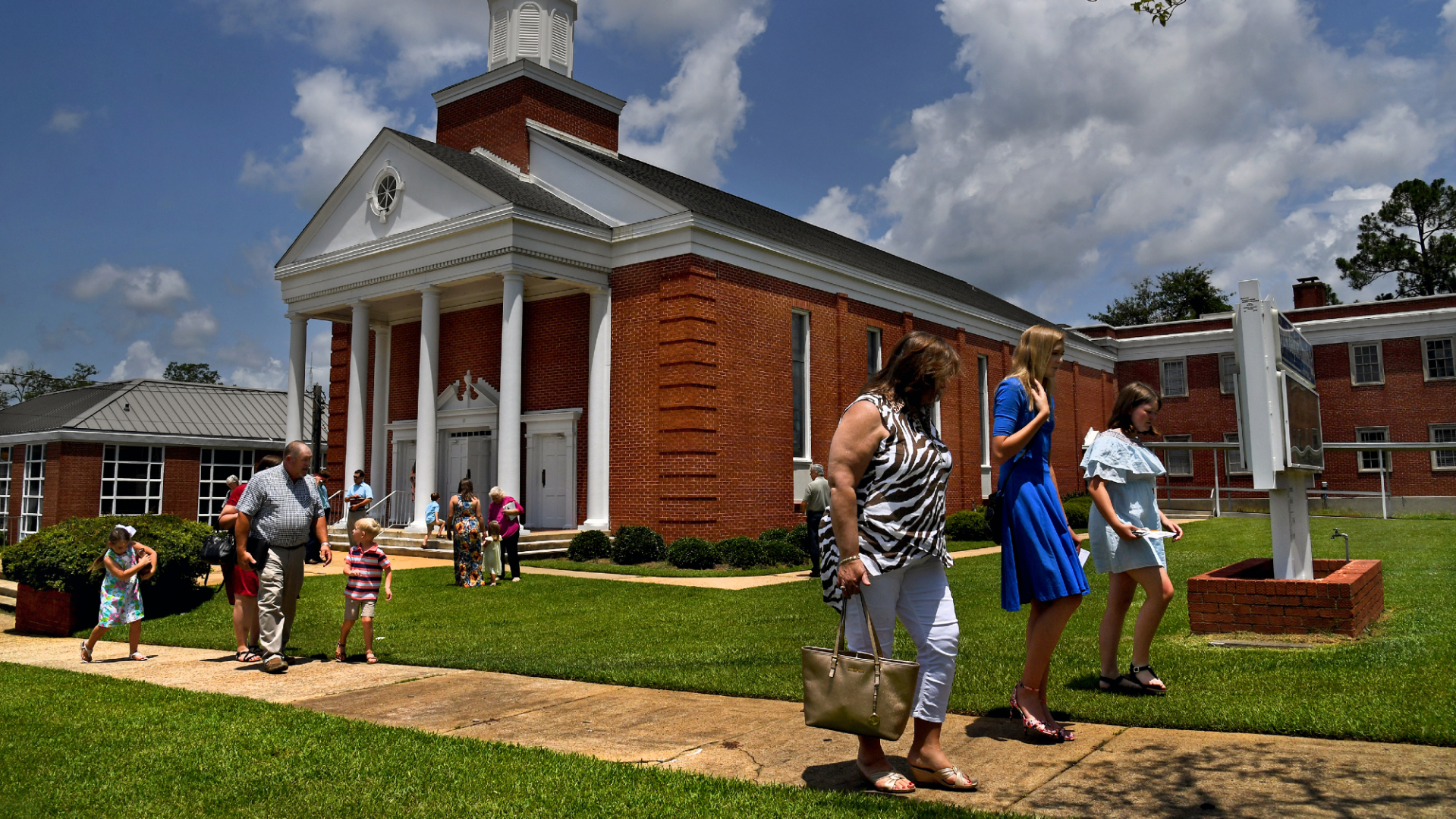
Evangelicals leaving a church service in Alabama
Christianity Today February 26, 2025
Michael S. Williamson/The Washington Post via Getty Images

There are about 78 million evangelicals in America, according to Pew Research Center’s massive new survey of the religious landscape released on Wednesday. Most are white, Republican, and say religion is very important to them.

But not all. 

The study—considered the most comprehensive look at religion in the United States, with more than 36,000 people filling out a 116-question survey in all 50 states—shows significant evangelical variety. Evangelicals are diverse: racially, politically, economically, and even in terms of religious practice.

Twenty-eight percent aren’t white, the Pew study shows. Twenty-four percent are Democrats or lean Democratic. On some issues, including government assistance for people in need and environmental regulation, an even larger percentage of evangelicals support the more liberal position. 

Seven percent say religion is not important to them. Only half of American evangelicals attend church on a weekly basis, according to the Pew survey. And nearly a quarter say they never or almost never attend religious services. That’s more than 17 million evangelicals who don’t go to church.

Are they really evangelicals?

The term has long provoked arguments among social scientists, historians, and laypeople. It first appeared in English as an adjective that meant “of the gospel.” In Reformation England, for example, people talked about evangelical books of the Bible—Matthew, Mark, Luke, and John—and nonevangelical books of the Bible, just as there are prophetic and nonprophetic books. British Protestants also sang evangelical hymns, but they didn’t think all their hymns were evangelical. Some were about the gospel; others were about baptism, God’s glory, or thanksgiving. 

The first group of people to claim evangelical as a noun was the Evangelical Voluntary Church Association in England in the 1830s. It fought for the separation of church and state. A subsequent group, the Evangelical Alliance, organized in the following decade to fight for the rights of free churches—groups called “nonconformist,” “dissenting,” and then “evangelical.”

In the US, 100 years later, the evangelist Billy Graham started using the word as a term for people who supported his ministry. Evangelical was so broad it could include Baptists and Presbyterians but also Episcopalians and Wesleyans, and Dutch Reformed and Stone-Campbell groups, not to mention Lutherans, Pentecostals, Anabaptists, and Black churches.

Everyone kind of knew what it meant—something to do with the gospel—and no one had too strong of an association with the word.

Carl F. H. Henry, the first editor in chief of Christianity Today, told historian George Marsden that he and Graham and other movement leaders, such as L. Nelson Bell and Harold J. Ockenga, liked the word evangelical because it was really familiar but also up for grabs. They used it when they founded the National Association of Evangelicals, Conferences for the Advancement of Evangelical Scholarship, the Billy Graham Evangelistic Association, Fuller Seminary, and Christianity Today, building a movement with the name.

Pollsters started asking about evangelicalism in the 1970s when presidential candidate Jimmy Carter said he was “born again” and political observers wondered if evangelicalism might be a “built-in power base” for the Democrats. Gallup did a survey and found that about 50 million Americans could be considered evangelical. The survey was written up in Newsweek, which put the words “Born Again!” on the cover, and Time, which declared 1976 the “Year of the Evangelical.”

According to sociologist Robert Wuthnow, however, many Americans only knew of the term because of polling, and many who said, “Yes, I am an evangelical,” actually only thought of themselves that way when it was asked in an election. Evangelical, for a lot of Americans, was associated more with politics than anything else.

Some historians, such as Matthew Avery Sutton, have argued evangelical really is just political. Others, notably David Bebbington and Thomas Kidd, have argued for a strictly theological definition.

Pew takes a different approach, which its researchers believe captures the more complicated reality of religion in America.

First, they sort Protestant denominations into three groups: evangelical, mainline, and Black, based on historical associations. So people who tell Pew they are Southern Baptist are counted as evangelical, people who say “American Baptists” are counted as mainline, and people who say “National Baptist” are counted as Black church. 

But a large number of people don’t identify with particular denominations. Seven percent of Americans say they’re nondenominational. And some of the more than 36,000 who answered the questions on the recent survey told Pew they were “just Baptist,” “just Methodist,” or “just Christian.” Others gave answers including home church, independent Anglican, Calvinist, exvangelical, and Sabbath keeper. A number of Americans just gave researchers the names and locations of their specific congregations. 

Pew asked those people if they considered themselves “born-again or evangelical Christians” and then sorted them based on their self-identification.

Not all scholars, not all evangelicals, and definitely not all evangelical scholars are happy with this. But Pew’s method produces an interesting picture with a lot of robust detail. Nineteen percent of evangelicals, for example, are first- or second-generation immigrants. And 55 percent think the growing population of immigrants in America over the last half century has made the country worse.

Most evangelicals identify themselves as conservatives and support conservative positions, like limitations on immigration. Sixty-five percent say abortion should be illegal in all or most cases. Sixty-one percent say homosexuality should be socially discouraged. Forty-two percent would like to see cuts to government welfare programs.

But that’s not the whole story. Thirty percent of evangelicals identify as moderates. A few of the moderates—about 7 percent—lean Republican, the study shows. But most do not. About 7 percent remain independent and roughly 18 million evangelicals say they support Democrats. Thirty-one percent would like to see the government increase assistance for poor people, and about 44 percent evangelicals—more 34 million people—support stricter environmental regulations.

The Pew study shows notable regional variation among these Christians. More than half of evangelicals live in the South. Less than 10 percent are in the Northeast. Twenty-one percent live between the Great Lakes and the Rocky Mountains, and another 19 percent live between the Rocky Mountains and the Pacific Ocean.

Evangelicals are getting more educated, the study shows. About 60 percent have attended college. Postgraduate degrees have increased by about 5 points over the past decade, so now there are more than 9 million evangelicals with a master’s degree or higher.

Evangelicals skew a bit older than the general population. The average American is 38 or 39. Pew’s survey shows 55 percent of evangelicals are over 50, while millennials between 30 and 49 account for just under a third, and 14 percent are between the ages of 18 and 29.

Pew also found a variety of religious beliefs and practices that might seem surprising. Fifteen percent of evangelicals don’t consider themselves religious, and nine percent say they’re not spiritual. 

Most of those people still pray, however, and the majority say the Bible is important to them. Seventy-two percent of evangelicals pray daily, and another 21 percent weekly or monthly. Ninety-five percent say Scripture is relevant to them personally—but only about half read the Bible every week. 

More than a quarter of evangelicals told Pew they seldom or never read the Bible. 

Seventy-five percent of evangelicals feel a sense of spiritual peace and well-being on a monthly basis. For many, however, that is not an experience they have with other Christians. Sixty percent of evangelicals attend church on a monthly basis, and 40 percent attend prayer meetings, Bible studies, Sunday school, or small groups once a month or more. That’s a lot of evangelicals not worshiping with other evangelicals.

According to Pew, however, evangelicals who never connect with other evangelicals are still evangelicals. In the comprehensive survey, 23 percent of the country gets counted as part of this religious movement. But Pew’s report also shows that evangelical can mean a lot of different things and look a lot of different ways.

News

Pew: America Is Spiritual but Not Religious

Researchers expect further declines in Christianity, but some young-adult ministers see revival brewing.

Lone woman in a crowd raises her hand.
Christianity Today February 26, 2025
Chip Somodevilla/Getty Images

Tre’ Giles heard a lot about different spiritualities from young people in Portland, Oregon. The Bridgetown Church minister met teenagers and young adults who had faith in astrology, of course, but also crystals, aliens, Native American ideas about nature, paganism, pantheism, assorted wellness-focused mysticisms, and even, he told Christianity Today, a floating pizza in the sky.

Often they believed all of it, all at once. 

“It’s playful, and it’s kind of like a charcuterie board,” said Giles, who left Bridgetown last fall and now serves as national director of campus engagement for Alpha USA. “You can sample it. You can taste it. But you don’t have to have a whole meal of it.”

Eclectic and esoteric spirituality is not just a “keep Portland weird” thing, either. A massive study of the American religious landscape from Pew Research Center, released today, found that few 18- to 29-year-olds consider themselves religious. A majority—54 percent—never attend religious services of any kind, and another 21 percent say they only attend once or twice a year. 

Most young adults, however, say that they are spiritual. More than 70 percent of people born between 2000 and 2006 believe there is something beyond the natural world, Pew’s survey found. Eighty-two percent believe people have souls, 76 percent believe in God or a universal spirit, and nearly 60 percent report feeling a supernatural presence several times a year or more.

Researchers collected data from more than 36,000 people for this study, with representative samples from all 50 states and Washington, DC. The extensive survey attempts to offer “authoritative estimates of the U.S. population’s religious composition, beliefs and practices,” according to Pew, and it is widely seen as the most comprehensive study of American religion today.

Two previous Pew studies charted the sharp decline of Christianity in America. The number of people identifying as Christian dropped by about 5 million over seven years, while the percentage saying they had no religious affiliation, the group that sociologists call “nones,” rose to include nearly one-quarter of all adults in America. 

The new study confirms the country has become markedly less religious in the 21st century. About a third of people say religion is not as important to them as it was to their parents. Only 5 percent say they go to church more now than they did when they were children. Nearly half of people say they never attend religious services, not even on Christmas or Easter.

The study also found that roughly six people have left Christianity for every one who has joined. More have abandoned Catholicism than Protestantism, but even Protestants in America have seen nearly twice as many leave the faith as join it, according to Pew. Less than half the people raised in Christian homes in the 1980s, 1990s, and 2000s still consider themselves believers.

That doesn’t appear to be changing as people get older, either. Seventy-three percent of Americans report that they’ve not become more religious as they’ve aged. 

The decline of Christianity has slowed, though—and maybe even leveled off, according to the study released Wednesday. The percentage of Protestants in America hasn’t gone down significantly since 2019, and Catholic numbers have remained steady since 2014. The percentage of people who pray every day (44%) and go to church on a regular basis (33%) has also remained relatively stable. The nones seem to have plateaued at about 29 percent of the population.

But Pew researchers don’t expect this to last long. They project that Christianity in America will start to decline again soon and probably go quite rapidly

“Older, highly religious, heavily Christian generations are passing away,” the study reports. “The younger generations succeeding them are much less religious, with smaller percentages of Christians.”

Seventy-eight percent of Americans over the age of 65 are Christian, according to Pew. And nearly three-quarters of people that age say that their religion is important to them.

Most Americans between the ages of 18 and 29, by contrast, do not identify as Christians.

Only 8 out of every 100 young adults are Baptist. Another 6 are nondenominational. Another 2, Pentecostal and 14 are Catholic. Less than 1 percent of young adults identify as Reformed, Anabaptist, or Anglican, respectively. One out of 100 are Eastern Orthodox. Slightly more than that are Methodist, if you count 18- to 29-year-olds in the United Methodist Church, the Global Methodist Church, the three historically Black Methodist churches, the Free Methodist Church, and all the holiness denominations combined.

Roughly half of young adults who are religious, further, tell Pew their religion is not significant to them personally.

The largest “religious” group of young people is actually those who say they don’t have a religious identity. Forty-four percent are nones. 

But this isn’t the future that New Atheists dreamed of, either. Americans remain quite spiritual, and many believe in the supernatural. 

Seventy-nine percent say there is a spiritual reality beyond nature, and 61 percent say they sense the presence of something supernatural at least several times per year. Eighty-six percent believe people have spirits, and 70 percent say they think there’s an afterlife—either heaven, hell, or both. 

Nearly three-quarters of Americans say they’ve felt spiritual peace in the last year. More than 60 percent report thinking about God a lot.

Penny Edgell, a sociologist at the University of Minnesota who consulted with Pew on the study, said that in a time of division and polarization, the consensus on spirituality is remarkable. 

“Religious affiliation is now just optional; it’s not taken for granted,” Edgell said. “But spirituality is not declining. … I think it’s a story of spirituality and diffusion, spirituality becoming diffuse outside of religious institutions.”

The new Pew study also found that spirituality is increasing as people age. More than 4o percent say they’ve gotten more spiritual as they’ve grown older, compared to just 11 percent who say they’ve become less spiritual. The people who’ve gotten more spiritual report feeling a strong sense of gratitude or thankfulness with increased frequency. They find themselves praying more often, and say that they regularly experience “the presence of something from beyond this world.”

Researchers don’t expect spirituality to drop off dramatically in the coming years, because the study found that younger people are quite spiritual too. According to Pew, most people born between 2000 and 2006 believe in heaven (61%) and hell (54%). Sixty-six percent report regular feelings of deep wonder at the universe. Fifty-six percent pray on a regular basis.

For Christians like Giles, who want to engage young people in deeper conversations about God and the gospel, that’s a positive sign.

“Prayer is so easy to talk about,” Giles told CT. “Everyone I talked to in Portland was open to it. Maybe they had different ideas or names for it, maybe they believed in meditation, but they’re exploring and curious about how, like, our bodies might connect to the earth, and beauty, and something beyond what you can just see and hear.”

The Alpha USA minister said young people across the country seem increasingly open to spiritual questions and open to hearing that the answer to their longings can be found in Jesus.

“I believe in the bone of my bones, like deep inside of my body, that God is doing something big,” Giles said, pointing to the Asbury University outpouring as one example. “There’s this expectation, and there’s this hunger. Everyone has something rumbling.”

Keithen Schwahn, the young-adult pastor at Church of the City in New York City, has the same feeling. He’s seen his church’s teenage discipleship group grow from about 5 young people to more than 100 in a few years. College students are starting prayer groups and Bible studies on their own at schools like Pace University and New York University and are seeing them blossom and grow.

The decline of Christianity can feel palpable in the city, Schwahn told CT, like they’re living on the front end of an irreversible trend. But then there’s this other thing that seems to be happening. Young people are interested in all kinds of spiritualities and discover, in their exploration, the very Spirit bearing witness with their spirits that they are children of God and joint heirs with Christ (Rom. 8:16–17).

“The moment when it feels like the church is in decline is the kind of moment where God could grab a new apostle Paul,” Schwahn said. “I’ve been seeing God raise up apostles—the least likely—who are on the other side of surrender to Jesus.”

Ideas

The Broken Promise of ‘40 Acres and a Mule’

CT Staff

In dealing with its Black citizens, America has acted not with the faithfulness of God but with the deceit of Laban.

A photo that is ripped in half of a man plowing his field with a mule
Christianity Today February 26, 2025
Illustration by Christianity Today / Source Images: New York Public Library Archives, Getty

When you stand in the southeast room of the Green-Meldrim House, a Gothic Revival mansion in Savannah, Georgia, the discomfort you may feel is not paranormal.

Though located in the self-proclaimed “most haunted” city in America, the unease of this house is about history, not ghost stories. Here, on January 12, 1865, 20 Black pastors met with Union general Tecumseh Sherman and Secretary of War Edwin M. Stanton to discuss Black Americans’ new life of emancipation with the Confederacy nearly defeated. 

What came from that discussion was Special Field Order No. 15, commonly known as “40 acres and a mule.” Sherman, Stanton, and the federal government promised newly freed people the right to lease, then eventually buy, some 400,000 acres of confiscated land along the Atlantic coast, stretching from South Carolina down to Florida.

Abolitionists of all backgrounds and Radical Republicans had advocated for this kind of land redistribution for many years, but it was Black pastor Garrison Frazier who told Sherman and Stanton that the way freed people could “best take care of ourselves [was] to have land.”

“We want to be placed on land until we are able to buy it and make it our own,” Frazier said. And after days of deliberation, the order was ratified. 

But just a year later, when Andrew Johnson assumed the presidency following Abraham Lincoln’s assassination, the justice of Special Field Order No. 15 was thwarted. Johnson vetoed legislation intended to give real heft to the Freedmen’s Bureau. He restored to its prior owners much of the property confiscated from the tyrants of the Confederacy instead of leasing or selling it to freed people who had worked the land.

As I stood in the Green-Meldrim House earlier this year, in the temporary quarters of Sherman himself, quieted by this sinister tale, I began to feel the haunting of history. It was a too-familiar feeling of broken promises.

In Scripture, promises are a fortification of fellowship, provision, and flourishing. God repeatedly makes and fulfills promises to his people. When Yahweh promised Canaan to the descendants of Abraham, he wasn’t solely providing economic and social autonomy. Yahweh set his people free so they could worship him (Ex. 7:16). This was a dignifying promise that provided land, liberty, and legacy.

The Bible has much to say about broken promises, too. Joshua honored a covenant with the Gibeonites, even though it was established under deception (Josh. 9:16–20). Four centuries later, when Israel failed to uphold that promise, God sent a famine as judgment (2 Sam. 21). If God holds entire nations accountable for the promises of their ancestors, do we imagine that this nation—in which so many claim the name of Christ—would be exempt?

Those 20 pastors at the Green-Meldrim House were seeking much the same as what God promised Israel: to have land and liberty to worship the God who brought them out of Egypt. The promise of land in Special Field Order No.15 was no trivial mea culpa for slavery. It almost looked like a covenant, reflecting biblical principles of shalom and reconciliation. 

Then that promise was broken, and no one should be surprised. This country—of freedom and liberty—has a habit of plagiarizing biblical principles even as it violates them. Black Americans in particular have spent generations and generations in hope of repair. Instead, many promises have been revoked, even as we’ve watched America keep its promises—even grant reparations—to other people groups and noncitizens. 

President Ronald Reagan signed a bill to pay $1.6 billion in internment reparations to Japanese Americans for injustices during World War II. Decades later, in connection to that same war, President Barack Obama authorized $34 million in compensation to citizens of Guam for violent acts and occupation by Japanese forces. Compensation has been paid to Filipino war veterans, families victimized by 9/11, and even slaveowners who freed slaves during the Civil War

Our country has not accorded the same care to its Black citizens—not because that project is impractical but because our government is unprincipled. It has acted not with the faithfulness of God but with the deceit of Laban, taking our labor without delivering the promised reward (Gen. 29:25).

That history has tangible consequences: This type of treatment atrophies economic empowerment. Many politicians blame Black poverty on government dependency, but they miss or ignore the effects of America’s broken promises to Black people—of which “40 acres and a mule” is just one.

Those betrayals are often explained away as a matter of “fairness” or a call to “personal responsibility.” Johnson opposed Field Order No.15 because he believed it advantaged Black people over white. This has been the rhetoric for close to two centuries, including within the American church. Too often, Black Americans facing hardship are deemed lazy or pathological, while other Americans facing the same hardship are met with empathy and understanding of the systemic factors involved.

But our hardships—and specifically Black poverty—have systemic sources, too. This is a theological as much as a historical truth. As theologian Christopher J. H. Wright has argued:

Oppression is by far the major recognized cause of poverty. The Old Testament asserts, as all modern analyses demonstrate, that only a tiny fraction of poverty is “accidental.” Mostly, people are made poor by the actions of others—directly or indirectly. Poverty is caused. And the primary cause is the exploitation of others by those whose own selfish interests are served by keeping others poor.

The evangelical work of many Bible believers today is twofold: convincing the world of the reality and nature of personal sin and discipling fellow Christians toward an awareness of the systemic results of that personal sin. On some matters, like abortion bans, those Christians easily understand the need for systemic change. But when it comes to systemic racism and its economic effects, too often they are unable or unwilling to see how sinful individuals contribute to sinful social systems. I share Leo Tolstoy’s lament that “even the strongest current of water cannot add a drop to a cup which is already full.” 

I have little faith that our government will ever truly repent of its atrocities toward Black Americans by making restitution. But I pray Christians will practice mundane acts of equity and repair, through personal service and communal practices. Let us keep our covenants with each other (Matt. 5:37) and remind our elected leaders, who take office with hands placed on the Bible, to do likewise: “Do not break your oath, but fulfill to the Lord the vows you have made” (Matt. 5:33). Let us sing of Zaccheaus, who modeled a towering repentance that was personal and systemic (Luke 19:1–10).

All things broken are called to be repaired: cognitive and corporeal, local and global. And when the government abdicates responsibility for the sake of expediency, we must practice endurance. My Christian ancestors had endurance in the most horrendous of circumstances, yet they sang. And now they worship in spirit and truth, with true freedom. 

I don’t pity those 20 pastors who met with General Sherman, nor the many saints they served, who now experience a more glorious acreage than any 40 acres of the South, lit by the radiance of the Son. I pity the living who continue to endure the haunting of broken promises.

Sho Baraka is the editorial director of Big Tent at Christianity Today.

Books
Review

A Christian Worldview Is a Work in Progress, Not a Finished Product

A new book seeks to reframe and refresh a common model of faith-based education.

A pair of glasses with construction signs on the lenses.
Christianity Today February 26, 2025
Illustration by Elizabeth Kaye / Source Images: Getty, Unsplash

I teach at a Christian university founded some 70 years ago by Dutch immigrants. Although it has become more diverse in recent years, the student body and faculty still draw significantly from Dutch enclaves throughout North America.

It’s unsurprising, then, that the legacy of Dutch thinker Abraham Kuyper still looms large. Beyond the buildings and the honors program that bear his name, Kuyper’s insistence that a Christian worldview should account for “every square inch” of reality is repeated often enough to make students roll their eyes.

At the center of campus stands a clock tower with the “founders’ vision” prominently displayed. It states a commitment to a distinctively Christian education, one that goes beyond “devotional exercises [being] appended to the ordinary work of the college.” Under this vision, “all of the students’ intellectual, emotional, and imaginative activities [are] permeated with the spirit and teaching of Christianity.” As one professor framed the school’s philosophy, faith is not just integrated but integral; not frosting spread on top but the yeast that permeates the whole.

Plenty of Christian institutions have similar aspirations, even if they articulate them differently. Indeed, the commitment to “Christian worldview education” has emerged as a common thread connecting many evangelical educators and institutions. Often, the concept is treated as a commodity to attract students. (“At our school, you will get a Christian worldview—or your money back!”) But is a Christian worldview something that can be so easily downloaded and deployed?

To this question, Simon Kennedy answers with a resounding no. In his provocatively titled book Against Worldview: Reimagining Christian Formation as Growth in Wisdom, Kennedy argues that “worldview” is a worthy goal but a poor way to go about Christian education. He writes to oppose worldview as an organizing principle, a “combat concept,” or a means or method. Thus, he seeks to reframe and refresh the ideal of a Christian worldview with the biblical category of wisdom. His central argument: Christian educators must teach wisdom to build worldview rather than the other way around.


Kennedy, a research fellow at the University of Queensland in Australia, starts by sketching the history of “worldview” from the 19th century onward, with special attention to the Dutch stream mentioned above. He argues that the term was developed as a “combat concept” to demonstrate Christian distinctiveness during times of cultural crisis. As such, worldview excels at drawing the battle lines, outlining boundary markers between Christians and religious others.

But since most definitions of worldview have “very little content and almost no philosophical precision,” the concept begins to feel thin when pressed into the classroom environment. Isn’t good teaching good teaching, regardless of who does it? When a professor is writing a syllabus or teaching a class, how does she know she is teaching the course from a Christian worldview perspective?

I once received a course review from a student who complained that my class (on beauty and the arts) had quoted Kuyper, John Calvin, and Calvin Seerveld (a 20th-century Christian aesthetic philosopher) more than Holy Scripture. A review of the semester’s slides confirmed that this was not the case, but it still raised the question that Kennedy himself asks: “If you didn’t quote the Bible in the class, does it mean you failed to teach from a Christian worldview perspective?”

On the other hand, I also had a student who expressed frustration at the unfair expectations that believing artists often feel. To dramatize her point, she created a piece of pottery that still sits on my desk: a ceramic bowl with a cross jammed awkwardly through the side. Is this what it means, she seemed to ask, to make art from a “Christian worldview perspective”?

Anyone who takes worldview seriously will answer both questions the same way: Of course not. Indeed, speaking as an evangelical adopted by the Dutch Reformed, I know that some of my colleagues think that worldview went bad when evangelicals got ahold of it. They believe that the Kuyperian concept of worldview requires the scaffolding of other Reformed commitments: common grace, “sphere sovereignty,” a rejection of sacred-versus-secular dualism, a cosmic account of redemption. When disconnected from these commitments, the argument goes, worldview becomes a blunt instrument used primarily to put things (and people) in their place.

My Dutch friends have a point, even if evangelicals have resources for avoiding this outcome. But Kennedy does not let the Kuyperian stream off the hook, finding Kuyper himself guilty of an overly deductive approach. In other words, Kuyper starts with the Christian worldview as something already complete, a finished system that needs to be applied to every area of life. In contrast to Kuyper, Kennedy commends an inductive approach in which worldview is the goal rather than the method. It is something we approximate only at the end of a painstaking and collaborative process, not something we can cleanly access from the beginning.

For support, Kennedy turns to two other Dutch theologians, Herman Bavinck and his nephew J. H. Bavinck. Driven by the conviction that created reality is knowable and organically connected, the Bavincks manifest a willingness to start anywhere in creation and to put things together piece by piece. This inductive reorientation means that education is less a matter of deducing details that fit a comprehensive picture of reality and more a matter of discerning relationships that accord with the wisdom of God.

(As an academic aside, I’m not sure that it is appropriate to pit Kuyper against the Bavincks in this way. For all his faults, Kuyper railed against uniformity and insisted on loving attention as the way to true understanding.)

But if worldview is the goal, then wisdom is the way. The biblical concept of wisdom connects the human search for understanding to the structure of created reality, finding its ultimate coherence in Jesus Christ, the wisdom of God (1 Cor. 1:24). The quest for wisdom means that Christian education is about helping students piece bits of wisdom together, building toward a Christian worldview rather than on top of it.

Kennedy conveys the two approaches in contrasting images. A deductive approach to worldview is more akin to “painting by numbers.” It treats Christian education as an exercise in providing all the “correct answers” and “applying predetermined solutions.” Since we already possess a Christian worldview, we seek to fit everything into existing theological schemata like Creation-Fall-Redemption-Consummation. But this foreign framework quickly undermines “the intellectual integrity of the educational process,” especially for disciplines like civics or biology where such a schema may feel forced.

Unlike the “paint by numbers” method, Kennedy’s inductive approach reimagines education as the laying of tesserae on a grand mosaic. Educators and their students work as teams who assist the mosaicist by preparing surfaces, cutting the pieces, and laying them in place. The work is vital, but only the master planner can see the whole. While “we might have some sense of the overall plan of the Christian worldview,” writes Kennedy, “it is only God who possesses the entire, perfect view of reality. It is our job to try and ascertain the truth about that reality in whatever limited manner we can.”

In this chastened image, there is not one Christian worldview; there are as many faithful Christian worldviews as there are faithful Christians, and “a person who has imbibed, internalized, and acts on Christian wisdom, wisdom that rests upon truth about self, God, and the world, has a Christian worldview.”


Kennedy hopes that focusing on wisdom will liberate students from seeking worldview compatibility in a superficial way, dismissing anything that does not match what they already believe. More significantly, he writes to liberate educators from the burden of demonstrating worldview compatibility in their teaching: “Teach what you know in a way that honors God and honors your students. You have permission (from me, at least!) to stop trying to force Christianity into every class with Bible verses, theological frameworks, and apologetics. … Your main job is to impart wisdom by teaching truth and teaching well, whatever form that comes in.”

Although Kennedy is more interested in giving permission than prescriptions, he does offer some salient counsel for Christian institutions: “a greater focus on doctrine and catechesis, a prioritizing of great Christian literature, an embracing of rich great books programs, a healthy regard for non-Christian sources and ideas, and an abandonment of bureaucratic markers of ‘Christianness’ like worldview related learning outcomes.”

I can give a hearty amen to all the above. But I also wonder whether most Christian institutions would claim that they are already doing these things. And given the last prescription, I wonder whether Kennedy’s complaint lies less with the concept of worldview and more with “bureaucratic markers” that give shape to the goals of education in the modern world. Although these markers regulate quality, they also tend toward uniformity, which Kuyper identified as the “curse of modern life.”

Unless this impulse is tempered by our humane and theological commitments, it is no surprise when “Christian worldview” gets flattened into a bureaucratic checklist. But when the educational task surrenders to the demand for uniformity, it is questionable whether any of our concepts—including “wisdom”—can survive intact.

I also wonder whether, in Kennedy’s words, “reducing the normative edge” of Christian teaching to something like “teaching truth and teaching well” is sufficient for serious Christian institutions. Although such a reduction may elicit sighs of relief for those just starting out, “teaching truth” remains an incredibly tall order. How do we testify to truth in all its manifold splendor, if all things cohere in Christ (Col. 1:17)? Yes, the Bible celebrates wisdom wherever it is found. But the biblical writers also make clear that there are earthly and heavenly forms of wisdom (James 3:13–18), that “the fear of the Lord is the beginning of wisdom” (Prov. 9:10), and that all treasures of wisdom are hidden in Christ (Col. 2:3).

These claims evoke the whole story of God’s self-revelation, from Creation to Incarnation to consummation. And although there are certainly superficial and suffocating ways of imposing this story on academic disciplines, it cannot be avoided in any domain. What does God want for this part of created reality? How have things developed in both faithful and fallen directions? In light of God’s revelation, how shall we live within this sphere of life? Surely, a core part of academic faithfulness is answering these questions through the biblical story itself, even if it’s possible to do so clumsily. Rejecting “worldview,” in this sense, may lead to far worse failures of imagination.

Kennedy acknowledges that “teaching and instruction always start with some deductive categories.” Indeed, his insistence on “a greater focus on doctrine and catechesis” strikes me as a fundamentally deductive approach. And deduction is often preferable for both developmental and disciplinary reasons (especially for beginners). What, then, is the right mix of deduction and induction? What is the relationship between giving students a stable core and confronting them with views that may challenge their faith? This, too, requires wisdom. Perhaps this is Kennedy’s point.

In any case, Kennedy forces the question about what it really takes to cultivate a Christian worldview. Our aspirations are easier articulated than accomplished, and despite our failures, those who care deeply about worldview should never stop trying, by God’s grace, to get it right.

Justin Ariel Bailey is a professor of theology at Dordt University. He is the author of Interpreting Your World: Five Lenses for Engaging Theology and Culture.

News

When Down Under Churches Listen to Refugees

Some Australian Christians welcome the stranger as the country’s foreign-born population grows to record levels.

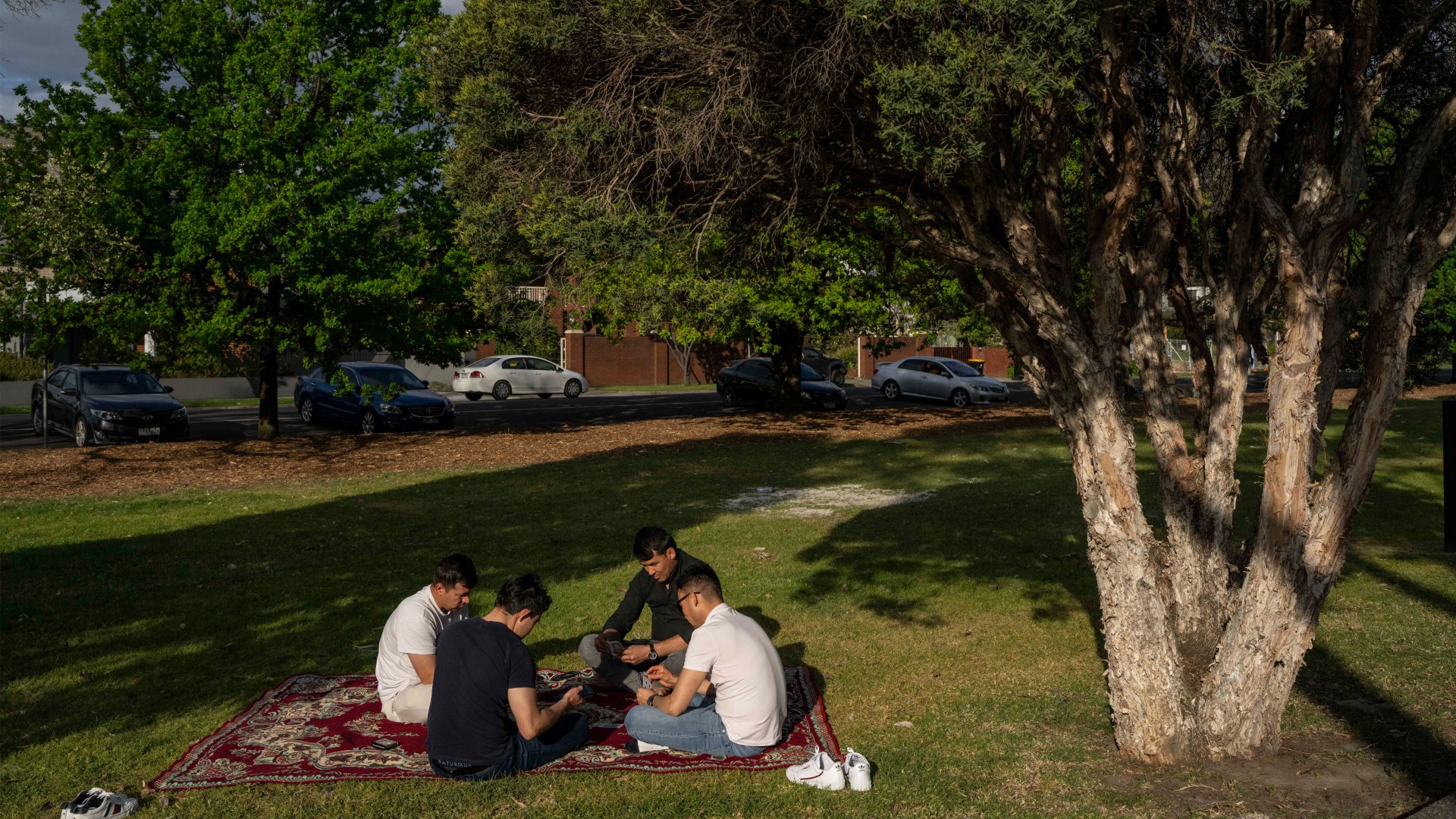
A group of men have a picnic at Dandenong park, Melbourne, on a Sunday afternoon.
Christianity Today February 26, 2025
The Washington Post / Contributor / Getty

On a hot February day in Australia, Tahira Sadaat, 26, and her mother, Najeeba, 53, waited in their minivan until their appointment with a community-care worker at 3216 Connect, a thrift store and community-services hub southwest of Melbourne. Even in the heat, Tahira and her mother wore dark-colored hijabs and long-sleeved dresses over loose pants.

Tahira and her mother know how to wait. They waited in Pakistan for 18 years, hoping to return home to Afghanistan. But war and family disagreements over land kept them away. When Pakistan’s government ordered them to leave in 2014, Tahira’s father, her twin brother, and an older brother went back to Afghanistan to see if it was safe for Najeeba and her eight other children to return. They haven’t been heard from since. 

Najeeba applied to the UN for resettlement, and Australia agreed to allow her family in. But with refugee status, her family has few resources and minimal government assistance. Her family depends on the kindness of strangers to navigate the Australian language, online forms, and banks. Many of those strangers are Christians with no agenda except to obey God’s mandate to love the stranger and sojourner in word and in deed.

In 2023, foreign-born residents in Australia surpassed 30 percent for the first time since 1893, and the country will welcome its one millionth post–World War II refugee later this year.

Alexandra Mikelsons, the community-care worker Tahira and her mother waited for in their minivan, keeps Bibles in Farsi on her desk. Clients look at them and say, “That’s my language,” and open them up.

“It’s really important for people to be able to associate us and the care that they’re given, the smile they get, or a sympathetic ear with Jesus and with who God is,” Mikelsons said. 

A volunteer from a local Lutheran church, Michelle Filipovic, helped the Sadaats find a house and understand and fill out papers for government funding. After Filipovic moved away, Mikelsons and another church member helped the Sadaats fill out the paperwork—three times—for citizenship. In September 2023, the two stood with Tahira at her ceremony to become an Australian citizen.

Not all Christians are so helpful. Hugh Mackay, a secular Australian social researcher, said the federal refugee policies of some professing Christian leaders are a stain on Australia’s national character. One policy some Christians support and Mackay condemns: turning back every boat of asylum seekers or transporting them to the desolate island of Nauru.

“Talk about mental or spiritual gymnastics, trying to justify something that runs completely counter to the spirit of Christianity, completely contradicts the message embedded in the parable of the Good Samaritan,” Mackay said. 

He explained how desperation drives asylum seekers and refugees to take dangerous risks. Smugglers in boats carry Iranians, Chinese, Somalis, and Pakistanis from Indonesia. Almost 90 percent of those arriving in boats are legitimate refugees, while less than half of refugee status–seeking people arriving by airplane are actual refugees, the Refugee Council of Australia writes.

Yet the Australian government refuses to welcome a single one of the maritime asylum seekers. Instead, Mackay has found that “church groups often do the on-the-ground activism finding housing, clothing, and access to work.”

Church planter Sam Lim was looking for a way for his 80-member Flow Church to serve the Melbourne area.

“We’re pretty representative of the suburb we’re in. I wouldn’t be surprised if half of the people in our church were born overseas. For a lot of people, the memory of what it’s like to be a foreigner is still very fresh,” Lim said.

Nearly a quarter of Australia’s churches are considered multiethnic, where at least 20 percent of congregants come from ethnicities different from the majority population. 

Lim’s mostly millennial-aged church answered the call to take part in the government’s new Community Refugee Integration and Settlement Program. In preparation for being matched with a refugee family still overseas, referred by the UN, Flow Church members raised $20,000. Then they invited friends and relatives to a jazz concert with an educational aspect about the needs of asylum seekers and refugees. Concertgoers raised another $5,000. 

Lim worried that church donations would decrease as people shifted their giving to resettling the refugee family, “but our tithes and offerings actually went up,” he said. “There’s an appetite from within our churches to give if they feel like the church is providing leadership to make a difference in this world.”

The church has since been matched with a family of Afghans living in Iran, who hope to touch ground in Australia in April.

The needs are large. As of June 2024, 122.6 million people worldwide were forcibly displaced—double the number from ten years earlier. Nearly 8 million of the displaced were seeking asylum in other countries.

Since July 2013, though, Australia’s government has declared that asylum seekers who arrive by boat will never resettle in Australia. That same year, the government began granting refugee visas to just over 1,000 people a year who arrived by airplane while refusing visas to more than 100,000.

Australia welcomes a limited number of international students and skilled workers, but even the 446,000 immigrants who entered by airplane with visa in hand last year get blamed for infrastructure problems that existed before they arrived.

Researcher Mackay said, “Politicians know that they are in a more secure position if the population is scared of something—if you can talk about border protection as though we are under threat from hordes of boat people, asylum seekers, illegal immigrants [and as though] all this talk would have an effect on our jobs or our housing.”

To be continued Thursday.

Amy Lewis is a freelance journalist who lives in Geelong, Australia.

Ideas

The Truth of a Love Supreme

Contributor

Our politics are bitter and retributive. In the Christians of the Civil Rights Movement, we have a model of a better way.

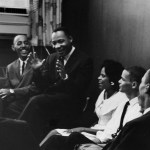
Rev. Dr. Martin Luther King Jr. talking to a group of student sit-in organizers during a strategy meeting to end lunch counter segregation in Atlanta, Georgia.

Rev. Dr. Martin Luther King Jr. talking to a group of student sit-in organizers during a strategy meeting to end lunch counter segregation in Atlanta, Georgia.

Christianity Today February 25, 2025
Don Uhrbrock / Contributor / Getty / Edits by CT

Legendary jazz saxophonist John Coltrane called his album A Love Supreme an offering to God. The four-suite musical masterpiece was a spiritual declaration, he explained in the liner notes, signifying the marriage between his music and his faith in God. 

The Apostles’ Creed wasn’t Coltrane’s statement of faith. But he was raised in the church, and his artistic expression showed that influence alongside evidence of God’s common grace. A Love Supreme “mixes modern jazz with the ecstatic energy of the Black gospel,” said the late jazz enthusiast and cultural critic Greg Tate, and it was structured like a church service, moving from rising chants of worship, to a fiery sermon, to an instrumental interplay resembling a call and response between pulpit and pew, then to a sweet, forward-looking benediction. 

The album was recorded in 1964, the height of the Civil Rights Movement and the same year Martin Luther King Jr. won the Nobel Peace Prize. Listening to it now, it’s hard not to make that connection—and to notice that this movement was pursuing and living into a love supreme without Coltrane’s theological ambiguity. 

Civil Rights was a movement that lived out the truth of the Negro spirituals that activists sang, an unabashedly Christian endeavor in philosophy and practice alike. The love that Christians in the Civil Rights Movement sought to embody was not self-interested or limited to affirmation. It was a love they hadn’t received from this nation but one they knew to be necessary and real. They knew a love truly supreme was possible in Christ because the Bible said so. 

The Bible told them to love their enemies (Matt. 5:43–48), and they obeyed. That is the Christian love imperative. It’s possibly the most counterintuitive, otherworldly, and pride-shattering component of the gospel. 

In a sense, it’s not complicated, but it’s hard. What I mean is the concept isn’t astrophysics, but in practice we find it extraordinarily difficult. It runs counter to our broken psychological and emotional reflexes: Why in the world would I love my enemy? By definition, this is someone who is worthy of my contempt. This is someone who doesn’t have my best interest in mind.

But what Jesus did in the Sermon on the Mount was establish a deliberately indiscriminate love that is not conditioned upon shared identity, shared interests, or even peaceful cohabitation. This love extends to those who’ve done nothing to deserve it—in fact, to those who’ve done everything to make themselves ineligible for it. 

That includes racists in seats of power whose policies are explicitly or implicitly unfair and inequitable. It includes abortionists whose every swing and stroke of the scalpel undermines human dignity—and greedy financiers whose ambitions suppress wages and treat the existence of the poor like manipulable numbers in a prospectus. 

And not only them: us too. No one is below or outside the scope of this amazing grace, this supreme love.

Yet despite our universal need of it, perhaps no concept has been more often co-opted and butchered than the true meaning of love, even in the church. Conservatives often focus on a “tough love” that excuses them from social justice, empathy, and love for people like George Floyd. Progressives have made love into sentimentality and vain affirmation, which allows them to stay in good standing with their secular peers though it means rejecting the Christian sexual ethic. 

But Christian love isn’t self-righteous condemnation or the well-intentioned sanctifying of sin. It isn’t passive niceness, nor does it necessarily require agreement. It “always hopes” but also “always protects” (1 Cor. 13:7), which means it holds people accountable for wrongdoing. I can love my enemies and still believe they need to be loudly corrected, stripped of their authority, or even jailed. 

But I can’t love them and want them to be humiliated or punished out of proportion with their offenses. I can’t love them and want the worst for them. Even with enemies, love means self-sacrificially wanting the best for others. 

It could mean protesting MAGA policies while advocating for more hospitals in Trump-loving rural areas. It could mean exposing the lack of wisdom in Los Angeles’ criminal justice laws while working to help the city rebuild after its wildfires. 

Love may require advocating for those who might not do the same for you. This is the greatest love, a love supreme.

The Civil Rights Movement captured this ethic. While Coltrane was soulfully revolutionizing jazz, the Black church was composing their own paean to the love God requires of us. 

They dared to apply Jesus’ words in the public square, choosing to see their antagonists as ill, just as the Bible describes (Mark 2:17), not purely evil or irredeemable. “America was sick and it needed a doctor,” said activist Fannie Lou Hamer. And love was the only remedy. Understanding opponents of civil rights as sick was solidly biblical, and it opened the door to feeling compassion for them. We don’t hate people for being sick. We care for them and help them heal.

This perspective informed Civil Rights activists’ language, attitudes, and advocacy. Their political opponents weren’t abstractions but people. Their racism was wrong and had to be opposed in no uncertain terms, but their sickness was not stronger than the Good News. They were redeemable, and the Civil Rights activists knew it and acted accordingly. 

Civil Rights advocate Diane Nash has recounted a story about how a white restaurant manager who was initially against desegregation became an ally and persuaded other white businessmen to desegregate too. This never would have happened had activists treated him with contempt. And King never pulled punches, but he helped even many opponents want to live up to the explicitly Christian standard of love he so beautifully professed.

We are not always so committed to love in the political controversies of today. Americans both inside and outside the church cheer on the representatives who degrade and mock their opponents in the most performative and audacious ways. We’d rather vent than persuade or inspire, taking the quick gratification of bitterness over the hard work of negotiation and cooperation.

This may provide some fleeting pleasure of retribution, but it’s never fulfilling. It’s always empty and corrupting. We may try to justify our hideous attitudes by pointing to how our enemies wronged us first or worst, but there is no defense of malice under the gospel. Even if our cause is righteous, animosity and a taste for humiliation are themselves symptoms of the sickness of sin. 

Six decades after King and Coltrane, the Civil Rights Movement should remind us that our lovelessness is never defensible. It has no redemptive value. It’s a net negative in God’s economy, serving only to torture our hearts and sin against God and our enemies. It’s bad politics. But more importantly, it obstructs us from finding love supreme.

Justin Giboney is an ordained minister, an attorney, and the president of And Campaign, a Christian civic organization. He’s the author of the forthcoming book Don’t Let Nobody Turn You Around: How the Black Church’s Public Witness Leads Us out of the Culture War.

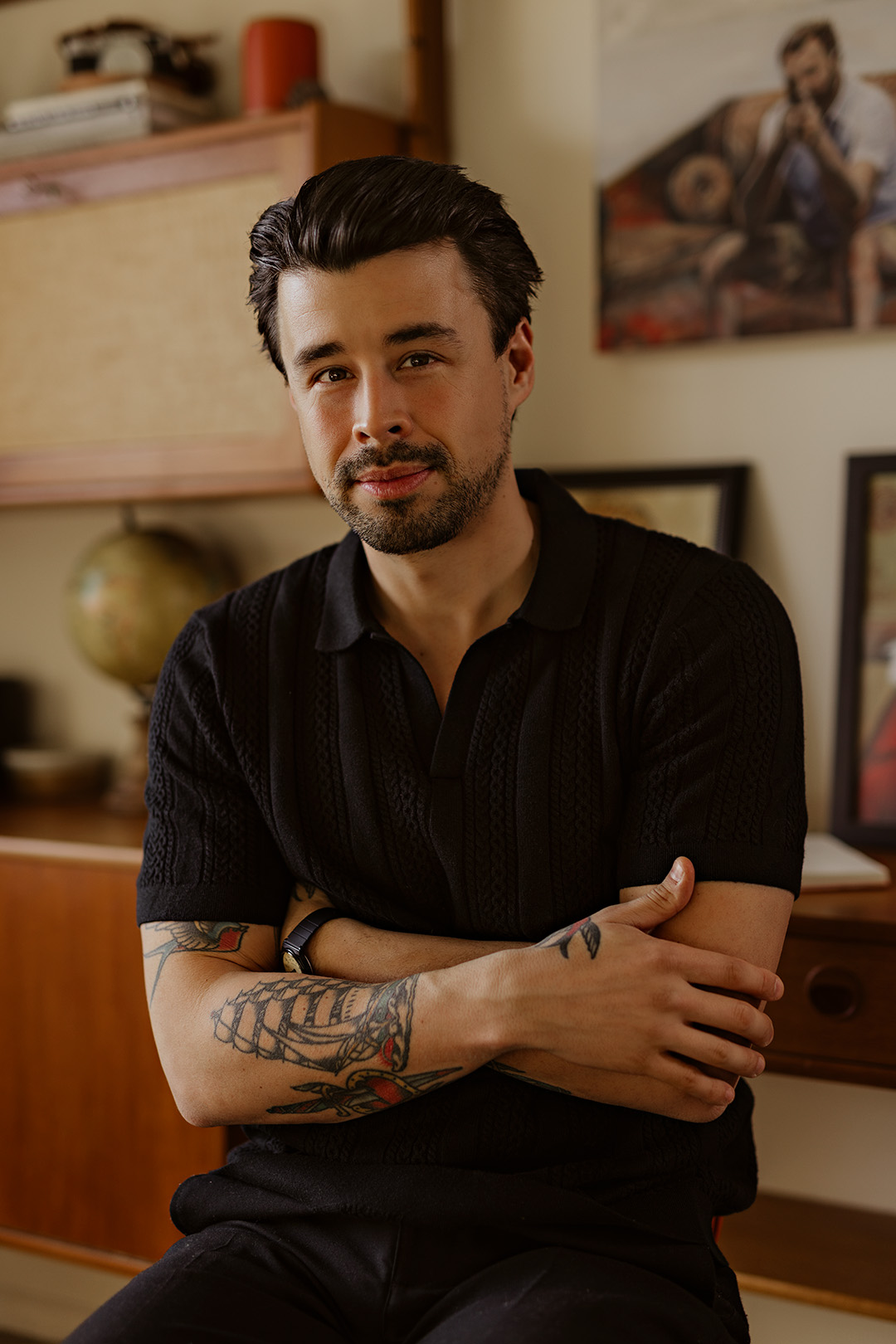
portrait of Josh Nadeau with folded arms against a gallery wall and bookshelf.
Testimony

A Good Pair of Lungs

How burst pulmonary arteries opened my eyes to the gift of an ordinary life in Jesus.

Christianity Today February 25, 2025
Photography by Tanya Goehring for Christianity Today

There are golden days. Days which glow in our memories with a warm amber; days that etch themselves onto our hearts and pump life through our bodies; days that, when we close our eyes, we can see flash before us, like photo slides in old projectors.

The day I almost died was one of those days. Almost.

I can close my eyes and picture my wife, Aislinn, smiling over our morning coffee. She’s having decaf because she’s pregnant. The summer sun is pouring in on horizontal stripes over the coffee table, and birdsong floats in through the open windows.

Church starts soon, so my wife is doing her hair and makeup, and our bathroom is warm from plugged in straighteners or curlers or something—I don’t know. I’m sipping at my second cup of coffee, and then it’s time to go. She’s in a blue-and-white striped linen dress. You can see the bump of her belly, our little guy, and we’re walking out of our apartment to the car, smiling, hand in hand.

Idyllic. Postcard kind of stuff.

Church is that summer slow: people on vacations, shorter sermon, everyone trying to keep cool. It’s one of those services you take for granted, normal and ordinary and routine, and when it’s done, we’re off for lunch. Aislinn has a craving for pad thai, and our favorite place in the city is on the water.

When I close my eyes, the photo slide flashes, and I can see my wife’s bright blue eyes. I can see her hair falling over her shoulders in little waves. There are plants hanging on the patio, and the summer heat loosens the air-conditioned tightness of our skin, our plates of noodles steaming.  And with my eyes closed, I can hear our laughter as we talk, dream, and imagine what it’ll be like to have our first child, to be a mom and dad.

Photography by Tanya Goehring for Christianity Today

Aislinn is getting that late first-trimester sleepy, so when we’re done with our lunch, we drive home. She takes a nap, and I read. I watch afternoon fall into evening in the stretching shadows of the trees outside; the warm honeys of late day fill the room.

Aislinn wakes, and as we settle down to watch a movie, we start kissing—the joy of everything that life is, that it might be, expressed with our lips and bodies. I stand up, taking off my shirt, but then I have to clear my throat. I feel something on my tongue. I reach in, and when I pull my fingers away, they’re covered in blood.

My wife looks at me and her eyes widen. I run to the bathroom and cough into the sink, frothy red pouring from my mouth.

“Call 911!” I sputter. She’s already dialing.

I scramble for the waste bin, and my wife tells me no ambulances are available.

We run out of the apartment to our car, me cradling the garbage can, coughing and spitting phlegm and clots and bright red. I can smell the tin. And my wife drives, praying out loud, “Oh God, please, no …”

She runs a red, horn blaring, and when we get to the emergency room, she rushes inside, one of my oversize shirts draping her, telling a nurse we need a doctor. I’m still coughing, and the bin has a pint in it.

They wheel me into a room, and I can hear them over my spitting, over the beeps of machines, calling to rush the emergency doc to my bay. While we’re waiting, my wife has her hand on my head and shoulder, and she’s praying, crying, the bump of her belly brushing my arm.

A nurse asks me questions about the pain, my family history, and puts an IV in. I’m rushed to a CT scan, and they send my blood away to be tested. They take an x-ray, and they tell me they’ll update me on the results.

And then we wait, the two of us. Well, three, if you count the baby.

There are days, unforgettable days, etched into our bodies and minds. This was one of those days.

We wait there, in that chasm between joy and despair, between the golden hope of a firstborn son and the dark shadows of the valley of death. And we wonder why.

O God, why?

I pray, whispering, as I walk to the bathroom—every breath a reminder that something is wrong, every cough still streaked with blood.

Lord, I don’t want to die. Inhale. I want to see my son. Exhale.

The next few days are a blur. My mom flies out, and I go through every test, trying to find some diagnosis. I have scans and procedures and have to be intubated, then put on a ventilator.  

“You’re scheduled for an angiogram,” my pulmonologist tells me, “to map out the artery systems in your lungs.”

That first angiogram is for the mapping. The next three are to save my life.

I have to be awake for these surgeries. They cut into my femoral artery and send a catheter up, and when they get all the way into my lungs—to the arteries that burst—they tell me to hold my breath while they embolize the ruptures. I have to be awake because, as it turns out, you can drown in your own blood.

Aislinn stays with me every night, and every night we weep and pray for an answer—a diagnosis, some pathway forward, a reason why.

Lots of things fall into place when you face death. All these things at the edges of life—muddled questions, doubts and fears, hopes and dreams—they crystallize. Everything gets illuminated by a clarity that only desperation brings.

I stare at my wife as she naps because she was up all night, and I think about all that we wanted out of life—and how fleeting it all is, a breath in the wind.

And Jesus speaks to me there on that bed, telling me I’ve been blind to how much I’ve needed him.

Right now, I think, my every breath depends on you, and I might not get another one. But a month ago, I needed you just the same. And there, at the edge of life and death, clarity sets in.

Each day, 34 years at that point, was a gift—whether I realized it or not, whether I gave thanks for it or not. With my eyes closed, with the sound of death’s tattered robes billowing, all that really matters is how much I need Jesus.

Hot tears run rivers down my face, and I pray for a miracle.

Aislinn sits up. She looks at me with sad eyes and reaches for my hand. There’s no trumpet sound, no opened heavens, no audible voice, but in that moment, there’s a bit of calm. In between the beeps of the monitors, Aislinn and I feel some semblance of rest. There are no answers, no diagnoses, no promise that things will get easier—only a peace that passes understanding.

I couldn’t place it then, but I can now. Jesus healed a blindness in me that day while I lay dying. I had been unable to see the beautiful, ordinary, everyday gift of life. While my outward body was wasting away, inwardly, I was being renewed. New eyes. I passed through blindness to the hazy cloud; to a glass, dimly. And one day, I will see face to face.

I was in that hospital for 21 days. I lost over two liters of blood and almost died three times. At the end of those three weeks, I signed my release papers.

It’s been on my mind every day since then that my life is a gift from Jesus, one I might not have had—a gift enjoyed most deeply in relationship with the giver.

And on my mind every day, when life feels boring, or I lose my temper, or I have some excuse for apathy and cynicism, I remember: To live is Christ. If I remain in the body, then all I have is by him and for him.

If I close my eyes, even now, there’s a flash of a warm August sun. I’m holding my wife’s hand, and we’re walking together out the sliding doors of the hospital.

Our car pulls up to take us home. And my wife and I, we drive off together, back into a holy, ordinary life.

Idyllic. Postcard kind of stuff.

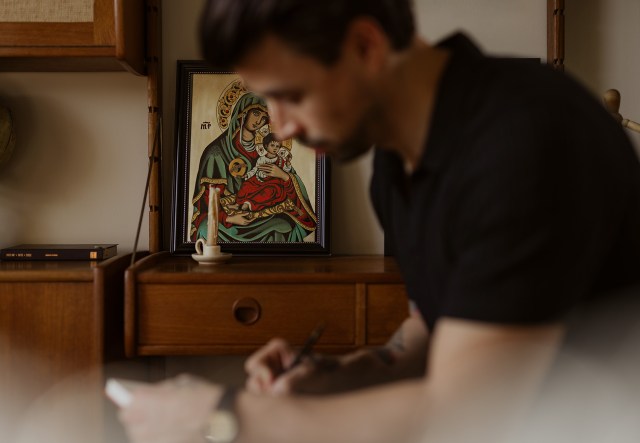
Photography by Tanya Goehring for Christianity Today

Josh Nadeau is an artist and writer from the West Coast of Canada. He writes at Every Day Saints and is the author of Room for Good Things to Run Wild: How Ordinary People Become Every Day Saints.

News

At the World’s Largest Gathering, a Search for Salvation

A one-time Kumbh Mela pilgrim in India finds true cleansing in Christ.

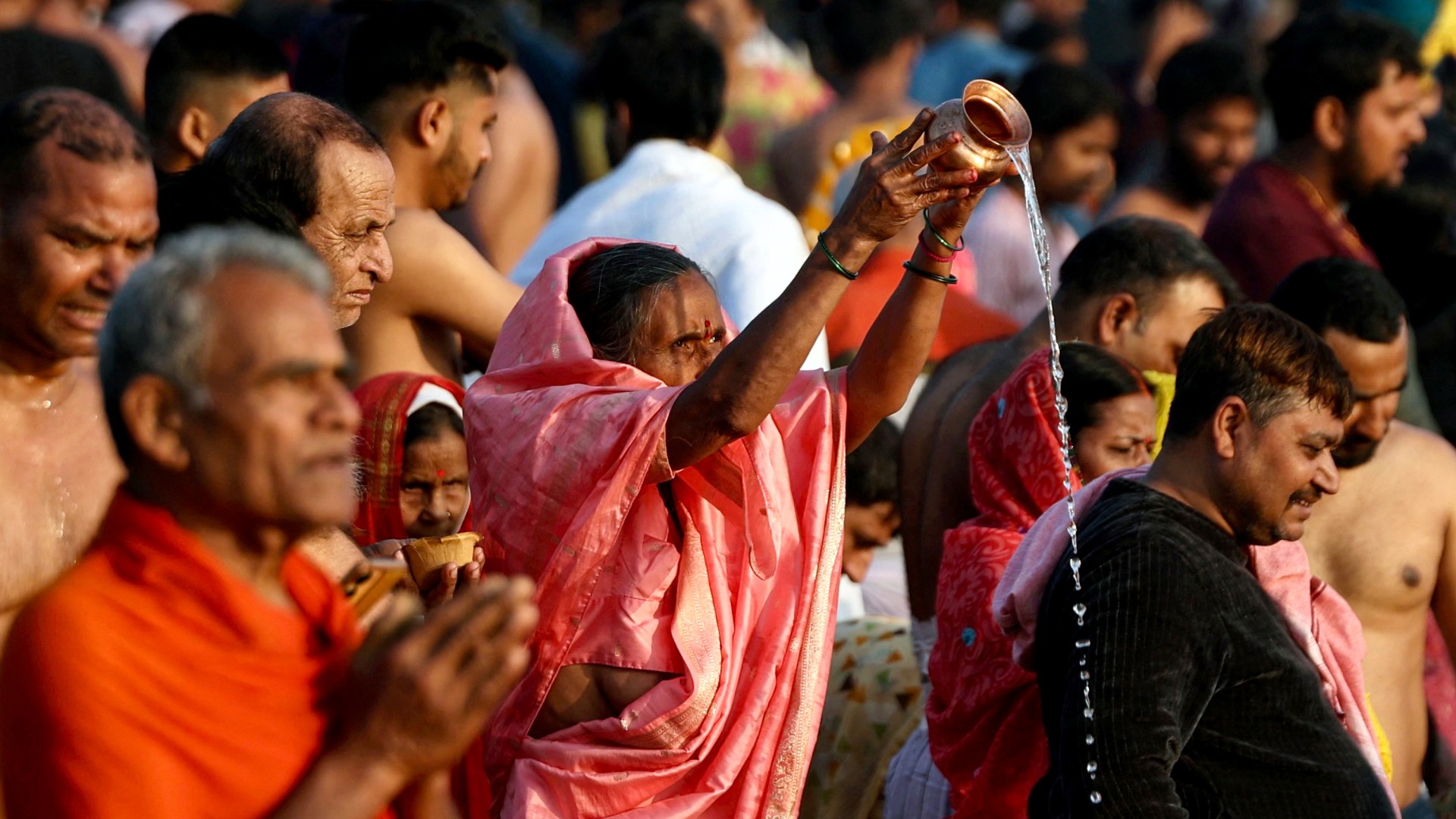
Pilgrims pray before taking a holy dip in Sangam during the Maha Kumbh Mela festival.

Pilgrims pray before taking a holy dip in Sangam, the confluence of Ganges, Yamuna and mythical Saraswati rivers, during the Maha Kumbh Mela festival.

Christianity Today February 25, 2025
Niharika Kulkarni / Getty

At the age of 11, Kumar journeyed 125 miles south from his home of Gonda to Prayagraj, Uttar Pradesh, India, to plunge into the freezing water at the confluence of three sacred rivers. He saw it as a chance to wash his sins away. (CT only used his last name due to security concerns.)

The fog was thick that morning in 2013, and the water so cold that when he stepped in, “my legs felt like they were being cut off,” Kumar recalls. He and hundreds of millions of other Hindu pilgrims were gathered at the Sangam for Kumbh Mela, the world’s largest human gathering.

Kumar, desperate to end the chaos that plagued his family, attended the gathering with his father’s friend. As the oldest of six siblings, Kumar bore the weight of his household’s struggles—his alcoholic father, his mother whom his family believed was possessed by demons, constant fighting between his parents, and severe financial problems.

With the other pilgrims, Kumar performed arti and puja—a sequence of offerings and prayers made to a deity—and desperately sought divine intervention for his family’s problems. When he stepped into the water, “I anticipated supernatural peace to dawn upon me, but nothing of that sort happened,” he recalls.

This year, Kumar didn’t join the 500 million pilgrims making the trip to Prayagraj for Kumbh Mela, a 45-day festival that ends on February 26. His life took a dramatic turn eight years earlier, when an old friend invited him to church and he “found the peace I had searched for in the holy dip of Prayagraj.”

Today, he is a witness that no water can cleanse sin, only the shed blood of Christ.

This year’s version of the celebration, called the Maha Kumbh, only occurs once every 144 years due to a rare alignment of Jupiter, the sun, and the moon. Hindu believers consider this configuration a powerful amplifier of spiritual energies during ritual bathing and offers an opportunity for karmic cleansing and spiritual renewal.

According to Hindu mythology, Kumbh, meaning “sacred pitcher,” is based on a celestial struggle between demigods and demons over divine nectar that grants immortality. During the struggle, drops of this nectar fell at four sacred sites across India: Prayagraj, Ujjain, Nashik, and Haridwar. These sites now host the pilgrimage in rotation every 12 years.

Apart from taking a dip in the river, pilgrims join in elaborate prayer rituals and follow processions of ash-smeared sadhus, ascetics who have renounced worldly attachments. Devotional songs fill the air while attendees engage in spiritual discussions and watch religious theater performances on the 4,000-hectare festival grounds, equivalent to the size of 1,600 football fields.

Every act at Kumbh Mela carries deep spiritual significance, from the lighting of ritual fires to the floating of clay lamps (diyas). Helicopters shower rose petals on the devotees to welcome them.

Religious organizations operate free food distribution centers to feed the devotees daily, but most of the pilgrims—especially those who stay for more than a week—buy their own food and cook in parking lots.

To deal with the massive gathering, the local government spent 75 billion rupees ($865 million USD) to develop Prayagraj’s infrastructure and 15 billion ($173 million) to prepare the festival grounds. Yet during the pre-dawn hours of January 29, a massive crowd broke through barricades at the river, leading to a deadly stampede that claimed 30 lives and injured 60 others. The incident occurred during Mauni Amavasya, one of the bathing days when nearly 800 million devotees were expected to take the holy dip.

Another tragedy followed at the New Delhi Railway Station on February 17, where another stampede claimed 18 more lives—including five children—as pilgrims rushed to board Kumbh-bound trains. Fires also broke out in the temporary tent cities housing the pilgrims, and a gas cylinder explosion on January 19 ignited a blaze that consumed at least 40 thatched huts. No one was injured.

Still, Kumbh continues to draw enormous crowds. Uttar Pradesh Chief Minister Yogi Adityanath reported that, on February 14, more than 9.2 million devotees participated in the festival. The overall attendance, which passed 500 million, exceeded the combined population of the United States and Russia.

Kumar, now 23, expressed relief that none of his acquaintances attended this year’s Maha Kumbh. “People don’t respect their parents and care for their families but go to pilgrimages to wash their sins and come back and indulge in the same sins again,” he said.

For one Christian leader in India who converted from Hinduism and did not want to be named because of concern for his safety, Kumbh Mela is a festival that points to the world’s need for Christ.

“Taking a dip in the Kumbh acknowledges sin and the need for cleansing,” he explains. “This recognition of human brokenness and the need for divine intervention bridges our faiths.”

While Kumbh devotees seek purification from sin through ritual bathing, Christian faith points to Jesus Christ’s blood as the source of true cleansing from sin, he said. This contrast deepens when considering the Hindu concept of karma.

Traditional Hinduism teaches that people don’t have sin at birth, but their karma determines what they will become in their next life cycle. Performing good deeds alone can’t save a person, “only breaking free from these cycles [of birth and rebirth] altogether achieves that,” he said. “Yet at the Kumbh, we witness a different ideology: the belief that ritual bathing can wash away sins.”

He wishes that “Hindu brethren knew that Christ’s blood can wash away their sins and free them from all cycles they can think of,” he said. The Christian message of grace “fulfills the deepest longings expressed at the Kumbh—the desire for genuine cleansing from sin and true spiritual freedom.”

Kumar found this truth four years after his trip to Prayagraj when he walked with his friend into a church that gathered half a mile from his house. After giving his life to Christ, Kumar—who had been forced to leave school in second grade to provide for the family—returned to his studies with renewed purpose and graduated high school with good grades.

His family and community intensely opposed his conversion, yet through persistent prayer and living a life consistent with the gospel, he gradually earned their respect. Neighbors who once opposed him now seek his counsel and prayer.

His family, who had once driven him to seek cleansing in the Kumbh’s waters, also experienced healing. Kumar said that the demons left his mother as he prayed for her. His brother, four sisters, and parents have become Christians.

Kumar now ministers in the nearby villages, telling people about Jesus, the living water. As anti-Christian sentiment rises in India, he notes that carrying a Bible or Christian literature has become too dangerous. Instead, he says, “I carry the Word of God in my heart, which no one can snatch from me or confiscate.”

addApple PodcastsDown ArrowDown ArrowDown Arrowarrow_left_altLeft ArrowLeft ArrowRight ArrowRight ArrowRight Arrowarrow_up_altUp ArrowUp ArrowAvailable at Amazoncaret-downCloseCloseellipseEmailEmailExpandExpandExternalExternalFacebookfacebook-squarefolderGiftGiftGooglegoogleGoogle KeephamburgerInstagraminstagram-squareLinkLinklinkedin-squareListenListenListenChristianity TodayCT Creative Studio Logologo_orgMegaphoneMenuMenupausePinterestPlayPlayPocketPodcastprintremoveRSSRSSSaveSavesaveSearchSearchsearchSpotifyStitcherTelegramTable of ContentsTable of Contentstwitter-squareWhatsAppXYouTubeYouTube