Ann Voskamp Loves That Christianity Today ‘Amplifies, Elevates, Welcomes, and Invites Voices from Around the World’

The Canadian Christian writer has admired the ministry since she first started blogging 20 years ago.

Ann Voskamp Loves That Christianity Today ‘Amplifies, Elevates, Welcomes, and Invites Voices from Around the World’
Jeremy Cowart

In 2018, Ann Voskamp traveled with photographer Esther Havens to rural Kenya to witness the nomadic Rendille people receive a Bible translation in their own language for the first time.

“They have been parched for living water under the desert sun for decades—centuries—and this day is nothing short of a resurrection coming,” Voskamp wrote for Christianity Today. “Dancing women stir the dust with their feet, thousands of beaded necklaces rattling like rising bones, and they point out how even the Word-carrying camel can’t seem to stop grinning.”

Today, the Canadian Christian writer describes this moment as “one of the most formative experiences of my entire life.”

“To sit with people and interview Rendille women who had slept with Scripture underneath their pillows because it was treasured. They had nothing more valuable or priceless in their entire lives than God’s Word,” she said. “Then I think, How many Bibles do I have that are on my shelf collecting dust? Do I treasure God’s Word like this?

“Sometimes we can look at the North American landscape of Christianity and believe that that’s all there is, which is kind of like our own version of ‘flat-earth’ Christianity. We forget there’s a whole global church out there that is living out the words of Christ in rich, robust, orthodox ways that can inform and shape us,” Voskamp continued. “Christianity Today’s vision to have global correspondents and reporters is worth supporting so that we are more informed on a consistent basis and learn the stories of other Christians around the world.”

Voskamp praised CT’s consistent platforming of the wisdom and voices of Christians around the world.

“Christianity Today amplifies, elevates, welcomes, and invites voices from around the world—and how these Christians encounter Christ disciples us North American Christians,” she said.

Voskamp’s relationship with CT goes back decades. She began blogging in 2004, writing about her relationship with God, her life on her Ontario farm, and her family of now nine, when she first learned of the publication.

“I can’t imagine the online community without Christianity Today being part of that topography,” she said. “If you step onto the online space and you’re looking for anything about Christianity, Christianity Today is one of those outposts that you are going to see as this blazing beacon.”

Voskamp first resonated with articles by Alaska writer Leslie Leyland Fields in CT and saw parts of her life represented in Fields’s marriage, their large families, and a mutual love of words.

“It was after reading one of her Christianity Today articles that I said, ‘I want to be a subscriber and support this community,’” she said.

Voskamp connected with Timothy Dalrymple, CT’s now president and CEO, around that time. As she watched his career unfold, she was overjoyed when he joined the ministry in 2019.

“Tim is one of the most thoughtful, considerate, and wise sages in terms of listening to the whole of church and culture and hearing people’s voices and perspectives,” she said. “Tim is a man of profound, deep integrity and true Christlikeness. I believe he’s truly anointed and called to Christianity Today for this particular moment.”

“Christianity Today has—and is—leading so well in communicating that beauty saves the world. Beauty is irresistible. The ultimate beauty is Christ himself. So we do everything with excellence and beauty because ultimately it points to Christ. Christianity Today has done that exceptionally well.”

“Timothy’s vision of ‘the bride of Christ is beautiful, and she needs faithful storytellers to tell the church’s beautiful story around the world’ is culturally transformative. He and Christianity Today have been so faithful to that vision.”

Recently, CT debuted a redesigned print magazine and website, and Voskamp shared her appreciation for that aspect as well.

Christianity Today’s redesign feels as iconic as Time’s Life magazines,” she said. “The reason it resonated so deeply with me is that it is timeless, classic, and beautiful.

“In Christian spaces, we can be very utilitarian, as opposed to really intentional about beauty. I was just really moved that Christianity Today seeks to be on the cutting edge of exceptional design and creativity in 2024.”

Voskamp also believes that Christianity Today has a significant role to play in helping to heal a fractured and polarized culture.

“In a moment where there is so much confusion around what it means to be a Christ follower, Christianity Today is a faithful light bearer that models following Christ in dark time and a leading prophetic voice,” she said. “The calling of Christianity Today is to be a parable of the glorious upside-down kingdom, this generative power of God to throw subversive seeds that grow invasive hope in this generation. The stories that Christianity Today brings to the forefront are catalytic seeds that will come up underneath and grow through this cultural moment. The stories shared will yield real fruit, not just in this cultural moment but for all eternity.”

Christianity Today’s ability to reach so many parts of the world with each other’s wisdom and experience is needed, especially by those who feel alienated and adrift, Voskamp added.

“CT is offering to the church an accessible library of Christian thought and a long table of global community that we all need a place at as we wrestle through what is being called an epidemic of loneliness and isolation,” she said.

In this context, people need reliable and godly institutions.

“We are formed as believers by the text and the word that we immerse ourselves in, and we are also formed by the church and institutions like Christianity Today,” Voskamp said. “Christianity Today has been part of saving me—personally turning me into a more Christ-centered person. I truly believe that Christianity Today comes alongside the body of Christ to show us what it means to live as a gospel-centered witness in the world.”

Morgan Lee is the managing editor of Christianity Today’s global team

Videos

Our Faith’s Future Depends on Discipleship

The Lausanne Movement’s State of the Great Commission report details where and how Christianity is growing. 

Christianity Today November 7, 2024

Is Christianity becoming irrelevant? Or is it flourishing?

Your answer probably depends on where you live.

In advance of its fourth conference, The Lausanne Movement published the State of the Great Commission report, drawing on research from international nonprofits, Christian organizations, and professional polling and presenting insights from 150 global missions experts.

You can learn more about the report’s findings here—including its emphasis on discipleship in the global church.

And check out the rest of CT’s writing on Lausanne over the decades.

A Companion for the Chorus of Christians

Christianity Today has helped Walter Kim glimpse how God is moving in different hallways of the global church.

A Companion for the Chorus of Christians
Brittany Fan

Walter Kim currently serves as the president of the National Association of Evangelicals (NAE) and is on Christianity Today’s board of trustees, but he has been leaning on Christianity Today long before his current role as an evangelical leader.

“Christianity Today has been a faithful companion in the different seasons of my life. As I discovered that not only was God concerned about the transformation of my heart, but he was capturing my mind, CT played a role in the curiosity that was developing.”

Our understanding of our faith often begins with a realization, an experience, he says, and then we start to want to know more. After this experience, we crave education as we lean into God’s work in our lives. Christianity Today serves as one of the instruments of education helping Christians in all the nooks and crannies of the global church to understand living faithfully.

Kim describes his journey in three phases: first as a young Christian new to the faith looking for more answers, second as a pastor, and third as an evangelical leader at the NAE.

Growing up in an immigrant household, Kim attended church but did not feel a strong connection to the faith. In high school he began to see the transformational work of God in his life.

“I had planned on being a doctor. That was my parents’ plan for me, having immigrated to this country to give me these opportunities,” he said. “When I thought about what it meant for me to live out my faith vocationally, I had limited categories for my imagination. When I got to college, I had the opportunity to see friends come to Christ and I started engaging in campus ministry. This is when I began deeply sensing that God was calling me into the vocation of ministry.”

He describes this time in his life as “deeply morally transformational, very emotional, very restorative and renewing in terms of my emotional life.” He wanted something to help guide his growing sense of transformation, so he turned toward a theological education.

At seminary and later as a pastor, Walter Kim saw Christianity Today as a valuable resource to not only help his teaching but also see what topics the church was talking about, learn how other people were addressing current events, and even empathize with how other pastors were dealing with burnout.

“If I was in a season of exhaustion, I would run across an article of a pastor sharing with great candor his or her own journey of burnout or recovery. There was a deep moment of companionship through the pages that would unfold,” he said.

He specifically mentioned Christianity Today’s recent CT Pastors issue, Rediscover Wonder, as an addition to his CT rolodex. He said the issue was “an invitation to pay attention to the God who wants passion, but wants passion that can endure and that would be sensitive to the different seasons of life.”

As a young pastor, Kim had seen people in ministry pour out everything they have. This was inspiring, but as Kim grew in his ministry, he also saw that pouring everything out at once can lead to an unsustainable attitude toward ministry. Rediscover Wonder is a welcome reminder that ministry is a marathon, not a sprint.

As Kim served on the board of the NAE, and then as its president, Christianity Today has continued to be a companion to his work.

More specifically, Kim sees The One Kingdom Campaign as something that enhances Christianity Today’s ability to connect and inform the church. One person cannot know all of the various things that impact the church, but having a resource like Christianity Today connects the global church at one’s fingertips.

“The house of God has so many rooms, and I don’t always know what’s going on down that hallway or in that closet or in the den downstairs, and I could rely on CT to give me an inside peek as to what’s going on, to these different places of God moving.”

Kim’s position as NAE president allows him a great vantage on an inflection point he recognizes in the church, specifically in the United States. “Christianity can no longer be assumed,” Kim says.

“People have lamented the loss of the place of the church and its influence in our society. I view this as the greatest missionary opportunity that the church in America has ever had because now it’s a missionary opportunity that’s right at our doorstep, that’s in our neighborhoods, that is in our public schools. That is a profound opportunity.”

He continues, “Rather than viewing ourselves as the embattled, marginalized community of Christians trying to eke out a space in an increasingly pluralistic and post-Christian society, we ought to look at this and say we have an opportunity for God’s reviving spirit to bring fresh vitality.”

Christianity Today has a unique opportunity to remind the global church of God’s transformative work in the world. Whether it is a story about how communities are facing the aftermath of Hurricane Helene, what a new seminary president in Lebanon has to say about conflict within the church, or personal testimonies of how God is working in individuals’ lives, CT shares stories that give a glimpse of the kingdom around the world. These stories can connect people in all seasons of life with all sorts of questions with other Christians asking the same sort of questions.

Kim said, “Christianity Today, and The One Kingdom Campaign, postures itself as not recovering the embattled faith, but re-enchanting this beautiful vision of what it means that Jesus is the good news of the world in a comprehensive way that engages personal transformation, but also the transformation of our neighborhood and communities.”

Mia Staub is editorial project manager, online at Christianity Today

News

Trump’s Promised Mass Deportations Put Immigrant Churches on Edge

Some of the president-elect’s proposals seem unlikely, but he has threatened to remove millions of both undocumented and legal immigrants.

A man furls a flag after a US naturalization ceremony in Los Angeles for immigrants becoming citizens.

A man furls a flag after a US naturalization ceremony in Los Angeles earlier this year for immigrants becoming citizens.

Christianity Today November 7, 2024
Mario Tama / Getty Images

Jackson Voltaire, a pastor who leads a fellowship of 255 Haitian Baptist churches in Florida, prayed a personal blessing for Donald Trump the day after the election.

But Voltaire also met to pray with leaders of his churches who were worried about what might happen to Haitians’ legal status in the country.

“We may tell people not to worry, but for most of them, there is cause to worry,” Voltaire said. “But when we fix our eyes on Jesus, the worry starts to dissipate. The strength and comfort we find in God’s promises are stronger than the fear.”

President-elect Trump made mass deportation a central part of his campaign, promising to remove millions of immigrants from the United States, including Haitians. The official Republican Party platform vows to “carry out the largest deportation operation in American history.”

In campaign speeches, Trump talked about undocumented immigrants committing violent crimes, but he also indicated he would end certain legal immigration programs like one for Haitians.

These proposals could affect more than 10 million people in the US and result in family separation for millions since most undocumented immigrants live in households with legal immigrants.

Haitians are largely in the country legally, under a program for those fleeing war or severe hardship called Temporary Protected Status (TPS), which covers Haiti and other nations like Venezuela and Nicaragua. Trump unsuccessfully tried to shut down the program in his first term and wants to end it again.

Haiti currently does not have a functioning government, which makes any deportation difficult, and locals live under warring gangs.

Voltaire said he prayed not just for Trump to bless the United States but for God to find people to change the course of the nation of Haiti so people would not have to flee the country for safety in America. Voltaire prays that Haiti can go “back to the glorious season when that nation was considered the Caribbean pearl.”

Trump made promises to deport millions in his 2016 campaign, but the deportation numbers over his first term look about the same as the Biden administration’s. The Obama administration still has the record for largest number of deportations in one year.

This time, Trump has proposed a more drastic means of deportation: deploying the National Guard to arrest undocumented immigrants. He has often cited the Eisenhower administration’s “Operation Wetback,” where federal and local law enforcement did sweeping raids to deport perhaps a million people, some of whom turned out to be US citizens.

Immigration experts doubt that Congress will provide the funding for mass deportations, and that infrastructure is not easy to scale up. One immigration group estimated the cost of deportation of every undocumented person in the US at $315 billion.

Even if there isn’t the money for mass deportations, “I don’t want to tell people it’s all going to be fine. I think we are going to see an uptick in deportations of very sympathetic people,” said Matthew Soerens, the head of advocacy at World Relief, an evangelical refugee resettlement organization. “Everyone agrees with deporting violent criminals.”

While evangelicals supported Trump in the election, they also historically have more compassionate views on immigration. They support legal status for “Dreamers” (undocumented immigrants brought to the US as children), oppose family separation, and feel the US has a moral obligation to accept refugees. One view that has shifted recently, though, is that they see immigrants as an economic drain.

Faith-based groups are hoping to make the case to Trump that immigrants have value.

“We are going to be pleading with him, appealing to his commitment to stand with the persecuted church, to his statements that he believes in legal immigration,” said Soerens.

“We … believe in the possibility of progress and urge the incoming administration to consider the immense value that immigrants and refugees bring to our nation,” stated Krish O’Mara Vignarajah, the head of Global Refuge, a faith-based refugee resettlement agency.

Family separation is the most unpopular immigration policy among white evangelical Christians.“It’s unclear what President-elect Trump will do,” Soerens said.

Deportations would hit the Latino community disproportionately. Latino evangelicals support extending legal status to Dreamers and other undocumented immigrants who have lived in the US a long time. But most of those evangelicals (60%) voted for Trump in the last election largely based on social issues like abortion and the origins they may have in countries with Communist or leftist regimes.

“While Latino evangelicals are neither a monolith nor one-issue voters, when it comes to immigration many Latino congregations have expressed deep concerns around the language of mass deportation and its impact on the ministry of and with the Latino church,” said Gabriel Salguero, the president of the National Latino Evangelical Coalition, in a statement to CT.

“We ask ourselves how churches can collect the tithes and offerings of immigrant members while being silent on policies advocating their mass deportation,” he said. “Our sincere prayer is that there finally would be a bipartisan immigration solution that respects the rule of law and honors the dignity of all people.”

Political pressure has long kept Congress from enacting immigration reform; a bipartisan border bill proposed in February to restrict migrants at the border and address the asylum process failed when Trump objected to it. 

Other legal immigration programs are in question. Humanitarian parole has allowed Afghans, Ukrainians, Haitians, Cubans, Nicaraguans, and Venezuelans to find legal shelter in the US, but Trump pledged to deport people in that program.

“Get ready to leave,” Trump said.

Many Ukrainians fleeing the war in their country have come to the US under humanitarian parole. Paul Oliferchik is the son of refugees from the Soviet Union and was until recently a pastor of a Ukrainian Assemblies of God church in New York, the city that is home to the largest Ukrainian population in the US. He now serves at a Chinese church in the city.

His wife is the daughter of Ukrainian refugees, who received help from a Lutheran organization to resettle in the US, he recalled. “We moved as refugees and were tremendously blessed,” he said.

But many of the Ukrainian evangelical immigrants he knows are Trump supporters—they don’t make political decisions based on immigration but on socially conservative issues.

He thinks they likely do not know about the potential ending of the humanitarian parole program. Either way, he hopes they will stand with other refugees.

“God helped to bring many of us here to the States to live,” he said. “God was telling Israel when he was bringing them out of Egypt to remember. If we don’t remember that God himself brought us out and redeemed us, it might reflect on how we treat others who are also just trying to make it out and to live.”

In Trump’s first term, he tried to end the Deferred Action for Childhood Arrivals (DACA) program for those known as Dreamers but ran into legal hurdles. Immigration experts have said that his legal advisors have learned from their first attempts at undoing some of these programs and might be more successful this time.

Led by longtime immigration advisor Stephen Miller, the Trump team is looking for other ways to narrow legal immigration, The Wall Street Journal reported, like a policy that would block immigrants who have disabilities or low income.

One program fully under the president’s purview is the refugee program, and in his last term Trump temporarily suspended the entire program then dramatically reduced the numbers of refugee admissions to a record low.

In 2020 when he completed his term, refugee admissions were down to 12,000 from the historic average of 81,000 a year. Trump in his 2024 campaign criticized Biden’s refugee admissions and said he would bring “brand new crackdowns.”

The previous Trump administration’s crackdowns in some cases arrested immigrants without criminal records who had been in the country for decades.

In 2017, Immigration and Customs Enforcement (ICE) officers arrested hundreds of Iraqi Christians in Detroit, some on their way to church. These Christians would have faced persecution and “even death” if they had been deported, evangelical leaders wrote to the Trump administration at the time.

During legal fights about the deportation, many Iraqi Christians were held in US detention for more than a year before their release, and some were deported. (Some of the individuals did have criminal cases that led to deportation; others had no criminal record.) Many of the Chaldean Christians did not believe they would be deported because they had supported Trump and believed his statements about protecting persecuted Christians.

Whatever the scale of deportation in the next administration, Trump’s promises have already led to anxiety in immigrant communities.

“The sense I get from most of my Haitian friends is that their concern is not so much about deportation, because they have a protected (albeit temporary) status that shields them from deportation,” said Jeremy Hudson, pastor of Fellowship Church, one of the largest churches in Springfield, Ohio, which has a large Haitian population.

“The concern I have heard them talk about more is how they will be treated and viewed by the local citizens.”

Trump has talked about undocumented immigrants “poisoning the blood of our country” and promised to rescue “every town that has been invaded and conquered.” He and his vice president, JD Vance, went after Haitians repeatedly, spreading the false story that they were eating people’s pets in Springfield.

Voltaire, the pastor in Florida, said his Haitian churches are still dealing with the fallout of those remarks.

“The impact of the Springfield thing is … here to stay,” he said. “But Haitians are a resilient people. They have been through a lot.”

In the meantime, Haitian pastors must continue to serve the immigrants who are in their churches.

“It is our prayer that people will find strength and comfort in the love we show them,” he said. “Ultimately, we pray that God’s name will be glorified in the lives of all immigrants, Haitians or wherever they are from.”

Ideas

God Is Faithful in Triumph and Despair

President & CEO

I voted for Kamala Harris and mourn her loss. But I want to keep politics in its proper place, subordinate to Jesus.

Kamala Harris
Christianity Today November 7, 2024
Saul Loeb / Getty

I’ll never forget the beautiful Sunday afternoon when we waited in line at our local library for early voting. It was the first year we took our kids into the voting booth. They weren’t initially thrilled to be there, but as we got closer to the front, we could feel it all building: anticipation, excitement, hope. 

At ages 9 and 11, my girls watched my husband and me vote for the one we believed would be the best-qualified president of the United States, Vice President Kamala Harris. And now they witness the grief that comes from knowing that the candidate we championed has lost the race. They watched as our faces fell when we heard the results. They experienced our sorrow, not only for this loss but also for the fear of what might happen in the coming days and years.

With former president Donald Trump as our next president, I am acutely aware of the darkness that lingers in the shadows of his victory. Our country is still deeply politically divided, and while many of his supporters celebrate his reelection, I fear the deepening of this divide, one that has potential to cause a great chasm between me and those who voted for him—many of them brothers and sisters in Christ.

But as troubled as I am over this outcome, I am also aware that more than the presidency is at stake. Our country has proven its allegiances, and though I am upset and worried because Trump was reelected, I’m also aware of the relief and excitement that many Trump supporters are experiencing.

These different reactions are unavoidable, but despising our political rivals is not. Even my younger daughter has noticed our fractured public life. She has classmates echoing their parents’ declarations that people who vote for Trump are “stupid”—or that those who vote for Harris are “not Christian.” 

As a parent, I always expect to have conversations with my children about how to live in love. But this election season, we’ve had to expand those talks into lessons about how our children can reject this kind of demonization and protect themselves from those who may demonize them or my husband and me as their parents. 

It should not be this way. I’m not fazed by political celebration over a win or disappointment during loss, which is a normal part of any election. But I am concerned that there are too few spaces for those who weep to be in durable community with those who rejoice. The act of celebrating alongside those who grieve—and vice versa—is a source of necessary balance, a needed check on our impulses to be thoughtless in our happiness or bitter in our grief. For believers, that balance helps keep politics in perspective, subordinate to Jesus.

This need to be together in our rejoicing and weeping is not just a political challenge. It also follows a biblical pattern that we see in the story of the Israelites building the foundation for the second temple in Ezra 3. Those who wept at the loss of what had been were there together with those who rejoiced at the possibility of what could be. It became impossible to “distinguish the sound of the shouts of joy from the sound of weeping,” Ezra records, “because the people made so much noise. And the sound was heard far away” (v. 13).

This brief note about the mixture of triumph and despair is important because it reminds us that regardless of how they felt, the people remained together. Their covenant with God required that they learn to work together amid their differences, not simply for the sake of unity among themselves but for unity against outside adversaries. This passage should remind us that we too have a need for national unity amid our differences, that unity is necessary to preserve our freedom and democracy.

And while they differed in weeping and rejoicing, the crowd in Ezra 3 was united in praise and trust of God. “He is good; his love toward Israel endures forever,” they sang together (v. 11). American Christians of all political affiliations must keep this higher truth in mind in the weeks ahead. 

For those of us who are unhappy with this result, let me encourage you not to despair. I am praying for you, and I hope you will pray for me—and for our next president “and all those in authority, that we may live peaceful and quiet lives in all godliness and holiness” (1 Tim. 2:2). Regardless of who leads our nation, we can seek God’s wisdom for how we can continue to “seek the peace and prosperity of the city” even when we feel we are in exile (Jer. 29:7).

For those who are happy with the outcome, let Ezra’s story remind you to be firm in your demands of accountability and justice from the administration you elected. Remember that your earthly allegiances must never supersede your faithfulness to God. And remember to pray for our next president, his cabinet, our nation, ourselves, and your fellow Christians who are worried about what comes next.

This week, I will take time to mourn with my daughters in what feels to me like a true loss. But I will do so alongside my neighbors and many Christian brothers and sisters who are reassured or outright joyful that President-elect Trump won. And I will praise God alongside them, too, for he is still good, and his love still endures forever.

Nicole Massie Martin is the chief impact officer at Christianity Today.

Ideas

Vance’s Chance

How VP-elect JD Vance could build a bridge between populism and Christian conservatism.

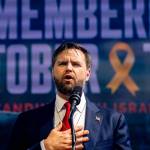
JD Vance speaking to a crowd
Christianity Today November 7, 2024
Jeff Swensen / Stringer / Edits by CT

Vice President–elect JD Vance has an opportunity to play an important role in the incoming administration and the Republican Party’s realignment following Tuesday’s election results: No one is better situated than Vance to serve as a bridge between the ascendant populist wing of the GOP and the Christian social conservatives who remain an important part of the party’s electoral coalition.

Vance is an evangelical convert to Catholicism, and it is social conservatism more than the economic variety that defines his politics. He is a family man, genteel where President-elect Donald Trump is brusque. His faith journey was an important part of his initial appeal as an author and commentator, even before he ran for the Senate and joined the 2024 Republican ticket.

In fact, it is Vance’s style of traditionalist Catholicism that differentiates him from free-market conservatives in a party that is increasingly pitching itself to workers, not management. For better and worse—like the now-infamous “childless cat ladies” remark—he has focused his attention on strengthening the family, sounding the alarm over falling fertility rates and the practical struggles of working parents.

“At a fundamental level, if we’re worried about moms and dads not being as involved at home, if we’re worried about rising rates of childhood trauma, if we’re worried about the fact that in this country today, for maybe the first extended period in our country’s history, we’re not even having enough children in this country to replace ourselves—if we’re worried about those problems,” he said at a gala in Washington, DC, in 2019, “then we have to be willing to pursue a politics that actually wants to accomplish something besides just making government smaller.” 

Sometimes small government is a priority, Vance added, but it’s not the highest priority in his pro-family “vision of conservative politics.”

That theme has been consistent for Vance since well before this campaign cycle, and he routinely ties his ideas about family back to his faith. “How do you be a better husband, a better man, a better father?” Vance asked in a podcast the year before he became a Republican senatorial nominee. 

“How do you build a sense of masculinity that is protective and defensive and aggressive but isn’t just showy?” he continued. “Elites don’t care at all about the difference between men and women and how we need to inculcate masculine virtues and feminine virtues. But Christianity really does.”

Trump doesn’t talk like this. But many conservative Christians who have voted for him do. The president–elect, a thrice-married, twice-divorced, one-time playboy and sexual libertine, has developed quite a following among people who care deeply about family cohesion and declining birth rates. 

Trump’s selection of his first running mate, Mike Pence, was intended to address that dissonance. He needed to establish ties to evangelicals and other social conservatives, not least because he’d briefly run for the presidential nomination of Ross Perot’s Reform Party as a “very pro-choice,” socially liberal candidate in 1999. Even in 2016, the organized Christian Right largely preferred rival Republican candidates like Ted Cruz. That cycle, journalist Tim Carney found Trump had a strong appeal for Christians who professed certain evangelical beliefs but no longer attended church regularly. 

But Pence was always an uneasy fit with Trump’s bid to remake the GOP in his populist image. Pence’s conservatism was that of the Ronald Reagan era. He served as Trump’s ambassador to the old-guard Republican leadership, lawmakers like Mitch McConnell and Paul Ryan, never effectively bridging the gap between conservative Christians and Trump’s crude populism. It’s no accident that Pence ultimately broke with Trump’s wider political project after their falling out over January 6, 2021, and began inveighing againstthe “siren song of populism.”

Vance has taken a different route, not hearkening back to the small-government approach of the Reagan years but pushing the GOP toward a new kind of Christian conservatism. “Look, my basic view is that if the Republican Party, if the conservative movement stands for anything—and I’m running as a politician trying to advocate for what we should stand for—the number one thing that we should be is pro-babies and pro-families,” The New York Times quoted him as saying at a conservative Catholic event. “That’s what this whole thing is all about.”

Whether that will remain “what this whole thing is all about” for Vance—and Christians who want a pro-faith, pro-life, pro-family conservatism from the new Trump administration—remains to be seen.

Trump has borrowed some of Vance’s family rhetoric himself. But he has also compromised on abortion—despite facilitating the reversal of Roe v. Wade through his judicial appointments—and endorsed in vitro fertilization practices that entail a high amount of embryo destruction. Unlike Pence, Vance has gone along with this. And where Pence did the right thing in certifying the 2020 election results, Vance has raised questions about what he would have done in a similar set of circumstances.

Thus there’s no guarantee Vance will steer Trump’s party more successfully than Pence did, whatever we conservative Christians may hope.  But there is an opening here to create a brand of faith- and family-friendly politics that moves beyond the limitations of the old Moral Majority. Vance, as understudy to a term-limited Trump, could be the right person to take that chance. 

W. James Antle III is executive editor of the Washington Examiner magazine.

Church Life

How to Pray for Persecuted Christians

Leaders from Asia, the Middle East, Latin America, and Africa offer guidance on interceding for believers suffering for their faith.

Barbed wire in the shape of praying hands on a black background.
Christianity Today November 7, 2024
Illustration by Elizabeth Kaye / Source Images: Getty

Each November, the World Evangelical Alliance (WEA) calls for an International Day of Prayer for the Persecuted Church and encourages churches around the world to participate. We think the global church should invest more prayer and resources in supporting brothers and sisters in challenging countries. But beyond that, hearing their stories and priorities helps us remember what should be important in our own lives.

Below, six Christian leaders dealing with threatening situations around the world discuss what they have faced or are currently experiencing and suggest how to pray for those under persecution.

David Sangbok Kim

Senior pastor, South Korea

Why I pray: In 1950, I fled North Korea for South Korea at age 11 with three of my older siblings. We were separated from our family for decades. After studying theology in the US, I eventually returned to Seoul as a pastor.

In 1984, I finally went back to North Korea. When I met my mother, then 80 years old, she surprised me by singing “O For a Thousand Tongues to Sing” and other hymns that she used to sing with me as a child!

My mother had brought me to faith in Christ before I left home, but my younger siblings, who had stayed in North Korea, were surprised to discover her faith in Christ, which she had sustained secretly for over 30 years.

My mother told me that she prayed alone, in tears, in the corner of her room when no one was around. She had to bury her Bible and hymnbook in the yard. If these items were ever found in the house, the whole family could be sent to a labor camp until they died. My younger siblings, had they known that their mother was doing such things, would have been required to report her to their teachers, who in turn would have had to tell the police.

How I pray: Pray for the secret Christians in North Korea. To survive, they have to hide their faith. Pray that they may continue to remember the gospel story in their hearts. Pray also for opportunities to share the gospel safely. Pray that the North Korean government may be changed to one that permits freedom. And pray for the Chinese government to send North Korean defectors to South Korea, not back to North Korea. 

Jack Sara

President, Bethlehem Bible College, Palestine

Why I pray: For centuries, the church in the Middle East has lived in survival mode.

Conversion to Christianity is illegal in most countries. Even in nations with less extreme regimes, conversion can provoke public outrage. Family members often consider conversion a source of dishonor, leading to significant internal strife.

Anti-Christian sentiment has been growing in the Holy Land, particularly among Jewish groups in Jerusalem. The recent rise of radical Islamic movements has also intensified hardships for Christians in the region. ISIS has specifically targeted Christians for extermination or expulsion, leading to a mass exodus from areas like the Nineveh Plains, a historically Christian region in Iraq.

How I pray: Pray that God will raise up resilient leaders who will set an example of courage and faithfulness, guiding the church through ongoing pressures. Pray that Christians in other parts of the world will not only provide practical help, support, and encouragement to these communities but also learn from their endurance, recognizing the deep spiritual insights that emerge from their struggles.

Ed Retta

Latin America director, WEA Global Institute of Leadership

Why I pray: Three Latin American countries currently stand out as places where Christians are threatened. In Venezuela, there are two groups of Protestants: one that operates with government consent and one (affiliated with the WEA) that does not. Thousands of Christians have left the country, mainly due to its severe economic hardship.

In Cuba, the church has been under persecution ever since Fidel Castro’s rise to power in 1959. Churches are not allowed to construct buildings. All institutions are controlled by the government. Government informants are in every church. The government tends to favor religions such as Santería and witchcraft while opposing the church. Many pastors and Christian leaders have left Cuba due to dire economic need.

Nearly half of Christians in Nicaragua are evangelical, but its government is openly hostile to Christians. Officials have shut down Baptist, Adventist, and Catholic universities and have forced churches to close while denying them legal standing. Some Christian leaders have suffered beatings in front of their homes.

How I pray: Pray for the church in these countries to persevere boldly as an effective public witness, to be protected from government abuse and bullying, and to embrace and leverage the positive results of persecution—namely, enhanced devotion, endurance, and purity. And pray that the global church will become informed and care.

Mike Gabriel

Head of religious liberty, National Christian Evangelical Alliance of Sri Lanka

Why I pray: In many parts of Asia, persecution is a daily reality for many Christians. It often comes in the form of social exclusion, discrimination, and violence. Today, we are witnessing an evolving landscape of violations. On one hand, we are seeing increased state restrictions and involvement in matters of religious expression. One example is state regulation of places of worship. On the other hand, we are seeing rising religious intolerance, targeted online hate, harmful content against religious minorities, and an intensification of disputes concerning sacred sites. On top of this, we cannot overlook the gendered dimensions of religious freedom violations, particularly affecting minority women of faith.

How I pray: Pray for the work God is doing in us—building patience, strengthening witness, deepening love, and shaping us so that we can transform others. Ask God to use these hardships to strengthen his people and grow his kingdom. Pray also for forgiveness, that the hearts of our persecutors may be softened and that we can continue to shine brightly for Christ in our communities.

James Akinyele

Executive secretary and CEO, Nigeria Evangelical Fellowship

Why I pray: Nigeria currently leads the world in the number of deaths related to religious violence. More than 50,000 Christians have been killed in the last 15 years. Others have been wounded, sexually abused, forcibly displaced from their homes, and utterly traumatized. Christians have been left destitute by the destruction of their farmlands and villages, and some have been unable to return because the attackers have taken over their properties.

We are not seeing an end to these atrocities. The government is aware of these incidents, but action is limited.

How I pray: Pray for our government to have the political will to act against Islamic militias; for the international community not to turn a blind eye but to engage with Christian organizations and to support victims through seeking justice and redress; and for the Christian community to persevere and receive justice.

Helene Fisher

Chief advocacy officer, Gender and Religious Freedom, UK

Why I pray: Persecutors use every means at their disposal to diminish the strength of the Christian community. They favor persecution that brings shame and provokes rejection of believers. Therefore, what happens after an incident can leave as significant an impact as the event itself.

Community rejection of victims is integral to the experience of persecution, and persecutors rely on it for success. When an incident of persecution results in the body of Christ acting unlike Jesus, then the Adversary has won.

At the Fourth Lausanne Congress in September, I heard from a woman who escaped from the Boko Haram terrorist group. She said the biggest shock she received was that she wasn’t welcomed as a survivor when she reached home. Instead, she was treated as a tainted, shameful outcast.

How I pray: Pray for God’s persecuted children to have the courage to live in the fullness and power of his blood shed for us. Ask that the church may resist cultural pressures to reject or belittle those who have suffered sexual assault, lost their jobs, or been in prison. Pray that the church can become a community of trust, freedom, empowerment, and acceptance (John 13:34–35) and that it may glorify God even when words are forbidden.

Peirong Lin is the deputy secretary general of the World Evangelical Alliance.

Culture

‘The Best Christmas Pageant Ever’ Could Be A Classic

The new movie from Dallas Jenkins is at times too on the nose—but also funny, heartfelt, and focused on Jesus.

Beatrice Schneider as Imogene Herdman and Judy Greer as Grace Bradley in The Best Christmas Pageant Ever

Beatrice Schneider as Imogene Herdman and Judy Greer as Grace Bradley in The Best Christmas Pageant Ever.

Christianity Today November 7, 2024
Allen Fraser for Lionsgate

Last year, a New York Times article argued that Elf and Love Actually, released two decades ago,were the last classic Christmas movies to play in theaters. “On the one hand, thanks to the churn at places like Hallmark and Lifetime, which will collectively release upward of 50 new holiday movies [in 2023], it feels as if the genre is more robust than ever,” wrote the reviewer. “On the other, the idea of getting a new film that’s as revered and rewatched 20 years on [as these two] feels far-fetched.”

Could The Best Christmas Pageant Ever, out this week, beat the odds?

Based on the beloved 1972 book by Barbara Robinson, the film follows Grace Bradley (Judy Greer), who’s running her local church’s Christmas pageant for the first time. Unexpectedly, the Herdmans—known around town as “the worst kids in the world”—show up in the pews and attempt to steal the show. Grace and her family must decide whether they’ll reject the troublesome children and “save” the pageant or welcome them, allowing everyone to discover the true meaning of Christmas.

Spoiler alert: They choose the latter. Daughter Beth Bradley reflects, “Because of my mom and her understanding of the Christmas story, the Herdmans finally got what they needed most all along: a community.”

Pageant is directed by The Chosen showrunner Dallas Jenkins, who calls it “the movie that I was born to make.” He wrote, “For almost 20 years, [my wife] Amanda and I have hoped for, prayed for, and cried for the opportunity” to adapt the book that made them weep when they read it aloud to their children.

Congratulations to Jenkins: The Best Christmas Pageant Ever is pretty much everything you’d want in a faith-based family Christmas movie. It’s heartfelt, self-aware, and genuinely funny, as when the Herdmans interrupt the nativity story with questions. Here’s one exchange:

“What’s frankincense and myrrh?”

“Oils and perfume.”

“What kind of cheap king hands out oil? You get better presents at the firemen’s shelter!”

It also offers an explicitly Christian message about welcoming sinners and outsiders. As one punchy line puts it, “Jesus was born for the Herdmans as much as he was for us.”

The Bradleys are also as good a movie depiction of a Christian family as I’ve seen. Grace and her husband, Bob (Pete Holmes), are loving but not sugary, affectionately ribbing each other for their foibles. When their daughter, Beth (Molly Belle Wright), expresses her frustrations with the Herdmans, her parents neither overindulge nor condemn her. The family supports each other while also pointing out opportunities for growth—such as when Bob takes the kids on an empathy-inducing trip to see the Herdmans’ rundown shack.

It’s hard to remember a movie that so effectively “puts Christ back in Christmas.” Whereas other Christmas classics sidestep the Nativity altogether, opting instead for vague appeals to joy and hope, Pageant normalizes the centrality of Jesus. The Herdmans’ story of transformation requires them to learn the story of how much God loves them.

That’s not to say the movie is perfect. It’s relentlessly plot-heavy and at times too on the nose, a problem exacerbated by an ever-present voiceover from grown-up Beth Bradley. Oftentimes, the voiceover is used to humorous effect. But it also overstays its welcome. There’s barely a scene that goes by where Beth isn’t telling us what to think or feel, ultimately creating too much distance between the audience and the story. Toward the film’s end, her narration slips into moralizing about the message, diluting the magic of those final scenes.

What is that message? Because Jesus came to redeem the sinner and the outcast, our job is to do so as well rather than exclude them. Pageant rightly wants us to understand that believers should welcome marginalized, sinful people rather than excluding them. It’s a powerful, heartwarming Christmas—and Christian—message. (One clunky line has the church’s mean girl scoff that the Herdman’s version of Mary and Joseph “look like refugees.” Point taken.)

But this message is complicated by the fact that the Herdmans are legitimately bullies. And they don’t stop bullying when they join the church. In fact, they get their parts in the pageant by threatening physical harm to other kids! In this case, Christian hospitality occasionally comes at the expense of vulnerable community members.

Today, the church is locked in heated debates about how to balance Christlike inclusion with protecting the flock and how to extend forgiveness in the aftermath of wrongdoing. Sometimes, the people who need welcoming do try to harm those who welcome them. Can boundaries coexist with mercy? The only people in Pageant who work hard to uphold community norms are a few uptight, pharisaic church women.

Ultimately, The Best Christmas Pageant Ever is a beautiful picture of redemption. The Herdmans lie, steal, and bully. And yet, by means of the Bradleys welcoming them into their church, they are given the chance to be different. This is what Christ did for us: “While we were still sinners, Christ died for us” (Rom. 5:8). Christmas marks the moment when Jesus came into the world to give us that opportunity, which is why we—the Herdmans of the world—celebrate it so joyously.

Joseph Holmes is a Christian culture critic and host of the podcast The Overthinkers.

Ideas

What to Do After the Election

Staff Editor

Prudence from Ecclesiastes and exhortation from Hebrews for the jubilant and disappointed alike.

Voters Attend Watch Parties During 2024 US Presidential Election
Christianity Today November 6, 2024
Bloomberg / Getty / Edits by CT

Neither outcome of this presidential race would’ve surprised me. I don’t like to make predictions, but in my capacity as my former roommate’s mom’s personal, text-on-demand pundit, I did venture back in August my instinct that Donald Trump would take my state of Pennsylvania and, with it, the victory. And so he has.

Neither outcome would’ve pleased me, either. I know that’s the kind of thing for which partisans have no patience, especially while the win or loss is so fresh. But the truth is, I don’t want Trump or his rival, Kamala Harris, to be president of these United States. I believe he will do (and she would have done) a bad job. In some matters, it would’ve been the same kind of bad job in either administration; elsewhere, I think one or the other is worse.

I don’t want to parse all that here. The decision is made, and there will be plenty of time for policy and poll analyses later. Here, I want to speak to fellow Christians from my spot outside each camp but friendly with people in both. I keep returning to two passages from Scripture as I mull this result and consider what has not changed in and for ourselves and our neighbors.

“There is a time for everything,” Ecclesiastes 3:1 says, and this week is a time for Ecclesiastes, especially its eighth chapter, which is brimming with prudence and equanimity in the face of political and social turbulence.

“Obey the king’s command,” advises 8:2—but not, apparently, because he is a good king. Act instead out of duty to God (v. 2), refusing to “stand up for a bad cause” while recognizing that, realistically, the king “will do whatever he pleases” (v. 3).

Don’t spend too much time on worries and anticipations, whether your concern is the Trump administration or backlash against it: “Since no one knows the future, who can tell someone else what is to come?” (v. 7)

For all we may hope or fear now, we do not know what will happen next. Sometimes, “a wicked person who commits a hundred crimes may live a long time” (v. 12). Sometimes, it is “the righteous who get what the wicked deserve, and the wicked who get what the righteous deserve” (v. 14).

But sometimes, “a man lords it over others to his own hurt” (v. 9). And sometimes, “because the wicked do not fear God, it will not go well with them, and their days will not lengthen like a shadow” (v. 13). Sometimes, even, “it will go better with those who fear God, who are reverent before him” (v. 12).

In any case, our business must be the state of our hearts before God, for “wickedness will not release those who practice it” (v. 8). We cannot always keep its claws off others, but with God’s help we can tear them off of ourselves.

Yet rejection of wickedness and a bad cause is not enough. We don’t want to be houses merely swept clean (Luke 11:25) but filled with the likeness of Christ, rebuilt as little outposts of his kingdom, recognizable as his claims.

Add, then, to the prudence of Ecclesiastes 8 the exhortations of Hebrews 13. This is the chapter that declares, “Jesus Christ is the same yesterday and today and forever” (v. 8), and that is a timely word right now. But so too are the chapter’s many instructions for the Christian life under duress.

First and foremost, “Keep on loving one another as brothers and sisters” (v. 1). Show “hospitality to strangers” (v. 2), and “remember those in prison as if you were together with them in prison, and those who are mistreated as if you yourselves were suffering” (v. 3). Never is that advice more needed than if we find ourselves in power. The first readers of Hebrews were a poor and powerless minority in their society, yet they had a duty to the stranger, the prisoner, and the suffering. How much more, then, do we?

Beyond that, heed church authorities (v. 17) and avoid “all kinds of strange teachings” (v. 9). Honor marriage and reject sexual immorality and love of money, two of our culture’s greatest idols (vv. 4–5). Be content, “because God has said, ‘Never will I leave you; never will I forsake you’” (v. 5).

It is in this context that we can “say with confidence, ‘The Lord is my helper; I will not be afraid. What can mere mortals do to me?’” (v. 6). It is in this context that we recall that “here we do not have an enduring city, but we are looking for the city that is to come” (v. 14).

And yet, the present city is unmistakably, unignorably before us. Maybe you are happy with its new direction, or maybe you are mourning. In either case, all the above remains the same—and so do we.

Contrary to some sensational election responses, America is not different than it was on Monday, and neither are our duties as Christians. The family members, friends, and fellow congregants who voted differently from us all thought differently from us a few days ago, too. What we love about them is the same. The kindnesses they have done us still happened. And what we find misguided or incoherent or annoying about them is the same, too. They were sinners then and are sinners now. We all are.

“Pray for us,” as the author of Hebrews pleads in 13:18. “We are sure that we have a clear conscience and desire to live honorably in every way,” but so often we are weak. We err. We sin. We strain harder to see tomorrow than to see Christ. There is a time for everything, and this is a time for humility, grace, and prayer.

Bonnie Kristian is the editorial director of ideas and books at Christianity Today.

addApple PodcastsDown ArrowDown ArrowDown Arrowarrow_left_altLeft ArrowLeft ArrowRight ArrowRight ArrowRight Arrowarrow_up_altUp ArrowUp ArrowAvailable at Amazoncaret-downCloseCloseellipseEmailEmailExpandExpandExternalExternalFacebookfacebook-squarefolderGiftGiftGooglegoogleGoogle KeephamburgerInstagraminstagram-squareLinkLinklinkedin-squareListenListenListenChristianity TodayCT Creative Studio Logologo_orgMegaphoneMenuMenupausePinterestPlayPlayPocketPodcastprintremoveRSSRSSSaveSavesaveSearchSearchsearchSpotifyStitcherTelegramTable of ContentsTable of Contentstwitter-squareWhatsAppXYouTubeYouTube