Theology

‘Lord, When Did We See You in Foster Care?’

Caring for foster children can be difficult—even devastating. It is also a revelation of the love God gives and expects of his people.

Christianity Today January 29, 2024
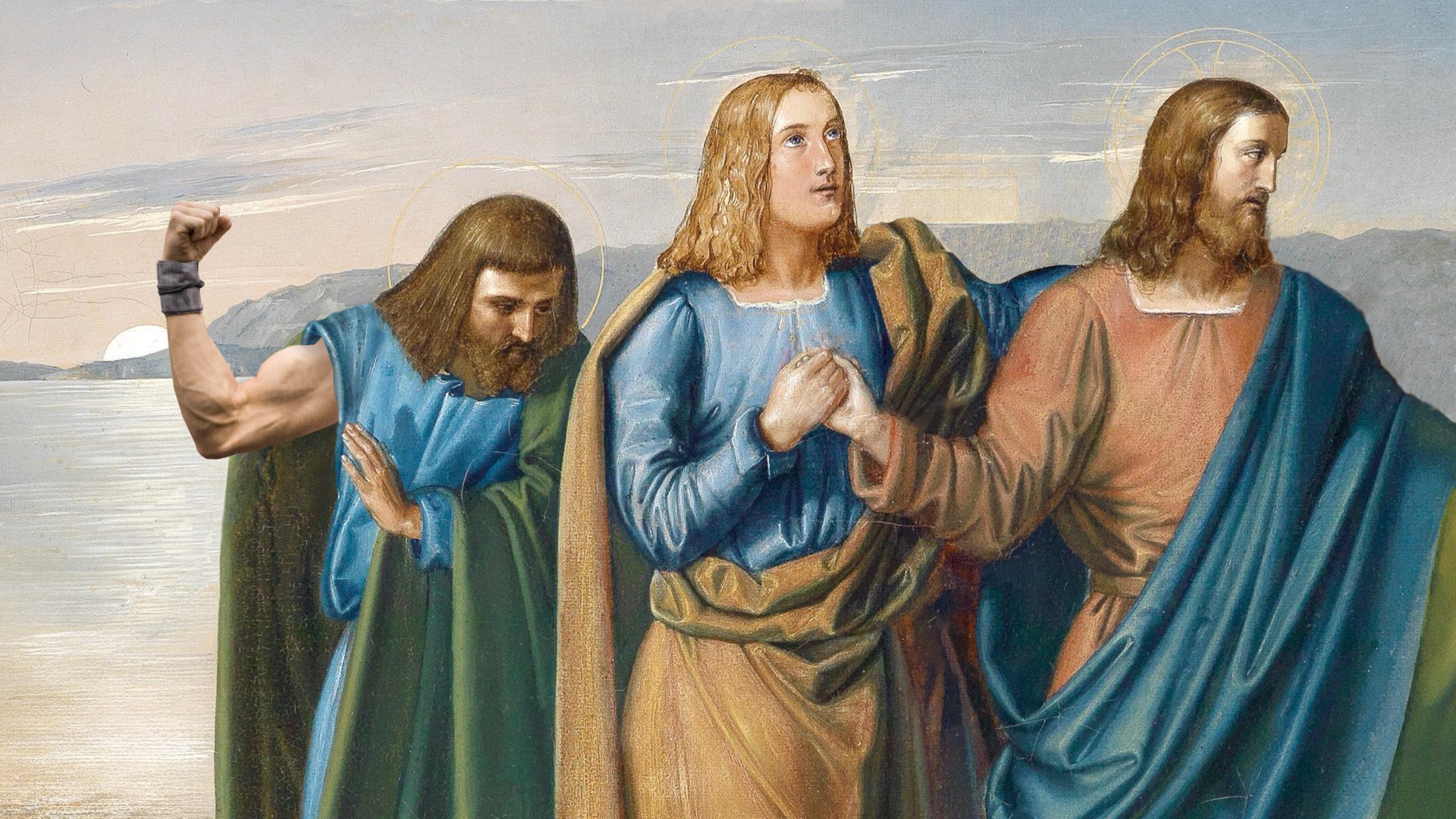
Illustration by Elizabeth Kaye / Source Images: Wikimedia Commons / Pexels / Unsplash

“Let’s be honest,” my friend Joe told me, “I will probably never be a foster parent. I admire what you do, but that’s not for me.”

I had suggested foster care after hearing him describe his volunteer service as uninspiring. Joe’s response bothered me, but I understood. He had seen enough of my family life to know that it often wasn’t pleasant.

Over a decade ago, my husband and I welcomed three siblings, ages one, two, and three, as foster children. We later adopted them, feeling equipped for our “adoption journey” with specialized parenting methods and a strong support network. The children were sweet and smart, seemed to attach well, and hit their obvious developmental milestones.

Yet throughout their elementary years, there was a low rumble of troubles: extreme outbursts, surprising dishonesty, and atypical peer relationships. When they reached adolescence, the rumble became a roar.

We tried to fill “normal” parent roles while piling on more and more “extras” to help them adjust: sports, tutoring, therapy, individualized education programs, social worker visits, doctor’s appointments, and medications. Then we nearly drowned in a swell of psychiatric evaluations, police reports, hospital stays, insurance appeals, and out-of-state residential treatment for two of our three children. It was a mental health “tsunami” of the kind Julia Duin described in a 2022 Newsweek story about adoptive families who find out the hard way that children with early trauma often have overwhelming developmental needs and behaviors.

My friend Joe was in ministry at his church, and his definite No thank you made me sad and a little indignant. Shouldn’t we Christians be the first to take in foster kids? But if foster parenting seemed too hard, I reasoned, it was right of him to say so. Maybe I was sad for the children who never find a family and age out of foster care at 18 to face greater odds of going to prison than college. Or maybe it was different altogether—a regret that Joe might miss meeting the Jesus who is present with the weak and unlovely.

Or, as I finally realized, maybe I was feeling alone.

I am used to feeling alone as a foster parent. My family rarely fits in and often needs special accommodations from our neighborhood, school, church, and friends. Even long-standing relationships with other family members have deteriorated because spending time together is awkward given our children’s current behaviors.

I am used to feeling alone as a caregiver to multiple children with very high needs. The neglect our children experienced manifests now as developmental disabilities, and we spend most of our time trying to figure out what will help them. It is often difficult to get enough sleep and show up to work, let alone see friends.

And I am used to feeling alone as a constant companion to children from hard places. I am not literally alone, of course, but the relationship is not mutually gratifying. I pay a moral cost as a first responder to the deceit, manipulation, learned helplessness, carelessness, and violence often practiced by those whose early childhood broke their trust and sense of self. There’s no other way to say it: “Hurt people hurt people.” Children bearing such pain will inevitably share it regularly with their caregivers.

As my conversation with Joe ended, I had a sickening sense of standing on one side of a chasm, with church people—my people!—on the other side, the cord of communion between us snapped.

The chasm between US foster children and the church is very real, not only for adoptive families like mine but more starkly for the approximately 400,000 kids in family limbo. For these vulnerable members of our society, the church has little to offer. A few families are heroic or reckless enough to wager everything to foster, but children are falling through the cracks, and most of the church stands at a distance.

That distance is growing. It’s true that churchgoers foster or adopt at higher rates than non-churchgoers. But personal connection with foster children within the church is still rare and has become rarer in the last five years, according to a recent Lifeway Research study. Between 2017 and 2022, the percentage of Protestant churchgoers in America who know someone in their church who fosters children dropped by over a third—from 25 percent to just 16 percent.

That number suggests the experiences of foster children are not particularly on our minds, and concern for them is not shaping our congregations. I consider this a problem, because from the giving of the Mosaic Law (Ex. 22:22, Deut. 24:17) to the establishment of the early church (James 1:27) to the Christian almshouses of the Middle Ages, providing for orphans and strangers has been an established command and privilege of belonging to the Lord. Caring for vulnerable children is characteristic of the people of God. It is also formative: Caring for such children makes us more his people.

Moreover, caring for foster children is crucial to a consistent life ethic, which was well articulated within the evangelical orphan care movement of the early 2000s. Advocates calculated that that if one family per American church adopted a child, the foster care system would stand empty. That movement peaked around 2009, when the Christian Alliance for Orphans observed the first “Orphan Sunday.”

Fifteen years later, energy has waned, and foster (including foster-adoptive) families are reckoning with the huge challenges of caring for their children. “I feel like we’re being destroyed,” I told my sister-in-law at several critical junctures, like when my son had violent outbursts but insurance refused to pay for residential treatment, or when both my daughters were hospitalized for behavioral reasons one Christmas.

Destroyed is a strong word, but I do not qualify it. I have heard well-resourced and compassionate foster parents tell how they lost their health, marriages, or jobs while caring for their children. I know several who bought lottery tickets in hopes of paying out-of-pocket medical expenses of tens or hundreds of thousands of dollars. I just attended a farewell party for a family who decided that leaving their tight-knit community and moving cross-country offered the best chance to care for their children. Fostering has brought damage to our own home, health, livelihood, reputation, relationships, and financial position.

It has also battered our faith. After almost 15 years of purposeful caregiving, we see our children at risk of dropping out of school, entering the justice system, being permanently estranged, and stuck in chronic mental health crises. They possess life but seem caught in perpetual hardship that destabilizes our whole family. Despite our fervent prayers, healing seems far off, leaving us painfully confused over just what it means for God to be concerned for them—indeed, for all of us.

I would like God’s people to consider two questions: How can we improve care for these children? And what would have to change for us to actually do it?

We can improve care by devoting ourselves to mending the enduring harm to a child caused by early neglect and abuse. Children live with disorders of the most basic levels of cognition and development that currently cannot be characterized accurately or treated reliably.

This may seem beyond the scope of what local churches can directly address, but I believe that when congregations are closely connected with these children’s experiences, they will pivot their energies to discover and develop effective ways to tend to their needs, whether as individual doctors, ministers, teachers, therapists, lawyers, advocates, and social workers, or as collaborative groups.

Congregations can also contribute to the well-being of foster children by supporting their households here and now. The challenges of “normal” parenting have an outsized effect on foster families. The expected tasks of supervision, transportation, housekeeping, coaching social-emotional skills, education, and maintaining community ties are greater for foster families because their children’s needs are greater in frequency, duration, and intensity compared to kids with healthy early childhoods. Church members will meaningfully share these burdens while being spiritually attuned companions to families in the throes of ambiguous grief.

The commitment I am describing is long-term and multi-layered, far more than a meal train for a few weeks. It must become part of the general concern and rhythms of the church.

Financial support is also very important for children to access appropriate mental health care. Psychiatrists, therapists, and other mental health providers participate with insurance networks at significantly lower rates than other medical practitioners. About 55 percent of psychiatrists, for example, take insurance, compared with 89 percent of other doctors. An even lower proportion accept Medicaid, which is the sole insurance available to many foster kids.

This means specialized care for complicated disorders may only be available for “private pay,” leaving families with an untenable choice: endanger their finances or go without. Kids with untreated trauma disorders may wind up in hopeless cycles of unfinished school, unemployment, substance abuse, homelessness, and crime—but a local church could finance care and even develop therapeutic ministries that an individual foster family cannot.

My second question—about what would have to change for us to actually provide this care—is even more complicated.

On one hand, we know that following Jesus entails difficulty and self-denial (Matt. 16:24). And the theological case for caring for orphans and other disenfranchised strangers is compelling. One of Jesus’ starkest sermons taught that God expects us to personally clothe the unclothed, visit prisoners, welcome strangers, and care for the sick—and that failure to do so leads toward eternal punishment (Matt. 25:34–40).

On the other hand, the hardships of foster care are real. Foster children can be incredibly disruptive to the stable, secure, nuclear family that American Christians—those in the orphan care movement included—tend to idealize. Foster care is necessarily risky and often uncomfortable, and a desire for security and predictability is natural. As followers of Christ, we need to pay attention to unnatural or, rather, supernatural reasons to take that risk.

When we can consistently understand family as a place of biblical hospitality toward biological and foster children, God’s people will have the supernatural and practical reasons to move toward children from hard places rather than retreat into private comfort. By imitating God in valuing risky hospitality, families and their accompanying churches can welcome and offer permanency to children who will likely bring and share great pain within their homes.

The call of God is rarely without suffering, and I suspect that, at bottom, our failure to care for foster children has to do with wanting to avoid suffering. One result is that foster children, who are precious in the sight of God, grow up without being wanted and loved by someone in particular. But another result is that we Christians miss out on key insights about the suffering God we worship—the one who sacrificed himself to reconcile us to himself forever. That sacrifice gives us the strongest possible motive to lovingly care for these children. Christians have the most to give.

But the converse is also true: Christians have the most to gain. As followers of a God who describes himself as a father to the fatherless, a friend to the stranger, and a defender of the weak (Deut. 10:18, Ps. 10:17–18, Ps. 68:5), we do not know God as we ought to if we do not become like him in whom and how we love (1 John 4:7–21).

God is near to the brokenhearted (Ps. 34:18); he sent his Son to heal the brokenhearted (Luke 4:18); and where they are, Jesus is (Matt. 25:40). The lives of foster children are a great gift, and from their place of weakness and dependence, they offer us another gift: a chance to encounter Jesus and to know at our heart’s core some of the most profound realities of God’s love.

This is the paradox: There is real hardship in caring for children from hard places. But in that hardship, we can come to better know the one who overcomes all hardship, mourning, crying, and pain (Rev. 21:4). Caring for foster children is devastating—and it is a revelation of God’s healing, friendship, and love beyond what I could ask or imagine.

Wendy Kiyomi is an adoptive parent, scientist, and writer in Tacoma, Washington, whose work on faith, adoption, and friendship has appeared in Plough Quarterly, Image Journal, and The Englewood Review of Books. She is a 2023 winner of the Zenger Prize.

News

Father Sues Assemblies of God for Alleged Abuse of Teen

Texas lawsuit claims that the minor was a victim of a serial predator as well as student leaders in the campus ministry Chi Alpha.

Harris County District Court

Harris County District Court

Christianity Today January 26, 2024
WhispertoMe / Wikimedia Commons

A church in a Texas college town, a chapter of the campus ministry Chi Alpha, and its sponsoring denomination, the Assemblies of God, are being sued by a father who alleges that the leaders he entrusted to disciple his teenage son instead got him naked in ministry settings and used their positions of authority to sexually abuse him.

The lawsuit, filed Thursday, follows a tumultuous several months for Chi Alpha. Since last spring, a serial predator has gone to jail for child sex abuse, chapter leaders across a half-dozen Texas universities have been dismissed, and the organization’s national director resigned.

The majority of the departing leaders had ties to Daniel Savala, a registered sex offender who groomed and abused Chi Alpha students for decades at his home in Houston. He was indicted last year on child sexual abuse and trafficking charges.

Though Savala wasn’t officially a part of Chi Alpha or the Assemblies of God, the list of leaders who have left reflect the reach of his informal network across Chi Alpha in Texas.

The recent lawsuit alleges that Savala molested a 13-year-old in 2021 and that four Chi Alpha students continued to sexually violate the youth group member through naked and inappropriate games in ministry settings.

The teenage victim attended Mountain Valley Fellowship in College Station. The Assemblies of God church had been led by Eli Stewart, a longtime Chi Alpha leader who launched the chapter at nearby Texas A&M University.

The victim’s father, Stephen Holt, is suing the church and the local Chi Alpha chapter as well as the General Council and North Texas District Council of the Assemblies of God for “malice” and “gross negligence” for failing to warn parents and protect children from abuse.

Last year, Stewart was fired by Mountain Valley Fellowship for “sinful practices” and neglecting “his duty to protect his flock from a known predator.” An investigation is ongoing.

Stewart first met Savala at his childhood church in Alaska. He maintained a relationship with him through a previous child sex abuse conviction and continued to endorse him as a spiritual leader until an online forum exposed Savala last year.

The lawsuit alleges that Stewart allowed Chi Alpha members at A&M to lead the youth group and take trips to Savala’s home, even though Stewart was aware of his status as a sex offender.

According to the filing, the minor victim sat naked and engaged in inappropriate contact with Savala in his home sauna in October 2021, which resembles many other accounts of abuse by Savala. The following year, the boy went skinny dipping during a leadership trip out of state and played games involving touching genitals at a Chi Alpha event.

It blames the church for putting the college students in positions “where they would have unsupervised control over minor children and which engendered trust creating an environment where they would have unsupervised control of minor children.”

Holt told CT that a week before learning about his son’s abuse, he had strange dreams. During prayer the next morning, he said he sensed the Lord telling him to prepare for something ahead, but he didn’t know what.

“We were overcome with so many emotions when we found out,” Holt said. “The Lord in his own awesome way prepared us for this, even before finding everything out … This situation could have easily driven us away from the Lord but it has actually brought us closer to him.”

His family has left Mountain Valley Fellowship for another church.

Chi Alpha hasn’t publicly responded to questions around Savala and the investigations other than to refer to an updated statement from the Assemblies of God.

The denomination reiterates that Savala was not officially a part of Chi Alpha and that the national office “made relevant Chi Alpha leaders aware of his status and warned them to cease contact and not permit students or leaders to be around him” after a 2018 report. But multiple chapters continued to visit him, including A&M.

CT reached out to the Assemblies of God by email for comment on the lawsuit on Friday evening and did not hear back by publication time.

Chi Alpha victims and advocates on the “XA and the Lion’s Den” forum have been calling for the organization to take responsibility and acknowledge a bigger problem that allowed Savala to continue to abuse and others to do likewise.

“The entire system in certain parts of Chi Alpha must be reformed, and new leadership needs to be implemented,” one post read. “The Bible says in Galatians 5:9, ‘A little leaven leavens the whole lump.’ So even a little bit of ‘half-truths,’ a little bit of ‘perverted teachings,’ a little bit of ‘group masturbation in Bible studies’ is the leaven that can affect and destroy the entire organization.”

Chris Hundl, who was mentored by Savala and had led the chapter at Baylor University, was also arrested last year for bringing boys to masturbate in Savala’s sauna.

Other campus leaders who arranged for students to visit Savala for mission trips, for discipleship, or for counsel around sexuality have either stepped down or lost their jobs: Jason Bell at Sam Houston State University in Huntsville; Josh Bell at Rice University in Houston; Daniel Young at the University of Texas Rio Grande Valley; and Johnny Hauck at the University of Texas at San Antonio.

A spokesman for the Assemblies of God confirmed to CT that they “are not serving in Chi Alpha positions” and that “actions taken as a result of the investigations have already resulted in various actions including the dismissal of ministers.”

Chi Alpha’s district director for New Mexico and Texas, Eli Gautreaux, was also suspended during an investigation, and the denomination confirmed he no longer holds the position. Chi Alpha’s national director, E. Scott Martin, resigned.

In 2022, Will Robinson at Texas A&M University–Corpus Christi was also arrested on separate child sex abuse charges.

The online forum posted Holt’s lawsuit on Friday with a message saying, “XA Lions Den and our moderation team ask that you please pray for peace and courage for this young man and his family and encourage them with your comments during this time of their life. We ask that you pray for swift justice and complete accountability for all participating parties.”

Culture

‘How Great Thou Art’ Gets a New Verse in Matt Redman Collaboration

Songwriters and hit worship singers including Matt Maher, Chris Tomlin, and Mitch Wong come together to celebrate the hymn’s 75th anniversary.

Matt Redman, Taya, Matt Maher, and others sing a new release of "How Great Thou Art."

Matt Redman, Taya, Matt Maher, and others sing a new release of "How Great Thou Art."

Christianity Today January 26, 2024
Matt Redman / Integrity Music / YouTube

T he choir and Mr. Shea now sing for you “How Great Thou Art.”

Cliff Barrow’s announcement at Billy Graham’s New York Crusade at Madison Square Garden on June 16, 1957, preceded the televised performance that helped cement the hymn’s position as a fixture in American Protestant repertoire.

The choir of hundreds began the performance with the last line of the chorus: “How great thou art, how great thou art.” Then George Beverly Shea’s famous baritone introduced the hymn to millions of viewers—an estimated 96 million by the end of Graham’s New York Crusade.

As Shea sang the second verse, taking expressive liberties with the tempo, the text at the bottom of the broadcast invited viewers to call the phone line “to begin a relationship with Jesus Christ.”

2024 marks the 75th anniversary of the publication of “How Great Thou Art,” and to celebrate the hymn’s legacy, songwriters Matt Redman and Mitch Wong contributed new text for a collaborative recording, featuring an array of popular performers like Chris Tomlin, Matt Maher, Kari Jobe, Cody Carnes, and Naomi Raine.

“This is a hymn that everyone knows and loves,” Redman said in an interview with CT. “It felt quite daunting to come in and make changes.”

Redman and Wong’s version of the hymn, “How Great Thou Art! (Until That Day),” preserves the original English text and nods to the song’s international origins and history. Their recording debuted Friday.

The timeless song captures the tension of the Christian life, having to live with eyes open to both the temporary and the eternal. “We’ve got these two realities: the here and now, and the beautiful reality of God’s forever reign and ultimate plan,” Redman said.

Few hymns and sacred songs have achieved a position in the American national imagination as powerfully as “How Great Thou Art.” It was even the title track of Elvis Presley’s 1967 album, How Great Thou Art, which won the artist his first Grammy.

More recently, singers like Alan Jackson and Carrie Underwood have performed the hymn; Underwood’s rendition with Vince Gill at the Grand Ole Opry in 2011 was so well received that the country star made it a regular feature on her set lists, including during her Las Vegas residencies.

The evolution of the 19th-century Swedish poem “O Store Gud” (“O Mighty God” or “O Great God”) into the current standard “How Great Thou Art” is part of a centuries-old practice of borrowing and imitation in sacred music. It allows hymn writers to trade out one tune for another, relying on metrical patterns to create new easily singable songs.

“Songs like ‘How Great Thou Art,’ they’re great the way they are,” said singer-songwriter Matt Maher. “But this is part of a long tradition; composers have always taken lyrics and melodies and creatively adapted them.”

The original poem, written in 1885 by Carl Boberg, was set to a traditional folk tune and published in the Swedish Missionary Alliance hymnbook as well as a US Swedish hymnbook called Sionsharpen. Subsequent translations preserve Boberg’s focus on God’s power displayed in creation and human wonder.

The song was translated into Russian by I. S. Prokhanoff in 1908 and into German by Manfred von Glehn in 1912, making its way to the United States again by way of the Russian translation in a collection of hymns published by the American Bible Society in 1922.

The first English translation—“O Mighty God, When I Behold the Wonder”—came a few years later by E. Gustav Johnson, a relatively literal reflection of the original Swedish.

The version we know and sing now came from British missionary Stuart Hine, who learned the Russian version while ministering in western Ukraine in the 1930s and eventually created his own translation in English. He wrote the fourth verse (“When Christ shall come …”) in 1948, moved by his encounters with some of the Ukrainian refugees flooding into England in the aftermath of World War II.

Hine’s English version was featured alongside the Russian in the missionary magazine Grace and Peace, circulating the hymn to over 15 countries and eventually reaching George Beverly Shea and Billy Graham.

After the performances of “How Great Thou Art” during Graham’s New York Crusade in 1957, the hymn became a favorite among the crowds that gathered to hear the famous evangelist and among American congregations who now associated the song with the powerful revivalism witnessed at his events.

“We sang it about a hundred times at the insistence of the New York audiences,” Shea told CT in 2009. “And from then on, it became a standard at most of the crusades.”

One could argue that Hine’s decision to copyright the text and tune of “How Great Thou Art” halted the process that allowed the hymn to move and adapt so freely between 1885 and his publication in 1949.

But it also allowed him to try to harness the song’s popularity and success for God’s kingdom, with royalties benefiting the Stuart Hine Trust. The UK-based organization funds Christian outreach and relief organizations around the world, supporting Bible translation efforts and evangelism.

“When Carrie Underwood sings ‘How Great Thou Art’ in Vegas, that helps the song,” said Phil Loose, a volunteer trustee. “When people sing it, more royalties come in.”

If and when churches use Redman and Wong’s new version, the songwriting royalties that typically flow to the cowriters will also go to the trust. It’s a striking example of how “music and mission collide,” said Loose.

Redman and Wong’s addition to “How Great Thou Art” comes after the fourth verse; it follows the structure of the verses but alters the traditional melody, carrying on the forward-looking tone of Hine’s final verse:

Until that day
When heaven bids us welcome,
And as we walk this broken warring world,
Your kingdom come,
Deliver us from evil,
And we’ll proclaim our God how great You are!

Redman and Wong wanted to acknowledge the connection between Stuart’s work in Ukraine and with Ukrainian refugees and the current conflict in the region.

“I wanted the word ‘war’ in there,” said Redman. “It’s kind of a gritty word. But we have to sing about both the everyday and the eternal.”

For Redman, “How Great Thou Art” is an example of a hymn that teaches and invites a response of praise—like inhaling and exhaling.

“I love old hymns, but as rich and robust as they are, sometimes they can offer a lot of information and doctrine without inviting the singer to exhale, to respond in praise,” said Redman. “During the verses, I inhale. Then during the chorus, I get to exhale. The best hymns are both a chapel and a classroom.”

Maher finds that “How Great Thou Art” offers a wonderfully compelling invitation to respond to encounters with God’s power in creation.

“‘Then sings my soul’ is something you can grab with both hands,” said Maher. “It’s a response. It’s your invitation to respond.”

For Maher and Redman, the hymn offers doctrine and transcendence, it is a classroom and a chapel. “How Great Thou Art” remains popular and resonant because of what it teaches and because of the response it invites.

It is an invitation to sing, to praise, to approach God. Perhaps this is what made it such an ideal fit for Billy Graham’s Crusades, featured in arenas and on screens alongside an invitation to salvation.

“It packs quite a theological punch,” said Redman. “There’s reenactment, realization, and anticipation. The song does a tremendous job of encompassing all three.”

Books

Why Young Men Are Failing to Launch

For Gen Z men who feel purposeless and lost, the way off the couch is the way of the Cross.

Christianity Today January 26, 2024
Felipepelaquim / Unsplash

This piece was adapted from Russell Moore’s newsletter. Subscribe here.

A few weeks ago, I was talking to a group of men—some atheists, some Christians, some Jews; some conservatives, some progressives, some centrists—from completely different geographical, cultural, and vocational backgrounds.

They all wanted to talk about one thing: the number of young men they know who seem purposeless and lost. For some of them, the problem was pressing because it was about their own sons. For most, it was about their nephews or godsons or the sons of their friends and neighbors.

In most cases, they weren’t talking about the sort of things people used to worry about with boys and young men. They weren’t concerned about gang violence or drug addiction or drag racing or street fights. They weren’t even talking about sexual promiscuity or binge drinking. They were talking about something quite different: a kind of hopelessness, a lack of ambition, in some cases even to leave the house at all, much less to go out into the world and start families of their own.

One way to identify this problem is to follow the old tried-and-true path of blaming the next generation for laziness and being coddled. You know you are getting old not when you see the first gray hairs or when your muscles ache from picking up a sock on the floor, but when you see Instagram memes for your generation showing streetlights at dusk with the words Hey Gen Z, this was the app that told us when to come home.

Usually this kind of You kids get off my lawn (or Get on your own lawn instead of gaming on the couch) mentality is vapid—a mixture of self-deceiving nostalgia with We’re better than you generational narcissism.

Plus, those of us who are actually around young men and women know these stereotypes just aren’t true. I would trust my high-school senior and junior sons more than I would have trusted myself or any of my classmates at that age. Those I know who lead campus ministries often say the same thing about the young men and women they know.

One need not give oneself over to all of that, though, to see that something really is wrong, and that, in some ways, it’s hitting boys and girls, young men and young women, differently. It’s also important that we see that this is not something wrong with the kids so much as it is something wrong for the kids.

The conversation about young men failing to launch, like the one I had with my friends, is itself rare to the point of obsolescence because it means putting away for a moment the things one is “supposed to” say in order to stay in the bounds of one’s tribe.

For those on the Left, it means saying what would perhaps get you reported to the HR department in some workplaces—that there really is a male/female gender binary, and that differences between men and women are more than (though not less than) cultural constructs. For those on the Right, it means acknowledging that raising boys with “traditional values” and sheltering them from liberal ideas isn’t resolving the problem—and that one of the main crises facing the country is the radicalization of too many young men into white nationalist or white-nationalist-adjacent ideas online.

There are, of course, many factors at work here—some that we don’t fully know, and won’t for years to come. But we do know some things. Jonathan Haidt’s forthcoming book, The Anxious Generation: How the Great Rewiring of Childhood Is Causing an Epidemic of Mental Illness, makes what I think is the best, most convincing argument I’ve seen about the ways technology has “rewired” an entire generation, while also demonstrating how the maladies resulting from all of this tends to hit boys and girls differently.

Part of the problem, even for some Christians, is the reluctance to acknowledge what almost all of us know: One need not veer off into gender stereotypes to see that males and females—while the same in the most important ways of createdness and fallenness—are also different in some important ways too. Scripture mostly speaks to all of us, men and women, as people, but it also directs specific words to men and to women about issues that generally present more vulnerability to one group or the other.

When the apostle Paul instructed Timothy that the men should pray “without anger or disputing” (1 Tim. 2:8), he wasn’t suggesting that women are free to brawl during prayer requests. He was speaking instead to where the primary temptation to being quarrelsome would be. Likewise, when Paul and Peter directed women, particularly, to avoid costly attire and shows of wealth, finding their identity and worth not in external comparison with others but in godliness (1 Tim. 2:9; 1 Pet. 3:3–4), he was not implying that men could be clothed like peacocks. Again, generally speaking, the points of vulnerability were different between the two.

To address the reasons so many young men are losing their way, we must address the crises facing both sexes in the ways they are similar and in the ways they tend to be different.

That means recognizing, first of all, where the problems actually are, rather than focusing all our attention on where they used to be. The primary problem for young men right now is not usually a Lord of the Flies sort of debauchery but a sort of deadness that comes from an imagination that cannot envision another way. Yes—as in every age since Eden—there are overt sins of immorality and violence, but even those tend to be overwhelmingly digital today rather than personal. That does not make the situation easier, but more difficult to locate.

In his novel The Moviegoer, Walker Percy identified what he called “malaise”—a kind of despair that sees no place for oneself in the world. We don’t notice it, he wrote, because we’re accustomed to seeing sin in the outward commission of immoral acts. The problem now, he wrote, is that when it comes to overt sin, “the truth is that nowadays one is hardly up to it.” We always try to anesthetize whatever problem we face—often on either side of the problem, usually in ways that make it worse.

The other day I had the British historian Tom Holland on my podcast to discuss his book, Pax, on the Roman Empire. I asked him what I’m sure almost everyone has asked him lately: Why was the meme / news story of a few months ago, about how many times a day the typical man thinks about the Roman Empire, so viral? He responded with the words, “Tyrannosaurus rex.”

Holland explained that little boys (and some little girls too) tend to be mesmerized by the T. rex, the apex predator of old. Holland said that was for two reasons: power and extinction. The dinosaur is scary, fearsome, and dominant over any potential enemy—and the dinosaur no longer exists. It’s scary but can’t really hurt you anymore.

Except when it can.

Too often right now, when our young men are asking what it means to be a man, too many of us offer them Roman virtues. Some of these, at certain aspirational points, intersect with Christian virtues, but the fundamental paradigm is not just wrong-headed, it’s explicitly denounced by Jesus himself (Luke 22:25–27). The Roman way of seeking dominance and pulling rank is what Paul contradicted in, well, the Book of Romans, among other places. And the Beast of John’s Revelation is literally caesarean, and is, like the T. rex, an alpha predator (Rev. 13:4 says, “Who is like the beast and who can fight against it?”).

The cross is a Roman instrument of torture—a contest of power that, it seemed, would prove that the caesar always wins, so watch yourself. The Cross undoes all of that—not by giving us a different caesar to fight the old one but by giving us what we never thought we needed, a crucified King who willingly surrenders his life for the world.

That’s exactly what’s still needed today.

When I think of how I came to internalize—from earliest memory—what “success” looked like as a man, I could see my own father, of course, but I could also see the men of my church taking responsibility—taking up the offering, praying for the lost, powering up their chainsaws for disaster relief after a hurricane. I could see the man who stayed faithful to his wife through years of cancer; the man who kept loving his prodigal kids even after others thought they’d embarrassed him.

And what is really key is that they didn’t leave us little boys out of it. There were rites of passage, points where we knew that we had made a transition from some kind of boyhood to some kind of manhood. That transition was clearly not about feats of strength or locker-room-talk sexual immorality but about the ways we were now expected to model self-control, to direct our lives toward serving the rest of the body.

When that’s missing, how do young men know the difference between childhood, adolescence, and adulthood—other than how much money one has to spend on one’s passions? More than that, how do young men know how to belong—not just as human beings or as Christians in general, but specifically as men who are expected to define manhood not in terms of self-satisfaction but in terms of membership, responsibility, sacrifice, and fidelity?

When we ignore this question, we ignore the ways the next generation is hurting. And we leave them to the old, dead gods who can only destroy them.

If a young man doesn’t know how to take up the cross of Christ to follow him, he will often take up the hammer of Thor, to follow him. If by default the model of mature manhood that we give is that of Barabbas, not that of Jesus, if our model of manhood looks more like the crucifiers than the Crucified, we shouldn’t be surprised if what we end up with is a quest for pretend caesars and pretend harems. We shouldn’t be surprised, then, if the skeleton of a dead Tyrannosaurus looks more powerful than “a Lamb standing, as though it had been slain” (Rev. 5:6, ESV).

And with that, we end up with many more who don’t want to go that pagan way, are resisting it, but are caught, as Percy warned, between a surging but awful paganism and a dead and lifeless Christendom. The result is despair.

There’s too much at stake for that.

Russell Moore is the editor in chief at Christianity Today and leads its Public Theology Project.

Brazil’s Churches Must Now Pay a Social Security Tax. Should This Count as Persecution?

Six Christian leaders and professionals respond to the government’s new directive.

Christianity Today January 25, 2024
Illustration by Mallory Rentsch Tlapek / Source Images: WikiMedia Commons / Unsplash

This month, Brazil’s federal revenue agency suspended a rule removing tax exemption for religious leaders, sparking controversy in the evangelical community. Reversing an interpretation issued in 2022, the Receita Federal do Brazil (RFB) suspended the rule that caused, in two years, a loss to the country around million a year (300 million reais.)

Despite the RFB’s announcement saying that it is complying with a determination by the Brazil’s Federal Audit Court to suspend the rule, the court has since clarified that they have yet to make a decision on the process that evaluates whether or not to exempt religious workers’ salaries from making these contributions and that the matter is under review.

Evangelical leaders in the Senate and Chamber of Deputies were in an uproar about the measure, claiming religious persecution by the Lula government. Last week, they issued a note of rejection to the federal government for suspending this exemption:

It is actions like this that increasingly distance the Christian population from the federal government. It is very clear the attacks that are continually being made against the Christian segment through government institutions, attacking those who do not support their proposals. This is an “explicit attack” on the religious segment, an important portion of Brazilian society.

Lula’s government has defended the decision, saying that there were doubts about the legality of the exemption.

“We don’t want to harm anyone,” said finance minister Fernando Haddad, who reached out to evangelical senators and deputies for a meeting to discuss this change.

“[This 2024 change] was not a revocation nor a validation; it was a suspension. We will understand what the law says and we will comply with the law,” he said.

CT interviewed six Christian leaders and professionals and asked them to answer the following question: Can the suspension of tax exemption for religious leaders be considered religious persecution?

CT has also included an answer from an evangelical politician below.

Magno Malta, senator for the center-right Liberal Party, and pastor (This version of this answer was originally posted on X.):

Tax exemption for churches is a right provided for in the Constitution, which also extends to unions and political parties. This is not a favor from the government, but a constitutional right.

I respect Senator Carlos Vianna, president of the Evangelical Parliamentary Front [a coalition of evangelical parliamentarians from different parties], but this issue goes beyond everyday politics. Pastors are not obliged to kiss the hand of Haddad, Lula or [chief of staff] Rui Costa. Our fight is different. I spoke with senators from the Front, such as Senator Damares, Senator Jorge Seif and Senator Marcos Rogérii. They were not consulted and did not agree with the meetings mentioned in the note from the Parliamentary Front.

But everyone agreed on one point: This whole situation involving religious leaders is one more action among many others that show that the Lula government does not dialogue or have respect for Christians. He is fulfilling a campaign promise. “Put pastors in their place.”

Karine Carvalho of Recife, attorney specializing in medical, tax, and civil law:

The taxation of churches should not be interpreted as persecution. Adopting such a perspective implies that the state would be persecuting all individuals who are taxed.

It is crucial to note that the recent decision did not remove tax immunity from religious institutions but rather their tax exemption. In simple terms, this measure had exempted churches from paying certain taxes and also from reporting data, giving them the exclusive privilege of not disclosing information about their financial activities, including cash inflows, outflows, and the distribution of resources among church leaders.

The withdrawal of this benefit and the equality of religious institutions with other taxpayers recognize that these entities must also bear tax obligations toward society.

Furthermore, the suspended rule, which expanded the tax exemption on salaries of religious leaders, was created irregularly, with the FRB exceeding its authority in 2022 and interfering in an area that should be deliberated by the National Congress. Therefore, the withdrawal of this tax exemption does not constitute persecution but rather is a correction that seeks to meet two fundamental principles in our Constitution: tax equity and accountability.

We emphasize that the taxation of pastors does not constitute a moral transgression or a challenge to religious principles. On the contrary, from the Old to the New Testament, biblical precepts guide all Christians to obey the law and the authorities, which includes the obligation to pay taxes to the state.

Vitória Tavares of Recife, attorney specializing in family and consumer law:

Tax immunity is a limitation on the state’s power to tax, a guarantee provided for in the “federal” Constitution, which seeks to protect our society’s fundamental values, including freedom of religion. Therefore, religious entities are immune to taxes in general. Tax exemption is a legal exemption from paying a tax and is a privilege granted by ordinary law for fiscal, social, or economic reasons.

The withdrawal of tax exemption for religious leaders could be considered religious persecution if it was motivated by prejudice or discrimination against a particular religion or religious group.

However, in the case of the withdrawal of tax exemption for religious leaders in Brazil, which took place this month, the federal government reiterated that the measure was necessary to correct a distortion in tax legislation, since the exemption was being used improperly by some religious entities, which were paying exorbitant salaries to their leaders.

Therefore, this measure does not remove the constitutional immunity granted to churches by the federal Constitution but only removes the exemption from the collection of taxes from religious leaders previously granted by the Bolsonaro government.

Leonardo Girundi , religious freedom commission coordinator at São Paulo’s bar association, specialist in family, business and religion law:

Our federal Constitution guarantees churches tax immunity, which is a constitutional limitation on public entities in creating taxes for particular entities. This designation is distinct, therefore, from exemption, which legally exempts an entity from paying a given tax. To guarantee religious freedom, churches do not pay taxes, but pastors pay them, like any citizen.

Recently a discussion arose due to a decision issued by the RFB. The topic is related to a tax called Contribution to the Financing of Social Security (COFINS). Since 2000, churches and other religious institutions have been exempt from this contribution since Law 10,170 (which added new wording to Law 8212) determined that churches are exempt from collecting the employer’s share of this tax, maintaining the religious leader’s obligation to collect his or her own share.

It turns out that, even though this exemption was described in the law, the RFB had been generating numerous administrative proceedings to collect this tax from churches. In response to the number of administrative proceedings, the RFB clarified its position in the 2022 Interpretative Declaratory Act, simply and exclusively to help with the interpretation of the law. But recently we were surprised by a new publication issued by the RFB, which suspended this 2022 act and has generated all this controversy.

Thus, the 2022 act did not increase the exemption in relation to this specific tax (COFINS), nor did its suspension remove it. But as it was an act that interpreted the law, the risk of suspending it is that questions about this tax will still persist and that litigation will increase. Even so, I don’t see this change as religious persecution but rather as a political strategy to approach or increase revenue.

Gutierres Fernandes of São Paulo, theologian and writer:

It is absurd to treat the end of a tax privilege as religious persecution. Little by little, we are seeking the same privileges that the Catholic church enjoyed long ago in Brazil.

Unfortunately, although Protestantism invented the concept of a secular state, evangelicals, on average, think that religious equality is bad.

This negativity toward religious equality contrasts with the idea of secularism, which seeks the impartiality of the state in religious matters, thus guaranteeing freedom and equality of belief for all. Calling tax review persecution is a slap in the face of those Christians who, in history, have suffered real persecution.

Iza Vicente, city council member in Macaé, a city of 250,000 in the state of Rio de Janeiro:

As an evangelical Christian, I believe that this is not religious persecution. Our constitution continues to guarantee tax immunity for congregations of any faith, something that exists precisely to strengthen the separation between church and state and to protect the freedom of belief or religion.

Now exempting individuals from paying taxes only because they engage in religious activity would be individualizing a prerogative that belongs to the religious institution, not to its leader. Until 2022, this exemption did not exist; this tax was paid, and this was never considered religious persecution. In fact, the exemption in this case is to privilege a category to the detriment of thousands of Brazilians who annually fulfill their tax obligations, including many of them Christians. This whole situation makes me think about what Jesus said when asked about the lawfulness of paying taxes to the Roman Empire: “Give back to Caesar what is Caesars, and to God what is God’s” (Matt. 22:21).

Additionally, there is controversy because the change was issued by RFB and not through a law (as some believed it should have been). Further, the fact that this change happened two months before the presidential election suggests it might have been a move by Bolsonaro to pander to pastors.

News

Above Reproach? Fewer Americans See Pastors as Ethical

The biblical call to maintain “a good reputation with outsiders” is becoming a bigger challenge in the US as public perception of clergy falls to a record low.

Christianity Today January 25, 2024
Chris Pochiba / Lightstock

In this series

Americans are having a harder time trusting anyone these days—including pastors.

The country’s perception of clergy hit a new low in recent Gallup polling, with fewer than a third of Americans rating clergy as highly honest and ethical.

People are more likely to believe in the moral standards held by nurses, police officers, and chiropractors than their religious leaders. Clergy are still more trusted than politicians, lawyers, and journalists.

The continued drop in pastors’ reputation—down from 40 percent to 32 percent over the past four years—corresponds with more skepticism toward professions (and institutions) across the board.

Americans are also less likely than ever to know a pastor, with fewer than half belonging to a church and a growing cohort who don’t identify with a faith at all.

“As American culture becomes increasingly pluralistic and post-Christian, we can’t assume that Americans in general default to a positive view of clergy,” said Nathan Finn, executive director of the Institute for Transformational Leadership at North Greenville University. “Ministers must work harder to gain public trust than was the case even a generation ago.”

Finn also pointed out how scandals like clergy sex abuse, growing political polarization, and evangelicals’ countercultural moral positions can contribute to the decline in credibility among clergy, “especially among those who have either had bad church experiences or whose worldview assumptions are already at odds with historic Christian beliefs.”

The most dramatic decline in clergy trust came around the crisis of sex abuse by Catholic priests in the early 2000s, when positive ratings fell from 64 percent to 52 percent. They’ve steadily declined since.

Gallup found that white, high-income, and college-educated Americans thought best of pastors. The ratings were about the same across political parties, with 38 percent of Republicans and 36 percent of Democrats seeing high levels of honesty and ethical standards among clergy.

Views of pastors did vary by generation. Elder millennials and Gen X were most cynical; fewer than a quarter of people between ages 35 and 54 had a positive view of clergy ethics, compared to 38 percent of older Americans and 30 percent of those under 35. Positive perception of clergy among young people jumped by 10 percentage points compared to 2022.

Previous polling has shown that people tend to trust their own pastor more than pastors overall. According to Barna research, nearly two-thirds of Americans have a “very positive” opinion of a pastor they have a personal connection with, compared to a quarter who said the same about pastors in general.

But even that discrepancy has the potential to erode trust on the local church level.

“It may be that people are thinking, ‘I trust my pastor but not the ones I see on social media.’ However, sooner or later this drop will influence local decisions. For example, if a senior pastor has a conflict with the governing board, people may more quickly say, ‘Well, our pastor is just like those other pastors,’” said David Fletcher, founder of XPastor, a resource for executive pastors.

“Changes in societal views can influence church members and leaders beneath the surface—it is like the tide, carrying us along for quite some time before we realize we have moved.”

Even though public trust is slipping across professions—groups like doctors, pharmacists, and bankers saw slightly bigger declines than clergy—Christians still want to see pastors held to a higher standard.

“Scripture charges Christians in general and pastors in particular to be concerned about their reputation with the outside world,” said pastor Aaron Menikoff, author of Character Matters, a book focusing on the fruit of the Spirit in church leadership.

Menikoff cited 1 Timothy 3:7, where the qualifications of an elder include “a good reputation with outsiders,” and 1 Peter 2:12, which urges Christians to live “good lives” so that those outside the church notice their “good deeds.”

Evangelical leaders agreed certain church stances and doctrines may cause pastors to lose credibility in today’s culture, but that pastors should take their character and public witness seriously.

“Pastors will fall short, they are works in progress too. Nonetheless, by God’s grace they ought to strive for that holiness without which no one will see the Lord (Heb. 12:14),” said Menikoff, whose Atlanta-area church hosts an annual pastors’ conference called Feed My Sheep.

Glenn Packiam pointed to the need for pastoral humility and a rethinking of authority as he explored Barna research on the declining trust in pastors in his 2022 book The Resilient Pastor. He wrote:

I am less interested in finding ways to regain our credibility than I am in our willingness to take responsibility for why we’ve lost it. … From small country churches to uber-megachurches, many pastors have been found to be bullies and hypocrites, alcohol abusers, and womanizers. The crisis of credibility is a symptom. The misuse of authority is the root cause.

In the wake of public scandals involving pastors, ministries are developing accountability and discipleship training for pastors. For example, a free workshop through XPastor (involving CT partner publication Church Law & Tax) focused on legal, financial, and sexual standards as well as challenges around Sabbath rest, with the hope that setting church integrity “guardrails” can keep leaders on track.

Also important, said Finn, is how pastors respond when things go wrong: “It is within the power of church leaders to rebuild at least some trust if we respond faithfully to our own moral failures.”

Church Life

The First Native Hawaiian Pastor Became a Missionary to the Marquesas

James Kekela and his team stuck it out on the remote Pacific island chain—and earned recognition from Abraham Lincoln along the way.

James Kekela and his wife Naomi

James Kekela and his wife Naomi

Christianity Today January 25, 2024
Illustration by Christianity Today / Source Images: WikiMedia Commons

In 1853, the Hawaiian Missionary Society sent missionaries to the Marquesas, an island chain about 2,400 miles away. American and English missionaries had already attempted and ultimately failed to reach the area made famous in the West by author Herman Melville’s 1840s novels Typee and Omoo.

The ordination of the first Native Hawaiian pastor, James Kekela, catalyzed the beginning of this mission.

“Several Hawaiians had been licensed to preach, but Kekela was the first to receive ordination, becoming the first pastor of a church,” later wrote Rufus Anderson, the foreign secretary for the American Board of Commissioners for Foreign Missions (ABCFM).

Sending Native Hawaiian missionaries to faraway Pacific Islands on independent missions was seen as a vital step in preparing for the end of the oversight and support of the ABCFM. By 1864 the Hawaiian Evangelical Association had replaced ABCFM’s Sandwich Islands Mission.

In 1853, Matunui, the high chief of the Marquesan island Fatu-hiva, accompanied by his son-in-law Pu‘u, a native Hawaiian, arrived in Lahaina, Maui, where Pu‘u was born and raised.

“It soon became apparent that Matunui came to Hawaii for the specific purpose of soliciting missionaries,” wrote Dwight Baldwin, a missionary physician at Lahaina. “In reply to [a] query about his request for missionaries, Matunui replied, ‘… we have nothing but war, fear, trouble, poverty. We have nothing good, we are tired of living so, and wish to be as you are here.’”

The Hawaiian Missionary Society selected four Hawaiian ministers and schoolteachers, who were accompanied by their wives. This included Kekela, “a modest, persevering man,” Maui kahu [pastor] Samuel Kauwealoha, and deacons and teachers Lot Kuaihelani and Isaia Kaiwi.

But the rosy vision for the Marquesan mission soon waned, and a harsh reality set in. Matunui’s missionary fervency cooled, wars continued, and the Marquesans struggled to provide material support for Kekela and the other missionaries. Yet the Hawaiian mission persevered, with Kekela settling on the island of Hiva Oa.

In time, the Marquesans adopted a more Western demeanor and culture. Missionary James Bicknell, who had joined the Hawaiians, noted the change positively in an 1862 Hawaiian Missionary Society report:

In general appearance the people are much improved, their manners are softening, they are better clothed, and in some the sense of shame is beginning to manifest itself. … In general intelligence, the people have made considerable advances. … Their knowledge of foreign countries is increasing, and there is a thirst for more. The people have learned also to distinguish between missionary and other foreigners. The distinction is very marked, and holds good in parts remote from direct missionary influence.

In 1864, Kekela and others rescued an American whaler named Jonathan Whalon, who had been trading on Hiva Oa. The community had gone after Whalon, furious at a Peruvian slaver that had kidnapped Hiva Oa men. As they were preparing to cook and eat him, Kekela came to the rescue and sacrificially traded his prized six-oar whale boat for the life of the whaler.

For his brave rescue, President Abraham Lincoln rewarded Kekela with a large gold watch and sent gifts to the others who had helped rescue the whaler. Kekela’s watch bears this inscription: “From the President of the United States to Rev. J. Kekela For His Noble Conduct in Rescuing An American Citizen from Death On the Island of Hiva Oa January 14, 1864.”

Seventeen years later, foreign secretary Anderson reported that, despite years of hardship, Kekela, Kauwealoha, and Kaiwi still persisted on the Marquesan mission field. In 1899, the Marquesan mission finally folded when the elderly, infirmed, and nearly blind Kekela returned home to Hawai‘i for a much-deserved retirement.

Back in the Marquesas, the Kekela Hawaiian-Marquesan family continues to minister in the Protestant churches of the remote Polynesian island chain. Like the Hawaiian Islands, the area is undergoing a cultural revival and becoming a society well connected to the 21st-century world outside their remote islands.

Christopher “Chris” Cook is a Kauaʻi, Hawaiʻi-based author and researcher into the monarchy-missionary era of Hawai’i’s history. He is a graduate of the University of Hawaiʻi and author of a biography of Opukahaia-Henry Obookiah, the first baptized native Hawaiian Christian. He blogs at www.obookiah.com

Church Life

Tahitians First Came to Hawaiʻi in Power. They Later Returned with the Gospel.

A husband-and-wife team introduced a royal to Christianity and her conversion changed the islands forever.

Kaahumanu, Queen Dowage of the Hawaiian Islands, who promoted Christianity in her kingdom.

Kaahumanu, Queen Dowage of the Hawaiian Islands, who promoted Christianity in her kingdom.

Christianity Today January 25, 2024
Illustration by Christianity Today / Source Images: WikiMedia Commons / Paʻa Studios Archives

In 1822, a group of Protestant missionaries arrived in Hawaiʻi. But unlike the dozens of American missionaries who would make their way from New England over the course of the 19th century, this party sailed from another Polynesian island, Huahine. Among those aboard were three English missionaries and four Tahitian missionaries.

Though Tahitians had settled in Hawai‘i hundreds of years previously, the two kingdoms had had little contact until recent decades. The missionary party saw the Hawai‘i trip as merely a stopover on a voyage to restart a mission to the Marquesas Islands. Instead, in a series of serendipitous coincidences, the Tahitian missionaries connected with the Hawaiian royalty and used their shared Polynesian culture to share the gospel with them.

After centuries of no contact between Tahiti and Hawaiʻi, British explorer James Cook unknowingly sailed the ancient sea lane between the two kingdoms in late 1777. When he anchored off Kauaʻi in 1778, Cook asked native Hawaiians if they knew Tahiti, and they responded that Kahiki, as they called Tahiti, was their homeland in the South Pacific. (In the Hawaiian language, Kahiki refers to both the islands of Tahiti and all the lands in all directions located beyond the horizon of Hawaiʻi.)

While the ancestors of the pioneer settlers of the Hawaiian Islands are likely indigenous people from the Marquesas Islands who arrived between A.D. 1000 and 1200, a second wave of settlement came from Tahiti between 1200 and 1400.

By 1400, the Tahitians ruled Hawaiʻi politically and transformed how it practiced religion. An influential Tahitian tahu‘a (kahuna, priest) introduced human sacrifice and helped establish an all-powerful royal caste known as the aliʻi. Over time, members of the ali‘i became considered godlike.

Despite their previous close relationship, within a century of this reformation, long-distance sailing between the two kingdoms ceased. After Cook died in Hawaiʻi in 1778, his maps, engravings, and journal accounts put many of the Polynesian islands on the global maps of the Western world. Soon, Western explorers and missionaries were poring over his work, eager to set out on their own trips.

One of those individuals was William Carey, who, while cobbling shoes, read a detailed account of Tahiti in Captain Cook’s journals of the Pacific Ocean and first felt the lure of mission. To guide his prayers on the subject, the man later dubbed “the father of modern missions” hung a hand-drawn map of the routes of Cook’s voyages, envisioning Tahiti as the most promising location for a mission to a “heathen,” non-Christian nation.

By 1795, merchant ships and exploring expeditions were often making the one-month sail (around 2,400 nautical miles) between Tahiti and Hawaiʻi. On the British Isles, enthusiasm for sending missionaries to Tahiti grew due to its warm climate, the detailed accounts of its people written by explorers, and a mistaken belief that Polynesians spoke a very simple language.

Though Carey ultimately sailed solo to India, in 1796 the London Missionary Society (LMS) sent its pioneer foreign mission to Tahiti. Almost immediately, the mission in Tahiti suffered from internal personal conflicts and struggled to evangelize the Tahitian people. Thomas Haweis, a prominent Church of England clergyman, had pulled together a group of carpenters, masons, and other skilled men, hoping that they would evangelize the Tahitians through teaching practical trades. Haweis’ missions theory largely failed, and by 1805 nearly all the original missionaries had left for Australia.

Nevertheless, the introduction of the gospel impacted Tahitian society. In 1814 a revival broke out, and the Pomares, an influential royal family, converted to Christianity. Hundreds more followed after Pomare II, having successfully defeated his fellow Tahitians and taken control of the island, offered his former enemies feasting and celebration rather than the customary massacre. His Christian mercy drew many Tahitians to Christ.

Despite this evangelistic success, mission organizations ultimately changed their strategies and embraced the evangelical missions theory of seminary leader David Bogue. Bogue advocated for seminary training for ordained missionaries and the recruitment of educated young men and their wives as leaders.

William and Mary Mercy Ellis from London fit this bill perfectly. In 1816, the Ellises landed at the LMS mission station at Matavai Bay, Tahiti Island, and soon met a local Christian couple, Auna and Aunawahine.

Auna descended from a priestly family who served the powerful god Oro and had been trained by his own father to one day do the same. But after he had fought alongside the Pomares, his life had taken a major turn. Auna declared himself a Christian and had studied at the LMS Bible college on the islands, ultimately becoming a deacon at the mission church. Within months of meeting, the two couples traveled together to Huahine (another island in what would later become known as French Polynesia), to plant a church, which soon hosted a thriving congregation.

When Auna, Aunawahine, and the Ellises left Huahine to arrive in Hawai‘i in 1822, they quickly encountered another missions party that felt threatened by the new arrivals: American missionaries who had landed in 1820. The American missionaries had established two mission stations but had yet to become fluent in the Hawaiian language and had thus been unable to translate the Bible or preach sermons without using native translators.

Further, they had had no success at converting the aliʻi. The Hawaiian people strictly followed the lead of their rulers, and the aliʻi demanded that the missionaries first be taught palapala (reading and writing). The lack of language comprehension had stalemated the mission.

The new missionaries’ linguistic facility only highlighted this deficiency. William Ellis’s fluency in the Tahitian language allowed him to understand and speak the Hawaiian language.

“We perceived that the Sandwich Islanders [an obsolete term referring to Hawaiians] and Tahitians were members of one great family, and spoke the same language with but slight variations: a fact which we regarded as of great importance in the intercourse we might have with the people,” he later wrote.

It also immediately facilitated a surprising interaction:

As our boats approached, one of the natives hailed us with Aroha, peace, or attachment. We returned the salutation in Tahitian. The chief then asked, “Are you from America?” We answered, “From Britain.” He then said, “By way of Tahiti?” and, when answered in the affirmative, observed, “There are a number of Tahitians on shore.”

As the ship made its way from the Island of Hawaiʻi, the party made another connection after a Tahitian canoed past them in Honolulu Harbor.

“Auna’s wife soon discovered that this Tahitian was her own brother, who had left Tahiti when a boy, and they had not heard of him for nearly 30 years!” LMS mission station inspector William Tyreman wrote in his journal.

For one Hawaiian monarch, this chance reunion held even more significance. Kaʻahumanu, the late Kamehameha’s regent who now ruled the Kingdom of Hawaiʻi, recognized mana (a sense of spiritual power) in this reunion. She immediately invited Auna and Aunawahine to dwell in her royal compound.

That evening the Tahitian missionary party flowed directly into the work of the American missionaries. Ellis recalled:

In the evening of this day we were present when Auna read the scripture, and offered family prayers publicly in Kaʻahumanu’s house: we united with no ordinary feelings, for the first time, in the worship of the true God with the people around us. The next day, the 17th of April, being the day on which our American friends held the weekly religious service, I had an opportunity of preaching in the Tahitian language.

That evening, Ellis, who preached his sermon in a Polynesian tongue, accomplished a key first step in breaking the icy relationship between Kaʻahumanu and the American missionaries, in particular their leader, Hiram Bingham.

By mid-May Kaʻahumanu had begun to express a strong interest in Christianity and asked that Auna, Aunawahine, and the Ellis family move in with the royals.

Soon Auna and Aunawahine left Honolulu with Kaʻahumanu for a tour of Maui and Hawaiʻi Island. In the days that followed, Auna walked with the regent as her feelings toward Christianity shifted from skepticism, to conversion, to an enthusiasm that fueled her passion for others finding the same faith she had.

“I read a portion of the Tahitian gospel by Matthew, and then prayed to Jehovah to bless them with his salvation,” wrote Auna in May from Lahaina, as part of his journaling on their trip. “After the meeting, we sat down under the shade of the large tou [kou]-trees. Many gathered round us, and we taught them letters from the Hawaiian spelling-book.”

In the ensuing weeks, Auna began to explain the basics of Christianity through a Polynesian worldview and organized a worship service around a morning surf session. At one point, one leader ordered his community to get rid of their idols—and more than 100 were burned.

“Then I thought of what I had witnessed in Tahiti and Moorea, when our idols were thrown into the flames … and with my heart I praised Jehovah, the true God, that I now saw these people following our example,” Auna wrote.

Kaʻahumanu returned from her tour of Maui and Hawaiʻi Island now eager to promote Christianity. She backed the creation of the Hawaiian Bible and used the Ten Commandments to shape her kingdom’s civil law. Soon after, she began to tour villages in rural Oʻahu and the neighboring islands, teaching the Bible and proclaiming the gospel.

Longing to go home, and with Aunawahine being ill, Auna returned to the Society Islands in 1824, where the couple ministered to their people. Auna died in 1835.

Similarly, due to Mary Ellis’s poor health, in 1824 the Ellises departed for England, where William became a traveling promoter for LMS support and fundraising. He took up photography in the early days of the art and used that skill to enter Madagascar on a new foreign mission, winning favor by photographing portraits of the rulers of the island.

The arrival of the Tahitian missionaries in Hawaiʻi in 1822 permanently bonded the South Pacific English mission with the American North Pacific Hawaiʻi missionaries and arguably rescued the latter’s mission from failure. Because the Tahitian missionaries arrived from Kahiki, the legendary Hawaiian homeland and traditional source of national spiritual revelation, the mana (spirit) of the missions was placed within the Polynesian cosmos. It opened the door to Hawaiʻi becoming among the most successful of 19th-century American Protestant global missions.

“In cooperation with the Hawaiians Thomas Hopu and John Honoli‘i, Auna had been influential in commending Christianity to the native Hawaiian decision makers at a time when they needed persuading in terms they understood,” wrote John Garrett in To Live Among the Stars: Christian Origins in Oceania. “The church in the Sandwich Islands owes its Tahitian visitors a large and not always fully acknowledged debt.”

Christopher “Chris” Cook is a Kauaʻi, Hawaiʻi-based author and researcher into the monarchy-missionary era of Hawai’i’s history. He is a graduate of the University of Hawaiʻi and author of a biography of Opukahaia-Henry Obookiah, the first baptized native Hawaiian Christian. He blogs at www.obookiah.com

Church Life

Euthanasia: Why Some Despair Unto Death

As a Christian physician, opposing medically assisted suicide wasn’t enough. I needed to understand why people decide to die.

Christianity Today January 25, 2024
Illustration by Mallory Rentsch Tlapek / Source Images: Unsplash / Getty

When I began research for my book on physician-assisted death, I set out to answer the question Why not? The question is not theoretical. Even a decade ago, not long after I had finished my training as a doctor specializing in intensive care medicine, serious conversations were beginning about the possibility of legalizing physician-assisted death. I realized that “where causing death was once a vice, it was soon to be a virtue”—as I shared in a previous piece for CT.

Ever since my country, Canada, legalized MAID (Medical Assistance in Dying) in 2016, I have tried to demonstrate to my colleagues and fellow citizens—beginning with, but going well beyond, my faith convictions as a Christian—that intentionally causing someone’s death contravenes and violates their incalculable worth. So long as we are committed to upholding the intrinsic value of persons—so long as we insist that their value does not merely derive from their usefulness to others or to themselves—it is inappropriate and unethical for us to seek or to offer physician-assisted death.

More than that, relying on our own sense-experience and human faculties, we cannot confidently claim to know what it is like to be dead. Therefore, it is unwise and imprudent to seek and (especially) to offer physician-assisted death. Both these reasons, I think, count quite strongly, and seem to provide a very good answer to the Why not? question.

Is the case then closed? Not quite, I think.

For to respond effectively to this issue, we must not only address the Why not? question. We must also respond to the Why? question. We must address the deep, underlying motivation for seeking or offering physician-assisted death. We must face the suffering of the sufferer, and we must have something better to offer than death.

When I met Michael, he was about 30 years old. I was a young medical student, learning how to take the patient’s history and to perform a physical examination. He was the patient, admitted to the hospital for a urinary tract infection—one of many previous such admissions. Michael had primary progressive multiple sclerosis. He could barely move his arms and legs; they were stiff and contracted. He was blind.

I recall peering with my ophthalmoscope into his unseeing eyes, the white plaques of optical neuritis from multiple sclerosis effacing the surface of the retina. With the loss of some spinal cord functions, his bladder no longer contracted. To prevent urinary retention, he had an indwelling urinary catheter, but this was also a conduit for repeated infection. These infections left him much weaker even than normal—prostrate in bed, nauseated, in pain, and profoundly unwell.

As a young medical student, seeing his condition made a striking impression of suffering and disability. To that point, I had not encountered many people with such severe chronic illness. My world had been walled off from people like him. I lived with my new wife in our comfortable apartment; he lived in his nursing home. I was surrounded by friends and family; he was alone. I came and went as I pleased; he was bed-bound.

My future was that of expanding skill and opportunity. His future held out progressively increasing discomfort and limitation. In that hospital room, our worlds collided. I was the doctor-in-training; he was the lesson. But we were also just two young men struggling to find our way in the world.

Michael was shrouded in despair. He was diagnosed with multiple sclerosis as an older teenager, and the disease had progressively taken away his abilities and liberties; it had stolen everything a young man dreams of in life. Now, a decade later, he was desperately alone and desperately sad. He was deeply lonely since his disease effectively cut him off from his relationships. It was not for lack of interest on his part, although friendships under such circumstances were undoubtedly difficult.

Perhaps it was too easy for others to forget about him; perhaps it was too uncomfortable to visit. After all, we often feel threatened when we see such suffering, for we are tempted by a vague horror that the same might happen to us. Only with the kind of repeated exposure to suffering and disease that medical professionals experience during their training can one develop the disciplined sense of invulnerability necessary to cope (although this too can be profoundly unhealthy).

His loneliness was compounded by profound hopelessness. His was a progressive disease, unrelenting in its attack on his brain and spinal cord. His future held no hope for meaningful improvement, no possibility of freedom or relief. He spoke of the struggle to get through the day, feeling that there was little point in going on.

What was the purpose, the meaning, the point of such a life? It was gut-wrenching for me to sit and listen to him. I felt the cruelty and injustice of the world. Why him? Why not me? I thought.

Our clinical encounter was soon finished. I left, profoundly moved by his suffering. For a moment, I had the privilege of seeing the world through his eyes. I could sense his struggle to keep from coming apart and to retain his sense of personhood and dignity in the face of his disability and suffering. He was mourning a deep sense of loneliness, pointlessness, and hopelessness. His war for survival involved a relentless battle with despair.

This is how the desire for physician-assisted death should be understood: It is a cry of despair that cannot be ignored. To ignore that cry denies the worth of the sufferer’s life—just as much as causing their death denies their value.

Imagine for a moment that you are walking near a cliff, and you hear a cry of distress from below. Looking over the edge, you see a man clinging to a ledge, hanging precariously and desperately fearful of plunging to the rocks below.

Suppose a friend who is with you offers him a high dose of fast-acting sleeping medicine to help him fall asleep, so he no longer experiences fear or distress. You might successfully convince both your friend and the man whose life is in danger that it would be unhelpful, unwise, and inappropriate to offer or ingest the sleeping medicine. But the problem remains: How do you help the man in his moment of peril?

Likewise, even if we have successfully shown that physician-assisted death is an inappropriate and unwise way to respond to suffering, our task is not complete. We have failed to truly care for our patients if we hear their cries of despair, particularly in their requests for death, and simply throw our hands up to say, “Sorry, it’s wrong for me to end you, so I can’t help you.”

Rather, we must probe the reasons behind such a request; we must understand the fears and the pain that lead to such a cry. And we must find a way to come to their aid. It remains up to us to offer a better way for our fellow humans who find themselves in the crucible of suffering.

In many ways, an effective response to the Why? question would nullify the Why not? question. If we can show that physician-assisted death is unnecessary in the first place—if we can show how to bear the unbearable—then we might go a very long way to resolving the issue. Answering Why not? is secondary to finding a deep solution for Why?

Ultimately, when there seems to be no escape to a person’s despair, the only solution is for us to learn how to bear their suffering as the body of Christ.

Ewan C. Goligher is assistant professor of medicine and physiology at the University of Toronto.

The following excerpt is adapted with permission from Ewan C. Goligher, How Should We then Die? A Christian Response to Physician-Assisted Death (Lexham Press, 2024). Update (January 25, 2024): An earlier version of this article misstated why the author began his book research. We regret the error.

If you or someone you know needs help, call the Suicide & Crisis Lifeline at 988 or text a crisis counselor at the Crisis Text Line at 741741. In Canada, call Talk Suicide Canada at 1-833-456-4566.

Pro-Life Policy in a Post-Roe World

The landmark abortion ruling is dead. We have much to do to make sure babies live.

Christianity Today January 25, 2024
Illustration by Elizabeth Kaye / Source Images: Unsplash

For 50 years, the overturning of Roe v. Wade (1973) was a focal point for many abortion opponents. That goal was accomplished in 2022 when the Supreme Court’s Dobbs v. Jackson Women’s Health Organization decision returned abortion law to the states.

Chaos and confusion have followed the end of Roe as much as victory and celebration. Pro-lifers like me had been marching for life and calling for the overturn of Roe for so long. The movement was hardly prepared for what would happen next—what is now happening—in 50 different states with 50 different political contexts; legal histories; levels of medical preparedness, access, and expertise; and overall dispositions toward the needs of women and unborn children.

The reality of a post-Dobbs world is that there is no longer one big political goal. There are 50 or 500 or 5,000 smaller goals. Pro-lifers face unprecedented opportunities to promote a whole-life, pro-life ethic through a variety of policies—medical, financial, social, and educational—that will encourage those making decisions around abortion to choose life and help communities support those lives.

Creating a more pro-life America post-Roe will require work on many, many fronts, particularly since the percentage of people who find abortion morally acceptable recently increased, and abortions are actually on the rise. Changing hearts and minds is the most important work. But changing laws can help too.

States now have the opportunity to pass their own abortion-related legislation. This patchwork approach makes it imperative that legislators developing laws to protect unborn children and their mothers are well-informed. They must seek out the expertise of health care providers, agency heads, and others whose knowledge and experience can ensure sound, compassionate, holistic policies.

A “shoot first, ask questions later” approach to abortion law unmoored from the best-available medical practices and technology does not uphold a pro-life ethic, and pro-life legislation must be more than mere posturing when the lives of both mother and child are at stake. The stakes are too high to experiment with exciting but ultimately impractical—or dangerous—legislation that puts lives at unnecessary risk.

Beyond medical law, financial policies can determine life-and-death decisions around abortion. Indeed, three in four abortions take place among low-income families, and women who choose abortion consistently cite financial limitations as a major reason for their choice. This month, a diverse group of pro-life leaders—including Kristan Hawkins of Students for Life of America, Roland C. Warren of Care Net, Kathryn Jean Lopez from the National Review Institute, and Leah Libresco Sargeant of Other Feminisms—asked Congress to expand the child tax credit in light of the Dobbs ruling.

“We understand,” they wrote in a letter sent to congressional leaders on January 10, “that the work of upholding the sanctity and dignity of life is far from over.” Pointing to long-standing bipartisan agreement around expanding this tax credit, the letter argues that such a shift is a simple, politically viable way to decrease the abortion rate. “Many mothers face significant health and financial challenges throughout pregnancy and into the early years of raising a child,” it says. “We can, and should, do more as a nation to provide for their needs.”

This kind of proposal is not only right; it’s also prudent. “In a post-Roe landscape,” as Patrick Brown of the Ethics and Public Policy Center argued last year, “it is essential that abortion opponents stand up in favor of the health and wellbeing of mothers and the babies they carry—for political reasons, in addition to moral ones.” Brown proposed a federal provision that would extend postnatal Medicaid coverage from 60 days to one year, ensuring all babies would have medical coverage throughout infancy.

Many pro-life leaders and organizations are coalescing around similarly practical projects in municipal, state, and federal policy. These efforts, which can bolster both social and financial support networks that effect abortion-related decisions, include:

  • Increasing resources for childcare, ensuring that faith-based childcare providers would be included in these expanded programs, and including resources for in-home care by parents or relatives
  • Meeting health care needs for pregnant mothers, new parents, and children through existing programs, including community health care centers and pregnancy resource centers
  • Supporting adoption and adoptive parents, including expansion of the adoption tax credit, along with strengthening the foster care system through expanded partnerships that assist both foster and biological families
  • Creating a national online resource to offer information to pregnant and new mothers and to connect them to existing federal, state, and local resources
  • Strengthening connections and collaborations between governmental resources and programs and faith-based resources and programs that serve pregnant women, children, and families

Some of these projects are already in action. For example, Mississippi Attorney General Lynn Fitch launched a website, Mississippi Access to Maternal Assistance (MAMA), which directs women and families to both public and private resources in their state. “Whether you’re a mother-to-be or a mother of three, MAMA can quickly connect you to health care services, infant essentials, clothing, food, shelter, financial assistance, child care, jobs, education, legal aid, adoption services and more,” the site reads. “Remember, Mama, you can do this!”

A website seems, perhaps, so simple—perhaps even unimaginative. But its link to resources can be a bridge between life and death, or at least a steppingstone to a higher quality of life. There will be many such small steps toward our smaller goals in the post-Roe era. The ways to help pregnant women in need are only as limited as our imaginations. And after pregnancy, care is needed into the “fourth trimester,” because the most urgent needs of a new mother and new child continue into the weeks immediately following birth.

At the federal level, one possible route is the Providing for Life Act, which Iowa Rep. Ashley Hinson introduced last year. The bill “charts the policy course for a culture of life in America,” Hinson said, by expanding the child tax credit, providing tax breaks to working families, enhancing paid parental leave, establishing a federal clearing-house of resources available to pregnant mothers, expanding WIC eligibility for postpartum women, and enacting multi-tiered child support reform, among other policy reforms. Florida Sen. Marco Rubio published a memo with similar ideas on this month’s anniversary of Roe.

Life-affirming polices at the local scale also go well beyond abortion law. For example, where I live, one hospital recently announced it will temporarily suspend obstetric services because of a national ob-gyn shortage. Expectant mothers who would normally deliver their babies at this facility will now have to travel to a neighboring hospital.

This shortage of ob-gyns is an ongoing problem—not a result of the Dobbs decision, but the consequence of a number of factors developing over the past decade. Now, some expectant and new mothers are going without the basic health services needed for labor, delivery, and postpartum care. Addressing the causes of this shortage is just one task in a breathtaking range of work we need to do to create a more pro-life world, and Christian universities with medical schools should seize this opportunity to proactively train and credential the next generation of ob-gyns.

In all this work, remember: The baby whose life we save in the womb is also a baby who deserves to be delivered safely and lovingly into the world, and that has never been reducible to outlawing abortion or overturning Roe.

Now Roe is dead. But there is much more we can and must do to make sure babies live.

Karen Swallow Prior, author of The Evangelical Imagination: How Stories, Images, and Metaphors Created a Culture in Crisis, is a columnist at Religion News Service and writes regularly on Substack at The Priory.

Apple PodcastsDown ArrowDown ArrowDown Arrowarrow_left_altLeft ArrowLeft ArrowRight ArrowRight ArrowRight Arrowarrow_up_altUp ArrowUp ArrowAvailable at Amazoncaret-downCloseCloseEmailEmailExpandExpandExternalExternalFacebookfacebook-squareGiftGiftGooglegoogleGoogle KeephamburgerInstagraminstagram-squareLinkLinklinkedin-squareListenListenListenChristianity TodayCT Creative Studio Logologo_orgMegaphoneMenuMenupausePinterestPlayPlayPocketPodcastRSSRSSSaveSaveSaveSearchSearchsearchSpotifyStitcherTelegramTable of ContentsTable of Contentstwitter-squareWhatsAppXYouTubeYouTube