News

After Ohio Train Derailment, Christian Mom Runs for Mayor

Q&A with Misti Allison, who entered local politics because she saw her East Palestine community struggling.

Misti Allison, who is running for mayor in East Palestine Ohio, stands outside her church.

Misti Allison, who is running for mayor in East Palestine Ohio, stands outside her church.

Christianity Today November 6, 2023
Photo by Emily Belz

Election Day is on Tuesday for many local races, if not national ones, and one town of about 5,000 in northeast Ohio will be electing a mayor. In February, East Palestine was the site of a fiery train derailment of cars that sent hazardous materials into the air, dirt, and water of the town. The disaster brought the small town into the national spotlight, and the cleanup of the town is ongoing .

The current mayor, Trent Conaway, has been the face of the town’s response to national media and ran unopposed in the last election. On Tuesday he will be facing off with Misti Allison, a 35-year-old Christian who works in software marketing and is a wife and mom of two. She already serves on East Palestine’s library board and on the community advisory board for a scientific study in the aftermath of the explosion. Earlier this year, Allison testified in Congress about the shortcomings of the derailment response.

Allison and her family attend First Church of Christ in East Palestine, the largest church in town and the only one with a full-time pastor. The church has been a staging ground for some of the derailment relief efforts, providing heavy duty air purifiers to the town’s residents as well as free legal clinics. CT spoke with Allison at her church back in September when signs were first appearing in yards for her mayoral run.

You and your family decided to stay in East Palestine after the derailment despite the unknowns about the air, water, and everything else?

Home is home, and we have so many roots here. We love East Palestine. We love our house. We love our family being here. We love the neighborly feel. We love our church. My husband coaches youth sports.

How are you feeling about the different reports about whether everything is okay in town?

It’s mentally exhausting and spiritually exhausting, because there’s so much data out there. And it’s so conflicting. It makes you second-guess everything. Everything is fine, but then you or your family members start getting some symptom, and you think, Is this just allergy season? Is it something that’s going on in your environment?

I’ve learned so much in 2023 that I never thought I would care to learn, about trains and what they’re carrying and railway safety and dioxins and all of these chemicals. I’ve learned this year that children are far more susceptible to some of these environmental impacts because they breathe more per minute than adults. Their little bodies are still growing. It is a very big responsibility as a mother to make these decisions for your family. It is very daunting.

Your family’s health is good?

My daughter has had a couple of mysterious rashes and had to go to the doctor for that. My son has had sporadic nosebleeds, and he never had nosebleeds before. Overall, we are okay. But there is always that worry. I’m participating in all of the different studies. I've got my blood tested and analyzed. I wore wristbands to test for different environmental exposures.

Did your faith have anything to do with your decision to run for mayor?

This is something that wasn’t on my 2023 personal professional development plan at all. And I’m very much more of an introverted person, but I really feel called to do this. God doesn’t call the qualified, he qualifies the called.

I have a market research background—that’s what I did at Cleveland Clinic for seven years. What you do in market research is you hold the megaphone for people. And so I feel like that’s essentially what I’m doing here [in a mayoral run]. I have my own opinions, but I take it very seriously, trying to represent all of the people and all their concerns and opinions. I pray a lot about what to do or not to do.

I also believe in contested elections. The mayor ran uncontested the last time. And women should be equally represented in some of these leadership roles, and they’re not.

What events led you to the moment where you decided to run for office?

We’re attending church here [at First Church of Christ]. And this has been a very big hub for the train derailment, because this is a small town.

During all this train derailment stuff, my mom passed away in March of cancer, and when you’re a caregiver for somebody with cancer, it really opens up your eyes to how devastating that can be. When some of these chemicals can be linked to cancer, you don’t want that to happen to anybody else. I don’t want our community to be a cancer cluster if we can prevent it.

A lot of the times it’s like, “Hey, you have this cancer cluster,” and then the EPA [Environmental Protection Agency] will come in and try to figure out what was causing it. But we have a great window of opportunity here because we know what happened from the very first hour and minutes that it happened.

My dad passed away six years ago; he committed suicide. And that was very unexpected. So mental health is a big focus for me in my life too. This derailment has been such a huge trauma for the community. The mental health aspect of the train derailment and this catastrophe is very top-of-mind too.

God has put a lot of different circumstances in my life to really equip me to be able to handle everything that’s going on.

What resources have you found to cope with this last year?

I recently started going to GriefShare. I would recommend that for anybody. It’s faith-based as well. We attend church here and have a very strong support system through the church.

What do you want the rest of the country to draw from the train derailment?

I don’t want this to happen to any other community. But let’s face it, it probably will happen at some point. And so hopefully at least some good can come out of this.

I firmly feel that residents should have known what was on the train that night and the dangers. I was under the impression that our government did not know until days later what was really on the train. And then during the NTSB [National Transportation Safety Board] hearing in June, I came to find out that they did know that evening. And I am very mad about that.

That choice was taken away from my family and hundreds of other families—maybe even thousands of other families in the area. If I would have known exactly what dangers were on the train that night, I would have woken up my kids out of bed, and we would have left on Friday night. But I don’t fault any of the local leaders; no one could have ever dreamed that this [disaster] is what could happen.

The mayor is the one that was connecting with the media, communicating information out. And I think that that is something that I am uniquely qualified to do based on my education and my work experience.

Have you seen people in town address the difficult parts of the last year together?

Empathy needs to happen more, because there’s two very big schools of thought in town—one where, This happened in February, and we need to move forward. And then there’s other people on the opposite side that say, How can you move forward?

This community is extremely focused around the kids, and where I have seen the community come together has been around kids. There’s so much more about this community than just the train derailment. Last week was the first home football game. And that was very fun.

But anything with the train derailment is very polarizing. We all need to be able to love our neighbors and be supportive. It can be fine at your house. But that doesn’t mean that, a mile or two down the road, you don’t have some neighbors and friends that are suffering. I think both of those things can be true.

This interview has been edited for length and clarity.

News

Younger Pastors Took the Brunt of the COVID-19 Burden

New research shows most ministers under 34 saw job responsibilities change and worried about their mental health.

Christianity Today November 6, 2023
Nycholas Benaia / Unsplash

Michael Prevett spent his first few months in ministry measuring out the distance between chairs.

The 33-year-old discipleship pastor says that, to a lot of his peers, going into ministry at all “sounds a little crazy.” But it was even worse in January 2021 when he left his job as a project manager at a construction company and joined the staff at Seven Mile Road Church in Melrose, Massachusetts, just north of Boston.

The pandemic seemed to have put everything important on pause.

“The most difficult thing was the sense of waiting,” he told CT. “It felt like for me, I got an extended time to work on the boat instead of just working in the boat.”

An extensive new study on the long-term impact of COVID-19 on the church from ChurchSalary, which is ministry of Christianity Today, and Arbor Research found that younger ministers were hit especially hard by the pandemic.

Nearly 60 percent of those under 34 took on new responsibilities during the pandemic. About half of those also saw their titles change. That took a toll.

The younger a pastor was when COVID-19 hit, the study found, the more likely the pastor was to consider quitting. Only 14 percent of those between 45 and 54 had serious thoughts about leaving ministry. But 22 percent of pastors between the ages of 35 and 44, 29 percent between 25 and 34, and 37 percent between 18 and 24 thought about it a lot.

Younger pastors also worried about the impact the pandemic was having on them personally. More than 60 percent of those under the age of 35 said they were moderately to severely concerned about their mental health.

Many of them spent the pandemic grappling with how to help their churches adapt to the continually changing situation and sometimes reinvent church, week to week. It was younger pastors who took on the burden of learning new technology and coming up with quick and creative (but not too controversial) solutions to the pandemic problems.

“That’s why younger pastors were going crazy,” said Leon Stevenson, 45, who is the senior pastor at Mack Avenue Community Church in Detroit, Michigan. “It’s like, Okay, how do we do this with less people, and it’s more expensive, and the learning curve is in a week?”

Figuring out how to stream services was a huge, overwhelming problem for those who hadn’t done it before. At the same time, church staff lost the ability to recruit volunteers to help.

“You now have to create a new ministry but you didn’t get a flood of new people,” Stevenson said.

The sudden reliance on technology meant more hours in online meetings, either with colleagues or parishioners, and time spent editing video and audio. Yet while pastors’ days were filled by screens, they were also eerily silent.

“Our business is the people business,” said Marcus Doe, a pastor at Redemption Tucson, part of a multisite church with locations throughout Arizona. “If we’re not able to gather, what could we be doing to shepherd our people?”

When the pandemic began, Doe, now 44, was a pastor at Providence Bible Church in Denver, Colorado. He’d served there since 2016. The pandemic seemed to strip everything away.

“There was a sense of nothingness,” he said. “The days were very slow.”

Doe went to the church for a few hours each day to try to work. The silence was enveloping. It brought a torrent of questions about the future and what it would look like.

“It just felt like there was this cloud that you couldn’t quite shake. Everything was uncertain,” he said.

There are, of course, exceptions. Some ministers recall the pandemic as a period where they grew and their churches flourished.

Chad Granger, pastor of Urban Hope Community Church in Fairfield, Alabama, recalls 2020 as the year that “God’s face really started to smile down on us.”

He admits that’s not how most experienced the pandemic.

“I think we have a very unique journey that’s not normal to a lot of my peers,” he said.

Granger went to Urban Hope in 2016, three years after the Presbyterian Church in America congregation was planted, and was really focused on achieving stability. The multiracial congregation had about 25 members, with average weekly attendance around 40 or 50.

The pandemic surprisingly seemed to draw deeper commitment from people. New people came. The church took significant steps toward stability.

“We were either going to die or bloom,” Granger said. “We bloomed by the grace of God.”

The church recently hit 100 members. It now has an established group of elders. In the fall of 2021, Urban Hope moved into its own building—a purchase that the church fundraised for during the pandemic.

“If anything, we really feel like we started to get momentum and God’s wind behind us in the midst of it all,” said Granger.

He knows a lot of pastors and congregations can’t say that.

And yet many pastors, in fact, reported a high level of job satisfaction now that the worst of the COVID-19 crisis seems to be behind them.

“I can’t think of doing anything else,” said James Williams, 40, associate pastor at First Baptist Church in Atlanta, Texas.

Ministering during COVID-19 was incredibly difficult, he said. Much of his ministry focuses on seniors. Barred from hospitals and retirement homes, he found himself banging on windows and waving. The church returned to in-person morning services in May 2020 but didn’t resume many ministries, including children’s Sunday school classes, until later. Many of the teachers are elderly and the church didn’t want to pressure them to return before they felt comfortable.

The church looks different than it did in March 2020, Williams said. Some people have moved away, while others have relocated from California and Oregon to the East Texas city of roughly 5,500 people.

He feels pretty optimistic about the future of the church. There’s a sense that if they got through that, they can get through anything. And after the hard times, every sign of growth feels special, like the first green sprouts after an especially hard winter.

Prevett feels that too. As his church in Massachusetts moved through the pandemic, he got to see the power of the regular life of the church. He witnessed the ways the Holy Spirit moved through preaching, teaching, Communion, and baptism, and people’s lives were changed by going to church.

“It was working,” he said.

These days, the discipleship pastor’s main job isn’t measuring the distance between chairs. But he can tell you what he’s seen from then to now: “People are being built through the church.”

News

Kingdom Halls Reopen After Blasts at Jehovah’s Witnesses Convention in India Kills Four

The bombing is the first major attack on the community of 56,000 since its beginnings in the country in 1905.

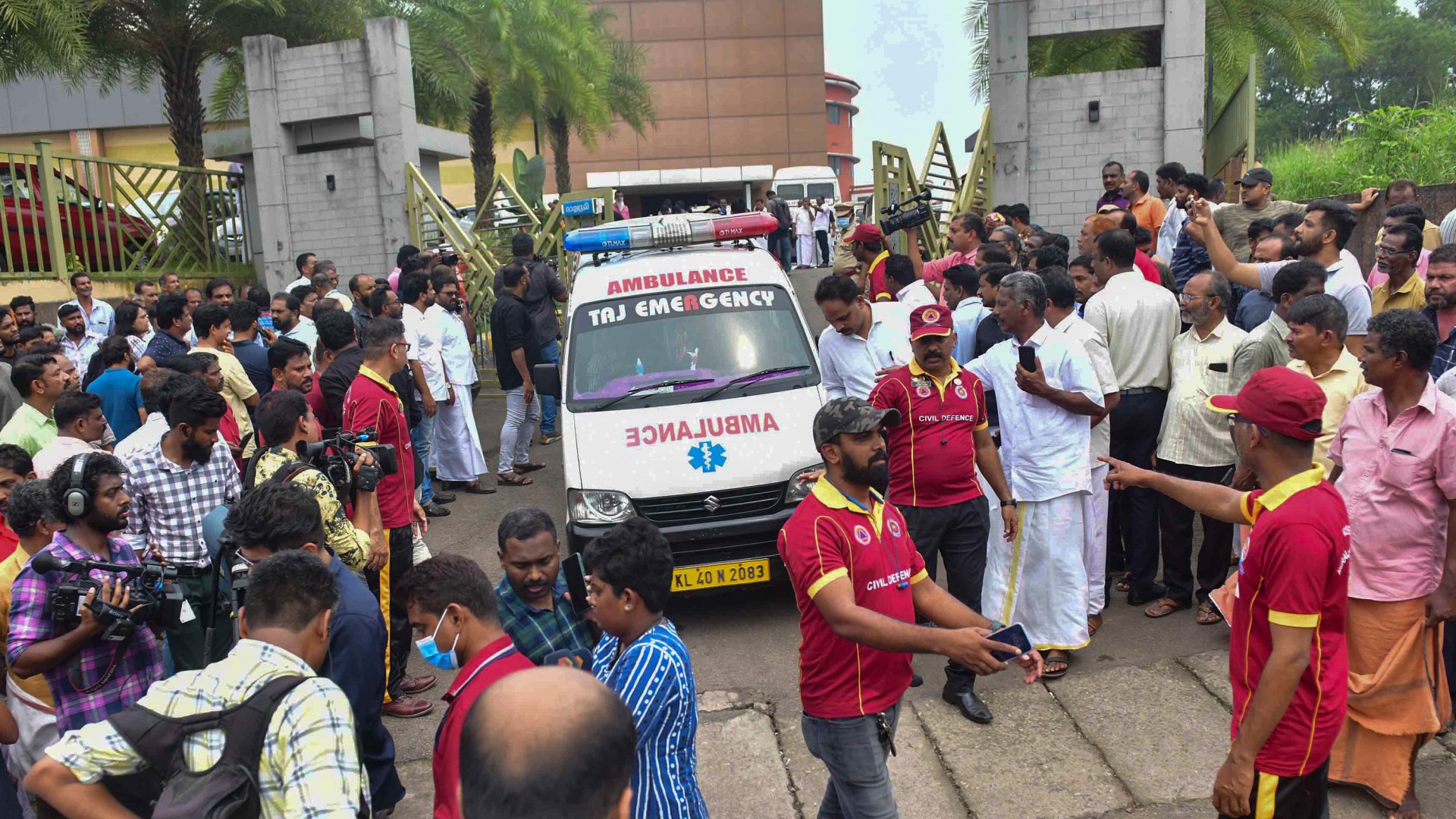
An ambulance leaves the Zamra International Convention Center after an explosive device blew up during a prayer session of Jehovah's Witness faithful.

An ambulance leaves the Zamra International Convention Center after an explosive device blew up during a prayer session of Jehovah's Witness faithful.

Christianity Today November 6, 2023
AP Images

Kingdom halls reopened for in-person gatherings on Sunday near the area of an October 29 fatal bomb attack at a Jehovah’s Witnesses prayer convention in Kochi, a city in the Indian southern state of Kerala.

“We decided to return to physical meetings from today to remove the fear from people’s minds. The online meetings were held only for a few days following the blasts,” T. A. Sreekumar, a spokesperson for the community, told The Times of India.

Four people lost their lives and more than 50 were injured in a series of explosions that tore through a packed conference. About 2,300 people, including many families with children, were attending the three-day event. The bombs went off immediately following the conclusion of a prayer session.

Authorities identified Leyona Paulose (55), Kumari Pushpan (53), Libina Pradeepan (12), and Molly Joy (61) as victims of the attack.

The police investigation was initially centered on covert operatives of radical Islamist fringe outfits seen as adversaries to pro-Israel evangelical groups. But the investigation took a turn after a local resident turned himself into the police station that same day and confessed to the crime. He has been detained by the police as a suspect and has been described as a “disenchanted” member of Jehovah’s Witnesses.

The casualties would have been higher, but the organizers had conducted a mock drill for the participants earlier that weekend, claimed Manoj K. Das, one of the first journalists on the scene.

“The devotees had a rather clear idea of where the exit points were,” said Das. “Now this has definitely helped in evading a stampede in the chaos that followed. Otherwise, we would have been dealing with a disaster of a greater magnitude.”

In a meeting of the state’s political parties convened by Kerala chief minister Pinarayi Vijayan, leaders unanimously urged citizens to refrain from “baseless accusations, speculative campaigns, and rumor-mongering” and emphasized the importance of unity in maintaining Kerala’s social harmony.

Indian Christians trace their faith back to Kerala, where they believe St. Thomas arrived with the gospel in the first century. Today Kerala has the largest Christian population with six million believers, or about 22 percent of the country’s Christians. Jehovah’s Witnesses identify as Christians, but their beliefs differ from other Christians in significant ways, such as rejecting the Trinity and Jesus’ divinity.

This attack was the second act of violence against Jehovah’s Witnesses this year by someone with connections to the community. In March, a German gunman shot and killed six people at a kingdom hall in Hamburg. Like the bombing suspect, he also was reported to have had a previous relationship with the community he attacked.

Jehovah’s Witnesses have been present in India since 1905. Today they claim roughly 56,000 adherents and have 947 churches in India. In recent years, the Witnesses have worked to translate their official Bible translation into numerous Indian languages.

Activists have long seen governments’ treatment of Jehovah’s Witnesses as a bellwether of their tolerance for free speech and freedom of religion. While Witnesses accept civil government, they do not vote or lobby, and are opposed to serving in the military or saluting the flag.

In 1985 three siblings in Kerala were suspended after refusing to sing the Indian national anthem, claiming it violated their Jehovah’s Witnesses faith. Their father filed a writ petition to the state’s high court, saying that the suspension violated his children’s fundamental right to expression and their right to life or personal liberty.

The top court ultimately ruled the suspension unconstitutional and identified the case’s key question to be whether their belief would allow them to stand for the national anthem.

“The students who are Witnesses do not sing the Anthem though they stand up on such occasions to show their respect to the National Anthem,” it said. “They desist from actual singing only because of their honest belief and conviction that their religion does not permit them to join any rituals except it be in their prayers to Jehovah their God.”

The Bijoe Emmanuel case has been cited in subsequent religious freedom rulings.

In 2016 the government arrested six Witnesses in Karnataka who were going door to door handing out religious tracts. Two right-wing Hindu groups complained that they were forcibly converting others.

Sajan K. George, president of the Global Council of Indian Christians, defended their religious rights and argued that the police often leans “towards the local extreme right-wing groups and charges Christians and others on false charges.”

Editor's Note: A previous version of this article incorrectly stated the number of Jehovah's Witnesses in India. That number has been corrected.

Signposts for Hispanic Youth Ministry

Trends and challenges facing Latino youth leaders, and what it means for the church’s future.

Christianity Today November 4, 2023

Hispanic Americans make up one of the fastest-growing ethnic groups in the US, and their influence is an important part of American Christianity’s diverse landscape of religious expression. But how are Latino churches reaching the next generations of Christians in their communities, and what does effective youth ministry look like in those cultural contexts?

A new report by Fuller Theological Seminary’s Centro Latino, the Fuller Youth Institute, and the Brown Church Institute shines new light on the unique contextual experiences of Hispanic youth workers and offers a fresh perspective on cultural trends that are shaping Gen Z and Gen Alpha, Latino communities, and American Christianity. Based on interviews with national leaders and local youth pastors from various denominations, the report summarizes the study’s findings and presents a number of recommendations for the creation of culturally relevant resources and practices.

“It really is important to have bilingual materials and models that respect the culture and unique needs of our youth and families,” said Centro Latino academic dean, Alexia Salvatierra. “The report highlights that the needs of our community are so different from standard, dominant-culture youth ministry needs.”

UCLA professor Robert Chao Romero believes the study’s finding that only 2.5 percent of Hispanic churches have paid youth ministers on their staffs is significant. “The U.S. Latina/o church is one of the fastest growing,” he said. “And yet, almost all books and trainings about youth ministry are based upon White youth ministries with a paid youth pastor who creates weekly events for students.” Romero, who is also founder of the Brown Church Institute, believes the future of the American church is tied to our nation’s growing ethnic and cultural diversity.

How is the growth of the Hispanic American population shaping American churches? What insights about discipleship and spiritual formation can be gleaned from the experiences of Latino/Latina youth and youth ministers? And what does the state of Hispanic youth outreach tell us about the future of evangelical faith in the US?

CT and Seminary Now recently joined with the team behind Fuller’s report to host an online forum addressing the challenges of Hispanic American youth ministry. Kara Powell, executive director of the Fuller Youth Institute, moderated the virtual discussion and underscored youth ministry’s significance for the church as a whole. “Across ethnicities, across cultures, and across languages, this project has ramifications for all of us,” said Powell in her opening remarks.

Watch the video recording of the webinar above. Panelists for the one-hour program include:

Click here to download English and Spanish editions of Investigating the Contextual Needs of Latina/o Youth Pastors and Youth Workers.

News

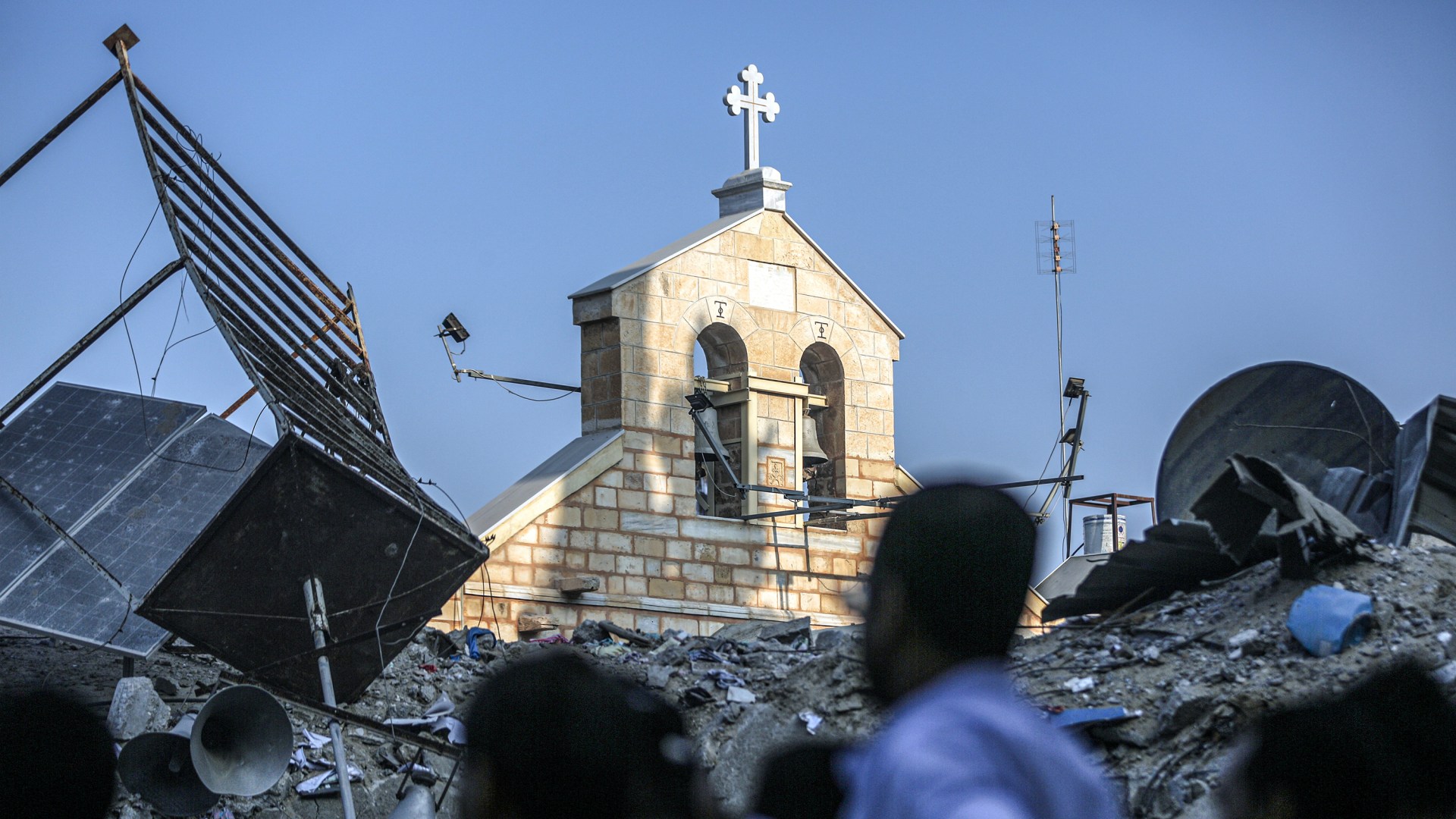
Pastor’s Family Trapped in Gaza Grieves Relatives Killed at Church

Former pastor of Gaza Baptist Church—stuck in Egypt since start of the war—scrambles to evacuate wife and children as they struggle to survive at St. Porphyrius Orthodox Church.

Relatives attend the funeral of Gazan Christians killed after an Israeli airstrike hit next to St. Porphyrius Orthodox Church.

Relatives attend the funeral of Gazan Christians killed after an Israeli airstrike hit next to St. Porphyrius Orthodox Church.

Christianity Today November 3, 2023
Abed Khaled / AP Images

Update (Nov. 22): The Gazan Christian family profiled below has successfully left Saint Porphyrius Church and fled to Egypt.

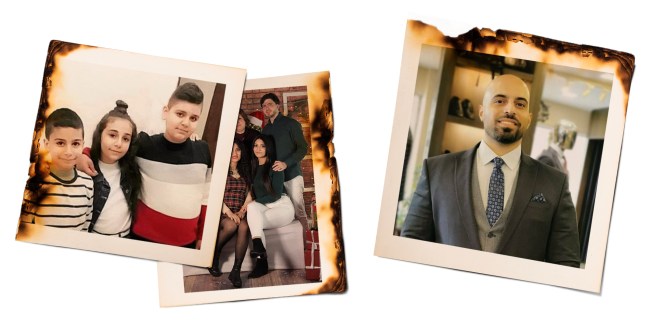
Trapped in Gaza, Janet Maher has not had a shower for two weeks. She feeds her three children one meal a day, often no more than bread and cheese.

Her cousin perished from damage caused by an Israeli missile, shielding his seven- and five-year-old boys from the collapsing wall at St. Porphyrius Orthodox Church. The two families had been sheltering together, and the younger boy was friends with her son in kindergarten.

But amid the horrors of life under siege, perhaps the worst is this: Janet’s husband is trapped in Egypt.

“I feel like Moses’ mother and sister after they put him in the bulrushes,” said Hanna Maher, former pastor of Gaza Baptist Church. “All I can do is watch from afar.”

Born in Sohag in Upper Egypt, Maher pastored the evangelical congregation from 2012–2020. Single upon arrival, he married Janet, daughter of an Orthodox father and Baptist mother, during his first year of service in Gaza. Though he was called to “the hard places,” ministry was taxing—as was navigating the permissions for complicated entry and exit procedures under Israeli occupation.

Since 2007, Israel and Egypt have imposed a blockade on the 140-square-mile coastal strip.

Every family vacation to Egypt began with the feeling that he should never return to Gaza. But until 2020, each trip ended with Maher’s renewed sense of commitment to mission. That year, he accepted the pastorate at the Presbyterian church in Beni Suef, 90 miles south of Cairo, and Janet—who had always desired to stay close to her extended family—felt at peace.

Maher did not. Three years later, with Janet’s blessing to renew his calling, he resigned from his position, and last May the family returned to Gaza. Since he is no longer a funded missionary, he used the extended vision trip to explore service opportunities apart from the pulpit. Contemplating an educational or small business development center, on September 28 he returned alone to Egypt to seek denominational partnerships.

Less than two weeks later the war began, with no one allowed in or out.

“I can’t concentrate, I have no energy, and I couldn’t sleep after the attack on the church,” said Maher. “I just watch the news and pray for my family.”

Much of his day is devoted to trying to call them. From morning until night he rings Janet’s cell phone, but with communication networks damaged in the bombing, it takes hours to get a connection. At best, they have a five-minute conversation—but are usually cut off after about 60 seconds.

Once, his son forced a reluctant chuckle: It’s fantastic, daddy, there is no school.

Loved ones lost after an Israeli airstrike near St. Porphyrius church in Gaza.

Maher’s smile passed quickly amid the morbid statistics. Over 8,000 people have been reportedly killed in Gaza, including at least 3,324 children, with another 6,000 children injured. The ministry of public works reported that 43 percent of all housing units have been destroyed or damaged, with more than 1.4 million out of a population of 2.2 million displaced from their homes.

And prior to Israel restoring flow to the second of three main water pipelines, water for drinking, cooking, and washing was estimated at 3 liters per day per person, far below the World Heath Organization recommendation of 100 liters.

Maher’s Tel al-Hawa neighborhood in Gaza City came under extensive Israeli bombing. Living near the al-Quds Hospital—accused of being a Hamas hideout—where about 10,000 displaced Gazans have taken refuge, Janet was unable to find food on the local grocery shelves.

Israel has accused Hamas of hoarding essential water, food, and fuel.

Janet left to take refuge at the Greek Orthodox church five days after the war began, when a Muslim friend was killed by an Israeli strike on their neighboring building. At first, she and the children had the entire funeral hall to themselves. Now, between 400–500 people sleep side-by-side on mattresses throughout the complex as they share three bathrooms total.

The St. Porphyrius chapel, built in the 12th century and dating back to 425 A.D., was named after the local bishop who evangelized the area. The Middle East Council of Churches estimated that about 380 Christians are taking shelter. Muslims make up the remainder, spread throughout the compound’s seven buildings.

After the October 19 bombing, which the IDF said targeted a Hamas command center nearby, two Muslims were reported among the deceased, alongside 18 Christians.

In addition to Janet’s cousin, these included one of her close friends, the sister of an elder in the Baptist church, the Baptist librarian, his wife and granddaughter, and three children who regularly attended the Baptist Sunday school.

Before the bombing, Janet had been reading the Bible and praying with many.

“She was encouraging others in the shelter,” Maher said. “Now she needs someone to encourage her.”

Victims were also related to evangelicals in the West Bank and Jordan. Another former pastor of Gaza Baptist Church, Hanna Massad, lost his aunt, while Munir Kakish, president of the Council of Local Evangelical Churches in the Holy Land, lost his foster child’s wife and two children. And in Michigan, Justin Amash, a former Tea Party Republican and the first Palestinian American elected to Congress, lost several relatives from his extended Christian family, including two young women.

But in Gaza, finding encouragement for Janet may prove difficult.

The local Christian population was about 7,000 when Hamas took over the enclave in 2007. The number dwindled to about 3,000 by the time Maher became pastor. But he said the now-less-than-1,000 Christians rarely attend church, and the same 100 people frequent all three Gaza churches—often seeking aid.

He prays this war may cause them to call out to God, but life under siege has not yet prompted revival. On the contrary, they are convinced that God has forsaken them, seeing the fulfillment of Zephaniah 2:4—Gaza will be abandoned—in their generation.

“For eight years as pastor I told them it was not so,” Maher said. “But putting myself in their shoes now, it is difficult to ask them to trust God.”

But Janet and the others have little choice. The family remains at the Orthodox church, despite her husband’s frantic urging for a safer location after the bombing.

“Where can we go?” she asked me.

“To the Catholic church?”—It is full.

“Back to our apartment?”—There is no food.

“To the south?”—Maher already knew that would not work.

He has been in contact with one believer who responded to Israel’s warning for full-scale civilian evacuation from Gaza City and the north. Over 800,000 have now fled their region.

But he found no shelter, and less food than where he had come from.

The Maher family
The Maher family

The bombing campaign only intensified in the south, however, as the Gaza health ministry reported that two-thirds of all strikes in the second week of the campaign targeted the less urban region. Hitchhiking home, the believer’s story added to similar anecdotes of other Gazans wondering, Where can you put so many people?

Many analysts—especially in Egypt—are concerned they may be forced out elsewhere.

After the 1967 war, some Israeli leaders proposed transferring Gaza Palestinians to the Sinai peninsula. Israel’s intelligence ministry acknowledged the same in a current “concept paper,” while former prime minister Naftali Bennett proposed Egypt, Turkey, and Scotland might “temporarily” receive Gaza’s refugees. And the White House funding request for Israel includes humanitarian provisions to “address potential needs of Gazans fleeing to neighboring countries.”

Dozens of injured have now been evacuated through the Rafah border, alongside hundreds of foreign passport holders. Maher has been desperately reaching out to church officials in Egypt and to his embassy in the West Bank, to add his family to the list.

His children hold Egyptian citizenship, but Janet does not.

“I feel like my mind is going to explode,” he said. “They have no fuel to reach the border, and the only other option is to stay amidst the fighting.”

Most of Gaza’s Christians live in the old city of the enclave’s capital. The Anglican al-Ahli hospital where the Baptist church is located is only a five-minute walk from the Orthodox compound. Reportedly, the majority are staying put despite the evacuation warning, though with many in church shelters. And last week, nine babies were baptized in “fear that something bad might happen” again.

“What else can we do?” asked Kamel Ayyad, media officer for St. Porphyrius church. “We want the living church to continue the witness in Gaza.”

Maher reaches out across denominations, for one-minute conversations.

“They thought they would be safe,” he said. “But now they all tell me: We have no hope, we will die, they are exterminating us.

Like many fellow Gaza Palestinians, local Christians have no particular love for Hamas. According to a July survey, 70 percent of the population favored Palestinian Authority (PA) rule, with 62 percent favoring continuation of the ceasefire. Half said Hamas should stop calling for Israel’s destruction and accept a two-state solution. Nearly three-quarters called Hamas “corrupt.”

Yet Palestinians also find few alternatives to overcome the siege. About three-quarters indicated support for Hamas’s rival Islamic Jihad, while another poll found that 79 percent of Gazans favor armed resistance against Israeli occupation of Palestinian territory.

Loved ones lost after an Israeli airstrike near St. Porphyrius church in Gaza.

In a 2020 poll of Christians in the West Bank and Gaza, only 66 percent expressed trust in the PA, while 69 percent were worried about armed factions similar to Hamas. A majority (61%) favored a one-state solution.

Hamas’s Ismail Haniyeh, however, stated its actions represent the whole of Gazan society. Israeli president Isaac Herzog agreed, saying Gazans bear collective responsibility.

Maher, meanwhile, is tired of the political rhetoric. He was astounded to hear an American pastor friend on Facebook declare that “all Gazans are terrorists.” No mere acquaintance, Maher had earlier helped this pastor develop a program for outreach to the Arabs in his community. After several exchanges, the pastor now says he is praying for the innocent on both sides.

It is progress, Maher said.

But in general, he is angry—at Hamas, at Israel, and at the Western perspective on this war. As the world debates the legitimacy of Israel’s bombing campaign to root out the terrorism embedded in one of the world’s most densely populated urban enclosures, his wife and children represent the flesh-and-blood collateral damage many overlook in their political positions.

As they represent also the body of Christ.

Mindful of his audience, Maher chooses his words carefully. But he has a message that goes beyond his prayer request for safety and peace—that includes mourning his relatives and former flock.

“Be human,” he said. “Remember the children killed in this war, and have empathy.”

Editor’s note: A selection of CT’s Israel-Hamas war coverage is now available in Arabic, among eight other languages.

Books
Review

Sojourner Truth Was a ‘Double Woman’ in More Ways than One

She championed both abolition and women’s rights. And she wasn’t afraid to challenge advocates of either cause.

Sojourner Truth

Sojourner Truth

Christianity Today November 3, 2023
Illustration by Mallory Rentsch / Source Images: WikiMedia Commons

In the most recent issue of The Atlantic, historian Clint Smith examines the life of an escaped slave named Josiah Henson. He asks, “Why weren’t American students being taught about Henson when they learned about [Harriet] Tubman, or assigned his autobiography alongside Frederick Douglass?”

We Will Be Free: The Life and Faith of Sojourner Truth (Library of Religious Biography (LRB))

We Will Be Free: The Life and Faith of Sojourner Truth (Library of Religious Biography (LRB))

293 pages

$20.51

The answer, according to Smith, is the moral complexity of Henson, a former plantation overseer turned abolitionist. “Not every enslaved person was Frederick Douglass,” he writes. “Not every enslaved person was Harriet Tubman. And even those two individuals, as celebrated as they are, were not the morally unadulterated characters that we sometimes make them out to be. Which is to say, they were human.”

I had a similar thought as I read Nancy Koester’s We Will Be Free: The Life and Faith of Sojourner Truth, a religious biography of a woman sometimes overshadowed by Harriet Tubman and Frederick Douglass in the pantheon of escaped slaves who helped free others from bondage. Truth’s story does not fit the conventional mold of a runaway slave. (In fact, she claimed she did not “run” away from her enslaver—she walked.) Nor did she always agree with Tubman and Douglass on issues of moral reform. Nor was she immune to some of the extreme religious views (and cults) that arose in her unique New York context.

Yet Truth was one of the most extraordinary Americans to ever live. Her complexity is precisely why she has so much to offer us today.

Salvation and reform

As we might expect from someone who renamed herself Sojourner Truth (she was born Isabella Baumfree), her life was a journey. As Koester explains, “For the rest of her life” after becoming a Christian, “Sojourner lived into her name.” Truth could not divorce her work as a reformer from her faith in Jesus Christ. As a result, her commitment was to something much larger than any person or movement. After she left her old life behind, the Lord gave her a new name, Truth, “because I was to declare the truth to the people.” And so she did—to nearly everyone she met. For nearly half a century, she championed Black and women’s rights. And at times, she even challenged Black and women’s rights advocates.

Truth drew no lines between her freedom from slavery and her freedom from sin. One can see why. Technically speaking, she never freed herself from bondage. She was redeemed. Once she was caught by her enslaver, a Dutch Reformed couple offered to pay off the remaining work she supposedly owed the man. For the first time in her life, Truth heard someone say that God alone is Master.

Months later, she met her Master. On a New York back road in 1827, Truth experienced a blaze of light and felt that God was looking straight into her soul. With a “mass of lies” exposed in her darkened heart, she felt so much “vileness” and shame that she could not utter a word. Suddenly, “a friend” shielded her from the intense light, preventing her from being scorched to death. “It is Jesus,” a voice said.

A wave of love overcame her, compelling her to preach. “Lord, I can love even white folks!” she exclaimed with joy. From that moment forward, Truth’s abolitionism would be fueled not by hate or self-interest but by the love with which Jesus “had always loved her.” When she changed her name years later, she explained, “The Lord gave me Sojourner, because I was to travel up an’ down the land, showing the people their sins, and being a sign unto them.” One of the strengths of Koester’s book is how it illustrates the spiritual nature of Truth’s abolitionism, as she “saw her experience in slavery as part of a bigger story, an ongoing spiritual journey.” Salvation and reform went hand in hand.

Anyone who ever laid eyes on Sojourner Truth would have instantly known she was not your average 19th-century woman of color. Standing at just under six feet, with a voice that rivaled any public speaker in America, the Dutch- and English-speaking Truth was an imposing figure who enjoyed smoking a pipe almost as much as she loved singing hymns, spirituals, and antislavery songs.

Once sold as a child at auction for $100 along with a flock of sheep, she became a female preacher in a male-dominated world. Amazingly, Truth exhibited such strength and versatility as a speaker and defied so many stereotypes for women of that era that white men publicly doubted whether she was a woman at all. (While speaking in Indiana in 1858, a crowd of hecklers demanded she bare her breast to prove her womanhood.) To a hissing proslavery crowd, she once charged, “It seems that it takes my Black face to bring out your black hearts, so it’s well I came. You are afraid of my Black face, because it is a looking-glass in which you see yourselves.”

But Truth wanted more than racial or gender equality. According to a reporter, during her speech at the first National Women’s Rights Convention in 1850, she prayed, “God, make me a double woman, so that I might hold out to the end.” The woman known for her theological satire and quick wit believed that the Lord was her strength, not her voice. As Koester notes, she was indeed a “double woman,” standing for both women’s rights and abolition.

Still, Truth was a “double woman” in another regard. She spoke to both sides of the racial and gender divide, and her adamant convictions could puncture friends and foes alike. The woman known for lampooning proslavery mobs and allegedly shouting “Ain’t I a woman?” to a crowd in Akron, Ohio, in 1863 could be just as bold and unequivocal around those in her own camp.

In what has since become known as the “Great Interruption” in Salem, Ohio, in 1852, fellow lecturer Frederick Douglass urged that “violence … in some circumstances [is] far more potent than Moral Suasion.” He fumed, “What is the use of Moral Suasion to a people thus trampled in the dust?” Douglass wanted war. After a few seconds of silence passed for effect, the booming voice of Sojourner Truth shot back from the crowd, “Is God gone?” If there was a God in heaven, she believed, there was no need for violence.

Truth aligned herself with Douglass in opposition to slavery, but she would not tolerate his warmongering. As David Blight has shown in his Pulitzer Prize–winning biography, Douglass emulated Old Testament prophets like Isaiah and Jeremiah far more than he did Christ himself. Consequently, his speeches did not carry the same message of peacemaking and forgiveness as those of Truth, who told her audiences to imagine “the poor slave in heaven … robes washed white in the blood of the Lamb.”

These differing visions of America created friction within the abolitionist ranks. Truth’s question was later quoted as “Is God dead?” and popularized by Harriet Beecher Stowe (whose religious biography was also written by Koester). Douglass never forgot the encounter, writing in 1870, “Let him who is foolhardy enough to cross her beware.”

An abiding name

In fact, Truth stood her ground on many occasions against abolitionists, women’s rights advocates, and even her own freedmen and freedwomen. She called no man (or woman) master. When Harriet Tubman, the so-called “Moses of her people,” told Truth that she did not trust Abraham Lincoln to achieve emancipation, Truth counseled patience and told Tubman that she saw Lincoln as a friend of the slaves.

After the Civil War, she scandalized many of her African American listeners by telling them that it was a “disgrace” to be content to live “off the government.” Truth even experienced friction with Susan B. Anthony and Elizabeth Cady Stanton when both suffragists insisted that white women should get the vote before Black men.

Reform movements in America have rarely proven monolithic, and Truth knew this firsthand. Thankfully, she also knew the transformative power and peace of the saving gospel, and this enabled her to both love her worst enemies and rebuke her good friends. It also propelled her entire career as a reformer. Truth never relinquished her impulse toward reform, campaigning for the prohibition of alcohol to temperance societies in the 1870s.

She lived up to her name, sojourning upon the earth in the name of Christ even as she lived in poverty in Michigan into the 1880s. As she once said to the Lord after leaving “Egypt,” a byword for her past life in the house of bondage, “Thou art my last Master, and Thy name is Truth, and Truth shall be my abiding name until I die.”

Obbie Tyler Todd is pastor of Third Baptist Church in Marion, Illinois, and an adjunct professor of church history at New Orleans Baptist Theological Seminary.

Books
Excerpt

Jesus Was Civil, Not Polite

Christ was an exemplar of civility in an age of sociopolitical turmoil and religious hypocrisy.

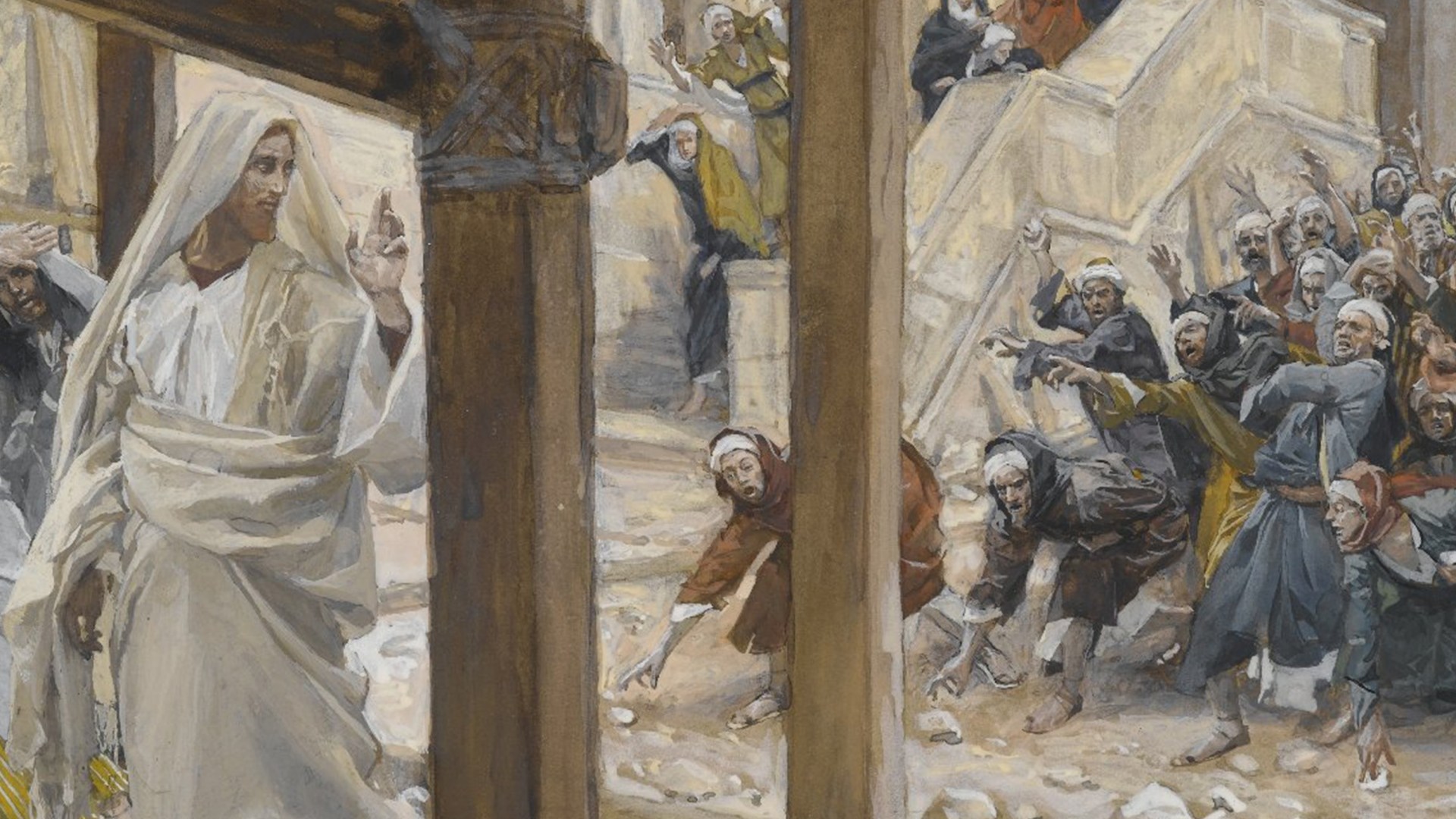
Painting by James Tissot titled, The Jews Took Up Rocks to Stone Jesus

Painting by James Tissot titled, The Jews Took Up Rocks to Stone Jesus

Christianity Today November 3, 2023
Edits by CT / Source Images: Brooklyn Museum

Our world today is defined by two extremes: intense hostility on one hand and suffocating politeness on the other.

The Soul of Civility: Timeless Principles to Heal Society and Ourselves

A few years ago, I worked in federal government in Washington, DC, during a very divided season—not unlike the election year we are about to enter. It was then that I learned there’s a difference between civility and politeness and why it’s more important than ever to recognize the distinction.

Politeness is a technique: It reflects decorum, mores, manners, and etiquette. It is neither good nor bad itself, but it can be used for good or for ill depending on a person’s motivation.

At its best, politeness can help mitigate the awkwardness, discomfort, and annoyance inherent in our social lives—but it will only ever apply surface-level fixes and will never be enough to help us navigate or resolve our most profound and important disagreements.

At its worst, politeness can make our disparities worse by fostering feelings of selfishness, pride, and superiority over others. Politeness can be and has been weaponized to penalize difference, silence dissent, and oppress vulnerable voices and populations.

By contrast, civility is a holistic disposition—one that our society desperately needs today.

Civility is based on the fundamental truth that all human beings are created in God’s image and are therefore worthy of basic respect. It sees everyone as inherently valuable and endowed with essential dignity, invoking a general regard for our neighbors and citizens. Civility is rooted in the mutual deference we owe one another as fellow humans and allows us to consider even our enemies as moral equals.

Yet civility can be at odds with politeness, as it sometimes requires that we act in ways that many might consider impolite.

Jesus himself spoke of the perils of politeness and the dangers of being inordinately focused on a polished outward appearance. He constantly exposed and critiqued the religious hypocrites of his day—those who were smug in their self-righteous compliance with ceremonial customs and religious rituals. He knew their meticulousness was merely a cover for their selfishness.

Christ demonstrated that the act of truth telling isn’t always polite, but it is right and respectful when it speaks the truth in love. He did not hesitate when it came to calling out the duplicity of the Pharisees—who appeared to act well, though their hearts were angry and bitter:

Woe to you, teachers of the law and Pharisees, you hypocrites! You give a tenth of your spices—mint, dill, and cumin. But you have neglected the more important matters of the law—justice, mercy, and faithfulness. You should have practiced the latter, without neglecting the former. (Matt. 23:23)

Jesus understood the wickedness of the human heart. He recognized that rule following is an easy way for people to feel self-assured and superior to others. He knew that rules can easily be abused and that a blind application of the law can be counterproductive to true morality. This is why Jesus often approached ethical scenarios contextually—in the spirit rather than the letter of the law.

For example, when Jesus healed a man’s withered hand on the Sabbath—a day where the religious rule required rest—the Pharisees weaponized the rules against him and accused him of breaking the law of the Old Testament. But he responded, “I ask you, which is lawful on the Sabbath: to do good or to do evil, to save life or to destroy it?” (Luke 6:9).

And when the Pharisees accused Jesus of breaking the Mosaic Law by not washing before eating, Jesus responded with a quote from Isaiah: “These people honor me with their lips, but their hearts are far from me. They worship me in vain; their teachings are merely human rules” (Matt. 15:8–9). He accused them of placing human traditions above divine commands.

Just like the Pharisees, we will always figure out creative ways to follow the rules while still being as selfish as ever. Human rules are easy to follow—they let us avoid the hard work of changing our hearts, which is what God ultimately requires of us.

Christ taught that having the right disposition—a heart posture of genuine compassion and selfless love—matters more than complying with the rules of right conduct (1 Cor. 13). Rule following alone cannot make a person good, and helping others is more important than blindly following the rules (Matt. 9:9–13).

Jesus showed us why being good is more important than seeming good. Likewise, Paul warned Timothy to avoid people who have “a form of godliness” but deny its power (2 Tim. 3:5). The state of our hearts matters far more than our compliance with the societal standards, cultural norms, or even religious rules of our day.

Politeness is empty if it is not backed up with character. After all, Jesus’ own disciple, Judas Iscariot, betrayed him with the polite custom of their day: by giving him a kiss on the cheek.

As Christians, we’re called not only to say and do the right things—but also to do so for the right reasons. It can be tempting to be “nice” and stay silent in the face of injustice, but we are called to a higher standard. It’s easy to avoid the discomfort of confronting someone who has hurt us or others. But in the end, bypassing healthy conflict out of politeness is disrespectful to everyone involved.

Human social life is far too nuanced to be sufficiently reduced to rules of politeness. Only a true civility can help us distinguish when it is appropriate—right, loving, and respectful—to break the rules of propriety in speaking out or acting against the wrongs we witness.

We can’t control how others act, but we can align our motivations with the example Christ set.

Alexandra Hudson is the founder of Civic Renaissance and author of The Soul of Civility: Timeless Principles to Heal Society and Ourselves.

Culture

The Debate over Concert Worship Goes Back Eras

Taylor Swift’s “transcendent” stadium tour got Christians once again talking about whether secular stages point us to God’s common grace or just another idol.

Christianity Today November 3, 2023
Artur Debat / Getty

“Take us to church, Taylor!” was one of the many call-and-response rituals between Taylor Swift and the millions of fans who flocked to stadiums during the spring and summer of 2023 to gather around the music and persona of Taylor Swift.

It’s not the first time fans have gathered around the work of a legendary musician and referred to it as “church.”

A service at the Church of Beethoven, for example, is “not quite a concert, not quite a church.” Attendees, who find meaning in the spiritual but not religious dimension of music, gather for performances/services where “the music is the worship, the homily and the anchor of the community of believers.”

An abundance of recent essays and articles describe the experiences fans have had at Swift’s concert stops on the Eras tour. They reflect on intense communality, Swift’s ability to speak to particular experiences of girlhood or coming of age, and, yes, the spiritual parallels and affinities in the music and the performance.

Swift’s music and showmanship are, arguably, the “worship, the homily, and the anchor” for temporary communities of over 50,000 people, singing and moving along at her massively popular stadium shows. Is the Eras tour a traveling “Church of Taylor Swift”? Many of her Christian fans insist that’s not the case.

The Eras tour discourse is just the latest battleground for Christians to debate about the distinction between art appreciation and syncretism or idolatry. When is music or a musician an idol? Should Christians be more reticent to ascribe spiritual meaning to an experience at a stadium concert than to one at a performance of a Beethoven symphony, an exhibit of Rembrandt’s paintings, or a trip to the Grand Canyon?

After attending Taylor Swift’s Eras stop in Minneapolis this summer, Sarah Chapman posted a video on Instagram: a panoramic sweep across the stadium, a sea of twinkling lights, blinding flashes from the stage, and a glimpse of Swift on the big screen.

Overlaid on Chapman’s video is text from Luke 19:40: “I tell you, if they keep silent, the stones will cry out!”

After her post went viral, Chapman removed the comment section and then took the post down because of the backlash. Commenters called the post “blasphemous” and accused Chapman of worshiping Swift or glorifying profanity.

“It was shocking,” said Chapman. “Of course I’m not suggesting that I or anyone should worship Taylor Swift. For me, it’s pretty simple. When I experience beauty, I’m drawn to God.”

The belief that music and pageantry can draw listeners to God has long informed church musical practices.

When visiting churches in Rome during the 17th century, French musician André Maugars described the innovative, complicated vocal music as “elaborate, full of beautiful melodic lines and many pleasing solo passages. … Two choirs would contend with each other, then two others would answer. … I must confess to you that I have never experienced such rapture.”

Maugars’s account is an important window into the ways that Christian sacred music and the concert culture of Western art music developed in tandem.

“One went to church in seventeenth-century Rome much as one goes to a concert today,” wrote music historians Piero Weiss and Richard Taruskin in their commentary on Maugars’s letter. “It was in these public church performances that our modern concert life was prefigured.”

Church musicians of 17th-century Rome saw no necessary conflict between worship and what modern audiences would consider to be an impressive concert. Concertized church music would allow musicians to hone their craft, create new art, and awe attendees.

The intricate harmonies, overwhelming waves of sound from multiple choirs, dynamic contrast, and resonant cathedral spaces themselves were all meant to point to the beauty and glory of God. The pageantry and drama of the musical performance were meant as both an offering and a call to praise.

Centuries later, C. S. Lewis reflected on the value of music, whether secular or explicitly spiritual, as a medium that could serve to point the listener to the divine.

He had what he considered to be transcendent experiences with music—the operas of Wagner, for example—and believed that Christians had the capacity to allow musical beauty to turn them toward God.

“I think every natural thing which is not in itself sinful can become the servant of the spiritual life, but none is automatically so,” Lewis wrote in a letter to a reader, referencing human responses to music. “When it is not, it becomes either just trivial (as music is to millions of people) or a dangerous idol.”

The “idol” problem is central in the debate about what it means to call an experience at a Taylor Swift concert “worship.”

Almost no one is worried that the music itself (the songs, the lyrics, etc.) is the idol here; it’s Swift herself. Everyone in the stadium is gathered to hear her, to see her, to be in her presence. And for many Christians, the idea of worshiping God in that context—in the “temple” of Taylor Swift—is anathema.

If there ever was someone worthy of the label “pop idol,” Swift certainly is. Her influence and power have been on global display since the launch of the Eras tour. The tour has grossed over $800 million, and the new concert film, Eras Tour, grossed $92.8 million in the United States and Canada during its opening weekend.

For the past six months or so, the Eras tour has dominated public conversation about music and culture, with adoring fans sharing videos and photos across social media.

Swift is, undeniably, powerful. As NFL fans experienced a few weeks ago, there’s no segment of the pop culture world that she can’t infiltrate and conquer. She influences public discourse, the global economy, and the emotions of masses of concert attendees. Fans look up to her, emulate her style, and envision themselves as her friends.

And yet her Christian fans insist that the appreciation of Swift and her music, performance, and persona has nothing to do with idolatry. Chapman finds the suggestion absurd; she says she has no doubt that she had a divine encounter at the concert and experienced an intense outpouring of love for those around her because of it.

“I was able to look out at this sea of people and felt like I was able to have God’s heart for everyone in the room,” said Chapman. “Music, beauty—he is the creator of these things. They draw me closer to him; they don’t draw focus away. They move me to love people better.”

After attending the Eras tour stop in Cincinnati with his wife, Caleb Mathis also shared his reflections online.

“All truth is God’s truth—I think about that all the time,” said Mathis, content director at Crossroads Church in Lexington, Kentucky. “Art opens up a highway between us and God.”

Some of the pushback to the perceived overspiritualization of Taylor Swift’s music and performances focuses on attempts to draw direct parallels between her lyrics and biblical texts. Posts like Mathis’s suggest that there is truth to be gleaned from Swift’s lyrics and that those parallels and echoes are just more evidence of God’s truth and common grace shaping and appearing in human creative culture.

Trevin Wax, a columnist for The Gospel Coalition, cautioned against this kind of selective reading of Swift’s lyrics in a 2016 article for TGC, “The Gospel According to Taylor Swift,” arguing that the message at the heart of Swift’s music is a false gospel of self-discovery and fulfillment.

“Yes, the Bible says, there is a grander story of discovery that makes sense of all our trials,” wrote Wax. “But that story is radically God-focused, not self-focused.” For Wax, parallels to Scripture or Christian beliefs don’t change what is, in his view, a fundamentally flawed central message.

In the case of Sarah Chapman’s Instagram post, though, the negative reaction had to do with the framing of the Taylor-centric event itself as a worshipful experience and Chapman’s use of Scripture to describe the outpouring of enthusiasm and joy as praise.

Chapman insists she didn’t mean to suggest that everyone there was worshiping God; she was moved by the realization that everyone there could worship God. “It was so cool to see so many people rallying around one thing. They are all craving the same thing,” said Chapman. “As Christians, we can say, ‘Yes, you are supposed to long for something.’”

“I saw people crying, having worshipful experiences with their hands up,” Caleb Mathis recalled. “A lot of people there may have been worshiping her or the moment.” But, said Mathis, the whole experience pointed his attention above the figure on the stage to God’s presence among humanity.

Hannah Lovaglio, pastor at First Presbyterian Church in Cranbury, New Jersey, believes Christians can have spiritual experiences outside the walls of the church, and that includes at an arena concert.

“If worship is a posture that we carry through all of life, it’s not something that we set aside at a concert,” said Lovaglio, who also attended the Eras tour. “The Holy Spirit has never needed a particular set of guidelines in order to move.”

In her 2022 memoir, Easy Beauty, Chloé Cooper Jones similarly describes her encounter with beauty at a Beyonce concert:

I look out from the stage at an ocean of people, all united in an experience of blunt, triumphant beauty, and I think of all the ways I’d nearly rationalized myself away from this, of how many layers of superiority, theory, pretense I’d used to build up my little house of self-regard that kept me inside, shielded.

Many Christians consider it dangerous to be so open to experiences with art and media. Given the power and influence of popular music, a cautious, guarded posture is seen as valuable and necessary for discernment.

In a sermon earlier this year, Jackie Hill Perry talked about the spiritual peril in “digesting impurity,” in reference to music by artists like Beyoncé and Kehlani, suggesting that their music could be at least partly to blame for depression, anxiety, or nightmares.

When is art too secular, too profane to be part of a worshipful experience? Lewis proposes that there is a way to discern whether a life steeped in such art can bear good fruit.

“The test of music or religion or even visions if one has them is always the same—do they make one more obedient, more God-centered, and neighbor-centered and less self-centered?” wrote Lewis. “‘Though I speak with the tongues of Bach and Palestrina and have not charity etc.’!”

News

16 Evangelical Alliances Call for Gaza Ceasefire, Condemn Hamas

Statement issued by regional and national fellowships seeking “a just peace” goes biblically deeper than similar humanitarian pleas.

Saint Porphyrius Greek Orthodox Church in Gaza

Saint Porphyrius Greek Orthodox Church in Gaza

Christianity Today November 3, 2023
Anadolu Agency / Contributor / Getty

As civilian casualties mount in Gaza in collateral damage from the Israeli-Hamas war, 16 evangelical alliances and fellowships are calling for an immediate humanitarian ceasefire.

But their November 1 statement of lament, repentance, and condemnation aims deeper.

“We call on the Church and people of faith to increase and intensify just peacemaking in the region which promotes restorative justice in the region, and to do so while demonstrating empathy and humility,” the group stated. “Peace can only be achieved when the cycles of violence are broken and when perpetrators and victims are set free from their sinful desire for vengeance.”

Signed by World Evangelical Alliance (WEA) regional associations in the Middle East, Asia, and Latin America, endorsements included representative bodies from Algeria, Egypt, Ethiopia, India, Iraq, Jordan, Kenya, Kurdistan, Nepal, Qatar, South Africa, and Sri Lanka, as well as an Arabic-speaking alliance in Europe.

Recognizing their “incomplete” understanding of geopolitical complexity and God’s eschatological purposes, the statement lamented the tragic loss of life, repented of insufficient support for peacemaking, and denounced the global community for failing to “ensure respect” of international humanitarian law.

But the joint call, posted by WEA affiliates in India and Latin America, was also clearer in areas where other Christian statements on the war have been accused of falling short.

The alliances condemned all forms of antisemitism, called on Hamas to release all hostages, and repudiated as “deplorable and despicable” the “largest killing of Jewish civilians on a single day since the Holocaust.”

Yet it also states that “Israel, in pursuit of Hamas, has caused more civilian deaths.” And it situated the violence within a “decades-long” conflict in which, “without ensuring justice, equality, and flourishing to all in the Holy Land, no people group will achieve security.”

This message, many believed, is why other statements have fallen short.

“We joined in this effort to bring attention to the varying perspectives within the global evangelical community,” said Vijayesh Lal, general secretary of the Evangelical Fellowship of India, a charter member of the WEA. “Primarily for a comprehensive understanding, but also to promote peace, there is a need to present diverse viewpoints other than the ones that normally get labeled as ‘the evangelical position.’”

The South Africa alliance said it did not want to repeat the sins of its past.

“At the height of the Apartheid government, the evangelical voice in the world was largely nonexistent, or at best sought to take a neutral posture in the face of our suffering,” said Moss Nthla, general secretary of the Evangelical Alliance of South Africa. “It was our view that a similar thing was happening with Israel’s war on Gaza.”

The Kenya alliance sought a clear condemnation of atrocities against Israel’s citizens. It also noted the greater number of deaths among Palestinians, and asserted that Hamas had “perfected” the use of human shields.

But fellow evangelicals are among those suffering in Gaza, noted the alliance in appealing to all for a “humanitarian mindset.”

“We raise our voice to the international community: Do not ignore the plight of suffering civilians,” said Nelson Makanda, general secretary of the Evangelical Alliance of Kenya. “This is our Christian duty.”

The statement joined a recent flurry of international calls to stop fighting.

“Ceasefire, ceasefire. Brothers and sisters, stop!” stated Pope Francis. “War is always a defeat, always.”

The World Council of Churches and Churches for Middle East Peace also endorsed a ceasefire. The Anglican communion, however, disagreed internally over its language.

Following the deaths caused by an Israeli airstrike next to St. Porphyrius Orthodox Church, Archbishop of Canterbury Justin Welby joined the Patriarchs and Heads of the Churches in Jerusalem to call for an immediate humanitarian ceasefire.

Citing Matthew 25:35—I was hungry and you gave me food—the clerics insisted on the delivery of vital supplies to relief agencies, including its own.

“Even in the face of ceaseless military demands to evacuate our charitable institutions and houses of worship,” it stated, “we will not abandon this Christian mission.”

Welby’s Church of England, however, issued a slightly different statement.

Citing Isaiah 2:4—They shall not learn war anymore—it affirmed Israel’s right to self-defense as it called for immediate humanitarian “pauses.”

Semantics matter in international diplomacy, and such wording has divided the United Nations. After failing four times at the 15-member security council—once from a United States veto, once from Russia-China—the general assembly approved a third word in its nonbinding call for an “immediate, durable and sustained humanitarian truce.” The measure passed by a vote of 120–14.

The United Kingdom was among 45 abstentions. Canada’s amendment to denounce Hamas was defeated. The United States voted against the resolution, backing a “pause” but saying a ceasefire is not appropriate “at this time.”

Israel was sharply critical that Hamas was not condemned.

“Why are the humanitarian needs of Gazans … the sole issue you are focused on?” asked its UN ambassador.

Tony Perkins, president of the Family Research Council, noted the UN resolution came just as Israel was ready to begin its ground campaign.

“Moving into Gaza,” he stated, “[is] creating backlash from the sympathizers of the Palestinians in the United Nations, and around the world.”

The Philos Project stated a ceasefire is the “wrong solution.”

“It is not possible to negotiate peace with a party that rejects it in principle,” it stated, citing article 13 of the Hamas Charter. “Hamas will continue their violent cycle of attacking Israel, Israel retaliating in self-defense, Palestinians dying, and the world blaming Israel. Eradicating Hamas is the only path toward a two-state solution, and a cease-fire only perpetuates the bloodshed.”

Hamas admits as much.

“The Al-Aqsa Flood is just the first time, and there will be a second, a third, a fourth, because we have the determination, the resolve, and the capabilities to fight,” stated Ghazi Hamad, member of the political bureau. “Will we have to pay a price? Yes, and we are ready to pay it.”

Israeli prime minister Benjamin Netanyahu joined others in quoting Scripture.

“There is a time for peace and a time for war. This is a time for war—a war for our common future,” he stated, referencing Ecclesiastes 3:8. “It is a time for everyone to decide where they stand.”

The joint evangelical statement’s sole direct biblical reference was to a wayward prophet.

“We humbly seek God’s guidance as we pray for the Middle East,” it stated, “so that we do not become desensitized like Jonah and disconnected from God’s plans to reconcile all people to Himself.”

The impetus came from outside the Arab world—led by alliances in South Africa and Kenya—stated Jack Sara, general secretary of the Middle East and North Africa Evangelical Alliance. He said the alliances wanted to “clear their name and testimony” in front of a global audience.

But they also wanted a global endorsement.

Seeking consensus within the WEA, Sara said the body’s official support was hinged on the agreement of its Israeli alliance.

“The WEA has been working with the national alliances in the region to get agreement on a common statement to follow the initial one we put out,” said Janet Epp Buckingham, the WEA’s director of global advocacy, “but this has proved very challenging.”

Danny Kopp, general secretary of the Evangelical Alliance of Israel, said there is “much to agree with” in the statement. But he could not affix his signature.

"I wholeheartedly agree that first and foremost we are called to be peacemakers, and that a joint statement would send a powerful message,” he said. “But what do the signatories to this statement mean by ‘peace’?”

He cited Jeremiah 6:14—They dress the wound of my people as though it were not serious. “Peace, peace,” they say, when there is no peace.

Kopp criticized the statement for three reasons.

First, it makes no allowance for Israel to defend itself. Second, it blames Israel for the deaths of civilians Hamas uses as human shields. And third, it holds Israel responsible for a disproportionate casualty rate it could not avoid, he said.

Israel has no “blanket license” to kill, he said. But it has a duty to use “violent force.” Had the joint initiative addressed these concerns, he would have been willing to participate.

“The statement as formulated now, however, is the opposite of the pursuit of peace,” said Kopp. “It is a pacifist surrender to mass murder that is neither moral nor Christian.”

However interpreted, the casualties are rising.

The UN agency for Palestinian refugees stated that an immediate humanitarian ceasefire is now a “matter of life and death.” Nearly 1.5 million people are displaced, one-third of hospitals are not functioning, and water wells and desalination plants in the strip’s south have almost stopped completely due to lack of fuel. Agency head Philippe Lazzarini accused Israel of inflicting “collective punishment” on Gaza citizens, stating that the “handful of convoys” allowed to enter will not alleviate the needs of two million people.

A ceasefire has been endorsed by humanitarian organizations such as Caritas, Christian Aid, Mennonite Central Committee, and Oxfam. World Vision “urges all parties to urgently ensure the delivery of essential aid,” while Samaritan’s Purse stated that “at this time, humanitarian access to Gaza is not possible,” but “stands ready” to help and offered assistance to authorities in Israel.

Yet however much aid is necessary in both countries, the evangelical alliances’ joint statement closed by widening readers’ attention to global issues elsewhere. It specifically reminded about armed struggle and its aftermath in Sudan, Azerbaijan-Armenia, Yemen, Ukraine-Russia, and Myanmar.

It called for prayers for “peace, justice, healing, and reconciliation.”

“Military escalation and the bombing of civilians can never facilitate peace,” said Lal. “There is the peace of the graveyard—but is that the direction we should go?”

Figuring out peace is hard, said the Indian evangelical leader, and harder for some because of historical issues. But the joint statement seeks to “transcend” a focus simply on Middle Eastern and Western perspectives, seeking a nuance that includes cultural and regional consideration.

“Evangelicals from Africa and Asia have shown that they understand the conflict and have the ability to engage in an empathizing manner in pursuit of peace,” said Lal. “I think that is very valuable.”

News

Feds Dismiss $37.7M Fine Against Largest Christian College

The Department of Education’s reprieve for Grand Canyon University comes after Trump launched a task force to root out anti-Christian bias in the federal government.

Grand Canyon University

Grand Canyon University

Christianity Today Updated May 17, 2025
GrandCanyonU / Creative Commons

Key Updates

May 17, 2025

After 18 months of disputing a record-setting fine issued under the Biden administration, Grand Canyon University announced Friday that the Department of Education dropped the $37.7 million penalty against the Christian school.

Trump administration officials heard about Grand Canyon’s case last month at the first meeting of the president’s anti-Christian bias task force.

The 2023 fine resulted from the federal government’s assertion that Grand Canyon had misrepresented its grad program costs, which the university denied. Grand Canyon blamed federal officials for government overreach and unfairly targeting the school. Now under Trump, the Department of Education’s appeals office dismissed the case with “no findings, fines, liabilities or penalties of any kind,” according to a release from the university.

In April, the US attorney general and fellow cabinet members heard from Christians “who were unfairly targeted by the Biden administration,” with a Liberty University official attending the meeting and discussing the high fines levied against Liberty and Grand Canyon, the two largest Christian schools in the country.

The Department of Education fined Liberty $14.4 million over campus safety violations around sexual violence, and Grand Canyon’s $37.7 million fine was the largest levied by the department.

Grand Canyon fought the fine as well as other federal penalties, saying the government unjustly targeted the school “for political or ideological reasons we don’t understand.”

The Phoenix-based university transitioned from for-profit to nonprofit status in 2018 and grew to become the largest Christian school in the US, with around 25,000 students on campus and another 100,000 enrolled online last year.

November 2, 2023

Grand Canyon University (GCU), the largest Christian college in the US, has been fined a record $37.7 million for allegedly misrepresenting the cost of its doctoral programs. Grand Canyon denies the claims and says it’s been “unjustly targeted” by government agencies.

The US Department of Education’s office of Federal Student Aid announced the fine Tuesday, saying Grand Canyon falsely advertised the cost of its doctoral programs and quoted students a lower price than what 98 percent of the programs’ graduates ended up paying.

“GCU lied about the cost of its doctoral programs to attract students to enroll,” said Richard Cordray, of the office of Federal Student Aid. “GCU’s lies harmed students, broke their trust, and led to unexpectedly high levels of student debt. Today, we are holding GCU accountable for its actions, protecting students and taxpayers, and upholding the integrity of the federal student aid programs.”

The Phoenix-based private university—with 25,300 on-campus students and 86,000 more in evening and online courses—represents the biggest recipient of federal student aid over the past four years.

The Department of Education said that since most GCU doctoral students required “continuation courses” to complete their dissertation, 78 percent of them paid at least $10,000 more than the $40,000–$49,000 quoted online. It alleges that the inaccurate tuition quotes go back to at least 2017.

Grand Canyon has denied all allegations. It said it hasn’t misrepresented the time or the cost of the programs and offers a prominent disclosure on the webpage with its program cost calculator.

“In fact, we believe our disclosures related to continuation courses are more extensive than other universities, yet only GCU is being targeted by the Department,” the university wrote in a press release Tuesday in response to the fine.

School officials see the fine as the latest example of undue government scrutiny.

Nearly 20 years ago, GCU made history by becoming the first for-profit Christian college in the country, then transitioned back to a nonprofit in 2018, in part to move away from the “stigma” of collapsed for-profit higher ed outlets. But while it’s recognized by the Internal Revenue Service and other entities, the Department of Education has repeatedly denied GCU’s nonprofit status. The department believes its earnings continue to benefit its former owners, a for-profit company that contracted with the school to provide support services.

GCU has sued over the denial, and last month, it accused the Department of Education, Federal Trade Commission, and Department of Veterans Affairs of retaliating against the university with additional scrutiny as it continues its legal fight for nonprofit recognition.

“Since GCU filed its lawsuit, these agencies have swamped the university and its education partner with broad requests for voluminous amounts of information and records about our operations—the scope of which made it clear these requests were part of a broad fishing expedition to find issue with the university,” Grand Canyon said in a press release.

The university said that “these agenda-driven actions are unprecedented against a 501(c)(3) designated nonprofit university” and that the claims “lack merit and illustrate extreme government overreach in what we believe is an attempt to harm a university to which individuals in these agencies are ideologically opposed.”

An editorial in The Wall Street Journal questioned the “regulatory assault” toward a college that’s growing and keeping tuition costs steady. In addition to the lawsuit issue, the article suggested that “progressive regulators may also dislike that enrollment at the conservative Christian college has been growing while some liberal private colleges struggle.”

The school has made a similar argument. In addition to its growing student body, Grand Canyon says it has invested $1.7 billion in academic platforms since 2009 and has added sports arenas, 30 on-campus housing sites, and a new science building.

“All of the metrics that would typically say to the department we have a troubled university, we have to look into, our metrics are stellar in all of those areas. So, why these little minor investigations,” president Brian Mueller told reporters last month.

The Federal Trade Commission was investigating calls with prospective students, and the Arizona state agency that handles education programs through Veterans Affairs also spoke out against Grand Canyon earlier this year. The agency said GCU’s advertisements that touted the demand for cybersecurity experts were “erroneous, deceptive, or misleading.” It hasn’t taken further action.

As a result of the education department findings, GCU is being asked to amend materials to include the average tuition and fees for its doctoral programs; submit to oversight and disclose its investigations with accreditors or other agencies; and send a notice to students and staff informing them of how to submit a complaint or violations to the department.

Apple PodcastsDown ArrowDown ArrowDown Arrowarrow_left_altLeft ArrowLeft ArrowRight ArrowRight ArrowRight Arrowarrow_up_altUp ArrowUp ArrowAvailable at Amazoncaret-downCloseCloseEmailEmailExpandExpandExternalExternalFacebookfacebook-squareGiftGiftGooglegoogleGoogle KeephamburgerInstagraminstagram-squareLinkLinklinkedin-squareListenListenListenChristianity TodayCT Creative Studio Logologo_orgMegaphoneMenuMenupausePinterestPlayPlayPocketPodcastRSSRSSSaveSaveSaveSearchSearchsearchSpotifyStitcherTelegramTable of ContentsTable of Contentstwitter-squareWhatsAppXYouTubeYouTube