Church Life

Worship in a Time of Trauma: New Releases Offer Songs for Healing

Christian artists open up about mental health, abuse, and loss.

Christianity Today October 4, 2023
Illustration by Mallory Rentsch / Source Images: Getty

Working in a level-four neonatal intensive care unit (NICU) for over 12 years, Grace Assad has cared for newborns with heart defects, rare genetic disorders, and risky surgery recoveries. Navigating infant loss is part of her job.

She’s also a songwriter and musician, making music with her husband Peter under the name “poems of grace.” Their latest single, “Held,” came as a cathartic expression of grief and heartbreak after sitting with a family through a traumatic loss. Assad wanted the song to be a gift to hurting parents and her NICU coworkers.

The cutting lyrics don’t obscure the aching reality of loss:

Darkness shrouds where light began
Unwelcome guest breaking in
Quiet crib, weeping room
Beating breast, needless food

Assad’s new release is part of a recent outpouring of Christian music that explicitly addresses contemporary suffering.

While songs of lament have always been a part of Christian worship, this cohort of Christian artists are singing about issues that can carry stigma in church settings, including trauma, abuse, and mental health. Their raw, confessional lyrics invite believers to name their struggles and speak about them honestly with God and their communities.

Like many who face grief and pain, Assad said she feels tempted to put up emotional barriers to cope with the loss she sees in the NICU. But remaining sensitive and open is important to her—and part of why she put her experiences into her music.

“I want to be strong, but I want to stay soft,” said Assad. “Human beings can endure a lot, sometimes at the expense of the walls we build up.”

Artists like Assad are hoping that by choosing honesty and vulnerability, listeners and worshipers will feel empowered to do the same.

In his newest album, Manna Pt. 1, Chris Renzema writes openly about doubt and the realities of living with mental illness as a person of faith. The album features the song “God & Prozac,” a reflection on God’s promise to make all things new amid the reality of being stuck in a world where things aren’t as they should be:

The better part of my twenties spent writing songs about God
On a Prozac prescription, doesn’t that seem odd?
’Cause I believe in a gospel and a God who is good
But these chemicals don’t always work like they should

Songwriter and recording artist Matt Maher sees this wave of unfiltered, tender, gritty music as part of a trend toward music that foregrounds vulnerability and honesty.

“In an age of so much edited, curated, AI-assisted, performative content, people are dying for something real,” said Maher, who contributed to the new album, Sanctuary Songs, from The Porter’s Gate .

Sanctuary Songs is a collaboration between a group of musicians and mental health professionals from Sanctuary Mental Health Ministries, an organization that seeks to help churches address mental health and serve those in crisis.

“If we’re living life authentically, there’s always going to be pain and joy at the same time,” said Daniel Whitehead, CEO of Sanctuary.

“Everyone on the planet needs someone to look them in the eyes and say, ‘I see you as you are and I’m glad you’re here,’” Whitehead said. “I hope [Sanctuary Songs] will do that, that people will feel seen. It’s an invitation to bring their whole authentic selves to the church.”

Some tracks on Sanctuary Songs are well-suited for congregational use. “I want to be where my feet are,” the refrain of “Centering Prayer,” invites singers to meditate on God’s presence in the here and now, to listen to the beating of their hearts, and to release their worries and their striving.

“Centering Prayer” is a particularly approachable song because its tone is hopeful, and the text setting is syllabic and singable. Incorporating mournful or emotionally raw selections may be more of a challenge. Maher said that leaders may be hesitant to use songs that take a worship service in a dark or sorrowful direction because of the desire to maintain a particular emotional arc in the service.

“If you start singing about this stuff on a Sunday morning, people wonder how you could sing about it for seven or ten minutes and then just move on to the next part of the service,” he said.

That practical concern is likely a barrier for churches that want to incorporate lament but worry about abrupt shifts in tone or seemingly rushing through a moment that requires sensitivity and patience.

These concerns are valid, said Whitehead, but churches need to learn to navigate worship services that include a range of emotional experiences.

“If we don’t do that—and I’m saying we because I’m part of the church too—we’re going to lose a whole bunch of people,” said Whitehead.

Although some studies suggest lower rates of depression and other mental health struggles among Christians, some researchers suggest that the rate isn’t actually lower—rather, the reported rates are lower because of persistent stigma.

The pressure and disillusionment he experienced as the pastor of a church plant brought Peter Assad to his breaking point; he found himself overwhelmed by depression and suicidal ideation. In 2021, he stepped down as pastor and left his church plant. “[As a pastor] you rub up against grief pretty regularly. It affects you,” said Assad.

Worship leader and songwriter Rachel Wilhelm has seen people she loves leave faith communities because of institutional unwillingness to acknowledge trauma, harm, and abuse. Until recently, she was a worship leader at an Anglican church in Tennessee, and she is vocal about the destruction of abuse in the denomination and in the church more broadly.

Her new album, Jeremiah, features songs using lyrics adapted from the prophetic Old Testament text that speak explicitly about spiritual abuse and the desire for vengeance. The song “Vengeance with the Sword” is a rare treatment of a violent text in sacred song that doesn’t water down the anger and desire for retribution found in Jeremiah 25:

Shepherds, run and wail,
Roll about in your own filth.
Leaders of the flock,
Your own slaughter is fulfilled
For the trust, the trust that you have killed.

Despite the sharp, confrontational tone of the song, Wilhelm sees this work as an act of stewardship and kindness.

“God needs his people to know that he cares about justice. And God’s justice is always good,” said Wilhelm. “As artists, we’re carrying feelings and burdens for people, then releasing them into the world, hoping we capture their experience for others.”

She knows that churches most likely won’t program songs like “Vengeance with the Sword” for Sunday morning worship services, but she does hope that the creation of new music that conveys God’s compassion and care for those suffering trauma and abuse will help prompt churches to rethink what Sunday morning is for.

“Some people treat Sunday like the vacation day of the week, and church is a part of that,” said Wilhelm. “They want to check their negative feelings at the door. We don’t know how to bring struggle into the service and lay that at the feet of Jesus.”

Laying suffering at the feet of Jesus and seeing him as a companion in human suffering brought Grace Assad healing and comfort while writing “Held.”

“He’s not called ‘man of sorrows’ because he wept at a grave one time,” said Grace Assad about Jesus. “He was well acquainted with our grief. And that’s the hope we have.”

Poems of grace’s new album, Rivers to Eden, traces a journey from wilderness to flourishing, opening with the song “East of Eden,” which voices collective struggling in a barren world:

East of Eden, far from all we’ve known
In desert places searching for a home
Barren wasteland, thorn and thistle grow
Troubled labor, cursed and fruitless toil

The final track is “Come, Lord Jesus, Come,” addressing a listener still in the wilderness, but blessed and seen:

Blessed are those who yearn within
This wilderness to be free
Who hear the call to enter in
Who answer, sit, and eat

“I hope someone feels understood listening to it,” said Peter Assad, who sees this kind of music as pastoral, an act of caring for God’s flock.

Caring for the church as a worship leader and musician requires responsiveness and compassion. Chris Juby, worship arts coordinator at King’s Church Durham, wrote the song “In My Distress” after a close friend died from suicide last year. He needed a song that asked questions and offered no answers.

The song, featured on the forthcoming double album Downcast Souls / Expectant Hearts from Resound Worship, questions God’s faithfulness, presence, and compassion:

Lord I come in my distress
Can you bear my brokenness?
Will you keep your promises?
Do you care?

Resound Worship will start releasing tracks from the album in October. Juby and the other writers in the UK-based songwriting collective hope that the music on the album will continue to push churches to widen the emotional vocabulary of their musical worship, even if it’s a little uncomfortable.

“There is an opportunity here to be pastoral, just to sit and listen,” said Whitehead. “To journey with someone in the midst of their pain is one of the greatest gifts we can give to another person. But it’s very hard for many of us.”

https://open.spotify.com/embed/playlist/5JvGe3R35UuofZxs8oPfut?si=70a4dc7ab1d044b4

Andy Stanley’s ‘Unconditional’ Contradiction

The Atlanta-area pastor has said he affirms a New Testament sexual ethic, but his words and deeds have muddled that message.

Andy Stanley

Andy Stanley

Christianity Today October 4, 2023
Willow Creek Deutschland / Flickr / Edits by CT

Late last month, North Point Community Church hosted the Unconditional Conference, billing the gathering as an event “for parents of LGBTQ+ children and for ministry leaders looking to discover ways to support parents and LGBTQ+ children in their churches.” It would stake out a “quieter middle space” on a contentious topic, the organizers said.

As critics were quick to note, the Atlanta-area conference featured speakers who are either in same-sex relationships or supportive of those who are, and on Sunday, North Point pastor Andy Stanley preached a sermon responding to criticisms of the event. That message is now available online. (Stanley delivered it twice, and outside recordings of both services have been posted elsewhere.)

Stanley spent much of the sermon providing the backstory to the conference, which was developed to meet pastoral needs both of young people in the church wrestling with same-sex attraction and parents in the church whose children (who themselves were often—but not necessarily—adults) were coming out to them. He argued that this pastoral purpose warranted involving these particular speakers, outlined what he teaches about sexual ethics, and spoke to how churches can move forward on this issue. Unfortunately, though Stanley articulated a commitment to a New Testament sexual ethic, he also seriously undermined that very teaching.

Stanley outlined his understanding of Christian sexual ethics with three directives:

  1. Honor God with your body.
  2. Do not be mastered by anything.
  3. Do not sexualize any relationship outside of marriage.

Biblical marriage is between a man and a woman, he said, noting that every New Testament text addressing homosexuality teaches that it is a sin. “It was a sin then,” Stanley said, “and it is a sin now.”

This is what has always been taught at North Point and will continue to be taught there, he added. But both before and after this portion of the sermon, Stanley contradicted that ethic.

The most controversial conference speakers were Justin Lee and Brian Nietzel, whom Stanley described as “two married gay men” who are also “Christ-followers today.” They were invited to speak—and had spoken at previous North Point gatherings—he said, because their stories of growing up in church environments while experiencing same-sex attraction would be “instructive and inspiring.”

But to be in a same-sex relationship (whether recognized by the state as a marriage or not) is to disobey Jesus, not to follow him. Jesus defined marriage as being between a man and a woman (Matt. 19:3–6) and the sole permissible context for sexual behavior (Matt. 15:19–20 and parallel references, where “sexual immorality” in our English editions is a translation of the Greek word porneia, an umbrella term for all sexual activity outside of marriage).

This teaching is consistent throughout Scripture, and a same-sex union clearly contradicts it. By being in such a union, Lee and Nietzel are living in ongoing, unrepentant disobedience to Christ. And, “If we claim to have fellowship with [God] and yet walk in the darkness, we lie and do not live out the truth” (1 John 1:6).

The decision to invite these speakers fares no better when examined through a pastoral lens.

Lee and Nietzel were invited because of their stories, Stanley said, because they’d been where many church kids now are. That may well be true—but is that a good reason to invite them? Why not invite speakers who grew up in church, recognized their attraction to the same sex, and then went on to live in obedience to Jesus, whether through faithful singleness or faithful biblical marriage? Speakers with that story could offer the same personal insight about their childhood experiences without implicitly validating a trajectory toward same-sex relationships.

And the invitation of Lee and Nietzel isn’t the only way Stanley and the Unconditional Conference imply an acceptance of same-sex relationships. Some people attracted to the same sex may live “a chaste life,” Stanley said, but “for many, that is not sustainable, so they choose same-sex marriage—not because they’re convinced it’s biblical. They read the same Bible we do. They chose to marry for the same reason many of us do: love, companionship, and family.”

Parents and churches can’t control that decision, Stanley said, but can only “decide how we respond.” North Point’s response, he continued, is that “if someone desires to follow Jesus—regardless of their starting point, regardless of their past, regardless of their current circumstances—our message is come and see and come sit with me.”

Stanley argues that this response is not “condoning sin” but “restoring relationships.” But that comes after he apparently accepts the premise that chastity is “not sustainable”—which is to say that the teaching of God himself is not sustainable (Rom. 1:24-27).

Granted, some churches make life more challenging for singles than it needs to be, and how to change that is an urgently needed conversation. Any church where being unmarried (for whatever reason) means living a life without love is failing to be a New Testament church. The love between a husband and wife is a unique form of love but hardly the only form of love: “By this everyone will know that you are my disciples, if you love one another” (John 13:35).

But to accept that a biblically prohibited relationship is permissible—or the least-bad way forward—is to contradict the biblical sexual ethic Stanley affirmed in this very sermon. I have always been single. On the whole, it has been deeply joyous. But I am not immune from temptation, and when any leader suggests to me that chaste obedience to Christ in singleness is not sustainable, he is saying the very same thing to me that the Devil says.

Two New Testament texts show us the seriousness of all this. The first is one of the three passages that directly address homosexuality:

Or do you not know that wrongdoers will not inherit the kingdom of God? Do not be deceived: Neither the sexually immoral nor idolaters nor adulterers nor men who have sex with men nor thieves nor the greedy nor drunkards nor slanderers nor swindlers will inherit the kingdom of God. And that is what some of you were. But you were washed, you were sanctified, you were justified in the name of the Lord Jesus Christ and by the Spirit of our God. (1 Cor. 6:9–11)

Homosexuality is listed here as one of the behaviors characteristic of a life that will not inherit the kingdom of God. And while it is entirely right to point out that homosexuality is not the only such form of sin, it is still—clearly and unavoidably—one of them.

It is a behavior requiring repentance. Eternity is at stake. To say or even imply that it is possible to persist in this sin is nothing short of sending people to hell—and a profound failure of pastoral responsibility. One would be unable to say with Paul, “I am innocent of the blood of all, for I did not shrink from declaring to you the whole counsel of God” (Acts 20:26–27, ESV).

But there is a dimension to this that goes beyond pastoral failure. In his letter to the church in Thyatira, Jesus rebukes not only the person whose teaching leads his people into sexual sin; he rebukes the church that tolerates such teaching. “I have this against you: You tolerate that woman Jezebel, who calls herself a prophet,” he says. “By her teaching she misleads my servants into sexual immorality” (Rev. 2:20).

This means that the problem at the Unconditional Conference is not just that inappropriate speakers were platformed or that Stanley gave (at best) mixed messaging about sexual sin. North Point as a whole is implicated. If the church continues to tolerate such things, it invites the censure of Christ himself.

Stanley’s stated goal here is love. This is the right goal, and love involves doing all we can to understand what our brothers and sisters are going through. It requires kindness and compassion for those who are hurting. But love involves much more: “This is how we know that we love the children of God: by loving God and carrying out his commands” (1 John 5:2).

Disobedience does not only fail God; it fails his people. It is not only a lack of discipleship; it is a lack of love for others. To love young people wrestling with homosexuality and to love their parents requires obedience to God. Only then can we point others to the one who is love incarnate, in whom alone is found true life.

Sam Allberry is associate pastor of Immanuel Nashville and the author of Is God Anti-Gay? and You’re Not Crazy: Gospel Sanity for Weary Churches.

News
Wire Story

Green Card Change Leaves Thousands of Foreign-Born Pastors in Limbo

The wait for those with religious worker visas suddenly grew by years due to a procedural shift, and advocates and attorneys fear they could lose their place in the US.

Albert Oliveira

Albert Oliveira

Christianity Today October 4, 2023
First Baptist Church of Gordon, Texas / Baptist Press

Albert Oliveira was excited. He had come to the US from Brazil in 2010 on a student visa, graduated from Southwestern Baptist Theological Seminary, began pastoring a growing church, married, and started a family.

But he and his wife, a German citizen, would need green cards to remain in the US and allow Oliveira to continue his pastorate at First Baptist Church of Gordon, Texas.

In the middle of their application journey in April, the US government unexpectedly changed the rules and effectively added years to their wait. The R1 nonimmigrant religious worker visas he and his wife hold will expire before they can even apply for green cards under the new process.

“Now we’re just trapped in a limbo,” Oliveira told Baptist Press.

The Oliveiras and their American-born toddler have little chance of legally remaining in the US past February 2024, having already exhausted more than three of the five years their R1 visa will be active.

“It’s just a longer wait that exceeds what we are allowed to stay here legally. Attorneys themselves say we would have to leave the country at the end of the five years,” Oliveira said. “Basically, the whole religious worker category is useless. You’d have to go to another category to even have a chance of staying in the US.”

Oliveira and his family are among thousands. Churches, ministries and attorneys are advocating for change.

The US government issued 6,300 nonimmigrant religious visas in 2018 before the COVID-19 pandemic when applications slacked, and issued 5,900 in 2022, according to the American Immigration Lawyers Association (AILA), among those seeking change.

“What is really disappointing to us is the egregious nature of it, is that they provided no advance notice to people,” Sharvari Dalal-Dheini, AILA director of government relations, told Baptist Press. “… [T]hings changed overnight, significantly.”

For years, a limited number of immigrant visas have been available annually, with a per country limit of 7 percent of the total allotment. Only a portion of the total visas are reserved for religious workers, described as EB-4 (employment-based category 4) applicants.

In March 2023, the US government deemed it had been allotting immigrant visas incorrectly for seven years to residents from El Salvador, Honduras, and Guatemala in a way that created lengthy backlogs for applicants from the three countries known as the Northern Triangle. The change would be corrected the next month, the government said, resulting in the creation of severe backlogs for religious workers and others in the EB-4 category from all countries.

Dalal-Dheini expects the change to create an 11-year backlog for the most recent EB-4 applicants in a line she described in July as 105,267 applicants long and growing. Until recently, the EB-4 category for all countries except Mexico and the Northern Triangle had been current, she said.

The change “without sufficient notice is unlawful and must be immediately rectified,” Dalal-Dheini said in a July 31 letter to Secretary of State Anthony Blinken and Secretary of Homeland Security Alejandro Mayorkas.

In the letter, the AILA advocated a range of administrative fixes to the problem, including granting deferred action for some applications, eliminating certain waiting periods, extending employment authorization for certain applicants, and codifying protections for special immigrant juveniles who are also included in the EB-4 category.

“It creates a lot of stress and anxiety for people who are here and thought they had a plan,” Dalal-Dheini said, “not only for the religious workers themselves, but the people they serve. … There are a number of people who are impacted, and I know the religious groups in the community have gotten active.”

In April, the Society of the Divine Word joined a multi-denominational group of about 20 churches, missions, and religious denominations in challenging the change. Suing the US Citizenship and Immigration Services, plaintiffs claimed violations of the Establishment Clause and the Free Exercise Clause of the First Amendment, the Religious Freedom Restoration Act, the Immigration and Naturalization Act, and other missteps.

The plaintiffs said they exercise and advance their religious beliefs by employing foreign-born ministers and international religious workers, and requested a summary judgment, but the district court in Northern Illinois instead dismissed the case July 23.

Short of leaving the country, Oliveira sees only one option available—applying for a visa under a different category, EB-2 (employment based second preference). Among requirements in the EB-2 category is the stipulation that employers pay a certain minimum salary, a requirement which Oliveira said might be a burden for some churches.

“I do believe that it does hurt the religious freedom because the church is independent, and we shouldn’t be at the mercy of the government to tell how long their pastor should be, and who their pastor should be, or how much they should be making,” Oliveira said.

“The church is growing. It’s healthy, and the gospel is being shared. And the church really is feeling burdened that they (might lose) the pastor that has been part of such a journey with them.”

Since Oliveira began pastoring First Baptist Gordon in 2022, Sunday worship attendance has grown from around 20 to more than 150, he said. The church has hired an attorney to help Oliveira through the visa application process.

“It has caused our church much burden financially. It has caused me a lot of emotional burden because I’m here, not knowing where to go [in the] next year and a half,” he said. “My wife is from one country, I’m from another, and my son is from this country. So wherever we go, we’re going to have to figure out the immigration of that country.”

The Oliveiras would prefer to stay put.

“I love this country,” he said. “This is a second home for me, my wife, and a first home for our son. But my perception is that the people are silent about those that are trying to come to the US legally.”

A Tribute to a Quiet Baseball Star in an Age of Christian Celebrity

Instead of flashy religiosity, Tim Wakefield had a privately influential faith.

Starting pitcher Tim Wakefield #49 of the Boston Red Sox

Starting pitcher Tim Wakefield #49 of the Boston Red Sox

Christianity Today October 3, 2023
Jim Rogash / Stringer / Getty

With the regular season over and playoffs beginning today, the baseball world is honoring retiring Tigers hitter Miguel Cabrera and Guardians manager Terry Francona while mourning the deaths of Orioles great Brooks Robinson and beloved Red Sox pitcher Tim Wakefield.

Wakefield had a long career, winning 200 major league games from 1992 to 2011. He had a short life, dying at age 57 following surgery for brain cancer. And one line in his Wikipedia bio is most important: “Wakefield became an evangelical Christian in 1990.”

There’s a lot behind that sentence, and yet I was a little puzzled that none of The Boston Globe’s four stories about him Sunday evening mentioned his faith—nor did articles on ESPN or in The Athletic.

They did report his stats and his biggest win, receiving the Roberto Clemente Award in 2010—which goes to only one major league player each year and is said to represent baseball’s best through sportsmanship and community involvement.

Red Sox principal owner John Henry spoke of Wakefield’s “warmth and genuine spirit,” as well as his “remarkable ability to uplift, inspire, and connect with others in a way that showed us the true definition of greatness.”

Team chairman Tom Werner said, “It’s one thing to be an outstanding athlete. It’s another to be an extraordinary human being. Tim was both.” Likewise, Red Sox CEO Sam Kennedy said Wakefield “exemplified every humanitarian quality in the dictionary.”

But how did Wakefield’s Christian faith underlie all those good qualities? None of the business leaders connected the dots, at least in their press release statements.

Betsy Farmer did, though. She founded the Space Coast Early Intervention Center in Melbourne, Florida—Wakefield’s hometown. On Sunday, Florida Today quoted Farmer saying, “Tim led me to the Lord and I’ll never forget that.” She said she texted Wakefield on Saturday that she was praying for him, and he responded with a heart emoji.

While I’m disappointed many are neglecting to mention his faith, this says something significant about the way Wakefield as a public figure approached Christianity in an age of empty virtue signaling and flashy displays of religiosity. That is, while Wakefield privately influenced many with his faith, religion was not something he made a big show of publicly.

The first time I interviewed Wakefield was in 1993.

He had seen success as a slugging first baseman at a Florida high school and then at Florida Tech. Drafted by the Pittsburgh Pirates in 1988, he failed in the minor leagues and saw that his only major league hope lay in becoming a pitcher and throwing the knuckleball his dad had taught him. It’s a twisting pitch that only one or two major league pitchers in each decade master and most hitters can’t corral.

Wakefield made it to the majors in 1992. His knuckleball fluttered and he became the National League’s Rookie Pitcher of the Year with a spectacular 2.15 earned run average. But the knuckleball, like God’s providence, is mysterious. In 1993 Wakefield lost control of it, walking nine batters on opening day and dropping back to the minors in July.

That year, Wakefield told me about his coming to faith in Christ and the effect it had on him: “Before, I worked hard but I wasn’t at ease. Now, in a lot of tough situations … knowing that God is gracious regardless of my performance helps me to control my frustrations.”

He continued, “The gospel has given me inner peace. I still have a lot to learn, but there is that inner peace.” He needed that gospel in 1994 when the Pirates gave up on him. And he remembered it in 1995 when the Red Sox signed him and the knuckleball worked again. Wakefield won 16 games and was the American League’s Comeback Player of the Year.

Tim Wakefield throwing a pitch at a game against the Tampa Bay Rays.Elsa / Staff / Getty
Tim Wakefield throwing a pitch at a game against the Tampa Bay Rays.

Then came a comedown. In 1996, his earned run average soared to 5.14. In 1997, he led major league baseball by hitting 16 batters with pitches. He kept having ups and downs. In 2003 he gave up the home run to Aaron Boone of the New York Yankees that caused the Red Sox to lose the American League Championship Series. But in 2004 he pitched crucial innings in games that gave Boston a league championship and its first World Series triumph since 1918.

In 2005 The Boston Globe ran a feature about Wakefield and a dozen other players under the headline “Faith binds many on Sox: Evangelical Christians give sport a spiritual context.” Reporter Bob Hohler quoted Wakefield as saying he had “accepted Jesus Christ as my Lord and savior. … It’s so easy to be thankful when you’re on top of your game and everything is going right. But when I gave up the home run to Aaron, I had to be thankful for that, too.”

Wakefield was not as vocal about his faith as some other players are, but those who covered the Red Sox—or those who asked—knew about it.

I interviewed Wakefield again in 2011, during his last year in the majors, as he was doing pre-game loosening-up exercises by third base. Wakefield said, “Some people lead by example, others by words. I don’t talk about it much, but when reporters ask, I’m happy for them to let people know about my beliefs. They generally don’t ask."

But they did ask about his unusual avoidance of the long-term contracts that other players demanded. Starting in 2005, Wakefield deliberately went year by year. He later reflected, “Money isn’t that important, and I had already made a lot. I wanted to pitch as long as I could contribute, and didn’t want to hang on if I couldn’t.”

Wakefield also contributed in big ways off the field.

One Boston Globe headline yesterday declared, “Tim Wakefield remembered for his selfless charitable works, including for the Jimmy Fund.” It’s ironic that cancer killed him, because the Jimmy Fund benefits the Dana-Farber Cancer Institute, New England’s premier center for cancer research and patient care. A Dana-Farber statement made an unattributed reference to Matthew 5:41—Wakefield “always went the extra mile.”

In Wakefield’s home state, Betsy Farmer told Florida Today that he had volunteered at the Space Coast Early Intervention Center in high school and stayed committed to it. Farmer said Wakefield promised her “that once he made it to the big leagues, he would help. And he kept that promise,” donating and raising more than $5 million for the center, now called Space Coast Discovery.

Wakefield’s teammates also knew that he kept promises. During Wakefield’s last eight pitching years, I once asked Terry Francona, then-manager of the Red Sox, if he was concerned about his performance during a game in which Wakefield gave up four home runs. Francona responded, “No. He’s a solid professional every day, doing his best. He’s the same, good day or bad day.”

That’s also a description of some mature Christians who make a not-necessarily-spoken profession of faith in Christ by steadiness under pressure. They don’t get arrogant in good times or anxious in bad ones.

In 2021 Francona observed regarding Wakefield, “He was always ready to help out. Any time we were short on pitching, he’d come find me and he’d say, ‘I got my spikes on.’” And maybe that’s a Christian way of life we can all learn from.

Marvin Olasky chairs the Zenger House Foundation and is a Discovery Institute senior fellow and an Acton Institute affiliate scholar. He was World’s editor in chief from 1992 to 2021.

How a CrossFit Gym Is Making a Small Town Strong

A new documentary captures how an exercise community helps people dealing with addiction—and offers an example for churches.

Max Liles lifting weights at Portsmouth Spartan Kettlebell Club CrossFit (PSKC).

Max Liles lifting weights at Portsmouth Spartan Kettlebell Club CrossFit (PSKC).

Christianity Today October 3, 2023
Courtesy of Small Town Strong

Small towns rarely get to tell their own story on the national stage. More often, someone else tells it for them—someone who’s never stepped foot in the town square, who has no local roots, who has a political agenda and wants an all-American prop.

For years, the narrative of Portsmouth, Ohio, was one of addiction and unemployment. The town has been called “ground zero in Ohio’s opioid epidemic” and the “pill mill of America.” But, like any small town in Appalachia—like Caldwell, Ohio, the town where I was raised—that’s not the whole story of Portsmouth. A new documentary about a Portsmouth CrossFit gym, Small Town Strong, tells a fuller tale and sets an example for churches in communities like this.

Filmed over a four-year period, Small Town Strong follows Dale King and his team at Portsmouth Spartan Kettlebell Club (PSKC). But it takes a broader look, too, at the town’s fight against addiction through the lens of one woman’s recovery and rise to managing one of King’s other businesses, where she helps coworkers make recoveries of their own.

That central figure is Sarah. After a traumatic childhood, Sarah became addicted to opioids and other drugs for 16 years. But by the time the filming of Small Town Strong finished, she’d been clean for more than three years, and she was one of many both formerly and currently dealing with addiction who’ve found PSKC to be a path to lasting change. They come to the gym for the exercise, yes, but also for the accountability and community. It’s a final Hail Mary when nothing else has worked to break the pattern of addiction.

For his part, King is a Portsmouth native who returned from two tours in Iraq to a town devastated by the opioid epidemic. His hometown felt war-torn too: “An addiction bomb was dropped here, and we were dealing with the fallout,” King says.

Having learned and practiced CrossFit in the military, he kept it up for his own personal fitness and mental health. Then, in 2010, a friend asked him to teach her how to use kettlebells, and before he knew it, he needed a warehouse to hold his growing classes. Seeing the business potential, he took a risk, invested in a bigger space, and PSKC was born. This “hillbilly rehab,” as King calls it, continued to grow and began to partner with local addiction treatment centers. King now has two other businesses that employ dozens, including many who are recovering from addictions and/or have a criminal record.

The most striking thing to me about King, however, isn’t his biography or business record. It’s the opportunity for redemption he has made. “We take the people that have been forgotten, the people that have been cast away, the people that no one wants,” he reflects. “Because it’s my brother, it’s my cousin, it’s my friend. And they’re trying.”

The comparison to church begs to be made (Matt. 25:31–46), and King’s mother makes it in Small Town Strong. “Dale’s gym is what a church should be,” she says. “It’s not just a place to work out. There’s a community of people that sincerely care about each other.” And that comparison isn’t just a nice observation about PSKC and the community of accountability, friendship, and sacrifice King has cultivated there. It’s also an invitation for the local church to ponder how well it’s welcoming people like Sarah.

Three lessons stood out to me as I watched the documentary. First, Small Town Strong beautifully illustrates the life-changing power of being known and embraced despite our failures. PSKC is a space where people are comfortable trying something new, failing, and showing up the next week anyway. Have we created a culture like that in our congregations? Would those with no church background and those struggling with addiction feel as welcomed in our sanctuaries as they would in King’s gym? Or does church membership only “work” for those who already have their lives together?

My hometown is about three hours north of Portsmouth. I’ve lived in Chicago for the last 15 years, but I still love Noble County and love visiting Faith Baptist Church in Belle Valley, where my parents have served for more than 35 years.

Faith Baptist has an active ministry for men and women with addictions, including helping people with criminal records find meaningful work by writing letters for court hearings, providing references, and making connections with business owners. Members of the church are on the frontlines any time there’s a flood, fire, or other disaster nearby. The church hosts and pays for funeral dinners for complete strangers (not that there are any real strangers in a small town). Guys I knew in high school—guys with rough backgrounds and little interest in church—now attend regularly and bring their kids to the Awana program. People show up to hear the Word of God, but they also show up because they know they’re loved.

Second, that love requires caring about the whole person—about their addictions, housing needs, and employment status. James said it best:

What good is it, my brothers and sisters, if someone claims to have faith but has no deeds? Can such faith save them? Suppose a brother or a sister is without clothes and daily food. If one of you says to them, “Go in peace; keep warm and well fed,” but does nothing about their physical needs, what good is it? In the same way, faith by itself, if it is not accompanied by action, is dead. (2:14–17)

Of course, sharing the good news of Jesus is central to the work of the church, and, like all of us, a person in the turmoil of addiction needs a life-changing encounter with Christ. But our preaching should be inseparable from our action to meet people’s physical, mental, and emotional needs.

And that brings me to my third lesson, which is that fitness can be a ministry tool. CrossFit is not the gospel, and the gym is not the church. But the church can have a gym.

“Fitness is the most underutilized connector of people and solver of problems … in the community,” says Billy Dever, King’s friend and a local attorney whose story is pivotal in Small Town Strong. “I can’t tell you how many guys have stayed sober [in] the community we’ve developed because of this group fitness model.”

For churches serving those grappling with addiction—and not only rural churches—fitness is an underused asset. “Exercise has clearly been identified as a tool that can be used in the recovery process,” says doctor Tom McCoy in the documentary. “Whether it’s CrossFit that focuses on high intensity, cardiorespiratory training, straight cardio. All of these things have been established to establish more functional brain pathways and bringing that [neurological] balance back into place.”

An exercise ministry—whether hosted in the church basement or in partnership with a local gym—could be a powerful way to provide encouragement, accountability, and an entrance point to life in the church.

Small Town Strong doesn’t mention it, but King is a Christian, too, as he told me in our text conversation. In his own words, he’s “way closer to a sinner than a saint, just trying to help.” That modesty underplays the significance of what he’s built in Portsmouth, though, and my prayer is that local churches in towns of all sizes would be as invested in our communities as King is in his. My prayer is that we, too, would seek the forgotten, cast away, and unwanted, just as Jesus sought us.

Jacob Zerkle is a husband, father of three, and attorney in the Chicago area. He and his older brother are CrossFit enthusiasts and lovers of Appalachian Ohio.

Church Life

12 Scholars Who Brought the Bible into Chinese

Each had unique translation philosophies, diction preferences, and intended audiences in mind, frameworks that informed how they approached their all-consuming work.

Christianity Today October 2, 2023
Illustration by Mallory Rentsch / Source Images: Courtesy of Taiwan Cosmic Light Magazine

In the early morning of August 1, 1895, a brutal incident occurred in Fujian province, China. Hundreds of rioters ambushed a group of foreign Christian missionaries who were vacationing in the mountains, resulting in 11 deaths and five injuries. Among the martyred were several women and children, including a 13-month-old baby.

Coincidentally, on the same day the tragic news reached England, the British and Foreign Bible Society received a letter from a pastor from Fujian, pleading for the publication of a Bible written in a local dialect. The next year, the sister of one of the victims helped publish this Bible, and relatives and friends of the martyrs donated toward the publication costs in remembrance of the massacre.

The Kienning Colloquial Bible is only one of numerous Bible translations that began to appear starting in the 19th century and into the beginning of the 20th, due to the painstaking work of many Western and Chinese translators. The translators were often men, and no one knew how hard they worked better than their wives, who had to force their husbands to eat and sleep because of their never-ending ruminations.

Some of these projects focused on producing a literal word-for-word version of the Bible while others sought a colloquial style. In 1890, a team of 16 Western missionaries and several Chinese Christian experts began work on the Chinese Union Version (CUV) with the intent that it be “in the national language (not local vernacular), simple enough to be understood by people from all walks of life, and faithful to the original text without losing the rhythm of the Chinese language,” as Kevin Xiyi Yao, an expert in world Christianity and Asian studies, wrote for CT.

Below, we highlight 12 of the men who worked on various Chinese translation projects. Each one brought their own translation philosophies and diction preferences, keeping their intended audiences in mind, as they worked to bring the Word of God into Chinese.

The driving force behind the Delegates’ Version: Walter Medhurst

Walter MedhurstCourtesy of Taiwan Cosmic Light Magazine / Edits by CT
Walter Medhurst

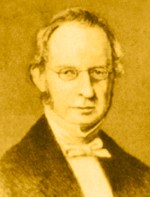
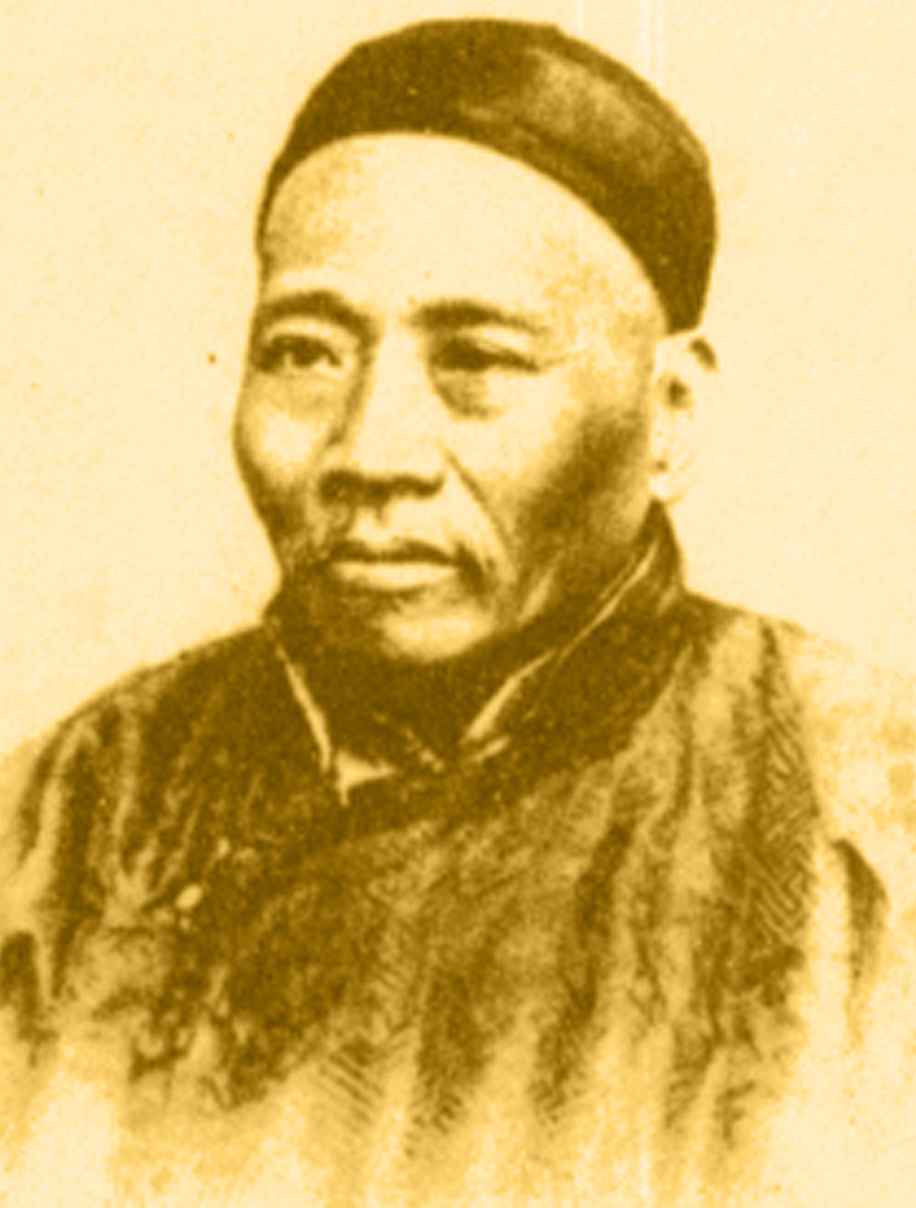
Walter Medhurst (1796–1857) was a missionary from the London Missionary Society. He arrived in Asia in 1816, initially staying in Malaysia and Vietnam before moving to Batavia (modern-day Jakarta) in 1822. In 1843, Medhurst relocated to Shanghai, where he helped develop the city, founding the London Missionary Society Press (LMSP), co-founding Shanghai’s first Western hospital, and serving as the first director of the municipal council.

Medhurst worked as the principal member on the translation committee of at least three versions of the Chinese Bible, including the Four Person Group Version (along with Karl Friedrich August Gützlaff, Elijah Bridgman, and John Robert Morrison), the Nanjing Mandarin Translation, and the New Testament Delegates’ Version, one of the most successful translations of the 19th century, written in the style of ancient Chinese. Medhurst died of illness two days after returning to Britain in 1857, having devoted his life to the Chinese people.

A Chinese Bible translator who helped modernize China: Wang Tao

Wang TaoCourtesy of Taiwan Cosmic Light Magazine / Edits by CT
Wang Tao

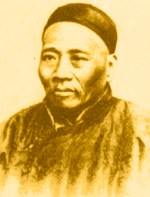
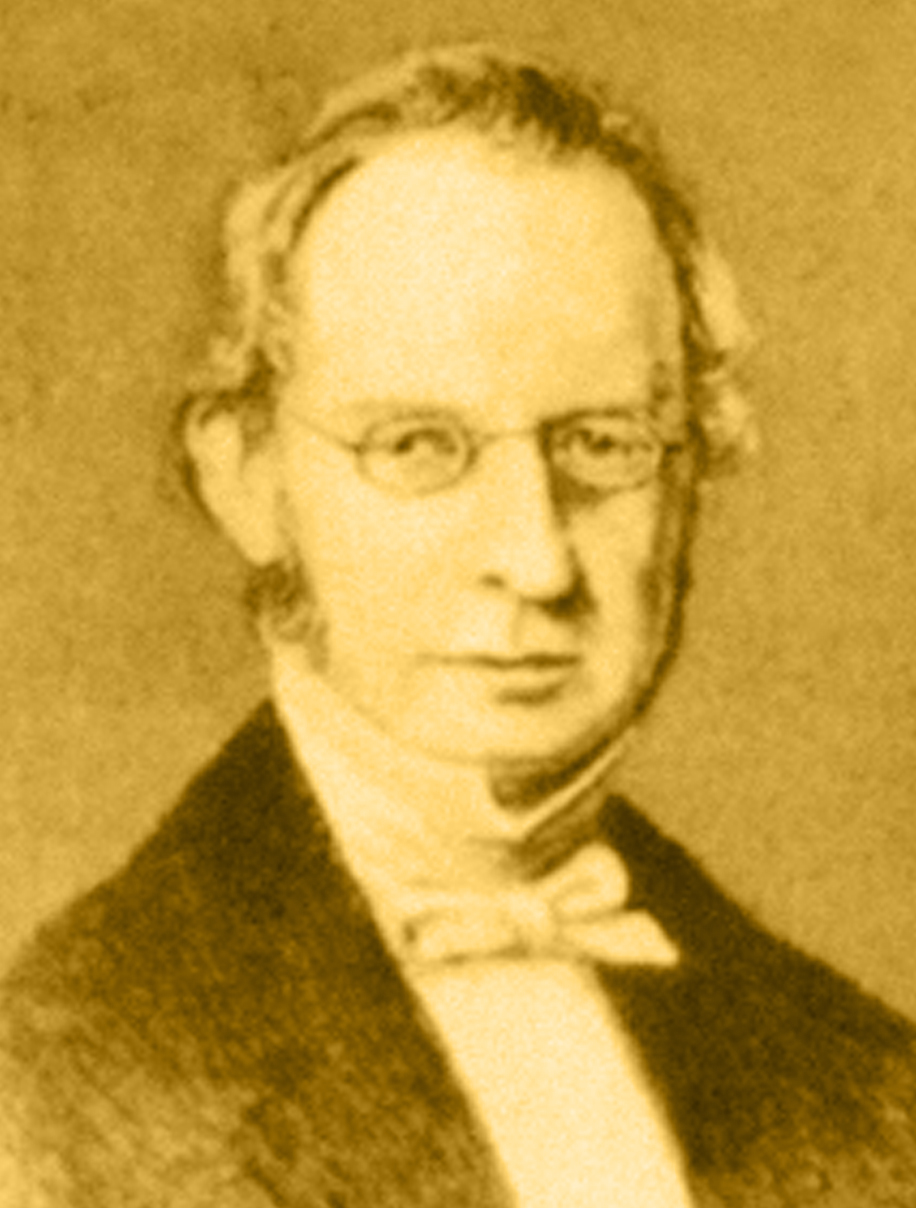
Wang Tao (1828–1897) hailed from the eastern Chinese province of Jiangsu. His father, Wang Changgui, worked for LMSP in Shanghai and served as Medhurst’s Chinese teacher. After his father’s death, Wang joined LMSP and helped complete the Delegates’ Version; his exceptional writing style earned him high praise.

Later, Wang accepted an invitation from James Legge to assist in translating the Chinese Confucian texts The Thirteen Classics into English, and worked on the project in England. Wang penned many works of his own and was actively involved in journalism and Western education. He is considered an important figure in China’s path toward modernity.

Protecting the Bible against pirates: Walter Lowrie

Walter LowrieCourtesy of Taiwan Cosmic Light Magazine / Edits by CT
Walter Lowrie

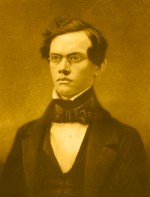
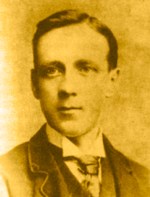
Walter Lowrie (1819–1847) was an American Presbyterian missionary and a graduate of Princeton Theological Seminary. His father, Walter Lowrie Sr., served as a US senator before resigning to work as the secretary of the American Presbyterian Mission, and he strongly encouraged his son to join overseas mission work.

Lowrie arrived in China in 1842 and later participated in the work for the Delegates’ Version in Ningbo. But in 1847, he was killed by pirates on his journey back from a meeting in Shanghai. During the struggle, he managed to save the interlinear Hebrew-Greek-English Bible he was holding by throwing it back onto the ship.

A few years later, his younger brother Reuben Post Lowrie (1827–1860) came to China. He also served as a Bible translator and died six years later from illness. Reuben’s son, James Walter Lowrie (1856–1930), served as a member of the translation committee for the Chinese Union Version (CUV), considered to be the predominant Chinese translation of the Bible and the basis for standard translations in use today.

An officer turned translator: Michael S. Culbertson

American Presbyterian missionary Michael S. Culbertson (1819–1862) graduated from the United States Military Academy in West Point, New York, in 1839. In 1841 he retired from the military, entered Princeton Theological Seminary for further studies, and came to China immediately upon graduation in 1844, residing in Ningbo and Shanghai. He joined the translation committee for the Delegates’ Version, but later withdrew because of his differing views. Alongside his friend Elijah Bridgman, he embarked on a new Bible translation project that was supported and published by the American Bible Society in 1855.

Tragically, Culbertson fell ill and died in Shanghai in 1862. His translation, like the Delegates’ Version, was widely circulated and very faithful to the original script, greatly aiding theological students and preachers in their Bible study.

Champion of a colloquial language translation: Calvin Mateer

Calvin MateerCourtesy of Taiwan Cosmic Light Magazine / Edits by CT
Calvin Mateer

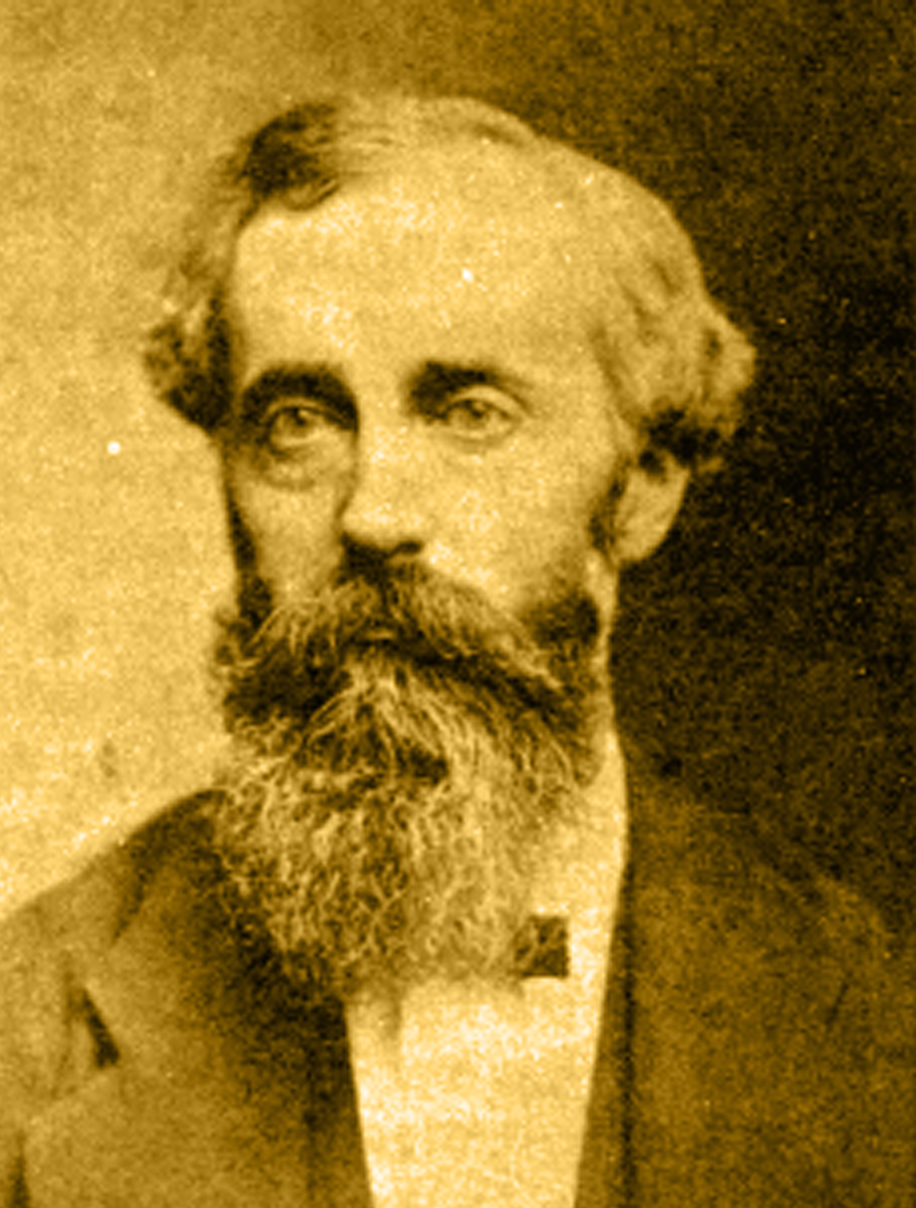
Calvin Mateer (1836–1908) was another American Presbyterian missionary. He came to China in 1864 and remained for 45 years. His two most significant contributions were the establishment of the Tengchow (Dengzhou) College, which later became Cheeloo (Qilu) University, and his leadership in the initial translation work of the CUV.

In his later years, Mateer stated, “I have devoted my life to the revision work of the Bible. This task cost me a lot of effort, but this is perhaps also the most important work of my life.” He stressed that the primary audience of the CUV were listeners, not readers, as the illiteracy rate in China was still high. And he emphasized the importance of colloquial language, a value which made his translation easy to read out loud.

Mateer also wrote the Course on Mandarin Lessons, which was later reprinted and published by Peking University Press in 2017.

Mateer’s teammate: Wang Yuande

Wang Yuande worked as a translation assistant for Mateer and later wrote about his Bible translation experiences:

Every summer, everyone would bring their draft translations and gather at the Anxie Pavilion on the eastern side of Yantai. They would congregate in one room, each expressing their views and mutually examining evidence. There were times of harmony and friendship, while at others, arguments and disputes ensued. Occasionally, they would slap the table, shout, and storm out in a huff. A moment later, they would return laughing, and begin discussing from the start again. Every time a draft was finalized, it would be after days of eloquent debates which led to indecisiveness. Ultimately, with Western missionaries dominating the discussions, the translators sought agreement with the original text, without putting much effort into the Chinese wordsmithing.

One such translation committee meeting lasted two and a half months. A Tengchow College student later recalled that these debates could be heard by those outside the building.

Wang, along with his predecessor Zou Liwen, were both alumni of Tengchow College. Their and Mateer’s translation work received high commendations from their peers.

The late-stage leader of the Chinese Union Version: Chauncey Goodrich

Chauncey GoodrichCourtesy of Taiwan Cosmic Light Magazine / Edits by CT
Chauncey Goodrich

Chauncey Goodrich (1836–1925) was an American Congregationalist missionary who came to China in 1865 to teach at Gordon Memorial Theological Seminary in Tongzhou, Hebei. His interest in Mandarin spurred him to write the Sino-English Pocket Dictionary and Gems of Mandarin.

In 1908 Goodrich became the chair of the translation committee for the CUV. He undertook the substantial responsibility of finishing the Old Testament translation and revising the New Testament.

He once left a translation meeting early due to his daughter’s critical illness, appointing his Chinese translation assistant, Zhang Xixin, to lead in his absence. He frequently praised the efforts and contributions of his Chinese assistants and approved their having the same voting rights as the Western translators. When the CUV was published in 1919, he was the only translator who had participated from start to finish.

He passed away in Tongzhou in 1925 after dedicating 60 years of his life to China. The CUV remains his timeless legacy.

The China Inland Mission translator: Frederick Baller

Frederick BallerCourtesy of Taiwan Cosmic Light Magazine / Edits by CT
Frederick Baller

Frederick Baller (1852–1922), a British missionary for China Inland Mission (CIM), came to China in 1873. He launched his missionary work in the provinces of Anhui, Shanxi, Hunan, and Guizhou, conducting surveys and providing relief work.

In 1896 he assumed leadership of the language school situated in Anqing, Anhui, helping newly arrived male missionaries learn Chinese. He was an eminent Chinese scholar and teacher with CIM and authored popular language textbooks, including The Mandarin Primer and An Idiom a Lesson, which were frequently reprinted due to high demand.

He served on the translation committee for the CUV for nearly 20 years as one of the key contributors, alongside Goodrich. He succumbed to illness and died in Shanghai in 1922.

The translator who typed with two fingers: Samuel Isaac Joseph Schereschewsky

Samuel SchereschewskyCourtesy of Taiwan Cosmic Light Magazine / Edits by CT
Samuel Schereschewsky

Joseph Schereschewsky (1831–1906) was a Jewish Russian who spent his early years studying in a Rabbinic school before converting to Christianity. In 1859, five years after immigrating to America, he was sent by the American Episcopal Church to China, where he translated the Bible into two versions: the Peking Mandarin Version published in 1875 and the Easy Wenli Version published in 1902.

In 1881 he suffered a sun stroke and later became mostly paralyzed from Parkinson’s disease. But this didn’t stop him from completing his translations, typing out the Wenli Version with only one or two functioning fingers. He died in Japan in 1906.

The translator of the Bible for the Miao people: Samuel Pollard

Samuel PollardCourtesy of Taiwan Cosmic Light Magazine / Edits by CT
Samuel Pollard

Samuel Pollard (1864–1915) was a British Methodist missionary who left for China in 1887. Beginning his missionary work in Zhaotong, Yunnan, he primarily focused on the Han Chinese. In 1905, in response to the swift growth of evangelism among the minority Flower Miao people, he relocated to a more mountainous area of Guizhou.

Pollard educated locals, built hospitals, advocated for eradicating harmful cultural practices, and defended human rights, actions which collectively sparked a cultural renaissance among the Miao community. He formulated a script for the Miao language, referred to as the Pollard script (or the “Ahmao script”), and consequently translated the New Testament Bible.

In 1915, following an outbreak of typhus fever in the region, Pollard contracted the disease while treating students and subsequently passed away. His New Testament translation into Flower Miao was published two years later. Pollard’s life story was narrated in a series entitled Beyond the Heavens, which was broadcasted on China’s CCTV.

The translator whose daughter was Pearl S. Buck: Absalom Sydenstricker

Absalom Sydenstricker (1852–1931) was a Presbyterian missionary from the southern United States. He came to China in 1880, initially carrying out missionary work in northern Jiangsu. Later, he was invited to lecture at Nanking Theological Seminary. He invested his personal assets and devoted all his efforts to the solitary task of translating the Bible. He passed away from illness in 1931.

His daughter was the distinguished writer Pearl S. Buck (winner of the Pulitzer Prize for Fiction and the Nobel Prize in Literature). In her biography of her father, she criticized his obsessiveness over his work. She noted:

The children always felt that their father’s New Testament was akin to a bottomless pit; it deprived them of their desirable toys or the new dresses that the girls yearned for, as well as the numerous books they craved. They asked hopefully, “Mother, can we purchase some items we want after father finishes the New Testament?” … He repeatedly printed edition after edition, striving for perfection in each one. And [the mother] continually fell into deeper impoverishment throughout her life due to the publication of the New Testament.

A Chinese translator passionate about Greek: Zhu Baohui

Zhu Baohui (1889–1970) studied Greek at Jinling Theological Seminary under the guidance of Francis Perkins, worked as a Greek teacher in the seminary’s correspondence department, and assisted Sydenstricker in translating the New Testament, which was published in 1929.

The year after Sydenstricker died, the responsibility of ongoing revisions fell to Zhu alone. In contrast to Sydenstricker, who favored fluidity of the translation, Zhu placed more emphasis on loyalty to the original Greek. As a result, he included numerous annotations and appendices in his modified translated version, known as The Re-Translated New Testament, which was published in 1936 and was financially supported by Sydenstricker’s daughter Pearl.

In conclusion

Chinese Bible translations were often the result of years of diligence, at times division, and significant group work. While Westerners often numerically dominated the projects mentioned above, Chinese Christians also played a role. (Though, as Wang Yuande notes, the foreigners outtalked nearly everyone else.)

Ultimately, the most significant project to come out of these projects was the CUV. Yao writes:

The timely arrival of the CUV provided the Chinese Protestant community with a ready-made set of theological notions and vocabulary that Chinese believers immediately received and embraced. It did not take long for the CUV’s translation of such key biblical terms as faith, sin, salvation, and grace to become the standard “language of faith” used by church leaders, theologians, and evangelists as well as the average churchgoer on a daily basis.

The CUV’s translation of key biblical terms has been deeply ingrained in the theological DNA of the Chinese Protestant community around the world. It is fair to say that this is the only theological language system known and used unquestionably by this community up to today.

Wei Wai-Yang, a retired lecturer from Central University of Taiwan and vice secretary general of Cosmos Light Holiness Church School, has been committed to researching the history of Chinese Christianity for many years. He has several related publications, one of which is Clouds That Stay in the Distance.

This piece was adapted from Chinese. Read the original in traditional Chinese and simplified Chinese.

News

Died: Uwe Holmer, Pastor Who Forgave a Communist Dictator

When the East German government collapsed, the evangelical minister welcomed Erich Honecker into his home for 10 weeks.

Christianity Today October 2, 2023
Wikipmedia Commons / edits by Rick Szuecs

For Uwe Holmer, the question wasn’t simple. But it was clear.

Did he believe what Jesus said?

The East German dictator Erich Honecker was asking for his help. Honecker had long been an enemy of the church, a powerful ideological opponent of Christianity who had worked to suppress and control people of faith in the German Democratic Republic, and he had personally harried and harassed Holmer’s own family for years.

But now the Communist leader had been pushed from power, driven from his home, turned out of a hospital onto the street—and he was asking the Lutheran church to take him in.

Holmer had to decide what he believed.

He knew what the answer was.

“Jesus says to love your enemies,” he explained to his neighbors at the time. “When we pray, Vergib uns unsere Schuld, wie wir vergeben unseren Schuldigern”—forgive us our sins as we forgive those who sin against us—“we must take these commands seriously.”

The evangelical minister accepted the deposed dictator into his home in January 1990 and cared for him and his wife Margot for two and a half months. The action shocked Germans, East and West. The 40-year division of the country had just collapsed, and as the Cold War came to a surprising end, the German people didn’t know what was going to happen next or how they should treat those on the other side.

The until-then unknown pastor offered one bold answer: forgiveness and hospitality. Hate, Holmer said, is “not a good starting point for a new beginning among our people.”

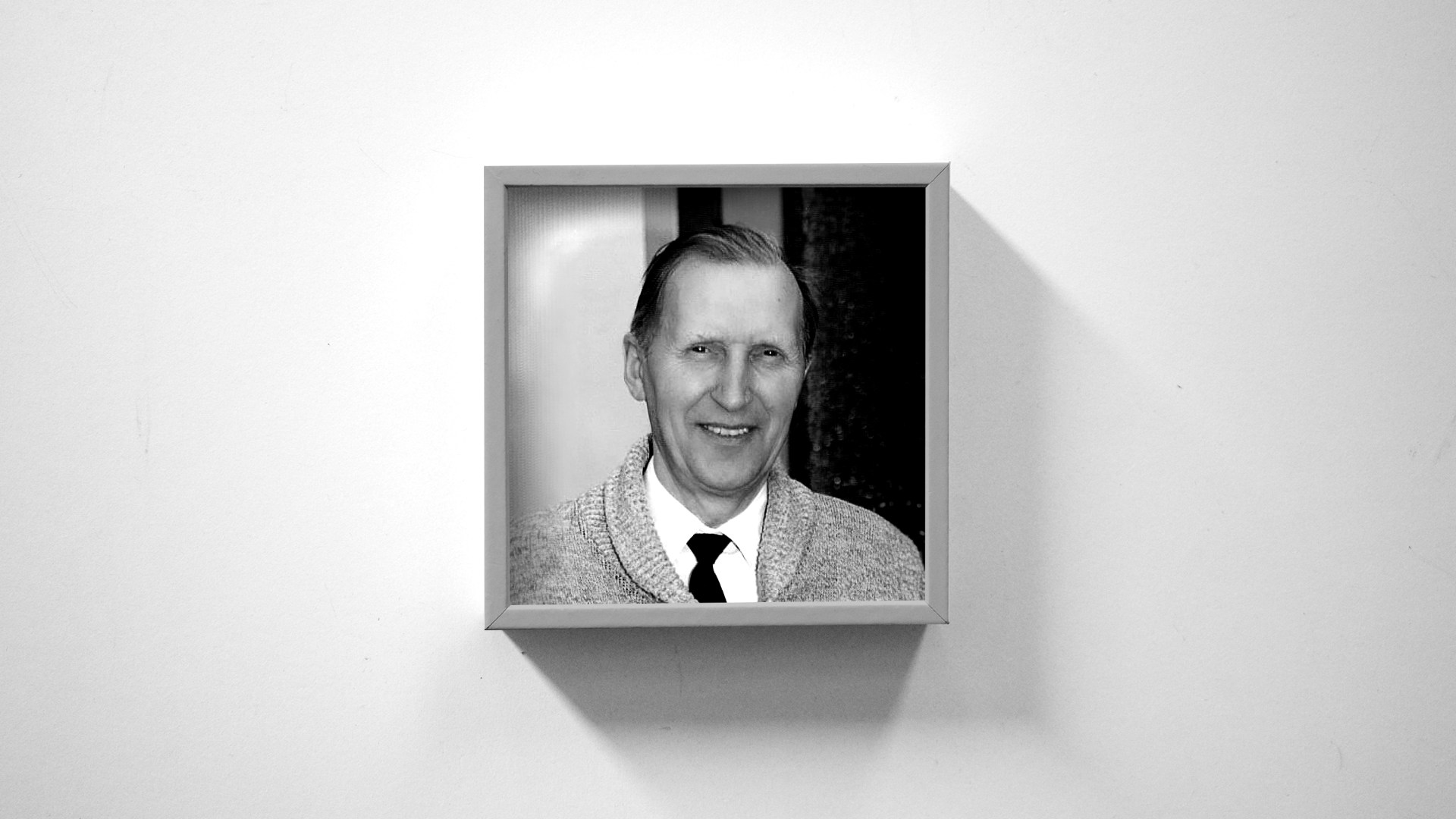
Holmer, known in Germany as “the man who Honecker lived with,” died on September 25. He was 94.

“Uwe Holmer was a person who lived out of deep piety right up to the end,” said Tilman Jeremias, Protestant bishop of Northern Germany. “He was able to show charity even toward a socialist and atheist like Erich Honecker.”

Holmer was born in Wismar, about 150 miles north of Berlin on the Baltic Sea, in 1929.

As a child, he joined the Hitler youth, attracted by the camaraderie, optimism for the future, and the opportunity to learn about new things like car engines. He was impacted more, however, by the trans-denominational movement of evangelical Christians associated with the German Evangelical Alliance.

At an Alliance prayer meeting in Wismar, he saw pietists from his Lutheran church joining in worship with Methodists, Baptists, and other free-church Christians, all united by their trust in Christ. Later, when he had some health problems as a teenager, he was sent to a lung clinic for 10 months. There, he became close friends with an older boy who spent his time ministering to those who were suffering and telling them about Jesus. Holmer decided he wanted to be like that.

When he graduated high school in 1948, he decided to study theology to become a Lutheran minister at the University of Jena. The school had been mostly destroyed during World War II. But the Soviet Union took over that sector of the country and rebuilt and reformed the school as a model of Communist education. Despite an ideological commitment to atheism, Soviet authorities allowed theology classes, installing Lutheran professors known for their opposition to Nazism.

Holmer decided to continue his education at Jena even when his parents, concerned about the increasing authoritarianism, decided to leave their home and move to West Germany in 1950. Holmer said he thought people in the East would need pastors. He graduated and was ordained in 1955.

When he was assigned to a rural northern church, however, Holmer struggled to become an effective minister. The people didn’t understand his sermons. He flailed around in the pulpit, not speaking clearly. In crisis, he picked up the works of Martin Luther and became convicted that he should only preach one thing: “Your sins are forgiven.”

It changed everything about his ministry.

“I simply proclaimed the grace of God and how we can take hold of it by faith,” he later said. “And lo and behold! This offer of the gospel came alive in the hearts of many people, gave assurance of forgiveness, and made them free and joyful. For ‘where there is forgiveness of sins, there is also life and salvation.’”

Though he was not especially political, the young minister was committed to democracy. He ran afoul of the Communist regime in the late 1960s, when he criticized the forced collectivization of agriculture. The Ministry for State Security, known as the Stasi, put him under surveillance, noting that he could be a troublemaker. One of the people keeping an eye on him was Honecker, who was then the security secretary for the central committee of the German Communist party.

Honecker played a key role in the construction of the Berlin Wall at about that time and formally took responsibility for the policy of shooting people trying to escape to the West, called Schießbefehl, “order to shoot.” More than 300 people ultimately died at the wall.

When Honecker rose to the top of the Communist party and took control of the state in 1971, he made a show of liberalizing East Germany. He orchestrated the economy to provide more blue jeans for young people and allowed more freedom for authors and artists.

Honecker also worked out a deal with the Protestant church, offering them a secure place in East German life and a higher public profile, including a weekly broadcast on state-run radio, in exchange for a commitment to not criticize him or the government. The Lutheran leadership in East Germany agreed to function as a “church within socialism,” but the Communist dictator did not always honor his side of the bargain.

The Stasi continued to spy on Holmer, and his 10 children were denied access to higher education. They had good grades and qualified to attend the advanced high school that would prepare them for university. But when they applied, they were rejected without explanation. The education department, notably, was run by Margot Honecker, who was sometimes known as “the purple witch.”

When the family got angry with this treatment, however, they made a practice of giving their feelings to God and forgiving the authorities who were making their lives difficult. They understood that to be what Jesus wanted.

At one point, Holmer found himself praying for Erich Honecker. He was thinking about how much power the Communist leader had, how he was praised, flattered, and applauded everywhere he went, and how bad that must be for his soul.

He needs help, Holmer thought. I would gladly tell him about the gospel if I got the chance.

Then, to the surprise of almost everyone, the East German regime started to wobble. The Communist party attempted to restore stability by forcing Honecker out. It didn’t work, and a month later people started tearing down the Berlin Wall. The state legislature moved to end one-party control, effectively removing the Communists from power, and a prosecutor opened a case against the deposed leader. Honecker was charged with treason, embezzlement, and abuse of power. He was placed under house arrest. But then the legislature started seizing the party’s property, and Honecker was suddenly homeless.

After a short hospital stay, Honecker was forced out onto the street. With nowhere else to go and fearing he might be killed by a mob, he turned to the Lutheran church for help. Holmer, at the time, was overseeing an institute on the outskirts of Berlin where they cared for disabled people. He consulted with his wife, Sigrid, and the children who still lived with them, and then offered to help. They cleared two upstairs rooms and welcomed the Honeckers.

“They were a helpless, rather desperate couple,” he later recalled. “We … thought about it for a long time, but felt that we should not start the new era with hatred and contempt, but with reconciliation.”

The Holmers’ home was soon inundated by the country’s first media frenzy, as reporters tried to get quotes from the pastor and his strange house guest, and photographers strained to snap pictures. Protestors also arrived to yell at the minister and demand punishment for Honecker.

No grace for Honecker! one sign said.

Holmer tried to change their minds.

He reminded his neighbors of a statue of Jesus in town that quoted Matthew 11:28: “Come to me, all you who are weary and burdened, and I will give you rest.” He reminded them of the Lord’s Prayer, which they prayed in church every Sunday, asking God to forgive them as they forgave others.

“Listen, man,” one man shouted in response. “That is not the point.”

Holmer and his family protected and cared for the deposed dictator for 10 weeks. Holmer found that Honecker wasn’t very interested in talking to him about the error of his ways, however, and how he could lay hold of God’s forgiveness through faith in Christ.

“Mr. Honecker,” Holmer said at one point, “socialism made a mistake. Socialism means that people are good, but they are not. Everyone is an egoist. Jesus said we are sinners. That’s why Jesus wanted to change hearts. And when hearts are changed for good—for faith, hope, and love, and also for honesty and responsibility—then we will have the conditions for good.”

In April, Honecker left and went to a Soviet hospital where he could be treated for a malignant tumor on his liver. He later fled the country, successfully fought to have his case thrown out by the Supreme Court of the new German government, and spent his last days in Chile. He never showed any interest in Holmer’s message, but he and his wife thanked the minister and his family for their kindness and sent them a Christmas card every year.

Holmer returned to obscurity and spent the rest of his life quietly ministering to those in need. He moved to the small town of Serrahn, where he cared for people struggling with drug and alcohol addiction. He preached in local churches when their pastors were on vacation and regularly traveled to Kazakhstan and Kyrgyzstan to teach Bible school.

Holmer became a member of the board of the German Evangelical Alliance and urged Christians across denominations to unite around Christ and the core message of the gospel: Your sins are forgiven.

“The world is overflowing with sin, hatred and strife, war and godlessness,” he said. “It so desperately needs the offer of grace and forgiveness through the cross and resurrection of Jesus.”

In 2022, Holmer’s story was made into a documentary by Jan Josef Liefers, star of the television crime drama Tatort. The film, Honecker and the Pastor, was broadcast on German public television.

“Sometimes reality is more exciting than any fiction,” Liefers said. “If I told you that a fallen dictator had to ask for help from the most despised of his oppressed people, you would think it was a beautiful fairy tale. But this actually happened.”

Holmer was predeceased by his wife, Sigrid. He is survived by their ten children, his second wife, Christine, and her five children.

Only Jesus Can Satiate Sheep and Wolves Alike

The Good Shepherd interrupts the story of our hunger and introduces himself as the Bread of Life.

Christianity Today October 2, 2023
Illustration by Mallory Rentsch / Source Images: Unsplash

This essay is a special collaboration with Ekstasis, CT’s imaginative NextGen project, and originally appeared in the Ecstatic Newsletter, an extension of Ekstasis on Substack. Together, we’re building a digital cathedral that offers space to ponder and lift our eyes to Christ in wonder.

Heavenly SportsI read with enjoyment David Holmquist’s “Will There Be Baseball in Heaven?” [Jan. 10]. His title reminded me of this good news/bad news story:Two preachers loved to play baseball. They made an agreement. Whoever died first would come back in spirit form and tell the living preacher if baseball was played in heaven. One died. He came back and said, “The good news is that they do play baseball in heaven. The bad news is you are pitching Friday.”Claude A. FrazierAsheville, N.C.Unfair review?I was appalled by Edith Blumhofer’s review of Jack Deere’s Surprised by the Power of the Spirit [Jan. 10]. The title, “Dispensing with Scofield,” prejudices the reader to perceive the book in an iconoclastic light, as does the accompanying cartoon. Instead of reviewing the book, the reviewer devoted more than half the space to explaining differences between Scofieldian dispensationalism—with its cessationist view of miracles—and Wimberian Pentecostalism—with its belief that God still works miracles—and then insinuating that Deere seeks to substitute Wimber’s hermeneutic, which the reviewer finds unacceptable, for Scofield’s, which the reviewer finds equally appalling. This bias reaches a climax with the reviewer’s rhetorical question: “In laying aside Scofield’s grid, has Deere replaced it with another that is equally or more manipulative in its use of God’s Word?” This embodies a fallacious assumption and casts a false aspersion.But Deere does not seek to develop a formal hermeneutic, as Scofield did. And he shows a deep reverence for and a scrupulous, thoughtful handling of God’s Word on every page.John J. Hughes Whitefish, Mont.Your review points to an issue that never arose in historic Christianity. Must we settle for either Scofieldism, or Pentecostalism, for that matter? Not at all. Even evangelical books like Why I Left Scofieldism, by William E. Cox, and A Search for Charismatic Reality, by Neil Babcox, point the way away from either alternative.There has to be another, indeed a better, way.Scott Robert Harrington Erie, Pa.Compassion and reasonAs a 30-year Southern California resident, I read with interest “The Alien in Our Midst” [News, Dec. 13]. Illegal immigration is a perplexing, paradoxical problem that compounds itself, particularly in a state that borders Mexico.The notion presented here, of “compassion versus reason,” is often used to debate illegal immigration issues and other seemingly moral, controversial issues. But compassion and reason are not dichotomous, polar opposites. Rather, the most reasonable, rational, truthful response is always the most compassionate response. To dichotomize these terms is to further perpetuate and cloud the problem.We cannot continue to think in terms of the most expedient action—usually considered the “compassionate” alternative, as with caring for and housing illegal immigrants—when the long-term result is a lie. This is not compassion, but an unwillingness to see to the heart of the matter—which is simply that no matter how badly we feel for our impoverished fellow man, our entire nation has suffered, economically, socially, and educationally, and will continue to do so when people are allowed rights and privileges without having to work for them.LuAnn CraikYorba Linda, Calif.“The Alien in Our Midst” rightly addresses the issue of immigration in the context of Christian compassion.As an American, I am thankful the United States remains a desirable destination for immigrants. The CT article did not fully consider the worldwide scope of would-be immigrants to the United States, however. U.S. consular officials daily face long lines of visa applicants around the globe, most of whom would like to move permanently to the U.S., usually for financial reasons. Perhaps instead of working to bring new immigrants to America, U.S. Christians should seriously consider leaving the comforts of home to renew the “graying” ranks of missionaries and other Americans overseas who labor to improve the lives of persons where they live.Russell P. IngrahamAmerican EmbassyBucharest, RomaniaTake Two Aspirin And Go To ChurchFor the most part, society has missed the role churches could play in solcing the health-care crisis. I’m not talking about applying theological principles to the social debate. I have in mind something more practical: All doctors should be encouraged to prescribe churches that can remedy parients of their ailments.Instead of expensive physical theraoy for those recovering from knee sugery, for example, why not prescribe a church that specializes in genuflection? These services weekly should keep the joints flexible.For those needing shoulder or arm exercise, a charismatic church is the way to go. Sinus trouble? A smells-and-bells Episcopal church should help clear things up. TMJ? Avoid those Methodist hymnsings, and try a silent Quaker tetreat.Fighting insomnia? Instead of traquilizers, a church where the preaching is longer than it is good (and where the pews are padded) is just the antidote.Blood pressure problems? Avoid potluck dinners and budger debates.With this plan, people would ger healthier, and church attendance would increase. Who knows, maybe people would actually pray about their problems. Ah, now we’re talking about a real solution.That Lutheran sex reportDavid Neff’s editorial about the report by the human sexuality task force of the Evangelical Lutheran Church in America disheartened me [“How Lutherans Justify Sex,” Dec. 13]. Like so many others who have rushed to calm the furor caused by this report, he criticized the media for reporting on the controversial but missing the commendable portions of the statement. Have we sunk so low that orthodoxy is the “real” news?I am glad Neff sees the value of the traditional gospel-centered approach to the Scriptures in Lutheranism. Unfortunately, among the neo-Lutherans in the ELCA, “Was Christum triebt” has become a principle for playing one Scripture off against another. Neff adeptly spotted examples of this in the task force report, but he attributed it to inherent weakness in the Christological, evangelical approach to Scripture. In truth, the faulty conclusions of the task force stem from the neo-Lutheran aberration of the traditional Lutheran approach.Rev. Tim OswaldLiving Word Lutheran ChurchWindom, Minn.With all due respect, Neff did more to obscure the problem with the ELCA task force’s conclusions regarding homosexuality than to clarify them. The problem was not, as he asserted, that the task force considered the matter Christologically, but rather precisely that they did not consider the matter Christologically.The notion that one can be a “homosexual” requires that a person be turned inward toward the self, giving definition to him- or herself in isolation. Christ, on the other hand, can only be understood to turn us away from ourselves, and therefore away from death and destruction, toward his own life. It is in turning toward God in Christ that we recognize who we are as human beings created in God’s image, male and female.If it was Christology that led the ELCA task force to its conclusions, then it was a tragically impoverished Christology indeed.Phillip M. HofingaDuke Divinity SchoolDurham, N.C.The ELCA is one of several Lutheran bodies in the United States. Any doctrinal statements they publish represent their views, but not necessarily the views of all Lutheran churches in this country.Doug CoupFrazer, Pa.The task force’s feeble position on the homosexual issue may have been due in large measure to the fact that there were two homosexuals, one male and one female, on the committee. This is revealed in an editorial by Edgar Trexler in the December issue of The Lutheran.Gordon GinnFortuna, Calif.Good newsI read with interest the CT Institute article “Muslim Mission Breakthrough” [Dec. 13]. If even half the mission claims are true, it is still good news! However, I am uneasy about the so-called historic Assembly of God churches in southern Egypt sweeping “20,000 nominal Christians into the kingdom.” I smell a rat. Protestants have spent much time and money trying to “reconvert the converted” in Egypt. The Coptic Church has been there through centuries. Rather than trying to “convert” Christians, evangelicals should support and cooperate with the Copts, who trace their spiritual lineage to Saint Mark. They belong to the real historic church in Egypt.Rev. Lyle H. RaschCincinnati, OhioSecular education’s value-escapismThank you for Christina Hoff Sommers’s effort to expose and expel the value-escapism in the secular classroom, especially for its diminishing returns [“How to Teach Right & Wrong,” Dec. 13]. As one who has “done some time” in public schools, I have tried to get at the heart of the matter: how did this begin? It is surely a part of the larger social slide—from unquestioned majority standards, to emancipated personal choice, to moral anarchy—which parallels in the body-politic the transfer of focus from The Significant Other to (more-or-less) significant others, to the self. What began as a gloriously liberal experiment in America has degenerated into a morass of libertinism. In short, the individual has priority over the community, even in the classroom.House-cleaning begins at home. The unredeemed community is not hearing a harmonious, saving summons from its Christian peers, much less its Master. If we who willingly follow his voice cannot meet him on the mountain and thunder down to the needy below his unalterable moral truths, who can? There is a fine line between being a fool and being a “fool for Christ.”John SchwaneBroken Arrow, Okla.“How to Teach Right & Wrong” was a major disappointment. I kept looking for the words God or Scripture but instead found only allusions to “learning from 2,000 years of civilization,” a traditional Jewish tale, moral common sense, and Aristotle. The critique of “moral dilemma” morals education was good, but, honestly, wouldn’t any secular magazine print this? What we have learned from 2,000 years of Western civilization is that there is no basis for morals and values apart from God.Pastor Michael SharrettFort Worth Presbyterian ChurchFort Worth, Tex.The danger of MomentusThank you for your news article “Momentus Loses Momentum” [Dec. 13]. People need to be aware of this extremely dangerous movement. I have seen, firsthand, how Momentus has destroyed lives. The people who claim they are now closer to God have become very exclusive with whom they now dialog. Not once have I heard what makes this a Christ-centered, biblically orthodox program. Momentus started out as a scam, and it will continue to be a scam in whatever form it disguises itself.Joachim RandeenPalos Verdes, Calif.My wife and I took the Momentus Training in May 1983, and since then have seen many blessings in our lives, as well as among our family and friends. I find myself praying more, reading the Scriptures more consistently, and thinking of others’ needs more often. I read Christian literature, including your magazine, and want to fellowship with other believers. I am praising the Lord and sharing God’s Word with others who would not have heard the gospel had it not been for the experience they had with the Holy Spirit during Momentus Training.Dan StockemerGeyersville, Calif.Clapp right on targetThank you for Rodney Clapp’s “Let the Pagans Have the Holiday” [Dec. 13]. His point that Christmas is the ultimate Pelagian holy day is right on target. Would that evangelical churches with their singing trees and pageants galore would recognize not only the problem, but also the solution. Only when the church preaches the message of the Cross and stops scratching itching ears with consumer-speak will the matter change. Please, more articles like Clapp’s, less of the claptrap!Pastor Thomas E. TroxellHope Presbyterian Church in AmericaGilbert, Ariz.Clapp says, “Paul nowhere speaks of Jesus’ birth.” But Galatians 4:4 states: “When the right time came, the time God decided on, he sent His Son, born of a woman, born as a Jew” (TLB).Pastor Bufe KarrakerNorthwest ChurchFresno, Calif.Stephanou still OrthodoxIn your December 13 news article “Unorthodox Behavior?” you incorrectly stated that Stephanou “considers himself retired and says his privately owned ministry functions independent of the Greek Orthodox Church hierarchy.” It is our Renewal Center of St. Symeon the New Theologian with its land and property that is privately owned, however, not my ministry, which is divinely owned, because it is divinely appointed. I remain formally part of the Greek Orthodox jurisdiction, despite the disfavor of the ruling hierarchy over the prophetic and evangelical nature of my renewal ministry.Rev. Eusebius StephanouOrthodox Renewal Center of St. SymeonDestin, Fla.Brief letters are welcome; all are subject to editing. Write to Eutychus, CHRISTIANITY TODAY, 465 Gundersen Drive, Carol Stream, Illinois 60188; fax (708) 260-0114.

In his final conversation with the apostle Peter, Jesus asks whether Peter loves him. “Yes, Lord,” says Peter, “you know that I love you.” Jesus replies, “Feed my lambs” (John 21:15–19). Peter obeys by giving a faithful account of Jesus’ life and ministry to Jewish hearers and crosses cultural boundaries to deliver it to Gentile audiences as well. The church forms as an ethnically, linguistically, and geographically heterogeneous community, nourished by a testimony that has been translated across cultures to feed every tribe and tongue.

Modern Christians have continued the early believers’ project of making the testimony of Jesus assimilable to every culture, and the Western church is no exception. But we may be pushing this endeavor past its rightful limits. As Jesus and his teachings resurface in the form of spiritually-inflected home goods available from our favorite social media stars, professionally engineered worship megahits that primarily enrich their makers, and components of profitable personal brands, we would do well to ask ourselves what exactly we are accomplishing.

Our methods of bearing witness may be redirecting the devotion that should accrue to Jesus and drawing it to ourselves. We risk no longer feeding Christ’s sheep but feeding on them instead.

Jesus understood that our apparent acts of devotion can become covers for predation. “Watch out for false prophets,” he warned. “They come to you in sheep’s clothing, but inwardly they are ferocious wolves.” (Matt. 7:15). It’s an evocative image, bringing to mind the many ways religious power has been creatively misused: Hophni and Phinehas collecting food and sexual favors at the temple (1 Sam. 2:12–25); Pope Urban II granting indulgences in exchange for enlistment in the Crusades; Southern Baptist Convention leaders choosing self-protection at the cost of abused church members.

For wolves in sheep’s clothing, ministry is attractive because of how easily the flock can be devoured.

Is there any way for us to know if we have transformed into the kind of people Jesus cautioned his hearers to avoid? The artist J. Cole wrestles with this question in his 2016 single “False Prophets.” He begins with an outpouring of grievances aimed at musicians he loved before their giftedness brought them the acclaim that would enable their most destructive impulses. “Ego in charge of every move, he’s a star,” Cole laments, “And we can’t look away due to the days that he caught our hearts.”

For Christians with even a glancing acquaintance with the last decade of public church meltdowns, we could cast this verse with any number of people. This could be about Mark Driscoll. Or Ravi Zacharias. Or Carl Lentz or Jerry Falwell Jr. or too many other figureheads of Christian denominations or institutions, national or local, who earned, then demolished, the trust of everyone who looked to him for nourishment. In Psalm 145:15, David praises the Lord as the provider for every living thing, saying “the eyes of all look to you, and you give them their food at the proper time.” The false prophet in Cole’s depiction is like a perverse riff on David’s theme. He draws a following, then uses it to gorge himself.

Interestingly, Cole’s lyrics quickly move away from accusation and enter a mode of introspective self-indictment. Does he also want to feed on the people who adore him? He considers how difficult it is for him to escape the moral ambiguities of his position as a hip-hop icon. “Do I do it for the love of the music or is there more to me?” he asks. “Do I want these [audiences] to worship me?”

By the end of “False Prophets,” Cole has placed himself on a continuum with the people whose appetites have ravaged themselves and their followers, concluding that no one is exempt from the possibility of moral collapse.

This brings us back to Jesus’ exchange with Peter. What initially appears as a straightforward exhortation to care for those in Peter’s ministry begins to seem troubling. Why does Jesus tell Peter to feed his sheep not just once, but three times? Why is their exchange recorded for the church? Do we need this reminder too?

Perhaps the call to feed Jesus’ sheep is reiterated for us in part because it is so hard to follow faithfully. Australian academic Marion Maddox argues that few of us are immune to the pull of spiritual celebrity and the structures that support it. Even if we technically oppose the prosperity gospel or think social platforms are terrible places for discipleship, we have probably looked at images of powerful male pastors and their conventionally attractive wives, scrolled through videos of their expensively appointed homes, and wanted these things for ourselves. She posits that images of celebrity Christian couples have “replaced the more conventional iconography of Jesus, Mary, and Joseph” in Western culture.

Even if we hate how much religion has become an industry, with its own brands and moguls, this industry succeeds because we want what it sells—or want to succeed on its terms. Like Cole, Maddox sees all of us as vulnerable to becoming the thing we oppose. God calls people to be his sheep, but given the right opportunity, we can act as wolves.

We can accept our shared moral weakness, knowing that we are all tempted toward wolf-like behavior, but this does not make those of us who succumb less culpable. Jesus was especially harsh with abusers of religious power. “Woe to you Pharisees,” he says, “because you love the most important seats in the synagogues and respectful greetings in the marketplaces. … And you experts in the law, woe to you, because you load people down with burdens they can hardly carry, and you yourselves will not lift one finger to help them.” (Luke 11:43, 46). He warned that the blood of the martyred prophets, sent to correct generations of unrepentant religious leadership, would be required of them.

Yet Jesus’ primary message is not about the dangers we pose to one another. By reminding us to feed his sheep and to beware of wolves, he is ultimately preparing us to understand his role in our narrative.

The through line in Jesus’ stories of sheep, and of wolves in sheep’s clothing, is the problem of their hunger. The sheep need to be fed, and therein lies their vulnerability. The wolves are ravenous, and therein lies their capacity for evil. Jesus, the Living Word, the embodiment of all that God has ever wanted to speak to humanity, interrupts the story of our insatiability and introduces himself as the Bread of Life (John 6:22–40).

Jesus describes himself by saying “my flesh is real food, and my blood is real drink” (John 6:55). He repeats these words again before offering his body to be crucified (Matt. 26:26–29). Even in his infant form, Jesus, freshly born and still wordless, tells us who he is by resting in a trough designed for the feeding of animals.

During the early days of the Asbury outpouring—the spontaneous, student-driven revival at Kentucky’s Asbury University in the spring of 2023—seminary student Madison Pierce made a widely circulated Facebook post about what he witnessed in the university chapel. “I find it interesting,” he wrote, “that God would mark this outpouring with … a leadership emphasizing protective humility in relationship with power for a generation deeply hurt by the abuse of religious power.”

Pierce was one of several commentators who would remark on the atmosphere of humility cultivated on the Asbury campus with a mixture of fascination and relief. Billy Coppedge, writing about Asbury for the Lausanne Movement, confessed that one of his “earliest thoughts was this could be very advantageous for [the university]. They could profit off of all these visitors and the media attention.” He said it was “remarkable,” then, that “the attitude throughout has not been, ‘How can we bend this for Asbury’s purposes?’ but rather, ‘How do we not touch the glory?’”

Pierce and Coppedge’s statements are both hopeful and sobering. Coppedge was delighted by the guilelessness he saw at the university because of how strongly it contrasted with his expectations for a religious institution poised to expand its power. Pierce was so struck by “leadership emphasizing protective humility” that he cited it as evidence of divine visitation—not because religious leadership was lacking, but because of how frequently he’d seen religious leaders be exposed as abusive.

What does this tell us about the church in the West? We have made religious celebrities and institutions ubiquitous in our culture, but we have not always fed the people entrusted to our care. The backdrop in every article about the outpouring’s humility is the mass of people who have been scarred by the kind of leadership Jesus denounced. The subtext to these stories is sheep without a shepherd.

Jesus’ instructions to Peter can register as both an invitation and a challenge. “Feed my sheep,” says Jesus, but it is a task of cosmic difficulty. Can anyone do this without devolving into a wolf? If we are confident in our ability to do as he asks, we should think again—maybe think three times.

Yi Ning Chiu is a contributing writer to Christianity Today and a columnist for Ekstasis.

Christian Whistleblower Who Won $70M Was Motivated by ‘Moral Clarity’

Sarah Feinberg said she had the responsibility to do the right thing when she discovered fraud at her government contractor employer.

Sarah Feinberg was a whistleblower in a case against Booz Allen Hamilton.

Sarah Feinberg was a whistleblower in a case against Booz Allen Hamilton.

Christianity Today October 2, 2023
Matt McClain / The Washington Post via Getty Images

Sarah Feinberg was a Marine Corps combat veteran, a Wharton Business School graduate, and a Christian mother of three when she left her job at one of the country’s biggest defense contractors—and filed a lawsuit under a whistleblower statute. Feinberg says she was prompted by the Holy Spirit and her moral convictions.

Eight years later, in September 2023, her role as a whistleblower netted a $69.8 million payout, a portion of one of the government’s largest procurement settlements to date at $377.45 million.

Back in 2015, Feinberg had discovered that her employer, Booz Allen Hamilton, was essentially billing the US government to cover the costs of its unprofitable work for other countries and for private sector companies, according to the Department of Justice (DOJ).

After trying to fix the billing problems internally for nine months, she came to believe that Booz Allen had no intention of ending their method of defrauding the US government. She resigned in 2016, got a lawyer, and filed a qui tam lawsuit under the False Claims Act.

The act levies monetary damages against those who attempt to swindle government programs. It also allows private citizens to sue on the government’s behalf and get a portion of the settlement or compensation. After several years of investigation and negotiations, Booz Allen and the US government settled.

Feinberg lives in the Washington, DC, area and works as CFO at National Journal. She also volunteers as her church’s treasurer.

During an interview with CT on the first not-too-hot day of autumn, she apologizes for the noise of the helicopters flying above.

“The worst is when the Ospreys come through,” she says of the aircraft known for their noise and powerful rotor wash. “Those came out when I was in the Marine Corps. I was a logistics officer, so I’d have to attach stuff under the Ospreys. I would just get blown over.”

If the military taught her about getting up after getting blown over, business school taught her humility and how to ask questions and listen in rooms filled with smart people. Along with her faith, both helped her weather the twelve months in 2015 and 2016—what she calls “the worst year of my life”—and the publicity that came with the recent payout.

How do you fit in compared to other whistleblowers like Edward Snowden and Reality Winner?

They didn’t go about reporting it in the right way. They just exposed it to the public to let the public make [the judgment]. I think that there is a place for that. That’s why I ultimately went into journalism afterwards: because I think journalism is critical to holding leaders accountable.

But the way that Snowden—who was also a Booz Allen employee—did it was just leaking information, not actually trying to hold anyone accountable.

What I discovered through this process is that there are ways to do it correctly. I think DOJ is very ineffective at enforcement, but it is the right way to do it, versus just exposing it to the public.

You’ve raised objections to the settlement. Can you tell me about that?

The DOJ is very proud of the settlement, because it’s the one of the largest procurement fraud cases in history. I don’t think that matters. I think what matters is the amount in comparison to the actual fraud. The settlement amount further incentivizes them to do the wrong thing.

Their stock prices are at an all-time high. The individual who told me that “the government is too stupid to figure this out” is now the CFO of a federal contractor. So, there’s been really no repercussion.

A lot of people see something unethical, they try to do something about it, but it’s ineffective. There’s no settlement. It just gets quashed. Even for you, this has not been as effective as you’d hoped.

I recognize that I’m one of the luckiest people ever—definitely the luckiest whistleblower ever—with the fact that I actually got a portion of the settlement. That is not normal.

I’ve got three kids who are ages 8 to 12, and they’ve seen me going through it. Just having them see this, one of the things I want to be really clear about is that when you do the right thing, usually what happens is we see our reward in heaven and not here.

My boss here at National Journal is a Christian also, and when I told him what was going on and why I had to be out of work for the last couple of weeks, he was so excited. I think he said, “Just think about how amazing this reward is here on earth, and think about those who don’t get to see the fruit of doing the right thing here. How much greater is their reward in heaven.” That was such a great insight. People are getting to see that this is what should happen when you do the right thing. It usually doesn’t.

Can you tell me what trying to undo the fraud was like and how your faith factored in?

If you remember what was going on during this period of time in 2015 to 2016, what I was seeing was those of my faith—evangelicals—were turning against refugees and immigrants. My party, the Republicans, were aligning themselves behind a sexual predator who had authoritarian tendencies. And then my company, which I loved, was also engaging in fraud.

There was such moral clarity: This is wrong, and people have to stand up. So it made it, I think, easier for me to see, I am in a situation where I can do the right thing and I have a responsibility, therefore, to do it. I feel like it was very much a Holy Spirit thing.

We ended up taking in a refugee family in the fall of 2015. I didn’t know how my church was going to respond to that. I sent out this email to our church asking for help on getting this house set up for them, watching my twins—who were about five months old at the time. We got about 30 responses within 30 minutes from our church, which is not a big church. It was really neat to see how just stepping up and doing the right thing can bring others to also support that.

So, I had that mental model going into presenting this to the leaders at Booz Allen. The idea that you just have to inform people of what the right thing is, or you just have to set an example, and then they just follow.

It was shocking to see that not being the case. It changed my perspective. Before this, I thought people didn’t do the right thing because they didn’t know what the right thing to do was—that they just needed to be educated. What I learned through this is that no, there are people who will do whatever they think they can get away with.

I felt like I was very naive up to that point. So I have to be careful to not become cynical.

What role did your Christian community play during this time?

It was really helpful to have Christian community. But I couldn’t openly share what was going on.

Following the 2015 situation where I saw the church rejecting refugees, I didn’t have a crisis of faith, but I had a crisis of institution. I didn’t trust the church, but I was able to come to rely on my church—the Church of the Resurrection—because I trusted that they would be willing to do the right thing in a situation as volatile as the refugee crisis and also how they were responding to the political pressures at the time and not going along with what most evangelicals were doing.

Having that trust in my church allowed me to stay involved and have that constant spiritual formation as I was going through the most difficult time in my life.

So, losing your faith in institutions can have benefits?

Yeah. And then how much do you tear down from that? A lot of Christians are going through deconstruction, and I think it’s positive in a lot of ways. You do find that a lot of what was there is cultural and not biblical. It’s just, what will they rebuild with?

You’ve got this huge award now, and you’ve probably had some time to think about it. What are the principles that are guiding you as you deal with this?

I have kind of a sense of extreme responsibility. How do I steward this well? And how do I get back to the causes that drive accountability? The things I’ve really come to care about over time are justice and truth. My involvement in media is really addressing the truth aspect of that. I’m asking, What are areas that I can further justice in my community?

My husband [former congressional candidate Evan Feinberg] runs an anti-poverty nonprofit, the Stand Together Foundation, and the organizations are truly transforming lives and recognizing the dignity in humans. So I want to be supportive of causes like that. I want to be supportive of Christian causes, like my church. My sister [Kate Rode] runs an organization called Harvest Bridge that supports pastors on the ground in Nepal and Myanmar. I want to support what she’s doing there. I feel like those dollars go further than anywhere else. And then I also want to think through what causes are redemptive and not just moneymaking.

Would you say your lifestyle has changed?

No, and I don’t think it’s going to change. My kids are still in public school. We’re not moving. We’re still doing the same things.

I joined The Washington Post in 2016, and I loved it. It just drove my passion for credible and trustworthy reporting. That’s been my passion since then. I think that will be what I continue to do. Right now, I’m at Atlantic Media for National Journal. I want to focus on furthering journalism at the local and the national level.

I want to be very clear: My husband is not leaving his job. He’s very passionate about what he does.

So, movie rights?

No one wants to hear an accounting story.

Susan Mettes is an associate editor at CT.

Bold Prayers Made Amy Carmichael’s 55 Years in India Possible

Even by the standards of other missionaries, the Irish woman’s ministry to sexually exploited children was intrepid.

Amy Carmichael with children in India

Amy Carmichael with children in India

Christianity Today September 29, 2023
WikiMedia Commons / Edits by CT

Kneeling bedside, three-year-old Amy Carmichael begged God to make her eyes blue. Sadly, for the toddler, the prayer didn’t spark a miracle.

But decades later as a grown woman, after she had left Ireland to make her home in the then-British occupied India, she remembered her prayer as a child. With her fair skin, she would never truly blend in with the locals. But her brown eyes matched those of the people she lived among—and that was one less distraction when trying to build relationships as a missionary.

Carmichael moved to India at the age of 27 and never left. Much of her ministry was marked by disrupting cultural norms on temple prostitution. Her prayer life, a constant of her ministry and well-documented in her books and personal writings, revealed her boldness, stubbornness, and grit in circumstances that deeply challenged her—characteristics she needed in her efforts to share the love of Christ with hundreds of women and children over her lifetime.

“Go ye”

The oldest of seven children, Amy Carmichael (1867–1951) was raised in a well-to-do Christian family in Millisle, Northern Ireland. She came to faith in Christ as a teenager while attending a Wesleyan Methodist boarding school in Yorkshire, England. But her time at school was cut short when she was forced to return home due to her family’s financial difficulties.

The family moved to Belfast for business, where her father died of pneumonia. Carmichael threw herself into serving others, beginning with her siblings—a pattern of self-sacrifice that would carry through to her dying day. Such hardships caused Carmichael to cling to the Word and cry out to God in prayer, not only for comfort but for practical help.

At one point, Carmichael’s mother gathered the children to tell them that they had run out of money. The family’s immediate reaction was not to worry, but to ask God to provide. These early experiences cultivated Carmichael’s dependence on God. “Luther said, ‘He is not strong who is not firm in need,’” she later wrote, reflecting on Proverbs 24:10 for her devotional, Edges of His Ways. “So, let us ‘be strong in the Lord, and in the power of His might.’”

One outcome of this prayerful reliance was Carmichael’s ministry among the “shawlies,” a group of underprivileged women who worked in the local Belfast mills. She received permission from her pastor to use the church hall for hosting a special meeting for the mill girls. But many church members—who were prejudiced against the poor, unchurched women from the slums—didn’t approve of this. They may have been relieved when the group outgrew their space and started praying for a new location in which to worship.

God answered their prayers through an elderly woman, who donated 500 pounds for the construction of a building on a small piece of land, purchased from the owner of a local mill. Thus, the Welcome Hall was built, a space that eventually became a center for working people in the community and that still exists as a church today.

At the invitation of Robert Wilson, who later became an adoptive father to her, Carmichael attended the 1888 Keswick Convention, a movement that sought to help people know God more. During the conference, she felt burdened by “the cry of the heathen” and compelled to commit her life to Christian service.

Two years later, while thumbing through her prayer log, Carmichael heard the words, Go, ye. And in obedience to those words, she soon became the first official Keswick missionary.

Carmichael originally planned to minister in China with China Inland Mission (CIM), but she was turned down on health grounds. This rejection did not change her conviction that God had called her to share the gospel overseas, however, and just a little over a year later in March 1893, Carmichael was accepted to the Japanese Evangelistic Band and boarded a ship.

Not long after she arrived in Japan, an elderly woman eagerly listened while Carmichael shared the good news of Christ’s life, death, and resurrection—but she became distracted by the missionary’s fancy fur gloves. The conversation stirred a new conviction in Carmichael, and she resolved to follow the example of Hudson Taylor, missionary to China and CIM founder, who wore the same clothing as the people he engaged with in an attempt to minimize distractions for the sake of the gospel. Donning traditional Japanese clothes, Carmichael, alongside her co-laborer Misaki-san, saw their ministry begin to bear fruit.

However, she began to suffer from debilitating headaches and neuralgia. Having been advised to leave Japan and rest, she traveled to Ceylon (now Sri Lanka) but was called home to Ireland to take care of Wilson, who had suffered a stroke. When Carmichael later returned to the mission field, it would not be to Japan but to a place where she would spend the rest of her life.

‘How brave are we’

A century before Amy Carmichael arrived in India, William Carey opened the door to missions in the country, translating the Bible into more than 15 languages and sharing the gospel to people from all social and economic classes. Burdened for the lost, Carey argued for the urgency of missions for every Christian, inspiring many English speakers to go overseas.

But upon her arrival in Bangalore, Carmichael found that she did not fit in with the existing missionary community. At one point, she wrote derisively:

Onward Christian soldiers,
Sitting on the mats;
Nice and warm and cozy
Like little pussycats.

Onward Christian soldiers,
Oh, how brave are we,
Don’t we do our fighting
Very comfortably?

To her relief, a more serious missionary couple, Thomas and Catherine Walker, invited her to work with them in Tinnevelly (now Tirunelveli), a city in southern India, where she stayed for over a decade. The couple had an itinerant ministry, traveling to villages on foot or by ox cart. With the Walkers’ help, she learned Tamil, the local language.

Though Carmichael wore the local sari, she rejected the customary jewels and bracelets, saying “jewels were out of place in [God’s] own chosen workers—His separated ones”; to wear them would be to conform to “the law of the fashion of this world.” A group of newly converted believers followed her example, claiming Jesus as their jewel and calling themselves the “Starry Cluster” for Christ’s light that shown through them.

During her travels with the Walkers, Carmichael encountered a temple woman who was “married” to the gods. Later, she learned that the woman was a prostitute who spent her life in sexual service to the priests and worshippers in Hindu temples. Poor families would often sell their children to the temples, where the children became sex slaves—a practice that outraged Carmichael, who demanded social action.

“The discovery of this system was like a sword in Amy’s missionary soul,” Elisabeth Elliot later wrote in her biography of Carmichael, A Chance to Die. “Something must be done. Someone must find a way somehow to touch these women for God.”

In March 1901, Carmichael and the Starry Cluster arrived in Dohnavur, a place of refuge for persecuted Christians that had been established in 1827. The Dohnavur complex included small huts, houses, a church, and a group of nominal Christians. And it wasn’t far from a Hindu temple in Great Lake, which housed temple girls who were “married” to various Hindu deities.

One day, a girl named Preena escaped from the Hindu temple and asked to be taken to Carmichael. “From that day she became my mother, body and soul,” Preena later wrote, and through her, Carmichael’s eyes were further opened to the child trafficking in the temples.

Soon after, Thomas Walker was recruited to teach divinity students in Dohnavur. So the Walker family, Carmichael, and the Starry Cluster settled down in what would eventually become the Dohnavur Fellowship—a sanctuary for abandoned, abused, and traumatized children, with Carmichael as their full-time “Amma,” or mother. Hundreds of children received an education and health care, and learned to worship, work, and play together.

Dohnavur was an insulated atmosphere directed by Carmichael’s tough convictions. She was sometimes harsh, especially in her disciplinary tactics, which included putting ink on the tongues of children who lied and hanging a sign that said “LIE” around the offender’s neck, actions that in her eyes were all done in love.

“It matters that we should be true to one another, be loyal to what is a family—only a little family in the great Household, but still a family, with family love alive in it and acting as a living bond,” she later wrote. “To those of us who have lived this life for years it is inconceivable that one to whom this loyalty means nothing should wish to be one of us. It is not at all that we think that ours is the only way of living, but we are sure that it is the way meant for us.”
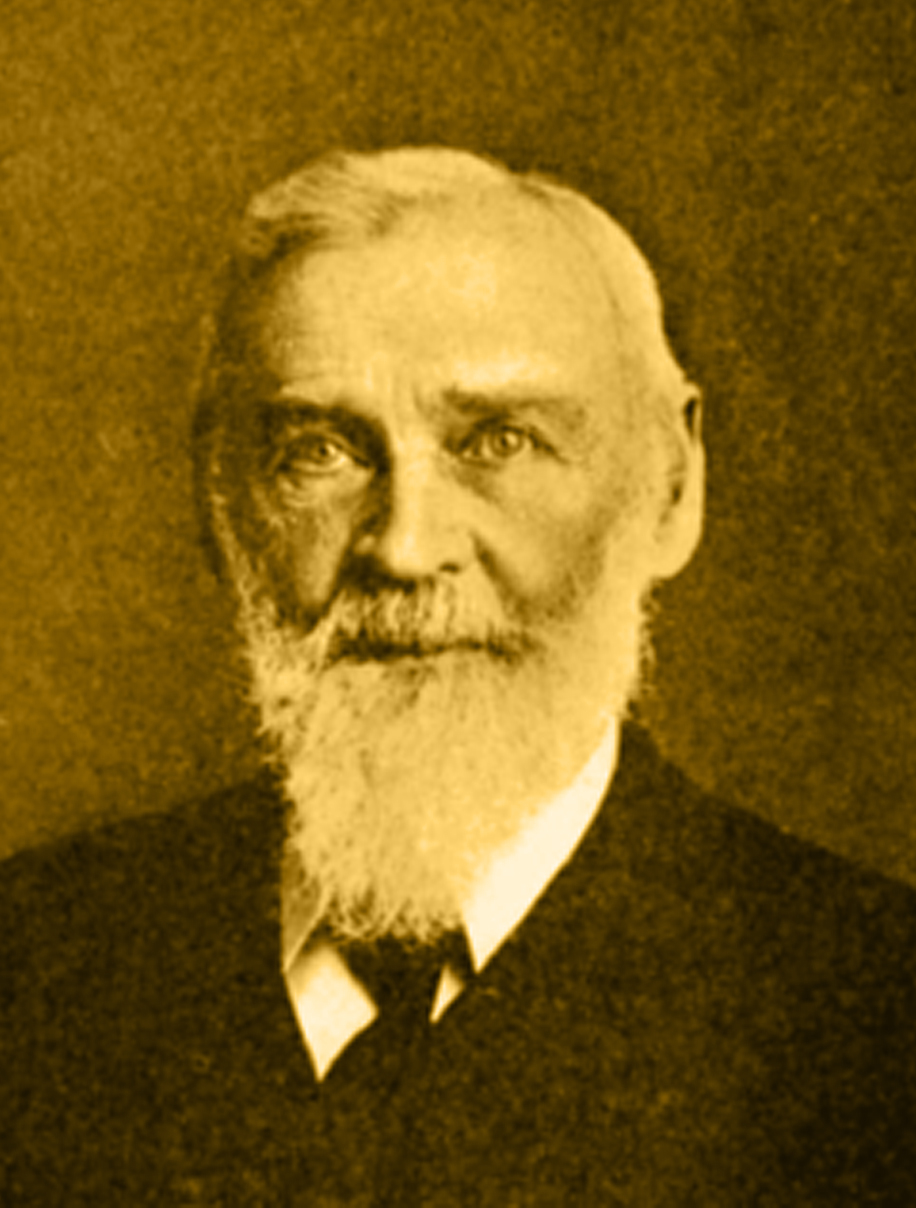
Prospective missionaries who wanted to join this “family” were thoroughly vetted by Carmichael, whose high regard for holiness lent itself to an unbending, puritanical approach and often created friction between her and the missionary community.

In 1924, for example, the Neill family arrived. The parents were medical doctors and their son, Stephen, came to help with the rescued boys’ ministry. But conflicts soon arose between Stephen and Carmichael regarding treatment of the children at Dohnavur, and their matched determination, quick tempers, and differing views made it difficult to foster trust. Though the exact cause of the conflict remains unclear, the Neill family eventually left.

Soon thereafter, Carmichael withdrew from the Church of England’s Zenana Missionary Society because it was linked with the Christian Missionary Society, which no longer affirmed the inspiration of Scripture. These incidents may have moved her to develop a code of principles in 1926 to affirm that Scripture was the very Word of God.

But her conflicts with missionaries and societies were secondary to the practical, seemingly boundless needs of the growing Donhavur family, which required constant intercession. As detailed in Amy Carmichael: Rescuer by Night, she journaled at one point, “Prayer is the core of our day. Without it, the day would collapse.”

Her team prayed for supplies, a nursery for the children, a vehicle, a hospital, a chapel house, and against spiritual warfare. This conviction even manifested in a House of Prayer that was later constructed in the middle of the compound, its towering windows overlooking the garden, nurseries, schoolrooms, and medical buildings.

Carmichael never took furlough or returned home to Ireland, even after falling into a pit, dislocating her ankle and breaking her leg. As Elliott later wrote, the incident happened the same day the missionary had prayed, “Do anything, Lord, that will fit me to serve Thee and help my beloveds.”
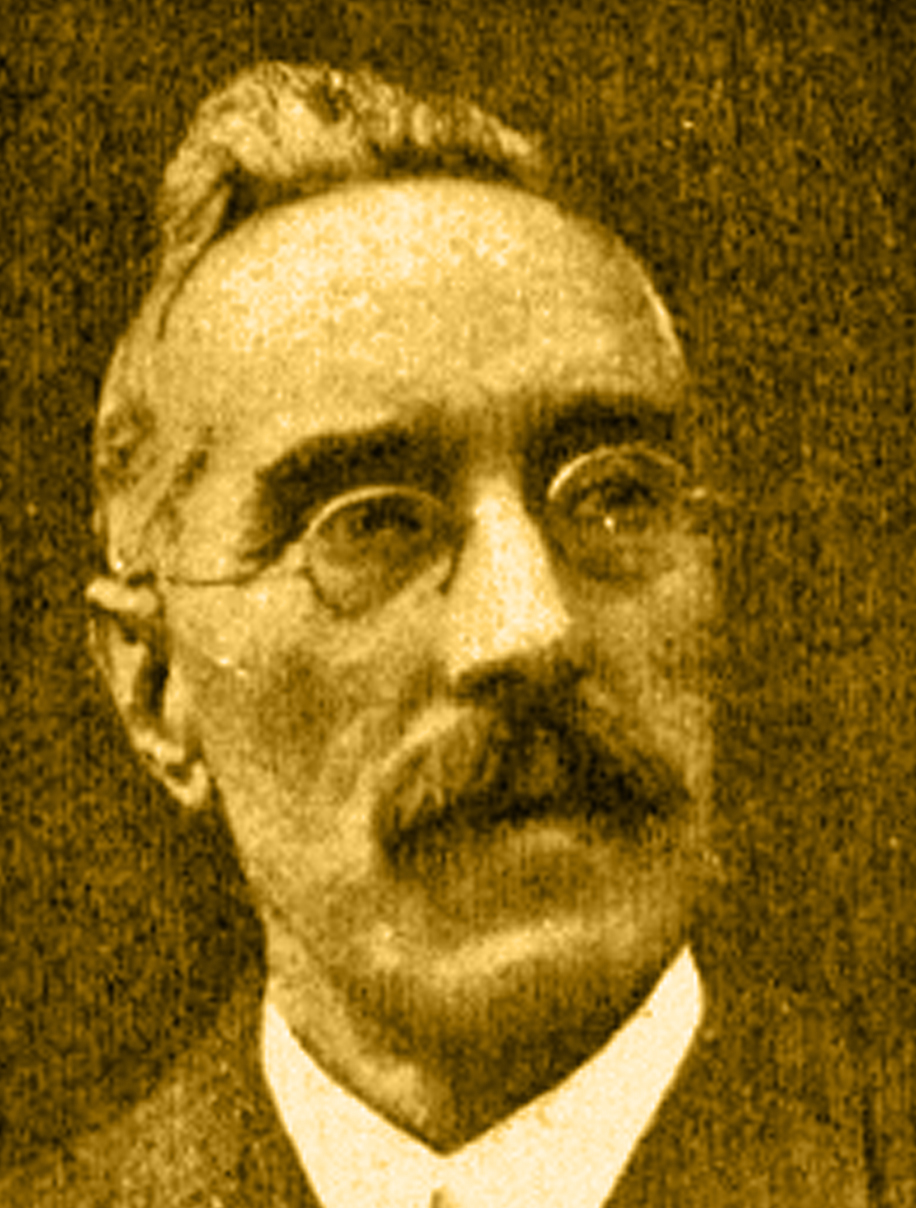
Carmichael was left with limited physical mobility and was largely bedridden for the last two decades of her life. But she continued to minister by penning words of encouragement, authoring a total of 35 books during her lifetime.

After serving in India for 55 years, Amy Carmichael died on January 18, 1951. Through her ministry, over 1,000 Indian children received an education, gained access to medical care, experienced the joy of belonging to a family, and heard the good news of the gospel.

To this day, Carmichael’s legacy burns brightly through Dohnavur Fellowship, where her great-grandchildren continue to share the love of Jesus Christ with others in need. And her words continue to minister to all who seek to live wholeheartedly for the Lord.

From prayer that asks that I may be
Sheltered from winds that beat on Thee,
From fearing when I should aspire,
From faltering when I should climb higher,
From silken self, O Captain, free
Thy soldier who would follow Thee.

From subtle love of softening things,
From easy choices, weakenings,
(Not thus are spirits fortified,
Not this way went the Crucified,)
From all that dims Thy Calvary,
O Lamb of God, deliver me.

Give me the love that leads the way,
The faith that nothing can dismay
The hope no disappointments tire
The passion that will burn like fire,
Let me not sink to be a clod,
Make me Thy fuel, Flame of God.

Hunter Beless is the host of the Journeywomen podcast, the author of Amy Carmichael: The Brown-Eyed Girl Who Learned to Pray and Read it, See it, Say it, Sing it!, and she loves doing ministry in her local church. You can subscribe to "Scraps," her monthly newsletter, at hunterbeless.com.

Apple PodcastsDown ArrowDown ArrowDown Arrowarrow_left_altLeft ArrowLeft ArrowRight ArrowRight ArrowRight Arrowarrow_up_altUp ArrowUp ArrowAvailable at Amazoncaret-downCloseCloseEmailEmailExpandExpandExternalExternalFacebookfacebook-squareGiftGiftGooglegoogleGoogle KeephamburgerInstagraminstagram-squareLinkLinklinkedin-squareListenListenListenChristianity TodayCT Creative Studio Logologo_orgMegaphoneMenuMenupausePinterestPlayPlayPocketPodcastRSSRSSSaveSaveSaveSearchSearchsearchSpotifyStitcherTelegramTable of ContentsTable of Contentstwitter-squareWhatsAppXYouTubeYouTube