Books

My Top 5 Books on Orthodox Christianity

A survey of theology, history, and evangelical perspective of the Eastern and Oriental branches of the ancient tradition.

Christianity Today December 6, 2023
vladj55 / Getty

Selected by Bradley Nassif, professor of biblical studies and Orthodox-Protestant dialogue at the Antiochian House of Studies, and author of The Evangelical Theology of the Orthodox Church.

The Orthodox Church, Timothy (Kallistos) Ware

This is by far the best book on Eastern Orthodoxy available today—a classic, worthy of the name. For 60 years, it has been the definitive guide for Orthodox and non-Orthodox readers, describing the major features of Orthodox history, doctrine, worship, sacraments, spirituality, and missions.

Bishop Ware was a bridge-builder between Orthodoxy and the Christian West, including evangelicals. And from this experience, he explains the major differences between Orthodoxy and the Protestant and Catholic traditions.

The language is clear, concise, irenic, and carefully nuanced. The book is also judicious, wise, and balanced in its judgments. Scholars, clergy, and ordinary people can use it for research, pastoral ministry, and Christian education classes.

During one of his stays in our home, I asked him about the potential shelf life of his book. With characteristic humility, he replied, “All standard textbooks must eventually be replaced by other, better ones.” But that time has not yet come.

Eastern Orthodoxy Through Western Eyes, Donald Fairbairn

Fairbairn’s academic excellence and practical ministry experience in the Orthodox world makes this work an essential resource for evangelicals. The author is an outstanding evangelical historian, patristic scholar, and linguist.

Tailored for Protestant and Catholic readers, he writes from the perspective of a seasoned missionary with years of personal experience in Soviet Russia, where the world’s largest population of Orthodox Christians still resides. The book provides practical guidance for Christians ministering throughout Eastern Europe or among ethnic Orthodox communities in the West.

Exploring major theological themes such as the Orthodox vision of “Tradition” and “Union with God,” Fairbairn judiciously avoids making artificial contrasts between Orthodoxy and Protestantism, seeing many differences in terms of emphasis rather than substance. Of special value is a final section on “The Orthodox Vision and Its Distortions,” focusing on popular misconceptions and the identification of the church with ethnicity. An appendix provides wise “Suggestions for Christian Workers in the East.”

Modern Orthodox Theology: Behold, I Make All Things New, Paul Ladouceur

This “must have” for scholars and students of theology is the most comprehensive account of the history of Orthodox theology from the 1453 fall of Constantinople to the present. Significant theological movements, key personalities, and major themes are developed.

For example, those interested in comparative theology between Orthodoxy and the Christian West will find chapters on “The Orthodox-Lutheran dialogue (1573–81),” “Orthodoxy and the Counter-Reformation,” “The Confession of Cyril Lucaris (1629),” and more.

Regional histories provide theological developments in imperial and modern Russia, Greece, and Romania. The book also contains up-to-date studies of major themes in modern Orthodox theology, including sections on “God and Creation,” “Social and Political Theology,” “Ecumenical Theology and Religious Diversity,” and “The Ordination of Women.”

Overall, this is a magisterial analysis of modern Orthodox theology written by a sympathetic author who is neither naive nor unjustifiably critical in his assessments.

The Eastern Christian Tradition: A Brief Survey (6th ed.), Ronald Roberson

This book clarifies the complexity of the Christian East for the non-specialist, perfect for helping Western Christians figure out who’s who in the Orthodox world. Christian workers in the Middle East, Russia, and Eastern Europe can use this book to navigate Eastern Christianity’s different labels.

For example, the main body of Orthodox churches are titled “the Patriarchate of Constantinople” or “the Orthodox Church of Russia/Greece/Romania/Serbia” and so on. But there is a different family known as the Oriental Orthodox churches—Coptic, Ethiopian, Armenian, and others—who do not officially belong to the mainline Eastern Orthodox tradition.

Besides these, there are churches of “irregular status,” some of which are simply considered to be outside the disciplinary rules of the main Orthodox churches, while others are in full schism. Finally, there are Catholic Eastern churches whose worship outwardly appears Orthodox but is theologically Roman Catholic.

This book explains the labels and their relationships.

The Historical Road of Eastern Orthodoxy, by Alexander Schmemann

This is a century-by-century commentary on the essential truths of Orthodox Christianity that were lived out during its 2,000-year journey through history. As the author states, “This book is … a reflection on the long historical pilgrimage of Orthodoxy, an attempt to discern in our past that which is essential and permanent and that which is secondary, mere past” (emphasis mine).

Schmemann starts with the Book of Acts, then goes through major turning points in the church’s history as it traveled through the Roman and Byzantine Empires, the Ottoman Empire, and Russia. In each context, he captures the essence of Christianity for Eastern and Western Christians alike, so that “they may realize that our past is also their past, or rather our common past, that essential ‘term of reference’ without which no mutual understanding is possible.”

There is simply no other book like it for anyone who wants to discern the essentials of Orthodox Christianity as it sojourned through the good times and bad.

Editor’s note: Curated lists in this religious literacy series for Christians include the best books for better understanding Islam (in five regions), Hinduism, Buddhism, Sikhism, the Druze, Daoism, Confucianism, and the sinicization of Christianity in China. More lists coming soon, joining scores of subjects.

Theology

An Unscheduled Appointment

What Simeon’s long-awaited assurance means for us today

Phil Schorr

Now there was a man in Jerusalem called Simeon, who was righteous and devout. He was waiting for the consolation of Israel, and the Holy Spirit was on him. It had been revealed to him by the Holy Spirit that he would not die before he had seen the Lord’s Messiah. — Luke 2:25-26

When was your last waiting-room experience? Mine was a couple weeks ago at the doctor’s office. The space was bright, warm, and comfortable. After checking in, one could read from the stack of magazines, catch a show on the flatscreen, scroll through socials, or just stare out the window to pass the time. But the waiting was compulsory. No one in the room got around it, and the delay was almost certainly longer than any of us would have liked. There’s something in us that wants life to happen according to schedule—our schedule. Often, our waiting is linked to an appointment that we’ve made. We’ve agreed to see so-and-so for such-and-such at an agreed-upon time. But if that time passes, we wait, and the longer the wait, the more agitated we become.

What if you knew you had an appointment of sorts with the most powerful person in the universe, but it wasn’t set on a calendar? What if you were told that you would have an audience with the King of Kings but given no date or time—told only that it would be sometime before you die? That’s what happened to Simeon.

“Now there was a man in Jerusalem called Simeon, who was righteous and devout. He was waiting for the consolation of Israel, and the Holy Spirit was on him. It had been revealed to him by the Holy Spirit that he would not die before he had seen the Lord’s Messiah” (Luke 2:25–26).

How’s that for a waiting-room experience? Imagine waking up every day wondering, Will it be today? No doubt the promise revealed by the Holy Spirit was memorable and compelling. But surely there were moments when Simeon felt the weight of waiting for the one and only, the singular source of salvation for humanity. How did he persevere through the agitation that comes with knowing the end of the story but having to live with the uncertainty of the in-between? I can only conclude that Simeon’s devotion was rooted in the person with the plan, more than the plan itself. Perhaps he didn’t presume to have an opinion on the timetable or particulars— maybe he was able to treat them as the domain of divine sovereignty. Simeon was joyfully content to see it all unfold before his eyes, confident that the one who promised would do just as he said, at the perfect time, and for the good of all who “have longed for his appearing” (2 Tim. 4:8).

What a gift it is in this season to see the arrival of God’s salvation through Simeon’s eyes. I want to wait well, as he did, full of assurance that the King will return just as he promised. He keeps his appointments. And on that day, we will depart in peace, joining a great cloud of witnesses, face-to-face with our salvation (Rev. 22:1–5).

Reflection Question:


1. We’re invited to consider a different kind of waiting—the anticipation of an audience with the King of Kings. How does this shift in perspective deepen your understanding of waiting on God's timing and his promises in your life?

Monty Waldron is married with four children and started Fellowship Bible Church in 2000.

This article is part of The Eternal King Arrives, a 4-week devotional to help individuals, small groups, and families journey through the 2023 Advent season . Learn more about this special issue that can be used Advent, or any time of year at http://orderct.com/advent.

Theology

Christian Wiman on Writing Against Despair

In “Zero at the Bone,” the poet discusses love, lament, and living toward a ‘happy ending.’

Christian Wiman

Christian Wiman

Christianity Today December 5, 2023
Chicago Tribune / Getty Images

I remember where I was when I first read Christian Wiman. I was an associate at a law firm in San Francisco, in my late 20s, depressed, unhappy with my job and where my life was going.

Perhaps in some kind of reaction, I was reading from Christian mystics at the time. In texts from the contemplative church tradition, I was learning that God is not only a proposition to affirm—an abstract statement of belief—but something more immediate. Dogma, as Wiman wrote for Image, could act as “the ropes, clips, and toe-spikes whereby one descends into the abyss.”

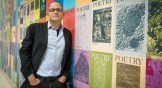
Wiman was editor of Poetry Magazine for a decade, and his 2008 essay for the American Scholar revealed his recent arrival at faith. He had fallen in love, acknowledged a “faith that had long been latent” in him, then received a diagnosis of an incurable cancer of the blood—in that order. It was beautiful and spoke to something I had experienced but never discussed: it gave language to a season of absence. And this, in turn, consoled me.

On the page, Wiman’s work can be stormy, while at times breaking into flashes of surprising peace. Nowhere is this in greater effect than in his newly released book, Zero at the Bone: Fifty Entries Against Despair, which looks unflinchingly at life, love, and Wiman’s 18-year journey with cancer.

As Wiman notes in the introduction, “To write a book against despair implies an intimate acquaintance with the condition. Otherwise, what would be the point?” The result is a dizzying book—at alternate points turbulent, psalm-like, revelatory—and altogether strangely uplifting. It is like nothing else I have read.

I wanted to check in with Wiman, ten years after we first spoke in an interview for CT, to learn more about his new book. Our interview was conducted by phone and over email.

There is some serious Jacob-like wrestling in this book. What were you aiming to do?

I was trying to win! (There’s some serious Jacob-like wrestling in me.) Alas, no, but my mind does bear the mark of the struggle.

Ten years ago I wrote a book, My Bright Abyss, which was an attempt to see the landscape of faith I had come to inhabit. I completed it while undergoing a bone marrow transplant, and it bears the scald of that experience. This new book is no less intense, but its pressures are different and its gaze is broader.

In her great poem “Toward the Solstice,” Adrienne Rich writes, “I am trying to hold in one steady glance / all the parts of my life.” That’s what I was trying to do—hold it all together, and that required many different formal strategies.

You received a cancer diagnosis 18 years ago. How is your health now?

My health is excellent, but if you had asked this question a few months ago, I would have had a very different answer. I spent much of 2022 and 2023 in bed and would be dead now, had a spot in a clinical trial in Boston not become available. For months it was dicey, and then proved successful.

This was my 11th major treatment over the years. (“Minor” treatments are for managing symptoms and have been endless.) Cancer has so completely defined my life for two decades that I find it difficult to imagine life without it. It’s possible—by no means certain, but possible—that this new treatment might force that happy challenge upon me.

Extreme illness is hell, but it does strip away the inessentials and make certain intimacies and insights possible, both with people and with God. I spent five weeks in Boston, and while there, two old friends came (at different times) to be with me. One is a Jewish Buddhist poet with whom I have had an ongoing conversation about God for 35 years. The other is a Lebanese/Irish novelist who has a finely developed sense of and respect for the mystery of existence but an antipathy for organized religion.

What surprised me—and has stayed with me—during our time together was how close Christ seemed to be to us, how I could feel him in the care and love they showed for me. I’m not saying either is an “anonymous Christian,” to use Karl Rahner’s unfortunate term. That would be condescending and disrespectful to both. What I am saying, though, is that Christ precedes and exceeds Christianity, and that belief in him is not a precondition for his love.

In your book, you write: “One grows so tired, in American public life, of the certitudes and platitudes, the megaphone mouths and stadium praise, influencers and effluencers and the whole tsunami of slop that comes pouring into our lives like toxic sludge.” With respect to public life—or the constant temptation to form a public version of our selfhow do you think we move forward?

“We” don’t. Those words come from an essay about the African American poet Lucille Clifton, who wrote poems so short and understated they don’t even have a capitalized “I.” I see her as a tonic to that toxic sludge. Make no mistake, she risks large statements in her poems and speaks to the culture as a whole, but she does so out of that small “i” that has been slowly forged and chastened within one life.

All one can do is try to keep one’s own soul clear. I have found poetry a great aid to this, but someone else might need carpentry. The essential element is attention, which that sludge aims to eradicate.

In an early chapter of your book, you quote George Herbert, who writes: “I will complain, yet praise / I will bewail, approve: / And all my sour-sweet days / I will lament, and love.” Why is lament important?

You could have reframed the question to ask, Why is praise important? Herbert is careful to insist on both. Christianity is predicated on a dual movement: the cross and the resurrection.

The cross we know. Each of us will lose whatever it is we most love; the course of human life is inescapably tragic. The resurrection we imagine. We may be given—through love, moments of grace in nature or with others, and an experience of transcendent art—attestations of it in this mortal life, but the thing itself is unutterably beyond. (For us, I mean. I believe Jesus’ resurrection happened.)

This dimension of faith, in literary terms, is comic (which of course does not mean “comical”). Despite so much evidence to the contrary, Christians live toward a happy ending.

I tend to feel the tragedy of life more than its comedy and must constantly check and correct this inclination. I know plenty of people oppositely disposed—who need to season their days with vinegar rather than sugar. Herbert’s point is that both dispositions are essential.

How do you think about your vocation as a writer?

There are vocations you’re born for, and there are vocations you earn. The former includes those things that are raveled up with one’s soul; you can’t imagine your life without them. To be sure, they require great labor, but there is always that initial element of givenness to propel you. The latter presents some stiff resistance.

I think of poetry as my primary vocation. It’s impossible for me to imagine my life without it. Editing and teaching are both vocations I’ve struggled to have. Neither was natural to me at first—in fact, I hated them—but both became essential elements of my life. I’ve had to work for that. (Faith, by the way, is a vocation that’s both given and earned.)

In an entry about the American theologian Jonathan Edwards, you discuss the way doubt can sometimes become convenient or even spare us from the immediacy of God. How do we know when we’re caught in doubt like that?

The cries of Job and Jesus’ lament on the cross both teach us that God’s absence is an inevitable aspect of faith. That both occur at moments of absolute destitution makes that absence all the more painful.

I don’t know how useful the word doubt is for me anymore. I don’t spend much time wondering whether God exists. I know he is, just as I know I love my wife, and as I know when a true poem is demanding I bring it into being.

But it is quite possible, is perhaps even the norm, to believe in God but to lack faith. To lose awareness of his presence, to stop believing in that. To live only at the level of the ego and to allow despair.

I loved the C. S. Lewis passage you cite from The Great Divorce about shame—that if we “drink the cup to the bottom” we’ll find it nourishing, but if we “try to do anything else with it … it scalds.” What do you understand Lewis to mean, and what happens when we look clearly at our shame?

In that passage, a ghost in Hell (or purgatory) is being enjoined to make her way to the mountains (Heaven) where she will become solid and “real.” At present she is, like all newly arriving ghosts, transparent. She refuses, because the thought of everyone seeing right into her, even through her, is appalling. All her life she has protected something of which she is ashamed, and even in death she can’t let it go.

Lewis’s point is that most of us have such shames. Maybe we don’t really believe the things we pretend to. Maybe we don’t really feel the love we pretend to. Maybe we are caught in lives that ought not to be ours. What happens if we don’t fully face our shames?

In Kafka’s Metamorphosis, Gregor Samsa awakens to find himself transformed into an enormous cockroach. He has become his shame, which was, ironically, the shame of being human.

Your book felt psalm-like in the way it alternates between hope and despair. What effect would you want it to have?

All I have ever wanted for my work was for it to live in a few readers’ minds in the way that the work of certain writers has lived in mine. That’s not to say I haven’t aimed at greatness. I have. One shouldn’t be embarrassed about that, even though the sense of having fallen short is inevitable and painful.

But there are writers who have helped me live, whose work I return to for both provocation and consolation. Not all of them are “great” writers in the world’s eyes, and some only managed a flash or two of brilliance in a lifetime of labor. But I cherish their examples and wouldn’t recognize my life without the specific lenses they have given me. I want that spiritual kinship with a few desperate readers.

As for the book’s emotional vertigo, that’s simply life—or at least the life I’ve been given. But literature is not merely a mirror of reality. I hope the book makes some sense of the vertigo. I like Kenneth Burke’s ambitious phrase for the most ambitious literature: “equipment for living.”

Did the book make you think about despair in new ways?

Oh, yes. Thinking universally about despair like this forced me into all sorts of little “sloughs of despond” I usually unconsciously skirt. It also forced me to distinguish between willed and unwilled despair. “Try to remember this: what you project / Is what you will perceive; what you perceive / With and passion, be it love or terror, / May take on whims and powers of its own.” That’s Richard Wilbur, and it goes to the heart of how much misery we bring on ourselves.

On the other hand, there are genuine afflictions, which must be named and faced. Though in some instances, they are invulnerable to all but one thing: grace.

I worry this makes the book sound glum. It is, however, as the title indicates, a salvo against despair, and one of the best weapons is humor. I hope a good deal of that comes through.

You cite Alexander Schmemann, who says, “the knowledge of the fallen world does not kill joy, which emanates in the world, always, constantly, as a bright sorrow.” The book ends with a meditation on the Cross. What does the Cross mean to you?

This embarrasses me—but why?—but I teared up (in the parking lot of my gym) when I first read this question. Simone Weil once said that Christianity would be sufficient if it ended with the Cross—that God would so love humans that he would become one, that he would die for and with us, the sacralizing of matter by the Incarnation—that this was miracle enough.

I can’t agree. Resurrection is the final fruition of that miracle. But I know what she meant. This life is hard. I am a Christian because I believe it looks unflinchingly at—and redeems—that fact.

Josh Jeter is a lawyer based in Austin.

News

Biochemist Pleads Guilty to Attack on Wisconsin Pro-Life Group

DNA from a burrito matched evidence left at the scene of the firebombing.

The Wisconsin Family Action offices were set on fire in 2022.

The Wisconsin Family Action offices were set on fire in 2022.

Christianity Today December 5, 2023
Alex Shur/Wisconsin State Journal via AP

A 29-year-old biochemist has pleaded guilty to firebombing a pro-life group’s headquarters in Madison, Wisconsin.

Hridindu Sankar Roychowdhury confessed to federal authorities that he threw two Molotov cocktails through the window of Wisconsin Family Action’s offices in May 2022, the week after the leak of a draft of the Supreme Court decision overturning Roe v. Wade.

One of the firebombs—a Mason jar filled with flammable liquid—didn’t break. The other set a bookcase and one side of the pro-life group’s ground floor office on fire.

Roychowdhury, who identified himself on social media as an anarchist, said he also spray-painted the warning message left on the outside of the building. “If abortions aren’t safe,” it said, “then you aren’t either.”

The attack was one of more than 50 across the country targeting pro-life groups and pregnancy centers last summer. A decentralized terrorist organization named Jane’s Revenge claimed credit for many of the threatening messages, broken windows, and fires across the country, including the one in Wisconsin.

A “communiqué” released after the attack demanded “the disbanding of all anti-choice establishments, fake clinics, and violent anti-choice groups within the next thirty days.”

Jane’s Revenge claimed the “extreme tactics” were justified in part by historic attacks on abortion clinics—which once averaged about 10 bombings and arsons per year.

“We will not sit still while we are killed and forced into servitude,” the online message said. “We are forced to adopt the minimum military requirement for political struggle.”

Wisconsin Family Action is a pro-life advocacy group that focuses on state-level lobbying and elections. It is part of the Family Policy Council, affiliated with Focus on the Family and the Family Research Council, which had its offices in Washington, DC, attacked by an armed man planning to kill as many people as possible in 2012.

Julaine Appling, president of the Wisconsin pro-life group, said if anyone had been in the office when the Molotov cocktails were thrown through the window, they would have been hurt.

“We ought to be able to take different sides on issues without fearing for our lives,” she said.

Police had nothing, initially, connecting the attack to Roychowdhury, a biochemist who had just earned a doctorate from the University of Wisconsin–Madison with his research on high-throughput enzymatics. Law enforcement didn’t get a break in the case until nine months later, when an officer at the state capitol noticed a message spray-painted at an anti-police protest there that looked similar to the message left at the pro-life headquarters.

Reviewing security camera footage, police tracked the protestor to a white Toyota pickup. They traced the truck to Roychowdhury’s home in Madison and then started following him, court documents show.

In March 2023, an officer saw Roychowdhury throw away a fast-food bag in a public trash can. Inside, there was a half-eaten burrito. The DNA on the burrito matched DNA left on a broken window, the glass jars, and a black and silver lighter left at Wisconsin Family Action.

Roychowdhury was arrested later that month at Logan International Airport in Boston. He had a one-way ticket to Guatemala City, according to the US Department of Justice.

The biochemist has no known association with abortion rights groups. He grew up in New Mexico and moved to Wisconsin for graduate school. He started identifying as an anarchist on social media during Black Lives Matter protests following the death of George Floyd.

In August 2020, Roychowdhury tweeted that he wanted to see fires consume the country and 10,000 police officers killed, which he said “still couldn’t atone for what this world has done to black people.”

The following year, Roychowdhury urged anarchists to “keep lighting fires for George Floyd and every one murdered by the occupying colonial forces.”

A few months before the attack on the pro-life headquarters, Roychowdhury locked his social media accounts and took a position at the biotech firm Promega, where he specialized in using machine learning to guide enzymatic evolution.

He now faces 5 to 20 years in prison. His sentencing is scheduled for February 2024.

News

Daddy Yankee Tells Fans to ‘Follow Jesus Christ’ at Final Concert

Latin music superstar and “Despacito” singer retires with a surprise personal conversion and a phrase beloved by Puerto Rican Christians: “Christ loves you and Christ is coming.”

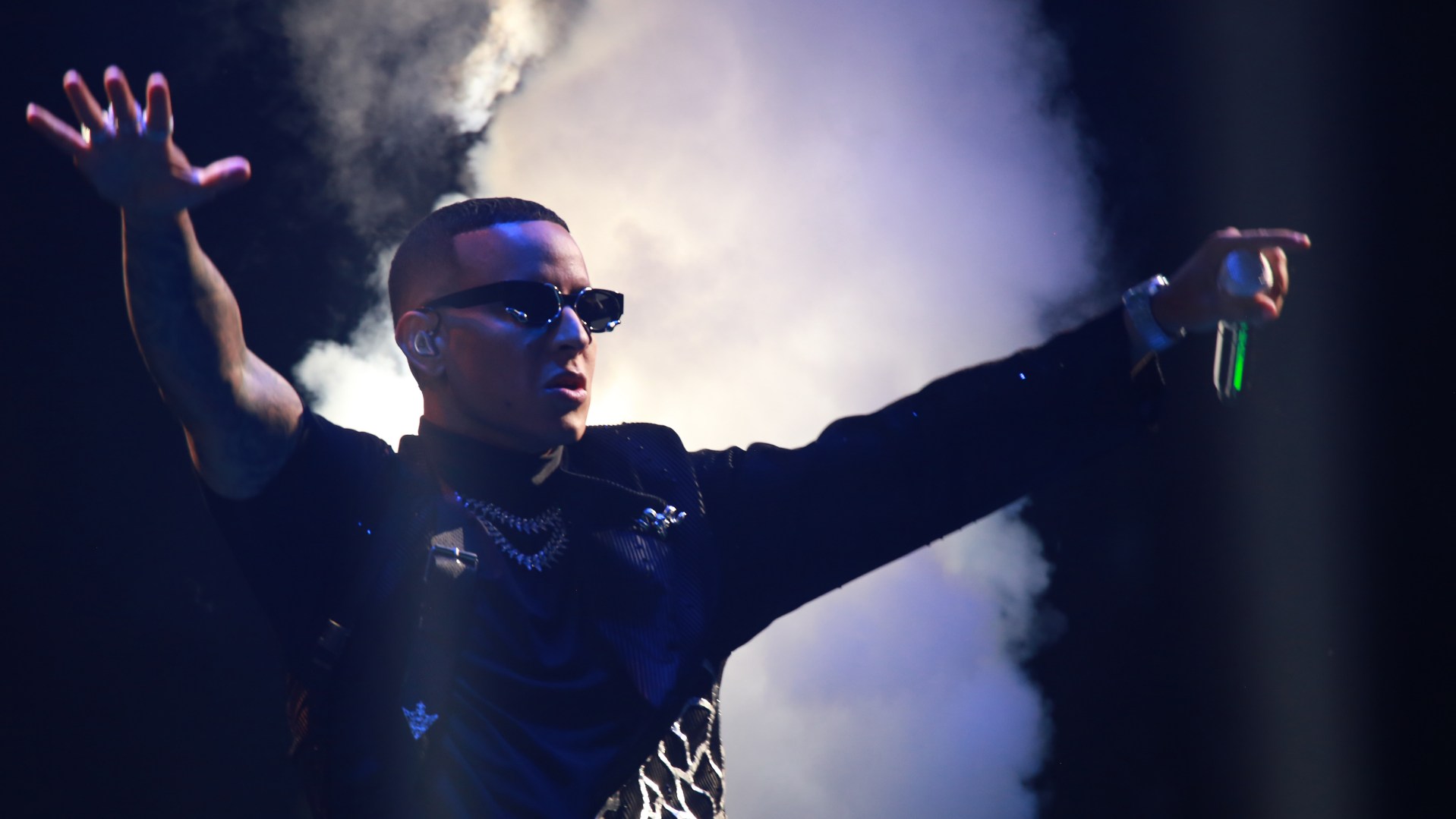
Daddy Yankee performs during his concert "La Meta" at Coliseo de Puerto Rico José Miguel Agrelot on November 30, 2023 in San Juan, Puerto Rico.

Daddy Yankee performs during his concert "La Meta" at Coliseo de Puerto Rico José Miguel Agrelot on November 30, 2023 in San Juan, Puerto Rico.

Christianity Today December 5, 2023
Gladys Vega/Getty Images

Fans of Daddy Yankee knew that Sunday night’s concert in his native Puerto Rico was intended to be the last of the Latin music superstar’s roughly 30-year career. However, the final show of his La Meta (The Finish Line) tour came with a surprise ending that left fans stunned and Spanish-language media abuzz.

Beyond the planned farewell at the fifth concert he’d held on the island since Thursday night at Coliseo de Puerto Rico, there was a powerful statement from the creator of hits such as “Gasolina” and “Despacito.” Raymond Ayala, the 46-year-old artist known as Daddy Yankee, announced that his retirement was wholly motivated by his conversion to Christ.

Ayala became the most recent star of the urban music scene—and especially reggaetón—who testified to having an encounter with Jesus as his Savior.

A similar announcement was previously made by fellow Puerto Rican artist Farruko, who announced his conversion at a February 2022 concert in Miami and refused to sing the lyrics to his hit song “Pepas,” asking fans to forgive him for them. With seven tour stops left, he announced that he would return the money of anyone who did not agree to listen to him talk about Jesus.

Héctor Delgado, who previously performed as the artist El Father and who now leads a ministry on the island, also left the Puerto Rican reggaetón scene in 2008 due to his conversion.

All three artists left the musical world behind at the height of their careers and world fame, with the 2022 leg of Daddy Yankee’s farewell tour generating $125 million.

“My people, this day for me is the most important day of my life and I want to share it with you, because to live a life of success is not the same as living a life with purpose,” said Daddy Yankee before a stadium full of delirious fans who had come to applaud their idol.

“For a long time I tried to fill a void in my life that no one could fill. I tried to fill and find meaning in my life. Sometimes I appeared to be very happy, but something was missing to make me complete,” he said, "and I have to confess that those days are over.

“Someone was able to fill that void that I felt for a long time. I was able to realize that for everyone I was someone, but I was nothing without him,” Daddy Yankee continued, before offering his most direct allusion to Christ.

“Now anyone who knows me as Daddy Yankee should say, 'Daddy Yankee in Christ, Raymond Ayala in Puerto Rico.’ A story is over and a new story is going to begin, a new beginning,” he said. “All the tools that I have in my possession—like music, social networks, platforms, a microphone, everything that Jesus gave me—is now for the kingdom.”

“Thank you very much, Puerto Rico, and I hope that you walk with me in this new beginning and I hope that something very important is recorded in you: Do not follow any man. I am a human. All the people who followed me: Follow Jesus Christ, for he is the Way, the Truth, and the Life.”

As he left the stage, Daddy Yankee declared, “Christ loves you and Christ is coming.”

That final phrase resonates deeply in Puerto Rico because for decades it was the central message of the preaching of one of the best-known evangelists from the island: Yiye Ávila, a former bodybuilder who drew comparisons to Billy Graham and passed away in 2013.

Ayala does not come to the gospel as a complete outsider. In his past, there had been a solid Christian foundation, and he has a brother who currently is an evangelical pastor.

In fact, he thanked God’s mercy for allowing him to travel the world and achieve wealth and still be alive. He also said that he hopes that same mercy will allow him to evangelize the world from Puerto Rico.

“Finally, I reached the goal. I am free. Amen!” declared Ayala before leaving the stage.

A drone show at the concert’s conclusion depicted a giant pink cross and a message: Cristo viene (“Christ is coming”).

https://www.instagram.com/p/C0a5YMJgfGz/

Delgado, who went on to lead Maranatha Iglesia in Rio Grande, reacted enthusiastically to the news of another former colleague finding the gospel, noting that Daddy Yankee was the one who originally sowed in Delgado a seed about Christ.

“I will never forget that you were the first to tell me about the gospel of Jesus. I only ask God to give you strength and wisdom so that you can execute everything precious that God has for you and your family,” Delgado wrote.

Farruko celebrated the news but told his followers not to “trip up” Daddy Yankee, like both non-Christians and Christians did to him after his own conversion. “Glory to the Father, there is a celebration in the kingdom,” he wrote on Instagram.

High profile conversions of Puerto Rican musicians are not necessarily surprising. Beyond these stars, Vico C, a pioneer of Puerto Rican rap and hip-hop, confessed Christ as his Savior and later recorded a Christian album.

Likewise, singers of the salsa music genre—such as Richie Ray, Bobby Cruz, Ismael Miranda, and Domingo Quiñones—also announced conversions during their careers.

"Welcome home Brother Raymond,” wrote Redimi2, a Christian Dominican reggaetón artist. “Although I already heard the news, I became emotional, almost to the point of tears, to see you confessing this publicly.”

Keropi Sanchez, one of Puerto Rico’s most famous comedians, expressed his joy at the news as well.

“With the same posture with which we rejoiced upon hearing this conversion, we should also feel happy at whomever comes to the feet of Christ, famous or not.”

With additional reporting by Jhonny A. Neito Ossa

News

Judge Hands World Vision a Defeat in Employment Case

The federal case is one of several around the country right now where courts are trying to balance nondiscrimination statutes with religious freedom.

World Vision's US headquarters in Washington.

World Vision's US headquarters in Washington.

Christianity Today December 5, 2023
Wikimedia Commons

A federal judge in Washington State has ruled that the Christian humanitarian aid organization World Vision unlawfully discriminated against a woman in a same-sex marriage when it rescinded a job offer for a customer service position.

District judge James Robart concluded in a 47-page order on November 28 that the organization’s “policy” of recognizing marriage as between one man and one woman counts as discrimination under Title VII of the federal Civil Rights Act of 1964. Robart’s order is not a final ruling in the case but means the issue would go to trial to determine damages. The attorneys for World Vision said they are considering their next steps.

This is among the first cases in the country to deal with the religious fallout of the 2020 US Supreme Court ruling in Bostock v. Clayton County, where the court ruled that Title VII applies to gender identity and sexual orientation. Title VII has an exemption for religious employers to hire based on beliefs, and federal courts have also established the ministerial exception, which shields religious organizations from lawsuits over their hiring and firing of faith leaders.

This year the World Vision case has gone through twists and turns, reflecting judges trying to navigate a new area of law, according to lawyers observing from the outside. Robart had first ruled in favor of World Vision this summer before later vacating his own ruling and siding with the plaintiff, Aubry McMahon.

“The fact that the court here oscillated showed that this is a close question. Other courts would come out different ways,” said John Melcon, an attorney with Sherman & Howard who handles religious employment cases and is a former law clerk in the 5th US Circuit Court of Appeals. “This particular opinion is long overall, but the legal analysis is pretty short.”

Back in 2010, three World Vision employees sued the organization under Title VII after they were fired for their lack of belief in the deity of Christ and the doctrine of the Trinity. World Vision won that case, but in 2023 a case about sexual orientation turns out to be thornier for federal courts than the doctrine of the Trinity.

Both sides in this case agree on what happened: World Vision, whose US arm is a $1.4 billion organization, extended a job offer to Aubry McMahon to be a customer service representative interfacing with donors. McMahon shared that she was married to a woman, prompting World Vision’s human resources office to explain its position on the issue and withdraw the job offer.

World Vision has written standards of conduct to “clarify expectations and assist candidates/employees in deciding whether or not [World Vision] is the right place for them to serve the Lord.” The standards say that biblical sexuality is expressed “solely within a faithful marriage between a man and a woman.” The organization has history here: In 2014, it briefly announced it would hire people in same-sex marriages before reversing its position two days later.

“I think every Christian organization will continue to deal with this sensitive issue,” president Richard Stearns said at the time. “The board will continue to talk about this issue for many board meetings to come.”

After World Vision rescinded her job offer in 2021, McMahon sued, alleging discrimination under Title VII.

In June of this year, Robart issued a judgment in World Vision’s favor citing the church autonomy doctrine, through which religious organizations are shielded from government interference in their internal decisions. But McMahon asked for reconsideration.

The judge then reversed his own decision, agreeing that he had “erred” in applying the church autonomy doctrine to a non-ministerial employee. World Vision contended she would have been a “ministerial” employee and a part of the organization’s ministry work, with the job description including prayer with donors. Robart disagreed.

“Applying the ministerial exception to the principally administrative customer service representative position would expand the exception beyond its intended scope, erasing any distinction between roles with mere religious components and those with ‘key’ ministerial responsibilities,” he wrote.

He concluded: “On reconsideration, the court agreed that Ms. McMahon suffered an adverse employment action based on a facially discriminatory employer policy.”

Constitutional lawyer Carl Esbeck said that a judge can correct his or her rulings until the court loses jurisdiction under appeal.

“It is certainly unusual what occurred here, but within proper civil procedure,” Esbeck said about the judge reversing his own orders.

If the case ends up at the 9th US Circuit Court of Appeals, which has jurisdiction over this district court, Melcon feels optimistic for World Vision. The Ninth Circuit has a promising recent track record on religious exercise cases, he noted, issuing a major ruling in favor of the Fellowship of Christian Athletes this year after the organization was denied access to public schools on the grounds that it was in violation of nondiscrimination policies.

In another case last week, a federal district court in Texas ruled in favor of a religious business owner, Braidwood Management, regarding these same civil rights issues under Bostock. The court said Braidwood had federal religious freedom protections to not hire people in same-sex marriages.

A more similar case to the World Vision one is further along in the 4th US Circuit Court of Appeals: Billard v. Diocese of Charlotte. A Catholic school did not renew the contract of a teacher after he publicly shared about entering a same-sex marriage. Similarly to the World Vision case, the employee argued that he was not carrying out the religious mission of the school in his work, so the school did not have the religious exemptions it would normally enjoy. The Fourth Circuit heard arguments in the case this fall and will issue a ruling anytime.

“These questions about the intersection of religious liberty and nondiscrimination law, those still need to be worked out in the appellate courts and ultimately the US Supreme Court,” said Melcon.

Culture

‘Have You Considered My Servant Kevin?’

A new film, “The Shift,” is an entertaining, thoughtful, and cinematically competent retelling of Job.

Christianity Today December 5, 2023
Copyright © 2023 by Angel Studios, All Rights Reserved

Movies created for a Christian audience by Christian production houses are historically a mixed bag. Some are decent. Some are embarrassing. Few are truly great. But a new film, The Shift, released in theaters on Friday, December 1, is a promising step for the genre.

The movie presents itself as a retelling of the biblical Book of Job. Although it covers some of the same philosophical ground, you won’t find burnt offerings or camels here. The setting is modern-day—the plot akin to The Matrix meets It’s a Wonderful Life—and the script is a meditation on love and joy as much as inexplicable loss in a chaotic world.

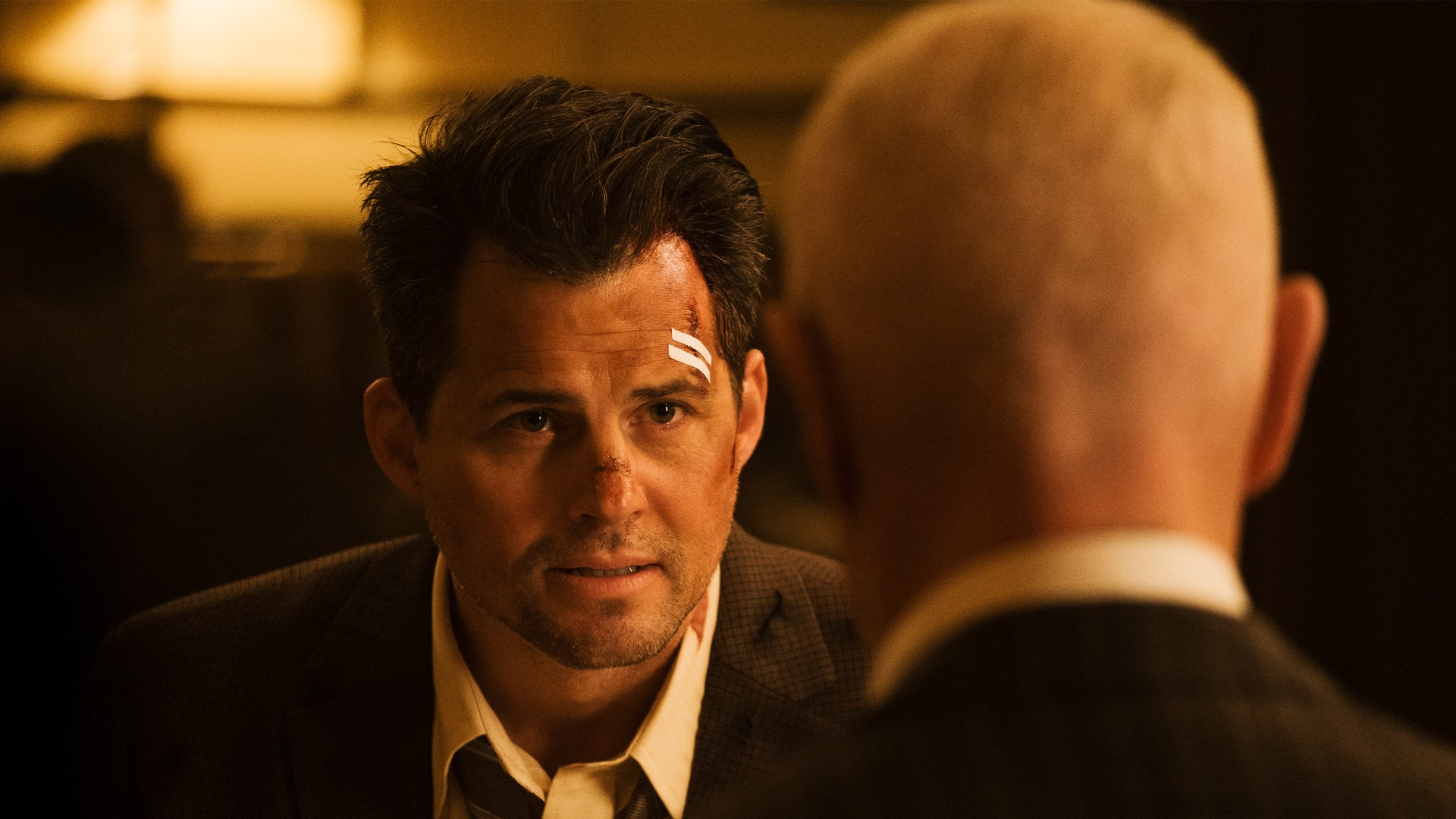
At the center of the story is Kevin (Kristoffer Polaha), a man pulled away from the life he loves into another dimension by a malignant entity called “The Benefactor” (Neal McDonough). Kevin fights to return to his wife, Molly (Elizabeth Tabish), and in the process weighs ideas about suffering, loss, evil, and the God who allows it all.

While the scale of The Shift is small—you won’t find grandiose special effects or casts of thousands—the directing is confident, the cinematography professional, and the pacing (for the most part) well done. There’s also real talent in this movie, and not only from its one big name, Sean Astin of Rudy and the Lord of the Rings trilogy. Tabish is riveting, and her chemistry with Polaha gives the film the interest needed to sustain the story. Their love is believable, and it’s what makes the pain of loss so searing.

Like many faith-based films, The Shift has a bit too much telling and too little showing. Skilled storytellers rely less on explanatory dialogue and more on moments, tableaus that move past the brain to touch the heart. Some such moments do come in this movie, and they hit harder than the talking when they do. Hopefully writer and director Brock Heasley’s next offering will lean further into that mode of storytelling.

Still, on balance, the cast is served well by Heasley’s script, which is generally fluid and well-observed. It’s also entertaining, something message movies often miss. The characters act and sound like real people, not archetypes in an extended metaphor. This is more than some huge-budget films manage to achieve (looking at you, Napoleon).

Yet even if it largely avoids the heavy hand of a message movie, The Shift undeniably has a message. In Heasley’s universe, suffering doesn’t just happen. Rather, the Devil—rebranded, with dark irony, as The Benefactor—has free rein to toy with human beings, sometimes on a whim, sometimes overtly to harm them. He is active, determined, and directly engages with the people he torments.

By contrast, God never shows his face. He is not entirely absent but distant, silent, slow to come to the rescue. Why, asks The Benefactor, if he loves you, does he let me hurt you?

It’s a fair question.

As in Job, there is no simple answer, as if human suffering were a math problem to be solved. To its credit—and unlike some faith-based films given to tidy conclusions and trite endings—The Shift does not try to provide a mathematical proof. Instead, Kevin glimpses a vision of joy and goodness, linked to his love for his wife, which provides him with a reason to remain faithful to God.

This love is the heart of the story. It’s nothing new to theology (Eph. 5:32) for the purity and irrationality of the love between husband and wife to at once echo and point to the love of God, which transcends human reason (1 Cor. 1:18–25). Whether the makers of The Shift made this connection intentionally or not, it is a theologically profound theme in the film.

Love and joy don’t necessarily make sense on a rational level in our deeply sorrowful and bleeding world. But on another level, love is the only thing that makes sense. And joy points us toward, flows from, and has its being in the source of all good things.

Throughout The Shift, Kevin keeps telling other characters he’s being tested, but in the end, it’s not about testing. His trials and temptations fall by the wayside. Aligning himself with God’s side is not about passing a test. It is about joy. And it becomes a joy.

The Book of Job concludes with God praising Job’s honesty and search for truth while rebuking his erroneous thinking and highlighting how little truth he knows (40:2, 42:7). Here, too, the questions are just as important as the answers. The movie doesn’t take a shortcut to eliminate sorrow in the end—this is not the easy theology of God as spiritual bellhop, handing out happy endings. There is loss, and loss is real, but God-given joy transcends and transforms loss too.

The Book of Job, after all, is poetry. Many have tried and failed to reduce it to if this, then that, to force it into some simple answer, much like the answers Job’s friends tried to provide. The fact is, Job does not make sense until it is lived, breathed. And then it is life itself. The Shift makes a credible effort at putting flesh on these particular questions—this particular poetry.

Rebecca Cusey is a lawyer and movie critic in Washington, DC.

Theology

A Relentless Love

When we are afraid, God pursues our hearts

Phil Schorr

Again the Lord spoke to Ahaz, “Ask the Lord your God for a sign, whether in the deepest depths or in the highest heights.”

But Ahaz said, “I will not ask; I will not put the Lord to the test.”

Then Isaiah said, “Hear now, you house of David! Is it not enough to try the patience of humans? Will you try the patience of my God also? Therefore the Lord himself will give you a sign: The virgin will conceive and give birth to a son, and will call him Immanuel.

— Isaiah 7:10-14

I remind my young son every day how much I love him. Over the past months, I’d noticed he’d been worried and sad. Like many kids his age, he was weighed down by the news of school shootings, riots, a pandemic, and political tensions. If I’m being honest, I was also deeply afraid. But I reminded my son often, “Kingston, you are so loved. We are safe. God is with us in this—even if you can’t feel it.” My son, like many of us, has a difficult time believing this. The world is heavy—where is hope?

In Isaiah 7:10–14, we find a frightened King Ahaz in the midst of impending political danger and strife. Enemies are closing in on the nation of Judah, and the need to look elsewhere for rescue and reprieve has welled up in Ahaz’s wayward heart. The king knew God’s law, but he didn’t trust in it. Where God sought to offer safety, Ahaz was ruled by idolatry, even to the point of sacrificing his son (2 Kings 16). God made it clear what this meant for Judah—if Ahaz didn’t listen to his instructions and take heed, destruction was inevitable (Isa. 10–11).

God’s relentless pursuit of the king of Judah was not only for Ahaz’s repentance but for the sake of his entire people’s salvation, just as Jesus’ life, death, resurrection, and ascension are for us. Ahaz’s eyes were distracted by the temporary, while eternal perspective was knocking at his door. But just as God’s grace continues in our unfaithfulness, even in Ahaz’s contention and rejection of God’s power and presence, Isaiah gives him a sign: “Behold, the virgin shall conceive and bear a son, and shall call his name Immanuel” (Isa. 7:14, ESV).

A great salvation will arrive through the birth of Jesus. Hope is now here (Matt. 1:20–22). God is with us, in the midst of our turmoil and often treacherous conditions. He has come down to offer eternal hope in our momentary afflictions. He asks us to listen and believe and helps us do this in our weakness and unbelief.

When my son was afraid, I was relentless in the pursuit of his heart, much like God is with ours. I needed my son to know that fear didn’t have to rule us but the hope of Christ could. In a season where many of us are tender to the reality of doubt and fear, Jesus’ love relentlessly abounds for his people. He is the rescue and the ransom for the lives of many, promising that “as a mother comforts her child, so will I comfort you” (Isa. 66:13). He is our great signpost—a king gifting us life in exchange for his death. Today, don’t harden your heart like Ahaz, but instead know that God’s power is in you, his presence is with you, and his promise is over you.

Reflection Questions:


1. How does the story of King Ahaz demonstrate God's relentless pursuit of his people's hearts and his desire for their salvation?

2. In what ways can we find hope and comfort in the assurance that God is with us, even in the midst of fear and turmoil?

Alexandra Hoover is a wife, mother of three, speaker, ministry leader and best selling author of Eyes Up: How to Trust God's Heart by Tracing His Hand.

This article is part of The Eternal King Arrives, a 4-week devotional to help individuals, small groups, and families journey through the 2023 Advent season . Learn more about this special issue that can be used Advent, or any time of year at http://orderct.com/advent.

News

Mike Bickle Shifts Brazil’s Conversation Around Church Abuse

In a country where allegations rarely go public, charismatics are grappling with the claims against the influential IHOPKC founder and with his movement’s response.

Mike Bickle, founder of IHOPKC

Mike Bickle, founder of IHOPKC

Christianity Today December 4, 2023
Courtesy of IHOPKC

More than 5,000 miles from the International House of Prayer of Kansas City (IHOPKC), the allegations against Mike Bickle have shaken Brazilian evangelicals and forced a conversation on how churches handle abuse.

Dwayne Roberts—founder of the Florianópolis House of Prayer (FHOP) in southern Brazil—was among the leaders who issued a public statement on Bickle a little more than a month ago. The same day, FHOP became the first church to disassociate from Bickle due to what Roberts and FHOP senior pastor Vinicius Sousa called “serious allegations of pastoral abuse.”

In the heart of Florianópolis Island, in a city of over a half-million people, FHOP functions as a house of prayer, missionary base, and local church. It was established a decade ago by Americans Dwayne and Jennifer Roberts, who were among the first staff members at IHOPKC.

FHOP has a significant social media presence: over a quarter-million followers on Facebook and Instagram and nearly 500,000 subscribers on YouTube. Through FHOP Music, the church has gained prominence in the Brazilian gospel scene, with their songs ranked among the genre’s most played.

The impact of FHOP and Mike Bickle himself extends beyond Florianópolis and across the charismatic landscape in Brazil, the most evangelical country in South America. Now, a wide swath of leaders has responded with sadness and bewilderment over the recent scandal.

“There are eccentric and unreliable charismatic leaders from whom one might expect such things,” said Marcondes Soares, pastor at Igreja Episcopal Carismática do Brasil in Recife, Pernambuco. “But Bickle was considered reasonable and highly respected.”

Bickle envisioned a global prayer movement growing out of IHOPKC and had turned particular attention to Brazil in recent years. During a national six-city tour in 2018, he proclaimed that the church in Brazil was on the verge of the most significant revival in its history: “I believe that the hand of God rests uniquely upon the body of Christ in Brazil, preparing it for a global impact.”

Nine of Bickle’s books have been translated into Portuguese. Growing in Prayer: A Real-Life Guide to Talking with God is one of the most acclaimed titles among Brazilian charismatics.

On his two-million subscriber YouTube channel JesusCopy, preacher Douglas Gonçalves has conducted multiple interviews with Mike Bickle, as recently as March 2023. Last year, Bickle gave the keynote address at JesusCopy’s “Lead Like Jesus” youth conference.

Israel Subirá, a composer, preacher, content producer, and son of the preeminent Brazilian pastor Luciano Subirá, spent a year as a student at IHOPKC. He described this period as when he prayed more intensely than he had in his life: “Most of my time in Kansas was spent in the prayer room. And it was amazing!”

FHOP has brought the movement’s focus on intensive prayer to Brazil. Arthur Martins, pastor of Igreja Presbiteriana República in Curitiba, Paraná, said “their influence is noteworthy,” with FHOP’s approach sparking a revival among local churches’ prayer meetings, particularly impacting the younger generation.

“Immersing yourself in this environment naturally leads you to seek the Lord’s intentions for the world and the church’s role in fulfilling his will,” said Letícia Santos, a full-time missionary at FHOP for four years. She describes the experience as a turning point in her life.

But it’s also drawn some criticism. Ronaldo Crispim, pastor at Igreja Presbiteriana Beréia in Goiânia, Goiás, expresses concern about what he perceives as a reductionist view in FHOP’s worship theology and an exaggerated emphasis on only two elements: prayer and praise. Moreover, he scrutinizes the introspective and vertically oriented spirituality embedded in the notion of a “house of prayer,” interpreting it as detached from culture and isolated from daily life.

Now, followers and critics alike are grappling with the news of the allegations against Bickle and the continued calls for an independent investigation.

“In the ecclesiastical environment of the USA, this is quite common. Every two months, a leader from a megachurch is publicly exposed due to allegations of sexual abuse. Regrettably, this doesn’t shock me but evokes a sense of sadness,” said Naamã Mendes, pastor at Igreja Presbiteriana Independente in Maringá, Paraná, who previously pastored in Miami.

By contrast, abuse allegations are rarely disclosed publicly in the Brazilian evangelical context. Typically, these matters are addressed within the ecclesiastical sphere, seldom reaching legal authorities.

In Brazil, the silence surrounding sexual abuse is emblematic, as churches often overlook the issues of abuse response and prevention.

“I am unaware of any collaborative efforts by Brazilian pastors and leaders aimed at preventing sexual abuse within the churches,” said Zé Bruno Santos, a member of Igreja Pentecostal Batista El Shadday in Arapiraca, Alagoas.

Zé Bruno, host of the “Entre Amigos” YouTube livestreams, sees an opportunity for Bickle’s church to model a response for followers around the world. On social media, he said:

I have been closely monitoring this case, and I am taken aback by the way the IHOPKC institution, or more precisely, its leaders, have addressed it.

This marks a pivotal moment in the charismatic world, not in being for or against Bickle, but in how charismatics will confront cases of abuse and injustice within the faith community.

FHOP’s October 27 statement regarding Bickle emphasized that the church vehemently and unequivocally condemns any form of moral failure in any circumstance and said that the leadership team of FHOP is committed to publicly sharing new information as the facts are clarified.

Senior pastor Sousa, though, refrained from commenting further on the matter out of respect for his friends in Kansas, whom he stated are “going through a tough time.”

Three weeks after the allegations were made public, IHOPKC leaders released an initial report that claimed that the concerns raised surrounding Bickle “lacked any semblance of reliability or due process.” IHOPKC leaders stated that the “alleged victims” they identified were either not credible or had recanted, and therefore it was premature to “bring in a third party to investigate.”

The former IHOPKC leaders who brought forward the allegations challenged the response, raising concerns of conflict of interest among the legal counsel, and continued to call for an independent investigation.

Last week, the ministry and advocates continues to clash. Ex-staff members protested the ministry’s 24-7 prayer. Leaders came forward to defend Bickle, and an alleged victim shared her story of sexual abuse in The Roys Report.

“In instances like these, social accountability is vital to compel institutions to be transparent and fair in identifying victims and determining the most effective way to assist them,” said Zé Bruno. “While it may appear righteous for leaders to discourage comments on social media, that is a naive perspective.”

Ziel Machado, pastor at Igreja Metodista Livre in São Paulo, sees several factors contributing to cases of sexual abuse involving religious leaders. “Issues like these are linked to the pride of leaders who choose to work alone,” he said. “Furthermore, when supervision is present, it often tends to focus on task efficiency, overlooking attention to the pastor’s true calling."

Mendes worries about the idolization and shielding of charismatic leaders, which may occur as part of a strategy to protect church growth.

“The spiritual and emotional well-being of both the pastor and the congregation often becomes a secondary concern,” he said, “with church members being viewed as mere statistics rather than individuals deserving of compassion and care grounded in the grace and love of God.”

Books

My Top 5 Books for Christians on Buddhism

Examining the Asian religion from philosophical, practical, Christian, and Buddhist points of view.

Christianity Today December 4, 2023
Illustration by Elizabeth Kaye / Source Images: Unsplash

The following books were selected by Amanda P. Mason, a Buddhist ministries catalyst and clinical psychologist in Sydney, Australia.

This book list encourages Christians to engage with Buddhists from their viewpoint while recognizing the challenges of bridging foundational differences between Judeo-Christian and karmic-Buddhist worldviews. The first two books are written by Western authors with a focus on philosophical Buddhism. The next three are (co-)authored by either Buddhists or Christians from a Buddhist context, where most people follow folk Buddhism, a mix of animism, Brahminism, and classical Buddhism.

Beyond reading, Christians should embrace the opportunity to connect with Buddhists and learn their stories. Satisfying our curiosity by only reading runs the risk of failing to make the connections that are so sorely needed. Curiosity, empathy, and collaboration with Buddhists help establish relationships and connect us with Buddhists’ primary theological need to experience that God is with them in suffering.

The Accidental Buddhist : Mindfulness, Enlightenment, and Sitting Still, by Dinty W. Moore

It is difficult to find a more accessible introduction to the lived experience of Buddhist philosophy and practices for people in the West than this autobiographical account of a secular American exploring four Buddhist traditions: Zen, Tibetan, Theravada, and “American” Buddhism.

This book is a stimulating read for readers in the high-income Western world as they relate to friends who adhere to philosophical Buddhism, including those who enjoy hearing from Buddhist spiritual leaders like Thich Nhat Hanh or the Dalai Lama. It also provides religious context for mindfulness practices promoted by contemporary psychology. Moore helpfully sets out how he reaps the greatest benefits from Buddhism in how he relates to his daughter, how he handles himself in traffic, and how he orients himself to the world with kindness, compassion, and awareness.

Buddhism: A Christian Exploration and Appraisal, by Keith Yandell and Harold Netland

Yandell and Netland’s panoramic perspective contrasts with Moore’s personal take on Buddhism. Among Christian scholarly books on Buddhism, Yandell and Netland’s book competes closely with David Burnett’s The Spirit of Buddhism for the top spot. Both provide valuable Christian insights, offering orientation and understanding of the diverse forms of Buddhism while respecting the internal logic of these traditions.

Yandell and Netland thoroughly examine the history of Buddhism, and their book serves as a textbook for introducing Buddhism in Western Christian contexts, covering essential topics like the Four Noble Truths and doctrines like impermanence, nirvana, karma, enlightenment, no-self, and dependent origination. However, it can be too dense and detailed for many students. Despite the book’s appeal to Christians, it maintains an outsider’s perspective on Buddhism.

Family and Faith in Asia: The Missional Impact of Social Networks, edited by Paul H. De Neui

If you are a Christian trying to engage with Buddhists, promote God’s shalom, and introduce them to Jesus, the 16-volume Southeast Asia Network (SEANET) book series is a gold mine. The series draws from the perspectives of a diverse range of Buddhist-background believers, missionaries, and missiologists. Originating as conference papers, the series explores themes relevant to the Buddhist world.

This volume on Family and Faith in Asia is one of my favorites in the series, because it addresses the intricate dynamics of family life and the unique challenges posed by the Christian faith within Buddhist cultures. The narrative of a Thai Christian navigating the complexities caused by conversion, particularly in terms of family dynamics and discussions on ancestor worship, felt akin to pastoral letters. Crucially, this volume encourages practical thinking about ministering to whole families instead of individuals.

What the Buddha Taught, by Walpola Rahula

Rahula is a Sri Lankan Buddhist monk, scholar, and writer. The book echoes the topical nature of Yandell and Netland’s book but from a Sri Lankan Theravada Buddhist perspective. Rahula maintains authentic interaction with Buddhist teachings, interpreted from their original languages for accuracy and clarity of communication, in a way that helps Western readers who want to further their study of Buddhism from an insider’s perspective.

Rahula’s opening chapter helps Western Christians empathize with how Buddhists may experience Christian evangelism in light of their history. He outlines Buddha’s attitude of honoring rather than condemning other religions against a backdrop of the opposition early Buddhism faced. Many aspects of Buddhist teaching that might seem pluralistic to Christians came about as a reaction to Brahmin practices. Brahmins, the highest Hindu caste, demanded unquestioned acceptance of their authority without evidence of the truthfulness of their teachings. This historical context is crucial for Christians to comprehend, as is Christian awareness about the potential risks of replicating such patterns.

Missions Amidst Pagodas: Contextual Communication of the Gospel in the Burmese Buddhist Context, by Peter Thein Nyunt

This is advanced-level content. Nyunt stands out as a distinctive Asian Christian scholar with roots in Buddhism, offering valuable insights into how to effectively communicate the gospel in the Burmese Buddhist setting. Nyunt is well-equipped to explore the endeavors of Protestant missionaries in reaching the Burmese: He is a former Rakhine Buddhist now following Jesus and one of the founders of the Rakhine Missions Band for Christ, which has grown to include more than 2,000 Buddhist-background believers. He also holds a PhD in missiology.

His book, derived from his doctoral thesis, is reader-friendly and delves into the challenges faced by Protestant churches in connecting with Buddhists in Yangon, Myanmar. Nyunt’s analysis serves as a reflective case study, shedding light on the limited reception of the gospel in Southeast Asian Buddhist heartlands. He discusses contextually relevant ways to communicate the gospel in the Burmese Buddhist context, drawing from contemporary academic literature, insights from his Buddhist experience, as well as biblical, theoretical, historical, and Burmese ways of communicating. Nyunt’s work offers a nuanced understanding of the complex dynamics involved in sharing the gospel in this cultural and religious context.

Other books to consider: Another book from the SEANET series: Emerging Faith: Lessons from Mission History in Asia, edited by Paul H. De Neui A book for starting conversations with Buddhists: No Mud, No Lotus, Thich Nhat Hanh A book on evangelism to Tibetan Buddhists: Sharing Christ in the Tibetan Buddhist World, M. Tsering A book for understanding Mahayana Buddhism: Complete Enlightenment, Ch’an Master Sheng-Yen A book on Zen Buddhism: The Heart of Buddha’s Teaching, Thich Nhat Hanh

Editor’s note: Curated lists in this religious literacy series for Christians include the best books for better understanding Islam (in five regions), Hinduism, Buddhism, Sikhism, the Druze, Daoism, Confucianism, and the sinicization of Christianity in China.

CT also offers a top 5 books list on Orthodox Christianity, among scores of subjects.

addApple PodcastsDown ArrowDown ArrowDown Arrowarrow_left_altLeft ArrowLeft ArrowRight ArrowRight ArrowRight Arrowarrow_up_altUp ArrowUp ArrowAvailable at Amazoncaret-downCloseCloseellipseEmailEmailExpandExpandExternalExternalFacebookfacebook-squarefolderGiftGiftGooglegoogleGoogle KeephamburgerInstagraminstagram-squareLinkLinklinkedin-squareListenListenListenChristianity TodayCT Creative Studio Logologo_orgMegaphoneMenuMenupausePinterestPlayPlayPocketPodcastprintremoveRSSRSSSaveSavesaveSearchSearchsearchSpotifyStitcherTelegramTable of ContentsTable of Contentstwitter-squareWhatsAppXYouTubeYouTube