News

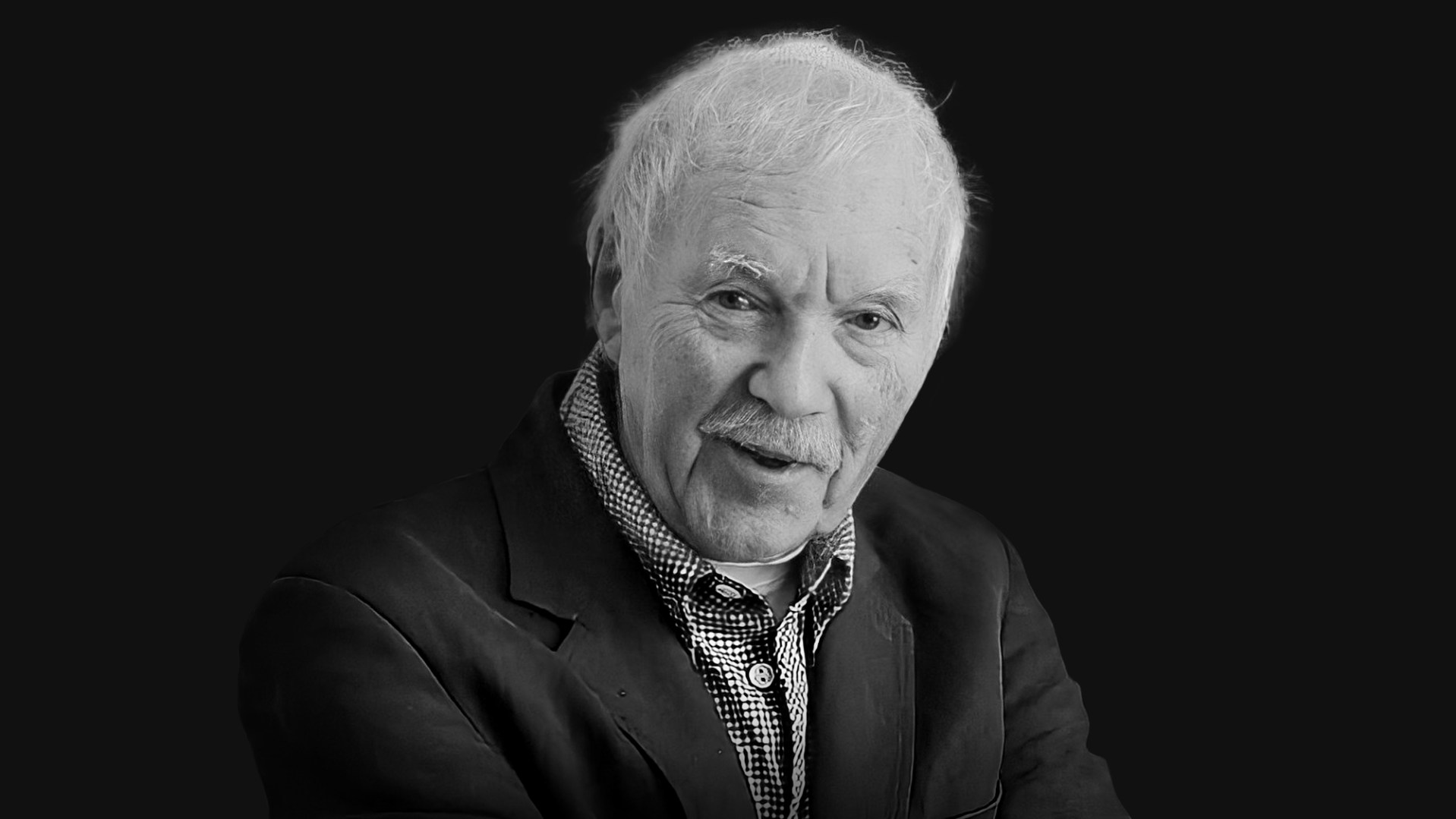
Died: Kees de Kort, Beloved Bible Artist

The Dutch illustrator’s bold and simple work shaped “the biblical cosmos of images” for millions.

Christianity Today September 2, 2022
Courtesy of Ikonenmuseum Kampen / edits by Rick Szuecs

Kees de Kort, an artist who gave generations of Dutch and German children their first indelible impressions of Bible stories, has died at home in the Netherlands. He was 87.

De Kort sold more than 33 million children’s Bibles worldwide and became so popular in the Netherlands and Germany that “De Kort” is sometimes understood as a synonym for “children’s Bible.” For many modern Europeans, “the biblical cosmos of images is unthinkable” without his work, according to the German national newspaper Die Zeit.

De Kort’s depictions of Bible stories were bold and simple enough to capture the imagination. His figures solid enough to seem real and relatable. As De Kort himself once explained, he wanted to paint a Christ who could ride a bike—who could live and move plausibly in the same modern world that Dutch children knew from their everyday lives.

Journalist Lodewijk Dros said that as those children grew up, they found that “Kees de Kort’s children’s Bible is one of a few that stays with you.”

As news of De Kort’s death on August 19 circulated on social media, fans shared their favorite images online. A number recalled one in particular: a portrait of Bartimaeus, the blind man who receives sight on the road to Jericho in Mark 10:46–52.

“I still see that image before me: that man shouting with his mouth wide open,” said Hanna van Dorssen, a theologian with the Protestant Church in the Netherlands. “So evocative.”

https://twitter.com/MartineCam/status/1562327839936057344

Lisbeth van Es, curator at the Icon Museum in Kampen, said the portrait has all the essential elements of De Kort’s style.

“Simple colors and not too many details. You can see at a glance what the essence of what he wants to express is. … That is truly an iconic image,” she said. “You hear from everyone who grew up with De Kort’s drawings: They always stay with you.”

De Kort was born December 2, 1934, in Nijkerk, about 60 kilometers east of Amsterdam. His parents were devout Catholics, but it was a Protestant area. As an adult, he felt comfortable in Catholic and Protestant spaces.

“I’m a practicing Christian,” he said in 2020. “I pray twice a day, morning and evening. But I’m not fundamentalist. I go to Calvinist, Reformed, and Lutheran churches just the same as Catholic ones.”

He began his career at 27 in the secular world of technical drafting. But by 30, he found he was bored by the work and dreaming of something more. A colleague pointed him to a competition organized by the Dutch-Flemish Bible Society for a proposed series of picture books for children with intellectual disabilities.

De Kort waited until the last possible minute and then submitted a single painting: Mary and Joseph arriving in Bethlehem. The judges for the contest—Protestant pastors, Catholic priests, and Jewish rabbis, as well as children’s psychiatrists and psychologists—chose him.

When he won the commission, De Kort set out to establish a distinct style for his Bible illustrations. He studied children’s art and asked his two sons, aged four and seven, to explain their paintings to him. Children, he noticed, composed images on a clear horizontal line, with human figures at the center, generally seen slightly from below. They used bright colors and simple shapes but added more detail to emphasize emotions. He adopted all those elements into his own work.

Some observers connected De Kort’s illustrations to a movement within modern art that valued older, simpler forms, such as Pablo Picasso’s “primitivism” or HAP Grieshaber’s resurrection of woodcuts. His work was most frequently compared to Marc Chagall’s fairy tale-like Jewish art.

De Kort thought those comparisons were overblown. “Chagall?” he asked Die Zeit. “Another universe.”

https://twitter.com/Logmans/status/1562700612638150659

His work, he said, was inspired by the Bible. He loved the stories.

“All kinds of things take place in the Bible, events that we also experience today: war, hunger, disease, corruption, oppression, slavery,” he said. “They are stories of friendship, comfort, and that nothing can separate us from the love of God.”

The first volume of What the Bible Tells Us was published in 1967. It was a small book, about five inches by five inches. Over the subsequent decades, De Kort produced 27 more, with the Bible society selecting the stories but giving him artistic freedom to illustrate how he chose.

One volume won an award for best schoolbook at an international book fair in Leipzig in 1977. Another won children’s book of the year in 1988.

The simple text, authored anonymously by Bible society staff, was translated into 90 languages. All 28 volumes of What the Bible Tells Us were combined into a single 348-page volume in Dutch in 1992. A German version, titled It Began in Paradise, was published in 1995.

De Kort was also commissioned to produce art for churches. He did a series of 10 pieces that were turned into stained glass windows in Mühltal, Germany; another for a church in Assen, Netherlands; and a series of 10 drawings for the Vatican in 2017.

His art has been displayed in more than a dozen art galleries and museums, frequently drawing critical acclaim. In 2019, the Icon Museum in Klampen paired his art with historic Catholic and Eastern Orthodox icons, making the case that De Kort’s work was iconic not just in the sense of being memorable, but also in the sense that it connects viewers to a spiritual reality.

https://twitter.com/jacob_bosma/status/1562505157535203329

“An icon is the real representation of the sacred,” said Van Es. “His works carry the essence of the Bible stories with them. … I consider his work a Bible translation. In a lot of religious art, there is an interpretation, an explanation, an illustration. Steps have been taken between the biblical story and the art itself. Not for De Kort.”

De Kort, for his part, said he learned a lot about visual narrative from Catholic icons, but he also saw his figures as more earthy and grounded—“tough Protestants.”

Toward the end of his life, De Kort took on another earthy art project and started painting pigs. He said he’d been thinking about how to depict them since he illustrated the story of the Prodigal Son in the 1970s. Also, they reminded him of his childhood.

“We lived next to farmers who kept lots of pigs,” he said. “They have always fascinated me. Pigs are wonderful animals.”

The Bijbels Museum in Amsterdam is planning an exhibit of De Kort’s work in December.

Theology

Embracing the Liturgy of Labor Day

In today’s hybrid work culture, Christians should recommit to the biblical rhythms of work and rest.

Christianity Today September 1, 2022
Nathan Dumlao / Unsplash

Over the past few years, many of us have unfortunately become familiar with descriptors like the Great Resignation and the Great Disengagement. Even if you have not heard these terms, you are likely familiar with their meaning.

The former describes the onslaught of people quitting their jobs due to all sorts of current socioeconomic and mental health reasons, while the latter points to people keeping their jobs but having a profound sense of emotional disengagement with their work. Sometimes referred to as “quiet quitting,” such disengagement is especially prevalent in the “helping professions” like the medical industry, the education field, and some forms of ministry.

Both trends are, to some degree, part of what author Jennifer Moss calls the “burnout epidemic” in her book on chronic stress. This problem has accompanied a wider acceptance of hybrid work culture in response to the COVID-19 epidemic—which has further blurred the boundaries between our professional and personal lives.

As a professor of organizational communication, I am fascinated with the way people communicate about work and how that impacts their overall quality of life. And as a Christian, I am especially interested in the degree to which believers understand work as part of our callings.

For those of us who feel especially called to a particular kind of work or who seek to bring a sense of calling into our work, a hybrid work culture can be even more complex. That is because there’s the added pull of holy responsibility on top of structural complexities—a relational commitment to the Caller that can drive us to ignore healthy boundaries.

This year, Labor Day celebrates 140 years of seeking to recognize and honor the contributions of workers by offering an extra day of rest. And while work and rest may seem like opposites, they exist in the same spectrum of a healthy and meaningful life.

As we shift gears from the glories and exhaustions of summer to the rhythmic academic calendar schedule of fall, we have a chance to reexamine our relationship with work and rest—to reflect on what these concepts mean to us and why they should always be considered together.

On the one hand, we cannot talk about work and rest without acknowledging the privilege associated with both. With job loss on the rise for the past two years, it is a privilege to be employed—and with the cost of living as high as it is these days, it is a luxury to be able to choose to take a break from work and seek rest.

At the same time, the Lord invites his followers into a way of life that includes a mindset of working unto him (Col. 3:17) and resting like our Creator (Gen. 1; Heb. 4:9–10).

The problem is not work—it’s what we have done to work.

The narrative of Genesis introduces us to a Creator God who worked and said that it was good. Work was a form of worship—an expression of good, creativity, productivity, community, play, intentionality, and care. But in the Fall when sin entered the scene, a toxic form of work seeped into our world. We elevated work to a place in our lives that gave it the power to define our identities and worth—this is the problem.

When we approach our callings in a way that reflects the work of God, we are worshipping him in spirit and truth—yet we cannot talk about healthy work without talking about rest.

God paired work with rest by instituting the concept of Sabbath. Sabbath is not only a divine command but also an act of imitating the Creator. How we treat our time at work and time of rest goes hand in hand with and models our values to other people. How we treat Sabbath is part of our faithful witness and can breathe life into our professional callings.

When we take a break from work, we get perspective. Things get clearer, and we can see them in the big picture. Sabbath is part of the words and deeds by which others will know us.

I understand the difficulty of pursuing Sabbath. I am balancing the needs of my three-year-old, my spouse, ailing family members, my paid job, and myself. Taking a dedicated time away from what Charles E. Hummel calls “the tyranny of the urgent”—that is, choosing to tithe your time to God because he is the author of time—is hard no matter your life circumstances.

When I was single, taking a Sabbath risked greater loneliness as I sought to slow down and reflect, so I had to learn ways to integrate time with others and time with myself and God. When I was newly married, taking a Sabbath meant learning how my spouse experiences rest and then trying to integrate both of our needs. And now as a parent of a young child, Sabbath is less about physical rest and more about choosing to unplug from the hurried way of life to really be present with those God has given me.

In this way, Sabbath has reminded me how to compromise in every season of my life. It has revealed to me just how much I worry, plan, and strategize to keep my mind and heart busy rather than moving into a posture of listening and watching for what kind of rest is needed.

I am not simply talking about Sabbath as physical rest. In her book Sacred Rest, Saundra Dalton-Smith, MD, outlines seven types of rest that we all need: physical, mental, sensory, creative, emotional, social, and spiritual rest.

Rather than be overwhelmed by all the ways you could and should be resting, what if you took time to slow down and consider the area in which you are most in need of rest right now? What if you used this Labor Day as a clear time to consider your work and rest schedule in the past and then alter one area that might lead to greater rest in the future?

Princeton professor Heath W. Carter traced the evangelical origins of Labor Day and the modern labor movement—beginning in the 1890s, when local churches “set aside the Sunday before Labor Day as a time for lifting up working people’s voices and experiences.”

What if evangelicals today thought of Labor Day as a Christian holiday? What if we treated that day as a point of accountability to consider our relationship with work and rest as designed by our Creator? And what if we used this time to turn to our Caller and offer a Great Recommitment in our approach to life’s rhythms?

The logic of rest from work runs counter to the ways of the world. In Jesus’ upside-down kingdom, we might think of Sabbath like a tithe where, instead of money, we are giving our time and attention to God—and seeing him “throw open the floodgates of heaven and pour out so much blessing that there will not be room enough to store it” (Mal. 3:10).

That blessing may look different than we anticipate or expect, but even in this we can trust that the Lord knows us and cares for us. Choosing to rest is an act of trust in our heavenly Father.

Arianna Molloy is an associate professor of communication studies at Biola, specializing in organizational communication.

Theology

Born-Again Hope in a Time of Lizard-Brain Fear

Only walking in the Spirit can renew our fleshly thinking into a kingdom mindset.

Christianity Today September 1, 2022
Illustration by Mallory Rentsch

This piece was adapted from Russell Moore’s newsletter. Subscribe here.

Have you ever said something and then, moments later, cringed with shame as you replayed it in your mind? If so, you’ll know the sort of feeling I had a couple weeks ago.

I was talking with an expert on social media polarization who was not a Christian. She made an insightful and compelling case about why so much radical, crazy content gets traction, including within the church.

The algorithms recognize, she said, how emotions work. Emotions like affection, wonder, and curiosity don’t prompt people to linger on posts—much less to spread them. But anger and fear do.

When I asked, “So how is this fixed?” she predicted that things will get worse and worse because “What can you do about the reptilian brain?” I nodded sadly and said, “I know.”

Her point was that social media technology exploits the part of fallen human psychology—what she would call “the lizard brain” or the “reptilian brain,” also known as the amygdala—that is alert to threats and danger. In her view, tweaking the technology would be a small and futile effort against what can’t be changed in the human condition.

None of that was the problem. The problem was my sigh of resignation in response.

Feeling chastened, I reminded myself that I’m a Christian—and an evangelical one at that. My response was akin to the believer I heard several years ago arguing some issue in terms of “what Jesus would do if he were alive today”—until I interrupted with “Jesus is alive today.”

Putting aside whatever naturalistic assumptions are behind the terminology of lizard brain, gospel Christianity tells us that there is, in fact, something that can change the reptilian brain—and that our minds have faced reptiles for a long, long time.

The serpent, after all, was “more crafty than any of the wild animals the Lord God had made” (Gen. 3:1). The old reptile of Eden appealed to our human appetites and perceived autonomy, summoning our fear of mortality and then offering a “fix” for it.

In the biblical storyline, the snake’s hyperrational coolness at the first is matched by the ancient dragon’s limbic hotness later on—when he rages all the more “because he knows that his time is short” (Rev. 12:12).

An honest look at the plight of fallen humanity in any age could lead to a pessimistic despair. After all, what can we do about our sinful human nature? Yet this is a dangerous but subconscious way of tossing the supernatural overboard. It’s a sign that we are secularizing.

People can express this mentality in various ways.

We can embrace a hand-wringing anxiety that looks at the current reality of the people we know or the church itself and assumes a gloomy version of “tomorrow will be just like today, only more so” (Isa. 56:12, NASB). Or we can give in to an “if you can’t beat them, join them” kind of cynicism that we convince ourselves is realism and “the way things are.”

Or, perhaps worst of all, we can find a gospel “realistic” enough for these times—embodying the kind of half gospel that activates the amygdala rather than a whole gospel that lightens the conscience.

For some of us, that resignation comes from a fear of the “lizard brain” in what we perceive to be the world. How do we keep from upsetting those whose hostility could, we think, hurt us?

For others, that resignation is a way to exploit the “lizard brain” of our own people: How do we frighten them to the point that we can “lead” them? How can we find ways to sanctify what the Bible calls “works of the flesh”—like wrath, rancor, rage, and fear? How can we keep these fleshly impulses from bothering our consciences, instead deluding ourselves into thinking they are the only “realistic” way forward and ultimately confusing them for signs of genuine Christian conviction?

Eugene Peterson warned his son (also a pastor) that some people mistake adrenaline for the Holy Spirit. What the elder Peterson referred to was much of the enthusiasm he saw in his Pentecostal background and the exuberance he saw in church-growth marketing mottos like “The church alive is worth the drive.”

I am sometimes almost nostalgic for that kind of adrenaline—particularly in a time when fearmongering like “We are one step from catastrophe if our enemies aren’t stopped!” drives more enthusiasm than exhortations such as “We are one step from winning the world to Christ!” But Peterson is right in either case: The rush of adrenaline can surely disguise itself as life—for a little while.

Some give up by expecting to perpetually lose; others, by expecting to win. But their idea of winning falls short of “your kingdom come, your will be done, on earth as it is in heaven,” and their means of winning falls short of “lead us not into temptation, but deliver us from the evil one.” That’s especially true with those who see a way to say, “Mine is the kingdom and the power and the glory” (and some daily bread too).

Perhaps now is the time for evangelical Christians to remember our calling. The rest of the body of Christ has so often relied on us to remind the church and the world of what Jesus said to an anxious teacher by night: “You must be born again” (John 3:7).

Our human tendency in perilous or upsetting times is to look for strategies to solve what we think is our problem. We want the basic facts of how to get from barrenness to life in ways we can understand. We want Jesus to say, “There’s nothing to be afraid of if you just do this” or “Be afraid, be very afraid, and therefore you must urgently do this!”

Both of those, though, are the equivalent of a liberal German scholar trying to tell us that the Virgin Birth doesn’t mean what we think because, realistically, virgins can’t get pregnant. After all, Nicodemus wasn’t unreasonable when he asked how a grown adult could reenter the birth canal; he just didn’t understand the Holy Spirit.

When we don’t believe the Spirit is able to give life—to grant us the mind of Christ, to crucify the works of the flesh, and to produce fruit—then we don’t call for it or long for it; we don’t pray for it or model it. And then a lifeless but furious church leads people to wonder whether “born again” is just another way of saying “people whose lizard brains light up in red-state ways more than blue-state ways” or vice versa.

Our predicament—whether in terms of our personal morality or mortality or in terms of the world around us—can’t be fixed with a step-by-step guide or by “fighting fire with fire.” The reptilian spirit is the one that tells us, “Step one: Eat this in your hand. Step two: Open your eyes,” whereas Jesus says, “This is my body; take and eat.”

And just as Nicodemus asked, “How can anyone get reborn at my age?” we followers of Jesus tend to ask, “How can this man give us his flesh to eat? What can we do?”

To that question, Jesus responds, “The Spirit gives life; the flesh counts for nothing. The words I have spoken to you—they are full of the Spirit and life” (John 6:63). The point is not for us to learn how to counter our fear of starvation by perfecting our baking skills. It’s to lead us first to the place of bewilderment where, like Simon Peter, we can say only, “Lord, to whom shall we go? You have the words of eternal life” (v. 68).

“Give us this bread, and we’ll be on our way” is a strategy. “I am the bread that comes down from heaven” is a promise. The strategy seems real-world; the so-called lizard brain can understand it because we see it all the time. The promise, on the other hand, seems unrealistic because we don’t know how to get there—or maybe we’ve so rarely seen it that we start to question whether it can really happen at all.

It’s the difference between “Here’s how to harness wind energy for sustainable electricity” (or, in these times, “Here’s how to harness wind energy for an electric fence to keep out your scary neighbors”) and “The wind blows wherever it pleases. You hear its sound, but you cannot tell where it comes from or where it is going” (John 3:8).

When we look at a church that all too often operates from a lizard brain, we want to figure out how to harness or quiet it. Those who just wait for “the fever to break” often yield to despondency or to cynicism. And those who seek to mobilize it—to “reclaim America for Christ” or to “own the libs”—end up learning too late that those who whip up the appetite to devour are ultimately the prey (Gal. 5:15).

But neither of those is the way forward; they only appear to be when we’ve forgotten that the gospel truly can renew minds, transform hearts, and revive congregations. That can happen slowly, almost imperceptibly—or it can happen suddenly and disruptively.

The bad news and the good news are the same thing: What’s born of the lizard is lizard. What’s born of the Spirit is Spirit. Grace is still amazing, and the gospel still works. So, let’s remember once again what it means to be born again.

Russell Moore leads the Public Theology Project at Christianity Today.

Theology

A Moral Primer on Amazon’s ‘Rings of Power’

Tolkien’s kingdom of Númenor is a cautionary tale for us today.

Christianity Today September 1, 2022
Ben Rothstein / Prime Video

A charismatic demagogue seduces a mighty empire, winning power with promises to restore past glory. A people betray their founding principles, apostatizing from the faith of their fathers to pursue dreams of immortality. Their great city teeters on the brink of civil war. A faithful remnant is hounded as traitors by a mob hellbent on ruin.

Neither a summary of Old Testament prophets nor of yesterday’s New York Times, these are some of the stories in J. R. R. Tolkien’s The Silmarillion—the lore bible of Middle-earth. Long overlooked, the stories have finally found their moment in the limelight.

Amazon’s The Lord of the Rings: The Rings of Power is upon us.

Reputedly the most expensive television show ever produced, the $1 billion project is an adaptation of a very small part of Tolkien’s oeuvre. In the author’s fictional timeline, Middle-earth’s history unfolds over three ages. Most of The Silmarillion concerns the First Age. The more famous and beloved book and movie trilogy, The Lord of the Rings, covers the end of the Third Age. Amazon’s new TV show is set squarely in the middle.

Tolkien wrote almost nothing about this period. Yet what little he did craft vibrates with political resonance. In the 23 short pages of “Akallabêth,” a chapter in The Silmarillion, Tolkien tells of the kingdom of Númenor’s glory and also its hubris and folly.

In half of the next chapter, “Rings of Power,” Tolkien writes about the eponymous rings and essentially describes World War III—a cataclysmic conflict so destructive that, although the good guys won, the world never recovered.

It’s an extraordinary (and extraordinarily relevant) narrative—one of political passion, ambition, manipulation, and deceit; geopolitical intrigue; religious warfare; theodicy; and apocalypse. It’s a story about those who win their way to leadership by honor, deceit, or conquest and a cautionary tale about the destruction that ambitious men and women can do when given awesome power.

If you plan to watch the show, here’s what you need to know about the story it’s based on, and if I may, what lessons are worth drawing from it.

The kingdom of Númenor

In Tolkien’s original text, the Númenoreans were “wise and glorious,” tall and long-lived, famous seafarers. They learned to speak elvish, the language of learning, and “made letters and scrolls and books” in which they wrote “many things of wisdom and wonder in the high tide of their realm.”

Númenor is the original kingdom of which Gondor—familiar to readers and watchers of The Lord of the Rings—is the copy. It’s the imperial center, where Gondor is the realm in exile.

The men and women who later become Númenor are renowned for their faithfulness to the gods. As a reward, they are given a home—an island kingdom off the coast of Middle-earth—as well as a golden age of prosperity and wisdom.

In their greatness, the Númenoreans visit Middle-earth. Seeing the poverty and ignorance of the “forsaken world,” they give to lesser men the gift of Númenor’s benevolent imperialism—a humanitarian intervention that’s meant to elevate their condition and aid “in the ordering of their life.”

Númenor, then, is the idealized vision of a great power using its greatness to do justice.

But the kingdom’s greatness becomes the source of its temptation. After thousands of years of bliss and glory, some of the Númenoreans begin to lust for the one thing they don’t have: “The desire of everlasting life, to escape from death and the ending of delight, grew strong upon them; and ever as their power and glory grew greater their unquiet increased.”

They fall prey to the classic sin of hubris.

With the people divided, the majority of the Númenoreans and their leaders become estranged from the gods, even though a small remnant remains faithful. The greatest of their kings is “filled with the desire of power unbounded and the sole dominion of his will.”

Here, Tolkien’s tale unfolds with the same rhythm of 1 and 2 Kings, where a people fall because their leaders fall.

Númenor begins to squander its wealth and power as “those who lived turned the more eagerly to pleasure and revelry.” In their pride and hedonism, the empire turns rapacious, writes Tolkien, “and they desired now wealth and dominion”—since eternal life was denied them—and “appeared now rather as lords and masters and gatherers of tribute than as helpers and teachers.”

It’s not hard to see Tolkien’s intent in this political morality play. The United Kingdom, like Númenor, was an island kingdom that saw itself as a benevolent empire. But as Tolkien crafted The Silmarillion in the 20th century, the empire was dwindling by the day, and Western society looked increasingly materialistic and secular.

It was an age of pessimism for elite Westerners like Tolkien, who saw a world increasingly hostile to the cultural heritage he had grown up with. A nostalgia for past glory pervades his work.

The story of Sauron

If that were all, the “Akallabêth” would be unremarkable—unfit for a $1 billion TV adaptation and unworthy of Tolkien’s other work. But Tolkien’s Catholic imagination gave him more psychological insight and spiritual ambition.

The story is not a neo-reactionary call for the renewal of Western civilization or British imperialism. It’s far more pessimistic than that. Tolkien does have a character in the story call for national renewal and greatness. However—perhaps with the Second World War still fresh in his memory—he puts that call in the mouth of his villain.

Into Númenor’s story of cultural and spiritual decline steps a deceitful demagogue: none other than Sauron himself. Although he’s depicted as a flaming eye atop his tower in The Lord of the Rings , in this earlier tale, he’s a walking, talking character, “cunning of his mind and mouth,” with “flattery sweet as honey … ever on his tongue.”

Put another way, Sauron is a professional influencer. With the help of the rings of power, he worms his way into the counsels of the king through promises of “wealth uncounted … so that the increase of their power shall find no end.”

Sauron plays skillfully on the Númenoreans’ fear of death, promising them ever-greater heights of power by taking from the gods what is rightfully theirs. The Númenorean king turns “wholly away from the allegiance of his fathers,” and treats faithful Númenoreans as rebels, offering them up as human sacrifices in Sauron’s newly built temple. The Númenorean empire, already rapacious, is now brutal and violent.

In this part of the story, Tolkien seems to convey a natural connection between power, demagoguery, and violence. Great power naturally attracts the con man, who wins influence by flattering the mob and appealing to its base instincts. In due time, power allied to demagoguery always leads to bloodshed—at home and abroad.

The lessons of Númenor

The finale of “Akallabêth” is shocking and apocalyptic—told more as parable or myth than straight fiction. Sauron persuades the Númenorean king to wage war on the gods, invade their abode, and wrest eternal life from them by force of arms.

The king, who has gone mad with old age and hubris, leads his armada across the sea. In response, the gods rend the sea in half and drown the armada, Númenor itself, and half of Middle-earth. It’s the apocalypse as told by the damned. (I dare Amazon to put that on the screen.)

The combination of pagan and biblical allusions—Atlantis and Pharoah, the Roman Empire and the kingdoms of Israel and Judah—is typical Tolkien. By drawing on disparate sources in the Western canon, he borrows a sense of historical weightiness and religious import. He also paints on such a vast canvas that the story feels important—and bracingly tragic.

In this dark landscape, Tolkien offers one ray of hope. In “Rings of Power” (the final chapter of The Silmarillion), the faithful remnant flees Númenor before its destruction, establishes Gondor, and leads the last alliance of elves and men in a desperate final war against Sauron. (For reference, this is the big battle from the prologue to the film version of The Lord of the Rings and is likely to be the final scene in The Rings of Power five seasons from now.)

The good guys win, but it’s too late for any victory to be worth that name. Sauron is overthrown, but almost every hero is killed, the world is laid waste, and Sauron’s ring survives.

Was the effort futile? We know the end of the tale—after long delay, Sauron and his ring are ultimately vanquished, even though the Númenorean faithful never see it.

Here, then, is Tolkien’s final lesson, and the one to keep in mind as we view The Rings of Power in context of the church today:

In any era of hedonism, demagoguery, rapaciousness, and violence (including ours), those in the faithful remnant may never see their final victory or the fruits of their sacrifice. But they fight on nonetheless, because they know that, at the end of the tale, providence will vindicate their efforts. In light of that, we can only ask if we’ll be among the remnant or among the damned.

“It is a fair tale, though it is sad, as are all the tales of Middle-earth,” Aragorn tells the hobbits in The Fellowship of the Ring.

As a veteran of the First World War, Tolkien understood the fallenness of the world, the pride of men and women, and the temptations of power so keenly that he knew better than to give any of his tales a happy ending.

Peter Jackson’s brilliance was staying faithful to Tolkien and ending his Lord of the Rings trilogy more as a tragedy than a fantasy. When most commercial entertainment follows the demand for complete resolutions, it’s daring to tell a mature tale about a broken world under judgment, where all heroes are flawed and every earthly victory is conditional.

It’s also inspiring because it’s realistic, even if it comes dressed with elves and wizards. The closer Amazon’s Rings of Power sticks to these truths, the greater its contribution—not just to our entertainment, but to our edification.

Paul D. Miller is a professor at Georgetown University and a research fellow with the Ethics & Religious Liberty Commission.

Books
Review

Meet the Scholar-Activist Who Changed Baptist Minds on Race

T. B. Maston’s views on integration were controversial at his seminary. Today, they deserve a fresh hearing.

T. B. Maston

T. B. Maston

Christianity Today September 1, 2022
Illustration by Christianity Today / Image Courtesy of Mildred L. Iddins Special Collections, Carson-Newman University

In the years before the Civil War, the major evangelical denominations divided into regional factions based in part upon their views of human enslavement. The DNA of each new Southern denominational tradition was imprinted with racism, casting a long shadow over their subsequent development.

Integration: Race, T. B. Maston, and Hope for the Desegregated Church (Monographs in Baptist History)

Integration: Race, T. B. Maston, and Hope for the Desegregated Church (Monographs in Baptist History)

188 pages

The Southern Baptist Convention (SBC) was formed under these circumstances in 1845, and for most of its history, the Southern part was at least as important to the Convention’s identity as the Baptist part. Southern Baptists were a thoroughly white denomination that, for the most part, accepted and often defended the white supremacist status quo.

There were dissenters within the SBC who rejected the racist assumptions of their tradition and encouraged a more prophetic posture against racial segregation. Arguably, the most prominent among them was T. B. Maston (1897–1988), who taught ethics at Southwestern Baptist Theological Seminary from 1925 until a coerced retirement in 1963, occasioned by his views on race. Maston wrote widely on ethical topics, but one of the driving concerns of his ministry was advocating a biblical view of race that would undermine Jim Crow and ultimately lead to a holistic integration between Black and white communities.

Maston was no mere theorist. He modeled his views on race in his call for desegregating Southwestern Seminary and his personal relationships with Black seminarians. His writings and actions inspired two generations of denominational activists against racism, including pastors, missionaries, and professors.

Three levels of integration

In his new book, Integration: Race, T. B. Maston, and the Hope for the Desegregated Church, Paul J. Morrison offers a detailed study of Maston’s views and their influence. Morrison, who is provost at Emmaus Theological Seminary in Cleveland, argues that Maston was not merely concerned with ending segregation in the South, though he certainly longed for legal desegregation.

Based on his understanding of Scripture, Maston believed that the biblical ideal was racial integration, rooted in biblical teachings on the image of God and the reconciling work of Christ in his death and resurrection. Maston articulated his biblical vision of integration in numerous articles and pamphlets, as well as three key books: Of One: A Study of Christian Principles and Race Relations (1946), The Bible and Race (1959), and Segregation and Desegregation: A Christian Approach (1959).

Morrison identifies several key themes in Maston’s criticisms of racism. He rooted his ethical assertions in key biblical principles about humanity and reconciliation. He argued exegetically against the Scriptural arguments advanced by segregationists. He also applied his ideas about race to missionary efforts. This approach was important in winning over Southern Baptists, a denominational tradition that was thoroughly Bible-centered and committed to evangelism and missions.

At a more conceptual level, Maston affirmed an implicit version of deontological virtue ethics, a school of thought proposing that certain actions are morally obligated, regardless of the consequences. For him, that meant emphasizing the importance of both biblical propositions and cultivated virtues, of obeying God’s commands and reflecting God’s character. He was averse to simplistic dichotomies in the Christian life, believing that Scripture mandated a both/and posture toward many thorny questions, like whether Christians should emphasize personal evangelism or social activism. He was always in search of “third way” options rooted in Scripture and its implications.

At the heart of Maston’s racial thinking was the conviction that integration, rather than desegregation, was the biblical ideal. Following Maston, Morrison outlines three levels of integration. Believers should first seek to integrate their interpersonal relationships. This should be motivated by the biblical principles of human dignity, based on the image of God, and love of neighbor. This first step is prerequisite to all others.

Morrison also champions an integrated Baptist academy. He laments the relative lack of minority professors at SBC-related seminaries. While Morrison rejects a mandated affirmative-action policy, he does commend a principled effort to intentionally hire professors from different ethnic backgrounds. He further champions the integration of racially diverse voices into seminary curricula, along with strategic initiatives to recruit minority students.

The final level, after personal relationships and seminary life, is integrating churches themselves. Morrison rejects many common approaches to integration as simplistic or inappropriate. Examples include tokenism (which achieves only surface-level representation), cultural appropriation of minority practices, and majority pressuring of ethnic minorities to assimilate to the majority’s preferences. Instead, Morrison calls for deliberately cultivating more substantive ethnic representation in both church and denominational leadership, resulting in a more holistic integration.

Morrison is not afraid to critique Maston on some points. Most notably, he notes that Maston argued against interracial marriage, not on racist grounds, but because he believed it was unwise in the cultural climate of his day. Morrison believes Maston could have been more consistently prophetic on this point. He also raises the question of whether Maston held to biblical inerrancy, deciding that the answer is unclear. His protégés fell on both sides of the inerrancy question, though most of them sided with the more progressive “moderates” when Southern Baptists debated the issue in the latter two decades of the 20th century.

Regardless of his views, Maston definitely affirmed a high view of biblical authority and made explicitly biblical arguments to persuade Southern Baptists. As David Roach argues in another recent book, The Southern Baptist Convention & Civil Rights, 1954–1995: Conservative Theology, Segregation, and Change, it was just these sorts of theologically conservative arguments against segregation, rooted in biblical exegesis, that persuaded Southern Baptists to gradually reject racial animus and publicly renounce their racist past in 1995.

The ‘third way’ we need

One lingering question, after reading the book, is whether historically Black churches should embrace integrated congregations. Morrison is writing for a mostly white evangelical audience. While many predominantly white churches are eager to pursue greater ethnic diversity, many African American believers argue that the unique history and emphases of the Black church tradition should not be so quickly abandoned. Whereas Black churches should not harbor racial animus toward whites or exclude them from their memberships, it is not at all clear that they bear the same burden of integration as white churches, which in some cases banned Black believers from joining.

Integration is a helpful introduction to Maston’s views on race and their implications for contemporary Christians. The book is not a strictly historical study, but rather an exercise in applied history. Morrison is himself an ethicist, so his aim is to commend Maston’s approach to Scripture-driven integration to contemporary Southern Baptists and other predominantly white evangelical churches. Many evangelicals will find the book helpful as they seek to navigate racial tensions faithfully during a season when racial animus is arguably more pronounced than at any time since the height of the civil rights movement.

At the very least, many readers will be encouraged to learn more about the views of a scholar-activist who can help us avoid the errors of both right-wing colorblindness and progressive antiracism. That is exactly the sort of biblically motivated third way we need for such a time as this.

Nathan Finn is provost of North Greenville University. He is a co-author of The Baptist Story: From English Sect to Global Movement.

Church Life

Instead of Becoming a Pastor, I Minister as a Plumber

While praying and turning wrenches, I discovered a rich Christian life.

Christianity Today September 1, 2022
Illustration by Christianity Today / Source Images: Lightstock / Getty

Ten years ago, I found myself at a vocational fork in the road.

I had spent years praying and dreaming about pastoring a church—studying theology, writing sermons, visiting hospitals, and interceding with folks toward this goal.

But like many millennials, I was tight on cash. With a growing family, I had to think frankly about the feasibility of seminary, how little money I’d make as a pastor, and how very little progress I felt I’d made in the Christian life. How was I to lead others down a path I had yet to travel?

A pastor at the church I was attending, knowing I was looking for a job, suggested I connect with one of the congregants who owned a plumbing company.

With the possibility of a job that didn’t require an advanced degree and could immediately provide security for my family, I chose to pursue plumbing with a prayer: God, make me the kind of person who can one day be a pastor in your church.

A decade later, I’m still plumbing. It turns out that work, manual labor in particular, had been sitting right under my nose as perhaps the most direct route to learning the skills needed by those who desire to lead the church. I suspect I’m not alone. Any of us can become better at following Jesus by focusing on the demands and spiritual realities of our work. Rightly understood, work is the training ground where good Christians are made.

How does work make us better Christians? How can we “redeem the time” we spend laboring?

If the Christian life can be summed up as being made “partakers of the divine nature” in and through Christ (2 Pet. 1:4, ESV), then I think it could also be said that the core activity of the Christian is prayer.

As defined by one 19th-century Church of England priest, prayer is “the soul’s approach to God,” and the soul that approaches God takes on the characteristics of God. It’s similar to a copper pipe—cool to the touch and reflective of external light and eventually taking on the characteristics of the flame as it is made ready for the solder.

In his letter to the Thessalonian Christians, Paul says, “Rejoice always, pray continually, give thanks in all circumstances; for this is God’s will for you in Christ Jesus” (1 Thess. 5:16–18).

When do we pray? Always. At what frequency? Constantly. Even when turning wrenches? In all circumstances.

Basil the Great, a fourth-century bishop and one of the famed Cappadocian Fathers, helped reform the monastic communities in his area of the ancient world and wrote a template for an ascetic life—a disciplined life lived with God, a life of prayer—that was meant for all Christians.

For Basil, the beginning, middle, and end of the Christian life is love—love for God and love for neighbor, as Jesus taught his followers. Christ also taught that service lovingly rendered to our neighbor is service he accepts as to himself.

“He who loves the Lord loves his neighbor in consequence,” Basil explains in his Long Rules. “‘If anyone love me,’ said the Lord, ‘he will keep my commandments’; and again, He says: ‘This is my commandment, that you love one another as I have loved you.’ On the other hand, he who loves his neighbor fulfills the love he owes to God, for He accepts this favor as shown to Himself.”

Doing one’s work for the sake of one’s neighbor is arguably itself a form of prayer, both because Christ is near in our neighbor receiving the service, and because of the disposition of our hearts to please God in our service.

Basil later says that

in the midst of our work can we fulfill the duty of prayer, giving thanks to Him who has granted strength to our hands for performing our tasks and cleverness to our minds for acquiring knowledge … praying that the work of our hands may be directed toward its goal, the good pleasure of God.

Why manual labor in particular? Another famous monk from a couple hundred years later will help us: Benedict of Nursia. Often called the father of Western monasticism, and a student of Basil, Benedict coined the phrase Ora et labora, “Pray and work,” and instructed his monks to abide by a gently alternating schedule of manual labor punctuated by times of prayer.

For Benedict, manual labor was of the utmost importance, which we can gather by the fact that it was the only thing in all of his Rules that he explicitly calls “monastic.” If the monks couldn’t work well, then they wouldn’t pray well. For the monk, as for all Christians, prayer is the work, slackness in one kind of labor meant slackness in other kinds of labor too.

But at a deeper level, manual labor and prayer share something else in common: the recruitment of one’s entire being.

When I’m installing a water heater, I must gather my will, my intellect, my body, all of my faculties—every facet of my being is involved in the execution and completion of the work. Manual labor serves as an occasion of reintegrating what are otherwise disintegrated parts of me, scattered hither and yon.

What I practice in manual labor, then, pulling the various parts of myself into an integrated whole, I apply to my times of prayer, showing up mind, body, soul, and strength to be with and offer praises to God. Here is another answer to the question Paul’s teaching raises, with so many more answers left to discover.

Over the past decade as a blue-collar worker, I have accidentally found a way of life that, far from keeping prayer at bay and hindering me from being with God because of my duties, has put me in the middle of a centuries-long, devout experiment that teaches me at least these two things: In Christ, I am praying precisely because I am working, and I am becoming better at being a pray-er because I am a worker.

My hands participate in the work of bringing order to the world around me, and they thumb through theological works; they bring peace between homeowners and their homes, and they build the kingdom; they’ve learned to turn wrenches, and they’re learning to pray without ceasing.

I’ve discovered that practicing being in God’s presence and growing in the Christian life is something any of us can do in virtually any line of work, not just as pastors or church leaders. My plumbing vocation certainly isn’t the life I expected, but it’s turning out to be the life for which I prayed.

Nathaniel Marshall is a licensed journeyman plumber. He is also a Benedictine oblate and worships at Christ the King Anglican Church in Marietta, Georgia, with his wife and two daughters.

Inkwell

Weak Reception

Inkwell September 1, 2022
Photography by Jonas Jaeken

I spoke with an old friend on the phone the other day,
her voice was tinny and far away.
I had to ask her to repeat herself many times,
because she was speaking in my old tongue,
from the other country I used to live in.
And while I was struggling to translate,
I realized I couldn’t remember how to conjugate the verbs,
or what the air felt like there, or what I
wore when it was humid.

How much as changed.
For a moment I was thinking
I’m glad I don’t live in Babylon anymore,
and I mourned her for staying there, where the rent is higher,
and there are rats in the walls,
and traffic is so fast it feels like you’re moving
even when you’re standing still.

Yet when she asked about my sudden departure
(I wish I could say I left all the furniture, but there
are a few pieces I still carry around with me),
she couldn’t understand my language either.
“What?” she said, and I got nervous,
speaking this new tongue in front of someone, fumbling
over the vocabulary knowing full well it wouldn’t make sense.

So I didn’t say much about where I’m living now.
Where the rent is cheaper and the lease is longer,
and the air is clearer, and the rain isn’t made of acid,
where it’s still cold but it doesn’t burn like it used to,
where there aren’t as many rats but there’s always a snake.

“I’m really happy here,” I said, and her garbled voice replied, 
“What, sorry? The reception is bad.”
So I said, “Maybe I should call you back?”

Brooke Dreger is a writer and student.

Videos

Pro-Life Ministry in Post-Roe America

CT and the National Association of Evangelicals present a candid discussion on the ethical, theological, and pastoral challenges of life after Roe v. Wade.

Christianity Today September 1, 2022

The US Supreme Court decision in Dobbs v. Jackson, which overturned Roe v. Wade, represents the most significant change in abortion law in nearly 50 years. As a result, state governments have been acting fast to either implement anti-abortion legislation or reassert their commitment to abortion rights. Meanwhile, many medical institutions, social workers, and healthcare providers are scrambling to understand the new rules for serving their communities while staying on the right side of the law.

In the wake of the Court’s immensely consequential ruling, Christians are asking many questions. What does pro-life ministry look like in a post-Roe world? How can the church articulate a compassionate vision for supporting women in crisis-pregnancy situations? How do pastors lead in this moment?

These and other questions are covered in this candid webinar. Cohosted by CT and the National Association of Evangelicals, this virtual roundtable features a diverse panel of Christian leaders from advocacy, pastoral, and theological backgrounds.
“We have the ability as the body of Christ to respond to this, but we’ve got to be thinking about it through the lens of meeting the physical, emotional, spiritual, and social needs of people,” says Care Net president Roland Warren, who along with the other panelists stressed the need for a greater commitment to discipleship and to coming alongside people who are struggling with difficult pregnancy decisions. “These life decisions need the life support that the body of Christ is uniquely positioned to provide.”

Watch the video above now, and stay connected to CT for more news and features on this issue.

Meet the Panelists

KELLY ROSATI

Kelly M. Rosati, JD, is a nationally recognized child advocate and the CEO of KMR Consulting. Kelly has decades of expertise in issues of human life and dignity, foster care and adoption, and mental health. Before founding KMR Consulting, she served for ten years as a vice president of Focus on the Family, where she co-founded the nationally recognized Wait No More program, which recruits adoptive families for children in foster care. Kelly received her undergraduate degree from Marquette University and graduated cum laude from the University of Nebraska College of Law. Along with her husband, John, she’s the author of the 2011 book Wait No More, which is about her family’s amazing adoption journey. She lives with her family, horses, and dogs in the East Mountains of New Mexico.

ROLAND C. WARREN

Roland C. Warren is the CEO of Care Net, one of the largest networks of crisis pregnancy centers in North America. A graduate of Princeton University and the Wharton School of Business at the University of Pennsylvania, Roland is an inspirational servant leader with a heart for Christ and a mind for business. After twenty years in the corporate world (with IBM, Pepsi, and Goldman Sachs), he spent eleven years as president of the National Fatherhood Initiative. His national media appearances include The Oprah Winfrey Show, The TODAY Show, CNN, Fox News Channel, and Black Entertainment Television. Roland is the author of Bad Dads of the Bible and Raising Sons of Promise: A Guide for Single Mothers of Boys. He and his wife, Dr. Yvette Lopez-Warren, have two adult sons and three grandchildren.

LAKITA GARTH WRIGHT

Lakita Garth Wright is the vice president of media at Urban Ministries Inc. (UMI), the largest African American Christian publishing and media company in the US. She’s a graduate of the University of Southern California and has addressed millions through motivational assemblies across the United States and internationally. The author of the bestselling book The Naked Truth: About Sex, Love, and Relationships, she speaks on issues such as race relations, politics, abstinence, abortion, and the impact of media on culture. Her numerous media appearances include Anderson Cooper, The View, and Focus on the Family’s Mind Over Media. She’s the author of the bestselling book The Naked Truth: About Sex, Love, and Relationships. Lakita is married to Jeffrey Wright, CEO of UMI. They have four children and reside in Chicago.

LISA TREVIÑO CUMMINS

Lisa Treviño Cummins is the president of Urban Strategies, an organization she founded in 2003 with a mission to tool, connect, and resource community and faith-based organizations focused on helping their neighbors flourish. A third-generation American of Mexican descent, Lisa traces the formation of her identity and worldview to her family and faith. Prior to Urban Strategies, she was an executive in community-development banking at Bank of America, and in 2001 she helped launch the White House Faith and Community-Based Initiative and served as its associate director for two years. She is the coauthor, with Lorena Garza Gonzalez, of Inheritance: Discovering the Richness of Latino Family & Culture. Lisa earned her MBA from University of Texas in San Antonio. She resides in the Washington, DC, area with her husband and their three children.

KAITLYN SCHIESS

Kaitlyn Schiess is a ThD student at Duke Divinity School studying political theology, ethics, and biblical interpretation. She has a ThM in systematic theology from Dallas Theological Seminary. She is the aut hor of The Liturgy of Politics: Spiritual Formation for the Sake of Our Neighbor and has written about theology, politics, and culture at place s like Christianity Today, The New York Time s, and Christ and Pop Culture. She’s currently researching and writing her next book, which looks at America’s history of using (and misusing) the Bible in politics.

WALTER KIM (MODERATOR)

Walter Kim became the president of the National Association of Evangelicals in January 2020. He also serves as teacher-in-residence at Trinity Presbyterian Church in Charlottesville, Virginia, after ministering for 15 years at Boston’s historic Park Street Church. He has spent nearly three decades preaching, writing, and engaging in collaborative leadership to connect the Bible to the significant intellectual, cultural, and social issues of the day. Walter serves on the boards of Christianity Today and World Relief, and on the Advisory Council of Gordon College. He received his Ph.D. from Harvard University in Near Eastern Languages and Civilizations, his MDiv from Regent College in Vancouver, and his BA from Northwestern University, and he is a licensed minister in the Conservative Congregational Christian Conference.

Books

Forge the Ring, Pass the Soup

Amazon’s “Rings of Power” series adds to what Tolkien termed the “Cauldron of Story,” where sub-creators mix up the stew of God’s creation.

Christianity Today August 31, 2022
Copyright Amazon Studios / Photo by Ben Rothstein / Prime Video

I’ve read the Lord of the Rings so many times I have sizable swaths of it memorized. It doesn’t require much to get me reciting lines about the sound of horns echoing dimly in dark Mindolluin’s sides, or to call out a foul dwimmerlaik for his deeds and trespasses. I’ve loved Tolkien since I first read him. I always will. And I know I’m not alone.

That kind of love for Tolkien is behind a lot of the anxiety I hear when people talk about Amazon’s forthcoming Rings of Power series. To be fair, they come by their anxiety honestly. Everyone has seen at least one story they love treated poorly, and the experience often leaves a scar. It hurts. I get it.

I’m optimistic though. My wife will tell you I’m positive to a fault when it comes to these things. But the disappointment doesn’t deter me. I’ve got to steel myself against it if I want to find the rare wonder. And despite evidence to the contrary, I believe there’s always a new wonder out there waiting to be found.

Tolkien would agree with me, I think. He championed the idea of humans as sub-creators—images of God who take creation and reshape it into endless lesser creations. In this new Lord of the Rings series, people are doing exactly that. They’re borrowing from the master’s legendarium and fashioning new tales and new characters and new visions of the world they love.

In his essay “On Fairy-Stories,” Tolkien gives us the “Cauldron of Story”—a great kettle into which all our tales and histories are tossed and boiled. They stew and combine, and in each generation, new flavors are added, and new soups are tasted and served up for the good of those who gather.

Sometimes what boils up might only taste like a faint trace of the original bones in the broth. But often, a storyteller pulls out of the mix something that tastes familiar and satisfies. That’s the wonder I wait for.

Here’s what I mean.

This weekend I listened to a podcast (The Lord of Spirits) in which the hosts unpacked what we know about Thor. Yes, that Thor. It was interesting to hear that, historically speaking, we really don’t know a lot. The Germanic people didn’t write much down, so we’ve only got a few stories and tales written by Christians, and how well those tales portray the actual beliefs of Norse pagans is up for discussion.

But we do have scant details, and in the hundreds of years since Thor, quite a few storytellers have stepped in to fill the gaps. Stan Lee and Jack Kirby—the writer-illustrator duo from Marvel Comics—have a lot to do with that.

They took stark outlines from other writers and blew on the embers, bringing to life a mythology that eventually led us to Chris Hemsworth doing such Thor-ish things as fighting alongside a cybernetically enhanced raccoon and forging a weapon out of the heart of a dying star (which might be cooler than anything the “authentic” pagan god ever accomplished).

Old Thor went into the pot, you see. He rolled around for a few hundred years until Lee and Kirby sniffed over the cauldron, caught the odor of those old pagan bones, and dipped out a ladle of soup to serve up in their own way.

This is what Tolkien meant with his concept of “sub-creation.” He suggests that, as images of a God who creates ex nihilo, we rearrange the existing world in the form of songs and poems and paintings and stories. We “sub-create.” And what we make bears an imprint of us and our personal particularity.

The same goes for artists down through the ages, who each take up the brush of the master and make something new that reflects what they know of the world.

This is why I’m optimistic. I love to watch as others participate in sub-creation. As Tolkien says, “the Cauldron of Story, has always been boiling, and to it have continually been added new bits, dainty and undainty.”

We may toss out the bits we dislike, but we endeavor to enjoy the soup nonetheless. And if we don’t like what we taste, maybe that’s an invitation to step up to the pot ourselves and see what we can pull out of it to give to others.

I can’t help but think that with The Rings of Power, creators J. D. Payne and Patrick McKay are stepping up to the pot, dipping into Tolkien’s soup, smacking their lips over the lightly sketched tales of Second Age Middle-earth, and preparing us a dinner. Based on everything they’ve said in interviews, they love Tolkien’s work like I do, and they aim to honor the heart that underlies it. They want to tell a new story that tastes like an old one.

That’s what we do. It’s what we’ve always done.

Even if The Rings of Power strays wide of the mark, it won’t demean or lessen The Lord of the Rings. The worst it can do is stink up the pot for a bit until someone else comes along to fix the flavor and serve up a fresh bowl. The new story is a participation in the work of story that Tolkien would have, I believe, taken delight in.

It’s beautiful to watch as, 49 years after Tolkien left us for the Undying Lands, his tales begin to emerge from the cauldron and take on different flavors. Like old Thor, the lightly sketched character of Galadriel comes up from the mix now fully fleshed, and I look forward to hearing her tale. So too with other familiar names: Elrond, Gil-galad, Durin, and others. And now we get to hear of newly sub-created characters as well.

In these new forms, we can listen as the tale speaks back to us of our own time, our own struggles, our own world, and our own fears and hopes. If we’re wise, we’ll listen to what it has to say. We’ll leave the undainty bits and savor the dainty. And the notes that feel true will go back into the pot to inform the next storyteller.

Few writers of the previous century have enriched the cauldron so well as J. R. R. Tolkien. It’s lovely to live in an age when we can see his legendarium taken up into the tradition of story he loved so well. For out of the cauldron it came, and into the cauldron it returns. Now its notes and flavors flow forward into the age to come.

Long live the pot. Pass the soup.

A. S. “Pete” Peterson is a novelist, a playwright, and the executive director of The Rabbit Room.

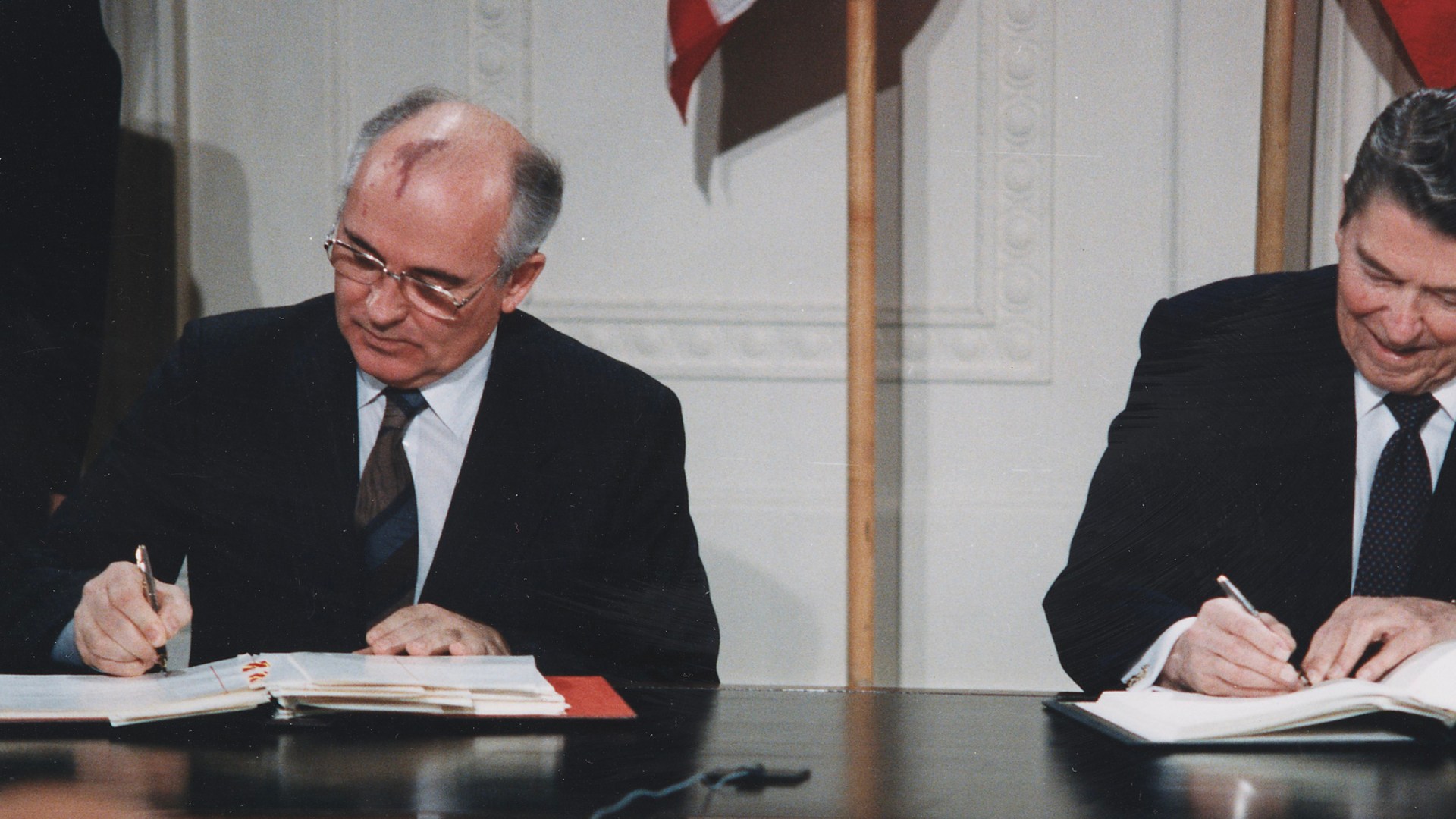
From the Archives: Mikhail Gorbachev and Christianity

A selection of articles on the late leader’s global legacy.

Mikhail Gorbachev and Ronald Reagan sign the INF Treaty in the east room of the White House.

Mikhail Gorbachev and Ronald Reagan sign the INF Treaty in the east room of the White House.

Christianity Today August 31, 2022
WikiMedia Commons

When Mikhail Gorbachev first took his place as the leader of the Soviet Union in 1985, many people, including CT writers, assumed he would “continue [the Soviet government’s] campaign against religious believers regardless of who leads the country.” But perceptions about his faith changed as the fall of the Soviet Union transpired and visits to the Crystal Cathedral and the tomb of St. Francis of Assisi sparked debates about his thoughts on religion. While some Chistians speculated about Gorbachev’s relationship to end times prophecy, CT writers looked for new signs that the former Soviet might be open to the Christian message.

In light of Gorbachev’s death, check out a compilation of CT archive articles with a chronology of the former leader’s relationship with Christianity.

Click here for more from the CT archives.

addApple PodcastsDown ArrowDown ArrowDown Arrowarrow_left_altLeft ArrowLeft ArrowRight ArrowRight ArrowRight Arrowarrow_up_altUp ArrowUp ArrowAvailable at Amazoncaret-downCloseCloseellipseEmailEmailExpandExpandExternalExternalFacebookfacebook-squarefolderGiftGiftGooglegoogleGoogle KeephamburgerInstagraminstagram-squareLinkLinklinkedin-squareListenListenListenChristianity TodayCT Creative Studio Logologo_orgMegaphoneMenuMenupausePinterestPlayPlayPocketPodcastprintremoveRSSRSSSaveSavesaveSearchSearchsearchSpotifyStitcherTelegramTable of ContentsTable of Contentstwitter-squareWhatsAppXYouTubeYouTube