Books

New & Noteworthy Books

Compiled by Matt Reynolds.

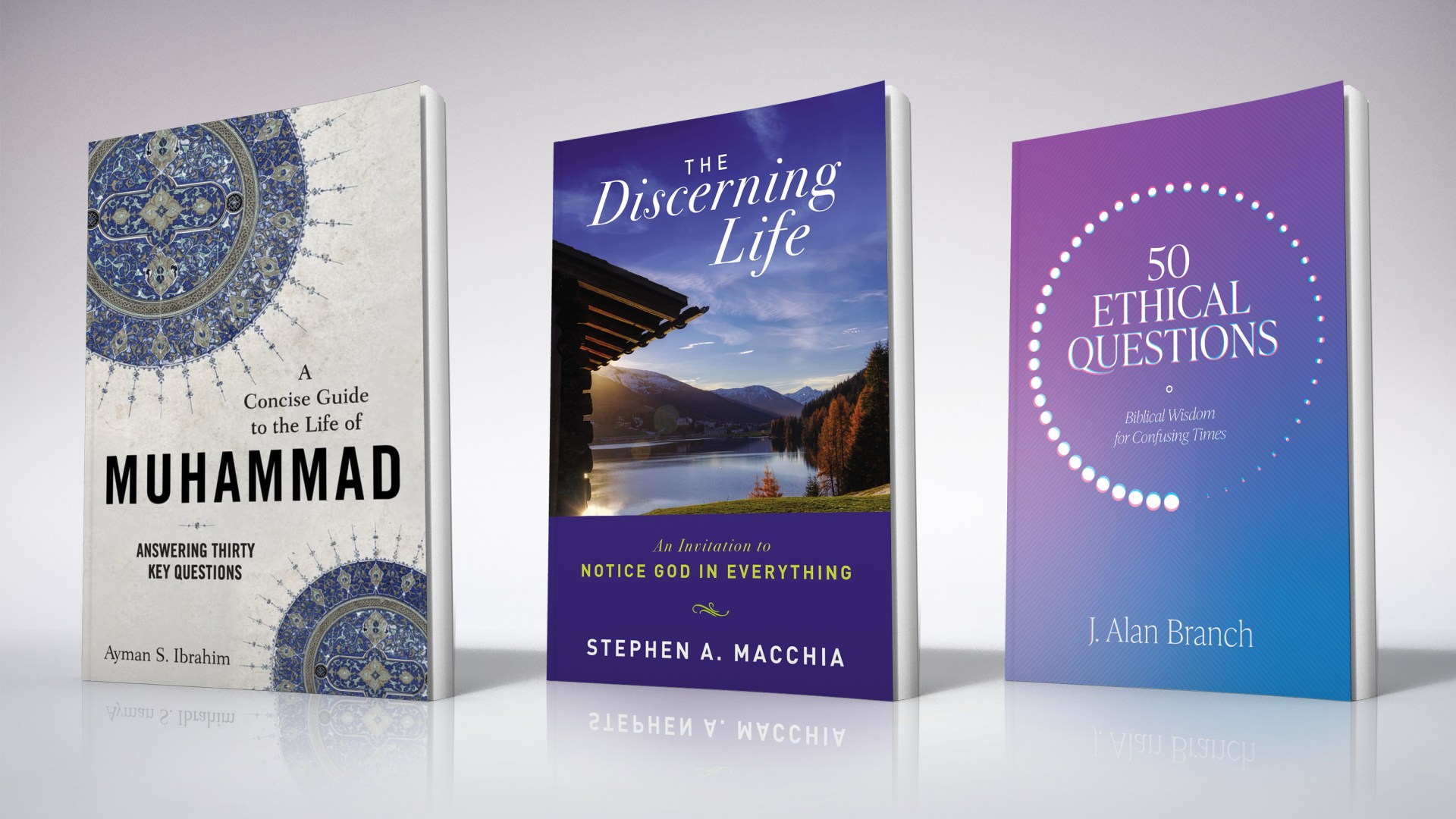
A Concise Guide to the Life of Muhammad: Answering Thirty Key Questions

Ayman S. Ibrahim (Baker Academic)

What can we know about the Islamic prophet Muhammad—about his historical profile and his religious teachings? In a follow-up to his 2020 volume A Concise Guide to the Quran, Ayman S. Ibrahim—an Egyptian-born scholar who directs the Jenkins Center for the Christian Understanding of Islam at the Southern Baptist Theological Seminary—points curious Christians to the range of answers given by Muslims themselves. “It is imperative,” he writes, “to understand and evaluate the life of the man [Muslims] revere. This one man directly influences the lives of one-fifth of humankind and, indirectly, a significant portion of non-Muslims all around the world.”

The Discerning Life: An Invitation to Notice God in Everything

Stephen A. Macchia (Zondervan)

Perhaps without intending it, many believers treat spiritual discernment as a skill to call upon only as needed: at a crossroads in life, say, or at times of confusion and uncertainty. By contrast, Stephen A. Macchia, who directs the Pierce Center for Disciple-Building at Gordon-Conwell Theological Seminary, views spiritual discernment as an all-encompassing way of life. “It’s the choice of the bold and courageous to know God intimately,” he writes in The Discerning Life. “It’s an invitation to all who desire a lifestyle that continuously seeks God’s presence, power, peace, and purposes … in good times, hard times, major inflection points, and everyday moments too.”

50 Ethical Questions: Biblical Wisdom for Confusing Times

J. Alan Branch (Lexham Press)

If you’ve ever wondered what Christians should say or think about an especially tricky moral or political quandary, chances are you’ll find your question addressed here. In 50 Ethical Questions, J. Alan Branch, ethics professor at Midwestern Baptist Theological Seminary, walks readers through a biblically grounded process of ethical reasoning before applying its precepts to the most challenging dilemmas related to marriage, sexuality, medicine, and the sanctity of life. As Branch reminds us, “Christians must not forget that ethical questions are fundamentally spiritual questions. The process of ethical reflection both affects and is affected by our relationship with Jesus Christ.”

Books
Review

Don’t Ignore Race. Or Alienate White People.

Sociologist George Yancey outlines an alternative to colorblindness and antiracism.

Illustration by Rick Szuecs / Source Images: RawPixel

For a long time, Americans committed to fighting racism have rallied around the ideals of colorblindness. Both legally and culturally, they have sought to build a society where, in Martin Luther King Jr.’s famous words, people are judged not “by the color of their skin but by the content of their character.”

Beyond Racial Division: A Unifying Alternative to Colorblindness and Antiracism

Over time, however, the persistence of racism has raised doubts about the colorblind approach. In response, groups like Black Lives Matter have seized on the rival paradigm of antiracism. Instead of aspiring to colorblindness, its proponents say, we should acknowledge that America is plagued by deep-seated racism—and then take aggressive steps to stamp it out.

In Beyond Racial Division: A Unifying Alternative to Colorblindness and Antiracism, Baylor University sociologist George Yancey seeks a new way forward, one grounded in a vision of healthy interracial communication and community. As Yancey argues, both colorblindness and antiracism result in “racial alienation,” which prevents us from working out our racial issues together in a way that honors the dignity, value, and worth of every individual.

In different ways, Yancey sees colorblindness and antiracism erecting barriers to this goal. As he puts it, colorblindness ignores the realities of racial injustice, past and present. As for antiracism, he faults it for exacerbating racial division, in part by issuing an implied permission slip to disrespect white people and creating a clear expectation that whites “defer to nonwhites.”

What can succeed where colorblindness and antiracism have failed? Here, Yancey emphasizes an ethic of mutual accountability and a reliance upon moral persuasion. This means, for starters, that when it comes to conversations on race, “everyone is allowed to participate, and everyone’s ideas are taken seriously.”

It also means an openness to having our opinions changed and our blind spots exposed. As Yancey remarks, collaborative conversations allow “those we disagree with to hold us ‘accountable’ to their interests [so that] we are forced to confront the ways we have fashioned solutions that conform to our own interests and desires.”

Much of Yancey’s argument is compelling. He’s right that too often in conversations on race, we neglect a range of perspectives. And I appreciated his critique of secular frameworks, like antiracism, for expressing a naive confidence in human perfectibility.

I am, however, left with certain questions and concerns. One relates to Yancey’s appeal to his own racial background. “When you are a Black man in the United States,” he writes, “it is difficult to escape your racial status.” Yancey’s personal experience may be relevant, but his statement seems to imply that his skin color gives him special insight into racial issues, which undercuts his emphasis on conversations where everyone gets a say.

I also would have preferred greater clarity on the standards that help determine what counts as racial progress. Yancey’s vision for moral suasion is built on a premise of shared morality: “Once people become convinced the new action is the moral thing to do,” he writes, “then change will likely occur.”

But this invites the question of which moral standard is in play. Is it pragmatism? Group consensus? Divine revelation? And if the parties involved disagree, by what standard will their disagreements be arbitrated?

To be sure, Yancey affirms that Christians must place “biblical truth above all other efforts to gain knowledge.” Yet elsewhere he states, “Christians cannot propose new directions for society as if they were given to us from God and expect everyone else in society to obey.” It’s true that we can’t expect our culture to embrace Christian standards of righteousness. Yet we are obligated to explain how the gospel offers a truly transforming vision of racial unity. Out of the nations, God has called out one new people to be a big spiritual family. Calling the nations to discipleship is the only hope for lasting transformation.

Ultimately, I appreciate Yancey’s effort to reach across divided racial lines from a Christian perspective. His language of mutual accountability adds a needed component to our conversations on race: a competition of ideas. Simply put, we need more models for pursuing these conversations well. But we should always weigh our models against the truths of Scripture.

Monique Duson is a cofounder of the Center for Biblical Unity.

Books
Review

Let the Modern World Make You Uncomfortable

Jake Meador challenges the church to rethink its attachment to the American way of life.

Illustration by Simone Noronha

For all the talk these days about the dangers of Christian nationalism, there seems to be scarcely any consensus among believers on what building (or restoring) a genuinely Christian nation would actually entail. This makes Jake Meador’s new book, What Are Christians For?: Life Together at the End of the World, especially noteworthy, in that one could characterize it as a quest to envision a country truly guided by biblical beliefs.

What Are Christians For?: Life Together at the End of the World

What Are Christians For?: Life Together at the End of the World

IVP

192 pages

$12.99

Mind you, this is no attempt to “take America back for God” or to portray the Land of the Free as Christ’s chosen nation. Instead of pining for a lost golden age, Meador charges the church today to live by the biblical values we say we exalt, even at the cost of leaving behind our culture’s golden calves. As he puts it, “What would it mean for America to be an authentically Christian nation? It will mean a repudiation of the beliefs and views that assail the cause of life and threaten justice.”

Meador, editor in chief at Mere Orthodoxy, has written a hard-to-pigeonhole book, one that does not fit easily along any simplistic ideological spectrum. He is less interested in seeking a moderate balance between the warring poles of Left and Right than in rejecting the “inhumane and deeply anti-Christian” assumptions of our tribalized thinking.

Plenty of readers will appreciate Meador’s strong defense of the family or his careful and compassionate explanation of the classical Christian position on sexuality and marriage. But his not-so-subtle criticism of the American way of life will not sit well with those seeing the world through red-white-and-blue-colored glasses. You could say that he does not play nice with others, but he provokes in the nicest way possible.

Surveying various elements of contemporary life, Meador challenges us to consider our ways. He examines our views on history, race, economics, nature, farming and eating, and family and community, among other subjects. He questions—or perhaps asks us to question—whether today’s church has imbibed too deeply from cultural waters without pausing to consider the consequences.

The abstract and the ordinary

At 170 pages, this is a fairly short book, with chapters running at around 10–15 pages each. That said, its pages contain great depth. Meador has thought carefully about the issues he addresses, and he has a way of explaining his point that impresses it upon the reader humanely, almost gently.

Meador is a skillful writer. At times his prose is so beautiful you almost wish he would try writing fiction next. There is nothing flashy about it; he simply shares his illustrations in a quietly vivid manner. His evident joy in recollecting the difficult labor he performed during his time at L’Abri, his portrait of the simple beauties of growing up with a bow-hunting father, and his tender description of long days and nights watching that same father suffer from sickness—each of these is a novella in the making.

Perhaps the book’s greatest strength is Meador’s masterful blend of the high and the low, of abstract theological principles and the beautifully commonplace practices of ordinary believers working them out in their day-to-day lives. Meador is incredibly well-read, and his knowledge of theology, philosophy, history, and politics flows from his pen with grace and ease.

No book is without its flaws, including this one. Boiled down to the essentials, the problem here is not that Meador is telling the wrong story but that he sometimes fails to tell the whole story. The book shines when it probes philosophically into the unasked questions of how we live our lives. And Meador applies these ideas effectively on an individual level. For me, however, the tale misses a beat when it moves to the middle ground—when it considers, in other words, how Christian ideals might be brought to bear on the larger society.

Part of the problem, in my judgment, is that the book could use a little less Wendell Berry (a hugely influential figure for Meador) and a bit more Tom Holland, the atheist British historian and journalist known for tracing the development of Western values back to the influence of Christianity (more about Holland later). Granted, within certain Christian circles, Berry is all but a saint, and it’s easy to see why. His appeals to the agrarian ideal are a welcome alternative to the hectic uncertainty of modern consumeristic society. And yet, as pleasing as such thoughts are to read and to contemplate, bringing them into being on any large scale is no easy feat.

Meador rightly praises intentional Christian communities like L’Abri and the Bruderhof, an Anabaptist movement that stresses nonviolence, simplicity, and the sharing of possessions. And indeed, these are amazing glimpses of what can be when believers are deliberate about organizing their lives around Christian principles. But here’s the rub: These communities are extraordinary—as in outside the ordinary flow of life. It is one thing to glean from them some insights and practices to apply in our own contexts and in our own way; it is quite another to look to them as a template for the whole of society.

Here is where Tom Holland comes in. In his book Dominion: How the Christian Revolution Remade the World, Holland reminds us just how brutal a place the world can be without the influence of Christianity. This is, in fact, something Meador himself emphasizes at points, describing at some length the repellent nature of pre-Christian sexual ethics. In reading his book, I found myself wishing that this theme had been extended further. There are times when Meador’s rhetoric passes over the difficulties of living life as it ought to be lived in a world where little is as it ought to be. In this second act of the human story, between Eden and the New Jerusalem, our best endeavors will be tainted by what Isaiah 64:6 calls the “filthy rags” (KJV) of our human frailties.

At several points throughout the book, he points to historical events to buttress his argument, but without the full context they become little more than anecdotes marshaled to make a point rather than episodes to be understood on their own terms. Take, for instance, his brief allusion to the Anglo-American air raids in the Second World War. For one thing, it is rather unsettling to see the Allied bombing of the Axis powers unconditionally placed alongside the Nazi Holocaust as examples of the 20th century’s brutality. But more importantly, it brushes aside some of history’s complexities. Yes, American and British bombers burned German and Japanese cities to ground, killing hundreds of thousands in the process. Yet they did so to stop something else, a campaign of conquest that killed tens of millions in Russia and China, not to mention the horrors of the Holocaust.

This one example points to a larger issue in the book. Meador rightly calls out the ill effects of industrialization, corporate agriculture, and the isolation of suburban neighborhoods. These things have created problems we will be dealing with for quite some time. At the same time, they have created conditions where our standard of living has risen to the point that the poor of today enjoy a lifestyle beyond the dreams of all but the wealthiest in the past.

The same intellectual ferment of the 18th century that crafted some of the worst obscenities of American slavery also fostered the ideas of absolute abolitionism, the then-radical contention that no human should ever be a slave. The industrialization that tore away the beauties of agrarian society also gutted the appeal of Dixie’s “peculiar institution.” The same capitalism that, as Meador observes, can strip any job of its joy also provided the tools needed to face down the totalitarian tyrannies of the 20th century.

Be unsettled

How, then, should we receive this book? My answer is that we should receive it much as its author intended, as a challenge to the church to consider its ways. At times Meador’s analysis could bear some added complexity and context, yet the critiques are worthy of serious reflection.

I noted above that it was unsettling to see Meador link the American effort in World War II with the Holocaust. But that’s as it should be. No matter the justification, we should find it unsettling to wage war in such a way that so many would die. We should be troubled by the way 19th-century business barons ran roughshod over rivals, whose formerly independent workers were then given little option but to work for those who had broken them. On a whole host of matters, we absolutely should be unnerved by how the world’s way of thinking enters our lives without our even noticing.

My counsel is this: Read this book. Recognize that it is a partial answer to a complicated problem, but read it just the same. Let it make you feel uncomfortable about the way our world has been built and the cost to others. But, more than this, think about Meador’s examples of ordinary people in their ordinary lives doing their best to live out the eternal truths of the gospel. They might not have changed the world. Yet in some small but discernable way, they have changed their world.

This might not seem like much, but in reality it is everything. Despite what the history books seem to say, the world was not turned upside down only by famous preachers and theologians, as important as their work was and is. The most radical thing that we can do to cleanse our world’s “filthy rags” is to emulate in our homes and communities the sort of intentionally realized Christianity that Meador has so beautifully shared.

Timothy D. Padgett is a resident theologian at the Colson Center for Christian Worldview. He is the author of Swords and Ploughshares: American Evangelicals on War, 1937–1973.

Books

Secularism Doesn’t Have to Be Bad

Understood rightly, it offers the best hope of keeping pluralistic societies peaceful and free.

Illustration by Rick Szuecs / Source images: Envato Elements / Jacky Watt / Samuel Schroth / Diogo Fagundes / Unsplash / Cottonbro / Pexels

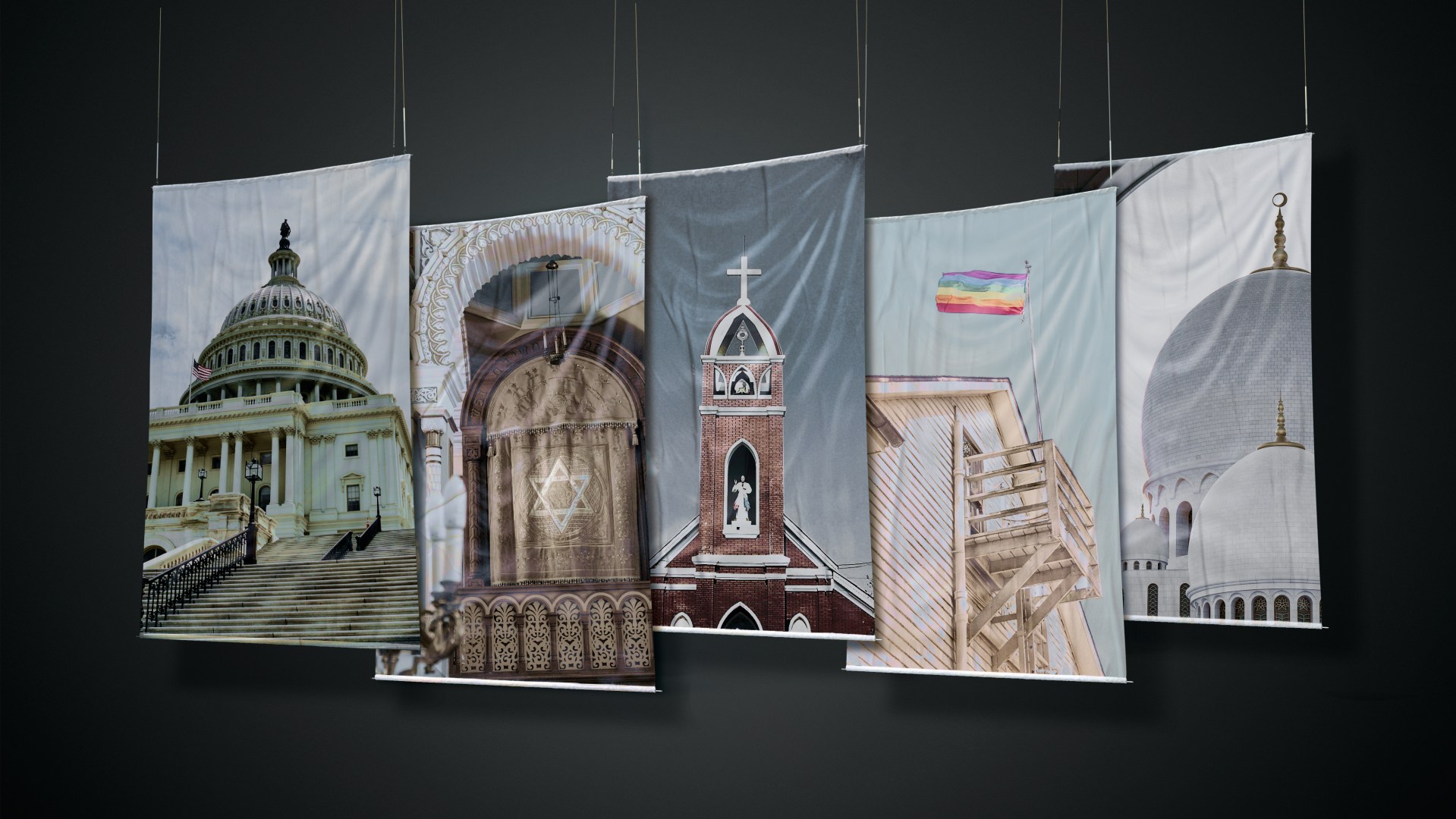
Most Christians have a negative impression of the word secularism. Can it be rescued from its association with antireligious animus? Michael F. Bird, a theologian teaching at Ridley College in Melbourne, Australia, attempts this balancing act in Religious Freedom in a Secular Age: A Christian Case for Liberty, Equality, and Secular Government. Natasha Moore of the Centre for Public Christianity (also in Australia) spoke with Bird about the place of faith in pluralistic societies.

How has religious freedom become such a contested ideal?

In the West, we’ve long assumed that Christianity was the default setting and Christians were the chaplains for Christendom. But now, as we enter a more post-Christian era and even a time of radical de-Christianization, new fault lines are emerging. And that’s going to affect the way we think about competing rights between different groups. It’s going to call for some very, very interesting management of diversities in our multicultural democracies.

What do you wish Christians—and secularists—knew about secularism?

I wish Christians knew that secularism is not a bad thing. It’s actually a good thing. Secularism is what stops a country from becoming a theocracy, where the government politicizes religion and religion becomes culturally shallow. Secularism is what protects you from government attempts to regulate, define, or interfere with your religion.

I wish secularists knew that secularism is a very broad term. There are different types of secularism that exist in France, Thailand, Japan, or Australia. And it doesn’t mean deliberately marginalizing people or communities of faith. Secularism is about creating space for people of all faiths and none.

In contrast to this benign form of secularism, you describe the rise of a more militant alternative. What options are there for countering it?

Certain segments of the media and the political sector see people of faith as a threat to a progressive agenda. In their minds, religious freedom must be restricted at every point possible. It should alarm us that a small, vocal segment of our society seems to want that.

Yet we have every reason to support legal and constitutional arrangements that safeguard religious communities of all types. Everyone has a vested interest in religious freedom, not just the minority of active religious people. Religious freedom is part of an interlocking body of rights—you cannot reduce religious freedom without also reducing freedom of association and freedom of speech. Religious freedom is often one of the best litmus tests for how truly free and pluralistic any given jurisdiction is.

Some of the fiercest religious-freedom clashes involve the rights of sexual minorities. But you’re optimistic about the prospects for a workable resolution. Why?

I’d like to envision a settlement where LGBT people are not subject to harm or discrimination, but there are reasonable accommodations made for religious communities to live out their own understandings of family, marriage, and sexuality. There are examples in places like Utah where religious and LGBT groups have tried to create an atmosphere of mutual respect. Neither side gets everything it wants, but they get what they need to live in peace together. That’s what it will take, in the long run, to sustain our pluralistic societies.

You lay out a set of behaviors and responses called the Thessalonian Strategy. What is that about?

The idea comes from something an angry mob said about the apostle Paul and his gang when they arrived in Thessaloniki: “These men who have turned the world upside down have come here too” (Acts 17:6, CSB). In the case that we do have a progressive government that wants to be more coercive toward religion, then we will need to turn the world upside down. We’ll need to seek means of resistance, but in a very Christian way. Not the way of Christian nationalism, not the way of civil religion, but instead finding new ways of living at peace with others and loving our neighbors, even if the default setting of government and media is one of hostility.

What are some of these “new ways” to love our neighbor in a hostile climate?

One, I think, is being more invested in the welfare of the religious communities among us. We need associations that bring people together and encourage a shared interest in promoting religious liberty. The cause of religious freedom could present a major ecumenical and interfaith opportunity. Because if I don’t want the government coercing Christian churches, then the same applies to synagogues, Sikh temples, and Muslim mosques. What happens to one group obviously affects others as well.

You dedicate the book to Tim Wilson, an Australian politician. Why is that?

Tim Wilson is a member of Parliament and a former human rights commissioner. Several years ago, he convened a roundtable discussion about religious freedom and LGBT rights. The idea was to arrive at a settlement where LGBT people wouldn’t be subject to harm, harassment, or unfair discrimination, but where we also allow the Muslims to be Muslims, let the Jews be Jews, and let the Christians be Christians.

Tim is a gay man who is married to another man. But he has been a voice of reason, sanity, and fairness in these discussions. He’s shown us how to have healthy, nonadversarial conversations in a context often filled with accusations and hateful hypotheticals.

Tim has noted that Australia is not a secular country—it’s a multicultural democracy with a secular government. That’s a good way to put it. Having a secular government (as opposed to being a secular country) might mean sacrificing certain customs to protect that secularity. So maybe, for instance, we shouldn’t have the Lord’s Prayer recited at the beginning of parliamentary sessions, which is an example of religious privilege, not religious freedom.

You quote a remark from the author Os Guinness that we’re entering “a grand age of apologetics.” How do apologetics relate to religious freedom?

If we want to defend religious freedom, we have to defend the concept of religion itself: Why is religion worth defending? What does it do for society?

There’s one side of our politics that loves religion because it represents a demographic to be weaponized for political ends. And another side treats religion as something to tolerate begrudgingly. With those extremes, we need to learn to defend religion as something that genuinely contributes to human flourishing.

If you could peek forward decades down the road, what would you consider a good outcome when it comes to religious freedom?

Beyond reaching an accommodation on LGBT rights and religious freedom, we need to develop a generous secularism, which means a context where government and religious communities can work together in areas like education, police chaplaincy, hospitals, and the armed forces—areas of mutual interest where cooperation makes sense.

That said, we want to avoid a religionized politics, where religious communities are weaponized for political ends, and where people prey on religious differences as a means of sowing division. Achieving that equilibrium is what success looks like to me.

Ideas

Tribalism’s Awful Antidote

Columnist

We’re made to have a herd. Made to transcend it, too.

Illustration by Rick Szuecs / Source images: Tomas Anunziata / Shane Aldndorff / Pexels

“This is awful.”

That’s what a pastor said to me recently about the tribalization he sees not just in the culture but in his own church. The angriest debates are not over whether a claim is true, but over what side a person has pledged allegiance to by affirming its truth. Red state or blue state? Cracker Barrel or Whole Foods?

The pastor is right that this is a lamentable state. But it’s not “awful.” Not awful enough, anyway.

The Christian church learned in the first century that fragmentation was a question of sorting before it was a question of splitting. In saying “I am of Paul” and “I am of Cephas,” one was swearing a loyalty and merging one’s own conscience into a herd defined by something short of Christ (1 Cor. 1:10–17, NKJV).

Biologists and psychologists would find that unsurprising. Many would say that humans evolved with a need to differentiate between “in group” and “out group,” the familiar and the strange. It’s “natural,” some would tell us, to ask, “Who is my neighbor?” (Luke 10:29).

All of us would agree that this sort of hive mind is a necessary function at times. If a fire breaks out in your Sunday morning service, you don’t want a thoughtful discussion about possible means of escape. You want the whole gathering, as one, to suspend their personal judgments and move. The problem that we see right now—ratcheted up to an unprecedented level by social media—is that there seems to be no off switch for the hive mind.

Social psychologists Jonathan Haidt and Dacher Keltner have found that one factor is most important in shifting people away from hive-mind tribalism. This factor works by allowing a person to shut down the self. It is awe.

Haidt and Keltner define awe as an emotion triggered by two experiences: One of them, Haidt describes in The Righteous Mind, is “vastness,” in which “something overwhelms us and makes us feel small.” The other is “accommodation,” in which the trigger is so outside of our normal mental structures that we must change to make room for it.

Human beings are meant to have these moments of self-transcendence. They allow people to contribute to the survival of the group in ways quite different from lining up into warring tribes.

One can see in these moments, Haidt notes, that life is about more than just the seen and the material. This encounter with transcendence, he says, can cause people to be kinder, calmer, and less anxious—almost, one might say, “born again.”

Almost. Haidt suggests you don’t need God to experience awe: Ecstatic collective dancing and psychedelic drugs can be gateways to such an experience. But those examples claim transcendence without actually achieving it. Still, what if Haidt is right that there seems to be a built-in antidote to tribalization in a sense of awe?

Jewish philosopher Leon Kass writes that at the burning bush, Moses experienced something beyond “Egyptian wonder”—curiosity leading to mastery over a subject. In “Hebraic awe,” he writes, there’s both a drawing (Moses is called by name) and a distance (Take off your shoes and come no nearer). In such a moment, Kass argues, we want to approach and to stand back, to hide our face but hold our ground. In this kind of awe, he says, we both feel small and then feel less small, afraid and then able to transcend fear.

Isaiah saw the glory of God, felt his own sinfulness, and then was brought near. John wrote that the glory the prophet saw was not an abstraction but a person (John 12:41). This awe showed Isaiah the sin of his self-striving and responded to it with atonement, showed him the inadequacy of his tribal identity and replaced it with genuine communion (Isa. 6:1–13).

Maybe the reason we as Christians find our loyalties in tribal factions and ideologies is because we’ve lost that sense of worshipful awe before a God who is not a set of doctrines or a motivation for institutional survival or a national deity or a political mascot. Maybe our clamoring for those sorts of hive minds is because we’ve become bored—unsurprised by joy, un-amazed by grace.

Maybe those of us seething with resentment toward those who make us feel small haven’t yet felt small enough. Maybe for the tribalism of our time, only a more awe-full church will do.

Russell Moore is Christianity Today’s chair of theology.

Ideas

Seven Trials, Two Dangers, and One Underappreciated Book

Columnist; Contributor

Church leaders care too much about numbers and too little about Numbers.

Sources: Wikimedia Commons / Getty / Halfpoint Images

It is widely recognized that pastors are too interested in numbers. Buildings, budgets, baptisms, bums on seats: If it can be measured, church leaders will count it. Many define their success by it—or at least they used to, until COVID-19 made the exercise somewhat less reassuring.

It is less recognized, however, that pastors are not interested enough in Numbers. At dozens of leadership conferences over the past 15 years, I have only heard two passages from the book referenced: Aaron’s blessing (Num. 6) and the boldness of Joshua and Caleb (Num. 14). Otherwise, crickets.

In itself, that is not a problem. But Numbers is a gold mine of pastoral wisdom, with more to offer church leaders today than perhaps any Old Testament book besides 1 and 2 Samuel. For pastors in particular, it richly repays careful study. I say that for three reasons.

One is typological. From the apostles’ perspective, the wilderness period is where the church lives now (1 Cor. 10; Heb. 3–4; Jude). We have been rescued from slavery, redeemed by blood, and baptized in the waters, but we have not reached the land flowing with milk and honey. We have all the blessings found in Numbers—the presence, provision, and promises of God—but we face similar problems: grumbling, pride, idolatry, immorality, opposition, and death.

Another benefit is illustrative. Other than David, no leader in Scripture is presented quite like Moses, with his inner life exposed, his family rivalries laid bare, his faults, fears, failures, and frustrations made plain. If David shows us the struggles of waiting and the temptations of money, sex, and power, Moses shows us the mundane challenges of ordinary congregational life: the arguments about decision-making and leadership succession, the high points of blessing, victory, and miraculous provision alongside the everyday tedium of conflict resolution, moaning, and sin.

But perhaps the most striking feature of Numbers, when it comes to pastoral ministry, is the way it warns of opposing dangers at both ends of what we might call the confidence spectrum. Throughout Israel’s history, and indeed the history of the church, God’s people have tended to oscillate between overconfidence (pride, arrogance, self-importance) and underconfidence (unbelief, timidity, fear). Generations typically swing from one to the other, as young people see the flaws of their parents and overreact. Our generation is currently witnessing this sort of pendulum swing, prompted by high-profile examples of abusive and heavy-handed leadership.

Numbers highlights both dangers in a remarkably intricate way. Scholars identify seven major trials in Numbers. The first and last ones see Israel grumbling about their misfortunes (11:1–3; 21:4–9). The second and sixth ones involve a lack of faith that God will provide food (11:4–34) and water (20:2–13). The third and fifth see challenges to Moses’ leadership, from Miriam and Aaron (12:1–16) and from Korah, Dathan, and Abiram (16:1–17:13). And in the fourth and central test, Israel fails to enter the land because of unbelief (13:1–14:38).

Laid out like that, the twin dangers become apparent. In the second, fourth, and sixth trials, the problem is underconfidence: doubt, unbelief, timidity, and fear. In the third and fifth, the problem is overconfidence: defiance, pride, arrogance, and the desire for power. The way the narrative bounces back and forth suggests that both dangers will characterize Israel, and the church, well into the future.

There is a warning for pastors here: In responding to unbelief and fear, don’t overcorrect and become domineering bullies—and in responding to domineering bullies, don’t overcorrect into fear and unbelief. But Scripture is not fatalistic about this, as if we are forever doomed to swing between unhealthy extremes. In Luke 4:1–13, Jesus himself will endure the central trials of Numbers. He will be tempted to not trust God for provision in the wilderness, to perform miracles just to show off, and to seize power and authority before his time. Yet he defies the Tempter and leads in humble faith with neither fear nor pride. In his grace and by his Spirit, so can we.

Andrew Wilson is teaching pastor at King’s Church London and the author of God of All Things. Follow him on Twitter @AJWTheology.

Testimony

I Plant Secret House Churches Because I Was Saved into One

How an Iranian teenager found Christ and launched a mission to equip persecuted believers.

Photo by Jillian Clark

I was raised in a Muslim family in Tehran, Iran. My mother was a teacher and the principal of an elementary school. She knew a lot about Islam and did her best to follow its teachings. She helped me learn to read the Qur’an, taught me to pray at least three times a day, and encouraged me to fast during Ramadan.

As a Muslim teenager, I remember being full of fear—specifically, the fear that my parents would die. This was because my Islamic beliefs gave me no sense of security on whether they, or any other practicing Muslim, would be saved. I had big questions about the afterlife experience that my faith couldn’t answer. Thoughts of losing my parents would scare me to the point where I would go into their bedroom late at night just to ensure they were still breathing.

Medicine for my soul

One day, when I was 17, a relative of ours came to visit. She had recently become a Christian through her relationship with a missionary working in Iran. And so she decided to come to our house and attempt to share the gospel. “Jesus is Lord!” I recall her saying. “And he has come to save us from our sins!” She supported her claims with several Bible verses, including John 3:16 and John 8:32: “Then you will know the truth, and the truth will set you free.”

As a young Muslim, I had been taught that the Bible was corrupted, that the version we read today is a distortion of its original contents. But as I listened to this woman read from Scripture, I felt something of its power—and I felt sure that a book capable of grabbing my heart that intensely couldn’t be corrupted after all.

Typically, my mother would get offended if someone disagreed with her Islamic values. On that day, however, something surprising happened. Instead of fighting back, she listened peacefully and asked questions. There wasn’t a trace of defensiveness; it appeared that she simply wanted to know the truth. (Later on, our relative revealed that she had been praying for our family before coming to share the gospel, and I’m convinced those prayers worked to soften my mother’s spirit.)

Something else in our relative’s gospel presentation stood out: her claim that “Jesus can set you free from fear and save you from eternal death.” These words were medicine for my soul and food for my hungry heart. I had never heard such words of peace and reassurance from any spiritual leader in the Islamic world. In some strange but powerful way, I thought I could sense God’s presence and authority in what she said.

At the time, I had no understanding of anything like praying a salvation prayer. I didn’t know how to repent of my sin or receive Christ as Savior. But as I went upstairs to my room, I couldn’t stop reflecting on the idea that Jesus held the key to eternal life. Suddenly, I found myself on my knees. As I looked up, I said, “Jesus, I know you are Lord. Save me and set me free from my fears!”

Initially, I was reluctant to tell my mother I had become a Christian, because I feared her reaction. As it turns out, however, she was experiencing her own spiritual awakening at the very same moment. Soon enough, when she confessed having come to faith, I dared to tell her I had done the same. Remarkably, my father and younger brother converted to Christianity as well.

When we informed our family member of our decisions, she rejoiced with us and immediately connected us to a secret house church in Tehran. Sometimes it was scary to think that the Islamic government could arrest us and sentence us to long prison terms or even death. But the Holy Spirit gave us extraordinary courage and a growing desire to share the gospel with Muslims.

Over the next ten years, to deepen my walk with the Lord, I began traveling to Christian conferences outside of the country. I would study subjects like discipleship, church leadership, and church planting, and then I would bring those courses back to Iran and teach them to my cell groups. I was so passionate about God’s mission that I would pray on my knees, every day, for God to use me as a full-time minister.

After years of prayer, I had a dream in which God told me I would go to another country. He didn’t reveal the name of the country or even the region—only the year in which I would make my journey, the year 2013. As it happened, in that very year I became stuck in Turkey as a refugee. Two years earlier, the Iranian secret police had arrested one of the leaders in our church network, leaving me no choice but to flee the country.

I remember my last day in Iran, driving with tears in my eyes to say a final goodbye to all my family members, knowing I would never be able to return. I can still feel the pain of that separation. But God was faithful in fulfilling his promises, working through the United Nations to secure my passage to the United States, where I live today. He gave me a great church and a great Christian family who cared for me. He gave me wonderful, godly mentors who have poured blessings and wisdom into my life, coached me, and prayed with me in hard times.

For nearly 21 years, I have been involved in ministry for the persecuted church. I have planted several house churches and taught discipleship and leadership courses within them. After moving to the United States, I discerned a call to equip the Persian church through social media platforms. My goal is to use the power of online education and social media to train new leaders. I store all my teaching and videos on my social media platforms. And I mentor all my trainees online, meeting with them in person a few times a year in a safe country in Central Asia.

Meanwhile, my wife and I host a weekly Christian fellowship on Instagram for Persian-speaking people in secret house churches in places like Iran, Afghanistan, and Tajikistan. People tune in from all over the world, and we worship God together and pray for each other. We have the chance to share the gospel with Muslims who live in regions we could never hope to visit.

Set free from fear

One year after I gave my heart to Jesus, my father died of cancer. It was a great sadness for our family. But he had become a great believer, and in his last days, he was praising Jesus on his bed, even during the toughest moments of chemotherapy. I remember sitting by his bed and reading the Bible for him. Afterward, I would pray for God’s healing touch. And my father would raise his hands to show that he was praying and worshiping alongside me.

When he went to be with the Lord, the Holy Spirit gave my family and me an incredible sense of peace. I realized that God had healed me and set me free from the fear of death, both my parents’ and my own. And I rejoiced in the certainty that because of Christ, someday soon we would all be found in the presence of the living God forever.

Nathan Rostampour is a church planting pastor and a leadership coach and serves with The Summit Church in Raleigh-Durham, North Carolina.

News

Levites, Whores, and Demoniacs: Here’s How the New NRSV Has Changed

A look at five updates to the New Revised Standard Version of the Bible.

Wikimedia Commons

The official Bible translation of the National Council of Churches, commonly used by academics and mainline Presbyterians, Lutherans, and Episcopalians, has been revised for the first time since the fall of the Berlin Wall. The NRSVue—which stands for New Revised Standard Version updated edition—has about 20,000 edits. The changes incorporate new scholarship on the Dead Sea Scrolls as well as stylistic changes to keep up with the evolution of English.

SOURCE: National Council of Churches

Church Life

The Scottish Complementarians Who Teach Women to Preach

A church planting network in Edinburgh’s poorest neighborhoods is flipping gender norms on their heads.

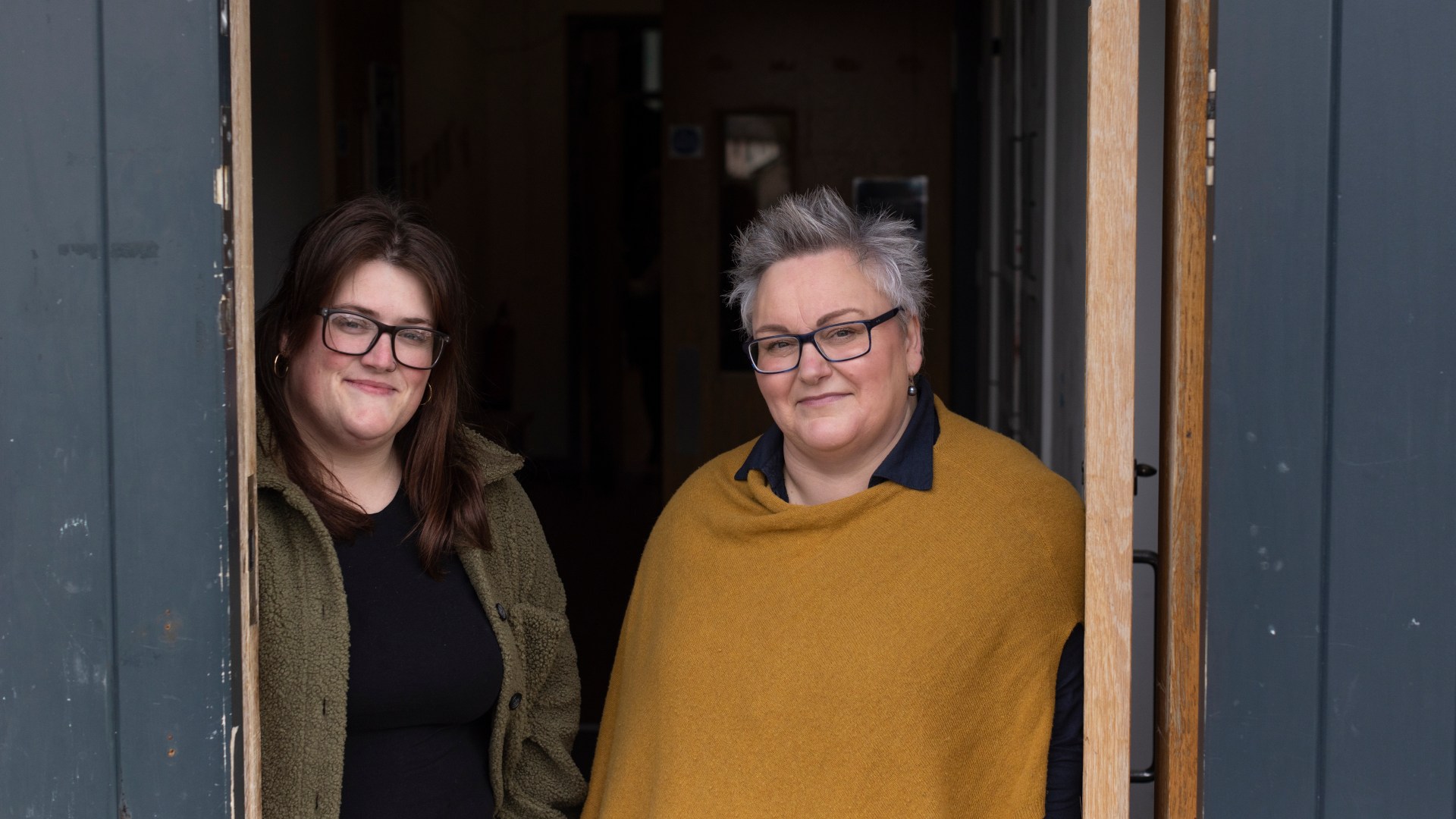
Natasha Davidson (left) and Sharon Dickens (right) are women’s leaders in the Niddrie community

Natasha Davidson (left) and Sharon Dickens (right) are women’s leaders in the Niddrie community

Kieran Dodds

On a gray and crisp Sunday afternoon last year—it happened to be Halloween—I found myself crammed in the back seat of a black-and-silver Mini Cooper, jolting over speed bumps on the narrow streets of an Edinburgh suburb.

I was returning from lunch with the pastor of a church in a gentrifying housing project, or “scheme,” southeast of Scotland’s capital.

Suddenly my new friend Tasha, a 34-year-old native of the city’s schemes, hit the brakes and rolled down her window.

“Hey!” she yelled, commanding the attention of a gaggle of middle school–aged boys. “What are you doing?” They were, in fact, throwing rocks at some second-story tenement windows. Tasha spent a minute or two chastising them, and the boys sheepishly moved on.

“I know them,” she explained, but she didn’t have to. I had already gathered that Tasha was well-known and respected in her community. Tasha, whose full name is Natasha Davidson, oversees women’s ministry at the church I was visiting, Niddrie Community Church.

The congregation is part of a growing church planting network called 20schemes, whose leaders dream of starting or revitalizing 20 churches in 20 of Scotland’s housing projects. They have six churches so far, with five more teams gearing up to plant. Schemes generally have a strong community identity and don’t intersect with neighboring schemes. As a result, 20schemes has three churches within walking distance in three distinct communities.

Personally, I was drawn to 20schemes’ focus on women. Throughout my life, I have been immersed in complementarian circles that valued women but also a theology of male headship in the church and home—first as a pastor’s kid in a small New England church, then while attending Timothy Keller’s church as a college student in New York City, and later as a Southern Baptist Theological Seminary student and a staff member for a Southern Baptist church plant.

I had participated in endless conversations and written multiple papers about women’s roles while sorting through my own views. I had witnessed churches take varying approaches to gendered ministry regardless of theological stance—from churches like mine, that offer only coed spaces, to congregations that hire women’s leaders and organize many women-only events.

And I had watched with sympathy the heated online debates among US evangelicals over doctrinal divisions and experiences of sexual or spiritual abuse among female members by male pastors.

And yet I had never quite seen anything like 20schemes. There, women are seen and called upon. There, churches actively hire women, promote women, and focus disproportionately on ministering to women.

Scheme culture is inherently matriarchal. Men are largely absent or passive in the housing projects, the leaders told me, and at least half of households are headed by single mothers. Many women have experienced violence and abuse and have a mistrust of men.

In such a context, equipping and raising up women to reach and care for their communities seems like the obvious strategy, and church leaders have embraced it. Through their local church ministries and partnership with Union School of Theology in Wales, Niddrie and the 20schemes network educate underprivileged urban women and train many of them to become church leaders.

Niddrie Community church is part of the network 20schemes, aimed at reaching the poorest areas in Scotland, by planting churches in schemes, predominantly council-owned properties with chronic unemployment and addiction issues.Kieran Dodds
Niddrie Community church is part of the network 20schemes, aimed at reaching the poorest areas in Scotland, by planting churches in schemes, predominantly council-owned properties with chronic unemployment and addiction issues.

The schemes churches feel like one of the last places you would find an uncompromising doctrinal conviction of male headship. But that is what intrigued me most about 20schemes: For all its focus on women, the network holds firmly and unapologetically to Reformed theology and its distinct gender roles.

“The Bible is clear as far as I’m concerned,” Niddrie Community Church pastor and 20schemes director Mez McConnell told me. “The leadership of the church is male. The officers of the church are male. And that extends to family life. Everything else is up for grabs.”

M

cConnell is 49 and stands a mere five feet four inches tall, though he’s always sporting a beanie on his head, which affords him a few extra inches. He rarely flashes a smile, and his caustic wit often offends American upper-class sensibilities.

“These egalitarian morons hate me because they say I hate women,” McConnell told me. He says the term complementarian means little in the schemes, but he has words for that camp as well: “Complementarians aren’t training any women.”

McConnell is fiercely protective of the women in his congregation. He too knows what it’s like to be left out of leadership opportunities and excluded from theological education. In his book The Least, the Last and the Lost, McConnell recalls a church leader telling him: “Bible college isn’t for guys like you, Mez. Just stick to loving Jesus and you will be okay.”

While McConnell is not a native of the schemes, he grew up in poverty and spent time on the streets and in prison. He can relate to the culture of the schemes, where he lives with his wife, Miriam, and raised their two daughters.

“The unspoken assumption seemed to be that guys ‘like me’ didn’t need to know the Bible that deeply,” he wrote. “I never heard a voice like mine, or met a person from my background in church, except if there was a testimony night somewhere.”

Following World War I, the British Parliament passed the Addison Act to build 500,000 houses within three years—less than half of which were actually built. They were concentrated in tenement complexes run by local councils and are known as council estates. In Scotland, they are known as schemes.

Scene from Niddrie, EdinburghKieran Dodds
Scene from Niddrie, Edinburgh

Before WWI, 1 percent of Britain’s population lived in council houses, but by 1938, that figure had risen to 10 percent. By 1961, it had risen to more than a quarter of the UK’s population, intensifying the division between working class and middle class.

That division has implications for church planters and leaders. Many scheme residents lack access to a car and may not have the funds for bus passes. Only a couple dozen evangelical churches are operating in Scotland’s poorest neighborhoods, according to McConnell.

“The gap between the evangelical church and those living and dying in housing schemes and council estates is as vast as it has ever been,” McConnell writes in his book. “The failing lies at the local church level. It lies with pastors and church leaders who, quite obviously, do not see gospel ministry to council estates and schemes as a priority in their towns, villages and cities.”

The complexities of poverty have drained the schemes of men. Women there—especially single women and single mothers—are particularly vulnerable and reliant on government assistance. They often face a steep uphill climb to better work and living conditions.

As Rachel Parenteau, a 27-year-old women’s worker from Ontario, said to me, “If you’re not reaching the women, you’re not reaching the scheme.”

After McConnell became a Christian, he attended seminary and moved to Brazil to become a missionary. But eventually, he became convinced that he needed to bring Christ to his own culture in the UK. McConnell became the pastor of the church in Niddrie, and, as leaders told me, he revitalized it.

It had been patriarchal, and McConnell brought theological balance: He believed in male headship yet encouraged women who felt they could never hold spiritual authority over men to come up front for congregational prayer.

McConnell’s vision for his Niddrie congregation quickly expanded into a church planting initiative, and it faced strong initial resistance from the community. To help overcome it, McConnell quickly hired Sharon “Shabba” Dickens full time as the 20schemes director of women’s ministry to train church planters’ wives and ministry interns.

About half of 20schemes interns are women, trained to be women’s workers in the church plants. And many of the interns are indigenous, meaning they grew up in the schemes.

Now, 20schemes church planters are often advised to hire a women’s worker as their first step in starting a church.

“We are training women to be teachers of the Word and to offer pastoral care, particularly in a city context where most women are single,” 20schemes executive director Matthew Spandler-Davison told me.

T

he vision to reach single women excited me. After all, I had also served as an unmarried woman on staff at a church that served a lot of single women, many of whom were fledgling Christians. I enrolled in seminary—where I was often one of only a couple of women in the classroom—with the support of my pastors, but I still felt direly unequipped to meet the needs of the number of women who sought me for spiritual counsel.

As the only woman on staff, I acted as a de facto women’s leader at the age of 25. Among other area churches in our denomination, I was one of the few paid women on staff who didn’t work with children.

I hungrily sought resources and counsel in how to disciple women, found a few partners in the work, and leaned on my seminary training. But like many women in ministry I knew, I still felt tension. Was I worth investing in? Would someone take the time to check in on me? What did a healthy relationship and partnership with the pastors look like? Would I have to fight to be heard, or would I be sought out?

I tried to envision how women could flourish in my church and churches like mine. Although I had often worked in male-dominated spaces and advocated for coed opportunities, I quickly realized the importance of creating separate spaces where men and women could seek counsel or accountability on sensitive subjects such as abortion, sexuality, and abuse.

Yet I became increasingly frustrated with the lack of gender-specific care or discipleship for women at my own church. In 2017, I reached out to Jen Wilkin, a Southern Baptist church leader I had long admired, to ask her for advice.

“A true complementarian,” she told me over a cup of coffee, “will recognize that men and women have special needs and special giftings and consequently empower each of them in those areas. You can’t say that men and women are different and then treat them like they have the same needs.”

Wilkin has made this argument elsewhere. A year later she wrote in CT that “because all-female spaces free up women to contribute, they remain a primary venue (and too often the only venue) for the identification and cultivation of female leaders in the church.”

D

uring my week in Niddrie, Tasha Davidson was often trailed by someone’s child, or several children, even as she helped run events, spoke on panels, and checked in on women in the church. With long hair that she dyes often, and occasionally sporting thick, dark glasses, she contrasts with the affluent, Instagram-influencing women’s ministry leaders who often rise to prominence in America.

Natasha “Tasha” Davidson outside Niddrie Community ChurchKieran Dodds
Natasha “Tasha” Davidson outside Niddrie Community Church

When Davidson first started attending Niddrie Community Church, she often showed up hung-over or intoxicated. Like many of her friends, she had been binge drinking since she was 12 years old, even after having spent some childhood years at a rehab center while her mom recovered from her own addictions. As a teenager, Davidson said she struggled with her mental health, including self-harm and submission to authority.

But none of that was unusual in Niddrie, so “I thought I was generally a good person” compared to others, she said. After a friend brought her to church, Davidson continued to attend—for 18 months.

“My friends would ask why I was going to church, and I would say, ‘I don’t know, I’m going with my friend,’” she told me from her church office. But one Easter Sunday, she realized that she was in need of forgiveness. “I looked around and I realized these people who are so, so different love one another.”

Only a few months after she became a Christian, some of the church leaders asked her if she wanted to become an intern at the church—the first “indigenous” intern from the schemes. Soon she was working with the children in the community and leading Bible studies under the watchful eye of some of the elders’ wives.

“What we had was a lot of women who were very gifted, desperate to serve, but didn’t feel equipped for it.” – Sharon Dickens

Now, she’s enrolled in a bachelor’s degree program at Union School of Theology after completing the Ragged School of Theology, a coed Bible literacy program offered to anyone in the 20schemes churches.

But one of the biggest changes from both learning theology and interacting with church members, Davidson says, is how she views men.

“A lot of women have experienced abuse of authority, particularly the abuse of authority of men,” she said. “It was definitely a struggle when I first became a Christian. I had trouble answering to anyone, but more so a man. One of the things I’ve been grateful for about Niddrie is how the men have cared for me over the years. I’ve always felt listened to. God has used that in my life to do a lot of healing and help shape how I view men.”

Davidson, who is unmarried, was also taught a theology of male headship in the church and in the home, something she says she strongly resisted before becoming a Christian. At 20schemes, a practical implication of male headship—that only biblically qualified men can be ordained as pastors—is that all of the women run their teaching and notes by the elder team, in part for theological development and training and in part to ensure they are aligned with the elders’ teaching. But Davidson feels empowered by that accountability, not quashed by it.

“I like that because it offers a safety of, in case I teach something wrong, I’ve got these guys, they’re checking it over, and in their wisdom they will oversee,” she said. “I was really young, but they didn’t leave me by myself. I had a lot of safety net and a lot of room to flourish in the safety of other women who were mature.”

Sharon “Shabba” Dickens teaching at a women’s conference held at Niddrie Community ChurchKieran Dodds
Sharon “Shabba” Dickens teaching at a women’s conference held at Niddrie Community Church

N

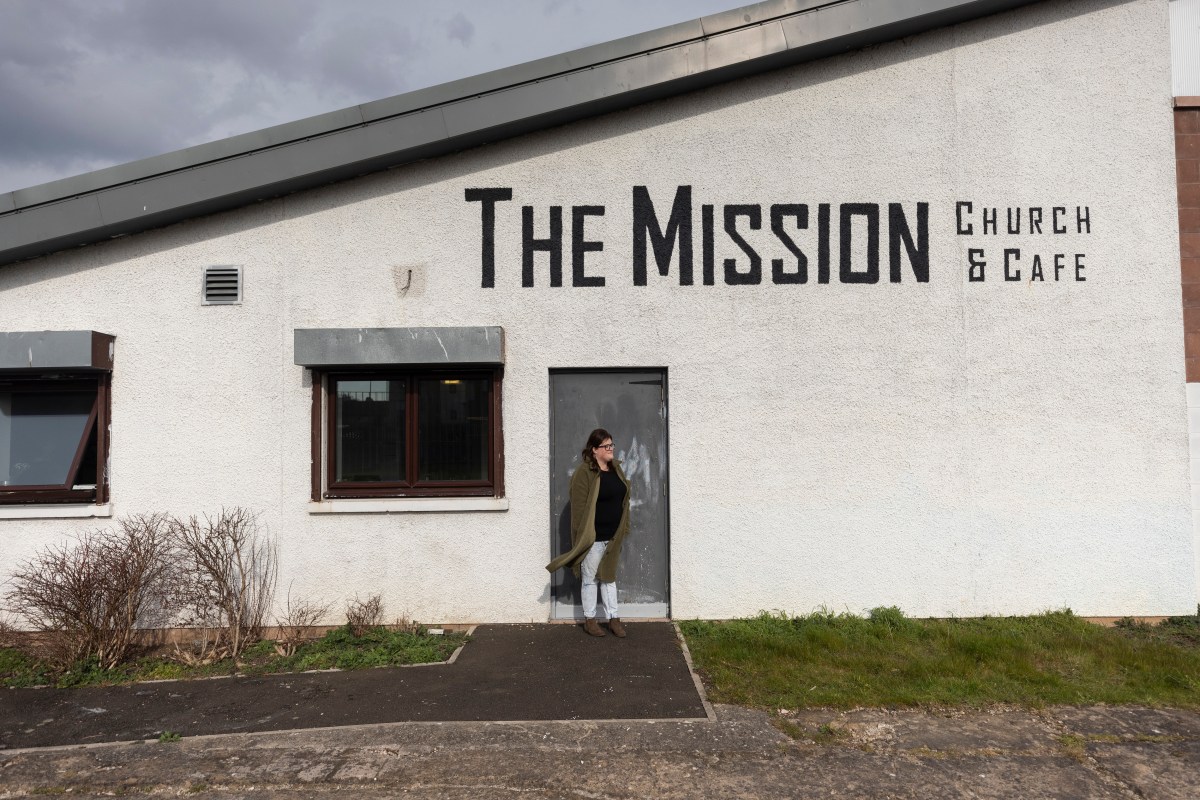
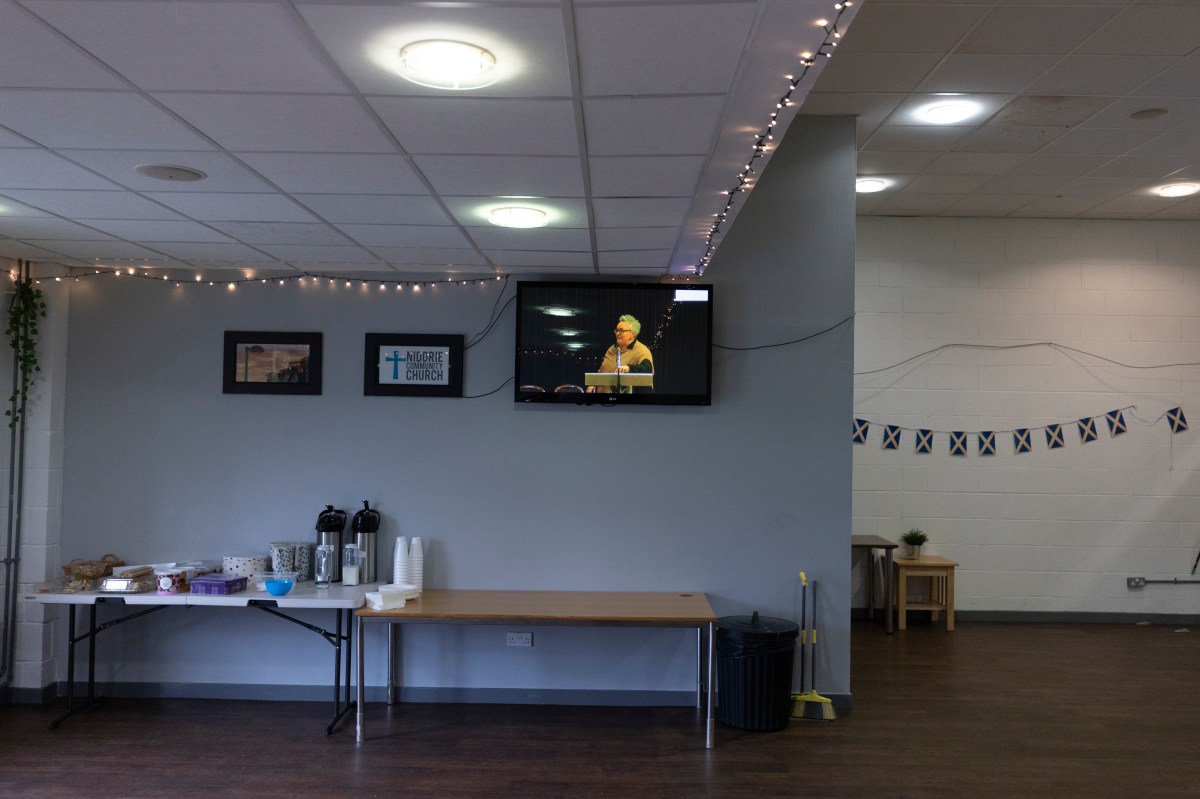
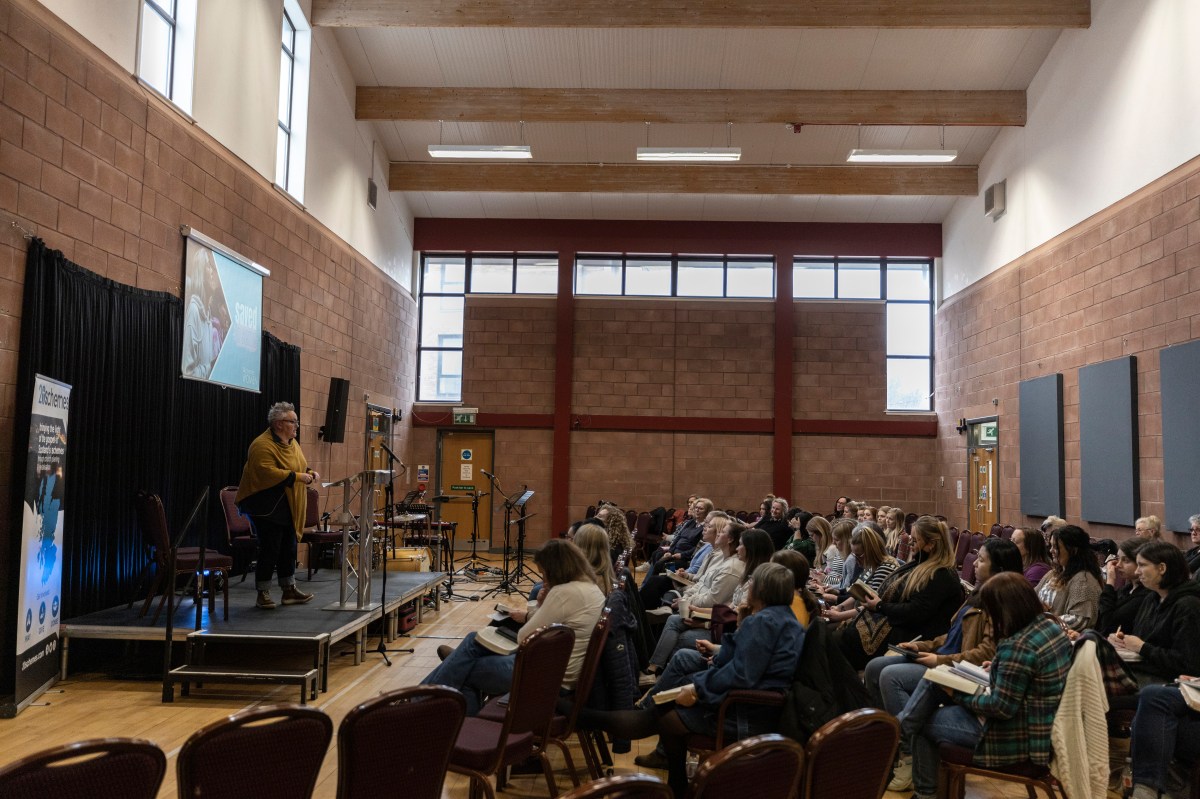
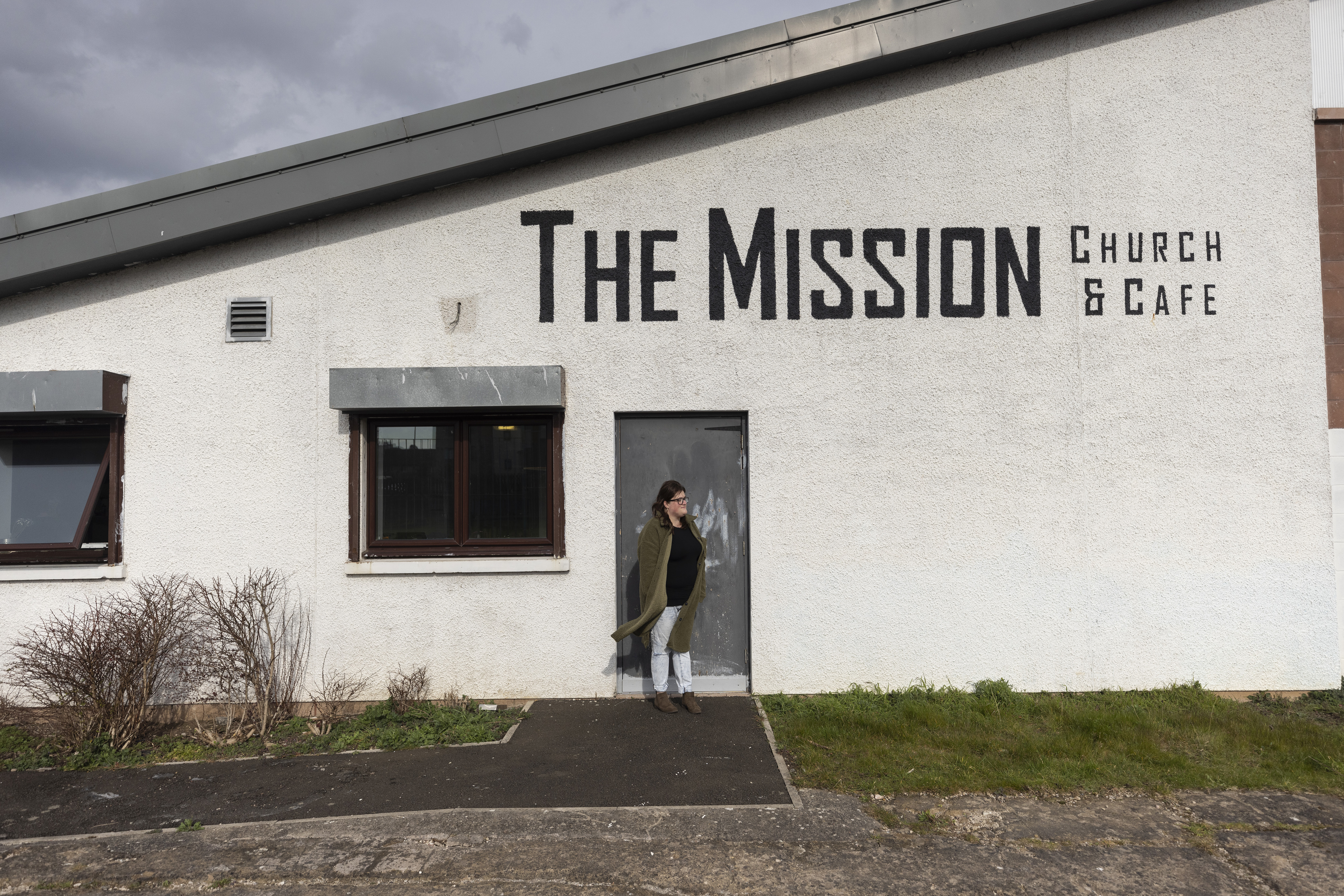
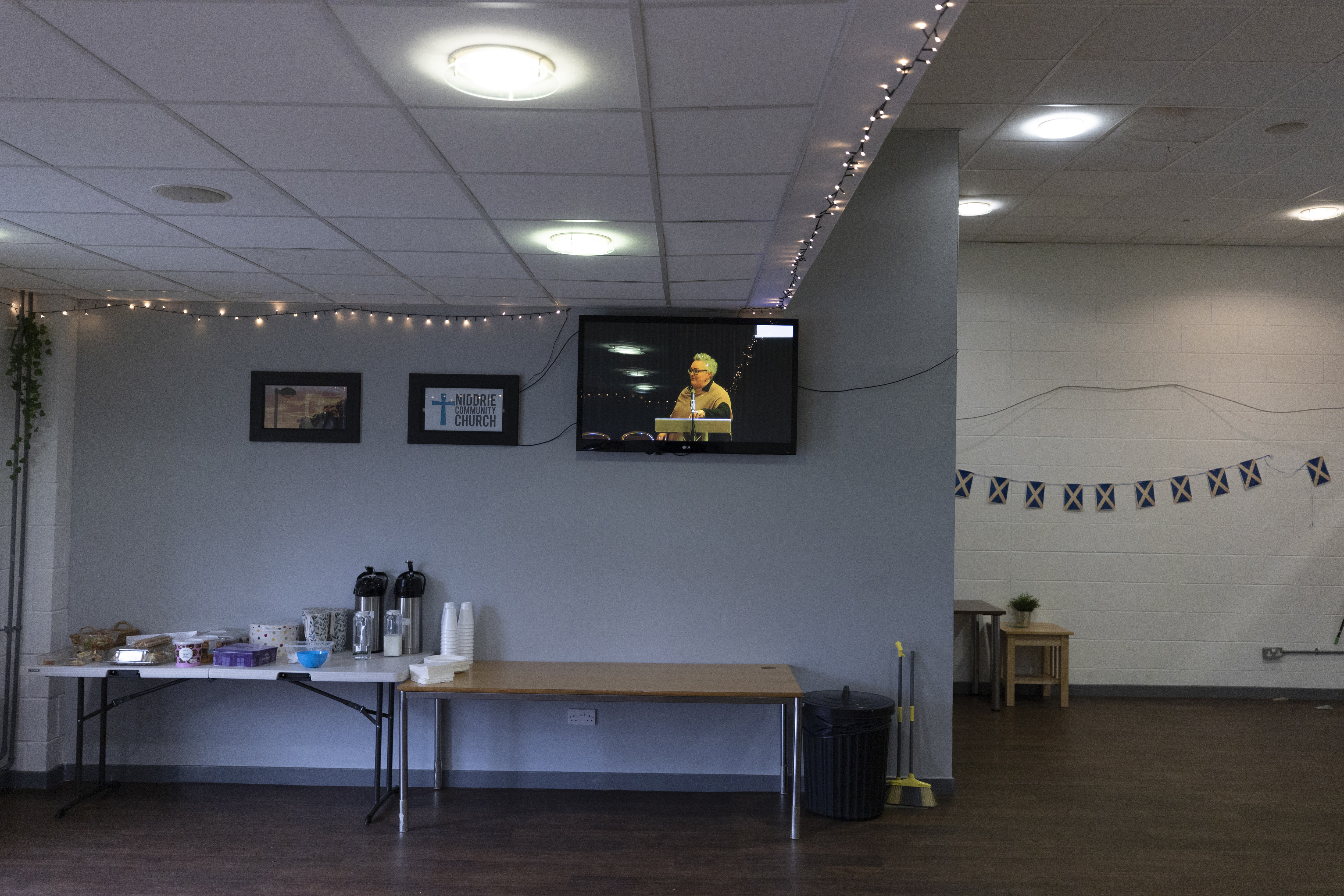
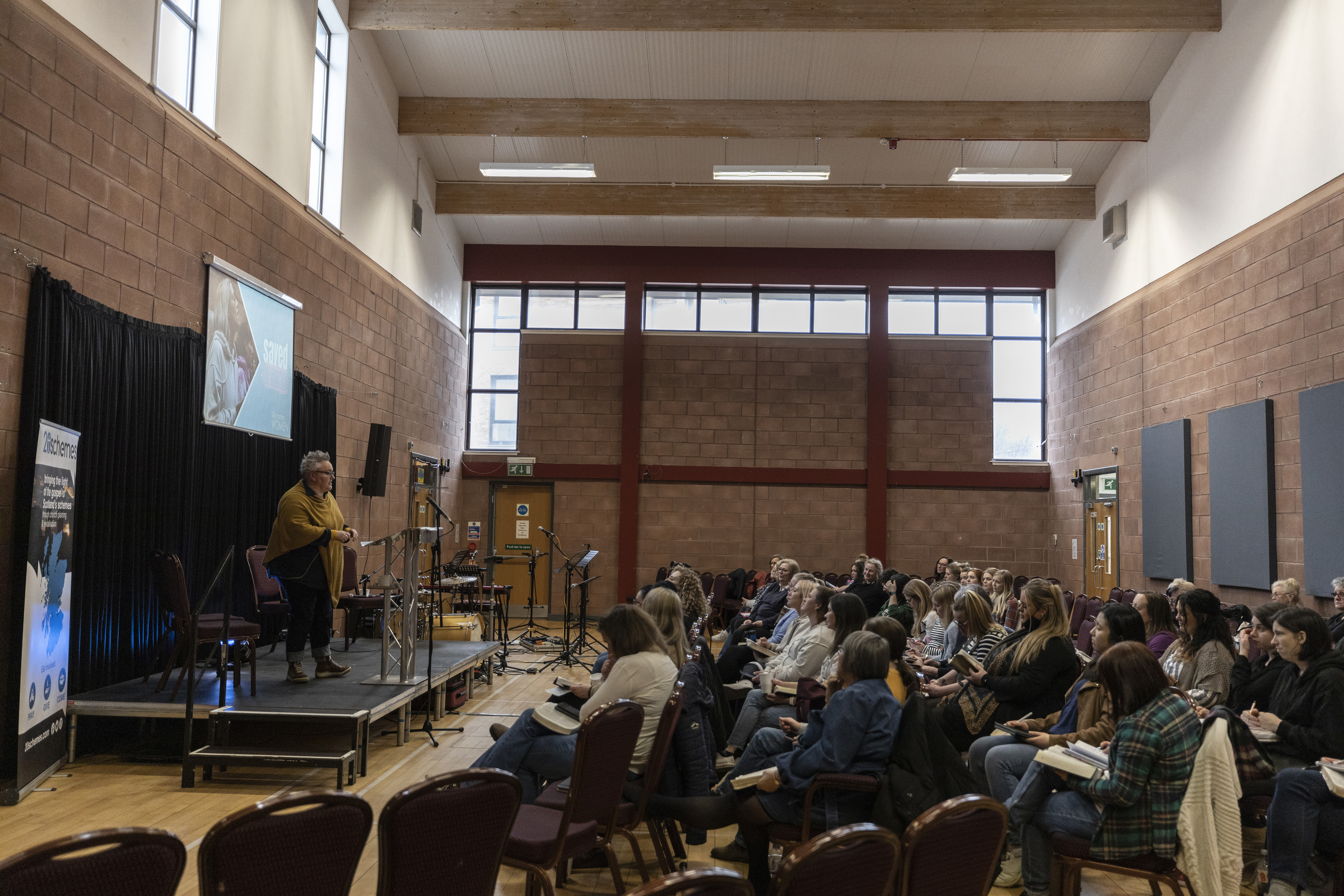
iddrie Community Church meets in the middle of the scheme in a white staccato-cement church building that also serves as a café and ministry center. When I visited, it was hosting a women-only session for a biannual conference the church puts on for 20schemes leaders and some church members.

The conference, like Sunday morning services in the scheme, buzzed with the energy of a multigenerational, intimate community that knew and loved each other. Church leaders mingled and ate with members of the community, many of whom smelled of cigarettes and some of whom took plates of Scottish stovies (a hash typically made up of leftover roasts) with shaky hands. Several people leaned on crutches or canes or limped unsteadily to their seats. Church leaders and members alike dressed in hoodies and sweatpants and beanies.

One of the women speaking onstage in the small auditorium was Emily Green, a 27-year-old women’s worker from York, England. “When was the last time that we denied ourselves to love someone else?” she asked a room of 80 women gathered from around Scotland. “When did we last welcome the outcast into our home? When was the last time we gently rebuked a sister?”

It was not lost on me that most of the women preaching were under the age of 30, having been trained by Dickens and shepherded by the church’s pastors. And the questions the speakers addressed were blunt: What happens when my mentee lies to my face? How do we handle hypocritical Christians?

Green, who is petite, blonde, and easygoing, joined the 20schemes team in 2015, first as an intern and then, after two years, as a women’s worker for one of the scheme churches. “Church planting in the UK was hip and cool,” she said. “20schemes wasn’t that exciting. … Now, that’s the thing I appreciate the most, that they’re so gospel centered.”

Her work is both missional and pastoral: It combines teaching, counseling, and building community among the women in the schemes. Instead of running events, like many women’s ministry leaders in the US, she’s primarily focused on counseling and walking alongside women who battle addictions, traumas, and mental illness.

The most significant challenge is not just the spiritual warfare—Green watched one of her counselees, a recent graduate of rehab, have a “massive relapse” the night before she was supposed to be baptized—it’s her age.

“I’m so young. I’m going into women’s ministry stuff not equipped to speak into the lives of women who have been through so much and have experienced so much,” Green said. “I’m not from a council estate; my upbringing has been very different. It’s been a challenge but a really humbling thing.”

Church leaders have not only equipped her through training with a local counselor and weekly check-ins, Green said; they have empowered her. As a scheme church women’s worker, she works in tandem with the male pastor, functioning as almost a women’s pastor. She calls on women at their homes, with or without the pastor, and meets regularly with women for biblical counseling appointments. Sometimes, her job is simply the tedious work of building trust and relationships in the scheme.

B

efore I visited the schemes, I called Dickens, 20schemes’ women’s director, over Zoom. She was bundled up in blankets at her tenement house on a December afternoon. She sits at the heart of the network’s strategy for reaching its communities, and I wanted to hear her story.

Dickens, 51, may stand out at her church with her spiky white hair, but she prefers to lead quietly in the background, serving as sort of a mentor or mother figure for the younger single women in the schemes. Raised in a scheme in northern Edinburgh, Dickens found Jesus at the age of 18 following her violent and abusive boyfriend’s radical conversion to Christianity.

“I found that harder to deal with than the violence,” she said. “I couldn’t understand.”

When she finally converted, she went “all out” and worked as a voluntary missionary for a year—right after receiving a technical school certificate. Her parents, who had long pushed her to escape the schemes, “would have felt better if I was on drugs,” she said. “They thought I was being taken over by a cult.”

The year of service turned into four and led to more jobs in the social sector, including working with churches, and finally with Niddrie Community Church and 20schemes. Now, although Dickens is a divorcée and has always lived in the schemes and understands the culture, her friends tease her about being “middle class.” She owns a car and has a university degree, as do her two children.

“Women are struggling with drugs, alcohol, interpersonal violence, anger, impurity, and parenting in the schemes,” she said. “But affluent areas struggle with similar things. When I first started working with women, I thought it was only women in schemes, but when I traveled in affluent areas, I realized that many women struggle with these bigger issues, but just in a different way.”

The “different way” in the schemes means that many of the struggles are compounded—five of those things at the same time. Someone may have massive debt combined with mental illness or addiction, or chronic illness combined with childhood trauma. And in the schemes, these issues are public struggles in a tight-knit community, unlike the private way congregants at more affluent churches might hide embarrassing matters.

“We have an idealistic image of what a Proverbs 31 woman is,” she said. “The idealistic picture is she’s like Mary Poppins, ‘perfect in every way.’”

Dickens said there is an assumption in the church that women don’t struggle with sins like beating their kids, alcohol addiction, extramarital sex, and porn. “Trouble is, they do.”

“The majority of Christian context is middle class and suburban. It doesn’t speak the same language as ours,” she told me over lunch in Niddrie.

For example, many counseling books are short handbooks for complex topics. “In our case, they’re not ‘complex’ issues, they’re everyday issues,” she said. Women in the schemes are unlikely to have a therapist and more likely to have an “auntie” who’s been involved in their life for 10 years rather than 10 weeks.

“We started writing resources and training because we couldn’t find anything that met our needs,” Dickens said. “What we had was a lot of women who were very gifted, desperate to serve, but didn’t feel equipped for it.”

The church created its own discipleship curriculum, piloting a two-year women’s ministry worker course in 2018. Dickens also leads a monthly group where around 40 female church leaders gather for a Bible study and rotate teaching. Their focus is discipleship, she said, which drives which events they run.

Sharon “Shabba” Dickens teaching at a women’s conference held at Niddrie Community ChurchKieran Dodds
Sharon “Shabba” Dickens teaching at a women’s conference held at Niddrie Community Church

“What has struck me about some of the women’s workers I’ve met is that they all seem focused on leading Bible studies, organizing events or doing individual studies,” Dickens wrote in her book Unexceptional: Ordinary Women Doing Extraordinary Things through God. “I haven’t heard any chat of living life with women … 24/7-style discipleship or even evangelism. Their women’s work feels tidy, events-driven, structured, organized, with proper boundaries in place.”

Dickens’s philosophy struck me. In my search for affirmation by church leaders, was I seeking empowerment and equipping to engage in discipleship and hard conversations? Or was I grasping for power and recognition? In retrospect, it was probably both.

Spending time with the women at 20schemes helped me recognize that Niddrie’s church modeled what I had been longing for throughout the past decade. While refusing to apologize for their theological convictions on gender roles, male and female leaders of 20schemes work tirelessly to minister to marginalized and vulnerable women and equip them to care for their own.

“I’m always so grateful to God that he saved me in Niddrie church—it’s not perfect, we’re all sinners, but there’s room to flourish,” Tasha Davidson said. “There’s not a focus on the things we can’t do, that’s never been the issue. It’s been a conversation of ‘This is what you can do.’ I think that’s changed our focus.”

When I pressed Dickens on how she felt about the church’s position on male headship, she didn’t waver.

“When it comes to women’s ministry, we spend a lot of time talking about the theology of women’s ministry, but very few people talk about practice,” Dickens said. “We spend a lot of time talking about the 3 percent of ministry that we don’t have access to, but very rarely do we talk about the 97 percent of ministry that we should be doing.”

I felt Dickens scolding me. Or maybe, it was the Holy Spirit.

Kara Bettis is an associate editor at Christianity Today.

Ideas

When Doubters Declare the Glory of God

Columnist

Songs from outside the church can help us worship within it.

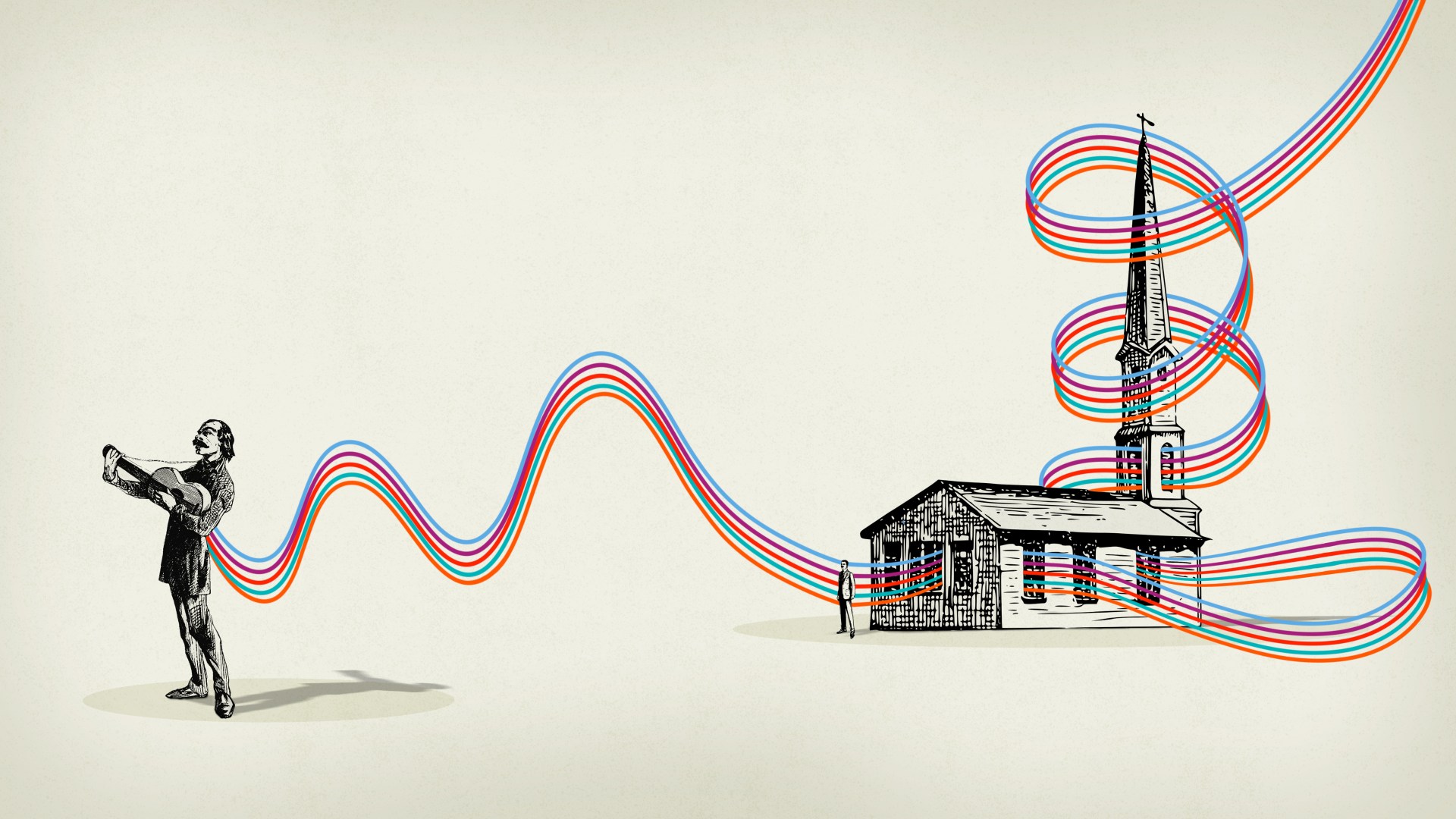
Illustration by Rick Szuecs / Source Images: RawPixel

Recently, I recorded a collection of cover songs written by legendary songwriters who have influenced me. I love writing songs for the encouragement of the church, but my aim with this project was to hold up a wider view of God’s hope for the world through other people’s stories: songs of love and disappointment, uncertainty and indecision.

We gathered in a dimly lit studio near El Paso filled with vintage Gibson guitars, guitars with no names, amplifiers, tape machines, and worn leather couches. We leaned over scribbled chords and borrowed lyrics on scraps of paper to see what we could make for a new moment.

It wasn’t a collection of worship songs or hymns, but we lifted up our hearts to God just the same. Songs by seekers and doubters can sometimes tell the straight truth. They can offer us a lens to look through our experiences to see and long for God’s presence in the broken places. “There is a crack in everything,” as Leonard Cohen wrote. “That’s how the light gets in.”

Since recording this project, the band and I have been out playing these songs alongside my own songs and Psalm tunes. While shaping the set list for the tour, I was admittedly a little tentative. Would the Cranberries’ “Dreams” resonate alongside “Flourishing”—written from the words of Psalm 119—in a church and a neighborhood theater?

But it turns out that there’s a blend and blur between the Psalms and Bob Dylan, between Isaiah and U2. I’ve been convicted and comforted in unexpected ways while singing these songs together and hearing God speak through both sacred texts and secular poetry.

These juxtapositions have brought about quiet surprises. Singing U2’s “One” each night, I have heard God’s voice convicting me with a call to unity over discord:

Love is a temple
Love the higher law …
One love, one blood, one life, you’ve got to do what you should
One life, with each other, sisters, brothers

Whether I am singing David’s words from Psalm 42 or The Killers’ “Heart of A Girl,” I am moved to sing all these songs equally as a form of prayer. In “Heart of A Girl,” singer Brandon Flowers echoes the invitation of the Psalms as he tells a story of someone who’s “got all night to listen to the heart of a girl.”

Every time, I think of the ways I have been looking for my place in this world and am assured again that God wants us to find our place in him. In the middle of the night, or when all other friends can’t be found, there is one who hears me, who knows every word I speak before I speak it (Ps. 139:1) and who will listen and care about every concern that we lay out before him.

Singing these songs reminds me that our real lives are full of contradiction and consequence. I have seen evidence of God’s presence in the sanctuary, and I’ve seen sanctuaries that felt like an empty shell.

Inside the context of the church, there are creeds and baptisms, there’s Communion and the unfailing truth of Scripture, and there’s a shared life in Christ that is the exclusive nature of belonging to the family of God. But outside the church, God’s voice is speaking too: along the roadsides, in the clubs, classrooms, and cubicles where we work and live.

The writer of Hebrews tells us that in these last days, God speaks to us by his Son, by his Spirit (Heb. 1:2). Today, when I tune my ears to listen, I discover he is still speaking to us in this world he has made and that every part of it belongs to him (Ps. 24).

Yes, we Christians are to guard our hearts. But if we shut our ears to all that is outside the church, we risk missing God’s invisible qualities on display all around us (Rom. 1:20). When we listen critically to secular songs and artists, we can identify a wider expression of our experience as his people—and can sometimes receive a fresh opportunity to see and know him. I sing these borrowed songs as a testimony of grace. And I put my ear to the ground, listening for the resonance of his voice.

Apple PodcastsDown ArrowDown ArrowDown Arrowarrow_left_altLeft ArrowLeft ArrowRight ArrowRight ArrowRight Arrowarrow_up_altUp ArrowUp ArrowAvailable at Amazoncaret-downCloseCloseEmailEmailExpandExpandExternalExternalFacebookfacebook-squareGiftGiftGooglegoogleGoogle KeephamburgerInstagraminstagram-squareLinkLinklinkedin-squareListenListenListenChristianity TodayCT Creative Studio Logologo_orgMegaphoneMenuMenupausePinterestPlayPlayPocketPodcastRSSRSSSaveSaveSaveSearchSearchsearchSpotifyStitcherTelegramTable of ContentsTable of Contentstwitter-squareWhatsAppXYouTubeYouTube