History

What Came Before the Ultrasound–and What Comes After

From word pictures to video games, prenatal visualization technology has expanded our empathy for the unborn.

Christianity Today June 30, 2022
Illustration by Mallory Rentsch / Source Images: Itsarasak Thithuekthak / Tetra Images / Getty / Digital Commons at University of Nebraska / WikiMedia Commons

This article is the second of a four-part series based on the upcoming book by Marvin Olasky and Leah Savas, The Story of Abortion in America: A Street-Level History, 1652–2022.

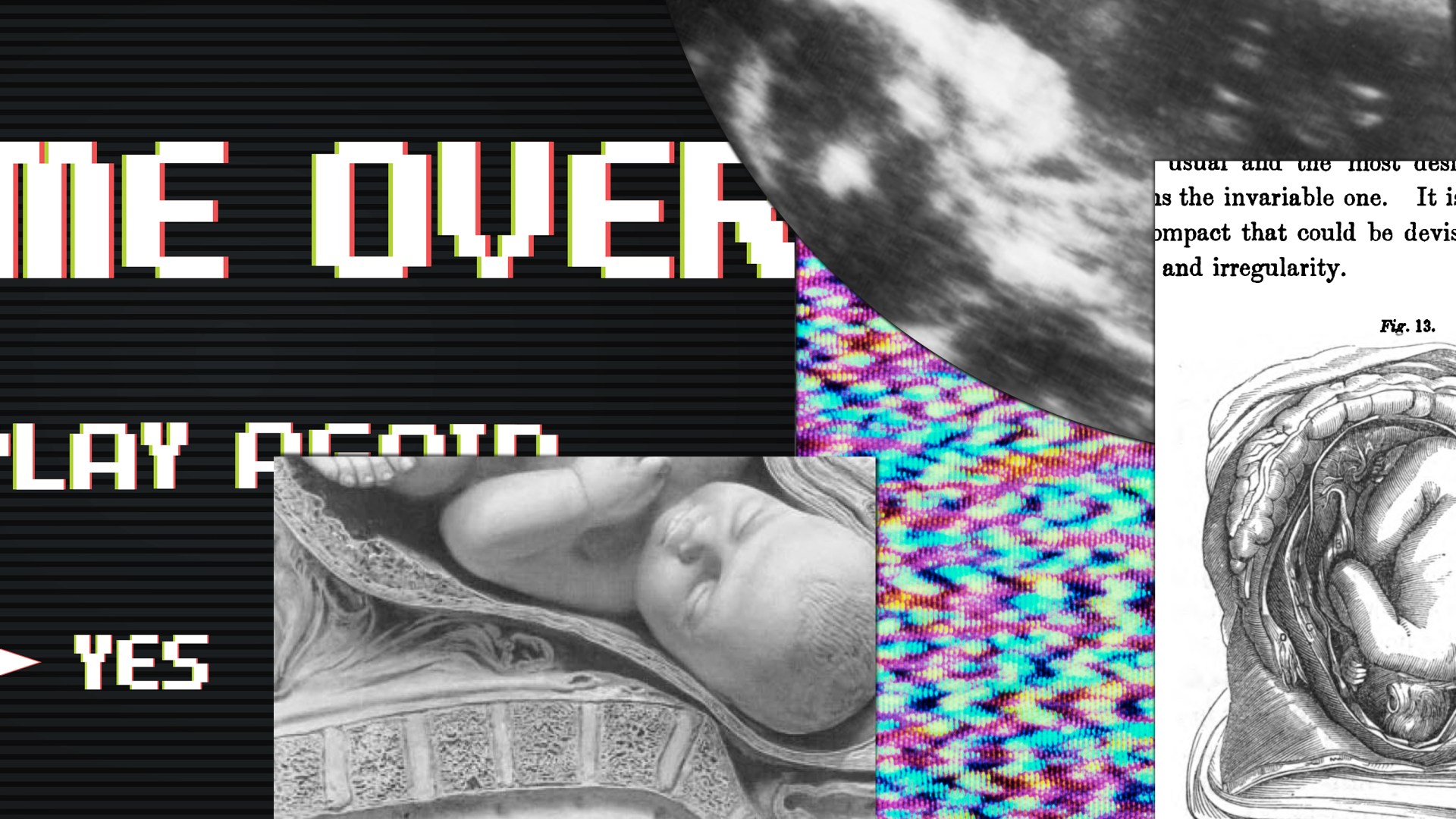
Millions of expectant parents have now seen ultrasound video of their unborn children. The technology is new, but the desire to see what’s invisible is not. We can trace six steps in prenatal visualization technology during the past 170 years—and then wonder what the seventh will be.

The first three steps involved word pictures. Stephen Tracy’s The Mother and Her Offspring (1853) was one of the first books I’ve seen that took readers week by week and month by month through the early development of unborn children:

At forty-five days … the head is very large; the eyes, mouth, and nose are to be distinguished; the hands and arms are in the middle of its length—fingers distinct. … At two months, all the parts of the child are present. … The fingers and toes are distinct. … At three months, … the heart pulsates strongly, and the principal vessels carry red blood.

The second step emphasized woman-to-woman lectures about the unborn. In the 1850s Elizabeth Blackwell, the first female to receive a medical degree in the US, pleaded with mothers to “look at the first faint gleam of life, the life of the embryo. … The cell rapidly enlarges. … Each organ is distinctly formed. … It would be impious folly to attempt to interfere directly with this act of creation.”

In the 1860s Anna Densmore French explained fetal development to teachers who planned to pass on this knowledge to their teenage students. French said, “Women would rarely dare to destroy the product of conception if they did not fully believe that the little being was devoid of life during all the earlier period of gestation.”

She showed week by week that “life processes were going on from the very beginning of embryonic development.”

Diagram from the novel, The Mother and Her Offspring, showing a baby in the womb..Illustration by Mallory Rentsch / Source Images: Itsarasak Thithuekthak / Tetra Images / Getty
Diagram from the novel, The Mother and Her Offspring, showing a baby in the womb..

In the 1870s Rachel Gleason gave talks warning that women who aborted would feel what we today call post-abortion syndrome: “Remorse for the deed drives women almost or quite to despair.” And at century’s end, Prudence Saur lectured about life beginning “from the moment of conception, [as] modern science has abundantly proven. It follows, then, that this crime is equally as great whether committed in the early weeks of pregnancy or at a more advanced period.”

Books for children and teenagers were a third step. Mary G. Hood’s For Girls and the Mothers of Girls: A Book for the Home and the School Concerning the Beginnings of Life (1914). Here’s how she introduced the first moments of fetal anatomy:

The two cells unite, and become one, much as two drops of water, when they come into contact, merge into each other and become one drop. Thus the two cells, which in their origin come from two different beings, unite to form the new cell, which will result in a completely new and different human being.

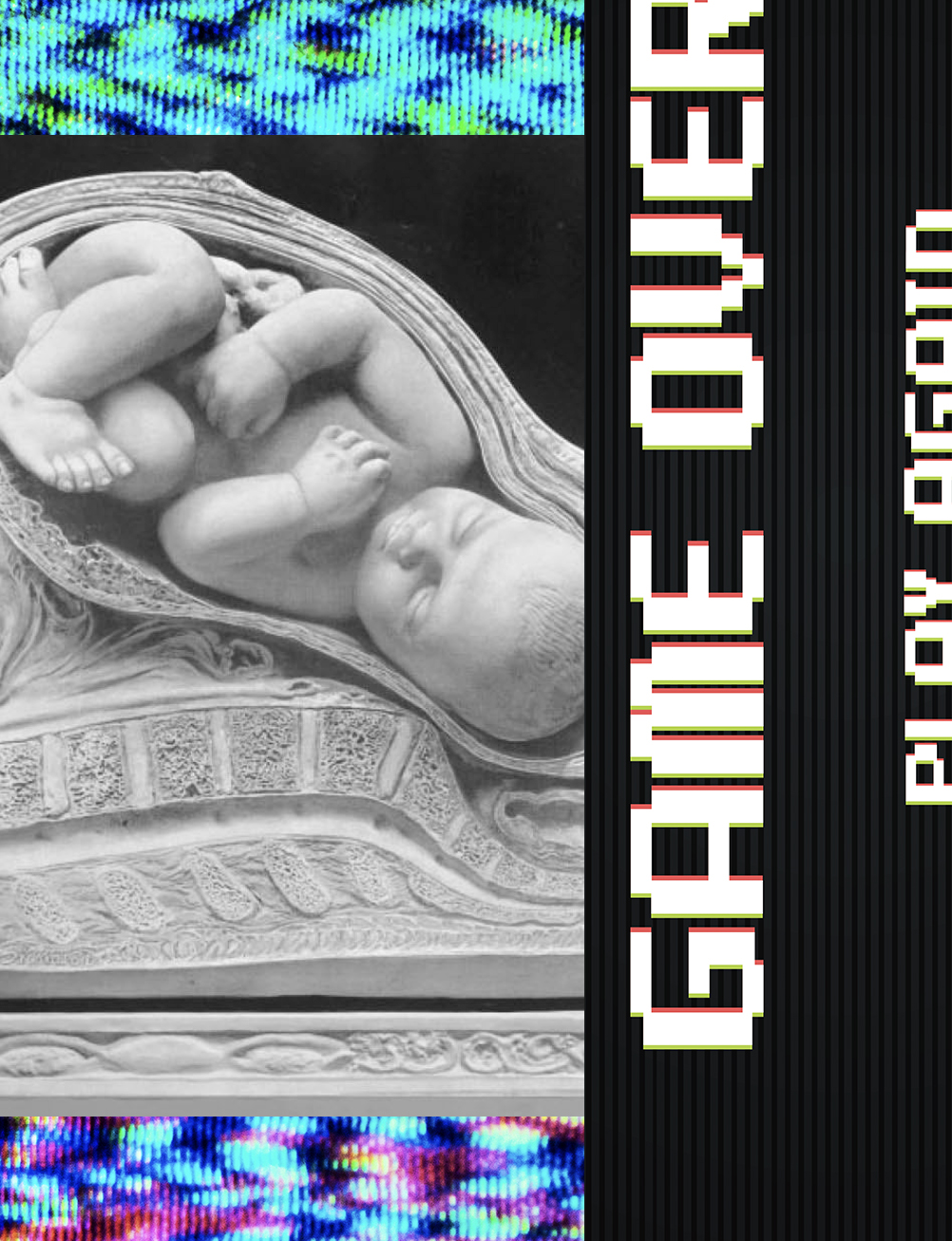
The next three steps involved showing rather than telling. At the 1939 World’s Fair in New York City, more than two million people viewed the most realistic and beautiful sculptures of unborn children ever created.

People stood in line for hours “with wonder on their faces” to see what before was invisible, as historian Rose Holz recounts: “Neither rain nor shine stopped the crowds from coming; nor did the occasional stampede.” The sculptures combined scientific accuracy with artistic beauty to depict development as a romance beginning with conception and unfolding all the way to birth.

Ironically, the obstetrician in charge of the sculpture project, Robert L. Dickinson, wrote (but did not publish) a personal essay, “Blessed Be Abortion,” that praised abortion as a relief from “intolerable” burdens like “added maternal care” or “life-long shame.” During the 1940s he was a Planned Parenthood senior vice president and director. (It takes all kinds of people to increase pro-life understanding.)

It also takes all kinds of motives. Like Dickinson, the Gerber Products Company also had commercial interest in distributing at the World ’s Fair and elsewhere a How Does Your Baby Grow? pamphlet with photos of the sculptures. It explained, “A baby ’s life begins not when he puts in his squalling appearance but at the moment the sperm (from the father) meets the egg (from the mother) in the Fallopian tube.”
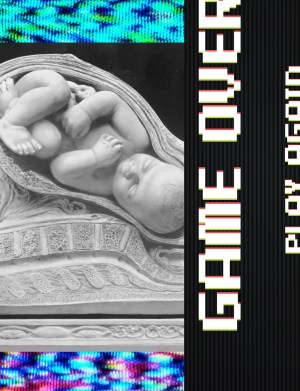
Sculpture of the unborn baby at the 1939 World’s Fair in New York City.Illustration by Mallory Rentsch / Source Images: Itsarasak Thithuekthak / Tetra Images / Getty
Sculpture of the unborn baby at the 1939 World’s Fair in New York City.

After the fair Gerber added a warning—“Abortions Are Dangerous!”—that summed up the physical and psychological consequences for women who “live with unhappy memories of what might have been. If you are thinking about an abortion—stop! Go to your family doctor. … Don ’t make a move you ’ll regret.”

Meanwhile, the sculptures traveled to medical and public health institutions in many cities. Then came mass reproduction and eventually low-cost plastic models.

The fifth step came from abroad. Swedish photojournalist Lennart Nilsson during a visit to New York told editors of Life magazine that he wanted to photograph unborn children. The editors were technically skeptical but supportive: That partnership led to a Life cover in 1965 featuring a Foetus 18 Weeks photo of an unborn child floating within an amniotic sac. The issue was Life’s all-time fastest seller at checkout counters. Nilsson’s A Child Is Born became one of the top-selling illustrated books of all time.
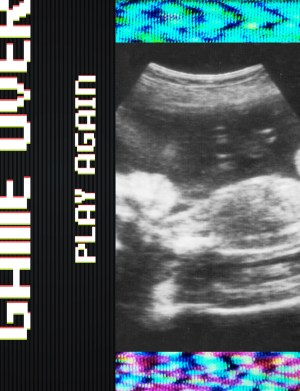
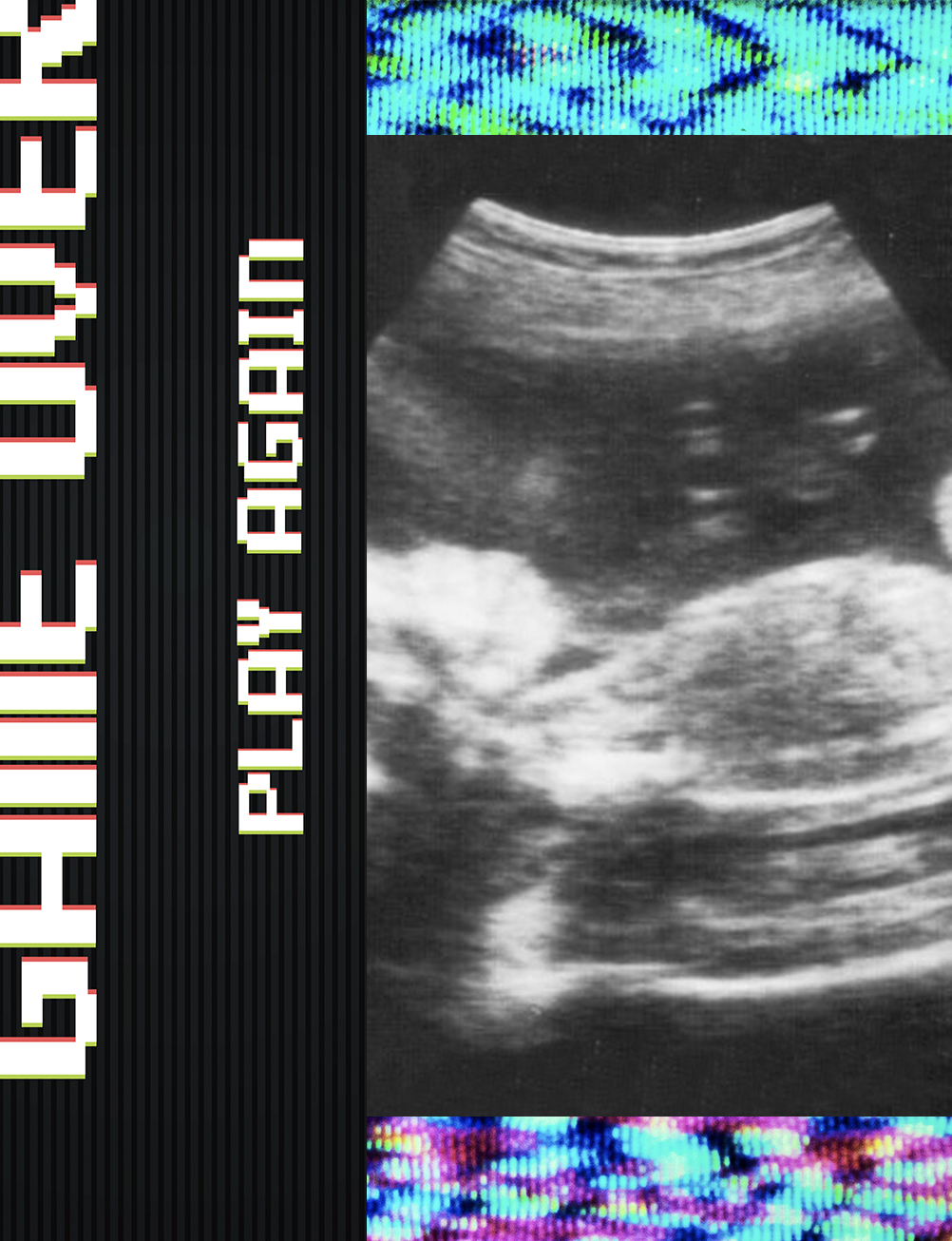
Ultrasound ImagingIllustration by Mallory Rentsch / Source Images: Itsarasak Thithuekthak / Tetra Images / Getty
Ultrasound Imaging

The sixth step is ultrasound imaging, which has been worth more than a thousand words in changing the hearts of some who were contemplating abortion. Some states now require abortion providers to perform ultrasounds and show them to patients, leading pro-abortion advocates like the Guttmacher Institute to complain that “the requirements appear to be a veiled attempt to personify the fetus and dissuade an individual from obtaining an abortion.”

What will the seventh step be? Every technological development adds opportunities for both sin and grace. Some video games now have characters like Giant Baby Fetus Monster Boss. An Argentinian pro-abortion activist created a game where a player wins by shooting an unborn baby with a shotgun. The game then compliments the player for defeating “fetito” (little fetus) and urges him to send an abortion pill “to those in need so they might defeat it too.”

Will pro-life gamers create lifelike video games that lead to more empathy for unborn children?

Whether or not such creativity occurs, thinking about different steps toward visualization reminds us that America’s abortion tragedy did not begin with Roe v. Wade and it will not end with a Roe v. Wade reversal. Legal change will help to save some, but many hundreds of thousands will still die as long as mothers (and fathers) visualize them not as sucking their thumbs but sucking life out of their parents.

Content adapted from The Story of Abortion in America by Marvin Olasky and Leah Savas, ©2023. Used by permission of Crossway, a publishing ministry of Good News Publishers.


Inkwell

Creature to Creature

Inkwell June 29, 2022
Photography by Ariel Schmunck

Yesterday,
running slowly
in the gravel
I saw
a tiny bird
feathered pulsating globe
of white and gray
on its back
black pinprick eyes
pointing up to the sky.
I stooped down
closely
to peer.
We stared at one another—
creature to creature—
for a small eternity.
I scooped him
into my hands
and placed him gently
an offering
upright
onto the grass
whispering
a prayer to the One
who sees
and knows
each one
every sparrow
and every sorrow.

Karen Swallow Prior is a writer and Professor of English and Christianity and Culture at Southeastern Baptist Theological Seminary. She is the author of Booked: Literature in the Soul of Me (T. S. Poetry Press, 2012), Fierce Convictions: The Extraordinary Life of Hannah More—Poet, Reformer, Abolitionist (Thomas Nelson, 2014), and On Reading Well: Finding the Good Life through Great Books (Brazos, 2018). She is co-editor of Cultural Engagement: A Crash Course in Contemporary Issues (Zondervan 2019) and has contributed to numerous other books.

News

Pro-Life Black Christians Don’t Focus on Abortion Alone

Overturning Roe v. Wade draws attention to what they’ve known all along: There’s much more to upholding life than banning abortion.

Christianity Today June 29, 2022
Mandel Ngan / Getty Images

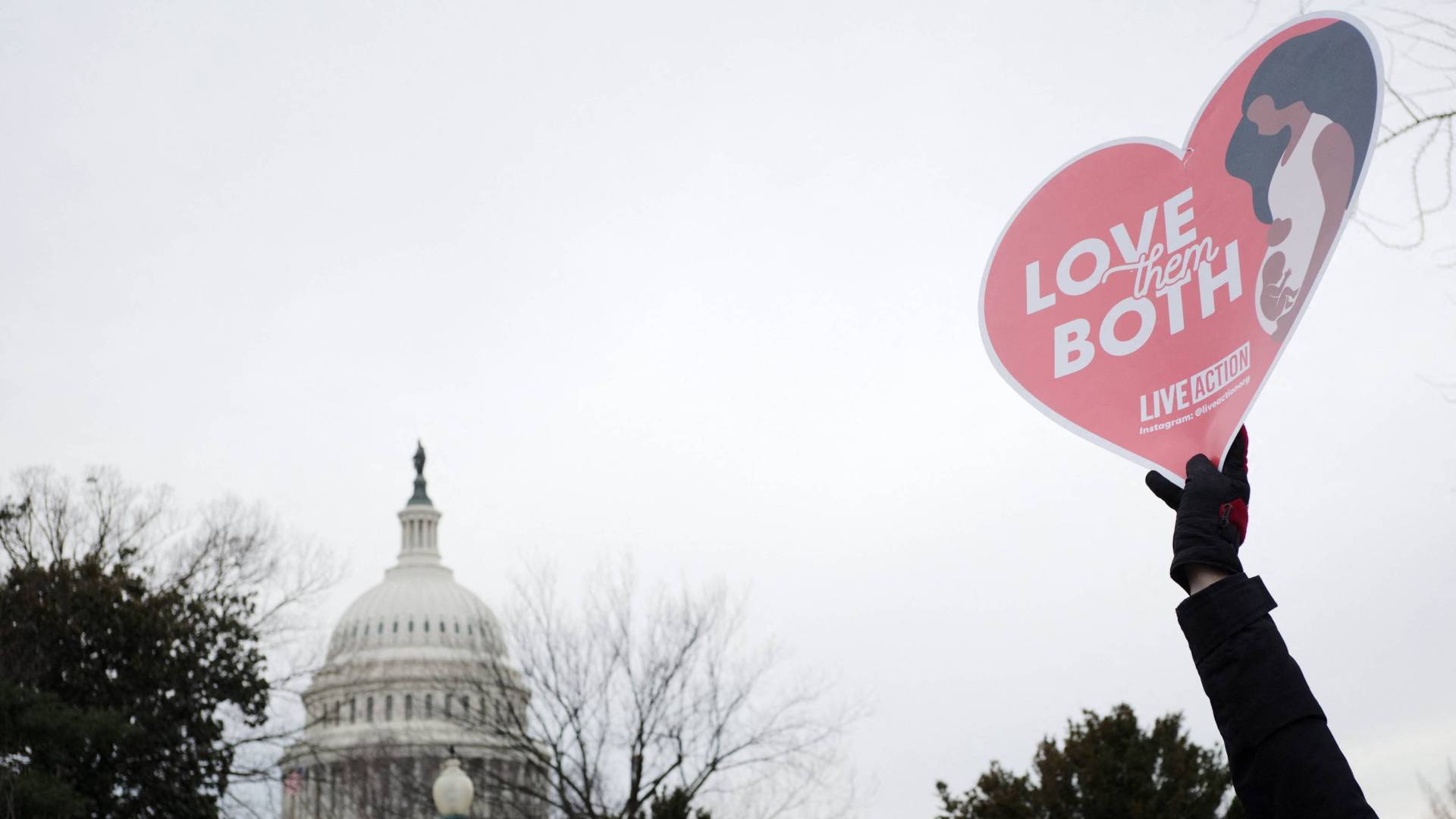
For many white evangelicals who led the pro-life movement, the end of Roe v. Wade marks a long-awaited and celebrated outcome. But for Black Christians whose political views on life extend beyond a single-issue fight, the sentiment is more mixed.

As the founder of Pro-Black Pro-Life, Cherilyn Holloway sees how Black Christians may agree with valuing life from a theological standpoint and are open to a “whole-life” perspective yet they reject politically conservative policy stances. For them, the racial disparities and injustice impacting abortion need to be prioritized too.

“To live abundantly, we have to be able to acknowledge the systems that have been put in place to keep us from doing that,” said Holloway.

While the abortion bans that go into place after the Dobbs v. Jackson Women’s Health Organization ruling may result in more babies born, Black Christians continue to call attention to so many other overlapping factors that threaten Black lives in pregnancy.

“It’s not quite as simple as some folks make it out to be. Having the baby isn’t the only issue, and abortion isn’t the only issue,” said Justin E. Giboney, president of The And Campaign. “There are a lot of other factors that go into that when it comes to policies like paid family leave, health care issues—which this country still has not dealt with adequately. Those also play into the conversation.”

Black women are three times more likely to die from pregnancy-related causes than white women, and their babies are twice as likely as white babies to die before their first birthdays. Racial disparities persist across nearly every measure—from income for covering childcare to quality of education.

A promotional video for the campaign’s Whole Life Project says, “When Black women who have chosen to carry their child to full term are still at risk of death, we must lead with a more compassionate posture.”

Efrem Smith, co-lead pastor of Midtown Church in Sacramento, says he and many other Black pastors aren’t represented in mainstream conversations around abortion because there’s not much room to simultaneously value life from a theological perspective and address the structural racism and inequalities faced by Black women in particular. Smith’s church is a multiethnic congregation in the Evangelical Covenant Church.

“It’s not an easy place to land,” he said. “The dominant culture has tried to force Black Christians into a pro-life, pro-choice paradigm.”

The reality, to Smith, is far more nuanced. He believes Black Christians are at their best when they can stand for life while also speaking out for “our liberation and empowerment at the same time.”

Smith points to the historic position of Black women in America. They haven’t had the opportunity to “choose life” when their own lives have been put in danger at the hands of others, whether through slavery, lynching, sexual assault, violence, exploitation, or inadequate health care.

A recent Pew Research survey found that two-thirds of Black Protestants favor keeping abortion legal. Though they share core theological positions with white evangelicals, Black Protestants are consistently far less aligned with Republican Party policies, including its efforts to ban abortion.

Yet the largest historically Black denomination, the Pentecostal, 5-million-member Church of God in Christ (COGIC), takes a pro-life stance against abortion. One of its bishops, Vincent Mathews, spoke last year at a prayer event around Dobbs held by the Family Research Council.

Presiding COGIC bishop J. Drew Sheard stated earlier this year, “We acknowledge the disproportionate damage abortion has caused to the black community—particularly to women—and long to see women in crisis and children in need genuinely cared for.”

While the 2.5-million-member African Methodist Episcopal (AME) Church has historically opposed abortion, except in cases to save the life of the mother, the church’s health commission spoke out on Dobbs in favor of “reproductive justice” for Black women, including access to abortion. Similarly, progressive Black clergy with the Samuel DeWitt Proctor Conference criticized the ruling and pledged to mobilize against it.

Whether opposed to abortion or in favor of abortion rights, Black believers see their faith communities playing a crucial role in the response. Smith in California sees that overturning Roe represents a critical time for predominantly Black houses of worship to be recognized as epicenters of mutual aid in their communities.

“The Black church, because it was birthed out of slavery, has always had some version of an extended family or a village within it,” he said. “The Black church is willing to say, ‘Regardless of the circumstances around how you got pregnant, if you have that baby, this church will be your family.’”

His multiethnic congregation is preparing to extend spiritual care in the wake of the decision. It has partnered with licensed counselors and health professionals and will connect members to available services.

Midtown Church is not alone. Many Black congregations offer similar outreach, and Giboney with the And Campaign said he could see more Black churches discussing new strategies to provide support to women and children in response to the Supreme Court’s decision.

“Christians who are Republicans and Democrats and all over need to be advocates for these women if we truly want their flourishing,” said Giboney, an attorney and political strategist. “It’s not just about winning on the issue but putting skin on the policy, not isolating one policy but recognizing all the factors that play into a woman’s decision.”

CT previously featured Cessilye R. Smith, a Black Christian woman who set out to address infant and maternal mortality among women of color with a free maternal health clinic and birthing center. “When the public eye sees the pro-life movement fighting to end abortion without looking at the root,” she said, “then you will always get the side-eye from the black community.”

Holloway, of Pro-Black Pro-Life, believes ministry leaders can draw from the Black church’s history of providing mutual aid. She hopes to see Christians expanding church networks and forming coalitions within congregations to support women’s access to quality reproductive health care and affordable, adequate housing.

“We don’t want condemnation. We want grace,” she said. “We want also for people to understand if they get themselves in a situation where they have an unplanned pregnancy, they shouldn’t have to run from the church; they should be running to it.”

Pew found that Christians from Black Protestant traditions are also the group most opposed to penalizing women who chose to terminate their pregnancies with criminal charges.

Holloway will continue her advocacy work, educating local Black communities about racial equity in health care and ways to support pregnant women and mothers in her home state of Ohio, where the Roe v. Wade reversal triggered a six-week abortion ban.

“We care about the life that is in the womb, but we also care about the man on the street. We also care about these children and where they’re getting their education and health care from and Grandma and Grandpa who are entering end-of-life care and that they’re treated with dignity and respect,” she said. “These are all whole-life issues for us.”

Some Black Christian leaders say they are eager for those who have rallied so passionately for the unborn to join whole-life causes to support women too: pay equity, childcare, affordable housing, mental health support, and health care.

“Every church does not have to do everything,” Holloway said. “Who do we know that we can accelerate some of these things with? They’re sitting in your pews.”

Amethyst Holmes is a freelance journalist based in Washington DC.

News

D. James Kennedy Ministries Loses Legal Battle Against ‘Hate Group’ Label

Supreme Court declines to reconsider definition of defamation and make it easier to prove malice.

Christianity Today June 28, 2022
Anna Moneymaker/Getty Images

The late D. James Kennedy’s television and radio ministry cannot sue for defamation over being called an anti-LGBT hate group.

Five years after Coral Ridge Ministries Media first protested the “hate group” designation, the US Supreme Court has declined to reconsider the legal definition of “defamation.” The ministry’s suit against the Southern Poverty Law Center (SPLC) cannot go forward.

The Supreme Court’s summary disposition was handed down Monday without explanation. The only dissent came from Justice Clarence Thomas. He argued the court should overturn the guiding 1964 precedent, New York Times Company v. Sullivan, which says media companies are only liable for libel against public figures when they publish false information with reckless disregard for the truth and “actual malice.”

“Coral Ridge now asks us to reconsider the ‘actual malice’ standard,” Thomas wrote. “As I have said previously, ‘we should.’”

Donald Trump also pushed for a reevaluation of New York Times v. Sullivan when he was president, calling the legal standards for libel “a sham” and “a disgrace” to America.

“We are going to take a strong look at our country’s libel laws, so that when somebody says something that is false and defamatory about someone, that person will have meaningful recourse in our courts,” Trump said in 2018.

According to Coral Ridge Ministries’ lawyer David C. Gibbs III, the “actual malice” standard is “a more-often-than-not insurmountable bar for a public figure to plead and prove a defamation claim.” He argued it should only apply to elected officials, not “private public figures,” or be disregarded entirely.

“Instead of the shield it was designed to be,” Gibbs wrote, “it is now a sword used to bludgeon public figures with impunity.”

Coral Ridge Ministries, also known as D. James Kennedy Ministries, first sued SPLC for defamation in 2017. The television ministry grew out of the megachurch Kennedy founded in Fort Lauderdale, Florida, and has continued broadcasting since Kennedy’s death in 2007. The ministry currently spends about $1.4 million on airtime, tax records show.

SPLC, a civil rights group that specializes in tracking and reporting on extremist organizations, included the Christian television ministry on an interactive map of hate groups. Local and national media turned to SPLC and used its map after a white supremacist rally in Charlottesville, Virginia, brought attention to the wide range of active extremist organizations in America.

Florida media reported that Coral Ridge Ministries was the No. 1 active hate group in the state, and CNN broadcast a map of “all the active hate groups where you live,” which included the television ministry.

Several other conservative Christian groups also protested SPLC’s broad definition of hate group. The Family Research Council said SPLC was “inciting hatred against Christians, which has already led to violence.” In 2012, a gay rights activist went to the lobbying group’s headquarters with a 9 mm pistol, a box of ammunition, and 15 Chick-fil-A sandwiches, intending to kill people. He was convicted of terrorism and sentenced to 25 years in prison.

Secular organizations continued to rely on the SPLC list, though. Amazon decided to use it in 2017 to determine which nonprofits would be eligible to receive donations through its AmazonSmile program.

“Enough is enough,” said Frank Wright, president of Coral Ridge Ministries at the time.

In court, Coral Ridge Ministries said it wasn’t wrong to say it was “anti-LGBT,” since the ministry condemned homosexual sex as sin. Kennedy and others in the ministry taught that same-sex intimacy was “an abomination,” “vile,” and “shameful.” The ministry’s attorneys said it was not a hate group, though, because it did not promote violence against LGBT people.

SPLC countered that Kennedy and his ministry promoted Christian Reconstructionists R. J. Rushdoony, who said that sexually active gay people should be stoned to death, and Gary DeMar, who said that a biblical government would only have to execute a few gay people to drive “the perversion of homosexuality underground, back into the closet.”

Judge Myron H. Thompson found, however, that there wasn’t a single, established definition of “hate group.” Some only use the term when a group promotes violence. Others, including the FBI, say a hate group is any organization that promotes “animosity, hostility, and malice against persons of or with a race, religion, disability, sexual orientation, ethnicity, gender, or gender identity which differs from that of the members.”

Thompson decided it was at least plausible to call Coral Ridge Ministries a hate group, and it would be “anathema to the First Amendment” to let the defamation suit go forward.

“If Coral Ridge disagrees with the ‘hate group’ designation, its hope for a remedy lies in the ‘marketplace of ideas,’ not a defamation action,” the judge wrote in 2019.

Besides that, Thompson said, Coral Ridge Ministries could not “plausibly allege actual malice.” The television ministry’s lawyers didn’t have any evidence to show that SPLC knew the “hate group” designation was false and used it anyway to hurt Coral Ridge Ministries. There was no evidence submitted to show the civil rights nonprofit wasn’t acting in good faith.

Thompson dismissed the case in its entirety. Coral Ridge Ministries appealed, specifically challenging the difficulty of the standard of proving “actual malice.” The three-judge appeals court unanimously ruled against Coral Ridge Ministries in 2021.

According to Judge Charles R. Wilson, the ministry was simply asserting malice, but not putting any meat on the “bare-bones allegations.”

“Coral Ridge did not sufficiently plead facts that give rise to a reasonable inference that SPLC ‘actually entertained serious doubts as to the veracity’ of its hate group definition and that definition’s application to Coral Ridge, or that SPLC was ‘highly aware’ that the definition and its application was ‘probably false,’” Wilson wrote.

Coral Ridge Ministries appealed again, asking the Supreme Court to review the lower court rulings. Several Christian organizations filed friend-of-the-court briefs urging reconsideration of New York Times v. Sullivan.

An attorney for National Religious Broadcasters, an association of evangelical media companies, argued that the 1964 decision has lowered the standards of journalism and encouraged too much reckless reporting.

“The number of falsehoods has exploded” since New York Times v. Sullivan, Matthew J. Conigliaro wrote, and it is partly the Supreme Court’s fault.

“The actual malice standard actually discourages well informed speech, including the research that one would expect responsible publishers to insist upon before obviously derogatory speech is disseminated,” he argued. “The actual malice standard permits publishers to take refuge in ignorance.”

The conservative Christian groups could only get support from one justice, however. None of the other eight signed on to Thomas’s dissent, and five years after the legal battles began, Coral Ridge Ministries was left without a legal way to fight the claims that it is a hate group.

History

Why Chinese Evangelization Starts with the Big Bang

Looking back can help Christians better understand and do apologetics today.

Matteo Ricci (left) and Xu Guangqi (Chinese: 徐光啓) (right).

Matteo Ricci (left) and Xu Guangqi (Chinese: 徐光啓) (right).

Christianity Today June 28, 2022
WikiMedia Commons

This spring, a Canadian ministry organized a bu dao hui or “evangelism meeting,” for Chinese diaspora. Their topic: science and faith. For an hour, the audience learned via livestream how the Big Bang theory proved the beginning of time and space and the extreme complexity of the biological systems and genetic coding pointed to the existence of a creator and designer of the universe and human life. They heard an explanation of “general revelation” and “special revelation.” And they received an invitation to the Gospel.

At the end of the Zoom conference, many of the more than 200 viewers offered feedback in the form of entering a letter. Numerous “C”s appeared on screen, indicating “I am already a Christian.” However, there were also several “A”s, meaning “I accepted Christ as my savior and Lord tonight.”

Using science as a hook to share the gospel has long been a way for Chinese Christians in North America to share their faith to their non-believing friends. A significant number of the better- known Chinese evangelists have a scientific background and often speak at churches on the relationship between science and Christianity. Many churches believe science-related lectures and discussions draw seekers’ attention, a conviction that stems from a long history of Chinese intellectuals’ changing feelings about the relationship between science and Christian faith in the country.

The missionaries arrive

Long before the Roman Catholic Church started sending missionaries to China in the 16th century, Chinese philosophy and worldview was dominated by Confucianism, Buddhism (with Chinese characteristics) and Taoism. Chinese intellectuals and officials did not value science and technology, and science was especially under-developed. Although there had been significant advances in some areas of technology in her earlier history, e.g., in the Tang Dynasty (618-907 AD), China had fallen far behind in science and technology before the Ming Dynasty (by the 14th century).

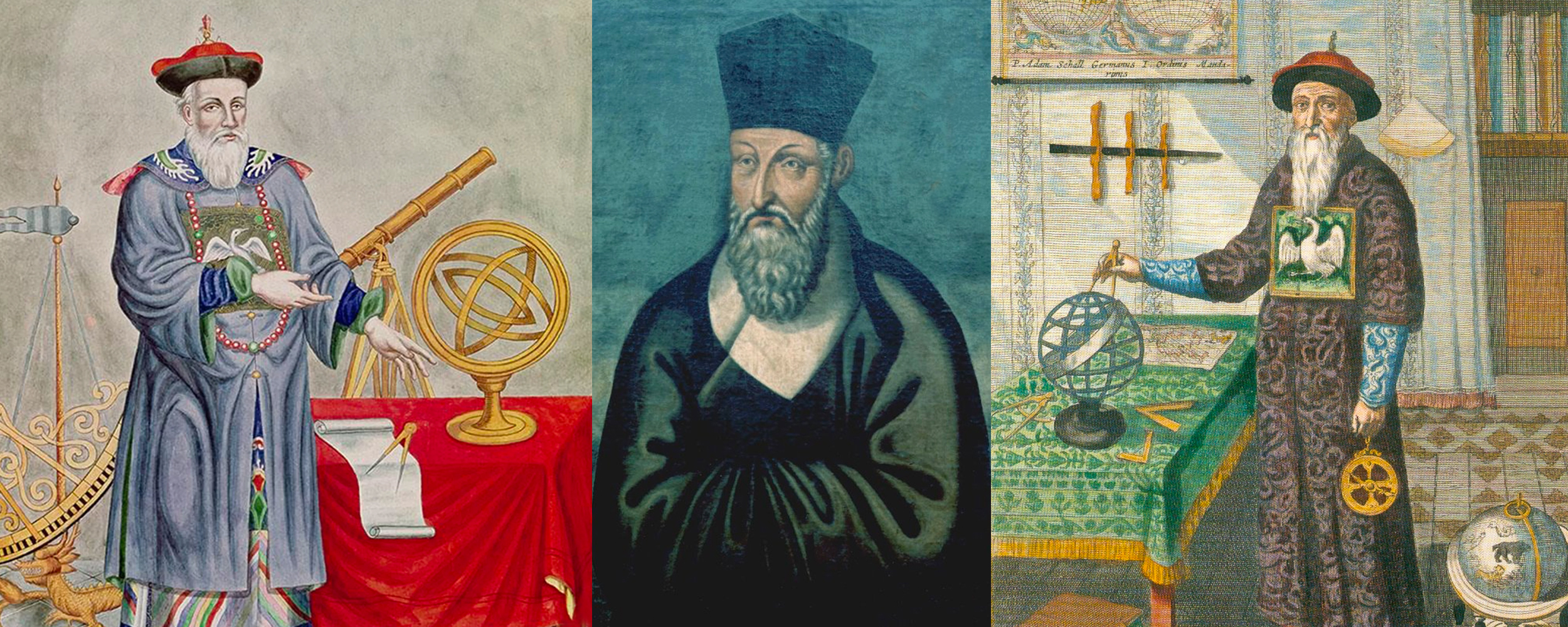
When Matteo Ricci and his fellow Jesuit missionaries to China first arrived in 1583, they quickly became known for their zeal in introducing scientific knowledge to China. The Catholic missionaries (the most well-known beside Ricci include Adam Schall and Ferdinand Verbiest) used this strategy to gain a foothold within the Chinese elite (who desired to strengthen China by learning from the West) and achieve their ultimate goal of spreading their faith.

They made friends with the high-ranking officers in the emperor’s court and dialogued with highly-educated Chinese Confucianist scholar-officers (the most famous of whom was Xu Guangqi, who later converted to Catholicism). They gained respect for their impressive knowledge of astronomy, calendar-making, mathematics, hydraulics, and geography and came on as experts on special imperial commissions in scientific and technological fields. Their contribution to the development of China made many sympathetic to Christianity, and their positive influence on Chinese society and culture are still remembered by Chinese intellectuals today.

From Left: Ferdinand Verbiest, Matteo Ricci, and Adam SchallWikiMedia Commons
From Left: Ferdinand Verbiest, Matteo Ricci, and Adam Schall

Protestant missionaries started coming to China in the early 19th century and quickly began building hospitals and universities. Out of their belief of a holistic mission strategy, they helped the development of science and technology in Ming and Qing Dynasties China, especially in medical science and science education. Many of the best universities and hospitals in China today have their roots in the historical universities and hospitals established by Protestant missionaries.

Opposition and persecution

Despite these contributions, during the Ming (1388-1644) and Qing (1644-1912) dynasties, Christianity was mostly regarded by Chinese intellectuals as a “foreign religion” harmful to traditional Chinese culture and beliefs, and missionaries as “tools of Western imperialist cultural invasion” with a hidden agenda. During times of political turmoil, rulers might stoke nationalist movements and encourage hostility to Western missionaries. In the 1900 “Boxer Rebellion”, dozens of western Protestant, Catholic, and Orthodox missionaries and thousands of Chinese Christians were massacred throughout northern China.

In the 1920s the Anti-Christian Movement broke out in China sparked by the 1919 May 4th Movement’s embrace of Western ideas of democracy and science. Influenced by Marxism and other non-Christian western thought, many progressive intellectuals viewed Christianity as both anti-democracy and anti-science.

After the Chinese Communist Party (CCP) led by Mao Zedong took power in 1949, the Communist government set up the so-called “Three-Self” (self-governance, self-support, and self-propagation) churches that were willing to separate from the “imperialist” forces and cooperate with the CCP. The Three-Self churches became the government-sanctioned churches and the government persecuted and jailed pastors and church leaders who refused to join the system.

The non-conformist church eventually became the underground “house churches.” During the Cultural Revolution (1966-1976), both the house churches and the Three-Self churches were banned and destroyed as “old imperialist garbage.” Christianity was criticized as imperialist and anti-scientific and ironically even “Western capitalist science” was regarded as “reactionary.” For the persecuted Chinese church in this era, science was understandably not an issue of priority.

After Mao’s death, China opened its doors to the West. House churches began to grow at a shockingly rapid rate in the 1980s and 1990s and expanded from the countryside to the fast-developing cities. Urban house churches had a significantly higher proportion of intellectuals and professionals in their congregations. The Christians in these churches inherited the pietism and fundamentalism from the traditional countryside house church Christians, but at the same time they had much more contact with the outside world (especially after the Internet became popular) and were more influenced by Western theology and philosophy.

The arrival of the internet

After the CCP’s suppression of the 1989 Tiananmen Square democracy movement, many disillusioned and heart-broken young Chinese intellectuals immigrated to the US and Canada countries, with a significant number converting to Christianity. Most of these immigrants were graduate students and scholars in natural science, so they had specific interest in the relationship between science and Christianity.

As internet access became mainstream in the 1990s (and prior to the creation of the Great Firewall), BBSs and online forums became a popular destination for Chinese Christians all over the world to have dialogue with unbelievers and practice internet evangelism and apologetics. The most heated debates were about science vs. Christianity, especially evolution vs. creation, and the question of whether “science has disproved God”. The controversy is not surprising considering that the official ideology of China has been Marxism-Maoism (which was labeled as “scientific socialism”) and official education in China had indoctrinated students with anti-religious dogmas.

For the past two decades, the most influential apologetics book in the Chinese church has been Song of a Wanderer (You Zi Yin), written by Li Cheng, an evangelist with a PhD degree in biology. The book remarkably contains a lot of discussions about science and faith, especially criticism of the evolution theory, and it has served as the number one choice of an apologetical book for Chinese churches and Christians to give to their seeker friends, many of whom have a scientific background, as a gift.

Apologetics and evangelism today

Today, the urban house churches in China (who face even greater persecution) and diaspora Chinese churches outside China continue to face challenges from secularism and materialism. In their evangelism and apologetics, Chinese Christians still often meet opposition from scientism and other modernist thoughts, as well as from postmodernism.

In general society, the majority of scientists in China continue to regard Christian creationism (especially Young Earth Creationism) as an anti-scientific, evolution-truth-denying, religious nonsense. However, the attitude towards science-related Christian apologetics among today’s Chinese intellectuals is not entirely hostile.

In July 2021, the transcript of a video by the famous physicist Chen-Ning Yang, one of the very few Chinese Nobel Prize laureates and one of the most respected scientists among Chinese, was posted on the internet. In the video Yang answered the audience’s question of “Does God exist?”

“If you are talking about an anthropomorphous ‘god,’ I don’t think such a being exists. But if you ask me whether there is a Creator of the Universe, I think there is,” he said. “Because it is not coincidental that the world has such a delicate structure… The laws of nature are so ordered, but the combinations are random, therefore any product with a purpose must be a product from intelligent design.”

While there is no other evidence that indicates that Yang has converted to Christianity, he seems to have become a theist or deist because of new scientific discoveries.

Within the Chinese churches, domestic or diaspora, there is diversity in Chinese Christians’ views on creation vs. evolution. Young Earth creationism is still the most accepted by Chinese Christians in China and overseas. Last year, ReFrame Ministries translated two books into Chinese discussing the creation vs. evolution debate. One book introduces the diversified Christian perspectives on the issue, another focuses more on Intelligent Design.

In July 2022, the organization will publish another book, Above All Things: The Romance and War of Christianity and Science, written in Chinese and coauthored by Jidian (myself) and Xiao Zao, both Chinese evangelists with a scientific (chemistry and physics) background.

There is still work to be done for Chinese Christians to overcome an anti-science mentality (mostly rooted in fundamentalism) and for the apologetics field to learn how to harness modern science evangelism purposes. Christian apologetics and evangelism should be person-specific and be especially sensitive to the cultural and historical background of the seeker. Within this, strategic scientific apologetics arguments may have particular weight, specifically when engaging Chinese intellectuals. It is my hope that reflecting on the history in this article may benefit Christians in contextualizing for their apologetical and evangelism efforts.

Sean Cheng is CT Asia Editor

Ideas

4 Post-Roe Policies Worth Pushing For

Contributor

Supporting unborn children requires more than government, but not less.

Christianity Today June 28, 2022
MediaNews Group/The Riverside Press-Enterprise via Getty Images / Contributor

By now you’ve no doubt heard the news and felt the shockwave: The US Supreme Court, through Dobbs v. Jackson Women’s Health, has overturned Roe v. Wade and its purported constitutional right to abortion. In response, many states (including my current home of Arkansas) acted quickly to ban abortion in all but the most serious of medical circumstances. In the context of abortion policy, we are back to the pre-1973 landscape.

As pro-life Americans celebrated and offered prayers of praise and thanksgiving for the Supreme Court’s decision in Dobbs, some Christians urged legislatures to move toward greater social safety net spending. For example, author and former Obama administration official Michael Wear said the following:

https://twitter.com/MichaelRWear/status/1540753474069086210

Calls like this attracted their share of criticism from conservatives skeptical of government intervention. Consider this, from the Babylon Bee’s Kyle Mann:

https://twitter.com/The_Kyle_Mann/status/1540754339894964224

Or this, from former Trump administration official William Wolfe (from just after the decision’s draft opinion leaked last month):

https://twitter.com/William_E_Wolfe/status/1521881331864641536

Or this nuanced thought from scholar James Wood:

https://twitter.com/jamesrwoodtheo1/status/1540854759233552384

Rehabilitating the family unit should absolutely be the top priority for Christians rightly focused on promoting a flourishing and thriving society. This is a foundational concern. But as we encourage this, we must also be open to complementary, immediate solutions to problems that have arisen precisely because of the decline of the family. And yes, some of these solutions must come from the government.

Wood says thriving families need fathers and churches and the like. As a child of divorce and a father myself, I know this well. Government programs can never act as the salve for a deep cultural malaise. But “a few hundred bucks more a month,” as we’ve seen recently, can make a significant difference for those on the precipice.

Dismissing government programs that would ease the burden on mothers and babies as “socialist” isn’t productive in a world where Roe has been relegated to “the ash heap of history.” I would advise pro-life Christians to consider this nondefinitive list of policies that would support the unborn, the newborn, and their mothers as a complement to individual initiatives and behaviors:

1. Subsidize pre- and postnatal care.

Having a baby is expensive. In Arkansas, the average hospital delivery costs about $15,000, right around the national average. Mothers and families should not incur medical debt or drain their savings in exchange for bringing a child into the world.

In addition to giving expecting families peace of mind and allowing them to allocate their finances in other ways, subsidizing the cost of pregnancy and delivery (as well as early medical care for babies) could also encourage people to have more kids, something that would benefit the country in the long run. The United States of America is among the wealthiest countries in the world. We should invest in maternal and pre-and postnatal health care like the critical infrastructure it is.

2. Expand and reform the Child Tax Credit.

The Biden administration’s temporary expansion and transformation of the Child Tax Credit (CTC) in last year’s pandemic relief package was the biggest tangible boon to American families in decades. Families received several monthly payments based on how many children they had.

This wasn’t a perfect system. The refundable part of the credit actually shrank in size relative to previous years, causing a headache for some taxpayers. But research showed the monthly payments unequivocally helped lift children and families out of poverty.

The CTC expansion was not renewed this year, but there’s hope on the horizon. Utah’s Mitt Romney and other Republicans in the Senate have proposed a more permanent overhaul to this system, providing monthly payments to families while incentivizing marriage in the tax code, among other things. I’m intently watching whether this proposal (and others like it) gains traction in the post-Roe political landscape.

3. Incentivize and streamline domestic adoptions.

There are hundreds of thousands of children in the American foster care system. Adoption is often expensive and complicated. The government should prioritize policies making it easier for people to adopt domestically, while maintaining and strengthening processes that protect and safeguard children. Tax credits, allowances, and the like could make adoption a reality for more people.

4. Keep dads involved.

Research shows that children raised in two-parent homes fare much better later in life than those raised in single-parent homes. That said, we live in a fallen and sinful world, and there are situations where a father is simply not there (and yes, in some cases, that’s for the best).

Still, government should make it more likely that dads have skin in the game. One way to do this is to beef up and strictly enforce child support requirements so that men cannot so easily decide to avoid accountability for their decisions. Notre Dame political scientist Patrick Deneen shared some other possible solutions with New York Times columnist Ezra Klein, available here (beginning at about the 32-minute mark).

All this does not mean Christians should blindly support any form of government spending proposed in the name of supporting children, women, and families.

These policies cost money, and while they are the best things our society could possibly spend money on, discernment and thoughtful skepticism are still warranted. Nor does it mean these programs must come only from the federal government. States, as laboratories of democracy, should be experimenting with different policies and solutions that best fit their citizens’ needs.

I am also not suggesting that Christians should view these policies as replacements for personal convictions and actions. Nor am I endorsing the largely pro-choice argument that Christians and churches have been lacking in their personal and collective support for women and children.

Research shows religious Americans—including Christians—are among the most likely to adopt and foster children, answering the call from James 1:27 in the most demonstrable of ways.

Anecdotally, visit any church and ask the pastor about their pro-life ministry, and you’re likely to be shown food pantries, collections for pregnancy resource centers, and much, much more. The misguided argument that most evangelicals don’t actually care about the unborn and their mothers—opposing abortion solely to subjugate women—is just that: misguided.

None of this is likely to turn down the political temperature in a culture still shocked by Roe’s demise. But that’s not the point. Rather, the focus must be on offering real support to babies, mothers, and their families. This should come from us individually, as Christians. It should come from our church bodies. It should come from related specialized nonprofits, like pregnancy resource centers. And yes, given what is at stake, it should come from the government too.

With Roe gone, conservative Christians must move beyond instinctual reticence to certain government programs. This is an all-hands-on-deck moment for the pro-life movement. Let’s answer the call, in thought, word, and deed.

Daniel Bennett is associate professor of political science at John Brown University. He is also assistant director of the Center for Faith and Flourishing and president of Christians in Political Science. This piece was originally published at Uneasy Citizenship.

Speaking Out is Christianity Today’s guest opinion column and (unlike an editorial) does not necessarily represent the opinion of the publication.

Books
Review

Meet the Pioneering Radio Preachers Who Revolutionized Religious Broadcasting

How Fulton J. Sheen and Walter A. Maier unlocked the evangelistic power of the airwaves.

Christianity Today June 28, 2022
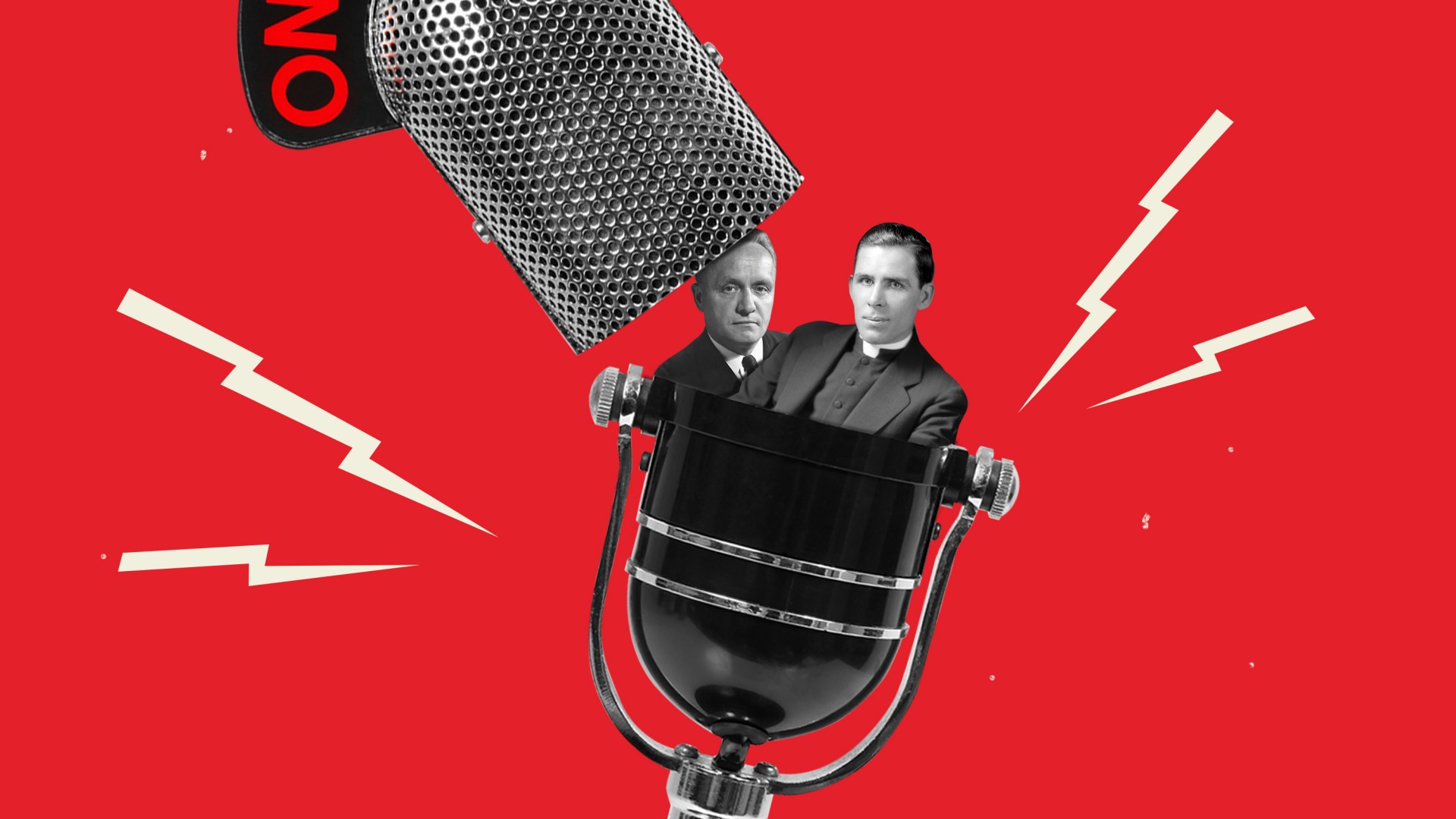
Illustration by Mallory Rentsch / Portrait of Walter A. Maier Courtesy of Lutheran Hour Ministries / Source Images: WikiMedia Commons / Valerie Loiseleux / Getty

In the 1930s and 1940s, two of the most widely heard preachers in America were also two of the most unlikely candidates for such fame. Fulton Sheen and Walter Maier were both sons of immigrants, both seminary professors specializing in ancient languages, and both from historically oppressed religious traditions. But through the power of radio—which was then a novel mass medium—they reached millions of listeners and ultimately reshaped the trajectory of conservative religion in America.

Ministers of a New Medium: Broadcasting Theology in the Radio Ministries of Fulton J. Sheen and Walter A. Maier

Ministers of a New Medium: Broadcasting Theology in the Radio Ministries of Fulton J. Sheen and Walter A. Maier

IVP Academic

368 pages

Their story is told in Kirk Farney’s compulsively readable dual biography, Ministers of a New Medium: Broadcasting Theology in the Radio Ministries of Fulton J. Sheen and Walter A. Maier. Maier, born to German immigrants, showed early academic promise and attended Concordia Seminary (the flagship seminary of the Lutheran Church—Missouri Synod) before completing a PhD at Harvard Divinity School. Being part of a still largely German-speaking Lutheran church was an obstacle given public suspicion towards German-American immigrants during and after World War I. Maier, seeking to establish his patriotic bona fides and to “register his disapproval of the Prussian military clique,” joined the US Army as a chaplain. Yet he promptly pushed the limits of official toleration by ministering to German prisoners of war.

After the war, Maier joined the faculty at Concordia Seminary, where in 1924 he convinced the school to apply for a radio license, financing station KFUO with money fundraised from faculty, students, and alumni. Maier’s early adoption of radio as a means of outreach quickly paid off. Within a few years, his show, The Lutheran Hour, aired on stations nationwide, first on the CBS network and then on MBS, reaching an estimated audience of 20 million by the time of Maier’s death in 1950, making him the most-heard religious broadcaster in America at the time.

Similarly, Fulton Sheen, born to an Irish-Catholic immigrant father, had to navigate public hostility towards religious outsiders. While Maier faced exclusion as a second-generation German immigrant, Sheen was a target for enduring American anti-Catholic prejudice. He studied ancient languages at St. Viator College and the Catholic University of America before earning a PhD while studying Thomistic philosophy at the University of Louvain in Belgium. After a brief spell as a small-town curate, he began a professorship at Catholic University and quickly became an in-demand speaker at church conferences, school commencements, and Knights of Columbus ceremonies.

Thus, when the NBC network asked the National Council of Catholic Men in 1930 to select speakers for a dedicated Catholic spot on the network’s lineup, Sheen was a natural choice. His winsome and yet firm approach to explaining the Catholic faith was needed after the eruption of anti-Catholic prejudice following the failed 1928 presidential bid of Al Smith, the first Catholic nominee of a major American political party. Almost overnight, Sheen’s sermons reached over seventeen million Americans, making him a household name and leading Pope Pius XI to bestow the honor of papal chamberlain.

Ending the religious civil war

Contemporary observers compared Maier’s and Sheen’s preaching acumen to the famously “golden-mouthed” early church father John Chrysostom, high praise indeed for these two scholars of ancient languages. Today, we might instead say that they were the Billy Grahams of their era, anticipating Graham’s combination of anti-communist rhetoric, celebrity endorsements, and a commitment to traditional doctrines in implicit opposition to modernist theology.

During World War II, Maier condemned “atheistic Communism” to “the same hell to which it leads,” while Sheen warned his audience to be wary that their wartime Russian allies might be a “Trojan Horse” for public acceptance of communism. Both preachers also focused on offering a positive appeal while providing accessible explanations of traditional Christian doctrines like atonement and biblical inspiration. Privately, both Sheen and Maier were quite critical of liberal preachers like Harry Emerson Fosdick, but while on the air they avoided making explicit attacks on other religious groups except in the broadest of terms. Farney quotes historian Robert Handy calling Maier the “missing link” between the evangelistic bookends of the 20th century, Billy Sunday and Billy Graham.

But Sheen and Maier shared a deeper similarity. After a lifetime of navigating exclusion—whether anti-Catholic or anti-ethnic—they had each developed a deep-seated commitment to pluralism and religious liberty. It was not hard for them to remember that they were strangers in a still-strange land even as they used a new mass-communication medium to carve out a more tolerant home. This is one of the powers of a novel mass media; it allows previously marginalized groups—who are often more willing to experiment given that the older pathways to influence are barred to them—to win greater public acceptance.

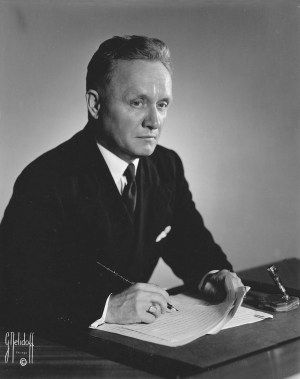
Walter A. MaierCourtesy of Lutheran Hour Ministries
Walter A. Maier

It is telling that the Lutheran Laymen’s League—a core backer of Maier’s The Lutheran Hour—worried that the radio ministry of the Jehovah’s Witnesses reached more people each week than there were Lutherans in America. Thus, Maier seized on radio as an opportunity for Lutherans to abandon their “inferiority complex” and their “German complex” to “work for the upbuilding and strengthening of the two greatest institutions in the world, the American Government and the Lutheran Church.” Radio was a vital mechanism by which peripheral religious groups could assert social belonging and lay claim to the oft-unfulfilled American promise of religious liberty.

Religious radio also played a fundamental role in the forging of new religious identities, creating formations that would have seemed alien to prior generations. Farney highlights the way that Maier and Sheen contributed to the gradual decrease of the longstanding interfaith prejudice between Catholics and Protestants. A third of Sheen’s audience was non-Catholic, and both men routinely received complimentary listener letters from the opposite tradition.

This was by design. As Sheen said, “A few decades ago Christianity’s struggles were more in the nature of a civil war…between Methodists and Presbyterians, Lutherans and Anglicans, and in a broader way between Jews, Protestants, and Catholics.” But now, “face to face with an invasion, an incursion of totally alien forces who are opposed to all religion and all morality”—a not-so-veiled reference to Communism—the religious civil war must end. Maier and Sheen were participants in the creation of what historian Kevin Schultz has called “Tri-Faith America,” which welcomed both Jews and Catholics into the previously Protestant religious consensus via the Cold War logic of national resistance to atheistic totalitarian encroachment. Although a fuller rapprochement between Catholics and Protestants would not come for another generation, Maier and Sheen prepared the way for a time when “Judeo-Christian” would become a political and religious identity framed in opposition to secular humanism.

The Lutheran Hour and The Catholic Hour also played vital roles in establishing what it meant to be Lutheran and Catholic in America. Sheen’s broadcasts helped break down the old ethnic divisions between Catholics—as Poles, Italians, Irish, and other immigrant communities felt joined via a broader communion of the airwaves. Likewise, Maier encouraged distinctively German Lutherans to think of themselves as part of a larger, evangelical whole. His sermons routinely quoted non-Lutherans from a wide range of denominations, including Fanny Crosby, Charles Wesley, and Dwight Moody. Furthermore, Maier played a significant role in the creation of the National Association of Evangelicals; as I have written elsewhere, the very idea of a “new evangelicalism” was rooted in a pragmatic defense of the right of religious broadcasters to purchase radio airtime. Thus, over the course of just a few decades, religious radio fundamentally reshaped what it meant to be Lutheran, Catholic, evangelical, and Christian in America.

Maier’s and Sheen’s role in the development of new, imagined religious communities hinged on the unique power of radio to create the impression of intimacy. Farney calls it “perceived intimacy” to describe the way listeners felt a personal relationship with broadcasters, people who they had never met before but whose voices still suffused their homes and lives. They responded by mailing in letters and donations, sharing their fears and hopes with their favorite radio preachers. Sheen had a full-time staff of 22 people dedicated to opening and answering the three-to-six thousand letters he received from listeners a day, while Maier got 30,000 letters a week. Both Sheen and Maier routinely read excerpts from listener letters on the air, even using them as the basis for sermon topics.

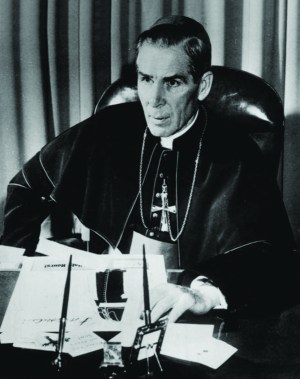
Fulton J. SheenWikiMedia Commons
Fulton J. Sheen

This anticipated the talk radio format that would flourish later in the 20th century, along with its capacity for creating a sense of shared community and perceived intimacy between broadcaster and listener. While that intimacy might seem artificial at best and dangerous at worst, given the pernicious influence of interwar radio demagogues like the antisemitic Father Charles Coughlin, Maier and Sheen serve as a reminder that the same technology could be used for better ends. And today, in an age when politicians and church leaders can use social media to bypass traditional media gatekeepers and speak directly to a new mass audience, both sides of that coin are worth remembering.

Optimism and wonderment

If there is one weakness in Farney’s analysis, it is that he attributes the success of religious radio to the unique genius of the individual broadcasters rather than to broader structural factors. Thus, he implies that it was something about Maier’s and Sheen’s “biblical, theological, and topical content” that won them a mass audience. Yet while it is true that their learned irenicism aided their success, it was necessary because of the requirements of institutional gatekeepers at the major radio networks and the Federal Radio Commission. Farney does parse the distinction between free “sustaining” airtime given away to favored broadcasters (including Sheen) by the major networks and those broadcasters (like Maier) who merely sought the right to purchase airtime.

But in either case, Maier’s and Sheen’s decision to avoid direct attacks on other religious groups complied with the mandates of government regulators and network executives who believed that radio should serve the national interest by decreasing sectarian tensions, promoting Americanism among immigrant communities, and avoiding radical political opinions. In other words, Maier and Sheen conformed to the structural incentives erected by the radio industry and its regulators, who were interested in creating model, moderate citizens. By contrast, other religious broadcasters, like the muckraking Reverend Robert “Fighting Bob” Shuler on Station KGEF in Los Angeles, lost access to the airwaves for intervening in local politics and criticizing the Catholic Church. The growing post-World War II religious consensus exemplified by Sheen and Maier was itself a product of restriction, exclusion, and regulation, and not merely the product of their powerful personalities.

While the idea of technological disruption in American religion is hardly novel, the sense of optimism and wonderment that accompanied the rise of religious radio feels alien today. Farney opens with a compelling description of Maier’s inaugural broadcast on KFUO radio at a ceremony at Concordia Seminary, where a biplane zoomed overhead in what one observer described as “a conjunction of a living past with the vibrant present.” Or as a German-language Lutheran magazine wrote, “Times change, and we change with them. But God’s Word remains forever.” Some were wary of deploying the new technology for kingdom purposes, like Maier’s fellow Concordia professor Theodore Graebner, who warned of introducing the temptation of radio, “widely employed in the secular, commercial world,” into Christian homes.

But Maier and Sheen were techno-optimists who saw that radio could be a tool for effective evangelism and pastoral edification, a veritable “Church of the Air” (to borrow the CBS network’s name for its regular religious programming in the 1930s). As Sheen put it, “Radio has made it possible to address more souls in the space of thirty minutes than St. Paul did in all his missionary journeys.”

It is hard to imagine conservative Christians in the 21st century sharing that same sense of optimism about digital and social media. Rather, digital substitutes or complements for church life—streaming services, Zoom small-group meetings, augmented-reality gatherings—are often regarded as merely temporary measures for dealing with pandemic restrictions or as dangerous alternatives to a religious life centered around in-person gatherings and a traditional worship calendar. Yet Maier and Sheen serve as a reminder that it is possible to embrace a new technological medium with tempered eagerness—and to immense and salutary effect.

Paul Matzko is a research fellow at the Cato Institute and the author of The Radio Right: How a Band of Broadcasters Took on the Federal Government and Built the Modern Conservative Movement.

News

At Canadian Megachurch, One Abuse Investigation Spurs Another and Another

UPDATE: The Meeting House reports on further evidence of sexual abuse by two former senior pastors, including a case involving a minor.

The Meeting House leaders offer updates and respond to questions at a June 7 community gathering.

The Meeting House leaders offer updates and respond to questions at a June 7 community gathering.

Christianity Today June 27, 2022
YouTube screenshot / The Meeting House

Update (August 15): Follow-up investigations have uncovered additional abuse at The Meeting House, with one case involving a victim who was a minor.

The Canadian megachurch reported on Saturday that a second investigation into former pastor Bruxy Cavey substantiated two instances of sexual abuse, one involving an underage victim, and one of sexual misconduct. An investigation into former senior pastor Tim Day—who resigned in 2015 and didn’t participate in the probe—also found evidence of sexual abuse.

Cavey stepped down earlier this year and awaits trial in Hamilton, Ontario, for a prior report of sexual assault. The church board has also contacted police about the minor victim.

Senior leaders and the board spoke at a church town hall on Sunday night. While they did not share specifics about the allegations, board cochair Jennifer Hryniw stressed that the third-party investigations were vigorous and thorough.

“What we’re talking about is abuse,” she said. “We’re not talking about misunderstood comments.”

In March, when The Meeting House reported on the results of the first investigation into Cavey, it had characterized his abuse as “an abuse of power and authority by a member of the clergy” and “sexual harassment.” Those terms were derided by many victims and advocates as diminishing the findings of the investigation.

The church now uses the term “sexual abuse by a church leader,” defined by the Mennonite Central Committee as “any sexualized behaviour that occurs within the church context and where one party has more power than the other.”

The definition considers sexualized behavior to be “any physical contact, bodily movement, or verbalization that uses sexual expression to control or intimidate the less powerful person in the relationship. The acts involved may be overt, involving actual physical contact of a sexualized nature or covert, as in pornography, sexual innuendo, or inappropriate disclosures of a personal nature regarding sexual matters.”

In its statement on Saturday, The Meeting House board said the events in the first investigation into Cavey also qualify as “sexual abuse by a church leader.”

“We wish to commend the first victim for coming forward, and for opening the door for others to come forward. We know she has endured so much in this process,” the board said in its statement. “We truly apologize to the first victim for the length of time this has taken.”

Though there are no current investigations into past church staff, The Meeting House’s victim advocate, Melodie Bissell, has continued to receive reports. At its last town hall meeting in June, the board told the church that Bissell had received 38 reports. Some reports were about identical instances, and not all were about sexual misconduct or abuse. Victims who have requested compensation to cover costs of counseling have received it, the board said.

Also in June, the church reported that it had given some compensation to the Cavey family. On Sunday night, board cochair Bruce Miller reported that that compensation has now ended. Day did not receive compensation, the board said. Victims who have requested compensation to cover costs of counseling have received it, the board said.

The board said it is continuing to revise its staff policies and training practices and will have more updates at the end of September.

——–

Original post (June 27): Reeling from the arrest of their former teaching pastor, Bruxy Cavey, for sexual assault, and a growing number of sexual misconduct allegations against other previous pastors, leaders at The Meeting House are looking for ways to move forward.

“We are deeply sorry for the abuse and harm that has occurred, be it sexual, emotional, or spiritual in our church family,” Jennifer Hryniw, cochair of the board of overseers, recently told the congregation, which operates in 20 locations across Ontario. “We are deeply sorry for how many of these stories have been handled in the past. We continue to be humbled to now be the stewards of these stories.”

The Meeting House was supposed to be a humble kind of church. The Canadian Anabaptist congregation was built around movie theater venues and home gatherings and led by a modest pastor with long hair and baggy clothes.

But during the past few months, The Meeting House has been put to shame by the allegations of clergy sexual abuse.

Despite The Meeting House’s slogan of being “a church for people who aren’t into church,” it was often recognized for its high production value, its facilities, or having “all of the answers,” noted Quincy Bergman, a pastor at its Oakville, Ontario, headquarters.

“That creates almost—and I feel it in myself sometimes and in others—a smugness of who we are,” he told the congregation earlier this month. “God has a way of humbling you when you think you are too big for your britches.”

Cavey, a 57-year-old “hippie pastor,” was the face of the church and its pastor since 1996, before going on leave last December when an allegation against him was brought to the church board. He resigned March 3 following an independent, third-party investigation that found he had had an inappropriate, ongoing sexual relationship with an adult woman in the congregation.

Then, on May 31, he was arrested. Police said they believed there were numerous victims and encouraged people to come forward. The church has declined to say more but directed people with relevant information to the police. Cavey’s first court appearance was scheduled for Monday.

The findings of his misconduct would have been enough to unsettle the well-known Canadian evangelical congregation. But the allegations didn’t end with him.

At the start of June, church leaders told the congregation in a livestreamed meeting that their third-party victim advocate—enlisted in the wake of the investigative report against Cavey—had received 38 reports. They include additional allegations of sexual misconduct against Cavey, as well as against former senior pastor Tim Day and former youth pastors Kieran Naidoo and David Churchill. (The latter two had previously faced criminal charges for sexual offenses involving minors.)

As a result of the reports, The Meeting House launched another investigation into Cavey in mid-March after two other women came forward with allegations against the former teaching pastor. A third allegation was later added to the investigation. A separate investigation into Day was launched in May.

Leadership and membership upheaval

The revelations come at an already challenging time for the multisite church, struggling to rebuild after pandemic shutdowns restricted in-person gatherings, hurt giving, and led to staff layoffs. The church now plans to operate at 60 to 70 percent of its previous budgets and to restructure.

As a result of COVID-19, some of its regional sites have found new locations, and some continue to gather outside. Many members are only meeting virtually, tuning into well-produced livestreamed services from the church’s main site in Oakville.

Leaders are emphasizing transparency and repentance. Preaching during Lent focused on lament; June’s sermon series, “Afraid of the Dark,” included teaching about the need to expose sin and hypocrisy. Pastors and worship leaders have spoken frankly during the services about the grief and anger they are experiencing.

The Meeting House boasts a weekly attendance of 6,000 across sites, but attendance has barely begun to recover from pandemic disruptions. The emerging allegations, as well as leadership changes, have hurt morale.

Prior to Cavey’s confession and resignation in March, Danielle Strickland, a teaching pastor at The Meeting House since 2019, resigned “in solidarity with the victim of the abuse” and has gone on to advocate for the victim, who uses the pseudonym “Hagar.”

Then senior pastor Darrell Winger announced he would leave at Easter, part of a retirement plan unrelated to the allegations against Cavey. Board of overseers chair Maggie Johns resigned at the end of March, saying the “relational and emotional toll” of the investigation had “confirmed” it was time for her to step down.

While the church has stripped Cavey’s content from its digital platforms—a move both praised and criticized by members—some fear it could take years for The Meeting House to “disentangle” its reputation from its fallen pastor and form its own identity.

Darcie Dow, from The Meeting House’s Ottawa location, says the church’s identity as Anabaptist provides a strong foundation for future growth.

While the congregation has seemed to “tower” over its Anabaptist denomination—Be In Christ (BIC)—their tradition’s emphasis on following Jesus simply in community can provide a way forward and allow the church to become more compassionate and humbler, she said.

Victims ‘shamed and rejected’

In churchwide gatherings and Sunday services at individual locations, The Meeting House leaders have continued to express remorse and heartbreak as they learn more about the lasting effects of alleged abuse within their church.

The 38 additional allegations that have been made—including repeated reports from multiple people about the same incidents—relate to past staff members. They include instances of sexual misconduct, adultery, and emotional abuse, all resulting in spiritual harm. Some reports have nothing to do with abuse but raise concerns about relational breakdowns in their church communities.

The board has heard about “brave individuals who tried to address the culture of immorality in the past and they felt shut down and alienated by the church,” said Hryniw, the board cochair. “Each story we’ve read causes us deep grief, but we know it’s only a fraction of the pain that the victims, both men and women, have experienced.”

Collectively, the reports also reveal “a skew to prioritizing the care and wellbeing of offenders over victims,” Hryniw said. “There are multiple stories of victims who felt shamed and rejected by the church while the offender was supported through so-called restoration.”

Tim Day, who had served for 14 years alongside Cavey during the peak of the church’s growth and left it in 2015, was named among the accused. He left his current job at WayBase, a tech company that helps churches and Christian ministries, on June 9.

“We have very limited information related to this matter and have no additional comments,” WayBase said in a statement. “We continue to pray for everyone involved.”

Kieran Naidoo and David Churchill, the other pastors named in allegations, have not worked at The Meeting House for several years. Naidoo was arrested in 2012 and charged with four counts of luring and four counts of sexual exploitation, invitation for sexual touching and possession of child pornography, and possession of a controlled substance.

He was later arrested in January 2021 and charged with one count of sexual exploitation related to his time as a youth pastor at a Baptist church in Toronto between 2002 and 2005, prior to his employment at The Meeting House.

Churchill was charged with sexual assault in 2014. He was working at The Meeting House’s Oakville site at the time and was dismissed when the church learned of his alleged inappropriate contact with a teenage girl.

Hryniw told the church that both Churchill and Naidoo had been convicted.

The church’s board has a subcommittee dedicated to responding to incoming complaints, but it has not been able to do so within the 30-day time period it originally promised. Another subcommittee is reviewing and revising supervision, accountability, and training policies.

Church leaders also said that they compensated Cavey and his family after his departure. The details are confidential, Jared Taylor, the church’s communication pastor said in an email to CT. “The investigation found that Bruxy had abused his power,” Taylor wrote in the email. “We stand behind these findings. The rationale for support was to demonstrate compassion to the Cavey family as a whole.”

Melodie Bissell, the independent victim advocate, continues to hear from church members with concerns. She writes reports describing their desired outcomes and informs them about the process to escalate their allegations if they want to do so. The church board’s victim advocacy committee reads each report and determines next steps. (Editor’s note: The reporter of this piece also writes for Bissell’s abuse prevention organization Plan to Protect on a project-by-project basis, but not involving The Meeting House.)

Bissell told CT last month that she has “little doubt that the overseers mean what they say when they say they have zero tolerance for any form of abuse or sexual misconduct happening at the church.”

She and others have praised the church for immediately placing Cavey on leave when allegations were brought forward, hiring a third-party investigator, and responding to further allegations.

Former pastor Danielle Strickland has been much more critical of the process, saying the church minimized Cavey’s actions and didn’t prioritize victims.

Her new initiative, Hagar’s Voice, has connected with at least 30 survivors of clergy sexual abuse, according to its cofounder Angela Lam. Hagar’s Voice involves survivors, licenced social workers and counselors to offer prayer, listening, and support and advocacy for whistleblowing and disclosure.

Lam previously served at the Jesus Collective, the church leadership network founded by and based out of The Meeting House. She said she believes recent trauma-informed practices as well as its display of remorse during the June 7 meeting are signs that The Meeting House is learning more about how to better respond to victims.

Hagar’s Voice has gone on to “raise the voices of survivors” across churches and ministries. The organization “wasn’t launched out of a protest against the Meeting House,” Lam said, noting that clergy sexual abuse is larger than any one church.

Moving forward as ‘walking wounded’

In March, Be In Christ released a public statement about the allegations, reiterating that none of the named pastors are currently credentialled with the denomination. BIC removed Cavey’s credentials when he resigned in March, and Day voluntarily surrendered his when he learned about the allegation against him.

Though The Meeting House has an outsized place in the denomination—it’s at least ten times larger than the next-biggest church—and Cavey himself was “the leading spokesperson for Anabaptist theology” in the words of BIC leadership, the group did not mention the allegations during its annual meeting last month and has stated that his situation is not representative of a larger problem.

“I don't think we have a systemic issue,” said BIC’s executive director Mashinter. “I don't even believe there was a systemic issue at the Meeting House.”

Cavey was the only celebrity pastor the denomination had, he said, describing the former pastor as a “gentle soul” with a “hippie pastor” persona who came to celebrity “unwillingly.”

Cavey was an unconventional megachurch leader. During The Meeting House’s exponential growth throughout the 2000s, he held “purge Sundays,” encouraging casual attenders to either get involved or find another church. While many flocked to the church to listen to the tattooed preacher, congregants were also challenged by him; members recalled how they would spend their drive home debating Cavey’s teaching.

Mashinter doesn’t blame Cavey’s public downfall on his place in the public eye.

“There’s pastors that fall. Unfortunately, it has been (this way) since the beginning of the church,” said Mashinter, who has remained in touch with Cavey since his arrest and says he doesn’t want to minimize the charges against him. “Temptation affects everyone. I don’t think anybody escapes that.”

The Meeting House is considering structural changes as a result of the investigations. The church needs to focus on “operating in pockets of strength,” said Karmyn Bokma, the new senior interim pastor. Currently, the church’s 20 sites operate independently. “But it’s safe to say that we’re moving into a regional framework moving forward.”

While details are still being finalized, Bokma and Matt Miles, senior interim director, told the congregation they can expect The Meeting House to be restructured into possibly six distinct regions, each with its own leadership. Each region will have at least one location for Sunday morning gatherings. Home churches, children’s and youth ministry, and compassion projects will be offered at each, but there will be room for regional differences.

As a multisite church, grieving the pain of the upheaval at The Meeting House “looks different depending on where you are,” said Darcie Dow, children’s ministry coordinator at The Meeting House’s Ottawa location.

Dow and her husband, Keith, started attending the church in 2009, a few months after the Ottawa site launched. That location—which recently moved from a movie theater and now rents space from a United Church of Canada congregation—is the farthest from the Greater Toronto Area and most of the other locations.

She said she agrees with the decisions to hire a third-party investigator and appreciates the senior leadership team’s desire to communicate transparently about the investigations and their response to them. But “Oakville’s grief is like a riptide right now,” she explained in late June. “Anytime you start to get some distance, it just pulls you back.”

Everyone is “walking wounded right now” she said—first from the isolation of the pandemic, and then from constant reminders that, even as they meet together again, no part of church life is the same. These losses have made responding to the allegations particularly difficult, she said.

While Dow is grateful for how Cavey’s teaching introduced her to Anabaptist theology and helped strengthen her faith, her experience at The Meeting House doesn’t revolve around the pastor she only met a half dozen times.

She hopes that fellow members can also find comfort and support in the church beyond its fallen leaders.

“I hope that they’re humbled enough to recognize the wisdom that’s been in their midst the whole time from these pastors that have been shepherding communities and doing pastoral care and working these things out in their local areas for long before The Meeting House, and who’ll be doing it long after,” she said.

But along with the hope for the church’s future, there’s also an expectation that things could remain difficult as the church continues to reckon with allegations. Back at the Oakville site, Bergman referred to the process as an “excavation season.”

“It may sound crass,” the pastor said, his voice breaking with emotion, “but it’s like we need to dig up the bones, in order for us to plant a garden with beauty and light.”

News

Praying Football Coach Wins at Supreme Court

Conservative majority says Washington school was wrong to worry about “excessive entanglement” between church and state.

Christianity Today June 27, 2022
Drew Angerer/Getty Images

Update (June 27): The US Supreme Court ruled 6 to 3 on Monday that a high school coach’s post-game prayers on a football field were in-bounds.

Joseph Kennedy’s prayers are protected by the First Amendment’s right to free speech and free exercise of religion, the court decided. The coach didn’t coerce any Bremerton, Washington, high school players into praying, so the school district was wrong to try to stop him from practicing his Christian faith.

“The Constitution neither mandates nor tolerates that kind of discrimination,” Justice Neil Gorsuch wrote for the conservative majority, citing a 1992 precedent. “Learning how to tolerate speech or prayer of all kinds is part of learning how to live in a pluralistic society,’ a trait of character essential to ‘a tolerant citizenry.’”

According to Gorsuch, the ruling would have been different if Kennedy had forced students to join him or said his prayers as part of his official coaching responsibilities. But state employees don’t lose the right to say private prayers of thanksgiving just because they work for a public school.

“Mr. Kennedy prayed during a period when school employees were free to speak with a friend, call for a reservation at a restaurant, check email, or attend to other personal matters,” Gorsuch wrote. “He offered his prayers quietly while his students were otherwise occupied.”

Justice Sonia Sotomayor wrote a sharp dissent, joined by justices Elena Kagan and Stephen Breyer. Despite the characterization in the majority opinion, Kennedy’s prayers weren’t actually brief, quiet, or private, she said.

The dissent included three photos of Kennedy surrounded by praying players. In one, he stands in the middle of a huddle of kneeling students, his right hand raising a football helmet above his head.

“The record reveals that Kennedy had a longstanding practice of conducting demonstrative prayers,” she wrote. “Kennedy consistently invited others to join his prayers and for years led student athletes in prayer at the same time and location. The Court ignores this history.”

Because the conservative justices misconstrued the coach’s approach to prayer, they also missed how coercive it could be, Sotomayor argued. Just because the coach didn’t explicitly order anyone to pray doesn’t mean there wasn’t real social pressure.

As recently as 2000, the Supreme Court said that even student-led prayers at a football game could be coercive. And in at least two famous precedents, the court held that non-mandatory religious activities—a moment of silence in class and the recitation of a prayer or Bible verses—put too pressure on children to conform, violating their First Amendment rights.

“Kennedy’s free exercise claim must be considered in light of the fact that he is a school official,” Sotomayor wrote. “His right to pray at any time and in any manner he wishes while exercising his professional duties is not absolute.”

The court has previously used the “Lemon test” to reach decisions in cases like this. The 1971 decision said governments should avoid “excessive entanglement” with religion.

The Washington school district’s lawyers argued this was a reason officials had to stop Kennedy’s prayers. His free exercise of religion came into conflict with the school’s responsibility to prevent “excessive entanglement,” and not violate the establishment clause of the First Amendment.

Gorsuch, however, rejected the “Lemon test.” He wrote that it was too ambitious, abstract, and ahistorical to be useful. The proper way to apply the First Amendment is to look at the “original meaning and history,” with “reference to historical practices and understandings.”

—–

Original report (April 25): The US Supreme Court justices spun more than a dozen hypothetical prayer scenarios during oral arguments in Kennedy v. Bremerton School District on Monday.

They asked the lawyers arguing for their respective sides if a teacher could pray before class or after, silently or out loud, in a clear voice or a low mumble.

They asked if coaches could pray on the sidelines, in a press box, or a huddle. If they could pray with a prefatory statement that student participation wasn’t required. Or with the sign of the cross, the words of the Our Father, or hands lifted high. Could they pray with a crowd, into a mic, into a camera, with a group of players gathered around, or if no one was there and they were alone?

Justice Stephen Breyer, pointing out that the court has ruled on prayer in schools several times before, said, “This doesn’t seem like a new problem; it seems like a line-drawing problem.”

And then one of the justices even asked about literal lines drawn on the ground. Justice Sonia Sotomayor wanted to know why Washington state high school coach Joseph Kennedy insisted on praying in the center of the field, at the 50-yard line.

“He had to thank God,” she said. “But why there?”

The real line the court was trying to find, though, wasn’t marked with field paint. The justices tried to push the lawyers and each other to agree to a point where prayers protected by the First Amendment could be separated from prayers prohibited by the protections of the First Amendment.

Everyone agreed that the coach has a right to pray, but only as an individual and not as a representative of the public school, and not in a way that would coerce students into a religious practice.

“You’re not disputing the right of the school district to discipline Coach Kennedy if he were praying during the post-game talk, that the school can discipline him for that?” Justice Elena Kagan asked Kennedy’s lawyer, Paul D. Clement.

“That’s right,” Clement said. “Because it would be government speech.”

Richard B. Katskee, the attorney representing the suburban Seattle school district, argued that the prayers would be mistaken for official policy, since the coach was on duty, and that even if they were personal, they could still be coercive. Students feel the pressure to please their coach, he said, and they know the coaches make critical decisions about playing time that can affect college applications, scholarships, and the rest of the students’ lives.

“The coach is an amazingly powerful figure, with immense coercive authority,” he said. “The students know you have to stay in the good graces of the coaches.”

The justices debated whether the praying coach was really coercing his students. Justice Brett Kavanaugh pointed out there was no evidence that the coach preferred students who joined him at the 50-yard line, nor any effort to get all the players to join.

“This wasn’t ‘Huddle up, team,’ which is a common coach phrase, but this wasn’t that,” Kavanaugh said.

“No,” Katskee said, “but does the coach have to say that for the students to miss that?”

According to Clement, however, when the school district disciplined the coach, it noted that sometimes he prayed surrounded by students and sometimes no one joined him. The students clearly didn’t feel coerced, he argued. The school just didn’t like public prayers.

“There’s no evidence of coercion contemporaneously,” he said. “There’s no evidence of coercion in this record. The sole basis for the government’s action was religion.”

The Supreme Court has consistently sided with religious liberty advocates in recent years, and the 6-to-3 conservative majority is widely seen as sympathetic to religious plaintiffs. Some recent cases have also won unanimous or near-unanimous backing from the divided court. Last year, all of the justices sided with a Catholic adoption agency that argued it should not be required to place children with same-sex couples. This year, the court ruled 8-1 for a death row inmate who wanted his pastor to lay hands on him at the time of his death.

The court is expected to rule in Kennedy v. Bremerton in early summer.

News

Court Dismisses Suit Against Platt’s McLean Bible Church

While the DC-area congregation celebrates getting to move forward, critics continue to accuse leadership of a liberal takeover.

David Platt preaches at McLean Bible Church in June.

David Platt preaches at McLean Bible Church in June.

Christianity Today June 27, 2022
YouTube screenshot / McLean Bible Church

The year-long legal fight between McLean Bible Church and a faction who accused leaders including David Platt of a “theological takeover” has come to an end.

On Friday, a Fairfax, Virginia, court dismissed a lawsuit from a group of current and former members of the Washington DC-area megachurch, who contested a June 2021 elder election for allegedly violating church bylaws. Pastors announced the outcome across its locations on Sunday.

“I’m incredibly grateful for the courage of our church in staying together and persevering, in pursuing peace in ways that required numerous steps of faith, and for trusting God all the way through to the actual dismissal of the lawsuit,” said Wade Burnett, a lead pastor at MBC.

Earlier this month, the church requested the case be thrown out after redoing the election at the center of the legal challenge. Burnett said the group that filed the suit would not agree to meet for reconciliation or to discuss a dismissal.

A lawyer for the plaintiffs had said MBC’s response “fails to be even a pretense of a good-faith offer to resolve the case” and called it “a continuation of the Board of Elders’ determination to avoid transparency and accountability at all costs.”

Members of Save McLean Bible Church, a Facebook page for critics of current MBC leadership, have alleged a Southern Baptist takeover of the 60-year-old nondenominational congregation and liberal drift in its teachings, pinned to Platt coming on staff in 2017.

They suggested the process for last summer’s elder election—as well as the recent redo—were designed to uphold selections aligned with current leadership. “To no surprise to anyone, the elders put up by David Platt and the MBC leadership win in a landslide,” one post remarked.

Commenters on the page were disappointed by the suit’s dismissal. One post quoted Ephesians 6:12 and said, “Praying for the remnant. For those who are working to reveal the truth and seek righteousness. Satan is working overtime to thwart your plans and destroy you.”

The debate over the contested election for three new elders has been a proxy for concerns around the direction of the church after the retirement of its longtime pastor Lon Solomon five years ago. Last summer, former elder Mark Gottlieb said the church—once known as a hub for Capitol Hill evangelicals—had become a “stripped-down version of what it used to be” with “left of center” leadership making decisions that the rest of the congregation disagrees with.

The factions at McLean, as CT previously reported, reflect broader political and cultural tensions within evangelicalism, particularly around racial justice, with pastors participating in a Christian march following George Floyd’s death in 2020.

“I know that many churches across America have faced and are facing similar challenges during these days, and it is vitally important that we move past division and live out John 13:35, demonstrating love for one another and love for a world in need of Jesus,” Platt said in a statement on Monday, commending the church for resolving the conflict “as biblically and peacefully as possible.”

Last year, Platt spoke from the pulpit against his critics, saying they had launched a misinformation campaign against the three elder candidates who initially failed to receive a clear 75 percent majority vote to be elected. He referred to emails circulating that accused the candidates of wanting to turn the church into a mosque and a message claiming, “MBC is no longer McLean Bible Church, that it’s now Melanin Bible Church.”

In the lawsuit, plaintiffs claimed MBC barred some opponents from voting in a follow up election held in July 2021 and that its board purged members “with no measurable standard for making the determination the Constitution requires” and “with the sole intent of predetermining the outcome of the Meeting.”

Courts aren’t often the ones to adjudicate matters of church bylaws, but Sarah Merkle, an attorney and professional parliamentarian, told CT in 2021 the incident highlights the importance in any church of establishing and following sound voting procedures.

MBC had told members that the suit was “without merit” since the petitions requested in the lawsuit are not mentioned in the church’s constitution and that such accommodations would contravene church leadership.

The three elders recently resigned at the direction of a churchwide vote and were put up for a new vote along with this year’s nominees; all six were elected on June 6 with more than 86 percent in favor, the church said.

Because the court granted MBC’s motion to dismiss the case against them, “the lawsuit is now over and cannot be refiled,” according to a press release from the church.

addApple PodcastsDown ArrowDown ArrowDown Arrowarrow_left_altLeft ArrowLeft ArrowRight ArrowRight ArrowRight Arrowarrow_up_altUp ArrowUp ArrowAvailable at Amazoncaret-downCloseCloseellipseEmailEmailExpandExpandExternalExternalFacebookfacebook-squarefolderGiftGiftGooglegoogleGoogle KeephamburgerInstagraminstagram-squareLinkLinklinkedin-squareListenListenListenChristianity TodayCT Creative Studio Logologo_orgMegaphoneMenuMenupausePinterestPlayPlayPocketPodcastprintremoveRSSRSSSaveSavesaveSearchSearchsearchSpotifyStitcherTelegramTable of ContentsTable of Contentstwitter-squareWhatsAppXYouTubeYouTube