News

New York Shuts Down Embattled Olivet University Campus

After a money laundering case and dozens of lawsuits, the Christian college founded by David Jang is under new scrutiny from Christian accreditors.

Olivet University's New York property sits on 3,000 acres in the Hudson Valley.

Olivet University's New York property sits on 3,000 acres in the Hudson Valley.

Christianity Today July 6, 2022
Courtesy of Olivet University

New York shut down troubled Christian college Olivet University’s campus on June 30, citing financial mismanagement and “a well-established pattern of non-compliance with laws, rules, and regulations.” In a letter denying Olivet’s appeal of the state’s decision, New York cited more than 50 lawsuits filed against Olivet over the past decade and 20 tax liens.

Olivet in a statement to CT said the state’s letter was “without regard to accurate facts.”

The school was founded by pastor David Jang, whose Olivet church is connected to a web of nonprofits and businesses, including media companies like Newsweek and the International Business Times. The wife of a former Olivet trustee had promoted Jang as a messiah who will complete God’s earthly mission, according to former members of Jang’s community.

Olivet University is based in California but has extension campuses around the country, including in New York, where the campus has operated since 2012. Historically many of Olivet’s students were Asian with student visas. The school has no relation to Olivet Nazarene University in Illinois or Olivet College in Michigan.

Like fellow businesses and ministries linked to Jang’s movement, the university has had high-profile legal problems in recent years. In 2020, a school trustee and an affiliated business partner pleaded guilty to money laundering charges, related to fraudulently obtaining $35 million in financing for Olivet University. The school itself also pleaded guilty to two charges related to the fraud and agreed to pay a $1.25 million fine.

After that case, the leadership of the school largely remained the same—a factor New York cited in its decision to shut the upstate New York campus down. The state had been reviewing Olivet’s case for two years.

Olivet said in a statement to CT that it is “completely debt-free” and that New York’s statements about its financial management were “deeply and inherently flawed.”

“Comparing to other Christian schools, Olivet University is in good financial shape. And as its audited financial statements show, OU operates from a firm financial foundation,” the school stated. “We felt the denial itself was likely directly influenced by misinformation from Newsweek's reporters, and was unfair.”

In April, Newsweek reported that the school was under a Department of Homeland Security investigation for money laundering, human trafficking, and visa fraud. Agents looked into whether Olivet’s international students spent more time working for less than minimum wage than studying at the university. Charges have not been made in the case, and Olivet said the raid was based on “misinformation.”

Through all of this, Olivet University has retained its accreditation through the Association for Biblical Higher Education (ABHE), but the latest news could spell trouble.

In February 2020, ABHE put the school on probation, saying Olivet failed to document its financial stability, governance, oversight, and the portion of income “allocated to educational programs and purposes.” In November of last year, ABHE restored Olivet to good standing, based on an ABHE visit to the California campus and the school’s self-reporting of remedial actions.

But with the recent headlines over the Homeland Security investigation, ABHE discussed Olivet at its June 22 meeting. Now it says that it has taken an action related to the school, but the school has a chance to respond before ABHE will announce its decision regarding Olivet’s status.

“We are aware of the allegations against Olivet, and we are in the process of working through actions related to those things,” Lisa Beatty, the executive director of the ABHE’s commission on accreditation, told CT.

Beatty said the ABHE treats media reports about an institution as a complaint against the institution, so that’s how the Newsweek report triggered a review of the school even though the agency had removed it from probation in November.

Beatty added that federal investigations into ABHE schools were an “atypical” situation. She said ABHE takes its watchdog role “very seriously” and “we have removed institutions from accredited status within the last 4 years. We have also sanctioned institutions, including this one in the recent past.”

New York’s standards in terms of shutting down Olivet differ from ABHE’s accreditation, she said. If ABHE removes Olivet’s accreditation, that would apply to the institution as a whole—so all seven remaining branch campuses would lose accreditation.

A media battle is also happening through all of this. The same day that New York shuttered the state’s Olivet campus, IBT Media sued for control of Newsweek.The CEO of IBT Media is Johnathan Davis, the husband of the former president of Olivet University Tracy Davis, and Newsweek’s CEO is Dev Pragad, a former Olivet member. Olivet-affiliated sources have claimed that Pragad is trying to take down Olivet with negative coverage of the school. Last month, Newsweek also covered criminal charges against an Olivet pastor. (Update: This week Newsweek also sued IBT Media, with allegations that Jang’s community was trying to hamper Newsweek’s reporting on Jang.)

Olivet’s roughly 3,000-acre New York property houses several ministry operations, including the World Evangelical Alliance headquarters. Last month, the WEA hosted top Korean evangelical leaders on site. The WEA declined to comment on the shuttering of the campus.

In acknowledging the end of “a good, 10-year run in the state of New York,” Olivet said in a statement that it had “always envisioned multiple uses for our Dover (New York) location beyond the school itself.”

The New York campus itself had fewer than 50 students enrolled when the state shut it down, according to the state’s documentation. Students couldn’t complete full degrees there–only seven MBA courses and seven MDiv courses. Olivet has said its New York campus is “stepping back from offering credit-bearing courses for now” but is still seeking a full charter as a New York institution instead of as a branch campus of the California school. Olivet said it has invested $70 million in the campus.

Aside from the WEA headquarters, the school said it had plans for “a technology park and Christian innovation center, a hospital to serve the mission community, a ‘business as mission’ center, a sports center, and an evangelical themed museum, and an entertainment complex, among others.”

The nonprofit school has a half dozen associated businesses, including its own development arm, Dover Greens, which has focused on the build-out of its large property in the Hudson Valley.

The Department of Labor fined Dover Greens $700,000 in 2016 for exposing workers to asbestos and lead, a violation the NY DOE referenced in its letter to the school. Olivet stated to CT that all the lawsuits cited in the NY letter related to “the campus management company” and were paid in full or settled.

Thomas Bakewell, a lawyer and CPA who has advised Christian colleges in crisis for decades, said he usually cautions against money-making ideas that are too far from the mission of a school.

“I’ve gotten calls for many years from Christian schools and colleges, saying, ‘We want to get creative. How can we make money doing this, doing that.’ The answer is, you make money doing your business,” Bakewell said. Looking to the ABHE review of Olivet, he is most curious: “What do they say about their academic programs? Are they good?”

ABHE thought so back in November 2021, but Beatty said about Olivet, “It is a complex institution.”

News

Charlie Dates Returns to the Chicago Church that Shaped Him

While continuing to lead Progressive Baptist, the 41-year-old pastor was named the successor to James Meeks at Salem Baptist Church, one of the city’s biggest congregations.

Christianity Today July 6, 2022
Courtesy of Charlie Dates

After the retirement of its founder James Meeks, fellow South Side pastor Charlie Dates will become senior pastor of one of Chicago’s biggest megachurches, Salem Baptist Church, returning to the ministry that shaped him as a kid and succeeding one of his greatest mentors in the faith.

Meeks has led the African American congregation, now at nearly 10,000 members, since its founding in 1985. He announced in June that he will give his last sermon on January 8, 2023.

Speaking with CT, Dates drew parallels to Paul and Timothy, referencing Paul’s instructions to the younger leader based on what he had witnessed firsthand in ministry.

“This isn’t something that I read or something that I watched; this is a ministry that I participated in and had a front row seat to as a kid,” said Dates, who grew up at Salem and attended its former school, Salem Christian Academy.

In addition, the 41-year-old also served under Meeks as primary preaching assistant, pastor of adult ministries, and director of church operations at Salem Baptist before becoming senior pastor at Progressive Baptist Church in 2011.

“There’s something about the formation of my mind and my theological heart that is directly shaped by and impacted by watching all of that, and working in all of that, as I came of age,” he said. “It’s kind of like a kid learning a language; when you’re immersed in the language, no one has to tell you what words mean and what signals mean.”

To start, Dates will keep his current post as senior pastor at Progressive Baptist Church, a 15-minute drive from the House of Hope arena where Salem Baptist meets. The two churches will remain separate, and he plans on preaching two sermons each Sunday.

CT interviewed him about the history of the two congregations and his call to lead Salem Baptist.

What specifically attracted you about this role at Salem Baptist?

Part of what I’m learning and discerning about God’s direction for one’s life is to pay close attention to the bend of one’s spiritual biography. How has God moved and worked in one’s life? So for me, what attracted me was God. It seems to me that God has been up to this, directing this well before I could tell.

Could you describe your relationship with Meeks? How has he influenced you?

I think part of this is connected to what attracted me to Salem Baptist. It is the work of that church, but it’s also Reverend Meeks, the pastor of that church. We have—I think—a very Paul and Timothy kind of relationship. I want to be clear though, I’m not saying I’m the only Timothy he has, in the same way that Paul had others. Neither am I saying that he’s the only significant influence in my life. But I do sense and feel that a lot of the progress that I’ve been able to make in the pastorate is connected in some way to his tutelage, his leadership, and his spiritual fathering, so to speak.

My relationship with him is dynamic. It’s humorous, it’s rewarding, and it’s worth more than the price of gold or platinum. What I benefit from is far greater than just a tip from him here or there; it’s more of a model of a life lived.

What lessons or advice has he already passed along about leading Salem Baptist?

That Salem is a loving church ready to work. When I came to Progressive, it took me a while to actually get my feet under me because of some of the history and nature of the church, and it required a lot of patience and long-suffering initially. I think the distinction is that I can serve Salem well by loving her through the preaching ministry and pastoral care, and she will follow. She’s ready to work. That’s not always the case when you assume a pastorate.

How do Salem Baptist and Progressive Baptist compare, and what makes you a fit for both congregations at this moment?

I would rather not compare them, only because I wouldn’t want to say the wrong thing and have someone read it and judge my intent. What I will say is that Progressive and Salem demonstrate the spectrum of Black churches in Chicago. On one hand, Progressive is what I would call progressively traditional, and Salem is traditionally progressive.

Progressive is a church of five generations. Progressive was once, decades ago, the kind of leading force of churches on the South Side. Around the country, people run into me and tell me, “Oh I got baptized at that church,” or “Oh, I remember Sunday school at that church.” Its legend and its lore is huge. But—and this is no secret—for years it stayed in the vein of its history. It took a while for it to reimagine and revitalize and become relevant again. But the bones are good.

Salem has not lost its relevance, Salem has not lost its edge, while maintaining a very high view of Scripture and its very Christo-centric approach to ministry. Its evangelism, its benevolence, its disciple-making have all been very Christo-centric and rooted in the Scriptures. It’s been anchored in the community. Progressive got insulated at one point. It’s no longer that way—we are very much in the community now—but that’s the way it was.

After 11 years at Progressive and watching more than 1,000 people join that church in that time, it’s fair to say that I carry the DNA of both churches. It’s fair to say that I understand the dynamics of congregational leadership and development in both churches. I’m not saying that I’m perfect, forever, for both churches. I’m just saying that at the juncture we’re in and being a son of the soil of Chicago and a son of Salem, and now having pastored Progressive, I just think I have a unique understanding and relational dynamic with both churches.

How do you use that significance, and history of these two churches in the city, to drive the future?

Every church that lives in the past is already anchoring itself in the graveyard of history. I think history, much like the end of Romans, is meant to teach us what God can do. To correct us from repeating errors and to inspire and to encourage us to pursue God’s great promise. If I can help these churches recognize God’s hand in their past as a kind of indication of God, of what God wants to do in the future, then I think I can hand it off to the next generation in good fashion.

If, however, I fail to get the churches to see that our history serves our present and inspires our future, then I’m in trouble. On one hand, the legacy has to continue. We’ve got to be able to have our 12 stones from our “Chicago Jordan River,” with a keen eye on the hills and mountains of Jericho and the other cities in Canaan.

What challenges do you anticipate with the dynamic of pastoring two congregations? And how have you begun planning to deal with those challenges?

I don’t know if I’d recommend this to anybody. I need to say that this is not an ambition of mine. Neither is it a premeditated desire of mine. As I prayed through it, Reverend Meeks and I wrestled with it, and he graciously affirmed my sense of discernment. As I prayed about it, I got no inkling that it was time, just yet, to walk away from Progressive. It’s important to highlight that this is not conventional. And I recognize that.

What I do sense is that there’s still work to be done and vision to accomplish at Progressive at the same time that I begin my assignment at Salem. The first challenge is getting the churches to sense that where God gives a vision, there’s always provision. That somehow God grants the capacity and that God grants the resources and support. But it would be foolish to assume it’s humanly possible to do this in and of myself. I plan to lead through leaders.

One of the benefits at Progressive is that the operations of the church and systems and structures of the church, the day-to-day operations, are free to move independent of me. I am more of a vision-casting, preaching, pastoral care pastor. I’m not in the weeds at Progressive. I have to lead through my leaders.

My approach at Salem will be similar once I have learned again the way of the land. There’s just no way you can pastor a church that big being involved in all of the details, right? The other thing is, in terms of preaching, I plan on preaching two services on Sunday morning: one at Progressive and one at Salem.

Are there things at Progressive you will have to step away from? How will your role there look different?

Two things. No. 1 is my itinerant ministry will take a reduction, and I will be present locally a lot more, which I’m looking forward to. Another thing is I don’t think this dual assignment is in perpetuity. We’ve already started the conversation that, at some point, the goal is to raise up leaders to do more work. I’m working to discern God’s direction as it relates to timing of when to conclude. Progressive has asked me, when the time comes, to help them to find their next pastor. With teary eyes, I just told them I hope that they accept my recommendation when that time comes.

You talked a bit about both churches’ significance to Chicago. How are you hoping to continue to cultivate that with both congregations?

Chicago needs the Black church to be her best and brightest self. It’s more than just Progressive and Salem. Chicago has rich Black churches throughout the South and West sides, in particular. I think these churches, with the history, the power, and relevance they have, can help shape a pipeline and platform for developing young people, young leaders, teachers, preachers, music ministry leaders, and nonprofit developers that Chicago needs these churches to develop across platforms. These churches are a gift.

You know, at one point, Progressive had the strongest and largest Christian discipleship ministry in the city. And the same for Salem, which might still have it. These have been disciple-making churches with an emphasis on Christian education. Both of them have produced some stalwart Christian leaders and teachers. That history is enormous. Progressive’s … buildings were built without a dime of debt at a time where Black people could not get a loan from a bank. The pastor of Progressive at the time, his name was Reverend T. Brown, he was such a dynamic leader in the city that he was able to tell [former Chicago mayor] Richard J. Daley, “No.” And live to tell about it. They both, in that regard, have a history of absolutely incredible pastors. Pastoral leadership is a storied pillar in both of these churches.

What other things do you want to highlight to your current and future congregations and the readers of CT?

It’s a sensitive time for both congregations, and I want to convey as they read this my love for both of them. I recognize this moment is big, and it’s watershed, but it is not about me. I am on assignment to lead the church forward in Chicago. I want to say it is an honor to even be considered, let alone asked, to succeed the Reverend James T. Meeks.

I also want to suggest that Chicago, and America, needs churches that are developing and reproducing young pastors, that we become more intentional about it. And that’s part of the beauty I think of this story. I don’t come out of thin air to either church; you can trace my lineage.

The beauty of this narrative is that the Lord, in his kindness and his grace, has taken pastors and churches to develop me. If we could look at the current moment and seize the opportunity to develop young people that God has laid his hand upon, then I think the best days of the church, in this critical culture, are in front of us.

We’re living in a time where so many young people are walking away from the church and where church attendance numbers are in the dumps. Our seminaries, many of them are in decline. And while we are kind of watching this great falling away, we don’t have to merely watch it. But we can actually press into the current culture and lead our young people and train them to lead a revolution for the kingdom and the glory of God.

News

The Pro-Life Movement Faces Blue State Backlash

As the national pro-life movement celebrated, activists opposing abortion in blue states watched years of setbacks happen in a few days. Still, they are finding different ways of winning.

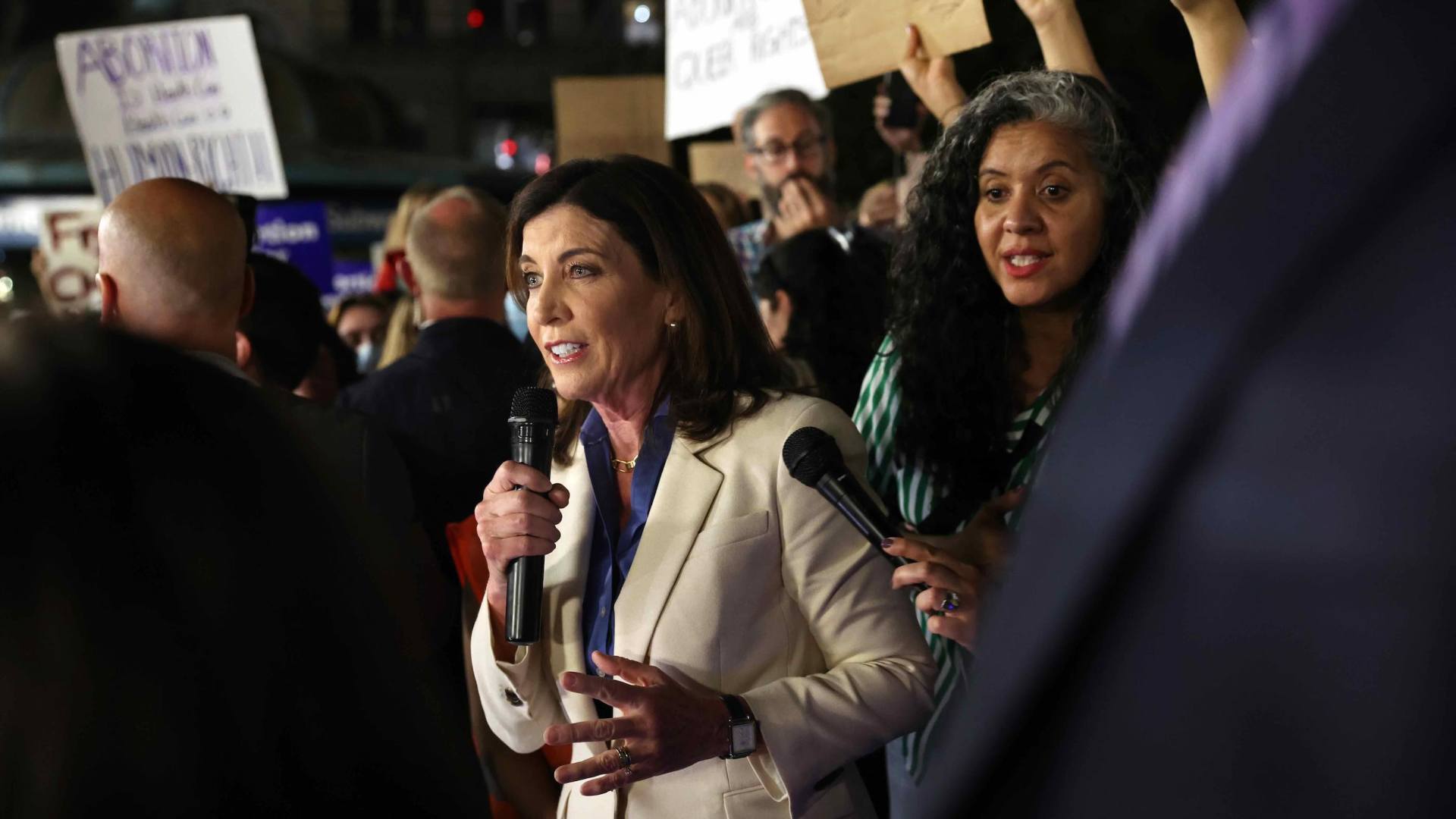
New York Gov. Kathy Hochul speaks at a protest against the Supreme Court decision in Dobbs v. Jackson.

New York Gov. Kathy Hochul speaks at a protest against the Supreme Court decision in Dobbs v. Jackson.

Christianity Today July 1, 2022
Spencer Platt / Getty Images

As pro-life groups nationally celebrated the overturning of Roe v. Wade, and as pro-lifers in red states debated how far to go with abortion restrictions, pro-lifers in blue states are watching setbacks they think will take years to undo.

Pro-life lobbyists in states such as California and New York are dealing with a deluge of legislation expanding abortion access—reducing licensing requirements for abortion providers, adding public funding for abortions, shielding abortion clinics from liability for out-of-state patients, and creating state commissions to investigate crisis pregnancy centers.

Blue states are also considering constitutional amendments on abortion rights, which pro-lifers worry would hurt their cause for decades. At this moment, no US state has named abortion protections in its state constitution. The states debating such amendments already have abortion codified in their laws, but adding it to the constitution would keep abortion protected even if political power in the state changed and the legislature reversed its abortion laws.

“In New York and California and other states, it’s like working under Newton’s third law of motion,” said evangelical Jason McGuire, who leads New Yorkers for Constitutional Freedoms. McGuire has worked for 16 years in the state legislature on stemming abortion laws, often the lone lobbyist on the issue alongside the New York Catholic Conference. “Every time something good happens at the national level, we know there’s going to be some pushback at the state level.”

The legislature in Vermont, where abortion is legal up until birth for any reason, passed a constitutional amendment earlier this year stating that “an individual’s right to personal reproductive autonomy is central to the liberty and dignity to determine one’s own life course.” That amendment now goes to voters in November.

Mary Beerworth has worked with Vermont Right to Life since the mid-1980s and became the executive director in 1996. She jokes that she has been working on pro-life issues in Vermont for “I think 112 years.” She said when legislators would see her and her one coworker approaching about the constitutional amendment on abortion, “They put in their earplugs.”

In all her years working on the issue, she has never seen pro-life legislation pass. The state had legal abortion through court order a year before Roe, and in the decades since then, “abortion rights were never endangered.”

After Dobbs, Beerworth’s organization was happy for the decision but didn’t stop to celebrate. She and her colleague watched the other side hold rallies. The ruling “has done a tremendous amount of damage,” Beerworth said, in how it affected Vermont.

The Supreme Court decision gave Vermonters impetus to vote for the constitutional amendment, which she sees as vague enough about “reproductive autonomy” to create all sorts of problems beyond abortion (for example, she notes that the amendment does not specify adults and could include minors).

But Beerworth talked herself into peppiness again, saying that with the general election battle over the abortion amendment, her group can educate more voters to know that Vermont legalizes abortion in all circumstances: “They’ve given us an opportunity here.”

In California, Molly Sheahan, the California Catholic Conference’s lobbyist on abortion issues, also felt the strange juxtaposition when the Dobbs decision came down at 7 a.m. her time on June 24. She felt “gratitude to God”—after 49 years of work from the pro-life side—but then said to herself, “All right, what’s next?” She knew she had business in the legislature to attend to.

The Monday after the Dobbs decision, California passed a constitutional amendment establishing an individual’s “fundamental right to choose to have an abortion” that will also go to voters for approval in November. The Catholic conference said the language was so vague that it would legalize abortion up until birth.

The California Family Council, a Christian organization led by evangelical Jonathan Keller, has joined the campaign to oppose the amendment, also focusing on the fact that the language would allow abortion until birth. Keller was feeling optimistic about the issue being by itself on a ballot, without a candidate attached to it: That might allow it to cut through normal partisan, socioeconomic, and denominational divides on abortion. Pro-life groups need to run a good education campaign, he said.

“This basically makes it impossible to regulate or protect women and children in any capacity,” he said. In California, “functionally, abortion is legal essentially for almost any reason whatsoever. But … this would make this explicit. It’s bad when the killing is done through loopholes, it’s worse when it’s affirmatively declared within the constitution itself.”

The constitutional amendment had so many sponsors when it was introduced that Sheahan knew the legislature already had the votes for it to pass. She turned her lobbying attention to what she said was a record number of abortion bills in a California legislative session: 19.

Thirteen of the bills came from the California Future of Abortion Council, a coalition of pro-choice groups, and included measures like funding to expand the workforce providing abortions and setting up additional abortion funds and grants. The Catholic bishops of California stated that “by providing extensive funding for abortion services without any corresponding equitable funding for pregnant women and mothers, the state exercises a destructive, coercive power in favor of ending innocent lives.” Sheahan was testifying against the bills the same week Dobbs came down.

Earlier in June, New York passed a large package of abortion legislation, including the authorization of a state commission to investigate the negative impact of crisis pregnancy centers. New York City’s Department of Health describes crisis pregnancy centers as “fake clinics … that try to stop people from getting abortions.” The centers have been subjects of firebombing and vandalism since Dobbs.

Pregnancy centers, pro-life and usually Christian affiliated, serve women in need at no cost. They provide counseling (including post-abortive counseling), donations, housing support, and often a range of health services like STD testing and ultrasounds. In New York, they are required to post signage about whether they have licensed medical staff.

One week after Dobbs, the New York legislature called a special session . One topic on the table was a constitutional amendment that included abortion rights. Unlike California and other states considering abortion amendments, New York faced significant opposition to the amendment from Christian groups and an Orthodox Jewish group, Agudath Israel. The religious groups argued the amendment—a general “equality” amendment that lists protections for choosing abortion alongside other protected classes—did not list religion as a protected class alongside the other rights.

The final version of the amendment included religion as a protected class alongside “pregnancy, pregnancy outcomes, and reproductive health care and autonomy,” a grab bag of words to try to cover abortion, contraception, and beyond. Catholics and evangelicals continued to oppose the amendment.

New York legalized abortion before Roe v. Wade, and in recent years it has made state abortion laws more expansive, removing certain licensing requirements for those performing abortions and making abortions legal up until birth for the life or health of the mother.

McGuire worked for years with his Catholic counterpart to combat those expansions, codified in the Reproductive Health Act. A coalition of Republican and Democratic legislators (including one key Jewish senator) blocked the act until it finally passed in 2019 when Democrats took a bigger majority.

Pro-life activists in blue states take the victories they can find.

“People will think it’s just a constant uphill battle; it’s challenging and defeatist,” said California’s Sheahan, who grew up in Sacramento. She doesn’t feel that way. “It’s my home, it’s worth fighting for. There’s always hope.”

Even California’s abortion amendment she saw as an opportunity to provide legislative testimony and talk to voters ahead of the November ballot.

“You’re finding different ways of winning,” she said.

Building a social safety net is one way of winning in a blue state. Sheahan has been working on other measures in the legislature on increasing hotel vouchers for homeless pregnant mothers, upping visiting hours for incarcerated moms with their kids, and expanding paid family leave for low-wage workers.

Legislators take her seriously on safety net legislation because they also know that the church is a large provider of social services on its own. The California Catholic conference put together a website in response to the expected reversal of Roe with resources for Catholics looking to help mothers, donate items to youth in foster programs, and support pregnancy centers or the church’s rental assistance programs.

The New York Catholic Conference’s Kristen Curran, who has been lobbying against abortion measures in the legislature, said red states could learn from blue states on building a safety net for families.

“Make it safer and more doable to bring children into this world and raise them,” Curran said.

The evangelical McGuire supports measures like tax credits for families and other measures to keep families intact. He noted that New York Governor Kathy Hochul put millions into funding out-of-state abortions but not “helping mothers in this state who are choosing life.”

“We see it as a long game,” said Curran. “Even though we know it’s a loser on the legislative stuff, we still come out and issue statements, I go on the news. We want to serve as a source of reminder to people what is at stake here.”

Even as New York debated an abortion amendment, advocates for an abortion amendment in Michigan announced they had enough signatures to put the amendment on the ballot for voters in November.

Vermont Right to Life’s Beerworth tries to stay focused on what she can do. In the 1980s, Vermont had about 3,500 abortions a year. Now, it’s about 1,200.

“I keep my energy up because really the goal is dropping the number of abortions. And that’s what we’ve been doing all these years,” she said. “If the law says abortion is legal and there are zero of them, we win.”

News

Advisory Panel: No More Canadian Military Chaplains Who Believe in Conversion, Male Leadership

Evangelicals object to “extremely troubling” proposal that would exclude many religious groups.

A Canadian soldier trains Ukrainian fighters.

A Canadian soldier trains Ukrainian fighters.

Christianity Today July 1, 2022
Stringer / SPTNK / AP Images

Religious groups in Canada are asking the minister of National Defence to reject an advisory panel’s recommendation for redefining military chaplaincy.

The panel, made up of four veterans, said the military should stop hiring chaplains who believe that polytheists should be converted to Christianity or who think church leadership should be restricted to men.

“The Defence Team … cannot justify hiring representatives of organizations who marginalize certain people or categorically refuse them a position of leadership,” the report said. “These faiths’ dogmas and practices conflict with the commitment of the Defence Team to value equality and inclusivity at every level of the workplace.”

Cardus, a Christian think tank, wrote a letter to the National Defence minister Anita Anand calling these recommendations “extremely troubling” and “explicitly prejudiced.”

It is not the government’s business to tell its soldiers what to believe or not to believe, Brian Dijkema, vice president of external affairs at Cardus, said to CT. “That’s just wrong.”

According to Dijkema, the report demonstrates “a very ignorant understanding of what religions actually do when they talk about their faith” and attempts to push out anyone “who believes that their faith is true and that others should be persuaded of it,” he said.

The advisory panel was not asked to look specifically at the chaplaincy when it was formed in December 2020. It was tasked with identifying the policies, practices, and procedures that enable systemic racism and discrimination. The authors noted, though, how many LGBT people, indigenous people, and women could speak of traumatic religious experiences. And they argued that some religious groups just aren’t compatible with the Canadian military’s commitment to diversity.

The panel also recommended hiring more chaplains from non-Abrahamic faiths and a reevaluation of some educational requirements. The Canadian military has had a multifaith chaplaincy since 2003. While chaplains are affiliated with specific religions or denominations, they serve the spiritual needs of all military members, regardless of their religion. The military does not track the religious affiliation of its members.

Steve Jones, the national president of the Fellowship of Evangelical Baptists and the director of the denomination’s chaplains, said he was “blindsided” by the report’s recommendations. The Fellowship has had military chaplains for decades—its chaplaincy directory lists nine currently—and has a good relationship with the military, he said.

The Baptist chaplains are committed to working with people with diverse beliefs and religious traditions. So it was “very disappointing,” Jones said, to read the report’s assumption that “monotheistic faiths are faith groups that are somehow not for inclusion or accommodating or loving, that they’re somehow intolerant and go out of their way to discriminate.”

As it’s written, the report implies that most of the current chaplains are in conflict with the military’s commitment to equality and inclusivity.

“The majority of serving chaplains are from faith groups the report deems unacceptable,” said the Evangelical Fellowship of Canada in a statement objecting to the recommendations. “Many who serve in the Canadian Armed Forces, like citizens in the general population, are adherents of traditions that would fall within the ambit of this report. The Canadian Armed Forces reflects the diversity of Canadians. Should all who belong to these faith traditions also be excluded from serving in the military in any capacity?”

But it’s not only Christians who have concerns. Marvin Rotrand, national director of the League of Human Rights at B’nai Brith Canada, the country’s oldest independent Jewish organization, said the report “is pushing a form of intolerance and bigotry.”

“It’s not up to the authors of this report to tell the Jewish community what it should believe and how it should believe that,” he said to CT. “We don’t need their approval.”

Rotrand echoed calls for the National Defence minister to clearly, publicly denounce the report’s recommendations.

In a statement to CT, the minister’s spokesperson said the Defence Team is not planning to limit the religious denominations that can serve as chaplains.

“Chaplains from a wide range of faiths have served the members of the Canadian Armed Forces, and will continue to do so in the years to come,” spokesperson Daniel Minden said in a statement. “Minister Anand believes that the chaplaincy should represent Canada’s diversity, uphold the values and principles of the military, and provide CAF members with access to spiritual or religious guidance if they seek it, regardless of their faith.”

At the same time, the spokesperson emphasized the minister’s appreciation for the advisory panel’s “hard work in producing this final report.”

The department has wanted to increase diversity for a while. A report based on a survey of select military chaplains and military members conducted in January and February 2021 by the Department of National Defence found that chaplaincy is “highly valued by most, although a minority believe the chaplaincy is no longer needed and should be replaced by secular mental health experts or social workers.”

This report—which was not included in the advisory committee’s report—noted the need for more diversity among chaplains. But the survey also found that “the large majority of CAF members did not feel their ethnicity, gender or sexual orientation affected the level of support they received from the chaplaincy, including most women, visible minorities, and Indigenous people.” Half of the LGBT military members who responded to the survey said they received adequate support and care from the chaplaincy services they received. Twenty percent of LGBT members said they felt their sexual orientation impacted the quality of care they received.

Chaplains already go through an extensive vetting process, in part to ensure that they are prepared to work with a wide range of people from a wide range of religious beliefs. Candidates have to get an endorsement, for example, from their own religious organization, then the Interfaith Committee on Canadian Military Chaplaincy, then the Canadian Armed Forces recruiting center. The candidacy process takes between months and years.

As a matter of fact, chaplains help promote inclusion in the military, said Gerald VanSmeerdyk, who served as a chaplain in the Canadian Armed Forces from 2008 to 2021 and was stationed throughout Canada and deployed to Afghanistan.

“They’re an asset,” he said. “Not a liability.”

VanSmeerdyk, who now chaplains at a long-term care facility in British Columbia, joined the military chaplaincy after 14 years pastoring churches with the Christian Reformed Church in North America. Once, when he was deployed to Suffield, Alberta, a training base for both Canadian and British forces, he advocated for the creation of a multifaith chapel when he saw the religious needs of Muslim British soldiers weren’t being met.

“We minister to our own, we facilitate the worship of others, and we care for all,” VanSmeerdyk said. “I believe that the advisory report would have been worded differently if there had been an extensive investigation into the process of hiring suitable candidates for the chaplaincy.”

Working as a chaplain in a public setting like the military is different than pastoring a church, where the assumption is that everyone belongs to the same faith.

Chaplains don’t “overtly try to convert someone to any religion,” explained VanSmeerdyk. Their goal is to care for people’s needs, whether religious needs or otherwise.

Because chaplains earn soldiers’ respect by living and training with them, it can be a natural environment to have conversations about faith. VanSmeerdyk said the soldiers he ministered to knew that he was going through the same things they were. One year, he was home with his family for only 23 days.

Gerry Potter, president of the Military Christian Fellowship Canada and a retired colonel who served in the military for 35 years, said he hopes churches see this report as a call to better support military members and their families. The secularization of Canada is making chaplaincy harder, he said, and many Protestants in the military struggle to talk about their faith.

“I think that there is an increased or increasing need for the Church—capital C—to gain a better understanding of this segment of Canadian society,” Potter said.

News
Wire Story

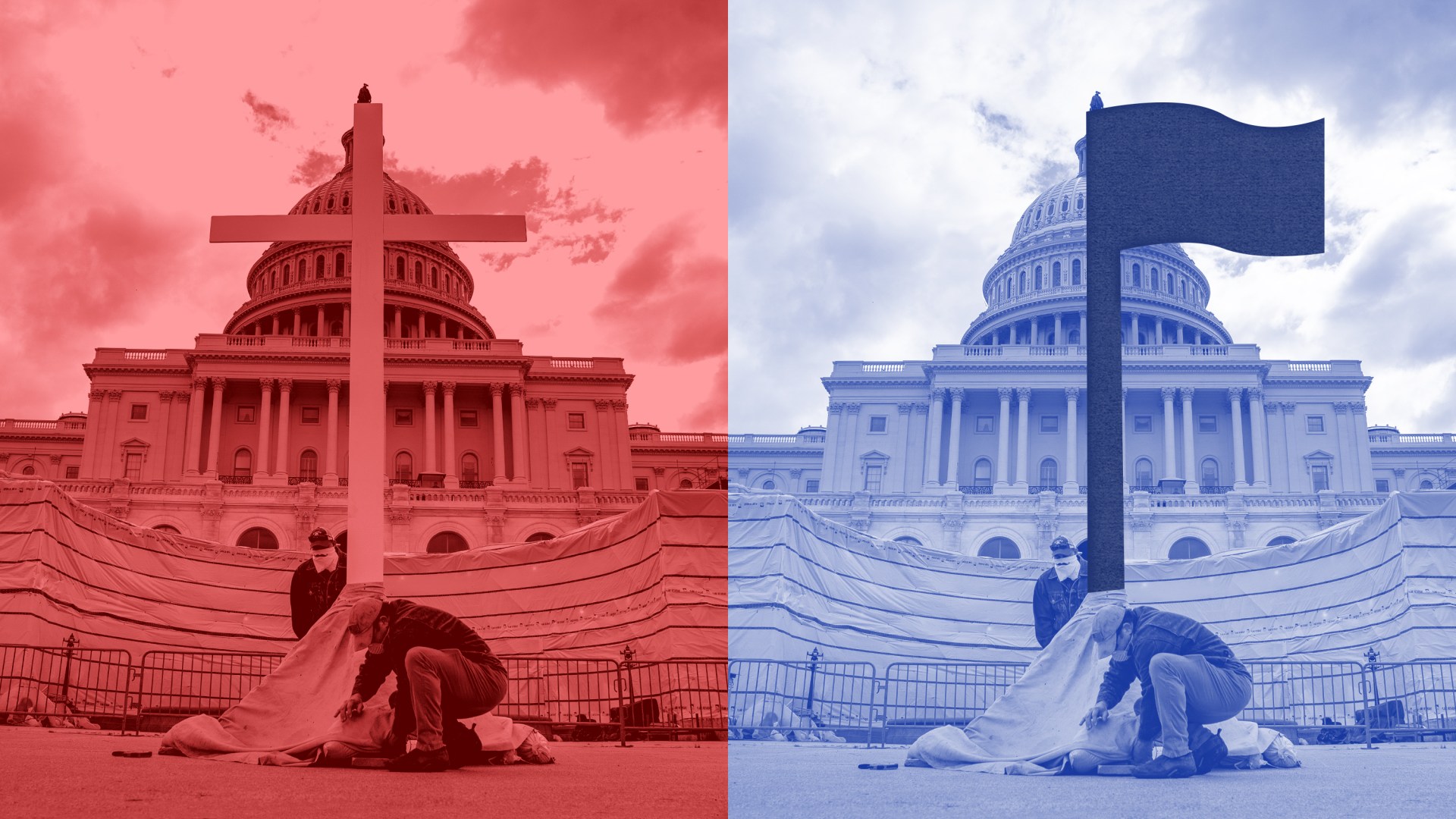
Fewer Churches Put Patriotism on Display for July 4

Though two-thirds are OK with flying the flag year-round, pastors have become more divided over Independence Day celebrations since 2016.

Christianity Today July 1, 2022
Matt Mawson / Getty Images

Protestant pastors say they will worship God and honor America at church services this weekend, and they’re not too worried churchgoers will confuse the two.

Most pastors (56%) say it’s important to incorporate patriotic elements into worship services the week of July 4th to celebrate America, including 27 percent who strongly agree, according to a Lifeway Research study of 1,000 US Protestant pastors.

Two in five pastors (42%) disagree, and 2 percent aren’t sure.

These findings represent a small decrease from a 2016 Lifeway Research study, when 61 percent of pastors felt such worship service elements were important.

“While not a date on the Christian calendar, most Protestant churches adjust their worship services to acknowledge the birth of the United States each July,” said Scott McConnell, executive director of Lifeway Research. “For most churches, it isn’t just tradition. The majority of pastors agree it’s important to incorporate it into the worship experience.”

https://datawrapper.dwcdn.net/219zE/2

Pastors with no college degree (70%) or a bachelor’s degree (67%) are more likely to see elements celebrating America as important than those with a master’s (46%) or doctoral degree (50%).

Evangelical pastors (64%) are more likely than their mainline counterparts (48%) to value timely patriotic elements in the worship service.

Denominationally, Pentecostal pastors (77%) and those at non-denominational churches (70%) are more likely than Methodist (52%), Lutheran (48%), Presbyterian/Reformed (44%), and Restorationist movement pastors (29%) to see value in special Independence Day additions.

Younger pastors, those 18 to 44, are the most likely to say the worship service doesn’t need patriotic additions (65%).

Specific worship service changes

Regardless of their opinions on the importance of patriotic elements, few pastors have worship services as usual the week of Independence Day. For 15 percent of US Protestant pastors, services are no different than other weeks.

Most pastors say the Fourth of July changes involve honoring veterans and their families as well as patriotic music. A majority say they recognize those with family currently serving in the armed forces (59%), include special music honoring America (58%), recognize living veterans (56%), or recognize families who have lost loved ones in service to our country (54%).

Three in 10 pastors say they include other special ceremonies to honor America, and 14 percent make other changes to the service.

“Changes to July 4th church services today are similar to those described by pastors in 2016 with significant emphasis on people who have served in the military,” said McConnell. “The biggest change is fewer churches including special music related to America (58% compared to 66% in 2016).”

For each of the possible worship service changes, pastors 65 and older and those in the South are among the most likely to say their churches make that change.

Pastors at larger churches, those with attendance of 250 or more, are among the most likely to say their worship services the week of July 4th include recognizing those with family currently serving in the armed forces (68%), living veterans (66%), and families who have lost loved ones in service to our country (63%). Meanwhile, smaller church pastors, those with fewer than 50 in attendance (60%) and those with 50 to 99 (61%), are among the most likely to say their worship service changes include special music honoring America.

Younger pastors, 18- to 44-year-olds, (23%) are among the most likely to say their worship services the week of July 4th are no different from other weeks. Additionally, Restorationist movement pastors (31%) are more likely to make no changes than Baptist (12%), Methodist (12%), Pentecostal (10%), and non-denominational pastors (8%).

Year-round flag display

Apart from any patriotic holidays, two-thirds of US Protestant pastors see nothing wrong with flying the US flag in their church all year long. Lifeway Research found 67 percent say it’s appropriate for a church to display the American flag in worship services throughout the year. Another 28 percent disagree, and 5 percent aren’t sure.

The share of those in favor of year-round flag flying in services is down slightly from the 74 percent who supported such displays in the 2016 Lifeway Research study.

“Some denominations offer specific guidance regarding displaying the American flag, but most congregations decide on their own whether it’s present,” McConnell said. “Because a national flag is a symbol, it often means many different things to different people. So, discussions around the reason for its presence in many churches can be just as diverse.”

Generational and educational divides are evident again, as pastors 65 and older (81%) and those with no college degree (79%) are among the most likely to see year-round American flag displays as acceptable.

Love of country or love of God?

While most churches are comfortable incorporating patriotic elements into their buildings and worship services, some US Protestant pastors worry their congregations may be taking things too far. Almost two in five (38%) say their congregation’s love for America sometimes seems greater than their love for God. Almost three in five (59%) disagree, and 3 percent aren’t sure.

That marks a significant decline from 2016 when most pastors (53%) expressed worry their congregation occasionally had more devotion toward their country than God.

“In the last six years, many pastors’ concerns about patriotic idolatry in their congregations have faded,” said McConnell. “Like any idol, the temptation to prioritize, worship or depend on our nation over God can resurface at any time.”

Younger pastors are more concerned than the oldest pastors. Those 18 to 44 (47%) and 45 to 54 (42%) are more likely than pastors 65 and older (29%) to say their congregation sometimes seems to love America more than God.

Pastors in the South (39%), who are among the most likely to incorporate patriotic elements in worship services, and those in the Midwest (42%) are more likely than pastors in the Northeast (29%) to worry about misplaced devotion.

Books
Review

A Patriotism of Compassion, Not Pomp and Glory

Richard Mouw reflects on the moral and spiritual work of loving your country.

Christianity Today July 1, 2022
Illustration by Mallory Rentsch / Source Images: WikiMedia Commons / 9gifts Kevalee / Getty

What is the most appropriate way for a Christian to relate to his or her country?

How to Be a Patriotic Christian: Love of Country as Love of Neighbor

Few questions have caused more heartburn among American evangelicals in recent years, and different voices beckon us to the extremes. On one side, some urge us to reject any forms of patriotism, lest we be accused of adopting some form of “Christian nationalism.” Others urge us to embrace the notion of “God and country” with few, if any, reservations.

Are these the only options for faithful Christians? Richard J. Mouw doesn’t think so. In his new book, How to Be a Patriotic Christian: Love of Country as Love of Neighbor, Mouw wrestles with the responsibilities and challenges that come with living as believers in particular nations.

Christians first and patriots second

Mouw begins by setting expectations. His goal is not to create a how-to guide, but to establish a “safe place for focusing on basic Christian thoughts … about what it means to be citizens in the nation where the Lord has placed us.” He then defines what he means by “patriotic Christian.” One’s Christianity always takes precedence over one’s patriotism; we are Christians first and patriots second. And for Mouw, patriotism is less about being a political cheerleader and more about “belonging to a community of citizens.” Patriotic Christians, then, are members of an eternal kingdom who care for and invest in their earthly homes.

In chapter 2, Mouw looks at what binds us together as a national community. America’s patriotic songs reflect consistent themes: proud memories of our nation’s past, devotion to certain ideals, and even an affection for the beauty of the land. Such ideals unify Americans. In addition, what binds us together isn’t necessarily the state (the set of rules and governing structures) but the nation (the community of people).

Yet the “human bonds” that constitute our nation are fragile, as Mouw indicates in chapter 3. A decline in civility reflects a broader social decline. “The maintenance of a healthy social bond takes moral and spiritual work,” Mouw writes. “And it seems obvious to many who monitor closely the patterns of our collective interactions that we Americans have not been doing the necessary work.” Reweaving the social fabric will take a commitment to love and dialogue with those who are different than us.

Mouw pivots to the Scriptures in chapters 4 and 5. First, he explores key texts such as Mark 12:17, Romans 13, 1 Peter 2, and Jeremiah 29, highlighting their implications for our relationship to nation and state. Next, he observes Scripture’s teachings on the state’s responsibilities to its citizens. As Mouw observes, Psalm 72 highlights similar themes as the preamble to the Constitution, which speaks of “establish[ing] Justice” and “promot[ing] the general Welfare,” among other aims. In light of this overlap, he argues that the Bible allows for more government activity than merely protecting individual rights and punishing bad behavior.

In chapter 6, Mouw urges us to become better arguers. He makes the case for a pluralistic society, since God desires our obedience to be freely offered, not coerced. And in such an environment, we need to have better conversations. Borrowing from G. K. Chesterton, Mouw observes that “we live in an era of much public quarreling but very little arguing.” We need less shouting and more hard conversations.

What about the relationship between church and state? Mouw touches on this question in chapters 7 and 8. First, he tackles patriotism in the church. Should churches display the American flag or sing patriotic songs in worship gatherings? Mouw argues that such patriotic demonstrations are not necessarily wrong if pastors use them as prompts to teach about a Christian’s relationship to his or her nation. Second, he speaks to religion in public life. While many get queasy at notions of civil religion, public displays of Christian religion can be beneficial to the degree that they point us to transcendent moral standards and correct patterns of injustice. “I certainly wish for more to be said in those contexts than the guidelines regulating the public use of religious concepts will allow,” says Mouw, “but I do not want less.”

In the concluding chapter, Mouw acknowledges that questions of patriotism and national identity stir up such strife because they are deeply meaningful. Our “hopes and fears” are wrapped up in our national identity. We are to love America not because she is perfect, but because she is our home. As a result, we weep when we do not live up to American ideals. We push for change. And we pursue a patriotism, not of pomp and glory, but of compassion.

A surprising balance

How to Be a Patriotic Christian is brief, easy to read, and marked by Mouw’s trademark humility and civility. Unlike many books about faith and government, Mouw is not primarily concerned with political positions, parties, or candidates. His goal is to help us wrestle with the big-picture questions of how Christians relate to our nation.

In a world of polarization, hot takes, and anger, Mouw offers a balanced perspective on potentially combustible topics. Yes, God has blessed our nation, but America is not a chosen nation like Israel. Yes, we can love our nation, but we should not whitewash its past. Yes, we need to pursue just laws, but we also need to win people’s hearts and minds. Yes, we can appreciate a pluralistic public square, but all creation is under God’s rule. Yes, we can display flags and sing patriotic songs in worship spaces, but we should be wary of our tendency to idolize these national symbols.

In each of these topics, polarized voices push us to one extreme or another. But Mouw strikes a surprising balance, and in so doing he helps us think more clearly about our relationship to our country.

Most intriguing was Mouw’s perspective on civil religion—that is, public expressions of Christianity in the public square. Some Christians (like myself) tend to be wary of the excesses and abuses of civil religion, and rightfully so. Mouw does not ignore such failures. He observes that some Americans use religious language to paint an inaccurate picture of our country’s history. Others use it to “baptize the status quo.” Expressions of civil religion are often incomplete, offering paper-thin theological reflections.

But Mouw also carefully observes the benefits of civil religion. References to God or biblical concepts in inauguration speeches or national events point Americans to a divine authority outside of us. Appeals to Scripture can catalyze Americans to correct injustices, as witnessed during the Civil Rights Movement. At a minimum, Mouw argues, expressions of civil religion are “reminders of transcendence, serving the purpose of keeping us aware that there is more to our civic engagement than the ebb and flow of popular opinion and practical political strategizing.”

Sometimes expressions of civil religion are harmful, but not always. “Civil religion at its best also points us to future possibilities correcting the mistakes of our past and present,” Mouw writes. In any event, civil religion is a fact of life. The question is whether we will take advantage of it.

A welcome invitation

Given its brevity, How to Be a Patriotic Christian is not an extensive tome on faith and politics. I, for one, longed for more engagement with the Bible itself. Exegesis is an important part of the book, but it does not drive the book’s core argument.

The book also may not be universally applicable. Though he employs illustrations from other countries, Mouw clearly writes as an American to fellow Americans. I wonder how persuasive or beneficial believers from other contexts might find the book.

But for those of us in the American church, How to Be a Patriotic Christian is a needed contribution to the discussion at this juncture. American evangelicalism has fractured and splintered over questions on faith, politics, and our national identity. Angry rhetoric has dominated the conversation, and we no longer have a consensus on what it means to be a patriotic Christian—or if it’s even wise to try to be one.

In times such as these, Mouw’s book is a welcome invitation to rethink these questions. No matter what side of the political spectrum you occupy, How to Be a Patriot Christian will cause you to reconsider your perspective.

Nathaniel D. Williams is pastor of Cedar Rock First Baptist Church in Castalia, North Carolina. He serves as editor and content manager for the L. Russ Bush Center for Faith and Culture at Southeastern Baptist Theological Seminary.

Church Life

I Was Pro-Life In Theory. It Took Much More to Actually Help.

Our convictions, when lived out, will cost us.

Christianity Today July 1, 2022
Petri Oeschger / Getty

On the day I am drafting this essay, I have dinner plans with my friend, a Canadian physician. No doubt our conversation tonight will quickly turn to the recent United States Supreme Court decision, Dobbs v. Jackson Women’s Health. No doubt we will each vigorously defend our opposing opinions about abortion.

My friend, who claims no religious faith, strongly defends a woman’s right to choose abortion. She will talk to me—as she has throughout the 11 years I’ve lived in Canada—about married women who confirm unwanted pregnancies in the ER.

Sometimes, my friend tells me, these patients worry about the economic hardship another child will impose upon the family. Sometimes, having already endured one difficult, even life-threatening pregnancy, they can’t conceive of risking a second (or third or fourth). Sometimes these mothers are already caring for aging parents or a child with special needs and simply can’t imagine assuming responsibility for one more life.

“Many of these women don’t want to have abortions, but they can’t conceive of the alternative,” she will tell me, pleading for me to understand their predicaments. I will listen sympathetically to the stories my friend tells and acknowledge the real fears of her patients.

Whatever a woman’s ethical views on abortion, she may end her pregnancy because she cannot script a story in which both she and the baby flourish. As Lifeway Research reports, nearly 16 percent of all abortions are sought by evangelical Christians, many of whom might see it as a necessary evil and feel like they have no choice.

Whatever the legal status of abortion, our continuous battle is to conceive of a world where abortion isn’t the only option. We can’t simply change laws; we must rehabilitate the national imagination. But that requires sacrifice of all of us.

Perhaps tonight I will tell a story of my own, the story of my friend who immigrated to Canada years ago in the dead of winter while pregnant with twins. At the time, she had every reason to consider abortion as a life-saving measure for her family. She and her toddler were sent away by a husband and father who promised to follow behind—and never did.

Beginning from the cold night this woman and her son left the Edmonton airport—without money, winter coats, proper paperwork, a cellphone, or a place to stay—their hardships were many. But she was a woman of Christian faith and a woman who sought out communities of Christian faith.

And God provided.

There was the church in Edmonton that housed the family of two, then collected funds to pay for their airfare to Toronto where she would fight her immigration case. There was the Christian refugee resettlement agency that provided her temporary housing when she arrived in the city, then connected her to Safe Families Canada, a Christian alternative to government foster care.

A safe family provided a home for her young son in the weeks that followed the premature birth of her twins, then assembled a village of willing hands to meet the practical needs of this young mother and her three young children for years to come.

It was through Safe Families Canada that I became involved in this young woman’s life several years ago. I saw her family’s needs posted to the Safe Families network, including simple requests for diapers and meals.

To my immense shame, my initial thought upon receiving these requests was: I want no part of this complicated story. I feared that bringing diapers and dinner would involve me in ways beyond my capacity. And soon, it did. The point isn’t to rehearse my own reluctant efforts. The point is to say: For as theoretically committed as I have been to pro-life principles, I have still resisted giving time to families in crisis.

Time is the modern widow’s mite, the currency that is incredibly hard to sacrifice. In truth, I could have given money far more easily. But not time. Not interruption. Not long-haul life-on-life investment. Not birthday cakes and weekly groceries. Not monthly trips to the immigration office. Not the time that presence requires.

I’m struck, of course, by the temporal arguments for abortion. Some find it cruel to ask a woman to consider carrying an unwanted pregnancy to term, to sacrifice nine months of her life for the sake of a baby she might abort in an afternoon visit to a clinic. This is likely my friend’s opinion: that I have no right to impose such an obligation on an unwilling mother.

But as a pro-life Christian, I will tell her that I am compelled beyond arguments of efficiency. I want for a world in which we do hard things, even forsake freedoms, for the sake of our most vulnerable neighbors.

And yet I suppose that if we should ask women to give nine months of their lives to bear a child into the world (and the many years to come, should she keep the baby), we must be ready to give that much and more to ensure that child’s well-being. I suppose we will have to confront our own sworn commitments to individualism, this world in which we are never bothered by another’s need.

My friend’s twins recently celebrated their birthday. I showed up with balloons, and soon they were punching them, yelling at the top of their lungs. My friend looked exhausted, and it didn’t help that her doctors had recently diagnosed her with an iron deficiency. “They want to do infusions. What do you think of that?” I told her it’s a good idea, a safe treatment. And she was reassured.

I’ve grown used to these weekend conversations around my friend’s small kitchen table, and for as often as I visit, I wish I’d conquered the resistance to showing up. I haven’t.

But one thing has changed: I have evidence to bolster the imagination for another possible world. A world where the work of many hands makes lighter the efforts of love—for a mother, for her children, and for this noisy gift called life.

Jen Pollock Michel is a writer, podcast host, and speaker based in Toronto. She’s the author of four books and is working on a fifth: In Good Time: 8 Habits for Reimagining Productivity, Resisting Hurry, and Practicing Peace (Baker Books, 2022).

Ideas

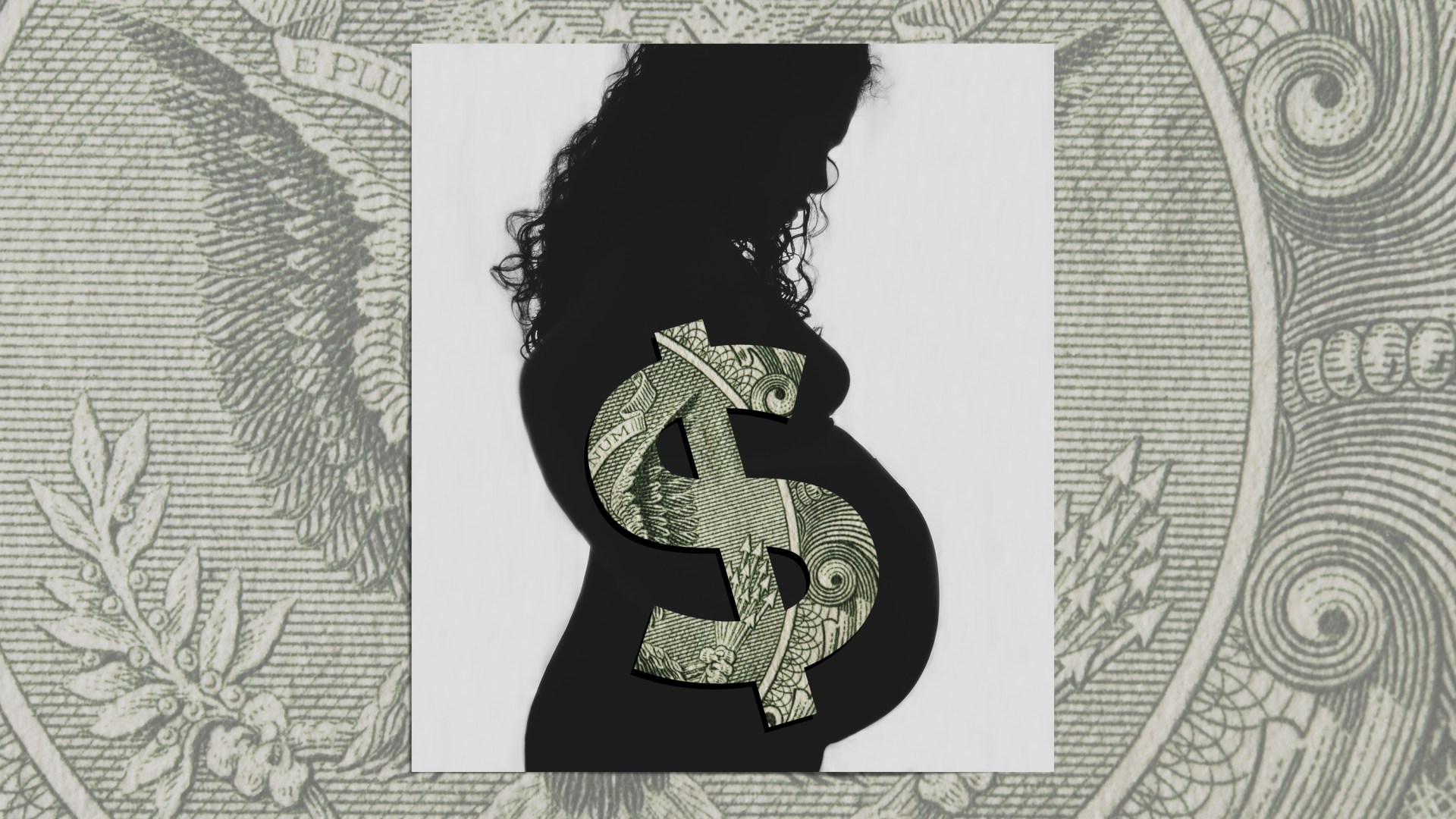
Who Pays the Price for Crisis Pregnancies?

Contributor

Early pro-life advocates said “no” to abortion and “yes” to social safety nets for mothers. But most of today’s movement has lost that approach.

Christianity Today June 30, 2022
Illustration by Mallory Rentsch / Source Images: Paul Taylor / Getty / Enrique Guzman Egas

Crisis pregnancies have profound human costs. There are life-changing consequences for women who find themselves pregnant with a child they did not anticipate and may not feel equipped to care for.

Roe v. Wade suggested one way to manage those costs. Dobbs v. Jackson Women’s Health Organization suggested another way. In the aftermath of the Dobbs decision, my Twitter feed has been filled with partisans on both sides of the abortion debate expressing either outrage or jubilation at this transfer of costs.

Opponents of abortion are delighted that, at least in many conservative states, the unborn child will no longer have to bear the cost of a crisis pregnancy. Defenders of a woman’s right to choose are outraged that women in these same states will now have to bear this cost to an even greater degree. Roe v. Wade was a landmark women’s rights decision, they believe, and now that it has been rescinded, they are outraged.

But perhaps neither Roe nor Dobbs represents a fully Christian way to distribute the human costs associated with crisis pregnancies. And therein lies a dilemma for Christians who want to preserve human life and are unhappy with the results of Roe as well as the likely results of Dobbs.

The history of the pro-life movement sheds light on these perennial challenges. It also offers a rough guide for the future.

Roe v. Wade’s transfer of costs to the unborn

Roe v. Wade—which was widely supported by liberal Protestants, Jews, and secular Americans was based on the premise that it was unjust and unconstitutional for the state to impose the costs of an unwanted pregnancy on the woman by forcing her to remain pregnant against her will.

But, of course, there was still a cost associated with every crisis pregnancy. Who would bear this cost? The answer, in the case of pregnancies that ended in abortion, was the fetus.

Roe included a lengthy explanation of why this transfer of cost was not a violation of the fetus’s rights since, as the Supreme Court’s decision declared, the pre-viable fetus was not a citizen with any constitutional rights. The pregnant woman, on the other hand, did have constitutional rights, and those rights included the right to terminate her pregnancy.

To pro-choice feminists, this transfer of cost from the woman to the fetus seemed perfectly just. If women were full human beings, pro-choice feminists asked, why should their rights be ignored in favor of the rights of a fetus, whose personhood (especially in the first trimester of pregnancy) was doubtful at best? To do so was a grave violation of women’s most basic rights, they thought.

The more advocates of reproductive rights championed a woman’s right to equality and bodily autonomy, the more they tended to minimize the life of the fetus. After all, if the fetus was going to have to bear most of the cost of the unwanted pregnancy by being denied a chance to live, discussions of that cost were profoundly uncomfortable.

They were much more comfortable talking about the rights of women. But when asked directly about the life of the fetus, abortion rights defenders in the 1970s tended to say the fetus was not a person and that, in any case, saving a potential child from being born into a situation where it was not wanted was actually an act of mercy.

In other words, they minimized the human cost that permissive abortion policies imposed on the fetus.

The pro-life movement’s early vision of social help for women

The pro-life movement was founded on the principle that the fetus was a full human person. If that was the case, it was profoundly immoral and unjust to force the fetus to bear the cost of an unwanted pregnancy by paying with its life.

The abortion rights movement’s attempt to deny the personhood and constitutional rights of the fetus was analogous to the attempt of enslavers to deny the personhood and constitutional rights of Black people in the 19th century, many pro-lifers argued.

In advocating for the rights of the fetus and the value of fetal life, the pro-life movement appealed to some of the same liberal human rights principles that the pro-choice movement did. But pro-lifers also faced an uncomfortable conflict with a principle that in the 1970s was becoming increasingly important to many liberals: women’s equality.

Pro-lifers who considered themselves feminists insisted that women’s equality was not at stake in the abortion debate. Many pro-lifers of the early 1970s believed the burdens of unwanted pregnancy could be mitigated with expanded prenatal and maternal health care access, along with government-funded childcare and improved adoption policies.

Pro-life activists at the time uniformly argued that women should never be punished for abortion, because they saw women who terminated their pregnancies not as aggressors but as victims of the abortion industry and the sexual revolution.

Abortion was emotionally and physically costly to women, they believed—far costlier, in fact, than pregnancy (even unwanted pregnancy). In making this claim, they directly disputed the claims of the reproductive rights movement.

But in their view, antiabortion activism protected the rights of both children and women. In the words of Jack Willke and his wife, Barbara—some of the most influential pro-life activists of the late 20th century—it was a way to “love them both.”

The pro-life movement’s alliance with political conservatism

The pro-life vision of transferring the costs of crisis pregnancies to society rather than solely to individual women was stymied by the political alliances pro-lifers made with the Republican Party.

Many of the early pro-life activists were Democrats, but when the Democratic Party became increasingly committed to protecting abortion rights during the late 1970s and 1980s, they turned to the GOP. Yet the Republican Party, while becoming increasingly open to the idea of restricting abortion, was opposed to expansions in the social safety net that would have helped lower-income women care for their children.

Some pro-lifers of the mid-1970s, such as Sargent and Eunice Shriver, insisted that the best way to reduce abortion in the aftermath of Roe v. Wade was to offer economically disadvantaged women help to carry their pregnancies to term, so they would not be as likely to seek out abortion services.

But the mainstream pro-life movement, led by organizations such as the National Right to Life Committee, rejected this approach and instead focused their entire effort on securing legal restrictions on abortion, even if this required an alliance with a party that rejected the type of help for women that the Shrivers envisioned.

The politically liberal Catholics who led the pro-life movement in its early years did not foresee that their movement would be tied so closely to the politics of individualism, because their entire project was based on the premise of social responsibility for the less fortunate.

But the individualistic politics of modern American conservatism—which a majority of white evangelicals have endorsed, and which has very strong support in the South—resists this liberal social vision.

Modern American conservatism has also resisted the feminist movement’s interest in gender equality and social equity. As a result, the abortion opponents who are poised to implement new restrictions on abortion in the next few weeks or months are not particularly bothered by the idea that pregnant women will need to bear the costs of unwanted pregnancies.

Indeed, some self-styled “abortion abolitionists” are calling for women who get illegal abortions to be punished directly as murderers—an idea that the pro-life movement has opposed for the past half-century.

Dobbs will give a green light to this political mindset. But despite all the dire predictions that abortion rights proponents have made, the decision will ratify existing trends more than change them.

What the numbers say

For the past four decades—and especially the past ten years—abortions have become steadily more difficult to obtain in conservative states and more accessible (and publicly funded) in liberal regions.

Before Dobbs, for instance, a woman earning $17,000 a year who was 11 weeks pregnant in Los Angeles or New York could obtain a publicly funded abortion in her own city without any mandatory waiting period.

If the same woman were in San Antonio, by contrast, she would have had to drive 400 miles to Shreveport, Louisiana, wait 24 hours after an ultrasound at the clinic, go through an abortion counseling session, pay $500 in cash for the abortion (since there are no Medicaid subsidies for most abortions in either Texas or Louisiana), and then drive the 400 miles back to San Antonio.

Now, because of Dobbs, she’ll have to drive an extra 300 miles to get to Albuquerque instead of Shreveport, since the abortion clinics in Louisiana have just closed. That, of course, is an additional inconvenience—but probably not enough of a change to deter most of the women willing to drive to Shreveport from driving the additional miles to Albuquerque.

Thus, the overall effect of this new policy on the abortion rate will probably be very slight. Both before and after Dobbs, conservative states forced women facing crisis pregnancies to bear the cost of pregnancy terminations themselves. Dobbs has just made this more evident.

The politically progressive pro-life activists of the early 1970s would not have objected to making abortion more difficult to obtain. In fact, they would have wanted to go much further by including in the law a clear declaration of the high value of fetal life.

But if their statements about expanded social safety nets are any indication, they might have been dismayed to discover that the states now poised to outlaw abortion are also, in some cases, the states that offer the fewest health care benefits to low-income pregnant women.

Both Texas and Mississippi—like Alabama and several other conservative states—have refused a federal Medicaid expansion that would provide health care coverage to women whose income is up to 138 percent of the federal poverty level.

So, when a woman in Texas earning only $10 an hour gives birth, she’ll likely have to bear the financial and emotional cost of that decision herself; the state will not help her transfer that cost elsewhere.

The idea that women who are in the midst of difficult pregnancies are given no social assistance in choosing life for their children would have been deeply disappointing to many of the pro-life activists of a half-century ago.

How should a pro-life Christian think about this?

For those like myself who believe that human life has great value from the moment of conception, Roe v. Wade’s attempt to transfer the cost of an unwanted pregnancy onto the fetus was clearly unjust. But the current legal framework, which will force the most economically vulnerable and marginalized women to pay these costs instead, does not accord well with the Bible’s hundreds of exhortations to seek justice for the poor.

Fifty percent of women seeking abortions today are living below the poverty line, and another 25 percent have low incomes that are barely above it. Sixty percent are already mothers of at least one child. They are often struggling to deal with unstable crisis situations that make it difficult for them to welcome another child into their homes without assistance.

In the political climate that we face today, there is no state that is seriously considering a framework that would provide justice in these cases. Instead, we will be left with some state policies that attempt to keep the framework of Roe v. Wade by offering continued legal abortions and giving women the promise of transferring the cost of their crisis pregnancies onto the fetus.

Other states will prohibit women from doing that, but at the same time, they will offer little help in bearing the costs these women will incur by giving birth to a child.

No matter where we live, then, those of us who value both women and children will have to help bear these costs. It’s more important now than ever to do what we can through both public policy and private charity to create a culture of life that will also empower women.

Roe v. Wade did not do that. Dobbs v. Jackson Women’s Health Organization did not really do that, either. But perhaps in the aftermath of this decision, those of us who care about human life can resurrect the approach of the early pro-lifers and insist that, when it comes to crisis pregnancies, children should not carry the costs, and neither should pregnant women be forced to bear those costs alone.

Daniel K. Williams is a professor of history at the University of West Georgia and the author of Defenders of the Unborn: The Pro-Life Movement before Roe v. Wade. A longer version of this piece originally appeared at The Anxious Bench at Patheos. Republished with permission.

Speaking Out is Christianity Today’s guest opinion column and (unlike an editorial) does not necessarily represent the opinion of the publication.

News

His Election Polarized the Philippines. Now Evangelicals Are Repairing Burned Bridges.

Believers on both sides pray for incoming president Bongbong Marcos, as pastors harness new enthusiasm around nation-building and kingdom-building.

Ferdinand “Bongbong” Marcos Jr. won the May 9, 2022 presidential elections in the Philippines. He is the son of ousted dictator Ferdinand Marcos Sr.

Ferdinand “Bongbong” Marcos Jr. won the May 9, 2022 presidential elections in the Philippines. He is the son of ousted dictator Ferdinand Marcos Sr.

Christianity Today June 30, 2022
Ezra Acayan / Getty Images

Last month’s presidential election in the Philippines was deemed its most divisive to date. As the country inaugurates its new leader this week, are evangelicals ready to move forward?

The 2022 race in the 7,000-plus-island archipelago raised the typical election acrimony to new heights, including among Christians who championed the two leading candidates.

Brethren dissolved their friendships over political debates, mutually condemning each other for supposedly casting the future of the nation into ruin by the choice of their preferred candidate.

Churches reported how members left Bible study groups and even their local fellowships due to perceptions that their pastors or church officials endorsed “presidentiables”—presidential hopefuls—they opposed.

With president-elect Ferdinand “Bongbong” Marcos Jr. formally taking his oath June 30, evangelicals have begun to come to a place of mutual understanding and have committed to pray for the new leader regardless of whether they voted for him.

Pastors, for their part, are channeling the momentum around the election to missional efforts to bless the country. They’ve discouraged members from burning bridges over politics.

“The church, your community, is your family. It will always be there for you in a way that your candidate might not be,” said Dennis Sy, senior pastor of Victory Makati, a location of one of the largest multisite churches in the Philippines. “Now that the elections are over, we are going to journey together whether we voted for that candidate or not.”

Marcos, nicknamed “Bongbong” and known as BBM, has held various political offices, most recently a senatorial post. He is also the son and namesake of the famous Philippine strongman who ruled the country for more than 20 years before being toppled by the People Power Revolution in 1986. The senior Marcos’s era has been synonymous with the loss of democratic freedoms, human rights violations, and massive graft and corruption.

Filipino voters who opposed his run were concerned that the younger Marcos would bring back those dark days. Worse, he might erase or rewrite the history of martial law that saw thousands killed or imprisoned without legal due process. Meanwhile, supporters saw in him a return to the order and economic stability of his father’s term.

Well aware of the shadow of controversy looming over his candidacy, Marcos asked voters to judge him “not by my ancestors, but by my actions.”

While there were other presidential candidates—including world-renowned boxer and committed Christian Manny Pacquiao—Marcos’s main opponent was outgoing vice president Leni Robredo. Robredo was seen as an alternative to the traditional corrupt politician (or trapo, which means “dirt rag” in Filipino).

Her supporters hailed her lack of affiliation with any political dynasty, scandal-free government record, and the 16-hour-a-day work ethic with which she served her constituents. Detractors pointed out her lack of government experience as well as a veneer of “elitism” that disconnected her from her financially struggling countrymen, almost a quarter of whom are mired in poverty, barely managing to eke out the $240 a month needed to feed a family of five.

Many who supported Robredo saw her as the clear choice between a good and bad candidate. One Christian teacher who spoke to CT got engaged in a door-to-door campaign for Robredo, something outside her comfort zone. (She asked to remain unnamed out of fear of reprisal since her community rents land from the government.)

She brought materials from the subdivisions to the shanties, discussing the issues with anyone who would listen. She said she wasn’t afraid to share her position with acquaintances who were on the Marcos side as “it was really done in the spirit of genuine love for them and the country.”

Meanwhile, Rem Pinero, an Overseas Filipino Worker based in the Middle East, disengaged from Robredo supporters who he thought would argue with him about his support for Marcos. “Tensions were high during the campaign period,” he looks back. “Some Christians had forgotten what it was to become Christlike.”

Overseas workers like Pinero totaled over 1.5 million registered voters in the presidential election; they were able to cast their ballots in person in embassies and consulates or by mail.

When political messages came up in the Bible study groups at his Filipino church in the United Arab Emirates, he advised participants to respond without anger. “Respect” for the individual and their choice was his perpetual refrain, even to fellow Marcos allies who questioned why his own two grown children were voting for Robredo.

“My kids asked me why I supported Marcos, and I said so without defending, apologizing, or being hostile,” said Pinero, a widower. “We just agreed to respect each other’s opinions and points of view. There were no arguments at home or anything breaking out of anger.”

Describing himself as a Marcos “supporter, but not a fanatic,” Pinero chose his candidate because he felt that he had the right mixture of discipline and positivity: “Unlike others who just kept hyping the negative and criticizing the other candidates, he stayed above it all. … That attitude can bring about the unity that our country needs. When people ask me why I could vote for him given his family history, I cannot judge the son or any child by the sins of the father or the parent.”

Relationships over politics

Now that Marcos has won in a landslide victory, Pinero advises his friends on both sides of the political divide to reach out to each other. He also admonishes his pro-Marcos friends not to gloat.

“When I meet Christians who are Robredo supporters, I still treat them the same way, like nothing has changed, and that we are still friends and brethren,” he said. “Had Robredo won, I would have wanted them to extend the same courtesy to me.”

Sy at Victory Makati advocates relationships over politics. He sees the last elections as both “practice and a challenge for the church to respond in the most biblical way and not burn bridges.”

The unity of the Christian leaders despite their political and theological differences is paramount for Bishop Dan Balais, national chairman of the Intercessors for the Philippines (IFP). Balais often coordinates with leaders at the Philippine Council of Evangelical Churches (PCEC) and the Philippines for Jesus Movement (PJM).

He describes the three huge organizations as akin to the pillars of the Philippine Christian church: PCEC’s focus is on the pastoral and teaching ministries; PJM is apostolic; and IFP leans toward the prophetic and intercessory.

Until the COVID-19 lockdowns, the bishops and their pastors had been meeting regularly every year since 2012 for the Palawan Leaders’ Summit. They wear covenant rings “to remind us that no matter our differences, we will not allow [our relationship and the unity] to break,” says Balais. “The elections are over, we had different candidates, but we said that we will not separate from each other.”

According to Balais, many churches based in Mindanao—the third main island in the Philippines—voted for Marcos. His running mate and vice-president-elect, Sara Duterte-Carpio, was the former mayor of the region’s Davao City. Some Christian groups chose Pacquiao apparently because of his Christian faith. IFP, which is connected to 7,000 local churches, openly endorsed Robredo. So did Christ the Living Stone Fellowship (CLSF), a network of 500 churches, led by Balais as senior pastor.

“We don’t have bloc voting,” Balais clarifies, referring to one political exercise usually done by a homegrown religious organization in the Philippines, the Iglesia ni Cristo, where the main shepherd chooses the presidentiable that all members will unanimously vote for. “Our members are still free to choose their candidate.”

IFP’s endorsement of Robredo was more of a “discernment. We have to make a choice and lead the people in making that choice,” continues Balais. “The ones we endorse were impressed to us by the Lord. They will not necessarily win. If they lose, it does not necessarily mean we are wrong. We are standing on the principle.”

IFP’s and CLSF’s backing of Robredo was a long and prayerful process that started with the two organizations developing leadership criteria to guide their voting flock for the 2022 elections. It culminated in their alliance with 1Sambayan, a “broad coalition of democratic forces” that offered a very similar voters’ guide.

Praying for the president

When the other evangelical groups who initially joined 1Sambayan eventually pulled out, IFP stayed because Balais believed that the Lord wanted them to honor their covenant.

“When 1Sambayanan supported Robredo, we had the same criteria: character, competence, and ability to lead,” says Balais. “But remove the covenant, which is our basis, and we will still look at her.”

As far as the traditional position that the church must remain neutral politically, Balais candidly states, “IFP has crossed that line.” Its ministries of intercession and prophecy are actively seeking what God is saying to the nation at a particular point in time, praying for it, and acting accordingly.

Now in the election aftermath, one thing all sides can agree on is praying for the president-elect.

Taking a page out of the hard lessons learned by Rehoboam, Pinero’s prayer for Marcos is very specific: “That he be surrounded by just, honest, and excellent advisers who have a genuine love for the country.”

To date, most of Marcos’s appointments of officials into his cabinet, especially the finance, central bank, public works and highways, and trade have been generally welcomed by the people, economists, the business community, and foreign think tanks. (At a recent IFP service, Balais admits that the appointments have been “good.” Prior to that, he told CT, “What is God about to do? Can he use Marcos? We never know. We all agreed to pray for him.”)

Meanwhile, the Christian teacher who campaigned for Robredo says that she has a “sincere desire and openness to be proven wrong about [Marcos’s] capabilities.” She continues to pray and fast for the new president and his family.

Sy addresses the lingering fear of the return of martial law under Marcos, which he said was a speculative worry. “Christians should know their role,” the pastor said. “Prayer is the primary response to every crisis and situation.”

Nation and kingdom building

The election has also reinvigorated plans for evangelism, church growth, and the discipleship of a whole nation into righteousness in all spheres Christians inhabit, including the marketplace and governance.

Based on prophecy, Balais holds that the Philippines must become a “nation of Davids”—moral people who love righteousness—as a prerequisite for God to raise up an equally righteous, moral, and God-fearing president.

“How do you do that? Through the outpouring of the Holy Spirit, which is a major part of evangelism,” he said. “People enter the kingdom of God, are born again, are taught the Word of God, and their character is discipled.”

To Sy, transformation can also come about by fulfilling the church’s mission of being a light to the world. As a young pastor in San Juan years ago, he rallied his church to provide relief to victims of flooding while working with city hall.

“The majority of the volunteers were from the church,” recalls Sy. “The mayor and the vice mayor both saw this. That was an open door for us to minister to our local officials. They saw that we had no agenda.”

The experience and others like it have led him to conclude, “Partnering with the local government is something that every church should do. The church cannot be partisan. If I start taking sides, will I have the position to minister the gospel to all, no matter what side they chose? Daniel worked under three administrations because he never went political.”

The Christian teacher recalls a food vendor who told her, “You’re just here with us if there is a campaign. After the campaign, you’re all the same—you’ll just vanish.” That exchange gave her a stronger resolve to work with her Christian community to “pursue activities that will provide concrete relief for our less-fortunate countrymen, whether they voted for Robredo or not.”

The election aftermath just might have broken new ground for planting the seeds of the gospel and bringing social transformation. Christians who might have been disappointed by the presidential outcome are experiencing a wake-up call, particularly among young people, who compose more than 40 percent of the population.

“They went out to the streets to campaign—not so much for Robredo or for Marcos but because of their love for the nation,” said Sy, who’s 40.

Victory Makati has a campus ministry in the public schools to “reach a generation of young people and young leaders mostly living in poverty. Through that, you are affecting change already.” At the same time, Sy concedes that Victory’s effort in transforming the nation, which was started by the main church more than 30 years ago, is “a long game.”

Balais, who helped birth IFP and CLSF also in the 1980s, equally foresees that the raising of a “nation of Davids is for the long-term.” The 69-year-old bishop adds, “Hopefully, we shall still be alive when that happens.”

In the meantime, with a new president taking the helm, Balais advises his brethren, regardless of their electoral choice, “Let us pray for God’s mercy, which triumphs over judgment. Let us preserve the unity of the Spirit. Make ourselves a prisoner of peace. Above all, have fervent love for each other, as love covers a multitude of sins.”

Books
Review

Is There a Wholesome Alternative to Christian Nationalism?

Paul Miller’s critique of political idolatry is persuasive. His defense of patriotic civil religion, less so.

Christianity Today June 30, 2022
Edits by Christianity Today / Source Images: Drew Angerer / Staff / Getty

“If ‘Christian nationalism’ is something to be scared of, they’re lying to you,” Representative Marjorie Taylor Greene (R-Ga.) told her supporters in June. “And they’re lying to you on purpose because that is exactly the temperature change that is happening in America today, and they can’t control it.”

The Religion of American Greatness: What’s Wrong with Christian Nationalism

The Religion of American Greatness: What’s Wrong with Christian Nationalism

IVP Academic

304 pages

Christian nationalism, once triumphant, will “stop the school shootings,” Greene claimed. It will lower crime rates, stop “the sexual immorality,” and guard children’s innocence and train them to want a traditional lifestyle. And it’s this wholesome movement of “Christians, and … people who love their country and want to take care of it” that “liars” in the media are deriding.

Greene is right on two counts: Christian nationalism is increasingly visible in American politics, and the movement has been much discussed in the press these past two years, particularly since journalists began to examine the Christian symbols and language used in the storming of the Capitol on January 6, 2021.

The rest of Greene’s account leaves more to be desired, but its emphasis on cultural dominance, political power, and protection of one’s own tribe—all topped with a flimsy veneer of Christianity—will be familiar to any reader of Paul D. Miller’s The Religion of American Greatness: What’s Wrong with Christian Nationalism.

Miller is well suited to explain why Christian nationalism, though not “something to be scared of,” is certainly something Christians should reject. He’s a veteran of the US Army, the CIA, and the George W. Bush administration—no stranger to patriotic milieus. He’s also a scholar, currently serving as a professor of international relations at Georgetown University’s prestigious School of Foreign Service, and an evangelical’s evangelical—a theological conservative who was baptized in a river, attended a Billy Graham crusade, and holds a special fondness for Chick-fil-A.

Greene painted critiques of Christian nationalism as deception or jealousy of nationalists’ rising power, but The Religion of American Greatness is neither. Miller is unsparing in his evaluation of the movement but sympathetic to its grassroots adherents. He has penned a useful resource for his main audience of educated evangelicals—pastors, church leaders, journalists, academics, and “other professional Christians”—whom he envisions using his work to fruitfully engage with their congregants, followers, and loved ones. In that primary goal, The Religion of American Greatness is an effective and compelling work, though Miller’s case for patriotic civil religion and Christian republicanism as the alternative to nationalism is not as convincing or well-developed.

The case against Christian nationalism

“Is the marriage of Christianity with American nationalism,” asks Miller, “a forgivable quirk over an unimportant doctrinal matter, a lovable excess in patriotism and piety?” Is it, in Greene’s phrase, simply Christians and “people who love their country and want to take care of it”?

“The burden of this book,” Miller writes, is to demonstrate Christian nationalism is not innocuous. It’s “to show that nationalism is incoherent in theory, illiberal in practice, and, I fear, often idolatrous in our hearts.” In all three aims, he ably succeeds.

The book begins with definitions and devil’s advocacy, delving into the nature of nationalism generally and its Christian, American, and (usually) white variant specifically. “Christian nationalism is not a catch-all term for any kind of Christian political advocacy,” Miller is careful to note. “The unique feature of Christian nationalism is that it defines America as a Christian nation and it wants the government to promote a specific Anglo-Protestant cultural template as the official culture of the country.” To play fair, he presents the case for Christian nationalism as represented by leading American and British thinkers of this ilk, including National Review’s Rich Lowry, First Things’s R. R. Reno (see CT’s review of Reno’s nationalist treatise here), and the late “clash of civilizations” scholar Samuel Huntington.

This exploration of Christian nationalism in its “ideal type,” as articulated by its more serious advocates, will be helpful for readers who want to be able to “steelman” the movement, to identify its influence in the political scrum, and to articulate why this ideal type and Christianity are, in Miller’s words, “separate, rival, mutually exclusive religions. They make fundamentally incommensurable claims on human loyalty. In its ideal type, you can either be a Christian nationalist, or you can be a Christian: you cannot be both.”

Yet, as Miller acknowledges, most Christian nationalists in America are not of the ideal type. The competition for their ultimate loyalty is far more muddled. Their nationalism is significantly a feeling, “a deep and profound bond … between church and nation that is experienced far more viscerally than it is intellectually or theologically,” and their politics are likely “an inconsistent mix of nationalism, conservatism, Christianity, republicanism, libertarianism, and more.”

For understanding that folk variant of Christian nationalism, Miller’s later chapters on the Religious Right and nationalism’s engagement with Scripture may be the most important in the book. They’re also the fieriest and most fascinating, particularly for readers like me, who encountered Christian nationalism for years without knowing its name. Reading this section felt like grouting tile: I had the bigger pieces, the book filled so many gaps—by recounting of the historic use of key Bible verses in American politics; describing the elite-grassroots split in US evangelicalism; critiquing the hermeneutical moves that fund America-as-Israel theology; and characterizing our country’s Jacksonian subculture.

But perhaps Miller’s single strongest argument, woven throughout much of the book, is his contention that Christian nationalism is actually a secular ideology. The thinkers he reviews speak of “Protestantism without God” and the adequacy of “America’s ‘ecumenical monotheism’” as the moral buttress for their cultural-political project. Their interest is in “the inherited norms, values, and habits of America’s Christian heritage” more than a living Christian faith. For the Christian nationalist, then, the “main point of sanctification” becomes safeguarding the nation, not “honor[ing] God by emulating his character.” And the nation, in turn, becomes the object of the nationalist’s worship. Though folk Christian nationalists may not believe themselves at risk of that idolatry, a “little yeast works through the whole batch of dough” (Gal. 5:9).

If not Christian nationalism, then what?

Early on, Miller writes that this is, hopefully, the first book in a trilogy on Christian nationalism, progressivism, and patriotic Christian republicanism. Despite those plans, he begins his apology for patriotism and republicanism as an alternative to nationalism in this initial work. Unfortunately—and perhaps because it requires book-length treatment—this portion is weaker than the rest. I’ll highlight three points.

First, the line between Miller’s conception of patriotism (good) and nationalism (bad) isn’t bright. At one point he says the difference between suitable Christian political engagement and Christian nationalism “can be subtle,” maybe even externally indistinguishable because the difference is “a matter of our own inner motivation.” In this vein, Miller pairs rejection of Christian nationalism with some lingering conception of the United States as a nation. For example, he argues that hiding away complicated historical figures like Thomas Jefferson “is tantamount to saying that there is no story of great deeds that binds us together, no shared history, and thus no nation” (emphasis mine).

It’s possible Miller is simply imprecise in his language, using “nation” as a synonym for “country” rather than sticking to his initial definition of it as a nationalist term, in which case this is a confusion of editing rather than thought. But Miller likewise promotes patriotic civil religion—not merely adherence to values like liberty and justice but cultural rituals to “evoke emotional loyalty to our country” like “schmaltzy patriotism on the Fourth of July.” And he does this while decrying the sacralization of the secular and denying that “the U.S. government is competent to sustain, create, or orchestrate a common national cultural template for a nation of 320 million people.”

Miller contends we need this civil religion because “we cannot live without some kind of group identity”; because “people must have something in which to take pride [and] if we deny them the ability to take pride in their nation, they will simply shift the locus of their loyalty to a subgroup, such as their ethnic or racial group;” and because “we cannot do without national stories. … To beat nationalism, we need to tell a better story.”

But what Miller doesn’t answer is why, in a book primarily for Christians, that story is not the gospel. Why is the solution “a political story”—and, if it must be political, why must it be on the national scale? Why is our group identity not the church? Why can’t we fight nationalism with loyalty to our congregations or neighborhoods? Why is a national patriotism the antidote of choice?

Second, Miller makes a persuasive argument that there’s an inexorable relationship between nationalism, identity politics, and culture war. “Nationalism,” he writes, “is the identity politics of the majority tribe; identity politics is the nationalism of small groups. In each case, groups of people defined by some shared identity trait look to the public square for status, spoils, recognition, and power.” These groups land in an escalatory culture-war spiral as each seeks to determine who “we” are and what “we” believe and do. By contrast, Miller argues, in a republican model of politics the state should eliminate those spoils of war by engaging in “cultural neutrality,” not “moral neutrality and state-sponsored secularism.”

But in distinguishing between kinds of neutrality, Miller leaves the biggest culture-war battles in play. Grounding his distinction in an assertion of natural law—which is unlikely to persuade those not already convinced of the theory’s merits—he says the state can’t be neutral regarding “human personhood and human sexuality,” and that here, “the public square is a ‘battleground of the gods,’ in which we can do no other than to advocate for our own fundamental beliefs.” But surely for many Christian nationalists today, those issues are the whole ballgame. These “limited” carveouts from cultural neutrality are exactly the matters that motivate Christian nationalists to seek state power to dictate national culture.

Finally, though he details the illiberalism of Christian nationalism, I’m not sure Miller realizes its present extent—and what it means for the prospect of shifting nationalists toward classically liberal Christian republicanism. Ending the chapter on “The Christian Right’s Illiberalism,” he writes:

Which is more important: republican institutions, or Christian culture? Having a free and open society, or having public symbols of respect for Christianity? Christian principles, or Christian power? Political liberty, or political victory? Christian nationalists would reject the framing of these questions as a false choice because they say the two sides must go together, while Christian republicans would be far more comfortable advocating for republicanism with or without a Christianized culture.

The notion that Christian nationalists would see this as a false choice may be true among some adherents of the “ideal type,” but at the folk level, I suspect, presented with these options, many Christian nationalists would simply choose victory and public respect. Consider their embrace of illiberal governance in Hungary—or recall Greene’s expectation that a political triumph for Christian nationalism would change Americans’ sexual behavior and reshape children’s plans for their lives.

American Christian nationalists like to talk about “liberty,” but I don’t think there’s much of a dilemma for them here, which means they’re further from republicanism than Miller may hope. That’s a small blemish in his argument, but a big recommendation of his book.

Bonnie Kristian is a writer and CT columnist. She is the author of a forthcoming book, Untrustworthy: The Knowledge Crisis Breaking Our Brains, Polluting Our Politics, and Corrupting Christian Community.

addApple PodcastsDown ArrowDown ArrowDown Arrowarrow_left_altLeft ArrowLeft ArrowRight ArrowRight ArrowRight Arrowarrow_up_altUp ArrowUp ArrowAvailable at Amazoncaret-downCloseCloseellipseEmailEmailExpandExpandExternalExternalFacebookfacebook-squarefolderGiftGiftGooglegoogleGoogle KeephamburgerInstagraminstagram-squareLinkLinklinkedin-squareListenListenListenChristianity TodayCT Creative Studio Logologo_orgMegaphoneMenuMenupausePinterestPlayPlayPocketPodcastprintremoveRSSRSSSaveSavesaveSearchSearchsearchSpotifyStitcherTelegramTable of ContentsTable of Contentstwitter-squareWhatsAppXYouTubeYouTube