News

Goodbye Roe v. Wade: Pro-Life Evangelicals Celebrate the Ruling They’ve Waited For

Supreme Court: The landmark abortion-rights case was “egregiously wrong and on a collision course with the Constitution from the day it was decided.”

Pro-life activists rally at the Supreme Court ahead of the June ruling overturning Roe v. Wade.

Pro-life activists rally at the Supreme Court ahead of the June ruling overturning Roe v. Wade.

Christianity Today June 24, 2022
Drew Angerer / Getty Images

Roe v. Wade—the Supreme Court decision that mobilized generations of pro-life activists and shaped evangelicals’ political engagement for half a century—has been overturned.

Millions have marched, protested, lobbied, and prayed for the end of the landmark abortion rights ruling. After 49 years, and more than 63 million abortions, the time has come.

Christian leaders called the ruling “once unthinkable” and marked today as “the day we have all been waiting for” and “one of the most important days in American history.”

“We hold that Roe and Casey must be overturned,” wrote Justice Samuel Alito for the majority. “The Constitution makes no reference to abortion, and no such right is implicitly protected by any constitutional provision.”

The Dobbs v. Jackson Women’s Health decision was 6 to 3, with Chief Justice John Roberts concurring with the majority. The opinion of the court closely resembled an Alito draft leaked last month.

The decision is the result of a trio of conservative justices appointed during Donald Trump’s presidency: Neil Gorsuch, Brett Kavanaugh, and Amy Coney Barrett.

Evangelicals have been the religious group most opposed to abortion and most eager to see Roe overturned. While abortion was never evangelicals’ only issue, in the voting booth it often outweighed all other concerns. Some supported Trump despite moral misgivings in hopes he would deliver on his promise to appoint justices that would finally overturn Roe and the subsequent Supreme Court decision that affirmed abortion rights, Planned Parenthood v. Casey.

The political calculation appears to have paid off. The three new justices joined Alito and Clarence Thomas in a bold decision saying the court got it wrong.

“This day belongs to the many people who have labored long and hard to make it happen—and to President Trump, who deserves our thanks for keeping a promise I did not think he would keep,” said Matthew Lee Anderson, a Christian ethicist and Baylor University religion professor.

Ed Whelan, an EPPC senior fellow, referred to the ruling as the “crowning achievement of the conservative legal movement.”

The majority opinion reflected the arguments of evangelical and Catholic pro-life groups who filed friend-of-the-court briefs. Strategically, many focused less on arguments for fetuses’ humanity and right to life, and more on the problems with the legal reasoning behind Roe.

Roe was wrongly decided and poorly reasoned,” wrote the attorneys for Americans United for Life. “Numerous adjudicative errors during the original deliberations—especially the absence of any evidentiary record—have contributed to making Roe unworkable. … There is a constant search for a constitutional rationale for Roe, and the Court has yet to give a reasoned justification for the viability rule.”

The attorneys for the Ethics and Public Policy Center (EPPC) made the same point: “As a matter of the Constitution’s text and history, it is no secret that Roe is not just wrong but grievously so. Roe was roundly criticized as wrong the day it was decided, it has been robustly opposed both within and outside the Court ever since, and no sitting Justice has defended the merits of its actual reasoning.”

The Dobbs case considered the constitutionality of a 2015 Mississippi law barring abortions after 15 weeks, a more restrictive ban than allowed under Roe. The state’s only abortion clinic, Jackson Women’s Health, sued officials with the state health department including Thomas Dobbs. Alliance Defending Freedom (ADF) served on the state’s legal defense team.

“Mississippi asked the Court to overturn Roe because that case was egregiously wrong and had no basis in constitutional text, structure, or history. Additionally, Roe’s changing standards have long been unworkable, which is why so many pro-life laws ended up in court,” said Kristen Waggoner, general counsel for ADF. “It also failed to account for changing science, which demonstrates that life begins at conception.”

How Roe was decided

The court’s decision in 1973 was based on the argument that fetal life does not have constitutional protection. Lawyers in the case pointed out that traditionally, rights are understood to begin at birth. The 14th Amendment, for example, extended citizenship to all those “born … in the United States,” not those conceived within the nation’s borders. A fetus, similarly, is not allowed to own property.

The judges said, however, that the state did have a compelling interest in protecting fetal life. But that compelling interest had to be balanced with a woman’s right to privacy.

“Privacy” is never mentioned in the Constitution, but the Ninth Amendment says that rights not mentioned in the Constitution are not to be denied by default. And the 14th Amendment guarantees legal due process, which the court said indicated a right to privacy, including the right to make decisions about abortion without state interference—at least up to a certain point.

The justices debated that point. After some internal back and forth, they settled on fetal viability.

The author of the landmark decision, Justice Harry Blackmun, viewed Roe v. Wade as a careful compromise.

“The Court does not today hold that the Constitution compels abortion on demand,” he wrote. “It does not today pronounce that a pregnant woman has an absolute right to an abortion. It does, for the first trimester of pregnancy, cast the abortion decision and the responsibility for it upon the attending physician.”

As historian Daniel K. Williams has noted, however, Blackmun was wrong. Roe accepted none of the arguments of the pro-life movement and delivered a decisive win to abortion rights advocates. The decision forced 46 state legislatures to rewrite their abortion laws, bringing them into line with what had been, until then, the most liberal abortion laws in the nation.

Most evangelical Christians at the time saw it as an appalling decision, disregarding the unalienable right of life.“This decision runs counter not merely to the moral teachings of Christianity through the ages but also to the moral sense of the American people,” CT argued in 1973.

The Southern Baptist Convention, the Assemblies of God, the Christian and Missionary Alliance, the Presbyterian Church in America, and other denominations all passed pro-life resolutions in the decade after Roe.

In their influential book Whatever Happened to the Human Race?, evangelist Francis Schaeffer and pediatric surgeon C. Everett Koop called abortion the “first and crucial issue,” the “keystone” to protecting the dignity of human life.

“We implore those of you who are Christian to exert all your influence to fight against the increasing loss of humanness—through legislation, social action, and other means at your disposal,” they wrote in 1979. “If we do not take a stand here and now, we certainly cannot lay any claim to being the salt of the earth in our generation.”

The movement almost achieved victory in 1992. Five abortion clinics and one independent doctor sued Pennsylvania for its restrictions on abortion, including a mandatory waiting period and notification of a spouse or parent. At the time, eight of the nine justices had been appointed by Republicans, though at least three of them were known to support abortion rights.

On the eve of the decision in Planned Parenthood v. Casey, Chief Justice William H. Rehnquist drafted a 5-to-4 majority opinion overturning Roe.

Then at the last minute, Justice Anthony Kennedy switched sides. He joined Sandra Day O’Connor and David Souter to craft a compromise that would allow states to regulate abortion to some extent—but also uphold the validity of Roe. They got the two more liberal justices, Blackmun and John Paul Stevens, to sign on.

Though it may have been conceived as a “compromise,” the 5-to-4 decision in Casey was in fact a reaffirmation of the core claim of Roe—while almost entirely abandoning the legal reasoning. The court decided that it was crucial to recognize the precedent set by Roe, adhering the legal doctrine of stare decisis.

Questioning the authority of precedent

Each of the three newest justices raised questions about this standard in the oral arguments in Dobbs in December.

“In thinking about stare decisis, which is obviously the core of this case, how should we be thinking about it?” Barrett asked.

The Catholic justice acknowledged the benefits of a system that builds on precedents but argued that “part of our stare decisis doctrine [is] that it’s not an inexorable command and that there are some circumstances in which overruling is possible.” She rattled off multiple examples, including one civil rights case and one LGBT rights case.

Roberts seemed to search for a way to modify the previous rulings and perhaps set a different standard for how much abortion could be regulated without actually rejecting a constitutional right to abortion. The attorneys on both sides, however, indicated they thought the case was all or nothing.

“I read your briefs,” Alito said to the attorney defending Roe and Casey. “Your briefs [say] that the only real options we have are to reaffirm Roe and Casey as they stand or to overrule them in their entirety. You say that ‘there are no half-measures here.’ Is that a correct understanding of your brief?”

She agreed it was. And Alito, soon after the hearing, started drafting a bold decision overturning Roe and Casey completely.

“Overruling a precedent is a serious matter. It is not a step that should be taken lightly,” he wrote. “In this case, five factors weigh strongly in favor of overruling Roe and Casey: the nature of their error, the quality of their reasoning, the ‘workability’ of the rules they imposed on the country, their disruptive effect on other areas of the law, and the absence of concrete reliance.”

The decision does not criminalize abortion, but sends the question of regulation back to the states, where voters and legislatures will decide when a woman can and can’t choose to terminate a pregnancy. Some states have passed “trigger laws” putting restrictions into effect immediately.

“For too long, the Roe and Casey decisions have allowed our nation to turn a blind eye to the plight of those who have no voice—to view these lives as a burden instead of a blessing. While this ruling is a significant step toward establishing a true culture of life, the issue of abortion will now be sent back to the states,” said Chelsea Sobolik, director of public policy for the Southern Baptist Ethics and Religious Liberty Commission (ERLC).

“We must continue to use our time, talent and treasure to protect the preborn, care for their mothers, and advocate for state laws that protect them both.”

As the decision released Friday morning, evangelical leaders referred to it as one of the most significant days in the country’s history.

“I’m thankful to God for this historic day…a day to celebrate life,” said Doug Clay, general superintendent of the Assemblies of God. “Not to gloat, but to rejoice and give thanks to the Lord of life. To continue our efforts in creating a culture of life in the communities we serve.”

Focus on the Family said, “After 50 years of fighting for the unborn, our prayers have been answered.” The Christian Medical and Dental Associations called it a “much-needed victory for life and for healthcare.” And the head of the ERLC declared, “a new chapter in the pro-life movement begins.”

Experts indicate the ruling will immediately result in a 10 to 15 percent reduction in the number of abortions. Long term, the impact is less clear.

“We do not pretend to know how our political system or society will respond to today’s decision,” Alito wrote. “We can only do our job …. We therefore hold the Constitution does not confer a right to abortion.”
News

Christians Fret as Muhammad’s Family Comes Under Fire

Hindu comments on wife Aisha and Shiite film on daughter Fatimah spark protests in India and England.

Christianity Today June 24, 2022
Source Image: Wikimedia Commons

Founding fathers are often sacred, but not sacrosanct.

In recent years, Americans have wrestled with the slave-owning legacies of George Washington and Thomas Jefferson. Confederate statues have been toppled, ideologically refighting the Civil War for some. Pilgrims have become pillagers, and Plymouth Rock equated with imperialism.

Muslims are having a similar moment.

Their prophet is called a pedophile. Their miracles, a myth. Successors to Muhammad are compared to ISIS. And it is not just Islam’s historic men. Two current global controversies concern two of the faith’s celebrated founding females: Aisha and Fatimah.

The International Union for Muslim Scholars has renewed its call for an international ban on insulting religions. And from India to England, Muslims have poured into the streets this month in protest.

Christians—whether leading such polemics or suffering under blasphemy accusations—have often been embroiled in such Muslim controversies. Many are relieved that these latest episodes are centered elsewhere.

“But Christians in both India and Pakistan are quite frightened,” said Juliet Chowdhry, a trustee for the British Asian Christian Association. “It is inevitable that as a vulnerable religious minority that is incorrectly perceived to be in league with the West, Christians will find themselves caught up in the anger.”

Thus they are keeping silent, said a Christian leader in Pakistan who—illustrating the point—requested anonymity due to the sensitivity of the situation.

In late May, a spokesperson for the ruling Bharatiya Janata Party (BJP) in India responded passionately on a talk show with Muslims when she was chided about a disputed Hindu temple. In retort, she cited Muhammad’s marriage to Aisha, often considered the favorite of his wives.

The BJP under Prime Minister Narendra Modi has led India in the direction of Hindu nationalism, stoking tensions with its 15-percent Muslim community. Though always a minority religion there, Islam ruled the subcontinent for centuries, with some ancient temples turned into mosques.

In one location, a shivling idol was allegedly discovered last month. Yet the Muslim talk-show guests said the item’s shape—holy to Hindus in honor of Shiva—resembled a fountain instead. The panel then descended into a heated discussion over the mocking of gods and goddesses.

“Should I start mocking claims of flying horses … and having sex with [Aisha] when she turned nine?” exclaimed the official. “Should I start saying all these things that are mentioned in your scriptures?”

Islamic tradition says a winged animal known as Buraq carried Muhammad on a night journey from Mecca to Jerusalem and back. Similar traditions quote Aisha on her tender age at the time her marriage was consummated, while some more-contemporary scholars cite evidence to argue she was in her teens.

At least 15 majority-Muslim nations—led by those in the Arabian Gulf—have condemned India, which in turn censured both the BJP spokesperson and another offending official. The grand mufti of Oman called the comments a “war on all Muslims,” while Egypt’s al-Azhar mosque described them as “real terrorism.”

Muhammad was 53 when he married Aisha, and Islamic sources indicate a happy existence together. Aisha grew up to become a scholar and a military leader, often honored by modern-day Muslims as an example of feminist egalitarianism.

But she is also a center of controversy—resurrected in a recent British film.

After the death of Muhammad, a faction of Muslims believed leadership should remain in the bloodline of the prophet. Known as Shiites, this sect believes the caliphate was promised to Ali, the prophet’s nephew and husband to his daughter, Fatimah. About 10–15 percent of Muslims are Shiites, with the great majority residing in Iran, Iraq, India, and Pakistan.

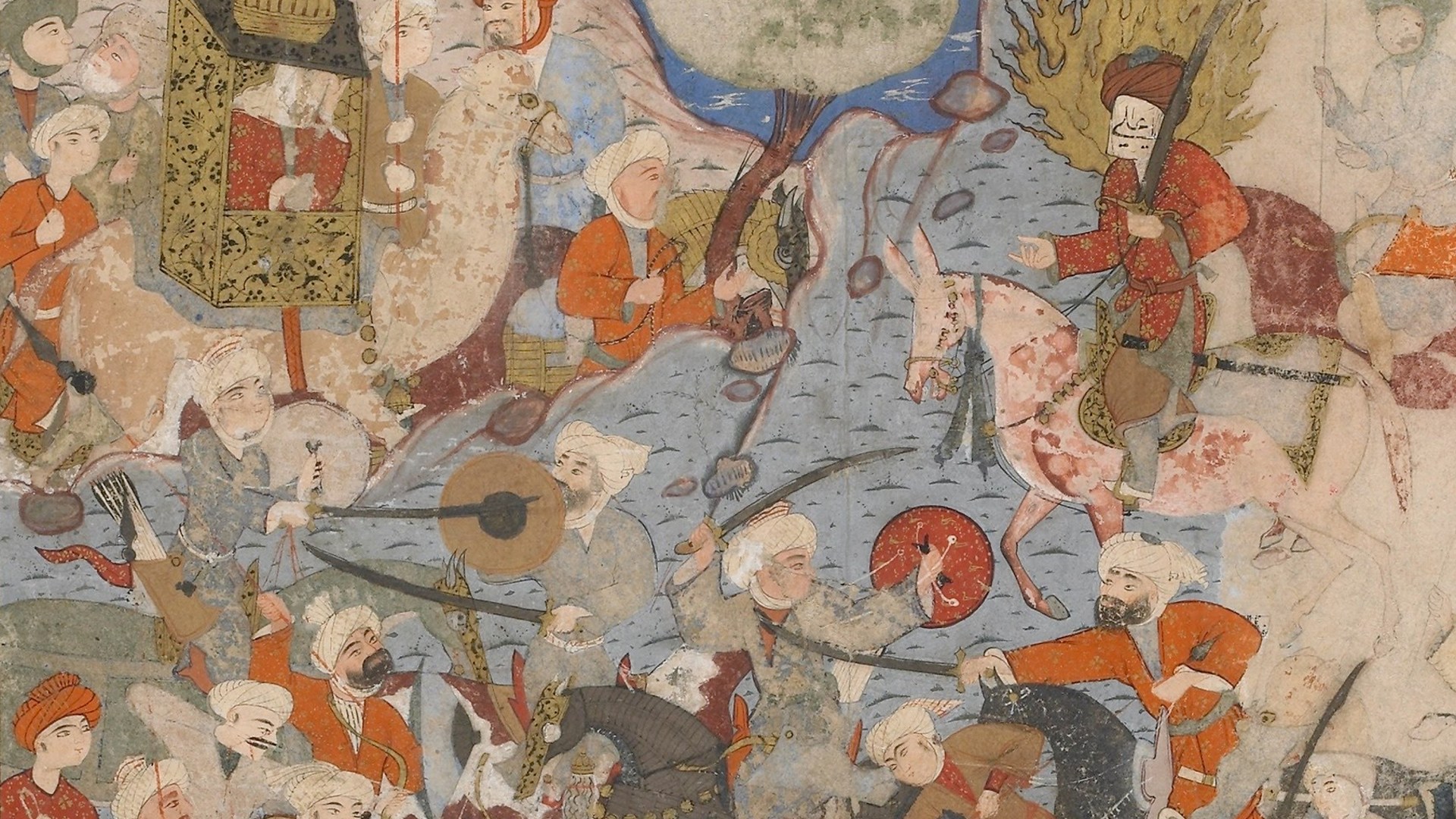
Sunnis, the majority sect, believe Muhammad did not designate a successor. The community then met to elect one, a caliph, and the first three were chosen from among Muhammad’s closest companions. Ali became the fourth caliph, but in a clash known as the Battle of the Camel, Aisha rode the Arabian dromedary in a rebellion against him.

The Lady of Heaven film builds its story around Fatimah, whom Muslims esteem as akin to Mary, the mother of Jesus.

In a poignant introductory scene, Fatimah is introduced as the first victim of terrorism, paralleled as an elderly woman comforts an Iraqi child whose mother was killed by ISIS. Winning an award for visual effects, the $15 million partisan film relates a Shiite perspective that the famed daughter of Muhammad died in childbirth—due to injuries suffered earlier in a raid ordered by his first successor.

Sunni orthodoxy honors the first four caliphs as “righteous.” Thereafter the community descended into civil war, with Ali and Fatimah’s children on the losing end. Hussain, the younger of two sons, was killed in battle, and his commemoration by Shiites is often accompanied by mourning and ritual self-flagellation.

Though Shiite-dominated, Iran banned the film as divisive to the Muslim community, while Pakistan, Egypt’s al-Azhar, and the Muslim Council of Britain all condemned it also. Following large-scale Sunni protests, most UK cinemas canceled upcoming screenings.

According to Rotten Tomatoes, the film’s approval rating among reviewers is 20 percent; among its audience, 75 percent.

“If we are a nation that believes in the freedoms of religion and speech,” said Chowdhry, who immigrated from Pakistan to the UK in 2003, “then this groundbreaking movie should be in cinemas.”

The British government cut ties with a Muslim adviser who circulated calls to protest the film. Chowdhry lamented that after years of funding for counter-radicalization, Islamic fundamentalism still captivates the local Sunni community. The UK’s Shiite citizens are “demoralized,” she said, at the capitulation to “an army of haters.”

Fouad Masri, the Lebanese American president of the Crescent Project, has spent nearly 30 years sharing Jesus with Muslims and equipping other Christians to do likewise. He believes that the core of Islam is a political system, with Muhammad as the founding general. To him, the years of internal and expansionary warfare by Muslims contrast clearly with the blood of early church martyrs.

“It is like the metric versus imperial systems,” Masri said. “The measure you use will judge the other.”

As they build bridges with Muslim neighbors, Christians should not focus on issues like Aisha’s marriage as they share their faith, he said. But in an age of readily available information, it is becoming “increasingly difficult to hide” unsavory stories about Muhammad’s behavior. And since Muslims hold their prophet to be the pinnacle of humanity, meant to be imitated, Masri said it is only right for Christians to contrast his life with the one Jesus lived.

Martin Accad, associate professor of Islamic studies at Arab Baptist Theological Seminary in Beirut, faulted the “immaturity” of Muslims who cannot tolerate criticism. If they could simply “carry their cross,” so to speak, they would win the respect of nonbelievers—including those who hate them.

But unfortunately, he said, there is a long Christian history of egging them on—especially the further one is removed from their community. The seventh-century John of Damascus was not soft on Islam but was also a functionary in the caliphate. Yet the ninth-century George Hamartolos and Nicetas of Byzantium, writing from Christendom, uttered derogatory words about Muhammad that Accad dared not repeat.

Some British missionaries to the subcontinent were similar, said the anonymous Pakistani Christian leader. Others spoke forcefully but fairly. And in fact, 30 years ago, local believers would have too. But following partition and Pakistan’s evolution into a Muslim state, Islamic extremism steadily increased.

Today, no one dares speak against Islam.

“Sharing your faith is like walking on eggshells,” said the leader, based in a major city. “Most Christians are poor and just want to survive.”

In 1986, sharia law was introduced to Pakistan, and in 1993 its blasphemy law was amended to prohibit insults to the family of Muhammad. The local Shiite minority, said the source, also learned how to behave.

“The less I said about Muhammad, the better,” said Warren Larson, a missionary to Pakistan for 23 years. “Partly, it was to avoid a riot.”

Operating with relative freedom back then, Larson, now senior research fellow at Columbia International University’s Zwemer Center for Muslim-Christian Relations, would rig up a book display to the back of his Land Rover. When crowds formed and asked what he thought about Muhammad, his learned reply was simple: “I came here to speak about my prophet, not yours.”

Then he would be left alone.

Similar was the strategy in the Arabian Gulf.

“I never felt I couldn’t speak about Jesus,” said Jim Burgess, pastor emeritus of Fellowship Church in Dubai and the former evangelical representative to the Gulf Christian Council. “I couldn’t evangelize, but I could testify of my belief that not only is he the Messiah but he is also God.”

Sometimes speaking out against religious intolerance is not helpful, he said. It can cause additional harm to those you are trying to defend. But of the controversy over Aisha, he would have advised Gulf rulers to respond as they did. The Indian official’s words were hurtful and could lead to more hatred.

Burgess said that as Western countries increase in Muslim population, many Islamic nations are trying to become more moderate. After spending 13 years in the United Arab Emirates, he has learned how to operate in the middle.

“The right to speak freely comes from a Christlike life,” he said. “Insensitivity is just another name for intolerance.”

Instead, some call out the hypocrisy.

The anonymous Pakistani Christian noted how few participants in the dispute lodge any criticism against China’s treatment of its Muslim Uighur population. And India responded to Pakistan’s rebuke by calling its neighbor a “serial violator of minority rights.”

The heterodox Ahmadis are the chief victims of Pakistan’s blasphemy law, said Larson, and have been officially declared non-Muslims. And Sunnis will often line the streets to mock Shiite commemoration of Fatimah’s Hussain. When Shiites have retaliated, their shops have been burned.

It is better in Pakistan’s cities, said the Christian leader. But while his community has slightly better relations with Shiites, Christians do not get involved.

“Sunnis and Shiites are two brothers fighting,” he said. “When they come back together, we will be the bad guys.”

It will not happen, said Masri. Though mercy is prominent in Islam, he said that the initiation of reconciliation is not. The conflict has been ongoing for centuries, and while Christians should seek to be peacemakers, only Jesus can change the human heart.

Accad has more hope of success. Seeking peace and showing love, Christians can narrow divergent narratives and help both Sunnis and Shiites recognize their differences as matters of interpretation.

He has lived the struggle in Lebanon.

“As non-Muslims we have no benefit in Shiite-Sunni conflict,” Accad said. “We should reach out to Muslims who care about justice and partner with them in opposing harmful medieval practices.”

Masri noted that child marriage was banned in Saudi Arabia in 2019. In Iran the legal limit for girls is 13, while marriages in the 10–14 age bracket increased almost 11 percent.

But can Accad’s hope for reconciliation take root in the UK?

Prayer and discernment are necessary, said Chowdhry, who recognized internecine conflict as an opportunity for witness.

Yet Christians should emphasize joint Sunni-Shiite respect for Jesus, she recommended, and offer to read the Bible together. Sharing what God has done in your life is helpful, and if individuals come to Christ, continue to support them. They may face severe consequences from their families and communities—and the church must fill the void.

But recall also that no one likes having their heroes sullied. Such sympathy can help Americans, Christians, and Muslims alike—especially toward the Almighty.

“An omnipotent, omniscient, and omnipresent God does not need men to defend Him,” said Chowdhry. “He is more than capable of defending himself.”

Ideas

What Does a Pro-Life Economy Look Like?

Abortion has been a national institution for nearly 50 years. Where should Christians spend their pro-life dollars now?

Christianity Today June 24, 2022
Illustration by Mallory Rentsch / Source Images: Westend61 / Getty

During the past 49 years of abortion debates under Roe v. Wade, some have lost track of how profits and poverty drive the issue—and why pro-life Christians must continue to innovate as we put our money where our mouths are.

A common argument for a pro-choice ethic is that abortion access is good for the economy. Many like US Treasury Secretary Janet Yellen argue that limiting abortion access will only make things worse financially for vulnerable women. And if resources for pregnant mothers do not continue to improve, this is an understandable argument.

Seventy-five percent of abortions occur in households living on less than twice the federal poverty level, and nearly half are below the poverty line, according to Centers for Disease Control and Prevention data. Sixty percent of women who choose abortion already have children, and 55 percent are single. Presently, there is little economic incentive for single women already struggling to feed their children to have another child.

Yellen and others also suggest the economy at large will suffer if abortion access is restricted. Already harrowing workforce dropout rates will only increase and having more mouths to feed in already disadvantaged homes will result in more poverty.

If you follow this line of fiscal logic, one could argue abortion access can lead our 401(k)s to expect pregnant workers will forgo maternity leave and maintain uninterrupted productivity. It can lead our tax bills to expect fewer households will enroll in government assistance after an unplanned pregnancy. If this is the case, then perhaps we have all blindly yet complicitly profited from the economy of abortion.

However, this by no means suggests abortion access is good for the economy—and there are two more important points worth making here.

First, as The Wall Street Journal editorial board suggests, the link between abortion rights and economic prosperity is tenuous. More births and more people result in more opportunities for innovation, creativity, and problem-solving concerning society’s most desperate issues, including poverty. Declining populations are fraught with economic problems, as younger generations cannot fill the shoes of retiring workers, nor provide them with adequate care.

Second, reduced abortion access does not necessarily mean there will be fewer abortions. As of 2014, the abortion rate in the United States was lower than the rate at the time of the Roe v. Wade ruling in 1973. However, while abortion rates have largely declined in the past 40 years, some preliminary data suggest that abortion rates ticked up in 2019.

While President Trump appointed the justices that have overturned Roe, the penultimate year of his presidency saw the number of abortions increase by 2 percent. The rate of reported abortions increased by 0.9 percent, and the abortion ratio increased by 3 percent, all year-over-year.

The macroeconomics of Roe are anything but tidy, with both political sides urging us to make some inconvenient people invisible—as Russell Moore reminded us in a recent piece for CT.

One side rightly focuses on how women bear an unfathomable weight in this country, as 57 percent of both the workforce and of recent college graduates. But those who focus solely on the plight of women often disregard the unborn children in these scenarios, who are full of potential—not just for the economy, but as people destined to cultivate and shape the world as image bearers.

And while the other side may coax and cajole evangelicals to vote for “pro-life” candidates, they often reject health care policies that reduce instances of abortion.

Nevertheless, the microeconomics of the church during Roe are encouraging. By the numbers, evangelicals have largely put their money where their mouths are on this issue.

Some evangelicals have resolved to fight abortion rights beyond the voting booth with their checkbooks. One conservative evangelical group estimates that pro-life activist groups have raised $55 billion dollars since 1973. For perspective, that would be 15 times more than both parties raised in the 2020 presidential election.

Aside from contributing to PACs and campaigns, some evangelicals have opted for abortion-related boycotts—using purchasing power to target companies that donate to abortion campaigns and other forms of financial pressure on abortion-friendly organizations in states that allow abortions.

And while our society has long benefited from tea barrels tossed into the Boston Harbor and bus lines vacated in Montgomery, Alabama, modern boycotts are a mixed bag. They rarely make an economic impact unless they result in a social media firestorm, and they often provoke counter boycotts from opposing parties.

Instead of spending their dollars to fight abortion politically, many evangelicals have chosen to use their money philanthropically.

The 2021 Evangelical Council for Financial Accountability (ECFA) State of Giving paints an encouraging picture. Based on annualized increases in giving, from 2010 to 2020, orphan care, pregnancy resource, family and children’s services, adoption, and children’s home ministries received nearly $10 billion in donations. This includes $955 million in 2020 alone to 251 nonprofits.

As we enter a post-Roe era, where should Christians spend our pro-life dollars? I believe the answer is both where it has always gone philanthropically and where exciting new possibilities may lead.

There are approximately 20 times more pregnancy resource centers than Planned Parenthood clinics in the United States, yet their combined value of assets is more than 10 times less. Continuing to donate to pregnancy resource centers is a beautiful way to display a gospel ethic that leads to life.

These centers are so much more than simply “pro-birth.” They provide baby food, diapers, and other essentials to expectant mothers, match soon-to-be fathers with mentors, offer free counseling to women (including after an abortion), and partner with other local nonprofits to meet any other need that might arise.

While philanthropy is an option that must continue, there are other uses of our money, time, and political power that we can leverage in a post-Roe economy.

Do you know what companies you own in your investment portfolio? Do you know which ones produce abortifacients, which ones have no paid family leave, which ones refuse to pay a living wage?

Eighty-four percent of US investors would like to tailor their investments to match their values, but transparent options are limited. As technology and demand grow for ethical investing practices, it’s becoming increasingly possible to invest according to your values without sacrificing return.

Investment firms like Eventide, Crossmark, and OneAscent offer mutual funds and ETFs that seek to avoid companies that profit from abortion, while elevating companies that seek the flourishing of their employees, customers, and society. The next time you talk to your advisor or login to your brokerage account, consider if values-based investing fits your financial plan.

Aligning our investments with our values must be at the forefront of our financial stewardship, right along with wise levels of saving and generously intentional giving. We cannot afford to profit from products and practices that destroy life. Enough of us, together, can move the market toward flourishing and life for mothers, babies, and families.

As my pastor often points out, however, it’s often easier to shuffle our dollars around than to donate our time. How can local churches embody a “womb to tomb” approach in our local communities? Advocates like Rachael Denhollander can be particularly helpful in offering more alternatives beyond the vital yet often discussed options of fostering and adopting.

Is your church leveraging its members’ vocations as doctors, lawyers, bakers, teachers, therapists, and caregivers to care for victims of rape or domestic violence? Are your members taking the time to become court appointed special advocates (CASAs) for foster kids? Does your church fundraise to cover legal costs of a mother trying to protect her baby from an abusive father?

Spending time is slower and more complicated than spending money, but it has the advantage of leading to higher levels of relational commitment and empathy that embody the love of God.

Lastly, we must continually consider and reconsider our politics. Pro-life advocates like to note that the United States is one of a handful of countries that allows elective abortion after 20 weeks, putting us in the company of China and North Korea.

But pro-life advocates often shy away from the fact that 32 countries manage to offer federally paid maternity leave, while we do not. Even if a policy like free childcare—which would substantially ease the lives of new mothers—is currently politically unattainable, we should vote for candidates that will fight for bipartisan financial reform to support families.

In the words of Ronald Reagan, if you want more of something, subsidize it. If you want less of something, tax it.

Christians should want more children in the world because they are made the image of God (Gen. 1:27). They are the blessing of family and legacy (Ps. 127:3–5). Their cries and coos even silence the enemies of God (Ps. 8:2). Therefore, in this modern economy, we must subsidize the lives of children, mothers, and families through our giving, investing, volunteering, and voting.

We cannot afford any longer to treat the vulnerable as a tax on the economy.

And perhaps, at the end of a life and a generation of loving those Jesus loves with both our words and our wallets, we will find that our shouting has turned to discussing. Maybe we will hear those we once vilified. Maybe we will speak with truth and grace.

Maybe we will someday create an economy in which abortion becomes unthinkable—one that bears witness calmly and loudly to the truth that “Americans don’t want abortion.”

Will Sorrell (MDiv, MBA) oversees values-based investing at OneAscent. He and his wife are members of Grace Fellowship in Birmingham, Alabama.

Church Life

Pastors, I Think You Should Use ‘I Think’ Less Often

Preaching God’s truth from the pulpit doesn’t require equivocation.

Christianity Today June 23, 2022
Illustration by Mallory Rentsch / Source Images: Mohamed Abdelghaffar / Pexels

The other day while going for a jog, I listened to a sermon on the seventh commandment, which addresses adultery. In the 40-minute sermon, the preacher used the phrase I think over 40 times and the phrase we think another half dozen.

Of course, I was not counting at first. But as the preacher neared the conclusion, it occurred to me how often I’d heard that phrase. So, I went back and listened again and tallied the nearly 50 references.

Consider the following two examples. When talking about sexuality, he said, “I think all of that truth is grounded in Scripture.” Later in the sermon he said, “I think we have to take Jesus seriously when we wrestle with the biblical view of sexuality.”

Clearly the phrase I think functioned at the level of a subconscious tic, like saying umm or swaying side to side. And while these kinds of empty repetitions may be distracting to listeners, the theological import of sliding errr or ahhhh into a sentence amounts to essentially zero. Not so with I think.

Is truth grounded in Scripture, or does the preacher think truth is grounded in Scripture? Should we take Jesus seriously, or does the preacher think we should take Jesus seriously? The difference matters.

Too much “I think”

In 1566, the Reformer Heinrich Bullinger famously asserted in the Second Helvetic Confession, “The preaching of the Word of God is the Word of God.” He added that when the Word is preached, even if the preacher “be evil and a sinner, nevertheless the Word of God remains still true and good.” Such a bold statement requires more explanation about what the author means and does not mean.

Bullinger also speaks of the closed nature of the canon of Scripture in traditional, orthodox terms, stating that “nothing be either added to or taken from” what God has commanded in Scripture.

In another section on how Christians should understand the interpretations of the church fathers, councils, and traditions, Bullinger writes that while Christians may be helped by them, they are to be accepted only “as far as they agree with the Scriptures.” Then he adds, “We modestly dissent from them when they are found to set down things differing from, or altogether contrary to, the Scriptures.”

This means when Bullinger says that the preaching of the Word of God is the Word of God, we should not take him to mean everything said from every pulpit is God’s Word. He’s not advocating for a postapostolic version of inerrant prophecy, an adding to the canon with new revelation.

He is saying, however, that inasmuch as a pastor preaches in accordance with God’s Word, we are right to say the pastor is preaching God’s Word. Or as some pastors have said, “When the Word of God is rightly preached, the voice of God is truly heard.”

This assertion attempts to reckon with passages like Hebrews 13:7, which exhorts Christians to remember their leaders as those “who spoke the word of God to you.” Consider also Paul’s statement in 2 Corinthians 5:20, “We are therefore Christ’s ambassadors, as though God were making his appeal through us.” The plural pronoun we certainly includes Paul’s apostolic band but must be understood more widely.

In the next verse Paul writes, “God made him who had no sin to be sin for us, so that in him we might become the righteousness of God” (emphasis mine). Just as Christ becomes sin for all Christians and gives all Christians his righteousness, so also all those who are justified become ambassadors for Christ. This means that one Christian’s appeal to another human being to be reconciled to God through Christ can be described as though God himself were making the appeal.

In this light, the phrase I think on the lips of preachers ought to be infrequent. Word choice has consequences. Consider the result if Billy Graham’s go-to phrase had been “I think the Bible says” instead of “The Bible says.” When a preacher uses I think too often, the faith of those who listen becomes like warm taffy—faith stretchable to fit any mold. A fuzzy God of infinite malleability is certainly not the impression preachers should give as they herald the faith once for all delivered.

Rather—regardless of the elegance of the speaker, the size of the congregation, or how many times the preacher says umm and sways side to side—these truths bestow dignity and majesty to all preaching while simultaneously engendering both humility and boldness in preachers.

Too little “I think”

We should note that the opposite end of the spectrum causes problems too. While saying I think over 40 times in one sermon is far too much, not saying I think once in 40 sermons is too little.

When a preacher never says I think, a legitimate question about, say, the dating of the book of Revelation might as well be a challenge to the validity of Christ’s resurrection and return.

This brittleness will manifest itself as rigidness and defensiveness in intramural debates with fellow Christians. Without appropriate humility on the side of the listener, the speaker’s statement “I think the earth might be old” might be interpreted as the tentativeness of a coward or the heresy of an apostate.

The place for I think might be small, but the importance of saying I think every so often is not small. Consider Paul again. He speaks of his own experience as an apostle, as someone who at one time even experienced the “third heaven”—whatever that means—as knowing “in part,” not in full, and seeing “in a mirror dimly” (1 Cor. 13:9–12, ESV). If Paul saw some things dimly, then how much more do we?

And pastors shouldn’t be afraid to tell their people so. “Dear church,” a preacher should sometimes say, “I think this verse means such and such, but I’m not fully sure.” Even the apostle Peter, as is often pointed out, found that Paul’s letters “contain some things that are hard to understand” (2 Pet. 3:16).

Christians believe in the perspicuity of Scripture—that is, that Scripture is sufficiently clear. But sufficiently clear has never meant all Scripture is equally clear. It is no great breach of the faith once for all delivered for preachers to acknowledge this before their congregations.

The Westminster Confession of Faith, without shame or handwringing, even states, “All things in Scripture are not alike plain in themselves, nor alike clear unto all.”

Therefore, preachers need the homiletical version of theological triage described by Gavin Ortlund in Finding the Right Hills to Die On. We must know the difference between preaching “I think Jesus loves you” and “I think the Nephilim in Genesis 6 were fallen angels.”

The difference, I think, matters a lot.

Benjamin Vrbicek is the lead pastor at Community Evangelical Free Church in Harrisburg, Pennsylvania, the managing editor for Gospel-Centered Discipleship, and the author of several books.

News

Presbyterian Church in America Leaves National Association of Evangelicals

The PCA has been connected with the NAE since the denomination’s founding, but has always fought about it.

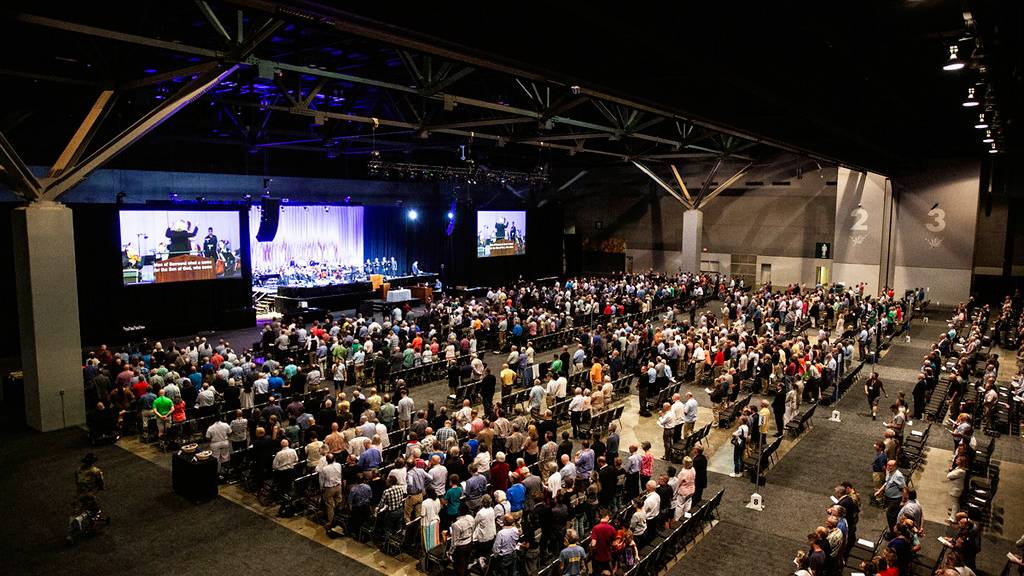
PCA elder Carl Robbins speaks in favor of leaving the NAE.

PCA elder Carl Robbins speaks in favor of leaving the NAE.

Christianity Today June 23, 2022
Screengrab / PCAGA.org Livestream

At its annual meeting on Wednesday, the Presbyterian Church in America voted to leave the National Association of Evangelicals (NAE), which it has been connected with since the denomination’s founding in 1973.

Presbyterian elders voting for the breakup cited the NAE’s increasing political advocacy, which sometimes conflicted with more conservative Presbyterian churches. Elders mentioned the NAE’s advocacy on climate change, immigration, the death penalty, and COVID-19, among other issues.

Elders who wanted to remain with the NAE argued the groups had a historical bond and that in a culture increasingly hostile to Christianity, churches across denominations needed to work together on issues of common cause. The vote to leave was about 60 percent to 40 percent.

The NAE represents 39 denominations, from Free Methodist USA to the Foursquare Church, as well as nonprofits, schools, and individual congregations. It was founded in 1942 as a response to the mainline National Council of Churches and the fundamentalist Presbyterian Carl McIntire’s American Council of Christian Churches. In representing evangelicals in various spheres, it issues statements on political issues, files Supreme Court briefs on church-related cases, and generally connects evangelical groups to work together.

The head of the NAE since 2020, Walter Kim, is a member of the PCA and a teacher-in-residence at Trinity Presbyterian Church in Charlottesville, Virginia. (He is also on CT’s board.)

“It is a little awkward,” said David Coffin, a PCA pastor who supported the measure to leave, about Kim leading the NAE. An NAE spokesperson said the group does not comment on denominational decisions.

Roy Taylor, the former and longtime stated clerk of the PCA, was strongly in favor of remaining with the NAE, where he has served as chairman of the board. He filed a protest against the vote, which he had never done before. In the PCA, filing a protest is like a Supreme Court justice dissenting from a majority opinion, explaining why a decision was wrong.

The PCA’s ties to the NAE have been controversial since its founding. The denomination’s mission arm joined the NAE in 1973, and the full denomination joined in 1986. In 1974, at the PCA’s second general assembly of its existence, a number of overtures (essentially legislation) demanded that the new denomination avoid affiliation with any ecumenical organizations. One overture called for a termination of the PCA mission’s agency’s relationship with the NAE, which the fledgling denomination rejected.

After four hours of debate at its 1974 general assembly, “the assembly set the pattern that will no doubt become a general operational philosophy in all areas: Presbyterian and Reformed, open to cooperation with evangelical bodies, searching the Scripture for further light,” according to a 1974 report from one of the PCA’s founders and editor of the Presbyterian Journal, G. Aiken Taylor.

Taylor described the new denomination after that meeting as “a city open to the world rather than a community needing the protection of massive walls labeled ‘Reformed.’”

In the past, the denomination had considered two other measures to leave the NAE and rejected them.

The presbytery who put forward this overture to leave the NAE cited, among other things, the NAE’s advocacy for political measures like the Fairness for All legislation, an attempted compromise on gay rights and religious freedom. But many different issues have nettled Presbyterians for decades, like statements of cooperation with Muslims and Mormons, as well as a press conference that publicly rebuked Franklin Graham. But the NAE has maintained politically conservative positions on a number of issues, like abortion.

Those arguing in favor of remaining pointed to the PCA’s outsize influence at the NAE as well as the historic ties between the groups. Pastor Ken McHeard, who is the chair of the PCA’s Committee of Commissioners for Interchurch Relations, argued on the floor that the PCA, through the NAE, had brought “the most reformed influence, perspective, and leadership to our nation’s evangelical movement for the last two decades.”

McHeard continued: “Now is the wrong time to be breaking ranks with other Bible-believing churches that are standing with us on most issues, and can provide resources greater than ours for addressing the sanctity of life, biblical racial reconciliation, …biblical marriage, and for providing the judicial expertise and legislative influence that is needed to preserve each.”

On the other side, PCA pastor Carl Robbins, speaking in favor of leaving the NAE, called the membership in the NAE a “a misplaced ecumenism,” and said the PCA could join more like minded groups like the International Conference of Reformed Churches.

“Those of us who wish to depart from the NAE have no problem with fellowshipping with Christians who are not like-minded,” he said. “We all do that in our communities…What we do have a problem with is other churches speaking for us.” Robbins added that the PCA’s participation in the NAE was infringing on the “Christian liberty” of churches that didn’t agree with the NAE, which he said is “usually a source of confusion or embarrassment to most of us.”

Opponents also mentioned that the annual dues to the NAE were $20,000.

Coffin, another prominent and longtime supporter of the decision to leave, said he understood the good motivations behind the arguments for remaining in the NAE.

But he said his own opposition to being part of the NAE was rooted in the PCA’s general avoidance of specific political advocacy. The Westminster Confession of Faith, which the PCA follows, says church councils should not “intermeddle with civil affairs.”

Coffin, for example, worked on the Potomac Presbytery’s overture on opposing political violence, where the crafters were careful not to make a specific political argument but speak from a moral standpoint on the importance of peacemaking.

“It’s not because my politics are different from the NAE, but it’s because the PCA doesn’t believe in general that the church has any proper role in strictly political questions,” said Coffin. But he acknowledged that the majority voting to leave the NAE probably contained his viewpoint as well as those who simply opposed the NAE’s political positions.

Individual PCA churches can still join the NAE.

This article was changed to clarify the PCA’s relationship to the NAE in 1973.

News

Report Backs Abuse Allegations Against Chris Rice

The singer allegedly groomed students at a Kentucky church through back rubs and unaccompanied sleepovers, according to an investigation by GRACE.

Singer Chris Rice

Singer Chris Rice

Christianity Today June 23, 2022
sarowen / Flickr

Three men reported that Christian musician Chris Rice took advantage of a youth ministry culture that normalized massages and sleepovers to groom them as teenagers more than 20 years ago.

An investigation by Godly Response to Abuse in the Christian Environment (GRACE) found their stories credible, including an account of “explicitly sexual contact.” The GRACE report, made public this week, focused on Rice’s involvement at Tates Creek Presbyterian Church in Kentucky during the height of his music career in the late 1990s and early 2000s.

“Rice’s role as a worship leader and a spiritual teaching leader at one or more retreats created a mentor, non-threatening role that reduces the defenses of those under that person’s authority,” the investigators wrote.

Young men looking for a mentor in the music industry say they found the singer was more interested in touching them than talking about songwriting.

Rice first landed on the CCM scene with the Christmas song “Welcome to Our World” and was nominated for six Dove awards for his 1997 debut album Deep Enough to Dream. He was close friends with Brad Waller, a former Tates Creek pastor who was the subject of a 2018–2019 investigation by GRACE.

Waller had a habit of massaging students’ feet and admitted there was a sexual element to his behavior. In a statement in 2020, the church said the singer’s friendship with Waller allowed Rice to develop close relationships with several students at Tates Creek. The Waller investigation led a former student to come forward with allegations against Rice, and the church launched another inquiry.

The former student described how Rice—who was in his late 30s at the time—would have them give each other back massages. He said he and Rice shared a bed during church retreats and his solo visits to Rice’s home in Nashville. The teen disclosed to Rice about his struggles with porn. By the time the former student was 17 or 18, Rice also began massaging his thighs, touching his crotch, and putting his hand down the student’s boxer shorts on multiple occasions.

Another student stayed overnight for a week in Rice’s home after graduating high school, and the two both slept in a tent indoors. He said Rice asked to see his back muscles and would grab his thighs in a way that made him uncomfortable.

A third said Rice sought him out for one-on-one conversations and time together. When Rice fell asleep lying on him on a bus ride, the student saw their interactions as a “bromance,” but now, in hindsight, he views the behaviors as grooming.

GRACE concluded that the student ministry culture “blurred many boundaries” with so much prolonged physical touch and unaccompanied overnight trips. The report recommended the church focus on improving its policies to identify grooming behavior as well as same-sex abuse in particular.

Investigators interviewed seven former students and volunteers who were at Tates Creek when Rice was involved between 1997 and 2003. The former student who said he was touched under his boxers was the only one to report “explicitly sexual contact,” though other circumstances “could also be considered misconduct,” the report said.

Multiple people recounted Rice’s reputation for giving back massages. Looking back, one noted how he would have balked if any other man regularly asked to rub his back and hear about his day, but it was “part of the culture of the youth ministry.”

With Rice, he said, “there was an enormous power differential in that relationship … because he was kind of like a pastor. He had this giant spiritual influence.”

Church leaders informed the police when the former student came to them in 2020 with allegations against Rice. Senior pastor Robert H. Cunningham initiated the investigations into Waller and Rice. The church has no record of policies to protect children during their time at Tates Creek. “We are ashamed that it took a public scandal for us to seriously revisit policies and procedures,” the pastor said.

“What allegedly happened at TCPC years ago was horrific,” he told the church in a statement on Monday. “Remain humble, teachable, and vigilant, lest it happen again.”

Tates Creek has urged other churches and ministries Rice was involved with “to take seriously the allegations found in our report and investigate for any potential misconduct.”

Rice won the Dove Award for male vocalist of the year in 1999 and became a fixture on the Christian music scene. He quietly disappeared from the scene after the release of his 2007 album What a Heart Is Beating For, focusing instead on his work as a painter, and returned in 2019 with the release of Untitled Hymn: A Collection of Hymns via Fair Trade Services.

He did not participate in the GRACE investigation and has not commented on the allegations. His social media accounts have been taken offline.

History

These Pastors Fell into Sin. Pro-Life Laws Emerged from It.

Three 19th-century scandals led to the protection of women and their unborn children.

Christianity Today June 23, 2022
Illustration by Mallory Rentsch / Source Images: WikiMedia Commons

This article is the first of a four-part series based on the upcoming book by Marvin Olasky and Leah Savas, The Story of Abortion in America: A Street-Level History, 1652–2022.

Pastors falling into sordid sin and trying to cover it up. That’s a recent news story and a 19th-century one as well. Americans then expected pastors to be trustworthy. When they were not, and even used abortion as a cover-up, newspaper readers groaned and said, “There oughta be a law”—and soon there were. Three clergy-propelled abortions in particular stand out for their legal impact.

The first saga, in 1820, starred Ammi Rogers, a middle-aged Yale graduate and Episcopal clergyman in Connecticut. He seduced Asenath Smith, the 21-year-old granddaughter of a dying church member, and then had her drink a potion that would purportedly cause an abortion—but it did not. The next step was his use of a “tool” of some kind, which caused bleeding, intense pain, and then delivery of a dead child. That led to Rogers’s arrest and a trial that displayed, according to The Norwich Courier, the clergyman’s “baseness and cold calculating depravity of heart.”

In those days, jury members often proceeded by “common law,” not a specific statute. Everyone knew abortion was wrong, and books by doctors had noticed and attacked the growing threat as more young people moved to cities away from familial supervision. One doctor, John Bums, criticized those who viewed “abortion as different than murder,” and another, Dr. John Beck, those who “stifle the birth in the womb.”

Jurors, though, did not have clear evidence for a verdict of murder, which was a hanging offense, so they found Rogers guilty of giving Asenath “pernicious drugs.” He received a two-year sentence in Norwich’s jail, not the much-feared Newgate prison.

Connecticut legislators wanted to authorize more severe punishment, so they passed in 1821 the first state law against abortion: Anyone who would “cause or procure the miscarriage of any woman” could be imprisoned for life in Newgate.

The Rogers case received coverage in Connecticut and New York. In 1833, an even more sensational case on the Massachusetts–Rhode Island border received nationwide coverage. Ephraim Avery, a 33-year-old married Methodist minister, impregnated Sarah Cornell, an unmarried 30-year-old millworker estranged from her family. She then committed suicide or was murdered.

Ephraim AveryIllustration by Mallory Rentsch / Source Images: WikiMedia Commons
Ephraim Avery

Dozens of newspaper stories and eight short books recounted her travails in the nine mill towns where she worked in a dozen years of loneliness. Journalists emphasized the danger facing young women, especially if (like Cornell) they “had the curse of beauty” and attracted men “amusing themselves at the expense of young women.”

Cornell’s life as a rolling stone left her “without friends and natural protectors” or a proper outlet for her “affectionate and confiding disposition.”

Cornell had told people that Avery was the father of her baby. Because Americans held pastors in such high esteem, reporters reflected public shock that Avery had “converted the temple of the most high God into a detestable brothel.” Another wrote, “Heaven will reap its vengeful curses on the wretch.”

After 16 hours of deliberation, the jury found Avery not proven guilty, since Cornell had confessed “unlawful intercourse with several men.” The evidence to link Avery to the abortion was insufficient. Still, he had to leave the ministry, and pro-life advocates once again used a scandal to gain support, with five more states passing protective laws during the next several years.

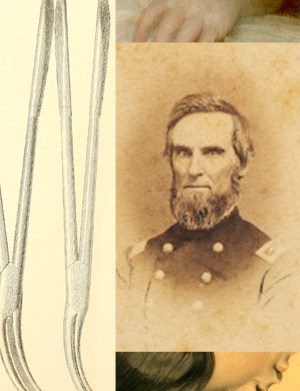
By 1865, unborn children had wide protection, but adultery (especially in wartime) was common. Illinois pastor James Jaquess, 46 and married with two children, hired a doctor to perform an abortion on his young mistress in Kentucky, Louisa Williams. Officials arrested and arraigned Jaquess for “procuring the death” of Williams and “procuring the death of the child” within her.

Newspapers across the United States reported his arrest because Jaquess had been a friend of Abraham Lincoln and the organizer of the Union Army’s “preachers’ regiment,” one made up largely of ministers.

James JaquessIllustration by Mallory Rentsch / Source Images: WikiMedia Commons
James Jaquess

The Jaquess trial, delayed several times because of illness and the absence of crucial witnesses, was in the headlines in mid-May 1866, one week before the US Senate debated the 14th Amendment, which stipulated that state governments cannot deprive any person of life, liberty, or property without due process of law.

Senators read the Daily National Republican, published in Washington with a front page stating that Jaquess was “in disgrace.” As Republicans pushed for passage of the amendment, journalists criticized Jaquess and also the “demons of society,” abortionists.

Senator Jacob Howard, the amendment’s sponsor, said the 14th Amendment would “protect any person,” even the weakest and most despised. The 1864 edition of Noah Webster’s American Dictionary of the English Language defined “person” as “a living human being; a man, woman, or child; an individual of the human race.” Doctors proclaimed that unborn children were living human beings from conception.

The amendment’s primary sponsor in the House, Ohio Representative John Bingham, had gotten his political start in 1846 as a district attorney south of Cleveland, so he was almost certainly aware of abortion tragedies over the years, including two local victims in 1864, Flora Jones and her unborn child. The Cleveland Daily Leader had attacked abortion and concluded, “The fiends in human form who would commit it or wink at it, deserve the utmost penalties of the law.”

It might seem strange, especially since Jaquess was in the news, that no one in the congressional debates suggested or specified that “person” includes unborn child—but the talk of the Senate was the May 1–3 Memphis massacre. In that tragedy, mobs of white residents killed 46 Black people and burned down all 12 of the Black churches and schools in Memphis. State and local officials led the mobs. Memphis City recorder John Creighton urged whites to “go ahead and kill every damned one of the n— race and burn up the cradle.”

Northern Republicans were incensed: For the Civil War to not have been in vain, the Constitution needed an amendment that would protect individual rights not only against the national government but against state officials as well. The emphasis was on protecting Black lives—but legislatures in Ohio, Kansas, Missouri, Nebraska, New Jersey, Oregon, Vermont, Florida, Illinois, and Michigan, just before or soon after their ratification votes, also passed or bulwarked pro-life laws.

It’s ironic that US Supreme Court Justice Harry Blackmun in Roe v. Wade based a national right to abortion in the 14th Amendment’s guarantee of “liberty” and ignored the right to life’s prominence in 1866.

What happened to pastor James Jaquess, whose infamy contributed to the pro-life mood? Witnesses testified to his adultery, but without an eyewitness to Jaquess doing the actual “procuring” of abortion, the jury reluctantly declared him not guilty.

Jaquess’s wife and the Illinois public, though, found him guilty: She left him, and Jaquess didn’t show his face in the state ever again. He went south and failed at growing cotton. He then headed to England and became involved in a scam that led to a 20-month British prison sentence. The despised minister died in Minnesota in 1898.

Today we sometimes name laws after victims. Megan’s Law and Jessica’s Law were reactions to terrible sexual violence. American abortion history is like that: The laws that grew out of tragedies did not attach to personal names, but they were still attempts to keep what happened to one person from happening to many more.

Content adapted from The Story of Abortion in America by Marvin Olasky and Leah Savas, ©2023. Used by permission of Crossway, a publishing ministry of Good News Publishers.

News

Can the Church Still Enact Justice When a Pastor Sues His Accusers?

The PCA takes up the case of a church leader who responded to sexual harassment claims with a defamation lawsuit against his accusers.

The PCA gathers this week for its general assembly.

The PCA gathers this week for its general assembly.

Christianity Today June 22, 2022
PCAAC

As the Presbyterian Church in America (PCA) discusses its response to abuse at its annual General Assembly this week, a case involving an Indiana pastor suing former congregants over allegations against him is making its way through civil court and the denomination’s own system.

Dan Herron, 46, a PCA pastor—or teaching elder—accused of sexual harassment, says the women making claims against him are lying and has sued them for defamation. Several presbyteries have passed measures requesting the PCA intervene.

“For an accused teaching elder to sue his accusers in a civil court—it is ugly,” said Steve Marusich, a pastor in the Central Indiana Presbytery who has been closely involved in the presbytery’s investigation.

The country got a glimpse of defamation cases around abuse allegations with the recent Johnny Depp–Amber Heard trial, where the actor accused his former spouse of defamation over an op-ed that implied he had abused her.

After the ruling awarding Depp $10 million in damages, some legal experts worried that more abusers would use defamation as a strategy to silence victims. The threat of such lawsuits could discourage victims from coming forward.

While church disputes don’t usually turn into legal fights, Herron is among several pastors and ministry leaders who have filed defamation suits in recent years. These kinds of cases are costly and often drag out for years, grinding down victims and denominations trying to separately enforce church discipline. Civil proceedings during a church trial mean that witnesses in the church trial might be afraid of testifying for fear of being sued, or of other consequences in the civil trial. Civil cases also require extensive evidence gathering that might interfere with a church prosecutor’s investigation.

Pastor Dan Herron is accused of sexual harassment.

“Filing a civil suit—we just do not do that,” said Dave Haigler, a PCA ruling elder who works as a federal administrative law judge. “I don’t think there’s even anything in the BCO [the PCA’s Book of Church Order] about that; it just violates Scripture.” Elders referenced among other Scriptures the admonition in 1 Corinthians 6 to not take believers to court.

Haigler previously served for two terms on the PCA’s Standing Judicial Commission (SJC), which is essentially a high court for presbytery disputes. Haigler can’t remember the SJC taking original jurisdiction in a case like this, but this month the SJC agreed to try the case against Herron. That ecclesiastical investigation and trial will coincide with pastor’s civil case.

Over the past year, as more congregants are speaking up about sexual abuse and spiritual abuse, some of the accused are likewise pushing back in court.

In March, Colorado megachurch pastor Jonathan Wiggins of Rez.Church sued former staff and members for defamation over accusations that he was in a sexual relationship with an assistant pastor, among other allegations. The church leadership told the congregation it found “no moral, financial, or doctrinal failure” on Wiggins’s part.

In June, a Maryland pastor filed suit against three people, his son-in-law among them, over a blog full of allegations against him, including that he had urged a victim of domestic abuse to stay with her husband.

In Herron’s case, two women publicly accused him of sexual harassment and bullying. Herron denies the accusations, and declined to comment to CT.

The Indiana Daily Student, the student newspaper at Indiana University Bloomington, first reported details of the allegations in 2021. While attending Herron’s congregation in 2018, Kara Million said the Hope Presbyterian pastor had repeatedly sought her out alone, physically cornered her, and in one instance pressed against her breasts for 10 to 15 seconds.

Million’s husband, Chris Baker, was an intern for Herron and said the pastor would regularly ask him about his wife. The couple left Hope at the end of his internship, according to the news report, and haven’t joined any church since.

Abigail Gschwend Harris alleged similar behavior, saying that Herron sought her out alone and pressed his body against her. Gschwend Harris declined to comment for this article.

Herron has denied their characterization of events, both in media reports and in the defamation lawsuit. In legal filings, Herron called such moments “incidental contact without sexual intent.”

He alleges that the women’s defamatory statements in podcasts, on social media, and in news reports (including leaked materials from private presbytery meetings) cost him a job and forced him to seek counseling. He now works at a health organization in Indianapolis, though he retains his ordination as a pastor.

The women, former members of Herron’s church, first sent their complaints to the Central Indiana Presbytery in 2019. After many twists, turns, internal fights, and complaints filed with the denomination, the presbytery concluded its investigation and reported in May 2021 that it found a “strong presumption of guilt” and recommended a church trial against Herron.

The presbytery, which said it was investigating “various reports concerning [Herron’s] Christian character,” did not say what the presumption of guilt was about specifically.

A few weeks after the presbytery’s report, Herron filed a lawsuit against the women and accused them of defamation and “a campaign of harassment” against him. The trial is set for 2023. Million has also countersued, alleging that Herron had defamed her by calling her a liar.

Civil litigation versus ecclesiastical justice

Meanwhile, the trial process within the presbytery slowed. Thinking of the witnesses in the church trial, Marusich said they might be less likely to share accusations against Herron with the threat of lawsuits hanging over them: “If you’re already being sued, are you going to go in there and tell people what happened? … Some of them feel like the process is designed to wear them out so they’ll quit.”

In February PCA pastor Josh Holowell, the prosecutor for the Central Indiana Presbytery’s trial against Herron, resigned. He was frustrated with the slowness of the presbytery to act while a civil case was proceeding against the women. The decision, he said in a statement, was “based solely on the inability of the Central Indiana Presbytery to render justice, and my own personal weariness from the constant opposition to the pursuit of justice and truth.”

He continued:

The rules of discipline as laid out in the Book of Church Order have been ignored to the benefit of the accused on multiple occasions. The bias of this presbytery has made the rendering of justice in this ecclesiastical court impossible. How can an ecclesiastical process be fairly adjudicated while civil action against the witnesses is allowed to continue? My soul is weary, and I can only imagine my weariness pales in comparison to that felt by the accusers and witnesses in this case.

Million told CT in an email that from the perspective of a victim, the PCA ecclesiastical process has been “horrific” and “heavily biased in favor of the accused.”

“Many of the people originally handling the case were colleagues and close friends of his,” she said, adding that he was able to be involved in his own case while, as a woman, she could not participate in deliberations restricted to church officers.

Elders in other presbyteries around the country began hearing through informal conversations about the Indiana case. Later this spring, four presbyteries (Korean Capital , Chesapeake, Northern California, and Northern New England) passed overtures requesting that the denomination should take over and hear the accusations against Herron itself.

One overture from Northern California said Herron had been “credibly accused of impropriety” and that the defamation lawsuit “constitutes clear evidence of TE Herron’s intention to employ the civil magistrate to prevent his accusers’ testimony against him, and thus preclude or undermine the proceedings of the ecclesial court.”

The Northern California presbytery asked the denomination to investigate and try the case “for the express purpose of defending the honor of Christ, clearing the public scandal, restoring the peace and purity of Christ’s Church, and providing the care of a true shepherd to [teaching elder] Daniel Herron and to his accusers.”

Though the PCA is not a top-down denomination, the BCO has a provision that a minimum of two presbyteries can ask for the denomination to take up original jurisdiction of a case in certain situations of “public scandal.”

Haigler, the elder who sat on the SJC, knows the SJC has the power to be the judge and jury for pastors facing abuse accusations but he had never heard of the SJC taking original jurisdiction in a case like this Indiana one. But in June the SJC agreed to hear the case. The SJC is made up of PCA elders, many of whom have backgrounds as judges or lawyers.

Haigler thinks the SJC is generally a good system for the PCA because it brings finality to disputes. But for abused women seeking justice? The SJC “doesn’t work for that very well,” said Haigler because it is so focused on the technicalities of church governance.

He believes there is room for the PCA to adapt on this. “I don’t think there’s anything in the rules that says we have to be judicial and we can’t be pastoral,” he said.

Multiple people involved in the Indiana case repeated that refrain, saying the PCA’s approach to abuse tends to be more judicial than pastoral. The PCA has a reputation for its commitment to process and rules, which can drag out the simplest actions with amendments and points of order. Because churches are elder-led and all PCA elders are men, only men are involved in the decisions about complaints of abuse within a presbytery.

“The judicial process of this denomination is not trauma-informed in any way,” said Marusich, one of the Central Indiana Presbytery elders. “I’m not saying, ‘I’m Mister Trauma-Informed.’ But I realized in a way I did not two years ago that we are not trauma-informed.”

Instead of elders within one local presbytery hearing abuse complaints, Marusich thinks the PCA should move to a synod-type system where elders from outside presbyteries handle abuse investigations and where women are involved in cases involving women.

“Almost always, the victims I work with say that [the church process] was worse than the actual abuse,” said Ann Maree Goudzwaard, the executive director of Help[H]er, a local church-based effort to help women advocate for women in crisis within PCA churches.

Goudzwaard also served on the PCA’s Domestic Abuse and Sexual Assault committee, helping create the report that the denomination just released. “The [Book of Church Order] was never written with abuse in mind.”

The church trial could have a bearing on the outcome of the civil case. US courts are hesitant to weigh in on church matters due to church autonomy doctrine, an American legal principle that differs from the UK, where the church and government were one and the same. US courts don’t want to be entangled in church matters.

Lawyers looking at this Indiana case thought that the existence of an ecclesiastical trial would make courts less likely to want to intervene because a civil ruling would influence the church trial. But cases with pastors suing over abuse allegations have few precedents.

During the Catholic Church’s abuse crisis, some priests filed defamation suits to counter allegations against them. In the case of a Chicago priest, a state supreme court tossed the suit in 2006 on the grounds that it was a church matter the courts couldn’t intervene in.

In a 2013 case, a man sued his ex-wife for defamation over comments she made about him in church tribunal. The court said the process of discovery alone would interfere with the church’s tribunal proceedings and dismissed the case. In that case, though, the woman had not discussed the supposedly defamatory statements outside of a church court.

The dismissal of such cases tends to be about whether a court is drawn into a theological debate.

Nathan Adams, an attorney with experience on church autonomy cases, said even Herron’s letter of defense in the court documents contains a lot of religious material, like referring to a sermon he preached.

“There’s lots of stuff in the dispute that has a religious nature to it,” he said.

Adams said a pastor suing parishioners is unusual, but the involvement of the church in the dispute here means that Herron shouldn’t be fighting former congregants in secular court. Even if the church process is flawed, “the solution to a flawed process is to fix it.”

Church Life

Why I’m Raising My Kid In the Front Pew

The greatest gift my parents passed on was a lived-out faith. I want to do the same for my daughter.

Christianity Today June 22, 2022
Emma Bauso / Pexels

Before our daughter, Hildegaard, was born, my husband and I discussed the weight of raising a pastor’s kid.

We wrestled with the fact that kids who grow up in ministry are often placed under extra scrutiny—and many end up bitter with the church, walking away from the Christian faith altogether.

I am a pastor’s kid myself. I know firsthand the privilege it is to be steeped in the truth of the gospel and the rhythms of church life.

But I also know the constant, albeit unintended, pressure to look right even when you’re not all right—to feign righteousness instead of being honest about your struggles and flaws. In the background, there was always that verse in 1 Timothy, the one about pastors being able to manage their families. My siblings and I knew that our actions could cost my dad his job.

Hilde will inevitably have similar experiences to untangle from growing up in the front row at church.

But one thing missing from the current conversation about the need to deconstruct and sort out our church baggage is the good of an evangelical upbringing—the good of being raised in the church, the privilege of having Christian parents, and the beauty of knowing the gospel before we could walk.

A few months back, I asked my Christian Twitter followers to share which aspects of their faith they want to repeat with their children. I received over a hundred replies, and many admitted that—although their own relationship with the church may currently be tenuous—they knew they wanted their children to experience Christian community, to have a grasp of Scripture, and to be able to talk honestly about grief, faith, and doubt.

What I noticed in their responses was that many of us are trying to figure out which aspects of our Christian upbringing were righteous and worth repeating and which were not.

For example, I am still working through some false guilt attached to the pressure of daily Bible reading. But when I hold my daughter, I know that I want her washed regularly in the Word. There are plenty of extrabiblical evangelical messages I want to avoid, yet I look forward to telling Hilde all the Bible stories and teaching her to praise the Lord and pray the Psalms. I can’t wait to show her Jesus.

We can take things apart and examine them, but our children make us want to put those things back together again in healthier, more God-honoring ways.

As for my own story, I am grateful my parents taught me the Bible and instilled value for the local church. But I am also so thankful that their example went beyond just talking about Christianity to actually living it out. They put flesh on the concept of faith for me, showing me what it means to know and love God by enjoying creation and caring for the vulnerable.

I learned from my dad that enjoying God’s good gifts is a form of holy worship. He has always delighted in the little things—the tastes and smells and textures of life. Before I ever heard of John Piper’s now-famous mantra, “God is most glorified in us when we are most satisfied in him,” I watched my dad cook.

Every herb he diced, every splash of olive oil or vinegar he added was an act of tangible joy. I would listen to the onions sizzle in the pan with anticipation, and it wasn’t hard to thank God before dinner in my family because we had smelled every step of the dish and already knew that it was a sign of God’s kindness.

Sitting under my dad’s preaching gave me a love for the gospel and a firm theological foundation—but watching him enjoy life also had a lasting impact. Whether we were eating ripe mangoes, walking through a redwood forest in Mendocino County, or looking at the tide pools in Bodega Bay, he taught me what it meant to worship God through all five senses in the enjoyment of nature.

My upbringing taught me that all of creation declares the glory of God and that we can know something of his character through the variety in the created world. We lived out this theology by spending hours at the ocean in search of bright orange starfish with rough, white-spotted backs. My dad continues to touch and taste life to see that God is good.

While poets like Mary Oliver and William Wordsworth taught me how to express my gratitude for nature, my dad is the one who taught me to see the beauty of God in every ocean breeze and coconut curry. As an adult, I still take off my shoes whenever I find a patch of soft grass or a sandy beach, just so I can feel the textures of earth beneath my feet.

Growing up, our home was a refuge for all kinds of people—rebellious teenagers, single moms, troubled marriages, and the homeless. My mom taught me to look for the lonely, whether they needed new shoes or someone to hold their grief. Because of her gift of mercy, we regularly added an extra chair to our dinner table.

My mom is the kind of person who will strike up a conversation with anyone, whether it be her cashier at Walmart or an awkward teenager at church. She is the kind of Christian who always carries a few toys in her purse for kids who get restless in church or other public places.

She also had a heart for those who were living in homelessness and would minister to them whenever and wherever she came across them—whether at street corners or outside McDonalds, where we were frequent patrons.

As a public charter school administrator, my mom developed relationships with at-risk students who remained in her life well into their twenties and thirties. She would give them rides to the doctor, help them find safe places to live and work, and make sure they had food to eat.

Christians often talk about the importance of hospitality and helping the poor, but my mom is someone who truly lived it out. To this day, every person she meets feels at home and knows he or she has a place around our table.

I have learned from her that hospitality is more than just sweeping the kitchen floor and putting something in the oven—it’s about showing people they matter.

I don’t know how rare my experience was. Perhaps those who are currently deconstructing their faith come up empty when asked, “What was the good of your evangelical upbringing?” But I count myself privileged to have watched my parents flesh out the Christian faith in word and deed, and I want to pass that example on to my daughter.

I hope she learns something of God through the sermon on Sunday as well as the flowers that pop up between the fence and the wood stack in our yard. I hope she sees the gospel when she forgives someone for hurting her or is forgiven for hurting someone else.

While it would be wonderful if she memorized Philippians 2:3, I want to watch her live it out by talking to the lonely kid in the cafeteria with the acne and body odor, offering him her pudding cup.

I know that those of us raised in the evangelical church have so many things to sort through. It is not only good but necessary for us to figure out which teachings are a true reflection of God’s Word and which are distortions and perversions that should rightly be torn down.

But when Hildegaard grows up and does that same work of discernment—of reflection and rebuilding on the foundation of Christ—I hope she will also encounter the beauty of being raised in the church.

Rachel Joy Welcher is an author, poet, and acquisitions editor at Lexham Press .

News

India’s First Lay Martyr Fought the Caste System. Now He’s a Saint.

Pope Francis has canonized Devasahayam, a convert from upper caste Hinduism to Christianity.

Christianity Today June 21, 2022
Mondadori Portfolio / Getty

An 18th-century Indian Christian who devoted his life to speaking out against the caste system has become the country’s first layperson saint. In May, Pope Francis canonized Devasahayam, a convert from upper-caste Hinduism to Christianity and India’s first lay martyr.

“The declaration has brought joy to all of us here for a long-awaited and well-deserved recognition to an ordinary person, who exhibited the value of equality for all people,” said Finny Philip, the principal of the Filadelfia Bible College in Udaipur, Rajasthan.

This month, two dioceses in Tamil Nadu—Devasahayam’s home state—organized a thanksgiving Mass held near the foothills of Kattadimalai where his body was discarded after his execution. Hundreds of thousands of Catholics gathered in person (or watched via livestream) for the subsequent four-hour celebration, which included a dance drama depicting the life of the beloved saint.

“The witness and the way St. Devasahayam has inspired our people through decades gives us much hope, especially when freedom of religion is coming under increasing threats in the country,” Bishop Nazarene Soosai of Kotar told the National Catholic Register.

Devasahayam’s road to sainthood began in 2004 when Indian Catholic leaders first recommended his name for the process of beatification. In 2012, Pope Benedict XVI gave him the title “venerable.” Later that year, his beatification was announced, and in 2013, the church began considering him for sainthood after a woman came forward to credit him with a miracle.

“The canonization of Devasahayam becomes important because it is a layperson who has been canonized,” said John Dayal, a spokesperson for the All-India Catholic Union. “In India, while the clergy have been accused of spreading the word of Christ and promoting conversion, the actual witness to the life and message of Christ is by laypeople who live in the community, who by their lifestyle live out evangelization. Devasahayam’s canonization recognizes the tremendous role of ordinary Christians in India, who give witness through their lives daily.”

‘No one forced me to come’

Devasahayam was born as Neelakandan Pillai, into a high-caste Hindu family, on April 23, 1712. He grew up in India’s southernmost state in the village of Nattalam, or what is present-day Kanyakumari district, and served in the court of the Hindu King Marthanda Varma of Travancore.

While serving at the court, he befriended a Dutch naval officer also working for the king, Eustachius Benedictus de Lannoy. As Neelakandan narrated, he wondered whether the gods were angry with him because of the losses he had incurred—especially the death of several prize bulls—to the Roman Catholic man. Lannoy encouraged him by sharing the story of Job from the Bible and explaining that God tests the faith of good people through suffering. This testimony inspired Neelakandan to embrace Christianity, and in 1745 he was baptized. He took the name Devasahayam, which in the local Tamil language means “God is my help” and is a translation of the name Lazarus.

But Devasahayam did not stop there. Next, he dropped “Pillai,” his surname that identified him as a high caste, “to get rid of the obligations of caste attached to him,” said John Kulandai, a priest who helped with the canonization process.

These obligations meant that those in a high caste could not associate with any low-caste people or Dalits. But, inspired by his Christian faith, Devasahayam became an anti-caste crusader who after his conversion began to see all human beings as equal. He frequently spoke out against superstitions that justified demeaning behavior toward lower castes. He was also said to have invited the Dalits—the untouchables—to sit in a row with other people and served them food with his own hands.

Devasahayam’s conversion and subsequent ministry as a lay leader in the Roman Catholic Church invited the ire of high-caste Hindu leaders in the community as well as the members of the royal family. While his own household accepted his Christian faith as their own, the king believed Devasahayam might spread his religion so widely it might overrun his own. Devasahayam’s mingling with people of all castes and classes and eating with people so far socially beneath him led to him being falsely accused of promoting conversions to Christianity. Several Brahmin leaders falsely accused him of treason, contempt for religious practices, and insulting the gods, brahmins, and the king.

By the time of Devasahayam’s conversion, Jesuit missions had been active in India for more than 200 years. (William Carey would not arrive until the end of the 18th century.) Few looked upon them favorably.

“No one forced me to come; I came by my own free will. I know my heart: He is my God. I have decided to follow Him and will do so my whole life,” Devasahayam is later credited as saying.

In 1749, facing pressure from elites, the king ordered Devasthanam’s arrest. During his three years in prison, his captors frequently tortured him in an unsuccessful effort to force him to recant his faith. At the age of 39, Devasahayam was executed by a firing squad, and his body was left to be eaten by wild animals. When people discovered his remains several days after his death, they buried him in front of the main altar of the Church of St. Francis Xavier, which is now the Cathedral of the diocese of Kottar.

“Devasahayam was a well-respected man in his times. He respected the king and other religions. He was not killed just because he was a convert to Christianity. No, not at all!” said Kulandai. “He was killed because he fought against the caste system as well. After becoming a Christian, he understood and practiced the fact that God has created all people equally—there are no high, no low, no superior, no inferior. If Devasahayam was a Dalit convert, probably nobody would have even bothered to notice.”

Opposition to the canonization

Numerous right-wing Hindu groups have met news of Devasahayam’s canonization with outrage, frustrated with seeing a convert venerated and divided over how to discuss his stance on caste issues. Their solution: denigrating Devasahayam as a traitor who was killed for treason.

On Twitter, Swarajya magazine, a right-wing magazine, and the Organiser, an official RSS outlet, alleged that Devasahayam’s martyr was “a hoax.” The Organiser attempted to connect the canonization to an opposition party alleging that its party leaders were promoting conversion in Tamil Nadu.

A local chapter of the prominent Hindutva group, Vishva Hindu Parishad (VHP), said that it “vehemently” opposed the decision of canonizing Devasahayam.

“The main reasons for conferring him Sainthood would be to help the growth of Christianity in southern Tamil Nadu, Kerala, and parts of Sri Lanka,” said Sthanumalayan, the national joint secretary of VHP, in a statement. “This is … an attempt to make a fake Devasahayam, as a saint, to distort history. The Vatican move would encourage conversion.”

It’s not surprising that Devasahayam’s conversion has stirred up controversy, given that the concept of conversion has increasingly been used by Hindu right-wing groups as tool to foment hatred toward minorities, says Vinay Samuel, the founder of the Oxford Center for Mission Studies.

“Hinduism encourages search, so the question is about the choice of the individual,” he said. “Devasahayam, like so many in India, was convinced that here is a faith that he could die for. To reduce that conviction to a narrative of forced conversion or conversion by fraud is not good.”

The legacy

Christian leaders believe that Devasahayam’s life and martyrdom left a legacy for the Indian church to emulate.

“He will bring great strength and encouragement to those who undergo suffering now,” said Finny Philip, Principal of Filadelfia Bible College, Udaipur, Rajasthan.

Soosai, the Bishop of the Kottar diocese, hailed Devasahayam as a “saint of our times” who has shown us “how we can be better followers of Christ.”

But Devasahayam’s ministry should also challenge Christians that there’s still work to be done, especially in addressing the lingering injustices of the caste system both outside the Church and within, where caste remains an issue, especially in south India.

“It is important to remember that almost 300 years ago this man fought against casteism and discrimination,” said Catholic leader M. G. Devasahayam. “Today we are still living in that reality. We must take inspiration from him.

“A change must come if the sacrifice and sainthood of Devasahayam is to bridge the three centuries of caste and communal divide that is plaguing the country,” he said.

addApple PodcastsDown ArrowDown ArrowDown Arrowarrow_left_altLeft ArrowLeft ArrowRight ArrowRight ArrowRight Arrowarrow_up_altUp ArrowUp ArrowAvailable at Amazoncaret-downCloseCloseellipseEmailEmailExpandExpandExternalExternalFacebookfacebook-squarefolderGiftGiftGooglegoogleGoogle KeephamburgerInstagraminstagram-squareLinkLinklinkedin-squareListenListenListenChristianity TodayCT Creative Studio Logologo_orgMegaphoneMenuMenupausePinterestPlayPlayPocketPodcastprintremoveRSSRSSSaveSavesaveSearchSearchsearchSpotifyStitcherTelegramTable of ContentsTable of Contentstwitter-squareWhatsAppXYouTubeYouTube