News

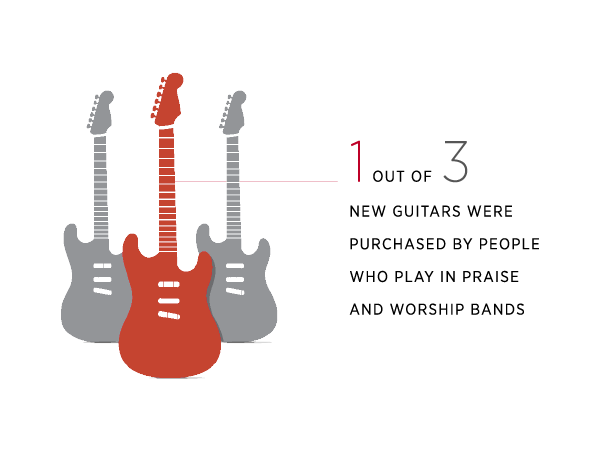
1 out of 3 New Guitars Are Purchased for Worship Music

Industry study says church bands are core business.

Zachrie Friesen / Unsplash

Fender Musical Instruments Corporation sold a record number of guitars in 2020, driven in part by people forced to stay at home during the pandemic. The company calculates that nearly a third of those new musical instruments were purchased by people who play in praise and worship bands.

This may not be surprising to anyone who knows a worship leader.

“Worship leaders are always commenting about wanting to get a new guitar,” said Adam Perez, a postdoctoral fellow in liturgical studies at Duke Divinity School. “There are conversations about needing to ‘up my guitar’ and discussions about types of guitar. For a lot of worship leaders, the guitar is that companion that marks your journey and marks your development as an authentic worship leader.”
No one knows the first person to bring a guitar into church, but it became common in charismatic congregations in Southern California in the 1970s.

Folk, rock, and folk-rock went to church with the hippies who converted during the Jesus People movement, and guitars became staples of the Calvary Chapel and Vineyard church style before spreading to other evangelical churches.

The style signaled openness and authenticity to white baby boomers raised on the Beatles, but guitars also had some practical advantages, according to Perez. They were portable. When a new church started in a school, or someone’s house, or even on the beach, no one had to haul over an organ. Guitars are also easier to learn to play than the pianos and organs traditionally used in church music.

“People joke about how simple it is—three chords or four chords—but that was a strength, not a weakness,” Perez said. “You could have a beginner guitar player who learned to play to lead their small group, their cell group, or even a new church. You’re democratizing access to the sacred.”

Worship music in the 2020s is not all guitar-based, but industry experts know there is a lot of money in church guitars. According to Ultimate Guitar, an estimated one million guitar players are “gigging” at churches every weekend, and more people play praise and worship music than any other genre in the US.

Ideas

Why Environmental Destruction Is Bad for Worship

Contributor

When we destroy God’s creation, we can no longer hear its call to awe.

John Fedele / Getty / Edits by Rick Szuecs

A June 2021 headline in Atlas Obscura proclaims: “Tom Brown’s retirement hobby is a godsend for chefs, conservationists, and cider.” I’d add “for the church” too.

Brown, a retired chemical engineer, has spent his waning years searching for lost varieties of apples. At the turn of the 20th century, there were about 14,000 varieties of apples in the United States. But as Eric J. Wallace reports in Atlas Obscura, “by the late 1990s, U.S. commercial orchards grew fewer than 100 apple varieties.”

Over the past 25 years, Brown “has reclaimed about 1,200 varieties, and his two-acre orchard … contains 700 of the rarest”—dappled yellows, reds, and greens, with monikers like Carolina Beauty and Sheepnose. Still, Wallace continues, “experts estimated about 11,000 heirloom varieties had gone extinct.” Those subtle multiplicities of sweetness, tartness, color, and texture. Those glorious horticultural stories and names. Gone. Replaced with engineered homogeneity.

Environmental debates can trade in abstractions. The scale of environmental catastrophe can leave one mind-boggled into apathy. The problem is too big, too hard to understand. But it is in the particulars of backyard birds, earthworms, and apple orchards that concerns about creation become comprehensible to me.

As creation care advocate Matthew Sleeth points out, whether one understands or even affirms anthropogenic climate change, we can intuitively understand that the world is dying. And we as a church must mourn how the emptying of our skies and seas damages not only the earth but also our faith. The destruction of creation inevitably alters our ethics and our worship.

Every disappearance of plant and animal species is a loss of something made with infinite love and creativity. Nature is an icon—a window into heaven. When we destroy the icon, we can no longer hear its call to worship.

In his book Against Nature, Steven Vogel writes that when nature is objectified, we see creation merely as that “to be overcome and mastered for human purposes.” The result is a “fundamental separation of humans from nature.”

The created world ceases to be a place of glory and wonder and becomes instead the inert stuff of commercial exploitation and personal consumption. A deracinated world is a godless world.

Moreover, our view of nature has a far-reaching impact on our theology, beliefs, and ethics. If creation is devalued, we as embodied creatures forget our own telos and meaning. If it doesn’t matter that we lose 11,000 apple varieties, then why does it matter how I use my body? And why do bodies matter at all?

In his CT editorial on Christian sexual ethics, Andy Crouch writes that a key part of a Christian theology of sex is “that matter matters. For behind the dismissal of bodies is ultimately a gnostic distaste for embodiment in general.”

Although I talk a lot about the holiness of embodiment, in practice I’m a borderline gnostic. I spend my days talking to colleagues on screens. I eat food that appears magically on my table with hands never dirtied in planting or harvesting. My writing and preaching keep me in a heady world of ideas.

For many of us, bodies seem hardly necessary. With our cultural disconnection from the tangibility, limits, and rhythms of the natural world, we cannot sustain a theology of the body that seems any more than arbitrary and abstract.

Part of the call and the gift of the church is to show people how to live as creatures again. For many, the way back to belief will not be found in better arguments—although those are important—but in a deeper connection to the earthy, dirty, glorious world around us. Preserving created beauty preserves worship.

So Tom Brown is a hero. He reclaimed 1,200 samples of God’s delightful wisdom—1,200 witnesses that this stuff of earth, including our bodies, matters. He rescued a trove of icons no less sacred than a vault of treasures in the Vatican.

I hope to be more like him. I hope to get my hands dirty today, go on a walk, learn another variety of tree in my backyard, eat from my husband’s recently planted garden, and recall that the Creator made me too. He made me part of this world, where rocks and robins and even apples call out his name.

Books

Getting High Is (Increasingly) Lawful. Is It Ever Beneficial?

A pastor’s perspective on recreational and medicinal marijuana.

Illustration by Rick Szuecs / Source images: Kym Mckinnon / Unsplash

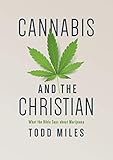
Movements to legalize marijuana are spreading across the country, changing laws and causing millions of Americans to reassess their convictions. With pot’s popularity on the rise, what should Christians say in response? Todd Miles, professor of theology at Western Seminary in Portland, Oregon, tackles this complicated question in Cannabis and the Christian: What the Bible Says about Marijuana. Pastor and writer Nathaniel Williams spoke with Miles about the relevant moral principles and medical facts.

Cannabis and the Christian: What the Bible Says about Marijuana

Cannabis and the Christian: What the Bible Says about Marijuana

B&H Books

176 pages

$8.50

Why did you write a book about marijuana?

This is a pastoral issue that my church has faced. I am on the elder board, and shortly after marijuana was legalized in Washington State, one of our congregants asked, “Is marijuana okay?” We realized at that point that the typical answer—“No, it’s against the law”—would no longer suffice. We knew we had to start thinking about the topic like Christians for a change.

I put together some thoughts and presented them at a pastor’s conference, and the room was packed. This experience showed me that the church was really looking for wisdom and guidance.

Since then, I’ve given this presentation all over the Pacific Northwest and Northern California, and I’ve also developed a talk on medical marijuana. In some people’s minds, the issues surrounding recreational and medical marijuana are basically the same. But others distinguish between them, and that’s the approach I take.

The marijuana legalization movement is spreading rapidly across the country. Why do you think this is happening?

America is losing some of its traditional values and concerns over drugs like marijuana. We’ve entered a confusing moment where some personal liberties are being trampled upon, while others are being expanded.

Certainly there is a powerful marijuana lobby that has the media and popular culture supporting it. It feels like the marijuana lobby is just steamrolling everything in its path. There’s a lot of misinformation about marijuana out there, which makes it difficult to make wise choices. The popular narrative is that marijuana is very safe—safer than “fill-in-the-blank drug.” And that’s probably true in some instances, but not in all. There are different dangers and risks that get downplayed. I want to provide as much material as I can that helps Christians think wisely.

Is it appropriate to take the Bible’s treatment of alcohol and apply it to marijuana?

Not directly. But there is wisdom in how the Bible treats alcohol consumption. The Bible celebrates alcohol as a gift from God, but it commands moderation, and it is clear about drunkenness being a sin. Helpfully, the Bible doesn’t just forbid drunkenness—it also tells us why drunkenness is wrong.

When we look at the reasons—it diminishes cognitive ability, physical capacities, and moral judgment—we can see the connection with marijuana. No one questions the fact that you lose physical capacities, cognitive ability, and moral judgment when you’re high. And because of that, I think we can apply biblical wisdom on the use of a mind-altering substance like alcohol to the marijuana question, as long as we do it carefully.

When you speak publicly about marijuana, what are the most common responses you receive?

Among the most common is “Why are you so negative on medical marijuana when it helps so many people?” This would happen even when I wasn’t speaking about medical marijuana—which is one reason I started addressing it. Another common question is “Can I use marijuana in moderation?” If the moderation principle works for alcohol, people ask, then why not apply it to marijuana as well?

More and more, I’m getting comments along the lines that “Marijuana helps me with my relationship with God.” Maybe you’re like me, and you’re befuddled by that. But it’s a growing phenomenon, and people email me with these kinds of sentiments all the time.

What sorts of pushback do you tend to get from other Christians?

This is a contentious issue, and people usually have their minds made up. When I deliver talks on marijuana, there’s always a divided reaction. Some are angry that I seem too liberal, and others think I’m too hard on marijuana. The first group is upset that I don’t say, “Any positive spin on cannabis whatsoever is just leading people astray. This is straight from the Devil.” Oftentimes it’s because they know people who have struggled with marijuana use. So I can see where they’re coming from.

What I want to avoid is saying something the Bible doesn’t explicitly say. I’m hesitant to call something sin when the Bible doesn’t—unless I can explicitly connect dots. People will rebel against that, and rightly so.

CBD products are growing in popularity these days. What is the difference between CBD and THC, another active ingredient in marijuana?

THC and CBD are different cannabinoids. They do different things to the brain. THC is the chemical component in marijuana that has psychoactive, or mind-altering, effects. CBD, on the other hand, is basically the “essential oil” of the cannabis industry. I don’t think it does a tenth of what it promises, but it probably has some small benefits.

Many Christians worry about CBD because it comes from cannabis. But I don’t think anyone would argue that CBD is psychoactive. So none of the concerns I have about THC—that you lose cognitive ability, physical capacity, and moral judgment—apply to CBD. I’ve gotten criticism for saying this, but I’ve told my congregants, “You can bathe in CBD if you want.” My only moral concern is that you’ll go broke doing so.

You share in the book about your wife’s battle with cancer. How did your family’s experience affect your thinking on cannabis use?

The experience taught me that suffering itself is mind-altering. It shrinks your world. This doesn’t eliminate my concerns about mind-altering substances. But we have to recognize how suffering makes it difficult to take every thought captive to Christ.

The drugs my wife received for her nausea were intensely psychoactive. But her suffering was so acute that no godly person in their right mind would accuse her of sinning by taking them. Which led me to ask: Is there any morally significant difference between the psychoactive drugs she was taking and THC? I don’t see any.

THC demonstrably reduces nausea. It also increases appetite, which can have medical benefits. None of this makes it a good idea to just start smoking marijuana, because you can’t control your dosage the way you can with THC drugs that have been developed and extracted from the cannabis plant. But I believe we should thank God for THC when it can alleviate suffering responsibly.

Where do you see the marijuana debate going from here, and how will it affect our culture at large?

We’ve seen thus far that the more available marijuana is, the more people will use the products, including underage people. I think that’s problematic, and that’s going to have to be addressed.

For churches, this means that as cannabis use becomes increasingly mainstream, it’s going to become more of a pastoral issue. Pastors have to educate themselves on the risks associated with marijuana, and they need to teach their congregations about those risks. No longer can we say, “It’s the law, just don’t do it.” We have to give good reasons why.

The dominant cultural message is that marijuana is not just something that’s okay but something to be celebrated. That’s the environment Christians live in. Pastors need to understand this messaging, so they can get ahead of it and coach their congregations up.

Books

New and Noteworthy Books

Compiled by Matt Reynolds.

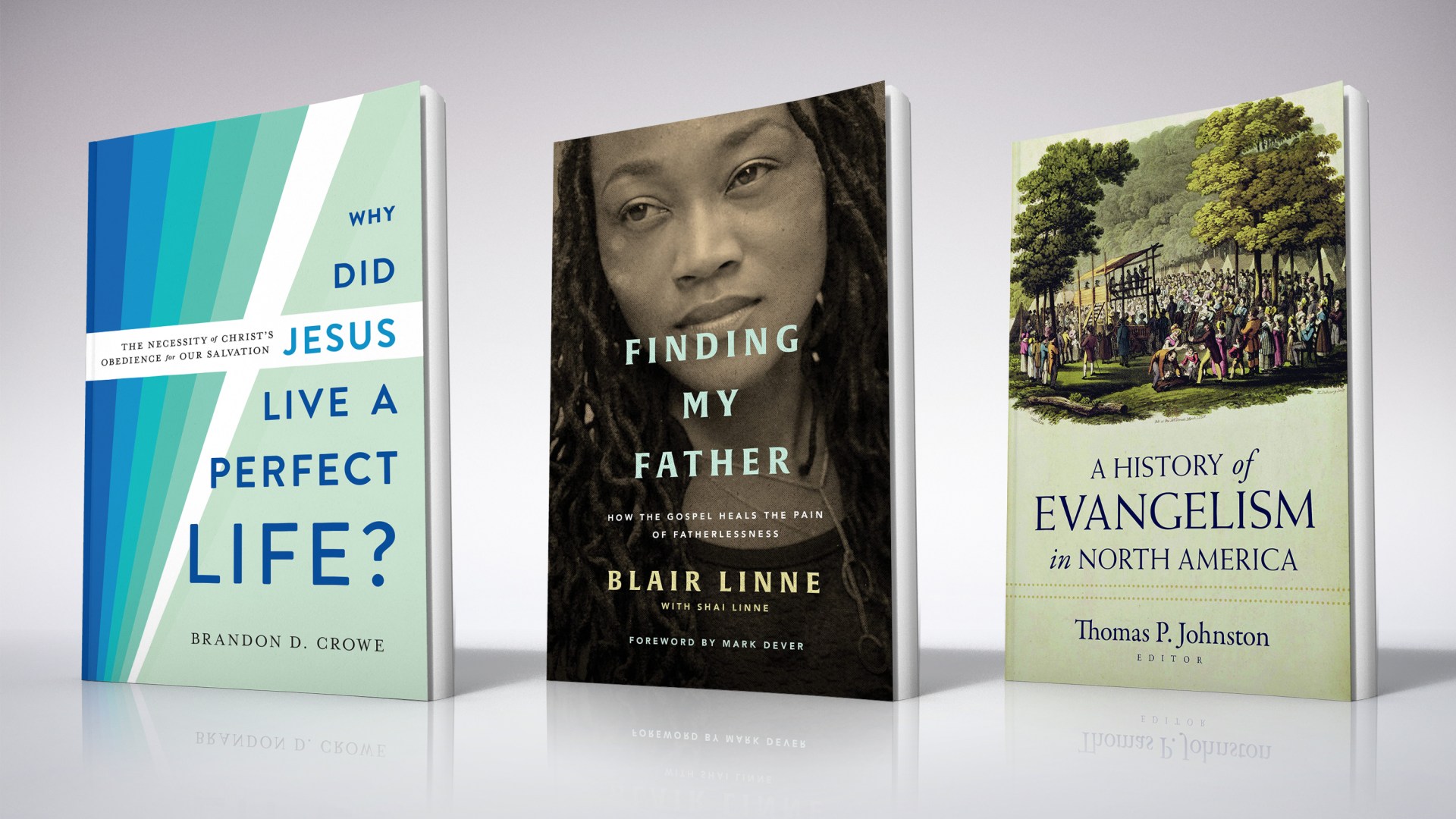
Why Did Jesus Live a Perfect Life? The Necessity of Christ’s Obedience for Our Salvation

Brandon D. Crowe (Baker Academic)

Scripture portrays Christ as the Second Adam, whose unblemished record of righteousness undoes the curse introduced through the transgressions of the first. In Why Did Jesus Live a Perfect Life?, Westminster Theological Seminary New Testament professor Brandon Crowe demonstrates that Christ’s sinlessness, far from being a peripheral consideration, stands at the very center of the Bible’s narrative of redemption. “If we downplay or dispense with the idea that perfect obedience is necessary for salvation,” he writes, “we’ll miss one of the key emphases of the New Testament, and thus the necessity and much of the beauty of Christ’s work on our behalf.”

Finding My Father: How the Gospel Heals the Pain of Fatherlessness

Blair Linne (The Good Book Company)

Blair Linne lived a nomadic and often troubled childhood under the care of a devoted mother who struggled to shoulder the parenting load by herself. “My dad’s absence was the cloud that was always hovering in my sky,” she writes in Finding My Father, “sometimes just on the horizon, sometimes blocking the sun, and at other times encompassing me like a fog, blocking me from seeing even an arm’s length in front of me.” Linne—a spoken-word artist, Bible teacher, and wife to Christian hip-hop artist Shai Linne—articulates both the pain of fatherlessness and the joy of discovering her heavenly Father’s boundless love.

A History of Evangelism in North America

Edited by Thomas P. Johnston (Kregel Academic)

You can’t tell the story of evangelicalism in North America without telling the story of the evangelists who labored to spread the gospel there. This volume covers that story from various angles, gathering contributions from a collection of historians, biographers, and other scholars of evangelism. The chapters, running from the American Colonial period down to the present day, feature household names (David Brainerd, Francis Asbury, Bill Bright), shed light on some lesser-known figures (J. Wilbur Chapman, John Mason Peck, Shadrach Meshach Lockridge), and analyze the most consequential evangelistic methods, trends, events, and organizations.

Books

Well-Intentioned Sin Is Still Sin and Deserves Judgment

Why a holy God can’t overlook even the smallest offense.

Wikimedia Commons

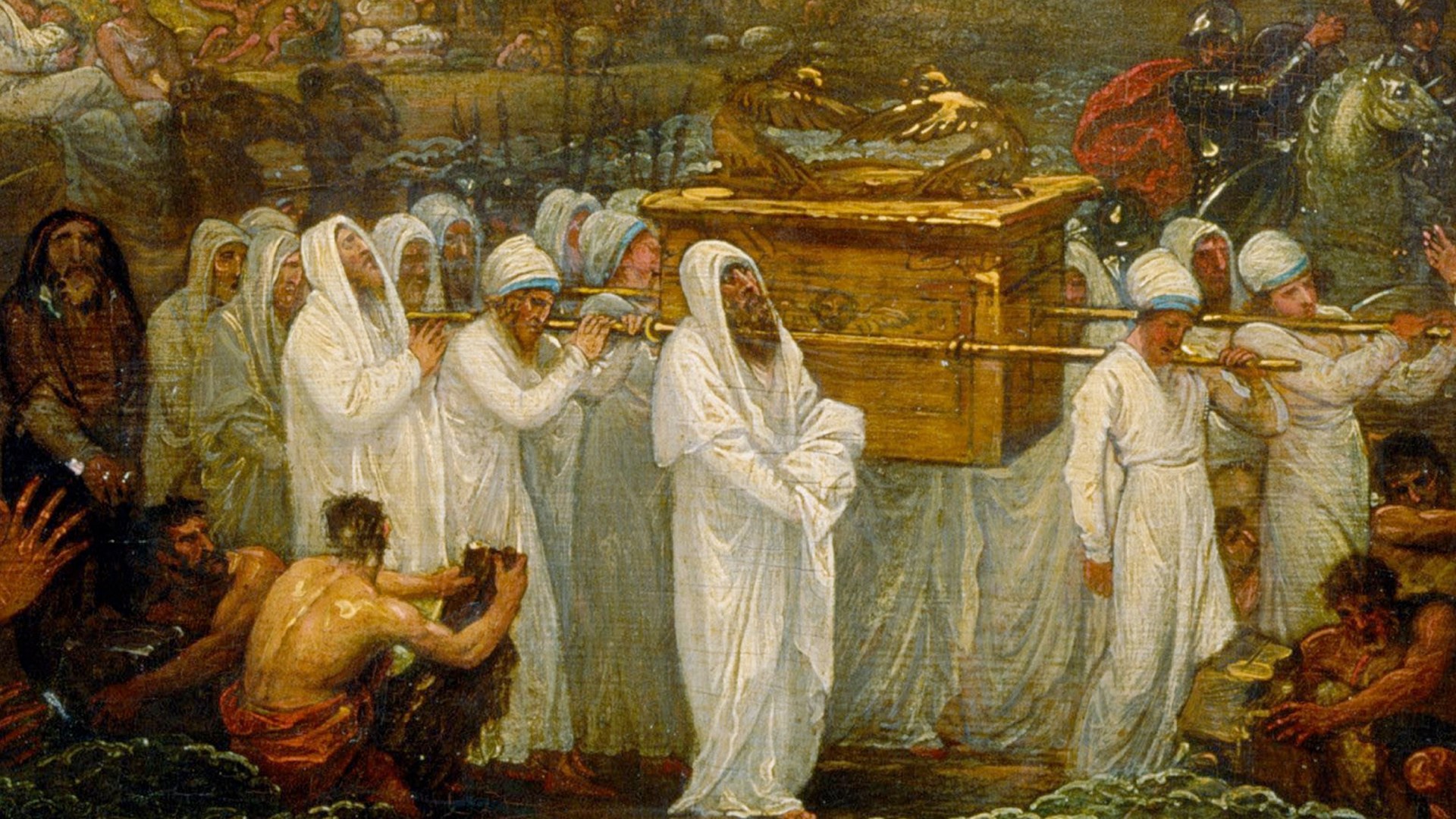
When it came time, after retaking the ark of the covenant from the Philistines, to return it to Jerusalem, the Israelites set it on a cart. A deadly mistake that would cost a man his life. According to the law, the ark was to be carried on the shoulders of the Levites with poles. But instead of referring to God’s Word for how to handle God’s stuff, the people took their cues from the Philistines.

Holier Than Thou: How God’s Holiness Helps Us Trust Him

Holier Than Thou: How God’s Holiness Helps Us Trust Him

B&H Books

192 pages

$9.97

Upon reaching the threshing floor, the oxen forgot its legs and started to dip near the ground. The ark—that precious symbol of God’s holy, holy, holy presence—started tilting over.

As it did, a man named Uzzah extended his hand to grab the ark and prevent it from touching the ground, and “The Lord’s anger burned against Uzzah because of his irreverent act; therefore God struck him down, and he died there beside the ark of God” (2 Sam. 6:7).

We feel sorry for Uzzah, don’t we? From our perspective, he was simply a man with good intentions. He was just trying to help, we say. Yet Uzzah had sinned against God.

Maybe he thought he was holy enough to touch something he shouldn’t. Maybe the ark, having resided in his father’s home for two decades, had become too common, an ornament of sorts. In any event, his loss of awe, paired with his failure to do as God’s law prescribed, necessitated God’s justice. As R. C. Sproul once observed, “Uzzah assumed that his hand was less polluted than the earth.”

Whenever God judges like this, we’re tempted to react like David, who was angry “because the Lord’s wrath had broken out against Uzzah” (2 Sam. 6:8). How can the same God praised for his kindness seem so cruel?

Since God is transcendent and thus incomparable, his wrath is nothing like the anger we know by experience. God isn’t stirred to wrath because his ego is bruised. Nor is he a sadist, taking pleasure in our pain. No, this wrath, in the words of Scottish theologian John Murray, is the “holy revulsion of God’s being against that which is a contradiction to his holiness.” If he were to overlook even the smallest offense, he would no longer be holy.

We sympathize with the likes of Uzzah because we have a ridiculously low view of sin and a mediocre grasp of God’s holiness. He is without spot, wrinkle, or blemish. By contrast, our sin is offensive, abominable, demonic, unrighteous, lawless. So God must judge. He must bring down his sword on the guilty. (2 Sam. 24:16–17; 1 Chron. 21:16).

But here’s the question that should be asked but rarely is: If God must judge, then why are we still alive? Haven’t we eaten a fruit God told us not to? Haven’t we approached God’s holy law with something less than reverence? Yet here we are, still under the sun. A grace given to those who deserve nothing but wrath.

Adapted from Holier Than Thou: How God’s Holiness Helps Us Trust Him, by Jackie Hill Perry (B&H).

Cover Story

She Was Captured by the Taliban in 2001. But God Gave Her a Bigger Story.

Q&A with Heather Mercer who went on to work for freedom in Kurdistan and adopt a Kurdish son.

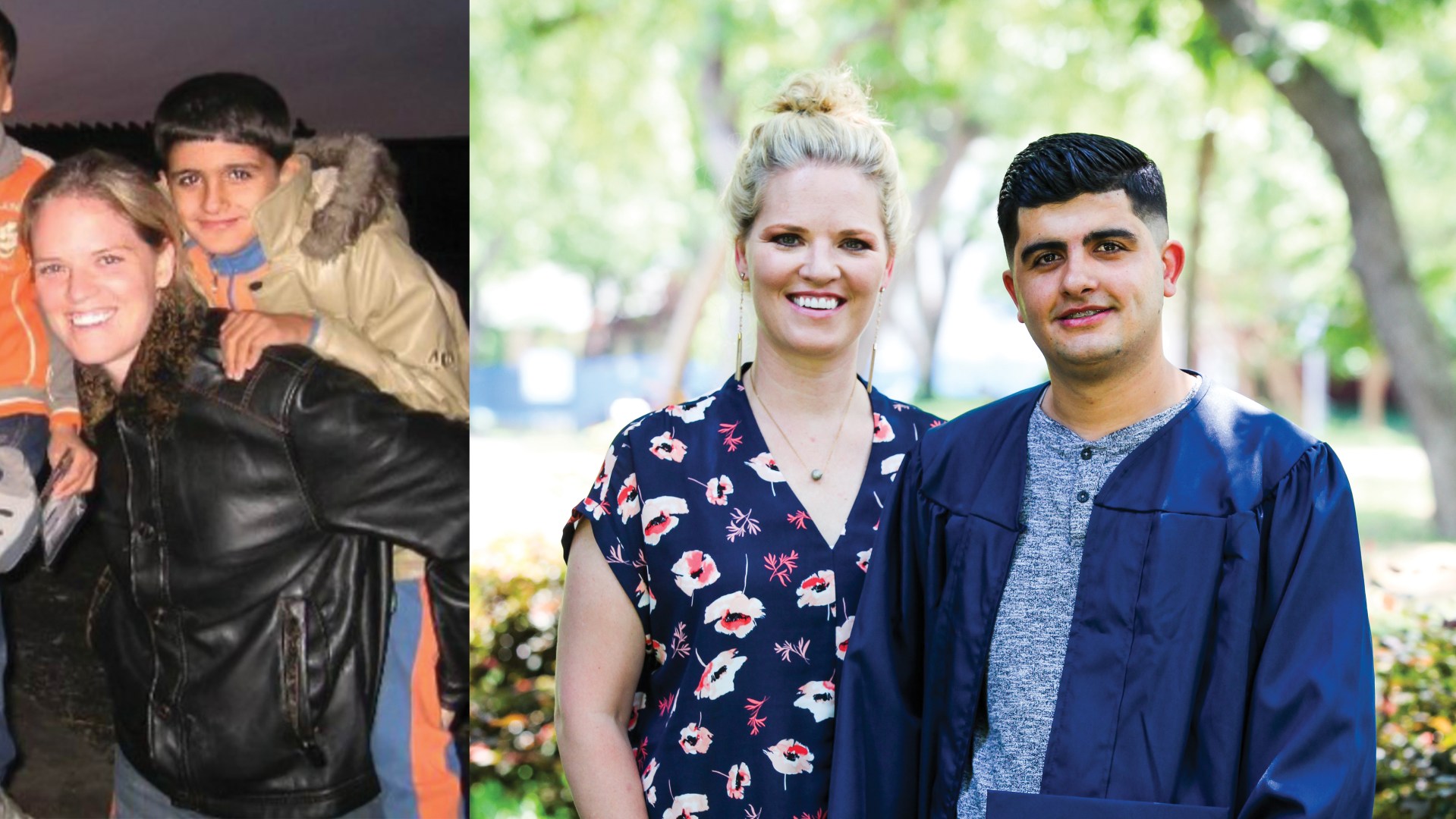
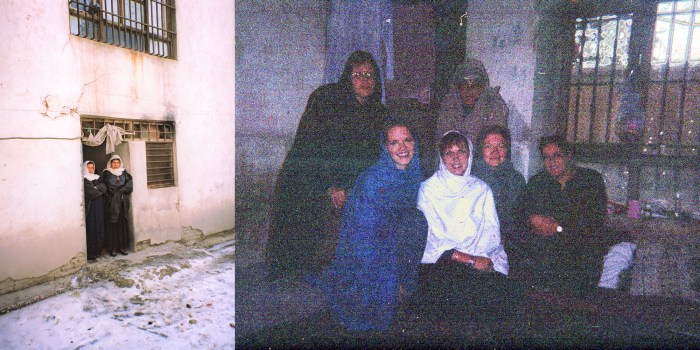
Heather and her son, Hawal, in 2009 (left) and at his graduation in 2018 (right).

Heather and her son, Hawal, in 2009 (left) and at his graduation in 2018 (right).

Photos Courtesy of Heather Mercer

When she was 24 years old, Heather Mercer was one of two American women in a group of eight international aid workers and 16 Afghans captured by the Taliban. One month later, a terrorist organization protected by the Taliban launched a successful attack on the United States that shifted the course of history for both nations, and Mercer became briefly famous. She was, for a moment, a kind of icon of the American plight, hostage to this unknown group with unknown aims.

She and the other aid workers were rescued two months later, in November 2001. At the time, Mercer said she hoped her life would be much more than the story of how she was captured by the Taliban. In the past 20 years, she has worked hard to make it more, following her faith in a God who invites us into the work that will change nations and make history.

Now 44, Mercer talked to CT from her office in Kurdistan.

Have you been back to Afghanistan at all since you were rescued?

I have not. I have tried three different times to go back. And one time I got really close to getting my visa, and then the doors closed. I long to go back.

Why do you want to go back? What do you want to do there?

I really want to touch Afghanistan again. I left a piece of my heart there. Afghanistan was my first love. And I want to go back and see the people that were involved, see the Afghans that I knew and loved. There’s one young woman that I was with in prison—I would love to try to find her. All of my memories of Afghanistan are filled only with fondness, gratitude that I got to experience it.

Did you feel that gratitude initially, or is this something that took 20 years of growth and healing? There must have been quite a bit of trauma as well.

I was young when I went to Afghanistan, but I had longed for years to go. I bought a one-way ticket. I told my parents, if I die in Afghanistan, bury me there because that’s the land I love. Even though it ended abruptly, I never felt anger or bitterness towards the Taliban or towards the people. There were things I had to work through coming home. But I never for a day regretted or wished I hadn’t been afforded that experience. From the beginning I knew there was privilege in the opportunity God gave me to experience that time in Afghan history.

The group of women who were held by the Taliban (right) and their prison wardens (left).Photos Courtesy of Heather Mercer
The group of women who were held by the Taliban (right) and their prison wardens (left).

You said in an interview that you didn’t want your captivity story to be the only story of your life. So, after 20 years, what are the stories now that are important to you?

One major story has been the work here in Kurdistan and the Freedom Center. We have our big grand opening of the Freedom Center in September. That’s the combination of 18 years of work and faith and trust in God to do the impossible. We’re now standing on the top of that big mountain climb. It’s an amazing story of God’s faithfulness. It’s the first time in the history of Iraq that something like this has been done.

Everything that we do at the Freedom Center is related to enhancing people’s ability to live free, whether that’s physically free in their society or spiritually free in their hearts, and then bringing in tools and resources to give them hope in chaos and conflict.

We’re really excited about it, really proud of that victory because of what it represents to a generation of people.

When President George W. Bush made the decision for special forces to come in and get us—and in the years since—I’ve realized just how significant and extraordinary it is that I was still alive. I know President Bush often references the Scripture “To whom much has been given, much will be required” (Luke 12:48, NRSV). And I very much feel that same way.

I think one of my other stories would be that I adopted a deaf young Kurdish man. His story is the things that movies are made of. Would you like me to tell you a little bit about him?

Yes, absolutely.

His name is Hawal. In Kurdish it means, essentially, “good news.”

He’s one of eight children from a very amazing Kurdish family. The parents spent the first months of their marriage in the mountains running from Saddam Hussein.

His mother—I would call her a community builder. She’s never been formally educated, but she’s a woman of influence in her community, has a heart to take in the world. Through her own relentlessness, she became my best friend. Three of her children were born with special needs, and one of them passed away.

Whenever I would come to town, Hawal would see my red Jeep come into town, and he would literally run across town to come meet up with me and our team. Because he was born deaf, he never learned to speak. He wasn’t able to go to school. And so, he literally grew up language-less. No reading, writing, speaking, signing. He made up his own language of about 50 gestures.

I was part of this family for years watching him grow up. And then ISIS happens. He’s in his teenage years, and he knows there’s no future for him in Iraq. In an act of desperation he tries to run away, and he insists that he’s going to flee to Europe. His mom is very worried about him, and she confides in me.

We had taken on some big medical projects, so I thought, let’s see if we can get Hawal to America to have surgery. I knew nothing about being deaf. I thought if he has surgery, then he’ll be able to hear and then he’ll speak. Miraculously, we were able to secure a visa for Hawal to come to the US for medical care. And I thought, maybe for six months to a year I was going to coordinate and facilitate his time in the US. While we’re on the way to the airport—April 6, 2016—his mom says to me, “He’s no longer our son. He’s now your son, and we give him to you. And whatever you think is best for his future, he’s your son.” I thought that was just like their Kurdish hospitality saying, “We trust you.” But I learned later after he was in the States that, in fact, they meant it.

As we were flying to the US, Hawal sees the [TV] screen, and he noticed the flight map. And he gestures to me, “Why is the plane going like this [curved] and not like this [straight]?” That was my first clue how complex a story we were about to enter into, because Hawal didn’t know the world was round.

I enrolled him in the Texas School for the Deaf in Austin, which is a residential school. Essentially Hawal had to learn three languages simultaneously without ever having a language construct in his development. And he started to have to learn math from zero. He’s having to learn all of this simultaneously, a million miles away from his country and family of origin.

I had to learn sign language to be able to start even having a way to teach him anything. It was an incredible journey of trial and error, trying to figure out what was going to work. He far surpassed anything that I could give him. And the Lord built this amazing team, not less than 100 people, including extraordinary mentors and friends, who all took a role in Hawal’s life.

Hawal graduated from the Texas School for the Deaf in 2018, was granted asylum, and will soon be getting his green card. And in August, he’ll go to Gallaudet University. He’ll be the first person in his family ever to go to college. He’s built this huge community, a lot of them refugees who have similar stories.

How do you think you’ve changed in the past 20 years?

I feel like I understand how this part of the world works a whole lot more. The whole idea of calling and living for Jesus and walking with God—all of that I feel like I understand a whole lot less.

In my spiritual upbringing, I always had this idea of what it was going to look like to go change the world for Jesus. And I think I was off base in a lot of ways and arrogant. Living in conflict zones has really humbled me. I realize I’m one person in this great big story of God and his heart to fulfill Isaiah 61. I want to be faithful, and I want to run my race well. That’s what I focus on.

I do still believe that God is inviting us in to a work that will make history, but I just want to love him, love people, and be fearless in the mission of freedom in places that have yet to experience it. I wake up every morning and still say, “God, I want to see nations change.” And I trust that he will write that story.

Cover Story

What Christian Aid Workers Want You to Know About Afghanistan

US forces are withdrawing after 20 years, but the story of Christian aid work goes far beyond military conflict.

Andrew Quilty

Our September issue went to press before the stunningly rapid fall of Afghanistan’s government. This month’s cover honors the history of faithful, unseen service in Afghanistan on the part of local believers and Christian aid workers. With the Taliban now firmly in control, it’s easy to forget that the church was at work there long before America’s “forever war” began—and will remain at work there, now that the war has ended.

Like so many, Arley Loewen knows exactly where he was when 9/11 happened. He was in Islamabad, Pakistan, working with Afghan refugees as an educator, and he had to evacuate the area for safety.

But as a foreign aid worker, there are also other dates he thinks about, memorializing other deaths. Those who spent time on humanitarian work in Afghanistan in the past 20 years get emotional remembering the Afghan and foreign friends, coworkers, and neighbors who died.

On March 27, 2003, a Red Cross engineer was executed by unknown gunmen.

On June 2, 2004, five Médecins Sans Frontières staff were killed on the road between Khair Khana and Qala-i-Naw.

On January 14, 2008, an attack on the Serena Hotel in Kabul killed six.

On July 24, 2014, two Finnish women with an international ministry were shot and killed.

On October 3, 2015, a US airstrike hit a Médecins Sans Frontières hospital and killed 42.

On November 24, 2019, a roadside bomb killed a California man with the UN Development Program and wounded five others.

There are other dark dates, and Loewen, who currently lives in Manitoba and teaches Bible and Muslim-Christian relations at a small Christian college, regularly checks his phone to see if his friends in Afghanistan are okay.

“We tend to sit in the story of violence, and it’s so real with the Taliban taking one district after another,” Loewen said. “But then the other story of civil society—I love that story.”

According to a recent report from the US Agency for International Development, there are about 140 nongovernment charity organizations, many of them Christian, doing aid work in Afghanistan. There are also another dozen UN organizations. They are providing food, medical care, cash transfers, education, and tools and seeds for farmers. They are encouraging music, art, literature, and sports. In the midst of war and conflict, they have encouraged community and civil society.

They have, perhaps most of all, formed deep connections with the people of Afghanistan.

Transformation brought by the Afghan people

“Aid workers are just there for the people,” said Patrick Krayer, who lived and worked in Kabul with his wife and kids. “We’re just facilitating. … We’re not messiahs. We don’t want to get into the power dynamics that, ‘We’re coming in to save you.’”

Krayer pointed to ophthalmology as one example of how aid workers help. Beginning in the 1960s, a Christian aid organization helped establish an ophthalmology department at Kabul University, training Afghan eye doctors. Then those doctors trained others, and today all the ophthalmology is done by Afghans for each other.

“One hundred percent of all the eye care in the country came out of that department,” he said.

Krayer and others are quick to point out that though they have provided resources and support, the real transformations that have happened in the country have been done by the Afghans themselves.

“We’re just empowering them to do what they want to do to serve their own people,” said Krayer, who now teaches at Dallas International University.

He recalls arriving in Kabul in 2002 and seeing building after building bombed out. By 2012, the city of more than four million was completely rebuilt. There were other kinds of transformations, too. Artists started creating again. Soon, women were competing in athletics and participating in team sports, and by 2008, Afghanistan had its first Olympic medalist. There was an explosion of popular culture. Afghan Star, a singing competition show that brought in hopeful contestants from around the nation, became the most popular show on Afghan television.

Afghans did almost all of the transformational work, Krayer said. But they don’t get the credit, and the story of the violence misses so much about what has happened and what is happening in Afghanistan.

“I was a guest in their country,” he said. “They allowed me into their communities. They allowed me into their homes. They’re very hospitable and gracious. It’s an incredible privilege to be working and living among the people.”

Krayer recalls one time he got a flat tire in a small village about four hours from Kabul. He had already replaced one flat on the trip and didn’t have a spare. A stranger grabbed his tire, jumped into a passing taxi, and went and repaired it.

A street in Kabul near the Loewens’ house when they arrived in 2003 (top) and rebuilt 10 years later (bottom).Photos Courtesy of Arley Loewen
A street in Kabul near the Loewens’ house when they arrived in 2003 (top) and rebuilt 10 years later (bottom).

Aid work will not end with withdrawal

As the US military pulls out of the country, foreign aid workers are preparing for the changing political reality in Afghanistan. President Joe Biden, the third US president to pledge complete withdrawal from what has become known as America’s “forever war,” said security for the region needed to be turned over to Afghanistan forces by the 20th anniversary of the 9/11 attacks. The president expressed confidence that the Afghan soldiers have the “capacity to sustain the government” but also acknowledged the country will deal with ongoing “internal issues.”

Observers say the Taliban is gaining power in many districts and the conflict may turn into a civil war after the US forces depart.

Christian aid workers, who have seen a rise in violence targeting humanitarian groups in the past few years, are concerned about the uncertain future. But they also say they are doing work that did not begin with the US invasion and will not end with US withdrawal. They were doing something different than the military.

“We want people to know that God loves them,” Krayer said. “And love has to be practical and physical.”

Aid provides stability in a country, and for Christian aid workers at least, it is explicitly nonpolitical. During times of transition, that can be even more important. Krayer said that in the Afghan civil war of the 1980s and ’90s, there were many aid workers who stayed in the region.

In the near future, many workers may leave because of security concerns. Others will find ways to stay, said an author and aid worker who, for safety reasons, uses the pseudonym Anna Hampton.

“There is a 100-year modern history of the Christian foreigner in Afghanistan,” Hampton said. “It’ll get small again, but it’ll be there.”

The motive, according to Hampton, is simple: “We love Jesus and we love the Afghan people.”

That doesn’t mean there won’t be dangers. In the past 20 years, aid workers have experienced a lot of risks. They and their families have had to make careful, calculated decisions about what to do and how vulnerable they are willing to be.

Hampton’s family’s home was once broken into by armed men, a close family friend was kidnapped and killed, and they were forced to evacuate the country. Hampton said she still deals with the trauma from the attack on her family. But peril is also an opportunity to live out her faith.

Hampton now writes about the theology of risk and teaches future aid workers how to discern healthy fear and develop mature courage. Many Christians have an idea of courage that looks like a lone man dying on a battlefield, she said, but that’s not a biblical picture.

“Both Jesus and Paul fled risky situations,” she said. “Workers need to see where God is speaking and guiding and leading them either to continue to move into a higher risk situation, or to retreat for a time.” In her book Facing Danger: A Guide Through Risk, Hampton talks about what it meant, as a Christian and a mother in Afghanistan, to try to show her children a picture of how Jesus would respond to people’s needs and also human danger.

Loewen said people asked him and his wife about the risks of bringing their two small daughters to the region, too. And there were risks. But also an incredible richness, raising a family in that culture and seeing his daughters learn to cross cultural lines as if it were normal.

“They treasured their lives in Pakistan and Afghanistan,” he said. “In school, our daughters could relate to Afghan boys and girls as friends.”

Of course, it’s not just aid workers and Christian foreigners who face threats. The conflict has been dangerous for many in Afghanistan, and a small but vibrant group of Afghan Christians pray and worship behind a protective veil of privacy.

According to the Pew Research Center, less than 0.3 percent of the 34 million Afghans belong to a minority religious group, whether Christian, Hindu, Sikh, or Baha’i. But accurate numbers are hard to come by. The population is predominantly Sunni Muslim, and the constitution states that Islam is the state religion. Minorities are allowed to practice their faith, but it’s not considered culturally acceptable in public spaces.

Many Afghans—some for religious reasons, more for political reasons—are currently weighing whether they should leave the country in this time of transition. According to a recent United Nations Refugee Agency report, nearly 1,000 have left per month since April. They will join the millions displaced from their homes in the past 40 years.

Janice Loewen visits with an Afghan friend.Courtesy of Arley Loewen
Janice Loewen visits with an Afghan friend.

The Afghans outside of Afghanistan

Currently, 42,000 Afghans live in Toronto, and thousands more in other North American cities. New York has 18,000 and Los Angeles, 12,000, according to Global Gates estimates.

Negin Ponce was one of those refugees, arriving in New York in the 1990s, where she lived for five years until moving with her parents to California. She was in high school in California when 9/11 happened. Her first concern was for an aunt who worked in the World Trade Center. Only later did she realize that, because she was a Muslim and because she was from Afghanistan, some of those around her would associate her with the perpetrators and not the victims of the violence.

“I wanted to put a blanket over my head, for people not to know where I came from,” she said. “It was caused by radical people and radical extremism, rather than the kind and patient and loving Muslims.”

Later, Ponce became a follower of Christ, after she had a vision of three crosses, found a Bible, and then visited a church. Now, because of her faith and because of her own experiences as a child, she supports Muslim refugees in California and urges her fellow Christians to reach out to their Muslim neighbors.

“It’s a very warm and loving culture that really is about the family unit,” she said. “We love our ethnic foods. And don’t you ever dare go into an Afghan woman’s home who’s a homemaker and say, ‘I’m bringing fast food.’”

Americans can care for the Afghans in their midst by listening to their stories, teaching them English, and meeting practical needs like medical care and employment assistance, said Jamie Coleman, pastor of Nexus Community Church in Dallas. The church meets in the community center of a large apartment complex filled with refugees. He estimated that about 500 families of Afghans live within a two-mile radius of the church.

The church members are forming relationships, getting to know the Afghans as people.

“To have a friend be able to listen to how they’re experiencing life here in contrast to what life is like in Afghanistan? They love to share that,” he said. “In Afghanistan, brothers and sisters and parents live together in big houses, a communal life. Here it’s extremely different, with lots of pressure to pay the bills and work, work, work.”

Afghan women who wear head coverings feel like targets are on their backs when they go out in public in America, Coleman said. Many of the women are illiterate and uneducated, can’t drive, and struggle with isolation and cultural barriers. Americans can provide safe community for them.

“We learn their stories. We drink tea with them,” he said. “It’s very organic and relational. It’s just listening well.”

Coleman brings out some saffron tea that an Afghan refugee friend in Dallas gave him. A nice gift, but more important for its potential.

“There are hundreds of conversations with Afghans in this packet of tea,” Coleman said. “I’ve offered that packet of tea to the Lord.”

According to Loewen, there is a Greek word for this. It’s philoxenos, or “loving the stranger.” That’s how Christians are supposed to treat their neighbors, and it’s also the key, he said, to foreign aid work.

The real story

It’s also how many Afghans welcomed him and other foreign aid workers: with hospitality. As Loewen checks his phone for updates from friends, in this tumultuous time, he’s also planning his next trip back.

He missed last year’s visit due to COVID-19. He doesn’t know when he will be able to go next, either, but he talks about the friends he will visit, the conversations he’ll have, the poetry he’ll enjoy, and the delicious food he will eat.

He recalls accepting an invitation to bring some visitors to an Afghan’s house in 2006. Loewen started worrying about the financial strain a big meal could have on his host.

“I said to him, ‘Please take it easy, don’t overdo it with the food,’” Loewen said. “He brushed me aside as if to say, ‘It’s none of your business’ … and then stated, ‘The stomach is yours; the guests are mine.’ In other words, you can eat as little as you want, but I’m going to enjoy the guests.”

That night they broke bread together, often eating from the same plates, sharing some of the finest meats the visitors had ever eaten, along with Afghan-style ravioli and other delicacies that Loewen, if he thinks about them, can still taste.

There were so many meals like that, had by so many Afghans and so many foreign aid workers. There will be many more, too.

And that’s the story that Christians who work with Afghans in the US and in Afghanistan want to tell—a story of hospitality and friendship.

Rebecca Hopkins is a journalist living in Colorado. She spent 14 years in Indonesia and writes about international nonprofit work.

Ideas

Why Christians Keep Preaching to Themselves

Columnist

Sanctification, while certain, is not sudden.

Justin Paget / Getty / Edits by Rick Szuecs

You’ve probably heard a pastor remark during a particularly pointed exhortation, “I’m preaching to myself.” That line is often used to reassure listeners that, “Yes, what I’m telling you is a hard word, but it’s one first and foremost for me.”

I have always respected this attitude but recently came to appreciate it in a deeper way. Scrolling through Instagram, my eyes fell on a scripted quote overlaid neatly on a soft-focus photo: “You will never turn from a sin you don’t hate.”

It felt like divine timing. The message came not long after I had committed a familiar sin, one of those I had hoped was behind me. A believer for over four decades, I was keenly aware that the Lord’s patience should have run out on me by now on this particular weakness. How was I still battling it?

The answer was spelled out before me: I didn’t hate it yet. Not like I should. Not completely enough to extinguish it once and for all. Like Lot’s wife, I had turned back toward something I should detest, something from which I had been dragged free. With my conviction and confession still fresh, God chose to deliver a miniature sermon to me via Instagram. Using, of all things, my own words.

The sentence was mine, written in my books and taught by my lips for years, properly attributed for all to see. In the strange alternate universe that is social media, I was literally preaching to myself.

It is the great liability of a teaching ministry: knowing you will likely out-teach your own ability to obey, knowing there will be days when you will not practice what you have preached. But it’s also a liability of the Christian life. Paul exhorted his listeners to follow him as he followed Christ while also acknowledging he was still at war with sin.

All who faithfully proclaim the Good News of Christ must do so circumspectly, balancing a healthy fear of hypocrisy and a healthy fear of leaving God’s truth un-uttered. Silence is not an option for the Christ follower. Hypocrites habitually preach what they have no intention to practice, but the average faithful person preaches knowing that even a habitual obedience is not a perfect obedience.

There will be days when our past words exceed our current deeds. Lord, help us. Sanctification, while certain, is not sudden. But we wish it could be.

We love a quick fix. When I was growing up in the ’70s, it was the nose wiggle that could instantly clean a messy house on Bewitched. I loved those camera trick scenes. These days, it’s before-and-after pictures on social media. Swipe to see a closet go from chaos to order. Swipe to see a room go from filthy to spotless. Swipe to see a face go from blemished to flawless. We know that in between the first and second frames, hours of work have been spent, but we care more about how it all turned out than the process of getting it there.

It is the great liability of a teaching ministry: knowing you will likely out-teach your own ability to obey.

If only the Christian life could be like that. Positionally, we go from wretch to redeemed in an instant. But practically, we “work out our salvation” over the course of many years.

Sanctification is not a swipe but a slog. It rarely looks like an immediate ceasing of a particular sin. Instead, we become slower to step into the familiar traps and quicker to confess when we do. Slower to repeat, quicker to repent. This becomes a mantra of hope. Our hatred of sin is learned across a lifetime.

Reading my own words in an Instagram square, I knew this to be true. Yes, I had turned again to an old, familiar sin, but I couldn’t remember the last time it had happened. Across many years, a sin that had been frequent had grown seldom. Thanks be to God! Jesus taught that those who mourn their sin would be comforted. There is renewed grief in our confession of a repeated sin, but there is real comfort in seeing the distance stretch between those confessions.

That widening distance tells me that the grace of God is indeed teaching me to say no to ungodliness and training me to lead a self-controlled, godly life (Titus 2:11–12). I am being transformed. And the God who is accomplishing this transformation is so patient with me. There is indeed a wideness in God’s mercy. Even when—no, especially when—I am preaching to myself.

Ideas

The Church Has Helped to Heal Those It Once Hurt

Columnist

We can imitate those in Acts 6 who responded to the needs of neglected and oppressed women.

Illustration by Jianan Liu

This is a revelatory moment for American Christianity. A continuous stream of stories of abusive ministry leaders and racial injustice is driving many Christians to question their identification with their churches. So are the old stories, showing that the oppression of women and ethnic minorities is more woven into the American Christian story than we were taught or ever wanted to admit. Not every recent assessment of this story is compelling or accurate. But what’s clear is that our reckoning hasn’t reached back far enough.

The oppression of vulnerable women and ethnic minorities isn’t central just to the American church’s story, or even to the Western church’s story, but to the earliest days of the church itself, “when the number of disciples was increasing” (Acts 6:1–7).

There was a lot of good news for Greek-speaking (Hellenist) Jewish Christian widows in those early days. They followed a Messiah who not only rose from the dead and ascended to heaven but who in the temple itself specifically denounced the teachers of the law for “devour[ing] widows’ houses.” (Mark 12:40). They saw the Spirit of the Lord at work healing the sick, delivering the possessed, and redeeming the lost.

But this new Christian community was also neglecting these minority women, overlooking them in the daily distribution of food. The same disciples famous for having “shared everything they had” (Acts 4:32) weren’t sharing with them. The old prejudices continued, with the Hebraic Jewish widows being fed and the Hellenists left hungry. The oppression that Jesus denounced in the temple was happening at the table.

Both the widows and the broader community of God knew that God revealed himself on Sinai as one who “defends the cause of the fatherless and the widow, and loves the foreigner residing among you, giving them food and clothing” (Deut. 10:18). But the community of God was withholding food instead. It also knew the warning from Deuteronomy: “Cursed is anyone who withholds justice from the foreigner, the fatherless or the widow” (27:19).

It’s sobering to realize that the church—at the very moment it was filled with the Spirit and doing so much good—was blind to this systemic neglect. Since its creation, the one, holy, catholic, and apostolic church has also been divided, disobedient, lacking, and wrong.

Since its creation, the one, holy, catholic, and apostolic church has also been divided, disobedient, lacking, and wrong.

But here’s what happened next: When Hellenist Jewish Christians advocated on behalf of their widows, the disciples responded quickly. They stopped what they were doing and called “all the disciples together” to address it. “The whole group” chose seven men “known to be full of the Spirit and wisdom” to fix the problem. And they did.

“So,” Luke concludes, “the word of God spread. The number of disciples in Jerusalem increased rapidly, and a large number of priests became obedient to the faith” (Acts 6:7).

This too is how the church works: It listens to the oppressed. It repents of its oppressing. And by doing so, it proclaims the Word of God, it draws people to Christ, it models repentance and reconciliation to the world, and religious leaders become obedient to the faith instead of trying to protect their power.

This can be our Acts 6 moment. Congregations and denominations are dividing over whether it’s even appropriate to talk about systemic ethnic discrimination, let alone to identify resources to fix it. The stories of preachers and teachers abusing and devouring the houses of the vulnerable tempt us to despair. But knowing the history of the broken, beautiful church gives us hope. So too does identifying local believers “known to be full of the Spirit and wisdom.”

It will take more than seven people to repair widespread abuse and neglect of the vulnerable. But none of us are empowered to act without deep connections to local Christians serving faithfully and sacrificially. Find your seven.

This needn’t be a time we look back on in shame. The church flipped the script. In his study of early Christianity, Rodney Stark notes that the church bucked pagan culture by allowing wealthy Christian widows to keep their husbands’ estates and by financially supporting poor widows so that they did not feel pressure to remarry. A letter in the mid-200s reports that a Roman church of about 30,000 had 46 presbyters (priests) and seven deacons and was caring for “more than 1,500 widows and distressed persons.” The early church became known not as the church that got widows wrong but as the church that gave widows hope and care, regardless of ethnicity. We’ve been here before. Listen to the widows.

Ted Olsen is executive editor of Christianity Today.

Reply All

Responses to our May/June issue.

Envato Elements

Why Defining Gossip Matters in the Church’s Response to Abuse

This article was so refreshing—and insightful. I would add that this prohibition against gossip is also a detriment to healing—either through redemption or divorce—for spousal abuse. It’s the same scenario, but in an even more private/secret arena where only one person and the children know what is really happening.

Melanie Moore Columbus, OH

Although this article seems to be more about whistleblowing than the undermining work of gossip, I would like to add this caution: Without accountability, gossip can be lethal wherever it is allowed to blindly spin its courses. The Christian community must strive for higher standards than the secular world around us.

Steven Minor Sun City, AZ

Diversity Advocates at Evangelical Colleges: ‘In Some Ways, You’re Seen as a Heretic’

“Diversity” should not just be about broadening the student body to reflect the body of Christ. Any institution or organization committed to Jesus Christ must constantly self-reflect on the nature of God and the rightness of systems and structures that have, albeit mostly unintentionally, hindered those created in God’s image.

Chap Clark Newport Beach, CA

Let the Little Children Come to ‘Big Church’

It’s all well and good to let the little children come to big church, as long as big church will become little-people friendly. Heavy theological words given in a 45-minute-long sermon can literally invite fidgeting and boredom—and certain punishment when they get home for “misbehaving.” I have many cringing memories of seeing parents haul young children out of church and smack them soundly for fidgeting. It’s true that “more is caught than taught”—except when it isn’t.

Linda Teuling Mission, TX

Sometimes You Have to Shake the Dust Off Your Feet

It’s about time evangelicals start listening to our Black brothers’ prophetic words and, as our brother Dennis says, let the agitation of prophets clean up our toxic institution which we call the church. Dennis—we hear you, brother! Thanks for your courage to speak up.

Gerry Scott Dearborn, MI

How We Got to the Equality Act

While Matthew Anderson made several points I had not previously considered, I disagree with his statement “Mercy is the highest of all God’s qualities.” The Bible from cover to cover repeatedly reveals that love is God’s highest attribute and therefore the source of his mercy and grace.

Karen Cox Camp Lejeune, NC

Evangelicalism has lost its moral high ground, precisely because it failed to act with mercy or grace toward LGBT people but also toward divorced people, millennials, Democrats, and pregnant women. The point was never to win the political day or to get the power to write laws that circumscribed everyone else’s behavior. The point was to “Live such good lives among the pagans that, though they accuse you of doing wrong, they may see your good deeds and glorify God on the day he visits us” (1 Pet. 2:12).

Susan Gillespie Chatham, NJ

I was surprised that Anderson failed to address the indignities heaped upon the homosexual community by evangelicals at the beginning of the AIDS epidemic. A colleague once shared about his fear of threats that homosexuals would best be herded into concentration camps, a suggested antidote by some to the spread of AIDS.

Becky Anderson Newport, WA

If we truly accept that America is for all the people, we should not fear the rise of the minority parties from insisting on equality. This includes LGBT issues. The church should continue to preach against sin, but to single out a specific sin is disingenuous. Preach love and inclusion and allow the working of the Holy Spirit to change lives.

Steve Eldridge Cupertino, CA

‘Be Clean’: Jesus and the World of Ritual Impurity

Until his passing, I lived across the street from Colin Brown, an iconoclastic polymath who taught systematic theology at Fuller Seminary for 48 years. He told me that, historically, the church had not forgotten the Jewishness of Jesus, but rather they suppressed it! I know that Dr. Brown would have loved Jen Rosner’s insightful article. And so do I.

Stuart Dauermann Altadena, CA

Reading God’s Word like a Poem, Not an Instruction Manual

Scholars and others have been saying this about the Bible for a long time: that it should be enjoyed, in the fullest sense of the word. I read through the Bible about twice a year because I enjoy it. Beginning at Genesis becomes another journey with friends and mentors I am getting to know better. So, happy to see such a book, but shaking my head and sighing as to the reasons for it.

Peter Petite Cornwall-on-Hudson, NY

Michael Lindsay: Our Lives Are Full of ‘Hinge Moments.’ Here’s How We Can Pray and Prepare.

This is so true. But also, so hard to do. Especially when all culture around teaches people to define success and worth based on income only.

Sam Abdalla (Facebook)

Apple PodcastsDown ArrowDown ArrowDown Arrowarrow_left_altLeft ArrowLeft ArrowRight ArrowRight ArrowRight Arrowarrow_up_altUp ArrowUp ArrowAvailable at Amazoncaret-downCloseCloseEmailEmailExpandExpandExternalExternalFacebookfacebook-squareGiftGiftGooglegoogleGoogle KeephamburgerInstagraminstagram-squareLinkLinklinkedin-squareListenListenListenChristianity TodayCT Creative Studio Logologo_orgMegaphoneMenuMenupausePinterestPlayPlayPocketPodcastRSSRSSSaveSaveSaveSearchSearchsearchSpotifyStitcherTelegramTable of ContentsTable of Contentstwitter-squareWhatsAppXYouTubeYouTube