One Kingdom, Every Nation: The Global Initiative

See how CT is interconnecting the global Church.

The Kingdom of God knows no borders. It’s rising in underground churches, flourishing in places of persecution, and stretching across continents, cultures, and languages—uniting believers around the world under one powerful confession: Jesus Christ is King.

Yet for many, the miraculous ways God is moving across the globe remain unseen and unheard.

That’s why Christianity Today launched The Global Initiative, as part of the One Kingdom Campaign—to illuminate the stories, struggles, and triumphs of the global Church.

You’re invited to be part of this mission. Help us proclaim His glory among the nations and His marvelous deeds among all peoples (Psalm 96:3).Support the One Kingdom Campaign. Give now.

News

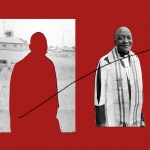
Christians Question Suspicious Death of South Indian Preacher

Praveen Pagadala’s passing comes amid an increase in violence against Christians in a region long tolerant of the faith.

Praveen Pagadala
Christianity Today July 14, 2025
Illustration by Christianity Today / Source Images: Facebook

Last March, local residents found well-known Christian apologist Praveen Pagadala dead on the roadside near Rajahmundry in Andhra Pradesh. The 45-year-old was on his way to a gospel convention on his motorcycle.

Police claimed he had been driving drunk, which led to the fatal accident. Yet the Christian community questioned the account. Pagadala had previously received numerous death threats for criticizing the caste system and crediting Christianity with liberating India’s marginalized people.

Kaveti International Law Firm, which has taken up the case pro bono, questioned why footage from the scene showed no visible injuries except on his face, why his helmet remained intact, and why there were no skid marks or damages to his bike. The inconsistencies lead “to speculation that his death was not accidental but a targeted attack,” according to Kaveti Srinivas Rao, the lawyer on the case.

Thousands of people attended the apologist’s funeral procession in Secunderabad on March 27. In the weeks that followed, Christians in the two Telugu-speaking states of Andhra Pradesh and Telangana held protests, with hundreds calling for a reinvestigation into Pagadala’s death.

Police warned Christians against questioning their official determination in the case, claiming that such comments disturb communal harmony in the state. In April, police in Hyderabad arrested a pastor for spreading “propaganda” about Pagadala’s death. Two Christians filed a petition in June to Andhra Pradesh High Court asking the Central Bureau of Investigation to reopen the case.

The controversy around Pagadala’s death brings to light the concerning increase of violence against Christians in Andhra Pradesh and Telangana—states once considered relatively tolerant toward the Christian community. Yet now, the nationwide rise of Hindu nationalism has spread to this part of the country.

“Every week, there’s a new incident,” said Oliver Rayi, the chairman of the Andhra Pradesh Christian Leaders Forum. “What we have been seeing in northern India since 2014—coordinated attacks against religious minorities—is now being replicated in Andhra.”

Born to a Catholic mother and a Muslim father in the city of Kadapa in Andhra Pradesh, Pagadala often attended his mother’s church to learn to play the guitar, according to testimonies Pagadala shared online. Yet as a teen, he started drinking, smoking, and doing drugs. Police arrested him after he and his friends beat up a boy from a rival gang and threw him into the bushes.

His family was able to keep his record clean through a relative who worked in the police department, and around the age of 20, they sent him to live in Hyderabad. There, one of his friends invited him to church, which he started attending reluctantly. During one meeting, God convicted him of his sins, and he gave his life to the Lord.

In 2000, Pagadala said he had a vision to move to Indore in Madhya Pradesh state to preach the gospel. Although he didn’t speak Hindi, he quickly picked up the language and began evangelizing to locals. An older Christian couple took him in, and he later married their daughter Jessica. The Pagadalas had two daughters and adopted 12 orphaned girls, as India’s cultural preference for boys has led to orphanages filled with girls. Pagadala often said he was a “proud father” to 14 daughters.

Part of a homegrown apologetics network called Sakshi Apologetics, Pagadala often focused on the freedom and equality found in the kingdom of God, contrasting it with the caste system and the subjugation of women in the Hindu worldview. He grew in popularity as he debated Hindus and Muslims on television. With a deep understanding of the Quran and Hindu religious texts, he reeled out verses to passionately defend Christianity and the teachings of Jesus Christ.

His debates drew him a large audience among Telugu Christians, who shared clips of his arguments widely on social media. Pagadala often credits Christian missionaries in India for the progress Dalits and other marginalized communities have made in society. He also petitioned the Supreme Court to declare the anti-conversion laws in 12 Indian states unconstitutional, arguing that they violated the freedom of religion guaranteed in the Indian constitution.

His outspokenness also gained him enemies. The evangelist received death threats from both Hindu and Muslim fundamentalists. After Pagadala’s death, Christians wondered if his critiques had gotten him in trouble.

Their concerns are not ungrounded, as Christian persecution has been growing in Andhra Pradesh and Telangana in the past few years. Historically, the Telugu-speaking region has tolerated Christianity as Dalits converted to the faith en masse in the 19th and 20th centuries. The anti-caste movement in the area viewed Christianity and missionaries as allies, unlike in other states where they faced Brahmanical backlash.

Missionaries in Telugu regions learned the language, translated the Bible, and promoted the local culture. They also built schools, colleges, and hospitals. Christianity became embedded in Telugu cultural identity, making it more accepted than in Hindi-speaking states, where less Dalits converted to Christianity.

Hindu nationalist groups had limited presence in the region until 2014, when the Bharatiya Janata Party (BJP), led by Prime Minister Narendra Modi, won a majority of parliamentary seats. Unlike elsewhere, caste, not religion, is a primary marker of identity in Telugu states. Mainstream political parties in Telugu states speak out about Christian issues.

Yet lately the number of incidents against Christians has increased. In Andhra Pradesh, where the BJP is part of the ruling coalition, Christian leaders say fundamentalist Hindu groups have grown emboldened.

Data from the United Christian Forum (UCF) supports the claim. In Andhra Pradesh, UCF documented 37 incidents in 2024, up from single digits in 2014. The neighbouring Telugu state of Telangana reported 25 such incidents in 2024, up from 17 in 2014. Leaders say the real figures could be much higher, as most incidents go unreported due to fear of retribution.

In March, mobs attacked three churches in Andhra Pradesh. At the same time, the government issued a controversial order asking authorities to crack down on “illegal” churches. The directive was withdrawn 23 days later.

One case from Kajuluru village near Kakinada in Andhra Pradesh reveals the worsening plight of Andhra Christians.

In December 2023, a group of villagers, instigated by a Hindu nationalist group, stormed a church inauguration, beat up believers and pastors, and vandalized the building. The mob accused the congregants of demeaning Hinduism and building the church illegally. In the end, the police filed a case against the Christians.

“We have all the permissions, proper land titles, everything. But they are painting us as criminals,” said a church elder who asked to remain anonymous as he fears reprisals from authorities and Hindu groups. “To them, Christianity is a foreign religion. They want to erase us.”

The church is now locked, forcing congregants to worship inside of homes.

The situation is equally grim in Telangana, where church buildings have been vandalized, churchgoers and pastors have been assaulted, and Bibles have been burned.

According to a Christian rights activist from Telangana (CT agreed to keep him anonymous as he fears being targeted by Hindu nationalists), the incidents can no longer be seen as “one-off incidents.”

“The Hindu fundamentalist outfits have a well-coordinated approach,” he said. “They instigate locals to launch these attacks on churches in their neighborhoods on the pretext of nuisance, sound pollution, and permissions.”

The hostility on the ground is amplified by anti-Christian propaganda online. Telugu social media is rife with trolls and hate speech portraying Christians as “conversion mafias” funded by “foreign donations.” Widely circulated videos by Hindu fanatic groups demean pastors as “perverts” and “beggars” and call the Bible a “book of lies.” Some of these videos carry the disclaimer: “Conversion mafias pose grave danger to the country.”

“Christians have to become shrewd and discerning in a hostile world, as God instructs us in Matthew 10:16,” said Chittem Vijaya Kumari, a Christian leader in Hyderabad and president of Dalit Women Forum. “Besides fasting and praying, the community needs to launch a united fight against online hate. It is no longer an individual case and individual fight.”

Theology

How Buddhism Gained Popularity

Evangelicals who discuss theology need to understand the branches.

Mahayana Buddhists
Christianity Today July 14, 2025
Illustration by Christianity Today / Source Images: Getty, Unsplash

In this series

(For previous articles in this series, see here and here.)

Theravada Buddhism, the original variety, can be high-pressure: Become an arhat, a spiritually enlightened person who has replaced all desire. No emotion: Become indifferent to everything. One percent of Americans are Buddhist, and one-third of those are Theravada. Like Orthodox Jews, Theravada Buddhists don’t go with the flow of standard American life. 

Given how hard it is to be indifferent, it’s not surprising that Buddhist expansion 2,000 years ago ran into a wall. Many people did not want nonattachment if it meant a farewell to love. In practice, even Buddhist monks often found they made little progress toward eliminating desire. Ordinary people could make even less. This faith had limited appeal.

Religions compete for adherents, so it’s not surprising that innovative Buddhists developed the concept of bodhisattvas, enlightened beings who could have attained nirvana but purposefully chose to put it off to help others reach it more quickly than they otherwise would. The origin of this belief—that faith in a self-sacrificing bodhisattva is essential—is lost in the mists of time, but speculation abounds.

For example, British scholar Alan Bouquet, describing “Christian Influences on Early Buddhism,” wrote that from AD 50 to 200 some Buddhists learned about Christianity and introduced into Buddhism a new ideal of serving others, not just concentrating on their own spiritual progress: “The bodhisattva must sacrifice his or her possible attainment of release into identity with the Absolute, for the sake of others.”

The new Buddhism, called Mahayana (“great way”), developed many variants over the years. For example, in the 12th and 13th centuries, some Japanese Mahayana Buddhists gravitated to zazen (meditation). These became known as Zen Buddhists, who taught that the faithful should pay no attention to rational thought processes. They came up with famous Zen questions such as “What is the sound of one hand clapping?”

The goal is to force thinkers to conclude that rational thought is inadequate. One famous Christian medieval question—“How many angels can dance on the head of a pin?”—was an attempt to produce the opposite of mysticism. Students were to think through the problem and conclude that an infinite number could fit since angels are incorporeal spirits.

Theravada Buddhists like to point out Mahayana contradictions. In a karmic system, grace should play no part, and individual “merit” is all, so does it make sense to believe in bodhisattvas who can give great amounts of their accumulated merit to others who can then move up? Many Theravadas still try to achieve nirvana through ascetic self-effort based on monastic vows that both men and women can take. Ritual chanting and worship of relics may help in this process.

But Mahayana Buddhism has become more popular by developing a social orientation. Adherents should strive to have the capacity to become bodhisattvas, postponing entry into nirvana so they can help others by transferring their extra karmic merit to those they wish.

One popular Mahayana branch, called Pure Land (jodo in Japanese) tells the story of a monk who promised to create a Pure Land paradise in the West if he became a Buddha. Adherents of Jodo Shinshu say he succeeded, so in this Pure Land, evil does not exist. Those with faith in this Buddha get to go after death to the Pure Land, where conditions for liberation are excellent and the reincarnation process can be shortened. Mahayana is the dominant form of Buddhism in Japan and in many other countries, and the Pure Land approach is popular. Theravada Buddhism is dominant in Southeast Asia.

Some Buddhists repeat mantras that, when repeated thousands of times, will purportedly help the mind to overcome any surroundings. One school of thought teaches that constant invocation of the name Amitabha Buddha will transport the meditator to the Pure Land. A 17th-century Buddhist, Suzuki Shōsan, adapted Buddhism to the business world by instructing a merchant to “throw yourself headlong into worldly activity. …Your activity is an ascetic exercise that will cleanse you of all impurities. Challenge your mind and body by crossing mountain ranges. Purify your heart by fording rivers.”

Indicative of Buddhism’s diversity is the way Suzuki, often called the founding thinker  of Japanese capitalism, developed a prosperity gospel: “If you understand that this life is but a trip through an evanescent world, and if you cast aside all attachments and desires and work hard, Heaven will protect you, the gods will bestow their favor, and your profits will be exceptional.” Another priest praised merchants’ nonattachment: “They go out early in the morning and return late at night. They do not avoid the elements nor do they dislike hardship and misery. They cover their bodies with cotton clothing and fill their mouths with vegetable food. They do not dare to throw away a piece of thread or a scrap of paper.”

Is Buddhism a laid-back way of developing great work-life balance? One 17th-century book, Shimin Nichiyo, answered questions such as this one from an artisan: “I am busy every minute of the day in an effort to earn my livelihood. How can I become a Buddha?” The answer: “Do not neglect diligent activity morning and evening. Work hard at the family occupation. Do not gamble. Rather than take a lot, take a little.”

Many Americans on the cultural left have gravitated to Buddhism, particularly in its Zen variety, as an opponent of materialism. But some Mahayana believers view selling as spiritual. Bodhisattvas show nonattachment to nirvana by sacrificing their own welfare, so “the business of merchants and of artisans is the profiting of others. By profiting others they receive the right to profit themselves. … The spirit of profiting others is the bodhisattva spirit.”

For more about four major religions, please see Marvin Olasky’s The Religions Next Door: What we need to know about Judaism, Hinduism, Buddhism, and Islam—and what reporters are missing.

News

Traffickers Scam Nigerians with Promises of Better Jobs

How one Christian woman escaped forced labor and found her way home again.

A woman from Africa who was trafficked into working at a private household.

A woman from Africa who was labor trafficked.

Christianity Today July 14, 2025
Stringer / Getty

Joyce Vincent had a job with a microfinance bank in Nigeria earning 150,000 naira (about $98 USD) monthly when her friend told her of a job offer in Egypt. When she heard the job paid over 1,000,000 million naira (about $654) monthly, Vincent jumped at the offer.

“Who wouldn’t?” she asked.

In the spring of 2019, Vincent sold everything she owned. After all, if she immigrated, she would have no need for her pots, pans, gas cooker, and television set. Vincent put the money toward her travel expenses and borrowed some money to make up the difference.

On May 27, 2019, she started the journey by air through Ethiopia to Sudan. Then, she said, “the deadly journey began by road.”

Nigeria is experiencing what locals call the japa syndrome—a slang Yoruba term describing the desire to leave the country in search of better opportunities. The country’s national minimum wage of only 70,000 naira (about $46 USD) monthly makes higher international salaries more attractive. But overseas jobs don’t always offer a better life; scammers and labor traffickers may trick Nigerians into menial jobs with false promises of good salaries.

According to the UN Office on Drugs and Crime (UNODC), Nigeria “remains a source, transit and destination country for human trafficking, with 65% of the cases happening internally and 35% externally.” The UNODC listed poverty and greed as driving forces behind trafficking.

Along the road to Egypt, Vincent saw unburied corpses. When she reached Egypt, Vincent said, her passport was taken away. Her employers told her she would have to work for three years to pay back the money used to transport her to Egypt.

Vincent offered to pay them back with what remained from her loan and the sale of her belongings, but her employers refused. They sent her to work as a housekeeper for a family Vincent described as “very wicked.” Unable to speak Arabic and lacking any connections in Egypt, Vincent had no choice but to comply.

“I was required to work almost 24 hours without any rest and with very little food,” she recalled.

When she realized she was being trafficked for labor, Vincent said, she started looking for a way to escape and return home. Without her passport or knowledge of the area, this took time. The family rarely allowed her to go out. After four months, Vincent found her way to the Nigerian Embassy in Egypt.

At first, Vincent said, embassy staff turned her away because it was a public holiday. With nowhere to go, Vincent returned to her traffickers. During that time, one of the couriers who had smuggled her into the country sexually assaulted her.

Two years after her arrival in Egypt, Vincent got help from the embassy to go home.

According to the US State Department, the Nigerian government initiated investigations of 698 trafficking cases in 2024, a decrease from 1,242 cases in 2023. Corruption and officials complicit in trafficking crimes remain a significant concern in Nigeria.

The UNODC reported that Nigeria detected the highest number of trafficking victims of any country in Africa—but also initiated the highest number of prosecutions. Nigeria’s National Agency for the Prohibition of Trafficking in Persons (NAPTIP) claims to have rescued 24,000 trafficking survivors.

According to the UNODC, an increasing number of North and West African migrants are being smuggled from Africa to Europe annually, especially across the central Mediterranean. But the number of Nigerians trafficked through this route has decreased.

Jeremiah Adelu—the director of Voice of Migrant Association and also a trafficking survivor—said the government needs to do more to spread awareness about the dangers of irregular migration.

Adelu had set up a dry-cleaning business after graduating from school and failing to find a job. He was trafficked by a customer who always gave him generous tips.

“He asked how much I earn, and when I told him, he said he could help me migrate to Germany, where I could earn a higher income,” Adelu said. “The only catch is he said I had to pay 300,000 naira to help facilitate the journey.”

Like Vincent, Adelu sold off all his valuables to raise the money. Adelu began the journey to Germany but, unlike Vincent, did not have the luxury of traveling by air. His courier directed him through a land route that included crossing the desert to Libya.

Adelu recalled “seeing people dead, like skulls, like people just dropped dead” along the way and getting so thirsty that “the only option we had was to drink a urine. Somebody had to urinate for you to drink, because [of] the way the desert was very hot. Your throat gets dry easily.”

When he arrived in Libya, human smugglers took him to a place called Ali Ghetto,where they told him to pay a ransom of 3,000 Libyan dinar (about $555 USD). Because he did not have any money left, they asked him to call a family member who could raise the money.

“You are given 59 seconds to call who you want to call,” he said. “After the 59 seconds, they start flogging you.”

Adelu called his sister, who raised the money after three days.

After he was freed, Adelu decided to proceed to Germany across the Mediterranean Sea. He gave up after he lost some friends who died attempting to make the dangerous crossing.

Now back in Nigeria, Adelu runs Voice of Migrant Association, where he works with trafficked victims who have returned to Nigeria. Adelu also raises awareness about the dangers of irregular migration.

While acknowledging NAPTIP’s work to raise awareness about human trafficking—which includes creating policies and running ads on the radio, television, and social mediaAdelu told CT it’s not enough. He said the message needs to reach the more vulnerable people in rural areas who may never see a NAPTIP campaign.

“When the traffickers come, they don’t stay in the city anymore,” Adelu explained. “They go to the rural environment where campaigns are not going on, education is not going on, their town hall is not going on. They don’t even know anything about trafficking.” 

Adelu also said churches can use their influence with congregants more wisely.

“Because when a minister or a pastor tells a member, ‘I see your destiny is not in Nigeria. Your destiny is in UK; Your destiny is in Canada,’ that member will try to relocate by every means possible,” he said. This can make church members more vulnerable to human traffickers and scammers.

While many anti-trafficking initiatives in Nigeria are secular, some faith-based organizations do exist. One Lutheran-affiliated organization, Symbols of Hope, has run outreach initiatives to schools, churches, and traditional rulers in northeast Nigeria to warn of the dangers of illegal or irregular migration. Some Catholic nuns have also run awareness campaigns or set up recovery homes for survivors.

Reflecting on her experience, Vincent agreed that churches in Nigeria can do better, especially when helping survivors get their lives back together. She said she’s been disappointed by the lack of local support.

Vincent still struggles to make ends meet but said, “My help will come from God, not man.”

News

When ICE Raided Their Community, These Churches Were Ready

Decades-long relationships helped Pasadena churches respond to wildfires—and now immigration arrests.

Federal immigration agents near MacArthur Park in Los Angeles.

Federal immigration agents near MacArthur Park in Los Angeles.

Christianity Today July 14, 2025
Carlin Steihl/Los Angeles Times via Getty Images

In the gym at Pasadena Covenant Church, local congregations met on a Saturday morning to discuss the spike of immigration arrests in their tight-knit community east of downtown Los Angeles.

Pink conchas, a Mexican sweet bread, piled up on a side table for snacks and coffee as an immigration lawyer from a Christian legal-services nonprofit answered questions from the room of about 120 people.

Attendees had seen masked immigration agents on the streets in Pasadena, California, arresting young people, older people, parents with children. So their questions were urgent and practical: If you’re in the car with your kids and you’re detained, how can you make sure your kids are cared for?

Federal authorities reported arresting more than 1,600 people in the LA area from June 6 to June 22, with some sent to a crowded basement detention facility in downtown LA. In several incidents, they made arrests on church grounds. The majority of people Immigration and Customs Enforcement (ICE) has arrested in Southern California do not have a criminal history. Some had pending asylum cases or were US citizens, according to interviews with CT.

During the Saturday meeting, pastors’ phones lit up with texts from a neighbor: A few blocks away, ICE agents had just arrested a Latina woman on a walk with her two sons, one a teenager and one 20 years old.

Video footage showed plainclothes agents attempting to put her in an unmarked Honda Accord; her sons, startled, tried to block the arrest. She was later identified as Rosalina Luna Vargas, an employee at a local assisted-living facility.

The church gym was full of people who had prepared for a moment like this.

Pastor Mayra Macedo-Nolan interrupted the summit and shared what had happened. Pastor Marcos Canales, leader of La Fuente Ministries, a bilingual Nazarene church, prayed aloud.

No mas,” he pleaded in Spanish. Then in English he said, “In the name of Jesus, who was executed without any just process, in that name we pray. Amen.”

Pasadena Covenant pastor Andrew Mark double-checked that the church’s security was in place. Macedo-Nolan began confirming details of what had happened and learned the woman was the family’s breadwinner. People began arranging carpools for anyone who felt scared to leave on their own with ICE in the neighborhood.

This rapid response is not unusual. Pasadena pastors have been showing up to sites of ICE arrests often within an hour. Alongside a local day-laborers organization called the Pasadena Community Job Center, they quickly assess who was arrested, what family members they leave behind, and what their needs might be—maybe food or an immigration lawyer.

They come together through the Clergy Community Coalition (CCC), a network of local churches established 20 years ago by Pastor Jean Burch. The coalition started small but now includes about 100 churches and nonprofits, ranging from Pentecostal to mainline.

Pasadena and nearby Altadena are places of close connection; chain stores are rare, and people recognize each other on the streets. Pasadena is also the home of Fuller Theological Seminary, and locals say the city has the highest number of nonprofits per capita in the country.

“It has a sense of place,” said John Jay Alvaro, pastor of First Baptist Church in Pasadena. “There’s also in Pasadena and Altadena a high trust for clergy.”

The pastors in the coalition, in turn, lean on Macedo-Nolan, a friendly but no-nonsense woman who knows everyone and knows how to navigate church politics and police departments. “When Mayra says to show up somewhere, we show up somewhere,” said Alvaro.

Macedo-Nolan, head of the CCC, was previously the board chair of the Christian Community Development Association and a pastor at Lake Avenue Church, an evangelical church in Pasadena.

Her phone is constantly buzzing; it’s been buzzing since the fires. 

But right now, all the buzzing is about immigration. She said she wants local Christians to see what is happening and ask themselves, “Did I allow some reformation in my heart when this was happening in my community? Was I open to what God’s Spirit wanted to do in me?”

The churches have some deep theological differences, but their readiness to band together in the face of raids came from 20 years of relationships in the community.

Pasadena mayor Victor Gordo came to the church summit in the gym, and the CCC has long met with the local police chief and sheriffs. But closeness also emerged from recent hardships.

During the COVID-19 pandemic, Macedo-Nolan from the CCC knew the job center had funding to distribute food but needed a commercial kitchen. Pasadena Covenant, right across the street from the day-laborer organization, has its own kitchen. She connected them, and they’ve been hosting a weekly food bank together ever since.

Pasadena Covenant holds the view of asset-based community development, which emphasizes looking for existing resources in the community for help.

“A local church should never think it is the net. It is part of the net,” said Steve Wong, the church’s senior pastor.

The relationship between churches and the job center deepened this year in the aftermath of the Eaton fire, which destroyed thousands of structures in Pasadena and nearby Altadena in January.

Need for food intensified after the fires, with thousands showing up to the job center food bank. Many in the immigrant community lost their homes, then they also lost jobs cleaning homes or tending to yards. Among the CCC, 8 church buildings burned down, along with 12 pastors’ homes, according to Canales. Eleven families at Pasadena Covenant lost their homes.

The fires exposed the community’s most desperate economic needs. When Pasadena Covenant received donations for wildfire recovery, it gave tens of thousands of dollars to families connected to the day laborers’ group.

The job center exists to connect residents and small businesses with reliable day laborers—bricklayers, roofers, cleaners—and ensures the workers are treated fairly. Many of the day laborers began going out in brigades to do fire cleanup, and the CCC fundraised for more protective gear to help them deal with toxic hazards in the debris.

And the job center began inviting pastors from the CCC to pray for the laborers each morning. Eventually they were doing daily “send out” prayers, said Wong. Canales did radio devotionals on the day laborers’ radio station in Spanish.

Several Black pastors also consistently came to the job center to pray workers out, including Anthony McFarland, who lost his home in the wildfires. He estimates the fires displaced 20 percent of his congregation. 

“ICE is something you cannot control. Fire is something you cannot control,” McFarland said. “It hurts when you can’t make a significant difference. You can’t call the president and say, ‘It’s ruining families.’” 

The fire cleanup meant “grief galvanized our relationship,” said Mark.

Mark grew up a missionary kid in Mexico City and switches in and out of English and Spanish. He’s been one of the clergy members leading packed vigils at the site of ICE arrests with the day-laborers group.

One recent afternoon on the porch at his home next to the church, he got a call from an unknown number: It was a family member of someone who had been detained. Mark talked through the situation in Spanish, and the caller asked him for a character reference letter for the court case.

Mark and fellow pastors from the coalition get such calls and texts constantly now. Hispanic Christians feel targeted, and they’re afraid to go to work or the grocery store. In June, six workers were arrested outside a local donut shop. Locals say the arrests are halting the fire cleanup.

Only 15 percent of Americans support deporting undocumented immigrants who have jobs, according to a recent Pew Research Center survey.

“The fear and intimidation are definitely working,” Mark said.

On Friday, a federal judge found evidence of racial profiling in the arrests of people from car washes and at Home Depots—stemming from a case involving three men arrested at a bus stop in Pasadena. 

In a statement last month, ICE said agents in LA “are on the streets every day, prioritizing public safety by locating, arresting, and removing criminal alien offenders and immigration violators from our neighborhoods.”

Pastors see their role as ministering to families of the arrested, going to vigils, but also as deescalating tensions over immigration enforcement.

At protests, they line up between demonstrators and police. And at the summit in the church gym, they helped train congregants for tense situations. They want parishioners to know how to react to an arrest, and they want them to remember that ICE agents might not be prepared to deescalate these scenarios either.

Mark Chase, associate rector of All Saints Church in Pasadena, was standing nearby when an apparent ICE agent drove up in an unmarked vehicle and pulled a gun on a young man who was taking a photo of the car’s license plate (one way some in the community tried to identify ICE vehicles).

“We said, ‘No, no, no, don’t shoot!’” Chase recounted to CT. “He got out of his vehicle with such anger and vitriol. I thought he was going to shoot. He swept [the gun] around indiscriminately.”

The tension in the community has gotten to the clergy. Mark started feeling depressed. Macedo-Nolan has had trouble sleeping. Mid-interview with her at a church in Pasadena, a siren nearby blared and zoomed past. She stopped talking to wonder aloud if it was an ambulance, police, or ICE.

“Even though it seems like things are not okay, we’re working to make things okay,” said Mark. “But the days like yesterday, I start to question it. How long before things are okay?”

For those not directly affected by the ICE threats, it’s tempting to disconnect from what is happening.

“Honestly it makes me want to hide,” said Wong, the senior pastor of Pasadena Covenant. Then he thinks of his 100-year-old church’s own immigrant history: Swedish migrants fled repression or famine or just came for a new life. He himself is Chinese American and immigrated to Singapore before returning to the US.

Two days after the ICE arrest of the woman with teenage sons, Mark and other pastors showed up for a vigil at the intersection where she had been arrested.

The day-laborer group brought instruments and played upbeat music. About 200 neighbors showed up, including her family, in tears. The woman’s two sons spoke briefly. The pastors prayed in English and Spanish.

“I’m so grateful the faith-based community is here,” said Pablo Alvarado, one of the leaders of the National Day Laborer Organizing Network—of which the Pasadena Community Job Center is a part.

The next day, La Fuente Ministries had its bilingual Sunday service. The congregation sang loudly: “May his truth have power over lies. / May our hope have power over fear.”

Alvarado, the co-executive director of the job center, attended the service and stood up to share his story with the congregation. After growing up during the Salvadoran civil war, he came to the United States and began to advocate for day laborers.

Speaking in Spanish with Canales translating into English, Alvarado said that thanks to the church leaders like Macedo-Nolan and Canales, “Pasadena has given an example of what that looks like to be entangled.” Alvarado brought up the mother who had been arrested the day before. “Because we are entangled, we are going to continue the process of helping them.”

News

Fears of a Christian Exodus after Syria’s Deadly Church Bombing

“We’ve experienced war, but not threats specifically against Christians.”

Relatives cry during the funeral of the people killed in the Saint Elias Greek Orthodox Church attack in Syria.

Relatives cry during the funeral of the victims killed in the Saint Elias Greek Orthodox Church attack in Syria.

Christianity Today July 11, 2025
Mohamad Daboul / Getty

Karam Abadi, a tour guide who works for Come Taste and See Syria, didn’t notice anything unusual when he arrived at Saint Elias Greek Orthodox Church in Damascus on the morning of Sunday, June 22.

Two of his clients spent the night at the church’s monastery, a comfortable and affordable option for travelers, he noted. That morning, Abadi met the women and walked with them to their next destination, a hotel several blocks away.

At around 6:30 p.m., Abadi was attending an evening service at a Nazarene church with his clients when he heard an explosion. He soon learned the details. A terrorist had opened fire during mass at Saint Elias Church, then detonated his explosive vest, killing 25 people and injuring at least 60 others.

Syrian authorities blamed the Islamic State for the attack, but a less prominent jihadist group, Saraya Ansar al-Sunnah, claimed responsibility days later.

Abadi said he was shocked when he heard the group targeted a church. “We’ve experienced war, but not threats specifically against Christians,” Abadi said. Christianity Today agreed not to use his real name due to the heightened risks.
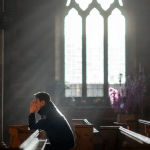
The bombing was the first deadly attack targeting Christians since Islamist-led forces seized power in December from Bashar al-Assad, whose family ruled Syria for more than five decades.

Interim President Ahmed al-Sharaa promised to protect religious minority groups, but a string of deadly attacks has cast doubt on his ability to control the country’s loose network of terrorist organizations and rebel fighters. A March attack on Syria’s Alawite communities left hundreds of people dead. In April, dozens of people, including 10 civilians, died from clashes between armed rebels and the minority Druze population.

Christians were concerned they would be next. Abadi and his wife have seen signs of Islamist groups seeking influence over social norms and society in the past six months. Salafists, members of a fundamentalist revival movement within Sunni Islam, have been proselytizing in the streets of Damascus, including in the Christian quarter. Abadi has seen videos of the street preachers calling people on loudspeakers to convert to Islam, and his wife witnessed one of their recent visits.

Abadi said the men’s long beards and robes distinguish them from their more moderate Muslim neighbors, including many who asked the men to leave their neighborhood. According to the Washington Institute for Near East Policy, the Syrian government banned unauthorized proselytizing after Salafists targeted an area in front of Saint Elias Church in late March, perhaps explaining why jihadists bombed that particular church.

Meanwhile, the government is enforcing a stricter dress code than what existed when Assad was in power. In June, Damascus announced new guidelines requiring full-body swimwear for women at public beaches. Abadi has heard reports of authorities beating men wearing shorts in public. The new laws apply to both Muslims and religious minority groups, he added.

Several acts of violence have heightened the concerns. During the past seven months, armed individuals set a Christmas tree on fire, fired bullets at a church, and damaged a cross at an Orthodox church in Homs. “All the church leaders were like, ‘You should do something,’” Abadi said. “They started talking to authorities and security people and said, ‘Why don’t you act and try to do your part?’”

Sharaa was once a member of al-Qaeda and spent time in US detention facilities in Iraq for his involvement in local insurgencies. After his release, Sharaa created Jabhat al-Nusra as an al-Qaeda affiliate in 2011. The group later merged into Hayat Tahrir al-Sham, or HTS, and under Sharaa, toppled Assad’s regime late last year.

Since gaining power, Sharaa has projected a more moderate image, including appointing Hind Kabawat, a Christian woman, to his transitional cabinet. Following the bombing, Kabawat visited Saint Elias Church and met with priests and parishioners, calling the attack a “heinous crime.”

“This attack was not only against Christians, but against all Syrians,” Kabawat told the Greek newspaper Kathimerini. “Our Christian community is an essential part of Syria’s social and cultural fabric.”

Many Christians are concerned that the authorities aren’t taking the threats against them seriously. “Many people have said, ‘They don’t want us here. We should just leave,’” Abadi explained. “So there’s concerns … about a Christian exodus, which would be unfortunate.”

The Syrian Christian population has dwindled significantly in recent years, from more than a million people before the 2011 civil war to approximately 300,000 today.

Since the church bombing, some Christians have been afraid to meet for church. A group of Kurdish Christians who are currently living in Aleppo have paused their church services, according to Majeed Kurdi, a US-based Iraqi Kurdish pastor working with Freedom Seekers International to provide aid to that group.

“The pastor told me that they are really frustrated and very scared,” he said. “You know, most of the churches, they don’t dare to gather together.” He said women and children rarely attended even before the church attack due to security concerns. Now, the men only gather in small groups and without public notice.

From the northern town of Afrin, the group was originally composed of around 500 Kurdish Christians who are part of the nondenominational Good Shepherd Church. More Kurds have joined the group each time it evacuated a town or refugee camp. Currently they number around 1,200 people, including some non-Christians.

Kurdi said they have not been able to return to Afrin because the government has failed to protect them from terrorist groups ruling over their city. They are living in unfinished houses in Aleppo and facing a food shortage.

In Damascus, churches are still holding services “despite the threats and all the messages radicals are communicating,” Abadi said. The day after the bombing, Christians from different denominations gathered at Saint Elias Church and prayed together, chanting “Jesus is risen.”

This week, the Trump administration revoked sanctions on Syria and removed the foreign terrorist designation for HTS. Secretary of State Marco Rubio said the decision “recognizes the positive actions taken by the new Syrian government under President Ahmed al-Sharaa.”

Abadi said Syrians long for better relations with the West and want sanctions to be lifted but wonder whether or not the West will put pressure on Damascus to protect minority groups. “We hope and pray for positive results and impact, but I think it’s also a cautious hope,” Abadi said.

Culture
Review

Pixar’s ‘Elio’ Weeps with Those Who Weep

The new animated movie flopped at the box office. But it understands something important about grief.

A still from the movie showing Elio looking up at the night sky.
Christianity Today July 11, 2025
©Disney. Editorial use only.

Whenever I’m grieving, I find myself attached to something unrelated: a movie, a song, a walking route through my neighborhood. As fires burned through Los Angeles earlier this year, only miles from where I live, I turned to baking. (By the end of the news cycle, I had made multiple loaves of bread, two pavlovas, and at least one cake.) Getting over a breakup, I watched the movie RRR too many times to share without embarrassment. Reeling after an unexpected move that forced me to reestablish my entire community, I walked an average of five miles a day. When I lost my grandfather last year, I started crocheting. I only knew one pattern—but I made that crochet tulip bookmark again and again as if my life depended on it.

I always feel as if these hyperfixations will solve something for me. When my emotions feel uncontrollable, I grasp for control via unrelated activities—through perfecting my bread dough’s proofing time or interlocked rows of stitches.

For Elio (Yonas Kibreab), the eponymous lead in Pixar’s latest animated film, grief manifests in wanting, desperately, to be abducted by aliens. Grief makes Elio feel isolated, as if he doesn’t belong on earth. So he puts his hope in space.

Elio is classic Pixar; I was crying within 15 minutes and regretted not bringing tissues to the theater. The production design is stunning; characters done in the same cutesy animation style (known as bean mouth) as Turning Red, Bao, and Win or Lose turn what could otherwise be scary or grotesque into charming comedy. With writing that’s genuinely entertaining for children and adults, the story gives dignity to children’s inner lives in a manner similar to last year’s The Wild Robot.

After all this praise, a caveat: Elio did poorly in the box office. But as you can tell, I came out of the theater an Elio evangelist.

At the beginning of the film, Olga (Zoe Saldaña), Elio’s aunt and recently appointed legal guardian, struggles to get Elio to eat or talk. He hides under a table, then sneaks away into a closed exhibit about the Voyager spacecraft. A voiceover explains that the spacecraft’s mission is to discover whether humans are truly alone. As Elio lies on the floor, his tears imply that he too is questioning his aloneness.

Elio, it turns out, has recently lost his parents, and his life has been flipped upside down by the tragedy. So has Olga’s; she’s had to put aside her aspirations of being an astronaut to take care of Elio. Multiple coworkers ask why she is not taking advantage of career opportunities—and while Elio never acknowledges these comments, we can infer by his actions that he sees himself as the reason Olga’s life has been put on pause. At one point in the film, she sighs and says, “I didn’t ask for this,” a comment that comes from not bitterness but helplessness.

Elio, an imaginative and inquisitive boy, struggles to communicate his emotions about his loss. Instead, in his grief, he develops a love of space and focuses his energy on getting abducted by aliens. While his obsession seems outlandish at first, we come to understand it. He admits that his home is gone now that his parents are no longer with him, and he interprets Olga’s frustration and misunderstandings as her not wanting or loving him. He struggles to make friends and assumes that his only hope for a community that understands him is somewhere other than earth.

The movie follows Elio as he gets what he wants: Assumed to be the leader of earth, he is tasked with saving the universe from a galactic war. He makes a new friend who helps him feel less alone. In his desire for belonging, he lies to get his new friend’s approval—and he ends up back where he started, stuck on earth.

At last, in the most poignant moment of the film, Elio and Olga learn to grieve together.

Grief is inherently isolating. Others may have experienced a big move or a bad breakup, but their circumstances (not to mention their brain chemistry) can never be identical to yours. Even another friend or relative mourning the same person’s death had a different relationship with the departed person.

Yet while grief is always particular and individual, as Christians, we are also called to weep with those who weep (Rom. 12:15). Sometimes, in spite of the incongruities of our losses, we need others to listen, to sit with us, to share their own stories. That’s what Elio needs from Olga.

Specifically, Elio narrates grief from the perspective of a child, one of the “least of these” (Matt. 25:40) without the words or context to communicate complicated emotions. It’s only when Olga admits her grief that Elio can share his own. Her vulnerability gives him the space to know he can be vulnerable too—and maybe stay earth-side.

Grief isn’t a problem to be solved—not by homemade bread, not by good movies. Long walks and favorite music might be welcome distractions, bringing temporary comfort or control. But our ultimate comfort is Christ, the one who knows exactly each of our particularities and circumstances, the one who can fully empathize with us. As Christ cried out on the cross (Matt. 27:46), we too cry out that the cup of sorrow may pass from us.

Although Jesus, the Man of Sorrows, is the only one who can understand the entirety of our grief, we can find comfort and solace as we see his face in those around us, the people who offer their presence and reassurance. Elio is an example of this solidarity—of learning to weep with those who weep so that ultimately and eventually we can rejoice with those who rejoice.

Mia Staub is editorial project manager at Christianity Today

News

A Kenyan Memorial Protest Led to More Deaths

Church leaders near the Parliament building tried to keep more alive.

A protester holds a placard during a remembrance march in Nairobi to commemorate one year since many lost their lives in anti-tax demonstrations.

A protester holds a placard during a remembrance march in Nairobi to commemorate one year since many lost their lives in anti-tax demonstrations.

Christianity Today July 11, 2025
SOPA Images / Contributor / Getty

Police circled Kenya’s Parliament in Nairobi with barbed wire on June 25 and prepared to defend it with live ammunition and water cannons. One-third of a mile away, All Saints’ Cathedral—an Anglican church and landmark in Nairobi’s central business district—became a place of both refuge and conflict as police chased protestors into the compound that afternoon.

Two weeks later, Kenyans are still reacting to demonstrations in Nairobi and around the country that led to 19 deaths, according to the Kenya National Commission on Human Rights.

June 25 was the one-year anniversary of turmoil that led to the reported deaths of 60 Kenyans. Some protesters planned to storm State House—the home of Kenya’s president—but police barricades surrounded it. Demonstrators taunted police and threw rocks and other projectiles at them. Police hurled tear gas canisters and shot at crowds.

About 500 young people ran into the All Saints’ compound, according to provost Evans Omollo, who led the church in opening its gates to anyone who needed shelter.

“We needed to open up space for people who would be harassed,” Omollo said. “We created an elaborate plan of how to receive them. We set out an emergency medical center in partnership with the Kenya Red Cross.”

The provost said police wanted to attack the young people but priests intervened.

“We managed to hold them back and push them back,” he told CT.

Paul Otieno, who escaped into the church compound, said priests provided a buffer between protestors and the police officers who were chasing them. Otieno described how the priests organized transportation to hospitals for the injured. Priests also confronted the police head-on several times, asking them to back down.

The scene mirrored the events of the 2024 demonstrations, when the church opened its gates to 3,000 mostly Gen Z protestors and police launched tear gas canisters into the compound.

Kenyans are wondering how the protest escalated. Benard Kahiga, who protested this year and last, claimed that “police dispersed the peaceful protestors” but shielded masked “goons” wearing hoodies and carrying hoes and sticks who smashed shop windows and robbed stores. Business owners accused police of standing by during looting.

Outside Nairobi, protests that began peacefully degenerated into violent confrontations. Several parts of the country saw vandalism against businesses and police buildings. Many killings were in Nairobi and its environs.

Interior Cabinet Secretary Kipchumba Murkomen called the demonstrations part of a broader and deliberate effort to destabilize the country.

“This has nothing to do with protests, but an unconstitutional attempt to change the regime,” he said. “The police were able to foil an attempted coup.”

Kahiga disagreed, saying, “We want the cost of living to go down … and the government to cut down on public-sector expenditure by reducing the number of high-level appointments. … We will go back to the streets if things don’t add up.”

Kahiga, a father of two young children and a recent university graduate who said he is unemployed due to lack of opportunities, criticized high public debt and low governmental transparency and accountability. Kenya’s national treasury reported the ratio of public debt to gross domestic product: 63 percent production in 2025, 20 percent higher than in 2010.

Murkomen criticized churches’ response to the conflict: “No church member will speak about how the police were attacked and suffered immense pain. I also know no diplomat will defend our police, because it’s not in their interest for Kenya to be safe.”

But church leaders have spoken out against violence on both sides. The Evangelical Alliance of Kenya is calling for prayer, fasting, and “a hard stop to abductions, torture and killing of Kenyans by security agents or private individuals.”

While condemning the killings by police, Vincent Chahale, the International Justice Mission’s country director for Kenya, said, “Police need to follow guidelines laid down in law when dealing with members of the public.” 

Chahale has met with government officials about ways to strengthen community policing and increase trust between police and citizens. His proposals include reforming police service and training police in trauma-informed care. He said all perpetrators of human rights violations should be brought to account.

Limited access to news has also caused tension. During the protests, the Communications Authority of Kenya ordered Kenyan media houses to cease live broadcasts of the protests. The agency switched off television signals for three media stations—NTV, KTN, and K24—and claimed they had violated the directive.

But three civil society organizations—Law Society of Kenya, Police Reforms Working Group, and Kenya Medical Association—replied, “The live broadcast of peaceful protests, and even those that may involve sporadic acts of violence by a few individuals, does not inherently constitute propaganda for war or incitement to violence.”

The organizations said the directive violated Article 33(2) of the Kenyan Constitution, which guarantees freedom of “conscience, religion, belief and opinion.” Kenya’s High Court issued an order suspending the directive later in the day.

Kevin Kung’u, a youth pastor with Renewal Church in Nairobi, participated in both the 2024 and the 2025 protests. He said churches responded much better this year than last, calling for prayer and fasting before and after the June 25 protests: “More churches made a stand. You can see churches whose heart is tuned towards their people.”

Kung’u emphasized the need for churches to stand up to the state in ways that are legal and honoring to God. “Look at the Civil Rights Movement and Martin Luther King Jr. to really understand what our place should be.”

Back at All Saints’ Cathedral, Omollo reflected, “Like the prophets of the Old Testament, we see our role as watchdogs to political players, asking questions [such as] … ‘Why are the young people not able to have access to jobs?’ ‘Why can’t industries be created?’ ‘Why can’t resources being collected in the form of taxes be channeled to make education more affordable?’” 

Omollo said he and others in his church are “saddened by the many deaths happening in the country, and we are calling upon the police service to undertake a retraining of police officers so that the mentality of our officers can change. We also call on the general public to refrain from attacking police officers.”

This latest wave of violence happened while Kenyans were still reeling from the killing of Albert Ojwang, a 31-year-old teacher who had criticized the government. Ojwang died in a police cell in Nairobi the day after his June 7 arrest. Boniface Kariuki, a street vendor shot by police ten days later during a protest over Ojwang’s death, died on June 30. Ojwang was buried on Friday, July 4.

Theology

A Marxist and an Ayatollah Shaped Iran’s Islamic Republic

Both politicized the Shiite faith.

A mural on a street in Tehran depicting former head of state Ayatollah Khomeini.

A mural on a street in Tehran depicting former head of state Ayatollah Khomeini.

Christianity Today July 11, 2025
Kaveh Kazemi / Contributor / Getty

(This is part four of a four-part series on Shiite Islam and the Iranian regime. Please click here to read parts one, two, and three.)

While the first three parts of the series explored the history of Shiite Islam and how the lack of an earthly imam formed Shiite political culture, today we look at modern Iran and the rise of the Islamic republic.

Although other Shiite sects exist, Iran adopted the Twelver faith—based on a line of 12 imams. The last of these disappeared, and in the centuries that followed, the sect waited for the Twelfth Imam to return as Mahdi, a messiah-type figure, and establish global Islamic governance. In his absence, Shiites submitted to political authority without admitting its ultimate legitimacy.

Something began to shift in mid-19th century Iran as Western influence seeped into the still-Shiite but increasingly secular monarchy. In 1890, the shah granted an English business monopoly over the local tobacco industry, and in response, the masses protested the blow to national sovereignty and their personal economic interests.

Sitting at home, a leading Twelver scholar then issued a fatwa (legal opinion) declaring that continuing to smoke represented a war against the Twelfth Imam himself. The wave of support for the fatwa drove the shah to reverse his policy, and clerics began to sense their secular influence. Five years later, some joined the push for a national constitution.

Most clerics stayed quiet, however, focusing on ordinary religious affairs. But decades later in the 1960s, frustration with an unpopular shah led Ali Shariati, a Paris-educated sociologist from a clerical family, to apply a Marxist reading to the story of Hussein, the grandson of the prophet Muhammad.

Hailed as “Lord of the Martyrs,” Hussein gathered a small contingent of faithful followers and set out from Medina, the city of Muhammad in today’s Saudi Arabia, to oppose the unjust caliph who ruled from Damascus, Syria. Along the way in Karbala, Iraq, the caliph’s army intercepted Hussein’s approach, and a siege ensued. After ten days of negotiation, the army killed Hussein and his supporters.

The standard Twelver narrative held that as an imam, Hussein had divine foreknowledge of the massacre yet went to his death anyway. Faithful Shiites treated it as a redemptive act compensating for the failure of their ancestors to follow the imam. A Shiite tradition quotes Muhammad as saying, “[Hussein] shall die for the sake of my people.”

By visiting Hussein’s shrine and lamenting during the yearly commemoration of Ashura, they seek fulfillment of another traditional saying: “A single tear shed for Hussein washes away a hundred sins.” Extreme Shiites will even whip themselves with ropes or chains to demonstrate their remorse.

Shariati pushed back on that interpretation, calling for a “Red Shiism” that returned the faith to an activist posture against oppression and away from the “Black Shiism” of mourning. Shariati said Hussein had died valiantly. Though he had failed, in imitation Shiites might yet succeed in taking down the unjust shah. Shariati popularized a new phrase to remember: Every day is Ashura. Every land is Karbala.

The clergy dismissed Shariati’s reinterpretation. But some criticized the passivity of religious scholars in the face of perceived unjust rule and developed a narrative that merged mourning with activism. This group included Ayatollah Ruhollah Khomeini, the first supreme leader of the Islamic republic.

Marxism held no appeal to Khomeini, who went on to suppress his socialist and liberal democratic allies in the Iranian Revolution. Yet as early as the 1940s, he demonstrated political tendencies, arguing publicly against the overthrow of the monarchy in favor of reform by a just ruler. When a quietist scholar became the leading marja (clerical source of emulation), Khomeini went quiet as well out of respect. But when the marja died, the ayatollah’s activism returned—and his religious philosophy developed. In 1970, Khomeini published Islamic Government, crafting the theory of wilayat al-faqih, the rule of sharia experts.

For Khomeini the logic was obvious: Government is necessary to defend and promote Islam, at home and abroad. The political ruler is necessarily less well-versed in spiritual matters and should therefore defer to the religious scholar concerning matters of faith. In many ways, this reflected the situation during the Buyid and Safavid dynasties, when clerics legislated on the rulers’ behalf.

Khomeini cut out the middleman. It follows from the above, he believed, that the ideal ruler is a religious scholar. But the imamate exists not only to guide an individual toward righteousness but also to establish Shiite justice in society. These roles were not suspended during occultation, the disappearance of the Twelfth Imam. Rather, the imam’s eventual role as the Mahdi is now administered by the clerics. Khomeini dismissed the long-standing Shiite idea that political power is illegitimate absent the imam.

Khomeini’s Islamic republic established an elected president and parliament. But these operate under the authority of the supreme guide—the senior cleric. Article 5 of the constitution declares that the leadership rights of the Hidden Imam “devolve upon” him. Per Article 111, the elected Assembly of (religious) Experts can dismiss him if they view him as unjust or impious. And the constitution’s preamble calls for progress toward “the establishment of a Divine order” and “the formation of a single world community.”

Yet it makes no mention of when this will happen, nor what the role of the Twelfth Imam is in bringing it to completion. The constitution includes the words Shiites repeat when speaking about the Hidden Imam, “May Allah hasten his reappearance.”

Shiite Muslims esteemed Khomeini as a marja, but there are many maraji. Some are in Qom, the preeminent center of learning in Iran. Others are in Najaf, its rival center in Iraq. From there, fellow Iranian Ayatollah Abolqasem al-Khoei opposed wilayat al-faqih as an innovation in Shiite doctrine. And today, the aged Ayatollah Sistani, also Iranian and widely reputed as the Shiites’ foremost scholar, does the same.

These three figures provide a template for Shiite politics. Khoei represents the traditional Shiite posture of waiting for the Twelfth Imam, in which the role of scholars is to issue religious rulings and to guide society by moral example.

Sistani, however, mediated the democratic transition in Iraq during US occupation by advising Shiites to vote and helping shape their political orientation. But he, much like the Buyid and Safavid dynasties, left governance to the politicians.

Khomeini also awaited the Twelfth Imam. But in the imam’s absence, he encouraged people to strive to create the ideal society envisioned by the 12 imams—including government. Once established, the rule of religious scholars would prevent the nation from veering from Islam.

Within any religion, scholars disagree all the time. But they tend to be united on the essentials—the foundational doctrines and practices of faith. Wilayat al-faqih does not qualify.

Is such rule by sharia scholars consistent with the core concerns of Shiite Islam? It runs counter to the principle of quietism long established by Twelver teaching. But it is an answer—within the development of rare political power—for how Shiites pursue leadership and justice during the Mahdi’s occultation.

Shiites must judge. Christians have a different standard in Jesus.

Theology

Buddhism Imagines There’s No Heaven

How the ancient faith teaches the transmigration of souls and nonattachment to everything.

Buddhist meditating
Christianity Today July 11, 2025
Illustration by Christianity Today / Source Images: Getty, Unsplash

In this series

(For the previous article in this series, see here.)

The one Buddhist word many people know is karma. Some say it means good things happen to good people and bad to bad. Payback. Destiny. What goes around comes around. Maybe, but in Buddhism everyone is reincarnated. We are born, we die, we recycle into another life, and whatever we do in this life won’t come around until the next.

Most Buddhists note that we almost never have consciousness of what happened in our previous lives. We have no guarantee of being reborn as human, they say, and we probably won’t be. While Buddhism has many strands, in its classic form people can be reborn into six realms: The top three are gods, demigods, and humans, and the bottom three are ghosts, animals, and creatures in hell.

The bad news is that most people have negative emotions that lead to negative actions that lead to negative karma that can result in rebirth as fish, dogs, or cockroaches. But if we are reborn as humans, what then? Recycling ends only when a person attains nirvana, the extinction of individuality and entrance into the cosmic all.

The cycle may take millions of lives. Individuals progress by dropping all worldly attachments and emphasizing extensive meditation, strenuous physical exercises, and other means of turning off our egos. Buddhism wins support on those grounds from people tired of being consumed by consumerism, but it’s important to note that many Buddhists condemn not only attachment to houses and cars but also attachment to others. The Buddha himself named his son Rahula, which means “obstacle.”

Two Buddhist parables illustrate the sweeping nature of the nonattachment principle. One concerns a man fleeing a tiger. He comes to the edge of a cliff, finds a vine, and climbs down it. When almost down, he discovers that a second tiger awaits him at the bottom while mice chew the vine above him. Instead of trying to concoct a means of escape, he notices a wild strawberry growing on the face of the cliff and eats it. Then the vine breaks, and the tiger gobbles up the man. End of story.

Non-Buddhists might see this tale as one of horror or might wonder why the man didn’t desperately try to distract the tiger by tossing the strawberry to him. But the primary point is that as strawberry is to man, so man is to tiger: We should not be attached to our own lives. Furthermore, we are all part of the whole, and if we think rightly, we will not fear death.

The second Buddhist story concerns a monk, Kātyāyana, who walked through a forest; saw a man, a woman, and a baby joyfully eating lunch; and burst out laughing at the deluded family values of the diners. Kātyāyana told his disciples, “They’re eating a fish that they caught from the lake. That fish was the grandfather in a former life. The dog who is now barking and begging for the fish was the grandmother. The baby the mother is holding to her breast was the husband’s enemy, a man he had killed for assaulting his wife.”

At the core of Buddhism is a sense that our attachments are foolish and that if we get rid of them, we will control our emotions and avoid creating additional suffering for ourselves in this life and future ones. We can beat attachment through meditation. For example, a Buddhist monk told one of the students in my Journalism and Religion class to defeat attachment to a girlfriend’s appearance by looking past her skin and visualizing veins, organs, bacteria, and so on. As one Thai cleric stated, “Lust should be balanced by contemplation of loathsomeness. … Examine the body as a corpse and see the process of decay.”

That animosity toward the body is frequent in parts of Buddhism that depict the body as merely bones, flesh, and fluids in a bag of skin. That view doesn’t note that we are fearfully and wonderfully made; it misses trees and emphasizes gloom about the forest. Some Buddhists oppose spending time to enjoy beauty, since they see matter as illusion. Their standard goal is to concentrate on individual enlightenment and to break out of the cycle of transmigration that Buddhists call samsara—endless wandering.

Some Buddhists say those attached to someone or something should reflect on the impermanence of whatever they love. If Buddhists admire a bell, they should remember all the things that could go wrong with it: It could lose its sound, crack, be dropped and broken. Nonattachment may demand a distancing even from love for ideas.

In practice, it’s important to keep in mind that Buddhism is sometimes based more on tradition than on philosophy. Christians tend to think of religions in terms of doctrine, but Buddhism in Southeast Asia and elsewhere is powerfully shaped by history and culture.

Still, some fundamental things apply as time goes by. In Christian understanding, God changes us. In Buddhist understanding, we change ourselves. Buddhism is full of tips on how to do that through breathing exercises and other means. Many would-be Buddhists find such techniques do not work, but Buddhist leaders often emphasize perseverance and a refusal to be agitated.

Apple PodcastsDown ArrowDown ArrowDown Arrowarrow_left_altLeft ArrowLeft ArrowRight ArrowRight ArrowRight Arrowarrow_up_altUp ArrowUp ArrowAvailable at Amazoncaret-downCloseCloseEmailEmailExpandExpandExternalExternalFacebookfacebook-squareGiftGiftGooglegoogleGoogle KeephamburgerInstagraminstagram-squareLinkLinklinkedin-squareListenListenListenChristianity TodayCT Creative Studio Logologo_orgMegaphoneMenuMenupausePinterestPlayPlayPocketPodcastRSSRSSSaveSaveSaveSearchSearchsearchSpotifyStitcherTelegramTable of ContentsTable of Contentstwitter-squareWhatsAppXYouTubeYouTube