News

A Beacon of Hope in a Broken Beirut

The oldest Arabic-speaking Protestant church in the Middle East has survived worse crises than the recent Lebanon explosion.

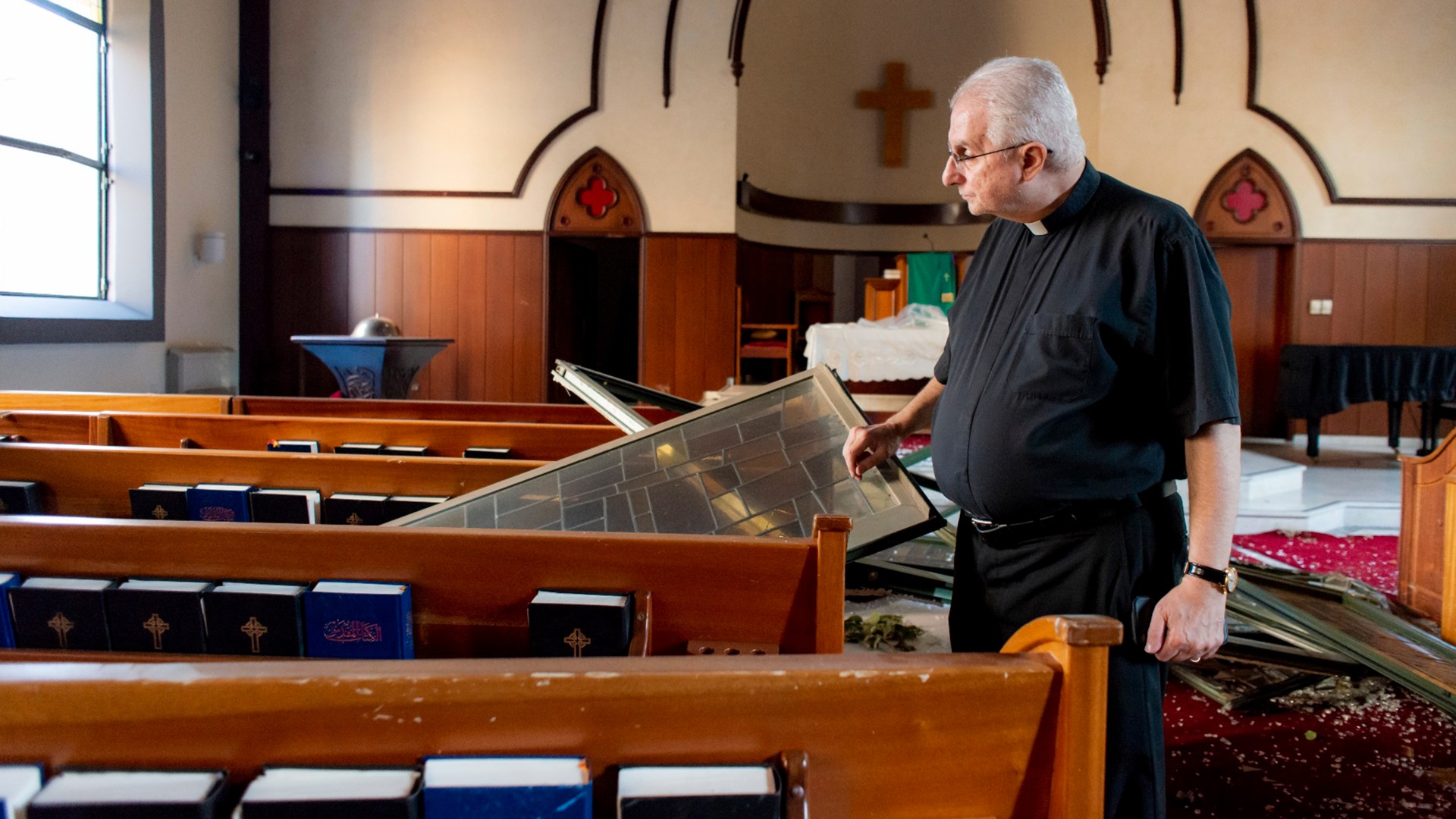
The pastor of National Evangelical Church surveys the damage from the Beirut explosion.

The pastor of National Evangelical Church surveys the damage from the Beirut explosion.

Christianity Today August 20, 2020
P. Clarkson

Sitting at his desk in the second-floor office adjacent to the historic National Evangelical Church of Beirut, Habib Badr calmly filled out the wedding registry. It was a ritual the almost 70-year-old had performed countless times over the course of his 35-year ministry.

The next day, there would be a funeral. A stalwart member of his congregation, the former head of reconstructive surgery at the American University of Beirut hospital during the years of civil war, had passed away of natural causes.

It seemed there were more funerals than weddings these days, Badr thought. But the nostalgic church would always draw young people ready to exchange their vows, even from the scattered Lebanese diaspora, in imitation of their parents a generation before.

There was something special about the lighting. On a clear day, parishioners could see the distant snow-covered peak of Mt. Sannine, towering over the capital below. Three years ago, the church replaced its eight ordinary windows. Bracketing the sanctuary pews with translucent glass depicting the three crosses of Calvary above colored stones, they aimed to remind worshipers of the ever-present Rock of Ages, upon whom the church is built.

Lebanese evangelicals don’t prefer stained glass windows with human imagery, Badr said. This serves to distinguish them from original Catholic and Orthodox heritages.

“To the missionaries, we say, ‘Go home,’” a Lebanese Greek Orthodox bishop had publicly proclaimed a generation earlier. “And to the Protestants we say, ‘Come back home.’”

But for Badr and his congregants, they were already home. The National Evangelical Church, the oldest Arabic-speaking Protestant congregation in the Middle East, was formed in 1848. Badr’s grandfather Yusuf was the first native pastor, installed in 1890.

And as if to emphasize, the circular window high above the pulpit—installed in 1998—pictured a cross above Mt. Sannine, with an image of the church in the foothills below. Originally constructed in 1869, the architecture was a blend of Scottish and Lebanese styles.

Every Sunday, the symbolism would resonate: A Reformed church, nestled like any other Lebanese home into the rugged mountainous terrain.

Badr’s wedding thoughts were abruptly shaken by a small tremor. Small earthquakes periodically rattle the small Mediterranean nation two-thirds the size of Connecticut, so the pastor stood and prepared to momentarily take refuge underneath his office doorframe.

It was not a moment too soon. The Beirut explosion, triggered by 2,750 metric tons of ammonium nitrate stored in the port, sent shattered glass spewing across his desk. His sixth-floor apartment suffered similar damage, as did the National Conservatory, which rents the rest of the building.

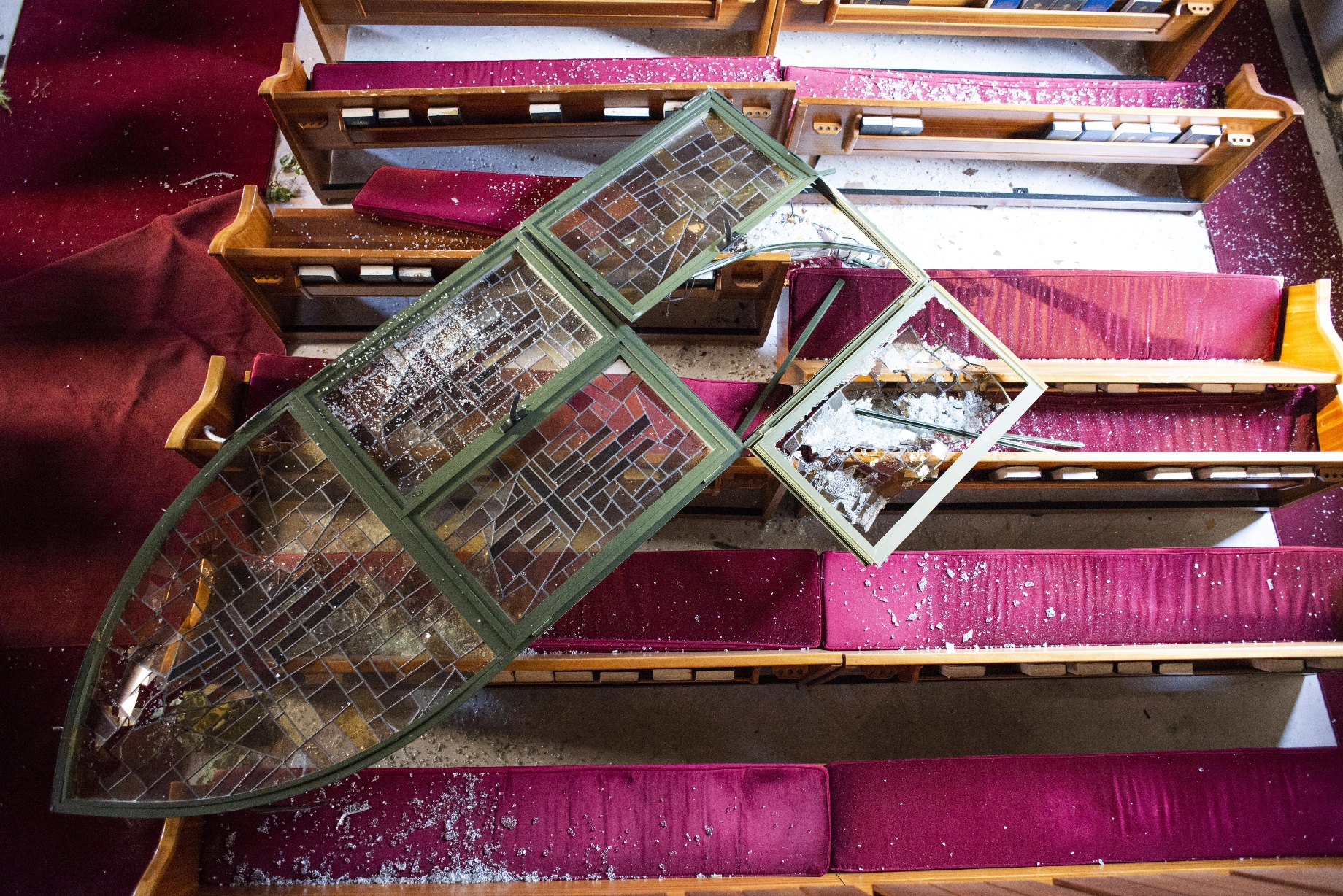
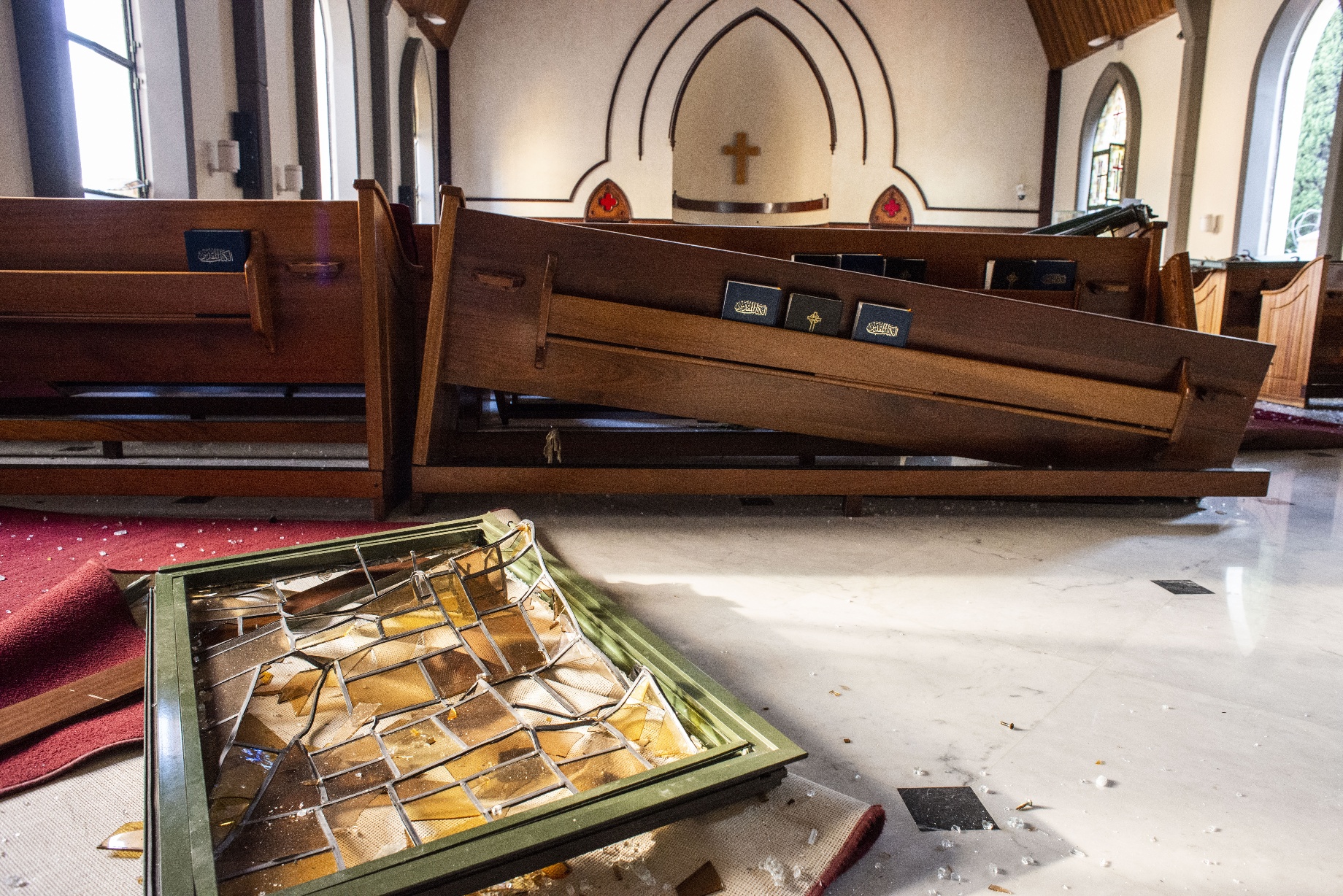
And in his church, across a now debris-strewn flower garden, seven of the eight windows were blown out, crashing onto the pews below. Badr estimates the total damage throughout the complex as not less than $200,000.

But this salvage operation will be far less costly than the last.
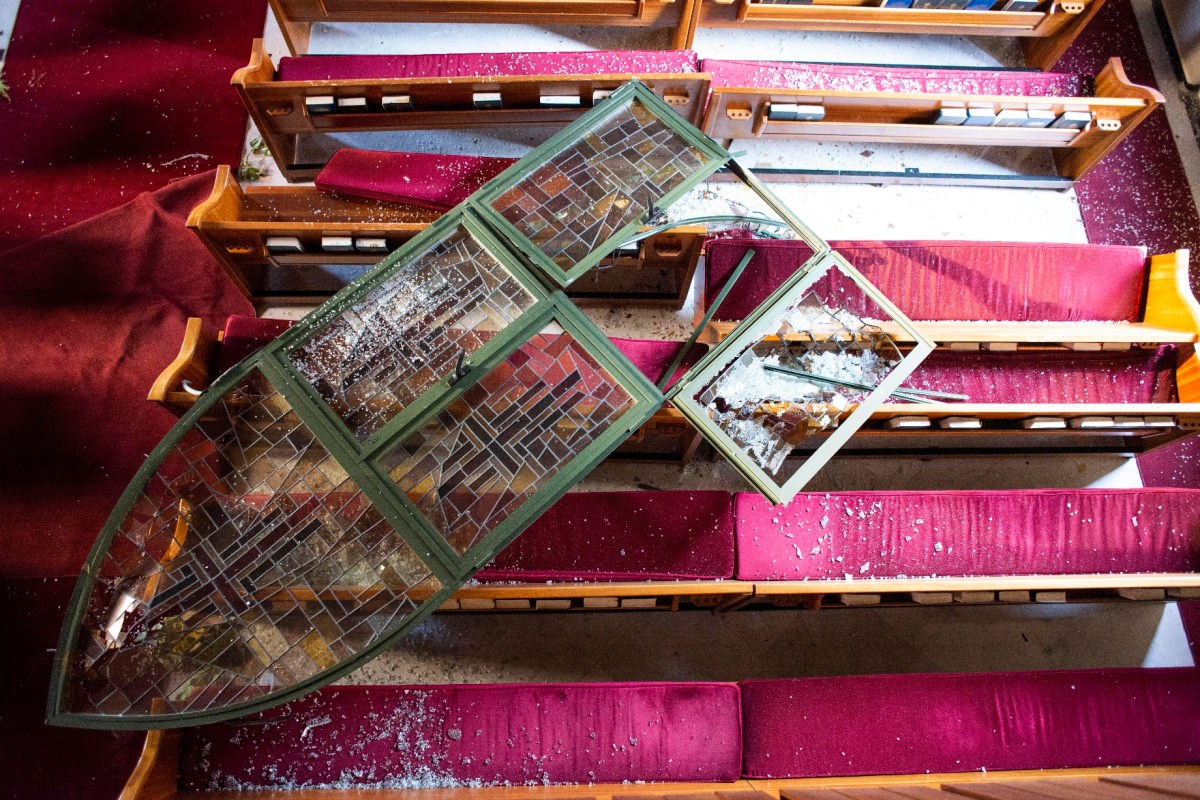
Damage at National Evangelical Church of BeirutP. Clarkson
Damage at National Evangelical Church of Beirut

Last year on March 31, the National Evangelical Church celebrated the 150th anniversary of its building. But for roughly two decades, all that remained standing was the church tower.

The civil war turned Beirut into a battlefield. Built right next to the Grand Serail, the headquarters of the prime minister, shells exchanged between opposing Christian, Muslim, and Palestinian militias reduced the historic church to rubble. After being displaced to the relatively safe chapel at the Near East School of Theology in the Hamra district of Beirut, it took two years after the 1990 Ta’ef Accord brought peace between the various factions before the congregation could even contemplate a rebuild.

With the church completed in 1998 in almost the exact same style, at a cost of $2.8 million, Badr installed the circular window as a symbol of hope. But he also faced a rapidly declining membership. At the start of the civil war, the National Evangelical Church and its eight affiliated Lebanese congregations boasted 900 families. After the 15-year conflict, they were reduced to 300.

Post-war reconstruction took off in 1993, restoring some of the original glory of Beirut. But it also transformed the local area, replacing many of the residential quarters with high-rise apartments and glitzy commercial districts. Christian families moved out to the suburbs, where other evangelical churches were close by.

Today there are 250 member families on the books. But many of these are in name only, having long effectively relocated to the diaspora. Weekly attendance averages 150 people, though it can swell to 500 on the Christmas and Easter holidays.

It is a far cry from the heyday of Protestant missions. Though its early years saw even fewer. In 1823, Presbyterian and Congregationalist missionaries settled outside the city walls of the small seaside town of Beirut on the then-Syrian coastline. Prevented by the Ottoman Empire from taking residence in Jerusalem, the American Mission Compound adopted a strategy to engage the existing churches and spark a reformation from within. The Levant already numbered 17 religious sects. Why create another?

The Maronite patriarch received them kindly, but did not support their efforts.
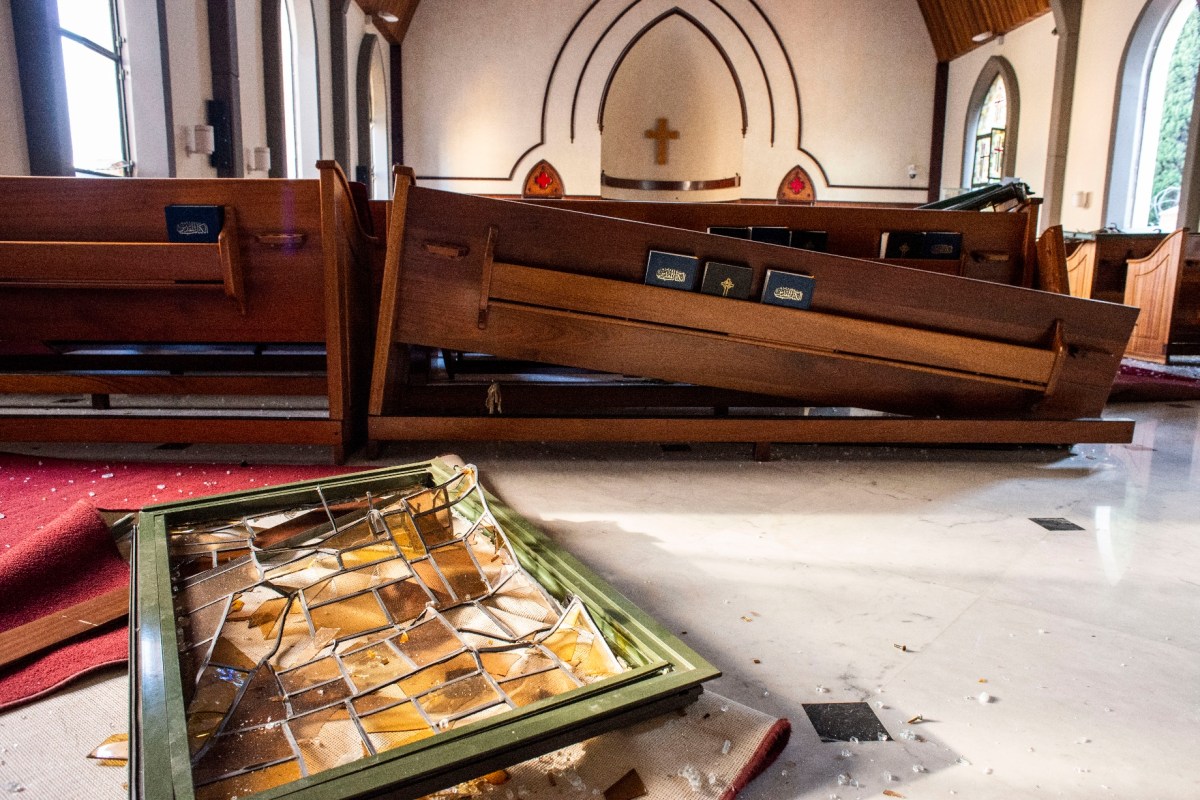
Damage at National Evangelical Church of BeirutP. Clarkson
Damage at National Evangelical Church of Beirut

By 1834, when they brought an Arabic printing press from Malta to Beirut to spur literature distribution, the mission had won only eight converts to Protestantism. “Bible ladies” crossed the valleys on donkeys, and a seminary was formed in the mountain village of Abey. The missionaries contented themselves with faithful preaching of the doctrines of grace and let God determine the ecclesial outcome.

That is, until an 1844 visit from mission headquarters in Boston pushed the missionaries to form their own churches across what was then known as the Near East. In 1846, the first Middle East Protestant church was born, of Armenians living among the Turks of Istanbul. The Arab work proved slower; but two years later, the National Evangelical Church in Beirut was formed of 10 communicant members.

But during this time, the population of Beirut began to swell with migrants fleeing the 1840–45 civil war between the Maronite Catholics and Druze Muslims who dwelled in the Lebanese mountains. And in troubled times, a growing missionary community started to see results.

In 1850, the Ottoman sultan issued a decree designating the Protestants as an official millet [religious community], and six years later it was applied in Syria, creating the region’s 18th sect. Churches were formed in the villages of Hasbeya in 1851, and in Abey a year later. Sidon, Tripoli, Zahle, and other locations followed soon thereafter.

But following the American Civil War, the earlier cooperation among missionaries faltered. Presbyterians formed their own agency, and many mission stations were organized into presbyteries. But the proud original Beirut church held to its Congregationalist origins, while keeping fellowship with the emerging synod.

Regardless of stripe, the missionaries continued preaching the gospel, aided by ongoing Arabic translation work of the Bible, completed in 1864. But it was the 1866 founding of the Syrian Protestant College—later to become the American University of Beirut—that boosted the fortunes of the National Evangelical Church. The city grew further, drawing the elite into missionary circles and creating an upper-class church of influence in society.

And on March 27, 1869, they consecrated the new building with an Arabic Bible and a list of members laid in the cornerstone. In time, other Protestant denominations arrived; in 1873, the Quakers formed a high school; in 1895, the Baptists formed a church. But when the Ottoman era ended with the defeat of Turkey in World War I, during the ensuing French protectorate it was the National Evangelical Church that provided leadership.

The secular French failed to recognize Protestantism in their 1936 list of official sects, so pastor Mufid Abdel Karim went to complain. Told to organize like the Protestants of France and form a federation, the National Evangelical Church joined with Presbyterians, Armenians, the Church of God, and the other denominations the following year to form the Supreme Council of the Evangelical Community in Syria and Lebanon. Abdel Karim became its first president. Subsequent pastors held the position through the early years of Lebanon’s independence, until 1964.

Today the church provides care for 35 elderly in an assisted living residence. It also oversees the Schneller orphanage in Lebanon’s Bekaa Valley, originally founded by German missionaries in Jerusalem.

And while many of its affiliated churches were scattered during the civil war, plans are underway to form a technical school in one of the ruined properties. Education is provided for grades K–12 in the nearby town of Kafrshima; however, due to the ongoing economic crisis in Lebanon, the church had to suspend its elementary school in Beirut.

To save the body, the leg must be amputated, Badr said.

But the National Evangelical Church was rocked even earlier, as protesters against the sectarian national leadership filled Martyrs Square in October 2019 and onward, pushing up against the Grand Serail. Violent elements continually clashing with police caused Badr and his family several sleepless nights, and eventually barriers and barbed wire were laid across the road. It is now impossible to get to the church without passing through an army checkpoint that verifies appointments. Sunday worship is permitted, with precautions.
At least it was before COVID-19. In 2018, Badr began livestreaming his service on YouTube, which made for an easier transition. Paradoxically, the crises have brought his congregation closer together, he said. Providing emergency aid and counseling services reminded them about the nature of the church, even as they are absent from it.

Amid all the crises, Badr reflected on the landmark status of his historic building, honored by the government with a postage stamp on its 150th anniversary. Issued in commemoration for Reformation Sunday, this heritage helped rejuvenate the Bible in the life of Lebanese Christianity.

“If I didn’t have hope, I would leave,” said Badr, surveying the state of his nation, post-explosion. “Unlike Sodom and Gomorrah, there are enough good people in Lebanon for God to spare it from destruction.”

But his reflection was broken by a phone call. Yet another former member reached out from the diaspora, expressing grief and asking how to help. It is a cycle in Lebanon: Beirut gets destroyed, then rebuilt again. The National Evangelical Church is just one of many phoenix-like symbols.

But its particular endurance points to an even greater reality.

“The church is a beacon of hope and light in Jesus Christ,” said Badr, “in the middle of a city that is broken, in need of the Word of God.”

News

Belarus Baptists Look to Habakkuk amid Mass Protests of ‘Europe’s Last Dictator’

Christian leaders unite in condemning police brutality as President Lukashenko denies re-election was fraudulent.

Christianity Today August 19, 2020
Sergei Grits / AP Images

Christian denominations in Belarus are not engaged in many joint projects and generally steer clear of politics. But the controversial reelection of “Europe’s last dictator” has united them in prayer—and in their public stance on politics.

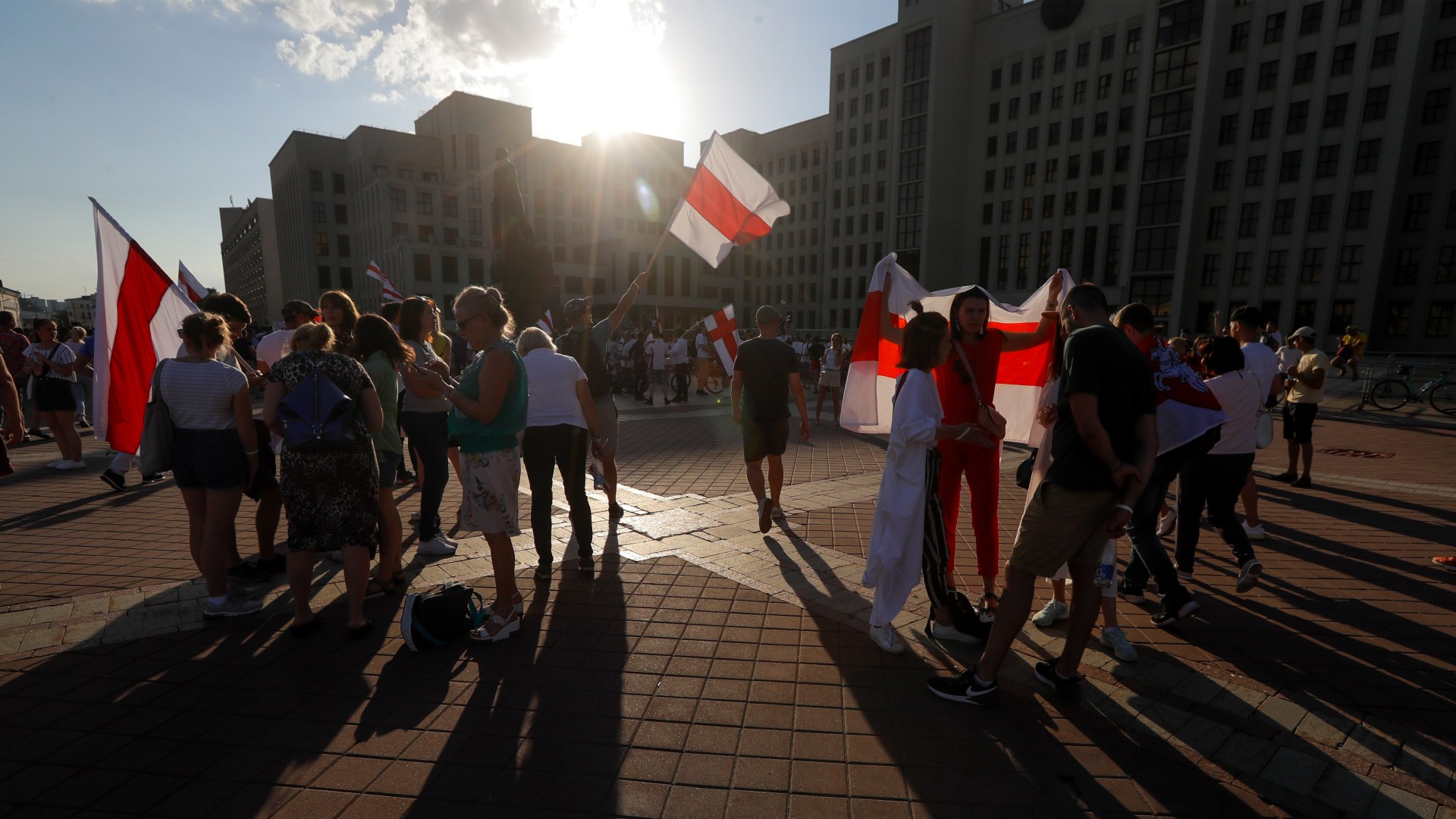
Belarus has been embroiled in mass protests since its August 9 presidential election. For the past 26 years, the Eastern European country the size of Kansas has been led by President Alexander Lukashenko, who in 1994 won the first election since the former Soviet republic became independent after the collapse of the Soviet Union three years earlier. Following his election, Lukashenko changed the constitution to eliminate term limits. No election since has been recognized as free and fair by international observers.

This year, the opposition rallied around Svetlana Tikhanovskaya, who ran in place of her husband after he was disqualified and jailed. She promised a return to the 1994 constitution with a subsequent clean presidential poll early next year. The official results of the August 9 vote showed Lukashenko winning with 80 percent of the vote. The opposition claimed the tally was fraudulent. Mass protests swept the country of 10 million people. Protesters were met with tear gas, rubber bullets, water cannons, and stun grenades. Thousands were detained. Multiple reports of torture in detention centers hit social media.

In response, Christians are uniting in prayer at 9 a.m. and 9 p.m. every day. A joint statement entitled “Prayer and Hope” was issued by evangelical leaders: Leonid Mikhovich, leader of the Union of Evangelical Christians-Baptists in Belarus; Sergey Tsvor, leader of the United Church of Christians of Evangelical Faith in Belarus; and Leonid Voronenko, leader of the charismatic Religious Association of Full Gospel Communities in Belarus.

The three called on their fellow countrymen to refrain from hatred, revenge, and bitterness. After a customary exhortation to pray for those in power, their statement calls for Christians to pray for the end of “brutality, violence, and bloodshed,” and also for victims and their families.

“Earthly hopes are not always fulfilled (Luke 24:21), but our hope is the Lord Jesus Christ; whoever believes in him will not be ashamed (1 Peter 2:6),” they wrote. “And if now there is no bright light in the clouds, then the wind will blow and clear them (Job 37:21).”

The last few days have seen largely peaceful demonstrations. The government promised to investigate police brutality. Authorities are releasing detainees, who describe harrowing beatings, days without food, and threats of rape. This past Sunday, Lukashenko spoke before 50,000 supporters in Minsk, the capital city. But his rally was dwarfed by a nearby gathering, where 200,000 protested the election outcome. On Monday morning, Lukashenko was jeered while speaking at a Minsk factory.

Looming large is Russia, Belarus’s eastern neighbor, and Vladimir Putin, Russia’s president. Analysts have speculated whether Putin might intervene for Lukashenko, as the opposition in Belarus would likely seek closer relations with the West if it comes to power. Putin sent Lukashenko his customary congratulations, but their relationship has been noticeably tense as of late. This tension was on public display during Victory Day celebrations in Moscow back in June when Lukashenko ostentatiously refused to stand next to Putin, to the visible chagrin of the Russian president. In a bizarre twist, Lukashenko had more than 30 Russian citizens arrested at the end of July. For days, he accused them of intending to undermine civil order in Belarus before eventually blaming it all on the Ukraine.

Lukashenko, a self-declared “Orthodox atheist,” has cultivated a relationship with the Belarusian Orthodox Church of the Moscow Patriarchate, a part of the Russian Orthodox Church. It is the only Orthodox church de facto permitted in Belarus. Patriarch Kirill, the head of the Russian Orthodox Church, congratulated Lukashenko upon his election. Yet these congratulations disappeared from the website of the Moscow Patriarchate a couple of days later. Metropolitan Hilarion, head of the Department of External Church Relations of the Moscow Patriarchate, neither congratulated Lukashenko nor put Kirill’s congratulations on his department’s website. Metropolitan Pavel, head of the Belarusian Orthodox Church, initially congratulated Lukashenko. However, after a few days, he retracted his congratulations and condemned police brutality.

Monsignor Tadeusz Kondrusiewicz, the Roman Catholic Archbishop of Belarus, refrained from congratulating Lukashenko. A couple of days after the election, he called for an end to the violence and the beginning of round-table discussions. A few days later, he published another statement, this time blaming the regime directly for inhumane treatment of the protesters. The archbishop called police brutality “a grave sin on the conscience of those who give criminal orders and commit violence.”

In an article written a month before the election, Mikhovich asserted that political involvement on the part of Christians should be limited. Jesus did not address directly the political issues of his day, wrote the Baptist leader. Paul’s involvement in the justice system, such as his assertion of Roman citizenship, was never violent. Hatred and revenge should have no place in Christian political involvement. Prayer for those in power must be a part of it, as should due reverence to them.

“‘Conquer evil with good’ (Romans 12:21). Fear lest you put your evil in the place of evil,” writes Mikhovich. “Solzhenitsyn understood the lie of all the revolutions in history: they destroy only modern carriers of evil (but also the carriers of good), while evil itself, magnified still, is inherited.”

In a second article written after the election, the Baptist leader is quite specific in his criticism of police brutality. He condemns violence and expresses hope for eventual justice from God. He writes: “It seems to us that we ourselves can carry out vengeance better, more effectively. The Lord knows how to take revenge.”

Drawing from Habakkuk, the Old Testament prophet, Mikhovich lays out prayer and charity as two cornerstones for Christian political engagement. A prayerful attitude puts our view of political leaders and their actions in the right perspective, he writes. Charity gives us the opportunity to model divine love to innocent victims.

“Habakkuk begins with a puzzled questioning and ends with worship,” writes Mikhovich. “The circumstances have not changed. Habakkuk’s attitude to what was happening changed; his heart changed. And the famous ending of his book shows that he is ready for any outcome and in any circumstances is ready to trust God.

“Are we ready to trust God, to worship Him, to rejoice about the God of salvation, even if potatoes did not grow, even if they turned off the internet, or even falsified the elections? And continue to pray for our beloved Belarus.”

Andrey Shirin is an associate professor of divinity and director of transformational leadership at John Leland Center for Theological Studies (Arlington, Virginia), where he researches and teaches at the intersection of theology, leadership, and public life.

News
Wire Story

Evangelicals Call for Police and Criminal Justice Reform

New initiative challenges churches and believers: “Scripture makes the pursuit of justice for our neighbors a mandatory part of the Christian life.”

Christianity Today August 19, 2020
Steven Senne / Associated Press

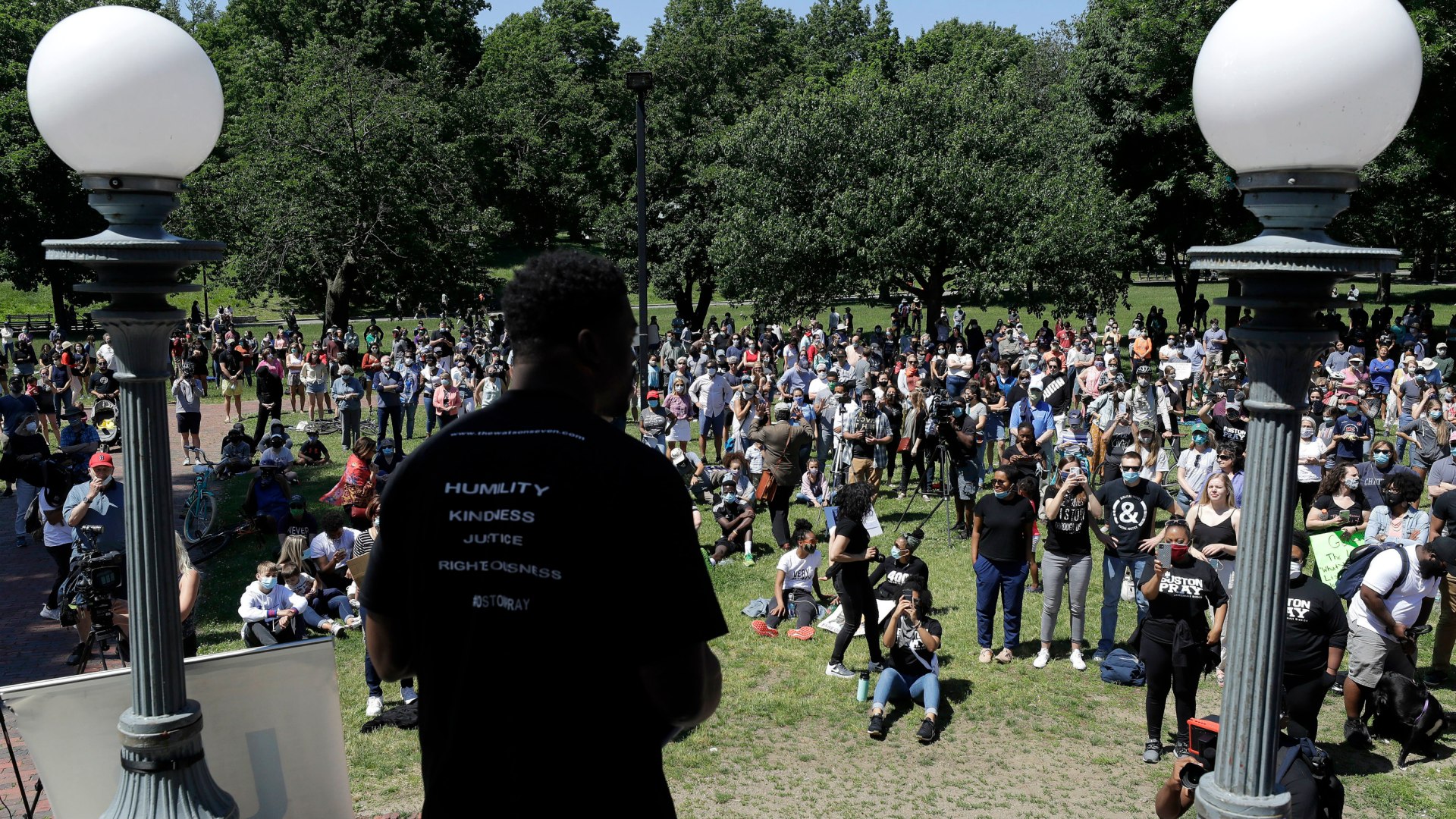
A coalition of Christian groups including the Church of God in Christ and the National Association of Evangelicals is launching a new criminal justice reform push that seeks to rally believers behind policing changes grounded in biblical principles.

Set to be announced Wednesday, the Prayer & Action Justice Initiative has its roots in a campaign started in the aftermath of the coronavirus to help save small churches at risk of closing, with top contributors to that work now channeling their energy toward the criminal justice project. It is expected to include prayer gatherings, nonviolent protests, and policy advocacy—all aimed at advancing the cause of racial equity in the justice system.

“This initiative is confronting the fact that some parts of the church have failed on this, that the church hasn’t been clear,” Justin Giboney, president of the And Campaign, a Christian social justice advocacy group that is leading the initiative, told the Associated Press.

Nationwide protests that flared for weeks after the police killings of George Floyd, Breonna Taylor, Ahmaud Arbery, and other black Americans galvanized engagement by faith leaders from multiple denominations to press for criminal justice reform.

But the issue has faded from public view somewhat as the coronavirus continues to spread, and Giboney described the new project’s mission as, in part, ensuring “that when it’s not on the front page, that we’re still working on it like it is.”

Other groups participating in the new coalition include the Center for Public Justice, Prison Fellowship, the American Bible Society, the Asian American Christian Collaborative, the National Day of Prayer, and World Relief. Former pro football player and outspoken Christian Benjamin Watson also is part of the coalition. Giboney predicted that its numbers would grow as other Christian organizations and congregations sign on.

At the heart of the nonpartisan effort are a set of broad priorities that include some specific policy changes. For example, the initiative is calling for greater public disclosure of reports on use of force by law enforcement agents, deaths in custody, and other metrics.

Other elements of its agenda include easing sentencing laws and limits on parole releases, as well as the use of faith-based prison programs and other infrastructure to help inmates prepare for life after release.

The project comes two years after President Donald Trump signed a bipartisan criminal justice reform bill into law that moved ahead thanks in part to the support of some leading Christians, including evangelicals and black ministry leaders. However, the changes that measure made were widely seen as only a beginning of work on the issue.

Among the Christian leaders backing the initiative are Samuel Rodriguez, president of the National Hispanic Christian Leadership Conference as well as a past faith adviser to Trump, and Gabriel Salguero, president of the National Latino Evangelical Coalition, a speaker at this week's Democratic National Convention.

Federal criminal justice reform legislation remains stalled in Congress despite broad public support for action, though several state legislatures have made progress on policing overhauls following Floyd’s killing and the resulting unrest.

Giboney said the new initiative will largely emphasize state and local progress even as it keeps a nationwide focus, with organizing efforts already underway in New York, Atlanta, Chicago, and Philadelphia.

Despite the partisan heat of the impending election, Giboney—an attorney and political strategist who served as a Democratic National Convention delegate in 2012 and 2016—vowed to separate its work from ideological divisions.

“Put that to the side right now and really focus on people, on human dignity,” he said.

Books

Work-Family Balance Was Never Easy. Then the Pandemic Hit.

Christian husband-wife duo share their research on how couples approach love and work.

Christianity Today August 19, 2020
Courtesy of the Shinabargers / Image by Mary Claire Photo

The pandemic-induced shutdown has showed us, among other lessons, how hard it really is to juggle work and family.

For example, one married couple, both academics, tracked a workday at home during quarantine. They recorded an average of 15 interruptions by their two children each hour; the typical uninterrupted stretch of work was a mere three minutes, 24 seconds. During this season, the idea of having a successful career and a flourishing family can seem impossible.

Another couple, Christians Jeff and André Shinabarger, started wondering about this tension long before the pandemic. They were living out these big questions under their own roof.

“We say oftentimes that if we change the world and lose our family, we lose,” Jeff said. “And that starts with my relationship with André, our individual relationship, and how that impacts the rest of our family.”

Over two years ago, the Shinabargers—husband Jeff, the founder of startup network Plywood People and wife André, a physician’s assistant—launched a podcast called Love or Work, interviewing couples and relationship experts about marriage, family, and purpose.

They road-tripped in an Airstream to hear from families prioritizing their vocations and their marriages. And they partnered with Christian research organization Barna Group to survey 1,500 couples about work-life balance.

Now Jeff and André have co-authored Love or Work: Is It Possible to Change the World, Stay in Love & Raise a Healthy Family? The book seeks to answer this question through personal anecdotes, lively debates between Jeff and André, and their research. (A detailed report of their survey findings can be downloaded here.)

The couple recently spoke from their home in Atlanta with author Dorcas Cheng-Tozun, who has also written about the unique dynamics around faith, calling, and marriage. The Shinabargers discussed how we as Christians might think through the tension around work, ambition, relationships, and parenting during these unusual times. The interview has been edited for length.

André, in the book you address head-on that managing work and family is much harder for women. Even now, I’ve seen several doomsday articles about how the pandemic could spell the end of the working mother. What would you say to women who are really struggling to have it all?

André: We wrote this book before COVID. And now, we’re like, “Oh, it’s even more important.” The tension was real before COVID, and now the tension is exponentially more real. If anyone feels it, it’s the working mom, and especially, especially the single working mom …. In our research, it was pretty evident that men did not sacrifice their work for their partner as much as women sacrificed for men. As we’re seeing with COVID, all of a sudden all the childcare responsibilities seem to automatically get delegated to the woman.

I get that we often birthed the child out of our bodies, but the kid belongs to both of us. The male, the person you’re partnering with, has just as much responsibility for the childcare and for what happens to these kids than the woman. It’s hard for me to see that women are the ones who are going to pull out of the workforce.

If it was a true partnership, men would be just as likely to pull out of the workforce as women. Jeff and I talk a lot about moving from patriarchy to partnership, and having the viewpoint that whatever works best for your family, that’s what should be done.

What statistic in your research most surprised you?

André: The first is that people are so optimistic: 95 percent of people believe that you can do it all. You can both work, have a healthy family, stay in love. 83 percent of couples say that working has made them better parents. I thought that was really interesting too because oftentimes I think I’m not the best parent because I’m out working, and I feel guilty or somewhat discouraged that I’m not with my kids more.

Yet there are also so many that say they’re exhausted, they’re tired, they feel overwhelmed. They aren’t able to really stay healthy. Only 29 percent say they’re satisfied with their physical health, 21 percent with their financial security. These are dual-income couples. It was interesting to see that the things that we are sacrificing are health—our physical, spiritual, mental, emotional health. We’re going after it, we’re doing it all, and then we’re needing to sacrifice. We’re sacrificing ourselves, really.

How has your faith affected the way you’ve pursued all these things together—marriage, family, and work?

Jeff: Both of us have a deep perspective that we were made to do things unique, and that is part of our calling. What’s interesting is that pieces of our past would say that only one of our callings is most important. And that is not true with what we believe related to our faith, how we were made, designed, and created.

What’s interesting is that, if I believe those things for me and I believe those things for André, then it’s shaped how we live, not just how I live. We’ve had to have some interesting conversations about how we were raised in our faith, and what our faith is today. Those have been constants for us—how we’re made, what our sense of work and calling includes, and how that has played out in our partnership.

Coming from an evangelical background, I can sometimes think it’s wrong or selfish to want it all. It’s like I have a voice inside of me saying I should just be content with what I have. I shouldn’t strive so hard to have so much.

André: I 100 percent agree. That is something that we as women who have been raised in the church have often felt. It’s been modeled for us. We haven’t been able to speak in the churches. We haven’t been able to be pastors. We’ve been relegated to childcare and hospitality ministries. When that is your model, then what do you think that you’re supposed to do as you get older?

I think it’s so limiting to the fullness of what God has created for women to be and do. We’re limiting the gifts that we have, that God has given us as women by just holding onto these patriarchal viewpoints that the church has taught us throughout history. I’m just not for it anymore. I can’t imagine a God that would hold me back and say you’re not quite good enough for that. I don’t believe it. I think God wants the fullness of us to be lived … We never question a man if he has these huge dreams and passions, and wants to live them out. We never question him and ask if that’s selfish. But we definitely do that for women.

Jeff: Sometimes we think that voice is the right voice. We think that’s God. If André said that to me, I would tell her, “Don’t let the voice of patriarchies past define or minimize your purpose of the future.” That is the not the voice of fear that our family will listen to going forward.

I have my own wrong voices I listen to too. And she has to speak into me, saying, “Jeff, the story you’re hearing is not the story we’re going to live going forward.” That’s part of us really understanding our purpose and being for one another.

We are collectively in a really difficult season right now. Most couples I know, especially if they have young kids, are overstretched. Many families are struggling significantly with financial stress and isolation. What encouragement can you give to couples during this season?

Jeff: This is an unusual time. It’s a time that hopefully as a family we’ll all remember as uniquely different. We’ve spent more time as a close nuclear family than we may ever in our lives. Accepting that as the new reality and enjoying the time together is the opportunity. That’s the beautiful side of it. I’ve talked to many families who feel closer than they ever have to the people that they should be closest to.

I also would say that if you haven’t addressed things in your relationship with your partner, a lot of that stuff will come out during this time also, which makes it very difficult.

One thing we learned through our research was the importance that we each individually need time on our own, and we need time together. Every week, we’ve really tried to do that. Andre will give me some time to be by myself, and I will give her some time to be by herself. And even in the midst of the pandemic, we need to get creative and figure out what a little date night can look like. When we do, we are reminded of how much we love each other.

Now that you’ve completed all your research and written your book, how would you answer the question in your subtitle?

Jeff: I do believe it’s possible. And I think it’s really hard. The only way it can work for us is if we’re on the same team and are for one another. In order for us to both do this, we both have to give up things at times to be able to maintain it all. And we have both given up opportunities as times for the sake of the other.

One of the things that came out in our research is we would ask all these people this question at the end of our podcast. Again, 95 percent of the people said, “Yes, it’s possible.” And then they would all say, “But…” And they would have some caveat they would say—every single one of them. So that was this commonality we saw. A lot of things have to work together, and you have to work together with the person you love to make it happen.

Dorcas Cheng-Tozun is an award-winning writer, editor, and international communications consultant. She is the editorial director of the new Reclaim Magazine and the author of Start, Love, Repeat: How to Stay in Love with Your Entrepreneur in a Crazy Start-up World and Let There d.light: How One Social Enterprise Brought Solar Products to 100 Million People. Connect with her on Facebook or Instagram.

Theology

Rowan Williams: Theological Education Is for Everyone

To do theology is to rediscover the strangeness of the Christian framework.

Christianity Today August 19, 2020
Matthew Lloyd / Stringer / Getty Images

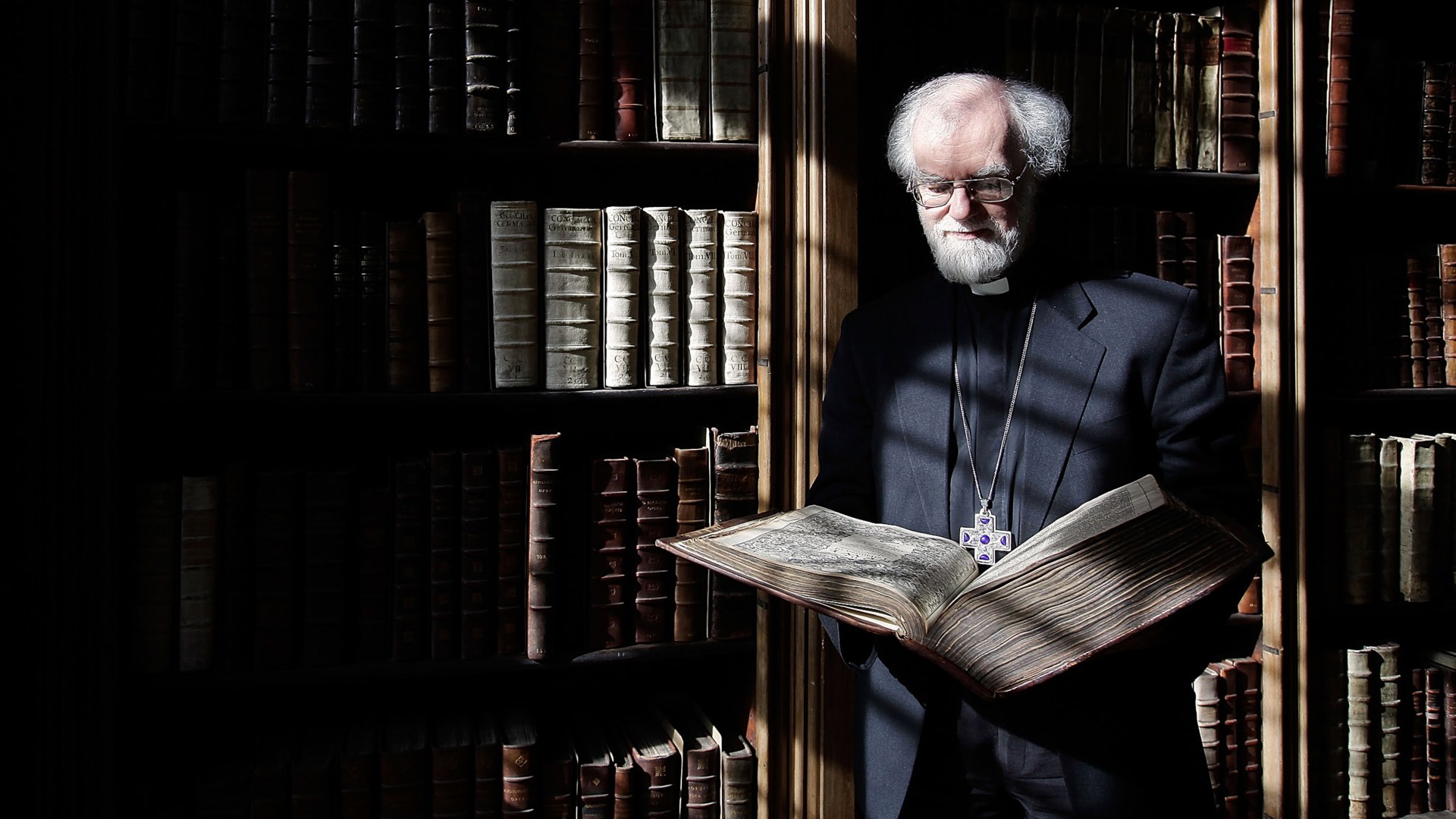
As part of a project to reimagine theological education in the 21st century , theology professor Benjamin Wayman met with Rowan Williams, the 104th Archbishop of Canterbury and Master of Magdalene College at Cambridge University. Over a cup of tea at the Masters Lodge, Wayman and Williams discussed the nature of theological education, which Williams likened to a strange landscape requiring new patterns and preparations for inhabitation. For Williams, Christian education and formation are like learning to camp in a new land, a new creation.

What do you think are the purpose and nature of theological education?

Well, in the broadest possible sense, theological education is learning more about the world that faith creates, or the world that faith trains you to inhabit. That’s what I really want to come back to again and again when I talk about theology. It’s not about a set of issues or problems, it’s about a landscape you move into—the new creation, if you like. You inhabit this new set of relationships, this new set of perspectives. You see differently, you sense differently, you relate differently.

To do theology is, in some ways, to be taken back to that moment of bewilderment about the newness or the distinctiveness or the strangeness of being in this new Christian framework. So theological education is familiarizing yourself with how people have found their way around that landscape with the perspectives they’ve occupied and then learning to pitch your own tent, as one might say, in that territory.

Justo González argues in The History of Theological Education that theological education is the calling of all Christians—lay and clergy—and he envisions a kind of continuum that begins in the local church, continues in the training of pastors and lay leaders, and moves on to graduate education. He suggests a drip hose metaphor instead of the typical “pipeline.” A drip hose irrigates the garden throughout. What do you make of this idea, and do you like his thinking about theological education as a continuum?

I do, very much. It seems to me that any Christian beginning to reflect on herself or himself within the body of Christ is in that act doing theology: making Christian sense of their lives. So we shouldn’t be at all surprised if people in all parts of the body of Christ show an appetite for doing this and learning about it. And my experience is that there is more of an appetite than many people realize.

What have you found to be the most effective form or method for theological education for pastors? And what about for parishioners?

I might begin by talking about the college where I teach, usually about once a month, and where my wife is the academic dean—St. Mellitus College in London. It’s a new form of ministerial education, which assumes that every student is on a full-time pastoral assignment that will be paid for by them, or by the parish, or by some benefactor. They spend two days a week or thereabouts in seminars and lectures in an academic center. But once every two months, they have a residential weekend, and once every year, they have a residential week.

And what works there, I think, is that these are people who come very directly from the pastoral frontline, and quite often they are fairly new Christians too. The way in which they connect with theological themes is going to be quite edgy, quite challenging sometimes. I find it’s a very fruitful environment. It’s not that they get the theory and then do the practice or that they do the practice and then just reflect on it at a distance, but there’s a to and fro all the time. I think that works quite well, whether in that particular form or in the shape it has in some more conventional seminaries, of people spending a term away on a pastoral placement or something like that.

I see theological education as education not only about the nature of God but the nature of humanity. A good theological education will show you something of the kind of human being that you’re talking about when you’re talking theologically, which isn’t necessarily the kind of human being you’re talking about if you’re just talking sociologically, anthropologically, psychologically. You’re talking about a human being made in the divine image, tragically and catastrophically tangled and distorted by human history. And yet, in their entirety, seen and loved by God. So what you’re learning in pastoral contact with three-dimensional, complicated human beings like that is really relevant to your theology. You are learning what kind of human being God is interested in, which of course is every kind of human being.

So that is, in some respects, a kind of pushback on conventional seminary.

A bit. It’s not radical. The old chestnut that theological education is about giving you a set of perfect answers to questions nobody’s asking—you’ve got to avoid that. That human locatedness, that contextualizing, is important. And that’s not to say that contextual considerations trump every other consideration. It just reminds you that you’re learning about the human as well as about God.

As for lay education, what I’ve seen of it working well is very often the kind of group where people feel they have permission to ask the real questions, where there’s a degree of real trust and mutuality, where people don’t feel obliged to come up with shortcuts but are able to take time.

And, again, you don’t stint on the intellectual questioning there. The priority is to get back again and again to that big picture. I go on obsessively about this sometimes. The big picture of the landscape, the new creation, is where we’re headed and where we’re from. The mistake is to think you can just break it down into manageable bits. A theologically-educated layperson is somebody whose capacity for praise and wonder is filled out, not just the capacity to answer pub questions.

What do you think of the current trends that are finding white supremacy or colonialism in most of the dominant modes of theological discourse?

Yes. It’s very important that theology has a capacity for self-criticism, for honesty. And to be honest about where you're coming from, doing the theological equivalent of checking your privilege is, it seems to me, a deeply gospel-based thing. And that’s entirely right to the extent that it doesn’t become a search for some sort of abstract purity. If we’ve all been affected by the records of colonialism, racism, and white supremacy over the centuries, does that mean that it’s all rubbish? Well, no, because nobody is just defined by that. What becomes interesting is not the question, “What are the elements in a theologian of the past which come from a set of imperialist, or Eurocentric, or phallocentric assumptions?” but rather, “What are the other things that keep the discourse moving so that it doesn’t just settle down with that?”

In light of this, has your own theological approach shifted at all?

I suppose the first big challenge to me was in my 20s. I was coming to terms with early second-wave feminism in the 1970s. Yes, there was all the pressure to make me think again about patriarchal patterns, about patriarchal language, caution about pronouns, worrying about inclusive language. And through that, of course, you begin to see how power systems are at work in theologies. Again, I think the temptation is to say, “Well, we’re looking at a successful scheme, we’re looking at history written by the winners, and therefore the losers must be the people with the right ideas, whether it’s Arius or Pelagius or the Cathars in the Middle Ages.”

It’s not so simple, because everybody is interested in power. There are corruptions and distortions on both sides. Pelagius is, if anything, far more of a misogynist and a patriarchalist than Augustine. And don’t let’s start on St. Jerome! So, the point I’m making is, try to look comprehensively at these people. Try not to let looking at them be completely dictated by the inevitable shadows that are there. Try to see what in their writing makes them a little bit uncomfortable with themselves, and then you’ve got something which is worth sticking with and working with.

How can you tell if a Christian school or university is doing its job well?

A lot of our education, whether at school or college, is still dominated by a problem-solving rather than an understanding model. Problem-solving necessarily carves things up in the terms that we can address and parcel out. Understanding takes a bit longer.

Don’t think the importance of education is what it’s going to do for you tomorrow. To me, the question is, “What’s it doing for you today?” And when you have that perspective in mind, maybe you’re able to sideline some of the anxiety about compliance and those other things that beleaguer educational institutions these days.

When I visited church schools over the years—and I still do visit them and enjoy it very much—what I look for as a sign of the distinctive Christian ethos is not so much how many crucifixes there are on the wall. Though, you know, that’s nice. But: What’s the pace? What’s the rhythm? Is this a busy and fearful environment? “Let’s not be caught doing nothing.” Or is it one where there’s a kind of gentleness and generosity about people being allowed to grow at their own rate in a safe and nourishing environment? I’m not saying you don’t find that in non-church schools. Certainly not. I’ve seen plenty of examples of that too. But if I were looking for the real test of a Christian school doing its job, that’s one of the things I’d look for.

As you reflect on your life’s work, what brings you the most joy?

I suppose the privilege of doing what I’m doing next Sunday: celebrating the Eucharist and preaching to a little congregation. That is to me the most simply joyful thing that I ever get to do. I’d like to think that, if I’d done nothing else, pastoring would still have been worthwhile.

Benjamin Wayman is the James F. and Leona N. Andrews Chair in Christian Unity and associate professor of theology at Greenville University, as well as lead pastor of St. Paul’s Free Methodist Church in Greenville, Illinois.

Theology

He Loved Muslims Because He Loved Jesus. The Bible Showed Him How.

Remembering the pilgrimage and legacy of Rick Love, who founded Peace Catalyst after years as international director of Frontiers.

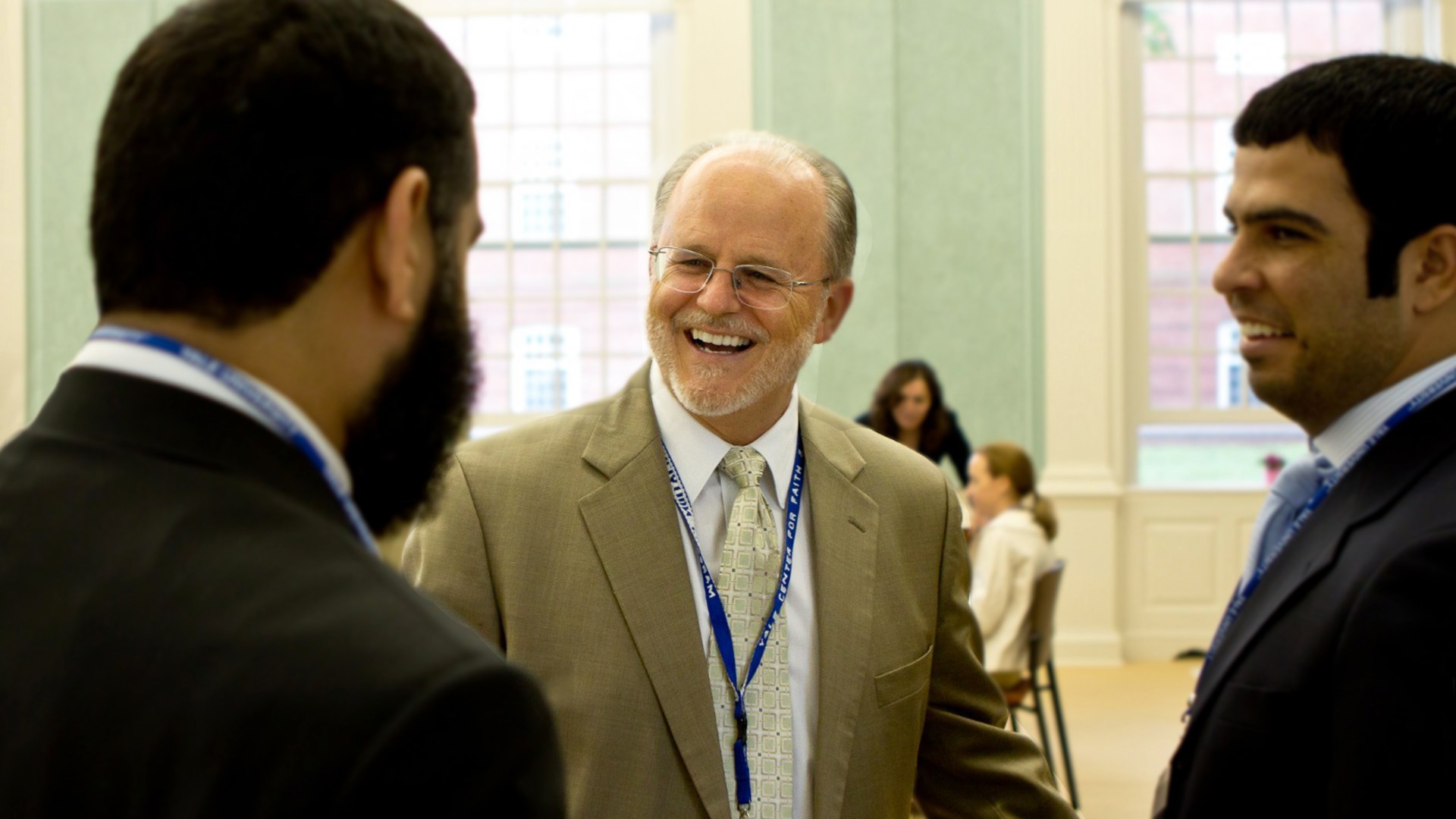
Rick Love at the 2011 Building Hope Conference at Yale University

Rick Love at the 2011 Building Hope Conference at Yale University

Christianity Today August 18, 2020
Aaron Huberty / Courtesy of Joseph Cumming

Rick Love loved Jesus above all else. He loved the Bible as God’s Word.

Rick’s love for Jesus led him to love Muslims. But his love for Scripture eventually changed his mind about how to love Muslims.

Rick, who passed away on December 29, did not always love Jesus. In a candid confession in his book, Glocal: Following Jesus in the 21st Century, Rick describes how in his youth he “embraced the ‘sex, drugs, and rock and roll’ lifestyle of the sixties.” After partying through the night of his 18th birthday, he woke up in the morning thinking, “There has to be more to life than this, and I’m going to find it.” It was of the 1970s Jesus Movement he would later write, “I encountered Jesus, and my life radically changed.”

From the start, Rick’s faith was all about following Jesus, which he distinguished from the cultural trappings associated with “Christianity” and traditional ways of “doing church.” It was certainly not about a heretical fusion of Christianity with American nationalism, that he believed has tragically damaged the witness of American Christians.

The other element at the heart of Rick’s faith was the authority of Scripture. Not content with merely upholding inerrancy as an abstract doctrine, he would steep himself daily in the biblical text, allowing it to guide his life. His wife Fran describes how day after day she witnessed Rick holding up his hands in prayer and worship as he studied the Bible.

From Scripture, Rick understood early on that God cared about all nations and cultures. This moved him to care about Muslims. For decades, he assumed this meant he should become a missionary in the traditional sense. He and Fran went to Indonesia to serve Jesus. Later Rick was asked to lead Frontiers—one of the largest evangelical organizations worldwide dedicated to reaching out to Muslims.

Rick’s “second conversion”—a term he used himself—began after the terrible events of 9/11 and the so-called “War on Terror.” In early 2002, Rick was stung by an article titled “Stealth Crusade” in Mother Jones magazine, which depicted Rick as the prime example of a deceitful approach to missionary work among Muslims. In the overheated and interconnected post-9/11 world, this article quickly went viral. Translated into many languages, it found its way onto the front pages of Muslim-run newspapers around the world.

The article misrepresented Rick, and distorted his views. But it also made him acutely aware that Christians frequently talk to each other as though no one else were listening. Terms familiar to us are easily misunderstood by others. For example, in his youth Rick described himself as “militant” for Christ, by which he meant “passionately committed.” Later he came to understand that to non-Christians, “militant” sounds aggressively militaristic.

But Rick was also troubled in his conscience. Though he had never been dishonest in the way Mother Jones implied, he felt he had not truly been honest with his Muslim friends either. He believed he needed to repent.

Rick urged Frontiers to adopt what he called “3D Communication”—communicating with integrity and consistency before three key audiences: fellow Christians, Muslims, and secular news media. Under his leadership, Frontiers changed its mission statement to read, “With love and respect, inviting all Muslim peoples to follow Jesus.”

Notice the emphasis on “following Jesus”—not “Christianity”—echoing Rick’s first conversion.

Ultimately, Rick’s second “conversion” took him deeper, guided by his love of Scripture. He had always been a peacemaker in relationships among Christians, but the wars and violence following 9/11 led him to a fresh study of biblical peacemaking.

In his book Peace Catalysts, he writes: “As I studied the topic of peace from Genesis to Revelation, I realized that the idea of peace and peacemaking is much bigger than I thought. I wondered how I had missed it … What I discovered transformed my life … May you examine the Scripture to see for yourself, and may you experience your conversion of peace.”

Rick did not waver in his evangelical theological commitments, but he became convinced his understanding of the gospel had been incomplete. By focusing exclusively on rescuing souls for the afterlife, he had ignored God’s loving concern for people’s well-being in this world. Rick came to believe that peacemaking was at the heart of what Jesus said God’s children should do.

But what if a Muslim friend does not want to follow Jesus? Rick believed, following Matthew 22:39 and Jeremiah 29:7, that following Jesus still requires us to love that friend and continue our friendship, working together for the peace and well-being of society. He became convinced that Jesus’ way of loving Muslims would not allow friendship to be instrumentalized as a mere means to the end goal of conversion.

In 2006, Rick left Frontiers, founded Peace Catalyst, and devoted the rest of his life to peacemaking with Muslims. In 2008, I was privileged to work closely with Rick on the Common Word initiative, bringing together senior Muslim, Christian, and Jewish leaders around the world in a call to love God and love each other. Rick’s experience convinced him that loving Muslims with no ulterior motives could powerfully change the world.

Ultimately, Rick’s second conversion was not a departure from his original faith. It was a restoration of his original focus on simply following Jesus.

Peace Catalyst prioritizes loving friendships with Muslims. A key value is hospitality, as Muslims and Christian friends (sometimes with Jewish friends) break bread together around a common table, with no strings attached.

But Peace Catalyst is ultimately about following Jesus. On its website, Rick wrote:

“Above all, we are followers of Jesus, on a journey with him, following where he leads us. We center our lives on him—not on the religion of Christianity, not on Western civilization, and not on patriotism. Jesus is the great peacemaker. We affirm a Jesus-centered approach to life because this highlights the treasure of the good news.”

Rick came full-circle back to his original faith: following Jesus.

But did Rick still believe in “inviting Muslims to follow Jesus”? Muslims and Christians alike often asked him that question. His typical answer was something like this: “Of course I would like to see my Muslim friends encounter Jesus as I did, just as Muslim friends want me to embrace Islam. But ultimately that is up to God, not me. What is up to me is that Jesus calls me to follow him in loving my Muslim neighbors unconditionally and partnering with them toward a peaceable world.”

In his later years, Rick believed strongly that though the gospel includes an eschatological future in heaven, it is also about God’s kingdom coming and God’s will being done on this earth as it is in heaven.

Rick passed away from complications related to bile duct cancer, and entered the presence of the Lord. But in his last days, he maintained hope that what he created in Peace Catalyst would carry on his vision.

“I want to be part of creating a new heaven and a new earth with God,” said Rick, quoted in his obituary.

“A peaceable kingdom.”

Joseph Cumming is a scholar of Islamic and Christian thought who serves as pastor of the International Church at Yale University.

Pastors

Grieving Ministry Loss? You’re Not Alone.

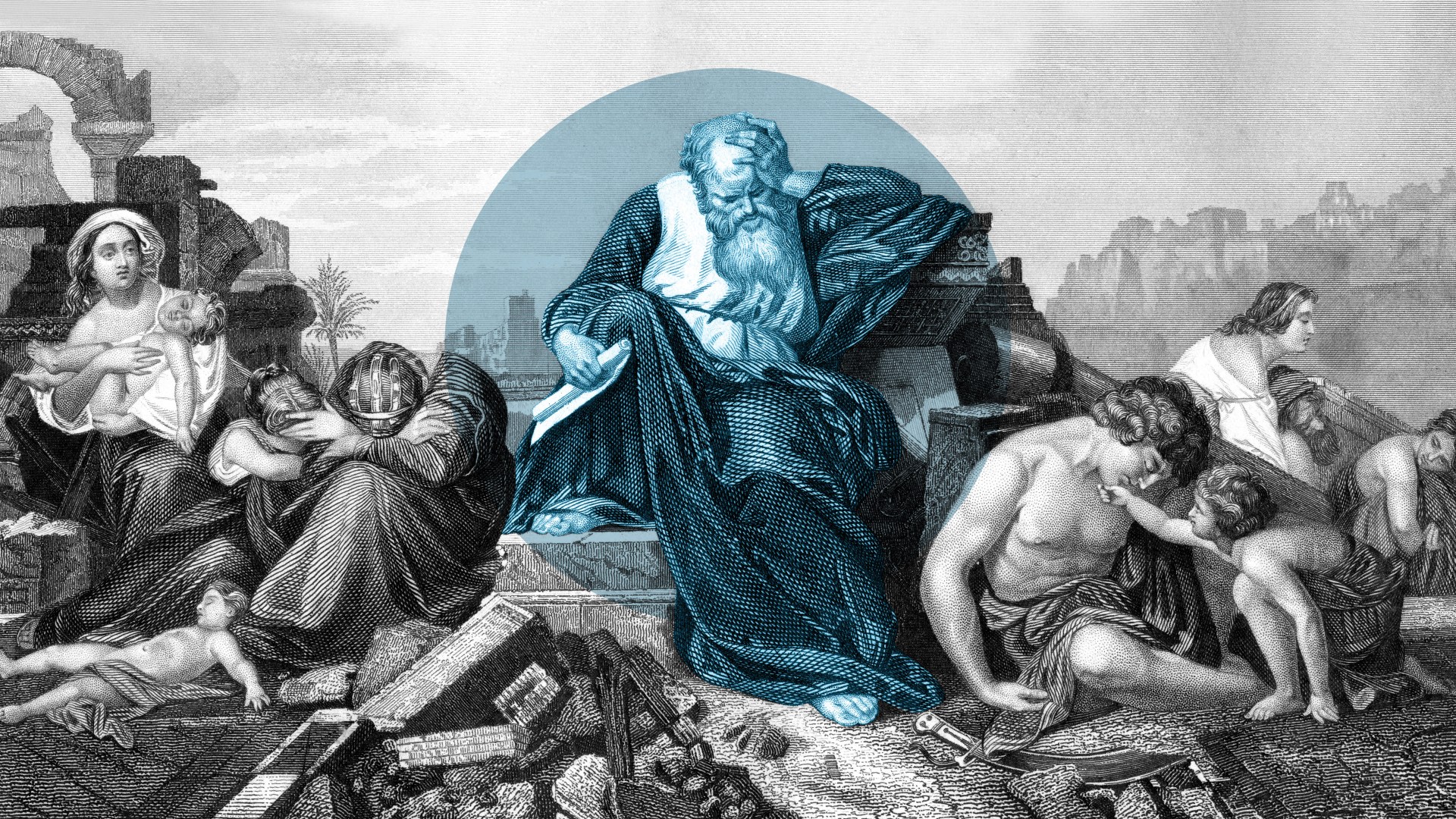
Biblical examples like Baruch and Jeremiah demonstrate faithful leadership in the midst of disappointment.

CT Pastors August 18, 2020
Source Image: TonyBaggett / Getty Images

After months of quarantine, I finally received the email I dreaded, but one I figured would eventually come. After postponing discipleship conferences with local churches to October, then December, the final word came in. Our entire discipleship ministry, the one in which I just started teaching and found deep joy, was shutting down, no longer able to pay the barebones staff that had been treading water until churches could host us again. It was a sobering loss, but not surprising.

My brother-in-law is a pastor in upstate South Carolina. He and his wife shared with me their grief when they realized that they had to completely cancel their summer vacation Bible school, after months of planning and regardless of handwashing protocol.

My own pastor, ministering in our cross-cultural church plant, shared with me the impact of the loss of our community’s call and response pattern of worship, which cannot be replicated through our current options to broadcast live services. It sounds small to some, and yet it has impacted our congregation in real ways. Most of all, we have lost contact with folks we were discipling, fragile buds just beginning to bloom into true discipleship. Though core members have hung together and grown closer, we weekly note the number of fringe attendees, those just beginning to feel a part of our church community, who have fallen away despite efforts to reach out and include them.

The evangelical church in America needed refining. But along with those things that needed to be pruned, it seems ministries are losing many good opportunities that fit God’s call to disciple the nations. Pastors sought God’s face before making their plans. Their ministries moved into the doors God seemed to be opening. In light of global suffering from the pandemic and racial injustice, such ministry losses may seem trivial to some. But they are not trivial. These losses affect pastors and ministry leaders in real ways, though sometimes we don’t even know how to name the feeling of loss they bring.

Ministry losses are piling up for pastors as hopes they had for their churches and joys they found in their ministries seem destroyed by the stifling measures we must all take right now to love our neighbor and slow the spread of this pandemic.

Before I got the email about my beloved discipleship ministry closing its doors, God had already been preparing me for this loss. My Bible reading during the last few months was in the book of Jeremiah. I was reading Jeremiah to better prepare me for the very discipleship initiative that had just been shut down. Two weeks before receiving that final email, I was haunted by God’s words to Baruch, Jeremiah’s faithful scribe in Jeremiah 45.

This is what you are to say to him: “This is what the LORD says: ‘What I have built I am about to demolish, and what I have planted I am about to uproot. But as for you, do you pursue great things for yourself? Stop pursuing! For I am about to bring disaster on everyone’— this is the Lord’s declaration—‘but I will grant you your life like the spoils of war wherever you go.’ (Jeremiah 45:4-5 CSB)

As God’s discipline descended on the idolatrous kings of Israel, and the people who followed their lead, it also descended onto Baruch and Jeremiah, who had faithfully ministered to the people in God’s name. God's words to Baruch are stark and, at first, seem small comfort. But maybe these words reflect more than what they first appear to say. I love the words of Psalm 46:10, “Be still and know that I am God.” I imagine God speaking similar words to Baruch in Jeremiah 45, though with a stronger voice of authority than I traditionally associate with Psalm 46. Be still, Baruch. I am God, Baruch! You will lose some things, Baruch, but I will protect your life wherever you go. Trust me! I know what I am doing.

The God of all comfort spoke the words Baruch needed to hear, and I think they are words that will benefit us today. Pastor and ministry leader, you are not the first in the Body of Christ to experience the complete disruption of your ministry because of problems that you did not bring on yourself. You are not the first minister of the gospel to get caught up in the disruption of a nation. Righteous men and women, much like Baruch and Jeremiah, get caught up in such times. They, too, pay a price.

We have another example in Numbers 14 that reminds us we are not alone in the losses of this hard season. Joshua and Caleb had just returned from Canaan with the other ten spies sent by Moses. They believed God would give them the land just as he had promised, but the other spies were fearful. As the people turned against Moses and refused to enter the land, Joshua and Caleb’s anguish was palpable. They tore their clothes as they pleaded with the people to believe God’s promises to them. But, despite their faithfulness to God, they, too, had to wander for 40 years in the wilderness. Joshua and Caleb lost 40 years of their lives because of the unbelief of others.

The beauty of the first chapters of the book of Joshua shine brightly in light of Joshua’s anguish 40 years earlier in Numbers 14. God restored all that was lost in Joshua’s life. He and Caleb eventually did possess the land. God fulfilled his promises, and the book of Joshua brings glorious resolution to the anguish they endured in Numbers 14.

In contrast, Baruch and Jeremiah died before Ezra and Nehemiah led the children of Israel back home to rebuild the Temple. They died without seeing the resolution of the story of which they played an integral part. So did Dietrich Bonhoeffer, Jim Elliot, and John the Baptist. Yet, the kingdom of God moved forward through each of their lives, despite the fact that they saw more loss than resolution during their own earthly ministry.

God’s words to Baruch remind me that though I long for stability and ministry fulfillment on earth, my hope is ultimately in the life to come. And that hope will not disappoint (Rom. 5:5).

Our aimless wandering—treading water in a sea of quarantine—may last months, years, or even decades, but God’s kingdom is coming. Abide in him even now, and he will give you fruit that remains. Most of all, you are not alone as you navigate your own ministry losses. God knows, and he has preserved the stories of his faithfulness to fulfill his promises to us all not in spite of such losses, but directly through them. He who started the good work in you, in your community, and in those you disciple, will be faithful to complete it.

Wendy Alsup is the author of several books, including Companions in Suffering: Comfort for Times of Loss and Loneliness. She writes at theologyforwomen.org.

News

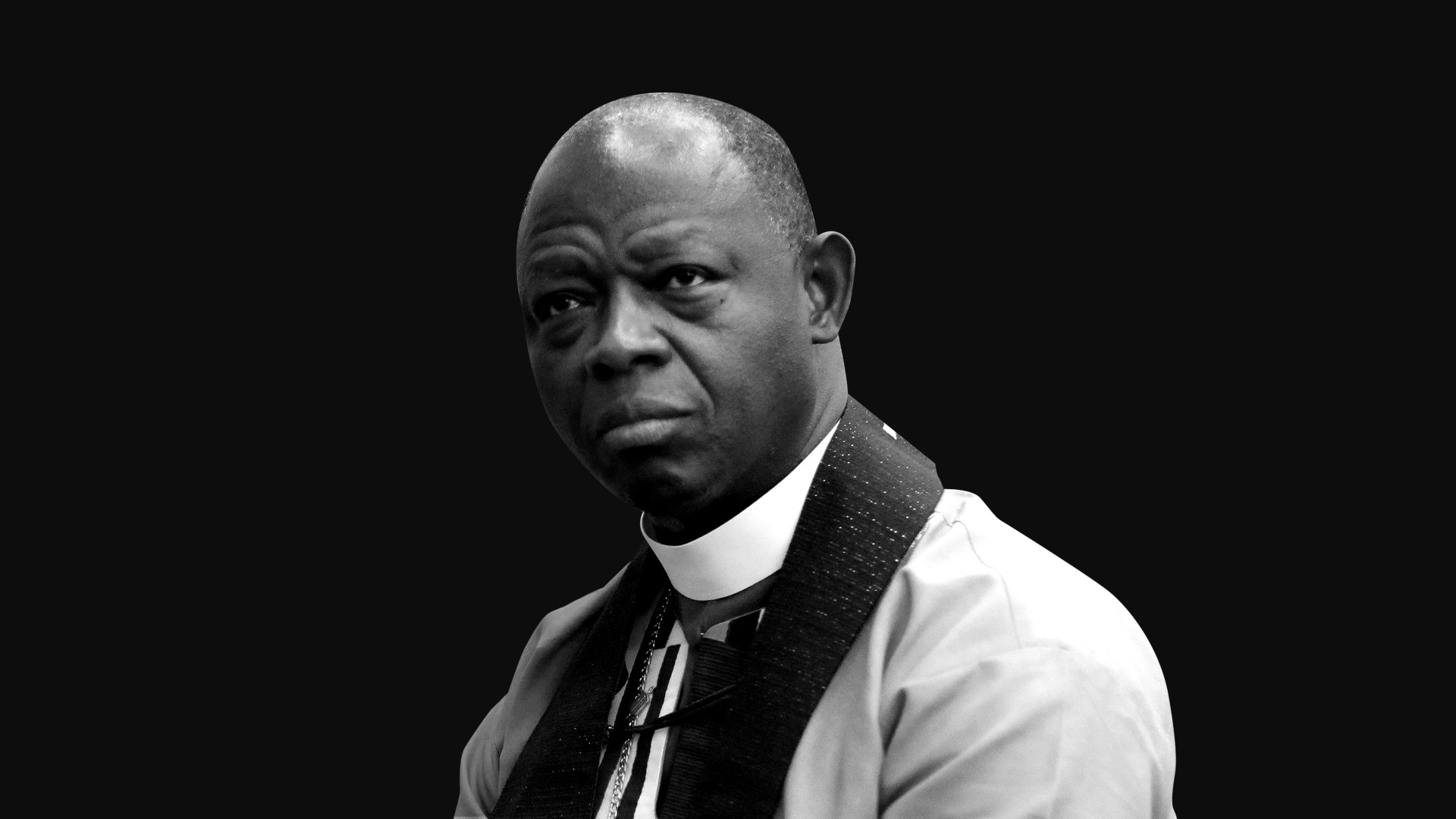
Died: John K. Yambasu, Methodist Bridge-Builder and African Leader

The Sierra Leone bishop convened a pivotal roundtable to resolve longstanding UMC divisions over LGBT issues.

Christianity Today August 18, 2020
Portrait by Kathleen Barry / United Methodist News / Flickr

John K. Yambasu, the West African bishop who brought factions of the United Methodist Church (UMC) together to agree on a plan for their split over homosexuality, died in a car accident outside Freeport, Sierra Leone, over the weekend.

The 63-year-old is remembered as a gentle diplomat in the church and a faithful advocate for Christian education in Africa.

Yambasu, the resident bishop of the Sierra Leone area and president of the United Methodist Africa College of Bishops, “stood like a giant in the worldwide mission of the United Methodist Church,” said Bishop Hee Soo Jung, president of the denomination’s General Board of Global Ministries.

Yambasu organized the Protocol for Reconciliation and Grace, a proposal announced in January 2020 and to be voted on in August 2021.

After several stalemates over what to do about the UMC’s decades of division over same-sex marriage and gay clergy, the protocol brought together key leaders from all sides and is expected to be the final chapter in this decades-long battle when the denomination’s legislative body convenes at its postponed conference next year.

Yambasu trusted God as determining the outcome of their prolonged denominational efforts.

“I strongly believe that we don’t own the church, it is God’s church, and God is just using us as instruments of his grace,” he said. “No matter what we do, no matter how much money we spend, no matter what conversations we do, in the final analysis it’s God’s church, and God will lead his church to where he wants his church to be.”

Methodist leaders on both sides of the anticipated split paid tribute to him after the news of his death on Sunday.

Jan Lawrence, executive director of Reconciling Ministries Network, which focuses on welcoming the LGBTQ community, said Yambasu “became a friend during our meetings,” and “The United Methodist Church will miss his leadership and his positive energy.”

Keith Boyette, president of the Wesleyan Covenant Association, a group that advocates for a traditional view of marriage and against LGBT clergy, remembered his “wise counsel and gentle spirit.”

The UMC missions agency notes that Yambasu’s calm, uniting presence and diplomatic leadership allowed him to negotiate the end of a 12-year schism within the Burundi church in 2018. He was also instrumental in rallying faith communities from all across Sierra Leone to help prevent the spread of Ebola as it moved across West Africa in 2014–2016.

Born in southern Sierra Leone, Bishop Yambasu received his primary and secondary education at United Methodist mission schools. He earned a bachelor’s in agriculture from Njal University, a passion that continued into his ministry as a bishop as he called for better stewardship of church land in food production.

He received his master’s of theology from the Candler School of Theology at Emory University in Atlanta. Last year, he was elected chancellor of Africa University, a Methodist institution in Zimbabwe.

Yambasu pastored churches in Freetown and Moyamba, but ultimately focused on Christian education and youth ministry.

He founded the Child Rescue Center to care for children whose families were left impoverished by more than a decade of civil war. “The dream was to provide hope for many children that were abandoned and languishing on the streets of Sierra Leone during the war. Most were either orphaned or displaced by the civil conflict,” the bishop said in 2017.

While he was known for his recent involvement in debates over sexuality, Yambasu also challenged Methodists to think about their responsibility to also address poverty, illiteracy, and starvation in places like Africa.

“I would only want to appeal to the general church that we pause for a while and rethink our calling as a church,” he said in 2018. “Is that what God has really called us to do, to spend his resources legislating sex? Or has he called us to be on mission to the whole world?”

Yambasu is survived by his wife, Millicent, and their children Rebecca, Adima, John, Emmanuel, and Elizabeth.

News

A New Face for Canadian Social Conservatism

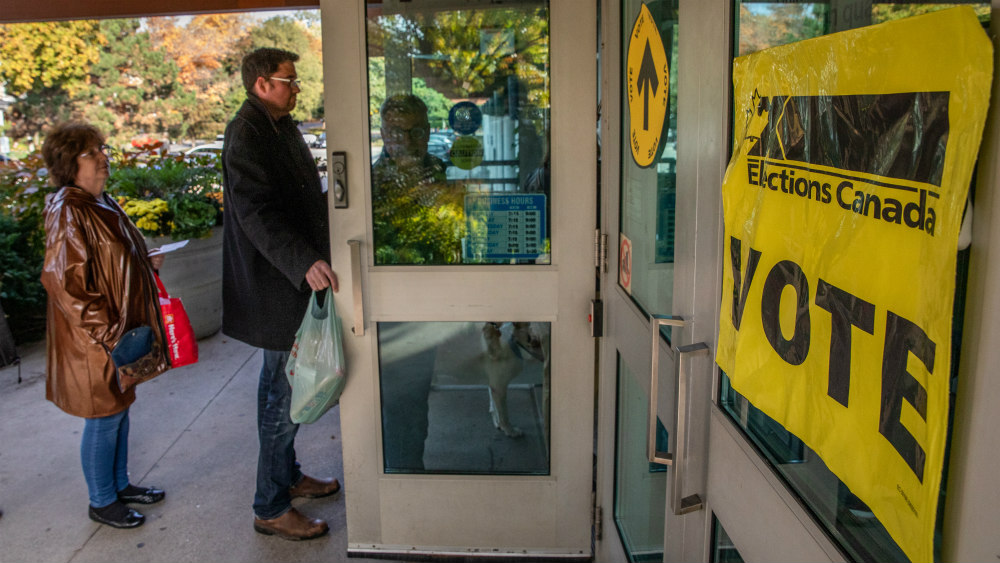
Leslyn Lewis is a long shot for party leadership, but she’s showing the country a savvy way to talk about faith in politics.

Christianity Today August 18, 2020
Brett Gundlock / Getty Images

Leslyn Lewis stands out from her competitors for leadership of Canada’s Conservative Party. She’s the only woman. The only person of color. The only immigrant.

She’s also the one who speaks most publicly about the importance of her faith.

Lewis is a long shot for party leadership, behind political heavy weights Peter MacKay and Erin O’Toole. But the fact that she’s even being considered as a credible contender has come as a surprise to many political observers.

In a country where religious faith is generally kept private and elected officials have struggled even trying to explain how deeply held Christian values could influence political decisions, Lewis has won fans across the country for her ability to speak about her evangelical beliefs in the public sphere. A member of the Pentecostal Assemblies of Canada, she’s able to speak about her faith in a way that inspires socially conservative Christians, while not alienating everyone else in Canada.

“She’s a perfect example of someone who has been smart and strategic about putting ideas out there,” said Michael Zwaagstra, a municipal council member in Manitoba, who has been public about his own faith throughout his personal political career. He told CT he has already mailed off his ballot for Lewis.

Running Third, but Gaining Ground

Votes can be mailed in until August 21 and will be counted after that. No official date has been set for the final tally. Whomever wins the election will lead the opposition party in parliament and attempt to regain control of the government when the next federal election takes place.

Leslyn Lewis

Polls show Lewis in third. MacKay leads the race with the support of 55 percent of likely Conservative voters, followed by O'Toole with 25 percent. Lewis has about 11 percent, but her campaign has pointed out she is closing the fundraising gap, suggesting she’s gaining momentum in the race. In the first quarter, Lewis raised about $450,000 Canadian, compared to MacKay’s haul of more than $1 million. In the second quarter, however, while MacKay raised another $1 million, Lewis brought in about $990,000.

Andrew P.W. Bennett, a program director of the Cardus, a Canadian think tank that seeks to “translate the richness of the Christian faith tradition into the public square for the common good,” has also been watching Lewis’s rise in the Conservative race. Though he doesn’t consider himself particularly partisan, the ordained deacon in the Ukrainian Greek-Catholic Church is a fan of Lewis’ approach.

“I think she’s just tremendously honest and very clear and open about who she is,” Bennett said. “Some people might say that’s naive. I think it’s tremendously savvy.”

Win or lose, Lewis’s greatest accomplishment may be showing that it is possible for a Christians to speak publicly about their faith in Canadian politics.

Justin Trudeau’s Liberal Party caused serious soul searching in the Conservative Party when he won the federal election for a second time. Many felt that leadership failed to capitalize on Trudeau missteps, such as three photos that surfaced of the prime minister in blackface as a teen and young adult.

MacKay, who had been an important leader in the party before leaving temporarily in 2015, blamed the party’s main problem as the “stinking albatross” of an unclear stance on social conservatism. As a candidate for leadership, MacKay has distanced himself from social conservatism. He supports expansion of LGBT rights and says he wants the party to be more progressive in the future.

But Lewis has taken a very different approach. She has remained firm on conservative social issues and spoken openly about her Christian faith but in a way that seems politically interesting and could appeal to a broader Canadian public.

Lewis looks for common ground. For instance, on the issue of abortion, she has not said that she would ban all abortions. Instead she has advocated a ban on sex-selective abortions and cutting funding for abortions overseas—positions with widespread support, even among Conservative Party members who don’t consider themselves social conservatives.

Lewis’s approach may suggest a way forward for Christian politicians in Canada.

No ‘City on a Hill’

While there are many similarities between Canada and the US in heritage and culture, the countries are very different when it comes to politics. Founded just six years after the start of the US Civil War, Canada’s foundation of governance was in many ways a reaction to the American model and a return to the comfort of the British Parliamentary system.

America was founded on principles of human liberty and freedoms built around the philosophy of people like John Locke. Canada’s founding fathers, including its first prime minister, Sir John A. MacDonald, established the new nation on British ideals, says Tyler Chamberlain, who teaches political science at Trinity Western University, a large private Christian University in British Columbia.

He believes those foundational differences have played a role in how Canadians and Americans view faith and politics. Many Canadian politicians are committed Christians, including prominent Green Party leader Elizabeth May, who has considered becoming an Anglican priest, and former New Democratic Party leader Jack Layton. Few, however, talk about the ways their faith informs their politics or make explicitly religious arguments for their proposals.

Chamberlain said this is a notable different between US and Canadian politics. Many early American leaders saw the country as a religious project, a Christian nation, and adopted biblical language that equated citizenship and faith. Evangelicals in the 20th century often picked up this language like a torch, promoting America as a “city on a hill,” for example.

“We’ve never had that in Canada,” Chamberlain said. “Canada has never understood itself to be the city on a hill.”

While Protestants have historically supported the Conservative party and Catholics have often voted Liberal, Canada also doesn’t have established “blocs” of religious voters. Evangelicals aren’t generally treated as a distinct group with special political interests.

Zwaagstra says evangelicals face a lot of social pressure to keep quiet and rather than face unwanted criticism, many politicians simply don’t talk about their faith. Conservative Stephen Harper, who was prime minister of Canada from 2006 to 2015 is an example of this. While US presidents during his tenure welcomed evangelical supporters, Harper seemed to always be afraid he’d get caught with that label.

“Harper did everything he could to get [evangelical supporters] to be quiet—to stop talking about gay marriage and abortion,” Zwaagstra said. He saw “faith voters” as a liability, rather than a group he could mobilize.

Some of those same voters are now looking to Lewis with hope. Her social conservatism, they feel, could earn them a place in the public conversation. Lewis is seen as a more credible proponent of conservative views, too, because she is a black woman.

“It sounds different coming out of her mouth,” Chamberlain said.

An Authentic Alternative

At Cardus, Bennett sees dangers associated with both the American and Canadian approaches to religion and politics. He worries that in some ways, Christians in the US have come to conflate their faith and politics. While he believes Christians should be involved in politics and be active and informed citizens, it is dangerious when politics becomes core of a person’s identity.

“We should be careful hitching our wagons to a particular political party hoping it will advance the gospel,” he said. “That’s not the purpose of political parties.”

But in Canada, he said, it is troubling to see Christians distance themselves from their faith or claim it has no impact on how they think or what they value.

Bennett said Christians in Canada who want to talk publicly about their religious comments often struggle with how to put their faith forward in the public square. And when Christian politicians are asked about their faith and don’t give an answer, it makes it look like they are hiding something.

“I think we raise suspicion when we’re not honest,” Bennett said. “If you’re not being fully honest with people, they’re going to respond negatively. Be honest about what you believe.”

Lewis models this and gets plaudits even from her opponents for authenticity. If she wins, or even just demonstrates that it’s conceivable for a social conservative to win, she may well prove the moral of every Disney movie for evangelical politicians: Just be yourself.

Reply All

Responses to our May/June issue.

Source Image: Skaman306 / Getty

Who Is My COVID-19 Neighbor?

You raise age-old questions about sacrificial giving. How do we know when we are doing enough? There don’t seem to be easy answers. COVID-19 has caused church leaders to change how we do a lot of things. I am optimistic that we Christians will carry our lessons learned and improve how we serve, give, worship, and see the world. In God’s eyes, there are no political boundaries, just human beings. The sound of the slogan “America first” sounds rather selfish and hollow right now.

Vicky Dobbs Euless, TX

Texas Man Dreams of Tallest Cross

Rick Milby’s cross took me back to King Hezekiah’s obliteration of the bronze serpent, which Israel had preserved and worshiped for 1,000 years. As with the nails and tree that once anchored Jesus at Golgotha, veneration of such earthly stuff is both childish and sinful!

Charles Jandecka North Olmsted, OH

Called to Missions. Held Back by Student Loans.

We in the Christian community must accept some of the responsibility for the high levels of student loan debt encountered by our young people training for the ministry. We expect our missionaries and pastors to go to private Christian universities with tuition costs in excess of $30,000 a year and then are surprised when they are sitting in front of us with significant student debt. We should be willing to provide rigorous scholarships for those we feel are qualified. We as churches, mission agencies, and academic institutions have participated in the generational shift from scholarship-based educational financing for the academically qualified to a system of debt based on who can sign a loan application.

Gary Roberts Vicksburg, MI

Want a Healthy Society? Support Moms.

Andrea Palpant Dilley’s piece was well done. I would ask her and others to consider another related and more fundamental question: Should we not consider returning to the “family wage,” where one income can provide for the material needs of a family? As a Catholic Christian, our social teaching speaks of a “family wage.” (That is not the same as a “minimum wage” or even a “just wage.”) Children, and society in general, are not better served when both parents must spend most of their awake hours away from home and children.

Rev. Craig Anderson San Jose, CA

There’s a New Kind of Crisis Pregnancy Center on the Block

As a doula, it has been a sore spot of mine that popular pro-life discourse doesn’t include strategies for coming alongside mothers at such a sensitive time in meaningful, sustainable ways. Pregnancy through birth and postpartum is a challenging season even when it is joyfully received as a blessing. How much more challenging it must be for a woman who did not desire the pregnancy and is facing adverse life circumstances and likely trauma. How can we support them and their decision to continue their pregnancy, acknowledge the unique challenges they face, and help them on their journey to becoming a parent? While I trust in the good intentions of what the pregnancy crisis model has been, I am so refreshed and excited to see these new holistic models emerging.

Pam Serna Long Beach, CA

Can Christian Streaming Services Last Alongside Netflix and Disney+?

Whether we talk about streaming services dedicated to explicitly “Christian” content or those that filter “offensive” content out of media, the offerings of these services are by and large no different from those of their “secular” counterparts: stories that don’t matter with characters who don’t matter and endings that don’t matter. We have been catechized by Hollywood not to wrestle with good stories but merely to consume an endless amount of content—an appropriately empty and nondescript word for what is broadcast and streamed in the average American household. A thoroughly countercultural Christian catechesis would recognize that Christianity is about more than keeping our children from cursing, drinking, and engaging in premarital sex. It is about God’s triumph over humanity’s sin, suffering, and death—and the climax of the story, the Crucifixion and Resurrection, isn’t possible without all the “offensive content” that came before.

Rev. Andrew Russell Birmingham, AL

Tornados Put Our Faith to the Test

Job wanted to know why bad things happen to good people. The Lord answered him out of a whirlwind (Job 38:1). We should accept his answer.

Salvatore Anthony Luiso (Facebook) Correction: The article “Called by God. Held Back by Student Loans.” on page 25 incorrectly stated the percentage of college graduates who owe between $40,000 and $80,000 in student debt. It is 15 percent.

Apple PodcastsDown ArrowDown ArrowDown Arrowarrow_left_altLeft ArrowLeft ArrowRight ArrowRight ArrowRight Arrowarrow_up_altUp ArrowUp ArrowAvailable at Amazoncaret-downCloseCloseEmailEmailExpandExpandExternalExternalFacebookfacebook-squareGiftGiftGooglegoogleGoogle KeephamburgerInstagraminstagram-squareLinkLinklinkedin-squareListenListenListenChristianity TodayCT Creative Studio Logologo_orgMegaphoneMenuMenupausePinterestPlayPlayPocketPodcastRSSRSSSaveSaveSaveSearchSearchsearchSpotifyStitcherTelegramTable of ContentsTable of Contentstwitter-squareWhatsAppXYouTubeYouTube