Theology

Our Advocacy Should Reflect God’s Beauty

In the midst of trying to do the right thing, it’s easy to forget to do it in the right way.

Christianity Today July 2, 2020
Illustration by Rick Szuecs / Source image: Mike Von / Unsplash

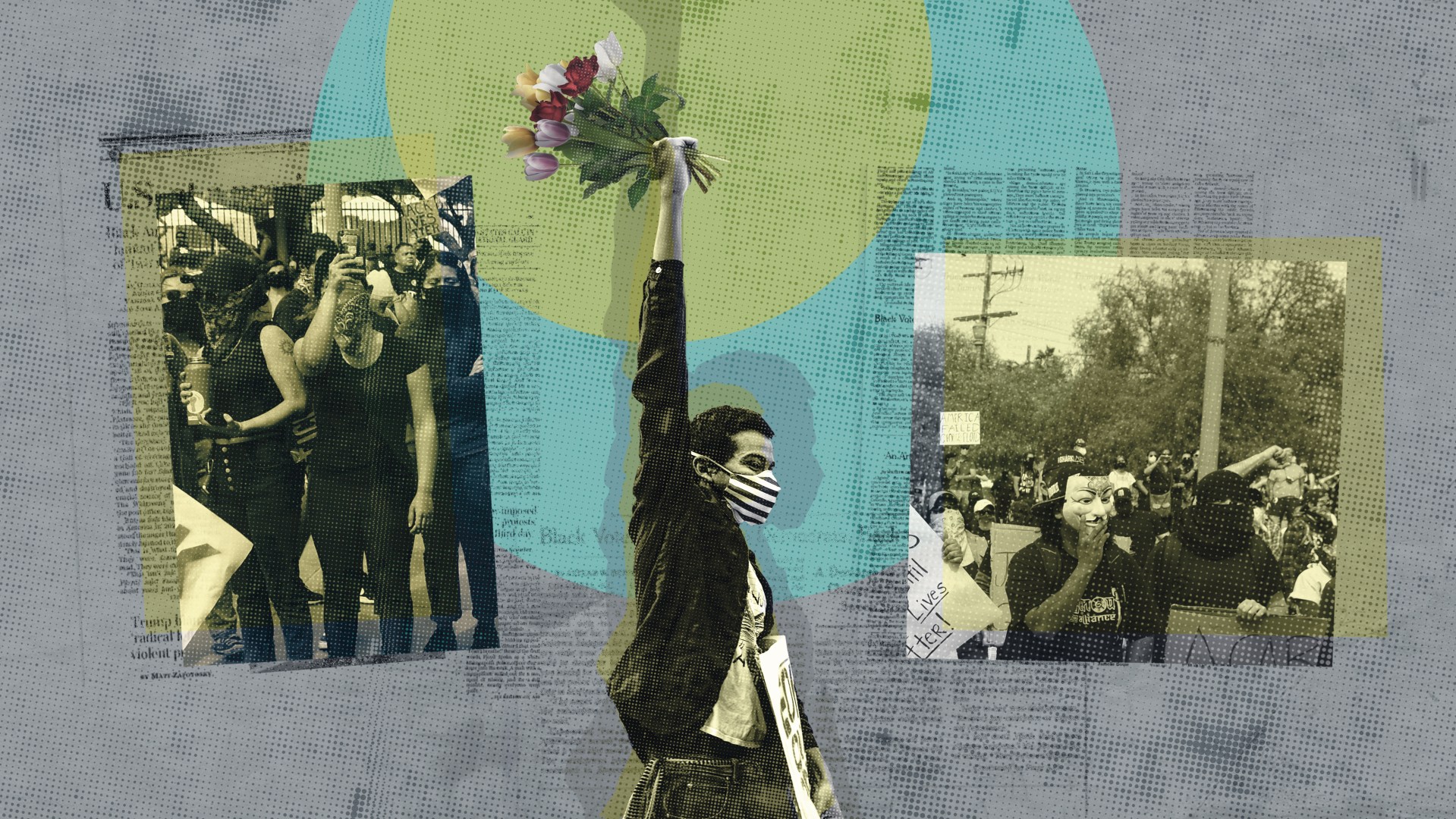
Outside a US congressman’s office, Christians holding homemade protest signs and clergy dressed in their robes and collars attend a march to challenge the separation of families seeking asylum at the US–Mexico border. They join in impassioned chants of “Keep the kids, deport the racists!” and “Lock them up!” referring to those who work for the US Border Patrol. In protesting the dehumanizing ugliness of children being separated from their parents they dehumanize others in return, calling for their rights to be taken away and their freedoms restricted.

Inside the offices of a Christian nonprofit organization that provides legal assistance to immigrants, volunteers from a local church assist young immigrants with their DACA applications. These young men and women came to the US with their families when they were children and now find themselves undocumented, unable to live, work, or attend college in the US without the threat of deportation. The volunteers chat with the eager immigrants over donuts and coffee as they navigate the complex paperwork that will allow them to legally remain in their communities.

While the Christians in both these scenarios may believe very similar things about immigration, they have chosen to live out their convictions in dramatically different ways. But what makes us immediately recognize them as distinct from one another? I would suggest that the Christians in the second example are reflecting God’s beauty in the way they live out their beliefs about immigration. I believe that while God expects the content of our beliefs to be righteous, he also wants the form of our faith to be beautiful. Today, I’m using immigration as an example of how we can critically assess our beliefs and ask ourselves if they are displaying God’s beauty in the world, but the framework I propose could apply to any number of convictions held by Christians, even beliefs on which we might disagree.

The Beauty of the Lord

Before we can ask if our beliefs are reflecting God’s beauty, we have to understand what God’s beauty is, and why we as Christians should make it our goal to reflect it in our convictions at all. Jonathan King, a professor of theology and the author of The Beauty of the Lord: Theology as Aesthetics, explains that “beauty is inherent to God, and it’s reflected in everything that he does.” The psalmists write songs of praise about God’s beauty. David’s only request in Psalm 27:4 is to “gaze on the beauty of the Lord.” Isaiah says that the reward for the righteous will be to see God in his beauty (33:17). Pastor and author John Piper understands God’s beauty as “the peculiar proportionality and interplay and harmony of all God’s attributes.” In other words, beauty encompasses the perfect way in which God’s attributes work together, even when they seem paradoxical. Attributes like God’s justice and mercy, goodness and truth, holiness and compassion exhibit a symmetry and perfection that sets him apart from us.

Biblically and historically, God’s beauty has also been closely tied to God’s glory. Hundreds of times in Scripture, the biblical authors use the word “glory” to refer to God’s overwhelming worthiness and beauty and to communicate that God is set apart from every other being in the universe. God’s aim from Genesis to Revelation is to make his unique glory and beauty known throughout the entire world. Psalm 96:3 instructs those who follow God to “declare his glory among the nations,” and John makes the foundational claim of Christianity that in Jesus God “became flesh” and revealed his glory to us (John 1:14). King calls God’s beauty the “outward expression of his glory” that is “expressed and perceivable as an aesthetic quality of his glory in his work of creation, redemption, and consummation.” God’s salvific action in the world is not just effective; it is also beautiful.

Jonathan Edwards, the 18th century American preacher, wrote extensively about God’s beauty. He believed that when Christians are saved, God opens our eyes to see his beauty in a way we could not before and causes our hearts “to have a relish of the loveliness and sweetness of the supreme excellency of the Divine nature.” King builds on this understanding by suggesting that reflecting God’s beauty in the world is an essential part of what it means for Christians to imitate Jesus and follow his example. When we consider all this together, God’s beauty can be defined as the unique relationship between his attributes by which he accomplishes his work in the world and reveals his glory. But why does it matter that our beliefs and the actions they inspire reflect God’s beauty?

Beautiful Belief in Practice

By measuring our beliefs and convictions by the standard of God’s beauty, we can ensure that our actions reflect God’s true character instead of just one aspect of it. While the Christians chanting “Keep the kids, deport the racists!” may be wanting to communicate God’s grief and anger over the separation of immigrant families, they are failing to reflect his love for all people. Even if they are successful in shedding light on the horrors of taking immigrant children away from their parents, they are doing so in a way that blinds the world to God’s attributes of grace, mercy, and compassion.

In contrast, the church members who are serving young immigrants through legal assistance are able to reflect the symmetry and perfection of God’s character as they demonstrate God’s love for immigrants while also embodying respect for the laws of government. As they make it their goal to live out their convictions about immigration under the sheen of Christ’s beauty, the Holy Spirit empowers them to express their love from the place of tension that exists between God’s abiding holiness and endless grace.

It’s important to clarify that the shortcoming of the immigration protest is not that it is impersonal while the second example is individualized and particular. There are many beautiful things that are impersonal. Nature cannot audibly and individually speak to us, and yet we recognize it as a declaration of God’s glory and a reflection of his beauty.

The choice between our two examples is also not about pragmatism. Though the second example may seem likely to accomplish more good than the first, seeking to reflect God’s beauty as we live out our beliefs is not primarily about utility. We are each created in God’s glorious and beautiful image, so of course people will be drawn to those who mirror their Creator’s beauty in the world, but we should not pursue beautiful beliefs because they are pragmatic. What makes beautiful beliefs so valuable is the fact that they reflect God’s perfect character and its juxtaposition to everything that is not beautiful, regardless of whether they are always effective in attracting others to follow him. Seeking to manifest God’s beauty in our convictions is faithful, even if it is not always fruitful.

Jesus as Our Example

In Jesus, we encounter a perfect model for living out our convictions from within the brilliance of God’s beauty. Just after his triumphal entry into Jerusalem, Jesus again predicts his imminent death to his disciples. He explains that a grain of wheat has to be buried in the ground and die so that it can reproduce. Then he offers up a spontaneous and urgent plea: “Father, glorify your name!” (John 12:28). Pastor and author Eugene Peterson, in an assessment of Jesus’s prayer, recognizes that the “roots of glory are in death and burial.”

If we want our beliefs to display God’s beauty and bring him glory, death is necessary. We have to die to our preconceived notions and assumptions about how we should live out our convictions in the world. We have to die to our fear of judgment from other Christians for being “too soft.” We have to die to our need to be right and show how everyone else is wrong. We have to die to our desire to be recognized for what we believe (whether we want to be recognized as separate from the world and “radical” or in touch with modern-day moral standards). For our convictions to reveal the unparalleled beauty and glory of God, we must follow the example of Jesus, who in his life and death perfectly modeled beautiful belief.

Month after month, volunteers from the local church in our opening example faithfully offer their time to walk young undocumented immigrants through the labyrinth of complicated paperwork necessary to secure legal work permits and driver’s licenses so that they can pursue their American dreams. In another mid-size American town, a local pastor is convicted that he needs to teach his congregation what the Bible says about immigrants and disciple them to love them well. When their state’s governor announces that they are refusing to resettle Syrian refugees in their state, dozens of church congregants attend a protest with Bible verses about loving and welcoming immigrants handwritten on their signs. Members of the congregation also call the governor’s office to explain why they believe their faith compels them to welcome the stranger, and their pastor joins a group of other faith leaders to meet with the governor in person. Instead of giving into the temptation to dehumanize those who are opposed to welcoming refugees they develop practices of protest and advocacy that reflect God’s beauty.

Christians from both communities join God in his grief over the marginalization of immigrants in their country and the unjust laws and policies that cater to fear instead of encouraging faith. Christians from both towns rejoice when their advocacy and service can help vulnerable immigrants find belonging and safety in their communities. Their actions sometimes fail to bring about the effect they hope and pray for, but because they have committed to faithfully mirroring God’s beauty as they live out their convictions, they know that regardless of the individual results, their actions will continue to live on as worship.

God cares both about what we believe and how we live out our beliefs in the world. I believe he wants our convictions to be shaped by creativity and our deepest-held beliefs to be dumbfoundingly beautiful. A good way for us to begin thinking about how to reflect God’s beauty in our beliefs is to examine our convictions, especially those about controversial issues, and ask ourselves if the way we talk about them and act on them primarily emphasizes a single aspect of God’s character. Has our passion for God’s truth blinded us to his goodness? Has our zeal for God’s justice caused us to lose sight of his grace and mercy? Has our focus on God’s compassion led us to downplay his holiness? Once we have identified any deficiencies, we can work to reintroduce those missing features of God’s character into our speech and our actions as we cultivate beautiful belief.

We all hold different convictions, so my goal is not to tell you what to believe. My prayer is simply that no matter what our moral, political or theological views, we would undertake with our whole hearts and with Christ’s help to reflect God’s beauty in the way we live them out. Is there a conviction you have that needs to be fired in the kiln of God’s beautiful character? I can’t promise you it will be painless, but I can assure you it will be worth it. Becoming more like Jesus always is.

Tabitha McDuffee is a writer and student living in Southern California. She blogs at TabithaMcDuffee.com and is completing her master’s degree in refugee protection and forced migration studies from the University of London.


Editor’s note: Want to read or share this article in Spanish, Portuguese, French, or Chinese (Simplified or Traditional)? Now you can!

Interested in helping CT improve the quality and quantity of our translations? Share your feedback here.

You can now follow CT’s latest content on WhatsApp and Telegram.

Hashtags Hit Too Close to Home

Racism in America is a white person’s sin issue that can only be resolved by white America.

Christianity Today July 1, 2020
Illustration by Mallory Rentsch / Portrait: Courtesy of Charlie Dobson / Background Images: WikiMedia / Unsplash / New York Public Library

Sometimes when we are led to pray for others, we tend to forget that we are not exempt from those prayers ourselves. On Memorial Day, I joined a group of leaders and pastors to pray against racism and social injustice. Each of us was given a topic to cover in prayer. My prayer focus was for God to heal those who experienced injustice and for the Lord to grant them beauty for ashes according to Isaiah 61:3. Little did I realize that this moment would begin a journey I did not plan to take.

A few days after the prayer event, the prayer request that I had made to the Lord for others still pressed upon my heart. This time the Holy Spirit led me to reflect on myself. His words to me were, “You are not exempt from those who need to be healed. You have experienced injustice too.” At that moment, a 21-year-old secret surfaced.

On June 14, 1999, my parents received a call that changed our lives forever. My oldest brother was dead—shot and killed by the Baltimore police. Unlike many innocent black men and women shot by the police, my brother wasn't doing the right thing and was rightly to be arrested. Yet he resisted arrest and led the police on a high-speed chase until his vehicle crashed. At the crash site, a police officer approached his vehicle and reported that he thought my brother was reaching for a gun and fired as many as 10 shots into my brother’s body. As a result, the officer was placed on paid administrative leave.

During a private investigation, the original police report was found to be falsified. Instead of one officer being involved in my brother’s killing, there were three officers. The death certificate read “shot numerous times” and revealed more than 10 bullet wounds to the back of my brother’s body and head. The investigation also indicated that his gun wasn’t under the seat but in a different part of his vehicle. The crash details made it physically impossible for my brother to do what the police reported.

As my brother’s defense was developing, the police department locked away important files and refused access. After months of fighting against the unjust system, his mother gave up the defense. My brother’s case and his 21-year-old life was closed. #SayHisName: #VinnieDobsonJr.

For years, I questioned Vinnie’s actions and tried to make peace with the unknown. In my heart, I knew something wasn’t right about what the officers had done, but I was too young to understand or fight. Then came the 2010s and 2020s and the resounding unjust deaths of Trayvon Martin, Michael Brown, Tamir Rice, Ahmaud Arbery, Breonna Taylor, Sandra Bland, Philando Castile, George Floyd, Rayshard Brooks, and many more. With each untimely and unnecessary death, the wound of my brother Vinnie’s murder was ripped open afresh. Two decades have passed and yet the same systemic racism, social injustice, and lack of accountability among police officers prevails.

As a black Christian, a black professional, and a black woman who lost her brother to police brutality, I am exhausted. Once the hashtagging and protesting ceases, a distressed family is left alone to fight against injustice. “How long, O Lord, must we continue to endure such trials?” The question almost every black person asks is “Am I next?” We pray for our family members, friends, and ourselves daily, hoping that needless death will not be our portion. We plead to be hidden under the shadow of the Lord’s wing for protection. Heart-cries for justice progress to war cries of vengeance as another black life is taken. Officers receive paid leave, never get charged, or are acquitted. How long, O Lord, must this go on?

Despite so much violence in America, I still believe in God for true liberty and justice for all. These chaotic and pandemic days have forced the world to listen to the cries of black people. The world has been pressed to witness the deep hurt racism has caused. The world has been pushed to confront racism as sin because black lives and black tears matter.

The pain of 400-plus years of racial sin will not disappear instantaneously. There is so much work to be done. Solutions offered by white brothers and sisters have been poor bandages. As a black Christian woman, I desire to offer better solutions derived from my own experience:

Repentance is more than asking forgiveness of your ancestors’ pasts.

Over the past three years, I have sat in silence during racial reconciliation services where white ministers brought black ministers up front to publicly ask for their forgiveness. Without fully realizing, these same white ministers also publicly supported leaders and policies that systemically oppressed people of color, just as their ancestors did.

I wish my white brothers and sisters in Christ understood that repentance is more than asking for forgiveness. Real repentance requires intentional behavior change. White allies can demonstrate repentance to the black community by voting for laws and policies that do not oppress or legislate double standards toward people of color, and by supporting systems and leadership that reflect visions of liberty and justice for ALL.

Love is a verb. Do something.

God so loved the world that he did something: “He gave his one and only Son, that whoever believes in him shall not perish but have eternal life” (John 3:16). To be Christians is to model our lives after Jesus’ life and live love as a verb.

While Jesus walked the earth, he demonstrated God’s love for people. Jesus so loved the world that he spoke up for the voiceless and against systems of injustice. He so loved the world that He endured injustice on the cross so others could receive justice. As a Christian, it is not enough to take a knee before the Lord in private. You must also take a stand before people in public. Proverbs 31:8–9 says, “Speak up for those who cannot speak for themselves, for the rights of all who are destitute. Speak up and judge fairly; defend the rights of the poor and needy.”

My professor Lee June once said, “Love is willing to enter other people’s mess and provide a solution to help.” As Christians, we must love our neighbors enough to enter into their mess and help.

Love and hate are learned at home.

No one is born racist; racism is taught. Working as a swim coach, I watched as young black swimmers attempted to befriend white teammates only to have the white teammate ignore them or treat them as though they were not good enough to be their friend because they were black.

Children do what they see done and say what they hear said. They observe their parents’ interactions with people of color. Swimming and coaching while black showed me how white Americans can respect our skills and talents while disregarding our humanity. After practice is over and a competition is finished, it’s as though a black swimmer has nothing else to offer as a person.

Children must be taught to show kindness and to break the cycle of generationally learned racism. Parents are responsible for how their children perceive others.

White privilege has power.

When Amy Cooper called the police and make false allegations against a black man, she used a common and deadly stunt called “white woman’s tears.” Empowered by white privilege, white women’s tears have decimated the black community throughout history.

Women who play the “damsel in distress” understand the power of their white privilege and have used it for evil rather than for good. The murder of Emmett Till and the Massacres of Rosewood and Black Wall Street all happened due to a white woman’s dishonesty and refusal to acknowledge the truth, or own her own faults and failures. Many people of color have missed opportunities to excel or be promoted in their careers because they were accused, even falsely, of making a white woman cry. Studies have shown that compared to people of color, a white woman’s tears carry more weight and her “hurt” is considered more legitimate even when it stems from manipulation. A white woman's tears do not threaten white men, only men and women of color. These tears shed are a familiar form of social and economic micro-oppression.

One of the greatest ways white Americans can be effective allies to black Americans is by understanding the power of white privilege and using it to love. For there to be change, our white allies must use their privilege to fight against systemic racism and injustice, and to hold other white Americans accountable. Whatever the sphere or level of influence, white privilege must support, provide, and empower people of color with opportunities to better themselves and their families’ future. If white privilege can be used to promote a person of color to a higher position in their career field, do it! If your white privilege can provide a black family the fair opportunity to become a homeowner, do it! If the power of white privilege can be used to destroy the community, how much more could it be used to rebuild?

Racism in America is a white person's sin issue that can only be resolved by white America. People of color do not have the power and privilege to free themselves from systemic racism and oppression. If the church desires a revival of truth and justice, we must remember that revival first starts in our own hearts. I pray more of our white friends and allies will repent beyond asking forgiveness, and will do love and use privilege as power for good and for change. As long as one part of the body of Christ is oppressed, we can never be the functioning body Christ intended. In the land of the free, we are not free until we all are free. All lives and blue lives do not matter until black lives matter as well.

Until then, #SayTheirNames. #SayHisName. #VinnieDobsonJr.

Charlie B. Dobson is a minister at Epicenter of Worship Church of Lansing, Michigan. An author residing in Flint, Michigan, her first book is set to release this fall.

Church Life

Teaching Remotely Is Hard. Studying Jesus Can Help.

Four practical ways teachers can keep impacting their students as they teach through a screen.

Christianity Today July 1, 2020
Illustration by Mallory Rentsch / Source Images: Svetikd / ZU_09 / Getty Images / Marjan Blan / Unsplash

For millions of Americans, the school year has already ended—good news for Zoom-weary students, parents, and educators alike. But even as families are figuring out how to entertain their children all summer long, teachers will have to regroup and figure out what distance learning might look like at the start of the school year. After all, choosing when to reopen schools isn’t a simple process. While some governors have said that schools will reopen this fall, last month, Anthony Fauci, the director of the National Institute of Allergy and Infectious Diseases, told the US Senate that remote learning is likely to continue into the next school year. While the CDC provided recommendations for reopening schools, there is doubt from both parents and members of Congress alike. As an educator and parent, I share these concerns.

Although we’re in the middle of the summer, teachers must begin to prepare for delivering academic instruction. While teachers can look to their districts and colleagues for resources and support, educators of faith have an additional source of wisdom: Jesus.

Yes, much of Jesus’ teaching came in person. Though he sometimes addressed people from hundreds of feet away—from a boat while they stayed on land, for example—many of the stories found in the gospels portray a person who enjoyed being close to others. Yet despite the incarnational nature of Christ’s ministry, there were moments when Christ ministered through lessons and healing at a distance.

Here are four Christ-inspired techniques critical for Christian teachers, and all educators, to add to their teaching toolbelt for the fall:

1. Identify ways to be a blessing for students at a distance.

Jesus never let his physical limitations hinder his impact. When confronted by a Roman centurion whose servant was paralyzed, Jesus used the soldier’s faith to prove that his power transcended their location (Luke 7:2-9). Though Jesus is present everywhere and his power has an unlimited reach, this story reminds us that all we actually need for Jesus to meet our needs is faith, not his physical presence. The centurion’s faith did not limit Jesus’ function as a healer despite his lack of proximity to his daughter.

Likewise, teachers can have real impact in the lives of their students remotely. A teacher friend of mine exhibited this understanding of his impact with his “Club Math After Hours.” Before the pandemic, he regularly tutored many of his current and former students after school. When his school went remote, he decided to continue tutoring students via web conferencing. For an hour each night, students would send him math problems, and he’d show them how to answer them on his whiteboard while popular music played in the background. Could he have done this prior to the quarantining period? Yes. But quarantine reminded my friend that his function as a teacher went beyond his physical limitations. To my teacher friends, don’t cede your impact to the quarantine; like Jesus, we too can touch people’s lives.

2. Give students action-oriented, purpose-driven assignments.

Jesus understood that the disciples needed practice in order to perform as apostles after departure back to heaven. Jesus sent them out, two by two, with specific instructions about their missions, after they had spent months learning from him (Mark 6:7-13). With those lessons and directives, the disciples healed people and drove out evil spirits. Like Jesus releasing the disciples out into the community, teachers should could consider offering students assignments where they can too can put lessons into practice and serve their homes, families, and communities.

While the pandemic has limited what we can do and where we can go, it has also yielded opportunities to be of service to those in need. In her lesson teaching students to tell time, my second grader’s teacher educated her class and encouraged them to look out for others by assigning them the task of timing our visit to the supermarket, with the goal of reducing that time to keep us safe during the pandemic. She gave specific instructions to carry out, and with my son’s lessons under his belt, he’s helped us shave 20 minutes from our original shopping time, even with the crowds. What made this assignment so impactful is that it provided an opportunity for my son to see how a classroom lesson had a purpose in his eight-year-old world. Learning could improve one’s quality of life, even during a pandemic. Now, he times us on everything; that comes with its own challenges!

3. Practice compassion as you teach, discipline, and make and grade assignments.

Whenever Jesus visited a town, a crowd usually followed. People often sought Jesus for healing, and Jesus never denied anyone—even when it displeased his followers. In one notorious incident, Jesus welcomed children despite his disciples rebuking them (Matt. 19:14). During one trip in Jericho, Jesus heard two blind men shouting for him, and when the crowd told them to be quiet, Jesus stopped and healed them immediately (Matt. 9:27-31). Over and over, Jesus practiced compassion by noticing people’s conditions, looking beyond their faults, and meeting their needs.

Jesus’ example of leading with compassion is an important one for educators. We may be tempted to only see our students through the lens of missed assignments or low grades. But many of our students are struggling with the effects of the pandemic at home. It’s important for us as teachers to take time and understand what is happening in their lives.

Understanding the workload that her students had with their other classes, an English teacher friend assigned a 4th marking period paper early and stretched out the assignment due dates over 12 weeks. Each week, they worked on their papers in addition to receiving brief lessons during their web conferencing. Their assignments were due on Thursdays, meaning that students had no work on Fridays or over the weekend. She recently told me that her compassion and intentionality paid off; the quality of work so far was above her expectations and her students appreciated her working with them. Her compassion enabled their cooperation and facilitated their success.

4. Be culturally responsive in your instruction.

Understanding the history of the region and experiences of the people enabled Jesus to tailor his parables and characters to reflect the lives of the people so they could see themselves. When Jesus taught through parables, he often relied on cultural norms and ways of being to build a story that taught a heavenly principle. Stories of sowing, reaping, building, planting, and harvesting related to people of an agrarian economy. Jesus recognized how one’s culture and condition serves as a building block for all future learning.

Culturally responsive teaching is important whether students learn in-person or remotely. However, everyone learns and experiences life differently. For example, according to instructional consultant Zaretta Hammond, cultures based on oral tradition, like African American culture, rely heavily on the reticular activating system (RAS) to activate learning. The RAS seeks information that validates self and one’s own beliefs based on experience. COVID-19 has disproportionally harmed black, Latino and indigenous communities. As a result, educators say that some students and their parents have dropped out of touch with schools completely as families struggle with the broader economic and health effects of the coronavirus outbreak. When we speak of the impact this pandemic has on all Americans, we must keep in mind COVID-19’s disproportionate impact. Likewise, although children of all backgrounds attend schools, not everyone learns in the same way, and culture and conditions have a lot to do with that.

During a pandemic where teachers are required to instruct students remotely, no strategic stone must be left unturned. Teachers must utilize all the tools on their toolbelt to support students during this unprecedented time. The same teacher who is running the math club has, with the help of parents, curated playlists of childhood songs according to racial, ethnic, community, and religious traditions for his students to help students study during the pandemic. Research has noted the impact music has on the brain, and while the effect of the culturally based playlists hasn’t been examined, he decided to tap into the culture of his students to facilitate nostalgia and good feelings among his students to support their well-being and concentration for both his class and other classes.

Teachers can do all these things as Christ if we are willing vessels. Let’s live this.

Rann Miller is a PhD candidate at Rutgers and is a 21st century community learning center director for a school district in southern New Jersey. His writings on race, education, and politics were featured in The Hechinger Report, Education Week, and The Grio. Rann currently serves as a youth ministry teacher at the Perfecting Church in Sewell, New Jersey.

News

Died: Beka Horton, Who Developed Abeka Christian School Curriculum

With her husband Arlin, she rejected secular education and pioneered an alternative that started with student discipline.

Christianity Today July 1, 2020
Pensacola Christian College

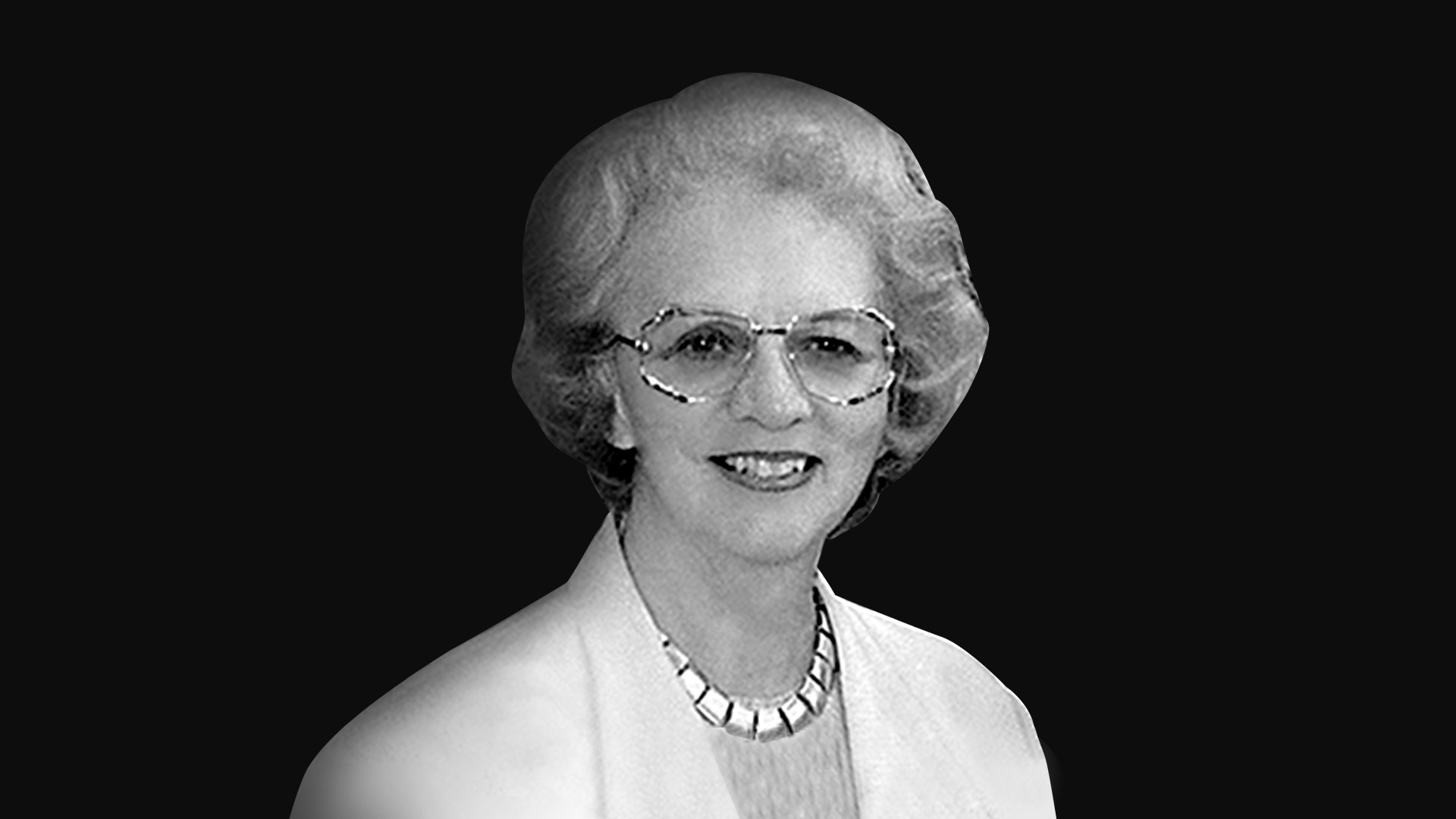
Beka Horton, the “Beka” of A Beka Book and the cofounder of Pensacola Christian Academy and Pensacola Christian College, died on June 27 at the age of 90. Over the course of 50 years, Horton and her husband, Arlin, translated conservative Baptist beliefs about authority, discipline, sin, and salvation into a pedagogical package they promoted as traditional, biblical education. Their work shaped much of the Christian school and homeschool movements.

When Horton retired in 2012, her curriculum company brought in annual revenue of about $2 million, publishing the textbooks and readers used in 10,000 Christian schools and by more than 100,000 homeschool students, according to internal estimates. Rebranded as Abeka in 2017, the company, along with Bob Jones University, is one of the two major producers of Christian school curricula.

The couple never planned on building an education empire, according to Horton. They were only trying to reject what they saw as the secular and anti-Christian influences on mainstream educational philosophy and stay true to their commitment to be separate from the world.

“Our business is to be faithful. This is God’s work, not ours,” she said. “We didn’t want to live in disobedience, so we’d have to do what God wanted us to do.”

Horton was born in East Tennessee in 1929 and became a Christian as a teenager at a local Baptist church. Her newfound faith soon put her in conflict with her mother, as the young Beka Hall struggled with submission to authority. Her mother forbade her from going to Sunday night youth group, because she’d have to return home after dark on a bus, and it didn’t seem safe.

“My mother was very strict,” Horton recalled. “I lived from one week to the next just for church, especially for the Sunday night youth group. This was my great joy.”

The young Christian thought perhaps she could disobey her mother, since she would be obeying God, but was then convicted she was making excuses for her own rebellion. She chose to stay home. She spent the evening listening to Charles Fuller’s Old Fashioned Revival Hour on the radio and praying her mother would change her mind in the future.

The next week, her prayer was answered, and she was allowed to go to youth group. It was a lesson she carried with her the rest of her life, even as she rose to have extraordinary authority in a religious culture that sharply limited women’s opportunities for leadership.

Horton met Arlin when they were both students at Bob Jones University in South Carolina. The two were training to be teachers. They were also both committed to what was called fundamentalism. For them, that not only meant affirming traditional Christian doctrines, such as Jesus’ incarnation and resurrection, but adamant belief in the infallibility of the Bible and in the inspiration and inerrancy of the King James translation. The Hortons, like other fundamentalists, believed Christians could be easily polluted and needed to be willing to separate themselves from the world and other Christians to protect their purity.

They got married their junior year and graduated from Bob Jones in 1951. The next year, they answered a “Christian Worker Wanted” ad to start a children’s ministry and a school in a place they’d never heard of: Pensacola, Florida. They packed up a 1935 Plymouth and headed south.

“I told them I would do the work and the work would speak for itself,” Arlin Horton later recalled. “And if you get me, you get my wife too.”

The couple couldn’t have children and occasionally made reference to their infertility to explain their focus on ministering to children. At the time, however, they spoke more about their belief that children needed Jesus and could come to a saving faith in Christ, despite their young age.

The Hortons built a chapel on wheels and hauled it to the different neighborhoods of Pensacola to reach the children whose parents wouldn’t take them to church. They were a team, but Beka Horton was the star. She played the pump organ to attract neighborhood boys and girls, and then told riveting Bible stories with a flannelgraph.

“You made everything so interesting,” one student wrote Horton years later. “The people from the Bible you were teaching about seemed so real. And I still remember the song you taught—‘The B-I-B-L-E, that is the book for me.’”

Horton took that same flannelgraph onto TV, with a local children’s show called “Aunt Beka’s Bible Stories.” The 30-minute program ran weekly for more than 20 years, evangelizing children and advertising the Hortons’ school. When people asked about the education program at the new Christian academy, Arlin Horton would ask them them if they had seen “Aunt Beka” on television. “That’s my wife,” he would say, “and that’s how we teach Bible.”

Bible was a central subject at the school. But what made the academy distinctive was its emphasis on memorization. Students drilled and learned by rote, cycling through flashcards to learn phonics, math, and facts about American history.

The Hortons believed secular education was too lax, too focused on a child’s creativity and originality, and trying too hard to make education seem like play. Some parts of learning are intrinsically unpleasant, according to one teaching guide the Horton’s wrote, and Christian educators should not forget their pupil’s sin nature.

“If Christian educators give one inch on discipline,” an early A Beka teaching guide said, “the devil will take a mile.”

The Pensacola Christian Academy graduated its first class of four students in 1967. A few years later, the Hortons started offering “clinics” for Christian educators, first the Principals Clinic, then Summer Seminar and Teachers Clinic. By the time they retired, nearly 200,000 teachers had gone through one of the clinics, learning the Horton’s teaching methods.

They also began producing materials for the rapidly growing number of Christian schools and launched A Beka Book in 1972. At first they printed teacher training guides and reproduced out-of-print school texts, with added Scripture texts and religious imagery. Then they expanded with a readers for grammar school students, math books for 3rd–8th grade students, and a United States history text.

Beka Horton lead the development of the curriculum and gave her name to the company. A Beka served a rapidly expanding market. In the late ’70s and early ’80s, there were, by some estimates, an average of three new Christian schools opened every day. Some historians have said this was driven by fear of racial integration, but most of the schools and Christian parents pointed to secularizing public education, specifically classes on evolution and sexuality.

Educational experts have roundly criticized the Abeka curriculum. They say it teaches theological dogma instead of biology in science textbooks filled with young earth creationism. And the history textbooks downplay the horrors of slavery and denigrate non-white cultures while attributing American hegemony to God’s providence and asserting the biblical basis for capitalism.

Abeka and its customers have been unfazed by the criticism, saying the curriculum teaches their sons and daughters the biblical worldview they want to impart. The Abeka program also produces disciplined children.

As one teacher at a Church of Christ school in New Mexico explained in 1984, “A Beka says that when a child is not writing or reciting, he’s supposed to be sitting with his hands in his lap and, if called upon, stand beside his desk and recite. They must also say ‘yes ma’am’ and ‘no ma’am.’”

In 1974, the Hortons decided to expand their education project into higher education, after Bob Jones III rejected their concerns that Bob Jones University had become inflected with secular approaches to education and teaching philosophy. The Hortons launched Pensacola Christian College with 100 students.

“I would have been happy if we had had 18 students,” Horton said. “That would have been a miracle to me. But God sent us all these students.”

The college emphasized religious discipline, strictly separating students by sex, and requiring the undergraduates to memorize the King James Bible, sing hymns before meals, and attend the campus church, “which operates in the spirit of an independent Baptist church,” according to the college handbook.

The school sets spiritual outcomes first, on its list of student learning objectives, followed by intellectual, moral, and social outcomes. There are now about 4,000 students enrolled at the college, which received accreditation in 2013.

To the end, Horton insisted it was not her or her husband’s genius or hard work that accomplished all this. It was done, she said, through continual submission to God.

“We certainly cannot take any credit ourselves,” she said. “We’ve just been doing what our job is. He has done it, and so it is beautiful to behold. It is beautiful to behold.”

Horton’s funeral was held July 1 at Pensacola Christian College. She is survived by her husband.

News

How a Reformed Facebook Group’s Private Comments Turned Into a Public Dispute

The social media saga involving Aimee Byrd and Genevan Commons calls for discipline, justice, and restoration beyond “cancel culture.”

Christianity Today July 1, 2020
Illustration by Mallory Rentsch / Portrait: Courtesy of Aimee Byrd

In an era when swift social media reactions and public repudiations offer an instantaneous form of rebuke and discipline, what role does the church have in holding its leaders and members accountable for online speech?

Aimee Byrd has found herself at the center of this question. The author of Why Can’t We Be Friends?, Byrd has come under fire from some within her Reformed theological tradition for her latest book, Recovering from Biblical Manhood and Womanhood.

The fight has largely played out on blogs and in private online discussions, but also has Byrd and her critics each calling for Orthodox Presbyterian Church (OPC) sessions (church elders) to take action.

Two weeks ago, screenshots from a private Facebook group called Genevan Commons were posted on an anonymous website that describes itself as an “archive of reviling, cyberbullying, harassment, sexism, and racism among church officers and laypeople.”

Byrd’s supporters have challenged the harsh comments within the Facebook group’s threads, including remarks that address her motives, appearance, and relationship with her husband. They’ve asked whether the leaders responsible will be held accountable for the remarks.

“We are greatly concerned that officers of the church, who have sworn to be accountable to ‘their brethren in the Lord’ would attempt to hide behind a group that pledges itself to secrecy, as if ‘locker room talk’ could somehow be exempted from the accountability of the church on the basis of an alleged right to privacy,” read a statement signed by several dozen OPC pastors and elders.

Byrd was well known for blogging as “The Housewife Theologian” at the Alliance of Confessing Evangelicals and for co-hosting the Mortification of Spin podcast with Carl Trueman and Todd Pruitt. The Alliance ended its years-long partnership with Byrd earlier this month after she declined to answer questions related to her latest book.

While Genevan Commons represents a small sliver of the Reformed corner of the Christian internet, believers across traditions have followed Byrd’s saga as a case of online chatter turned ugly.

In the quick back-and-forths in posts and comments, arguments over competing doctrine can easily collapse into character assassination and unbiblical speech, said Daniel Darling, author of A Way with Words: Using Our Online Conversations for Good.

“I think a lot of pastors and leaders forget that when they’re online, they’re in public,” said Darling, vice president for communication at National Religious Broadcasters.

Joe Thorn, a pastor and podcaster based in Illinois, said pastors whose discussions and ministry extend online need to become fluent in apologizing for their mistakes. He told CT he’s seen too many fellow pastors respond to online criticism by defending their own stances and growing more convinced of their own righteousness.

Thorn himself has had to apologize, publicly and privately, for things he’s said online. “My life is accountable to the elders and congregation of Redeemer Fellowship,” he said—and that includes the comments he makes on his social media accounts and as co-host of the Doctrine and Devotion podcast.

In Byrd’s case, most of her fiercest critics are OPC pastors and elders. The denomination is relatively small, with about 300 congregations across the US and Canada. As a member, Byrd pledges to submit to the governance of her congregation and “heed its discipline, even in case you should be found delinquent in doctrine or life.”

So far, her leaders have not subjected her to church discipline over her books or blog posts, which she says are in line with the confessions of her faith.

But that hasn’t stopped her critics. When members of the Genevan Commons found Byrd’s accountability lacking, they wrote blog posts with specifics about how to oppose what they described as Byrd’s feminism. Byrd told CT that her detractors called ahead to at least one of her speaking engagements to inform the retreat center of concerns over Byrd’s teachings.

Group leaders have defended their remarks and the Genevan Commons group.

“The idea that I’ve tried to create a place where we are unaccountable is foolish,” wrote Shane Anderson on The Daily Genevan in April. “In life many discussions are considered appropriately private, and yet the Christian ought to know he can be brought to account both by church discipline now and on the day of judgment before Christ. I have no problem with that, and they should stop pretending that I have some secret, hidden agenda or actions.”

The anonymous website GCScreenshots featured not only the Facebook group’s remarks against Byrd and other Reformed women, but also a list of the hundreds of Facebook users who belonged to the group, including the church affiliations of the pastors and elders who were members.

Todd Pruitt, who has publicly defended Byrd, lamented that the hundreds of users who never slandered Byrd appeared on the list of members. Both he and fellow podcast co-host Carl Trueman heard from dozens of men who belonged to the group but didn’t realize it or never commented. One pastor told Pruitt his wife’s employer was contacted over his membership in the group.

Steven Wedgeworth, a Presbyterian Church in America pastor who appeared to make crude comments in a screenshot posted by the site, alleging that the images were edited to omit context or to wrongly indicate that some of his negative comments were about Byrd.

Byrd fired back on her blog last week, disputing Wedgeworth for minimizing the group’s slanderous comments.

“I’m tired of making a case that is blatantly obvious,” wrote Byrd, referencing that multiple sources have surfaced screenshots showing similar patterns of harmful language. “Why do I have to say all this? Why am I the one defending my reputation? When will there be a conversation about qualifications for those in spiritual authority over Christ’s sheep?”

Concerned OPC elders have been working to assemble evidence of sinful speech from the group. Mark Garcia, an OPC minister and president of the Greystone Theological Institute in Coraopolis, Pennsylvania, said denominational leaders had contacted him privately for advice on the best way for a presbytery to discipline those who penned the comments in question.

When Garcia saw rude messages in the Genevan Commons group, he says, he left the group and used his personal Facebook page to repudiate the sinful things others said about Byrd. (Former members say the group still exists, but it’s smaller and more tightly moderated.).

Garcia believes it’s fair to critique Byrd’s work online, but a discussion of “the ethics of her behavior, deceit, and the like” does not “belong in those contexts, in social media, or anywhere else except for the one context where the Lord has provided for her accountability: her session,” he told CT.

Garcia is continuing to pray that God will “bring swift justice, peace, and unity to his people in the ministry of his wise Spirit.” He fears the process will be hampered by allegations of slander both on the part of Byrd’s critics and her supporters.

But there’s good reason the church doesn’t match the pace of so-called cancel culture, leaders say. Within the church, the goal of discipline is restoration and growth in godliness, as opposed to in the broader culture, where the goal is punitive silencing and ostracizing.

“The wheels of Presbyterian justice move slowly. There’s wisdom in that,” said Pruitt, who recently deleted his Twitter account out of concern he was spending too much time in fruitless debates. “Sometimes in our zeal to be vindicated we can cause collateral damage that’s ungodly.”

The opportunities to speak out and offer influence also heap additional responsibility on Christian leaders. Just look at the warning of “stricter judgment” in James 3:1, followed by the instructions around taming the tongue, said Darling.

“When you speak online, people are watching. We have to weigh our words,” he said. “We forget that bearing false witness online is an actual sin.”

Books

The Gospel Takes Center Stage in ‘Hamilton’

As the hit Broadway musical makes its screen debut in a time of social unrest, its themes of hope and redemption resound all the louder.

Christianity Today July 1, 2020
Illustration by Rick Szuecs / Source image: Envato

If not for the outbreak of COVID-19, the wildly successful Broadway musical Hamilton would embark on its fourth tour this fall. Instead—to the delight of fans and penny-pinching show-goers—a planned film version, featuring the original cast members, will begin streaming this week on Disney+, over a year ahead of its original theater release date. What was once available only with access to an urban center and extra cash is now coming to a screen near you.

God and Hamilton: Spiritual Themes from the Life of Alexander Hamilton and the Broadway Musical He Inspired

Hamilton’s screen debut is also noteworthy in that it comes at a time of elevated social unrest in America. Many people are anxious or angry about racial injustice, police brutality, and hyper-polarized politics. For pastor and church planter Kevin Cloud, the show—with its moral vision and artistic innovations—offers an invaluable lens on both our current moment and our Christian responsibilities within it. Cloud, the author of God and Hamilton: Spiritual Themes from the Life of Alexander Hamilton and the Broadway Musical He Inspired, leads workshops on faith and creativity around the country, drawing on his book. Writer Sarah Arthur corresponded with Cloud about using Hamilton to explore the intersection of faith, the arts, and social change.

Why has this story about a distant historical figure struck such a chord?

I don’t think anyone could’ve imagined how this musical would catapult Alexander Hamilton from a forgotten Founding Father into a cultural icon. A number of different dynamics have worked together, creating a deep resonance within our culture.

First and foremost, Hamilton is an extraordinary work of art. It won 11 Tony Awards in 2016, including best musical, and a Pulitzer Prize for drama. I agree with Michelle Obama, who called it “the best piece of art in any form that I have ever seen in my life.” As a genre-bending, multiracial retelling of history, it truly is a work of genius.

Hamilton also resonates because the story intersects with a number of critical social issues of our time, including immigration, race, gender equality, and diversity. Hamilton himself was an immigrant from the Caribbean, and a major theme throughout the musical is Hamilton’s battle for dignity and equality. We see this exact same battle being played out in the protests across our country today.

More broadly, the story centers on fundamental themes of the human experience: grace, forgiveness, failure, death, and redemption. Watching these themes play out on the stage gives us hope, challenges us, and casts a vision for what our lives might look like. As I’ve traveled the country speaking about my book, I’ve heard countless stories of people who said seeing Hamilton changed their life.

Josh Hart, an NBA basketball player, has said that seeing Hamilton on Broadway challenged him and gave him a new perspective: “Sometimes when you’re so caught up in your world, you don’t really see other things. So it’s great to see other people in their worlds, take things … from ‘Hamilton,’ and bring it back to your world.”

There are many spiritual themes in Lin-Manuel Miranda’s storytelling—I’m thinking, for instance, of George Washington’s parting song “One Last Time,” where he quotes Micah 4:4. How can churches interact with the movie version to spark faith conversations?

After seeing the musical, I read everything I could about Hamilton, including Ron Chernow’s biography, which inspired the musical. I learned that the great themes of the gospel really were at the center of Hamilton’s life. Hamilton practiced a sincere and authentic faith throughout much of his life. It blossomed as a young boy in the Caribbean. He wrote powerful hymns in his youth, which articulate an intimate knowledge of life with God. One hymn, “The Soul Ascending into Bliss,” says,

Hark! Hark! A voice from yonder sky, Methinks I hear my Saviour cry, Come gentle spirt come away, Come to thy Lord without delay.

When Hamilton arrived in New York City in his later teen years, he studied at King’s College and participated in the school’s rhythms of religious devotion. He attended daily morning chapel, evening prayers, and church services twice on Sunday. His roommate once journaled about the fervency of Hamilton’s prayers.

And yet Hamilton also experienced seasons where he drifted from his religious devotion. His wife, Eliza, was probably more devoted, while Hamilton seemed to have experienced alternating seasons of authentic faith and genuine doubt. We see this struggle in the powerful song, “It’s Quiet Uptown,” which shows Eliza and Alexander struggling through the death of their eldest son Philip, who was shot and killed in a duel that Philip initiated to defend his father’s honor. Alexander sings, “I take the children to church on Sunday / A sign of the cross at the door / And I pray / That never used to happen before.” The struggle between faith and doubt can encourage us as we wrestle through those alternating seasons in our own lives.

Hamilton also tells a story about a man who lives with remarkable initiative. In the most famous lyric from the musical, Hamilton declares, “I am not throwing away my shot.” That line could have been his life’s mantra. He arrived in America at the dawn of the revolution as a poor, immigrant college student. Less than 20 years later, he had become the second most powerful man in the newly formed United States. The remarkable trajectory of Hamilton’s life could most accurately be explained by his intense bent toward initiative. When Christians behave as though we can’t overcome major challenges, such as existing systems, Hamilton’s story challenges us to see our circumstances differently.

In one God and Hamilton workshop I led for middle-school students, one girl told me her story of deciding to run for student council. She almost bailed at the last minute, because she was terrified of giving a speech in front of her peers, and she feared the potential embarrassment of not winning. But then she thought of Hamilton, and decided that she was not going to throw away her shot.

Alexander’s remarkable wife, Eliza, struggled with forgiving her husband for his extramarital affair with a woman named Maria Reynolds, which became public knowledge and turned into our country’s first government sex scandal. Eliza eventually forgave Alexander in one of the most powerful moments in the musical. The chorus sings out, “Forgiveness. Can you imagine?” In that moment you can feel the atmosphere in the theater change. Each of us must decide if Eliza’s example will inspire us to forgive those who have hurt us.

Hamilton’s creator, Lin-Manuel Miranda, says that these moments, which he calls “moments of action,” are one of his favorite aspects of live theater. Much like the parables of Jesus, these scenes confront us and demand a response. Hamilton is crammed full of these moments of action.

In one church I spoke at, a woman approached me after my sermon and told me that Hamilton saved her life. One particular night, she listened to the soundtrack of Hamilton as she seriously contemplated suicide. When she heard George Washington sing, “Dying is easy, young man / Living is harder,” something shifted inside of her. She realized that taking her life would be the easy way out—that the harder path was choosing to live. God used this story to literally save this woman’s life.

As a pastor and musician, you see engagement with the arts and creativity as an act of worship. Can you elaborate on that?

The Scriptures tell us that we are made in the image of a creative God. We see this truth all the way back in the first chapter of Genesis, where the very first thing we learn about God is that God creates. Later in the same chapter, the text tells us three times that we are made in the image of God, stressing our call to create. Genesis 2 reinforces this call, as God invites humanity to partner with him in the creative process by naming the animals. I believe God continually invites each of us into that creative partnership today. Every time we attempt a creative act, or engage in thoughtful reflection on creative work, we fulfill our call to live creatively. Answering this call makes us more fully alive and brings glory to God in the process.

Every time we create, we send out a ripple that holds an almost unimaginable potential for good. When I present my workshop on creativity and faith, participants share stories about how creative acts transformed their life and the lives of those who experience their work. One college student told his classmates that seeing a movie about Jackie Robinson helped him find perspective in a dark season when he experienced intense bullying. A woman shared tearfully that taking a job as a worship leader at a church brought her a greater sense of fulfilment and purpose than she had ever experienced. A stay-at-home mom, overwhelmed by raising young children, came to life as she took up photography. Each of these people experienced the truth that creativity helps us become more fully alive.

There’s so much genre-bending in Hamilton, including the use of hip-hop, rap, and spoken word poetry on a Broadway stage, as well as casting people of color in the roles of America’s Founding Fathers. What’s the takeaway for faith communities as they engage the arts?

The church gains so much by engaging thoughtfully in the arts. Specifically, the arts can lead and guide us in the critical act of imagining creative responses in times of national unrest.

Bringing hip-hop to Broadway was a risky and unprecedented move, but it provided the perfect genre for a musical about the American Revolution: a movement by and for people on the underside of power. Casting actors of color as the Founding Fathers was another imaginative decision that turns expectations upside down and challenges audiences to open themselves up to new possibilities. Christopher Jackson, who played George Washington in the original Broadway cast, said, “By having a multicultural cast, it gives us, as actors of color, the chance to provide an additional context just by our presence onstage, filling these characters up.”

What would happen if faith communities experimented with unusual forms, genres, and tropes to create new music, communicate in unexpected ways, or fearlessly engage cultural narratives from the underside of power?

For instance, I work as director of spiritual life at the Culture House, a faith-based arts conservatory in Kansas City. We have a professional dance company, Störling Dance Theatre, that has performed a show called Underground for the last 15 years. The show tells the story of the Underground Railroad and highlights the role the church played in freeing slaves.

Each year, as church and community leaders watch this story performed on the stage, it fuels their imaginations. These performances have led to countless examples of building bridges across racial divides in our city. The story helps city leaders imagine how we might better pursue racial reconciliation today. Is there a more pressing issue for faith leaders to grapple with right now?

You make the case that Miranda’s take on Hamilton’s life is ultimately about forgiveness and hope, despite the relentless tragedy in scene after scene. How can we look to this story for signs of hope amid our own national unrest?

The musical makes for great drama because Hamilton experienced so much heartbreak. His father left his family when he was a young boy, and his mother died a few years later. He joined the American Revolution soon after arriving in America and faced the unimaginable horrors of war. He rose to one of the highest offices in the land but later became a political outcast. He lost his son to a duel of honor—and lost his own life in the same manner. Yet in the face of all of that tragedy, Hamilton ultimately tells a story of redemption.

Much of the pain and brokenness in Hamilton’s life originated from his status as an orphan, a reality that haunted him. Hamilton, like many orphans, surely grew up feeling abandoned, unwanted, and unloved. In his private letters we see him struggling with loneliness and inadequacy.

I can imagine heartbreaking conversations where Hamilton shared his pain and suffering with his wife, Eliza. I like to imagine Eliza feeling a deep sense of empathy about Hamilton’s struggles, as any loving spouse would. Hamilton’s burdens must have become her burdens as well. After then-Vice President Aaron Burr shot and killed her husband on the dueling ground, Eliza took those burdens and gave everything she could to redeem them.

As Eliza slowly recovered from her grief, she discovered a new calling. She partnered with a small group of women to found the first private orphanage in New York City. She worked to alleviate the suffering of orphans who faced challenges like her husband had faced.

The final scene of Miranda’s musical features one of the most powerful artistic representations of redemption I’ve ever witnessed. In the final song, Eliza sings about the orphanage: “I help to raise hundreds of children / I get to see them growing up / In their eyes I see you, Alexander / I see you every time.” The musical ends with a brilliant white spotlight shining on Eliza’s face as she looks up to heaven and smiles, her face exploding with joy as the theater fades to black.

The orphanage that Eliza founded still exists today under the name Graham Windham. Jess Dannhauser, the president and CEO, says that “[w]hen Eliza sings that she sees Alexander in the eyes of these orphans, I see that as her saying these kids have great potential inside of them. That spirit animates our work today.”

Eliza took Alexander’s greatest source of pain and somehow made it beautiful, which is exactly what God does in each of our lives. At times, our world feels overwhelmed by darkness, suffering, and tragedy. But the promise of the gospel is that somehow, in some way, God will eventually make it all beautiful. That God will take our pain and suffering and redeem it. Our role as the church is to speak and live out this word of hope and redemption, not merely as a response to social change but as a catalyst.

Ideas

5 Pandemic Lessons from Eurasia’s Evangelical Churches

How congregations in the former Soviet Union are responding to the coronavirus challenge can help the global church think better about buildings, young professionals, and persecution.

Christianity Today July 1, 2020
Illustration by Mallory Rentsch / Source Images: Courtesy of Mission Eurasia

For many Western Christians, Eurasia is uncharted territory, and no less so amid this pandemic. In the midst of troubling COVID-19 tallies from the US and Europe, little is heard about what is happening in this strategically important region, situated with Europe to its west, China to its southeast, and the Muslim world to its south.

Yet the way local evangelical churches are responding to coronavirus challenges speaks volumes about their way of life and ministry, as well as their future missions potential.

National church leaders testify that the situation in Russia—with more than 640,000 confirmed cases, the third-worst reported outbreak in the world after the US and Brazil—and other Eurasian nations is alarming. Health systems, economies, transportation, and security systems are on the verge of collapse. Mass testing for COVID-19 is not happening. Governments deny access to reliable information. And all the while the war in Ukraine continues, and restrictions on religious freedom and human rights increase in Russia, Belarus, and Central Asia.

The former Soviet Union is a gray zone where hybrid systems have emerged which imitate the developed world while using talk of democracy, free markets, rule of law, independent media, freedom, and human rights to mask their absence. Given these circumstances, evangelical churches are under constant pressure both from government authorities and wider society, which are dominated by either aggressive Orthodoxy, Islamism, or a secular Soviet mindset.

However, the challenge of the pandemic has lit a spark which casts light on the little-noticed but active and essential role of evangelical churches in this gray zone. Based on my extensive conversations with local leaders, here are five lessons that Christians worldwide can learn from their brothers and sisters in Eurasia:

Lesson 1: When the government is helpless and public institutions are paralyzed, the church is on the front lines.

Under the circumstances, people have no one to turn to other than the church and volunteers. And this creates unprecedented opportunities for sharing the gospel beyond church walls. Regular church members serve as agents or angels of hope for thousands of people paralyzed by fear and poverty. When regular church activities come to a halt, it prompts many young Christians to begin thinking about what they can do for others.

For example, Sergey, a young Russian pastor from Buryatia (a region of Siberia bordering Mongolia), shares his experience:

“Jesus said, ‘Go and make disciples of all nations,’ and our government said, ‘Stay home.’ We were faced with the question of how to help people without breaking the law. Our team registered as volunteers and received special volunteer movement permits. Some of us sewed masks, others collected and distributed food donations to those in need, and others answered calls to a hotline, offering much-needed counseling and encouragement.

“One day we were asked to visit a woman who had been severely beaten by her husband. She had gone blind and was alone. We expected her to have a lot of questions about how God could have allowed this to happen to her, but instead she eagerly listened as we told her about Jesus and she prayed to accept Him as her Lord and Savior. We prayed for her, for healing for her soul, spirit, and, of course, her eyes. She is very lonely and would like us to visit more often to tell her about God. After encounters like that, you begin to appreciate things you almost didn’t notice before and took for granted: your ability to see, hear, walk, and live.”

These positive examples serve to introduce many people to the church and change their attitude towards it. “All non-Orthodox churches are considered illegitimate in Russia,” said Sergey. “However, now a lot of good things are being written about us online and on TV. While before the evangelical church was considered a sect, now we are practically heroes!”

Lesson 2: In addition to formal church structures, it is important to have parallel networks of informal leaders.

In critical moments when church structures are paralyzed, these leaders in the field—not the office—can take the lead. For example, Mission Eurasia began training young leaders in 2004 from 14 countries through its School Without Walls program, which emphasizes serving beyond the church building. It is an invaluable resource for local churches to have relationship-based regional networks of young leaders with experience working together, especially during a crisis of large institutions and structures.

Another important group is young professionals. Normally churches overlook them; however, now churches are praying specifically for doctors and teachers. Now that churches are closed, everyone understands that it is Christian professionals out on the front lines. They have become more visible. And this experience should change us forever.

We should not wait for the next crisis; we should mobilize churches now to strengthen ministry to young professionals, through training, caring for, and supporting them. If they are the front-line workers of the church, then they deserve better treatment and better resources. In the coming years, we should focus on helping those professional communities which are critically important to the life of our whole society—that could be called to the front lines at any moment. At Mission Eurasia, we call this movement “Mission in Profession.” It is a new, fresh initiative which could change our way of thinking about missions, vocation, the church, and young professionals’ place within it.

Lesson 3: Christian communities need to develop their own internal culture of generosity.

When the whole world is in crisis—when borders are closed, and giving to global missions declines—we need to count, first and foremost, on local resources.

I remember back in 2005 when the Russian government refused to recognize Samaritan’s Purse’s Operation Christmas Child gifts as humanitarian aid. Authorities claimed, “Russia is rich and can take care of its own children.” That same year, Russian evangelical churches began their own Christmas gift distribution project called Gift of Hope. It turned out that churches were glad to put together gifts for orphans and children from needy families. Since then, the ministry has continued to grow. It is not well known in the West but is well known in Eurasia, and many churches have even developed their own local initiatives—the idea has become contagious. Today, as the lockdown continues, instead of Gifts of Hope for children, churches are putting together “iCare” grocery packages for hungry families.

All this is not to say that churches in Eurasia do not need help. Help is needed more than ever, especially in the dark corners of Eurasia such as the Russian-controlled separatist regions of Ukraine or the far-flung regions of the Caucasus and Central Asia. However I am convinced that when we in the West know the extent of local generosity, we will be happier to support churches in Eurasia—adding our international assistance to their sacrificial giving, thereby sharing in their needs and blessings.

Lesson 4: Churches without comfortable, well-equipped buildings are more flexible and creative in missions outreach.

In Russia and many other countries of Eurasia, the government can easily confiscate, bulldoze, or shut down an evangelical church’s building. Therefore a majority of churches have faced difficult choices, weighing the risks of continuing to actively reach out to their community or calmly enjoy a comfortable church life in a well-equipped location with no external outreach activity. During the pandemic, churches without buildings responded more quickly, because they lost less. They were able to mobilize to serve others instead of grieving over their empty building.

Media attention has been fixated on the Orthodox churches, which continued public services during lockdown in defiance of government restrictions. In the Orthodox tradition, the temple is everything, and without the temple and sacraments there is no church. In contrast, evangelical churches which have learned to live and serve “without walls” are in a much better position. While Orthodox churches fight for their traditional liturgy formats, evangelical churches are reaching new missions fields—online and in homes.

Many call themselves “Church Without Walls,” putting an accent on their flexible format and missional nature. For example, pastor Igor says that the quarantine has not in any way limited his congregation’s activity: “We were not tied to a particular location or ministry format, therefore we do not feel that we have less work or fellowship. In fact, the opposite has occurred, because during lockdown everyone wants to hear about God and no one refuses assistance or prayer.”

Lesson 5: Ministry during lockdown serves as a valuable lesson for future periods of repression and persecution.

This is not the first time the church in post–Soviet Eurasia has been in lockdown. It survived 70 years of aggressive atheism, when almost all churches were closed. While Soviet communism feels like the distant past, the lessons of that history—learned through underground ministry, personal evangelism, and a battle for freedom—are still relevant today.

For example, pastor Sergey serves in a Russian-controlled area of Ukraine, and he said when church services were forbidden, he wasn’t discouraged—because he still remembered church services in Soviet times:

“I realized that now was the time for individual meetings and family visits, for speaking without a pulpit or microphone but rather heart to heart. In the very first week of lockdown, two people confessed their sin and made peace with God. They had never attended church before the lockdown. But God found them. I am grateful for the new opportunities created by this situation.”

The church of post–Soviet Eurasia was cleansed through trial by fire, and the current challenges are unlikely to limit its ministry but instead serve as a powerful stimulus to renew its mission and to grow in leadership, generosity, and creativity. These lessons from evangelical churches in Eurasia during this pandemic serve as a reminder that in times of external difficulties and limitations, God renews the church, activating its young and creative powers for ministry “without walls.”

Michael Cherenkov is executive director of Mission Eurasia’s field ministries.

Want to read or share this article in Russian? Now you can!

For translations of other select CT coronavirus articles, click here and look for the yellow links.

You can also now follow our best articles on our new Telegram channel. Come join us!

Pastors

Preaching an Unpainted Gospel

The gospel is not mere words we confess, but a life to be emulated.

CT Pastors June 30, 2020
Source Image: Brimstone Creative / Lightstock

For 45 years, I have been talking about racism and reconciliation. The tragic and unnecessary deaths of Auhmad Arbery, Breonna Taylor, and George Floyd; the nationwide protests; civil unrest; and political turmoil lead to me lean on the hymn:

Just a few more weary days and then, I'll fly away;
To a land where joy shall never end, I'll fly away.

I’m weary and I want something better. While sometimes helpless and often answerless, I’m not hopeless. My spirits are buoyed by the psalmist’s declaration, “I remain confident of this: I will see the goodness of the Lordin the land of the living” (Ps. 27:13). The promised goodness of the Lord is the gospel of Jesus Christ.

After graduating from college, I returned home to minister in my impoverished hometown of Pembroke Township, Illinois. In addition to the 60–70 hours a week I spent teaching in high school and after-school and family programs, I also founded and published a newspaper, ran for political office, and sat on the board of a health clinic. Understandably, I wore myself out trying to fix all that ailed my community. As I lay flat on my back, God asked me, Are you done yet? He spoke a word into my life that has shaped everything I have done since: “I am not ashamed of the gospel, because it is the power of God that brings salvation to everyone who believes” (Rom. 1:16).

God impressed upon my heart that my vehicle and focus for community transformation was not going to be education, the media, or politics, but preaching the gospel. There were members of my community work who now wondered whether I was becoming too heavenly-minded and hence no earthly good. They asked if this gospel was only about the great “by and by,” a gospel that encourages the broken to patiently suffer hell now and look for heaven later, a gospel that ignores injustice with the hope that “in that great getting-up morning,” all will be well.

These colleagues questioned my commitment to a gospel that seemingly lacked power to change present circumstances. This gospel had often been used to enslave and oppress rather than liberate as promised. I understand. This gospel has been obscured by centuries of racism, religion, cultural, and ethnic genocide; denominationalism; politics; money; and power plays. I don’t blame people for wanting no part of it.

You have to scrape past the centuries of bad paint to uncover and get back to gospel power. Our hope lies in the simplicity and purity of Jesus Christ and his calling:

The Spirit of the Lord is on me,because he has anointed me to proclaim good news to the poor. He has sent me to proclaim freedom for the prisoners and recovery of sight for the blind, to set the oppressed free, to proclaim the year of the Lord’s favor (Luke 4:18–19)

If we are going to see transformation in our culture, we must preach the unpainted, unfinished, gospel of the heavy, rough-hewn, blood splattered, sweat soaked, and nail-scarred old rugged cross. This is the gospel that brings about personal and cultural transformation in today’s broken world. This gospel speaks to racism and brokenness, to despair and helplessness, to disenfranchised masses and disillusioned warriors.

The gospel is illustrated in the account we read in Matthew 14:22–33 where the disciples are in a desperate fight for their lives, boat-bound on a lake at night, facing a fierce storm. In the midst of the struggle, Jesus walks to them on the water. This story illustrates the unpainted gospel that is good news to an exhausted and stressed-out world.

The good news is that Jesus is one of us.

Jesus assured the disciples that he was not of a different world, he was not wholly other, he was not an enemy, but that he was one of them. In becoming human and making his home among us (John 1:14), hetore down the walls of “us” and “them” and built a bridge of “we.”

The good news is that Jesus is with us.

Because he was one of them and with them, Jesus was fully aware of the impact of the storm they faced. He knew the fear and anxiety it produced. Jesus is with us in the storm we face now. As he invited Peter , to “come” to him on the water, so he invites us to walk with, rest in and learn from him (Matt. 11:28–30). He shows us how to live in the brokenness the storm produces but not allow the brokenness to live within us (Heb. 4:15).

The good news is that Jesus saves us.

Peter began to sink when he took his eyes off of Jesus and relied on his own capacity to walk on water.

We sink when we try to live a life apart from God, attempting to solve our problems solely with political action, military solutions, and social welfare programs. Like Peter, some of us arrogantly try to water-walk without God. Some of us stay in the boat because we have lost hope. In either case, we have lost sight of God as the source of salvation.

When Peter realized his inability to save himself, he cried out to Jesus, “Lord, save me.” Jesus calls us to look to him for salvation and humbly to take his outstretched hand of grace. Jesus does for us what we cannot do for ourselves. Jesus’ death sets us free from the bondage, the brokenness, that causes us to focus on self rather than the Savior (2 Cor. 5:21).

The good news is that Jesus empowers us.

Jesus died for us to set us free from our brokenness, but he rose again to give us power to live. It is the presence of God in our lives in the person of the Holy Spirit that gives us power to live the life that Jesus demonstrated by living with us.

Our mandate as the body of Christ is to live in this world in the same way that Jesus did. When we do, we change the world.

  1. We are to break down the walls of “us” and “them” and build bridges of “we.” Conflict arises from categorizing neighbors as “other.” The gospel calls us to live into the reality that the blood of Christ has already broken down the walls of hostility that keep us apart (Eph. 2:14). We need to believe this and treat each other like we believe it.
  2. We are to live with one another. We change the narrative of racial strife and national division when we begin to walk with others, learn to hear their stories, feel their pain, cry with those who cry, and weep with those who weep.
  3. We are to die. We are to emulate the attitude of Christ that humbly set aside his privileges in order to help others gain their privilege. A heart transformed by the love of God will sacrifice itself for the good of others. Dying to self is more than the willingness to take a bullet or step in front of a bus (it’s easy to say we will do those things because in reality, we will rarely be in a position to make such a choice). It’s the willingness to give up our prime position in line, to sacrifice our time to humbly serve others (John 13:1–8), and to put others’ needs before our own (Phil. 2: 3) who have been denied even a place in line, even though it wearies us.
  4. We must tap into resurrection power. As Jesus rose in power to empower, so must we. When we live in resurrection power, we overcome our naturally selfishness and divisive desires. Then, when we let our light shine, we have the capacity to bring light to others because we have the light of life. When we live as people transformed by the gospel, we become change agents that transform relationships, communities, systems, and organizations.

The gospel is not mere words we confess, but a life to be emulated.

Jason Perry currently serves as the Co-Pastor of Living Springs Community Church (Glenwood, IL) and as the Director of Oak Tree Leadership. He has been in full time ministry for nearly 40 years serving in a variety of local, national and international pastoral and leadership roles.

News

Israel Orders Christian TV Channel to Stop Broadcasting

GOD TV argues application for new Shelanu channel in Hebrew was forthright, decries decision as political.

Shelanu TV produces original content in Hebrew with native-born Israeli Messianic Jews.

Shelanu TV produces original content in Hebrew with native-born Israeli Messianic Jews.

Christianity Today June 30, 2020
Courtesy of GOD TV

Israeli regulators on Sunday announced they ordered a US-based evangelical broadcaster taken off the air, saying the channel hid its missionary agenda when it applied for a license.

In his decision, Asher Biton, chairman of the Cable and Satellite Broadcasting Council, said he had informed GOD TV on Thursday last week that it had seven days to stop broadcasting its new Shelanu channel.

“The channel appeals to Jews with Christian content,” he wrote. “Its original request,” he said, stated that it was a “station targeting the Christian population.”

The decision was first reported by the Haaretz daily.

And today, Shelanu announced that its satellite provider, HOT, has dropped the channel altogether—likely due to Israeli pressure.

“In a free and democratic society such as Israel, we would have received approval for our new license, and if not, we would have won in court,” stated Ron Cantor, Shelanu’s Israeli spokesman, in a press release. “The only thing that could have stopped our channel from being aired was if HOT broke our relationship.”

If there is no public apology and clarification, Shelanu plans to sue Biton.

The channel said its existing license “stated unequivocally” that it would broadcast its content in Hebrew to the Israeli public. Most Christians in the Holy Land speak Arabic.

“Therefore it is not at all clear what was wrong beyond political considerations,” it said.

According to a copy of its original application and approval, obtained by CT, Shelanu identified itself as “a Christian religion channel broadcasting Christian content … for the audience of Israeli viewers … [in] Hebrew and English.”

Nowhere did the channel state it was for Christian viewership, Cantor said.

According to the copy seen by CT, Biton’s approval also stated: “The channel is intended for the Israeli viewing audience.”

Cantor said 70 percent of Shelanu content is produced by Israelis—an outlet for Messianic Jews and Christian Arabs.

It is also resolutely patriotic.

“It is absurd that anti-Israeli and anti-Zionist content is broadcast freely every day on cable television in Israel, and a pro-Israel Zionist channel like ours is under investigation,” said Avi Mizachi, a Shelanu board member. “We should be free to broadcast content of our community as well.”

The community, however, is easily misunderstood.

In a video message that was later taken down, GOD TV CEO Ward Simpson suggested the new channel’s real aim was to convince Jews to accept Jesus as their Messiah.

“God has supernaturally opened the door for us to take the gospel of Jesus into the homes and lives and hearts of his Jewish people,” Simpson said in the video.

In a subsequent video, Simpson apologized for any offensive remarks and said GOD TV would comply with all regulations.

Freedom of religion is enshrined in Israeli law, and proselytizing is allowed as long as missionary activities are not directed at minors and do not involve economic coercion.

In its application, Shelanu highlighted its agreement to the regulations.

“Maybe there was some confusion in his understanding of Shelanu. But to say that we tricked him into broadcasting content that is not allowed under our license is simply not true,” Cantor said.

“If we really lied to get a license, of course we would have been caught. It does not make sense. It goes against everything we teach.”

Shelanu means “ours” in Hebrew, referring to Jesus as the Jewish Messiah.

Cantor said the decision to cancel the channel’s approval came after “relentless pressure” on Biton from Jewish anti-missionary groups.

Yad L’Achim, a leading organization, called it a “huge victory” for its behind the scenes efforts.

But until HOT joined the council in yielding to such pressure, Cantor had hoped a reversal on appeal would avoid a “severe diplomatic incident with hundreds of millions of pro-Israel evangelical Christians worldwide.”

GOD TV was founded in the UK in 1995 and eventually grew into a 24-hour network with offices in several countries. Its international broadcasting licenses are held by a Florida-based non-profit. It claims to reach 300 million households worldwide.

The controversy over its Shelanu station has put Israel and its evangelical supporters in an awkward position, exposing tensions the two sides have long papered over.

Evangelicals, particularly in the US, are among the strongest supporters of Israel, viewing it as the fulfillment of biblical prophecy. Some see it as the harbinger of a second coming of Jesus Christ and the end of days.

Israel has long welcomed American evangelicals’ political and financial support, especially as their influence over the White House has risen during the Trump administration, and it has largely shrugged off concerns about any hidden religious agenda.

But most Jews view any effort to convert them to Christianity as deeply offensive, a legacy of centuries of persecution and forced conversion at the hands of Christian rulers. In part because of those sensitivities, many evangelicals, who believe salvation can only come through Jesus and preach the gospel worldwide, rarely target Jews.

Some even reacted negatively to Shelanu, fearing that backlash to the channel will damage Jewish-evangelical relations.

Cantor does not believe the incident will cause a split in the Christian Zionist movement, but does see it as a “readjustment.”

“The mistake of some, not all, is that they have not been upfront with their Jewish friends,” he said, understanding that it comes from a long Christian history of anti-Semitism.

“The problem is that most of the Jewish people with whom they seek friendship believe that they are not concerned at all with whether they believe in Yeshua [Jesus].”

“This is not Western Christians seeking to force their religion on Jews,” he said. “We are speaking of Israeli citizens, who fought in the army and pay their taxes, sharing their faith.”

Before HOT’s decision not to reapply on Shelanu’s behalf, Cantor had “no doubt that Israel will renew the license. Israel believes in freedom of speech and expression.”

“We are hurt and devastated that our country’s leaders would act against us,” he said today. “But at the same, we are happy that they put pressure on HOT to drop us rather than to take the unprecedented, anti-democratic move of stripping the Messianic Jewish and Christian Arab communities of their freedoms of speech and expression.”

So instead, Shelanu will go online only. “As Israelis who love our country and know the laws, we will not be silenced,” said Cantor. “We will continue, in a spirit of love, despite being persecuted by our own government, to be a voice against BDS and seek support from evangelicals all over the world for Israel.

“We will stand with Israel, even if our government does not stand with us.”

Additional reporting by Jeremy Weber

Theology

Coronavirus ‘Incarnates’ Biblical Teachings in French Evangelical Leader

President of CNEF and COVID-19 survivor explains his renewed confidence to defend the faith and French evangelical churches, as well as why his mother now calls him “Lazarus.”

Christianity Today June 30, 2020
Illustration by Mallory Rentsch / Source Images: Courtesy of CNEF

After spending three weeks in intensive care, Christian Blanc, president of the National Council of French Evangelicals (CNEF), shared his testimony of healing from COVID-19 in a cover story for French magazine La Vie.

CT interviewed Blanc on how the experience has “incarnated” the Bible’s teachings in his life and his advice for how churches can better serve the sick.

Summarize your medical journey, including why your mother renamed you “Lazarus.”

During February and March, my responsibilities as CNEF president meant I had to make several trips to Paris by train and plane and used public transit to move around, and it was during one of these trips that I contracted the COVID-19 virus. When the first symptoms appeared (dry cough and fever), I stayed home thinking that my condition would improve quickly. But it got so bad that I was in respiratory distress and had to be hospitalized. I ended up in the intensive care unit, where everything got so complicated in the following days that the medical staff were rather pessimistic about my future. A doctor even phoned my wife and told her that I was probably going to die during the night.

However, the very next day he called to say that everything was starting to work again, so there was hope. From then on, my recovery began and continued during the weeks that followed. When I came out of the ICU, I phoned my mother—also an evangelical—who was 300 miles away and thinking she would never see me again. When she heard my voice, she thought someone was playing a bad joke on her. I had to insist that I was indeed her son, Christian, whose health was improving. She replied: “I will no longer call you Christian but Lazarus. It’s as if you’ve risen from the dead!” She wept all afternoon with gratitude and joy.

What sustained you during your hospital stay?

Biblical texts that I had read so often, meditated on, and preached to others were for me a rock on which I was able to build my trust in God and my hope in his goodness and faithfulness. I kept one verse in my mind, Isaiah 30:15: “Only in returning to me and resting in me will you be saved. In quietness and confidence is your strength…” (New Living Translation).

I also thought a lot about the prophet Jeremiah, who experienced a very difficult situation during the fall and destruction of Jerusalem by the Chaldean armies. He regained hope by meditating on God’s goodness, which is new every morning, on his unfailing faithfulness and generous kindness (Lamentations 3). Other promises in the Bible nourished a deep conviction: God was there with me, as he had been with Joseph in prison.

Do you think you challenged your doctors and medical staff by your example of patience and faithfulness in suffering?

I couldn’t tell. However, I did have the opportunity to speak with a Muslim nurse who asked me what my job was. It was an opportunity to talk to her a little. What was noticed by the hospital staff was my quick recovery, and they said they hoped to see me again later but under different circumstances. “What a man sows, he will also reap,” wrote the Apostle Paul.

Has this experience transformed your faith?

Neither my faith nor my theology have been transformed, but rather they’ve been strengthened. The Bible texts have been “incarnated” in my experience. They are no longer just points of doctrine or mere spiritual truths; those sacred words have become a living reality in me. This allows me to speak about them with more conviction. It is as the Apostle John writes in his Gospel: “The Word became flesh.” It is a truth that is now embodied in my own story.

How has this experience changed the way you preside over the French evangelical alliance? What advice would you give to French churches?

My way of chairing CNEF will remain the same internally; what has changed is more in terms of public testimony. I am being given many opportunities to testify to God’s goodness in various media. This has allowed evangelicals to be in the headlines more positively, especially after the bad treatment they received in the wake of the evangelical gathering organized in Mulhouse in February 2020 [see editor’s note below]. My testimony has given CNEF a new face.

If I had one piece of advice to give for a credible witness, it is the following: Evangelical preachers must be concerned with biblical preaching that builds faith in a balanced and robust way. Preachers are not emcees or communication technicians, but heralds of the truth. A humble, healthy, and robust faith naturally contributes to a good witness, and speaks more than long speeches when it is put into practice.

Summarize the recent CNEF survey that found a third of French evangelical churches have been affected by COVID-19.

We surveyed 2,500 evangelical churches and their leaders to find out whether many of them had suffered from the pandemic. We received 580 responses, and 1 in 3 had seen members become ill, sometimes even dying. While some churches only had a few cases, others saw up to a third of their congregation sick and a small minority had more than two-thirds of their members with COVID-19. There have been at least 72 deaths.

[Editor’s note: An evangelical megachurch in Mulhouse, La Porte Ouverte Chrétienne, became one of France’s first important coronavirus clusters following a nationwide prayer convention, though the event did not violate any government directives in force at the time. A media whirlwind ensued, prompting 31 percent of CNEF survey respondents to state a major challenge is to “restore the bad image of evangelicals in the media, both locally and nationally.”]

How has CNEF defended the church in Mulhouse, and how has it tried to restore the image of evangelicals in France?

La Porte Ouverte church is a member of an evangelical federation, which itself is a member of CNEF, so we felt it was CNEF’s responsibility to provide help and advice for those in charge of managing the crisis. This was done by our chief executive and director of communication. Our local CNEF delegate for the Haut-Rhin region (where the church is based) did not spare his efforts to defend this evangelical church in meetings with local government authorities and in general interviews. CNEF also defended this church on social media and every time I as president of CNEF have been interviewed by journalists.

CNEF published several communiqués during the pandemic to show the seriousness with which evangelicals had respected the instructions from the government. It has also widely distributed to its members, as well as to the media and the French government and administration, a guide of good practices to help church leaders resume worship in the best conditions of health safety. This guide has been noticed and its quality has often been appreciated and highlighted in the press.

What lessons can churches, whether in France or the US or elsewhere, learn from the coronavirus pandemic?

There are several ways churches can be actively involved in spreading a message of solidarity. They can show closeness and compassion for their communities by offering help through their charities or by providing appropriate services where they are lacking.

As for those who are sick, the church can help by investing in chaplaincy services and by supporting hospital visitor programs, where a human presence softens the ordeal. Churches also need to establish a prayer program to call upon the Lord’s kindness and compassion towards those afflicted.

This crisis has brought new technologies to the forefront, yet there are still a number of our contemporaries who do not have access to digital technology or who are afraid of it. The church must be present with these isolated people and help them.

The Christian values that we defend cannot remain mere words and speeches, but must be translated into concrete projects and actions that will embody the truth that sums up the whole divine law in which we believe: “You shall love your neighbor as yourself.”

Translated by Andrew Wiles

Editor’s note: Want to read or share in French? Now you can!

For translations of other select CT coronavirus articles, click here and look for the yellow links.

You can now follow our best articles on our new Telegram channel. Come join us!

Apple PodcastsDown ArrowDown ArrowDown Arrowarrow_left_altLeft ArrowLeft ArrowRight ArrowRight ArrowRight Arrowarrow_up_altUp ArrowUp ArrowAvailable at Amazoncaret-downCloseCloseEmailEmailExpandExpandExternalExternalFacebookfacebook-squareGiftGiftGooglegoogleGoogle KeephamburgerInstagraminstagram-squareLinkLinklinkedin-squareListenListenListenChristianity TodayCT Creative Studio Logologo_orgMegaphoneMenuMenupausePinterestPlayPlayPocketPodcastRSSRSSSaveSaveSaveSearchSearchsearchSpotifyStitcherTelegramTable of ContentsTable of Contentstwitter-squareWhatsAppXYouTubeYouTube