Headshot of Adira Polite on blue background with light obscuring her face
Testimony

Coming Out Christian

I was an outspoken queer leader on my college campus who wanted nothing to do with Christianity. Then God moved.

Christianity Today June 25, 2025
Photography by Ben Rollins for Christianity Today

For most of my adolescence in Tennessee, I dodged God because of my pain.

I attended Sunday services at my mother’s insistence and similarly dragged myself to daily chapel services at my Christian school. I sang old hymns and recited wordy prayers, without ears to hear the truth behind the liturgy.

My truth, at the time, was that I knew no loving father, earthly or otherwise—and I told myself I was okay with that. At age 12, I saw this repressed longing permanently denied by my father’s sudden death. Somewhere in my grief, I made a subconscious vow to require no affection from any man, ever.

My early conceptions of gender were also twisted by a same-sex molestation. We were both ten years old. My molester had no inkling of the devastating trauma she was inflicting; on the contrary, she gleefully whispered that she had learned “this” from her best friend. Ignorant to the legitimacy of child-on-child sexual abuse, I spent years joking and even bragging about it, costuming my brokenness as edginess.

When I first “came out” to a few friends in sixth grade, I expressed being sexually attracted to boys but emotionally attracted to girls. Translation: I desired boys but felt safe with girls. While my male crushes included strangers and celebrities, each female crush began with a close friendship. And interestingly, all of the girls were white. After a decade of therapy, I now see that what passed for sexual attraction was actually a desperate hunt for affirmation.

In seventh grade, one of these wound-fueled crushes led me to voluntarily attend a weekend youth conference in the Georgia mountains. There, during solo prayer time, I perceived the presence of God for the first time. I was moved by the encounter, but I also knew that I liked girls. Lacking any holistic understanding of temptation, sin, or sanctification, I simply decided that I would be straight.

Of course, this white-knuckle attempt failed miserably, and its failure fueled the misshapen identity I soon embraced. With the aid of the internet, increasingly progressive television, and other “out” peers, I concluded that my desires were immutable, central to my being, and most definitely everyone else’s business. Armed with the truth of my failed repression, I loudly and angrily dismissed anyone who challenged my newfound beliefs, including my mother.

Sadly, my worst encounters were with my Christian peers. The whispers and snide comments haunted me, and I eventually concluded that the Christian God was not for me. I graduated high school as an indifferent agnostic and fled to Bowdoin College, a small liberal arts school in Maine.

Within a couple weeks, I had exchanged the role of a pariah for that of a luminary. I was hired as student director of the Sexuality, Women, and Gender Center and became responsible for planning community-building events. In addition to taking on this paid job, I became president of the school’s queer-straight alliance. I moderated group discussions, planned “quarties” (queer parties), and dictated invites. I also defended my various ideologies in a biweekly newspaper column.

By the spring semester of my sophomore year, I was thriving. I was popular, getting straight A’s, and generally happy. When I secured a summer internship at the Innocence Project, a national nonprofit that works to free the wrongfully convicted, I was thrilled. Little did I know that this grand summer plan had been orchestrated by God.

I spent the first half of summer at Bowdoin, researching racial injustice by day and partying at night. But one night, after years of same-sex intimacy, I had a puzzling mid-hookup realization: I did not want to be doing this. As the days and weeks passed, the disdain remained. This shift was not so much a sudden transformation as a revelation: Perhaps I was not who I said I was.

God made his next move through my research. On one of many nights spent scouring academic journals, I encountered a reference to Revelation. My academic training trumped my religious biases, and I turned by way of Google to the original source. That night, for the first time in my life, I read the Bible on my own.

In the text’s description of cosmic war, I saw our earthly conflict. This was the summer of 2016, of the back-to-back televised police killings of Alton Sterling and Philando Castile. Each slaughter was shockingly brutal, as was the political aftermath. With this heavy on my mind, I was moved by Revelation 19’s vision of a supernatural rider removing peace from the earth.

For days afterward, I hunched over my laptop, hungrily consuming Scripture. Despite my many doubts about the text, I was fascinated by its claims.

Then God began gently and lovingly chipping away at my doubts.

While walking to lunch after a rough research morning, I turned to my friend and said, “Hopefully lunch will at least be good.”

Bowdoin dining is continually ranked among the best dining halls in the States and is known for its organic garden, whole foods, and commitment to sustainability. That afternoon, they served my three favorites: chicken wings, macaroni and cheese, and Caesar salad. Bear with me—chicken wings were served maybe once per semester and certainly never in the summer. I also never saw the three featured together, not before that lunch or ever again.

A second inexplicable moment came later that day. As soon as I entered my dorm room that evening, the palpable presence of God engulfed me. My lunch of favorites immediately came to mind, and in that holy moment, the Lord proved that he knew me, loved me, and desired the same from me in return. He was not a distant, disgusted naysayer like some of my Christian peers. On the contrary, the distance had been my choice, and God was declaring war upon it.

Midway through the summer, I moved to New York to begin my work at the Innocence Project’s headquarters. By way of God’s sovereignty, I stayed in the home of a family friend who happened to be a minister. When I mentioned I had been reading Scripture online, she brought me multiple print translations.

Each week, she invited me to her church, and each week, I declined. I knew God was real, but I was still bound to my anti-Christian biases. But as I made my way through the Book of Matthew, my excuses began to falter. I began to see the difference between the rotten fruit of gossiping Christians and the patient loving-kindness of the biblical God.

On my last Sunday in New York, I finally agreed to attend church.

The sermon centered on Jesus’ parable of the lost sheep—the shepherd leaving the ninety-nine of his flock to pursue the wayward one. At the end of the pastor’s sermon, he made an announcement that changed my life: “God is telling me that there is a lost sheep in this room.”

I immediately grew hot from head to toe. I sat as still as possible, willing my body to remain calm. “I know you’re here,” the pastor continued. “Please come to the front.”

I sat. We all sat. I expected the moment to pass, but the pastor pressed on: “We’ll wait.”

As the silence dragged on, a sense of impending exposure came over me. It was not fear so much as an awareness that God was running this show and that this was my scripted turning point. Like a new kid at school introduced against her will, I had been called by name.

Some might say that what happened next was a result of the Spirit falling upon me. Others would say I surrendered. But by what I can only describe as a mysterious disconnect between my head, heart, and legs, I stood up.

With tears welling in my eyes, I walked out of the aisle and toward the front of the room. Before I knew it, I was standing below the pulpit, sobbing and shaking, overcome with the weight of the truth: The Savior I had been evading was the one who loved me most. My spiritual jig was up, and my old life was over.

With the same logic-defying dedication with which the shepherd pursues the single, irreplaceable sheep, the Lord grasped my rebellious hand and led me back to the flock. And this wayward sheep, now found, was boldly celebrated by the Shepherd for all to see.

Although I was eager to share the story of my conversion, I spent months avoiding questions about whether and how my sexual ethics had changed. I downplayed the obvious shifts in my late-night activities and made vague statements when I resigned from both the center for sexual diversity and the queer-straight alliance.

I joined the Christian club and began attending an off-campus Baptist church, but I tried my best to retain all my friendships. I was fully honest with some and indirect with others, and I gradually drifted apart from most.

Though the truth of God’s Word surprised me, my new convictions were unshakeable. The pre-conversion collapse of my bisexual identity had freed me to behold the beauty of God’s design for sexuality without itching ears. But I knew how conservative I sounded, and I was terrified.

When I addressed my conversion in my newspaper column, I forwent a detailed narrative in favor of a poetic essay filled with cryptic references to sin and darkness. Soon after, I felt the Holy Spirit whisper to me, You know you’ll eventually have to tell this story. It was not a question or a command; it was just plain truth that came in peace.

As the months and years passed, my awareness of this truth only grew. I graduated, left for a new job in a new city, and continually encountered people (gay, straight, and otherwise) who needed a story like mine.

God has used this story to encourage some and challenge others. Each time I share it, especially amid pushback, the Lord exorcises my heart of its fear and pride.

In reference to Satan the accuser, the Word tells us that the people of God “triumphed over him by the blood of the Lamb and by the word of their testimony; they did not love their lives so much as to shrink from death” (Rev. 12:11). Testimonies like mine are evidence of God’s limitless power to liberate. They are also a warning against the futile, poisoned offers of this dying world.

To be clear, the crux of my story is not a shift from bisexual to straight. What God has done is much more wondrous: He has replaced my confused and grasping blindness with sight and given me the unmoving conviction of who he says I am.

This is the sort of story I wish my younger self had heard: a tale of freedom found not through human effort and resistance, but by the gracious Shepherd’s relentless pursuit.

Adira Polite is producer and host of the Then God Moved podcast, which spotlights Christian stories from around the world.

Books
Review

Don’t Toss Orthodoxy in the Campfire

Cara Meredith wants Christian summer camps to quit evangelism. But her research and theology leave much to be desired.

Christianity Today June 25, 2025
Animation by Mallory Rentsch Tlapek / Source Images: Getty

As I write these words, I’m on hallowed ground: I’m at Seneca Hills Bible Camp and Retreat Center, the summer camp where my husband is executive director, and our first campers of the season have just arrived. 

This year marks Seneca Hills’ 90th year and my family’s 10th at this interdenominational camp in rural Pennsylvania. Each summer, we move onsite for ten weeks, weaving our family life into the rhythm of camp. And while we’re here, I get to watch the Lord at work: bringing campers to saving faith, stretching the counselors, forging lifelong friendships, and calling campers and staff alike to consider serving in ministry or the mission field. 

Seneca Hills is special to me, but it’s not unique. Over the past century, Christian summer camps—or “church camps”—have figured into the lives of millions of children and teens in the US every year. And as is inevitable with something on this scale, some of those campers have bad experiences.

Cara Meredith explores that kind of experience in Church Camp: Bad Skits, Cry Night, and How White Evangelicalism Betrayed a Generation. The book examines ways some church camps have missed the mark over the years, particularly in the last couple decades. Because of my connection to Seneca Hills, this is an account I want to hear, a conversation I want to join—but I’m not sure Meredith would be interested in a perspective like mine.

Church Camp draws on Meredith’s own experience working in camp settings and on interviews with nearly 50 former church-camp staffers and campers. She seeks to build the case that these camps harm campers, even inflicting spiritual trauma, by creating a culture where belonging is contingent on believing a certain way. Spiritual instruction too often comes through emotional manipulation, she alleges, and teaches kids about an angry and violent Father God and a reduction of biblical sexual ethics to the crude, purity-culture idea that “girls are pink and boys are blue—and camp isn’t the place to make purple, campers!” 

As a counselor and later a chapel speaker at camps that seem to have all been in California, Meredith was probably a fantastic communicator. She’s a great storyteller, and it’s easy to imagine her capturing campers’ attention with her humor and antics, only to spin around to demonstrate how her silliness made a serious point, urging campers to commit or recommit their lives to Christ by the end of the week.

That call to conversion or rededication is Meredith’s main objection to the camps she enjoyed for years before deconstructing her faith and rebuilding it around more progressive ideas of God. “I think if we could rid camps of the need of conversion, that would be enough,” she said in an interview with Religion News Service, arguing that church camps should promote a message of love and acceptance rather than salvation:

What if it was just simply kids being out in nature with other grownups who love them, where creation and creator can meet, where God could just show up on God’s own time? 

If I were to speak as a camp speaker now in one of those environments, I think the message I would give over and over again would simply be a message of love. God loves you for exactly who you are, as you are. God is love, and who you are as a young person is exactly who God celebrates.

The problem with Meredith’s revised message—and one of the problems with Church Camp—is that her model is not what we see in Scripture. Yes, God loves people and is calling us to himself. Yes, Jesus sees people as we are and is willing to enter our messiness. But his message is still “repent.”  

Meredith’s use of the story of Zacchaeus is telling. “When the Great Teacher peered through a thick covering of leaves, he saw [Zacchaeus] for who he actually was—a man he wanted to share a meal with, a man who was worthy of belonging,” she writes … and stops there. She doesn’t continue with the rest of the story, the part where Zacchaeus repents and vows to repay everyone he has cheated. She doesn’t mention that it is only after Zacchaeus renounces his former ways that Jesus declares that salvation has come to his house (Luke 19:8–10).

In this engagement with Scripture and in her interviews, Meredith finds what she’s looking for. She doesn’t keep her cards close to the chest when crafting questions like this one, which she said she asked dozens of interviewees: “True or false: Church camp was made for white, straight, evangelical kids.” Some interviewees objected to the question:

Some waffled in their response, earnest for a third option that didn’t throw those camps that did primarily serve white, straight, and evangelical campers under the bus. Others called me out on the pointedness of my statement: “Your position is clear when you ask us to make a choice here,” one interviewee said. He believed I wouldn’t voice such a strong opinion unless I believed it was true. “That could very well be the case,” I replied. “So is the statement true? Is it false? Can you choose a side, even if you don’t want to or don’t agree with my position?” His lack of response became his answer.

Even when camp staff members believed they had worked in diverse contexts, Meredith had the final say. She determined that a camp serving mostly white, evangelical kids over the summer and groups that don’t identify as white or evangelical during retreat season represented a “modicum of diversity.”

But some former campers who identify as LGBTQ agreed wholeheartedly with her statement, and Meredith tells their stories at length: campers who weren’t allowed to return to camp after coming out, staffers who were pushed out after their sexuality became known, and staff who look back with regret on decisions not to include gay volunteers in these ministries.

Reading stories of people who feel rejected by their church camps saddened me. But the stories also left me with questions: Did Meredith try to verify their accounts? Did she reach out to the camps for comment? (I found just one indication of this in an endnote about one camp.) Would it even be feasible to get to the truth about these situations, many of them years or decades in the past? These accounts may be true—or they may be just one side of a difficult and complicated situation, perhaps even a side remembered from a child’s limited vantage. In Church Camp, readers are simply asked to trust the storytellers’ memories.

This gets to a structural flaw in the book: There are a lot of Christian summer camps. Christian camp researcher Jake Sorenson has estimated that by the early 21st century, there were 2,000 such camps in the US serving 1.5 million overnight youth campers each summer and employing 75,000 seasonal staff. Some camps are under denominational supervision, others independent. Some serve families. Some provide support staff and expect churches to supply the chapel speakers and volunteer counselors.

Meredith is a Christian writer but not a journalist or researcher. She’s not trying to paint a comprehensive picture of the experiences of church campers or present a thorough analysis of what camps teach. She is sketching a picture. It’s a picture many may recognize, but there’s no way to know how well it represents reality across those 2,000 camps.

In this sense, Meredith does a disservice to readers and to those whose stories she stewards. She argues that church camps manipulate children into asking Jesus into their hearts and reject those campers and staffers who don’t fit a white evangelical mold. She has nearly 50 interviews to back up her assertions, which might sound like a lot—but it can’t be a representative sample of 1.5 million campers and 75,000 staffers per year.

For readers who don’t recognize their camp summers in Church Camp, then, the book offers little opportunity to interrogate an experience that may well deserve scrutiny. And for readers who either recognize Meredith’s sketch or, lacking any personal church-camp experience, are willing to simply accept it as the norm, there is no prompt to think more deeply about how camps vary or why they might be so eager to invite campers to accept Jesus into their hearts.

In her chapter on the night campers were urged to make a decision for Christ—sometimes known among camp veterans as “Cry Night”—Meredith takes camps to task for playing to campers’ emotions, then counting the number of campers who raised their hands to accept Jesus into their hearts.“When prompted with the questions What do you see as problematic or manipulative that you wish you could take back now? What does this make you think about your camp experience in general? nearly every interviewee responded with similar sentiments,” she writes, “and nearly every sentiment involved a memory of this particular night at camp.” 

Is it possible that a wider range of interviewees—including current camp staff who design these evenings—and more neutral or open-ended questions could have produced a less uniform response? Could there be some innocent explanation for staffers counting how many kids want to know Jesus? Church Camp doesn’t dwell on that idea for long.

“Although part of me wonders if subsequent answers came with the territory of asking such a biased (objection, Your Honor, leading) question in the first place,” Meredith muses, “when the experiences of dozens of individuals echo a kindred refrain, you wonder if you’re on to something.”

That’s not to say Meredith has no valid critiques. More than once, I found myself in hearty agreement with her descriptions of some of the problems with camp culture. Given the sheer numbers of campers and staff alike, I have no doubt that sad, difficult, and even evil things happen to them at some church camps. 

Thinking back to the early-2000s period on which Church Camp is focused, I have no trouble believing that some camps perpetuated unhelpful purity-culture talking points or did not know what to do with gay campers or staff members. And to this day, there are camps that run kids ragged with nonstop craziness and fun, camps that inappropriately incentivize professions of faith with public praise or gifts, camps that charge parents a fortune yet don’t pay their summer staff.

All of this deserves critique, and camp staffers must understand that what you win people with is what you win people to—that is, if summer camps use delirious exhaustion and emotional messages to win kids to Christ, what will those campers do when they return to ordinary life and all its challenges? If camps never connect kids to local congregations, they’re perpetuating an anemic ecclesiology that benefits the organizations at the expense of the children. 

Meredith is right to critique such missteps, excesses, and theological confusion. But camps can do better than her proposed fix of dropping evangelism to teach love without repentance. Church camps can present a bigger vision of the gospel and human flourishing—one that begins with Creation and goes through the Fall, Redemption, and Consummation. Camps can introduce students to the Bible, get them reading it, and help them get plugged into local churches. 

We can dial down the artificial adrenaline without losing sight of the real stakes of salvation. We can better equip children for a “long obedience in the same direction” after their week at camp ends. We can talk about how all of life—even our sense of identity—is impacted by the Fall. We can give them a bigger vision of God, Jesus, and themselves.

My friend (and Seneca Hills staff alumna) Marlene taught me to think about camp the way C. S. Lewis described Narnia at the end of The Voyage of the Dawn Treader. Aslan, the Christ figure, tells Lucy and Edmund that he resides in England too, though there he goes by another name. “This was the very reason why you were brought to Narnia,” he explains, “that by knowing me here for a little, you may know me better there.”

Church camp is not an end unto itself. It’s not about getting campers to sign on the spiritual dotted line by Friday, but neither is it about welcoming them without asking anything of them. 

At camp, we take away the distractions of technology, provide a beautiful setting and supportive friends, and tell the truth about God and what he requires of us. And we pray that by knowing him here for a little, our campers will know him better when they go home.

Megan Fowler is a religion reporter and contributing writer for CT. She spends her summers at Seneca Hills Bible Camp and Retreat Center in Pennsylvania, where her husband serves as executive director.

News

NIH Director: Image Bearers Are Not Biohazards

Christian physician Jay Bhattacharya wants to use repentance and research to rebuild trust in public health.

National Institutes of Health director Jay Bhattacharya speaks at a HHS podium with a blue curtain behind.

National Institutes of Health director Jay Bhattacharya

Christianity Today June 25, 2025
Andrew Harnik / Getty Images

Before becoming director of the National Institutes of Health (NIH) earlier this year, Stanford physician and economist Dr. Jay Bhattacharya was an outspoken critic of the country’s COVID-19 lockdowns under longtime NIH head Dr. Francis Collins.

A researcher focused on aging and chronic disease, Bhattacharya is known for coauthoring the Great Barrington Declaration in 2020, using scientific modeling to argue for focused protection of the vulnerable rather than sweeping restrictions. But few realized that Bhattacharya—a churchgoing Presbyterian—also drew from his faith to advocate for a more relational response, including preaching on the topic.

As Bhattacharya comes into his new role, fellow scientist and Christian Dr. S. Joshua Swamidass interviewed the NIH director about his convictions and his plans to lead the medical-research agency while controversy and questions swirl around the current administration’s approach to science and medicine.

Bhattacharya spoke to CT about his faith and the challenge of rebuilding trust in public health while addressing the crisis of chronic disease.

This interview has been edited for length and clarity.

You were raised Hindu and became a Christian in high school. Can you tell us more about how that happened and how your family responded? That’s not always an easy conversation.

Actually, it was the other way around. My family was Hindu, Brahmin Bengalis, but we came to the US when I was 4. When I was 13, my dad had a heart attack. There was a local church with someone who had a heart for immigrant communities—a woman named Maureen Bryan who reached out to my mom, offered to help. That was a big help when my dad was in the hospital. After he got out, my parents started going to church. They dragged me and my brother along. I was mystified—math and science felt closer to my faith than Hinduism did, and I didn’t understand Christianity. It didn’t make sense to me.

At some point, my parents and brother accepted Christ, but I couldn’t. I didn’t see how faith was compatible with science. Then, when I was 18, I had this experience—a sense that I had made an idol out of science. It was poisoning the way I thought and interacted with people. I was judging people based on how smart they were; how good they were at math, science, and other things.

It was this sense, and it came out of nowhere—actually, I know where it came from; it came from God—it was a great evil. It was really pride. And that is the day I accepted Christ.

I thought, What have I done? What is this faith I’ve stepped into? It was easy to talk to my parents about it—they were happy since they had accepted Christ earlier. I went to college, joined some Bible studies, trying to understand what the Christian faith was all about. Spent a lot of time in grad school in these Bible studies with some close friends of mine, where we had argued about every single page of the Bible together over the course of years.

I’ve been learning about, doing a lot of reading—basically now for most of my life—about what it means to be a Christian; the Bible, of course; but also how other people who’ve had that same struggle between faith and science, how they’ve thought about things.

In your thinking, who have been the most helpful people?

As for helpful people, ironically, Francis Collins was helpful. His book The Language of God and his example of balancing faith and science were important to me when I was younger. There are also countless quiet examples, people who have given up their lives in response to the call of faith. They’re not necessarily famous, but they’ve been significant.

John Lennox, the Oxford mathematician, also comes to mind. I’ve read a lot about Aquinas too. Modern interpretations of his work have helped me see that scientists often have a cramped metaphysics. There are other ways of thinking that are worth considering.

Some of the old too, like Aquinas and the more modern interpretations of Aquinas, have helped. There’s a metaphysics to thinking about science, and the metaphysics that scientists have is cramped. The idea that there are other metaphysics available that are worth thinking about. For example, can you use scientific evidence to prove that science itself is true? The answer is no, you cannot.

Ultimately, you must make decisions about what is the ground truth of reality, on which base—how do you decide what is the ground truth of reality? And if the idea is that the material world is all there is, I don’t know, it leaves me with all kinds of holes, fundamental things about how I ought to live my life.

The Christian story answers those holes. It tells me why that sacrifice of myself for others is good, good for not just for me but in line with how the universe is really structured—and also that it’s just a good thing. Why love is necessary? Why love is the center of the universe? That’s something that a worldview that says that the material world is all there is, well, it doesn’t help you answer any of those questions.

You alluded that “ironically” Collins’s work has been helpful to you, but you’ve also been a public critic of his. Can you explain briefly what your main disagreements with him have been and what you would have done differently in his position—the position you now hold?

The primary disagreement was how to manage the pandemic. In October 2020, I wrote the Great Barrington Declaration arguing we should account for the collateral harms of lockdown policy: the harm that the school closures were doing to children, the harm that the economic dislocation caused by the lockdowns were doing to the world’s poor. The UN estimated that about 100 million people would face starvation due to lockdown-induced economic dislocations caused by the lockdown in April 2020.

We recommended protecting elderly people who were really at high risk from the disease much better than we had been while not disrupting so much the lives of the less vulnerable populations. Because those disruptions were going to cause more harm to them than COVID. This, by the way, has come to be true.

You preached a sermon in 2022 at your church in Northern California about how Christians should respond to one another during the pandemic.

The ideology of the lockdowns was that we are all merely biohazards and we should treat each other as such. That is fundamentally at odds with how Christians view our fellow human beings. For Christians, we view each other as the focus of the love of God, each of us made in the image of God—that we’re not mere biohazards. We may be biohazards, but not mere biohazards, and we should treat each other in self-sacrificial ways, even our enemies. We should forgive.

In your sermon, you contrasted Jesus’ response to lepers with Elisha’s response.

He [Elisha] is visited by the Syrian general Naaman, who has leprosy or some disease like leprosy. Elisha won’t physically see him. Instead, Elisha sends out a messenger: “Go jump in the Jordan. Jump in the Jordan. You’ll be cleansed.” Naaman responded, “Wait, what is this? Why can’t I go jump into [the] Syrian river? Syrian rivers are better than rivers in Israel. What is this guy telling me?” One of his slaves, this girl who’s a Jew, tells him, “Well, look, you came all this way to get his advice. You may as well just do it.” So he says, “Okay, I’ll do it.” He jumps in the river, then he’s healed. And he’s really grateful.

There’s lots to that story, but the element of the story I picked up was that Elisha, the prophet, does not actually physically touch Naaman when he cures him.

It is in contrast with Matthew. In Matthew, Jesus encounters a leper, and he physically touches him. If you believe Jesus is God, well, he didn’t need to [touch the leper]. He’s more powerful than Elisha. He didn’t need to physically touch him. In fact, we see Jesus healing at a distance in other stories in the Bible. So why did he physically touch him?

One lesson I draw is that he meant to send a message that there is no one unclean in the kingdom of heaven. There’s no one unclean. We may be biological hazards, but we don’t treat each other as mere biological hazards. It’s not that we don’t take precautions, but at the fundamental core of what we do is we treat each other as human beings, not as mere biohazards.

Many evangelical Christians have a great deal of respect for Collins. What would you want them to understand about your disagreements with him?

I still have a deep respect for him. After I wrote the Great Barrington Declaration with Martin Kulldorff and Sunetra Gupta, he wrote an email to Tony Fauci four days later calling for a “devastating takedown” of the premises of the declaration. They called me, Martin, and Sunetra “fringe epidemiologists,” essentially trying to marginalize us. That was an irresponsible use of his power. He’s since apologized to me for the use of the word fringe epidemiologists.

Now that I’ve been in his office a couple of months, I understand. He must have been under tremendous pressure, and he had his view about how the pandemic ought to be managed. I believe that view was very shortsighted—focused on infection control—but he forgot that most people on Earth do not have the capacity to lock themselves away. The poor do not have that capacity. The kind of policies he was pushing could only be followed by the laptop class. The world’s poor do not have that capacity.

There was a seroprevalence study in July 2020 in Mumbai, where 70 percent of people living in the slums had already had COVID and recovered, while in the richer parts of Mumbai, it was 20 percent. That class divide shows up in the data everywhere in 2020 and beyond. The world’s poor were asked to lock down, but they still got infected and still suffered from the harms of the lockdowns.

It is fair to say that trust in public health and scientists, more broadly, has eroded substantially. This has been a big part of the loss of trust, hasn’t it? How can that trust be rebuilt?

Trust in public health is at an all-time low, at least in my adult life, maybe in a century. In previous decades, we saw so many successes in public health—addressing the polio epidemic, advances in sanitation and nutrition worldwide, increases in life expectancy—huge successes. But during the pandemic, the public health establishment embraced ideas that were not actually supported by scientific evidence and ignored basic facts about the consequences of the policies they recommended. So yes, it’s true: The public has lost trust in public health.

First, we have to acknowledge that the public has good reasons for that loss of trust. Pretending that the public somehow got things wrong and that the public health establishment got it right and the only problem was that the public didn’t obey blindly—that attitude guarantees the trust will never come back. We in public health have to acknowledge the errors we made.

Second, we have to get back to fundamental scientific ideas and processes that underlie public health. The kinds of ideas I have for what I’d like to accomplish as NIH director are designed around that. For example, I want to make sure we fund research that actually addresses the problems people face. The pandemic is a great opportunity for that. We have a chronic-disease crisis that is catastrophic.

You often emphasize clinical research and its impact on medical practice, and that’s a big part of NIH’s mission. But what about research that advances our understanding of the world but has long-term and uncertain impacts on patient care? Does that kind of science still have a future at NIH?

Yeah, definitely. Basic research is fundamental to the next generation of advances. It’s an essential part of the NIH portfolio. I have no intention of changing that. In fact, I want to make sure we do that—especially the kind that translates into advances in health. There are parts of the NIH portfolio—though we can debate the exact amount—that were focused on ideological goals. For example, the elimination of racism.

The NIH has the capacity to do research that makes people healthier and helps people live longer. But it doesn’t have the capacity to address historic wrongs or solve divisions caused by unethical or evil behavior that has lasted centuries. That’s not within our capacity. We can’t achieve cosmic social justice using the tools of the NIH. We should focus on the things we can actually accomplish.

You’ve described this as a “tough period” for the NIH, with canceled grants and looming budget cuts. What’s your assessment of all these shifts, and do you think we’ll be able to continue to invest in science at the same level?

The president wrote a letter to his science adviser, Michael Kratsios, committing the United States to being the world leader in biomedicine in the 21st century. That’s my task, right? Because the NIH is the primary agency of the federal government that will make that happen. The NIH funds biomedical research at levels that are like an order of magnitude greater than the rest of the world combined. And that will remain true even under the worst projections about the budget.

The budget is a negotiation between the administration and Congress. The key thing for me is to make sure that whatever the budget ends up being, we spend the money in a way that maintains American leadership in biomedicine in the 21st century. As best as I can tell, there’s widespread support for the actual scientific mission of the NIH both inside the administration, in Congress, and elsewhere.

In May, you gave a talk at the NIH where several NIH scientists walked out. Can you explain what happened?

I gave a town hall to introduce my vision for changes to the NIH—like reproducibility; a focus on chronic disease; support for high-risk, high-reward research; support for early-career investigators; things like that. One of the items I talked about is making sure that the NIH does not support work that puts the world in danger—that has the possibility of causing a pandemic, for instance.

While I was making that point, I think a few researchers—maybe part of the postdoc union—got up and walked out in a silent protest. I got an email from them later, complaining that they had not gotten to meet with me and ask questions. There was some irony in that, because during the town hall, I took lots of questions from the audience. We got about 1,200 questions NIH-wide before the town hall, and I answered some of those during the event, just like you’re asking me questions now. Then I opened the floor for more questions from the audience. If that postdoc group had stayed, they could have asked their questions. I very, very strongly believe in free speech, in academic freedom, and in engagement with folks.

Robert F. Kennedy Jr. has a big initiative that’s supposed to be testing a hypothesis about vaccines, and we’re supposed to find out the root causes of autism by September, I think. Is this under the NIH?

It’s my job, yeah.

I really worry about that. As a medical doctor who has studied some of this too, we do know a lot of the contributing factors and even causes of autism.

If you know the answer, tell me, because I also read this literature, and I’m frankly mystified about the cause of the rise in autism. What I’ve seen in my career is that a lot of scientists are afraid to address the question because they’re afraid they’ll get called anti-vax. Now, I don’t believe that it’s likely that vaccines are the cause of the rise in autism, as a matter of science. I’d like to have an assessment of the various hypotheses and how promising they actually are.

The thing that I’ve launched is an NIH-focused project to elucidate the etiology of autism. By September, we’ll have a dozen or more research groups funded. We cut a lot of red tape to make this happen pretty fast. We’ll have a scientific competition to identify those groups, just like the NIH always does. We’ll have basic science as well as more applied epidemiological approaches.

We’ve created this large data platform, which doesn’t exist now, so that you can deploy datasets that include genetic information, longitudinal health care data—including electronic-health-record data—environmental-exposure data, information about parents, tracking that allows scientists, in ways that protect confidentiality, to track the experience of autistic kids. We’re going to work with groups that represent autistic families or autistic kids to advise us on how to do this. That’s the standard way the NIH deals with problems like this.

Christians are a diverse group. Some of them are excited about the next four years. There are also a lot of Christians who are uncertain about the next four years and what it will mean for science, public health, and religious freedom. For those who are really skeptical, what would your final message to them be right now?

I mean, we’re called to be the salt of the earth, the light of the world, right? As Christians, that doesn’t have a political slant. It may have political implications, but there’s no political slant. Christians have many different kinds of political opinions. What I’d ask is that we treat each other with good faith—that we actually listen to each other, try to understand from each other, learn from each other. I think that will eventually pay off much better than assumptions of bad faith and evil intent when there are none.

Dr. S. Joshua Swamidass is a physician, scientist, and professor at Washington University in St. Louis, where he works at the intersection of artificial intelligence, medicine, and chemistry. He is the author of The Genealogical Adam and Eve.

Ideas

Why Pro-Life Black Christians Rejected Pro-Life Politics

Contributor

Black and white Christians in America could have been allies in the fight for life across racial and partisan lines. Post-Dobbs, can we learn from recent history?

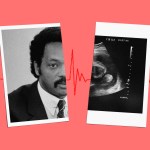
A collage of Jesse Jackson and an ultrasound image on a red background.
Christianity Today June 24, 2025
Illustration by Christianity Today / Source Images: Pexels, Wikimedia Commons

In 1977, the civil rights activist Jesse Jackson published an article in the National Right to Life News that denounced the injustice of abortion. Human life, Jackson said, begins at conception, and it must be valued from its earliest existence. “What happens to the mind of a person, and the moral fabric of a nation, that accepts the aborting of the life of a baby without a pang of conscience?” Jackson asked. “What kind of a person, and what kind of a society will we have 20 years hence if life can be taken so casually?”

But just six years later, when Jackson was running for the Democratic presidential nomination, he took a different stance. Not only did he advocate keeping abortion legal; he also supported Medicaid funding for the procedure. 

Contemporaries were taken aback by the abrupt shift. “In the past, he has been quoted as equating abortion with murder,” The New York Times noted in 1983.

Cynics might argue that Jackson’s shift on abortion was an act of political opportunism—an attempt to win the nomination even at the cost of his convictions. But they would probably be wrong, for Jackson’s shift was part of a much larger pattern among African Americans: In the 1970s, Black Protestants were more likely than any other group of American Christians to oppose abortion. Today they are more likely than any other group of American Christians to support abortion rights. 

That change on public policy, however, did not neatly correspond to a change in ethical convictions. Many African American Christians continue to believe abortion is a grave evil, and it’s possible to imagine an alternate timeline in which different political framing of pro-life arguments from white Christians could have built lasting bridges with pro-lifers in the Black church. Unfortunately, by failing to understand the reasons for this massive shift among African Americans, the predominantly white pro-life movement lost erstwhile allies and opportunities to press our moral case in the public square.

That divergence began in the early 1970s, when most advocates of abortion rights chose one of three frameworks for their arguments: women’s equality, personal liberty, or population control. 

Politically progressive African Americans like Jackson had no objection to women’s equality, and they were sympathetic to many personal-liberty arguments too. But the presence of a sizeable number of population-control advocates within the abortion rights movement alarmed them. “Politicians argue for abortion largely because they do not want to spend the necessary money to feed, clothe and educate more people,” Jackson wrote in 1977.

He was not alone in that view. Nearly every Black American who spoke against abortion in the 1970s called it “genocide”—which was the term that Jackson’s own denomination, the Progressive National Baptist Convention, used in its anti-abortion resolution in 1973. 

It was also the term that civil rights activist Fannie Lou Hamer employed. “The methods used to take human lives, such as abortion, the pill, the ring, et cetera, amounts to genocide,” she declared in a speech at Tougaloo College in Mississippi in 1971. “I believe that legal abortion is legal murder.”

A former sharecropper who had lived in poverty her entire life and had been arrested and brutally beaten for attempting to register to vote, Hamer had firsthand knowledge of the type of “genocide” she described. Earlier in life, she had received a forced hysterectomy, an all-too-common experience for African American women of her generation and socioeconomic class.

Jackson thought the pro-life movement should focus its efforts on assistance to the poor, in contrast with the abortion rights movement, which he seemed to think at the time drew on the support of middle-class white people who did not have much regard for poor Black people and who did not want to invest in helping the poor. That focus would be an antidote to the “politicians [who] are willing to pay welfare mothers between $300 to $1000 to have an abortion,” he said, “but will not pay $30 for a hot school lunch program to the already born children of these same mothers.” Jackson himself had grown up in poverty as the child of a single mother, and he thought the campaign against abortion could not be decoupled from advocacy for the rights of families in circumstances like those of his own childhood.

White pro-lifers often endorsed these aims. But there was one key area where they differed: The belief that abortion should be illegal—and that fetal personhood should be recognized in public law—was the single most important tenet of white pro-lifers’ political advocacy program.

But that was not the case for many African American pro-lifers. Nowhere in Jackson’s article for the National Right to Life News, for example, did he suggest that abortion should be made illegal. Neither, for that matter, did the African Methodist Episcopal (AME) Church’s resolution against abortion in 1977.

The “setting-apart for God’s work … begins from or even before the womb,” the AME Church said, and “abortion, which represents deliberate destruction of that life created by God, is a violation of that sanctity.” But the AME Church did not suggest that criminalization of abortion was the answer. Instead, it said the church must “seek first to recognize and prevent the circumstances leading to problem pregnancies” and “must also surround each parent and child with love and provide them with concrete spiritual, social, economic and educational assistance.”

This framing of the pro-life issue was strikingly different from the one white evangelical denominations adopted shortly thereafter. When they joined the pro-life cause, they intended to rescue the nation from the evils of Roe v. Wade—and that rescue was inseparable from a political campaign to change the law. 

In 1977, when Jackson and the AME Church spoke out against abortion, the pro-life movement had not yet acquired a partisan identity, and many of its leaders were still Catholic Democrats who were sympathetic to the social-welfare framework that Jackson and the AME Church favored. 

But in 1980, that began to change with the Republican Party’s nomination of Ronald Reagan, who endorsed the Human Life Amendment. White pro-lifers flocked to his campaign; even many lifelong Democrats who led pro-life organizations were excited by the prospect of a president who endorsed their cause. White evangelicals who were already moving into the Republican Party were especially ecstatic. 

In June 1980, in the middle of the presidential election year, the Southern Baptist Convention (SBC) adopted a resolution not only denouncing abortion and affirming the sanctity of unborn human life but also endorsing an anti-abortion constitutional amendment. Indeed, a political campaign to criminalize abortion was the central focus of the SBC resolution. “Whereas, our national laws permit a policy commonly referred to as ‘abortion on demand,’” the resolution stated, “we favor appropriate legislation and/or a constitutional amendment prohibiting abortion except to save the life of the mother.” 

Jackson did not share white evangelicals’ enthusiasm for either Reagan or the constitutional-amendment proposal. And Reagan frequently denounced welfare programs on the campaign trail, which disturbed Jackson and others of his politics. “As I see it, there is no room in Reagan’s world for us,” Jackson told African American civil rights activists in October 1980. 

Shortly thereafter, Jackson decided that the pro-life movement—which had hitched itself to Reagan and the campaign for an anti-abortion constitutional amendment—was not for him either. Still, when he launched his presidential campaign for the 1984 election, he insisted that he retained his moral opposition to abortion even as he defended its legality. “We must never encourage abortion,” he said, even if he did not want the government to stop someone from having an abortion. 

This quickly became the prevailing position in Black Protestant denominations such as the AME Church and the National Baptist Convention, most of which had been strongly anti-abortion in the 1970s. “Abortion is usually wrong,” the senior bishop of the AME Church said in 1990, but it should nevertheless be “a decision of the woman and her family and not of the government.”

A minority of Black Protestants, such as Dallas megachurch pastor Tony Evans or the Church of God in Christ (which passed pro-life resolutions in this century), attempted to hang on to the older pro-life framework common among Black Christians in the 1970s. They continued to advocate for expanded health care coverage or positive alternatives to abortion as a way to help the unborn.

Most non-Pentecostal Black Protestant denominations and denominational leaders, though, found it increasingly difficult to say anything against abortion after the mostly white pro-life movement began focusing so strongly on the criminalization of abortion and aligning with the party skeptical of social welfare programs. As the Democratic Party became ever more committed to abortion rights, so did these denominations, both in their official statements and, polling suggests, in the thinking of the average person in the pews. 

By the 1990s and early 21st century, some Black Protestants began promoting a “reproductive justice” framework as an alternative to the focus on “choice” that dominated the white-led abortion rights movement. While predominant pro-choice rhetoric emphasized individual freedom, reproductive justice instead focused on health care and empowerment for the poor. In essence, it took the concerns for the poor and marginalized that Jackson had championed in his 1977 pro-life article and channeled them instead toward support for abortion availability.

Today, several major Black Protestant denominations are arrayed against the pro-life cause. Even members who still oppose abortion typically will not support pro-life politics so long as those efforts center on outlawing abortion and are coordinated through the Republican Party. 

But now there’s a new opportunity to build a multiracial coalition in defense of unborn life. The predominantly white pro-life movement achieved a major goal in the Supreme Court decision of Dobbs v. Jackson Women’s Health Organization, overturning Roe v. Wade three years ago today, launching a new era of abortion politics. Meanwhile, many younger African Americans are leaving the established Black denominations that have given such strong support to the Democratic Party and instead joining multiracial, nondenominational megachurches that are less monolithically partisan. And some Black pastors have adopted views on abortion that are a lot like the one Evans promoted: They want to defend unborn life, but they want to do so as part of a larger, “womb to tomb,” consistent life ethic that includes expanded, government-funded health care and help for women facing crisis pregnancies. 

The history of American Christians’ belief and activism around abortion makes clear that there’s more than one way to frame a pro-life political theology. This is how two groups of pro-life Christians can end up in such different places on the political spectrum. For Christians eager to explore new avenues to protecting unborn life post–Roe v. Wade, this history can help us think more clearly about what kind of alliance we’re willing to make with fellow Christians who are with us on core life issues but quite distant from us politically. Will we repeat the political choices of the last century—or will we expand our alliances in the fight for life?

Daniel K. Williams is an associate professor of history at Ashland University and the author of Abortion and America’s Churches: A Religious History of “Roe v. Wade, which will be released in October.

Books
Review

The Mixed Legacy of a Leading Evangelical Family

A new book follows Lyman Beecher, his boundary-pushing children, and their grand ambitions to improve the world.

The Beecher Family

The Lyman Beecher family.

Christianity Today June 24, 2025
Illustration by Christianity Today / Source Images: Getty

These days it can be easy to forget that, through the heyday of the great awakenings and for a long while after, one hallmark of the evangelical stream of Christianity was the wideness of its banks. In 1740, when George Whitefield’s Anglican superiors urged him to remember that theirs was the only true church, the sensational revivalist responded, “I saw regenerate souls among the Baptists, among the Presbyterians, among the Independents, and among the Church [of England] folks—all children of God, and yet all born again in a different way of worship: and who can tell which is the most evangelical?”

A century later, when Princeton Theological Seminary graduate Robert Baird sat down to write the first major history of religion in America, he included among the “evangelical churches” not only the Episcopalians, Congregationalists, Baptists, Presbyterians, and Methodists but also the Lutherans, German Reformed, Reformed Dutch, Cumberland Presbyterians, Reformed Methodists, Reformed Presbyterians, and even Quakers. It was a big tent, to say the least—less a stream than a vast ocean.

Obbie Tyler Todd’s riveting new book, The Beechers: America’s Most Influential Family, opens a window into this earlier season in evangelical history by telling the story of one of its leading families. The Beechers did not see eye to eye on almost any particular theological or political question. But at a more fundamental level, like most evangelicals of their day, they embraced a faith that called them to improve the world.

One can certainly quibble with Todd’s subtitle. Did the Beechers exert more influence in United States history than, say, the Adamses, with their two presidents and numerous other luminaries, let alone the Rockefellers or the Kennedys? But there is no question that the members of this one family played outsize roles in the major dramas of their time. Readers will be struck not only by the extent of their sway but also by the depth of their optimism that God’s will might be done on earth as it is in heaven—a conviction as characteristic of their moment as it is discordant with our own.

The clan’s paterfamilias, Rev. Lyman Beecher, radiated this hopeful outlook. Although he revered Jonathan Edwards and felt deeply loyal to the Calvinist tradition, he contributed to its cultural diminishment by charting the path of a “New School” of Presbyterianism, which was vastly more sanguine about the promise of human strivings. Lyman had no shortage of those, throwing himself into campaigns for temperance and for evangelizing the West.

His enthusiasm for reform and suspicion of Roman Catholicism (another common article of 19th-century evangelical faith) rubbed some of his neighbors the wrong way. When a church where he was serving in Boston caught on fire, Todd writes, “the firemen, many of whom were Catholics, refused to put [it] out.” And that was not all. “In an instance of unbelievable irony,” he goes on to relay, “the church basement, rented out by a local merchant who had been secretly storing jugs of rum, began to explode. Boston’s ‘temple of temperance’ was now overflowing with liquor.”

If “Beecherism” went too far in the eyes of some, it was not thoroughgoing enough for others. Lyman, for one, was no revolutionary. During his stint as president of Cincinnati’s Lane Seminary, a group of students, led by the abolitionist Theodore Dwight Weld, started fraternizing with the local Black community and pushing the administration and trustees to accept the gospel’s radically emancipatory implications. “Although Lyman was quick to point out that Lane had been the first seminary in the United States to admit a Black student, James Bradley, this was not nearly enough for the Lane rebels,” Todd writes. “Weld and his ‘Weldites’ were, in some sense, out-Beechering Beecher.” Lyman’s children would, in more ways than one, end up doing the same.

Part of what makes Todd’s book such a rich read is that it tells a family story through and through. As he narrates the Beechers’ ups and downs, he beautifully captures so many perennial human dynamics. Lyman, for example, was not aware of his own contribution to traditional Calvinism’s eclipse. There was an unnoticed slippage between the ideas he believed he stood for and the way he lived his life. He was, meanwhile, overly attuned to his children’s waywardness when it came to what he regarded as the basic truths of the Christian faith. Like so many parents, he set out to shape them in accordance with his own deepest values, only to bump into the stubborn reality that, like it or not, they got to be their own people and to direct their own steps. 

Both things were true: Lyman’s imprint ran deeper than most, and the Beecher children were prone to wander. All seven of his sons who lived to adulthood went on to become ministers. All seven also abandoned anything resembling strict Calvinism.

Lyman’s third-eldest boy, Henry Ward Beecher, went on to become the best-known minister in all the land. In no small part, this owed to his talent for marrying faith and reform (almost always—like his father—in a moderate rather than revolutionary mode). But in the years after Lyman’s death, Henry Ward also became embroiled in arguably the best-publicized sex scandal of the 19th century. He was charged with sleeping with Elizabeth Tilton, who was, along with her husband Theodore, a member of Beecher’s congregation in Brooklyn, New York.

The Beecher-Tilton affair divided sibling from sibling, with some rushing to Henry Ward’s defense and others leading the charge against him. For years afterward, it continued to produce no shortage of pathos and petty squabbling within the family—to wit, when Isabella, Henry Ward’s half sister and sometimes public accuser, showed up to the reception following his funeral, his widow, Eunice, barred her at the door of their home. Isabella waited outside, but to no avail.

She was by that point an avid practitioner of spiritualism and claimed she was able to commune with her dead brother and resolve their differences even while his body lay in the grave. In so many ways, Isabella could not have fallen farther from her father’s tree. And yet, tellingly, when she died, an oil painting of Lyman still hung in the very center of her Connecticut living room.

For Lyman’s part, he was proudest of his eldest daughters. Catharine founded Hartford Female Seminary in the early 1820s. At the end of that same decade, she rallied women across the nation to oppose President Andrew Jackson’s insidious plans for removing the Cherokee from their rightful lands.

Although Catharine’s most lasting work was in education rather than activism, her sister went on to become an abolitionist icon. Harriet Beecher Stowe’s best-selling 1852 novel, Uncle Tom’s Cabin, won countless new recruits to the cause of freedom. So many, in fact, that it got the attention of President Abraham Lincoln. According to a famous story Todd recounts, Stowe met Lincoln at the White House in the winter of 1862, where he reportedly remarked, “So you are the little woman who made this big war.”

Both Catharine and Harriet eventually wound their way out of the Presbyterian fold and joined the Episcopal Church. It was not what Lyman would have chosen for them, even though there was plenty of room to roam within the surprisingly capacious boundaries of the evangelical fold of their day.

Yet there were limits too. When Harriet’s son Charley flirted with joining the Unitarian church, his mother drew a hard line in the sand. “I protest with all the energy of my heart & soul against your joining the camp of the Unitarians,” she wrote to him. Her father could not have said it better himself.

As Todd underscores, “In the house of Lyman Beecher, there were numerous enemies of Christianity, but only two represented complete apostasy from the faith: Catholics and Unitarians.” Charley relented, at least formally even if not in his heart. Family ties were not everything for the Beechers, but amid all the centrifugal energies of the age, they never stopped exerting an inordinate pull. 

The saga of this storied 19th-century evangelical family is, in Todd’s expert telling, not a simplistic morality play. In these pages, the Beechers appear as the complex, multidimensional persons they in fact were. They embodied a generous vision of orthodoxy even as they clung to various forms of prejudice. Their intense investment in familial relationships proved time and again to be at once grounding and crushing. And their myriad efforts to grow the church and better the world—their unremitting “Beecherism”—should function as both a source of inspiration and a cautionary tale.

This book is a must-read for anyone interested in the longer history of evangelical Protestantism and its momentous impact during a critical period in the development of a much-younger United States. As the nation now careens toward the 250th anniversary of the Declaration of Independence, with pessimism surging on all sides of the lines that divide, The Beechers should spur us to deep reflection on the possibilities and pitfalls of the human impulse to improve. Lyman and his brood would have it no other way.

Heath W. Carter is an associate professor of American Christianity at Princeton Theological Seminary and the author of Union Made: Working People and the Rise of Social Christianity in Chicago.

News

Muslim Militants Went on a Syrian Rampage

One Alawite survivor turned off the lights. One was too heavy to kidnap. One quickly showed a surprising ID.

Security forces loyal to the interim Syrian government ride in the back of a vehicle.

Muslim militants riding in the back of a truck in Syria.

Christianity Today June 24, 2025
Omar Haj Kadour / Contributor / Getty

This is a three-part series about the Alawite sect in Syria and the March massacre in its community. To read the previous story of a pastor ministering among them and the context of the massacre, click here.

On March 6, Ziad nervously scoured social media, hiding in a windowless room in his apartment. He had heard gunfire, and over the long course of the civil war in Syria, he had learned how to distinguish the various weaponry. These were military-grade machine guns. Bands of balaclava-clad militants in pickup trucks shouted “Allahu Akbar” as they attacked a government office just a mile from his home in the coastal city of Lattakia.

The 46-year-old educator and his wife, Zeinab, knew the militants were looking for Alawites. The couple belonged to the heterodox Islamic sect that many Sunni Muslims in Syria hated for their connection to the deposed Assad regime. Others went further and condemned their beliefs as heretical. Medieval and Ottoman-era fatwas declared Alawites deserving of death, and videos circulated of mosques calling for jihad against their community.

Ziad did not leave his home for the next three days.

When the dust settled, the March massacre claimed the lives of at least 1,700 Alawites. Ziad, currently in Lebanon and granted anonymity to preserve the safety of his relatives in Syria, describes the terror the community experienced.

“O God, save us,” he prayed quietly. “We didn’t do anything wrong.”

Six months earlier, when Bashar al-Assad’s regime fell, Ziad hoped for a transition to democracy and wide-scale reform. Assad’s father, Hafez, seized power in a 1970 coup and disproportionately selected Alawites for key military and government posts. But few from the community truly benefited, Ziad said, while most lived in relative poverty—as in other rural regions. The regime permitted no dissent and cultivated insecurity among its minority religious populations to curb any threat to its power.
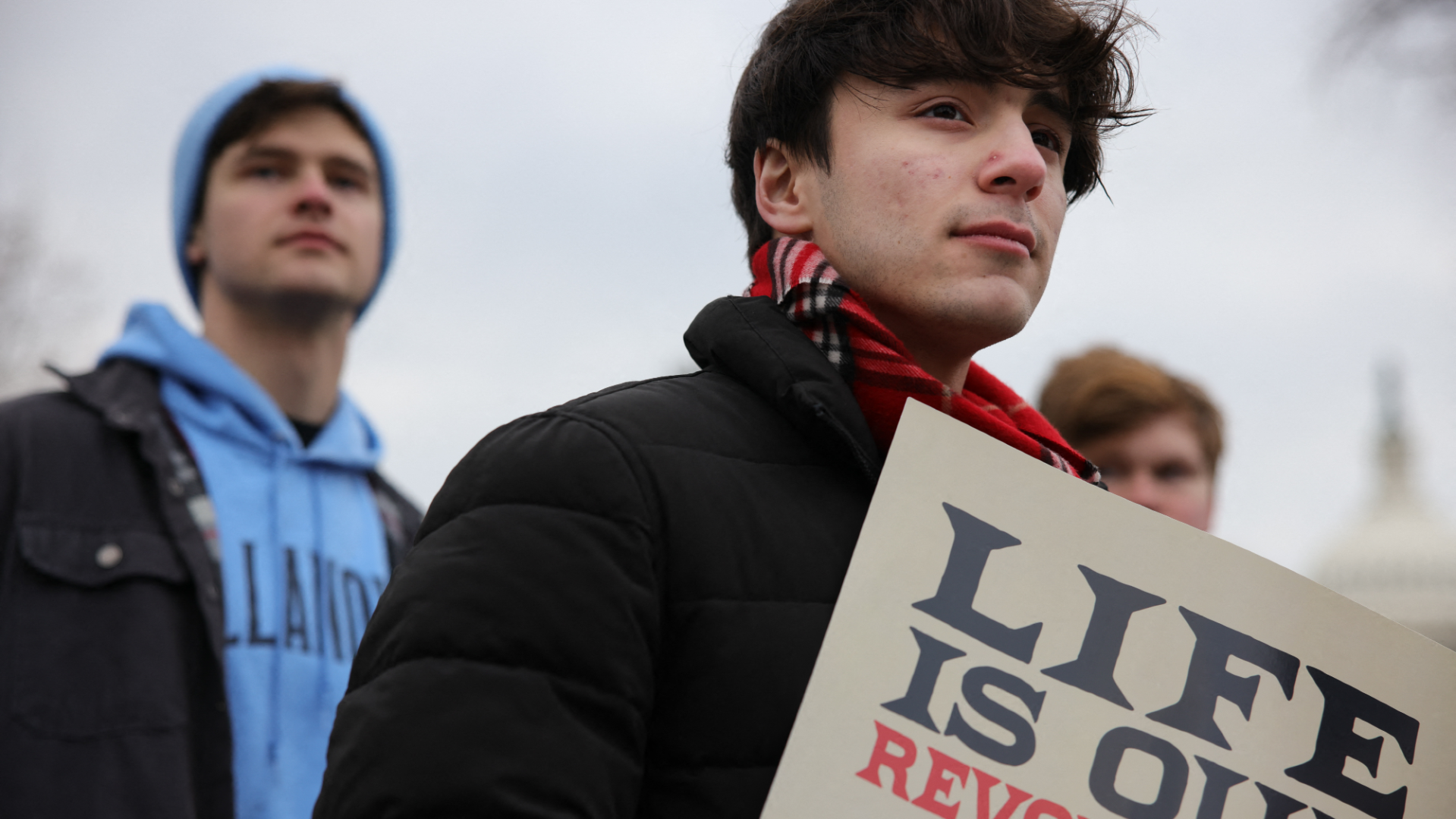
While Alawites make up a majority in the coastal plains and mountains of western Syria, the ethnoreligious group represents 10–13 percent of the overall population. Sunni Muslims and Greek Orthodox Christians live among them in peace. But as militants barged into homes, looting cell phones and cash, they killed adult Alawite males and sometimes whole families.

Ziad had barred the iron gate to their building. Perhaps this spared their lives.

He and Zeinab sat in the darkness to avoid showing signs of life in their apartment. And as he scrolled Facebook for updates, he learned of the carnage.

A stray bullet hit Zeina Jdeed, his former student who was then in her third-year of medical studies, while sheltering in her apartment. The wound should not have been fatal, but she lost too much blood after gunmen pinned her family inside the foyer and refused to let them make the 900-foot trek to the nearby hospital.

Militants forced Yasser Sabbouh, head of Lattakia’s cultural center, out of his apartment at gunpoint. Ziad attended many lectures and concerts hosted by the Alawite intellectual. But instead of seeing an invite to an upcoming event, Ziad learned that militants had dumped his friend’s bloody body outside Sabbouh’s home.

By the end of the third day, relative calm returned to the city. But violence continued elsewhere, and Ziad left the apartment only to buy food at the local grocer before hurrying home. He filled his time reading about the history of ancient Mesopotamia and lamenting the current state of Syria and Iraq. He also called his friends and relatives, wondering if they were all right.

In total, the militants killed 11 of Ziad’s relatives in their family village. His wife mourned the deaths of three relatives. Zeinab’s uncle survived a kidnapping, she said, after assailants forced him at gunpoint from his home and shoved him into their getaway vehicle. But the car had a flat and couldn’t carry the weight of its plus-sized victim as it jerked down the road. The kidnappers pushed him out and went in search of an easier target. He was lucky, Ziad said.

While Alawites usually marry within their sect, Ziad’s father’s cousin married a Sunni Muslim, which ended up saving her family’s lives. When the militants broke down the door to their home, they put a gun to the head of the couple’s adult son and demanded all the gold in the house.

“He’s Sunni,” his Alawite mother pleaded, since Islam assigns religious identity through the father, who was not present at the time. She fumbled for his ID card as her Alawite daughter-in-law stood petrified and their three-year-old daughter cried out, “Leave him alone!”

Convinced by the ID’s indication that he shared their Sunni identity, the militants transported them all two miles away to a safe area in Lattakia—in exchange for $3,000 in gold. The family returned days later to learn that looters had taken their furniture, appliances, and valuables.

Syrian president Ahmed al-Sharaa condemned the killings on March 10, vowing to hold criminals responsible. But militants still roamed the area at night, Ziad said, and with their faces covered, no one knew who they really were. The couple eventually regained confidence to move about in their city, making sure to return by nightfall.

More than 40,000 Syrian refugees, mostly Alawites, have fled to Lebanon in the last three months, many of them crossing the porous border illegally. Ziad and his wife were determined to come with their passports stamped. He told no one, not even his parents, of their plans to leave. Anyone who travels has money, he said, and would become a target. But government offices were slow to reopen and process his paperwork.

Even in Lebanon, the fear remains ingrained. When she learned that this interview at their safe house in Beirut would take place after 7:00 p.m., Zeinab instinctively recoiled, thinking it wouldn’t be safe to come to her after dark.

A few of Ziad’s friends eventually made it to Rwanda, and he and Zeinab will soon travel onward to Southeast Asia. Syrians are not welcome in many places, Ziad said, and suspects it will be a decade until it is safe and stable enough to return home. The interim constitution continues to enshrine strongman rule and the role of Islam, he explained, and Sharaa declared it could take five years to prepare for presidential elections.

“I am not ashamed of my Alawite heritage,” said Ziad. “But I want to go anywhere I won’t hear ‘Allahu Akbar.’”

The next story will explore the religious beliefs of Ziad’s sect. For the previous story on how a church ministered to displaced Alawites, click here.

Ideas

A War of Choice—the Wrong Choice

Staff Editor

A case that the recent US strikes on Iran are unlawful, unnecessary, unpopular, and risky—especially for persecuted Iranian Christians.

A targeted location in Tehran ablaze on Sunday, June 15, 2025 during the third day of Israel's strikes against Iran.

A targeted location in Tehran ablaze on Sunday, June 15, 2025 during the third day of Israel's strikes against Iran.

Christianity Today June 23, 2025
KHOSHIRAN / Contributor / Getty

President Trump’s decision to join the Israeli attack on Iran was a long time coming.

Tehran would get nuclear weapons very soon if we didn’t take action, US and Israeli officials warned in The New York Timesin 1995. George W. Bush tasked the Pentagon with studying strike options to “stop the bomb clock, at least temporarily,” and on the campaign trail in 2008, John McCain jokingly sang, “Bomb, bomb, bomb, bomb, bomb Iran.” Israel said a bomb was imminent during the Obama administration—perhaps less than three years away, per the country’s defense minister in 2011—and the Biden administration reportedly prepared plans to bomb Iranian nuclear sites early this year.

That long run-up may lend US participation in this war an air of inevitability. In my view, it shouldn’t. This is a war of choice, and it is the wrong choice. These US strikes on Iran are unlawful, unnecessary, unpopular, risky, and of dubious strategic value. They may or may not succeed in temporarily stopping the bomb clock, but they are a strategic gamble. For those of us eager for the freedom and safety of Christians and other oppressed people in Iran, this is a moment to pray for wisdom and peace.

Vice President JD Vance—likely aware that a majority of the American public, including a majority of Republicans, opposes US war with Iran—insists that the Trump administration does not want to escalate this conflict to boots on the ground. Indeed, he insists that the US isn’t at war with Iran at all.

That latter claim is laughable. (If Iran bombed Fort Bragg, would we accept the claim that they weren’t at war with us?) It also points us toward the legal problem, which is that the US Constitution assigns the power to declare war to Congress, not the president, and Congress did not declare this war.

Notes on the Constitutional Convention from James Madison, which include comments from “father of the Bill of Rights” George Mason, make the intent here inescapably clear: The framers of our Constitution thought no single man was “safely to be trusted” with this enormous power. They were interested in “clogging rather than facilitating war [and instead] facilitating peace,” permitting the president to act alone only “to repel sudden attacks.” We are not under sudden attack.

I believe this attack also violates the War Powers Act of 1973, which was passed over the veto of Richard Nixon in an effort to constrain lawless presidential warmaking.

The War Powers Act has three scenarios under which the president can initiate military action: “(1) a declaration of war, (2) specific statutory authorization, or (3) a national emergency created by attack upon the United States, its territories or possessions, or its armed forces.” None of these conditions are applicable here.

Even if these strikes were necessary, the president—like many presidents before him, Democrat and Republican alike, who deemed themselves trustworthy with power that was never theirs—is breaking his oath to the Constitution. As the prophet Habakkuk warns of abuse of power, “Therefore the law is paralyzed, and justice never prevails” (1:4).

But my contention is that the strikes weren’t necessary. A clip of a conversation between pundit Tucker Carlson and Republican Senator Ted Cruz circulated online in recent days because Cruz, who supports forcible regime change in Iran, couldn’t say how many people live there. Here’s a more important number: Iran’s gross domestic product ($341 billion as of 2025) is less than half of US defense spending ($850 billion in 2024).

That is, the money we spend on our military every year is more than twice as much as the Iranian economy. That’s not Iran’s entire government budget. It’s all of Iran’s economy. The whole thing.

This isn’t to say Iran can’t do anything to harm US interests—and especially US forces stationed around the Middle East. But Iran cannot pose anything like an existential threat to America, not even if its nuclear program were much further along than it was before these strikes. This is a poor, weak country half a world away, separated from the US by an ocean and surrounded by hostile powers. There is no scenario in which Iran somehow conquers the United States.

Yet there is a scenario in which the US loses this war in the style of the last two decades’ losses in Afghanistan, Iraq, Yemen, Somalia, and Libya. There is a more-than-plausible scenario in which this is the beginning of another yearslong quagmire that destabilizes a society and leaves tens or hundreds of thousands of innocents dead with little or nothing to show for it. We should know by now that US-orchestrated regime change does not reliably lead to liberty and peace.

I think in particular of the danger war brings to Christians in Iran. Already a persecuted minority subjected to imprisonment, raids, fines, beatings, and other cruelties for their faith, Iranian Christians will be even more vulnerable if this war is prolonged. It’s not like bombs will bypass all the Christians’ houses. Moreover, tyrannical regimes under pressure often grow more tyrannical, especially toward dissidents and ideological minorities like Christians under an autocratic Islamist state.

And while we may hope that the conflict could bring to power a new, more lenient government in Tehran, there’s no guarantee of that outcome—quite the opposite. The number of Christians in Iraq shrank by more than 80 percent due to the US-initiated war and its aftermath.

“Iraq was estimated to have nearly 1.5 million Christians before the 2003 U.S.-led invasion,” the Associated Press reported in 2021. Those ancient churches had roots stretching all the way to the early church. But today, “church officials estimate only a few hundred thousand [Christians], or even less, remain within Iraq’s borders,” many of them feeling “abandoned, bitter and helpless,” less free to worship than they were under the dictatorship of Saddam Hussein. We should all want freedom for Iranian Christians, but it is naive to imagine that an American war is a sure-fire way to get it.

Looking ahead, I hope Vance’s yes is yes in his promise about escalation (Matt. 5:37). I want to trust that he’s telling us the truth (1 Cor. 13:6–7). I pray for Trump and Vance “and all those in authority, that we may live peaceful and quiet lives in all godliness and holiness,” in the US, Israel, and Iran alike (1 Tim. 2:2).

And still, I admit I’m skeptical of the prudence of our leaders and worried about where we go from here. With the writer of Ecclesiastes, I suspect that “what has been will be again, what has been done will be done again” (1:9).

“The quiet words of the wise are more to be heeded than the shouts of a ruler of fools,” he says (9:17). But all I hear is shouting. “Wisdom is better than weapons of war” (9:18). But we fallen people are better at building weapons than being wise.

Someday, God himself “will judge between the nations and will settle disputes for many peoples. They will beat their swords into plowshares and their spears into pruning hooks. Nation will not take up sword against nation, nor will they train for war anymore” (Isa. 2:4). But that day doesn’t seem to be coming this week.

Bonnie Kristian is the editorial director of ideas and books at Christianity Today.

News

Israeli Attacks Bring Iranian Christians Both Fear and Hope

Many in the Iranian diaspora want to see a regime change yet fear the toll on their homeland and the underground church.

Smoke rises after a reported Israeli strike on a building in Tehran, Iran on June 16, 2025.

Smoke rises after a reported Israeli strike on a building in Tehran, Iran on June 16, 2025.

Christianity Today June 23, 2025
Stringer / Getty Images

Since the moment Israel attacked Iran on June 13, Shahrokh Afshar has been concerned about the members of his church who live in Iran. The former Muslim and founder of Fellowship of Iranian Christians, the first Iranian Christian organization in the US, now pastors an online congregation with Farsi speakers from six countries. 

Hundreds of civilians have died in Israeli strikes, and one of his church members decided to stay in Tehran as thousands fled the capital. She is the only person remaining in her apartment building, and she described to him a scene of fear and suffering. 

The government is listening to people’s phone calls and arresting people on the streets, she said. On Sunday, Iranian authorities executed a man accused of spying. Her daughter’s friend lost her entire family in an Israeli bombing, and the cemeteries are full of people burying their loved ones.

She asked the church to “please pray that Iran will not retaliate against America, because the war will get even worse than what it is,” Afshar said. Iran’s growing underground church is “very, very scared,” he added. For several days, many Iranians had no power, water, or internet access. 

Afshar has been praying over the map of Iran for 30 years and acknowledged the complex set of emotions among Iranians. “On the one hand, you are happy that someone has come to rescue you from the hands of this dictator,” he said, referring to Iran’s supreme leader, Ayatollah Ali Khamenei. “On the other hand, it’s your country, your neighborhood, your neighbors, your loved ones who are being bombed. How are you supposed to feel?”

For decades, Israel has observed with trepidation an Iranian regime driven by a deep-seated hate for the Jewish nation. Iran’s recent nuclear advancements have brought the regime to “the brink of true nuclear capability,” foreign policy expert Walter Russell Mead wrote in an October Wall Street Journal opinion piece, predicting 2025 would be an “interesting year.”

Eight months later, Israel launched an operation it hoped would prevent Iran from accomplishing its stated goal of destroying Israel. It eliminated top Islamic Revolutionary Guard Corps commanders and nuclear scientists and shattered crucial infrastructure at Iranian nuclear sites. 

After Israel began its strikes on Tehran, fears spiked and residents fled the city,  backing up the highways with traffic. Iran’s densely populated capital is home to more than 10 million people—approximately 10 percent of the country’s population. 

On Saturday, the United States sent its stealth bombers and bunker-buster bombs to strike three nuclear sites, including Fordow, a facility buried deep beneath a mountain and a target Israel could not take out on its own. 

The war has also impacted everyone in Israel, said Meno Kalisher, pastor of the Jerusalem Assembly House of Redemption. The death toll in Israel would be much higher from Iran’s retaliatory strikes had Israel not invested heavily in bomb shelters and missile-defense systems. Still, dozens of Israelis have died from missile fire targeting civilian populations and occasionally overwhelming Israel’s defenses. 

“We really trust the Lord and pray,” Kalisher said. “We are praying for the Iranian church.”

Most people in his congregation have access to bomb shelters. In Iran, bomb shelters are scarce. Meanwhile, the Islamist government has spent more than $700 million a year supporting groups like Hamas and Hezbollah.

All five of the Iranian diaspora believers Christianity Today spoke to believe that while Iranians are fearful of bombings, most are relatively open to strikes that could topple the regime—an estimate based on conversations with friends and relatives as well as information gathered from online platforms. 

“They are suffering through this, the people of Iran, but they know they have to pay a price for their freedom,” said Hormoz Shariat, founder of Iran Alive Ministries, a Christian broadcasting platform. “So they’re not bitter against Israel, and they’re not bitter against the US. Actually, they’re hopeful.”

Shariat said many Iranians have been “begging” Israel to launch an operation in Iran that mirrors the targeted attacks in Lebanon last year that killed dozens of Hezbollah operatives and wounded hundreds. 

Iranians don’t want an endless war with mass casualties, he noted, but they welcome Israeli strikes that remove leaders “with laser accuracy.” He said Iranians are hopeful that regime change is within reach. 

As the death toll rises, Afshar noted on Monday that “some people in Iran are having second thoughts because their loved ones are getting killed. Tehran has become a ghost town.”

In the wake of modern-day Israel’s establishment in 1948, economic and military ties flourished between Israel and Iran for several decades. Those ties deteriorated in 1979 when revolutionaries toppled Iran’s secular monarchy and established an Islamic republic. 

Ayatollah Ruhollah Khomeini replaced the shah, and the new leader severed ties with Israel and the West, implemented strict dress codes, and suppressed human rights. Muslims and Christians (who compose less than 1 percent of the population) have suffered under Khomeini and his successor, Khamenei. 

According to the Open Doors World Watch List, Iran ranks number nine on the list of countries where it’s most dangerous to be a Christian. Believers from a Muslim background frequently face arrest and long prison sentences for perceived Western influence. 

Iran’s authoritarian rule has cast a dark shadow over the country and launched multiple waves of protests. The Green Movement of 2009 began with widespread allegations of election fraud and expanded to a series of protests against the Islamic Republic of Iran’s crackdown on civil liberties. More than 30 people died. 

According to a BBC investigation, Iranian authorities killed more than 75 people in the wake of protests connected to the 2022 death of Mahsa Amini. The 22-year-old woman died in custody after morality police arrested her for allegedly failing to wear a headscarf. 

A Jewish Iranian who converted to Christianity after he immigrated to the United States in 1975 said some Iranians in the diaspora are less critical of Tehran because they emigrated prior to the regime’s wave of repression. Yet those who lived through its darker days have become disillusioned, he noted. CT granted him anonymity to protect his family members in Iran.

One of his religious Muslim friends in Iran quit attending mosque after the death of Amini and the government’s brutal crackdown on protesters. 

“Thousands and thousands of mosques have been closed in Iran, from what they’re telling me,” he said. Some Muslim clerics blame the shuttering of mosques on a lack of funding, but others say the more likely cause is poor attendance. 

Said Najafy, an Iranian Christian and ministry leader in Belgium, said the regime has wanted to destroy Israel since 1979 and the Iranian people have suffered as a result. He grew up in a religious Muslim family and lived in Iran until 2000. Some of his family members fled Tehran in the wake of the bombings.

“We want to go back to the old days when we were friends,” he said. “We are praying and hoping that the regime will fall as soon as possible.”

Najafy joined virtual prayer meetings this past week with Christians in Iran and the four Farsi-speaking churches in Belgium. He said Iranian Christians are both praying for God’s protection over civilians and rejoicing that “Israel is the helper, coming and eliminating this evil regime that has been ruling for almost five decades.”

On Thursday, Israeli prime minister Benjamin Netanyahu directly addressed the question of Israel seeking regime change in Tehran. “That may be a result, but it’s up to the Iranian people to rise for their freedom,” he said, noting that Israel “may create conditions that will help them do it.”

Shirin Taber, an Iranian American Christian and author of Muslims Next Door, has tracked Iran’s resistance movement. Her organization, Empower Women Media, focuses on gender equality and religious freedom—rights she hopes are part of a systematic change in Iran. 

According to Taber, Iran’s opposition movement is multilayered. Iran’s Gen Z is bold, tech-savvy, and willing to join public protests, but that’s not enough to bring about change. “If anything, it actually puts people in harm’s way, and people have been killed,” Taber added.

Taber said another tier of Iran’s opposition movement works behind the scenes and includes a coalition of people in business, technology, art, and journalism. She believes it’s possible the regime could collapse in the next few weeks, creating an avenue for opposition movements to step in. 

Shariat, the founder of Iran Alive Ministries, is less optimistic. He has observed infighting between Iranian factions. 

He stays focused on his ministry broadcasts into Iran, which have been happening daily since the Israeli attacks began. The Iranian church is full of “baby Christians” who are fearful of what lies ahead, he noted.

“Our message to believers is that you are different. Don’t be afraid,” Shariat said. “This is the time to shine for Jesus. Go bring comfort to others.” He hears stories about Christians outside the capital opening their homes to people fleeing Tehran.

Meanwhile, Afshar encourages his online congregation to engage in an ancient church practice called lectio divina that involves “beholding God and sitting at the feet of Jesus” in a time of quiet prayer. The practice has helped the Christian woman in Tehran as she battles her fear. She told Afshar, “I have no fear because I practice the presence of God daily in my walk with him.”

Jenna Mindel Knows What Gen Z Is Yearning For

An inaugural Young Storytellers fellow on her peers search for good, truth, and beauty.

An inaugural NextGen Accelerator fellow on her peers search for good, truth, and beauty.
Rachel Patterson

Earlier this year, Jenna Mindel wrote for Christianity Today about new research showing that for the first time in American history, men were more likely than women to be religiously affiliated. “In the wake of the #MeToo movement, feminism, and ‘Red Pill’ masculinity, Christian women are left with a lot of conflicting messages about what it means to be a woman,” wrote Jenna. “These are questions the church needs to be prepared to answer.”

Jenna spends a lot of time pondering Gen Z’s understanding of culture and faith. Last year, she published a piece about Gen Z turning online for spiritual guidance. 

“I don’t have all the answers,” the 23-year-old said. “But rigidity is something I spend a lot of time resisting. I want to be a voice that is faithful and willing to sit in the nuance and complexity of tough situations.”

Thanks to Christianity Today’s Young Storytellers Fellowship (formerly, the NextGen Accelerator), Jenna is feeling more confident in staking out this ground. In 2024, CT launched the program, seeking to encourage and equip the creatives of the next generation. This now-annual fellowship gathered 15 young creatives to expand their storytelling gifts for the glory of God.

“Any young Christian who is discerning what it looks like to be unashamedly Christian and unashamedly an artist should apply for the program,” Jenna said. “It’s for anyone asking the question ‘What does it look like to re-enchant Christians toward faith when so many are disenchanted?’”

Currently an admissions counselor at Biola University, Jenna hails from Tacoma, Washington, where she grew up in a homeschooling household of seven, shaped by Adventures in Odyssey, VeggieTales—and Christianity Today. As a high schooler, she visited the Southern California Christian college and loved it. Even though it was a financial stretch for her family, her parents encouraged her to go. 

Jenna had already begun pursuing journalism as a high school student when she interned at a local magazine. As a sophomore, she and a friend started a true-crime podcast that told the stories of killers in the Pacific Northwest. 

At Biola, Jenna contributed to the school newspaper and magazine and served as editor in chief of the yearbook for two years. She also created a podcast for GRIT, an online resource that began as a blog discussing relevant issues for the school’s female students.

“Our GRIT boss would always say, ‘When it comes to feedback, 10 percent of those out there will be very conservative and 10 percent will be very progressive and those people are never going to be happy with anything that you post or produce,’” said Jenna. 

This framing helped Jenna realize what she was getting into when she followed her curiosity. 

“I was just really interested in figuring out ways to engage other people,” she said. Growing up, she noted that most of her family’s conversations centered on guns, politics, and criticizing politicians. 

Jenna resonated with journalism because it allowed her to hear and engage other perspectives. As she was preparing to graduate last year, Jenna began looking for jobs at Christianity Today. “I definitely want to work at a Christian magazine, and CT is my favorite.” 

“CT is really needed because we need a space for meaningful conversations about culture that aren’t just black and white and good and bad, but where we can seek nuance and complexity,” she said. 

So when she saw applications open for the fellowship, she decided to apply and was accepted shortly after. “Post grad feels like you’re standing on a cliff and there’s like a foggy mass in front of you,” she reflected. “You don’t know what’s next. You’re trying to figure that out.”

Amid this uncertainty, entering the fellowship felt like a “soft place to land.” The program, which ran from last August to this January, included biweekly Zoom meetings and in-person gatherings in Washington, DC, and Chicago. Christianity Today editor in chief Russell Moore, author Karen Swallow Prior, and pastor Jon Tyson shared with the cohort.

Jenna appreciated hearing these perspectives as she began her work as an admissions counselor. She still wanted to pursue journalism and also felt the pressure of trying to keep up with the impressive LinkedIn updates she saw her peers posting. 

“These sessions helped me realize, I’m on track. I’m still going. I can be a Christian creative and have a nine-to-five, and that’s valid,” she said. 

By hearing words of advice from these Christian leaders and the fellowship flying the cohort in to spend time together, Jenna could feel that Christianity Today had her back. 

“Through this program, CT affirmed that both my work is worth investing in and that I am worth investing in as both an artist and a storyteller.”

“You’ll get invited to a Christian workshop, but then you have to pay $120 or whatever,” she said. “I totally get that, but it was really sweet after so many unpaid internships and workshops to feel like I was being invested in. I felt like the program really changed the game for me in terms of how I view myself and my work.”

Jenna also appreciated that the cohort included people from varying circumstances—some working full-time and others unemployed, some working in creative jobs and others working traditional nine-to-fives.

“Sometimes it feels like in creative spaces that you’re either in a faith space that kind of reduces creativity, or you’re in a creative space that kind of reduces faith, and you can’t hold them both together,” she noted. “The NextGen Fellowship was amazing because it felt like everyone was really intentional about their creative practices and their faith.” 

Jenna thinks frequently about how Gen Z is the least-religious generation, a reality that exists alongside “yearning for religion and faith and spirituality.” 

“It’s really easy to be cynical about faith and about Gen Z when you’re looking at the numbers, but I think there’s an openness toward spirituality and mystery,” said Jenna. 

She appreciates that Christianity Today engages culture beyond a paradigm of “secular and sacred.” 

“I love Taylor Swift, and CT has published a lot of pieces about Taylor from a lot of different perspectives. But it hasn’t just been like, ‘She is not Christian and she is bad,’” she said. “Instead, it might take the angle that ‘This is not a Christian song, but here’s what we can learn from it.’”

Beyond familiar cultural reference points, Jenna also appreciates CT’s global coverage. 

“It’s really important for Christians to engage outside of expressly Christian spaces and also for Americans to get out of thinking we’re the whole world,” she explained. “CT is great because it’s actually reporting on both heartbreaking but also encouraging things that are happening globally in the church.”

Gen Z isn’t looking for easy answers, says Jenna. 

“CT, through things like the NextGen Fellowship, is cultivating meaningful conversations with Christian leaders who can sit with people in the hard things,” she observed. “We don’t need more information. We need presence. Obviously, that can be hard with occupying a digital space, but equipping people to be witnesses of Christ through presence, through those things, is important.”

During one fellowship session, Jon Tyson described his regular walks in New York City, where he intentionally focuses on the city’s beauty. This practice stood out to Jenna as a practical tool for meaningfully engaging with the world amid larger feelings of despair, anxiety, and stress. 

“The true, good, and beautiful isn’t just limited to Christians. Every image bearer holds beauty and can create beautiful things,” she said. “A lot of Gen Z Christians are yearning for an acknowledgement of that.”

Apple PodcastsDown ArrowDown ArrowDown Arrowarrow_left_altLeft ArrowLeft ArrowRight ArrowRight ArrowRight Arrowarrow_up_altUp ArrowUp ArrowAvailable at Amazoncaret-downCloseCloseEmailEmailExpandExpandExternalExternalFacebookfacebook-squareGiftGiftGooglegoogleGoogle KeephamburgerInstagraminstagram-squareLinkLinklinkedin-squareListenListenListenChristianity TodayCT Creative Studio Logologo_orgMegaphoneMenuMenupausePinterestPlayPlayPocketPodcastRSSRSSSaveSaveSaveSearchSearchsearchSpotifyStitcherTelegramTable of ContentsTable of Contentstwitter-squareWhatsAppXYouTubeYouTube