Healing Is Believing

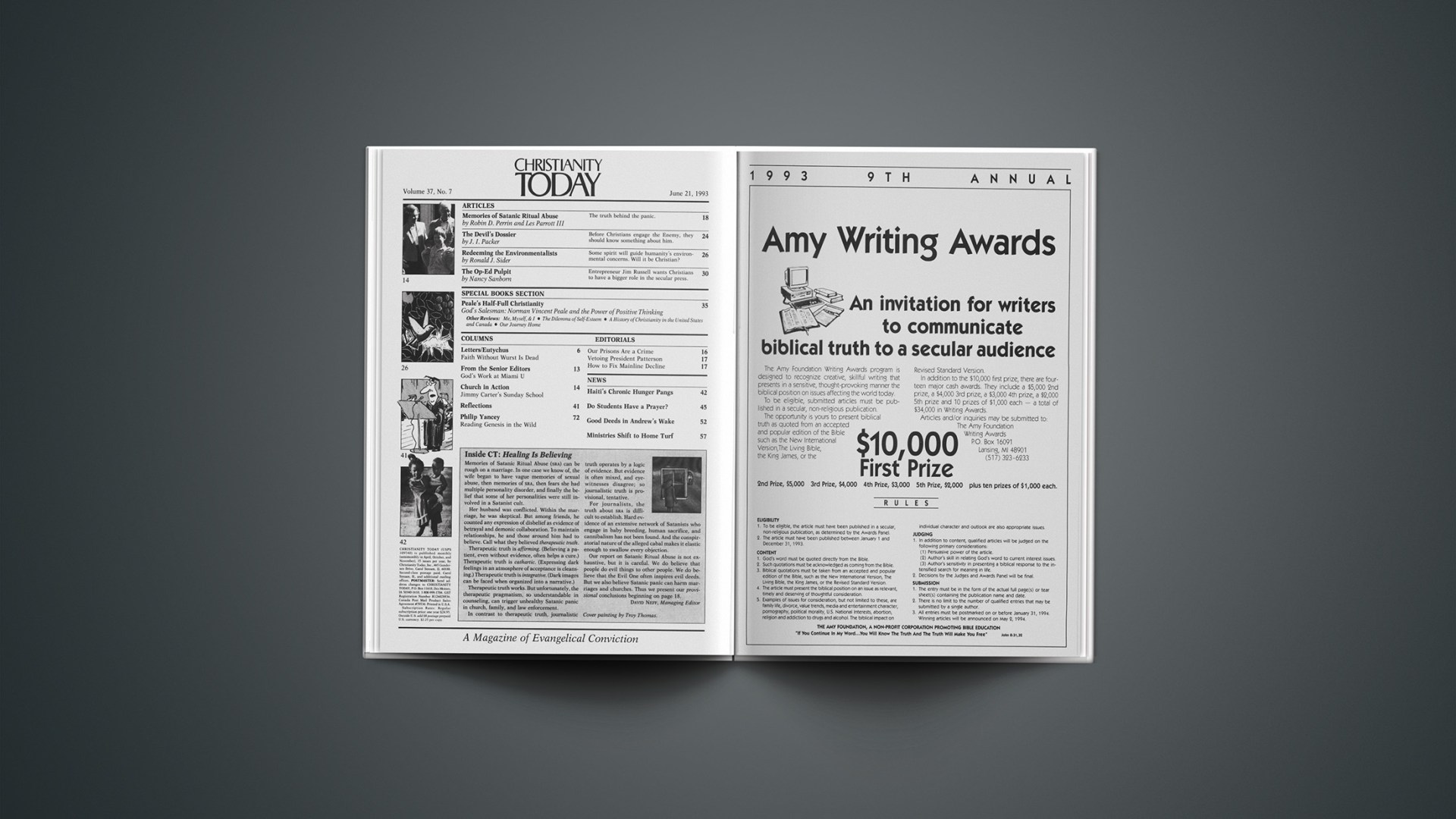
Memories of Satanic Ritual Abuse (SRA) can be rough on a marriage. In one case we know of, the wife began to have vague memories of sexual abuse, then memories of SRA, then fears she had multiple personality disorder, and finally the belief that some of her personalities were still involved in a Satanist cult.

Her husband was conflicted. Within the marriage, he was skeptical. But among friends, he counted any expression of disbelief as evidence of betrayal and demonic collaboration. To maintain relationships, he and those around him had to believe. Call what they believed therapeutic truth.

Therapeutic truth is affirming. (Believing a patient, even without evidence, often helps a cure.) Therapeutic truth is cathartic. (Expressing dark feelings in an atmosphere of acceptance is cleansing.) Therapeutic truth is integrative. (Dark images can be faced when organized into a narrative.)

Therapeutic truth works. But unfortunately, the therapeutic pragmatism, so understandable in counseling, can trigger unhealthy Satanic panic in church, family, and law enforcement.

In contrast to therapeutic truth, journalistic truth operates by a logic of evidence. But evidence is often mixed, and eyewitnesses disagree; so journalistic truth is provisional, tentative.

For journalists, the truth about SRA is difficult to establish. Hard evidence of an extensive network of Satanists who engage in baby breeding, human sacrifice, and cannibalism has not been found. And the conspiratorial nature of the alleged cabal makes it elastic enough to swallow every objection.

Our report on Satanic Ritual Abuse is not exhaustive, but it is careful. We do believe that people do evil things to other people. We do believe that the Evil One often inspires evil deeds. But we also believe Satanic panic can harm marriages and churches. Thus we present our provisional conclusions beginning on page 18.

DAVID NEFF, Managing Editor

Our Latest

News

Facing Arrest, Cuban Christian Influencers Continue Call for Freedom

Hannah Herrera

Young people are using social media to spread the gospel and denounce the Communist regime.

Public Theology Project

Against the Casinofication of the Church

The Atlantic’s McKay Coppins told me about problems that feel eerily similar to what I see in the church.

Wire Story

The Religion Gender Gap Among the Young Is Disappearing

Bob Smietana - Religion News Service

Women still dominate church pews, but studies find that devotion among Gen Z women has cooled to levels on par with Gen Z men.

Attempts at Cultural Crossover

From Pat Robertson’s soap opera to creation science, CT reported evangelical efforts to go mainstream in 1982.

Just War Theory Is Supposed to Be Frustrating

The venerable theological tradition makes war slower, riskier, costlier, and less efficient—and that’s the point.

The Russell Moore Show

Karen Swallow Prior on Birds, Bees, and Babies

How should the church address infertility and childlessness?

Will the Church Enter the Guys’ Group Chat?

Luke Simon

Young men are looking for online presence. The church needs to offer more than weekly breakfasts.

Wire Story

Young, Educated, and Urban Pastors Are Most Likely to Use AI

Aaron Earls - Lifeway Research

A survey found denominational differences in pastors’ use of the technology, as well as widespread skepticism about its reliability.

addApple PodcastsDown ArrowDown ArrowDown Arrowarrow_left_altLeft ArrowLeft ArrowRight ArrowRight ArrowRight Arrowarrow_up_altUp ArrowUp ArrowAvailable at Amazoncaret-downCloseCloseellipseEmailEmailExpandExpandExternalExternalFacebookfacebook-squarefolderGiftGiftGooglegoogleGoogle KeephamburgerInstagraminstagram-squareLinkLinklinkedin-squareListenListenListenChristianity TodayCT Creative Studio Logologo_orgMegaphoneMenuMenupausePinterestPlayPlayPocketPodcastprintremoveRSSRSSSaveSavesaveSearchSearchsearchSpotifyStitcherTelegramTable of ContentsTable of Contentstwitter-squareWhatsAppXYouTubeYouTube