Twenty to twenty-five percent of women in America are abused by their husbands or live-in partners in a given year. While I would like to believe that those figures aren’t directly borne out in the church, the shocking frequency of such behavior means that most of us, at some point or another, will know someone who encounters it.
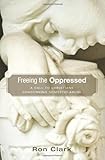
Ron Clark, a minister with several years of experience working with victims and abusers, has written Freeing the Oppressed: A Call to Christians Concerning Domestic Abuse (Wipf and Stock) to acquaint the church with a problem we’ve had difficulty responding to. He has seen many secular agencies lose hope in the church as a positive advocate for the abused. Beyond accusations of irrelevance, in some instances the church has been seen as part of the problem. Battered and broken women have turned to their congregations, only to be told that Christian submissiveness and forgiveness require them to go back to their abusers. In some cases, when women have left their abusive husbands, the church has abandoned them, leaving them facing a crisis not only of health and heart, but of faith as well.
Clark’s book is an extremely helpful introduction to what constitutes “domestic violence,” issues that the abused face, and how abuse affects families. He highlights that when children even observe verbal or physical abuse, their emotional and physical development is stunted, leading not only to increased anxiety, but often to post-traumatic stress and learning and cognitive disorders as well.
Clark offers a theologically sensitive portrait of God’s concern for the victims of abuse, especially in the context of the covenant of marriage. He explores what it means to be male and female created in God’s image. He notes how the biblical prescription of submission in marriage has been abused by, and resulted in the abuse of, many women. He argues, in the context of God’s relationship with Israel in the Old Testament, that marriage should be an equal partnership where “both parties work together to bless or mutually benefit each other,” and he discusses what it means for a man to love his wife “as Christ loved the church,” to love her body as his own.
Inevitably, Clark ventures into the controversial territory of divorce, and brings a well-rounded perspective on it as it relates to abuse. Clark draws attention to what follows one of the most famous Bible verses on the subject, Malachi 2:16: “‘I hate divorce,’ says the Lord God of Israel, ‘and I hate a man’s covering himself with violence as well as with his garment.'”
As its subtitle suggests, Freeing the Oppressed is a call to Christians first to open our eyes. We must recognize that the church is not immune to brokenness. We are then called to follow Christ in ministering to the broken, not to hide from the uncomfortable ugliness of human sin. “Our church is known in our community by what we stand for,” Clark writes, “and what we stand against.”
Though clearly written, this book is not an easy read; it is full of disturbing stories and statistics. I had to put it down at several points, and my dinner-time conversation has been less than usually cheerful. But if I struggle so to read about these experiences, what must life be like for those who have to live them?
Kate Kirkpatrick is an editor with Lion Publishing in Oxford, England.
Copyright © 2010 Christianity Today. Click for reprint information.
Related Elsewhere:
Freeing the Oppressed is available at Amazon.com and other book retailers.
Previous Christianity Today articles on domestic abuse include:
Facing an Unwelcome Truth | We can do better when it comes to bearing the burdens of battered women. (September 27, 2005)
Affectionate Patriarchs | In the popular imagination, conservative evangelical fathers are power-abusing authoritarians. A new study says otherwise. (Aug. 6, 2004)
Headship with a Heart | How biblical patriarchy actually prevents abuse. (Feb. 10, 2003)
CT’s sister publication Leadershiprecently wrote about how churches should handle domestic violence. CT’s sister website Kyria includes past articles on domestic violence.
The Other Pro-Life Movement | How to recognize and help rescue the battered women among us (March/April 2009)
My Abusive “Christian” Marriage | I couldn’t believe this was my reality. And I couldn’t see a way out. (January/February 2009)
The Silent Epidemic | Countless Christian women are battered every day. Here’s how to respond if you or someone you love is abused. (September/October 2004)
CT also has more book reviews.