





When I first read Song of Solomon and began entering the world of intimacy with Jesus, I was shocked by the idea that he delights in me. The pursuer and wooer attributes of Jesus sounded very strange to my workaholic ears.
The ministry I was part of taught Jesus as our eternal bridegroom, but I never understood its significance to my relationship with him or my leadership. Instead, I fervently took hold of the identity of a laborer for Jesus, which over time caused me to see him solely as my director, employer, and supervisor. I was captivated by God’s mission—working for him more than 70 hours a week, sold out for revival, and committed to bearing as much fruit as possible for him. I was consumed with the labor and not investing much in my personal intimacy with Christ.
We Latinos understand hard work. We’re accustomed to working part-time, under the table, and multiple jobs at the same time to make ends meet for our families, pay our phone bills, and save a little money for if and when there’s a crisis. It’s our fathers, uncles, brothers, cousins, friends who will gather in groups outside of Home Depot or in parks waiting to get some work for the day or week. Our gente take healthy pride in our hard work, as do many others around the world laboring day in and day out.
Of course, there’s nothing wrong with working to support or better our family situations and certainly nothing wrong with working hard so that the gospel reaches more unreached people groups, subcultures, families, cities, and nations. But nonetheless, it’s dangerous when our identity becomes rooted in the labor itself. Finding balance—between kingdom work and intimacy with the king—is especially key for leaders engaged in ministry.
Scripture is full of invitations to the worker paradigm (Matt. 9:37, Matt. 28:19–20, and Acts 1:8). All of these passages reflect God’s heart to see us participate in the Great Commission, but if these actions are not lived out via the bridal paradigm, they can disconnect us from the source of love.
We find the bridal paradigm throughout the Bible but especially in the Song of Solomon. Most Jewish people view it as an allegorical interpretation of God’s love for Israel. Most Christians believe it’s an allegory of love between Christ and his church, his bride. Solomon, the bridegroom, is meant to symbolize the powerful love of our eternal bridegroom, Jesus Christ.
The Shulamite woman, our protagonist, models passion and love for her lover, a fascination with who he is, and a hunger for more of his love. She’s shameless and desperate for his love. In chapter 8, we see her love mature as it’s gone through seasons, transitions, distance, and companionship. “Place me like a seal over your heart, like a seal on your arm,” she says, “for love is as strong as death, its jealousy unyielding as the grave. It burns like blazing fire, like a mighty flame. Many waters cannot quench love; rivers cannot sweep it away. If one were to give all the wealth of one’s house for love, it would be utterly scorned” (Song of Solomon 8:6–7).
The Shulamite woman learns to follow her bridegroom, clinging to his words, directions, and desires. By analogy, each of us is called to love Jesus like the Shulamite woman loves her bridegroom. He, in turn, is dedicated to taking his beloved amada deeper into greater reliance and trust in his love and leadership. He is committed to leading our thoughts, our hearts, and our convictions.
As leaders and lay leaders, how do we keep our eyes on Jesus?
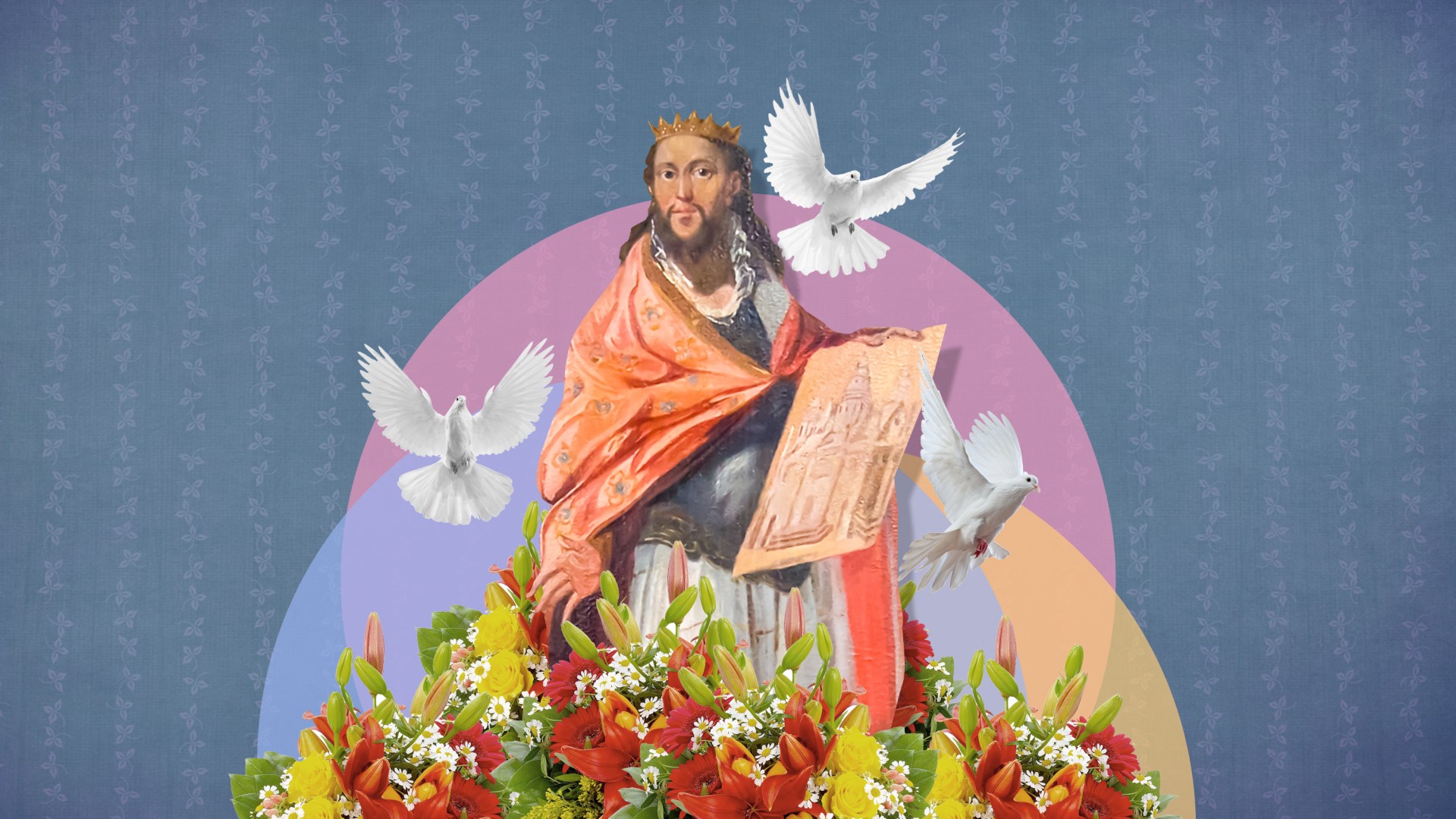
In Song of Solomon chapters 1 and 4, King Solomon praises the Shulamite’s dove-like eyes (1:15 and 4:1). Doves don’t have peripheral vision—they can’t see to the right or to the left, only what’s in front of them. This theme of having our eyes set on Christ is evident throughout Scripture and throughout Israel’s story. God knows we are easily distracted and anxious; our eyes need to be set not on our circumstances, our failures, or on fellow broken people but rather on him.
Accordingly, we’re called to have dove-like eyes that enable us to pursue intimacy before impact. Jesus is coming back for a strong, fiery, beautiful bride that’s lovesick and glowing. In the meantime, seeking him allows us to partner with him to strengthen others, to bring more of heaven to our earthly realities, and to see love truly change the world.
This adapted excerpt was taken with permission from Hermanas: Deepening Our Identity and Growing Our Influence by Natalia Kohn, Noemi Vega Quiñones, and Kristy Garza Robinson. Copyright (c) 2018 by Natalia Kohn, Noemi Vega Quiñones, and Kristy Garza Robinson. Published by InterVarsity Press, Downers Grove, IL. www.ivpress.com







