"The Lord has made me a sign unto this nation, an' I go round a'testifyin' an' showin' on 'em their sins agin my people."

At a gathering of prominent clergymen and abolitionists at the home of Harriet Beecher Stowe, author of Uncle Tom's Cabin, Stowe was informed that Sojourner Truth was downstairs and wanted to meet her.
"You's heerd o' me, I reckon?" the former slave asked Stowe when she came downstairs.
"Yes, I think I have. You go about lecturing, do you not?"
"Yes, honey, that's what I do. The Lord has made me a sign unto this nation, an' I go round a'testifyin' an' showin' on 'em their sins agin my people."
Fascinated by Truth's stories and demeanor, Stowe called down several of the more well-known ministers at the party. When asked if she preached from the Bible, Truth said no, because she couldn't read.
"When I preaches," she said, "I has just one text to preach from, an' I always preaches from this one. My text is, 'When I found Jesus.' "
"Well, you couldn't have found a better one," said one of the ministers.
In fact, Truth preached on more themes than that—abolition and women's rights to name two—and became one of the most celebrated and controversial itinerants of her era.
Out of slavery
Born a slave named Isabella Baumfree in southeastern New York, the future abolitionist had several owners during her childhood—many of them cruel—before ending up the property of John Dumont at age 13. For 17 years, she worked for him and then escaped. She made her way to the home of Issac and Maria Van Wagener—whose home she said God showed her in a vision. The Quaker couple bought her from Dumont and then freed her.
Timeline |
|
|
1776 |
U.S. Declaration of Independence |
|
1780 |
Robert Raikes begins his Sunday school |
|
1789 |
Bill of Rights |
|
1797 |
Sojourner Truth born |
|
1883 |
Sojourner Truth dies |
|
1891 |
Death of Samuel Crowther, First Anglican African Bishop |
A couple of years later, she had an experience that solidified her emerging faith. According to her dictated autobiography, one day "God revealed himself to her, with all the suddenness of a flash of lightning, showing her, 'in the twinkling of an eye, that he was all over,' that he pervaded the universe, 'and that there was no place where God was not.'"
"I jes' walked round an' round in a dream," the former slave later told Stowe. "Jesus loved me! I knowed it, I felt it."
During her early years, though, her faith was confused, and at one point she joined a cult whose leader eventually murdered one of the members; for another period, she followed the Millerites, who predicted Christ would return in 1843.
Wanting to make a fresh start, Isabella asked God for a new name. Again she had a vision—God renamed her Sojourner "because I was to travel up an' down the land, showin' the people their sins, an' bein' a sign unto them." She soon asked God for a second name, "'cause everybody else had two names; and the Lord gave me Truth, because I was to declare the truth to the people."
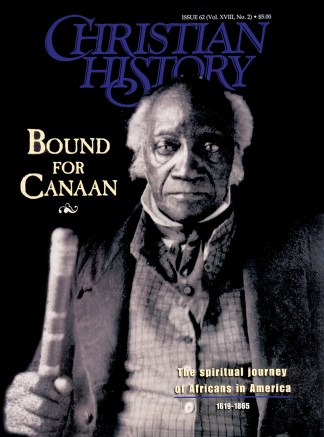
With this new mission, she left New York and traveled throughout New England, attending local prayer meetings and others she called on her own. In 1850 she published her autobiography, written with Olive Gilbert. It brought her fame, and with that fame came harassment. When she was once told the building she was to speak in would be burned if she preached, she replied, "Then I will speak to the ashes." Her quick wit and determination were only successful to a point. After being physically assaulted by one particularly vicious mob, she was forced to walk with a cane for the rest of her life.
It was against slavery that the former slave made her most virulent attacks. But she was also a woman, and once she met other female abolitionists, she became an avid supporter of women's rights as well. For many northerners, this was even more controversial than her abolitionist preaching. Some tried to stop her from speaking at a Women's Rights Convention in Akron, Ohio, in 1851—they feared it would weaken the abolitionist movement. But Truth spoke anyway, delivering her most famous speech:
That man over there says that women need to be helped into carriages and lifted over ditches and to have the best place everywhere. Nobody helps me any best place. And ain't I a woman? Look at me! Look at my arm. I have plowed, I have planted, and I have gathered into barns. And no man could head me. And ain't I a woman? I could work as much and eat as much as man—when I could get it—and bear the lash as well! And ain't I a woman? I have borne children and seen most of them sold into slavery, and when I cried out with a mother's grief, none but Jesus heard me. And ain't I a woman?
By the end of the Civil War, Truth had met with Abraham Lincoln, had her arm dislocated by a racist streetcar conductor, petitioned the government to make western lands available to freed blacks, and made countless speeches on behalf of African Americans and women. In 1875, she retired to her home in Battle Creek, Michigan, where she remained until her death.
Corresponding Issue