In this series



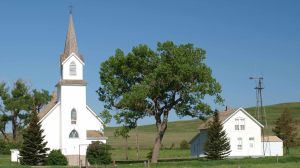

Update (Aug. 21): USA Today examines the irony of the federal government seemingly "calling the bluff" of an atheist group's challege to parsonage tax breaks for pastors.
Such housing allowances last came under scrutiny in 2002 when the IRS challenged Rick Warren on his exemption, leading Congress to revise the law. CT offered its own take in an editorial.
—–
The Evangelical Council for Financial Accountability (ECFA) has been tracking the ongoing attempt by atheist activists to overturn tax breaks offered to clergy for housing expenses.
Recently the case took "a fascinating turn," as ECFA notes the federal government, in defending the current clergy housing allowance, is arguing that atheist leaders would likely qualify for equal tax breaks if they would bother to apply for them. (Forbes also notes the irony.)
ECFA writes:
According to attorneys for the U.S. Department of Justice, not only is the law constitutional, but atheists might also be considered religious leaders for purposes of federal tax law ("ministers of the gospel") to qualify for the exclusion.
…
The government explained that, although FFRF had designated housing allowances for its leaders, they never followed through in claiming the exclusion with the IRS. Furthermore, if they had tried to claim the clergy housing exclusion, it is possible that FFRF's leaders could have met the criteria necessary to qualify: "[T]he facts here illustrate that it is conceivable that an atheist who does things that [FFRF's leaders] do in light of their personally held beliefs and in the course of their employment could meet the requirements for the exclusion in § 107(2), including the definition for 'minister' under its terms."
The government then devoted over 10 pages of its court brief to outlining how an atheist leader could conceivably meet the tax law definition of a minister and therefore receive a housing exclusion under Section 107 of the tax code. The argument began, "Non-theistic beliefs, including atheism, may qualify as 'religious' beliefs in various contexts because they pertain to religion and fulfill a similar role in a person's life." According to the government, legal precedent dictating who is a minister for tax law purposes "utilizes factors that do not inherently preclude an atheist from claiming an exclusion under § 107(2)" and "[b]ecause atheism has been considered a religion, it is possible than an atheist might qualify for status as a minister under § 107(2)."
CT previously reported how the threat to pastor parsonages lost its legal legs but was revived again, and examined debate over whether or not Congress should change the rules on pastor housing allowances. CT also noted the quirky reasoning that recently allowed one prominent pastor to claim two parsonages.