The Turkish government neglected its duty to protect three Christians who were tortured and killed in 2007, a Turkish court ruled on Tuesday.
The Malatya Administrative Court has ordered the government to pay damages to the victims’ families, ruling that the Turkish interior ministry and Malatya governor’s office ignored reliable intelligence that Turkish nationalists were targeting the three Christians days prior to their murder.
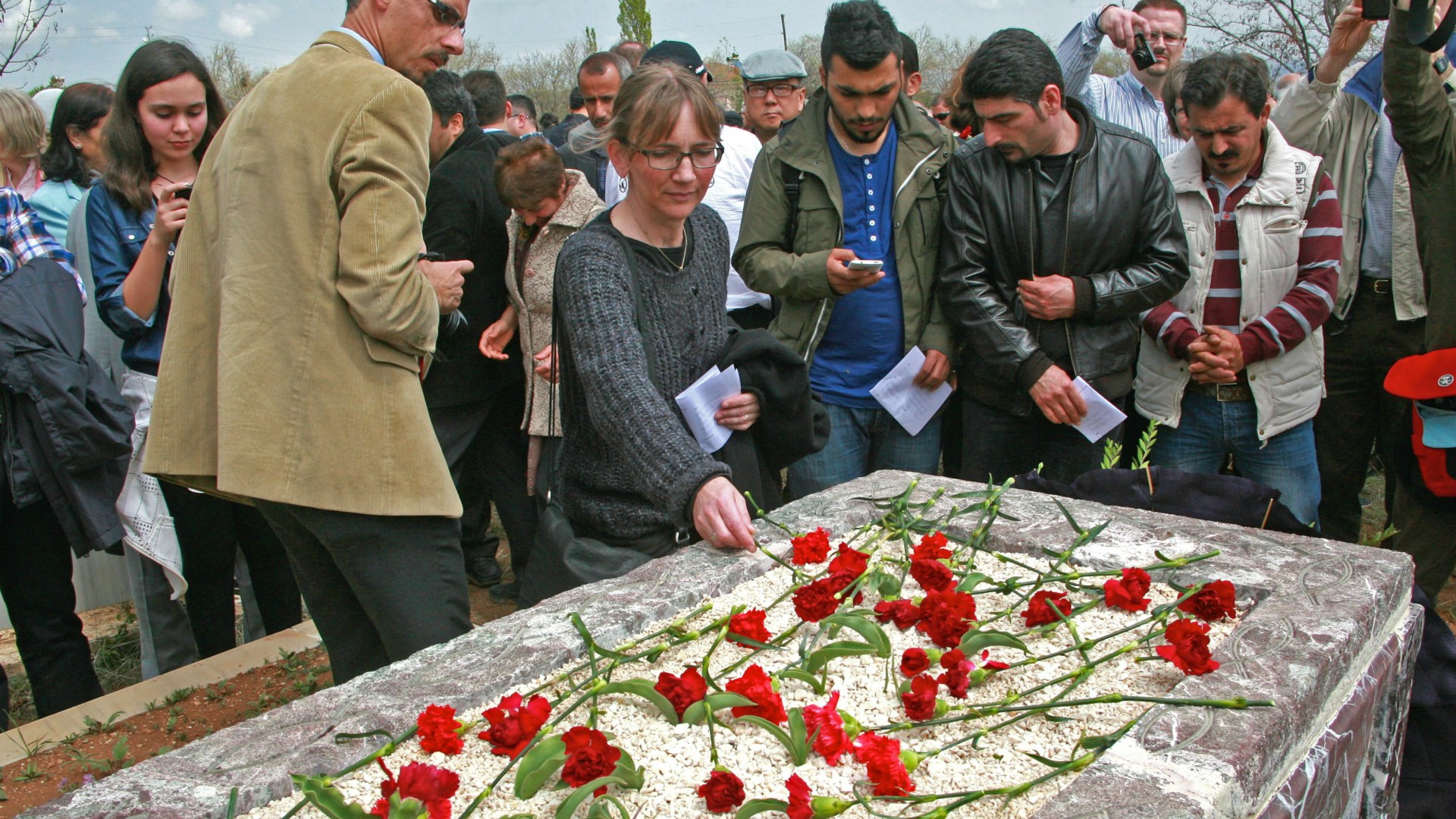
The Christians were killed by five young men with alleged links to Turkish nationalists on April 18, 2007, in the office of the Zirve Publishing House in Malatya in southeastern Turkey. Ugur Yüksel, 32, and Necati Aydin, 36, both Turkish converts from Islam, and Tilmann Geske, 45, a German national, were bound, interrogated about their Christian activities, and then mutilated and killed with knives, according to court evidence.
According to several Christians close to the victims, one or more of the accused suspects had cultivated relationships with the three men, one even going so far as to pose as a new convert to the Christian faith.
The court ordered the interior ministry to pay the families close to 1 million Turkish lira (US $333,980) in damages. Susanne Geske (Tilmann’s widow) and her three children were awarded US $105,000 for emotional distress and US $5,500 for physical harm. The remainder of the damages were awarded to Aydin’s wife and Yüksel’s father.
Susanne said Wednesday that no amount of money will bring her husband back or fill their loss.
“Four hundred thousand lira for someone being killed is baffling, funny,” she said. “And anyway, although the money is welcome, we’re not yet believing we will see the money.”
Government appeals to the court-ordered award, if filed, could take years to settle, said Susanne. After taxes, civil fees, and lawyer’s fees are assigned, the amount her family receives could be greatly reduced.
The Geske family filed its civil case in 2008, around the same time criminal proceedings began against the five men accused of the killing. The criminal case grinds on with little hope of resolution.
Although police arrested the five suspects—Salih Gurler, Cuma Ozdemir, Abuzer Yildirim, Hamit Ceker, and Emre Gunaydin—almost immediately after the crime was reported, prosecuting them has been problematic. The judges have been changed at least twice and the prosecutors have been changed four times, causing significant delays.
At times, subpoenaed witnesses have simply refused to show up in court to testify, yet haven't been punished for contempt of court.
The most significant delay was the attempt to explore links between the killings and a larger alleged attempt by the Turkish military to subvert the Justice and Development Party-led government.
In 2009, the murder case was linked to the Ergenekon organization, an alleged clandestine nationalist group suspected of plotting a cabal against the government. As a result, a host of new witnesses were called, including a colonel in the gendarmerie and three army officers.
In 2012, government documents confirmed that secret military units played a role in the killings.
In March 2014, the five suspects were released on bail under a new reform law that reduced the allowable period of pretrial detention from 10 years to 5 years. Under public pressure, authorities required them to wear electronic monitoring devices, but the release caused extreme distress among families and friends of the victims.
That fall, the suspects blamed the crime on Hizmet, an Islamic group that the government has previously accused of treason.
In all, 20 men were arrested for helping to plan the attacks. Since then, all but one have been released on probation. The remaining suspect is being held on charges in a separate case.
The five defendants charged with carrying out the murders have previously threatened family members of the victims. The wife of a Christian witness of the killings suffered a nervous breakdown after the March release, and was hospitalized until she recovered, her husband told Morning Star News.
After the most recent criminal court hearing earlier this month, Susanne voiced her frustration about the length of time the court was taking in coming to a verdict. She doubts the civil verdict will have an impact on the criminal trial.
“I don’t think one thing has to do with the other,” she said.
The next hearing is set for March 1.
CT ran an editorial on the Malatya martyrs in 2007, and profiled Turkey’s Christian population in a 2008 cover story. CT has previously reported on how Aydin’s family is rebuilding its life, and reviewed a 2010 documentary remembering the martyrs’ lives. CT also investigated claims that Turkish Mission sent a financial appeal with false information.