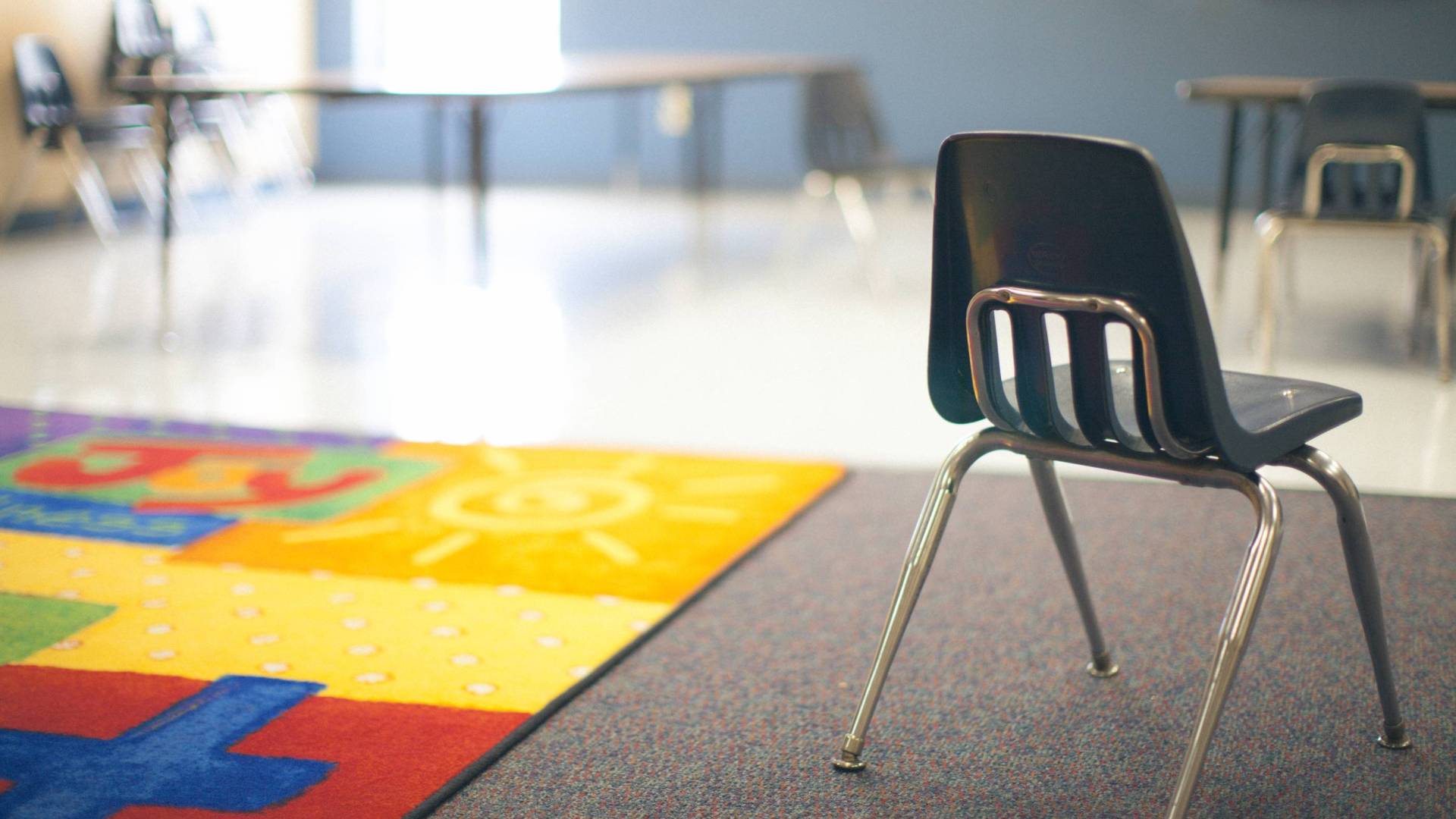
When Tracey Fixen volunteered to serve as the Sunday school superintendent for her church, she had a clean slate. There had been no religious education programing at Our Savior’s Lutheran in Colefax, North Dakota.
“I started saying, ‘We’re going to watch videos so we have some sort of adult education,’” she said. The 200-person church now offers lessons during a coffee hour prior to the Sunday service each week.
Many of the materials they have are “outdated,” Fixen said—it’s not in the budget to invest in new ones right now—but putting on some kind of Sunday school is more than a lot of churches are doing.
As US church attendance remains stagnant and congregations move toward a focus on Bible studies or small groups, religious education classes on Wednesday nights or Sunday mornings have largely fallen away.
Plus, those extra gatherings were put on hold during the COVID-19 pandemic. Will they ever come back?
New data from the Hartford Institute for Religion Research shows that half of churches surveyed report that their religious education programs were majorly disrupted in the past two years, though evangelical churches weren’t as affected as mainline, Catholic, and Orthodox congregations.
The majority of churches had fewer religious education offerings in 2021, while a quarter recouped some of those losses by March of this year.
Among the surveyed congregations, “a few consolidated classrooms and combined age groups, while some did away with their Sunday classes and moved them to weeknights for the whole family,” the researchers wrote. “For some churches, these decisions may have been a conscious choice, but for others, they may have been necessary to respond to shrinking numbers.”
About one in six churches either did not offer adult education programs before the pandemic or have since discontinued them, the study found. Lack of involvement may end up making Sunday school “no longer feasible” in more congregations in the future, it said.
Doug Hummer, associate pastor at Sanibel Community Church on Sanibel Island, Florida, sees Sunday school, coupled with weekly worship services, as a central way the church follows biblical commands around teaching and discipleship.
“The church is where discipleship happens … like it says in Matthew 28, to make disciples, teach them, train them, and baptize them,” he said. “If you remove that discipleship component, do you have a church? Because that's what makes the church unique from any other organization—that we are empowered by the Spirit of God to make disciples, to teach, train, and equip.”
The church also hosts small groups and Bible studies, but Hummer said he believes religious education classes are an essential component of the church’s mission.
The challenge of implementing religious education classes at churches comes down to finances, resources, availability, priorities, and time—squeezing in another weekly commitment beyond regular church services and small group meetings.
While churches recover from COVID-19 attendance losses, it can be a struggle to get busy congregants to sign up. But Sunday school, Paul Jeon says, plays a distinctive role compared to other gatherings.
“When someone comes to our classes, that's not really the venue to share what's going on in your life,” said Jeon, pastor of NewCity Church outside Washington, DC. “The purpose is learning something—whether a skill or specific content.”
Like many other congregations, NewCity also struggled finding people to lead small groups or teach Sunday school. Many people are intimidated, thinking they don’t know enough to hold such a position, Jeon said.
The pandemic has also significantly affected church volunteer numbers nationwide, Gallup reported. Older members, who were some of the most committed Sunday school teachers, had reason to be particularly cautious about returning in person during COVID-19, and some remain hesitant about teaching young kids, who haven’t yet been vaccinated.
Volunteer shortages can hit small churches hard. Churches with under 50 attendees saw the biggest drop in adult education programs in the Hartford survey, while large churches saw programs grow.
Chris Minor, who pastors an 80-person congregation in Rockford, Michigan, said Sunday nights at his church are devoted to a more casual and educational style.
“Instead of preaching a different message,” Minor said, “I teach and make it interactive with Q and A, going deeper into the morning’s text.”
Half of congregations (48%), like Our Savior’s in North Dakota, take advantage of video resources for Sunday school and other education programming.
Video classes also allowed churches to offer hybrid programs or for participants to watch “on demand” rather than attending a meeting together each week, the researchers found.
“Equal numbers of respondents praised Zoom as decried the ineffectiveness of it as a platform for religious education,” the study found, noting that children’s classes were more difficult to move online than adult ones. “Nevertheless, it was impressive to see the wide range of efforts tried and creativity of congregations of all sizes when faced with the reality of the pandemic and the need to educate their members young and old.”
Though the pandemic represents the latest iteration, perhaps Sunday school has always had its challenges. A 1959 CT cover story asked, “Shall We Close the Sunday School?”
“Though the Sunday School seems to limp along, it often accomplishes wonders,” it read. “Only an all-wise God could utilize untrained volunteers, meager physical facilities, and limited materials to change the course of so many lives.”