





This edition is sponsored by Cru
Hello, fellow wayfarers … How to make up your mind about a major life decision … What I learned teaching through the Book of Revelation again, quickly this time … Why online sports betting is changing your world, even if you don’t know it … A Desert Island Playlist from the site of the first naval battle of the American Revolution … This is this week’s Moore to the Point.
8 Things I’ve Learned About How to Make a Major Life Decision
Not long ago, someone came to me grappling with a life decision. It would affect where he lived and what he did for work, and he didn’t want to get it wrong. “I don’t want to make a mistake I’ll regret,” he said. “How do I know if I can trust myself to make the right decision?”
I said, “How do I know I can trust myself to give you advice about how to trust yourself to make the right decision?” I was only three-fourths of the way kidding. His question was a good one, and it’s one that at some point we all have to ask.
My conversation partner spoke of a “major life decision,” but those aren’t really the hard ones. Most of our important decisions aren’t the huge ones (“Will I deny Christ if I’m forced to fight lions in the Colosseum?”), nor are they the tiny ones (“Should I eat Chick-fil-A today or warm up leftovers at home?”). The most troubling are those middle-weight decisions: “Should I take that job?” or “Should I call that person?” or “Should I attend that church?” or “Should I go to that school?”
Part of the reason these decisions are so hard is because we are typically people who either prize the objective over the subjective or the other way around. I’ve known those who do SWOT exercises (strengths, weaknesses, opportunities, threats) to decide whether to go to Gatlinburg or to Panama City Beach for vacation. And I’ve known people who, when asked to give some money to help kids in their church go to youth camp, spend weeks trying to get “a peace about it.” If you rely on only the objective or only the subjective, you will never make a decision.
In his commentary on the Book of Numbers, Eastern Orthodox priest Patrick Henry Reardon noted that God provided guidance for his people out of Egypt with both the objective, fixed Word of the Torah and the unpredictable, mysterious leading of the pillar of fire and cloud.
“Israel recognized no possibility of conflict between God’s will fixed in the Torah and the more fluid guidance He provided in the cloud and pillar,” Reardon writes. “The divine guidance in the lives of the faithful is ever thus. At no point is God’s revealed will in conflict with the fixed and determined order by which men are ever to be governed, but also at no time is a man justified simply by observing those fixed and permanent norms of the Law. God always guides His people in these two ways.”
I agree, and here are some suggestions I had for the man who asked for my advice in grappling with these sorts of decisions.
1. Rule out first what’s objectively wrong.
You don’t have to pray about whether to train for a new career as a trafficker for a cocaine cartel. If you’re married, you don’t need to seek the Lord’s will about whether to create a Tinder profile for yourself. (The answer to both is no.)
Even with matters that are not straightforwardly moral, part of biblical wisdom is observing the typical outcome of people’s decisions. We ought to know, for example, that taking a dog by the ears is a bad idea (Prov. 26:17). We make many decisions by remembering others who made similar choices for similar reasons and noticing what they saw or missed.
2. Cultivate long-term biblical wisdom.
Most decisions are about choosing between what seem to be morally equivalent options. In those cases, you should be shaped by Scripture, but probably not in the way you think. A search of your Bible app is not going to tell you whether you should change your major to marine biology just because you happen to be reading Jonah. Most of your reading of Scripture is not going to seem relevant to the decisions you are making, because it’s not a set of tarot cards.
Like invisible yeast fermenting, the Word shapes you to have the kind of conscience and intuition to make decisions, and that happens over a long period of time. What you are reading and praying now is usually getting you ready for decisions you have not yet faced.
3. Recognize the ways otherwise good decisions could be wrong for you.
Here’s where the objective and the subjective meet. You have to know not just what is right or wrong but what is right or wrong for you given your temperament, vulnerabilities, and experiences. The recovering alcoholic should probably say no to attending bartending school.
Years ago, I was asked to consider doing a talk-radio call-in program on a regular basis. I’d done it as a fill-in many times, enough to see I would be both personally miserable and professionally bad at doing what that format would require—surfing whatever was outraging the audience at the moment. Some people could do that—and have—without becoming audience-captured hacks. But I think I would have struggled. Saying yes to that opportunity wouldn’t be straightforwardly morally wrong, but it would have put me in a place of temptation I am now quite sure that I couldn’t have handled.
4. Subvert your quirks.
Look back on your decision-making and ask whether your temperament leans more toward impulsiveness or fearfulness. If you typically make rash decisions, tell yourself to slow down. Sometimes that kind of quickness is its own kind of indecisiveness: If I just jump and do it, I don’t have to spend time wondering about it. On the other hand, if you tend to ruminate endlessly on whether to do something, price that in too and realize that no matter when you make a decision, your psyche will scream at you, Why so fast? What if something goes wrong? Resolve not to let that rule you.
If you typically try to gain happiness with some change in venue, recognize that and slow down. If you typically try to find contentment by retreating to a rut, spur yourself into what will feel dangerous for you.
5. Don’t panic at perplexity.
With a lot of decisions, there is a long time of not knowing what to do. That can lead us to feel anxious, as though we will always be uncertain. But our perplexity is a crucial part of the decision-making. We don’t like that. This is one reason some people want a firm, unquestionable answer as to what they should do—whether that’s a set of data points (a personality or aptitude test, for example) or an indisputable, settled peace. We want a solid answer for the same reason people want to read horoscopes: We want the kind of control that removes the risk of making the wrong decision.
Most of the time, though, that sort of immediate clarity would destroy us later. Our Lord’s brother James told us, “If any of you lacks wisdom, let him ask God, who gives generously to all without reproach, and it will be given him” (1:5, ESV throughout). That’s not a one-time ask. We don’t ask for wisdom and then get a lifetime supply. Just as we keep asking for bread daily, we must keep seeking guidance from God.
An essential aspect of the feeding of the 5,000 was Jesus asking his disciple Philip, “Where are we to buy bread, so that these people may eat?” John reported this was not because Jesus did not know the answer, “for he himself knew what he would do” (John 6:5–6). Philip first had to come to the edge of what he could know and do in order to say, There is no way to do this. Your perplexity may well be shaping you into the kind of person you will need to be on the other side of it.
6. Expect a gradual realization more often than a sudden epiphany.
Once, when I was making a personally important decision that was taking a long time, I talked to the late Tim Keller about how to decide. He said, “You don’t need to. You’ve already made this decision. Your conscious mind just hasn’t caught up to the rest of you yet.” He was right. Looking back, I could see how, even in my fear, I was spending more and more time imagining the future that could be. I could see all the little providences that seemed to be getting me ready for it. Often, I’ve found that many decisions seem less like “Let there be light” and more like the sunrise that is so subtle we cannot really see when the night ended and the morning began except by looking back.
7. Seek out third-space advice.
The Book of Proverbs tells us that “in an abundance of counselors there is safety” (11:14), and most of us realize we need advice. But it’s also important that you see the different kinds of counsel you need. Sometimes you need advice from someone who knows you, loves you, and has your best interest in mind. But with some things, that person has too much of a stake in your decision. Sometimes you need advice from someone at a distance, someone who doesn’t know you and can tell you objectively what to choose.
But often you need a third kind of advice. You need counsel from someone who knows your strengths and weaknesses but is distant enough that he or she won’t be affected by what you decide.
8. Take responsibility but lose control.
One of the reasons decisions can provoke such anxiety is that we want to protect ourselves from future hurt or regret. To some degree, that’s healthy. Jesus affirmed that only a foolish king would go to war without first sitting down to “deliberate whether he is able with ten thousand to meet him who comes against him with twenty thousand” (Luke 14:31). But he said this in the context of taking up the cross and following him. That’s not a matter of calculation and control.
Jesus said to Peter, “What I am doing you do not understand now, but afterward you will understand” (John 13:7). In conforming us to himself, Christ does not give us what we want—an ahead-of-time overview of exactly the path he has planned for us.
“Little children, keep yourselves from idols,” the Bible tells us (1 John 5:21). Sometimes that idol can be a refusal to make a decision—expecting to be carried along without ever having to say yes or no. Sometimes that idol can be a refusal to wait for a decision to present itself—wanting some sort of sign to choose for us. For some, the idol can be a refusal to think. For some, the idol can be overthinking. For some, the idol can be trusting themselves too much. For others, it can be second-guessing themselves too much.
An idol is predictable. We make its mouth and give it the words we want to hear. The living God is different. We can ask for guidance, but we cannot peer into every counterfactual. We can take responsibility for our decisions while also trusting that God’s providence includes even all of that.
Wrapping Up the Book of Revelation
Last Thursday, I finished a five-week series on the Book of Revelation at Lipscomb University for its Lifelong Learning program. When I’ve taught the book before, I’ve taken a year or so—and what a difference it is to do a relatively quick overview! So much had to be left behind (no pun intended).
The questions in the seminar were smart and focused, on matters ranging from the nature of power to ways of thinking about transcending time and space to the Roman context of the Beast to whether the thousand years of Revelation 20 refers to now or later.
Every time I teach this book, I remember how constantly relevant it is to be reminded of the meaning of “unveiling” the spiritual reality behind our visible experience; the meaning of “overcoming” as not defeating the forces of the world but by not conforming to them; and the meaning of “Behold, I am coming soon” (22:12) as redefining our little lives in the vast sweep of history.
Why Online Sports Betting Will Matter for You
In last week’s newsletter, I mentioned my conversation with McKay Coppins about how he spent $10,000 of his employer’s money on online sports betting—and learned a lot about himself and the future of American culture. That conversation is now live, and I think you’ll want to hear it.
We talk about McKay’s Atlantic piece “My Year as a Degenerate Gambler.” I’ve known McKay for well over a decade. He’s a staff writer at The Atlantic, the author of the definitive Mitt Romney biography, and a practicing Latter-day Saint. In other words, he is just about the last person about whom I would have expected to find an article with the word degenerate in the title.
The piece begins with what may be one of the most awkward bishop’s office meetings in modern religious history. McKay’s editor at The Atlantic had asked him to spend the NFL season gambling—on the magazine’s dime—for a story about the explosion of online sports betting. As a Latter-day Saint, McKay doesn’t gamble. So he went to his bishop. He told me about the “look of pastoral concern” that came across the bishop’s face as McKay explained the proposition. The bishop eventually gave a tentative blessing—on journalistic grounds—but didn’t let McKay leave the room until he had told a few cautionary tales about people he had watched lose their lives to this particular vice. The last thing he said was “Be careful.” McKay shrugged it off. In retrospect, he told me, it was prophetic.
We talked about a lot of things in this conversation that didn’t make it into last week’s newsletter. We talked about how McKay had always assumed he didn’t have an “addictive personality”—and about what it means to discover in middle age that maybe you just had the good fortune to belong to a community that built guardrails around you before you knew you needed them. (C. S. Lewis once observed that a eunuch cannot boast of his chastity. McKay’s experience seems to bear that out.)
We talked about the strange, dark intimacy of hating a professional athlete you’ve never met because he fumbled at the goal line and cost you money—and about whether that same psychology might explain something about Americans’ hatred for each other over politics. We talked about shame and prayer. We talked about why he ended the year by Googling the Virginia self-exclusion form and binding himself to the mast like Odysseus—or like a werewolf chaining himself in the basement before the full moon.
And we talked about why almost no pastor of any tradition is preaching about online betting—even though the data suggest it may be one of the next generation’s defining spiritual crises. This conversation is about more than betting. It’s about desire, discipline, and the kinds of guardrails we don’t realize we need until they’re gone.
You can listen to the conversation here or watch it on YouTube here.
Paid Content
What if you could turn the world’s most-watched sporting event into a moment that matters?
This summer, open your home, spark faith conversations, and share hope through hosting a soccer watch party. Because moments like this don’t just entertain—they open doors for connection and meaningful conversation.
This free Host Kit offers 7 simple resources to host a fun, natural watch party to step into this opportunity with purpose and confidence. Order your free kit today!
| Advertise with us |
Desert Island Playlist
Every other week, I share a playlist of songs one of you says you’d want to have on hand if you were stranded on a desert island. This week’s submission comes from reader Susan Tilney from Machias, Maine (which she describes as “a long way from a desert island, unless you count Mount Desert Island”). Here’s Susan’s list:
- “House of the Rising Sun” by The Animals: Fond memory: first song I ever performed in public way back in the days of coffeehouses.
- “At Seventeen” by Janis Ian: Is there anyone who can’t feel this song?
- “This Land is Your Land” by Peter, Paul and Mary: Because it is, and it’s PP&M!
- “American Pie” by Don McLean: Just a great song!
- “One More Ride on the Merry-Go-Round” by Jane Oliver: Perfectly angsty for the desert island scenario, and just so very good.
- “Will the Circle be Unbroken” by Nitty Gritty Dirt Band: My first introduction (that I could sit through) to something in the country-and-western genre by a favorite aunt, and still the only C&W song I truly love.
- “Mr. Bojangles” by Jerry Jeff Walker: Takes me back to my childhood watching of The Little Colonel for the pure joy of the staircase dance scene.
- “You Can’t Hurry Love” by The Supremes: Well, you can’t.
- “Oh Shenandoah” (Stephen White version), sung by almost anyone: You can’t not sing this aloud while standing at the confluence of the Potomac and Shenandoah rivers in Harpers Ferry, West Virginia.
- “Jailhouse Rock” by Elvis Presley: Can’t sit around dreamin’ all the time. Gotta get up and move!
- “California Dreamin’” by The Mamas & the Papas. A classic from my youth.
Thank you, Susan!
Readers, what do y’all think? If you were stranded on a desert island for the rest of your life and could have only one playlist or one bookshelf with you, what songs or books would you choose?
- For a Desert Island Playlist, send me a list between 5 and 12 songs, excluding hymns and worship songs. (We’ll cover those later.)
- For a Desert Island Bookshelf, send me a list of up to 12 books, along with a photo of all the books together.
Send your list (or both lists) to questions@russellmoore.com, and include as much or as little explanation of your choices as you would like, along with the city and state from which you’re writing.
Quote of the moment
“Joy is the only inoculation against the despair to which any sane person is prone, the only antidote to the nihilism that wafts through our intellectual atmosphere like sarin gas. More than that: Joy is what keeps reality from being sufficient unto itself, which is to say, it is what keeps reality real, since in this world of multiverses and quantum weirdness, where ninety-five percent of matter and energy we know only to name as ‘dark,’ it is obvious that reality extends far beyond what our senses can perceive.”
—Christian Wiman in Joy: 100 Poems
Currently reading (or re-Reading)
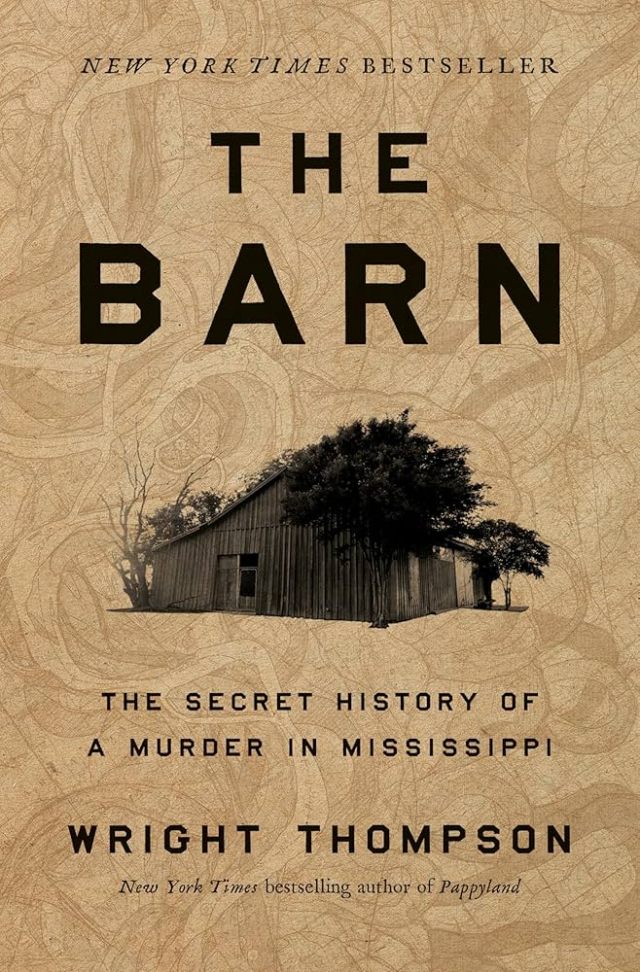
- Wright Thompson, The Barn: The Secret History of a Murder in Mississippi (Penguin)
- Adrian Wooldridge, The Revolutionary Center: The Lost Genius of Liberalism (Pegasus)
- Edward J. Dupuy, Autobiography in Walker Percy: Repetition, Recovery, and Redemption (Louisiana State University)
join us at Christianity Today
Founded by Billy Graham, Christianity Today is on a mission to lift up the sages and storytellers of the global church for the sake of the gospel of Jesus Christ. Subscribe now to get exclusive print and digital content, along with seasonal devotionals, special issues, and access to the full archives. Plus, you’ll be supporting this weekly conversation we have together. Or, you could give a membership to a friend, a pastor, a church member, someone you mentor, or a curious non-Christian neighbor. You can also make a tax-deductible gift that expands CT’s important voice and influence in the world.
Ask a Question or Say Hello
The Russell Moore Show podcast includes a section where we grapple with the questions you might have about life, the gospel, relationships, work, the church, spirituality, the future, a moral dilemma you’re facing, or whatever. You can send your questions to questions@russellmoore.com. I’ll never use your name—unless you tell me to—and will come up with a groan-inducing pun of a pseudonym for you.
And, of course, I would love to hear from you about anything. Send me an email at questions@russellmoore.com if you have any questions or comments about this newsletter, if there are other things you would like to see discussed here, or if you would just like to say hello.
If you have a friend who might like this, please forward it, and if you’ve gotten this from a friend, please subscribe!


Russell Moore
Editor at Large, Christianity Today
P.S. You can support the continued work of Christianity Today and the Public Theology Project by subscribing to CT magazine.
Moore to the Point
Join Russell Moore in thinking through the important questions of the day, along with book and music recommendations he has found formative.
Delivered free via email to subscribers weekly. Sign up for this newsletter.
You are currently subscribed as no email found. Sign up for more newsletters like this. Manage your email preferences or unsubscribe.




Christianity Today is a 501(c)(3) nonprofit organization.
“Christianity Today” and “CT” are the registered trademarks of Christianity Today International.
Copyright ©2026 Christianity Today, PO Box 788, Wheaton, IL 60187-0788
All rights reserved.