A Priest Serving in Nature's Temple
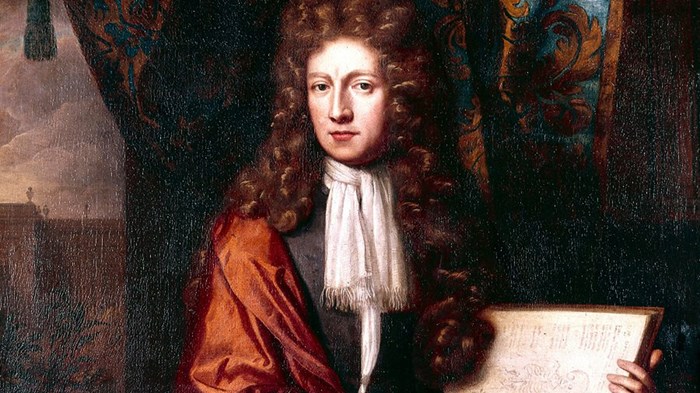


It was truly a dark and stormy night. An adolescent boy, deep asleep, was jarred awake by the concussion of thunder right overhead. Lightning repeatedly ripped the sky outside his window. He was terrified.
The flaming night pressed in on his imagination until he saw himself standing, on judgment day, amid the final conflagration that would consume the world. He trembled at the thought that he was not prepared to face that day, and he resolved to live for God. Robert Boyle kept that vow throughout his life. He dated his conversion from that awful night.
Within months, however, his faith came under attack. During a casual visit to the original Carthusian abbey of Grande Chartreuse in "those Wild Mountaines" near Grenoble, as Boyle described them in a memoir, he became deeply depressed. There, "the Devil taking advantage of that deepe, raving Melancholy, [and] so sad a Place" planted in his mind "distracting Doubts of some of the Fundamentals of Christianity." Boyle even contemplated suicide, drawing back only for fear of committing such a dreadful sin. Only after "a tedious languishment of many months" did it please God to "restore unto him the withdrawne sence of his Favor."
Religious doubt would henceforth be a defining characteristic of Boyle's personality, yet it played a positive role in the construction of his deeply thoughtful, charitably irenic faith.
His approach to doubt—the other side of the coin of faith—was frankly precocious. Just three months after his twentieth birthday, he wrote, "He whose Faith never doubted, may justly doubt of his Faith." Throughout his life, Boyle cultivated an active yet reflective piety. Daily he sought God in the pages of Scripture and investigated His wondrous works for the benefit of others.
Today, Boyle appears in high school chemistry courses as the scientist who formulated "Boyle's Law," describing the inverse relation between the pressure and volume of gases. Because of his many important discoveries, Boyle has been tagged "the father of chemistry."
What is absent from this image is the deeply religious man who wrote as much about God as he did about the nature of air; the man who considered himself a "priest" in the "temple" of nature; the man who paid for translations of the Bible into Gaelic and into the language of the Indians in Massachusetts.
Mary, Kate, and Robyn
Boyle's upbringing did not point him clearly either to science or to deep piety. Born in January 1627, he was the seventh son and fourteenth child of Richard Boyle, the first Earl of Cork, an unscrupulous man who took advantage of English colonialism in Ireland to become one of the wealthiest men in the realm.
Young "Robyn," as he was called, watched as his thirteen older brothers and sisters became pawns in a game of power, the boys given titles and lands and the girls married off to the sons of other powerful men—who usually had more love for their houses and horses than for their wives.
Robyn, however, declined a title and took a dim view of courtly mores. He narrowly avoided an arranged marriage himself, remaining celibate his entire life.
Although she was twelve years older, his sister Katherine became Robyn's closest confidant. A brilliant woman, she convened a salon for important intellectuals, including John Milton and several members of Parliament. Robyn lived in Katherine's London home for much of his adult life. She was also deeply pious and well versed in theology. Robyn, Katherine, and another illustrious sister, Mary Rich, Countess of Warwick, joined regularly in uplifting conversation—as Mary wrote in her diary, "good and profitable discourse of things wherewith we might edify one another."
Boyle's earliest writings reflect the intensity and intimacy of his relationship with God. These include two essays on the spiritual damage done by swearing, an ethical treatise influenced by Erasmus, and various essays, reflections, and romances (fictitious narratives) on moral and religious subjects.
One of Boyle's religious works, Occasional Reflections Upon Several Subjects, gained great popularity among the Puritans and remained in print for almost two hundred years.
Science next to godliness
It was only after writing such works as these that Boyle decided to take up serious scientific study. Although always profoundly curious about the natural world, he was even more strongly motivated by a desire to improve the human condition and to alleviate suffering. From early in his career he applied chemical knowledge to medical problems, publishing recipes for medicines in order to make such cures more widely available to the poor. (In this he anticipated by a century another "minister of medicines"—John Wesley.)
Once Boyle began to investigate nature, he never slackened. His Christian convictions gave these scientific pursuits an unanticipated boost: Science has always involved groups of people working together toward common goals. Boyle's unquestioned honesty, unfailing charity, and genuine interest in the public welfare made him an excellent colleague. Soon his integrity and warmth helped him gain entrée to an important community of "gentlemen," who met regularly in Oxford to view experiments and to discuss the latest scientific discoveries and ideas. In 1660, Boyle joined with a number of these men to found the Royal Society, the first scientific organization in the English-speaking world.
The next dozen years were the most productive of his life, earning him a worldwide reputation as the outstanding experimental scientist of his generation. His most famous contributions involved the use of an air pump, expertly made for him by Robert Hooke, a brilliant Oxford student who went on to become a great scientist himself. With this apparatus, Boyle demonstrated several properties of the air, confirming in clear, clever ways the hypothesis of Blaise Pascal and others that the atmosphere is a vast fluid like the ocean. Just as water pressure increases with depth, so too air pressure, Boyle showed, depends on the height of the atmosphere.
Other experiments, with insects and small mammals, clarified the connections among respiration, combustion, and various components of the air.
Atoms vs. idols
In his subtle book on the doctrine of creation, A Free Enquiry Into the Vulgarly Receiv'd Notion of Nature, Boyle argued that the new science had its theological uses. The prevailing "vulgar" (popular) concept of nature, derived from the Greek scientist Aristotle and the Roman physician Galen, tended to personify nature. Statements, for example, that "nature abhors a vacuum" or that "nature does nothing in vain" Boyle considered idolatrous, since they effectively placed an intelligent, purposive agent, "much like a kind of Goddess," between God and the world God had made.
Noting that the Old Testament contained no "word that properly signifies Nature, in the sense we take it," Boyle argued for what he called the "mechanical philosophy," which explains natural phenomena from the purely mechanical properties and powers given to unintelligent matter by God at the creation. Such an approach, he believed, more clearly underscored the sovereignty of God and located purpose where it properly belonged: in the creator's mind, not in some imaginary "Nature."
Boyle also advocated the argument for the existence of God from signs of design in nature. Indeed, he had a strong interest in apologetics generally, reflecting his lifelong conversation with his own religious doubts. He wrote extensively on apologetic themes and in his will established a lectureship for "proveing the Christian Religion against notorious Infidels (viz) Atheists, Theists [that is, deists—people who believed God created the world, then stepped aside], Pagans, Jews and Mahometans."
Although he often targeted "atheists" in his writings, he realized that genuine philosophical atheism was rare in his day. He was actually more concerned with what he called "practical atheists"—those "baptised infidels" who lived as if there were no God to judge them—and here he thought the design argument had its greatest value.
As he wrote in Disquisition about the Final Causes of Natural Things, Boyle wanted his readers not to "barely observe the Wisdom of God," but to be emotionally convinced of it. And what better to instill "wonder and veneration" in people than to show them the "Admirable Contrivance of the Particular Productions of [His] Immense Wisdom"? He had in mind especially the exquisitely fashioned parts of animals. Thereby, Boyle believed, "Men may be brought, upon the same account, … to acknowledge God, to admire Him, and to thank Him."
Shortly after midnight on the final day of 1691, Robert Boyle died in the house of his beloved sister Katherine. She had died herself just eight days before; grief likely hastened his own passing, although he was never robust and had been in declining health for several years.
Boyle was laid to rest close to Katherine in the chancel of their parish church, St. Martin-in-the-Fields. The precise location of his grave is no longer known. Given the humility he maintained throughout his illustrious life, we may easily imagine that Robert Boyle would be pleased with this final anonymity.
Edward B. Davis is Distinguished Professor of the History of Science at Messiah College. This article is adapted from a chapter in Reading God's World: The Vocation of Scientist, ed. Angus Menuge (Concordia, 2003).
Readers of this article might also be interested the following article by Edward B. Davis, "Robert Boyle's Religious Life, Beliefs, and Vocation." Science & Christian Belief 19.2 (2007): 117-38.
Copyright © 2002 by the author or Christianity Today/Christian History magazine.
Click here for reprint information on Christian History.

Support Our Work
Subscribe to CT for less than $4.25/month