 |
 |
In opinion pieces and editorials, it has become almost obligatory these days to say that Afghanistan has been forgotten by U.S. policymakers since their attention turned to Iraq. But recent events seem to indicate that Afghans are doing their best to enter the Western world. No, I don’t mean that they are building new roads, opening up to the forces of globalization, and overcoming the last remnants of the Taliban. It’s that they are learning the pleasures and benefits of litigation.
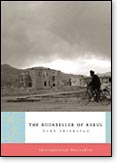
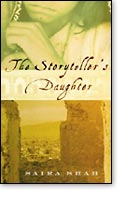
Case in point: the controversy over a book that is not only a European bestseller but also an extraordinary read, Asne Seirstad’s The Bookseller of Kabul. It’s one of two books released this season that delve into the culture of Afghanistan and bring up rich treasures for the foreign reader. The other, The Storyteller’s Daughter, is by British television journalist Saira Shah, best known for her award-winning documentary Beneath the Veil on the oppression of women by the Taliban government of Afghanistan.
For her part, Seirstad seems to have delved deeper than her subjects liked. A journalist seemingly without fear, the blond Norwegian reporter was one of the brigade of media that invaded Kabul along with the forces of the Northern Alliance in November of 2001. There she met an urbane bookseller, Sultan Khan (as she re-names him in the interests of his privacy).
Seirstad was fascinated by a man who had been arrested three times by the Communist regime for selling banned books; whose bookstore had been repeatedly ransacked by the Taliban; who was passionately committed to Persian poetry, to Sufi mysticism, and to the preservation of the culture of Afghanistan. When she told him that she wished to write a book about him, he simply said “Thank you” and, in Seirstad’s words “opened his family to me.” She joined the Khan household and found herself living in a strange dual world of man and woman. While she slept with the women and heard their complaints and their dreams, she was also allowed to eat with the men and speak with them. Even in the family of a liberal Moslem like Sultan Khan, this was something that no Afghan woman was allowed to do.
It was Seirstad’s juxtaposition of the “liberal” Khan, committed to selling the best in books and in preserving the culture of Afghanistan, and the “traditionalist” Khan that led to a lawsuit against her by “Khan” in the Norwegian courts. The bookseller claimed that he had been slandered; clearly the pseudonyms Seirstad employed in her narrative couldn’t hide the identity of such a distinctive figure.
Seirstad describes in detail, for example, how Khan took a second wife when his first grew too old for him; it is a living example of polygamy that leaves a bitter taste in the mouth of the reader. (And, by the way, the best example I can imagine of why Jesus says to the crowds that Moses allowed divorce “because of your hard hearts.”)
This story, among others, led to Khan’s lawsuit, as well as many questions about the veracity of Seirstad’s account, and the “correctness” of a Westerner “judging” non-Western traditions. These questions are undoubtedly helped along by what can only be described as Seirstad’s Ultra New Journalist Style. She describes the innermost thoughts of her subjects, so that what purports to be a journalistic account often reads like a novel.
No one has questioned the correctness of Saira Shah’s account. This is not because it is any less critical of Afghan culture, for she often makes the same points as does Seirstad. But Shah is the daughter of an Afghan, the great Sufi Muslim philosopher and writer, Idries Shah.
Raised in the thoroughly English upper-middle class community of Tunbridge Wells, Saira Shah first came to know her homeland through a web of stories, woven into her imagination by her gifted and passionate father. Indeed, her book is essentially a memoir of how Afghanistan became real for her—and not merely the composite of her father’s stories—through her extensive reporting, beginning with covert cross-border trips during the Soviet occupation.
It’s a fine book, richly reported and well written. But there is something lacking. For one thing, Shah’s journey to self-discovery is simply not as interesting as the Afghan people, whose travails as recounted here often seem to be mere props for her inner life. This is a story of cross-cultural conflict, of a young woman attempting to find her identity in a multi-cultural world; and while such stories can be valuable, they are increasingly predictable—the genre is in danger of exhaustion. Reading Shah, I wanted more Seirstad. I wanted, in other words, an unsparing, detailed evocation, not of a single life but of a family life, a life in a land beset with woe and trouble, in a culture as far from mine as it is possible to imagine and yet as familiar, in the elemental human way, as the city where I live.
Albert Louis Zambone, a D.Phil candidate at the University of Oxford, lives in Charlottesville, Virginia.
Copyright © 2003 Christianity Today. Click for reprint information.
Related Elsewhere
The Bookseller of Kabul is available from Amazon.com and other book retailers.
The publisher offers a sample chapter.
The Storyteller’s Daughter available from Amazon.com and other book retailers.
The publisher offers an excerpt and an interview with the author.