In the Christian calendar, yesterday was Palm Sunday, the beginning of Holy Week. During this week Christians are asked to reflect on the meaning of Jesus' death on the cross, an event that took place nearly two millennia ago at a place which still remains the epicenter of religious and political violence today.
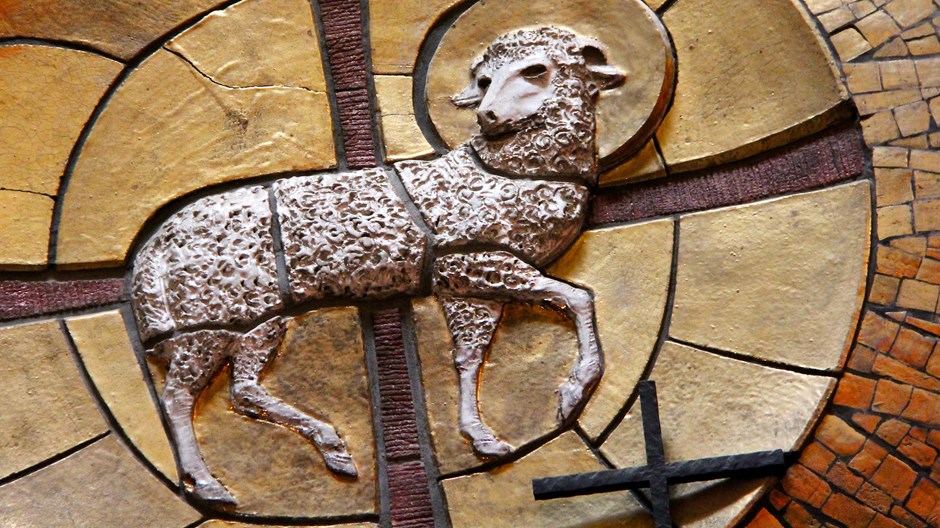
By lunar coincidence, this week also marks, on Tuesday, the festival of Pesah, or Passover, the most celebrated Jewish holiday of the year. Passover commemorates God's deliverance of the children of Israel from slavery in Egypt. Jesus had gone to Jerusalem to celebrate Passover with his disciples when he was caught in the web of events that led to his death. While most Jews do not recognize Jesus as the Messiah, the New Testament weaves the central events of this week into one overarching story of redemptive history. As St. Paul put it, "For Christ, our paschal lamb, has been sacrificed" (1 Corinthians 5:7).
But what makes this week holy? According to some scholars of religion, both the Jewish Passover and the Christian celebration of Jesus' death and resurrection should be understood as Middle Eastern variants of ancient agricultural festivals, springtime rituals based upon the fertility cycle of nature. Jesus' death and resurrection is thus interpreted as yet another example of the many dying and rising savior-myths well known to ancient cultures and especially popular among the mystery religions of the Roman Empire.
In this view, history is a great wheel, a never-ending cycle of night and day, springtime and harvest, bringing the eternal return of life. Philosophically, this view says "there is nothing new under the sun," "there will always be a tomorrow," and "you can feel good about yourself because God's in his heaven and all's right with the world." This view has its appeal: Witness Dan Brown's blockbuster novel, The Da Vinci Code, based upon this gnostic view of reality. Witness too the relative popularity of Easter egg hunts and Good Friday services.
But at its orthodox core the Christian tradition rejects this misreading of the seminal events of Holy Week. It presents a different view of history and a different view of time. It declares that the eternal God of creation has come into our world, has stepped into our time, in the person of a Palestinian peasant named Jesus. The events of Holy Week mark what T. S. Eliot called "the point of intersection of the timeless with time." What happened one Friday in Jerusalem was not "once upon a time," but once for all time. As Jews reenact the mighty act of God in saving his chosen people at the Exodus, so Christians are called to follow Jesus on his lonely trek from the Upper Room through Gethsemane to Calvary.
To those who would reduce the meaning of this week to a mere fable connoting existential truth, Christians say: "What you call myth, that is history!" and, conversely, "What you call history, that is a myth!" The myth of human self-sufficiency, the illusion that the ebb and flow of nature's passions are all we need to build a human life upon, the fantastic hoax that lasting moral order in the world can be derived from the will to power or political ingenuity alone.
At this season of the year, we celebrate the grandeur of God's creation in the beauty of the flowers and the return of the robins. We clasp our loved ones in rituals of food and drink, laughter and embrace. Some of us will also sit in services of silence, music, and sacred readings. We will contemplate the mystery of the holy and the sanctity of all life.
But what makes this week holy is something else. It is the fact that something happened back then and there, in space and in time, something so shattering that the grinding wheels of fate were stopped by it and death is now no longer allowed to have the final word.
Because this is true, we say that the atheist astronomer Carl Sagan was wrong when he described the earth, glimpsed from outer space, as "a lonely speck floating in the enveloping cosmic darkness." Of course, we know that all is not right with the world nor indeed with ourselves. Good Friday does not permit the kind of unscrupulous optimism usually found on our Easter greeting cards. But it does declare that at the heart of the universe there is a personal presence, a God who has chosen not to remain in his heaven, cocooned within himself, but who has become a part of the world he has made, and taken upon himself the burden of loving it back to himself. This he has done as a humbly born baby in a manger, as a suffering man on a cross.
We are invited by this holiest day of Holy Week to believe beyond all doubt that the lonely speck Sagan saw from the telescope in space is a visited planet, that there is redemption in and beyond, though not apart from, suffering and pain, that decisions we make here and now can have consequences that will last forever, that time is a God-given opportunity to learn to love, and that love is the one thing we experience in time that remains in eternity.
Article continues below
Timothy George is dean of Beeson Divinity School of Samford University and an executive editor of Christianity Today. This article originally appeared in The Birmingham News of Alabama.












 While we pray for peace, we need moral clarity about this war.
 A Christian reconciliation group in Israel and Palestine warned that war would come. Now the war threatens their relevance.españolالعربيةFrançaisрусскийУкраїнська
 The rage of the mob is a poor substitute for real community.





