The consecration of openly gay bishop Gene Robinson isn't just creating controversy. It's also creating new ministries.
In recent months, groups of orthodox Episcopalians in Kentucky, Georgia, Florida, South Carolina, Missouri, and Washington state have left the 2.3-million-member mainline denomination. At least a dozen orthodox Anglican congregations have formed in the wake of the Robinson controversy.
The churches remain tied to the larger Anglican communion in some tentative form. The Georgia churches are aligned with the Anglican diocese of Bolivia.
In Versailles, Kentucky, St. John's Episcopal Church split after the diocese's pro-Robinson bishop refused to allow the congregation to hire David Brannen, a Robinson opponent.
Rather than fighting in court, the old board members started a new congregation—St. Andrew's Anglican Church, under the authority of the Province of Uganda. That meant abandoning 157 years of accumulated possessions—pews, prayer books, bank accounts, and buildings—worth $1.9 million.
"We didn't bring anything from the church. Not even the nametags," said Tom Thornbury, one of the board members who switched to St. Andrew's.
The first service, held in a home, drew 130 people. Within one month, the crowd had swelled to more than 200. The church moved its services to a community center.
St. Andrew's supporters have pledged $250,000 to the new church and hired Brannen as rector. Weekly Bible studies have started. A choir has formed, rehearsing each week in space donated by a sympathetic Baptist church. They have a newsletter and website. The first potluck was in March.
While St. Andrew's is growing, St. John's is working to regain its footing. On a recent Sunday, pews in the historic building were nearly empty. The choir loft was abandoned.
Yet many Episcopalians with orthodox views are disappointed by the defections.
Ephraim Radner, rector of the Church of the Ascension in Pueblo, Colorado, voted against Gene Robinson at the 2003 general convention. After the vote, he walked out of the convention, but he hasn't walked away from the Episcopal Church. Church splits send the wrong message to unbelievers, he told CT, and they weaken orthodox witness within the denomination.
Many orthodox are waiting for the so-called Eames Commission, launched at the October 2003 primates meeting, to make its report and formalize a process for disaffected parishes to place themselves under orthodox bishops. According to conservative activist David Virtue, the commission is also considering some form of discipline against the denomination.
Canadian Anglicans Face Off | Bishops hold charges against dissenting clergy, but division and suspicion abound. (Dec. 09, 2003)
The Gay Bishop's Global Fallout | How each of the 39 provinces in the Anglican Communion have responded to Sunday's consecration. (Nov. 07, 2003)
Translating the Anglican Primates | Interpretations vary widely on what last week's statement means, how forceful it was, and what's next. (Oct. 21, 2003)
Anglicanism's Communion of Saints | Under the somber portraits of their predecessors, Anglican archbishops will discuss the fractious issues of the church and homosexuality (Oct. 15, 2003)
Florida Bishop Defies Episcopal Church Head | The consecration of a new bishop becomes the latest battleground between Frank Griswold and the American Anglican Council. (Oct. 10, 2003)
Reimagining Anglican Bonds of Affection | Orthodox American leaders begin describing what realignment of the Anglican Communion might look like. (Oct. 09, 2003)
Deputies Slice into the Gordian Knot | The Episcopal Church's House of Deputies approves Gene Robinson as New Hampshire Bishop. The House of Bishops will vote today. (Aug. 4, 2003)
Praise the Lord and Pass the Condoms | Southern Hemisphere primates warned that approving Gene Robinson would place the church outside most of the world's 72 million Anglicans. "You'll get over it," responded about 60 percent of the House of Deputies. (Aug. 4, 2003)
Gene and Me | My history with the openly gay man elected bishop of Rochester. (July 31, 2003)
Coming Attractions | Gay activism is not just found in liberal churches (July 28, 2003)
Anglican Communion Frays | Bishops worldwide chastise Canadian bishop who approved gay unions. (July 09, 2003)
The African Lion Roars in the Western Church | Anglican liberals are fretting, conservatives rejoicing, and all are scrambling to their history books: whence this new evangelical force on the world scene? (June 27, 20 03)
Why I Walked | Sometimes loving a denomination requires you to fight. (Jan. 03, 2003)
Article continues below
A Holy Nuisance | J.I. Packer has strong words for those who don't feel called to agitate for reform. (Jan. 03, 2003)
Mortified in Vancouver | A church's actions can be in conflict with its professed faith only so long before faithful Christians wonder how much hypocrisy they can stand. (July 30, 2002)















 While we pray for peace, we need moral clarity about this war.
 As my doubts about his teachings grew, so did a secret fascination with Jesus.
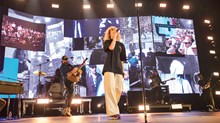 How groups like Hillsong learned to let go of the literal in favor of creative collaboration.españolPortuguês






