 |
Recently, prominent writers from a wide variety of fields took the stage at the New York Public Library to expound upon the Seven Deadly Sins. Four of the lectures have now been published in book form, with three additional volumes forthcoming. An editor’s note explains that these books are intended “to chart the ways we have approached and understood evil, one deadly sin at a time.” The problem, however, is that the series lifts seven names from an old and closely detailed map in order to draw a new and rather vague one, occasionally replacing what once was a warning with a blessing.
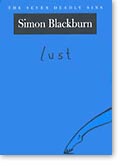
Thus, for example, the philosopher Simon Blackburn, in Lust, specifically proposes to “lift [lust] from the category of sin to that of virtue.” By pillorying the Christian tradition, he hopes “to destroy the stocks and pillories of the Puritans, to separate [lust] from other things that we know drag it down.” Blackburn does not attempt to understand what the Church Doctors meant by lust; he simply offers up his own thoughts concerning the vice.
 |
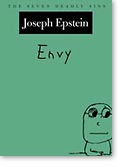
Joseph Epstein’s thoughts and anecdotes concerning envy are in the same vein. Epstein—the lapidary essayist who was for many years editor of The American Scholar—defines envy by a question: “Why does he have it and not I?” And while he poses the fine line between actual and perceived injustice, he does no more than that. Nowhere in Envy do we actually find out what envy is—much less, why it constitutes a sin; what is missing is a conceptual analysis of the vice proposed. The book feels quite sophisticated, but the feeling is belied by its limited claims. Regarding the place of envy in human nature, for example, Epstein is unprepared or unwilling to comment. Some say this, some say that, no one really knows. In the end, Epstein sends us out on our own: “one must decide, finally, whether envy is or is not a part of human nature.” It would be nice if he could help. Yet swept along by brilliantly smooth prose full of wit and panache, the reader almost forgets that the writer is hardly making a substantive, ethical claim.
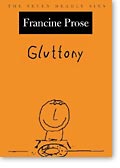
In Gluttony, on the other hand, Francine Prose—best known for her fiction, though she has written in other forms as well—makes a number of claims, several of which manage to get the Christian tradition entirely wrong. Thus, she states, “The traditional solution to the problems of gluttony and lust has been to suggest that the element of sin enters in only when we allow ourselves to relax and enjoy satisfying the needs of the body. We are allowed to eat and have sex as long as we don’t like it.” She later adds (in what amounts to a stunning conspiracy-theory interpretation of history), “The pleasure haters and monastery dwellers … naturally conspired to put gluttony on the same list as lust—two impulses that, if allowed to erupt uncontrolled, would certainly hinder the smooth operation of a very particular kind of institution.” Thus, saints and clerics “labored to make sure that comfort and delight should not get in the way of the austere devotions, the pure concentration that true Christians were meant to reserve for God.”
Several problems arise. First, she’s simply wrong. Monks knew how to feast as well as how to fast. (The wine of communion, after all, signifies celebration.) Augustine famously defended the goodness of creation and everything in it. Gifts were given to be enjoyed.
 |
A second, more subtle problem is that the current age seems to have lost faith in a delight detached from sensual pleasure. The saints, monks, and clerics Prose dismisses as “pleasure haters” did not hate pleasure; they simply felt it had its place. It was not the good; it was a good (a distinction, moreover, that extends all the way back to Plato). When pleasure was ordered rightly, it led through those “austere devotions” to joy. In other words, because the series never actually defines “vice,” it is unable to tell us why indulging in a vice or ordering a pleasure as one’s ultimate end might, in reality, diminish, not increase, a person’s joy. Try to imagine, for example, a person more full of joy than St. Francis of Assisi, one of those “austere” ancient saints Prose mentions in passing. “The Canticle of the Sun” does not suggest a hatred of pleasure, much less a lack of delight.
Prose clearly lacks a historical understanding of what the Church Doctors actually meant. She repeatedly paraphrases Gregory on gluttony: “Too soon, too delicately, too expensively, too greedily, too much.” Yet she apparently has no idea what that means. Again, gluttony is about how one orders the good of food, not how much food a person takes in. A single plate fastidiously picked over may signify gluttony as much as four plates swamped in grease. Prose ends up reducing gluttony to either obesity or an eating disorder, which may or may not have anything to do with the vice. Because Prose does not engage such distinctions, she can end her book as eager as Blackburn to praise what she thinks was once condemned: “[T]here’s something about the serious glutton … that inspires a certain respect for the life force—the appetite—asserting itself in all the prodigious feasting.” Why bother using an inherently Christian paradigm without even trying to understand it?
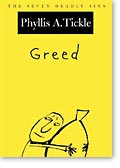 |
Into this context, Phyllis Tickle enters like a cool breeze on a hot day. In Greed, Tickle—who has written widely on religious matters and who recently compiled The Divine Hours, a three-volume prayer book for the discipline of the daily offices—proves herself deeply conversant with the Christian tradition. With a good deal of sympathy, she moves beyond secular stereotypes into a nuanced understanding of Christian claims concerning vice: “While others may argue or even deplore the conflation of act and thought, it is neither a caprice of Christian theologians nor a position open to negotiation for believers, since it is based on some of the clearest, least debatable sections of Christian scripture.” Tickle explains how we have come from the past to the present, complete with insights that provoke the reader to consider further implications. In short, she leaves us in modernity, re-envisioning the Seven Deadly Sins from a post-Nietzschean perspective looking back to its spiritual roots.
Even so, the book does not entirely do justice to its title. While Tickle offers some valuable thoughts concerning greed (such as that in the eyes of Prudentius, it is “actually the sin of apostasy, of desiring a life subject to human control over a life of vulnerable trust in the unseen,” or that greed rises in direct proportion to end-times anxiety as proven by the joint gross sales of the Left Behind series and The Prayer of Jabez), she avoids any direct analysis, opting instead for a series of images. Yet the images explain little. As I closed the book, I was still left wondering: What constitutes greed? How is it identified? What is it opposed to? How is it cured? Tickle’s prologue is entitled “Being a Bit of Context,” but the entire book seems to set the context for a discussion of greed that never actually occurs.
Still to come are the African American commentator Michael Eric Dyson on pride, the scholar of Buddhism Robert A.F. Thurman on anger, and the playwright Wendy Wasserstein on sloth. For an alternative perspective, Not the Way It’s Supposed to Be: A Breviary of Sin (Eerdmans), by Cornelius Plantinga, Jr., is not a bad place to start.
Abram Van Engen will begin doctoral studies in English in the fall.
Copyright © 2004 Christianity Today. Click for reprint information.
Related Elsewhere:
More information on Envy, Gluttony, Greed, and Lust are available from the publisher.
Not the Way It’s Supposed to Be is available from Christianbook.com and other book retailers.
Books & Culture Corner appears every Monday. Earlier editions of Books & Culture Corner and Book of the Week include:
How Do You Live with a Torturer? | A novel of Haiti by the brilliant young writer, Edwidge Danticat. (March 08, 2004)
God Is in the Details | A scientist affirms his faith. (Feb. 23, 2004)
History Repeats Itself, Sort of | How the fate of Eugene McCarthy’s insurgency against LBJ sheds light on the 2004 presidential campaign. (Feb. 16, 2004)
The Worst President Ever? | Former Nixon aide John Dean attempts to rehabilitate the reputation of Warren G. Harding. (Feb. 09, 2004)
Wholly, Wholly, Wholly | Calvinists and conga drums in Grand Rapids: a report from the seventeenth annual Calvin Symposium on Worship and the Arts. (Feb. 02, 2004)
The Doom of Choice | Fate, free will, and moral responsibility in Tolkien. (Feb. 02, 2004)
A Rose Among Thorns | A new novel by the author of Father Elijah illumines the spiritual consequences of our simplest decisions. (Jan. 26, 2004)
Baptized in Fire | A new book on Martin Luther King, Jr., emphasizes his spiritual transformation. (Jan. 19, 2004)
O’Connor v. the Antichrist (Jan. 12, 2004)
Moody, the Media, and the Birth of Modern Evangelism | A cautionary tale. (Jan. 05, 2004)
A Few Coming Attractions from 2004 | Plus: What to buy with those gift cards, and some of the books in my to-read stacks. (Dec. 29, 2003)
The Top Ten Books of 2003 | Plus: The Worst Book of the Year, more good reading, digital books, and a little Christmas music. (Dec. 22, 2003)
Books at Warp Speed | We continue our annual roundup of noteworthy books. (Dec. 15, 2003)
Is “Sensual Orthodoxy” a Contradiction in Terms? | Read this unconventional collection of sermons and judge for yourself. (Dec. 8, 2003)
Books, Books, Books! | We begin our annual roundup. (Dec. 8, 2003)
Urban Eden | In City: Urbanism and Its End, a new history of New Haven, Connecticut, the city (in its late 19th-century form) is an ambiguous heaven-and the suburbs that relentlessly followed are hell. Which leaves us where, exactly? (Dec. 01, 2003)
Cool Drink of Water | A poet’s voice in the evangelical wilderness.
Faith, Hope, and Charity in North Carolina | New novels by Michael Morris—whose first novel, A Place Called Wiregrass, was a word-of-mouth hit— and Jan Karon, who continues her beloved Mitford saga. (Nov. 17, 2003)
Remember Afghanistan? | Two inside reports. (Nov. 10, 2003)
The Troubled Conscience of a Founding Father | An Imperfect God examines George Washington and slavery. (Oct. 27, 2003)
The Year of the Fish | The 2003 baseball season concludes with a bang—and 2004 is just around the corner. (Oct. 27, 2003)
I Shop, Therefore I Am | Critics of “consumer culture” are all wet, Virginia Postrel says. The riot of choices available to us resonates with our deepest aesthetic instincts (Oct. 20, 2003)
Back to the Future | A sprawling new novel by the author of Snowcrash and Cryptonomicon goes to the 17th century to investigate the birth of the modern world. (You won’t be surprised to learn that the Puritans are among the Bad Guys.) (Oct. 13, 2003)