The initial Christian outcry against the boy wizard seems to be dying down. Maybe that's because more and more of us are discovering multiple redemptive themes in the series.
I was recently interviewed on live radio about current movies, and when asked which I was looking forward to the most, I rattled off a few of my obvious choices—including Harry Potter and the Goblet of Fire, which opens this week.
"Uh oh," said the host half-jokingly, "you've just lost half our audience." I was then asked to justify how a Christian could possibly accept and endorse a series of books and films that promotes the occult. Looking back on my fumbled response, I can't help but think of that verse in 1 Peter about being prepared to give an answer to anyone who asks.
Harry Potter remains a hot potato, polarizing Christians left and right because of three words: wizards, witches, and magic. Deuteronomy 18:10-11 warns us to avoid engaging in pagan rituals and sorcery, and for sure, Christianity and witchcraft don't mix.
But in the last five years, I've noticed a gradual attitude shift toward Harry Potter among Christians. Though many still condemn the series—and anyone who approves of it—they seem to be diminishing in number even as others write in praise of it. In my interactions with other Christians from all over the U.S, I'm finding more indifference—and even enthusiasm—in recent years than condemnation, regardless of region or denomination.
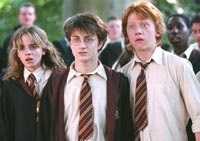
An attitude shift toward Harry and his friends?
I count myself among those whose minds have apparently changed. Interestingly enough, I was first exposed to Potter-mania when Goblet of Fire was published in 2000. Like many Christians, I was skeptical to the idea of enjoying a children's book about witches and wizards; it seemed too immature—and pagan—to appreciate. Then some Christians whom I trust insisted I give the books a try. I did, and now regard Harry Potter as the best fantasy series since Star Wars and Lord of the Rings.
Some would say the Potter series is subtly encouraging Christians to embrace the occult, but unlike television programs like Charmed or the animated series W.I.T.C.H., Harry Potter doesn't seem rooted in the same rituals and religion that Scripture warns us about. People seem to be changing their minds after seeing the films or reading the books, discovering that there's more to J.K. Rowling's multi-volume masterpiece than fantastic storytelling. They're finding redemptive themes that point to larger life lessons in harmony with Christian beliefs.
Let's examine some of those themes.
How Magic Is Used
The subject of magic is the ultimate source of contention when it comes to Harry Potter. Whenever magic is used in the arts, Christians should ask two simple questions: what's the source of the magic, and how is it used?
If Rowling intended Harry Potter as Wiccan propaganda, I'd be the first to jump ship. But the author is emphatic: she doesn't believe in magic. So how can she be promoting witchcraft as a religion? Instead, she uses magic as a vehicle for the plot—a literary device for the story's themes.
In explaining his beloved Chronicles of Narnia, and in reference to Merlin in his sci-fi novel That Hideous Strength, C. S. Lewis differentiates between two kinds of magic. Invocational magic is the dangerous kind that's warned about in the Bible, calling upon dark forces and ancient spirits to serve our selfish desires. Incantational magic, by contrast, is about harmonizing with the will of our creator—and that's the sort of spells we find in the works of Lewis and J.R.R. Tolkein, two of Rowling's favorite authors.
Now, Wiccans might argue they're simply seeking harmony with nature, while Buddhists seek inner harmony with the world around them, and the Jedi of Star Wars seek harmony with the Force. But to me, the magic in Harry Potter doesn't get as far as invocational vs. incantational. It's more like the mutant powers of the X-Men in that it's something that certain characters are born with—in the world of Harry Potter, you accept it and move on. There's no religion or worship involved (other than references to Halloween and Christian holidays like Christmas and Easter), and only the evil dabble with the "Dark Arts." Thus children are taught Defense Against the Dark Arts as a subject in school.
The magic wands are only used for good, never for evil
When a character casts a spell, they simply wave their wand and recite a Latin word/phrase taught in school. When Harry breaks his glasses, his friend Hermione says Reparo and they're fixed. By reciting Lumos, students can use their wands as flashlights; to light the fireplace, Incendio.
The exception is the Patronus charm, which is used to ward off the Dementors—dark creatures that cause despair, capable of stealing the soul. Harry is taught to think happy memories while reciting Expecto Patronum, which literally means, "to throw forward a guardian." Interestingly, John Granger explains in his book Looking for God in Harry Potter that it can also be interpreted as "I look/long for my savior and deliverer." Incantational magic or prayer? You decide.
Ultimately, the source of the characters' powers isn't really addressed, and that's fine for the purpose of the story. Rowling places far more emphasis on how the individuals choose to use their powers and abilities in relation to others. Magic has traditionally been used in this way as a metaphor in classic literature, as something that can hold meaning in our own lives.
Article continues below
Animal Symbolism
Speaking of magical metaphors, the Harry Potter series is chock full of medieval Christian iconography. In light of the other themes in the series, one might argue that there are too many to be a coincidence.
Christianity Today ran an excerpt from John Granger's book, summarizing how animal symbols in Potterdom point Christian reality. My favorite example is that of the unicorn from Harry Potter and the Sorcerer's Stone, in which our hero learns that Lord Voldemort (the series' evil villain) has been sustaining himself by slaying unicorns and drinking their blood. In medieval literature, the unicorn was considered a symbol of Christ, and the Potterian explanation of the life-giving properties of unicorn blood and its consequences for those who drink of it selfishly bears strong resemblance to Paul's explanation of Holy Communion in 1 Corinthians 11:23-29.
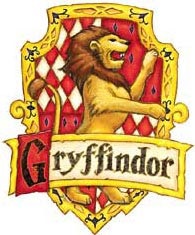
The Griffin was once considered a Christ symbol
And talk about your white and black hats. The good guys live in the Gryffindor house at Hogwarts School of Magic, symbolized by the Griffin, considered a symbol of Christ back in the day—part eagle and part lion, or lord of the heavens and lord of the earth. Meanwhile, the bad guys of Slytherin are represented by a snake. Astute readers looking for subtext to Rowling's novels will find plenty to carry the deeper thematic elements.
Good vs. Evil
One of the greatest strengths of the Potter series is its treatment of right and wrong. Rowling loves playing with duality in the characters, showing that we're all capable of good or evil, yet always clearly distinguishing the two. Things aren't always as they seem in Harry Potter, but we're always clear on right and wrong. It is, in fact, a key line to look for in Goblet of Fire, when wise mentor Professor Dumbledore explains to Harry that he will face the choice between doing what is right and what is easy.
It's a choice Harry has faced since first arriving at Hogwarts when the Sorting Hat chooses the living quarters for each student. At first, the Hat seems ready to place Harry in Slytherin, because the boy has qualities that would serve him well there. But Harry begs to be put in Gryffindor instead, and though he fears that he really should have been put in Slytherin, Dumbledore explains in Chamber of Secrets that it's for sense of morality that Harry is right for Gryffindor. It reminds me of one of my favorite quotes in Lewis' Mere Christianity: "When a man is getting better, he understands more and more clearly the evil that is still left in him … Good people know about both good and evil; bad people do not know about either."
Article continues below
Throughout the series, Rowling uses her heroes to champion the fruit of the Spirit: love, joy, peace, patience, kindness, goodness, faithfulness, gentleness and self-control. And conversely, evil is characterized by common sins like pride, wrath, and selfishness—all things that Harry faces and learns to overcome. Harry's growth in character from an uncertain boy into a man of virtue is central to the books and films.
Love Conquers All
One of the most significant themes of Harry Potter is sacrificial love. You could say it's a quality that runs strongly in the Potter family, since his mother's love created a protection spell for the infant Harry, making him the only survivor to ward off Voldemort's evil.
In his selflessness, Harry always looks out for his friends
Since then, Harry has regularly chosen what's right over what's easy by placing others ahead of himself. In the first book/film, Harry's selflessness allows him to overcome evil and recover the Sorcerer's Stone before the baddies do. In The Chamber of Secrets, his brave rescue of a friend nearly costs him his life. In Goblet of Fire, watch for an underwater sequence where Harry once again risks his life for his friends.
Mind you, Harry doesn't always come to these decisions easily. Most of the Potter series is told in "third person limited omniscient view," meaning we see what happens as Harry does, and we're privy to his thought processes. We come to understand Harry's inner struggles and why he arrives at the right decision nearly every time—and why he's so ready to do whatever he can to help his friends.
Themes of love conquering all and laying down one's life aren't unique in literature, but could those themes be common because they're timeless truths at the core of Christianity? "Greater love has no one than this, that he lay down his life for his friends" (John 15:13).
Safe for Christians?
These examples just scratch the surface of the redemptive themes in Harry Potter. I certainly wouldn't suggest that it's an explicitly "Christian" series. Parents of younger readers should make sure their children understand that the witchcraft of the books is not to be confused with the witchcraft of our world.
Article continues below
But by the same token, parents should caution their children that we don't use lightsabers to settle our differences, that the magic in Lord of the Rings and The Wizard of Oz is equally fictional, and that, literally speaking, we don't worship an all-powerful lion. To borrow a phrase from The Lion, The Witch and The Wardrobe, none of these classics are perfectly "safe," but they're all very good. We just need to learn how to respond to books and movies, distinguishing between fantasy and reality—and I daresay that some adults seem to have a harder time with that than their kids.
Harry Potter admittedly blurs the line between fiction and reality because its heroes are denoted as "wizards" and "witches." But an understanding of fictional magic as opposed to real occult practices helps clarify the context of the series, and can thus lead to some rewarding interpretations and discussions for readers and filmgoers of any age.
The government plans to close its porous border with Myanmar to boost security, separating ethnic groups that straddle the boundary.
Surinder Kaur and Angela Lu Fulton
Redeeming Harry Potter
1 of 4
An attitude shift toward Harry and his friends?The magic wands are only used for good, never for evilThe Griffin was once considered a Christ symbolIn his selflessness, Harry always looks out for his friends














 While we pray for peace, we need moral clarity about this war.
 A Christian reconciliation group in Israel and Palestine warned that war would come. Now the war threatens their relevance.españolالعربيةFrançaisрусскийУкраїнська
 The government plans to close its porous border with Myanmar to boost security, separating ethnic groups that straddle the boundary.