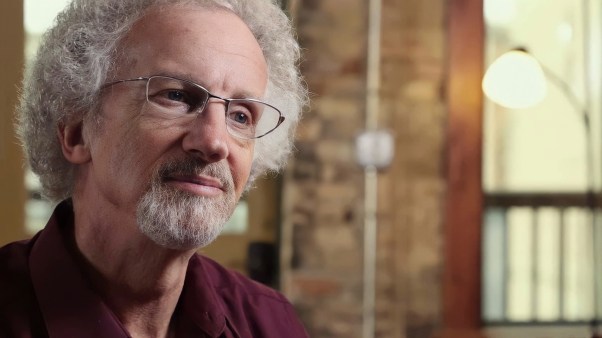
Tony Jones is the national coordinator of Emergent Village and author of The New Christians: Dispatches from the Emergent Frontier. Collin Hansen is editor-at-large of Christianity Today and author of Young, Restless, Reformed: A Journalist’s Journey with the New Calvinists. Both books take a sympathetic journalistic approach to a young but growing movement in American Christianity, examining why it’s growing and how it’s changing the larger church.
Day 1 | Day 2 | Day 3 | Day 4 | Day 5
Tony,
I sense frustration with your last question. It’s a hard one to address. Creeds are great for distilling the overarching themes and doctrines of Scripture. But they can unwittingly make Christians think faith can be reduced to checking the right boxes. As evangelicals have learned since the fundamentalist-modernist debates of the early 20th century, there are at least two problems with this mentality. First, two people may sign the same statement but choose to interpret it quite differently, rendering useless the pretended unity. The other problem surfaces when someone checks all the boxes but immediately undermines the doctrine by saying it doesn’t really matter. My purpose in asking what you believe about the Atonement, sound doctrine, and biblical authority was to reconcile what you wrote to me with what you wrote in your book.
I was really intrigued when you wrote about Emergent churches “open-sourcing” their biblical and theological content. “Some people will worry, What about heresy? It’ll just become a mad free-for-all without any baseline of sound doctrine!” I loved your next line: “To the contrary, nothing roots out heresy better than a group.” I don’t agree with open-sourcing doctrine, but you make a great point about community. The apostles modeled this approach. So did the bishops who met for the ecumenical councils. Today, this is one of the reasons why I believe pastors should serve their churches on councils of fellow elders.
Maybe, if necessary, even blog communities can root out heresy. I thought Scot McKnight ably and charitably called out Spencer Burke for denying the personhood of God. This situation confused some observers of Emergent, since Burke had affirmed the “historic Trinitarian Christian faith and the ancient creeds” in “A Response to Our Critics” (also Appendix B of your book).
Overall, Tony, your book greatly helped me learn about Emergent. You also confirmed for me that evangelicals face a culture crisis. We have imbibed too much of the surrounding American values of consumerism and individualism. Yet even though we intimately know this culture, we don’t understand it. I’m thankful for Emergents who seek to discern the culture. As I wrote in my first message, we may not agree on the best way to engage this culture with the gospel of Jesus Christ. But we share a concern for the church to grow past the sins that so easily entangle us.
— Collin
* * *
Collin,
I guess my only retort to your concern about the open-sourcing of doctrine is this: I don’t think you have much of a choice! As the bloggers who’ve weighed in on our conversation attest, we live in a highly participatory culture in which all opinions are vetted in the public square. We may wish that the church fathers had the final word on this doctrine or that, but in the era of the Internet and publishing-on-demand, all contravening ideas will be readily available, even if they don’t jibe with traditionus receptus.
What I think emergents are up to, in part, is fashioning a church that is reflective of these trends. In all honesty, most Christian publishing houses are, too. Just last week, someone wrote me a letter, which I posted, in which he surveyed the books by Christian publishers on multiple views of doctrines, and he came up with 119 views on 29 topics. That’s some serious diversity.
Actually, I’m not disheartened by these trends. I think that a new consensus is possible. I think that Protestantism as we know it is ending, and a new orthodoxy is building. It won’t be quite like the conciliar period, but the Internet will facilitate something similar. Back then, it was bishops from Africa, Europe, and the Near East overcoming their geographical differences to build the church. Today it will be Wesleyans, Reformeds, and Anabaptists, etc. overcoming archaic and crumbling walls.
I hope this dialogue might be a small part in that movement of the Spirit. Your book, Collin, was thoughtful and evenhanded. I appreciate it, and I’m glad to call you a friend.
— Tony
Copyright © 2008 Christianity Today. Click for reprint information.
Related Elsewhere:
Want to start at the beginning of the conversation?
The New Christians: Dispatches from the Emergent Frontier and Young, Restless, Reformed: A Journalist’s Journey with the New Calvinists are available from ChristianBook.com and other retailers.