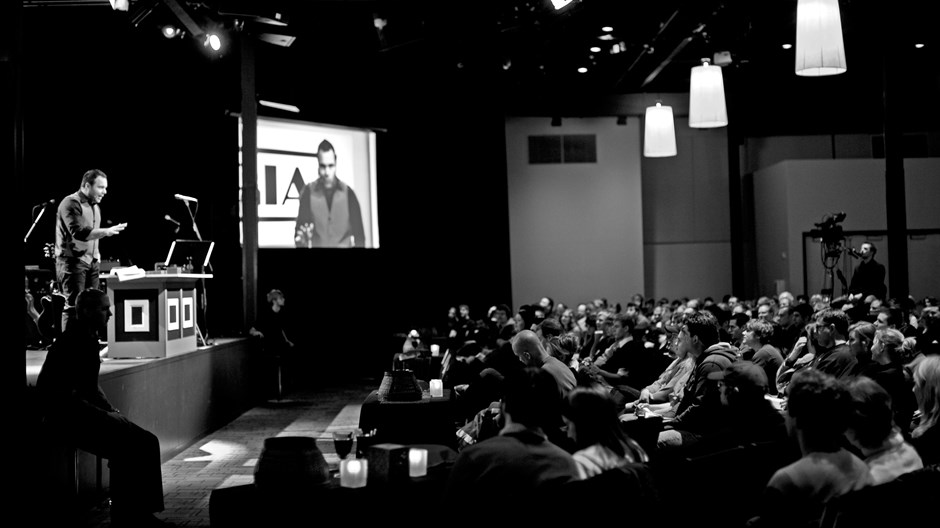
Pastor Mark Driscoll's megachurch recently announced plans to expand into Portland, Oregon, and Orange County, California, using multi-site campuses that feature live bands and a sermon piped in from the main campus in Seattle.
The move is part of a trend among megachurches to extend their brand of church to new communities, in hopes of reaching unchurched people with the gospel. But critics fear the out-of-state campuses turn churches into franchises like McDonald's or Starbucks.
The reason for the new campuses is simple, according to the Mars Hill website.
"Oregon needs Jesus Christ," claims the introduction of the new location. "The city of Portland is known for many things, but the gospel of Jesus is nowhere on the list."
Bob Hyatt, pastor of the Evergreen Community in Portland, agrees that people in his city need to hear about Jesus.
But he has some doubts about Mars Hill's method, which seems to him more like corporate expansion than church planting. "If you are a church planter in Portland, it's a bit like reading the notice that Wal-Mart is coming and you are the mom-and-pop store," he said.
Hyatt is also concerned about the long-term health of the out-of-state campus model. Rather than building up a local body of believers, he said, these campuses are dependent on having a celebrity pastor for their survival.
"It's not just an extreme example of the church-celebrity model," he said. "It's complete capitulation. It's enshrining that into the DNA of the church."
Mars Hill isn't the only megachurch to cross state lines.
Lifechurch.tv, based in Edmond, Oklahoma, has 14 campuses—10 in Oklahoma, along with sites in New York, Florida, Texas, and Tennessee. Seacoast Church, a megachurch near Charleston, S.C., has 13 locations in three states. Bethel World Outreach Center in Brentwood, Tennessee, recently started campuses in Phoenix and Dallas.
The surge is being driven by technology breakthroughs, said Warren Bird, research director at Leadership Network and co-author of Multisite Church Roadtrip. "First churches discover that multi-site works, and then they begin to ask if they're really dependent on geographical proximity," he said. "As North Point's Andy Stanley often describes, they first jumped 10 yards and found multi-site works just fine through back-to-back auditoriums. Then they jumped 10 miles to their first campus. Then they asked, 'Then would it work 100 or 1,000 miles away?'"
Not all of the out-of-state campuses have been successful.
LifeChurch.tv started campuses in the Phoenix suburbs of Mesa and Gilbert back in 2005. Those campuses are no longer listed as active on the church's website.
Bobby Gruenwald, innovation leader at Lifechurch.tv, said that the church's approach to out-of-state campuses has evolved. The key to success is finding local leaders and making sure the church meets the needs of its local community.
"The biggest thing we've learned is the importance of adapting what we do to the specific needs of the community and size of the campus," he said.
Jeff Kinney, regional pastor for Seacoast, agrees. He said that a megachurch's brand name alone doesn't guarantee success for an out-of-state campus.
Kinney said that local and distant campuses operate differently. Those close by draw people who are already familiar with Seacoast. In some ways, they serve as high-quality overflow rooms; the main job of the campus pastor is to duplicate the experience of the main campus.
Distant campuses, like the one in Asheville, North Carolina, are more like church plants. That's because a church's brand name can have limited appeal.
"We thought going to Asheville—we'd put a sign on the marquee and people would show up," Kinney said.
That didn't happen. Instead, that campus draws people who didn't know anything about Seacoast. "These guys function more as entrepreneurial pastors," he said.
Bethel has tried a hybrid approach to its out-of-state campuses. All of its locations have a live preacher, while administrative tasks such as payroll and accounting are done from its central office.
Pastor Rice Broocks said that more local congregations of all kinds—independent churches, denominational churches, and multisite campuses—are needed.
"The more options you have, the more chances there are to reach people."
The Art of Cyber Church | Joel Hunter is known by many as part of President Obama's inner circle of pastors. Fewer know him as one of America's most innovative church planters. (September 16, 2009)
High-Tech Circuit Riders | Satellite churches are discovering a new way to grow the body of Christ. (October 31, 2005)
Have something to add about this? See something we missed? Share your feedback here.















 While we pray for peace, we need moral clarity about this war.
 A Christian reconciliation group in Israel and Palestine warned that war would come. Now the war threatens their relevance.españolالعربيةFrançaisрусскийУкраїнська
 How groups like Hillsong learned to let go of the literal in favor of creative collaboration.españolPortuguês






