Butternut Squash Soup is calling, but Joel Hunter stands glued to CNN in his living room in rainy Orlando.
Lunch can wait another minute, because details about President Barack Obama's meeting with a foreign leader might be coming. When the news anchor switches topics, Hunter, satisfied, quickly joins his wife, Becky, at their glass dinner table.
One of Hunter's megachurch staffers gleefully picks on his boss, recalling when Hunter sat next to boxing legend Muhammad Ali at Obama's inauguration: "You should've given him a little nudge on the shoulder, just to say you've been in a fight with Ali." "Oh yeah," Hunter replies sarcastically. "I can see the headlines now: PASTOR PUNCHES PARKINSON'S PATIENT."
Politics and media are strong siren calls, and Hunter doesn't ignore either's pleas. His national profile emerged after he resigned from the Christian Coalition in 2006, saying the organization was unwilling to expand its mission beyond fighting abortion and same-sex marriage. During the 2008 presidential election cycle, Hunter prayed at the Democratic National Convention last summer and with the President on Election Day.
Journalists often looked to Hunter during election season as the de facto voice of moderate evangelicals. But the Orlando-based pastor who helped Northland, A Church Distributed grow from 200 to 12,000 people in 20 years has established himself as one of the country's most innovative church planters.
"Politics is one venue in which the Lord can work, but his plan A has always been the local congregation," Hunter says. "My calling is to be part of that frontline ministry."
A Church Distributed
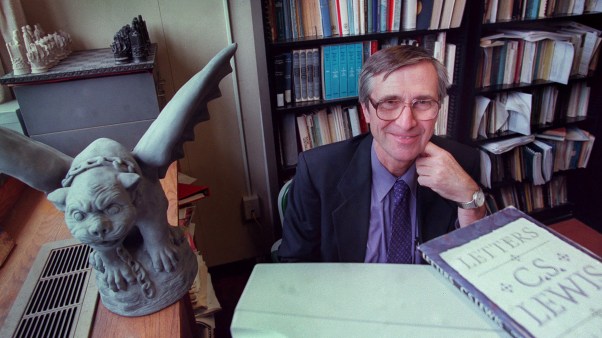
At first glance, 61-year-old Hunter appears closer to retirement than to the Blackberry addict he is. Wearing a black suit, white shirt, and blue tie with his white hair carefully combed to one side, he names Jane Austen's Pride and Prejudice as his favorite book and classical music as his choice of tunes. "I've never really been a hip-hop kind of guy," he says with a laugh as he pretends to twist a baseball cap on sideways.
Most church planters value the vitality of youth, but Hunter sees his age as an asset. When members of his congregation become angry that he prays with a Democratic President or experiments with worship on an iPhone, he shrugs it off.
"It's like being a grandfather when your grandkids are throwing a temper tantrum. You say, 'They're having a bad day,'" he says. "Grandfathers have the benefit of having perspective without having the necessity of control."
Even with his grandfatherly perspective, Hunter quickly led Northland to use the Internet to plant a local church far beyond Orlando. Mark Pinsky, former religion reporter for The Orlando Sentinel, has written about Hunter for several years and describes him as a quintessential early adopter of technology—with a slight difference.
"There's a tendency for some in the church world to fall in love with technology as a magic bullet," Pinsky says. "If Joel didn't have a message and a presentation, all the bells and whistles in the world wouldn't make him what he is today."
Hunter began pastoral ministry at a Methodist church in Indiana after receiving his master of divinity from Christian Theological Seminary in Indianapolis. He and his wife then moved in 1985 to Orlando to lead Northland's 200 congregants.
Like many U.S. churches, Northland saw a surge in attendance after September 11, 2001. Finding the church feeling cramped in a roller-skating rink turned worship area, employees dragged fiber-optic cables across a field to create a second site at a high school down the road. This paved the way for an eventual multi-site approach; Northland now has three other sites in the Orlando area.
In August 2007, when Northland opened its main campus in Longwood, a $43 million, 3,100-seat building, church leaders kept the Internet in mind. Back in the control room in Orlando, five people monitor a room full of computers connected to hundreds of cables that send a live feed that makes the multi-site service possible. Pink, purple, and blue lights beam onto the Orlando stage as a 12-piece band leads the congregation—along with three other congregations and about two thousand individuals in front of their home computers—in "Blessed Be Your Name."
"Planting churches in the Western mentality is tremendously expensive and has a high failure rate," Hunter says. "Since we thought physical church plants would be an ineffective approach to church multiplication, we went with online resources that are much more efficient and less costly."
According to Leadership Network's book Multi-Site Church Roadtrip, in 2008 about 37 percent of megachurches used the multi-site approach, in which one congregation would videotape or stream the sermon to the screens of other congregations. The network's data show that on a typical Sunday in 2009, nearly 10 percent of Protestant worshipers in the United States attend a multi-site church.
Scott McConnell, associate director of Lifeway Research and author of Multi-Site Churches, says that Northland takes the multi-site approach to a new level.
"They really have it down to the second, so that they're showing a mouth at another site singing the same song," McConnell says. (During services, the Longwood site streams live video from the other sites to remind them that they are worshiping together.) "What they've been able to accomplish through technology is a small idea of what the church worshiping around the world looks like. You catch this glimpse that the church is bigger than my local church."
Hunter says this approach has allowed Northland to worship with believers around the world. In recent years, Northland has held concurrent services with churches in Namibia, Ukraine, and Egypt, and is planning to hold another one with an Argentine church later this year. Hunter says that after 9/11, the dual service held in Egypt was particularly powerful.
"The pastor came on, spoke to us as one of our own pastors, and said, 'I know the feelings you have. Don't return evil for evil,' " Hunter says. "That was an example in which the technology made all the difference in the relationships."
Cons and Pros
Not everyone embraces a multi-site approach.
Bob Hyatt, head pastor of the Evergreen Community in Portland, a nondenominational church that meets at local pubs, is one who has resisted. He insists that while he's not a Luddite (he spent eight hours in line for an iPhone—twice), he believes multi-site churches have a tendency to cultivate celebrity-driven church cultures.
"Leaders start saying, 'Bring me in, and I will turn this around [with video feeds],' and I don't see that model as good ecclesiology," Hyatt says.
In addition, since people rely on the main pastor with a multi-site approach, it discourages more people from testing their teaching gifts, Hyatt believes. "Video venues have the unintended consequences of killing teaching and the gift of preaching."
'If Joel didn't have a message and a presentation, all the bells and whistles in the world wouldn't make him what he is today.'
Mark Pinsky
There's no question, though, that streaming a service changes things. Behind the scenes at one Sunday morning service, the worship band comes to the back room during Hunter's sermon to chat about a recent YouTube clip and grab some homemade grits and waffles. A church employee with thick-rimmed glasses sits on one of the couches quietly watching the screen of his Mac computer. He's a "Web minister," someone the church has appointed to chat with people who have logged on to its website to watch the live-streaming service.
Back on stage, a pastor begins listing the other Orlando-area sites as images of the congregations appear live on the screens. He also introduces individual online viewers: "We welcome Buck in Fairfax, Virginia, Chuck in Kuwait, Brett in Boise, Idaho … would you please welcome these folks who have gathered with us from all over?"
Douglas Groothuis, Denver Seminary philosophy professor and author of the 1997 book The Soul in Cyberspace, was warning about the downsides of combining faith with the Internet long before YouTube, Facebook, and Twitter.
"You can create a crafted, constructed identity online," he says. "It's not the you, who's like me, who's overweight. You can hide those problems when they should be brought to God and other Christians."
But Northland is not interested in replacing face-to-face connections with virtual ones. With Web streaming and a new online evangelism effort, it hopes to create house churches across the globe. For example, if the church sees two people from Chicago worshiping online, they try to connect the two and give them information on how to start a house church together.
Northland staff members also believe a streaming service can reach the people who simply will not step inside a church. Northland reaches about 2,000 participants online.
"Our experience has been that people feel safer being able to talk from their own home than they are when they go on someone else's turf," Hunter says. "We have seen an increase in transparency when you add that safety layer."
Online Evangelism
Hunter's church recently began to combine its online worship with a ministry in which its members become online missionaries for Global Media Outreach, the Orlando-based Internet ministry of Campus Crusade for Christ International.
"Campus Crusade has not been called to be a local church," says director of Global Media Outreach Allan Beeber. "Northland members are not only sharing their faith, they are also going to be helping the person find a church or form a local church wherever they live or work."
Shane Hipps, pastor of a Mennonite church in Phoenix and author of Flickering Pixels: How Technology Shapes Your Faith, wonders whether evangelism should ever take place online.
"The Internet is primarily experienced through cognitive interaction. Online evangelism reinforces that Christianity is information that you need, not a way that a community lives in the world," Hipps says. "The capacity to hold someone's hand, feed the poor, and care for the sick requires a body."
Other observers, though, think there may be no other way to reach some people. "You hear a lot about how people are so addicted to their computers, so you hear church leaders say, 'We have to bring church to their computers; our church has to be MTV on crack in order to reach them,' " says Scott McClellan, editor of Collide, a magazine for church leaders who use media and technology. "The Northland model seems to reflect a sense of connecting people to a community but not leaving them in a virtual scenario."
In any event, Hunter plans to use technology to dramatically expand the number of people worshiping. In May, Hunter told his congregants that Northland could create a million small groups or house churches worldwide by 2020.
To some extent, churches like Northland are updating the apostle Paul's multi-location ministry, says Fuller Theological Seminary theology and culture professor Craig Detweiler.
"Paul's itinerant preaching kept him connected to the congregation in the same way that Web casting allows a pastor like Joel Hunter to send a 'letter' to his congregations," Detweiler says. "The key to their success, though, will be the local pastors who continue to walk with the congregations watching the broadcast."
Hunter recognizes the limits of the Internet. But he wants to use it in a way that gets people past it.
"When the telephone was first invented, everyone talked about how it was the end of real intimacy, but people think about the person they're talking to on the other line," he says. "The main goal here is that the successful use of technology makes the technology disappear so all you're focusing on is the person."
The Church at the Core
Hunter points to two events in his young life that would end up driving his faith and ministry: the assassination of Mark Luther King Jr., and a word from a childhood pastor.
When Hunter was growing up in central Ohio, his grandmother introduced him to a church whose pastor said, "Nothing's ever going to come right in the world until you take care of the sin in your own heart." That line would never quite leave him, even in the political and cultural tumult of the 1960s.
Like many of his college-age peers at Ohio University, Hunter demonstrated during the civil rights movement, believing that if the country had the right political structure, racial injustice would cease.
"When Martin Luther King Jr. was shot, all my dreams just came crashing down on me, and that voice kept coming back into my head," he said. "So I went into a little generic chapel and knelt down and gave my life to the Lord as best I could."
While Hunter keeps his foot in the door of American politics, he believes he is first and foremost a local church pastor.
"Politics shapes social policy in ways that affect people in an exterior way," Hunter says. "The church is there during the most important times of your life: when you get married, when you have kids, when you die. We have this holy ground that we've been invited into during the deepest part of people's lives."
Sarah Pulliam is online editor for Christianity Today.
Copyright © 2009 Christianity Today. Click for reprint information.
Related Elsewhere:
Northland launched an iPhone application on July 4, offering live streaming and videos church services.
Previous Christianity Today articles about Joel Hunter include:
Joel Hunter Leads Blessing for Obama | Evangelical megachurch pastor reflects on the inauguration and gives a few predictions. (January 23, 2009)
Joel Hunter Prays with Obama | Evangelical pastor believes the new president-elect will have a listening ear. (November 6, 2008)
Previous articles on how churches use technology include:
From the Printing Press to the iPhone | Shane Hipps urges Christians to discern the technology spirits. (May 6, 2009)
High-Tech Circuit Riders | Satellite churches are discovering a new way to grow the body of Christ. (August 31, 2005)
Forget Televangelists; How About Going to Church to Watch TV? | Megachurches getting so mega they're building moons. (June 13, 2001)