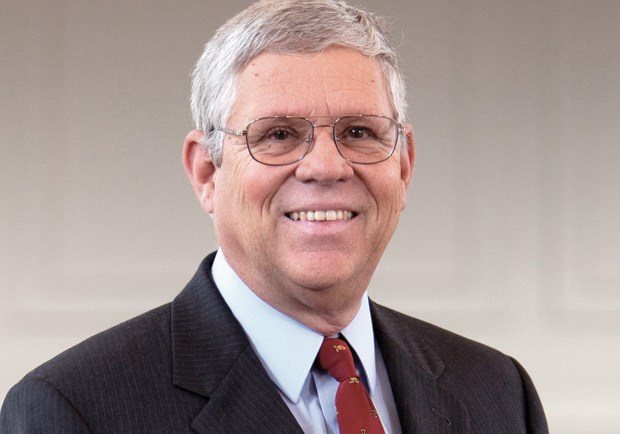
Thirty years ago, Ben Witherington III prayed for the energy to write a commentary on every book of the New Testament. This he has done, in addition to writing several other books, including a two-volume work of New Testament theology and ethics. Now, at age 60, the prolific author and Asbury Theological Seminary professor has turned his attention to activities that make up, he says, "99 percent of people's ordinary lives." The result is his latest release, The Rest of Life: Rest, Play, Eating, Studying, Sex from a Kingdom Perspective (Eerdmans). Rachel Marie Stone, author of the forthcoming Eat with Joy: Redeeming God's Gift of Food (InterVarsity), spoke with Witherington about the need for theological and ethical reflection on the everyday things of life.
Having written many scholarly volumes, why are you now turning your attention to the "ordinary" things of life?
There is very little serious theological reflection on the ordinary Christian life: the things we do every day, like working, playing, eating, or going to church. I wanted to ask, "What do these things look like in the light of the coming kingdom of God? Where did God intend all these things to go?" I wanted to somehow take a global view that would work toward the integration of all these things in the mundane life: keeping in balance work, worship, play, sex, and so forth. The aim was to fill a gap in theological reflection.?
Where do you see a Christian tendency to "baptize" worldly things with a Christian justification?
Christians have infinite how-to manuals on marriage, money, sex, and everything else, but I don't see much of what I read in 1 Corinthians 7, which speaks of sitting lightly with what we have with a sense of detachment. Money, for example, is God's, not ours. We didn't bring our pink Cadillac into the world, and we can't take it with us to the new kingdom, even if we get buried with it. We are simply stewards of God's property, which should change the whole way we look at the concept of ownership and how it relates to the mission of the church or evangelism.
What is "eschatological" living, explained for the non-theologian?
When we think of kingdom, we often think of place, but the kingdom of God is not a place: it refers to the reign of God, or God's in-breaking, saving activity. Eschatological living means envisioning life in light of the saving activity of God in our midst—not only what he has already done, but also what he promises to do in the future. God's kingdom is not fully manifest yet; we live between the beginning and the completion. The title of this book has a double sense: The rest of life means not just "the other things in life" but also the "rest" we have now, which is a foreshadowing, a foretaste of the final rest we will have when the kingdom of this world has become the kingdom of God—when there is no more suffering, disease, or sorrow, but all the things of this life merge into joy.
Why should Christians develop a stronger theology of play?
From God's perspective, play is not a distraction from "real life." Play is so important partly because it prefigures the final state of affairs: the joy of the celebration of God's kingdom. All games are essentially eschatological, having some kind of telos or aim. In the best kind of games, you have to work with others, which meets a deep psychological need: The need to know that we are in this together. As the apostle Paul writes in 1 Corinthians 12, we need the body of Christ.?
In your chapter on study, why do you suggest a parallel between the mostly illiterate culture of the first century and our own?
The culture of the early church was without question an oral culture to a degree we can't even understand. Texts were surrogates for speech; they were rare and expensive. Today we live in the opposite way: a computerized, texting, tweeting culture. What is interesting is that we are still desperate to communicate, although the means we use tend to maintain distance between us. There is something about immediacy that is important to discipleship. When you have immediacy and presence, all five senses are involved, and there is a sense of relatedness that you can't get any other way. We were created for relationships, personal and in person. In this radically disembodied culture, what is really missing is embodiedness: it is not good to be alone.
What do you want readers to take away from this book?
What we are, and what we do in life, is tremendously important to God, to the kingdom of God, and to ourselves. When we think about our Christian faith and how we spend our work week, faith should not be something that we do on Sunday, but something that shapes our worldview and how we live.
So whether we eat, play, rest, go to a concert, or conjugate the word "to love," it is all doxological, which is to say it's about giving praise to God and preparing us for the kingdom. The question we should ask about anything and everything is, Can I do this to the glory of God and the edification of others? If the answer is no, a Christian shouldn't do it. That's the ultimate ethical question.
Have something to add about this? See something we missed? Share your feedback here.

















 While we pray for peace, we need moral clarity about this war.
 A Christian reconciliation group in Israel and Palestine warned that war would come. Now the war threatens their relevance.españolالعربيةFrançaisрусскийУкраїнська
 The rage of the mob is a poor substitute for real community.






