
Christians value Jesus' prayer that they—his followers—may be as one (John 17:22–23). But valuing Christian unity is not the same as realizing it. Sometimes we settle for bland homogeneity rather than delighting in the church's mix of cultures, ethnicities, and social backgrounds. Those like me who work deliberately to cultivate Christian unity face trials and failures along the way. Despite our good intentions, we end up getting mean and nasty, or just plain weary, hurt, and discouraged. Why?

Individual personalities, faults, and sins are not the only factors. Group dynamics also make a difference. "Sometimes," according to social psychologist Christena Cleveland, "we are affected in hidden ways by those around us. The values and perceptions of the groups with which we identify can have a covert effect on us."
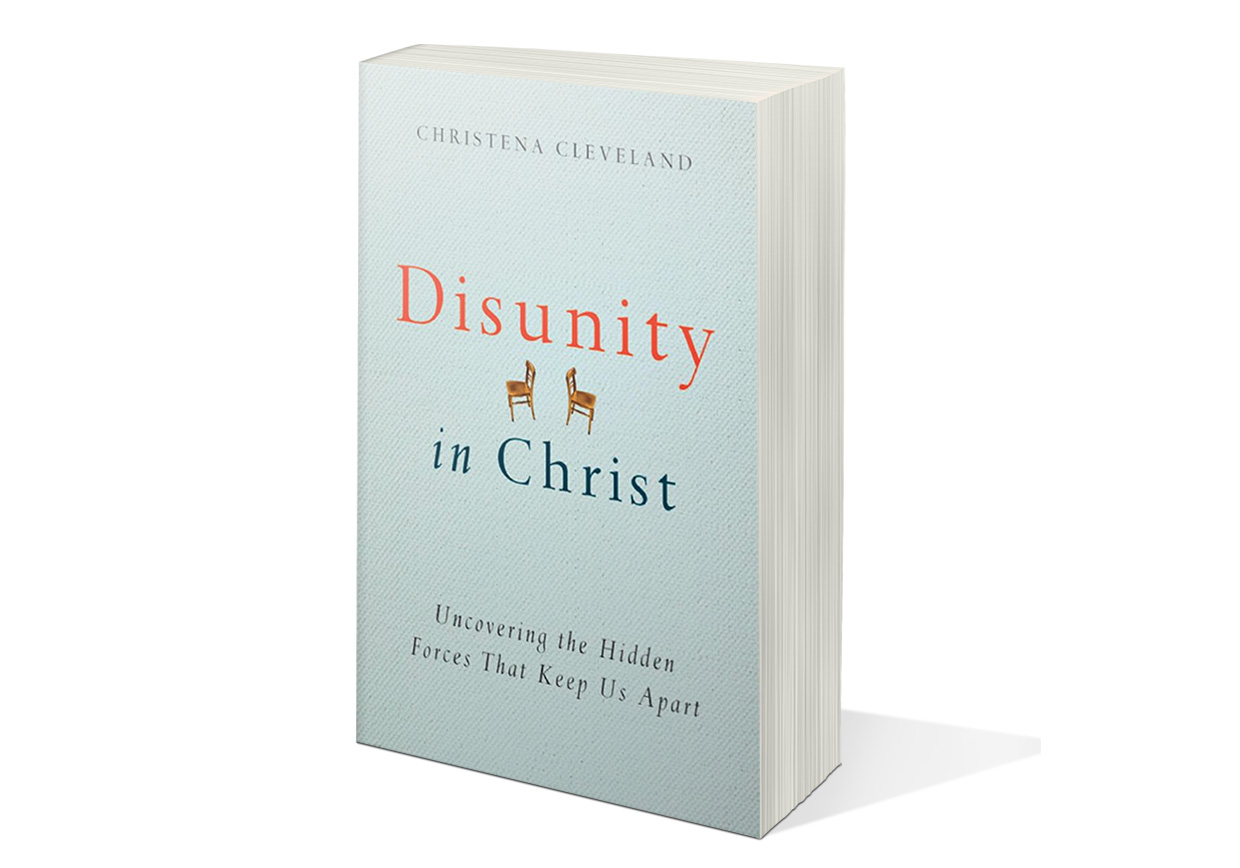
Where can we turn for assistance? In Disunity in Christ: Uncovering the Hidden Forces That Keep Us Apart (InterVarsity Press), Cleveland helps readers view people of diverse cultural backgrounds as God's gifts, not thorns in the flesh. She provides invaluable insights, practical recommendations, and tools to help the Christian community identify and address the dynamics that fracture Christ's body.
Cleveland's analysis tackles difficult questions about the social forces that frustrate our quest for unity. What leads people to associate with those who are similar, while distancing themselves from diverse others? What causes us to categorize other groups in distorted ways? How do social identity and self-esteem play into group perceptions of others? How do "cultural threats" lead us to approach other groups with hostility? And how do cultural influences shape beliefs and practices in limiting and divisive ways?
Cleveland does not discount substantive ideological and cultural differences or deny how hard it is to discard our various "labels." She agrees that principles and theological convictions are important. But "the trick is to wisely use our Christian friends' ideology to humble us, strengthen us, and enhance our understanding of God and the role we're called to play in his kingdom."
While I find this "trick" beneficial, it does not fit every scenario. As an evangelical theologian committed to ecumenical unity framed by grace and truth, I wish Cleveland would have helped distinguish more clearly between areas where theological reconciliation is possible and areas where it is not.
Take, for example, 1 John 4:18 ("There is no fear in love. But perfect love drives out fear"), to which Cleveland refers briefly in her treatment of the culture wars. The epistle's emphasis on love in chapter 4 appears only after a renunciation of teachers who deny the Incarnation. While doctrinal differences can be used to humble, strengthen, and enhance our perspectives, they often convey unbridgeable boundaries. "Perfect love" insists on certain rightful boundaries between truth and falsehood. This is not because we "fear" those on the other side, but because out of love we don't want them to be deceived.
My hope, ultimately, is that Disunity in Christ will create new momentum toward fulfilling Jesus' prayer for unity amongst his followers. Those involved in building and supporting multiethnic Christian communities will be moved by Cleveland's stories, perspectives, and gracious spirit. Her book will, I hope, help us resolve generational, economic, political, and theological differences—and teach us to see that, truly, we are better off together.
Paul Louis Metzger is professor of theology at Multnomah Biblical Seminary. He is the author of Consuming Jesus: Beyond Race and Class Divisions in a Consumer Church (Eerdmans) and coauthor of Exploring Ecclesiology: An Evangelical and Ecumenical Introduction (Brazos).