It's funny the things that bring warring parties together. In October 1988, it was a family of three whales—a dad, mom, and baby—who found themselves trapped off the coast of Barrow, Alaska, by the early arrival of ice around the Arctic Circle. The trio, who became known as Fred, Wilma, and Bamm-Bamm, was separated from the ocean by too many miles of unbroken ice—not enough to let these giant mammals breathe along the way to freedom.
After footage of their slowly shrinking breathing hole gained national attention, the rescue effort brought together native Alaskans and mainland Americans who were a threat to the former's traditional way of life, hard-line environmentalists and the oil tycoons they were fighting tirelessly against, and American and Russian military, who were then embroiled in the Cold War.
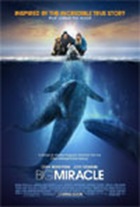
Big Miracle tells the story of this amazing real-life rescue effort. Well, sort of.
The film is based on journalist Thomas Rose's 1989 book, Freeing the Whales, a firsthand account of the events that captured the world's hearts. Some of the characters in Big Miracle are based on actual players in the story, others are an amalgam or are altogether fictional.
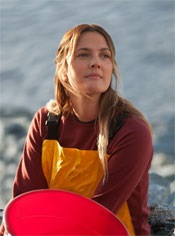
Drew Barrymore as Rachel Kramer
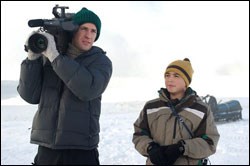
We experience this whale tale mostly through the eyes of three people: local news reporter Adam Carlson (amalgam, played by John Krasinski), who stumbles upon the story while doing puff pieces around Alaska; a local Inupiat boy named Nathan (fictional, played by native Alaskan Ahmaogak Sweeney), who's torn between his whaling grandfather's traditional culture and the lure of the West; and Greenpeace activist Rachel Kramer (real, based on activist Cindy Lowry, played by Drew Barrymore), who is drawn by the plight of the trapped animals. Oh, and Rachel happens to be Adam's ex-girlfriend. Rather cutely coincidental, that.
When Adam's story breaks in Alaska and is then picked up by NBC anchor Tom Brokaw (true story), a herd of journalists converge on sleepy Barrow. But the news isn't good. The temperatures are dropping and the whales' breathing hole is shrinking.
Possible solutions come from many directions. There's J. W. McGraw (Ted Danson), an oil tycoon with the equipment on location and the money to help; the Reagan White House, eager to position then-Vice President George H. W. Bush as a pro-environment candidate in the upcoming presidential election; the National Guard; the local Inupiat whalers; two entrepreneurial Minnesotans and their ice-melting contraption; and a Russian ship in the region.
Big Miracle was directed by Ken Kwapis, who brings the same light, frothy touch he brought to He's Just Not That into You and The Sisterhood of the Traveling Pants. It's about the ensemble, the moments of music-swelling drama, the sometimes too-cute dialogue (i.e. Reagan saying into the phone, "Hey Gorby, this is Ronnie!"). The cast is well chosen and are all appropriately funny, winsome, and altogether huggable. Even the whales, especially in some moving underwater scenes, are endearing. We want to be their friend.
The real story of Fred, Wilma, and Bamm-Bamm and the herculean efforts to free them is certainly inspiring, and definitely movie-worthy. Even though the story took years to make it to the big screen, it still has a relevant human-interest appeal. In a world marked by rampant protests, human-rights violations, and bitter partisan feuding, who wouldn't love this kind of unconditional unity?
John Kraskinski as Adam, Ahmaogak Sweeney as Nathan
We do get a bit more depth in the mixed motivations of each of the rescuing parties. Oil magnate McGraw would gladly do away with all the flora and fauna standing in the way of his oil ventures, and is offering to help merely to curry favor in a pending environmental lawsuit. The White House wants the good press for the nearing election. And many of the journalists would sell their grandmother to scoop the rest on the scene. These are interesting angles, likely not exposed during the actual events, before the age of live blogs, Twitter, and 24/7 news cycles. But you can bet they all have changes of heart by the film's end.
Ted Danson as J. W. McGraw
In many ways watching Big Miracle is like going on a Disney World safari experience. It's not as dangerous or gritty as the real thing, but certainly a fun ride. Then again, about a gajillion people visit Disney parks every year. We like our feel-good moments—and when you need that fix, Big Miracle provides.
When you get to the end of film, complete with an inspiring voiceover lesson and fun, snappy music, stick around for the end credits, when you'll see pictures of the some of the real players in the story. It's like the cherry on this charming confection of a film.
Talk About It
Discussion starters
Why do each of the rescuing parties get involved in the effort? What's their motivation by the film's end?
List the ways PR and public image impact people's actions. When is this a good thing and when it is bad?
List the ways people try to influence others in the film. Which are effective and which are ineffective?
Do you find Greenpeace activist Rachel obnoxious or admirable—or both? Why?
The Family Corner
For parents to consider
Big Miracle is rated PG for language. It's mild. There is a threat of danger for the whales and—SPOILER ALERT!—the baby whale dies, which could upset young children. But thankfully, we don't see his dead body. For all but the most sensitive kids, Big Miracle would be a pretty safe and inspiring bet.














 While we pray for peace, we need moral clarity about this war.
 A Christian reconciliation group in Israel and Palestine warned that war would come. Now the war threatens their relevance.españolالعربيةFrançaisрусскийУкраїнська
 How groups like Hillsong learned to let go of the literal in favor of creative collaboration.españolPortuguês