History

‘The Best Side of Slavery I Can Conceive Of’

A former slave and abolitionist gives his account of a slave auction at a church.

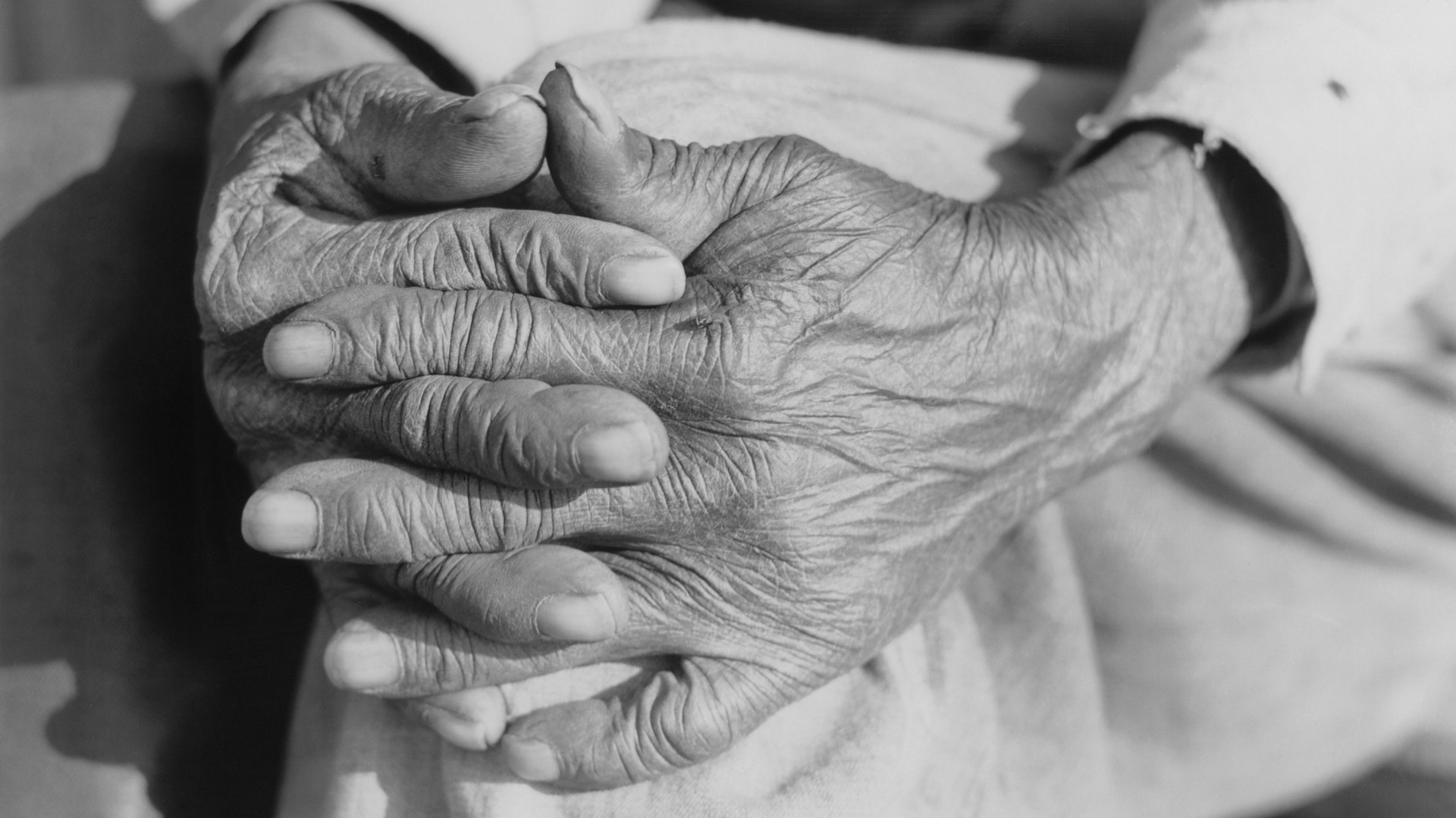
Everett Historical / Shutterstock

Mr. Young [a devout Methodist] never was known to flog one of his slaves or sell one. He fed and clothed them well and never overworked them. He allowed each family a small house to themselves with a little garden spot whereon to raise their own vegetables; and a part of the day on Saturdays was allowed them to cultivate it.

In time, he became deeply involved in debt, and his property was all advertised to be sold by the sheriff at public auction. It consisted of slaves, many of whom were his brothers and sisters in the [local Methodist] church.

The first man offered on the block was an old gray-headed slave by the name of Richard. When they had bid him up to 70 or 80 dollars, one of the bidders asked Mr. Young what he could do, as he looked very old and infirm? Mr. Young replied by saying, "He is not able to accomplish much manual labor, from his extreme age and hard labor in early life. Yet I would rather have him than many of those who are young and vigorous; who are able to perform twice as much labor because I know him to be faithful and trustworthy, a Christian in good standing in my church. I can trust him anywhere with confidence."

This giving him a good Christian character caused them to run him up to near two hundred dollars. His poor old companion [his wife] stood by weeping and pleading that they might not be separated. But the marriage relation was soon dissolved by the sale, and they were separated never to meet again.

After the men were all sold they then sold the women and children. They ordered the first woman to lay down her child and mount the auction block; she refused to give up her little one and clung to it as long as she could while the cruel lash was applied to her back for disobedience. She pleaded for mercy in the name of God. But the child was torn from the arms of its mother amid the most heart-rending shrieks from the mother and child on the one hand, and bitter oaths and cruel lashes from the tyrants on the other. In this way the sale was carried on from beginning to end.

There was each speculator with his handcuffs to bind his victims after the sale, and while they were doing their writings, the Christian portion of the slaves asked permission to kneel in prayer. While bathing each other with tears of sorrow on the verge of their final separation, their eloquent appeals in prayer to the Most High seemed to cause an unpleasant sensation upon the ears of their tyrants. They were soon raised from their knees by the sound of the lash, and the rattle of the chains, in which they were soon taken off by their respective master—husbands from wives, and children from parents, never expecting to meet until the judgment of the great day.

Having thus tried to show the best side of slavery that I can conceive of, the reader can exercise his own judgment in deciding whether a man can be a Bible Christian and yet hold his Christian brethren as property, so that they may be sold at any time in market, as sheep or oxen, to pay his debts.

Henry Bibb (1815-1854), a fugitive slave, became a leading abolitionist. This selection is a condensed excerpt from his 1849 Narrative of the Life and Adventures of an American Slave.

Bibb's Narrative of the Life and Adventures of Henry Bibb, an American Slave is still in print.

A better choice, however, may be The Civitas Anthology of African American Slave Narratives. It includes The Confessions of Nat Turner, the Leader of the Late Insurrection in Southhampton, VA (1831), The History of Mary Prince, A West Indian Slave (1831), The Narrative of the Life of Frederick Douglass, American Slave (1845), Narrative of William W. Brown, A Fugitive Slave (1848), Narrative of the Life of Henry Bibb, an American Slave (1849), Running A Thousand Miles for Freedom or The Escape of William and Ellen Craft from Slavery (1860), and Incidents in the Life of a Slave Girl by Harriet Ann Jacobs (1861).

You can see the images of the first edition of Bibb's narrative, including the cover, the frontispiece, and the title page online. The text of the narrative is at the University of Virginia's site.

Slave narratives abound on the Web, and some of the sites are truly excellent:

American Slave Narratives: An Online Anthology contains some of the interviews the Works Progress Administration took with of more than 2,300 former slaves, and includes photos of several of the interviewees.

Other interviews with former slaves, taken in the 1920s and '30s, can be heard at Remembering Slavery, the Smithsonian Institution's companion site to its radio documentary.

Another ambitions project is North American Slave Narratives, Beginnings to 1920, which plans to include, for the first time in one place, "all the narratives of fugitive and former slaves published in broadsides, pamphlets, or book form in English up to 1920." In fact, its plans are even broader than that, as it also includes biographies of former slaves published during the same period.

Other slave narratives are available at Duke University's Slave Voices exhibit, which includes scans of the original documents.

Resources:

Links:

Copyright © 1999 by the author or Christianity Today/Christian History Magazine. Click here for reprint information on Christian History.
Our Latest

News

Fighting in Nigeria Leaves Christian Converts Exiled

Emmaneul Nwachukwu

Muslim communities often expel new Christians from their families. One Fulani convert is urging churches to take them in.

The Russell Moore Show

Sharon Says So on Teaching Civics in an Age of Misinformation

Step into the classroom with America’s government teacher.

We Become Our Friends’ Enemies by Telling Them the Truth

Our corrupt political and racial discourse teaches us to judge by identity and ideology instead of honestly testing the spirits and assessing the fruit.

I Long for My Old Church—and the Tree Beside It

Leaving a beloved church doesn’t mean ever forgetting its goodness, its beauty, and the immense blessing it was in one’s life.

The Bulletin

Racist Memes, Vance at the Olympics, Epstein Files, and the Vanishing Church

Mike Cosper, Clarissa Moll

Trump posts racist meme about Obamas, JD Vance booed at Olympics, new Epstein file revelations, and young men in the church.

Analysis

Shutting Down an Addiction Supermarket

Even in San Francisco, some change is possible: The Tenderloin neighborhood is improving.

News

At least 18 Christians Killed in Crackdown of Iran Protests

Iranians hope for US action after the regime in Tehran killed thousands–perhaps tens of thousands–last month.

Apple PodcastsDown ArrowDown ArrowDown Arrowarrow_left_altLeft ArrowLeft ArrowRight ArrowRight ArrowRight Arrowarrow_up_altUp ArrowUp ArrowAvailable at Amazoncaret-downCloseCloseEmailEmailExpandExpandExternalExternalFacebookfacebook-squareGiftGiftGooglegoogleGoogle KeephamburgerInstagraminstagram-squareLinkLinklinkedin-squareListenListenListenChristianity TodayCT Creative Studio Logologo_orgMegaphoneMenuMenupausePinterestPlayPlayPocketPodcastprintRSSRSSSaveSaveSaveSearchSearchsearchSpotifyStitcherTelegramTable of ContentsTable of Contentstwitter-squareWhatsAppXYouTubeYouTube