Whether or not fantasy is your shtick, you'd have to bury yourself into a rather large hobbit hole to hide from The Lord of the Rings and The Hobbit, reignited in the 21st century by filmmaker Peter Jackson, or the recent movie adaptations of the Chronicles of Narnia. As Inklings J.R.R. Tolkien and C.S. Lewis returned to the pop culture spotlight, they spurred Christian commentaries such as Walking with Bilbo: A Devotional Adventure Through The Hobbit, The Gospel According to Tolkien, and Finding God in the Land of Narnia.
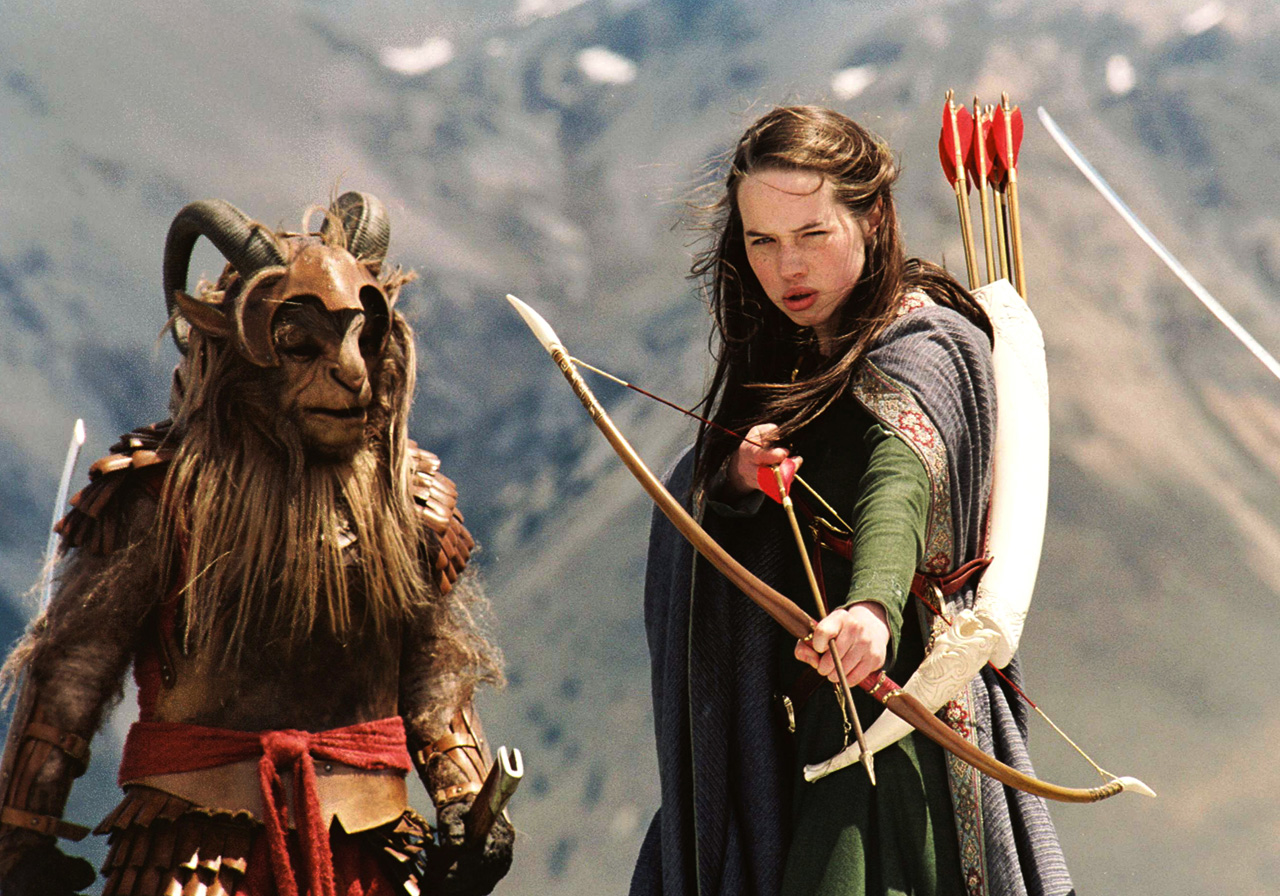
As we re-examine favorite Protestant thinker C.S. Lewis, though, we're confronted with an aspect of his writing that can make some evangelicals uncomfortable: his portrayal of women. My own experience with this uncomfortable situation was exposed when the best defense I could muster to a male colleague's complaint of Lewis's backward-looking chauvinism was a weak shrug and a mutter about historical context. After all, the girls in Narnia are prone to tears, less than independent, and do not embody the qualities of traditional heroes; therefore, Lewis must be a sexist, right?
Probably the loudest bit of piffle about "the sexist Lewis" started around the 1990s with biographer A.N. Wilson, who complained about Susan's treatment in The Last Battle. Years later, literary critic John Goldthwaite asserted, among other things, that "Lewis feared women and disliked them categorically." Following that, Philip Pullman – moderate that he is – added his two bits: Lewis was "monumentally disparaging of women," claimed Pullman; in fact, "he didn't like women in general, or sexuality at all."
We've since probably read of J. K. Rowling's – scholarly to be sure – acerbic comment about Susan being sent to hell because she became "interested in lipstick … [and] found sex." As if these were not enough, my favorite, perhaps because of my argument in this piece, is from another critic, Kath Filmer. She stated that what "disturbed" her most about the Narnian Chronicles was how "ultimate good is depicted as ultimate masculinity, while evil, the corruption of good, is depicted as femininity." Really? Lewis was attempting to depict the corruption of good and downright evil as something specifically – gasp – feminine?
Enter Monika Hilder's deeply challenging and compelling interpretation of Lewis's presentation of gender, specifically in Narnia. In her latest book, The Feminine Ethos in C.S. Lewis's Chronicles of Narnia, she does not approach and defend Lewis's depiction of gender from a conventionally understood feminist perspective; rather, by pointing to the disturbing assumptions underlying the traditional model of gender criticism, Hilder makes a convincing case that Lewis was not a sexist, and instead was consciously presenting a "radical theological feminism" that actually liberates us from our sexism.
In her call to seriously consider what our culture considers characteristic of "successful" women, she challenges readers to reflect on how our ideas of female equality get shaped by the very same power-exertion paradigm we try to eschew in the first place.
In an age that worships the cult of personality and aggrandizes the "virtues" of the energetic, the magnetic, the stunning, and the forceful – because these traits lead to more materialistic wealth and power – what room left is there for the fruit of the Spirit? Qualities such as self-control, meekness, patience, and peace sound quite out of vogue; "Let's see how far the meek, patient, and peace-loving female can succeed," I can hear the cynic ask. Hilder, though, suggests that our struggle for independence, power, and autonomy echo Satan's thirst for domination more than Christ's model of humble servanthood.
If we are uncomfortable with some of the female characterizations throughout Lewis's series, perhaps we should reconsider where this discomfort stems from. While we as women are right to strive for gender equality, we are wrong to measure it according to mere chauvinistic ideas of accomplishment. As Hilder states, "to the extent we have not examined our own chauvinism, we demean the 'feminine' qualities and extol the 'masculine'—not noticing that Lewis does the opposite." And indeed, it is in doing exactly that opposite that Hilder suggests Lewis's radical theological feminism can be found.
So what brand of feminism does Hilder see in Lewis's presentation of certain stereotypically feminine traits? And how is this applicable to my pursuit of a physically, emotionally, and spiritually integrated life?
To be honest, at first I was a wary participant of Hilder's controversial tour of Narnia. As a Christian, I know that I have been called to community, love, and reliance on God; as a secularly educated graduate, however, female characters who embody these non-assertive characteristics frankly insult my conventional ideas of politically correct gender discourse. What I can I learn about authentic living from this late-married bachelor?
Lewis's idea of true spiritual strength— for both men and women— rests in openness to our Father, community, submission, compassion, truth, grace, and humility. So, when Lewis has Lucy run towards Eustace-the-dragon and bestow upon him grace only expressible in a child's unrestrained kisses, or Lucy and Susan weep with Aslan while he is on the stone table, or, even Mrs. Beaver demonstrate foresight and responsibility for those in her care (or one could even dare say, community mindedness) in bringing along her domestically stigmatized sewing machine, Lewis wasn't belittling these characters. I can learn that true spiritual strength, or spiritual heroism as Hilder terms it, "establishes the kingdom of heaven through humility," not independence.
Lewis had the same model for men and women: spiritual heroism ever rooted in love and mercy. Indeed Peter's or Edmund's independent thinking, physical ability in battle, or autonomous action don't earn them praise. Instead, their actions are held to the same standards as the girls. Indeed, as Hilder suggests, it may often be because of our own sexist assumptions that we accuse Lewis of sexism.
If the Christ life serves as our model, we can't be surprised by Susan's dismissal from Narnia. Not at all because we reject all interests in heels, hair, and cosmetics, but because we know what is of lasting importance: relationship with and delight in the divine. According to Hilder's interpretation, Lewis reproves Susan not because she is growing into womanhood, but because she falls into the trap of idealizing youth and beauty at the cost of investing in fellowship and love.
In contrast to Lucy's enlarging commitment to faith in the wondrous nature of Aslan, joy in simplicity, and childlike obedience, Susan's world is made smaller by her shrinking realm of superficial pursuits. And isn't it exactly Lucy's childlike eagerness to abandon self-interests and respond to Aslan's numinous call of love that makes her so appealing?
If Hilder is right, as long as we measure achievement according to attributes of conquest, autonomy, and self-assertion, we have all truly fallen prey to a merely chauvinistic narrative. It is only when we grow large enough to see the beauty of dependence, the value of compassion, and the splendor of love that we, like Lucy, will learn that every year we grow, we will find God has too.
Matthew and Joy Steem enjoy teaching, discussing contemporary implications of foundational theologians, herb gardening, and writing. The Steems hold graduate degrees in History (Trinity Western) and English (Queen's) and are currently ghostwriting a manuscript on alternative approaches to cancer.