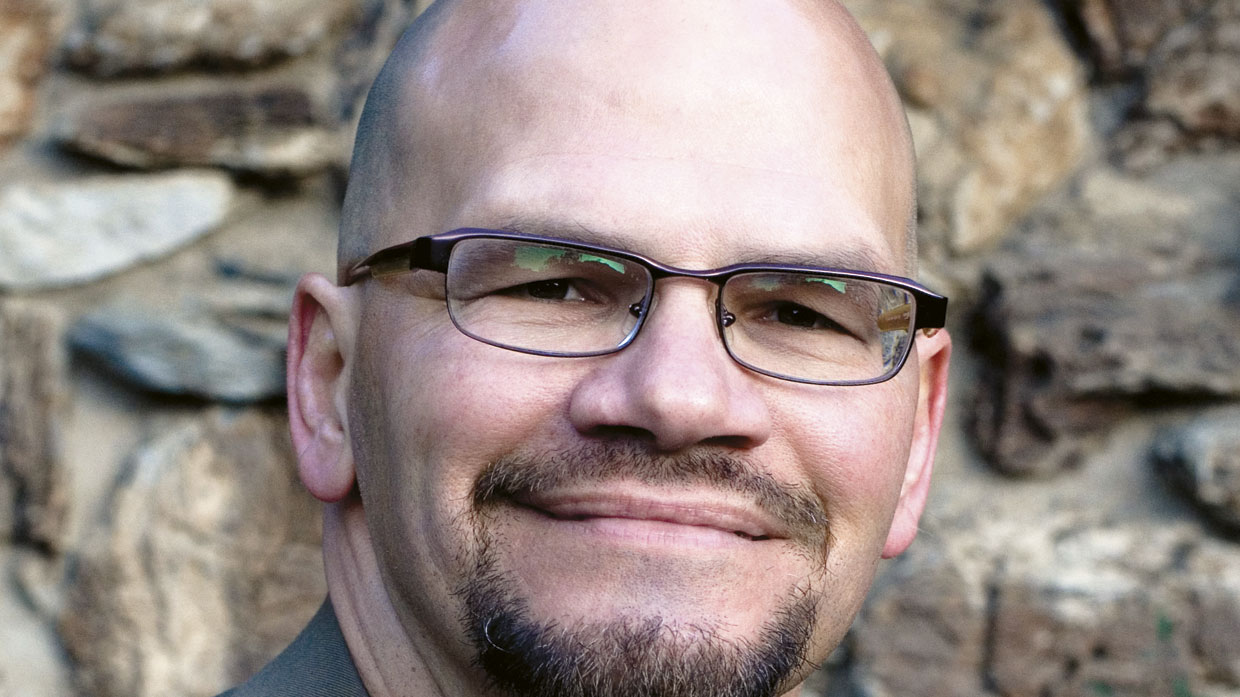

Blood pumping. Temperature rising. Voices thundering. Anger and confusion. Do all of our conversations about difficult topics—politics, family, finances—need to be this way? Tim Muehlhoff, a marriage expert and professor of communication studies at Biola University, doesn't think so. In I Beg to Differ: Navigating Difficult Conversations with Truth and Love (InterVarsity Press), Muehlhoff charts a path for navigating difficult conversations with grace and truth. Derek Rishmawy, a minister to students and young adults in California, spoke with Muehlhoff about combining modern insights from communication theory with timeless biblical truth.

What makes the subject of communication methods so urgent?
As a culture, we're losing the ability to talk about the deepest things in a tolerant and civil way. That's bleeding down into our personal relationships. Georgetown linguist Deborah Tannen calls it the "argument culture." You see it in American politics any time we try to talk about same-sex marriage, immigration, or other hot-button issues.
We have to find productive ways to communicate with family members, coworkers, and children, whether it's sharing our faith or talking about the kid's schedule that's gotten out of control. This book takes modern research on communication and develops a practical strategy for entering tough conversations in a productive way.
Many of us think that in difficult conversations, the key is to put aside our emotions in order to think "rationally." You say that's a mistake. Why?
Jack Gibb was the first researcher to identify what we call "communication climate." As soon as two people start talking, a communication climate develops, and it's made up of expectations, trust, acknowledgment, and commitment. When presenting a viewpoint, Gibb says, one of the big mistakes we make is attempting what he calls "detached neutrality." This happens when I'm telling you something incredibly important that I'm really passionate about (finances, kids' schedules, work mistakes), and you're saying, "Okay, don't get emotional. Stay calm." The research shows that I'll simply up my degree of emotion until I get a response that matches my intensity.
For the conversation to make progress, you need to acknowledge the other person's emotions. It doesn't mean you agree with what they're saying, but you need to acknowledge that he or she is upset or passionate. If you don't, there will be a roadblock in the conversation.
What is the most neglected aspect of approaching difficult conversations?
We forget to ask, "Where do we agree with each other?" If I were to summarize all communication theory, I would say, "Start with agreement and then move to disagreement." John Gottman, a renowned marriage researcher, says, "The way you start a conversation is how you're going to end a conversation." If you and I are discussing theology and I start on a note of disagreement, we're going to end that way. It's called the rule of reciprocation—generally speaking, you'll treat me the way I treat you.
There are two levels of communication: the content of the conversation and the speakers' relationship. If I'm not acknowledging your feelings, or if I'm disagreeing and cutting you off, you're going to do likewise. The good news is that the opposite is true. So if I emphasize points of agreement or state my willingness to consider a different point of view, then you'll begin to mirror that attitude back to me. Our conversation will move forward in what theorists call a "positive communication spiral."
Even in a book on communication, you discuss the spiritual disciplines of prayer, silence, confession, and worship. Why?
If you pick up any communication book on conflict, they're all going to identify what to do and not to do. Here's the problem: How, in the heat of the moment, can I remember to do the things that I know I should do?
A. W. Tozer said there are two different kinds of communicators. First, there's the person who looks inside himself for the resources to stay calm and abstain from sarcasm. By contrast, he says, the Christian communicator looks outside himself to Jesus, who says, "You shall receive power, a potent force from another world invading your life by your consent, getting to the roots of your life and transforming you into someone like Christ." So we need to yield to God's power from outside. The discipline to do that, though, needs to be in place before the conflict actually happens. As Dallas Willard would say, "You can't just walk up and hit a 90-mph fastball. It takes practice."