At 15, I took a vow of celibacy, “True Love Waits.” I stood in front my church, alongside teens who’d betrayed that promise before it began—including a girlfriend who (I later learned) was secretly having sex and my high school crush, who’d proudly told me he’d hooked up with a girl at church camp.
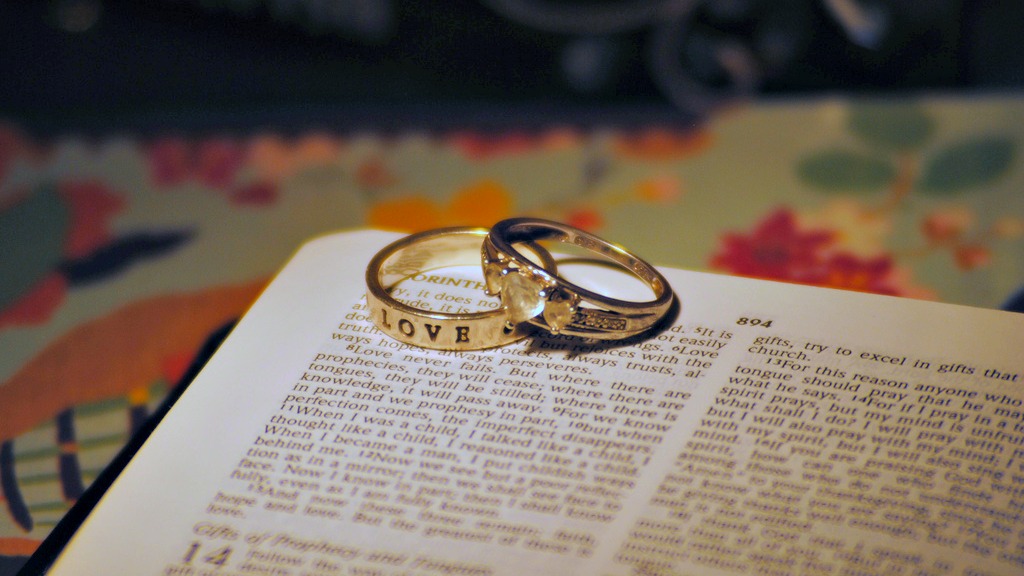
My parents gave me a gold ring to commemorate the occasion. They probably never imagined how long I’d hold onto it.
At 37, I’m still waiting. And while I recognize that my strong sense of self-discipline and self-worth has created a possibly endless quest, I can’t deny what I feel in my heart to be spiritually sacred.
For women who remain virgins into their late 20s, 30s, and beyond, it feels like our choices are constantly called into question. From the church, we hear: Why haven’t you gotten married yet? From the rest of society, it’s: Why don’t you just do it?
When my essay “Does My Virginity Have a Shelf Life?” was published in November 2013 in The New York Times, I went through a roller coaster of emotions: fear, pride, shame, vulnerability, and excitement. A female writer from Slate supported me. A female writer from Cosmopolitan tore me apart. Secular media seems to be fascinated with my experience, though with each story, editors have downplayed my church ties and Christian roots.
I’ve since written about my virginity for Glamour and appeared in a segment on Katie Couric’s talk show. (Even Katie told me off camera I had “fairytale princess syndrome” and I should go ahead and have sex.)
Following the publicity, several of my Christian girlfriends in their 30s reached out to me. Some, still virgins, were thrilled to hear someone who had a similar story. Others shared their experiences giving up the conviction to wait.
Plenty of women come to this decision as a way to try to fix dysfunctional relationships, or to address our own hangups over fear, shame, or low self-esteem. One friend decided to have sex after her mom and sister told her they were worried she was a lesbian. Another struggled with weight all her life, and in her 30s, decided having sex might improve her body image. I also have a friend who became blind when she was 14, and she told me she started having sex to avoid intimacy.
Christian women who desire marriage rarely grow up imagining themselves staying single through their 30s. And yet, here we are, educated, social, God-loving ladies who find ourselves frustrated and disillusioned because we’re still waiting for “the one.” (I think I’ve heard “God has a plan” so many times, he must be on version 53.0 by now.)
We don’t imagine ourselves staying single because we rarely see women speak up about abstinence or singleness before the church body. According to Dennis Franck’s Reaching Single Adults: An Essential Guide to Ministry, 44 percent of adults in the US are single. And yet, he says, married people inhabit the vast majority of the pulpits and leadership positions in Protestant churches. When I offered to share my story with the women’s ministry at church, leaders suggested I speak to high school or college students instead. Even secular media found a place for my story, though showcased as an anomaly. But my church, it seemed, did not know what to do with me.
Of course the church should support singles and believe their value in God´s eyes is equal to that of married members. But beyond that, we need to see and speak to those older singles who may still believe, in the words of the Catechism of the Catholic Church, “that marriage is a reality of this present age which is passing away.” That waiting is still valued in the eyes of the church and God, even at the ripe age of 37. That someone is out there who will value the decision to wait despite the sexual imperative that suggests you aren´t human and able to connect with another human unless you are having sex.
What happens when women and men who have kept their promise to save their virginity for that person are 30-plus and still unmarried?
I want to believe that God rewards the faithful like the old mother Elizabeth, the forgiving brother Joseph, the widowed peasant Ruth, and the all-enduring Job, but it feels like I’ve waited so long. Imagine a child told if she had perfect attendance for the school year, she’d be rewarded in the end—but the school year keeps going long enough that even the administrators wonder why she still refuses to miss school.
While unmarried celibate Christians might appear a minority in need of outreach, we have insight to offer the church because of our singleness. Our situation grants us wisdom on patience, faith, and endurance that I believe can be valuable to the church body as a whole.
As someone who has outgrown many singles groups, I would love to see more multigenerational, co-ed ministries that let singles, couples, parents, students, and seniors join together without stigma. This means when we talk about family and community, we don’t only speak in terms of having spouses and kids. And when we talk about sex, we recognize the desires, struggles, and challenges of the single and celibate, too.
A recent sermon on both intimate and cosmic nature of God’s kingdom touched my heart. Perhaps it was because I was listening through the eager and faithful ears of one who feels she belongs and not through a bitter filter of a Christian misfit who saved her virginity for too long. The pastor quoted from Mark Labberton’s book Called: “The kingdom of God is intimate but never small.” In the midst of my longing, I am called to stand in the tension and at attention.
Amanda McCracken is a freelance writer in Boulder, Colorado, on linguistics, athletics, and feminist issues. She is also a university instructor and long distance runner. Read more from Amanda at amandamccracken.webs.com and follow her at @writermccracken.