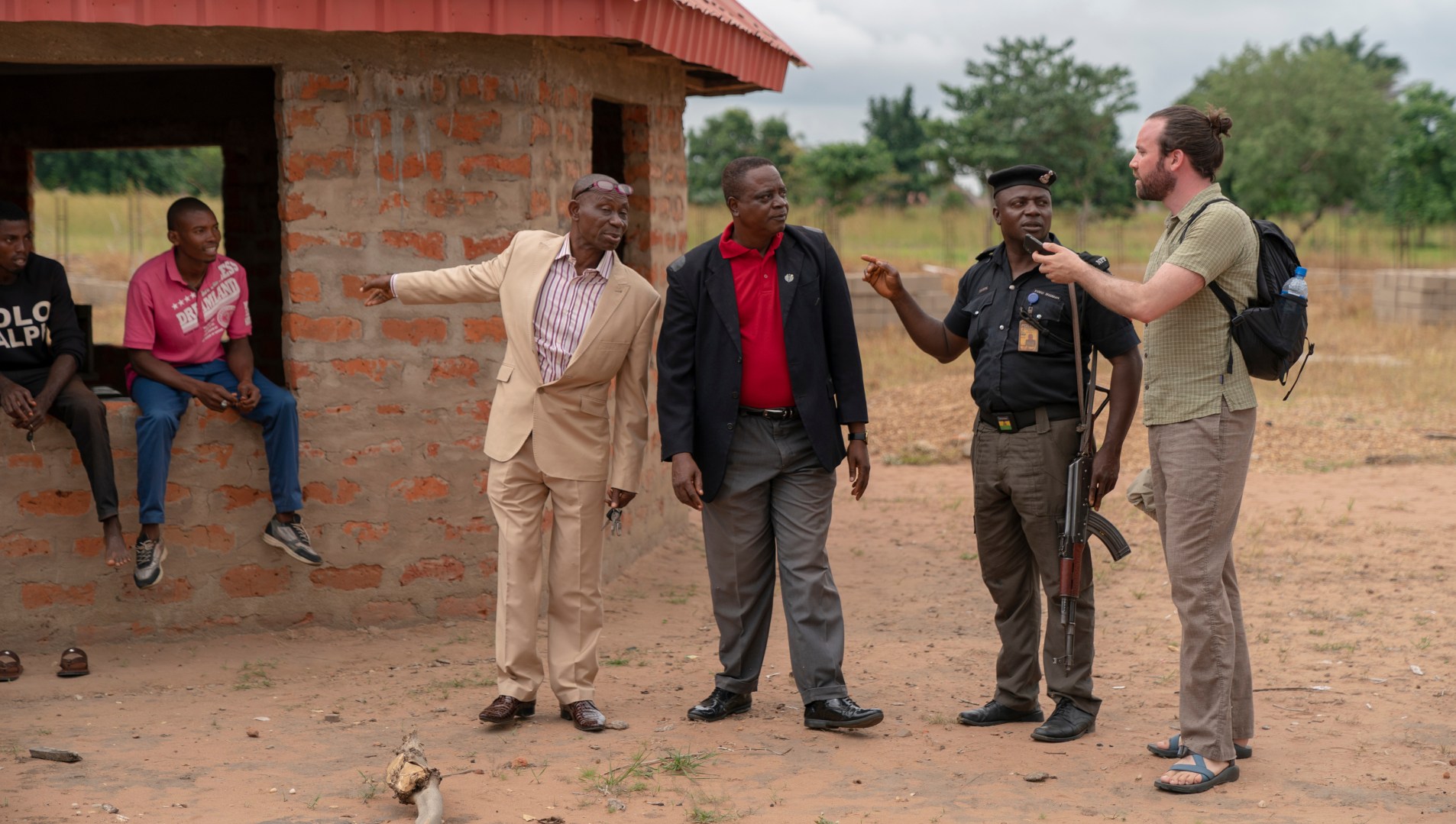

When Deputy Managing Editor Jeremy Weber arrived in central Nigeria in June to report on escalating attacks against Christians in the region, he was welcomed by the leader of a denomination with more than a thousand members who have lost homes to the violence.
“It is very encouraging that you are here,” Dachollom Datiri told Weber for our cover story. “Our stories are not heard.”
The phrasing seemed deliberate. Christian leaders in this region of Nigeria know that the world’s media have covered their plight. They just don’t think anyone’s listening.
CT has long covered Christian-Muslim conflicts in Nigeria and in other parts of Africa’s Sahel region, as have other Christian media. But true to the old journalism adage “show, don’t tell,” there is a world of difference between publishing an update about disaster and taking precious time to sit in it for a while and transport readers into its jaws. In his reporting, Weber visited a dozen communities in Nigeria across four states, interviewing leaders and survivors of attacks. What he offered beleaguered Nigerian Christians was the gift of presence. And what he offers readers is a heart-wrenching portrait of a church under siege and a years-long conflict that is still not well understood by most of the world.
News coverage of persecution stories—and of large-scale tragedy in general—can blur together. It can even feel formulaic, with identical casts of characters, only set in differing scenes. We chose to give special attention to the crisis facing many Nigerian Christians because it seems to merit more than a forgettable passing reference. As one leader told Weber, if sectarian violence pushes Nigeria into civil war, “all of West Africa is gone.”
Understanding the crisis is critical, both for knowing how to pray and for identifying the right solutions. When covering Nigerian violence between largely Christian farmers and largely Muslim cattle herders, for example, most major media have downplayed the religious factors, instead emphasizing economic and climate factors that are certainly also fanning the flames. But for Christians who have lost loved ones, fled homes, and struggled in displacement camps, there is little doubt that they are suffering for their faith. And they want the world to hear.
These Christians know their surest source of comfort is ultimately not human, that they need assemble no coalition nor political alliance to bend God’s ear. He is the God who hears, after all. But they are hoping—praying—that the world will somehow hear what he hears.
Andy Olsen is managing editor of Christianity Today. Follow him on Twitter @AndyROlsen.