Our October Issue: Atlanta’s Black Church

Honoring hard-won progress while lamenting the costs of the struggle for justice.

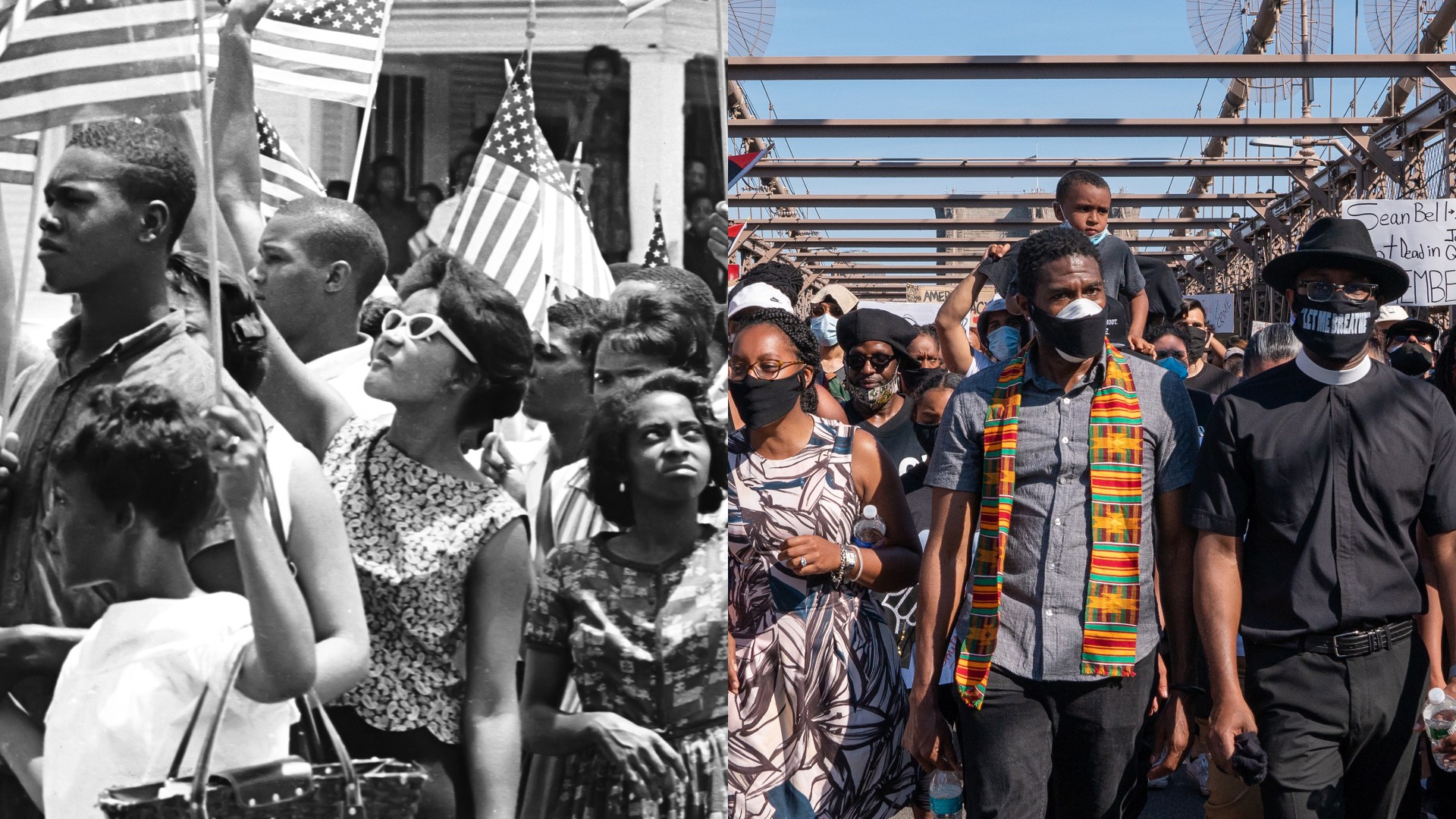
Archive Photos / Stringer / David Dee Delgado / Stringer / Getty

They say you can’t love what you don’t know, and lately, many of us are realizing just how much we don’t know. This year, my church in Augusta, Georgia, began exploring the racial history of our city, the location of one of the first and largest civil rights riots in the South. The 1970 riot is chronicled in a recent Georgia Public Broadcasting podcast, made in partnership with the Jessye Norman School of the Arts in Augusta. The historical details resemble current events: a teen beaten to death in police custody, the black community responding with peaceful demands then rebellion, police using deadly force to suppress the uprising. But the parallels to the present aren’t striking if, like so many young people in our city, you had no idea it took place.

No wonder we feel so stuck in this racial justice fight. You can’t lament a past you don’t remember. You can’t change problems you don’t recognize. You can’t empathize with voices you ignore. Part of our call to love and serve our neighbors is to understand the lingering scars and burdens they bear.

Learning how my community downplayed the significance of its racial past made me all the more curious about the extensive civil rights legacy in the Georgia capital, the subject of this month’s cover package. Across the generations, Atlanta—with the black church as its heartbeat—has worked to honor its hard-won progress as well as to lament the cost of the ongoing fight for justice.

That practice has helped carry on a long legacy and inspire today’s leaders in Atlanta—the preachers and politicians, entrepreneurs and activists, who are working to see the principles of God’s kingdom shape every sphere of life. They live out a gospel promise that God would not just bring individual people to salvation but would restructure all of society to be just, peaceful, and flourishing in his name.

This is indeed the great hope of our faith. “At its core, Christianity is about systemic change. God so loved the whole world that he sent his son to save it. Existing outside the system he created, God intervenes with the greatest energy of all to redeem it,” writes CT editor in chief Daniel Harrell in his editorial.

As a Christian and a journalist, I believe the stories we tell—the brokenness and faithfulness of those who came before—influence our actions today. Charles Oatman, the 16-year-old whose death sparked a landmark riot in my town 50 years ago, was never a hashtag, and his name doesn’t appear in our history books.

The most unsettling part of learning about this chapter of our past was discovering how much had been buried and forgotten. Throughout Scripture, we see forgetfulness correspond with a lack of faith or disregard for God’s work in the world. It is a holy task, then, for us to remember rightly.

Kate Shellnutt is senior news editor of Christianity Today. Follow her on Twitter @KateShellnutt.

Also in this issue

Raphael Warnock, the pastor of Atlanta’s historic Ebenezer Baptist Church who’s now running for US Senate, talked about his calling into politics as a Christian. He said, “my impact doesn’t stop at the church door. That’s actually where it starts.” That approach to living out the gospel extends across generations and segments of society in Atlanta. In this month’s cover package, we hear from pastors, politicians, and entrepreneurs—black Christian leaders whose faith calls them back into their communities in the diverse hometown of Martin Luther King Jr.

Cover Story

Atlanta Beyond MLK: How Black Christians Continue a Civil Rights Legacy

Cameron Friend

Cover Story

The Black Church Is Atlanta’s Original Community Organizer

Kathryn Freeman

Cover Story

Racial Reconciliation Is Still a Dream for Atlanta Christians

Jacqueline J. Holness

Cover Story

How Black-Owned Businesses Bless Atlanta

Terasha Burrell

Sign Language Bible Complete After 39 Years

News

The Next Mission Field Is a Game

David Roach

News

Who Will Help Gen Z with Anxiety, Depression, Suicide? Youth Pastors Turn to Counseling.

Lanie Anderson

News

Gleanings: October 2020

Reply All

When It Comes to Sacrifice, God Doesn’t Play Fair

The Best Way to Memorize Scripture Has Little to Do with Learning Words

K.J. Ramsey

Testimony

I Took Drugs to a Church Conference. Then God Found Me.

Fady Ghobrial

Your Devotional Is Not a Bible

Excerpt

Churches: Don’t Worship—or Serve—Until You’re Blue in the Face

J. R. Briggs

Minding the Gap

Timothy Dalrymple

Editorial

Christianity Is About Systemic Change

Daniel Harrell

Good News: Tomorrow We Die

J. Todd Billings

Pursuing Racial Justice Requires More Than Lament, but Never Less

Interview by Kathryn Freeman

Review

Marilynne Robinson’s Latest Novel Probes the Mysteries of Predestination and Grace

Timothy Larsen

Review

Jesus Is Your Lord and Savior. Is He Also Your Philosopher King?

Paul M. Gould

New & Noteworthy Books

Matt Reynolds

View issue

Our Latest

The Bulletin

Sunday Afternoon Reads: The Case for Kids

Leslie Leyland Fields reads her piece about being the mom of six kids amidst our country’s declining birth rate.

Come, Thou Long-Expected Spirit

W. David O. Taylor

The Holy Spirit is present throughout the Nativity story. So why is the third person of the Trinity often missing from our Christmas carols?

The Bulletin

Brown University Shooting and The Last Republican

Mike Cosper, Clarissa Moll

Violence at Brown, and former Rep. Adam Kinzinger talks about Jan 6, courage, and global affairs.

News

Amid Fear of Attacks, Many Nigerians Mute Christmas

Emmanuel Nwachukwu

One pastor has canceled celebrations and will only reveal the location of the Christmas service last-minute.

A Time of Moral Indignation

CT reports on civil rights, the “death of God” theology, and an escalating conflict in Vietnam.

A Heartwarming Book on Sin

Three books on theology to read this month.

Analysis

Bondi Beach Shooting Compels Christians to Stand with Jews

The Bulletin with Josh Stanton and Robert Stearns

Jewish-Christian friendships offer solace and solidarity after antisemitic violence.

Who Writes History When There Is No Winner?

Lebanon’s civil war is a taboo subject. A group of Christians and Muslims is broaching it.

Apple PodcastsDown ArrowDown ArrowDown Arrowarrow_left_altLeft ArrowLeft ArrowRight ArrowRight ArrowRight Arrowarrow_up_altUp ArrowUp ArrowAvailable at Amazoncaret-downCloseCloseEmailEmailExpandExpandExternalExternalFacebookfacebook-squareGiftGiftGooglegoogleGoogle KeephamburgerInstagraminstagram-squareLinkLinklinkedin-squareListenListenListenChristianity TodayCT Creative Studio Logologo_orgMegaphoneMenuMenupausePinterestPlayPlayPocketPodcastRSSRSSSaveSaveSaveSearchSearchsearchSpotifyStitcherTelegramTable of ContentsTable of Contentstwitter-squareWhatsAppXYouTubeYouTube